The Auteur Series: Stanley Kubrick Volume II with Special Guest Raymond Benson

Image result for stanley kubrick eyes wide shut

Benson

Tim and Frank are back with author and film historian Raymond Benson for their second part of their Stanley Kubrick chat. They start with returning to 2001 A SPACE ODYSSEY to talk about the music that Kubrick used, and continue through Kubrick’s filmography to EYES WIDE SHUT and AI. The three of them will be returning soon to discuss the filmography of David Lynch.  To learn more about Raymond, please visit his website here.

KINO LORBER PRESENTS: ROBERT PARRISH’S THE DESTRUCTORS/THE MARSEILLE CONTRACT — A REVIEW BY NICK CLEMENT

2

The Destructors, aka The Marseille Contract, is a 1974 British thriller from director Robert Parrish (Journey to the Far Side of the Sun, A Town Called Hell) and producer/screenwriter Judd Bernard (writer of Inside Out, producer of Point Blank), and features a very solid cast including Michael Caine, Maureen Kerwin, Anthony Quinn, Marcel Bozzuffi, Maurice Ronet, Alexandra Stewart, and James Mason. The plot hinges on a U.S. drug agent who teams up with an old friend and assassin in order to take down a French drug kingpin. The film’s action centerpiece is a superb car chase between a Porsche 911S and an Alfa Romeo, and of course, because it was all done for real, the entire segment feels that much more dangerous and exciting. Roy Budd (Get Carter, The Wild Geese) composed the film’s robust musical score, while the legendary cinematographer Douglas Slocombe (the first three Indiana Jones films, Julia, Rollerball, Never Say Never Again, The Italian Job, Lion in Winter, The Great Gatsby) brought the appropriate amount of visual grit to the proceedings while still allowing for the beauty of the streets of France to be captured in numerous spots. Willie Kemplen’s crisp editing keeps a fast pace. Parrish directs in a no-nonsense fashion, allowing the layered plot to move along quick, while emphasizing the violent showdowns with a clear-eyed sense of fatalism. The Destructors feels as if it could have been directed by 70’s-era John Frankenheimer, with melodrama and crime genre elements confidently mixed-up into the narrative. Kino-Lorber’s visual and audio presentation on the Blu-ray are strong as usual, but the lack of special features is a little disappointing. But for fans of gritty crime cinema from this time period, this is a total keeper and tons of fun.

3

B Movie Glory: Francis Delia’s Freeway


In the vein of highway set psycho thrillers, stuff like Robert Harmon’s The Hitcher and Steven Spielberg’s Duel paved and pioneered the way, fertilizing the ground for countless other similar efforts, some terrific and others not so much. Freeway falls into the former category, an atmospheric little B movie that delivers more clammy thrills than it frankly has any right to. It’s not to be confused with the classic Reese Witherspoon trash-terpiece of the same name though, this is a different animal altogether. There’s a serial killer terrorizing the nocturnal arteries of the L.A. highway system in this, an unhinged whacko in a Lincoln of or some such automobile of equally austerity, firing off love rounds into people’s faces whilst bellowing out bible verses extremely out of context all over the overpass in the wee hours. He’s mostly heard and unseen, but he’s played by none other than Billy Drago when he does show that leering visage, and the man let’s it rip in a performance that should be legendary. He’s hunted by another cool-as-ice character actor, tough guy James Russo as a Detective of few words and tons of action, namely shooting anyone that won’t give answers or spur his leads. There’s a dark, dreamy nocturnal aura to this, love and care put into atmosphere, showing is that the filmmakers, despite working with a low budget, actually give a darn about quality in their work as opposed to a throwaway second tier genre mad dash where the lack of passion is evident. A low rent classic in the realm of homicidal vehicular themed exploitation. 

-Nate Hill

NICK’S NOTES: CLOSE ENCOUNTERS OF THE THIRD KIND

3Close Encounters of the Third Kind is my favorite film by Steven Spielberg. This movie makes me smile during every single second of its running time. It simultaneously scared the crap out of me as a kid and filled me with an overwhelming sense of wonder, and it has never left my imagination since the first time I viewed it with my parents on VHS in the old-school living room on the old-school “box” TV. I projected myself into this film; I became everyone in the narrative at a certain point, and over the years, every single time I watch this movie, I’m taken back to my childhood, and I’m also reminded of just how damn good everything is in this fantastic piece of work. It’s gorgeous (massive Vilmos Zsigmond POWER), it’s got tons of heart, the performances by everyone in the deep and varied cast are magnificent, it’s extremely funny, the close-up/reaction shots are some of the best ever captured, and the ending is so awe-inspiring and so thought provoking and so filled with wide-eyed joy that it’s impossible for me not to think about its general existence at least once a week. The lens flares used in this film are downright magical, the musical score and various melodies are infectious, and I’m still afraid of toys that feature a monkey playing the cymbals. Mashed potatoes have never looked the same, I think we can all agree on that. And those feverish moments with Dreyfuss acting like a personal disaster in his living room with half of his garden on the living room floor – it’s all of a piece and massively enjoyable and I can’t wait until it’s re-released in theaters later this year to celebrate its 40th anniversary, as I’ve never seen it on the big-screen. I’ll need to bring a change of pants for sure. 
 1

Spike Lee’s OLDBOY

Image result for oldboy poster 2013

For a film directed by Spike Lee, written by Mark Protosevich, and starring Josh Brolin, Elizabeth Olson, Sam Jackson, and Sharlto Copley, OLDBOY gets a lot of unwarranted and obnoxious criticism. Of course, the original film is terrific, and a game changing cinematic explosion; as is this film. It’s a reinvention of the remake wheel.

Those who have seen the original film, or know quite a bit about it, know the beats. They know the twists and turns. The remake offers something new and refreshing as it builds upon what made the original film great, only to accentuate it. The third act big reveal is darker, the main character has more of a backstory, and there are newly formed characters that flesh out the story.

Related image

Josh Brolin has rarely been better. He gives a transformative performance as the deplorable Joe Doucett. Within the first few pages of Protosevich’s script, he not only manages to make Doucett unlikable, he makes you loathe him. Yet as the film closes its second act, we begin to root for him, waiting for him to rise up and get his revenge. Brolin is fantastic, he physically and mentally transforms, and it is a marvel to watch.

Sharlto Copley still remains one of the best actors who has yet to reach a broader audience, and he turns a chilling and demented performance that is even more transgressive than the root of the antagonist’s motivations in the original film.

Part of one’s cinematic journey is acceptance. More times than not remakes are immediately cast out of a cinephile’s pallet. Especially when that remake is a film that the highbrow’s hold so sacred and dear as if they were the first to discover it.

Image result for oldboy 2013

The beauty of the remake is that it takes the source material very seriously, even rooting a lot of what is on screen from the original Manga graphic novel. The film isn’t a shot for shot retelling, nor is it a lazy attempt to capitalize on a sexy foreign property; it’s a parallel retelling of an ultra violet and taboo story that most often Hollywood is afraid to touch.

While some may not particularly care for the film, at the very least they should appreciate the craftsmanship and seriousness this film was given and spend less time trying to score points with like minded peers with tunnel vision regarding the original film.

KINO LORBER PRESENTS CHRISTIAN MARQUAND’S CANDY — A REVIEW BY NICK CLEMENT

1

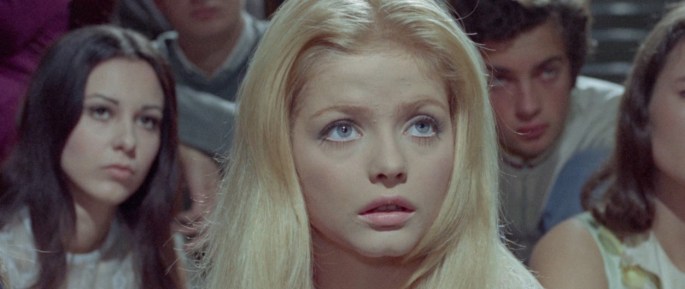
Candy, released in 1968, is a completely crazy little film that offers up so many odd-ball surprises that it’s nearly impossible to describe the bizarre culmination of all of its psychedelic pieces. Directed by prolific actor Christian Marquand and adapted by the brilliant Buck Henry from the 1958 novel of the same name by Terry Southern and Mason Hoffenberg, the film charts the sexual exploits of an alien in teenage disguise, who wanders from one strange encounter to the next, with danger, satire, and off-the-wall-humor mixed into the proceedings. I’ve definitely not seen anything remotely like this one, which at times feels like a farcical precursor to something like Under the Skin, but of course minus that film’s sense of bracing modernity and serious existential themes. The lead role was taken on by Ewa Aulin, who was a former Miss Teen Sweden, and it can’t be denied that she was most certainly extremely photogenic, and perfectly cable of projecting the blank-slate stare and empty emotional behavior that was no doubt required by the filmmakers.

2

The supporting cast is just ridiculous, with every single actor behaving in a maniacal, over the top, or oddly threatening manner which increases the strangeness factor; look out for Marlon Brando (as a phony Indian guru!), Richard Burton, James Coburn, Walter Matthau, Ringo Starr, John Huston, John Astin, Charles Aznavour, Elsa Martinelli, and Enrico Maria Salerno, with cameos from Sugar Ray Robinson, Anita Pallenberg, Buck Henry as a mental patient, and many more. Dave Grusin’s groovy music sets the stony-acid-retro vibe, Dean Tavoularis’ funky art direction adds lots of flavor, and the too-cool cinematography by Giuseppe Rotunno keeps everything visually interesting and distinctive. Kino-Lorber released Candy on Blu-ray last year, and the picture and audio quality are both strong. There’s also a very funny and informative 16 minute interview with Henry who re-counts the film’s asinine production, as well as trailers, radio spots, and a interview with film critic Kim Morgan. For some reason, I could see Candy playing really well on a double bill with An American Hippie in Israel, or Duke Mitchell’s unintentional masterwork Gone with the Pope.

3

KATHRYN BIGELOW’S DETROIT — A REVIEW BY NICK CLEMENT

2

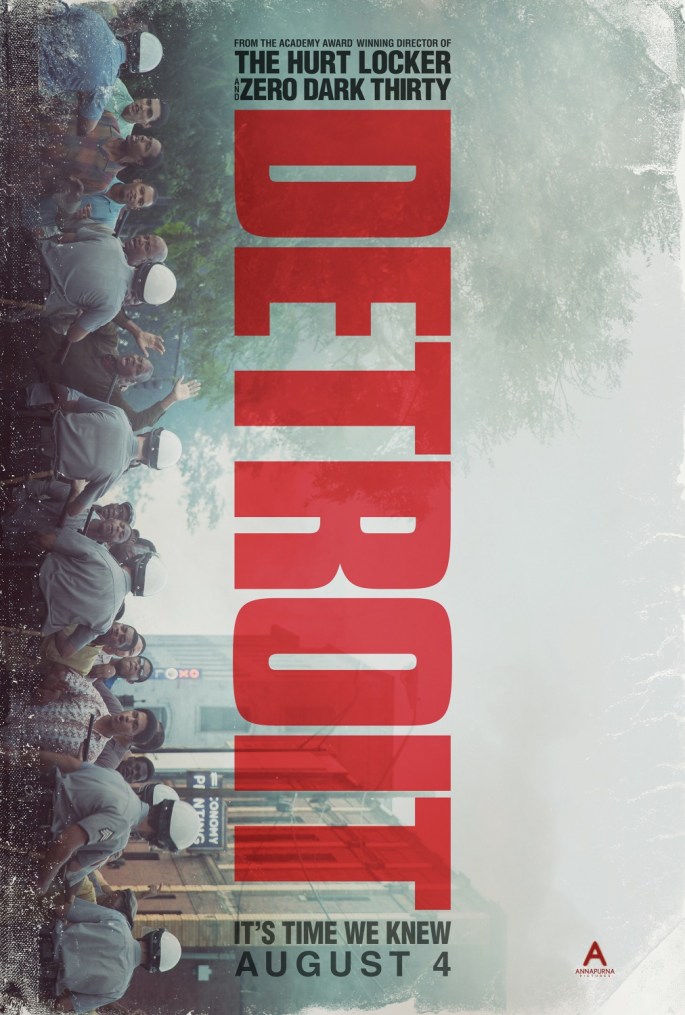
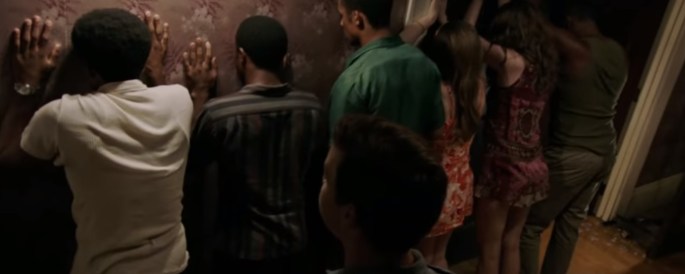
I was so ready for a hug and to see some smiles from my 20 month old son after viewing Kathryn Bigelow’s devastating and purposefully harrowing docudrama Detroit. Working again with screenwriter Mark Boal (they previously created the one-two punch of The Hurt Locker and Zero Dark Thirty, which are two of the best topical thrillers ever), this time they delve into one of America’s most disgusting chapters of racially motivated violence, the Algiers Motel killings and the 12th street Detroit riots of 1967. After an unexpectedly gripping animated sequence that opens the film and dispenses with some societal context, the film gets right to business, and never lets up for a moment. Bigelow’s highly visceral aesthetic style is in full view during Detroit, with expert cinematographer Barry Ackroyd (United 93, Captain Phillips) get up-close and personal with the actors (everyone in the cast is dynamite) during the vividly staged riot sequences which comprise roughly the first third of the film, putting the viewer smack dab in the middle of the action, with a darting sense of spatial focus that both startles due to its seeming randomness, but feels visually coherent in the best way possible. William Goldenberg’s blistering editing makes every single scene count, with the brilliant sound work (those gunshots sound REAL…) adding further dimension to the stylistic package. This film takes a microscopic look at one event but places it in within a larger contextual sense, one that unfortunately feeds into the future.
detroit_xlg

On a production level, the film is simply tremendous, and because each performer was fully dedicated to their role, and because every craftsperson brought their A-game, Detroit feels both intimate and epic in the best way possible. Massive kudos for Megan Ellison’s continuous quest to produce (and now distribute) intelligent films made for adults who don’t care about seeing anyone in spandex. People have been complaining that Detroit is “one-note” and that the extended sequence inside the motel goes on for “too long” or that, rather absurdly, Bigelow and Boal “shouldn’t” have made the movie because “they’re white.” I am not going to entertain any of these idiocies with responses; if you can’t figure out that the ENTIRE POINT of the movie is to suffocate you in terrible and grotesque human behavior without full catharsis, well, I don’t know what to tell you. Bigelow and Boal want to force everyone – black, white, brown, purple, etc – to confront the vile thought processes that informed the senseless and pointless killings in that motel. This is the reason why Detroit exists – to outrage and to make links to our current society where African Americans continue to be targeted by certain law enforcement officers for crimes they didn’t commit. In our appalling Trump era, this film means even more than it ever could mean, so I guess it’s no surprise that the vast majority of ticket-buyers turned a blind eye to Detroit on its opening weekend.
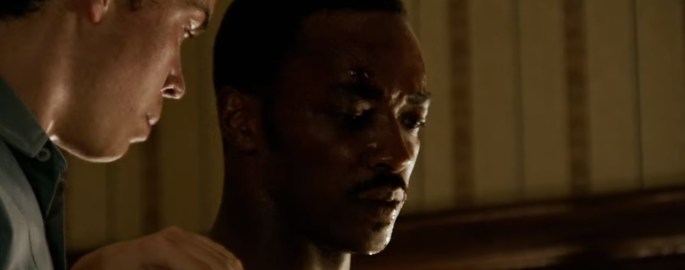
3Detroit is frustrating, and compelling, in the same way as David Fincher’s Zodiac in that there’s no emotionally satisfactory ending, and both Bigelow and Fincher, in their respective films, ratchet up the anxiety and never stray too far from the facts of the situation. In many respects, and rightfully so, Detroit, also like Zodiac, resembles a tightly constructed horror film, because, let’s be honest, the situation that unfolded in that motel was nothing short of horrific for the people being terrorized and murdered. It was Bigelow and Boal’s bold decision to be fully unrelenting with their approach, and I applaud them for it, even if it meant that the filmmaking made me upset and uncomfortable.  I totally understand, accept, respect, and embrace poetic license on the part of filmmaker, and conjecture when needed. It’s abundantly clear that Bigelow and Boal did their research, and since the story that they’re telling has no happy ending, I’m glad they didn’t try to manufacture something that would have felt false. This movie is supposed to knock the wind out of you (I felt gut-punched walking out of the theater) and it’s supposed to make you angry (this is a very grim and volatile piece of work that rarely offers any easy answers). I’m sure I’ll see other films that will entertain me more this year, but I doubt I’ll be as galvanized by any one piece of storytelling the way I was with Detroit.
1

One Man’s Hero


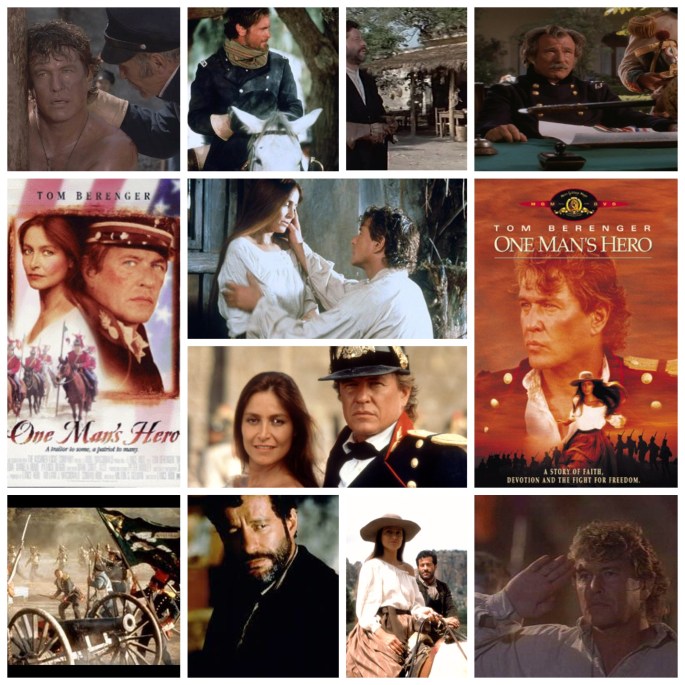
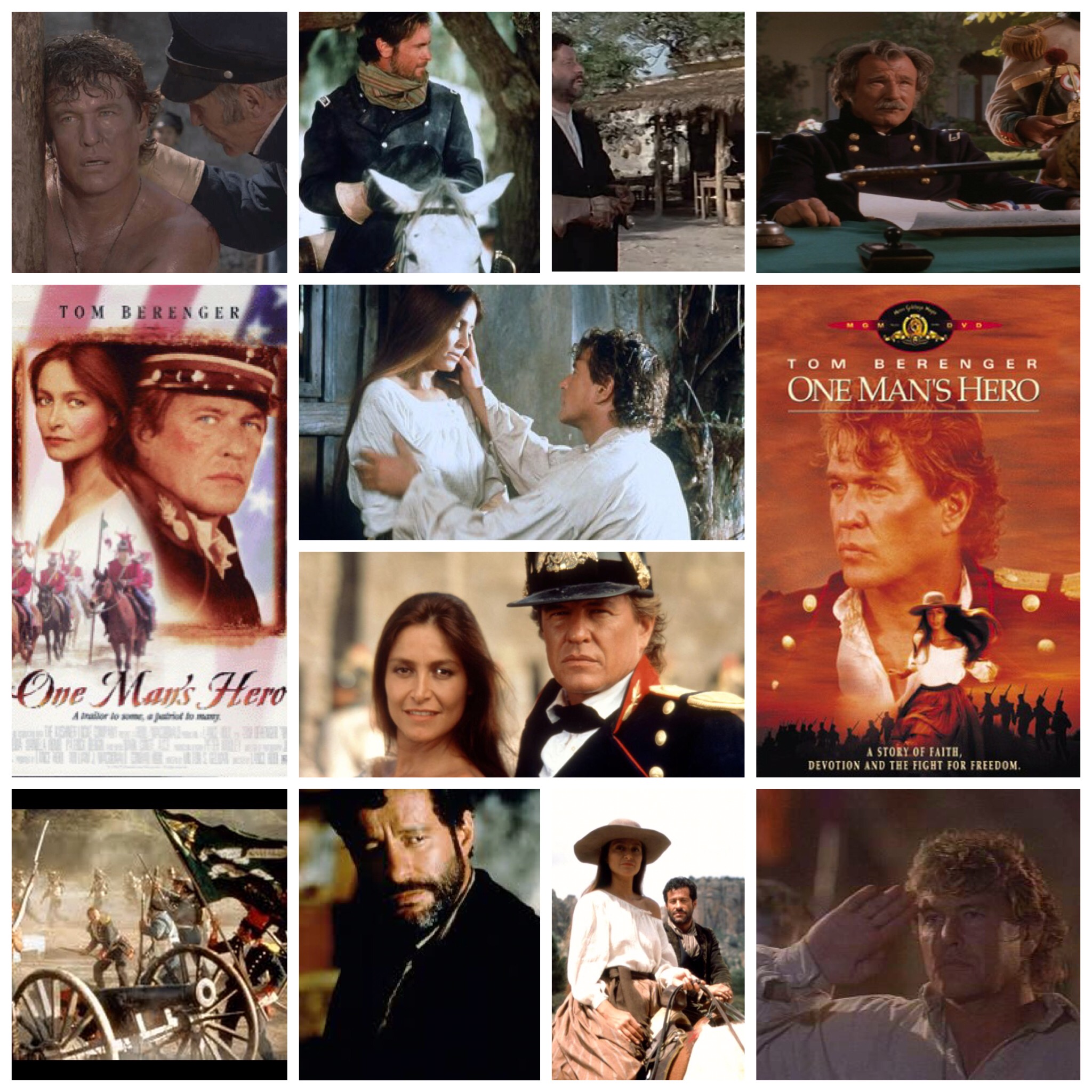
One Man’s Hero takes place during a conflict that doesn’t get all that much coverage in Hollywood, the Mexican American war. With a sweeping Patriot-esque vibe and a world weary starring turn turn from Tom Berenger, it’s an affecting tale that whether or not is based on truth, still packs an emotional whallop. Berenger is Riley, an Irish American who leads his mostly immigrant troupes through racial prejudice beset on them by their own American superiors, just one more obstacle thrown in with the already taxing war itself. Defecting from the troops, Riley is commissioned to lead his men on the opposing force, banding together with fiery, disillusioned Mexican revels leader Cortina (Joaquim De Almeida) and fight for acceptance and survival while navigating both sides of the conflict. Although there are a few impressive battle sequences staged here and there, the film is more about the private and personal wars fought amongst the ranks themselves, the notion that one army isn’t always just focused on the task and can get caught up in internal conflict, which often, including in this case, leads to unnecessary tragedy. Berenger and Almeida go at it fiercely in a love hate companionship constantly tested by the war and their mutual affection for beautiful fellow freedom fighter Marta (Daniela Romo). Underrated Patrick Bergin shows up in a severely powdered wig, Stephen Tobolowsky plays yet another one of his loathsome, letcherous roles and the late great James Gammon is the perfect embodiment of crusty yet compassionate General Zachary Taylor. Not a title that crosses many people’s vision when discussing war films, but a really solid effort despite a lower budget, a story that needed to be told and a star turn from Tom to remember. 

-Nate Hill

Christopher Nolan’s DUNKIRK

Image result for dunkirk christopher nolan

DUNKIRK may just be Christopher Nolan’s most anticipated feature. He roared out of the gate with his Batman trilogy, while making THE PRESTIGE and INCEPTION before completing his Dark Knight trilogy, and then delivering a science fiction film so great that it can only be compared to 2001 A SPACE ODYSSEY. And with Dunkirk, he releases a film with an incredibly lean runtime; yet it is a master class in filmmaking. It’s taut, gripping, and nerve racking.

The best decision Nolan has made in his career lies within the film. Never once are German’s show in the film, all we see are the bomber and fighter planes, and machine gun fire. The entire film is told through the viewpoint of the English and through Nolan’s seminal nonlinear timeline.

Image result for dunkirk kenneth branagh

It’s told by land, through the viewpoint of an English soldier as well as a wonderful turn by Kenneth Branagh as an admiral stationed on the dock at Dunkirk awaiting a fleet of boats to rescue the troops. By sea, through the eyes of Mark Rylance, a well to do Englishman taking his boat across the channel to transport troops. And finally, by air through the guise of Tom Hardy as a spitfire pilot who is running out of fuel while trying to stop the Nazi bombers from killing more men on the beach.

DUNKIRK arrives as Nolan’s best film, but in particular the finest job that Nolan has done as a director. It’s a filmmakers film. Whilst all the actors do an incredible job in the film, there is not a single performance that steals a scene, there isn’t a single actor that chews up the scenery. Nolan assembles a flawless cast, chalked full with the likes of Branagh, Hardy, Rylance, and Cillian Murphy who navigate the film with a plethora of unknown actors that embody the soldiers awaiting impending doom on the beach.

Image result for dunkirk tom hardy

The film is propelled forward by its story, by the events of the narrative. Sure, Michael Caine’s voice cameo, Hardy being a total bad ass in the spitfire, Rylance is the stoic old man who is on a mission for his country, and Kenneth Branagh is perfect in his Laurence Oliver role – and Hans Zimmer’s score is perfection, but none of that is as apparent as the story of hope and determination of the British people.

Perhaps one of the strongest, and least talked about, aspects of DUNKIRK is that it is rated PG-13. Nolan proves that filmmakers don’t need to add more CGI blood or exploding body parts to a film just to get an R rating to make the film feel intense and what life is like during wartime. Nolan proves that you don’t have to make an adult film with an R rating to be effective and engaging or to appease those who flamboyantly pine for an R rated adult film.

Peter Hyam’s Narrow Margin 


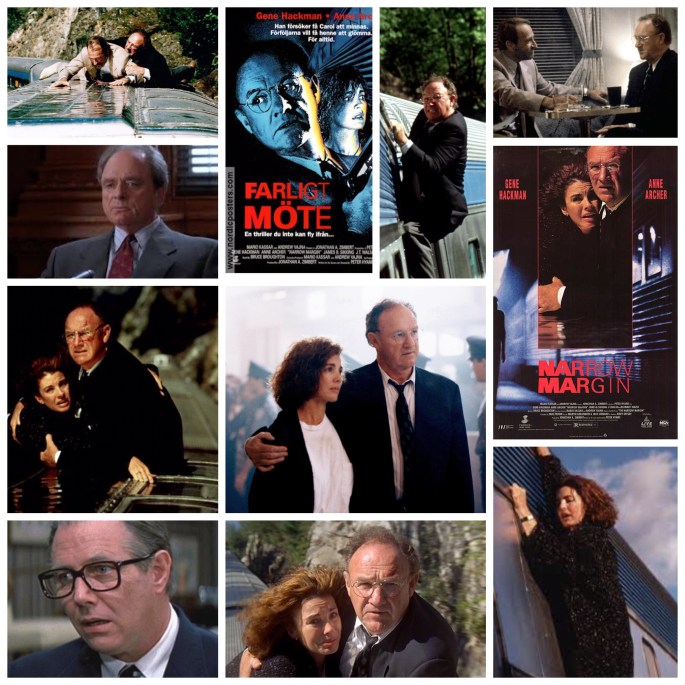
Peter Hyams Narrow Margin is a sleek thriller that attempts to blend courtroom intrigue with a single location white-knuckler, which it does.. mostly successfully. A better way to put it would be that it sandwiches a cat and mouse game set on a speeding train between an intro and epilogue both set in the decidedly more complicated realm of legal escapades. We open as an unfortunate lawyer (J.T. Walsh in a too brief cameo) is assassinated by the mobster scumbag (Harris Yulin, creepy as ever) he had shady ties too. A terrified Anne Archer hides in the shadows, witness to the murder, and therefore a valuable asset to the dogged prosecutor (Gene Hackman) who is trying to bring the kingpin down. The two of them are ambushed on a routine transport via helicopter and escape onto said train, and here’s where the narrative cops out just a little bit. Almost the entire rest of the film is spent on the train, an extended diversion of a set piece that steps in for what I thought would be a more cerebral battle of wills between these factions, in court and out. It’s not a huge deal, I was just expecting a little more, and the bits at either end of the film stand as my favourite sequences. Hackman plays stubborn like no other, having both literal and figurative tunnel vision here, the only one thing he cares about being the life of his witness. They’re harried at every turn by corrupt officials of many kinds, and pursued by a mystery woman (Susan Hogan, my acting mentor in college no less), while the train hurtles through the gorgeous Canadian wilderness, captured pristinely by Hyam’s lens as he dutifully does his own cinematography, the dynamo. It’s a thrilling little piece that benefits from Hackman’s spirited work, the photography and editing backing it up nicely.  

-Nate Hill