Ridley Scott’s Hannibal


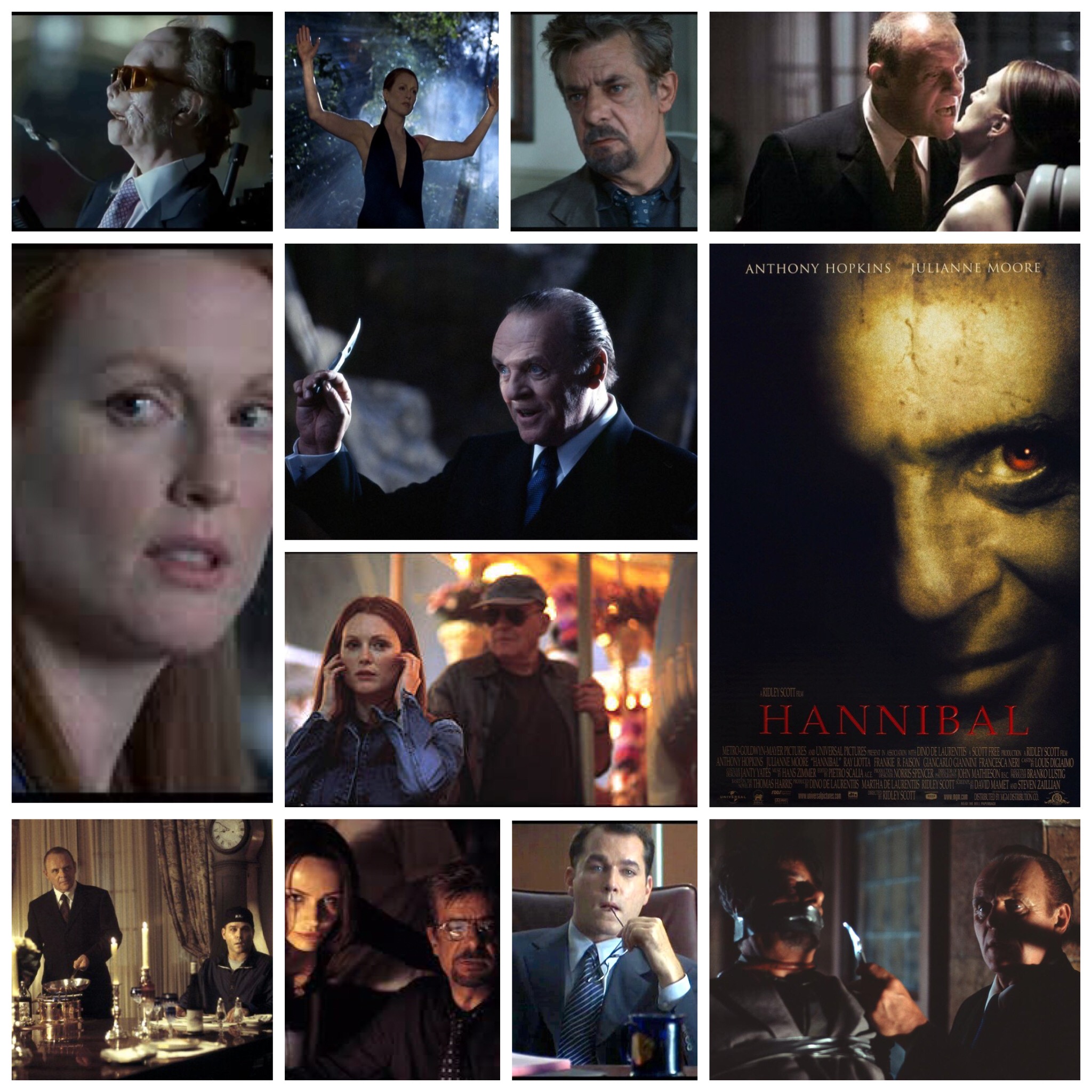
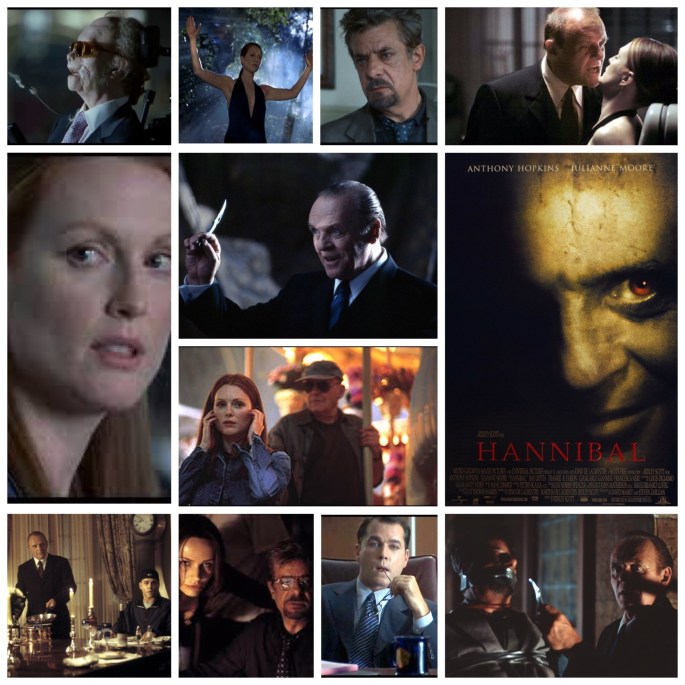
Many of us get so wrapped up in the legacy of Silence Of The Lambs that we sometimes forget just how great Ridley Scott’s Hannibal is. Lambs is a wicked clinical shocker, full of psychopathic deviance and razor suspense, but Hannibal is just as good, instead coming from a place of lush, baroque opulence and velvet gilded carnage that overflows with style. They’re two very different films populated by the same characters, chief being Anthony Hopkins’ disturbed cannibalistic serial killing psychiatrist. Lecter has settled down in Italy when we find him, where one foolish police detective (Giancarlo Giannini, terrific) thinks he can lure the good doctor into a trap. Big mistake, although his efforts do gain the attention of FBI Agent Clarice Starling once again, this time played with grit and grace by Julianne Moore. Lecter is fascinated, perhaps even attracted to Starling, and it’s a treat watching them play a complex game of European cat and mouse whilst other various characters dart in and out of the tale. Ray Liotta blunders into their path as Starling’s ill fated bureau handler, a loudmouth who… doesn’t quite… keep his head screwed on tight (yes I went there). Gary Oldman shows up too, although you’d never know it was him as he’s uncredited and slathered up under a metric tonne of Chernobyl waste prosthetic makeup, playing perverted millionaire Mason Verger, who has a bone to pick with Lecter and I mean that quite literally. Hopkins had aged some since Lambs and doesn’t have quite the same unsettling virile charisma he did there, but he’s lost none of the malevolence or cunning, showing once again what a manipulative monster Hannibal can be. This film is all style, and even the frequent graphic violence, although abhorrent, is done with all the flourish and hues of a renaissance painting. The horror is somehow numb as well, or relaxed would be a better term. Lambs was all in your face with jump scares and spine shuddering yuckyness, while here the horror is rich, deep and vibrant, terrifying yet oddly aesthetic. Goes without saying that this is the closest Lecter film, in terms of style, to NBC’s masterful tv version we’ve been blessed with today, and much inspiration was no doubt culled from this gem. Beautiful, harrowing stuff. 

-Nate Hill

Tim Burton’s Mars Attacks


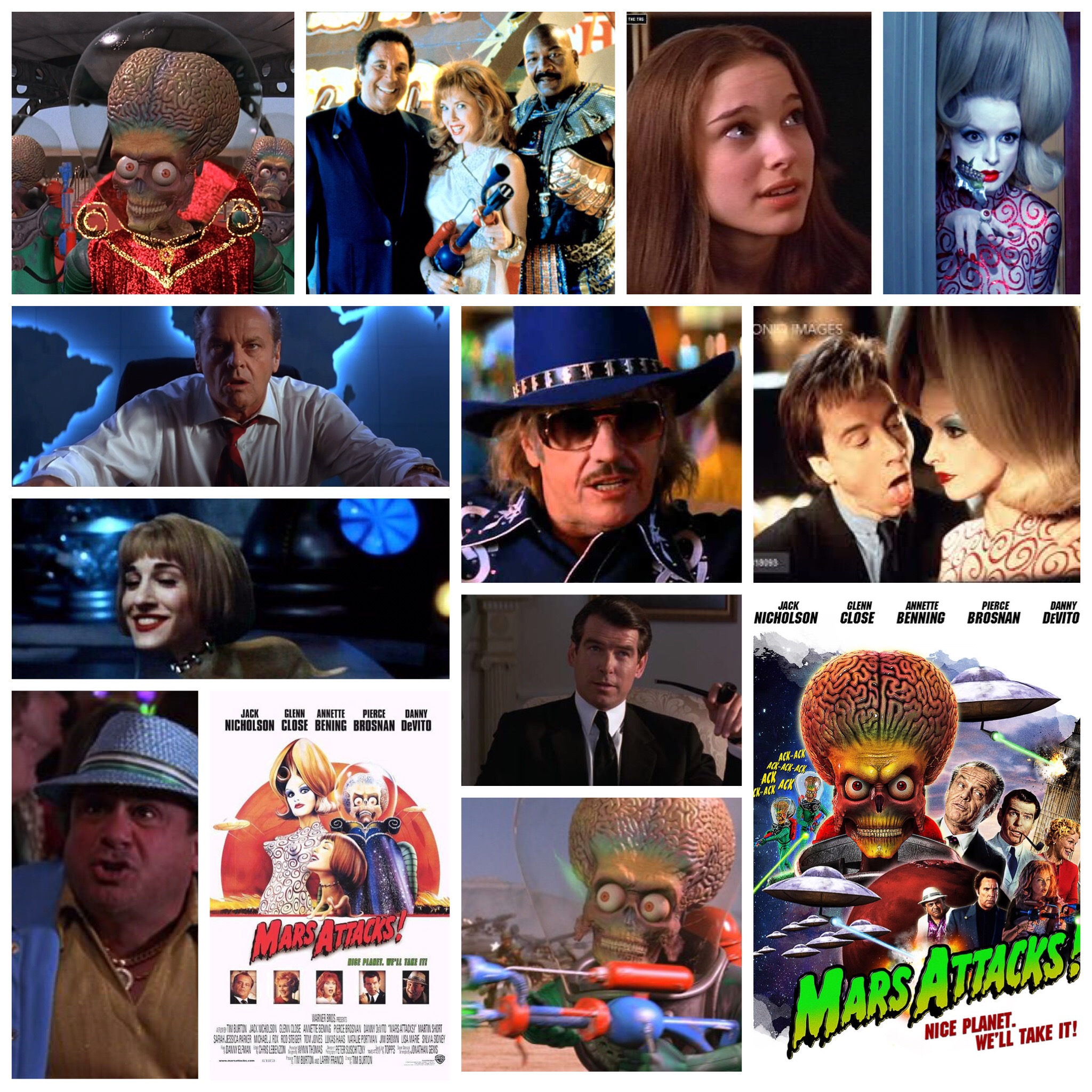
Tim Burton’s Mars Attacks is a spectacular howling good time, a 50’s inspired gumball machine packed with schlock, satire and more star studded send ups than you can shake a stick at. It’s so silly and overstuffed that one just has to give in to it’s fisher price brand of mayhem and just watch the wanton hilarity unfold. Martians are indeed attacking, and they’re evil little rapscallions with giant brains, buggy eyes and lethal ray guns. Humanity’s best are left to fight them, and let’s just say that’s not saying much with this bunch of morons. Jack Nicholson does a double shift as both the hysterically poised, rhetoric spewing US President and a sleazeball casino tycoon. Annette Bening is his hippy dippy wife, while Rod Steiger huffs and puffs as a war mongering potato head of a general. Over in Vegas, prizefighter Jim Brown and his estranged wife (Pam Grier) fight against hordes with little help from obnoxious gambler Danny Devito. Pierce Brosnan is a bumbling tv expert who sucks on a pipe that he apparently forgot to fill or light, a subtle yet precious running joke. The only people with sense are trailer dwelling youngster Lukas Haas and Natalie Portman as the President’s daughter, and the method they finally find to destroy these nasties has to be seen to be believed. The cast seems padded simply so we can watch famous people getting dispatched by slimy aliens, and also contains Tom Jones as himself, Lisa Marie, Jack Black, Paul Winfield, Michael J. Fox, Christina Applegate, Glenn Close, Joe Don Baker, Barber Schroeder, Sylvia Sydney, Martin Short and Sarah Jessica Parker’s head on the body of a chihuahua (don’t ask). There’s little story other than Martians attack and kill shitloads of obnoxious people, but therein lies the big joke, and it’s hilarious. Aaack !

-Nate Hill

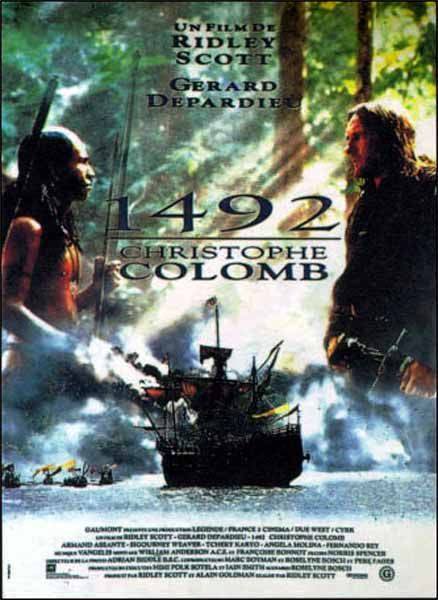
BLU-RAY REVIEW: KINO LORBER PRESENTS RIDLEY SCOTT’S 1492: CONQUEST OF PARADISE — BY NICK CLEMENT

9

Easily one of Ridley Scott’s most ambitious films, 1492: Conquest of Paradise is not without its flaws, but also, not without its merits, most of which stem from the enormity of the physical production; had the script been more historically accurate then we might have had one of the greatest epic adventures of all time. Instead, the finished form of this cinematic seafaring voyage feels caught in between trying to be something respectful and progressive, despite clearly being made from a place of true personal investment.

1

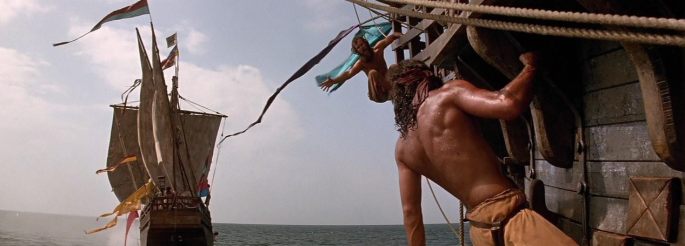
It’s also a staggering reminder of the power of REAL cinema: Actual ships, live extras, exotic locations, real fire, real water – this is how an epic action-adventure drama film should look and feel, and in terms of the sheer size and florid atmosphere that was conveyed, this is one of the most lush movies of its type. One of Scott’s grandest canvasses that he’s worked on, this was one of the last films he made before the beginning of the CGI/digital effects revolution, and it would certainly be interesting to see how he’d make the film if he attempted to re-tell the story today.

3

But, at times, the script feels like a mess, never giving you an accurate portrait of Columbus as a man, despite Scott and the rest of his team including some nice introspective beats and startling moments of violence which certainly pushed the edges of what the PG-13 rating allowed back in 1992. But where was the raping, and the murdering, and the pillaging, and the formation of the slave trade, and all of the stuff that we’ve come to learn that the real Columbus supervised and participated in? This film was written before some of the more controversial bits about Columbus were discovered, so in retrospect, with a fuller idea of who he was as a man, it’s a movie that feels at odds with itself in certain spots.

4

Clearly, being an attempt at blockbuster filmmaking, the thematic and story elements needed to be softened to appeal to the widest possible audience, but here, it feels especially glaring, given what we’ve come to know. At times, you can feel that the filmmaker’s were striving for something more complex than what the screenplay afforded them; Roselyne Bosch’s dialogue is occasionally hammy while the plotting lacks a certain level of grace that would bestow Scott’s future period epics, chiefly the masterful director’s cut of Kingdom of Heaven.

5

But while this is a historically scrubbed effort, the technical details are astounding and the performances were solid all around. Gerard Depardieu was never less than excellent with what he was given, demonstrating gravitas and personal heft that helped to cut a convincing portrait of an impassioned explorer, even if speaking in English isn’t his strong suit. The supporting cast is diverse and odd in spots, but dominated by Michael Wincott in a genuinely nasty performance (his stock in trade), Sigourney Weaver, and Armand Assante.

6

The bravura musical score from Vangelis (Blade Runner, Alexander, Chariots of Fire) along with the stunning widescreen cinematography from Adrian Biddle (Thelma & Louise, Aliens, Reign of Fire) combined to create a fantastic sense of time and place, which is par for the course on a Scott film. And the director, as always, delivered on the visual front, crafting a film of enormous scope and polish; the final act has a hurricane sequence and gory battle that are two of the best set pieces he’s ever directed. Scott and Biddle found true beauty in their vision of the New World; the sumptuous and dreamy shot in which the ocean mist parts to reveal dry land for the first time is handled in such an operatic fashion as to induce goosebumps, while Columbus’ first steps on new soil register as an earth-shaking moment.

7

And the final moments are poetic in their sense of overall discovery and the loss of one’s ability to continue searching for the next challenge. I’ve just always taken exception to how noble they made Columbus out to be, considering all that we’ve learned from a revisionist perspective concerning his expeditions and attempts at conquering. Paramount released the film in time to celebrate the 500th anniversary of Columbus’ voyage back in 1992, and armed with a $50 million budget, Scott definitely pulled out all the visual stops you’d expect from him, but the public didn’t bite, and the film bombed in theaters, grossing less than $10 million domestic.

10

But it’s a work that deserves reconsideration, and thanks to Kino Lorber’s recently released Special Edition Blu-ray, the film looks and sounds considerably better than I remember, as some time ago I purchased a Region 4 DVD from Brazil/Portugal, where the image, while presented in anamorphic widescreen, seemed to have been smeared with dirt and grease or left out in the sun to bake. But Kino’s new transfer is better than anything I’ve previously seen, with solid colors and appropriate grit and grain, and always giving off that filmic look that’s become lost now that everything is shot digitally. And while only in 2.0 DTS-HD sound, the film sounds big and boisterous and all-encompassing while dialogue remains crisp and clean. Special features include a highly informative and excellent audio commentary from film historians Howard S. Berger and Nathaniel Thompson and various deleted scenes that showcase more graphic violence which were obviously trimmed to avoid an R-rating.

2

B Movie Glory: Dark Moon Rising 


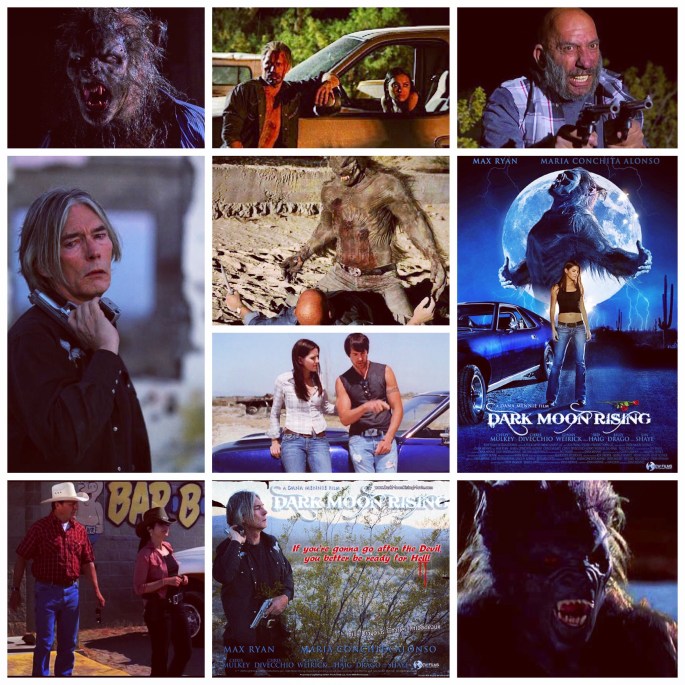
You want a romantic werewolf flick that rises above the vomitus of Twilight and gives you nostalgic pangs for stuff like The Howling and Bad Moon? Dark Moon Rising is your ticket, and proves that you don’t need heaps of PG-13 gloss, mopey teen bottom feeder ‘actors’ and a vacuous script to make a young adult oriented horror film. This one is admittedly low budget and feels just south of finished in spots, but it’s well crafted, made with love and bereft of CGI. The story couldn’t be simpler: a small town girl (Ginny Weirick), her stern Sheriff father (Chris Mulkey) and the new boy in town (Chris Delvecchio) who just happens to be a werewolf. Young love is always just a stone’s throw away from danger, which arrives in the form of the boy’s dangerous, monstrous father Bender (Max Ryan) who also happens to be a werewolf. You can imagine how it goes: steamy New Mexico supernatural melodrama with a few buckets of gore tossed in and a handful of super cool genre actors. Sid Haig, Lin Shaye and Maria Conchita Alonso have wonderful extended cameos, but the standout is Billy Drago, a staple villain actor who gets to do something different here. Blessed with a reptilian visage that just demands evil behaviour from him, he’s given a sympathetic detective role here, a heartbroken lawman on the hunt for Bender to appease personal anguish. The makeup and prosthetics are terrific, retro latex nightmares that made me miss the good old days before I was born when every horror flick had to rely on the ingenuity of a hardworking team of gorehounds. Despite a few weird pacing issues (tighter editing would have been appreciated), this one is a little indie horror well worth your time. 

-Nate Hill

David Lowery’s Ain’t Them Bodies Saints


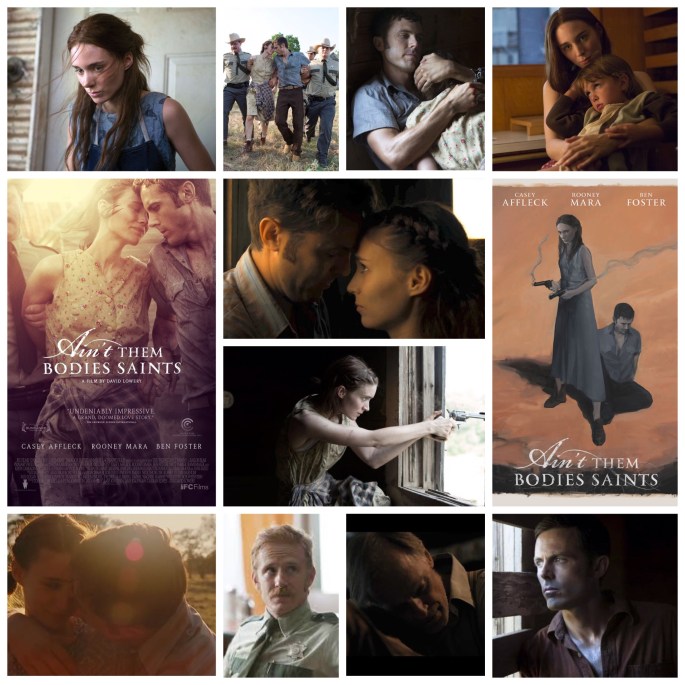
Downbeat yet beautifully moving, David Lowery’s Ain’t Them Bodies Saints was a surprise for me, a visual and emotional bouquet of muted style, lighting and music that instantly transports you to the time and place it lives in, as well as beckoning you straight into the characters’s hearts, hearts which all have the capacity for love and reverence, or the blackest of deeds. The people in this film are just that: human beings, not caricatures moulded by the written word, you feel every pang left by a violent act in both victim and perpetrator, and sit alongside them as they wade through heartbreak. A soulful Rooney Mara and Casey Affleck play two outlaw lovers who cause a deafening shootout with police in the stunning prologue, both killing and wounding multiple officers. The outcome sees Affleck jailed hundreds of miles away and Mara left alone to give birth to and raise a daughter he may likely never meet. He does get out though, and meanders his way through rural Texas to find them, when trouble arrives once again, as it always does. A local policeman (Ben Foster) has grown fond of Mara, while her stern father (Keith Carradine) takes notice of Affleck’s return and bristles up real good. At it’s heart this is a tragedy, even if on the surface one sees potential for a love story. There’s a Bonnie and Clyde vibe to be sure, but it’s as if we are privy to what happens in a ‘lovers on the run’ tale after the fact itself, as if the film begins at the end of a conventional such story, and achingly shows us that happy endings simply don’t exist, especially for people like this. Now, there’s been obvious comparisons to Terence Malick’s work, which are of course somewhat warranted, but this film is it’s own beast. Brought to shimmering life by the lens of cinematographer Bradford Young and blessed with a mournful lullaby of a score from Daniel Hart, this one shakes and stirs the viewer with a gorgeous look at beauty through the crystalline prism of sorrow. 

-Nate Hill

STAR WARS EPISODE VI: OPIE RON KENOBI

Image result for ron howard star wars

Frank is joined by his Star Wars expert friend, Terry to discuss the abrupt firing of Lord and Miller from the HAN SOLO film, and swift replacement that is Ron Howard.

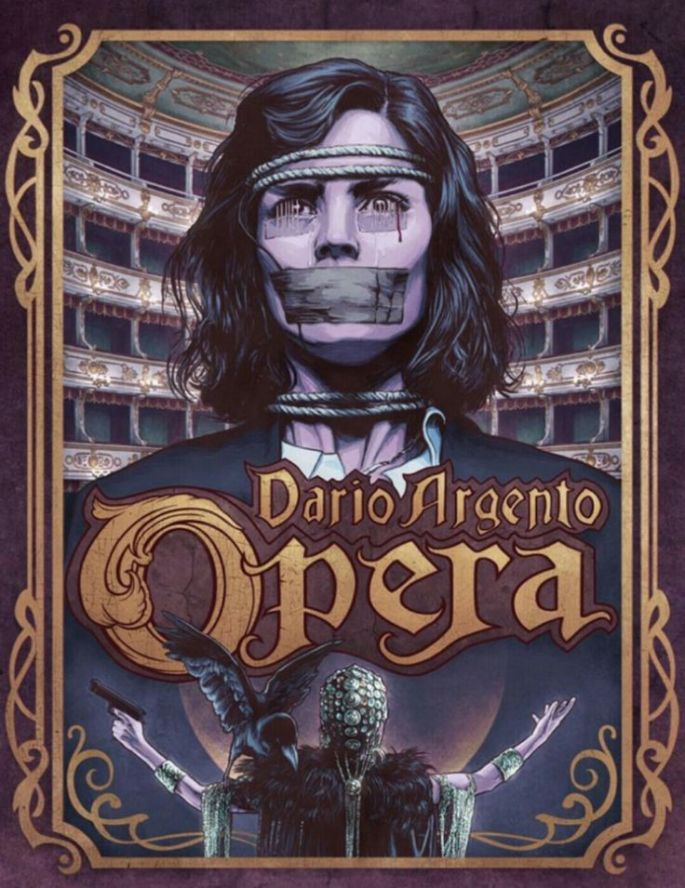
DARIO ARGENTO’S OPERA — A REVIEW BY FILMMAKER & GUEST CRITIC DAMIAN K. LAHEY

OperaPoster


‘Opera’ (1987) dir. Dario Argento

Dario Argento. I was such a dork for this guy back in high school. I even had t-shirts made from the posters of some of his films. I got the images from a big interview piece I read with him in a ‘Psychotronic Magazine’ I had picked up. Did lots of presentations on his work in high school and later in film school. I’m still a huge mark for this guy and he’s a huge influence on my own work. Definitely one of my filmmaking heroes.

Objective historical fact: Dario Argento revolutionized the horror genre at three different times with the films ‘The Bird With The Crystal Plumage’ (1970), ‘Profondo Rosso’ (1975) and ‘Suspiria’ (1977). Awe inspiring. Everything outside of that is subjective but undoubtedly he has left a serious cultural footprint on the cinematic landscape that cannot be ignored.

In my opinion, he has made three great films – ‘Suspiria’, ‘Opera’ and ‘Profound Rosso’ and three very good films – ‘Phenomena’ (1985), ‘Tenebre'(1982) and ‘The Bird with Crystal Plumage’. Love them! Then there’s the rest. Some would toss ‘Inferno'(1980) and ‘The Stendhal Syndrome’ (1996) in there. I hear ya. They contain some truly wonderful moments. Stuff I certainly couldn’t do. But I just don’t think they come together as well as those others.

‘Opera’ revolves around the troubled production of an avant-garde staging of ‘Macbeth’ and the understudy who must rise to the occasion after the original ingenue is injured. Naturally, there’s also a serial killer on the loose dispatching people in all sorts of imaginative and grizzly ways.

After this film, Argento would never again make something as accomplished or impressive from a production stand point. His camera would never move as confidently or innovatively. His pacing would never be as urgent. And his spellbinding blend of the macabre, the artistic and the banal would never work so well together. Cristina Marsillach would also never be equaled as the quintessential Argento heroine. She is visually and emotionally the perfect foil for Argento’s filmmaking. Supposedly they did not get along during filming. It’s a shame but the film is probably better for it.

The gag with the killer taping pins under our heroine’s eyes so she is forced to watch the murders is a gimmick that runs rather shallow, packing less and less a punch with each viewing though they definitely frame it up like it’s the hottest thing going and the marketing to this day still pushes it to the moon.

Legendary cinematographer Ronnie Taylor rocks the arena with this one, composing some of Argento’s finest shots. A bit where the killer shoots his gun through the apartment peephole is still one of the best sequences of its type ever lensed.

I want to go on record as saying I find this film unusually erotic. I’m a big horror film guy but I don’t normally find the films all that erotic. I don’t. Sure, there’s naked ladies and sex scenes scattered about but I don’t find the genre as intrinsically erotic as many would claim. But I find this movie sexually charged in a strange way even though there’s little to no superficial eroticism to be had. Make sense?

I’ll never forget the first time I watched this film (re-titled ‘Terror At The Opera’ for US consumption) and it came to its controversial existential conclusion. I ADORED IT. It cuts to the most ridiculous switcharoo committed in film history and then ends as an esoteric art film. It is silly yet endearing, poetic and, like the rest of the film, unlike anything I had seen in a horror film. It also brought a peaceful resolve to the hysterical madness that had proceeded it.

The psychology deployed in this film in regards to the mother/daughter/killer relationship gets the job done without being too trite. It’s not one note like in Hitchcock ‘Marnie’ (1964), for example. It is more along the lines of Mamet’s ‘House Of Games’ (1987) or Demme’s ‘Silence Of The Lambs’ (1991) though it falls short of the latter two films’ cerebral panache and opts instead for flinging literal insanity up on the screen with gallons of blood and Heavy Metal music.

When I was younger I used to intellectualize Argento’s work a lot more. Now I feel silly doing it. Maybe it’s because the later work is a little hit and miss but I think mainly it’s because I believe the artistry is in the alchemy and not so much the content. When I see people over analyzing the content like I used to it makes me kind of uneasy. It’s his unique blending of cinematic elements – bravura camera work, complex yet contrived narratives, international casts, daring soundtracks and immense blood letting all with a signature style that is the secret sauce. Argento has a style but he also has a tone and when the two work together – everything else becomes irrelevant.

OperaStill1 (1)


Editorial: When navigating an asteroid field, never tell Kathleen Kennedy the odds.

Forty-eight hours ago, the social media world went ablaze with the news that director-duo Chris Miller and Phil Lord were dismissed from their untitled Han Solo origin movie assignment amid creative differences with Lucasfilm prexy, Kathleen Kennedy.

Principal photography began in February at London’s Pinewood Studios and much had already been completed with Miller and Lord at the helm.  According to their press release via Deadline on Tuesday, Lucasfilm plans to stick to their May, 2018 release date.  Many questions have been asked and much speculation has occurred about what those ‘creative differences’ might have been.

According to a release by Polygon today, those creative differences might have been between producer-scribe Lawrence Kasdan and the directors, who it was claimed set out to make their own film, not necessarily a Star Wars film.  It seems they were brought on by Kennedy to bring a comedic touch.  But, Miller and Lord are more well-known to their fan base as a comedy duo, not a dramatic duo with a comedic touch.  Although their efforts were completely collaborative, it was apparent that the studio was not getting the film they thought they were.  “Not wanting to part ways with the man who has helped define the voice of Star Wars, the Lucasfilm team decided to pursue a director who would abide by Kasdan and the studio’s vision.”

More important on the minds of the fandom was who was going to replace Lord and Miller.

Variety mentioned on Tuesday that Oscar-winning director Ron Howard was in the running.  And when it was officially announced this morning, the internet went up in flames once again.

According to IMDB, Howard has 42 directorial credits to his name, including the untitled Han Solo film.  He won Best Picture with producing partner Howard Grazer for A Beautiful Mind and was nominated for Director and Picture, along with Grazer and Eric Fellner for 2008’s engrossing Frost/Nixon.

With his caliber, I would have thought that the world would have embraced his new directorial assignment, but it seems that it was anything but.  Many people I heard from wanted the Lord/Miller vision and don’t believe that Howard has it within him to bring this picture to fruition.

There was also concern voiced about how much of the film would be reshot.  According to Variety on Tuesday, the film is still in production with several weeks of re-shoots that have been in the planning stages for quite some time.

The fan boy in me has the same questions on my mind, but realty must give way – this is a business.  Disney is in the business of making money for its shareholders and has entrusted Kathleen Kennedy to steer the ship.  Kasdan, who has been involved with the franchise since The Empire Strikes Back really does have his finger on the pulse of what makes Star Wars so great.

Is it enough to simply have the pulse of a forty-year-old franchise?

I don’t think it’s a secret that I wasn’t a fan of Rogue One and that I’ve needed to watch The Force Awakens a couple of times to finally warm up to it.  Yes, they are Star Wars and they carry George’s vision forward, so I have respect for what they are.  But they also felt too formulaic with characters that we’ve seen before in many other universes (yes, I’m looking at you MCU).

Scott Mendelson over at Forbes has an interesting premise that I agree with. “In order to be all they can be, and frankly that includes hiring writers and directors who aren’t all young(ish) white guys, the Star Wars Story films have to be able to afford to fail.” My impression of the Star Wars Story origin films was that they were meant to be bold and brash, much like the original Star Wars was in 1977.

When George Lucas pitched his Star Wars in the 1970’s no established studio wanted to take a risk on his story, despite having established himself with American Graffiti and THX-1138.  We seem to be in a similar quandary today, where established directors with completely different visions for now-established characters are shown the exit because they don’t fit with the overall vision.

Mendelson makes another great point: “…as tempting as it might be to look at Kathleen Kennedy as a micromanaging producer who wants to make every Star Wars into A) her own vision of what that might look like and B) similar in tone and content to The Force Awakens, it is her reputation on the line.”

Kennedy has had a long-standing personal and working relationship with George Lucas.  She understands what this universe needs and I don’t believe she would allow it to fail.  At the same time, she needs to be willing to take risks.

Lord and Miller were definitely the risks this franchise was looking for.  They have their own built-in fan base who would have come to see this film in droves.  Yet, they weren’t necessarily fans of Star Wars and that’s where the path diverges.  The long term viability of the franchise could have been put in jeopardy.

Ron Howard, who gave us the amazing Rush, Edtv, Apollo 13, Night Shift, Splash, Parenthood, Backdraft and Willow has big shoes to fill as no other director has been asked to step in so late in to a project.  Given his impressive resume, I am confident that he can carry this movie forward.

“I’m taking an awful risk, Vader.  This had better work.” While this is still a risk for Kennedy, it is not the same level risk as Tarkin’s was by placing the homing device on the Millennium Falcon. My confidence level in this film has not changed.  With Howard at the helm, I believe Lord and Miller’s vision will be retained and that their influence in the script will give us the light touch we’re looking for.  Of course, I’m one blogger with a limited voice.  What do I know?

Did I mention that Ron Howard played the lead role of Steve in George Lucas’s American Graffiti along with Harrison Ford?

The Force does work in mysterious ways.
HEADSHOT — A REVIEW BY NICK CLEMENT

3

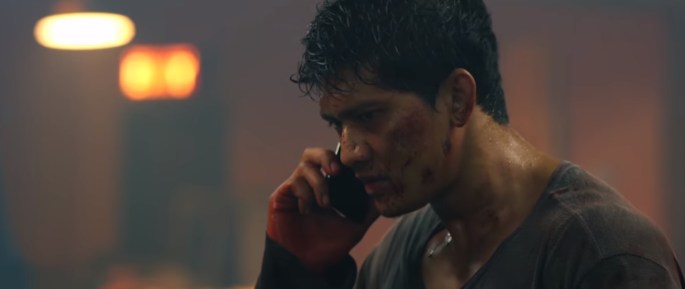
For the most part, and with only a few recent exceptions, the studio-funded American action picture is dead. The PG-13 rating, the homogenized superhero film, and an over-reliance on CGI have become the new norms, with films like Con Air, The Rock, Air Force One, Face/Off, and Bad Boys 2 never feeling like they could be made again; those films, and many others, used computerized visual effects to ENHANCE their set-pieces, not OVERTAKE them. In recent years, I’ve been looking to Asia for as many imports as I can find, and one of the nastiest I’ve discovered in recent memory is the absolute blood and guts festival Headshot, from the directing duo of Kimo Stamboel and Timo Tjahjanto. This hardcore ass-kicker was done in the vein of The Raid and The Raid 2, complete with that film’s enigmatic star Iko Uwais, who here slices and dices his way through an army of baddies with only one objective: Stay Alive. He’s suffering from amnesia after waking up from a coma, and lots of people are after him? But why? You’ll find out. There’s nothing deep or complicated here on a narrative level, with the brutally efficient script presenting archetypes and then letting the fisticuffs fly.

4

The martial arts choreography in this film is utterly stunning, mixing various fighting forms into the action in a smart way though the story, while the straight forward plotting is merely an excuse to showcase Uwais and all of the other fearless stunt performers, who went above and beyond the call of duty for our entertainment. Shooting in widescreen, Yunus Pasolang’s in-your-face cinematography gets the viewer extremely up close and personal to all the action, displaying each smack down with fresh and edgy camera angles, and a mix of shaky-cam and long-take shooting; it’s absolutely incredible on a technical level all throughout. Exceedingly violent and unrelenting almost to the point of madness, Headshot all but eviscerates the competition, and yet again shows how filmmakers from overseas are totally schooling everyone else when it comes to unadulterated and boundary-pushing action filmmaking. After premiering at the 2016 Toronto International Film Festival, Headshot received an extremely limited theatrical release worldwide, and is now a streaming option on Netflix and Amazon, and also available on DVD for purchase. This film is only for total bad-asses who like their action cinema full-throttle, pulse-pounding, and exceptionally, nearly pornographically violent.

1

Mimi Leder’s The Peacemaker


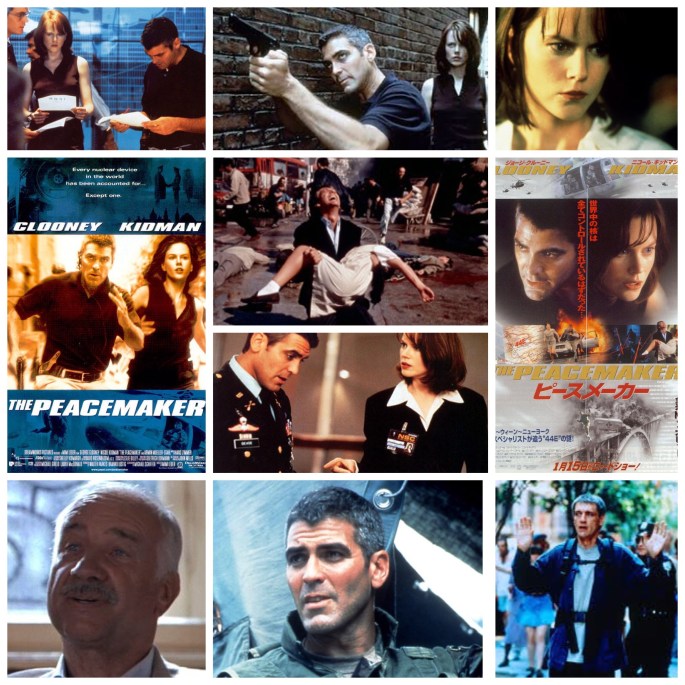
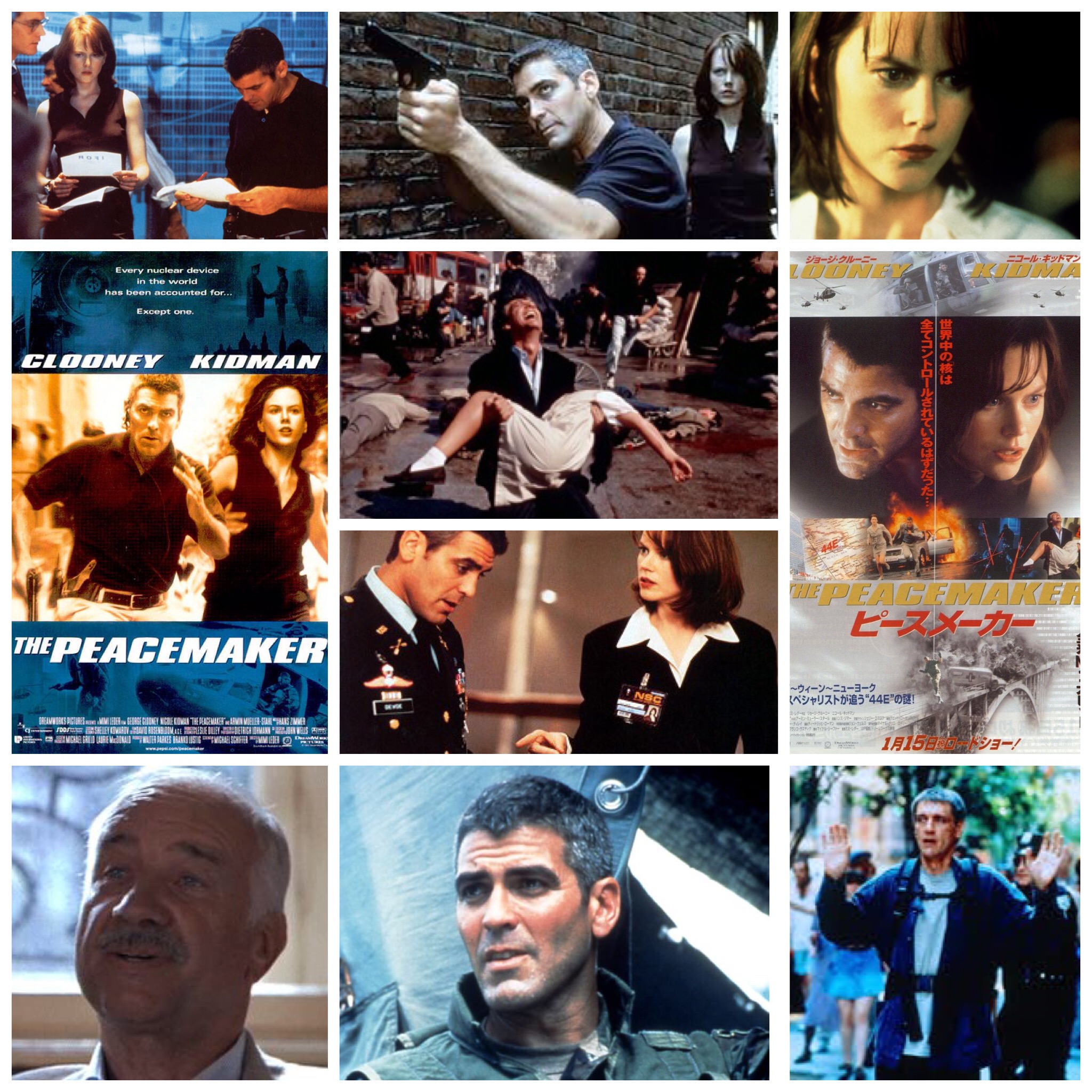
Despite being a fairly dull film overall, Mimi Leder’s The Peacemaker has a few redeeming qualities that almost put it up there with other far better efforts in the wartime espionage subgenre, namely a terrific score from Hans Zimmer and one of the most flat out badass George Clooney actions scenes you’ll find anywhere in his career. It’s a shame the film you find these qualities in is a heavy handed, by the motions anti-terrorism headbanger that says and does nothing we haven’t seen a million times over. Clooney is the seasoned military man, on a globetrotting mission with Nicole Kidman’s intuitive agency analyst, tracking down several Russian nukes that were lifted off a train somewhere in Europe during a painfully static opener. There’s a radical out there played by French actor Marcel Iures, hiding as a piano teacher of all things, biding his time till he gets to go kaboom somewhere stateside and get revenge for some horrendous misdeed against his family. He’s actually the most interesting character, thanks to Iure’s obvious talent and the near sympathetic light they’ve painted his character in. The film is so by the numbers it’ll put you to sleep though, and the positively supersonic score from Zimmer feels like it deserves a better film. Still, you can’t go wrong with the sequence just after a droning car chase where Clooney has T-boned the baddie’s ride and trapped him inside. George promptly steps out, walks over and empties an entire fucking clip into this guys face, it’s pretty much the coolest thing the he’s ever done onscreen. Too bad the film as a whole couldn’t keep up with the organic, intimate level of energy infused into this one moment, we could have gotten something memorable. 

-Nate Hill