Episode 36 John Moore’s I.T. with Special Guest William Wisher

it-powercast


Wisher Brosnan
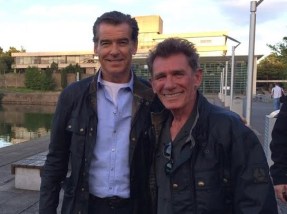
William Wisher with Pierce Brosnan on the set of I.T.

Join Frank with returning guest William Wisher, to talk about his latest film, I.T. which stars Pierce Brosnan in his finest post-Bond role!  The film was directed by Bill’s friend and collaborator John Moore, and Bill co-wrote and executive produced the feature.  In the chat, they discuss the digital age, cyber security, how 9/11 has not only affected cinema, but the world in general, and the evaporation of privacy.  Bill also details his wonderful working relationship with Pierce Brosnan and his production partner, the late Beau St. Clair and what it was like working in Ireland.  I.T. is currently available to stream on Netflix, or for purchase on Amazon.com and other outlets.


Lawrence Kasdan’s BODY HEAT

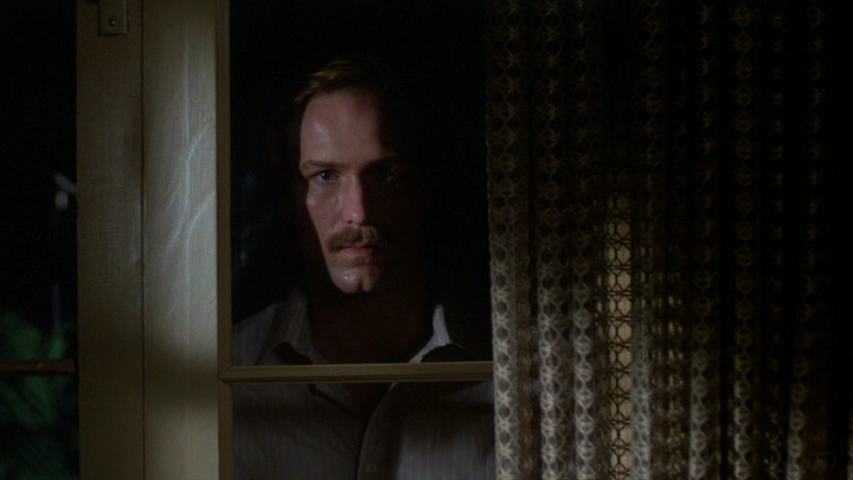
BODY HEAT is about burning desire.  You can feel and smell the sweat, the cigarette smoke, and the deception and betrayal.  It’s sexy, sleazy, but above all, it’s a genre setting film that birthed the erotic thrillers of the 1980’s and launched the careers of Lawrence Kasdan, Kathleen Turner, and William Hurt in the process.

It’s a fascinating feature, it’s a soft remake of the classic DOUBLE INDEMNITY and was shadow produced by George Lucas.  Kasdan was able to roll all of his screenwriting star power into making his directorial debut with a film so sexy and steeped in noir, that it remains cinematic classic.

William Hurt and Kathleen Turner’s chemistry in the film is so powerful, that you can instantly feel and relish in their sexual tension.  Hurt’s character progression is remarkable; he starts out as the seedy lawyer and then he’s the alpha male in heat, then he’s the lover who will do anything for Turner, and then he ends up as the ultimate chump whose lust completely blinded him from the telegraphed motives of his obsession.

Yet without John Barry’s remarkable score, this film would not be nearly as powerful and sexy as it is.  The sexy jazz score with an abundance of saxophone truly accentuates the mood of the feature.  It is easily one of the best film scores of all time.
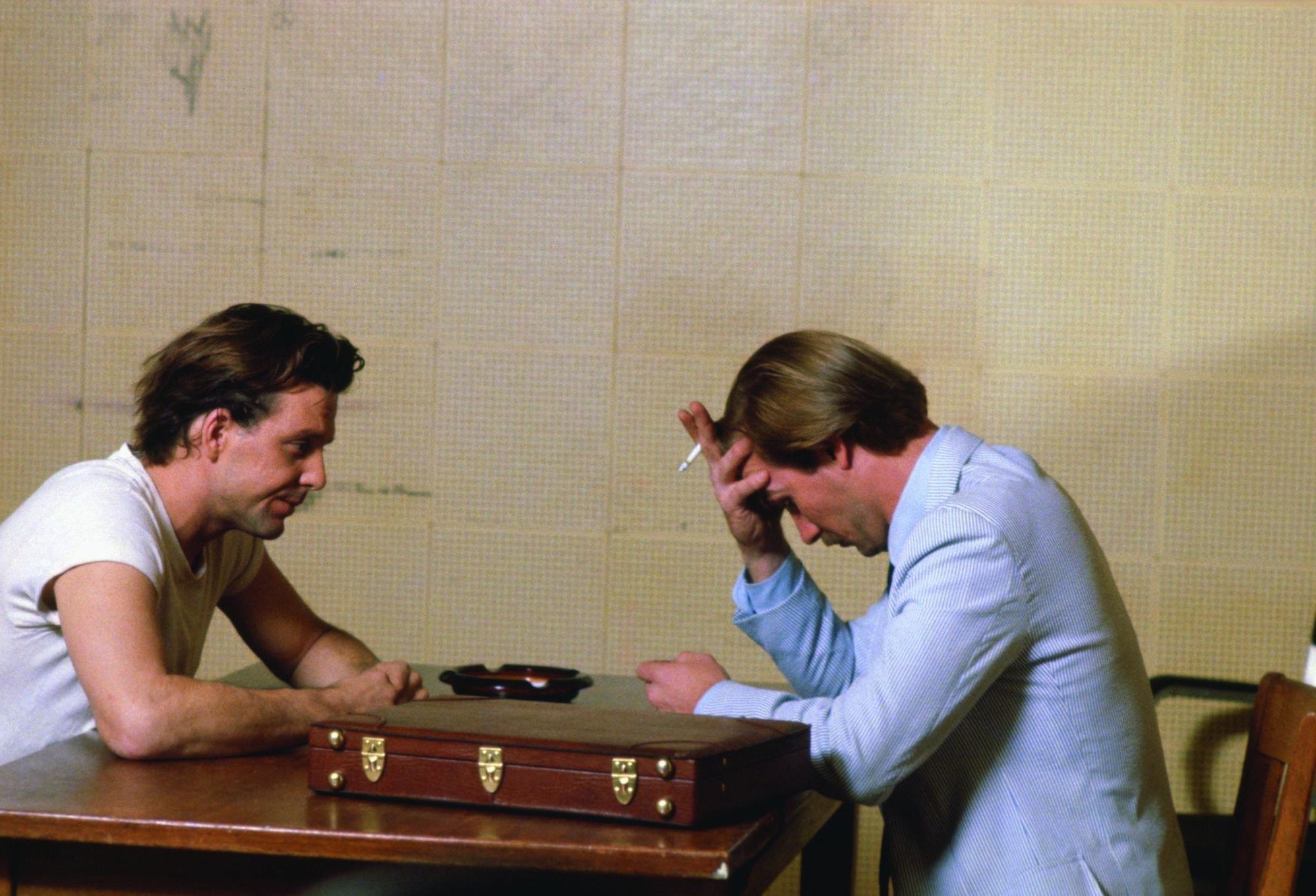
The picture is stocked with wonderfully memorable supporting performances from Richard Crenna, Ted Danson, and Mickey Rourke in his breakout role singing along to Bob Seger.  The film also found it’s way into Cormac McCarty’s screenplay for THE COUNSELOR, in a scene between Brad Pitt and Michael Fassbender, Pitt cautions Fassbender by recalling a scene between Rourke and Hurt.

After all, this film is a very heavy cautionary tale about lust and more importantly, obsession.  When we latch onto an obsession with such velocity and abandon any sense of reality, there’s a very good chance that we’ll burn ourselves down in our own fiery passion, and that’s exactly what William Hurt does.

WILLIAM FRIEDKIN’S BUG — A REVIEW BY NICK CLEMENT

3

Make no mistake – this is a fucked up movie. It’s deranged, it’s upsetting, and it’s totally bonkers on a thematic level. It’s also a tour de force masterpiece of filmmaking and storytelling, with director William Friedkin plunging the viewer into an intense personal hell for the two lead characters, played with gale-force gusto by Michael Shannon and Ashley Judd. The nearly hallucinatory cinematography by Michael Grady amplifies all of the tremendous anxiety and stress being felt by the two whacked-out characters, who have become convinced that small bugs have burrowed their way under their skin, as a result of government experiments gone awry. And yet there’s so much more that I’d never give away as spoilers. But one thing’s certain – this movie does not progress in the expected ways.

2

Darrin Navarro’s razor-sharp editing was in perfect tandem with the creepy musical score by Brian Tyler. And the claustrophobic and intensely realized production design by Franco-Giacomo Carbone stressed the cramped confines of the narrative’s mostly solo-location (a fleabag hotel room), bringing extra dimensions of hostility and fear to the proceedings. Originally written for the stage and adapted for the screen by the brilliant Tracy Letts, this is a pulverizing piece of work, totally unrelenting all throughout, with a shocking and gory climax that showcases both actors going above and beyond the call of duty for their art. There’s nothing “enjoyable” about watching this totally raw motion picture, but that’s sort of the point and intention of the material…to unnerve, scare, and make you think about what you’ve experienced.

1

WES ANDERSON’S THE LIFE AQUATIC — A MINI REVIEW BY NICK CLEMENT

untitled

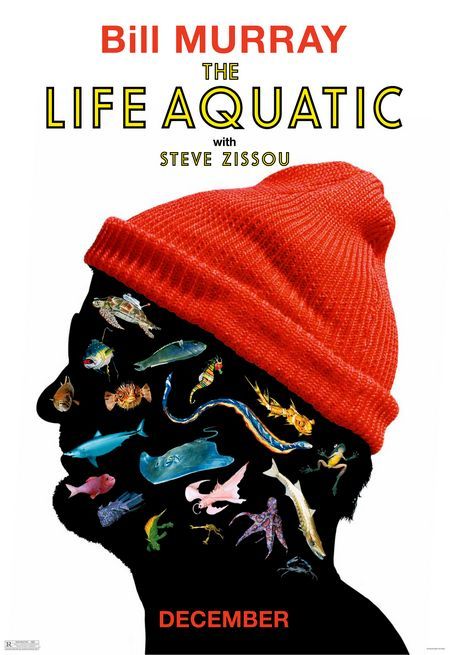
I had totally forgotten how asinine, melancholy, and whimsical – all at once – this movie is. Wes Anderson’s style could certainly be labeled as an acquired taste, and The Life Aquatic is easily his most divisive picture to date, and yet, it’s the one that probably takes the most chances and feels completely off on its own planet. Anderson and co-writer Noah Baumbach crafted a film that feels stoned to its core; you get a contact high while watching this bizarre, freewheeling effort, mostly because the plot zigs and zags, going in unexpected directions, with leading man Bill Murray blazing joints all throughout, and a totally stacked cast with everyone seemingly having a blast. Jeff Goldblum is so sneaky-snarky in this film, and Willem Dafoe’s manic anxiety is a real pisser. The musical score is zippy and silly with undercurrents of lament and sadness; it’s a great piece of work from Mark Mothersbaugh. Anderson’s longtime cinematographer Robert Yeoman did some of his most distinctive shooting ever in The Life Aquatic; that special hand-made aesthetic was in full effect here, and I love the use of vibrant color and the general sense of mise-en-scene that’s felt during the antic proceedings. Oh, and Claymation sea-creatures POWER. This might be the least successful of Anderson’s film from a budgetary/box-office standpoint, but in terms of creativity and overall originality, this one is way underrated and easily one of my favorite motion pictures from this dollhouse auteur.

DAVID O. RUSSELL’S AMERICAN HUSTLE — A MINI REVIEW BY NICK CLEMENT

1

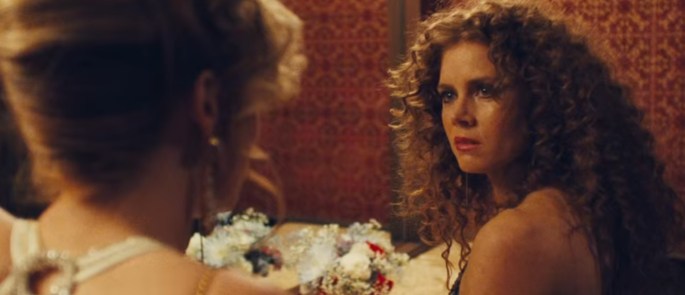
One of the more overtly entertaining films from 2013, American Hustle showcases five fantastic performances which propel this sort-of-true 70’s-set drama, while director David O. Russell continued his hot streak of familiar yet somehow unpredictable studio entertainments. The writing (by Russell and Eric Warren Singer) is funny and clever, Linus Sandgren’s robust cinematography has tons of visual pizzazz, the hair and make-up were all aces, and the dynamic costumes were the cherry on top. The priceless supporting cast brought lots of depth to the film (Louis CK was beyond hilarious), and I love how the film moves to this almost jazzy beat, with the creative team nearly daring the audience to keep up with the plot turns and random confusions that keep the narrative dense with incident and packed with character and flavor. Amy Adams was, it must be noted, aggressively sexy in this film. It may not add up to anything profound by the end, but on a moment to moment basis, this movie surges and pulses with energy and a clear zest for filmmaking. It’s still sort of shocking that it grossed $250 million worldwide, as it feels so retro and niche in retrospect.

3

CAT SICK BLUES (2016) – A REVIEW BY RYAN MARSHALL


There’s an audience out there (make that far out there) for contemporary exploitation cinema of the most unadulterated variety – I like to believe I fit in there somewhere and somehow – and it’s easy to imagine that there are those who go for this kind of stuff based purely on unorthodox spectacle. This is the market that Dave Jackson’s demented CAT SICK BLUES seems to be best suited for, and while it’s certainly not devoid of merit for merely curious parties, it can be inferred that for most, it bumps up against established limits a bit close for comfort.

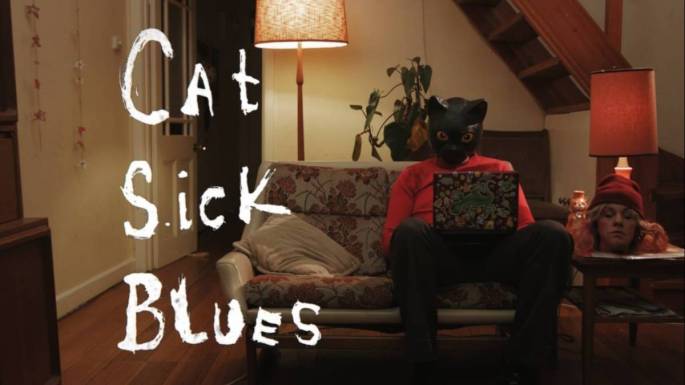
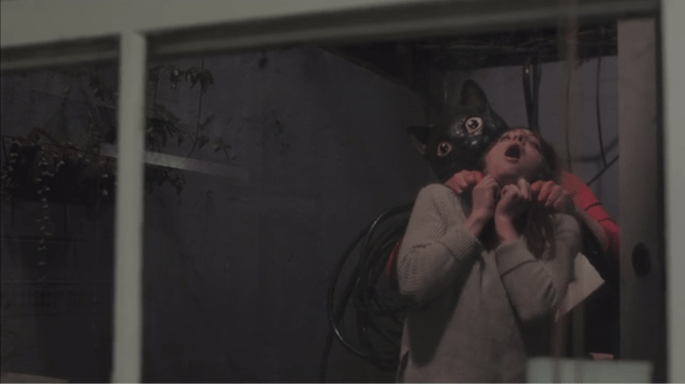
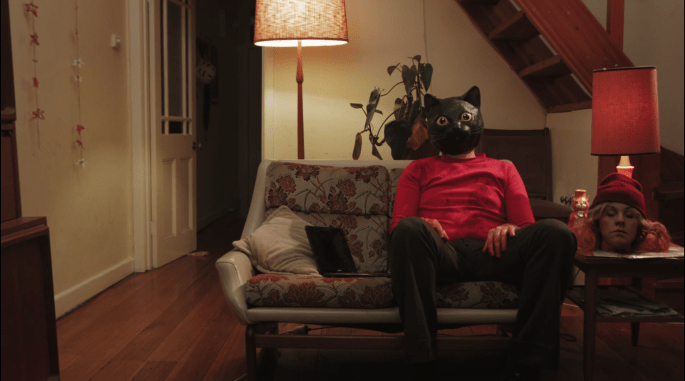
That’s of course by design, as this bizarre cinematic concoction concerns a sleazy serial killer who runs around wearing a black cat mask as well as a grotesquely long strap-on dildo while suffering from frequent seizures; you see, he’s attempting to collect the blood of nine female victims so that he may resurrect his recently deceased feline friend. It’s an inspired and often amusing premise, and though Jackson seems to embrace the humor inherent in its dark heart, it nevertheless walks a fine line between fluff and ferocity.

505


Take, for instance, the case of Claire (Shian Donavan), a young woman who the psychotic anti-hero Ted (Matthew Vaughan) takes a shine to after learning that they share similar grief over an absent pet in their respective lives. Soon after she’s introduced, the poor woman is subjected to a particularly fateful afternoon when an unstable fanatic intrudes on Claire’s privacy; killing, an internet sensation, by twisting its neck on accident before raping her on camera.

Much like the majority of the more affecting sequences, this is mostly just exceedingly uncomfortable, and then Jackson dares to show the animal being thrown out of the apartment window and hitting the pavement; initially bordering on unbelievable, and it more or less stays that way, but the sight of the corpse/doll rebounding off the bike racks on its way down brings to mind fond (and hilarious) memories of the infamous suicide from Euro-trash classic ZOMBIE HOLOCAUST, in which some sorry son of a bitch flings himself out a hospital window and loses his arm in the end, only to have it reattached in the next shot.

3130.PNG


The experience on a whole wears this kind of conflicted emotional pallet proudly, inspiring almost as many uneasy laughs as prolonged cringes. There are attempts at blatant social commentary (regarding the relationship between technology and the people) which remain almost remarkably one-note throughout and Claire’s potentially poignant sub-plot is unfortunately undercooked at best and genuinely tasteless at worst, with Jackson’s script failing to explore her trauma in any sort of subtle or satisfactory way. Sure, one could argue that the sleaze aficionados of old were hardly any more enlightened (in the traditional sense), but they certainly had more going on, and acknowledged that some semblance of humanism has to be brought with them into such transgressive terrain. The world the film envisions is neither condensed nor elaborate enough to support this kind of weight, and so it simply collapses under it; reveling in its own ugliness until it achieves only tedium.

The narrative essentially moves full speed ahead until it hits the home stretch. Jackson, a native Aussie, delivers the icky goods in spectacularly over-the-top fashion, generously rewarding viewers for their patience, and to his credit it’s impressive what unsavory horrors the writer/director and company are able to achieve on a low budget. This applies to the rest of the film as well; it looks nice most of the time and Jackson is able to get decent performances from his main cast. Nevertheless, it’s a film of several severe tonal and moral miscalculations, most of which are clearly intentional but no less debilitating. The brutal murders committed at the hands of Ted become increasingly more visceral as his spree goes on, resembling music videos at a certain point (what with slow-motion and insane amounts of hyper-stylized bloodshed) and let’s not even get into the synth score, which seems to imply heavily nostalgic undertones.

630.PNG


It’s just not a good look for a film that constantly prides itself on how utterly distinctive it is, though mileage may vary based on one’s tolerance for this specific brand of pandering – which, to be fair, doesn’t necessarily define the experience, but it would be better off without it. It’s all a bit exhausting in the end, though not necessarily in the way(s) that its makers intended. There’s enough ambition here to garner interest in whatever Jackson has in store for the foreseeable future – in hopes that perception and perversion balance each-other out in the next outing and that the brain need not be checked at the door.

Top Ten William Hurt Performances

William Hurt has been a fierce cinematic presence for decades, and now he’s slowly embarked on making his mark in television.  He was the epitome of a sex symbol in the 1980’s, a uniquely handsome movie star who brought an abstract and fresh approach to each role he consumed.  Sex symbol status aside, Hurt was nominated three years in a row for Best Actor, winning his first nomination for KISS OF THE SPIDER WOMAN.  He has been able to navigate the waters of blockbuster films like CAPTAIN AMERICA: CIVIL WAR, independent dramas like THE KING, and television.  His first prominent turn on the long form medium was in FX’s DAMAGES where he played a former lover and father to Glenn Close’s son.  He then starred as Captain Ahab in MOBY DICK and most recently he gave an eccentric turn as Donald Cooperman who is the big bad in Amazon Studio’s GOLIATH that recently yielded Billy Bob Thornton Best Actor at this past year’s Golden Globes.  Hurt has been around since the late 1970’s and has always delivered fine performances even when the film itself paled in comparison to his performance.

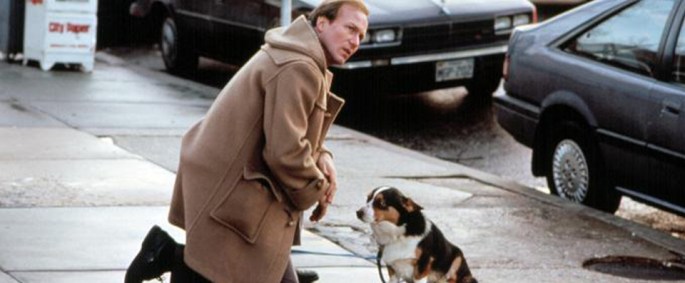
THE ACCIDENTAL TOURIST 1988 Dir. Lawrence Kasdan
hurt-at

This film marks the third collaboration between Hurt and writer/director Lawrence Kasdan as well as the two being reunited with Kathleen Turner.  Here, Hurt gives a very sensible turn as a man in constant mourning over the death of his son; the grief is crippling.  He navigates the waters of the film with a reserved sense of humor, yet the audience becomes absorbed by the sadness in his eyes.  As the film progresses, and his life is renewed with the love and affection from Geena Davis, his reserved and heavily introverted Macon Leary begins to breath life and flourishes.

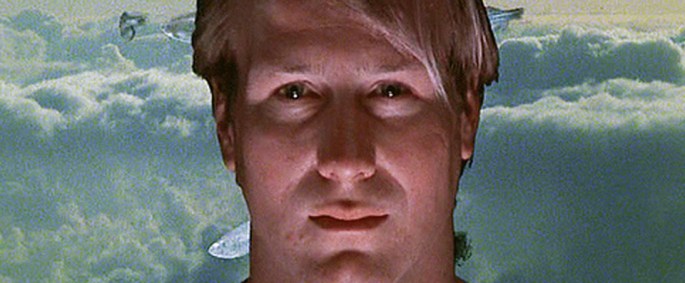
ALTERED STATES 1980 Dir. Ken Russell
hurt-as

Hurt made a huge splash with his first film role.  This is a film that pushes every boundary possible while exploring the themes of obsession and the human psyche.  He is absolutely perfect as the young and sexy scientist looking to push our reality into new realms.  Being his first film, this allowed Hurt to tackle thematic subject matter that even to this day would be rendered taboo.

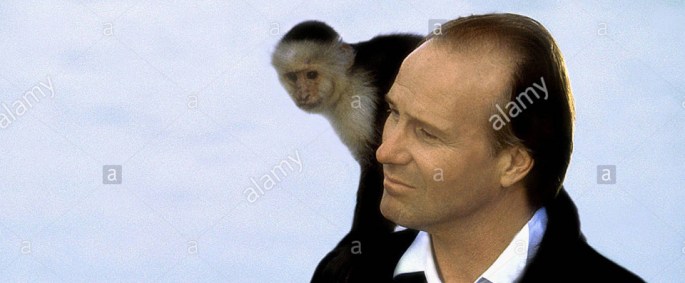
THE BIG BRASS RING – 1999 Dir. George Hickenlooper 
hurt-bbr

This film is a cinematic anomaly.  Based upon an unproduced screenplay by Orson Welles, the film follows Hurt as a gubernatorial candidate who has a very dark and very secretive past that’s exposure hinges upon his former mentor.  Hurt has always played these types of characters well.  Men who try their best to be noble, but are completely shrouded by their past transgressions.  This is a film that is difficult to track down, but well worth it.

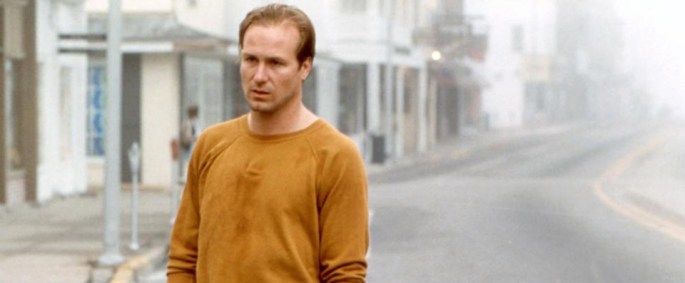
THE BIG CHILL 1983 Dir. Lawrence Kasdan
hurt-big-chill

There are few actor/director relationships that were so fertile and rewarding as William Hurt and Lawrence Kasdan.  In this film, Hurt plays Nick, the drug addicted intellectual who was psychologically changed by his tour in Vietnam.  While each character in the film was written and performed with such care, Nick was the one role that all the male actors lobbied Kasdan for, but he wrote the part specifically for Hurt.

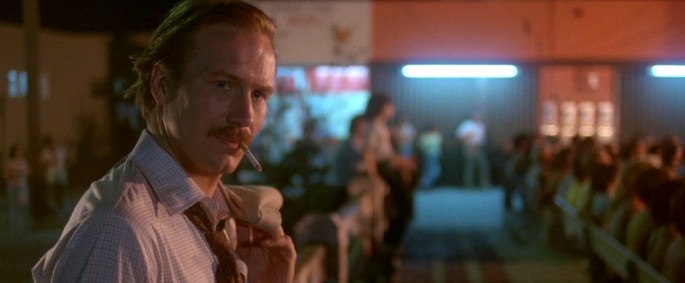
BODY HEAT – 1981 Dir. Lawrence Kasdan
hurt-bh

Kasdan’s first feature was an unofficial remake of DOUBLE INDEMNITY, and it was also the genre setter for the steamy and sweaty erotic thrillers of the 1980’s.  There are not many films sexier and more dangerous than BODY HEAT.  With John Barry’s silky score, to the constant sweaty sex between Hurt and Kathleen Turner – this film will always be unmatched.  The arc of Hurt’s character is fantastic.  He plays the role perfectly.  He’s the sleazy lawyer turned obsessive lover turned the ultimate dupe.

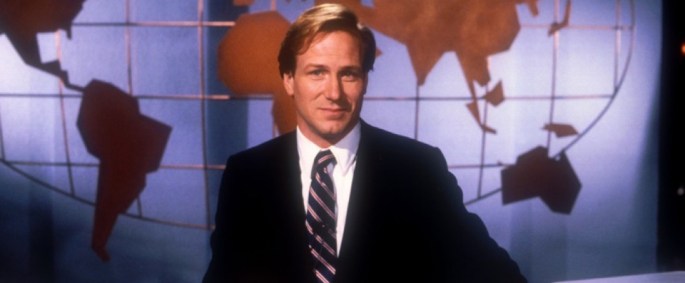
BROADCAST NEWS – 1987 Dir. James L. Brooks
hust-bn

Nominated for Best Actor by the Academy, Hurt portrayed the bubble headed blonde anchorman who had a complete and utter lack of understanding of what he was reading into the television, but that didn’t matter because he looked great doing it.  He plays this character with as much gusto as he does with moral ambiguity.  He’s not a bad guy by any means, but he’s not nearly as noble as he is propped up to be.

GOLIATH – 2016 Amazon Studios
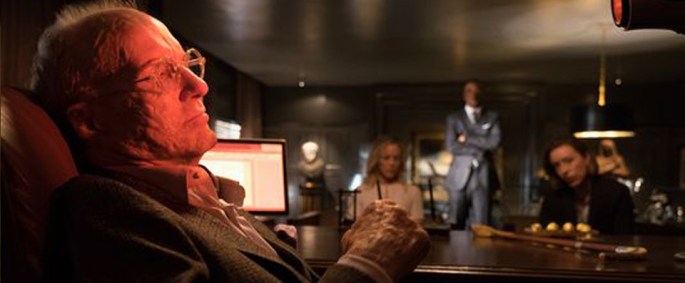
wh-goliath

This is a television show that didn’t make any wakes when it was dropped in October of 2016.  Hurt plays the big bad of the show, he’s the archetypal noir villain who sits in an office that is shaded by his own shadows and web of secrets.  The right side of his body is cover in horrid burn scars, from the top of his head to his hand; that only adds to his mysterious intrigue.  He speaks in riddles and poetic fables in a cadence that only he is capable of.  Billy Bob Thornton won the Golden Globe for his performance in the film, but it’s an injustice that Hurt’s performance seems to have been left by the wayside.

A HISTORY OF VIOLENCE – 2005 Dir. David Cronenberg 
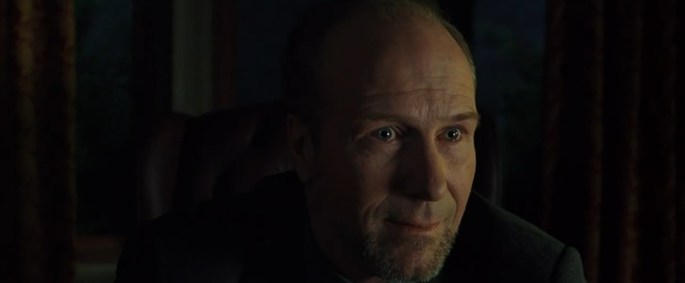
hurt-ahov

In this film, Hurt gives one of the best performances of all time.  His total screentime is less than fifteen minutes, and he strategically brought in to close the third act of the film.  He is absolutely menacing in this film, from Cronenberg’s use of eye light on him to his rustbelt accent – Hurt owns the entire picture that was already great before he shows up.  This film also highlighted Hurt’s cinematic return.  He won Best Supporting Actor from the New York and Los Angelos film critics association, and he was nominated by the Academy for his role, only to lose out to George Clooney.

I LOVE YOU TO DEATH – 1990 Dir. Lawrence Kasdan
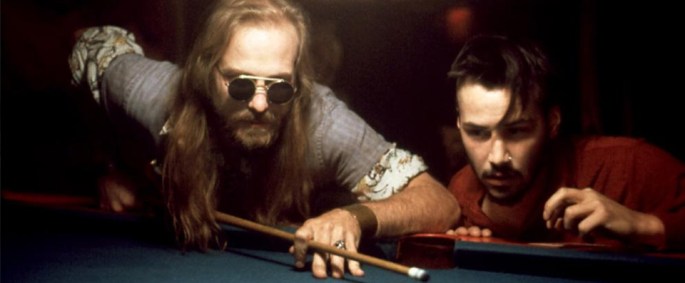
hurt-ilytd

This marks the last collaboration between Hurt and Kasdan.  In this film, Hurt takes on a completely zany and hysterical role as a drunkard pool player who gets roped into killing a man for a couple hundred dollars.  His role is very small, but his long hair, John Lennon esque sunglasses, and obsession over Reggie Jackson marks this an incredibly unforgetable performance.

KISS OF THE SPIDER WOMAN – 1985 Dir. Hector Babenco
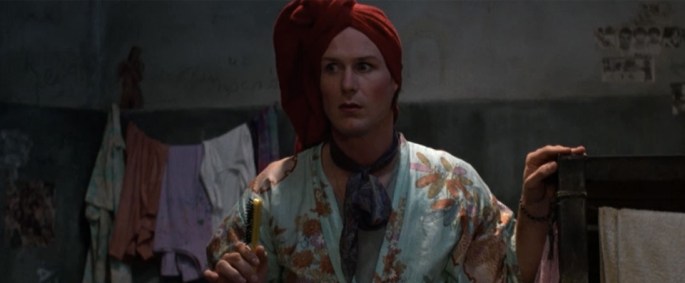
hurt-spider-woman

Fresh off his two collaborations with Lawrence Kasdan, Hurt risked his movie stardom gigantically by taking on a role in a small film where he played an imprisoned, flamboyantly gay sex offender in a South American prison.  He strips himself of every single masculine quality and becomes this very feminine and fragile character who copes with his horrible life by retelling the love story from a Nazi propaganda film to his freedom fight cellmate, Raul Juila.  Hurt won Best Actor from the Academy for his fearless performance, further lamenting this as one of the best performances in cinema history.



Amazon Studio’s GOLIATH

goliath_amazon_h_2016.jpg

Amazon Studios quietly released a new series in October called GOLIATH from creators David E. Kelley and Jonathan Shapiro.  It stars Billy Bob Thornton in his Golden Globe winning turn as Billy McBride.  Thronton is his seminal drunk, lovable loser role but with a twist; he’s a brilliant (defrocked) lawyer.  Thornton reluctantly gets lured into a case against a weapons contractor that is represented by a gigantic law firm that he helped created and no longer is a part of.

The casting of the series is wonderfully rounded out by Maria Bello who is Thornton’s ex-wife, Molly Parker as a cut throat lawyer working for Thornton’s former film, Harold Perrineau as the judge overseeing the case, Dwight Yoakam as the CEO of the weapons contractor Borns Tech, and William Hurt in a beautiful showboat of a performance as Donald Cooperman, Thornton’s former partner.

This show has a very complex structure.  It is equal parts CALIFORNICATION with Thornton in an apathetic daze, where he spends his days drinking and co-parenting his daughter with Bello – yet it is steeped heavily in dark LA noir.  Just when you forget about how transgressive and dangerous the show is while watching Thornton bumble through a scene with his trademark zeal – we get quickly reminded of the dangers of the show by a cut to William Hurt who is always seated in his dark office, face half covered in burn scars, listening as his gaggle of lawyers discuss their best course of action against Thornton, as he answers their questions with a paratrooper signalling clicker.

hurt-goliath

The affability of Thornton is starkly contrasted by the overbearing menace of Hurt.  He’s the big bad of series, and his danger and power is very much akin to a Blofeld esque villain of importance and stature.  Hurt’s brilliant performance is a reminder that he hasn’t faded as an actor, but that he is constantly able to turn out remarkable work decade after decade, never allowing himself to disappear as time carries on.

It hasn’t been announced if there will be a second season of GOLIATH, whispers are that the show will not continue; which comes as bittersweet news.  The series wrapped itself up brilliantly, without the finale hinging upon a second season.  Much like HBO’s LUCK or AMC’s LOW WINTER SUN, the series contains and closes its taut narrative within a singular season, yet the characters are so rich and developed with complexity and care that it truly would be a shame to let them go so quickly.  Whatever the fate of GOLIATH may be, it stands tall and even superior to most of Netflix and HBO’s original programming.

GOLIATH is available to stream on Amazon Prime.

JOHN LEE HANCOCK’S THE FOUNDER — A REVIEW BY NICK CLEMENT

3

I expected to be starving after watching The Founder, John Lee Hancock’s sneakily dark expose of the origins of McDonald’s, but you’re most definitely left with a sour taste in your mouth over how one of the most iconic emblems of America came to be. Robert D. Siegel’s swift screenplay effectively laid out the broad-stroke history to one of the world’s most popular franchise restaurants, never backpedaling on any of the ethically and morally corrupt maneuvers that certain people made in order to get filthy rich. Michael Keaton is very sharp as Ray Kroc, the unrelentingly persistent salesman who lucked his way into meeting the two original McDonald’s creators, Richard and Maurice McDonald, effectively played by the great John Carroll Lynch and funny-man Nick Offerman, wisely tamping down his overt comedic instincts and playing a tightly wound relative-genius.

1

Hancock’s direction is assured and steady, the film has an eye-pleasingly, honeyed widescreen visual style courtesy of cinematographer John Schwartzman (The Rock, The Rookie, Seabiscuit), while the picture continually evokes a simpler time in America when you could feed your family of four some burgers, fries, and Cokes for 50 cents. But at its heart, this is a dark and sad movie, with a totally unlikable protagonist at its center who is a complete leech yet was smart enough to use the system to his advantage. So in other words, the American Dream. Carter Burwell’s score operates in both happy and sinister mode, sometimes at once. The unintended thematic allusions to Donald Trump’s repugnant rise to power can’t help but announce themselves repeatedly while you watch The Founder unfold.

2