JAMES PONSOLDT’S THE SPECTACULAR NOW — A REVIEW BY NICK CLEMENT

1

Teenage alcoholism is rarely handled so openly and honestly as it is in The Spectacular Now, which was director James Ponsoldt’s excellent third film, after his 2006 debut Off the Black (which I’ve not seen), and his striking 2012 sophomore effort, Smashed, which was another film to deal with out of control substance abuse. The sensitive screenplay by Scott Neustadter and Michael Weber, which was based on Tim Tharp’s novel, hit all the proper notes of sadness, romance, and believable interpersonal relationships, with the combo of Miles Teller and Shailene Woodley absolutely nailing their roles, and helping to create two people who we absolutely want to see succeed despite their inherent flaws, Teller in particular. This film really understands the high school experience, young love, and first sexual experiences, and contains moments of introspection that are at times startling in their unanticipated depth; credit the astute writing with never overplaying its hand at any moment.

2

The final scene and last few moments of this film land with complete perfection, asking the viewer to contemplate the future for its main characters in a way that feels satisfying and mysterious all at once. The themes explored in this film will be tough for some, and the lived-in quality that the filmmaking team established rooted the entire piece in a believable atmosphere; there could be aspects to this story that hit very close to home for some viewers. There’s a rather amazing supporting cast which includes Brie Larson, Kyle Chandler, Jennifer Jason Leigh, Mary Elizabeth Winstead, Kaitlyn Dever, and Bob Odenkirk, with everyone getting a scene or two to really deliver the goods. After making a splash at Sundance, this film got lost in the shuffle with a late summer release date in 2013, but is available on Blu-ray and various streaming providers, and feels like a film that’s just waiting to find a deserved cult following.

3

GAVIN HOOD’S EYE IN THE SKY — A MINI-REVIEW BY NICK CLEMENT

1

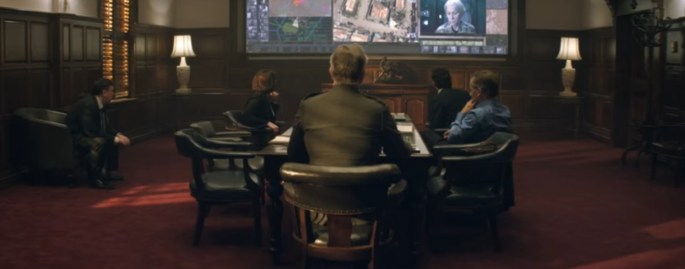
Gavin Hood’s sharp and unsettling political thriller, Eye in the Sky, details the heavy costs of drone warfare, presenting the viewer with a believable scenario, and never backing down from the reality of the story being presented. The diverse and eclectic cast includes a steely Helen Mirren, the superb as always Alan Rickman (so sad he’s gone), Aaron Paul, Barkhad Abdi, Jeremy Northam, Iain Glen, and Phoebe Fox, with everyone doing strong, un-showy, ground level work. Guy Hibbert’s swift screenplay wastes not a moment, getting right to business, and hardly letting up during the tight 90 minutes of action.

2

The slick lensing by Haris Zambarloukos is a further production bonus; this is a really photogenic movie without ever being in-your-face flashy. As with Hood’s extremely underrated 2007 topical thriller Rendition, he has a tendency to not go full-on over the top with his plotting, instead allowing for rational decisions to rule the day, no matter how cynical or upsetting the outcomes might be. The final moments sting with a Fuck The Man sentiment that would make a filmmaker like Robert Aldrich smile; Hood gets visually self-righteous and for just cause, as he knows his message is an important one.

3

Brighton Rock: A Review by Nate Hill


Brighton Rock is a character study focusing on one of the most delinquent, misanthropic, sociopathic, maladjusted pieces of work you’ve ever seen. The fiend I speak of is a wannabe British gangster named Pinkie, played by Sam Riley, an actor who doesn’t usually get this dark with his work, but makes quite the impression when he does. Pinkie lives in the seaside town of Brighton, and aspires to rule the crime faction there with a razor brandishing, snarling, self destructive death wish. Despite the quaint and quite pleasant coastal setting, this is a cold as ice story about a guy who brings nothing but despair and violence to everyone including himself. Showing up on the scene to oust local bigwig Phil Corkery (John Hurt), Pinkie declares personal war on everyone around him in a spectacular downward spiral of burnt bridges and furious confrontations. There’s also what has to be one of the most dysfunctional ‘love’ stories to be found anywhere, between him and a clueless waitress played by a very young Andrea Riseborough. She’s deluded by the bad boy effect, blind to the fact that Pinkie cares for her about as much as roadkill. She’s a plaything to him, a curiosity to be toyed with and eventually discarded, or worse. She loves him, or at least naively believes she does, making it quite sad and unfortunate to see their bitter courtship circle the sinkhole. Helen Mirren plays her restauranteur boss who feels the bad vibes coming off Pinkie in waves, and warms poor Andrea. Needless to say, these warnings go unheeded. Watch for Sean Harris, Phil Davis and Andy Serkis in appropriately scummy roles as well. This is Riley’s show, and he owns it with the force tyrannical pissant who is positively bursting with self loathing and homicidal hatred. A dour tale hiding beneath a picturesque shell, strangling us in malaise before we know what’s hit us.

ALEX LEHMANN’S BLUE JAY — A REVIEW BY NICK CLEMENT

3

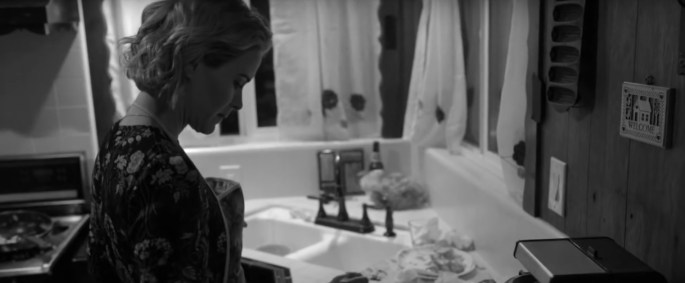
Out of nowhere, the little gem Blue Jay has come along, and now making a top 10 list for 2016 is getting harder and harder to do. This is an extremely funny and poignant film that eagerly mixes tones, shot in silky black and white and utilizing the walking-and-talking format, essentially operating as a coyly sexy yet surprisingly sad two-hander with Mark Duplass (who also wrote the terrific script) and Sarah Paulson (fabulous, yet again). Certainly reminiscent of Richard Linklater’s Before Trilogy but definitely its own thing, this story of two, long-ago lovebirds who randomly reconnect moves in some surprising directions, and always allows for the narrative to be born out of the characters and the generous performances from the well-matched co-stars. Duplass is one of the busiest people in Hollywood, and this film is his first production to hit Netflix streaming in a multi-film deal; I’m so excited that he’s found an outlet for his particular brand of low-key cinema because there’s been very little (if anything) that he’s been creatively involved with that I haven’t enjoyed. Blue Jay ranks up there with Cyrus as the most accomplished item on Duplass’ resume.

1

Directed with grace and simplicity by first-timer Alex Lehmann, Blue Jay moves through its 80 heartfelt minutes with a great sense of atmosphere and casual style; Lehmann also served as his own cinematographer and camera operator, making great use out of the chilly California mountain locations. And look out for Clu Gulager in a rather wonderful scene at a convenience store that underscores the humanity at the heart of Duplass’ tricky script. Because the film revolves around two characters, there has to be something at the center of the narrative that’s important to the both of them, and because the final act involves confessions and realizations from their past (none of which I’d spoil), all that has come before it takes on even more meaning. When they first see each other, it’s clear that there’s something unfinished between the two of them; both Duplass and Paulson do a great job conveying emotion through casual facial gestures and awkward body language. And throughout the sometimes painful and often times very funny story, there’s an eternal bond that re-emerges between the two characters, becoming nearly unbreakable, even if their futures are uncertain.


“I’m not saying the universe is evil but it sure has a nasty sense of humour.” – A review of Passengers by Josh Hains

The following review contains mild spoilers that will describe events that occur during the first 25-30 minutes of the movie (the first act). If you do not wish to read what could be considered spoilers to some individuals, you can skip the fourth paragraph.

Science fiction, as a genre within the medium of film, has always been built on ideas, either that reflect societal issues or political stances, or that ask audiences thought provoking questions about Life, time, space, and our own morality codes. Since Gravity was released in 2013, I have asked myself what I consider to be a rather important question with each new science fiction epic related in the years since: does this story break new ground, does it try something different, or have I seen it all before? In the case of Gravity, I came to the conclusion that the story didn’t break new ground at all, though apparently there were possibly some ground-breaking methods behind the construction of the movie. Interstellar broke new ground, presenting us with the theoretical concept of astronauts travelling through a black hole in search of a new planet to colonize after mankind’s way of life ceases to be a sustainable enterprise. The Martian asked what would happen if a man was stuck on Mars for 4 years, how would he survive, and how would we get him back to Earth, and showed us with a great deal of scientific accuracy, how this might occur.

Passengers asks us some pretty deep and dark questions, such as what would you do if on a 120 year voyage to a new sustainable planet, you awoke from hyper-sleep 90 years early? How would you deal with the situation at hand and the idea that you’ll die before the voyage is over? How would you entertain yourself? Why were woken so early? Is this how your life ends?

The marketing team behind Passengers seems to have struggled immensely with concocting an effective way to advertise the movie to the two audiences who would undoubtedly want to invest in this movie: the science fiction lovers, and the romance-comedy-drama lovers. It’s as if half of the advertising was attempting to appeal explicitly to men with images of thrilling adventure and mind bending physics, while the other half of the marketing was aiming for a female demographic by hyping up the romantic elements and using odd pop-rock music. You can’t sell a sci-fi epic simply off the star power of your two leads, so a delicate balancing act showcasing the thrill and romance dramatics was needed, but sadly never achieved by a lazy marketing team. Thankfully, the movie itself is actually perfectly fine.

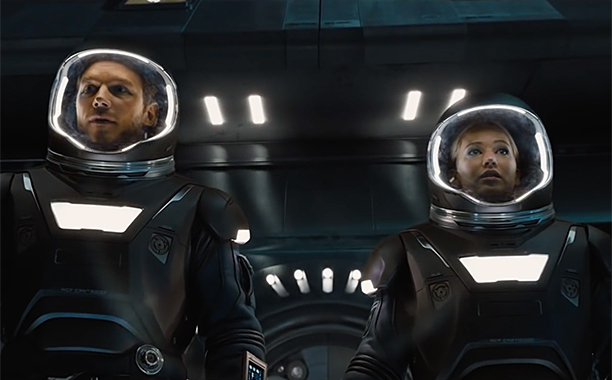
Jim Preston is awoken in his hibernation pod on the starship The Avalon, which is transporting 5000 colonists who have volunteered to travel in hyper-sleep for 120 years to Homestead II, a neighbouring planet to our Earth capable of sustaining human life. To his shock, Jim realizes he’s the only person currently awake on the ship because something in the ship malfunctioned and woke him 90 years early. Jim spends the next year of his life becoming acquainted with android bartender Arthur, trying to fix the pod and even send a desperate distress message that won’t reach Earth for 50 years, enjoying some of the luxuries of the ship, and becoming increasingly lonely, bored, unhappy, and suicidal. During a drunken venture through the ship, Jim sees an attractive young woman in a pod named Aurora Lane, and begins going through some of her person a effects, learning she’s a writer and other intimate details. He becomes obsessed with her, and after a bout of indecision, makes the choice to tamper with her pod and awaken her in the hopes of finally having a human companion and possibly finding some semblance of happiness with this seemingly perfect woman.

The dilemma the movie presents, being awoken 90 years early on a 120 year voyage through space, is a unique and thoughtful concept, and it’s interesting to see how our two leads, Jim Preston (Chris Pratt) and Aurora Lane (Jennifer Lawrence) grapple with this concept, and the knowledge that they will die before the voyage comes to a close unless they can somehow figure out how and why they were awoken so early. The actors do a great job of capturing the varying emotions and mental states their respective characters experience during the course of the movie, with Pratt working his trademark charm and sly humour, and even digging deep into some strong emotional work, giving us a performance that might actually be surprisingly stronger than his turn as Star-Lord in Guardians Of The Galaxy. Lawrence is every bit as charming and witty as Pratt, and even doing a splendid job with the more emotional scenes of the movie. This is probably Lawrence’s best work since her Oscar winning turn in Silver Linings Playbook.

Passengers doesn’t have plot twists that pull the rug out from underneath you, and even the real cause of the ship’s continuous malfunctions isn’t even that convincing an idea, or perhaps it’s just a lazy idea altogether, but that doesn’t make this a bad movie. The risks this movie takes don’t come in the form of jaw dropping spectacle or mind bending twists, but rather in the way the movie initially connects two characters in a less than desirable fashion. That this movie had the guts to bring the characters together in such a dark way and sustains that connection for as long as it does, and convincingly so, is worth praise aplenty. It’s really not the bad movie the Rotten Tomatoes collective are making it out to be, and while it’s not shocking or necessarily all that visually impressive compared against Interstellar for example, it is a perfectly fine movie. An unpretentious, enjoyable, entertaining, heartfelt, and thought provoking sci-fi drama, a voyage I won’t mind investing in again when the time is just right.


MIKE MITCHELL’S SKY HIGH — A REVIEW BY NICK CLEMENT

1

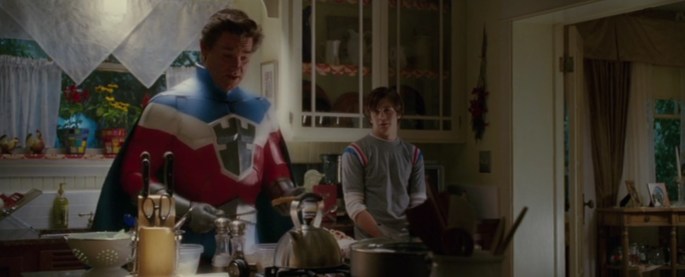
Sky High is a total blast of fun. Released in the late summer of 2005, this is basically a live-action version of Pixar’s The Incredibles, with Kurt Russell starring as a Super Dad whose entire family consists of various superheroes. Conceived in the 90’s by Paul Hernandez and fleshed out by Disney animation staff writers Robert Schooley (Hotel for Dogs), and Mark McCorkle (Monsters vs Aliens), the film was energetically directed by Mike Mitchell (Deuce Bigalow: Male Gigolo), and has an incident-packed narrative that doesn’t skimp on quirky character beats or wise-ass humor. It’s colorful, it’s witty, and all of the performances are in on the joke and totally earnest in all the proper ways. This is easily Russell’s most underappreciated performance as an actor, while Michael Angarano, Mary Elizabeth Winstead, Kelly Preston, Danielle Panabaker, Steven Strait, Cloris Leachman, and ex-Wonder Woman herself, Lynda Carter all offered great support.

2

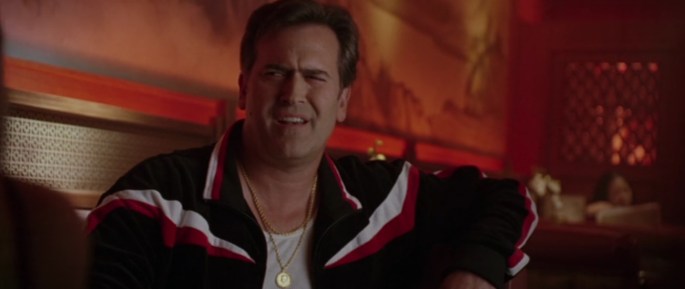
Oh, and Bruce Campbell basically runs away with the entire film. Shelly Johnson’s vibrant cinematography is a huge plus, while the score by Michael Giacchino hits all the proper notes of familial triumph. Sadly, Sky High didn’t blast off at the domestic box office, as it probably seemed too quaint for our current in-your-face society; it grossed roughly $65 million in the states. But there’s something about this film that makes it special in a sea of family-oriented content, as it’s got a genuine sense of gee-whiz fun running all throughout its core, with a playful script and spirited sense of direction. Currently streaming on Netflix, this is a delightful PG-rated entertainment that is perfect for everyone as it offers a little bit of everything to be enjoyed.

3

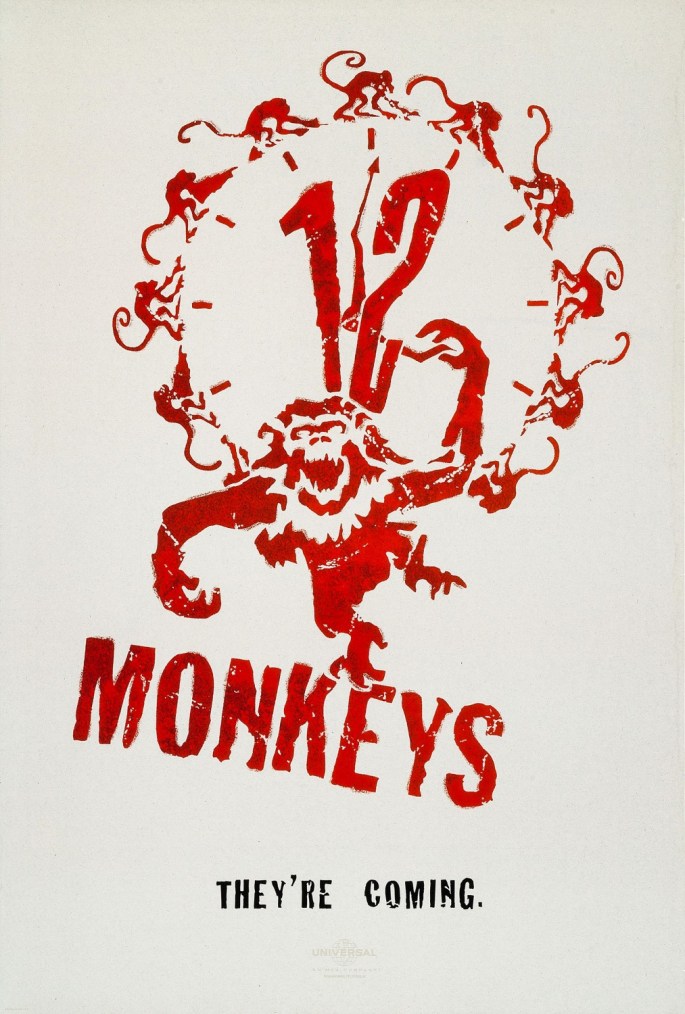
TERRY GILLIAM’S 12 MONKEYS — A REVIEW BY NICK CLEMENT

1

There are few modern science fictions films as accomplished as Terry Gilliam’s complex and hugely entertaining head-trip 12 Monkeys. It’s easily in my top five from Gilliam. He’s made so many great, wildly fun movies that peer into pure madness that it’s tough to rank them. But this one is easily one of his most accomplished, and it represented that rare time where his incredibly unique, independent minded vision meshed with a somewhat generous studio budget and the rigors of a corporate funded project that was far from a surefire hit during its early conception.Gilliam is a filmmaker of eccentric wit, both of the verbal and visual variety, who also loves to push things as far as he can go with this go-for-broke style, which is borderline lunatic at times if not downright surreal and nightmarish. Looking like it cost twice as much as it actually did (an impossible to imagine $30 million!) and hurtling the viewer through time and space and all manner of various settings and distinct atmospheres, 12 Monkeys is a wonderfully convoluted tale of potentially hazardous time travel, affecting romance, paranoid fantasy, and sketchy virus thriller.

2

The script’s ingenious final moments on board that plane along with that haunting final line – “I’m in insurance” – it still chills to the bone, and I loved how Gilliam took the brilliant screenplay (co-written by David and Janet Peoples; David Peoples also wrote or co-wrote Unforgiven and Blade Runner), which was an epic take on the phenomenal short film La Jetée, and fine-tuned it to his personal taste and form-pushing aesthetic. Sometimes, when a filmmaker is as wildly original as Gilliam, and they are working with material not authored by them, you get the sense that their talents aren’t being fully utilized. Not here. Everything in this film hits its mark, and in most cases, the performers and department heads went above and beyond the call of duty. Bruce Willis, rarely better, wasn’t the confident, normal “Bruce Willis” we’d been accustomed to seeing on screen when this film was first released. Constantly sweating or drooling or bloodied, massively vulnerable, possibly delusional, always volatile, and incredibly nervous, it’s his “out-of-control” moment as an actor, and it’s fascinating to see Gilliam pick and prod at his big Hollywood star, throwing him through the ringer, and ultimately getting one of the most emotionally accessible pieces of work from the actor.

1

Brad Pitt, who had a banner year in 1995 with his twitchy, psychotic work in this film as a ranting and raving mental patient and his slick, star-making turn in David Fincher’s Se7en, brought a diseased humor (“Drrruuuggsss!”) to his role of guy with serious daddy issues and some interesting notions regarding animal freedom. Madeleine Stowe was still looking hot and it’s yet another reminder of how good she was on screen, sympathetic from the moment we meet her, and involved in the narrative not just as “the pretty girl,” which was a quality that followed her in many of her acting jobs. David Morse and Christopher Plummer also offered, as per usual, memorable support, with Morse cutting an especially scary portrait of the calm and calculated antagonist. I’ve been fascinated by this movie ever since my dad picked me up early from school (last two classes were ditched as I recall due to a “family event” lol) about two weeks into its wide release (it was his second time seeing the film), and over the years, I’ve utterly abused my DVD with countless re-visits, and it’s amazing to see the film on Blu-ray after all of these years. Roger Pratt’s varied and incredibly stylish cinematography is constantly arresting and a treat for the eyes, while Paul Buckmaster’s never-leave-your-conscience original score still gives me the willies. Mick Audsley’s editing is miraculous when it’s all boiled down; there’s so much depth to the storytelling and imagery and themes and yet the film moves at a beautiful pace. 12 Monkey’s has aged gracefully and rather compellingly over the last 20 years, with its political and social message still firmly intact, and offering cinematic glories that easily match the trippiest, most daring offerings of recent years.

3

“Half of America just lost their Facebook.” – A Gravity review by Josh Hains

I love Gravity. Love, love, love it. L-O-V-E IT!

I mean, the unseen force that keeps us pinned to the ground so we don’t tumble about and float away into the depths of space. That Gravity. So thankful for it. As for the film, I love it too. You don’t even know.

Now let’s be perfectly honest with ourselves and admit, Gravity is kind of a difficult film to write a review about because there isn’t much of a story or plot for me to pick apart meticulously.

Russians blow up one of their own satellites and the fallout causes debris to collide with the several other satellites including American ones, as well as the Explorer space shuttle and its crew who are working on the Hubble Space Telescope. Two crew members, biomedical engineer Dr. Ryan Stone (Sandra Bullock), a newbie to space, and veteran astronaut Lt. Matt Kowalski (George Clooney), are the only survivors, and must make their way back to Earth without the assistance of Mission Control in Houston, who has gone offline thanks to those satellites getting trashed. That’s it. I’m not kidding, that’s all there really is to it. That’s so simple a caveman could write a review about it. No offence to cavemen.

I’m actually pretty glad there’s not much plot to the film. There was a time when a lack of plot could get a film places, when people didn’t care if a film had the most intricately layered plot, as long as it entertained the hell out of them, and they’d put it upon a pedestal high above other films, giving it some kind of a legendary status in cinema history. Like Blade Runner. Today, a film without much plot often gets ripped to shreds by critics before the audience has even seen the film, automatically creating a negative aura that engulfs the flick and rapidly builds an unwarranted bias and stigma toward the film. Just look what’s happened to Disney’s Tomorrowland. Original ideas aren’t enough for some people, blah, blah, blah, the film looks amazing if you ask me.

Wait…Gravity was one of the best reviewed films of the 2013 season? And it won Best Director, Best Cinematography, Best Film Editing, Best Original Score, Best Sound Editing, Best Sound Mixing, and Best Visual Effects at the 86th Annual Academy Awards? Oops. Guess I’m late to the party.

Gravity might not have much plot, but that isn’t even the slightest of a hinderance for this full throttle space thriller. In fact, the lack of plot actually works in its favour, allowing ourselves the opportunity to take in all the wondrous sights and sounds, rather than shovelling mountains of unnecessary exposition and plot-stuffings down our throats. Right from the first frames of the film, it’s evident moviegoers are in for a visual treat, thanks in large part to Emmanuel Lubezki’s uber-detailed cinematography, and the all-to-real CGI effects that make up I’d say about 98% of the film’s visual content – only the actors and their suits are real, to my knowledge. Again, this isn’t at all a hinderance, although at varying moments through the course of the film the two leads had a CGI sheen to them. I can only assume this was entirely intentional, given that this obscure look found its way into the final cut. The film is rich with detail, from the finest stubble on Kowalski’s chin that can be made out perfectly despite the camera being several feet away from the character, to the awe inspiring other-wordly view of our home planet; the detail is pronounced, immaculate, and gorgeous. Seriously, Gravity couldn’t look anymore beautiful than it already does. Can you believe me that their visors are CGI? Neither could I, they look so damn real.

In space, no one can hear you scream. In Gravity, sound is everything. From the thunderous score enhancing the urgency of the thrill-a-minute perilous sequences, to the subtleties of the character’s breathing as their oxygen levels dip. Between the stunning cinematography melded with the extremely lifelike visuals effects wizardry, and the moody music and pitch-perfect sounds effects, Gravity becomes an elevated immersive cinematic experience you have to see to believe. Simply hearing about the film or watching it’s then-popular trailer is not enough, you genuinely have to sit back and allow the ride to envelop you completely. If you’re into that sorta thing.

In terms of acting, in several elongated sequences strung throughout the film, we don’t get to see the actors faces as much as we get to hear them. Bullock’s Stone leans toward the panic-stricken side of things, being that she’s a space newbie and all, and she’s distressed enough from early in the film until the final frames to have next to no oxygen for an albeit short duration of the film, which is a bad thing in case you were wondering. Anytime something goes wrong, and believe me, the shit hits the fan (Murphy’s Law is in full, vibrant effect here), she goes into panic mode and can’t seem to keep her cool or maintain some semblance of self control, which again, is expected because she’s a…newb!On the other hand, Clooney’s Kowalski is the calm, cool professional. He maintains as much control as is feasible within the confines of their situation, but never overreacts or panics. He’s always cool, calm, collected, and does his absolute best to assist Stone and help calm her down at various points so she doesn’t use up all her oxygen. I couldn’t help but notice at a later point in the film, when Kowalski gives a motivational push to Stone, that George Clooney has possibly the most soothing male voice I’ve ever heard from a mainstream Hollywood actor. After the rigorous endurance test that is the early portion of Gravity, he actually calmed me down with his inspirational words of wisdom, I shit you not. In three noteworthy moments I don’t want to spoil for anyone who might not have sen Gravity, both actors, with little dialogue and very little of their faces available for our viewing pleasure, convey melancholic aspects of themselves without diving headfirst into sentimentality. These moments feel genuine and organically constructed, never once ringing falsely, and thus constructing raw moments of compassion we feel for their respective characters.

A hot topic surrounding the film has been the scientific accuracy of the picture, with everything from zero gravity to deceleration being scrutinized by the general public (why are people who know nothing about space given the time of day?), along with astronauts and Astrophysicist Neil DeGrasse Tyson. Tyson, after his viewing of the film, took to twitter to debunk some of the film’s key aspects, some of which were scientifically accurate, and some of which were simply movie mumbo-jumbo. The film’s director, Alfonso Cuarón, as stated that he is aware the film is not always scientifically accurate, but that these inaccuracies were necessary for the sake of the story. That’s something I can abide by.

As a whole, sure, Gravity has zip for a story. Nada, nothing, right?. But sometimes, watching a film isn’t about whether you’re sucked in by the story or not, but how the film affects you on a visceral, deeply psychological and emotional level. Sometimes, the best films don’t require the brains to navigate through overlong dialogues and meticulously crafted story lines, but rather, the sight to bear witness to the greatness being displayed before your very eyes. But a great film can’t be measured by such things, even though I’ve taken the time to acknowledge them. That’s what I love about cinema, it’s not about how great the story was, or how terrifically riveting the performances were, or how the special effects looked or the way the music rings through your ears. No, a great film is measured by how it makes you feel deep down in those places you don’t talk about at parties. A great film is measured by how deep it reaches you. How deeply it hits you square in the gut like a shotgun blast at point blank range, or how it sinks into the furthest recesses of your heart and makes you long for its company. Or how intimately it affects your mind, and resurrects your love for fine filmmaking. A great film can push the world and all its complications to the side, put you at ease, and take the time to entertain the living shit out of you, if only for a short time.

In Gravity’s case, it took just one incredible moment in a tremendous motion picture to make my jaw hit the floor with its beautifully rendered view of the Earth and the astronauts working near it.

And I’ve gotta admit one thing: can’t beat the view.
Episode 34: MICHAEL MANN’S THE INSIDER with Special Guest MATTHEW SAND

sand

mattsand_mingasson_025Join Nick and Frank with returning guest, screenwriter Matthew Sand (DEEP WATER HORIZON), to discuss Michael Mann’s THE INSIDER as well as the process between writing fiction and non fiction.  We also discuss at length the genre of topical films, and how beholden the writer should be to the truth, and how much creative freedom the writer and film should take.
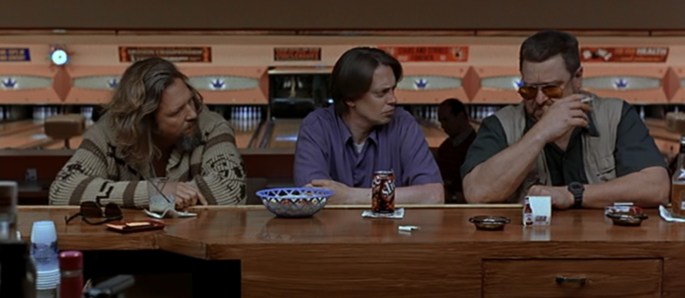
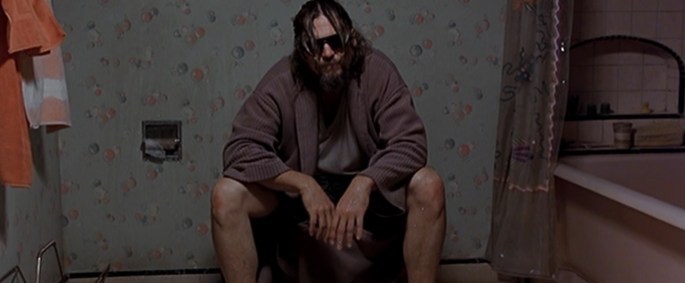
JOEL & ETHAN COEN’S THE BIG LEBOWSKI — A MINI-REVIEW BY NICK CLEMENT

3

The Big Lebowski is a favorite comedy for so many people because it speaks to everyone’s inner “Dude,” and it balances various forms of comedy – physical, verbal, visual, spiritual, existential – in a way that few other films have successfully pulled off. This was the last movie I think anyone would have expected from the Coen Brothers after they crafted their homespun crime thriller Fargo, and despite the fact that it wasn’t warmly received by theatrical audiences, most critics enjoyed it at the time despite some feeling perplexed by the endeavor. But over time, and because of the influence of DVD, stoner culture, and social media, The Big Lebowski has taken on an entirely new and different life of its own, and can be seen as so many things all at once.

2

It’s nearly pointless to rehash the uniformly excellent performances from the ridiculously stacked cast; Jeff Bridges has been brilliant so many times throughout his career but this is the film that he’ll be most remembered for. Roger Deakins’ work behind the camera on this film is spellbinding and dreamy, the laughs are nearly constant, John Goodman is outrageous, the soundtrack is impossibly great, and the amount of quotable lines and now-iconic scenes that this film contains is almost embarrassing. I can still vividly remember seeing this on opening night, and it’s one of those films that I’ve viewed so many times that it feels ingrained in my soul. I look forward to another thousand viewings in the future. Strong men also cry, POWER.

1