ALEX PROYAS’ DARK CITY — A REVIEW BY NICK CLEMENT

3

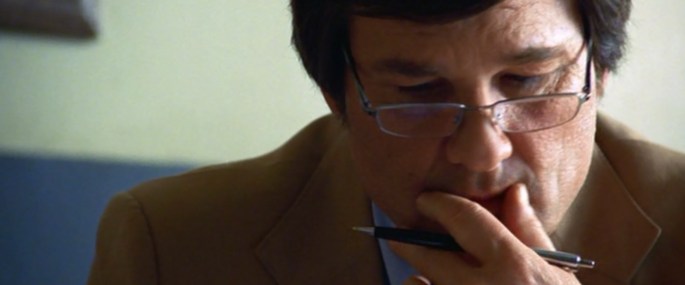
It’s a miracle that this movie ever got made, especially when considering it was released in 1998. Dark City is Alex Proyas’s masterwork as a filmmaker, a concoction so startling and unique which has helped to set it apart from so many other genre efforts from throughout the years. So few films are allowed to blend science-fiction and noir in the same package, and this one did it with love and care for both milieus, telling a smart, captivating story without resorting to cheap violence or nonsensical special effects; everything is earned and warranted here, and when the stage is set for the climactic battle, there are stakes to the action and the effects served the narrative. Roger Ebert’s glowing, four-star review has stood the test of time; also worth checking out is his audio commentary track on the DVD/Blu-ray, as this was his #1 film of that year.

2

Rufus Sewell and Keifer Sutherland were both excellent, Jennifer Connelly was lit like a noir-Goddess, all of the baldies were menacing and intriguingly off-putting, and you have William Hurt playing a detective named Baumstead – what’s better than that? The ingenious screenplay by frequent Steven Soderbergh collaborator Lem Dobbs and DC-movie-maestro David S. Goyer packs enough emotional punch to go along with the various narrative tricks, and Proyas’s visual style and design choices, in tandem with MASSIVE early Dariusz Wolski POWER, makes this $27 million dollar production look a helluva lot more expensive and grand. The plot is as dense as the Blade Runner and Metropolis-inspired production design, while the underlying themes centering on dreams and reality feel tied to the surreal leanings of Terry Gilliam in some spots. I’ve seen this spectacular work of art countless times, and it’s a great film to show to the uninitiated.

1

John Moore’s I.T.

​I.T. is that hard R thriller that has dark twists and turns, creating a rewarding moviegoing experience in a genre of film that has been sorely lacking.   The film packs a punch and takes itself places that are as shocking as they are refreshing in an era of oversaturated gloss and CGI.

Clocking in at a lean 95 minutes from filmmaker John Moore and screenwriters William Wisher and Dan Kay, the film doesn’t overstay it’s welcome, and tautly finishes to a mysterious, yet rewarding ending. 

Pierce Brosnan has gone through an interesting period post Bond.  He’s dabbled a little in the spy/action genre, but he’s also stepped back and played many anti-Bond roles, and this film is certainly one of them.  Brosnan takes on the role, in a such a restrained and psychical way, he throws enough shade that leaves us questioning the integrity behind that dashing and dapper businessman.

The narrative wraps itself in the culturally relevant world of cyber attacks and lack of personal privacy and security in our post 9/11 world.  Brosnan plays a self-made aviation tycoon who in personal financial strain, opts to make his business public, launching a new app that is essentially Uber for the ultra rich seeking quick travel via private jets.

His business and personal life are flipped, as he becomes victim to a sociopathic intern who turns any and all smart devices that Brosnan and his family use against them.  It’s a slick story, that knows the terminology and world it lives in, without ever running the gambit of ever over explaining anything.  

Perhaps the strongest suit of the film is an airtight screenplay, and a Tangerine Dream esque score by Tim Williams that creates an atmosphere of digital age threat and paranoia.  I.T. is a very good adult oriented thriller crafted so well, with such attention to detail, that it’s a film that stands incredibly high on its own originality.

I.T. is currently streaming on Netflix.

GAVIN O’CONNOR’S MIRACLE — A REVIEW BY NICK CLEMENT


3

The 2004 sports drama Miracle craftily and persuasively recreated the famous United States vs. Soviet Union hockey game where the Americans pulled one of the greatest upsets in Olympic history, beating their heavily favored opponents in the medal round, which would send Team USA to collect a rather unexpected gold medal. Kurt Russell delivered one of his best and most undervalued performances as head coach Herb Brooks, evoking the fiercely competitive nature and the fatherly instincts that helped to make Brooks one of the more revered coaches to work the frozen ponds. Directed by Gavin O’Connor with the appropriate grit and determination that the story called for, Miracle easily contains some of the better done-for-the-movies ice-hockey footage that’s ever been captured; this is a lightning-fast and extremely rough sport to physically play, and the filmmakers did an excellent job in stressing how hard and intense the on-ice fury can get. Dan Stoloff’s sharp cinematography got in close and tight with the action, with John Gilroy and Daric Loo’s fast-paced but never chaotic editing helping to keep the film moving at a brisk pace.

2

Eric Guggenheim and Mike Rich’s well-researched screenplay stuck with the facts, and with a story like that, there’s no real need to embellish much, as the story of “The Miracle on Ice” is exciting enough without any phony grandstanding. All of the actors did a commendable job especially considering that most were hired for their hockey skills and less their acting abilities. Patricia Clarkson and Noah Emmerich both delivered excellent supporting work. Mark Isham’s score hits some big, blustery notes of personal triumph that feel well-earned, and it’s hard not to enjoy a film that features Russell wearing plaid pants and sporting that awesome early-80’s haircut. A hit with both critics and audiences, Miracle if definitely one of the better hockey movies that I can think of, on the list with the masterful Slap Shot, underrated and hilarious Goon, and the lightweight but still enjoyable Mystery, Alaska. I guess I need to track down Idol of the Crowds, from 1937, with John Wayne as a hockey player!

1

John Wick: A Review by Nate Hill


The reason John Wick works so well is a flawless mix of simplicity, earnestness and passion. The premise is a familiar one, and nearly identical to countless other slam bang action flicks out there, a simple and well travelled formula. It’s in the absolutely stylish, classy and distinct execution that it finds its uniqueness. The filmmakers (Chad Sahelski and Derek Kolstad) are stuntmen themselves, and therefore know what is needed to make a successful action film: well staged action. The terrific atmosphere that tagged along is a bonus and goes to further prove these guys have serious talent. They also care, want to have fun and want their film to exist within a memorable universe, and this all shows. An action film would be nothing without it’s star, and Keanu Reeves comes busting out of the gate in full rampaging glory as the titular ex-super hitman John Wick, an expert operative who can do things with guns that would make Neo nervous. John is grieving the death of his wife (the lovely Bridget Moynahan) and taking care of the puppy she left behind to console him, living the quiet life as it were, or at least as quiet as life can get for an ex mob assassin. Wick manages to chill out for a bit with the doggo, but that all ends when his path crosses with that of a spoiled mafia brat (Alfie Allen, played an even nastier snot rag than he did in Game Of Thrones) who steals his car and kills the poor pupper. This really lights Wick’s fuse, gives his brutal talents a new lease on life and throws him headlong back into the dangerous and often eccentric realm of covert contract killers. Allen was the son of a powerful, loose cannon Russian kingpin (Michael Nyqvist in a mirthful blend of funny, scary and just plain exasperated), and now John is at odds with hordes of his underlings and a few former associates who want his head. That’s pretty much all there is in terms of plot, but the film soars on the wings of propulsive, meticulously choreographed action and positively drips with cool, it’s main asset found in Reeves, who is an absolute boss in the role. Sporting a tailored suit, fiery attitude and lethal reflexes, John punches, kicks, stabs and shoots his way through endless unfortunate adversaries, seeming to be both fallible human and invincible archangel of destruction simultaneously. It’s the perfect role for him, a comeback of sorts and just a rip snortin action hero you can get riled up for. There’s attention to detail paid to his world too, the clandestine realm of killers given a mythology, currency and protocol all its own and perfectly original. Adding to the already impossible levels of class are a perfectly chosen roster of supporting talent too. John Leguizamo makes a peppy cameo as a cranky auto fence, Willem Dafoe plays a morally vague fellow hitman, watch for Lance Reddick, David Patrick Kelly, Daniel Bernhardt, Dean Winters, Adrienne Palicki and the always awesome Ian McShane as the suave proprietor of The Continental, a posh hotel that caters only to assassins. All characters encounter John Wick at some point and in some capacity, but Wick himself is the constant, the raw element which drives this film forward with the force of a stampeding bull, scarcely hesitating to breathe or seek medical attention on his quest for carnage. Reeves sells the character and then some, headlining one of the most flat out spectacular action films of the last decade.

DAMIEN CHAZELLE’S LA LA LAND — A REVIEW BY NICK CLEMENT

1

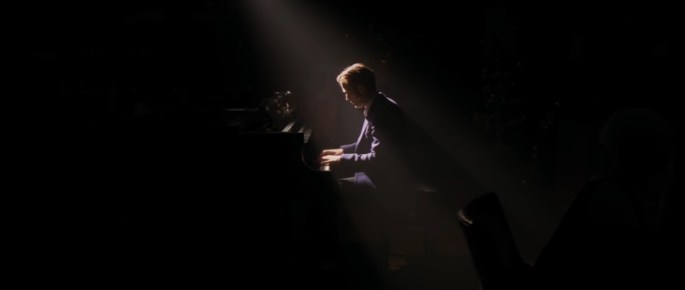
La La Land is a giant burst of primary color fun, a widescreen musical that marries romantic comedy with aspirational drama, and if it’s not quite the movie I was expecting overall, it’s certainly a bold and memorable motion picture. Writer/director Damien Chazelle, working in a totally different tempo than his previous film, the razor-sharp Whiplash, clearly didn’t want to repeat himself, but obviously has a thing for narratives that involve music and the power that music can bring to other people. Ryan Gosling and Emma Stone have superb chemistry together (they previously co-starred in Crazy, Stupid, Love) and the characters that they inhabit feel like real people thrust into a surreal movie-movie world where the song from inside their hearts guides them from moment to moment. Cinematographer Linus Sandgren (Promised Land, American Hustle, Joy) does extraordinary work that at times is distractingly amazing; I was constantly aware of how many long takes were being employed and quickly became totally consumed by the visual dynamism on display.

2

The camera swerves, pivots, Stedicams, and floats, with a luscious color palette and impeccably designed sets matched with perfect art direction and costumes. The songs are creatively written, catchy, appropriately melancholy in spots, and uplifting all throughout, while the final 20 minutes are well considered, with the movie operating as a massive love letter to Los Angeles to the millions of dreamers who head out to the concrete jungle in search of stardom. Rosemarie Dewitt, John Legend, JK Simmons, and Tom Everett Scott provide solid support, but this is the Gosling-Stone ticket all the way, with the two of them projecting big-time movie-star appeal and turning in very likable performances.  Movie like La La Land don’t get made very often, and in the same way that the story celebrates the history and future of jazz music, Chazelle’s film feels like the ultimate ode to the cinematic musical, taking classical elements and splicing them with something new and exciting, especially on a visual level. This is exuberant filmmaking.

3

PASSENGERS by Ben Cahlamer

Homesteading.  Many years ago, when land was plenty, the government offered it to people who were willing to till the soil, grow some crops.  Perhaps raise a family.  It was not an easy life.  In fact, you could probably retire today and still be tilling soil.

What in the world does this have anything to do with Morten Tyldum’s (“The Imitation Game”) new sci-fi film, “Passengers”?

Very little or quite a bit; it really depends on your point of view.  The intent of the government was to get people to become productive because they had no other choice:  they were cornered into a unique way of life that not everyone is cut out for.

In Jon Spahits’ (“Doctor Strange”, “Prometheus”) script, the meaning of homesteading, “a lifestyle of agrarian self-sufficiency as practiced by a modern homesteader or urban homesteader,” equally applies to the 5000 corporately-sponsored passengers aboard the Starship Avalon, destined for the colony planet Homestead II.

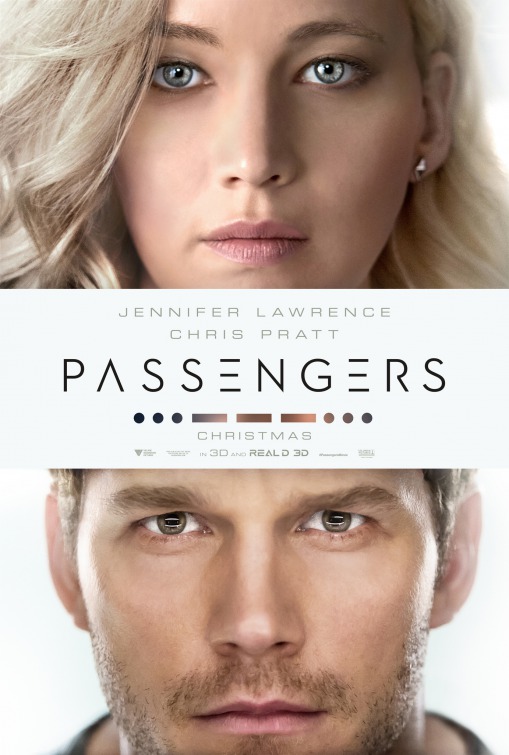
The trick is that the journey is so long, everyone on board is in hibernation and the state-of-the-art starship is on auto-pilot.  An engineer, Jim Preston (Chris Pratt) is woken up alone with no explanation and no one to communicate with.  He is eventually joined by author Aurora Lane (Jennifer Lawrence). As the only two souls awake on board the ship, they fall in love but not before disaster strikes.  Michael Sheen, Laurence Fishburne and Andy Garcia co-star.

Spahits’ script should have checked all the right boxes:  characters are well-fleshed out; the set-up was strong; social issues are at the forefront. The focus strayed from sci-fi-adventure to kitschy sci-fi-adventure-romance, where the romance just didn’t cut it. Preston’s reason for being woken up is clear; the emotional side of isolation became a focus instead of allowing his skills to move the character and the narrative forward, leading to the intended romantic angle; a wasted effort considering Jennifer Lawrence’s Lane tried too hard to remain in control, though her reasons for that become clear after a meltdown.  Had Fishburne phoned his performance from Earth, it would have been more convincing then what unfolded on the screen.  In homage to a Kubrick classic, Michael Sheen stole the show; but his role in a pivotal moment just fell flat.  Tight editing by Oscar-nominated editor Maryann Brandon (“Star Wars:  The Force Awakens”) keeps the pacing on track.

The script notwithstanding, there is one redeeming reason why this should be viewed on as big a screen as possible: the special effects.  In the tradition of Kubrick’s “2001: A Space Odyssey” and Scott’s “Alien”, Tyldum executes a strong, detailed technical look.

From the symmetry of the Avalon to the look and feel of the interior corridors, the hibernation pods, the stars and space around the ship, everything has a very real or visceral feel about it and visual effects supervisor Erik Nordby rose to the challenge brilliantly.  The effects are supported by strong cinematography from the Oscar-nominated Rodrigo Prieto (“Brokeback Mountain”).  His attention to every detail, from lighting of cavernous interior spaces, to changing reflective lighting and exterior shots in space, Prieto’s work only enhances the visual impact.

Oscar-nominated film composer Thomas Newman (“Bridge of Spies”, “Skyfall”) resonates with the luxuriousness of the Aurora and the allure of space exploration.  Some of his dramatic riffs didn’t exactly jive with the onscreen action, but his music served the film well.

“Passengers” had all the right ingredients for a stellar show, its ambition steeped in “Titanic”.  Instead, its ‘Lost in Space’ meets ‘The Love Boat’ with all the drama that that entails.

For the intricately detailed technical effects work, “Passengers” is Recommended.  Aaron Spelling is probably rolling over in his grave.

KENNETH LONERGAN’S MANCHESTER BY THE SEA — A REVIEW BY NICK CLEMENT

1

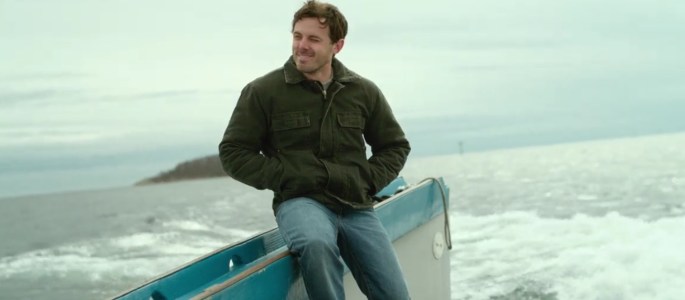
Manchester by the Sea is everything you have heard it to be and more. The back-flips done by critics are totally warranted, and while this won’t be a film that everyone will appreciate, for this viewer, it represents the finest that storytelling can offer, and a complete confirmation that its writer/director, Kenneth Lonergan, is the most unsung voice of his generation. There have only been three films that he’s written and directed over 16 years; he needs to work more but I understand that geniuses require whatever amount of time they need in order to create.   In its broad strokes, the film is all-encompassing and entirely brilliant, and when broken down into its small parts, Manchester by the Sea hits those sublime notes when a piece of fiction feels inherently real and candid at every turn. Lonergan’s writing is so effortless and so believable that there’s never a moment where you feel like you’re being given anything less than a snapshot of people who we either know or have heard about, and while the narrative goes to some extraordinarily upsetting places, there’s a tenderness and compassion to the story and a genuine sense of love for the characters, however flawed they may be, so that the viewer is able to get through all of the emotional heavy lifting.

2

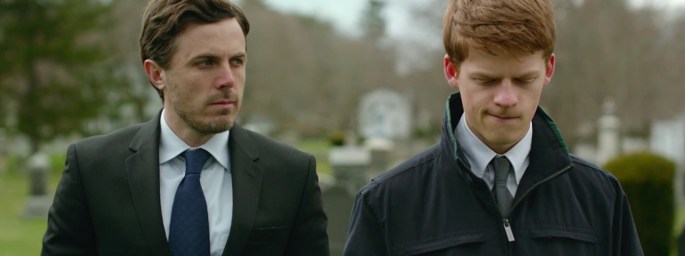
Casey Affleck channels the best of Marlon Brando, giving a complex and incredibly lived-in performance as a man shattered by the past, and barely able to look to the future. With his gravelly mumbling and off-in-the-distance stare, Affleck is able to convey insecurity and pent-up rage better than most other actors, and during the film’s most devastating sequence, he gives new meaning to the phrase slow-burn acting, delivering a passage of haunting dialogue that becomes unforgettable by its conclusion. When circumstances beyond his control force him to re-evaluate his life and take some familial responsibility for the first time in a long time, the cracks in his withdrawn façade start to show, and it’s because Affleck is so smart with his eyes and the way he moves his head and presents himself physically that you’re able to become consumed by both his grief, love, and hesitation. It’s Affleck’s show all the way, but he’s given wonderful support by a mega-talented ensemble, including a show-stopping Michelle Williams, who goes all-in and all-out during one of the film’s emotional set-pieces; tremendous up-and-comer Lucas Hedges, who evokes shades of Matt Damon, so poignant and able to convey impending maturity with a dash of vulnerability; one-time “It Girl” Gretchen Mol doing strong work in a very tricky and layered performance; authoritative and awesome Kyle Chandler who can literally do no wrong as a performer; and sly Matthew Broderick in a quiet bit of scene stealing during the film’s most realistically awkward sequence.

3

Lonergan’s sense of comedy is smart and always grounded in honesty, as no joke ever feels forced or like he’s trying to sell you on anything; as with life, humor can be found in the most unexpected of places, a notion that Lonergan clearly subscribes to. He enjoys straddling various tones, always allowing for wit and melancholy to co-exist, often in the same scene, and I’m continually interested in the fact that he’s seemingly obsessed with giving every single character who appears in his stories, no matter how important or tangential, something to say on camera; this is a dense piece of work in the same way that his previous film, 2008’s miraculous Margaret, was a tapestry of people, places, and the relationships that bind and separate. His visual style is appropriately plain and chilly and never self-conscious, the classical music selections befit Lonergan’s sense of class, and the film’s ending is so perfectly timed and considered as to be the final masterstroke from this most erudite and confident of filmmakers.

4

There’s so much that Manchester by the Sea gets correct, from the down-in-the-basement hooking-up on the part of the teenagers, to the overall New England atmosphere conjured up by the creative department, all filtered through Lonergan’s unique sense of style, which incorporates a nearly Altman-esque use of background chatter and ambient noise as to suggest realism and sonic depth; while not as intensely obsessed upon as it was in Margaret, the sound work in Manchester by the Sea is subtly powerful. If we’re lucky, the world gets a movie like this every once in a while, a piece of work that has the ability to move anyone, with universal themes that speak to our core values of humanity. It’s been a rich a provocative year with films like Arrival, Moonlight, Sully, and Manchester by the Sea all presenting specific yet inclusive glimpses of every-day people trying to move through life with communication as their guiding and motivating torch. Manchester by the Sea is an overwhelming picture, and while it may not be everyone’s idea of what constitutes “entertainment,” for those of us who want the cinematic experience to make us FEEL something, look no further than this spellbinding achievement.

5

CHRISTMAS EVIL (1980) – A REVIEW BY RYAN MARSHALL

vlcsnap-2016-12-22-11h36m22s546.png

There are more than a few sleazy stocking stuffers out there for those who prefer to take their holiday-themed cinema with a dash or two of unadulterated dementia, but few are as distinctive and genuinely unnerving as Lewis Jackson’s CHRISTMAS EVIL aka YOU BETTER WATCH OUT. Often (understandably) mistaken for a slasher pic and perhaps even better known for being championed by John Waters as the infamous trash connoisseur’s favorite Christmas movie, one might innocently stumble upon this gem and be pleasantly surprised when it turns out to be equally perceptive and perverted rather than simply the latter.

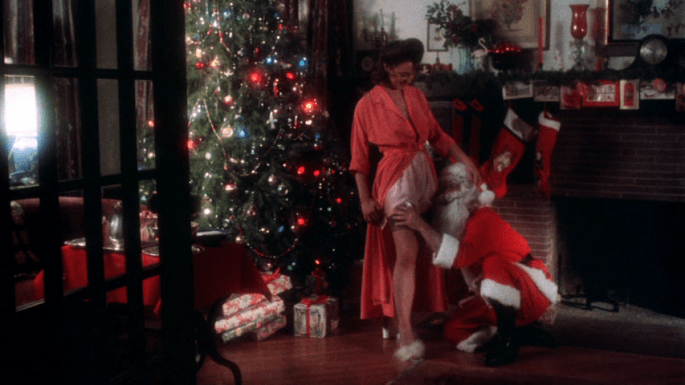
Harry Stadling (Brandon Maggart) saw mommy kissing Santa Claus once as a young boy and hasn’t been the same since; understandable, seeing as immediately following the incident, Harry runs up to the attic and cuts his hand on the glass from a broken snow globe. This fateful night gives way to an adulthood that could be described as unconventional at best and utterly unmanageable at worst. Harry finds it difficult to balance his public and private lives, working an often demoralizing position at a local toy factory by day and counting down the days until Christmas whenever he’s at home.

vlcsnap-2016-12-22-11h34m20s241.png

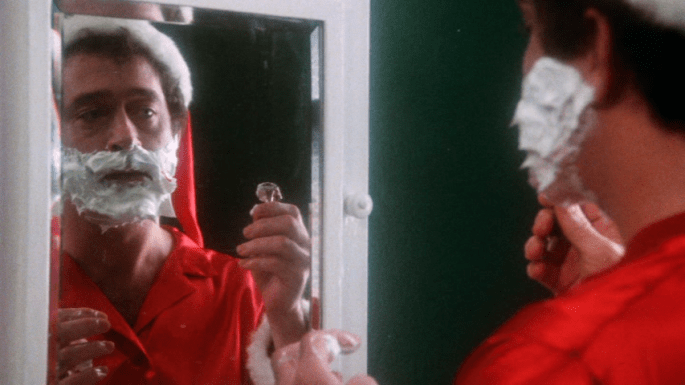
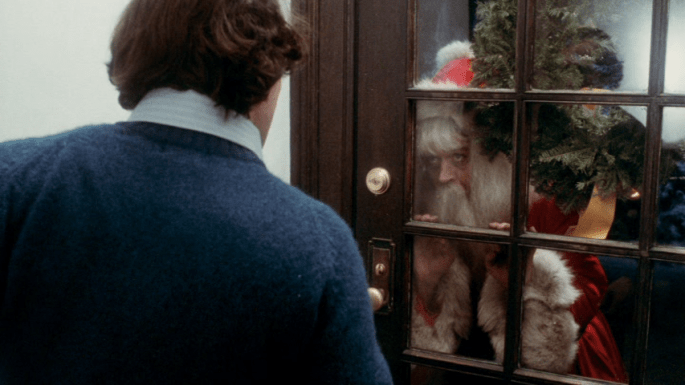
This is soon proven to be far, far more than merely a vice for the deeply disturbed introvert. Harry seems to envision himself as Santa Claus in the flesh, and as such, he not only works hard to perfect his costume before the big night but also keeps detailed records of the good and bad kids on the block. It all gets to be more than a bit creepy real quick, and when Christmas Eve comes around, Harry has slipped out of reality and into the deepest depths of decline, completing his transformation into Saint Nick in order to spread holiday spirit far and wide. What begins as an odyssey built on good cheer soon descends into a bloodbath as Harry finds himself unable to cope with the general (adult) public’s apathy toward his favorite holiday, culminating in an intense closing act straight out of FRANKENSTEIN.

Jackson’s film is a decidedly peculiar one; imperfect, for sure, especially when indulging in the kind of grotesque theatrics that have led viewers to label it as a “slasher” film over the years. But when one considers genre trappings, it is perhaps the film’s ability to transcend them which makes it so genuinely bewildering. Above all else, this is a character study – a sad and scary one at that – and we’re trapped inside of Harry’s sick, delusional head for the entire duration. It’s so close to our waking reality (or at least up until the bat-shit insane finale), that there’s no shame in squirming when Jackson wants us to.

vlcsnap-2016-12-22-11h33m59s402

Exploitation films – and even better, intimate studies of the fractured human psyche disguised as exploitation films – are undeniably at their best when supported by a great deal of talent both in front of and behind the camera, and this is where CHRISTMAS EVIL is at an advantage. The weight of Harry’s off-kilter world is one of intricate pleasures thanks to the gorgeous cinematography of Ricardo Avonovich (Murmur of the Heart, That Most Important Thing: Love, Missing), which renders the character’s madcap gift-giving and murder spree as previously internalized phantasmagoria and provides all that came before with the distinct savor of morbid normality. There’s also some clever editing on display throughout, and Jackson’s direction is both efficient and composed; only in a few brief moments do we get a glimpse of a film from a man who isn’t completely in control of his vision.

This mostly refers to the more visually horrific sequences, which include but are not limited to a toy soldier’s sword skewering a human eyeball (enough to make Lucio Fulci blush) and throat slashing by way of the golden star at the top of a Christmas tree. It could certainly be argued that these moments succeed in enhancing the film’s “weird” factor, which is already way off the charts to begin with, but in context they are not only abrupt but over-the-top in a way that would suggest they were hardly the first thing on Jackson’s mind. The conclusion to this macabre tale, in which Harry burdens his poor brother Phil (Jeffrey DeMunn) and his family while on the run from an angry mob, also feels slightly rushed. Luckily, the director’s heart is in the redemption of his dysfunctional misfit, and he finds the perfect way to cap it all off.

vlcsnap-2016-12-22-11h36m33s143

While CHRISTMAS EVIL will hardly be everyone’s cup of spiked eggnog, it comes equipped with more than enough heart, humor, horror, and genuine pathos to hold its own even against the inevitable naysayers. It is a fine film with an ambitious concept, one that it does not always execute tastefully, but one that is nevertheless explored in a consistent, satisfactory manner. Maggart is so good here that you find yourself surrendering to his solitary psycho; as ugly as his actions may be, we know Harry only has the best intentions deep down, which in itself inspires quite the palatable moral dilemma. Jackson’s film may unabashedly deal heavily in steaming coal, and its exterior may at first appear to be a needlessly nasty one, but through its own unique cocktail of extremism and empathy it achieves a kind of strange humanity, one that allows it to thrive beyond the realm of mere curio. For all the talk of it being an anti-Christmas picture, it certainly does its best to keep the spirit alive in its own wacked-out way. Quite the exquisite feast of discomposure, and a terrifically twisted treat for all sorts of adventurous parties.

vlcsnap-2016-12-22-11h36m02s658

DIE HARD 2: DIE HARDER – A REVIEW BY J.D. LAFRANCE

die_hard_2_-_zippo

The 1980s action blockbuster movie was dominated by the likes of Arnold Schwarzenegger, Sylvester Stallone and Jean-Claude Van Damme (among others) – muscle-bound one-man armies that killed scores of bad guys with guns, brawn and cheesy one-liners. Along came Bruce Willis in 1988 with Die Hard, tweaking the formula by playing a guy perpetually in way over his head, tired, hurt, and using his brains as much if not more than his brawn to defeat the bad guys. Audiences were drawn to his tough yet vulnerable wisecracking character John McClane. The movie was a massive success and the inevitable sequel followed. Die Hard 2: Die Harder (1990) didn’t stray too far from the first one (why bother messing with a good thing?) except to amp up the stunts, the body count and the explosions all the way to the bank, easily outgrossing the original.

“Merry Christmas, pal!” are the words uttered early on in the movie as John McClane’s day starts off on a sour note and will only get worse as his car is ticketed and towed despite his good-humored protests to a cop that clearly doesn’t care about his problems. It’s Christmas Eve and McClane is at Washington Dulles International Airport to pick up his wife Holly (Bonnie Bedelia). This lack of cooperation from local law enforcement is nothing new for McClane who faced plenty of it in Die Hard and it is also foreshadows the interference he’ll experience later on in this movie.

Meanwhile, General Ramon Esperanza (Franco Nero), a drug lord and dictator of Val Verde by way of Manuel Noriega, is scheduled to be extradited to the United States to stand trial for drug trafficking. However, rogue U.S. Army Special Forces Colonel Stuart (William Sadler) and a team of mercenaries take control of the airport effectively shutting them down, which leaves several planes, including the one with Holly on it, circling and running low on fuel. Stuart plans to let Esperanza’s plane land and then demands a 747 be prepped for take-off at which point they will use it to rescue the drug lord.

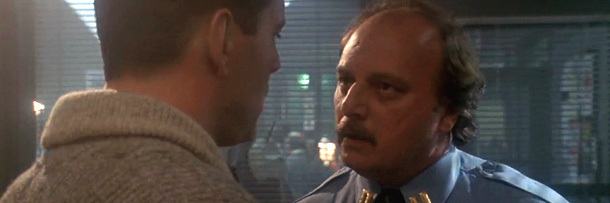
Naturally, McClane receives a ton of grief from head of airport police Captain Carmine Lorenzo (Dennis Franz) who doesn’t like some hot dog gloryhound cop treading all over his turf. Dennis Franz is at his profane best, dropping F-bombs with gusto. Watching him and Willis trade insults inserts some much welcome levity amidst the bombastic action sequences. Here’s a memorable exchange early on:
172533_v1

Lorenzo: “Yeah, I know all about you and that Nakatomi thing in L.A. But just ‘cos the T.V. thinks you’re hot shit don’t make it so. Look, you’re in my little pond, now and I am the big fish that runs it. So you cap some low-life. Fine. I’ll send your fucking captain in L.A. a fucking commendation. Now, in the meantime you get the hell out of my office before I get you thrown out of my goddamn airport.”

McClane: “Hey Carmine, let me ask you something. What sets off the metal detectors first: the lead in your ass or the shit in your brains?”

Franz is that rare breed of actor that can casually insert profanity in his dialogue and make it flow like poetry. I almost imagine him flying in his buddy David Mamet on the studio’s dime to write his dialogue. It has that vibe to it. Of course, McClane spends the rest of the movie making him looking stupid.

This being a sequel, the novelty of the original has worn off and McClane seems a little more invincible in this one, but Bruce Willis does what he can to make his character relatable and have flaws, like when he is unable to redirect a plane that the bad guys intentionally crash. We empathize with his frustration at being unable to save the plane and his dejected, defeated face says it all. The movie does its job (maybe a little too well) of making Stuart and his men so evil that you want to see McClane take them all out.

William Sadler plays yet another in a long line of villains with his rogue colonel being a peculiar badass so comfortable with his own body that he practices his martial arts in the nude, which also happens to show off his impressively sculpted physique. It certainly is a memorable introduction to his character. Sadler plays Stuart as ruthless man not above disciplining failure by pointing a loaded gun at a subordinate’s face or, in a particularly nasty move, cause a plane full of innocent people to crash and burn on a runway.

William Atherton and Bonnie Bedelia return as a smug journalist and McClane’s wife respectively, spending the entire movie trapped on an airplane together trading barbs. Among the mercenaries keep your eyes peeled for a young Robert Patrick (T2), a clean-shaven Mark Boone Jr. (Tree’s Lounge), John Leguizamo (Carlito’s Way) and Vondie Curtis-Hall (Chicago Hope).

Much like in the first Die Hard, McClane demonstrates an uncanny knack for improvisation as evident in the first action sequence when he takes on two mercenary thugs in the baggage handling section. After he loses his gun, McClane uses a golf club and then a bicycle to take out one baddie and chase off the other. What I also like is that we see the air traffic controllers problem solve their way around Stuart and his men through good ol’ fashioned ingenuity.

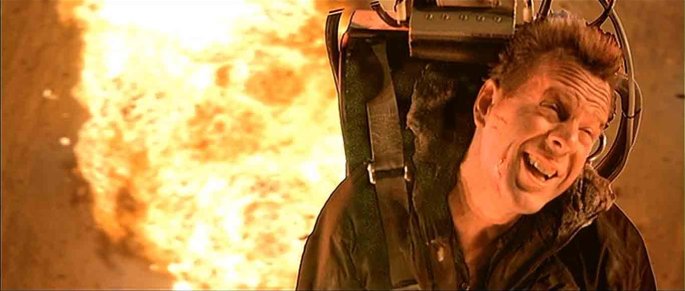
Doug Richardson and Steven E. de Souza’s screenplay has just enough nods to the first movie to let us know that the filmmakers are aware that Die Hard 2 is basically a variation on the original only bigger and louder, symbolized by the iconic money shot (that is equal parts ridiculous and cool) of McClane ejecting out of a plane as it is exploding and him saying at one point, “How can the same shit happen to the same guy twice?” The movie ups the ante in many respects as he faces even greater odds and is put in even greater danger.
die-hard-2Watching Die Hard 2 again is a potent reminder of a time when Willis still cared about acting and didn’t phone it in like he’s done in the last two movies in the franchise that don’t deserve the Die Hard moniker. Most fans agree that they should have stopped with Die Hard with a Vengeance (1995), which was a fitting way to end things on a high note but as long as they make money and Willis is up for it there will be another installment in this tired franchise.

FRANK CAPRA’S IT’S A WONDERFUL LIFE — A REVIEW BY NICK CLEMENT

wonderful

It’s A Wonderful Life remains a stone cold classic of American cinema. Masterpiece goes without saying; the very definition of timeless. Frank Capra knew how to mix true sadness with true uplift, and when you look back on the film now it’s sort of easy to understand why it wasn’t met with universal acclaim and audience popularity, as it received mixed to negative critical reviews and it didn’t recoup its production costs at the box office. James Stewart’s heartfelt and agonized lead performance is one of the best of all-time and Donna Reed photographed pretty darn well. This is a movie that needed time to show us all how special it was and still is; the themes explored travel with all of us, and they inform us all at every turn.

It’s not so much a “Christmas movie” as it is a movie about the human spirit. The big dance sequence is still one of the great tour de force set pieces in the medium; it’s a marvel to study. And I love how the narrative gives the viewer as much of a choice as it does the characters. The Blu-ray transfer is stunning, preserving the 1.33:1 Academy ratio in all of its boxy glory, with nary a stain or print scratch in sight. However, the people at Paramount should be BEATEN for offering this glorious movie in a colorized version; the idea that there are people out there who would want to watch this movie in color makes me sick.

its_a_wonderful_life