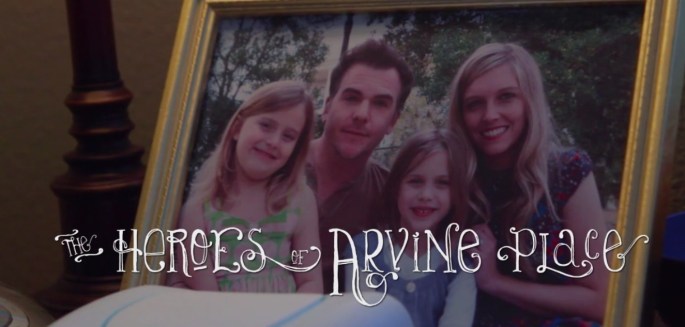
DAMIAN K. LAHEY’S THE HEROES OF ARVINE PLACE — A REVIEW BY NICK CLEMENT

1

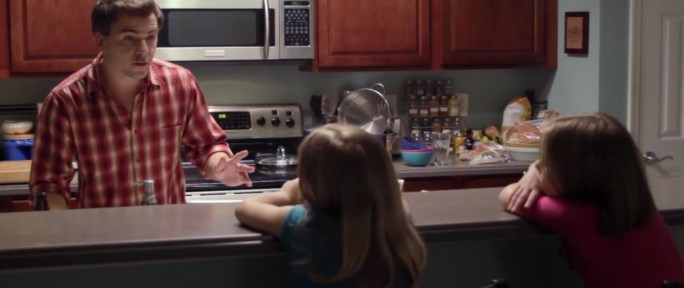
It doesn’t matter how expensive, inexpensive, fancy, or plain a movie might be. Does it have a good story, with characters you care about, and has it been crafted with intelligence and an eye to accomplish the goals that it has set out for itself? Those are the questions I tend to ask myself when viewing cinema, and after watching Damian Lahey’s warmhearted yet melancholy holiday drama, The Heroes of Arvine Place, I was reminded how some of the better items arrive in smaller packages. Lahey is an indie movie specialist, with various award-winning short films under his belt, while 2014’s The Heroes of Arvine Place was his second feature film; let’s hope that we don’t have to wait much longer for his next effort. Lahey’s natural filmmaking instincts are apparent, from his use of space within the frame, to his penchant for believable dialogue, and a story that feels organic, and at times, sadly all-too-believable.
6

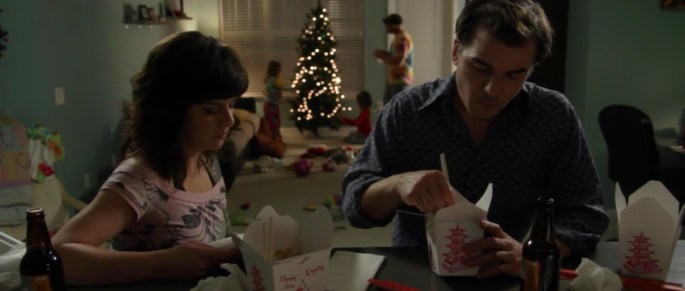
Set in Jacksonville, Florida around the time of the Christmas holiday, the narrative centers on a nearly down-and-out single dad who is trying to make ends meet for his two young daughters. Still reeling for the recent death of his wife, Kevin Hedges, played by the excellent Cullen Moss, is a man at a mental and spiritual crossroads; how can he keep everything afloat when so much seems so far out of reach? A struggling children’s author, Kevin is, way deep down, a good dad and a good guy, so it’s a bummer to see him rely on so many other people in order for him to call the day a success. He’s entered his newest book into a competition which might provide a financial leg-up, and wouldn’t you know it, but a new romantic possibility might be lurking around the corner. But The Heroes of Arvine Place is more about a particular type of person who is learning as they experience, rather than contrived plotting and needless distraction. When people don’t have all the answers to their problems, they can find themselves in situations beyond their grasp or control, and they have a tendency to get desperate, acting in ways that they might not benefit from in the long run. The Heroes of Arvine Place looks at exactly this idea, and does so with humor, pathos, and a believable sense of the here and now.
3

Lahey smartly juxtaposes the expected wintry holiday vibe with the sticky-heat of the American south, generating some nice visual humor out of his choices in locations and Jon Bosworth’s art-direction, while cinematographer Tarina Van Den Driessche shoots in unfussy and intimate set-ups, stressing people and their natural reactions over anything unnecessarily gussied-up. Craig Moorhead’s smooth editing keeps a fast but never frenetic pace to the 75 minute runtime; short and sweet is the name of the game, here. But it’s all in the writing with this one, as Lahey’s script sensitively observes a family in a unique form of stasis, with rational questions being explored by the two precocious but never annoying daughters, who, like most kids, are just interested in the life that’s going on around them, whether they understand everything or not. It’s in these smaller, more emotional moments that The Heroes of Arvine Place truly finds its place as a piece of micro-budget but maximum-heart cinema.
2

Disney’s Frozen: A Review by Nate Hill 

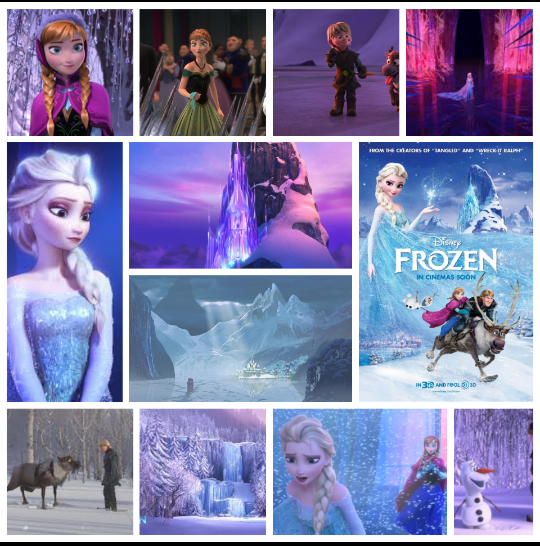
I avoided watching Disney’s Frozen for a long time, no lie. I hate overblown hype despise maniacal product placement, and unfortunately kid’s movies suffer through the worsr of it (remember Tangled? Ugh). I did finally get around to seeing it though, and it’s an utter delight. A little thin in the plot department, mind you, but that’s where the Disney wizards compensate with stunning visuals, effervescent voice acting and of course that legendary, now iconic song, belted out by Idina Menzel’s  Elsa high atop a snowy peak. I heard that song played into oblivion before I ever saw the film, and didn’t ever think I’d be able to enjoy it again without getting the ol’ eyelid twitch, but seeing the real thing in the context of the film, with a little help from my home theater system, well…. let it go indeed. Menzel and Kristen Bell are touching as the two sisters, Anna the doe eyed princess with the world at her feet, Elsa the fierce and independent rebel who doesn’t fit in. Her magical abilities with snow and ice allow for some unbelievable computer effects, and the ice palace she creates is a gem of a set piece, intricately woven and detailed to the max. Their castle down below is designed with traditional Germanic decoration in mind, a nod to the inspiration they have no doubt received from Hans Christian Anderson’s original storybook, The Snow Queen. Like I said before, what’s there in plot is spread pretty thin, but it’s no matter, because this one is fuelled by visuals. Sweeping mountains packed it powdery snow drifts, ornate castles, beautifully designed costumes, sleds, dresses and animals, including Sven the rambunctious reindeer. It’s a jewel of ocular achievement. Oh and I might add, that Swedish sounding dude who runs the little shop way up the mountain is probably the funniest character Disney has created in years. 

SYDNEY POLLACK’S TOOTSIE — A REVIEW BY NICK CLEMENT

tootsie_xlg

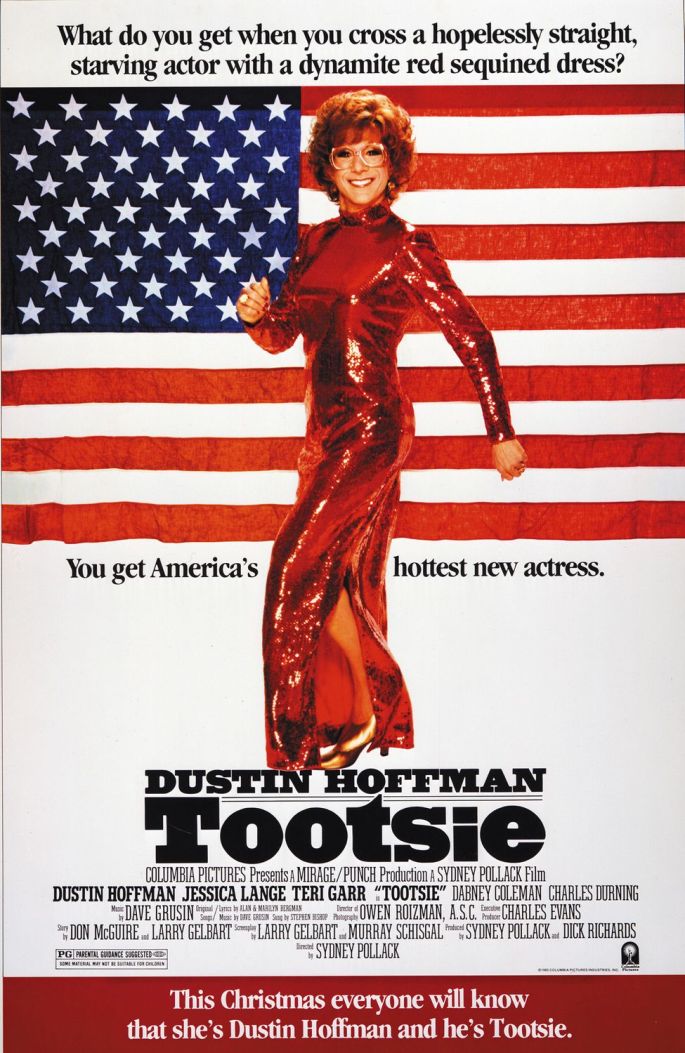
This is such a delightful piece of work, a movie that just wants to have fun at nearly every moment, with energetic direction by Sydney Pollack and lots of honest humor in the story/screenplay by Don McGuire, Larry Gelbart, Murray Schisgal, Barry Levinson, and Elaine May, the latter two going uncredited. Dustin Hoffman’s lead performance of a frustrated actor who dresses as a woman in order to land a role on a soap opera is both over the top yet somehow movie-world believable, as nothing was pushed too far or felt overly strained by the contrivances of the busy plot. Co-starring with Hoffman in this film meant you had to enter his orbit and find the proper ebb and flow; Bill Murray, Teri Garr, Jessica Lange, Dabney Coleman, Charles Durning, Doris Belack, Pollack, and Geena Davis (in her screen debut) were all up to the task. Terrific physical comedy abounds, there are pointed observations made about the entertainment industry, and every single performance is in perfect harmony with the rest of the spirited ensemble.

Dave Grusin’s peppy and chart-topping score/soundtrack is a major bonus, while Owen Roizman’s smooth cinematography never called attention to itself, instead capturing the action with clear focus, allowing for the amazing cast to nail every single joke or comedic moment without feeling overburdened by aesthetics. Peter Sellers and Michael Caine were at one point considered for Hoffman’s role. Dick Richards was the film’s original director, before departing over the usual “creative differences,” with Hal Ashby becoming his replacement. But Ashby was forced to leave the production, as the editing duties on his previous film, Lookin’ To Get Out, weren’t contractually completed; final director Pollack would step in and steer the ship forward. Released on December 17, 1982, Tootsie became an immediate smash hit at the box office, with a final gross of $177 million domestic, off of a $21 million budget, and this was back when money was real.

Indie Gems with Nate: Far North 

Far North is like a half whispered tale told round a campfire way out in the tundra, a tale that keeps the fire going while freezing your blood. I’m not sure if it’s based on some Inuit parable or fable, but it certainly has the aura of such. There’s a  whole lot of land up there, and most likely centuries of stories just like this one, witnessed only by the wolves and the winter cold, as well as the few hard bitten inhabitants who call it home. Michelle Yeoh is Saiva, an outcast from her tribe after being deemed cursed by her shaman at birth, left to wander the expanse alone. Her only companion is a young girl (Michelle Krusiec) who she rescued from marauding soldiers as a baby, and has raised somewhat as a daughter. The two live an isolated existence, until Saiva finds half dead soldier Loki (Sean Bean) wandering the tundra, and reluctantly takes him in. That’s where trouble begins, as he takes a liking to the young girl, a bond is formed, and another is soured and broken. There’s a third act shocker that will have your skin crawling, a jarring act of violence, deception and betrayal that leaves us feeling as cold and cast out as Saiva, an existence which probably foretold such horrors years ago when the shaman gazed upon her face. It doesn’t quite fit with the lyrical beauty and ambient pace that came before, but it’s definitely an unforgettable way to end the story, and a reminder of humans and their capacity for darkness. Roaming caribou, miles of ice, wandering wolves, and the few humans who survive out there, perhaps affected by something deeper, something elemental that lives in the very air. Not a perfect film, but fascinating and quite unlike any other. Oh, and a warning: ther are some graphic and suspiciously realistic scenes of animal violence. 

Tom Ford’s NOCTURNAL ANIMALS – A Review by Frank Mengarelli

Tom Ford is a cinematic anomaly. With little traditional filmmaking experience he’s taken cinema by storm and with his most recent directorial and screenwriting effort, NOCTURNAL ANIMALS, Ford has created an immaculate and haunting masterpiece.

The film is a magnificent web of truths, the lies we tell ourselves, the selfishness we guise in our actions, and a love that was so fierce and passionate that when it ends the only comparable feeling is death.

adams-na-pts

It’s deep, complex, and heavy. Ford does anything but hold our hand, but he does an incredible job guiding us through a narrative that is so thick and murky, one slight mistake or hiccup would make the film an incoherent mess.

The performances are all stellar. Amy Adams gives a purposefully reserved turn that keeps her at arm’s length for anyone she interacts with, occasionally allowing vulnerability to slip through the cracks, allowing us a peak at her inherent toxicity.

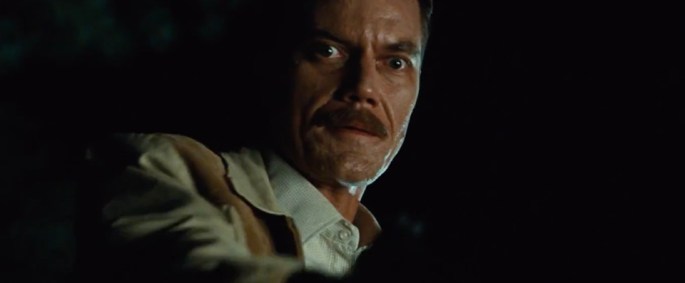
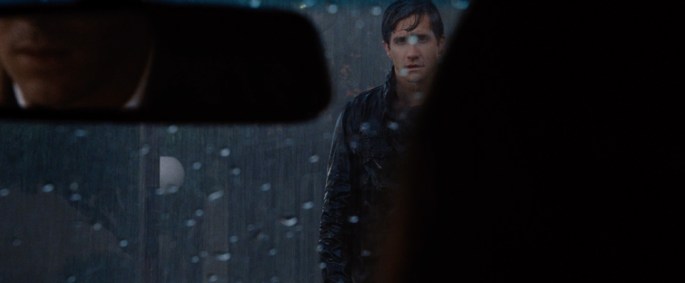
Jake Gyllenhaal embarks on yet another revelation of a performance, blending into the picture in a way that is impossible to see any other actor in. Michael Shannon gives the best performance of his career as a character who if a lesser actor took on the role, it would be a one note character that would not serve as big a purpose.

Cinematographer Seamus McGarvey does an unbelievable job, helping construct a visual narrative that is as beautifully sweeping as it is terrifyingly haunting. It’s his best, and most important work to date. Ford re-teams with composer Abel Korezeniowski, who creates an atmosphere so dark and dreamy, the visual imagery is that much more impactful.

ms-na-pts

Production design by Shane Valentino and costumes by Arianne Phillips further create two simpatico worlds of high excess and dusty noir, that is unlike any other film ever made. The films aesthetics are flawless, without a single blemish or crack that supports the already taut and visceral narrative Ford carefully takes us through.

Ford’s audacity knows no bounds, and cinema needs more films like this. His previous film, A SINGLE MAN hit all the cinematic marks, making it one of the best debut directorial efforts of all time, it’s so good that it was impossible for Ford to ever outdo himself. NOCTURNAL ANIMALS blows A SINGLE MAN out of the water. It’s not even close. It’s a film that’s brute nature and frightening themes delivers a cathartic ending that is unlike anything you’ve ever seen. Whatever Ford does after this is almost irrelevant, he has already become a cinematic titan on his own accord, and we should all be in awe.

jg-na-pts

JOHN FRANKENHEIMER’S THE CHALLENGE — A REVIEW BY NICK CLEMENT

1

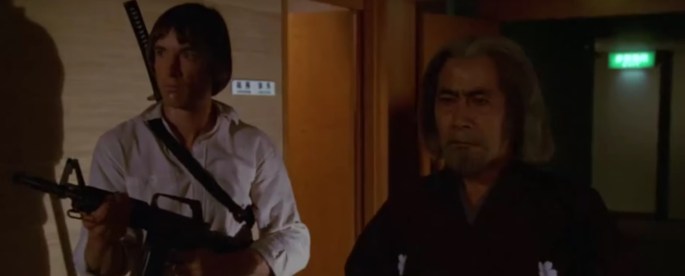
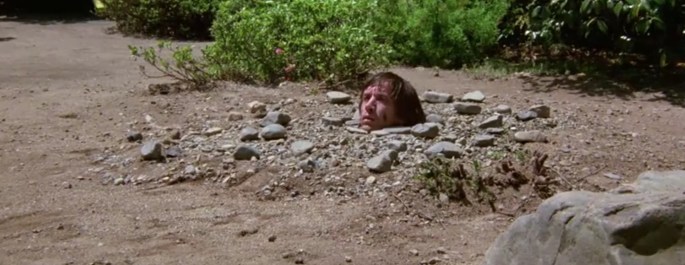
By all accounts, this movie should be a total disaster. And it’s not. Not even close. It’s a wild blast of hard-boiled fun. Directed by John Frankenheimer, co-written by Richard Maxwell and John Sayles, and starring Scott Glenn as an American boxer turned swordsman who gets mixed up in a family feud between rival brothers (Toshiro Mifune and Atsuo Nakamura) who are battling over possession of two sought-after samurai swords, The Challenge defies expectations in more ways than one, putting a unique spin on a long-standing genre. This is a rather violent and nasty film, with Glenn playing the stoic man of action who needs to learn a thing or two before being fully combat ready, while Mifune’s inherent sense of gravitas added a layer of seriousness to an otherwise over the top but no less entertaining scenario. Frankenheimer was always well suited when it came to filming action, and in The Challenge, he was able to mix in a wild chase through crowded Japanese streets, decapitation-friendly sword fights, and all sorts of general mayhem that genre fans will righteously enjoy.

2

Cinematographer Kozo Okazaki, who also shot The Yakuza for director Sydney Pollack, did a great job capturing all of the set-pieces with a clear sense of spatial awareness and a clean sense of style; Jack and John Wheeler’s editing remains punchy all throughout. And because Frankenheimer never knew a milieu he wasn’t interested in tackling, this film feels even more accomplished, made by a filmmaker who had already made a number of masterpieces, instead here just churning out a rollicking and unpretentious flick. Steven Seagal served as the film’s choreographer during the aikido-based action sequences, while The Challenge features a tremendous musical score by Jerry Goldsmith. The last 15 minutes are an absolutely amazing full-on battle, with swords, machine guns, and all sorts of martial arts being thrown around, with a crazy body-count and tons of humor to match the bloody action. Shot entirely on location in Japan, the film would certainly make for a great double feature with Ridley Scott’s underrated and very stylistically moody actioner Black Rain. The Challenge is available on a beautiful looking and sounding Blu-ray from Kino-Lorber.

3

Bong Joon Ho’s Snowpiercer: A Review by Nate Hill 

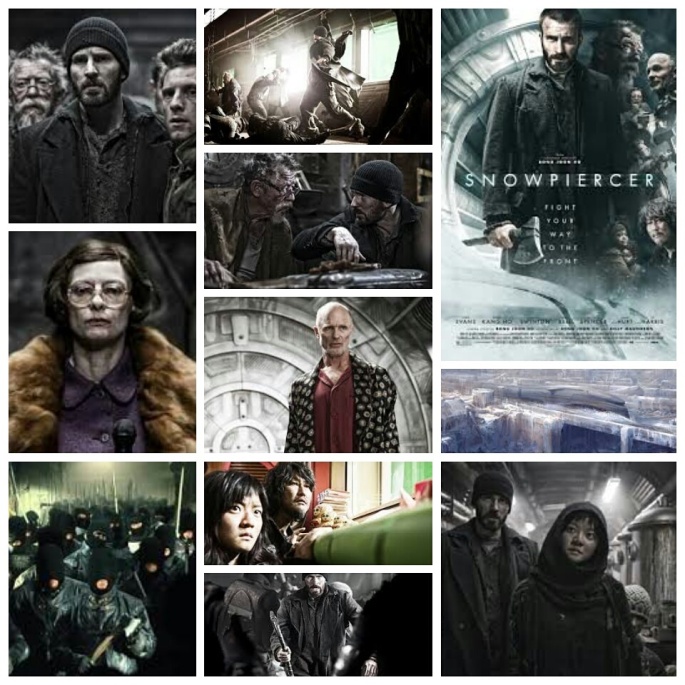
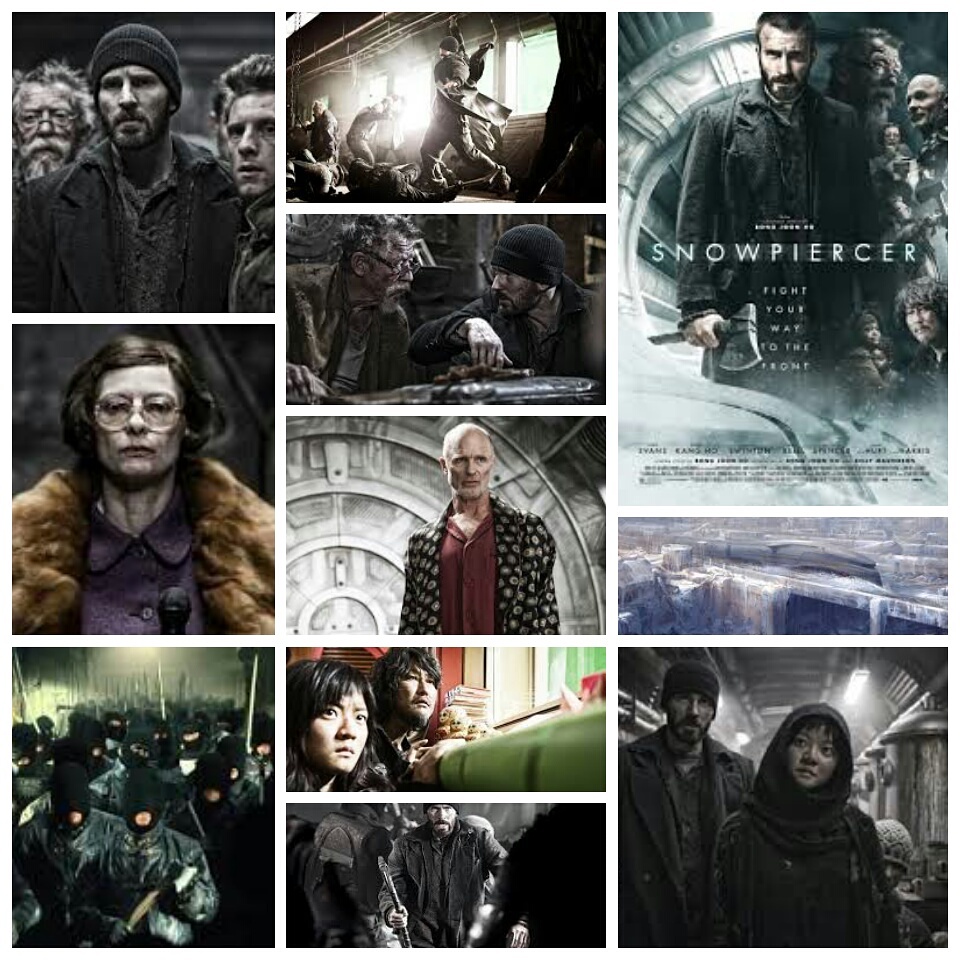
Bong Joon Ho’s Snowpiercer is a cold affair in more ways than one. It treats it’s characters with the same icy indifference as the storm which batters the few remaining people on the planet, confined to a locomotive that speeds around the globe in perpetual motion, humanity’s last ditch effort against a cataclysmic ice age of their own making. The train is designed to house the poor and disenfranchised folks in filthy barracks at the back end of the train, while the rich and privileged elite live in glamerous excess at the front. What better metaphor for brutal classism? A confined vehicle from which their is no escape, dwindling resources and rising tensions eerily serve to remind us of our own situation on this rock. Chris Evans grimes up his Captain America image as the ruthless leader of the poor, rebelling traincar by traincar and waging an ongoing war against the upper class and their minions, his sights set on reaching the engine. Unfortunately they’re up against some nasty security forces dispatched to end their rebellion at any cost, including axe wielding henchman, a J.T. Walsh lookalike who is tougher to kill than a terminator and an absolutely nutballs Tilda Swinton, unrecognizable under a dairy queen cake of makeup and a muddled northern England accent, dryly  playing the tyrannical head of propaganda. Aside from the obvious social satire that hits home, the film is also a rollicking action slam dunk with some jaw dropping, delightfully implausible set pieces and truly inspired visual design. Each train car has a different theme and purpouse, from a self sufficient aquarium (anybody want some sushi?) to a terrifyingly cheerful classroom where kiddies are brainwashed by a crackhead of a school teacher (Alison Pill in overdrive), and eventually the engine itself, a technological marvel presided over by a lonely, twisted and miscast Ed Harris as the architect of the whole deal, a role better suited for a Patrick Stewart or a Malcolm McDowell type. John Hurt plays the other half of the brains, stuck in squalor at the caboose, and there’s work from Ewan Bremmer, Octavia Spencer, Jamie Bell, Ah Sung Ko and Kang Ho Song as a resourceful explosives expert with his own agenda. The themes of this film will be difficult for some to swallow, which is what I imagine led to it’s piss poor marketing, at least in North America. The topical, callous and icy blunt truths about society, sacrifice and oppression won’t be willingly received  by many, least of all the powers that be, who don’t want such notions floating around freely. That’s what makes it important though, and sets it a step above most. It reaches near taboo levels of thought, displaying ugliness and outrage that seems scarily logical the more you think about it. Plus it’s a humdinger of an action adventure flick. Strong stuff, both in visual and narrative departments. 

EPISODE 33: DOG EAT DOG with SPECIAL GUEST MATTHEW WILDER

dog-eat-dog-podcast

Podcasting Them Softly is honored to be joined with returning guest, Matthew Wilder, to talk about his latest film, DOG EAT DOG starring Nicolas Cage, Christopher Matthew Cook, and Willem Dafoe.  Matthew adapted Edward Bunker’s novel of the same name, and the film was directed by legendary filmmaker Paul Schrader.  Matthew is currently in pre-production on his next film; MORNING HAS BROKEN starring Lydia Hearst and Peter Bogdanovich.  Matthew is currently writing BAD COMPANY: THE COTTON CLUB MURDERS.  DOG EAT DOG is currently avalible to rent and purchase on VOD with a blu ray being released on December 27th.

WARREN BEATTY AND BUCK HENRY’S HEAVEN CAN WAIT — A REVIEW BY NICK CLEMENT

3
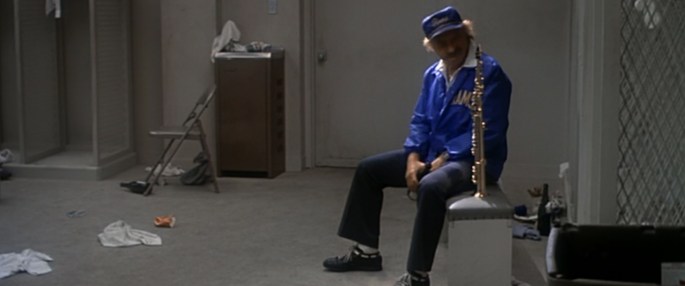
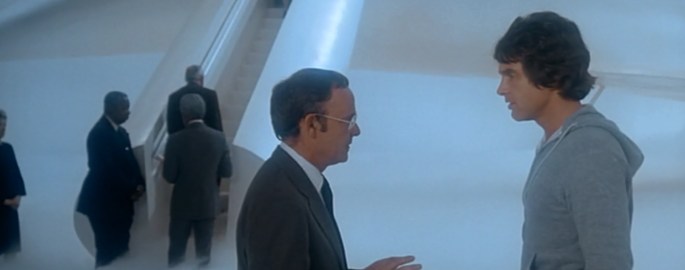
Heaven Can Wait is a totally charming piece of work, a film that successfully mixes tones, filled with self-reflection, playful screwball comedy, sly social commentary, with a romance that is both emotionally affecting and rewarding on a narrative level, and a bit of light suspense added in to keep you slightly on edge. Co-directed with grace and class by Warren Beatty and Buck Henry and co-written with compassion and sharp wit by Elaine May and Beatty who based their script on Harry Segall’s play of the same name, Beatty took the lead role and created one of his most memorable roles, and when you combine that with his chemistry with screen goddess Julie Christie, it’s easy to fall under the sweet spell that this film casts over the viewer.
2
The supporting cast is too good to be true: Jack Warden, Dyan Cannon, Charles Grodin, James Mason, Buck Henry, Vincent Gardenia, and so many other bit players all came to play but knew full well that it was the Beatty-Christie show. Dave Grusin’s romantic yet melancholy music was in perfect tandem with William A. Fraker’s sunny-hazy images (both of their filmographies are totally ridiculous), while the disciplined and tight editing by Don Zimmerman and Robert C. Jones left not an ounce of fat on the running time. Nominated for nine Oscars and winning one for Best Art Direction, Heaven Can Wait grossed $82 million at the box office in 1978, there are many reasons why this one is a beloved classic, not the least of them being that it’s just so effortlessly entertaining and it never stops enjoying itself.
1

The Crimson Rivers: A Review by Nate Hill 

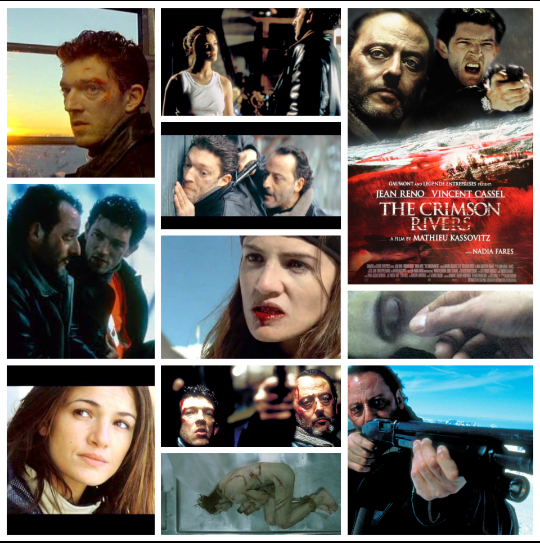
There’s a serial killer loose in a small mountain town located in rural France, and who better to track them down than the country’s two most prolific film actors (or the ones with better physiques than Gerard Depardieu anyway), Jean Reno and Vincent Cassel. Reno is the seasoned, slightly eccentric Parisian detective, called in to assist and step on the toes of local investigator Cassel, who is too hot headed to realize he could use the help. A body has washed up in a nearby river, mutilated to an unspeakable degree in gruesomely specific ways (think Sev7n on ice). The town just happens to be solely inhabited by the creepy residents of a nearby university that is notorious for incestuous classism and rumours of ties to the occult. You can imagine where this is heading, and it’s fun watching Reno and Cassel follow the bloodstained breadcrumb trail towards increasingly grisly secrets that would test even David Fincher’s gag reflex. Genetic research, mysterious twins (both played by Nadia Fares), and multiple corpses are a few of the hurdles our two heroes encounter. It’s delightfully convoluted, in the best way possible. Some people say that less is more, but I find that makes way for laziness and complacency, two attributes you don’t want to find in the horror/thriller genre. I’d rather a film throw every little brainstorm and margin doodle into the mix, even if it doesn’t all add up, than present a barely filled in canvas that begs for more. The real stunner with this one is a near Bond-esque climax set on a giant glacier overlooking the valley below, full of desperate violence and giddy exposition. You’ll need a strong stomach for the dark places this one ventures to, but it will reward you with crisp cinematography and lurid, blood soaked intrigue. Brutal stuff though.