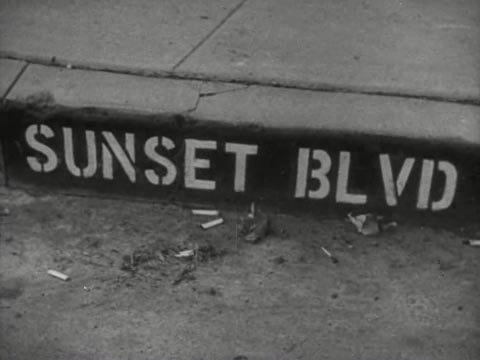
Nocturnal Animals – A Review by Kyle Jonathan

Nocturnal Animals

2016.  Directed by Tom Ford.

nocturnaldudes

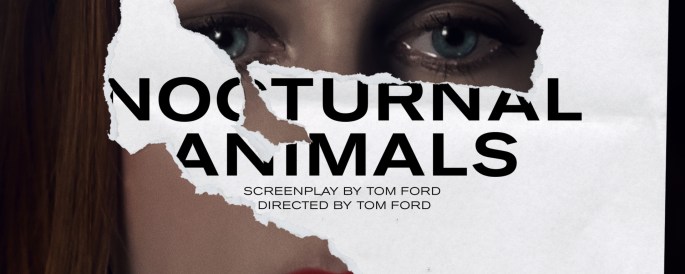
The end of a relationship is an idea that is often equated with death. It’s a theme that has pervaded the film industry for years, offering a plethora of various interpretations in which the aftermath of amorous annihilation has been deconstructed to the point of excess.  Tom Ford’s second directorial effort, Nocturnal Animals, abandons any sense of convenience and presents the concept as a blistering crime story that doubles as a warning about betrayal, both of the partner and of the self.  Ford’s extremely mature marital fable is an assault by cinema, an unforgettable revenge story in which love doesn’t conquer all, it kills every transgressor with calculated malice.

Beginning with the an unforgettable credits sequence,  the film puts the viewer into a complex stranglehold and never relents.  Seamus McGarvey’s cinematography is the perfect companion to Ford’s unique vision.  Hideous beauty, both in the human subjects and the landscape is always on display, with dark clouds hanging over blood red meridians, harshly removed from the violence that fills the sun baked highways beneath.  The fictional world is offset by sterile art galleries and empty houses, devoid of the extremes within the novel at the center of the narrative.  The thundering catharsis of the crime story is rationed by Mike Austin’s editing, seamlessly transporting the viewer between the forlorn desert of the mind and the coldness of reality.  The story within the story is presented as imagery conjured by Amy Adams’s character’s subconscious and no supposition is needed to explain the physical representations therein.  You know, with almost certainty where things are going and that precognition is a result of the extreme control Ford uses in every aspect of the film to bring everything to a perfectly malign conclusion.

amy-adams-nocturnal-animals-670x280

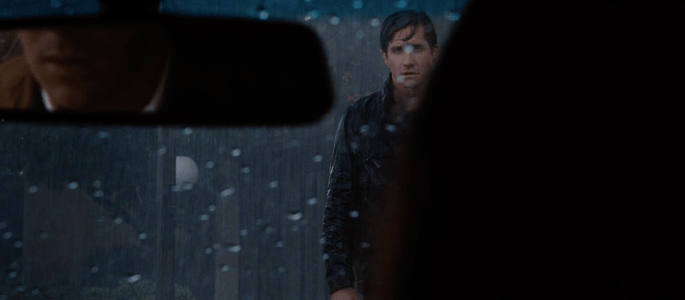
Amy Adams does an adequate job with her character’s vulnerability, but Ford’s script reveals his continuing struggles with female characters.  Her dialogue with Jake Gyllenhaal is stilted, almost pastiche, but the moments between, the physical cues, overcome this.  Michael Shannon supports as the lawman in the crime portion, giving a tragic turn as the devil on your shoulder, representing the rage and despair of the abandoned lover.  Gyllenhaal brings his underrated pathos to bear, but his segment is soft balled into the happenings with intent.  His dual character is both a hopeless romantic and a scorned, but darkly motivated respondent.  All of these remarkable performances are underscored by Aaron Taylor-Johnson’s beautiful monster.  His performance is the definition of excellence in a supporting role, bringing an unhinged sexuality to an easily repugnant role.  He doesn’t chew the scenery, he eviscerates it with stone cold glares and an intoxicating presence that oozes from his sweat soaked killer with ease.

Malanie Romero’s makeup design is flawless, and brilliantly understated.  The characters are presented at different times in their lives and this is accentuated by subtle skin tones and intimidating mascara, bringing the eyes of each emotional combatant to the fore in every altercation.  Donna O’Neal’s costume design encases each character in fabricated armor.  Adams’s art gallerist is adorned in crystalline ensembles, perfectly equating her emotional weakness while the fictional characters are soiled and broken, caked in the dust of their predicaments, dutifully embodying an imagined world of natural recompense.
screen-shot-2016-09-14-at-6-10-27-pm

In theaters now, Nocturnal Animals is one of the best films of 2016.  Ford’s glitzy reality may leave some viewers alienated, but the undeniable maturity of the content is what pushes it to greatness.  An older, wiser, and less accusatory sibling to The Neon Demon, this is a film about the truths of self denial and the ultimate comeuppance for harming the ones we love.  Featuring beautiful, but extremely unsettling imagery, Ford’s renowned compositions, and a one of a kind cast, this is a film that will haunt you long after it fades to black.  If you’re looking for an anti feel good experience, that is devilishly liberating in its exploration of vendetta, Nocturnal Animals is the perfect choice.

Highly Recommend.
nocturnal-animals-amy-adams-poster

Indie Gems with Nate: Guy X

Guy X is one of those tonally disorientating black comedies whose madcap antics hide a deeper truth, visible only to those patient enough to sift through the meandering detritus. It also helps I your sense of humour is on the right frequency, one that is decidedly off key in this case. Think of a Terry Gilliam film, that mad rush of arbitration and deafening bureaucratic hubbub that serves as a smokescreen for something a little more grounded. Jason Biggs, keeping his dick out of pies this time around, plays Rudy, a low level army grunt who is accidentally sent to an outpost right in the the Arctic, and the middle of nowhere too, as we soon see by his fellow soldier’s boredom fuelled shenanigans. It’s fish out of water, but we get an uncanny sense that he’s also there for a reason, one that takes it’s painstaking time to emerge. Smitten by the beautiful commanding officer (the always lovely Natasha McElhone), hounded by her petty boyfriend  (Jeremy Northam) and constantly swept up in the feverish lack of discipline or coherence among the ranks. It’s all fun and games, to be sure, but there’s a melancholic aura that hangs around, especially when Rudy discovers the titular Guy X (Michael Ironside in a transfixing cameo), a lost and forgotten soul who hints at the futility of military operations, reminding us of how we all cloak our existential dread in frosty self depracation and ironic gallows humour. That’s the film, essentially, which I think many didn’t get. Most of the reviews I’ve seen on imdb are from folks who struggled deeply with the sharp, uncomfortable shift in tone, understandably jarred by a sobering rift between playful banter and troubling reflection. The important films are often more difficult for a idea audience to receive, they’re just constructed that way. This one is no exception, but there’s many a lighthearted moment and comedic situation to be enjoyed before the hammer of reality comes down. 

ROBERT DE NIRO’S A BRONX TALE — A REVIEW BY NICK CLEMENT

1
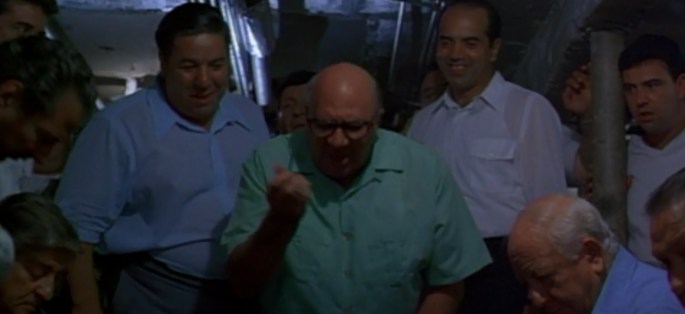
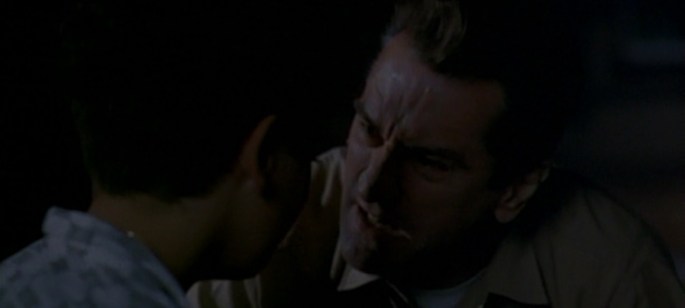
A masterwork of modesty and a stirring portrait of family love and fiery friendships, Robert De Niro’s sensitively observed directorial debut A Bronx Tale may not have found the theatrical audience it so richly deserved, but over the years, it has become a mostly unsung classic with true fans of cinema, as it’s a work that wears its influences on its sleeves yet never feels indebted to anyone or anything else other than its own hot-blooded and fully-bleeding heart. With powerful performances from De Niro, Chazz Palminteri, Francis Capra, Lillo Brancato, Jr., Katharine Narducci, Taral Hicks, and a perfect cameo by Joe Pesci, the film features a slew of Italian-American “face-actors,” all of whom brought authenticity, humor, and menace (when called for…) to their background roles.
3
Based in part on experiences that Palminteri had as a young boy and teen growing up in the Bronx, there are so many brilliant scenes, small moments between characters, and individual lines of dialogue to cherish in this passionate and emotionally draining film, with themes that speak to a parent’s desire for the best for their children, and how children nevertheless become their own adults, making decisions that will inform the rest of their lives in ways that they can’t expect. Palminteri’s screenplay is an absolute gem. This is the sort of film that leaves you with a lump in your throat from all that has transpired, with shocking acts of violence that counterbalance the softer, more intimate moments between family members and lovers and friends.
4
Everything in A Bronx Tale feels lived-in, organic, and honest, and I attribute the believable verisimilitude to the on-point costumes, perfect production design, and energetic cinematography that knew exactly when to show-off and when not to. I adore this movie and have viewed it at least 20 times, and I look forward to showing this film to my own son when the time is appropriate. And I wish De Niro would direct more, as his second film, The Good Shepherd, is wildly undervalued as both a chronicle of a changing America, and as a piece of riveting, historical-based entertainment. But there’s something special about A Bronx Tale, with De Niro seemingly taking so many nuggets of knowledge that he must’ve picked up from his collaborations with Martin Scorsese, but never trying to fully approximate that master filmmaker’s particular style. The film also has a dynamite soundtrack. A Bronx Tale is available as a UK Blu-ray release (which actually turned out to be region free when tested on multiple players) and as a snapper-case American DVD.
3

The Eyes of My Mother – A Review by Kyle Jonathan

The Eyes of My Mother

2016.  Directed by Nicolas Pesce.

5-1

Nicolas Pesce’s debut feature, The Eyes of My Mother is a reverse horror film that uses a three act format, stark black and white cinematography, and an intriguing central performance to deliver a disturbing and emotionally cold origin story.  Featuring creepy visuals and odd pacing elements, this is a unique genre offering that fails to capitalize on it’s surprisingly humane subject matter, focusing on themes of isolation and the morality of violence as a means to connect.

Zach Kuperstein’s Noir camera work is spellbinding.  Initially, the various static shots immediately conjure a likeness to Night of the Hunter, presenting ominous farmhouses and bewitching forest locales as hidden nightmares, bathed in deep shadows that are intricately manipulated by bold lighting and ingenious blocking compositions.  The camera refuses to move for the majority of the film, only coming to life whenever the main character ventures from her rustic abattoir.  Kuperstein’s decision to not double down on the odd angles of German Expressionism is a bold choice, clearly emulating the classics, but also presenting a fresh imagining of an overdone concept.  There are several long takes, the best of which has the viewer looking through a curtained window into field in which a brutally slow horrific act is occurring.  The body work by the participants and slick editing by Sam Daley uses the absence of violence and barely audible sound effects to terrorize without surrendering to visceral gore that allows the viewer’s mind to do the work.

eyesofmymother6

Kika Magalhaes gives layered performance that entrenches itself in the constant alienation that saturates every part of the narrative.  She is awkwardly sexy, bounding from victim to victim with child like wonder that is astutely juxtaposed from the viciousness.  This is part of the film’s frustrating assembly.  The idea of a coming of age story, in which the morality is murder and not tribulation is a fragile thing.  Pesce’s command of the various elements used to communicate this is excellent for an initial work, but ultimately pushes the isolation theme to a place where the viewer can’t relate.  Killing, sex, blood, and bondage all play a part, while underdeveloped themes of parenthood are forced at every turn, with chains undulating like umbilical cords and male bodies being contorted into a fetal positions.  The ideas are there, but there is very little to support their inclusion, aside from the blatant symbolism.

Available now for digital rental, The Eyes of My Mother is a fantastic debut effort.  Featuring some 2016’s best cinematography, this is a film that will scratch the horror itch, but for anyone less than a horror fanatic, the film’s unfeeling insinuations rebuke as much as the visuals entice.  Despite this glaring flaw, The Eyes of My Mother is worth viewing for the spectacular presentation and delirious lead performance.

Recommend.

hqdefault

B Movie Glory with Nate: Arctic Blue 

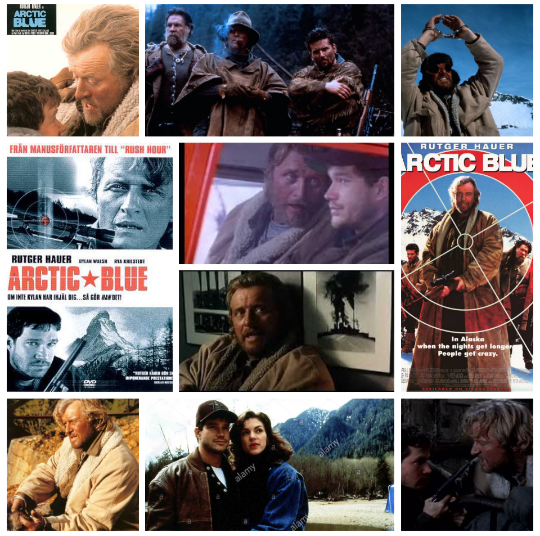
Arctic Blue is as eccentric and loopy as I’d imagine such unique climate conditions make people behave up there. Indeed, instead of a straight up action adventure, they’ve gone for something a little more meandering and amusing, sort of like Midnight Run under the midnight sun. In a sea of direct to video flicks that Rutger Hauer has done, it’s tough to weed the gems from the turds, but this one is gold, especially if you’re a fan of him, as well as gorgeously photographed scenery. As Ben, he’s not quite hero, not quite antagonist, a wildman of a trapper who functions on instinct and has no use for the rule of law. When an altercation with a park ranger leads to murder at his own hand, Ben is set to be escorted to judgment by a local sheriff (Dylan Walsh). Walsh is green around the ears though, and Ben is determined to escape, aided by his familiarity with the land and climate, as well as his bawdy fellow trappers, who are hot on their trail. what follows is almost genre defying; it’s just this side of adventure, with the slightest hint of buddy comedy and even a few mournful notes to Ben’s backstory that give it that dramatic weight. I love an ambiguous character, one who makes real choices and has capacity for both compassion and viciousness in their spirit, seemingly free from the constriction of conventional plot development. Ben is his own man, and approaches both his environment and his fellow man on his own terms, which granted can lead to trouble, but is an endlessly attractive character trait to have. I think having grown up in such a rugged, untethered corner of the globe, people like Ben run on their own clock, and hum with the delirious atmosphere of such a far removed existence. The entire film has that going for it too, like everyone involved is running off of no sleep and whatever is in the water way up there in the north. A true undiscovered gem of a film, if you can find it anywhere. 

On Deadly Ground: A Review by Nate Hill

  
I tend to actively avoid Steven Seagal films like the plague, and realize intermittently that I do in fact enjoy certain ones from back in the day. He’s made a ton of trash, no doubt, but the clouds part every now and again, for select occasions like Under Siege, The Glimmer Man, Above The Law, Fire Down Below and the snowbound On Deadly Ground. The main marvel in this one is an incredibly hammy Michael Caine as the mustache twirling villain, a Big Oil maniac who has his amoral sights set on sacred land belonging to Inuit tribesman. Seagal plays yet another martial arts trained badass who takes it upon himself to bring down Caine, his nefarious capitalist plans and the violent mercenaries he has hired to wipe the land of indigenous natives. It’s as silly as silly can be, right down to him falling in love with a beautiful Inuit girl (Joan Chen, actually Chinese), but enjoyable on its own terms when you look at the solid choreography, stunts and impressive location work. Also, the roster of villains is too good to pass up, starting with Caine’s outright, wanton psychopath. We’re also treated to the Sergeant himself, R. Lee Ermey as a merc with a particularly salty attitude, John C. McGinley over-playing one of his patented schoolyard bullies, and even Billy Bob Thornton shows up, adding to the sleaze factor. Watch for cameos from Mike Starr, Michael Jai White and an unbilled Louise Fletcher as well. Seagal directed this himself, so it’s essentially one big vanity piece where he gets to play Dances With Wolves for a couple hours, but the trick is to see the unintentional comedy in that and enjoy it. Seagal is one of those goofs who I am not a ashamed to say I am laughing at, not with. Caine is the real prize here, and his merry band of assholes. An action flick is only as good as it’s antagonist, and this guy is bad to the bone in hilariously over the top ways. A big dumb flick, nothing more, nothing le- well maybe a little less in places, but fun in other spots nonetheless.

WILLIAM WELLMAN’S BATTLEGROUND — A REVIEW BY NICK CLEMENT

3

Released in 1949, William Wellman’s Battleground is considered to be one of the first major American films to center on World War II, with Robert Pirosh’s script covering the events of the Siege of Bastogne during the Battle of the Bulge and told through the POV of various members of the 327th Glider Infantry Regiment, 101st Airborne Division, with a large cast including Van Johnson, John Hodiak, Marshall Thompson, George Murphy, James Whitmore, Don Taylor and Ricardo Montalban. The realistic tone and approach was probably startling to audiences, as the narrative showed wartime life to be as hellish and unpredictable as it most likely is, with characters that are flawed, scared, desperate, and potentially damaged. Paul Vogel’s matter-of-fact camerawork got in close to the action, while the tight editing by John D. Dunning kept a face pace. You can see how this film has inspired any number of big-time Hollywood war films from various generations, as Wellman never went for the cheap and easy, instead presenting his vision of War As Hell in a square and blunt manner, excising anything overtly sentimental in favor of rigorous aesthetics and hardened themes.

2

RKO were the original producers of the film, which had been going by the title of Prelude to Love in order to keep a low profile, but backed out of the shoot when head of production Dore Schary left the studio. Schary got a job at MGM, purchased the rights to the film from RKO, and continued the production, much to the reported chagrin of studio chief Louis B. Mayer, who apparently felt that war films were out of favor with the public. Shot on location in California, Oregon, and Washington in two months for just under $2 million (the production cut costs by editing while shooting was occurring), Battleground would become MGM’s highest grossing film in five years, grossing nearly $6 million worldwide, making it the most profitable release of its year. The film was nominated for Best Picture, Best Director, Best Film Editing, and Best Supporting Actor (Whitmore) at the Oscars, and won two Academy Awards, one for Vogel’s stunning black and white cinematography, and one for Pirosh’s screenplay. Pirosh would go on to direct MGM’s 1951 film Go For Broke!, which also starred Van Johnson. For me, there’s an aesthetic/thematic progression that can be traced from Battleground to The Battle of Algiers to Full Metal Jacket to Black Hawk Down.

1

Larry Fessenden’s The Last Winter: A Review by Nate Hill 

Nature fights back in Larry Fessenden’s The Last Winter, a vaguely supernatural cautionary tale of of environmentalists and oil workers besieged by some unseen forces in the great north. Fessenden also brought us Wendigo back in the day, another snowbound chiller, and a keen sense of the eerie corners of the natural world and it’s unexplored areas comes built in with his skill set. Ron Perlman doggedly plays Ed, the headstrong leader of a research party scouting arctic land for Big Oil to plant an ice road and pipeline. Connie Britton is his second in command and former flame, now shacking up with wildlife journalist James Legros. When the dead, naked body of a team member is found near their camp, natural gas emissions from the ground are suspected (so logical, guys). Yet, people continue to die, and some ominous presence gathers in the night just outside the perimeter of the station, inciting rising dread and distrust among the team and claiming victims with gathering speed. It’s fun to watch Perlman slowly come unraveled, his grim sense of control slipping away as quickly as his rational explanations for what is happening. We never get a good look at whatever is out there, which is the smart way to go about your horror. The snow boils, strange sounds are heard and the natural world itself almost seems to be taking on angry life of it’s own. It’s obviously meant as a metaphor, but works just as well as a literal creature feature thanks to the sleek direction and well placed moments of chilly terror. Shades of The Thing, infused with this theme of the earth lashing out at the arrogance of human industrialization is a delicious flavour indeed. 

WALTER HILL’S UNDISPUTED — A REVIEW BY NICK CLEMENT

1

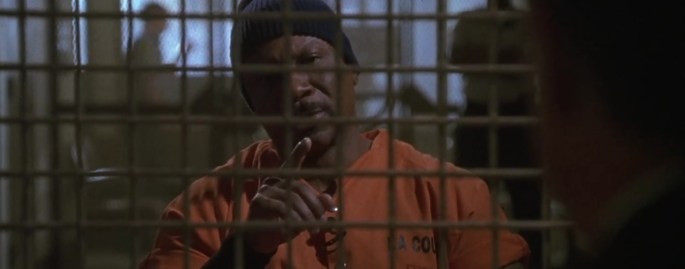
This is the sort of film that just oozes testosterone, made by a super-macho filmmaker interested in super-macho themes and taking absolutely no prisoners. Released in late August of 2002, Walter’s Hill’s grossly underrated Undisputed skillfully combined two genres – the boxing and prison picture – into a totally ass-kicking combo of intense character dynamics and bloody fisticuffs. Starring the jacked-up duo of Ving Rhames and Wesley Snipes as convicts who also happen to be fierce pugilists, the scenario concocted by co-screenwriters Hill and frequent collaborator David Giler is tough, smart yet over the top, and completely entertaining from beginning to end. It seems that the high-security prison that the two men find themselves in is home to an underground and very violent boxing syndicate, with brutal fights gripping the compound and fetching potentially lethal paydays. It’s all so ridiculous and yet totally entertaining because of that fact.

3The rough-house supporting cast included Michael Rooker, John Seda, Wes Studi, Master P, Ed Lover, Fisher Stevens, and Peter Falk in an unnecessarily amazing performance as a mob boss who helps to organize the jailhouse bouts. Lloyd Ahern’s muscular camerawork got in close during the boxing matches and set an ominous tone in conjunction with the location shooting at High Desert State Prison in Indian Springs, Nevada, and blunt-force editing by Freeman Davies and Phil Norden. I love a movie like this – it’s unpretentious, gets down to business fast, and because Hill is such a guy’s-guy craftsman, it all feels mean and surly. Despite mixed reviews from critics and totally bombing at the box office, Undisputed has certainly attained a cult status, paving the way for multiple DTV-sequels (which I’ve not personally seen) and a solid spot on Hill’s thoroughly righteous and exceedingly masculine filmography.

2

Sunset Boulevard – A Review by Kyle Jonathan

Sunset Boulevard

1950.  Directed by Billy Wilder.

hero_eb19990627reviews08906270301ar

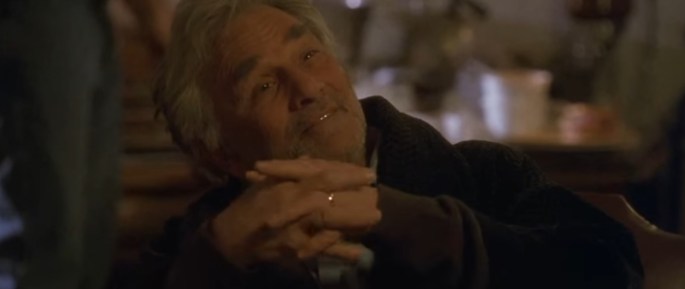
As American cinema plunged into the heart of its noir period, transitioning from the golden era of silent films and historical epics, Billy Wilder’s tragic dissertation on the cost of fame threatened the foundations of the industry and shocked audiences by obliterating the divide between art and reality. Its opening sequence, with the title stenciled on a forgotten gutter, could not be clearer with its intent.  Casually described as a poisoned love letter to Hollywood, Sunset Boulevard is an uncomfortable refutation of the insatiable limelight and a masterfully constructed satire on the craft itself.

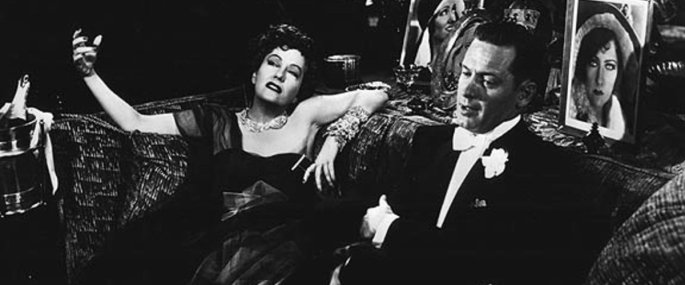
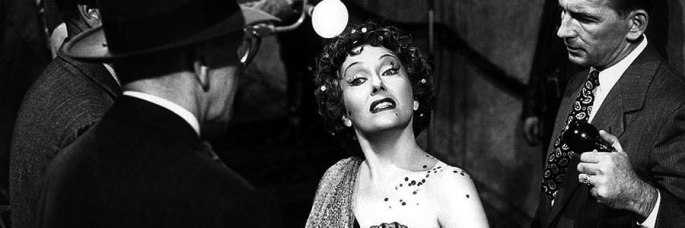
The central theme of the film explores the consumption of idols by the masses, the discarded remnants of youth, sexual fixation, and uncanny melodramatics filling the crumbling manse in which Gloria Swanson’s ghastly starlet holds counterfeit court from a tabloid torpor.  Her Norma Desmond is an animated apparition, moving and communicating as if she were a celluloid wraith given life.  Initially her performance comes across as over the top, but as the film settles into its celebrity quagmire, her actions and delivery reveal themselves as the perfect representations of an appalling culture in which youth is a finite currency.

featured-image-sunset-boulevard-1200x520

Self indulgent illusions are one of the film’s profane tenants.  John Seitz’s abrasive black and white cinematography is both complex and synthetic, using elusive trickery to frame each composition as a series of waterlogged memoirs.  The opening pool sequence was filmed by placing a mirror on the bottom of the pool and shooting the reflection.   Swanson is always enshrouded in a haze of cigarette smoke, twirling her fingers through the vapors, signifying her desperate attempt to hold onto a dream that was never real in the first place.  William Holden’s lascivious screen writer is framed in morose shadows and rigid compositions whenever he is within the mansion, contrasted by bright lights and open air wide shots whenever he sneaks away to a production set.  Holden’s formidable talent is a boon in what is essentially a supporting role to Swanson’s planetary presence.  He presents as the common man, the unseen face that provides the life blood for the silver screen behemoths, disenchanted by the truths of the business.

Wilder used actual directors for many of the roles.  Eric von Stroheim, who plays Norma’s “butler” actually directed Swanson in a silent film.  Cecil B. Demille plays himself and the legendary Buster Keaton makes an appearance as a “waxwork”, the dubious moniker Gillis gives to Norma’s archaic colleagues.  Swanson herself landed the role because she was a silent picture star who never made the transition to talkies, a literal embodiment of Norma’s purgatory. The blending of on and off screen concepts was initially rebuked by Wilder’s fellows, garnering a disdain for the picture upon its debut.  The film would go on to be nominated for eleven academy awards, signaling the industry’s surrender to the film’s accusatory allure.

dvd_sun

The ambiance of the film doubles as throat clutching protest and a tragic love story.  Stroheim’s butler protects Norma’s fragile sanity by penning fan letters and yet constantly appeals to Holden’s Gillis to end the charade.  Gillis begins as a screen writing huckster, all to eager to take advantage of the glitz and then slowly, irrevocably, comes to loathe what he has become.  There are glimmers of hope sprinkled among the shadows, with Gillis finding actual love in a colleague and Norma seizing upon the promise of a return (Never a comeback!) by subjecting herself to a menagerie of cosmetic transfigurations.  The use of a dead man narrator subverts these kernels of respite, constantly reminding the viewer that there is no escape.  The end result is a passionate, but ultimately bitter acceptance of the reality of American cinema.

Available now for digital rental, Sunset Boulevard is an exceptional film, evoking every aspect of an age where films were more than just entertainment.  Featuring a legendary lead performance, vicious dialogue, and unforgettable set designs, this is truly one of the greats.  Words cannot adequately explain this film’s importance or implore you to view.  In the end, be it spandex blockbuster or a last minute Oscar contender, Norma’s ghost is a specter that haunts every theater and every bedroom streaming solution.  Pyrrhically relevant and universally cherished, Sunset Boulevard is a landmark achievement whose corrupted heart quietly beats underneath the box office veneer, warning about dangers who have been ignored in the CGI and social media saturated landscape of modern American entertainment.

Highly.  Highly Recommend.
sunset_blvd_title