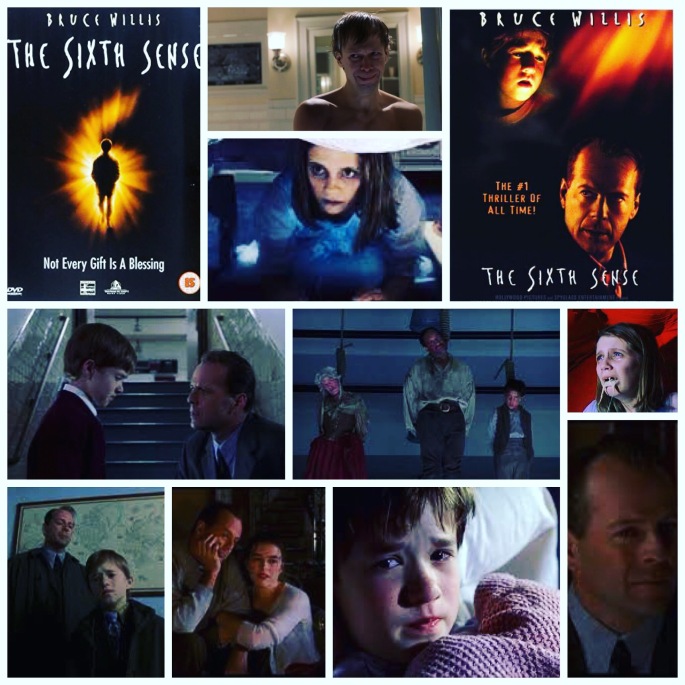
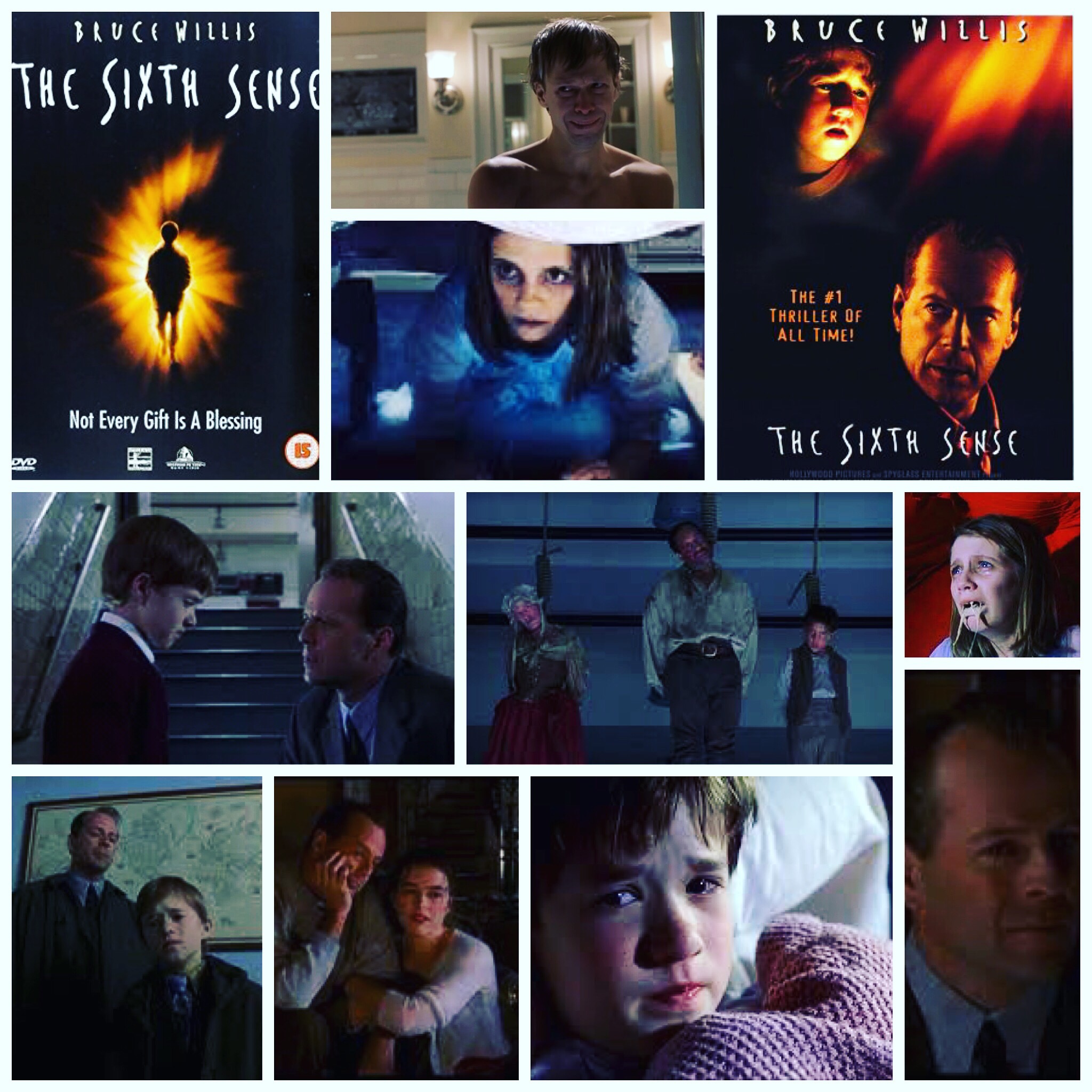
M. Night Shyamalan’s The Sixth Sense produces the kind of rarely attained fear that we always seek out in this genre, that creeping cold dread that has you clammy and your nerves jagged, where you know you’ll be looking over your shoulder as you walk down the dark hallway to your room later that night. That’s the best kind to me, stemming from well made, atmospheric ghost stories as opposed to all this gore-hound nonsense you see these days (can you believe they’re making another fucking Saw flick? Actually from a dollar sign perspective I can, but still). This one is a veritable haunted house of apparitions and phantasms, all witnessed by a disturbed Haley Joel Osment, who would look even more worried if he could see himself now as a twenty-something walking play-dough potato. He can see dead people, as he intensely whispers to Bruce Willis’s lonely child psychologist in the film’s now showcase moment, and not all of them like to keep their distance. Willis is traumatized from a tragedy years before involving an unstable former patient (Donnie Whalberg), and treads hesitantly with this new kid. A bond is formed, however, and with it comes the desire to help. The frequent paranormal sightings range from grisly, bemusing, shocking, tragic and often downright terrifying, especially one involving a very young, gaunt Mischa Barton invading a couch fort Osment has made to try and get some peace and quiet. The plot is carefully composed and directed by Shyamalan in a magician behind the curtain fashion, the veil gradually drawn with every beat until we’re presented with a staggering twist ending that has become legend since the film’s release back in the days before such a conclusion could be found in every fourth title on the thriller shelf of Blockbuster. Such is the power of storytelling though, and the potency of innovation to inspire others. It’s also great fun to watch the film multiple times and spot the breadcrumb trail of clues leading towards the outcome, clues that you wouldn’t have picked up on before. Along with Barton, who is terrific, there’s nice work from Toni Colette, Trevor Morgan, Kadee Strickland and Olivia Williams as well. You may know the ending even if you haven’t seen the film before, as we do after all live in the age of spoilers, snitches and online hoo-hah, but there’s more to be had than the shock of that, it’s a mesmerizing journey there with a darkly enchanted aura from start to flabbergasting finish. Remains Shyamalan’s best to this day.
The Sender is godawful Z-Grade SciFi with cloying, grating intentions, a script with War Of The World’s type ambitions that was given an allowance of like ten bucks to come into fruition, and the result is a windows 98 screensaver with a fraction of a pulse. It’s a shame because they scored two dope actors in Michael Madsen and R. Lee Ermey, but as good as they are they’re both sheepishly notorious for appearing in bottom feeding diarrhea like this to put food on the table. Madsen strains his tear ducts as the sympathetic father whose adorable daughter has mysterious connections to extraterrestrial activity from years before. He’s on the run from all kinds of government folks including Ermey’s gonzo, overzealous military asshole, a one dimensional fire and brimstone go-getter who hunts them six ways to Sunday. That’s about all you’ll get, besides cameos from Dyan Cannon and golden oldie Robert Vaughn, as well as some Fisher Price worthy UFO effects and an all round lack of pride in the craft from everyone involved. Poo.
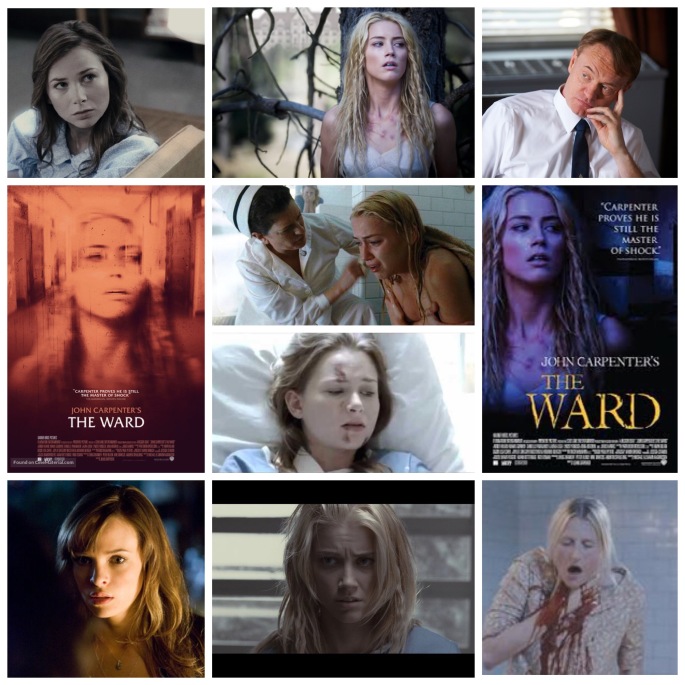
John Carpenter’s The Ward isn’t a particularly remarkable film, and it’s certainly not a very scary one, but there are aspects that I really enjoyed, one of which being the excellent original score, which Carpenter actually didn’t compose himself, for once. The film gets off to a great eerie start with opening credits that are the most evocative sequence of the whole thing, leading into the tale of one seriously disturbed chick (Amber Heard) who finds herself in a whacko mental institution, plagued by the ghost of a restless former patient. A befuddled Doctor (Jared Harris) knows more than he let’s on, of course, and her fellow patients are similarly tormented by the phantom. Here’s the thing: it’s well plotted, acted and executed, save for one thing: it’s never scary. Not once do the hairs on the back of your neck stand to attention, and a horror film should have that. I loved the psychological sudoku of an ending, but even there there was no creep factor to be found. Her fellow patients all have parts to play, including Danielle Panabaker, Laura Leigh Claire, Mamie Gummer and a standout Mika Boorem who steals the show from Heard right in the final act. Works as a thriller, padded with atmosphere here and there, but could have done with a better dose of chills to sweeten the deal.
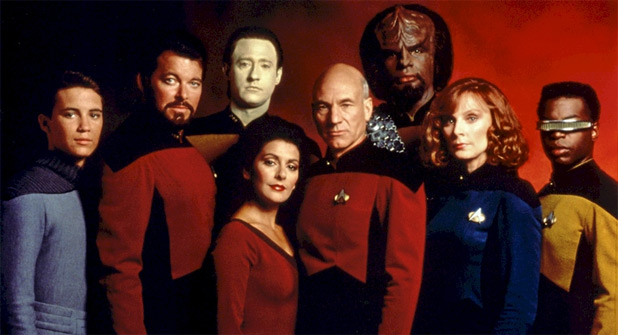
In honor of its anniversary, Ben and Kyle sat down this week and discussed their favorite episodes from the much-celebrated Star Trek: The Next Generation. We’d love to hear from you on our Podcasting Them Softly Facebook page. Which is your favorite TNG episode and why?
The Inner Light
BEN: From the fifth season of Star Trek: The Next Generation is the series’ 125th episode, wherein the Enterprise encounters an alien probe adrift in space. As the crew investigates, the ship is probed by an energy beam which renders Captain Picard unconscious. What appears to be minutes in real time, is the story of a lifetime as Picard is transported to Kataan, where he lives 40 years as a Kamin, a scientist. The story and teleplay by Morgan Gendel is first rate science fiction television and in all the years of Star Trek, I’m hard pressed to find a more personal, intimate story. We get to witness Kamin’s life in politics, his efforts to recognize a pending global ecological disaster, a family (Margot Rose as Kamin’s wife, Eline), his friend Batai (character actor Richard Riehle) and to watch his kids grow up (real-life son Daniel Stewart in the role of Batai and Jennifer Nash as Meribor). This episode came towards the end of an already strong season. This is, hands down, one of my favorite episodes.
KYLE: This is not my favorite, but easily one of the strongest of the entire franchise, let alone series. I love how it is such a departure from the traditional episode, and entirely focused on Picard…and yet it’s not. The ending is one of the most heartbreaking and simultaneously uplifting conclusions of the entire show.
Yesterday’s Enterprise
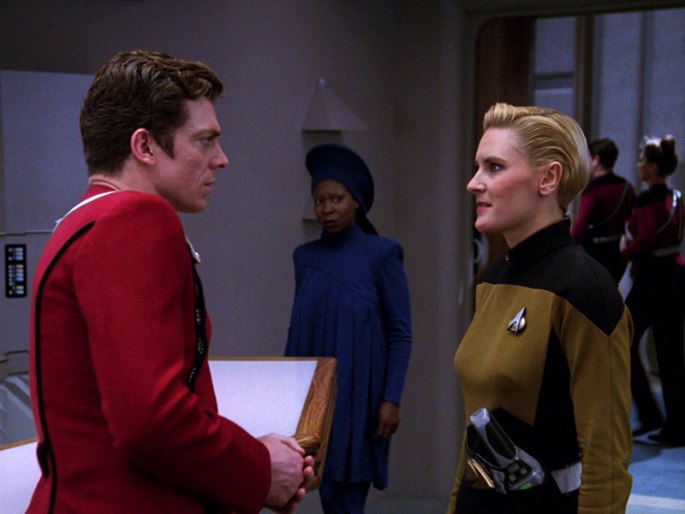
BEN: From the third season, comes a story which directly reflects Star Trek’s own past as well as The Next Generation when a time-space rift opens, allowing the Enterprise – C to move forward in time 20 years. As a result, the timeline the audience knew was subtly altered as Picard wrestles with the idea that he must send the war-damaged ship back to its own time. In the altered timeline, Tasha Yar (Denise Crosby) is the ship’s tactical officer, while Worf is largely missing. This episode was a highlight for many reasons, not the least was Crosby’s return. It also gave us a chance to explore everyone’s favorite bartender, Gunian (Whoopi Goldberg) and her abilities related to time. We are also introduced to the former ship to bear our favorite ship’s name and registry number, completing a gap in the overall history of Star Trek.
I remember as a teenager how violent and effective one of the scenes was. The guest cast was also very remarkable here given the short amount of time we had to see how Yar and the change in the timeline would affect the future. And I’m just willing to bet that fans the world over will remember this line for all time . . . .
KYLE: This is my favorite episode of the series and one of my all-time favorite episodes of television. The direction is tight, the cast give some of their best performances, and the special effects for the battles were ahead of their time. Aside from exploring the mysteries of Guinan, I think what I really appreciate about this episode is that it defines the heart of the show: Doing the most good. Star Trek is about an ideal, about striving to better the universe and uncoupling ourselves from the petty things that drag us down. I absolutely adore Crosby’s return, but it’s the sacrifice of the crew that always sticks with me. This is what heroism is about, being brave in the face of certain death, but always thinking about others and the greater good.
I also think Crosby’s performance is reflective of the series’ concepts of destiny and purpose. The capstone with Guinan and La Forge discussing her legacy was a great nod to the fanbase.
The Best of Both Worlds
BEN: Hailed as one of the best cliffhanger episodes at the time, the producers of the series decided to not only bring back the most feared and revered threats to the universe, but they took it to the next level when they made it a personal story about Picard while being a Riker-centric story. The ongoing tension built through Michael Piller’s teleplay was palpable. Make no mistake: this is as good a serial television gets. The guest cast was also amongst the strongest of any episode so early into the series with Elizabeth Dennehy (Brian Dennehy’s daughter) as Lt. Commander Shelby and a familiar face in the role of Admiral Hanson (George Murdock who had played ‘God’ the previous summer in Star Trek V: The Final Frontier). They managed to alter the Borg’s look and this was the last time we would see the Enterprise-D’s emergency saucer separation procedure. Although I don’t think the second part was as strong as the first part, the entire two-part episode was edited into a single, feature length episode and it seems to play best that way. I also like the fact that it was the impetus for the Benjamin Sisko character in the future series, Deep Space Nine which Michael Piller co-developed with series producer Rick Berman.
KYLE: It’s no secret that First Contact is my favorite Trek film. I love the Borg, how they’re essentially high-tech zombies that convert rather than infect. The genius of these two episodes is that they showed no one was safe. Even Picard, the face of the show, the captain of the Enterprise wasn’t safe from harm. A theme they would explore in depth for the remainder of the series and the films. PTSD and the horrors of war were not themes often explored on TV during TNG’s run and it was refreshing to see them tackling so many important, and extremely (sadly) still relevant issues.
Chain of Command
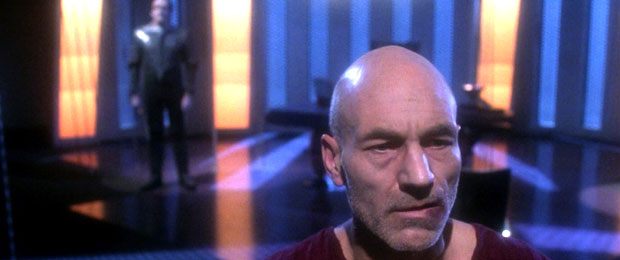
BEN: We’re on a role here with Star Trek feature film guest stars, Kyle. In our next series, we get to focus on the Cardassians. Introduced during the season four episode “The Wounded,” this two-part episode actually surprised audiences with its brusque nature, with Edward Jelico (Ronny Cox in a very snarmy performance) assuming command of the Enterprise-D while Picard, Worf and Crusher are sent on a clandestine mission to sabotage a Cardassian installation which threatens the Federation. The episode’s strength lies in its contentious dichotomy, featuring a palpable ongoing argument between Jelico and Riker and Picard’s incarceration at the hands of David Warner’s Gul Madred. Although I was bothered by Jelico’s departure at the end of the second part, I loved the final scene in Picard’s Ready Room as he recounts his experience to Troi, admitting . . .
Patrick Stewart’s Shakespearean acting came in handy in this episode.
KYLE: This is probably both Frakes and Stewart’s best performances in the series. Picard’s ability to convey a wheel of emotions is staggering, while Frakes and Cox’s political dance if chock full of tension. It’s a marvelous balance of the two, showcasing rare covert operations and the price of being captured, an issue that usually serves as an inconvenience in action adventure shows. Once again, TNG decides it has more in store for the audience and ups the ante by showing an unthinkable torture scenario around which is framed a complicated battle of friendship and duty.
All Good Things
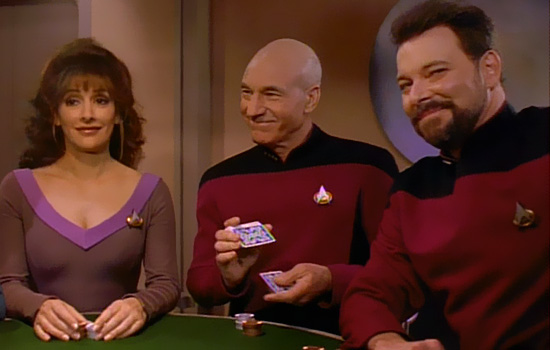
BEN: The series finale was a bittersweet moment for me. I grew up on The Next Generation and though I’d missed a season or two because the local network airing the series had changed their schedule, Rick Berman never forgot to bring the theme of family into an episode. But it was equally bittersweet because the same week the finale aired, I was finishing my finals, and getting ready to graduate from High School. The episode would mark the return of Denise Crosby as Yar (though I still wonder why they didn’t do something with her hair towards the end of the episode) as well as the illustrious, omnipotent Q (John de Lancie) who I contend makes the finest, funniest threat to the crew of the Enterprise-D. I didn’t find his subsequent visit to DS9 or Voyager as strong as his bond with the TNG crew, only because we were introduced to Q seven years prior. Colm Meaney returned from DS9 for this episode in an extended version of the Bridge Conn Officer role (though he was featured on the Battle Bridge in “Encounter at Farpoint”) and Andreas Katsulas just chewed up the screen every time he played Tomalak, a Romulan commander. There was something in this episode for every member of the cast, and I think I could make the case that we never again saw the entire Star Trek: The Next Generation cast as well-utilized as we did in this episode, a credit to Brannon Braga and Ronald D. Moore, who would go on to write Star Trek: Generations which was filmed while this episode aired. My favorite scene in this episode? The overhead cam shot of the senior staff playing poker.
KYLE: Pure fanfare and I love every single second. You’re right, the shot of the poker game almost defined description. This is a show that set a lot of trends, won a lot of awards, and yet, they decided to end it on an intimate note. There’s effects, and the usual hijinks, but in essence, this is a very tame and humble episode that is the perfect send off. There’s a lot of truth to the final conversations and revelations about the future, about the fracturing of friendship and the unstoppable light of hope. I’m honestly not sure you could ask for a better send off for Enterprise D’s crew.
Conspiracy
BEN: Our final favorite episode is from the very maligned first season, which is interesting for a number of reasons. The first, is that we get to return to Earth of the 24th century (though I cringe every time I see the stock footage from Star Trek IV: The Voyage Home). The second is that this is a continuation of an episode from earlier in the first season, “Coming of Age”. Robert Schenkkan, Ward Costello reprised their roles as Lt. Commander Remmick and Admiral Aaron, respectively. The episode is celebrated for its graphic makeup and effects work, compliments of Michael Westmore (who would win one of the three Primetime Emmy Awards for the first season.) I loved this episode because it left so many loose ends, but it also stands on its own. It gave rise to Section 31 and a political tension that Star Trek lacked up to that point. Bet you’d never thought I’d like this episode as much as I do, Kyle, eh?
KYLE: I’m surprised, but in a good way! I love this one because it’s the closest the series ever came to going full horror. The effects work is phenomenal, but I love how it’s a genuine mystery almost until the very end. While the reveal is cheesy by today’s terms, the level of over the top insanity was a welcomed addition to the hit and miss first season. As you say, it left a ton of loose ends, which I was sad to see never come back around. Still, despite this, Conspiracy will always remain one of my personal favorites because it’s so different. The mood, the tone, everything is darker and it’s a great example of how horror has a place in primetime entertainment.
I want to give a parting shout out to Lower Decks as another great episode that just missed the cut!
Join Ben and Kyle next time as they discuss their favorite Ridley Scott films in honor of Blade Runner 2049’s release!
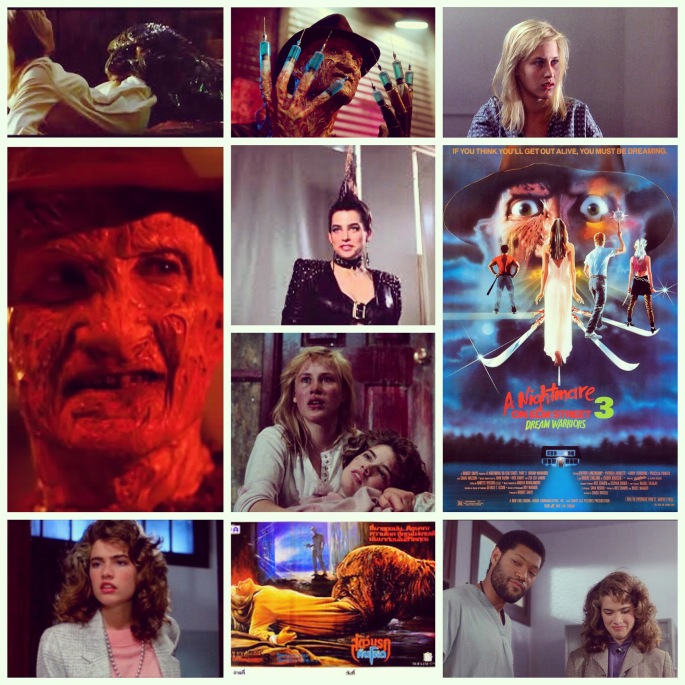
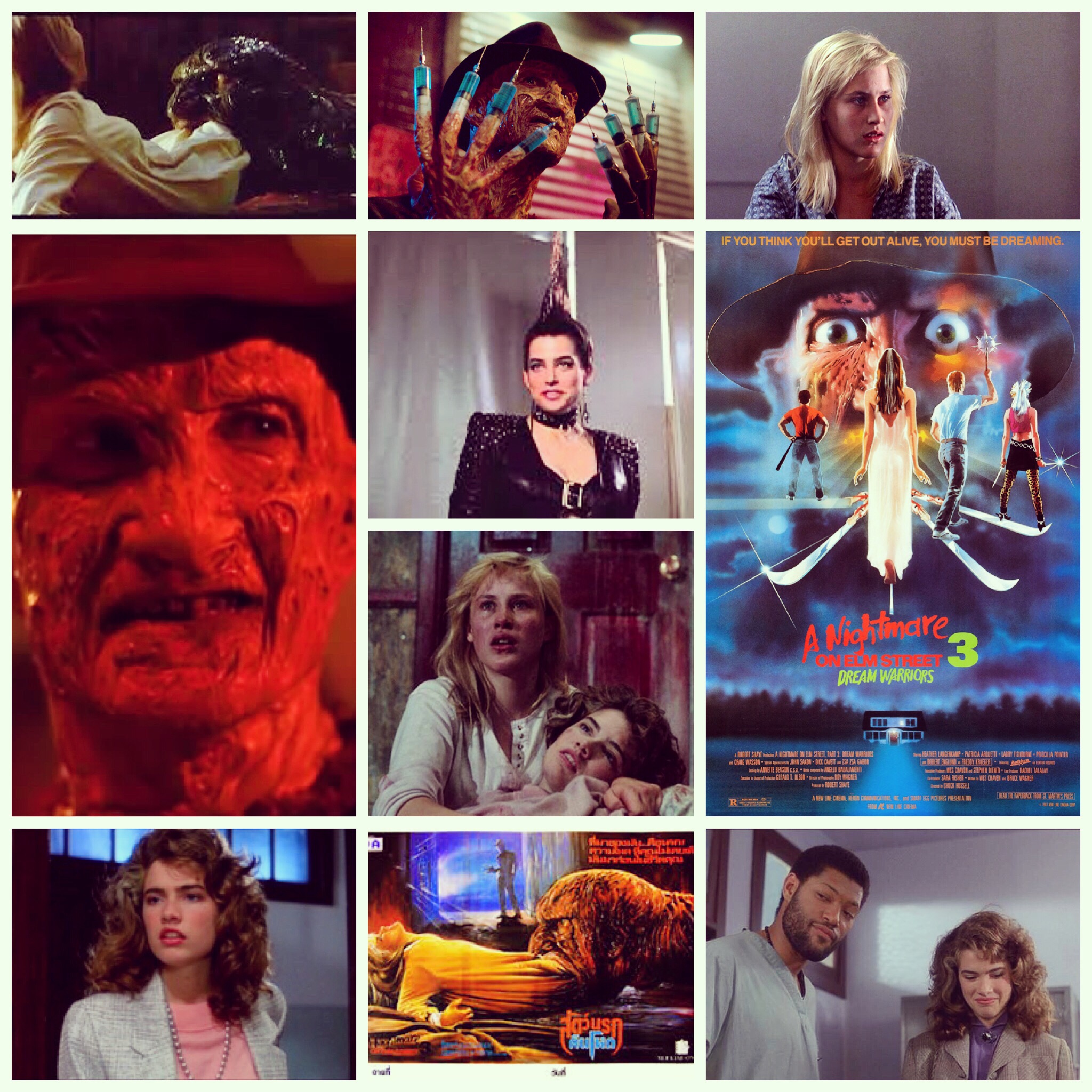
Although billed as pure horror, A Nightmare On Elm Street 3: Dream Warriors strays into fantasy as well and is a pure blast of fantastically diabolical special effects when it’s working in either genre. Around the middle of the franchise marks the place where Freddy Krueger began to turn into more of a cartoonish wise-guy from his original mainly silent phantom, but he’s still pretty foreboding here, as Robert Englund puts energetic work into both his funny and frightening sides. The cool thing about this flick is it’s ‘Goonies’ style aesthetic; several youngsters, committed to a mental facility for their insomniac ‘delusions’, do dream battle with Freddy, and it’s one of the few instances in a slasher film where victims get to fight back in some capacity, and as a unit. Patricia Arquette is wonderful as Kristen, leader of the pack and a fiercely vulnerable spirit, while a young Laurence Fishburne plays the kindly head nurse. It’s also a treat to see Heather Langenkamp return as brave Nancy Thompson, still out for Freddy’s head. The effects are dazzling, from Freddy’s remodelled syringe needle glove in one scene, to a giant pac-man version of his head attempting to eat a live person whole in another, it’s just imagination run wild in dreamland. The kills are still sufficiently gory too, if punctuated by his now classic growling one liners (“Bitch!”). It’s safe to say this is the best in the franchise barring the first film, it’s quite a bit of fun. Oh, and for a good hearty laugh, nothing beats the Dick Cavett/Zsa Zsa Gabor cameo featuring a priceless interruption from Freddy.
-Nate Hill
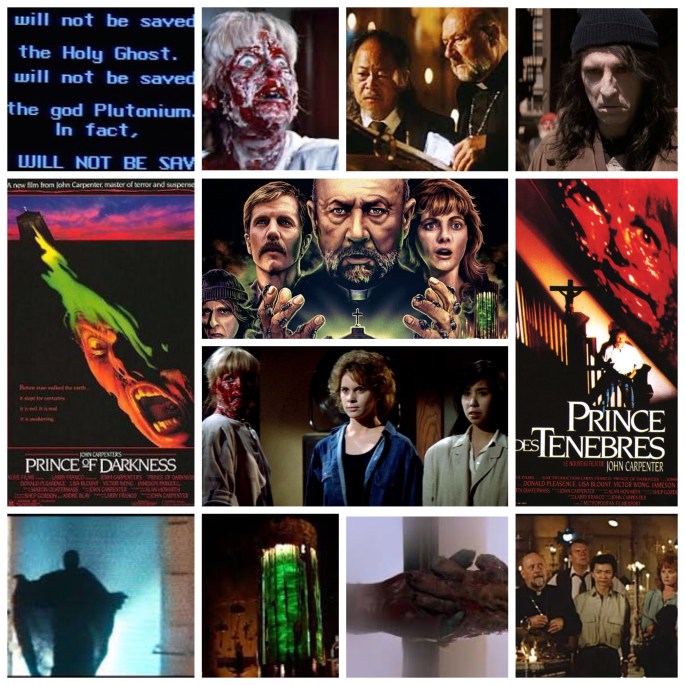
Trust John Carpenter to constantly subvert expectations, aim for innovation and simply just please the crowds throughout his career. Prince Of Darkness is, at first glance, a creaky ol’ fright fest, and it is that, but there’s also a cheeky little irreverent streak to it as well, a borderline atheist flourish that you wouldn’t normally find in a flick about summoning up the devil. Carpenter lays the atmosphere on thick, especially with a reliably spooky electronic score and a pace that burns slow and steady. Deep in the crypt of a church there lies a large glass vial containing swirling green matter, a pseudo scientific/spiritual cocktail that contains the “anti god”, a denizen composed of backward atoms that wants to break out and raise a little hell. Grim faced priest Donald Pleasence will prevent this at any cost, and hires a team of underpaid undergrads led by a crusty professor (Victor Wong) to research it, camping out in the church for kicks. You can imagine how this goes, and there’s a refreshingly old school ‘Body Snatchers’ vibe as various characters fall victim to the creeping dark forces. There’s also mind-stimulating, sci-fi ideas at work too though, including an intriguing time travel prospect and a deft little jab at religion via the story’s trickier elements. Carpenter, although hailed as a master of horror, is no simpleton when it comes to ideas, and he flexes his cerebral muscles nicely here. Ambient, gooey, smart, provocative, a terrific little fright fest that leaves you wanting more.
Art is the most selfish act of all, and the most consumptive. The artist, compelled to create, consumes all around them. No one, and nothing, is safe. Nature, industry, culture, politics…all are ingested and processed in the desperate need to express that inner voice. Love too. Love is the tastiest morsel of all. With love, with a muse, the artist can transcend, reach heights once thought unattainable. Unfortunately for the muse they don’t always survive the process, as the artist is prone to discard them once they’ve served their purpose. The muse’s needs are of no concern to the artist in the midst of creation. The muse does not control its own power. The muse is activated when necessary, otherwise lying dormant. Their heart crystalized and preserved until the next desperate need strikes the artist. Sometimes the muse malfunctions, provides no fruit for consumption. These are dangerous moments for the artist, who must now distract themselves while waiting for the return of their inspiration. At these times the artist can become aware of their own selfishness, their gluttony. This may trigger a spasm of altruism. In an attempt to balance hour upon hour of forced isolation, the artist may open themselves up, inviting people into the process and sharing with them their passion. But the artist is compulsive and often doesn’t realize when this “altruism” again becomes a part of their consumption. Soon the artist begins to feed again on those they have brought close, turning their lives into part of the work. A side effect of this is adulation. Feeling connected to the artist, the mob begins its own feeding. The artist can thrive on this adulation as much as they do the muse’s love. Sometimes it supplants it entirely. Having claimed partial ownership of the artist, the mob feels threatened by the muse. They fear its ability to return the artist to isolation. And so they destroy it, pummel it, dissect it. The artist is impotent to act. “It’s all because they love me,” he chants as his love dies and ego grows. The muse’s attempt to reignite the artist’s passion cause sparks that ultimately just burn everything to the ground. Undeterred, the artist simply changes medium. Now they work in ash.
Small towns, wherever they may be, tend to carry with them a rather distinctively suffocating burden. Those who have visited such places, either extensively or not, know the feeling; sensory awareness seems to have been filtered out with any discernible definition of time and space upon arrival. You either go with the flow or get caught up in its aggressive vortex, in which case surrendering to your surroundings seems to be the easiest path to contentment.
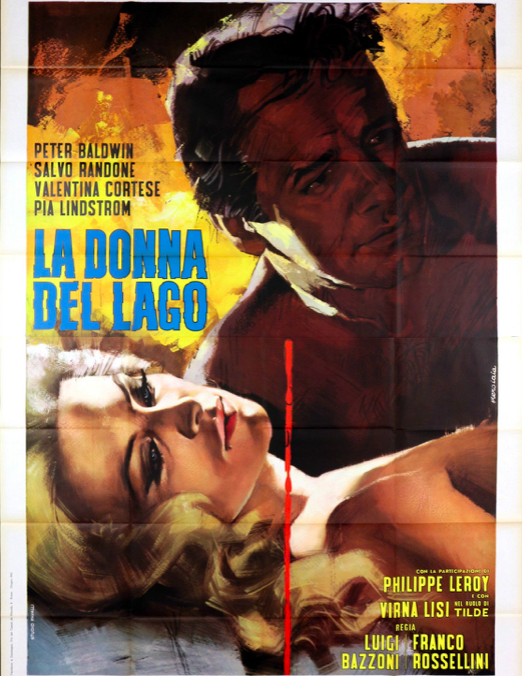
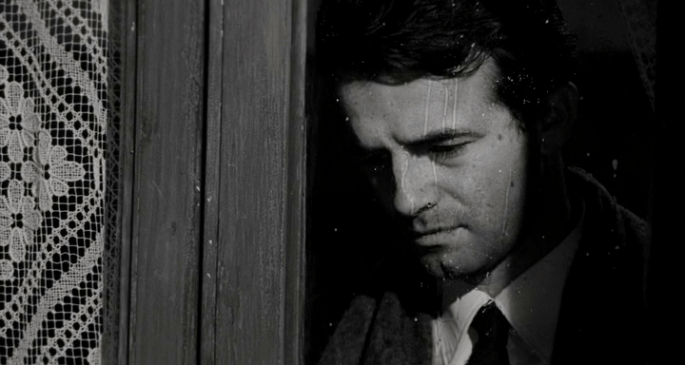
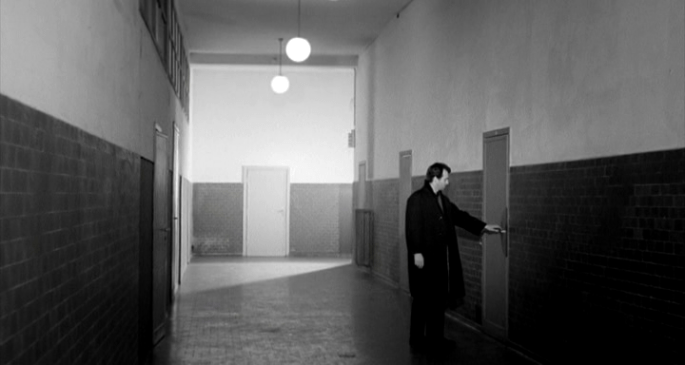
This particular sensation has enjoyed its share of cinematic representation in the past, though few have captured it as purely as THE POSSESSED (aka THE LADY OF THE LAKE), the haunting debut from Luigi Bazzoni and Franco Rosselini (the same pair behind genre-bending phantasmagoria FOOTPRINTS ON THE MOON and boozy Franco Nero-starring giallo THE FIFTH CORD). The coastal village which serves as the duo’s muse is one of exquisite and often unseen (or unspoken of) secrets, home to the same lost souls that it lures into its eternally intoxicating web from the outside. The existential dread exhibited isn’t so much inspired as it is painfully extracted and inseparable from the setting, tightening its grip on the audience until they no longer have ample room to squirm.
Like many a weary traveler walking directly into the jaws of death, the unlikely hero in this ghastly tale is a writer in search of a lost lover. Bernard (Peter Baldwin) finds himself chasing repressed guilt and ruminating over potentially misleading memories in a place where clear consciences appear to be in rather short supply though, as he makes very clear throughout his unorthodox journey, he is among familiar faces.
This isn’t to say that his obsession is any easier to transcend as a result; almost immediately after setting foot in town, the residents inform Bernard that his woman has committed suicide under some disconcertingly mysterious circumstances, and they don’t wish to elaborate any further on that. Proving himself to be a determined and self-sufficient fellow, the outsider fails to abandon his personal agenda in favor of preserving the nastier secrets festering just below the surface, even when the townspeople threaten its stability. The unwelcoming unease slowly creeps in from the dimly-lit streets to the musky hotel where most of the subconscious digging takes place, in no time obscuring the line between reality, delusion, and dream.
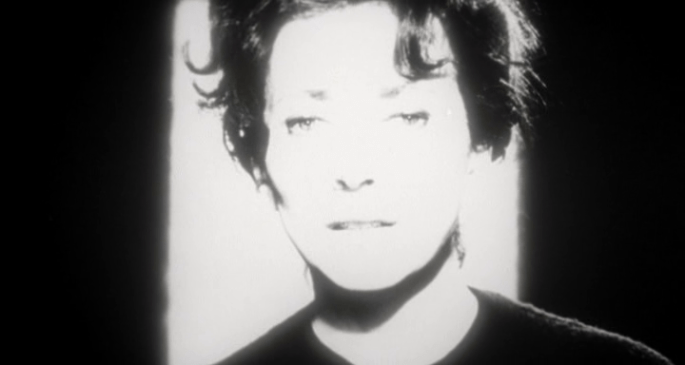
Although he’s been here before, the writer feels no less alienated by his circumstances or disturbed by the colorful characters that he encounters during his trek towards the truth. A faceless woman in white strolls by the shimmering lake as if bound to its magnetism, the local butcher leers impassively from beneath his enveloping wooden canopy, the innkeeper’s hospitality is quite obviously one built around artifice, and the local drunkard’s abyssal cries in the witching hour may in fact be far less insignificant than they at first appear.. Everyone harbors a perversion that they’re not keen to speak of, and the only “real” people are those not pretending.
When all else fails, and he realizes that those around him won’t be of much help, Bernard decidedly probes his own imperfect perception, rendered beautifully in either piercingly white light or with softer, no less exceedingly hallucinatory intimacy. Leonida Barboni’s appropriately detached yet – when absolutely necessary – delectably invasive cinematography effectively draws more than a few connections between the darkest recesses of a creative mind and the environment it embraces, with the town’s exteriors evocatively photographed in what feels a lot like the twilight. Such as it is, this is a lot like a zombie movie without the zombies, or a giallo thriller without the killer, wherein the deep shadows and snow-covered cemeteries feel so much like home.
Baldwin makes for an exceptional protagonist, bringing a great deal of introspection and genuine vulnerability to a seemingly cultivated exterior; so much more so than his charismatic demeanor would initially suggest. The commitment to his point-of-view is commendable while simultaneously proving to be one of the film’s few genuine faults; for example, we certainly could do without some of the on-the-nose narration, and towards the end the story gets a little wrapped up in Bernard’s mania for its own good, thus diminishing its dramatic impact.
Even so, these are minor quibbles; this is a hypnotic monochrome nightmare that sucks you in and spits you out entirely at its own will. Some films politely invite us into their headspace whereas this is one that pushes you into it, headfirst. We wander, we wonder, we pace, we lose faith – all to the faint sound of an unloving breeze. It’s a compelling and ultimately hopeless cycle; perhaps not everyone’s cup of (black) tea, but when writhing in such formally arresting melancholia, the experience itself can hardly be equated with misery. Much like the small-town ambience which provides such consistent inspiration, it’s a kind of purgatory on Earth that one feels almost inexplicably compelled to revisit immediately upon departure. Call it supernatural separation anxiety – as familiar as it is frighteningly unfathomable.
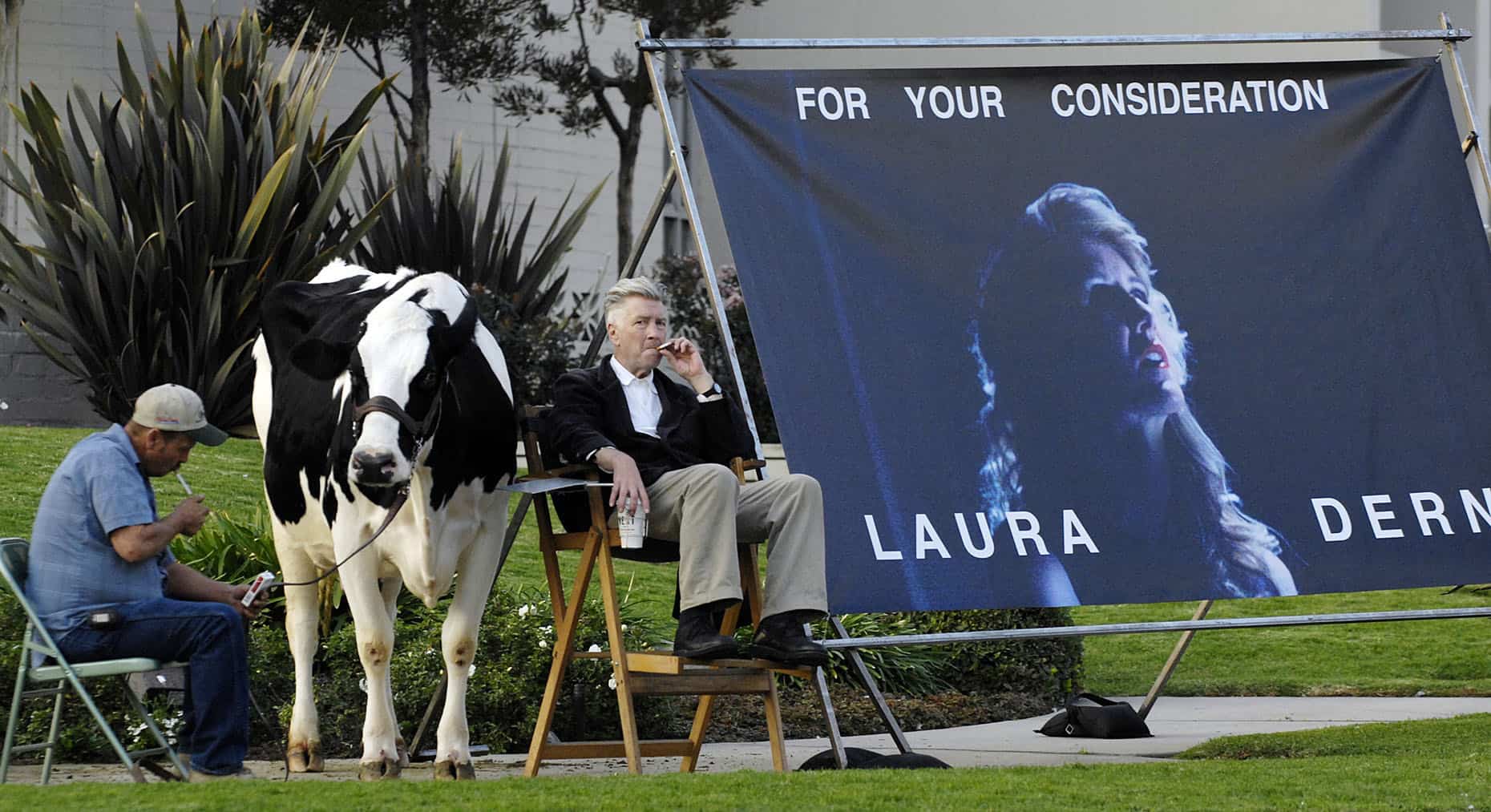
Podcasting Them Softly is incredibly excited to continue our Raymond Benson Auteur Series with our first of a two part chat about the works of David Lynch. Frank, Tim, and Raymond discuss Lynch’s early works continued through his features ERASERHEAD, THE ELEPHANT MAN, DUNE, BLUE VELVET, and the first two seasons of TWIN PEAKS. The three of them will be back soon covering Lynch’s filmography from WILD AT HEART to TWIN PEAKS: THE RETURN. For those local listeners, please check Raymond’s website for upcoming book signing appearances for Raymond’s new novel, THE SECRETS OF CHICORY LANE.
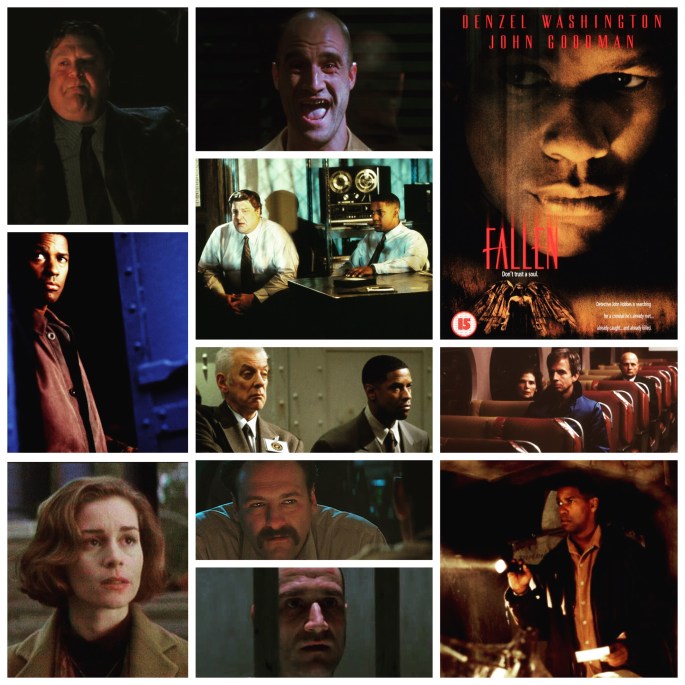
A demon angel. A Badass Denzel Washington. Tony Soprano singing the Rolling Stones. Creeping psychological dread. Browned, burnished production design. A deliciously mean spirited, ballsy twist ending. All this and more can be found in Gregory Hoblit’s Fallen, an atmospheric spook-house of a flick that gets tone, fright and suspense just right. Nestled in that sweet spot of the 90’s where detective stories often had a neat supernatural twist (The Prophecy is another dope one), it’s a film that demonstrates the power of storytelling and atmosphere done right, like a campfire tale that cops tell their youngsters. Denzel is Hobbs, a detective who oversees the graphic execution of serial killer Edgar Reese (Elias Koteas, terror incarnate), a monster he once caught. Case closed, right? Not so much. Soon after he kicks the bucket, one or more copycat killers show up, and once again the crimes happen under Hobb’s watch. Coincidence? Paranormal? It’s a neat, eerie game of cat and mouse with an antagonist who possesses a few unearthly methods of skulking around in the dark. Hobbs is helped by his two colleagues, salt of the earth John Goodman and hothead James Gandolfini, bumps heads with the obstinate police captain (Donald Sutherland), and runs into his foe at every turn, each time in a new vessel which gives the actors, right down to extras, an opportunity to have some devilish fun. Embeth Davidz is her usual withdrawn self as a woman with ties to the killer’s past, and watch for Robert Joy and Gabriel Casseus as well. Composer Dun Tan’s unearthly drone of a score compliments the drab shadows, oppressive nocturnes and threatening frames of the film eerily as well, creating a mood-scape that drips ambience. The end is an acidic kick in the nuts, and I admire a film that has the stones to chuck in such a shock tactic, embracing the dread that has been built up to that point with one last sardonic, hopeless cackle. Film noir to it’s roots, subtly mystical, a perfect one to settle down with as we move into the Halloween season.













 Podcasting Them Softly