Indie Gems: Prisoner


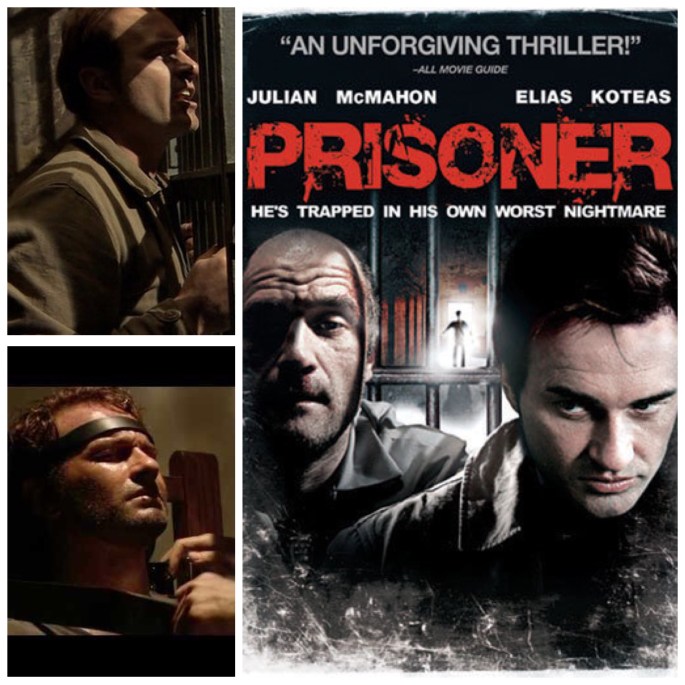
Prisoner is a rough, disturbing little psychological thriller about a potential prison film, or rather the lonely location scouting sessions of controversial, much disliked Hollywood auteur director Derek Plato (Julian McMahon). He’s an arrogant prick of a dude whose newest film has him scouring abandoned penitentiaries for that perfect location. He’s alone, curiously, until all of a sudden… he’s not. Out of nowhere appears the mysterious Jailor (Elias Koteas), a frightening man who forcefully imprisons Plato, mentally berates him and forces the man to look back upon his long and quite unpleasant past in both the film industry and his disaster of a personal life, prodding him with intimate questions and accusations. This is essentially a chamber piece with the two actors being the only ones who appear in the present timeline, which is punctuated by hazy flashbacks to his life before. McMahon carries himself nicely, handling a well worn arc with charisma and giving off an authentically unlikeable vibe early on. Koteas is a beast of an actor and could scare the pants off of real life convicts, as such he steals the show with a brutal, galvanizing performance. Now, these types of films usually head towards conclusions we’ve seen before, and I won’t spoil anything except to say that although I was satisfied with the way the ending did rise up to meet the rest of the film, some won’t be and may find it cliched, but hey, that’s life. Nevertheless, it’s a taut little mind game by way of a character study, clocking in well under ninety minutes, a sleek little piece that leaves the viewer no time to lag or lolly-gag as it trundles along through it’s intense story beats. Cool stuff. 

-Nate Hill

John Maybury’s The Jacket


The Jacket is a curiosity of a film, and didn’t stand out for many critics when it came out, but for some reason it’s stayed in my thoughts for years since and has become one of my favourites, of any genre. Moody, cold, desolate and sketchy, it’s an at once alienating and life affirming piece that puts you front and centre with the kind of crushing loneliness one must feel when the mind becomes broken, and then wraps us in a comfort blanket with the notion that forces unknown to us, and some not so mysterious (human contact is touched upon), one might extricate themselves to a better situation. Adrien Brody is confusion incarnate as haunted gulf war vet Jack Starks, a gaunt silhouette of a soul who suffered a head wound, the neurological fallout of which has left gaps in his perception of reality and a jagged sense of cohesion. Shipped off to a nightmare of a mental facility run by Kris Kristofferson, whose character almost certainly shouldn’t be left in the care of troubled minds as his idea of treatment consists of pumping patients full of untested pharmaceuticals and shunting them into a morgue drawer. This is where, by unexplained phenomena, Jack is able to bounce forward in time from his drab 1999 timeline over to a slightly less drab 2007, where he meets Jackie (Keira Knightley), a girl who might have ties to his past. The film sounds high concept, almost Sci Fi, but the way it’s composed is anything but. The supernatural elements are shown frankly and never overblown, gilding the psyche of the characters in a more internal, psychological fashion, especially when Brody is in that drawer and all manner of bizarre subconscious phantasms dance before his vision, before he’s whisked off to the future. All the characters but one are listless, withdrawn and somber, from Jennifer Jason Leigh’s sympathetic, forlorn doctor (she’s terrific here) to Kristofferson, who provides grizzle and a welcome depth where other actors would have gone the straight up Dr. Frankenstein cop-out route. Daniel Craig is the one live-wire who breaks the mold, and I enjoy his early career work before he calcified into the stoic 007 template. He’s a treat here as a rambunctious fellow patient and spirit guide to Starks. Appearances from Brad Renfro, Kelly Lynch and Stephen MacKintosh are notable as well. There’s a despondent, bleak blanket over much of the film, a coldness brought through in broad strokes by director John Maybury, whose distinct European approach to filming (multiple extreme closeups, subtle voiceover, trippy experimental effects) helps the mood really soak in. There’s a contrast at work too though, amidst the film’s themes of loneliness and unrest there shines through a deep emotional warmth, a reassuring grasp on the reins from Brody’s character to seize back a life that was taken from him, and wake up from his nightmare, with help from those around him. A willingness to keep going, to change the course of one’s life when it swerves off track, explored quietly, underplayed in harmony with the seeping discomfort hidden in many of the frames. Part Hollywood thriller, romance, art house flick and psychological horror show, there’s just no other film like it. 

-Nate Hill

Julio Quintana’s THE VESSEL

Image result for the vessel 2016

For those latter-day Terrence Malick junkies amongst us, THE VESSEL is a film that has mistaken slipped under the radar. It’s a small and very intimate picture that is set in modern-day Puerto Rico where a small town is still deeply affected a tsunami’s wave that wiped out a school, killing all of the children. The dilapidation became suffocating until a series of divine events happened that instilled hope and caution.

From executive producers Terrence Malick and his, partner Sarah Green comes a film that is cut from the Malick cloth;  the film tells an acute tale but has so much more to say than the fragmented events we see on the screen. Quintana keeps a very taut narrative structure, yet with very elusive camerawork and a beautiful score by Hanan Townshed, he creates a film that is a whimsical force of nature.

Martin Sheen anchors the film as the Catholic Priest who has been the town’s shepherd since the tsunami wave that washed the life out of the town. Sheen, like in all his turns, is deeply moving with his performance, straddling the line between apathy and hope. Sheen has rarely been better, and for an actor of his caliber, that’s saying a lot.

THE VESSEL is a deeply spiritual film that breathes life into our cinematic realm that’s being taken over by whatever big budget franchise is set to implode at the nearest theatre. It’s a wonderful film filled with hope, tragedy, and inspiration.

THE VESSEL is now streaming on Starz.

DAVID GORDON GREEN’S STRONGER — A REVIEW BY NICK CLEMENT

9

Stronger is emotionally potent true-life cinema, a cautiously inspiring film about grotesque physical and mental tragedy, and a film that resists easy sentimentality which would have cheapened the overall package. Directed with a strong sense of focus by the eclectic filmmaker David Gordon Green (Pineapple Express, Snow Angels, Joe), the film was written by first-time screenwriter John Pollono, who adapted the novel of the same name by Boston Marathon bombing survivor Jeff Bauman and Bret Witter. Stronger is anchored by the customarily intense and all-together fantastic Jake Gyllenhaal, who in film after film over the last 10 years, has demonstrated some of the best acting chops and taste in material without ever truly getting his full due from critics and audiences.

1

Consider this list of recent films and performances: Prisoners, Nightcrawler, Okja, Brokeback Mountain, Jarhead, Zodiac, Rendition, Brothers, Source Code, End of Watch, Enemy, Southpaw, Everest, Demolition, and Nocturnal Animals. This guy is on creative fire like few others in recent years. In Stronger, he plays it close to the vest and gets extraordinarily intimate with both Green and versatile cinematographer Sean Bobbitt (The Place Beyond the Pines, Shame), as well as his superb co-star Tatiana Maslany, who I’ve never seen on-screen (not viewed Orphan Black yet…), but hope to see a lot more of in the future. She’s absolutely spectacular in a fully-fleshed out “girlfriend role” that feels just as important and moving as Gyllenhaal’s gutsy lead performance. They have genuine emotional and sexual chemistry, and share one scene of extreme intimacy which is heightened because of the tragic circumstances of the situation.

3

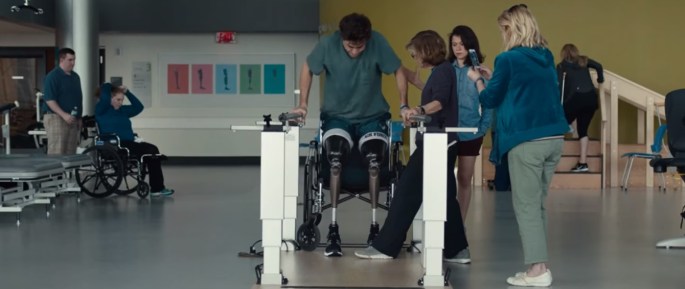
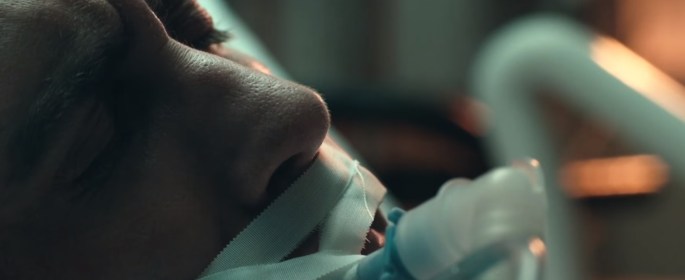
The film centers on the harrowing in-the-moment trauma and grueling rehabilitation process for Bauman, who had his legs blown off below the knees during the Boston Marathon bombing a few years ago. Playing like an excellent counterpart to Peter Berg’s riveting and underrated procedural Patriots Day, in Stronger, the filmmakers zero in on one man, and the people that surround his orbit, giving an extremely personal side to this far-reaching event. And yes, you get to find out about “that guy in the cowboy hat,” who in those iconic photos, could be seen rescuing Bauman at the point of impact, his legs a distorted bloody mess, and clinging to life with all that he had left. The invisible and fully seamless visual effects used to show Gyllenhaal moving without his real legs is astonishing, and entirely convincing in every single shot.

5.jpg

Miranda Richardson is unrecognizable and depressingly excellent as Jeff’s alcoholic mother, while Clancy Brown gets some effective scenes as Bauman’s hot-tempered father. The on-screen family dynamics that are depicted feel honest and true to the lower-middle class Boston neighborhoods that are on display, while the “Boston Strong” theme is echoed multiple times, but it never comes off as annoying or pandering, because Pollono’s script never tries too hard, and Green never injected any unnecessary directorial blustering into the proceedings. This is the sort of topical film that audiences have been sadly shunning of late, and its low box-office and early-in-awards-season release date isn’t going to help when trying to get Gyllenhaal a much deserved Oscar nomination (for those who care about these things; I personally don’t, but just making an observation…) or the film any sense of commercial traction.

0

‘Kingsman: The Golden Circle’ Fails to Find its footing

History is replete with the spoils of cinematic spies; resources and gadgets are ready at an instant; beautiful locales, venomous villains and gorgeous ladies on tap. James Bond was fashionable, Steve Rogers was symbolic, Austin Powers was hip, Derek Flint was cool, Ethan Hunt is grace under pressure. And then there was Eggsy Unwin, the unwitting street thug turned superspy. He returns to theaters in Matthew Vaughn’s farcical Kingsman: The Golden Circle.

Each of the aforementioned superspies were successful because their creators managed to put their characters in the middle of timely stories; they reflected the challenges that faced modern society while the actor inhabiting the role brought a certain braggadocio and swagger that made the performance ultra-cool for swooning audiences looking for an escape.

Vaughn has successfully delivered on this formula in the past, most notably X-Men: First Class and to an extent, the Kingsman’s previous outing, 2014’s Kingsman: The Secret Service. The story there gave our future hero, Eggsy (Taron Egerton) an identity thanks to a life-oath sworn to between his dad and Harry Hart (Colin Firth). The bond that Jane Goldman and Vaughn created worked so well because it was about polishing the street-wise punk, making him realizing his potential; a proverbial rags-to-riches story. And, as much as it was The Secret Service’s script, Egerton and Vaughn are an exceptional duo when it comes to films.  See the melodrama Eddie the Eagle for a solid example of the actor-director’s teamwork.

In the over-long The Golden Circle, Eggsy is back, more polished with just a wink of his former street-wise life. In the opening frame, he demonstrates how well he can handle himself in a defensive situation, thwarting a former Kingsman applicant (Edward Holcroft). In the next frame, we see him with his girlfriend, Tilde (Hanna Alstrom) and his street-wise punk friends, establishing that he hasn’t fallen too far from his original tree, but he’s sprouting new leaves. Of course, he’s wiser as evidenced by the snarky, expletive-laden commentary throughout the course of the film.

Following a disaster that all but decimates the Kingsman, Eggsy and Merlin (Mark Strong) find themselves turning to bourbon and their American brethren, the Statesman. Here, Jeff Bridges, Channing Tatum, Pedro Pascal and Halle Berry come to the Kingsman’s rescue, and unless you live under a cinematic rock, the next part will not be a shock: Harry returns from the dead. Vaughn and Goldman go to great lengths to explain how this is possible.  This plot instrument is valuable in a sequence later in the film, but it’s an instrument that wears its welcome.

As spy networks cross, a sinister plot lurks around the other side of the globe with a deliciously evil Poppy Adams played by Julianne Moore. Moore’s performance is a highlight of the film, her pitch-perfect villainy was enough to make Blofeld blush. Except Charles Gray’s turn in Diamonds Are Forever. That’s a story for another time. Sadly, Moore’s presence on the screen is marred towards the end of the third act, but it isn’t enough to make you dismiss her character completely. Bruce Greenwood puts on his stately manner as the President of the United States and gives us a good show.

What troubles me about The Golden Circle is that I was left to wander off in my own thoughts during a key action sequence, partially because it was Bond-lite; something I’ve seen so many times. The parallel characters between the two spy organization are so similar, they seemed unnecessary, which is why it is a shame that neither Jeff Bridges nor Channing Tatum had too much to do in this film. What managed to bring the film around for me was a quote by Winston Churchill, uttered by Harry Hart.  I won’t recite it here, but you’ll know it when you hear it.

Despite the film’s shortcomings, the film is timely, even if it is over-the-top. Several strong character moments, specifically between Egerton and Strong support the film’s premise. Its length and distracting antics don’t always work. Rest assured, Vaughn, Eggsy, Harry and the rest of the team will be back.  Your box office dollars will ensure that.

Now in theaters, Kingsman: The Golden Circle is rated R by the MPAA.

Cameron McHarg: The American Badass

Frank is joined by filmmaker, writer, actor, fellow podcaster, and all around American Badass, Cameron McHarg to talk about his work, his process, Harvey Keitel, 70s films, and about his influences and future projects. Cameron is the producer, founder, and host of Triumph and Disaster, and had Frank as a guest a few months ago. Check out everything and anything about Cameron here, and their podcast on Triumph and Disaster here.

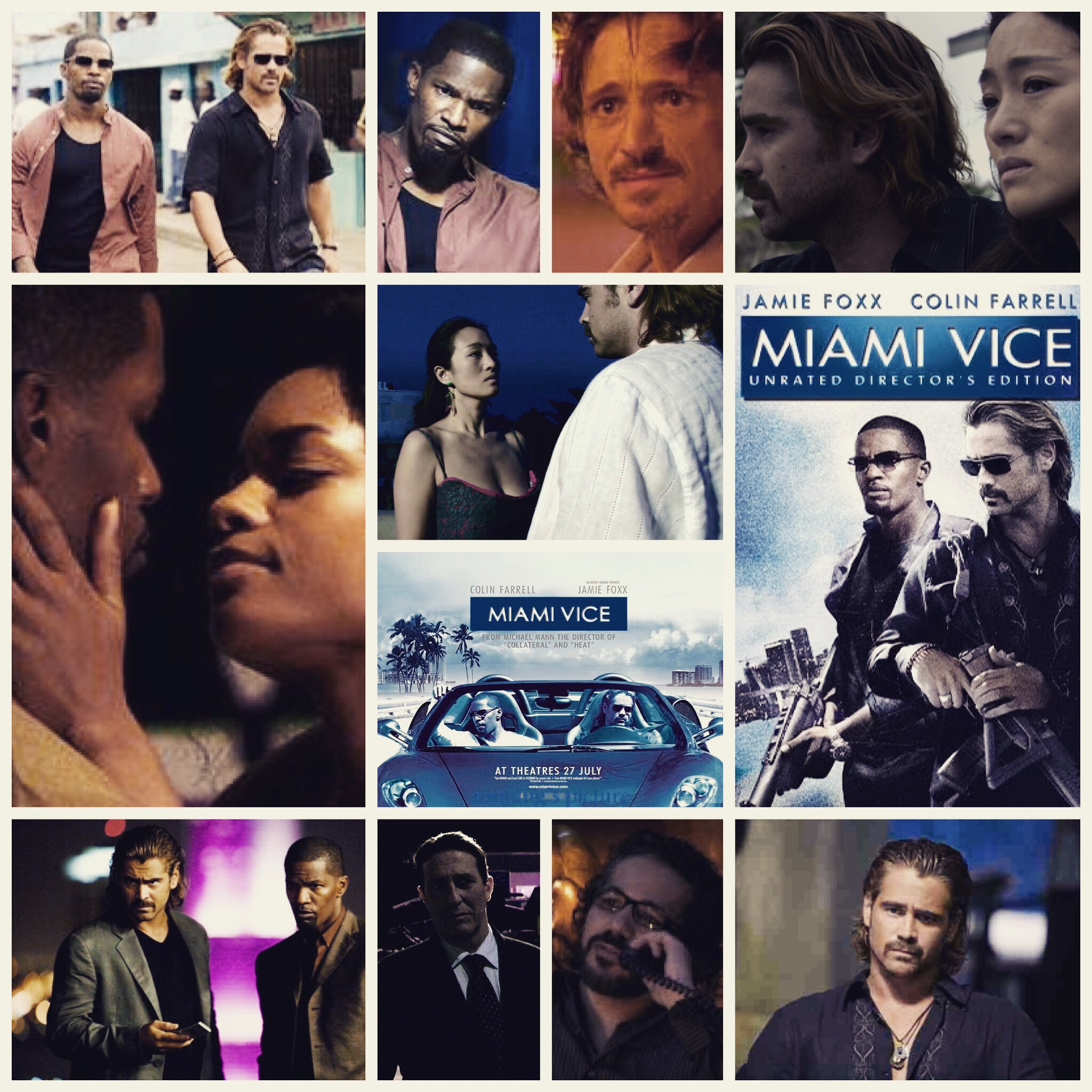
Michael Mann’s Miami Vice


Michael Mann’s Miami Vice is a lot of things. Hypnotic, sedated mood piece. Thrumming, rhythmic action picture. Deeply romantic. More going on underneath it’s surface than what you see onscreen. Masterful crime piece. Showcase for digitally shot film. Restless, nocturnal urban dream. One thing it is decidedly not, however, is anything similar to the bright ‘n sunny, pastel suited 80’s cable TV show of the same name, also pioneered by Mann, at a more constricted and likely very different point in his career. A lot can be said for the show though, it’s instantly iconic and was one among a stable of crimeprimetime™ (The Equalizer and Crime Story did their part as well) to give many actors their break, actors who we take for granted as stars today. Mann’s film version is a different beast entirely, a likely reason for the uneasy audience reception. Let’s be clear: it’s one of the best films of the last few decades. Colin Farrell and Jamie Foxx make a deliberately moodier, more dangerous Ricardo and Tubbs, and their high stakes undercover work is set against an austerely fatalistic Miami that bares little resemblance to travel brochures, let alone the tv show many were used to. Their story starts one of two ways, depending on whether or not you view the extended director’s cut, which is the version I’d choose as it sets up tone before throwing you into a hectic nightclub sting operation they’ve got going, which is hastily interrupted by the exposure of a CI snitch (John Hawkes in a haunting cameo). This sets them on course to take down a powerful Cuban drug syndicate run by a scarily calm Luis Tosar and hotheaded maverick John Ortiz. Farrell gets involved with a girl from their fold, of course (Gong Li is a vision), a romance that has grown on me over the years, while Foxx is involved with beautiful fellow cop Naomie Harris, yielding heart wrenching moments in the final act. Darting in and out of the story as well are Tom Towles, Justin Theroux, Isaach De Bánkole, Eddie Marsan, Barry Shabaka Henley, Tony Curran and Ciaran Hinds, all vital cogs in a well oiled, momentous machine that doesn’t drop it’s pulse for a second. Composer John Murphy piles on the mood with his mournful score, highlighting evening boat-rides, shadowy shoot outs and outdoor nightclubs with a top tier soundscape, while cinematographer Dion Beebe works tirelessly to get shot after shot looking mint, not an easy task with a film this energetic and particularly lit. From start to finish it’s to the point as well, Mann has no interest in useless exposition, mapped out play by plays or cheesy moments. Everything careens along at a realistic pace and you’re on your own if you can’t keep up or make sense of the off the cuff cop jargon. There’s stillness too though, in a torn up Farrell watching his love disappear on the horizon, Foxx looking on from beside a hospital bed or simply either of them glowering out at the skyline from a rooftop pulpit before things Heat up. Like I said, do the extended version and you’ll get that terrific opener to set you up, instead of being thrown in the deep end right off the bat. Either way though, Miami Vice is one for the ages. 

-Nate Hill

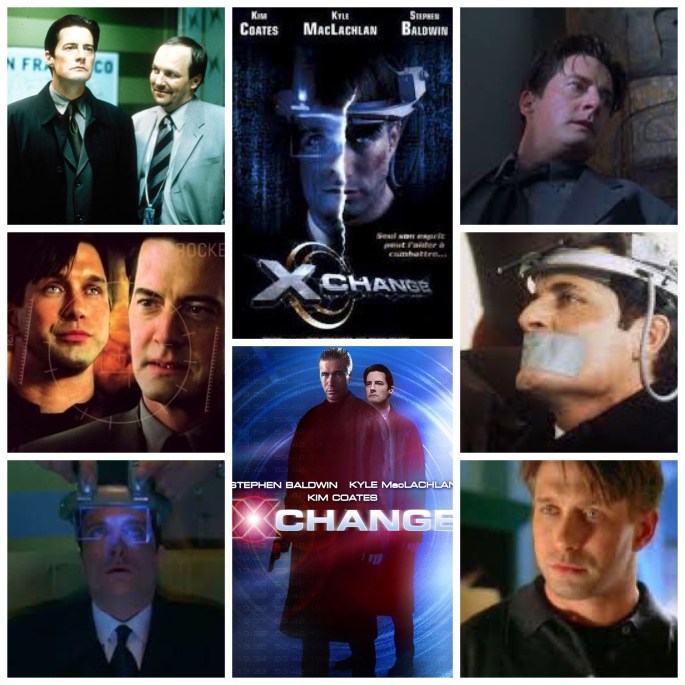
B Movie Glory: Xchange 


Imagine Face/Off, but cheaper and the ‘face off’ concept replaced by actual body/soul teleportation and you have Xchange, a fairly decent, pretty silly little low grade, high concept SciFi piece with some decent actors (barring Stephen Baldwin, that hamface) and a story that makes you think, albeit not too strenuously. Somewhere in the nearish future, a company called Xchange has patented a weird body mind swapping doohickey that allows instantaneous teleportation via swapping my out with another person’s body over at your destination. Of course a method like this attracts trouble, in the form of terrorist Kyle MacLachlan, who wants to do all sorts of mean things with the technology. A counter agent (Kim Coates) hunts him down, and a random blue collar worker (Baldwin) unwittingly gets caught up in the espionage, finds himself trapped in a clone’s body whilst the terrorist and agent switch places, and… yeah. Something like that. I’m sure the movie makes more sense than this review, but I may have been under the influence of certain things when I watched it. MacLachlan and Coates are a funny pairing, as one is obviously suited as the villain (Kim), while the other always seems to play upright types (shades of Agent Cooper here). Kyle gets to be mean for about five minutes right in the opening, before the ol’ switcharoo goes down and then Kim flexes his all too familiar, and always entertaining villain muscles, which seems to be a calculated casting choice by the powers that be. I remember this being not half bad, but any film with Baldwin (exception for The Usual Suspects) just sinks a bit simply by having him around to stink it up with his presence, although the other two do just fine with their roles. Definite late night cable background noise when everyone else is passed out. 

-Nate Hill

Jennifer Lawrence: Five Essential Films

JENNIFER LAWRENCE.jpg

In celebration of this week’s release, mother!, Ben and Kyle sat down to review five of their essential Jennifer Lawrence films. While they may not be her “best”, these were a few of her films that the guys thought were essential to her filmography.

Winter’s Bone

12a71fc8e5002f4fb729388ce1701f45.jpg

BEN: I seem to remember seeing this movie at some point and liking it.  It is also one of her earliest works, a story about survival, instinct, hope, and finally courage.  I thought it was important to include it on the list because it really defines the types of roles she would be selected for going forward.  As I mentioned, I barely remember the film, but as I write this, the cinematography is coming back to my mind along with Jennifer Lawrence’s performance.  I will definitely check it out again.

Along these same lines, I would very much like to see Jodie Foster’s The Beaver, which Lawrence starred in after Winter’s Bone.  It’s going on the list, Kyle.

KYLE:  This is my favorite performance of Lawrence’s.  Just an outstanding, low-fi crime thriller with a ton of heart.  Her performance is so understated, desperate, and yet full of courage.  Her scenes with John Hawkes are pure lightning and it was a pleasure to see them both get nominated.  Lawrence display here that she is an actress that can command our hearts as much as our attention.  I also think, outside of mother!, this is the best film she’s ever participated in.  Absolutely brutal, and yet endearing, this is essential viewing.

X-Men:  First Class

jenniferlawrence_1901061b.jpg

BEN: Lawrence’s performance as Mystique was absolutely sublime in that it conveys her sense of survival, instinct and ultimately, courage.  Even as a villain, she conveyed a sense of duty and honor, something that worked in her character’s favor.

I’d love to talk more about Matthew Vaughn next week, Kyle because his direction here is one of the reasons why Lawrence’s performance was as good as it was.  The story and the characters, all of which we’d seen in previous iterations of X-Men were revitalized.

KYLE: Agreed.  She does a good job with what she has, despite the two leads being the focus.  I think the reason this is on the list, for me, is that it demonstrates her ability to support without stealing focus and displays her ability to mine depth in roles that would otherwise be overlooked because they are “sidekicks” or non-essential to the plot.

The Hunger Games
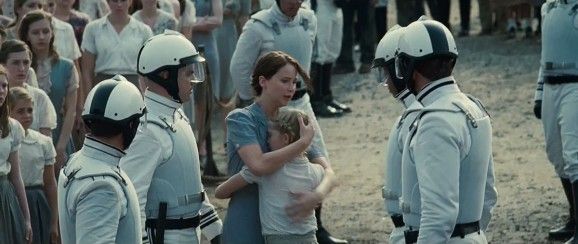
0efac1bcbe856db3ce36b10ea89ce10c--game-movie-hunger-games-movies.jpg

BEN: Lawrence’s two previously mentioned performances truly were in preparation for Katniss Everdeen.  The YA novel focused on a dystopian future where Gladiator-style battles defined entertainment and survival.  Lawrence’s performance here reminded me of Schwarzenegger’s performance in The Running Man, determined desperation.  Lawrence just shined here.

KYLE: That’s an interesting parallel!  I got more a Red Dawn vibe with a psychological twist.  My favorite thing, apart from Lawrence’s unbridled anger at the system, is how she dances between cold blooded killer, traumatized symbol, and hopeful leader within each film.  Her Katniss clearly understands the stakes and the depths of the horror of combat, and yet always tries to remain hopeful.  As someone who appreciated the trilogy, I was pleased to see her bring them to completion, with her final scene with Donald Sutherland being my absolute favorite of the series.

American Hustle

B4r5wvACcAAHAzd.jpg

BEN: I have to say that this is the first movie where Lawrence really came into my subconscious.  I haven’t seen it since it was released in theaters, but I know David O. Russell’s ability to corral an ensemble cast is second to none.  I haven’t seen Silver Linings Playbook all the way through, but what I’ve seen of it and her performance, I’m not surprised that we got the caliber movie we did in Hustle.  Lawrence’s performance here reminded me of Sharon Stone’s in Casino (similar time and setting).  The most important thing is that it looked like Lawrence genuinely had fun making this movie.  I guess I need to revisit it.

Along these same lines, I need to make a point to watch Joy which I hear she absolutely makes the movie what it is.

KYLE: Great comparison with Stone.  I got those vibes as well.  This is definitely the most fun she’s had in a performance and while I’m not sure if garnered the Oscar nom, it was a ton of fun to experience.  She fits well into the ensemble dynamic as you mention, but it’s her on again, off again chemistry with Bale that really drives everything home.

Passengers

passengers-2016-jennifer-lawrence.png

BEN: Late last year saw the release of this film, which at the time I said “its ambition steeped in Titanic.  Instead, its Lost in Space meets ‘The Love Boat’ with all the drama that [sic] entails.”  I’ve since had a chance to reflect on the film and my analysis still stands, but Lawrence was an amazing asset on the film and Chris Pratt really helped to push the relationship despite the less than idea story.

Silver Linings Playbook

maxresdefault.jpg

KYLE: I haven’t seen Passengers, but I wanted to circle back to Silver Linings Playbook.  As a social worker, I love this film and I love her approach to the material.  Some complain about how it downplays depression and other mental illnesses; however, I think it has a remarkably human and fresh approach to the subject matter.  Lawrence’s performance is genuine and heartfelt and it was amazing to see her work recognized.

BEN: Thanks for speaking with me, Kyle.  I’m getting a kick out of revisiting all of these films and, of course adding new films to my watch list.

KYLE: Same here!  Looking forward to our next discussion!

mother-movie-jennifer-lawrence

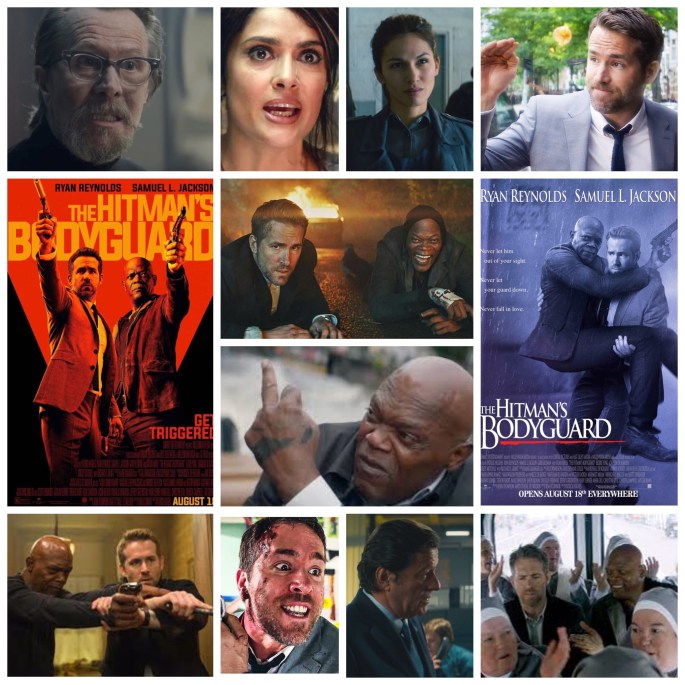
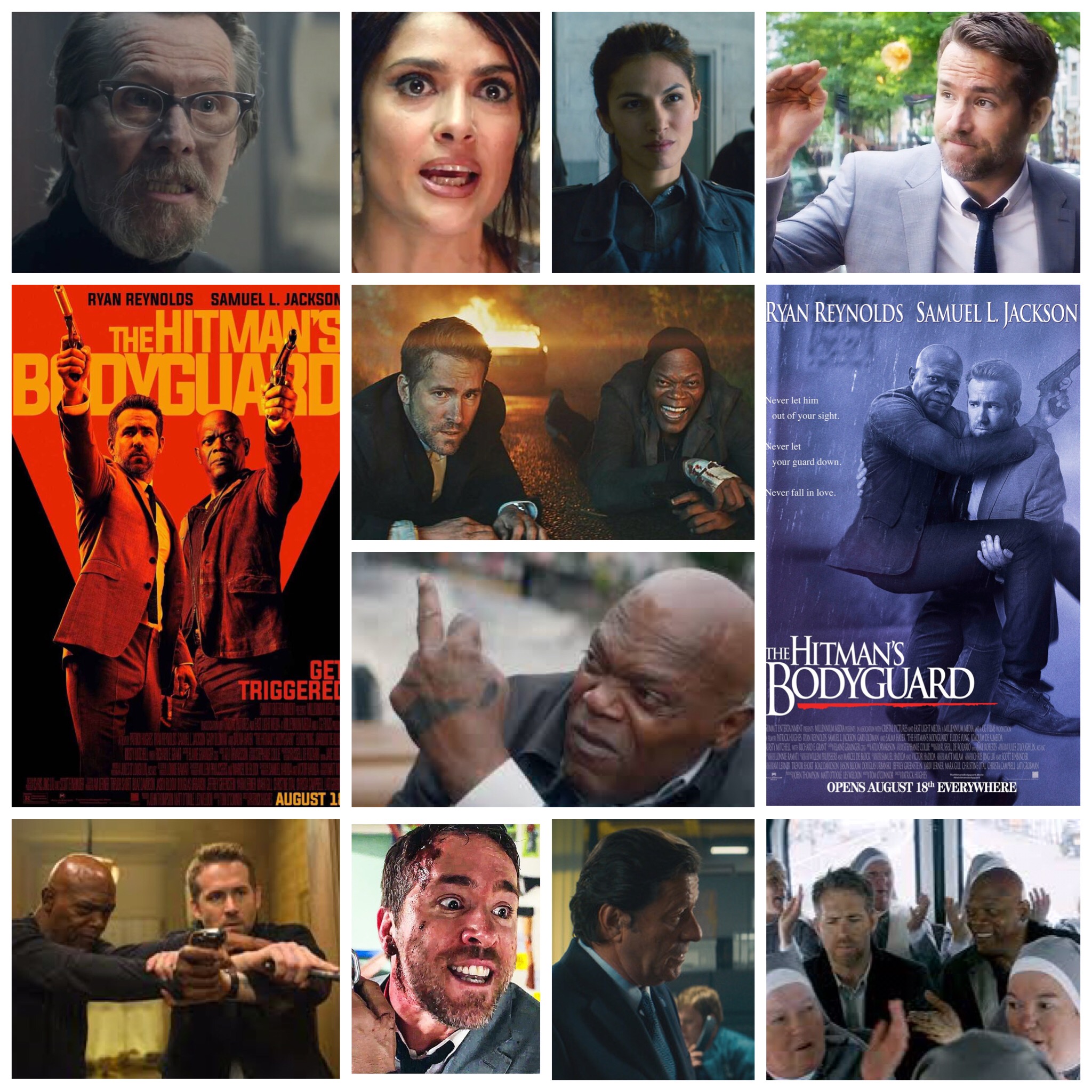
The Hitman’s Bodyguard 


It’s refreshing to see that the R rated action comedy thrives in Hollywood, especially when there’s entries as balls out entertaining as The Hitman’s Bodyguard. I’ve read reviews saying that it’s a one joke affair, and while the crux of it does rest upon the cantankerous relationship between profane, shoot-from-the-hip contract killer Darius Kincaid (Samuel L. ‘Mothafucka’ Jackson) and uptight punk private security expert Michael Bryce (Ryan Reynolds), there’s plenty of enjoyable tomfoolery afoot as a sideshow to their circus of a jaunt across Europe. The pair are perfect actors for a buddy comedy, both overly colourful in their own work and boosting each other’s energy levels to the max when onscreen together. The serviceable writing is also given the shot of obvious improv between them, which helps a lot too. Reynold’s Bryce is reluctantly tasked with shadowing Kincaid and protecting him from endless hordes of goons and Interpol stormtroopers, out to get him before he testifies at the world court against the former Belorussian president, a tyrannical, pro genocide monster played by Gary ‘scary’ Oldman, who indeed gets a couple very frightening moments to chew scenery. Bryce’s former flame (Elodie Young) is an Interpol hotshot who he resents for maybe ruining his career, and Kincaid’s wife (a riotous Salma Hayek, spewing profanity faster than bullets) is in the clink to try and smoke him out. There’s welcome character actor Joaquim De Almeida as Interpol’s casually corrupt deputy director, and a coked out cameo from Richard E. Grant too, to round out the impressive cast. The action comes at you non stop, plus they’ve milked their R rating and then some, with countless headshots, impaling, explosions, bloodletting, car chases and one exhaustive fight scene set in a hardware store where Reynolds finds some gruesomely inventive uses for various power tools. There’s even a bit of poignancy among all the cavalier carnage, as we see a somber backstory for Jackson give a bit of weight to the character. His carefree reckless abandon causes delicious friction with Ryan’s buttoned up, flustered manner, and the two are flat out hilarious. ‘Get triggered’, boasts the poster slogan, and indeed this is a flick that couldn’t care who it offends or irks, free in it’s own hyper violent world of beautifully implausible, brutally excessive violence and set pieces, and it’s some of the most fun at the theatre this year so far. 

-Nate Hill