Gabriela Cowperthwaite’s Megan Leavey


Gabriela Cowperthwaite’s Megan Leavey shows us that with a little discipline, a lot of love and no shortage of persistence, wayward souls can be shaped into something with purpose and make something of themselves, as well as find kindred spirits via intense struggle. Based on one hell of a true story, Kate Mara lives, breathes and emotes Leavey wonderfully, a small town girl with a warrior’s heart who fights tooth and nail to adopt Rex, the canine bomb sniffing champion she has served with through thick and thin during a tour in the Iraqi war. Fresh off the heels of personal tragedy and burdened with an uncaring mother (Edie Falco) and a goof of a stepdad (Will Patton), Megan undergoes the notoriously gruelling marine corps training, and eventually makes her way to combat with her furry friend, an antisocial, violent mutt who she tames through compassion and patience. Coached by a stern, kindly drill sergeant (Common, who is actually a terrific actor), Megan finds romance with a fellow canine unit (Ramon Rodriguez) and mentorship from a veteran of the program (Draco Malfoy), but the strongest bond she makes is with Rex, the intuition of explosive hunting forming a link between them that goes deeper than anything you can see with your eyes alone. Megan seems to be a girl who hasn’t had all that much success in connecting with anyone in her life, but it’s Rex who ultimately reaches out to her, and when the time comes for her to desperately fight a callous bureaucracy for adoption, the film has honestly earned our emotions and not manipulated is a bit, which is a great quality for dramas like this to aspire to. Bradley Whitford has a brief but memorable bit as her birth father as well, giving her advice that cuts deep and goes a long way. Mara is an interesting actress, particularly in her choices of work. She often chooses scrappy misfires that don’t quite deserve her talent, but she never goes the conventional route, always trying new things and, at least in my opinion, outshining her sister every step of the way. The only issues I have with this is the title, which could have been given a bit more thought than just slapping her name above the poster, as well as a certain limitation on raw, organic emoting due to the classic pg-13 gloss one often finds in true story drama. Other than that, she’s a winner.

-Nate Hill

BLACK HAWK DOWN — A REVIEW BY NICK CLEMENT

0“Once that first bullet goes past your head, politics go right out the window.” This one single line of dialogue represents the entire focus and intent of Ridley Scott’s tour de force combat film, Black Hawk Down, which was released in 2001 in the shadow of the 9/11 terrorist attacks. A tragic anti-war film that manages to celebrate the warrior spirit that only a select few possess while eschewing stodgy and needless politicizing, this film dared to look at a deeply compromised and misguided American military excursion with necessary and unflinching brutality, with sly geopolitical critique peeking through the edges of the presentation. It can never be undersold just how stunning a vision this film was for Scott and his crew of technicians and actors. I’ve see this film so many times it’s almost laughable, but revisiting it just recently, I was struck by just how immersive of an experience this really is, and how it has few rivals.
2

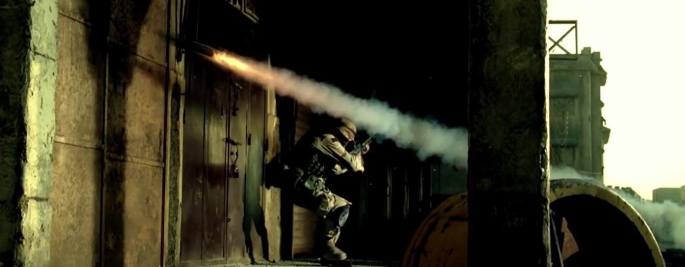
It’s the gold-standard for “you are in the shit” visceral filmmaking, and Scott’s uncompromising vision of urban warfare set precedents in the early aughts and has been constantly imitated ever since. Borrowing from cinematic touchstones like The Battle of Algiers and Saving Private Ryan, this is easily the finest movie that producer Jerry Bruckheimer has been a part of, and I can only imagine the disappointment that must’ve occurred when his name was left off the Best Picture ballot at that year’s Oscar ceremonies. It’s a shame, as this film represents nearly everything that made him into who he has become as a grand showman of filmic adventure.
3

Black Hawk Down was based on the 1999 book by Mark Bowden, who had based his own work on a 29-part series of articles which were published in The Philadelphia Inquirer. Recalling the events of a 1993 raid in Mogadishu, it was supposed to be a relatively simple snatch and grab mission, intended to capture terrorist leader Mohamed Farrah Aidid. But the event would later became known as the Battle of Mogadishu after an insane fire-fight broke out in the streets between American forces and local militia fighters, which left many U.S. soldiers dead or wounded. The filmmakers assembled an amazing ensemble cast, including Josh Hartnett, Ewan McGregor, Eric Bana, Tom Sizemore, William Fichtner, Jason Isaacs, Sam Shepard, Orlando Bloom, Ioan Gruffudd, Johnny Strong, Brian Van Holt, Kim Coates, Zeljko Ivanek, Nikolaj Coster-Waldau, Hugh Dancy, Ron Eldard, Jeremy Piven, Glenn Morhsower, and Tom Hardy in his feature film debut, all of whom brought the rough and tumble goods, disappearing believably into their various roles with honor.

4

Scott, Bruckheimer, and screenwriter Ken Nolan made sure to stick to the core of Bowden’s riveting and devastating book, and in doing so, created one of the most unforgettable pieces of action filmmaking ever constructed. It’s a physically exhausting movie to sit through, harrowing all throughout, with a constant sense of dread and impending violence, with an exacting sense of you are there verisimilitude that keeps the viewer pinned to their seat. It’s interesting to note that filmmaker Simon West (Con Air, The General’s Daughter) was the one to suggest the project to Bruckheimer for optioning, and was at one point slated to direct, before departing to take on Lara Croft: Tomb Raider, while some big heavy-hitters helped to craft the script, including Steven Zaillian, Eric Roth, Ezna Sands, and Steve Gaghan, while the solo-credited Nolan was on-set for four months doing constant re-writes.

5


With stunning spatial clarity and obsessive technical finesse, Scott and the brilliant cinematographer Slawomir Idziak (a frequent collaborator of Krzysztof Kieślowski and who would re-team with Bruckheimer on Antoine Fuqua’s underrated medieval epic King Arthur ) created a gorgeous yet brutal film that pummeled the audience with a sense of sustained cinematic intensity that few other films have matched; Idziak would receive an Oscar nomination for his harrowing depiction of sustained warfare, with many of his tricks and tendencies become emulated by various filmmakers moving forward, including Peter Berg’s gripping Lone Survivor, Michael Bay’s underrated 13 Hours, and portions of Randall Wallace’s blood-soaked We Were Soldiers and John Woo’s Windtalkers. Pietro Scalia’s Oscar-winning film editing is a lesson in coherence, physical space, and forward momentum, with much of the storytelling relying on the power of the visual image, which needed to be conveyed in a lucid, geographically precise manner. Arthur Max’s superior set design brought the turbulent streets to total life, with the production utilizing Morocco for location shooting, with strong support from the U.S. Army bolstering authenticity levels.

6.jpg

Then there’s the immense sound design that went into this massive production, with Michael Minkler, Chris Munro, and Myron Nettinga taking home the Oscar for Best Sound Mixing; the sound of bullets whizzing past your ears has never been done like it was here. And the film is capped off by prolific and booming composer Hans Zimmer, with one of his most sensational and emotional musical scores, mixing mournful notes with moments of sonic triumph; this glorious soundtrack was devised by Zimmer and various other composers inside of the “war room” at his Media Ventures studio, and represents one of Zimmer’s more experimental and varied efforts. The entire score is available on CD or for download and is very much worth purchasing.

7

I saw this film 10 times theatrically, a personal record for me for one movie. Granted, I saw it 5 nights in a row at my college campus theater for free, but for me, this is one of the most exciting, most intensely realized portraits of warfare that’s ever been created. I also had the chance to see various aspect of the pre-production process as I was an intern at Jerry Bruckheimer Films during that time period.  I’ll never forget the sight of Bruckheimer, Scott, and Joe Roth doing laps around the Santa Monica compound, smoking cigars, talking about their plans for the movie. I had the life-highlight experience of hanging out with production designer Arthur Max quite a bit, and Scott would come into the room and check out all of the models and boards and plans, deciding where the helicopters would land, etc. All of it was exceptionally surreal to observe, and I was just happy to be a fly on the wall, and more than eager to make roughly 1,000 copies of the script in that ridiculous script library at the Santa Monica compound.

9

Shot for a reported $110 million and grossing $170 million worldwide ($108 million in America after a $33 million Martin Luther King weekend opening) before becoming a massive best-selling item on physical media formats, with various cuts available on both DVD and Blu-ray, Black Hawk Down was well-reviewed by critics (Roger Ebert’s four star review is a beauty), and I think that the Criterion Collection would be wise to release this as a full-platter special edition, remastered in 4K, with all of the previously produced special features included. And if they need someone to write the liner notes, just call me up.

1

“Your name’s Baby? B-A-B-Y Baby?” – A Review of Baby Driver by Josh Hains

“You’ve never seen anything like Baby Driver before”, the major critics say, and everywhere you look online the average movie goer agrees to the tune of a $30 million dollar opening weekend haul. They’re right you know, you really haven’t seen *anything* (and I do mean a-n-y-t-h-i-n-g) like Baby Driver before. Don’t believe me? Keep reading.

Sure, we’ve all seen countless of westerns and crime thrillers where the main protagonist claims they’re done with that brutal life after the fateful “one last job”, only to get sucked back into that world like Michael Corleone in the Godfather Part III. “Just when I thought I was out…they PULL me back in.” That storyline seems to have been done to near death, hell, even Logan used it earlier this year, and yet here it is once again in a totally refreshed way.

We’ve seen intricate car chases before, like Frank Bullitt roaring down the streets of San Francisco with sly hitmen on his tail, or “Popeye” Doyle weaving through chaotic traffic trying to keep up with a a sniper aboard an elevated train (The French Connection), or Ryan O’Neal’s the Driver outrunning cops in hot pursuit of the thieves in the back seat of his getaway vehicle (The Driver). Don’t worry, I may not mention about a dozen other worthy titles, but they’re here in spirit. We’ve seen plenty of amazing car chases, but have you ever seen one synchronized to a song before? I didn’t think so.

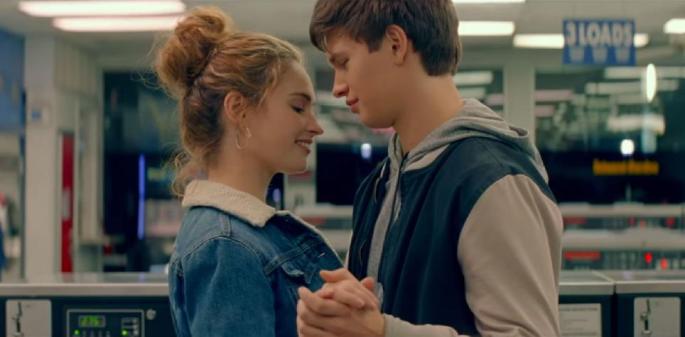
And we’ve seen many an A-list cast deliver snappy dialogue that Quentin Tarantino could bathe in, and the kinds of edgy, tongue planted firmly in cheek performances one might expect from a pulpy neo-noir fantasy conjured up by Tarantino himself. But just when we think we’ve seen it all, someone like Edgar Wright shows us we haven’t. baby_driver_ver15_xxlgBaby Driver follows the titular Baby (Ansel Elgort), a young getaway driver who works for Doc (Kevin Spacey) to pay off a debt he owes him for trying to steal his car years ago. Baby lives in a crappy apartment with his deaf-mute foster father Joseph (CJ Jones) while Doc makes a pretty penny using different crews to rob banks and post offices, including the unpredictable psycho Bats (Jamie Foxx), sexy couple Darling and Buddy (Eiza González and Jon Hamm), and Griff (Jon Bernthal), and Baby is always his lucky charm getaway driver. Baby has severe tinnitus from a childhood car accident which gave him a hum in the drum that he drowns out with an endless barrage of ear-worm inducing catchy songs, from The Commodores’ Easy, Barry White’s Never, Never Gone Give Ya’ Up, to Queen’s Brighton Rock, and yes, even a song or two with Baby in the title. I happen to have no less than six of the songs stuck in my head including Tequila by The Button Down Brass and Golden Earring’s Radar Love, thanks to a viewing of Baby Driver last night. I’m not complaining. Baby meets Deborah (Lily James), a sweet waitress working a cozy diner he frequents, and of course falls head over heels in love with the girl and vice versa. Baby wants out and fast, but alas, dirty work calls and he goes, but before he knows it things have gone south and fast, thrusting Baby into a desperate race to get outta dodge before things go from bad to way, way worse.

To say anything more about the plot would be downright stupid of me for obvious reasons, but especially because Baby Driver is definitely one of those “the less you know, the better” type movies, though not because of plot twists (though there are quite a few, and you probably won’t see all of them coming from a mile away), but because of the way Wright lets the entire movie unfold completely synchronized to that catchy, finger snapping, foot tapping soundtrack. Yes, the visuals timed with the music and how that affects you as a viewer overall is best left to the imagination, the surprise well worth the admission cost. The film opens quite magnificently with a heist that moves to the eclectic beat of The Jon Spencer Blues Explosion’s Bell Bottoms (Spencer himself has a brief cameo), with Baby singing and wildly groovin’ along in the car to the stellar tune before he pedals to the metal for the next several minutes to evade a rather large entourage of cops. It’s a fine example of the synchronicity I’m talking about, the masterfully blended fusion of stylish visuals, raw 100% practical stunts, and perfectly picked songs. It sounds good on paper, but it plays as wonderfully as any musical number in La La Land, and immediately sets the tone for the rest of the movie. A foot and car chase later in the film nearly had my jaw on the floor as I tried to wrap my mind around how Wright had so perfectly choreographed the entire thing. Of course, simply talking about this stuff doesn’t do it any justice, you truly have to see it to believe it. 

landscape-1491917013-screen-shot-2017-04-11-at-142420

By now you’ve noticed I haven’t critiqued Baby Driver in any way, and there’s a good reason for that: I can’t think of a single thing worth complaining about. I’ve run over the entire movie in my mind and there’s not one thing I saw in the movie that would register as a flaw of some magnitude. Nothing, not a single thing. A death sequence felt just a tad bit too silly, but is that a big enough complaint to warrant my bitching about it? Hell no, I forgot that ultra minor quibble while writing this review, so that can’t be that important to me. Does that mean Baby Driver is what you might call a perfect movie? Not necessarily, I know some people wish it allowed a deeper look into the psyche of the totem pole-esque Baby, some dislike the brief screen time of a beloved actor, and I’m sure others have nitpicks I don’t even want to think about…but from where I’m standing I don’t see why it couldn’t be classified “perfect”.  

Support original film making and go see Baby Driver the first chance you get, and don’t forget to buckle up, it’s one helluva wild ride from the very first second until the final frame snaps to black. baby-driver-movie-5.png

Michael Bay’s Pearl Harbor 


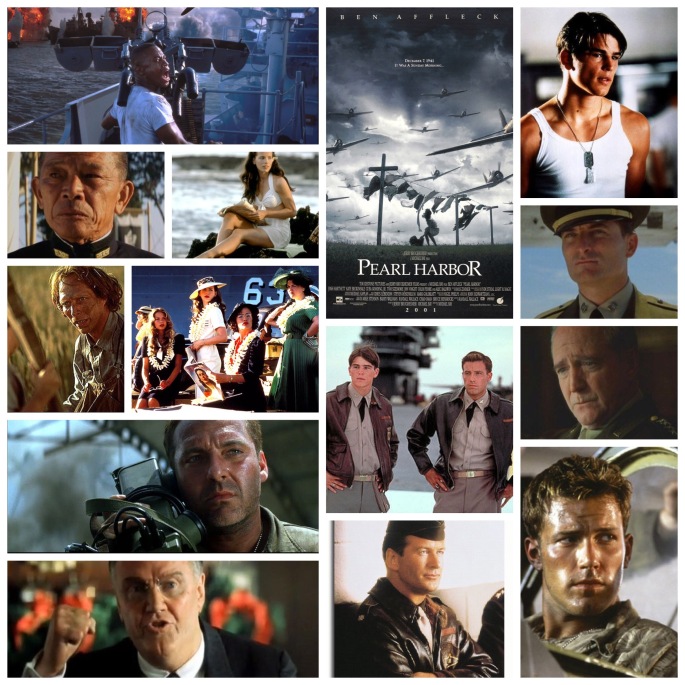
As much as it pains me to say it, I’m a die hard fan of Michael Bay’s Pearl Harbour. It doesn’t pain me because of the backlash I get for praising it or anything, I could give a possum’s rectum what people think of my film taste, but the fact remains that I am well aware of how ridiculously dumb the love triangle at the centre of this film is, and yet I’m a sucker every time. Every other aspect of it is actually very well done, but it’s attempts to be a historical epic that uses a love story as its lynchpin are sorely misguided. Worse is the fact that I know all this to be true, yet I still get misty eyed as the heavy handed schoolyard fling between Ben Affleck and Kate Beckinsale plays out, and further lunge for the Kleenex box as Josh Hartnett enters the picture to drive a Bruckheimer sized wedge between them. So what’s my problem, you ask? No clue, other than being a hopeless romantic whose brain flatlines at the first hint of a soppy sideshow. Now that I’ve got that off my chest, let’s talk about the two things that make this film work really well: the deafening, thunderous recreation of the Japanese attack on Hawaii, and the jaw dropping cast of actors on display here. All wildlife was cleared from the harbour area prior to filming, and legions of period authentic boats and planes were shipped in to make this one of the most ambitious cinematic versions of a siege ever assembled. When the ambush starts, we feel every percussive blast and fiery crash as the US army/navy forces are taken completely by surprise, foxholes and sadly decimated by a cunning Japanese armada. When the fog of the first wave clears, we see the carnage left in its wake and feel the sheer desperate urgency of nurses and medics as they race to collect and treat the wounded, a well staged yet heartbreaking sequence. Hans Zimmer gives it his all to accompany all of this too, my favourite strain called ‘Tennessee’ opening the film with a prologue involving young Affleck and Hartnett, with a moving cameo from William Fichtner. Speaking of the cast, it’s unbelievable, and I’ve always considered this to be the sister film to Black Hawk Down, purely for the amount of actors who appear in both. Alec Baldwin scores grit points as a salty veteran heading up the eventual counter attack, Cuba Gooding Jr. is most excellent as a navy cook turned war hero, Tom Sizemore kicks ass as a plane mechanic who grabs a shotgun when the shit gets heavy, Jennifer Garner, Jaime King and more show resilience and compassion as nurses who step up when needed most, Jon Voight is stubborn and stoic as Teddy Roosevelt himself, Dan Akroyd brings salty wit to a military analyst, Mako is noble and reluctant as the Japanese commander, Scott Wilson is quietly diligent as infamous General George C. Marshall, and the list just goes on with vivid work from Kim Coates, Ewen Bremmer, Leland Orser, Glenn Moreshower, William Lee Scott, Michael Shannon, Cary Tagawa, Matthew Davis, Colm Feore, Sean Gunn, Graham Beckel, Tomas Arana, Sung Kang, Eric Christian Olsen, Tony Curran and more. Say what you want about this one, many loathe it (just ask Trey Parker & Matt Stone), but there’s no denying its scope, ambition and technical undertaking. Also it just has an exquisite love story to rival that of Gone With The Wind and Titanic. Haaaa… just kidding. Or am I? 😉

-Nate Hill

Neil Jordan’s In Dreams


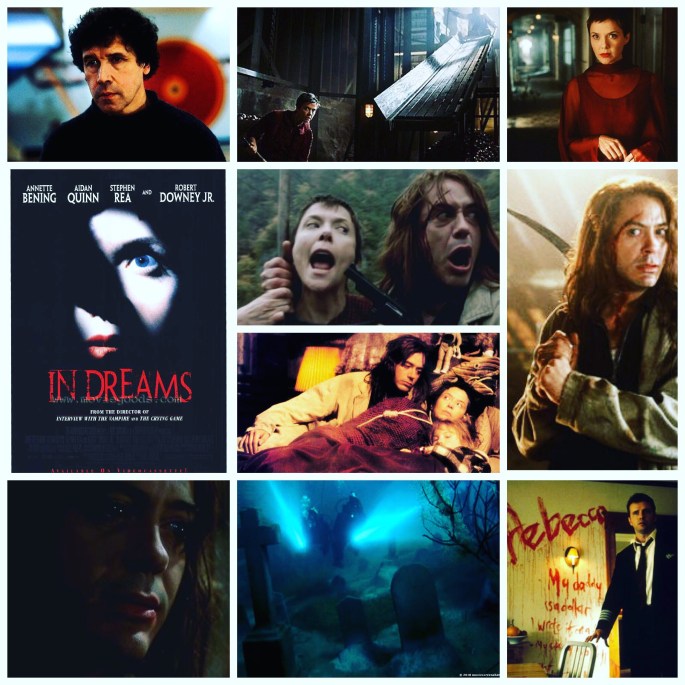
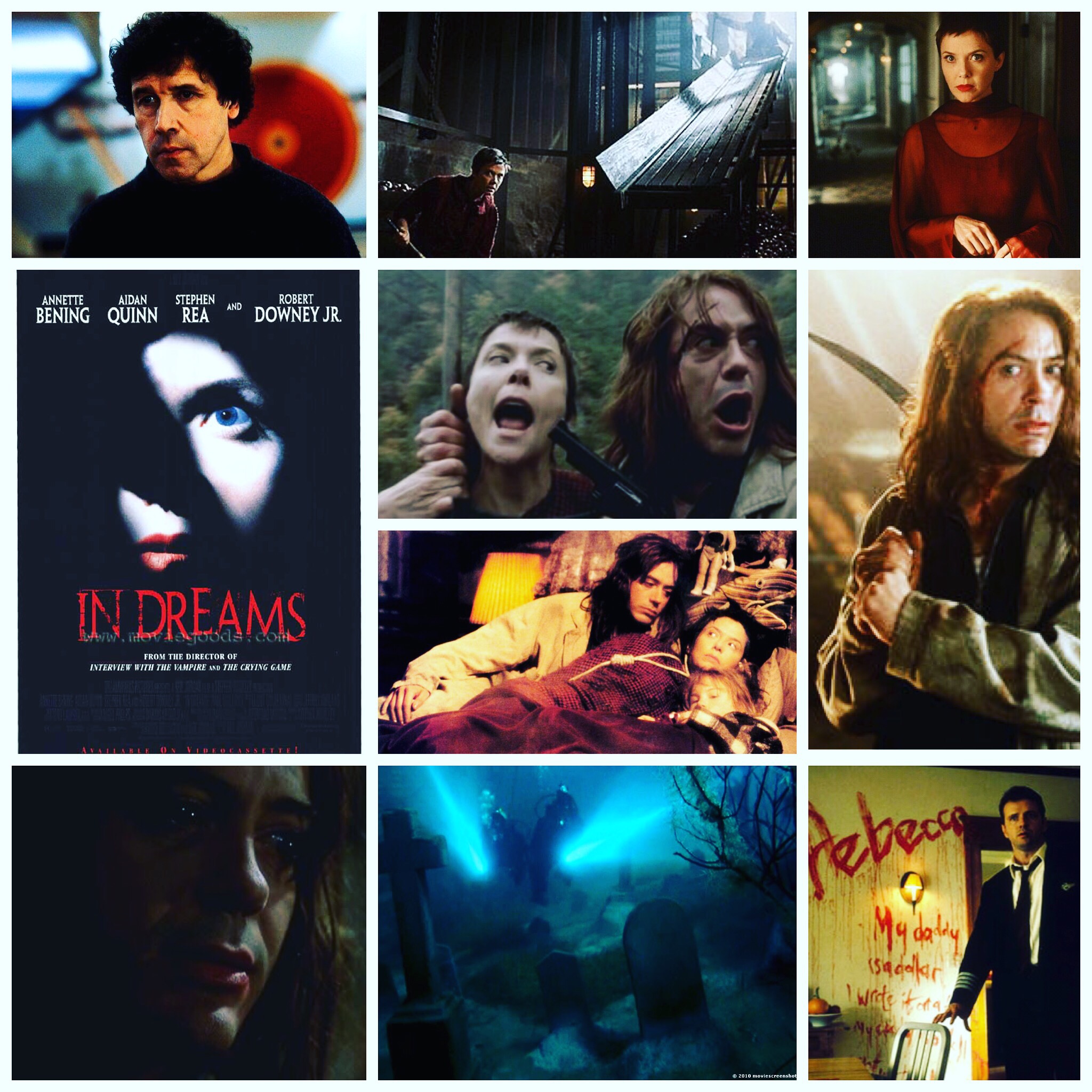
Neil Jordan’s In Dreams will blow you away as far as the style department goes, if being a little short up in terms of story. It’s your serial killer chiller given a supernatural twist a lá The Cell: Annette Bening plays a relatively innocuous woman who shares a sort of psychic bond with a murderer out there somewhere, his motives and actions related to her in atmospheric dream sequences that use specific imagery and sound to provide vague clues. The danger hits closer to home, however, when her own daughter is kidnapped by this killer. Her dreams are dismissed by her shrink (Stephen Rea) and a detective (Paul Guilfoyle), but when her pilot husband (Aiden Quinn) is also put in the crosshairs, she’s forced to use what scant, surreal information she has to track down the source and stop him. He’s played by Robert Downey Jr. of all people, who is already an odd enough choice before you take into account the mop of dreadlocks he’s adorned in once he does show up. He’s menacing enough in his own Downey way, but I can’t help feel it was a bit of a stunt cast on Jordan’s part. The main draw and enjoyment I got out of it is the hyper stylized, meticulously lit dream sequences that could be lifted right off the screen and put on canvas, they’re simply gorgeous. The story just can’t seem to keep up with the visuals though, it’s a retread we’ve seen many a time without much deviation from the path. Still, the colour palette and stark imagery hold enough power to deem this a winner in that respect. 

-Nate Hill

BREAKING: Mahershala Ali for TRUE DETECTIVE Season 3.


IMG_0797
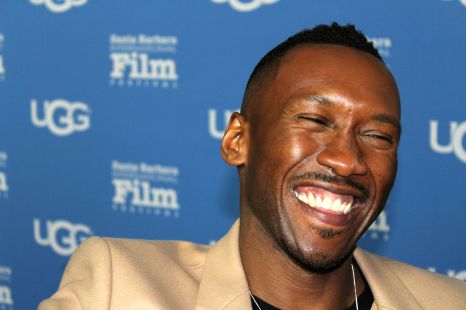
Mahershala Ali at the 32nd Santa Barbara International Film Festival [Photo Credit: Devin Godzicki]
Mahershalla Ali is reportedly in final negotiations to star as the lead in the upcoming third season of TRUE DETECTIVE. The third season, written by Nic Pizzolatto and David Milch will begin filming soon. The cast is being assembled with Ali in the lead. No other details have emerged, but it certainly appears HBO is getting ready to officially announce the third season of their seminal show. Ali last appeared in Barry Jenkins’ MOONLIGHT and most recently won the Best Supporting Actor Oscar for his role as Juan in the film, making him the first Muslin actor to win an Academy Award.


We”ll have more when the story develops.

Romeo Must Die


Andrzej Bartkowiak’s Romeo Must Die is not a great flick, but I still somehow enjoy it if only for a few stylish scenes and the presence of Aaliyah before her tragic and fateful plane crash, which tugs at the heartstrings. It’s a pseudo Romeo & Juliet tale involving her and Jet Li caught up in Asian/African American gang warfare, but it’s more just a silly showcase for Li’s impressive martial arts prowess and a playground for several well staged shootouts. Bartkowiak is actually responsible for two very similar films of this ilk, Cradle 2 The Grave and Exit Wounds, which all have the same cast members running about and when viewed in succession create some weird holy trinity of kung fu urban crime lore. This one is probably the best I suppose, or at least the most memorable. Aaliyah is reprimanded by her gangster father (Delroy Lindo) and his incompetent lieutenants (Isiaah Washington and Anthony Anderson), while rambunctious Li is supervised by some vague cousin of his (half-asian Russell Wong, definitely the coolest character), and DMX growls out a few lines as a violent club owner also somehow involved. The romance is fleeting, swallowed up by zippy editing and deafening action sequences that come fast and frequent. Li jumps around while the rest of them empty all kinds of firepower all over Vancouver, and so it goes. It ain’t great, but the opener set in DMX’s club during a raid perpetrated by Wong and his crew is the highlight and seems to have been plucked from a far better action film. 

-Nate Hill

ACTOR’S SPOTLIGHT with JAMES MORRISON

Today we have an incredibly special episode for you guys. Joining Frank, Tim, and Nate is veteran actor, playwright, and musician James Morrison. James has graced the stage and screen for decades, appearing in SPACE ABOVE AND BEYOND, MILLENNIUM, THE X-FILES, THE WEST WING, four seasons of 24, PRIVATE PRACTICE and recently appeared on the third season of TWIN PEAKS as Warden Murphy. James also appeared in Steven Spielberg’s CATCH ME IF YOU CAN and Sam Mendes’ vastly underrated JARHEAD. He has also released two albums, I BROKE FREE and SON TO THE BOY. To sample or purchase James’ music and his plays, and for everything else James Morrison, please visit his website JPMORRISON.com.

The Bad Batch

Directed by: Ana Lily Amirpour

Written by: Ana Lily Amirpour

Starring: Suki Waterhouse, Jason Momoa, Keanu Reeves, Jim Carrey, Jayda Fink, Giovanni Ribisi, Diego Luna

I’m going to be up front.  I have not seen Ana Lily Amirpour’s freshman directorial effort, A Girl Walks Alone at Night.  This set me up for her sophomore effort, The Bad Batch with no expectations.  No worldly experience I’ve had could have truly prepared me for this film

Although Amirpour’s script doesn’t define what time this story is set, we know that society has gotten tough on crime; enough that a crime will see you banished to the most hellacious place on earth.  The film opens up with no visuals, only voices coming from all directions.  We’re meant to be disoriented as her prison ID is tattooed on Arlen, who we learn really quickly can defend herself.

But, how do we survive in a desert wasteland?

Armed with only a few days-worth of rations and a flyer guiding her to “Comfort,” Arlen sets out on her journey.  Before we can discover what “Comfort” is, she is ambushed by two of her fellow inmates, literally paying the price for letting her guard down; something she learns not to do again.

Amirpour’s script is full of visual details brought to life through Lyle Vincent’s camerawork, which is first rate.  As we struggle to get our bearings, whether in the deep desert, the airplane shell that makes up someone’s home, or within the confines of Comfort, his use of the 2.39:1 frame paints a wide, desolate image, conveying all of our characters’ struggles.  The tracking shots alone are worth the price of admission.

What’s most interesting is the characters and how they are used to convey the true nature of the film, the “haves” and “have-nots”.  Deeper than that, each actor’s nuance, body language, and several well-placed pop music tracks help to convey their status in life.  Dialogue is kept to a minimum.

Suki Waterhouse was perfectly cast as Arlen.  Though she had to be more upright and determined than her real-life persona, she is the perfect foil for Jason Momoa and his Miami Man character, someone you would not want to cross: he means business.  His number one priority is his daughter Honey, played by Jayda Fink.  When she disappears, we are made to realize that he will stop at nothing to find her all with looks.  Arlen and Miami Man’s situations very much lead them down the proverbial Adam and Eve path.

Two other main characters in the film, the Hermit, who is the audience’s silent guide, is played by Jim Carrey.  He disappeared into his role so much, that the first time I saw the movie, I couldn’t recognize him; he is that good.  Giovanni Ribisi plays The Screamer, who is imprisoned like the rest of the inmates, but his imprisonment is in his mind as much as his environment; stuck trying to remember what life was like on the outside, searching for freedom while being the life of the party, going with the flow.

This leaves us with Keanu Reeves’s character, the very visage of Hugh Heffner, right down to the pipe and the robe, The Dream.  In an eloquent manifesto, The Dream asks Arlen who provides the plumbing, to which she answers, “you do.” The Dream is the one who makes Comfort possible, he makes us forget our cares and worries, and releases us from our internal imprisonment; The Dream will take care of our needs, even laying the seed for future dreamers.  Reeve’s take on the character, though convincing, is far too much of a parody of Heffner to be taken seriously.

A lot of the narrative is implied, not directed toward the audience; something very rarely seen these days.  For some, this might stretch the boundaries Amirpour intended. The marriage of the visuals and the pop tracks convey characters’ emotions so effectively, that we don’t need the dialogue.  Does the film drag as a result of it?  Perhaps.  The film starts out very strongly and wanes towards the end.

Drawing from Escape From New York and Mad Max,  Amirpour’s style is fresh, achieving the black comedic effect she was going for.  Both films present dystopian images of one possible future, using visuals to convey their points where the “haves” and “have nots” fight over every last resource.  Here, the characters are just as much a part of the film’s fabric as are the visuals.

Now in a limited theatrical release, on VUDU and coming soon to Netflix, Amirpour successfully delivers a taught visual feast or famine experience.

Kong: Skull Island

Kong: Skull Island

2017. Directed by Jordan Vogt-Roberts.

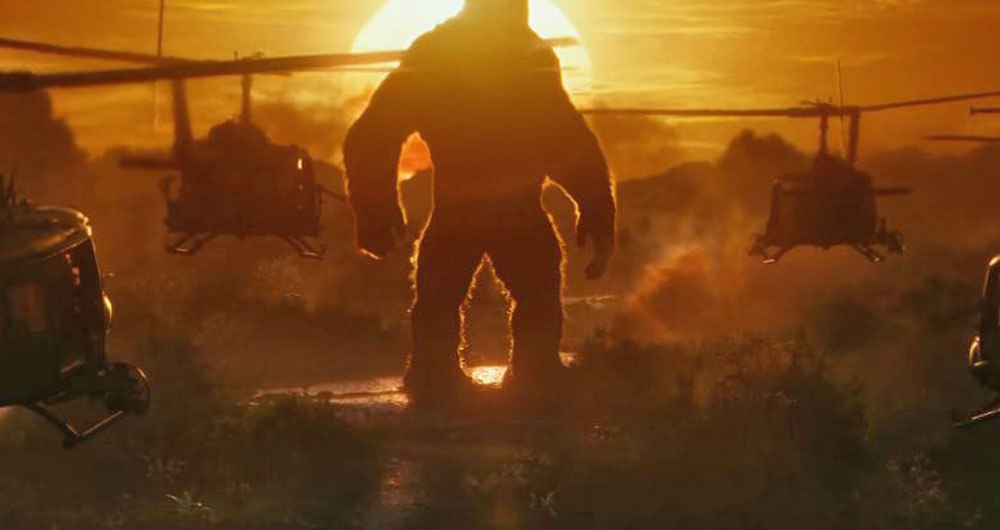
kong-skull-island-2

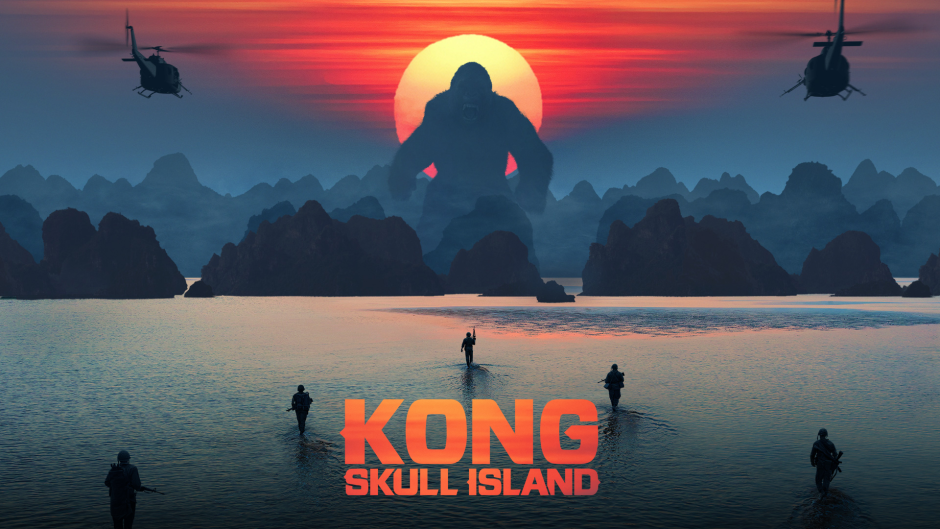
Sometimes you know virtually everything there is to know about a film before you view it.  Maybe it’s the title, the director’s previous films, the poster, or more often than not, it’s the trailer.  Despite these unfortunate truths of the information age, there are occasions where a film can still manage to not only surprise, but entertain you as well.  Jordan Vogt-Roberts’ Kong: Skull Island is a breath of fresh air to big explosion, big monster movie madness that has been experiencing a decline over the last year.  While there is absolutely nothing that reinvents the prescribed formula for a film like this, what it does, it does very well, signaling not only Vogt-Roberts’ love for the creature feature, but also his talent at using resources in creative ways to present a been there, done that story in a manner that consistently entertains for the duration.

In 1973, Scientists and soldiers set out to explore Skull Island, a place where monsters reputedly roam.  Their intrusion not only angers the legendary ape who rules the island, it awakens an ancient evil as well.  Tom Hiddleston stars as the tough guy navigator who is in no danger of dying.  Brie Larson stars as an activist photographer who is in no danger of dying.  They’re supported by a scene stealing John C. Reilly, Samuel L. Jackson playing Samuel L. Jackson, and a regrettably restrained John Goodman.  There are also legions of soldiers and scientists who are sacrificed on the altar of “story”.   The real star is Kong himself, made possible by unimaginable special effects that are volleyed throughout the film’s run time.  Vogt-Roberts uses a perfect soundtrack and puts his trust into the effects team to present a monster movie that is pure abandon without being a guilty pleasure.  It’s undeniable decent and even though its plot is paint by numbers, the viewer is having so much counting said numbers, they forget to worry about the endless cliché’s and predictability of the story.

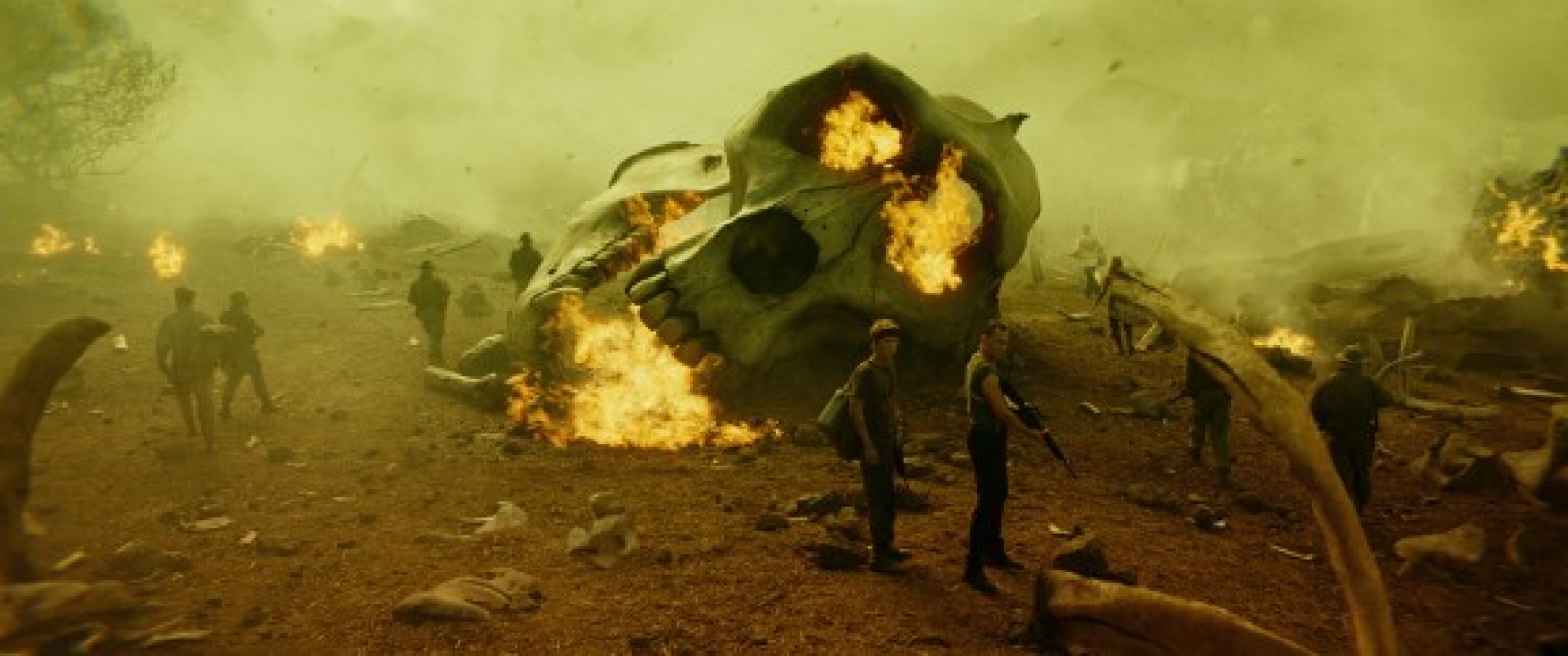
kong-skull-island-image-25-600x251

Icon Larry Fong’s patient cinematography builds off of the Apocalypse Now ambrosia and captures the meeting of man and nature with blinding fulminations and intense colors that bloom across the screen in every sequence.  Acrid yellow smog and sunglass reflected fire are two impactful visuals that elevate the imagery far beyond the expected B movie trappings.  The makeup of tribal natives and the phosphorous gas of a battlefield combine into a potent mixture of untouched history with high powered weaponry, and it is this unholy union that pushes the film above mediocrity.  The divide between the two worlds comes crashing down within minutes of the humans’ arrival, but it is the aftermath that is done better than so many of its predecessors.  While there are rumors that this may be the first film in a shared cinematic universe, it is extremely clear that Pandora’s Box has been irrevocably opened and Vogt-Roberts embraces this with open arms.

Available now for digital streaming, Kong: Skull Island is an excellent way to spend a night on the couch, especially if you’re in the mood for playful extremity.  Large monsters, large explosions, and large guns are what await you in King Kong’s sanctum.  The best part is that nothing feels out of place and everything works in concert to achieve the most important goal for a film: to entertain.

Recommend.

kong-skull-island