THEODORE MELFI’S HIDDEN FIGURES — A REVIEW BY NICK CLEMENT

3

I don’t get too hung up on poetic license and the reshaping of history when it comes to glossy and well-meaning Hollywood biographical tales, so in that regard, I enjoyed last year’s Oscar nominated drama Hidden Figures from director Theodore Melfi (St. Vincent). This is the compelling story of three African-American women who led the scientific charge of helping to get John Glenn into outer space. But I don’t understand why Taraji P. Henson wasn’t the one to the acting nomination out of the main trio which included her, Octavia Spencer, and Janelle Monae. Not that anyone was bad, but I thought Henson’s arc and character was easily the most affecting and effective. Melfi, who co-wrote the script with Allison Schroeder, took liberties with the facts and that’s his prerogative as a filmmaker; he crafted an engaging film about important subject matter, and injected warmth, humor, and some solid social critique. Kevin Costner can do no wrong, Cullen Moss gets some nice close-ups (The Heroes of Arvine Place POWER!), cinematographer Mandy Walker (Shattered Glass, Australia) gave the film some solid visual polish, Hans Zimmer’s score shoots for the stars with appropriate bombast, and the inherent “goodness” of the story is felt at all times. A massive theatrical success to the tune of $230 million world-wide on a $25 million budget (that’s REAL $$$ right there), Hidden Figures is now available on Blu-ray, and will likely entertain audiences for many years to come. 2

A Civil Action


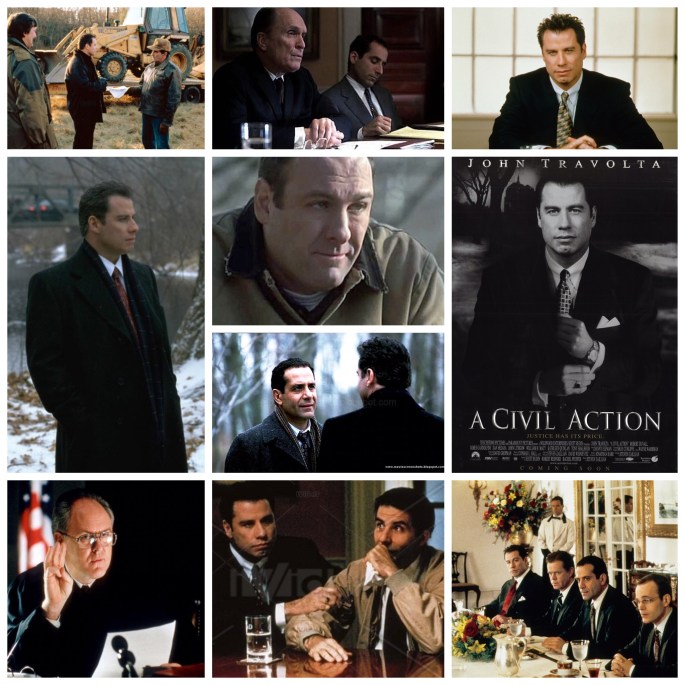
A Civil Action is a quiet, sobering tale of gross corporate evils and one lawyer with the stones to stand up to it all. John Travolta can be the skeeviest slimeball, the most affable Everyman, terrifying arch villain or unwavering hero in his work, he’s just that adaptable. His character here is a small time lawyer in a four partner firm that can barely afford a collective pot to piss in, and are in dire need of a case. In a local county, there’s suspicion of a factory dumping lethal toxic waste into the nearby rivers, causing the death, illness and birth defects among many children. Problem is, it’s a ruthlessly expensive case that could bankrupt their entire firm, and the rival lawyer (Robert Duvall) is an Ivy League bigwig who could bury them. Travolta is steadfast though, calmly and methodically tackling one obstacle at a time with compassion for the victims, determination to smoke out the corruption and a reserved charm that puts the film in a relaxed yet pressing groove. The cast here is absolutely unreal as well. Standouts include James Gandolfini and David Thornton in heartbreaking turns as blue collar workers affected by these misdeeds, Dan Hedaya as a malicious perpetrator, William H. Macy and Tony Shaloub as Travolta’s firm partners, Daniel Von Bargen as a belligerent witness, as well as further work from John Lithgow, Harry Dean Stanton, Zelijko Ivanek, Mary Mara, Sydney Pollack, Stephen Fry, Paul Ben Victor, Michael P. Byrne, Josh Pais and more. It’s never too hectic though, despite having so many characters and being a courtroom drama, a sub genre usually steeped in fire and brimstone melodrama. There’s a sad, quiet aura to the proceedings here. The damage is done, and all these people are looking for is a little recognition, compassion and a settlement to ease the strife thrown at them by a very callous and uncaring bunch of people. Travolta is the harbinger of catharsis, a warmhearted man who gets invested in so deep that it isn’t about the money anymore for him, it’s about helping those in need. Powerful, understated stuff. 

-Nate Hill

BLU-RAY REVIEW: HAL ASHBY’S 8 MILLION WAYS TO DIE — BY NICK CLEMENT

4

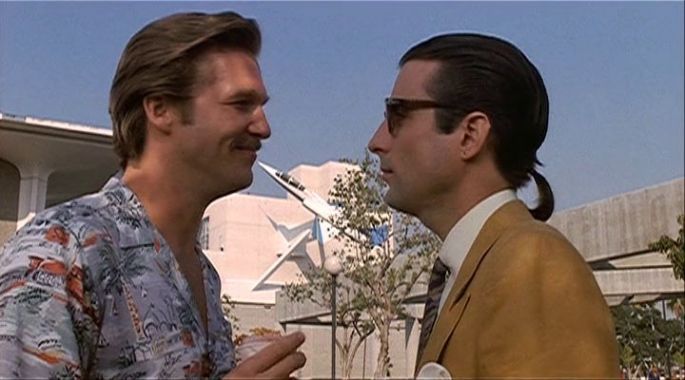
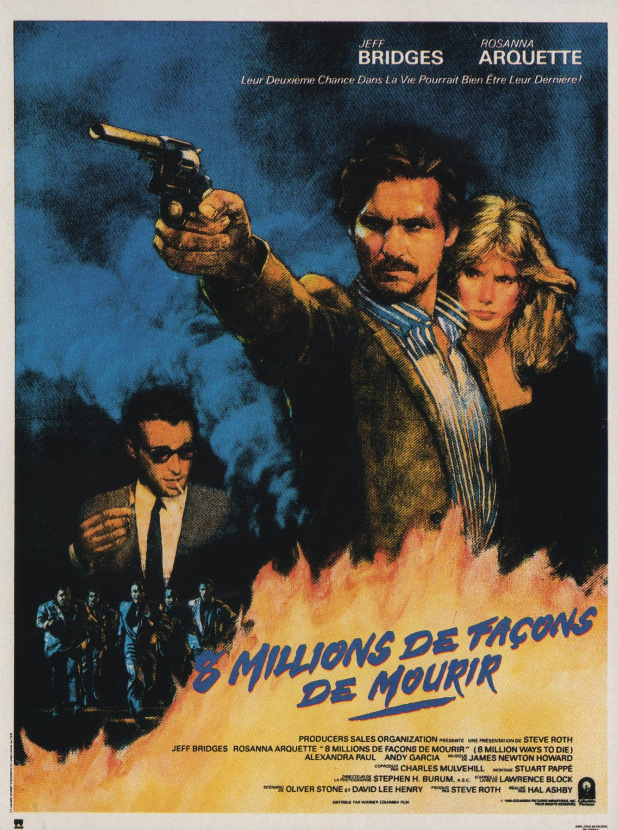
It took me a few viewings to totally appreciate Hal Ashby’s barely released 1986 film 8 Million Ways To Die, which was the eclectic and troubled helmer’s unique spin on the crime film, and would serve as his final major motion picture. This was the first attempt to cinematically adapt the Matt Scudder detective character from author Lawrence Block (A Walk Among the Tombstones), with a gritty screenplay coming from future auteur Oliver Stone (JFK, Natural Born Killers) and R. Lance Hill (Road House, Out for Justice, The Evil that Men Do), who was credited under the pseudonym David Lee Henry, with uncredited rewrites courtesy of Robert Towne (Chinatown, Days of Thunder, Ask the Dust). Starring  a gruff and sweaty Jeff Bridges, Rosanna Arquette in one of her best and sexiest performances, and an extra-volatile Andy Garcia in one of his first leading roles and in total scene stealing mode, the movie died a very fast box office death, and was met with savage reviews from critics. But over time, it has become a bit more appreciated, most certainly by Ashby fans, but also as an example of the slick and dangerous neo-noir movie world that doesn’t very often get a chance to be seen in quite this fashion on screen. There’s a booze-soaked quality to this film that feels vivid in nearly every moment.
5

8 Million Ways To Die has a scattershot narrative involving cops, scum-bags, drug dealers, prostitutes, murders, and liquor, that’s both pulpy and energetic and certainly coherent, and yet still feels compromised in some instances (Ashby had final cut taken away from him by the producers). But there’s still something fascinating going on within the narrative and with certain aesthetic choices made by Ashby and his team. Stephen H. Burum’s sinewy and seedy cinematography stressed an alternatively shadowy and sometimes neon-inflected color palette, while the excellent music from James Newton Howard kept an appropriately shifty and dangerous sonic ambiance; the opening helicopter shot with Howard’s sleazy music blaring is 80’s-perfect. And considering that Ashby was reportedly fired from the movie before it was finished, that might explain why the film feels so choppy in spots, as he wasn’t allowed to collaborate on the final editorial process. It’s an odd yet entertaining film, with some cool moments, but exists as a curious “What if?” on Ashby’s legendary filmography. Another interesting tidbit is the involvement of the production/distribution entity Producers Sales Organization; check out their story and credits on Wikipedia for some extra-fun reading.
1

For a long time, 8 Million Ways To Die was a hard film to track down. It was never given an American DVD release, but was released by Second Sight in the UK on that format. Now, thanks to Kino Lorber, Ashby’s swan song has been given the Blu-ray treatment, and the results from a picture and audio standpoint are excellent, showcasing deep blacks and rich colors all throughout, with a very clean transfer which retains Burum and Ashby’s intended 1.85:1 aspect ratio. Howard’s spectacular musical score, especially that sax-heavy opening, sounds luscious to the ear, a further reminder of that composer’s stellar gifts with musical accompaniment. Special features include interviews with Garcia, Arquette, Block, Alexandra Paul, a trailer gallery, and an informative and entertaining audio commentary with Howard S. Berger and Nathaniel Thompson. This film certainly had a helluva production, with various rewrites occurring much to the annoyance of key creatives and Ashby battling it out with producers over his unconventional filmmaking approach, and despite all of this, I really think it’s a lot of fun, and if it’s not everything it might’ve been under less hellish circumstances, it serves as a unique final offering from Ashby, who rarely repeated himself and was clearly interested in exploring various genres during his amazing career.
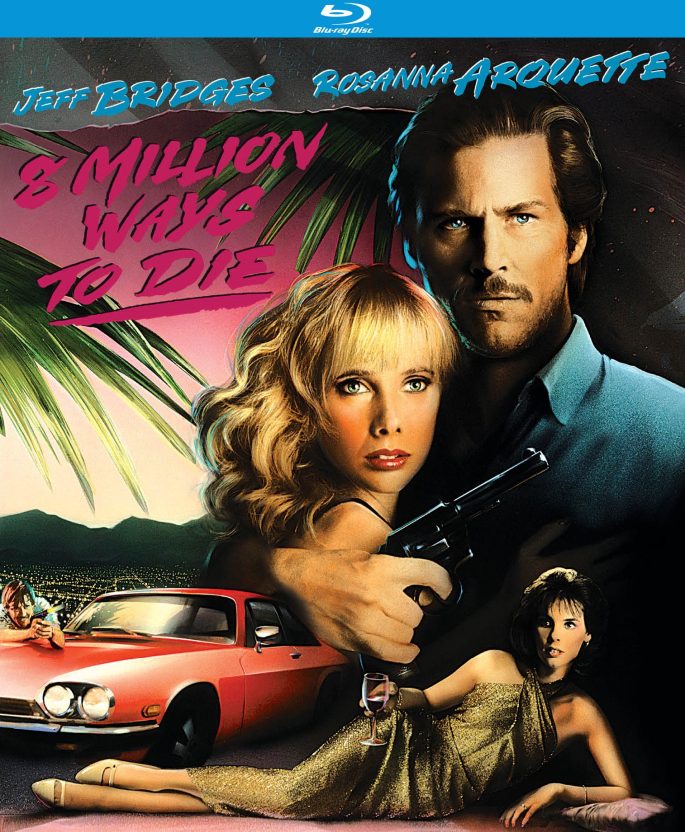
blu art

Steven Spielberg’s Indiana Jones and the Last Crusade

Indiana Jones and the Last Crusade

1989.  Directed by Steven Spielberg.

Screen shot 2014-04-09 at 5.07.16 PM

“You lost today kid, but it doesn’t mean you have to like it.”

The Indiana Jones films and their architect, Steven Spielberg are household names, stitched into the fabric of modern pop culture with two-fisted pulp icons battling the forces of evil with brains and brawn, and always in a larger than life fashion.  The first two films are considered to be some of the greatest action epics ever committed to film and Spielberg chose to return to his beloved world of whips and relics with a fantastical epic steeped in themes of fatherhood and the power of knowledge over hatred.

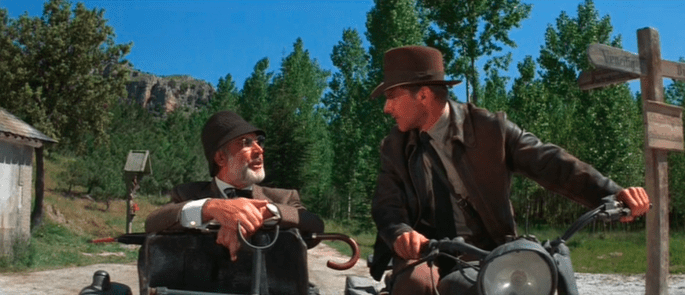
Indiana Jones sets off in pursuit of his father, who’s gone missing while questing for the Holy Grail.  Beset upon by wicked Nazis and greedy scholars, Jones and his father must overcome their differences and believe in the power of family and friendship to persevere over the forces of darkness.  Jeffrey Boam’s script begins with a childhood flashback to one of Indy’s first adventure, setting the tone for the familial morality tale at the center of Crusade’s larger than life story.    The intimate moments between the Jones’ and the action set pieces are perfectly balanced, never overtaking one another.  The dialogue is packed with endlessly quotable lines, allowing each of the cast to shine in their particular moments.  Harrison Ford’s solid embodiment of Indy is beyond reproach, but it is Sir Sean Connery’s brilliant turn as Indy’s father that is the highlight.  His wizened dedication to the Grail is only outdone by his emotional realizations of its cost on his life and still even these moments of depth pale in comparison to his legendary beachfront confrontation with a fighter plane and his pitch perfect, boyish charm in his scenes with Denholm Elliot’s hilarious sidekick.  His monologue about the importance of the quest for the Grail is one of the film’s best moments.

LastCrusadeChoosingWisely

Douglas Slocombe’s robust cinematography takes advantage of the lighting in sweaty close ups only to pull back into beautiful wide shots that encapsulate the wonders of nature and the incomprehensible malice of Nazi Germany.  John Williams brings his formidable harmonics to bear with the expected triumphs previously established and then surpasses them with unforgettable tones that clearly divide good and evil.  While there are betrayals and shifting motives, the heart of the franchise has always been about right and wrong, black and white, and Williams is perfectly in rhythm with this concept.

The final ingredient is the heart racing action that is the heart of the film.  Beginning with a dazzling chase sequence featuring the late River Phoenix and then transitioning into no holds barred rescue involving a tank, The Last Crusade takes its time getting to the next explosion and when it arrives, there is nothing but excellence to feast upon.  In a time of CGI saturation, action fans will always have classics such as this to return to, a powerful reminder of the power of practical effects and inspired creativity.

tlc_clifflook

Available now for streaming on Amazon Prime and Hulu, Indiana Jones and the Last Crusade is essential viewing for anyone who’s ever entered a theater.  Featuring a heartwarming story about fathers and son, hilarious exchanges amidst pulse pounding battles, and a golden age presentation, this is one of the all-time greats and a perfect example of how to do the blockbuster right.

Highly.  Highly Recommend.

indiana-jones-3-and-the-last-crusade-1989

Olivier Assayas’s Boarding Gate


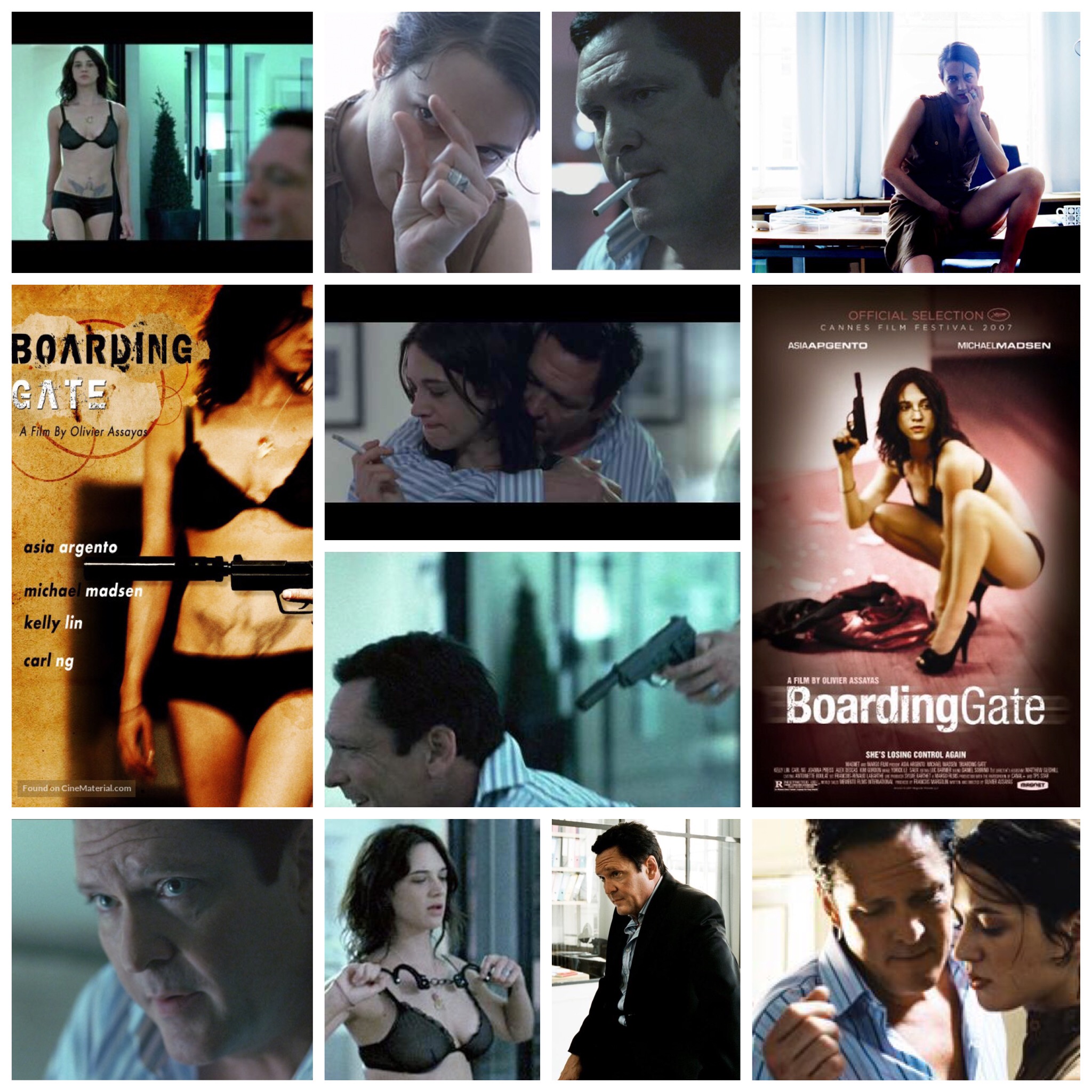
Olivier Assayas’s Boarding Gate is a fascinating and frustrating chamber piece that may have been more effective as a stage play. At any rate it certainly leaves an impression, thanks to two vivid, jagged edged performances from it’s leads, Asia Argento and Michael Madsen. Assayas is apparently known for patiently pacing his work, but this one takes the term ‘slow burn’ and gives it a whole new dimension of meaning. I won’t bother trying to outline the plot as it’s more mixed up than iPod headphones coming out of your pocket, except to say that Argento and Madsen are two former lovers who shared some extremely kinky sex before betrayal, greed and corporate espionage got in the way, and now play a psychosexual game of cat and mouse for most of the film. Madsen is the cruel bigwig with ice-water coursing through his amoral veins, Argento the manipulative, caged animal harlot and it’s fun seeing the two exchange smouldering looks and violent outbursts in between trying to ruin each other. This isn’t everyone’s thing, and many will give up on it purely because it ambles along on it’s own time, also for being quite the unpleasant affair through and through. I’ve never seen any of Assayas’s other work, but he certainly knows his way around a camera here, giving each shot gauzy, excessively focus pulled style and intimate close ups of our two stars. They are the best thing about the film, Madsen his usual gruff, enigmatic roughneck and Argento exuding exotic, danger tinted sex appeal. I can’t really say if it’s my thing either, to be honest, but it has it’s moments, and never slouches into something unoriginal. A true curiosity. 

-Nate Hill

Patty Jenkins’ WONDER WOMAN

WONDER WOMAN is a rather terrific film. Yes, it follows the template of an origin story, and it is somewhat uninspired at times following that formula (first reel death, sacrificial death at the end of the film, “surprise” villain), but regardless of the generic template used, the film and its star propel forward creating a very engaging, entertaining, and invigorating film.

The constant comparisons to CAPTAIN AMERICA: FIRST AVENGER does have some slight merit, but it is a rather lazy comparison. Sure, both films revolve around a set piece pertaining to each World War, and sure it’s a ragtag crew of soldiers that support the hero in their take-down to essentially end the war; yet there is so much that separates the two.

Image may contain: 1 person, smiling, hat and outdoor

The craftsmanship of WONDER WOMAN stands superior.

The cast of this film may be one of the best ensembles constructed for a comic book movie. Supporting Gal Gadot is Chris Pine (in probably his best performance to date), Connie Nielsen, Danny Huston, Ewan Bremner, Said Taghmaoui, David Thewlis, and a scene-stealing Robin Wright. All of these characters, regardless of screen time and/or limited development are giving a substantial amount to do and say, and casting each specific actor to their respective role immediately creates authenticity for that character.

Hans Zimmer’s theme for Wonder Woman, which made its debut in BvS, is perhaps the best piece of music that he has ever composed. When it cues itself up to Gadot kicking German ass in the film, it creates even more excitement for the viewer. The action pieces in this film are incredible.

Image may contain: one or more people and people standing

Everyone deserves full credit for this picture. Gal Gadot completely owns the role while simultaneously propelling herself to a bonafide movie star. Director Patty Jenkins has become a rising star within Warner Brothers, and Zack Snyder deserves his due credit for discovering Gadot and creating the aesthetic that WW cultivates.

WONDER WOMAN didn’t save the DCEU, it was doing just fine before this film, but it certainly stopped a lot of the negative press. Though those who constantly fill their social media feeds with unapologetic bias and echo chamber nonsense will remain undisturbed. This film may not completely warrant the abundance of overwhelming and over the top accolades, it is a very fine picture, and don’t be surprised if this film has legs going into awards season.

ANTONIO CAMPOS’ CHRISTINE — A REVIEW BY NICK CLEMENT

2

The thoroughly unnerving and slow-burn psychological drama Christine will almost certainly send a shiver down your spine, especially if you have no clue about the real events that inspired this deeply unsettling motion picture, which was directed with a continued sense of cinematic implacability by the sharp and extremely talented filmmaker Antonio Campos (Afterschool, Simon Killer). Rebecca Hall, appearing in nearly every scene, delivered nothing short of a tour de force performance as Florida newscaster Christine Chubbuck, an awkward woman in a very outward profession, who never quite fit into the station family that surrounded her on a daily basis. The exacting cinematography by Joe Anderson is matched by Sofia Subercaseaux’s patient editing , while the creepy and ominous musical score by Danny Bensi and Saunder Jurriaans is shrewdly deployed in key moments, with the final sequence containing one of the more disturbing bits of on-screen violence that I’ve seen in a while. Not because it’s excessively gory, but rather, how personal and upsetting it all is. Campos is a fiercely talented filmmaker who is clearly choosy with his projects; I hope we see much more from him in the future. And make no mistake – Hall was totally robbed of an Oscar nomination, but I’d imagine the too-low-profile that this film received kept it out of last year’s awards race. Regardless, Christine is available on Netflix streaming and on DVD and is an expert piece of storytelling that never does anything you truly expect in any given moment, which has to be one of the ultimate compliments one could pay any particular film. Oh, and EXTREME Tracy Letts POWER.

1

B Movie Glory: Scam


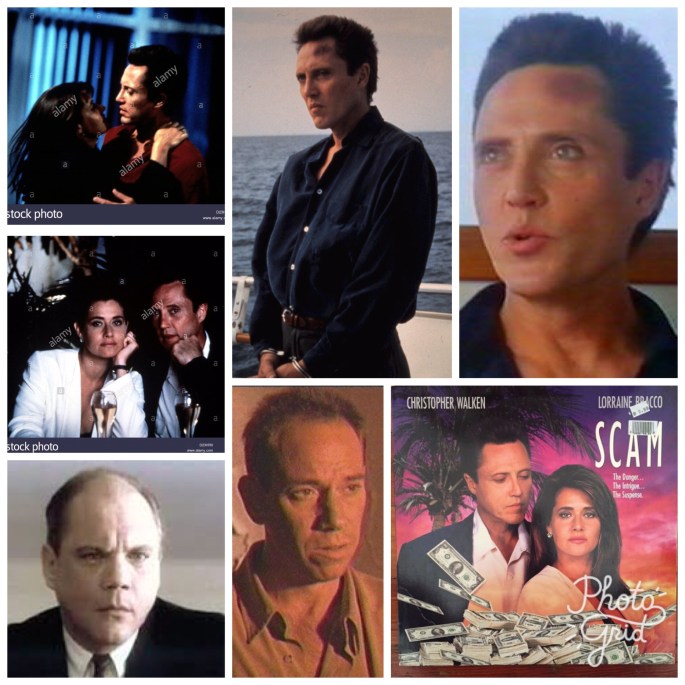
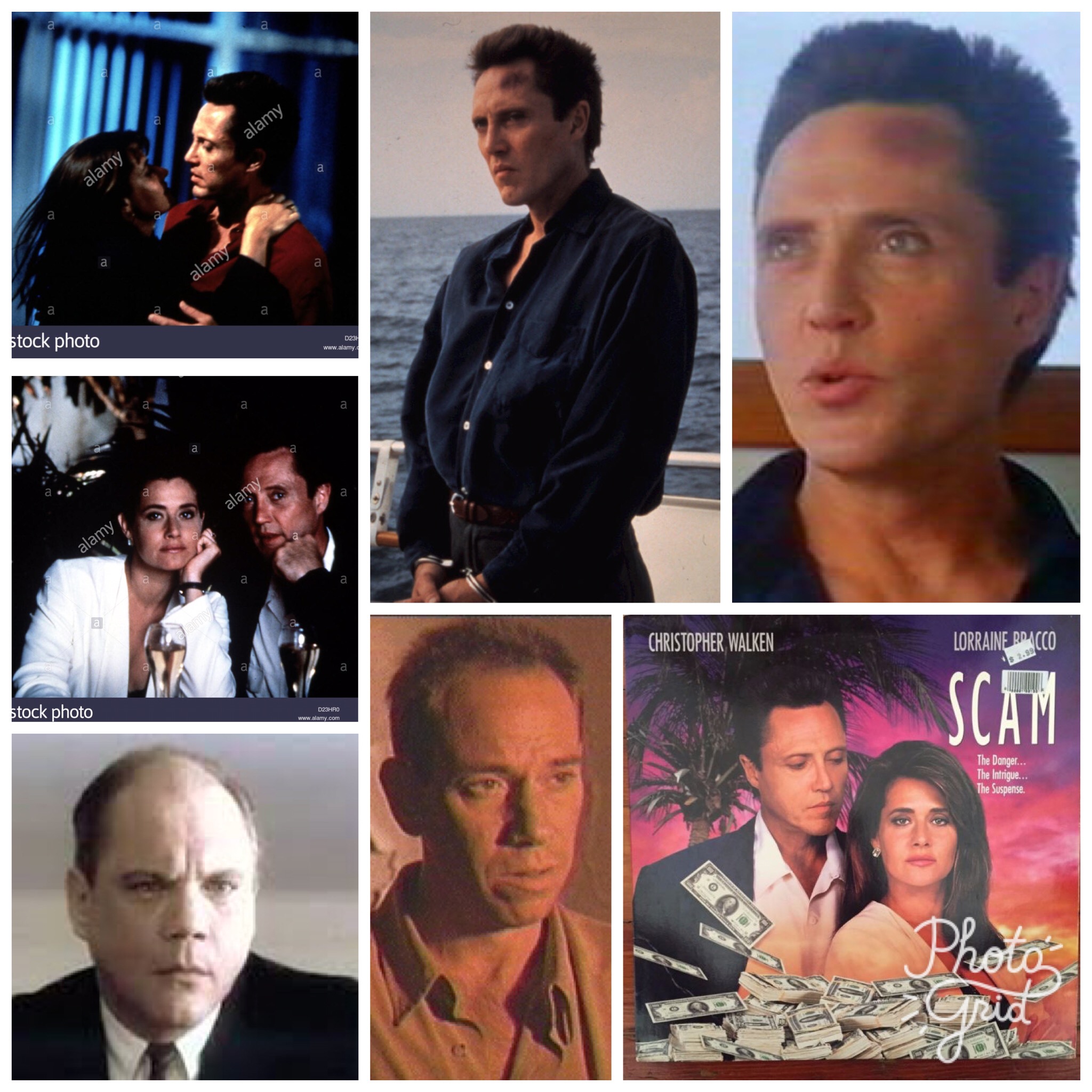
Scam is a breezy, Miami Vice-esque TV movie that no one saw. Nothing remarkable, but the cast has fun with the seedy crime thriller plot, and no doubt got to vacation in the Caribbean locale where this was filmed between takes. Christopher Walken never misses a beat, even in inconsequential fluff like this, and he’s fun here as shady FBI agent Jack Shanks, who is stalking a couple scam artists working the local beat. Gorgeous Maggie (Lorraine Bracco) lures men out of bars, spikes their drinks real good and then her and her violent boyfriend (Miguel Ferrer) rob the poor fuckers blind. Walken is wise to their act and entraps her for his own agenda, which involves lifting sensitive floppy disks from the clutches of a nasty crime lord (Daniel Von Bargen). Seamy, sweaty and oh so sleazy, it’s pure early 90’s cheese that has aged not too shabbily. Bracco and Walken have sexy chemistry, while Ferrer’s rabid dog thug livens things up, as does a wonderfully over elaborate, sun baked plot. Good times. 

-Nate Hill

The Crow: Wicked Prayer


Out of the multiple attempts at The Crow sequels, Wicked Prayer is the most legendarily awful. You’d think that after two rainy, urban set, near identical efforts that a switch up to the New Mexico desert for an Aztec, satanic theme might just be grand, but nope, they dicked it up royally. Even with a cast as cool as they were able to lasso into this mess they couldn’t make it work. The Eric Draven avatar here is a trailer trash troublemaker named Jimmy Corvo, played by Edward ‘John Connor’ Furlong, who hasn’t exactly brushed up his acting skills since his iconic turn in T2. Corvo is in love with Lilly (Emmanuelle Chriqui), the daughter of a local chief (Danny Trejo lol) who despises him. Also running around is Luc Crash (David ‘Angel’ Boreanaz), an occultist whacko who wishes to use his body as a vessel for Satan and… rule New Mexico I guess? Joined by his psychotic little hoe girlfriend (Tara Reid) and four thug henchman aptly named after the horsemen of the apocalypse, he needs a couple human sacrifices, and who better than young lovers Jimmy and Lilly? Furlong is resurrected via that good ol’ blackbird, of course, and sports the worst makeup job since.. I don’t know since what to be honest, it’s an equally horrendous and hilarious look. He goes looking for vengeance against Crash and his ilk, and all sorts of silly supernatural nonsense ensues, yada yada. You’d think that such a concept would have been great, but everything is handled so poorly, the budget seems lower than the filmmaker’s standards of quality, and Dimension should be ashamed to have to slap their classy label on this roadkill of a four-quel. As if all that wasn’t enough wasted talent, Dennis Hopper shows up arbitrarily as a jive talking, white 70 year old pimp who has absolutely nothing to do with the story, and whose dialogue as well as delivery will have your eardrums bleeding out in minutes. Please, please avoid this at all cost. 

-Nate Hill

GREGORY HOBLIT’S FREQUENCY — A REVIEW BY NICK CLEMENT

3

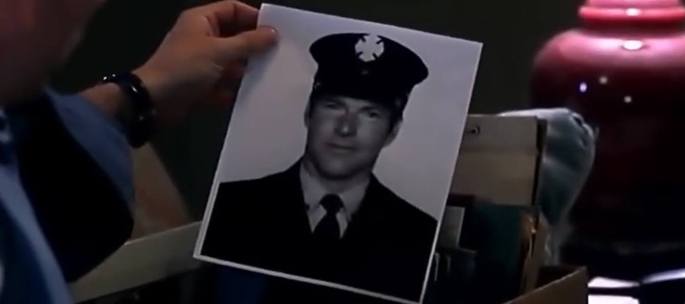
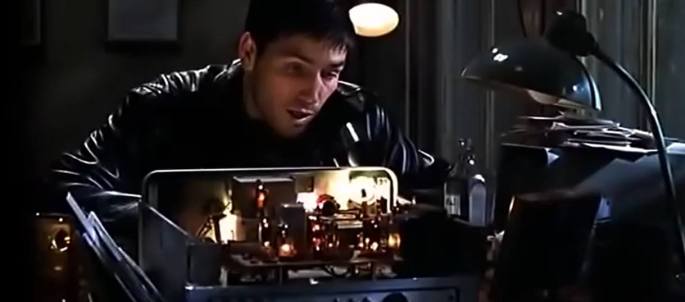
This is a shamelessly entertaining film with lots of heart and a tone that bounces all over the place. Gregory Hoblit’s underrated 2000 genre-bender Frequency was a modest hit with critics and audiences at the time of its release, and while it’s hardly a great movie, it’s so much fun to watch, and it stands up on repeated viewings. This movie is so many things: A father-son drama, a sci-fi time travel piece, a serial killer thriller, a domestic drama, an action potboiler – screenwriter and future studio chief Toby Emmerich devised a true “kitchen-sink” film with a heady, complicated narrative that’s happy to fold back on itself repeatedly. Dennis Quaid was perfectly cast as the father impossibly communicating with his grown son, played by Jim Caviezel, years later via an old ham radio and some interesting celestial disturbances courtesy of a very active Aurora Borealis. And as in most time-travel narratives, the more you do to disturb the space-time continuum, the more likely it’ll be that things will have changed all around you, thus setting the butterfly effect in motion. This is a restless piece of work, a film that has tons on its active mind, and I can’t think of too many other efforts that resemble it in intent and execution. It certainly feels light years away from the types of films that are currently getting the greenlight at the studio level.

2

Hoblit, a dependable director who cut his teeth on various TV shows before making the leap to features with the excellent Primal Fear, has had a solid career as a helmer of underrated mid-budgeted thrillers (Fallen, Hart’s War, and Fracture are some other credits), and with Frequency, he took a project that had spent years in development under various other filmmakers and turned it into a film with a great sense of visual style, and wasn’t afraid to embrace the inherent silliness of its idea, and directed with a steely conviction that turned the entire piece into a slice of earnest entertainment. It’s certainly contrived to within an inch of its life but it’s no less enjoyable, and it’s admirable the way Frequency keeps piling it on all the way to its cornily effective finale, which will leave a lump in your throat unless you’re a true cynic. A big reason for this is the fantastic chemistry between Quaid and Caviezel, who despite not really looking like they come from the same family, exhibited a natural warmth and rapport with each other that went along way to making the film work as well as it does. For some reason, Frequency feels like a strange companion piece to Field of Dreams, and while that film is infinitely superior overall, I can’t help but feel that they share some of the same honest-at-the-core traits that always keep me coming back for more.

1