JOHN FRANKENHEIMER’S 99 & 44/100% DEAD — A REVIEW BY NICK CLEMENT

1

Obviously not the greatest movie ever made by legendary filmmaker John Frankenheimer (The Manchurian Candidate, Ronin), I still can’t help but be fascinated by the comic-book-inspired insanity of his odd-ball curiosity 99 and 44/100% Dead. Released in 1974 and starring Richard Harris as a love-struck hit-man caught in the middle of an escalating gang war, the film was written by Robert Dillon (the phenomenal Prime Cut from director Michael Ritchie, and the massively undervalued The French Connection II, also directed by Frankenheimer), and has a tone that veers all over the place, and features bad-guys with guns and knives attached to prosthetic limbs, some crazy car chase/stunt work, and a general vibe of “anything can happen” that allows the film to be exceedingly entertaining if a bit sloppy around the edges.

2

Henry Mancini’s wild musical score meshed with the sometimes frantic camerawork by Ralph Woolsey; Harold Kress’s choppy editing may have been by design. I can think of very few other films that match this effort’s overall sense of manic energy, and while coherent, there’s something simply bizarre about the entire production that should speak to cult film enthusiasts everywhere. And yes, apparently the film’s title is a play on the old Ivory soap commercial slogan. This is a completely wild piece of work that has a distinct personality, which can’t be said for most genre fare. Available on DVD from Shout! Factory as a double-dip with The Nickel Ride (rager coming soon for that one…!)

3

Body Heat

Body Heat

1981.  Directed by Lawrence Kasdan.

bodyheat

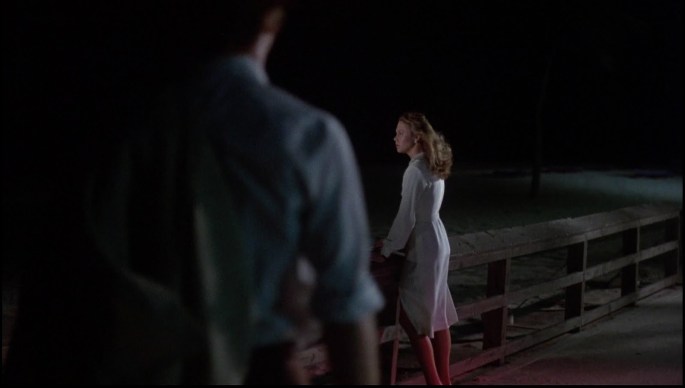
Film noir is wonderfully eclectic genre.  While there are certain aspects each of these films share, directors have been bringing their unique perspectives to each offering over the decades since its creation.  Neo-Noir films evolved the concept by placing murky detective stories into futuristic locales and sleepy Midwestern towns, showcasing the idea that the darkness of man can exist anywhere.  Lawrence Kasdan’s scorching directorial debut, Body Heat initially appears as a well-crafted homage, intimately aware of its predecessors’ influence.  However as its complex web of deceit begins to unravel, any sense of safety slowly erodes under a flood of sexual power and unrepentant violence to reveal an intelligent and diligently constructed narrative.

Inept lawyer Ned Racine falls for the wrong woman, leading him into a series of perilous decisions. Unseen consequences and chilling revelations then threaten to destroy not only his freedom, but his relationship with the woman for whom he has risked everything.  Kasdan’s script borrows heavily from Noir staples.  The dialogue brims with potboiler pastiche, but never crosses the line into parody.  Some of the best exchanges are between William Hurt’s Ned and his compatriot’s: A surprisingly loyal Ted Danson and J.A. Preston’s dedicated detective.  Hurt’s brilliant performance highlight’s his uncanny ability to strip away a character’s armor to reveal vulnerability and is instantly spellbinding.  Ned is the perfect mark, competent enough to perform, but ultimately outdone by his libido.  Mickey Rourke’s turn as an arsonist client contains some of the film’s best lines, a stark reminder of the Noir trope that there is not only honor, but brutal truth among thieves in the shadows.

body-heat11

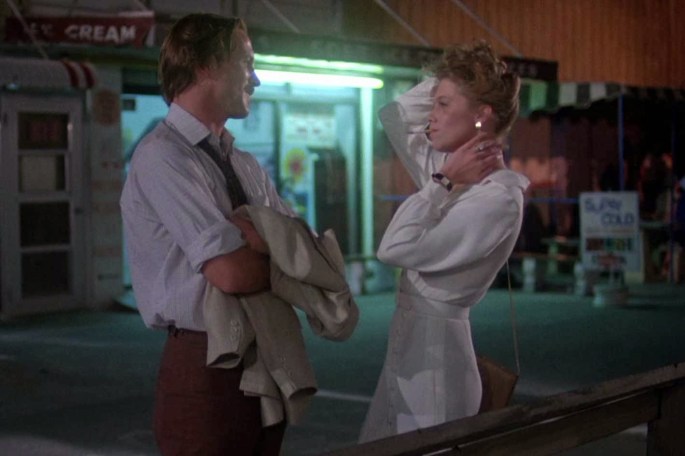
Kathleen Turner’s steamy debut as the predatory seductress Matty Walker balances raw sexual mastery with wicked intent.  Body Heat is a film that rests entirely on its villainess’s ability to captivate the audience, and Turner delivers.  Ned is the surrogate, blindly following his heart (and other anatomy) into moral oblivion due to Turner’s sultry delivery and her uncompromising command of the material.  Her chemistry with Hurt is intoxicating, to the point that the viewer is carefully reminded of a time when they made bad decisions for a bad thing that never felt so good and this is the film’s essence.

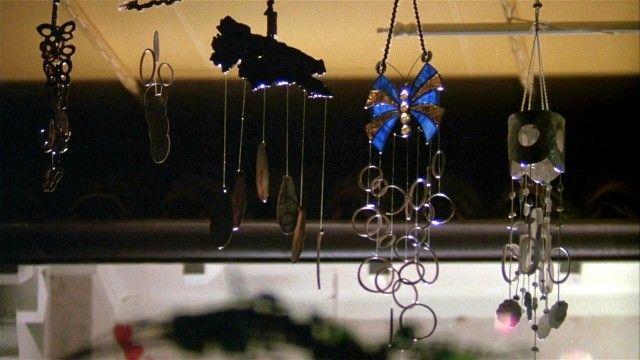
Set during a relentless heat wave in Florida, the color red is intrinsic to the happenings, blissfully captured by Richard Kline’s devious cinematography.  This is a soiled, pessimistic world and an air of deception haunts every perfectly constructed frame.  Maury Harris’s sound design, particularly during the infamous wind chimes scene perfectly captures the Noir vibe with ominous tones that preclude Ned and Matty’s first illicit coupling.  What begins as an explosive convergence of corruption and passion tumbles head first across a moral Rubicon in which murder and love are strange bedfellows, tying Hurt and Turner together in a wicked dance of fractured dreams and shadowy manipulation.

wp-1485438607781

Available now for digital streaming, Body Heat is a unique debut from a legendary writer.  While it features the expected dialogue of a true master, it excels due to top notch production design and a brave performance by a woman in a time where women were not expected to be center of attention.  Kasdan’s bold casting choice and respectful take on the Noir genre ensured that his debut effort would be remembered for decades to come.  If you’ve never experienced this classic tale of sordid conspiracies and fevered entanglements, Body Heat is a sensational late night affair.  Come for Turner’s heart racing performance, leave with the knowledge that Kasdan’s first time in the director’s chair was something exceptional.

Highly Recommend.

body-heat-hd-movie-title

Remembering Jonathan Demme: SOMETHING WILD

The world of cinema was shocked by the tragic passing of Mr. Demme at the end of April.  In honor of his memory, this week Kyle and Ben discuss Something Wild, his underrated romantic thriller that has been given a stunning blu-ray release by the Criterion Collection.

hero_EB19861107REVIEWS611070304AR

BEN: As I delve into the world of cinema, I come across films that are so mind-bending they stop me dead in my tracks.  As the film opens, we meet Charlie Driggs played by a very roguish Jeff Daniels in a café.  We don’t know why at this point, but there is something fundamentally wrong with this relatively successful finance wizard and he makes a decision that attracts the attention of a very dynamic Lulu, played by Melanie Griffith.  From this opening frame, we can tell that Demme, whose shooting style would be considered “open,” is going to have fun with the audience.  After a rather humorous confrontation, Lulu encourages Charlie to get into her car, where she takes him on a ride of debauchery and mayhem.  Along the way, they steal, they abandon; Charlie comes to terms with his rebellious side and falls in love with Lulu, who has a dark secret in the form of Ray Sinclair played by a very young and vibrant Ray Liotta in his second theatrical role.

KYLE: One of the things that instantly grabbed me upon revisiting this was how colorful it was.  Demme uses a bohemian aesthetic that’s both distinct, and somehow….normal?  I read in an article that Demme and the crew handpicked the bulk of set decorations and props.  It’s an intimate story and you can feel Demme’s deep affection for it in every frame.

sw-dangrif2

BEN: This is going to sound cliché, but E. Max Frye’s Edgar Award-winning screenplay is typically 1980s:  the young successful banker is looking for an escape from his successful life, falls in love with his sinful, polar opposite with a secret past which eventually results in a murderous ending coupled with the ultimate 1980s bad boy who spells trouble for the young lovers.  With Demme’s deft direction, solid acting, and the fun atmosphere created by Frye’s screenplay, it works.

KYLE: I love how it’s this neo-Odyssey by way of the cliché road trip.  You can see Ray being the cyclops and Lulu in her three different personas reminded me of the Sirens, luring Daniels away from safety and into harm’s way that would ultimately lead to a greater understanding of self.

BEN: Daniels was the perfect young actor to play the yuppie seeking freedom while Melanie Griffith plays to her sinful strong suits.  Ray Liotta comes into himself as the violent, aggressive type.  The three leads lent such credibility to their roles that they were all nominated for Best Actor, Actress and Supporting Actor at the 1987 Golden Globes, respectively.

Something-Wild-1

KYLE: I could not believe that this was Liotta’s second role.  He’s completely magnetic from the instant his character enters the story.  I really enjoyed his chemistry with Daniels and Griffith.  It has this sophisticated, but primal quality that I think is essential for the tonal changes in the second half.  I really enjoyed how Demme was sort of playing on the expectations of the audience with respect to 80’s rom coms and essentially pulls a bait and switch and ends up with something resonant.  It’s about confronting the dangers of the world in the name of love and Demme uses his trio of talent along with some outstanding technical work to bring his bloody, but beautiful valentine home.

BEN: As I mentioned at the beginning, very few movies stop me in my tracks.  Driggs’ comment at the end of the movie hit home the most:  “It’s better to be a live dog then a dead lion;” a common theme to movies of the era, but it serves also as a warning to future generations:  live a little.  Perhaps we could all heed Driggs’ sage advice.

KYLE:  Highly Recommended for me.

BEN: We are in agreement!

Title Card Something Wild

Alan Parker’s Come See The Paradise


Alan Parker’s Come See The Paradise tackles a little spoken of, tragic period of American history: the internment of thousands of Japanese families in prison camps following the attack on Pearl Harbour, which sparked World War II. After the incident, a wave of frenzy and paranoia roiled across the states, and many of these people were separated from their loved ones for years, an event that altered thousands of lives, but not one you hear too much about in film. Parker is a born storyteller, whether it’s historical lore or gothic genre brilliance (insert obligatory Angel Heart reference), and here he approaches the subject matter with little to nothing in the way of melodrama, classic orchestral swells or tissue box bait, letting the story happen naturally and neutrally, the drama organically rising scene to scene as they happen. Dennis Quaid plays an Irish American man who falls in love with a Japanese girl (Tamlyn Tomita), and over a few years begins a life with her. He is a fiercely independent union man, passionately fighting for the working class, while she comes from a very tight knit family who rely on each other to make ends meet. Somehow the two of them make it work amidst the early stages of the American working machine, the love they have for each other keeping them afloat. Then the attacks occur. Quaid is separated from her and their daughter for over a decade, and the film’s pacing makes you feel every lost, broken moment of it. When their reunion does happen, it’s nothing like the romantic, tear jerking catharsis you’d expect, but a testament to Parker’s commitment to realism. The sadness comes from the hollow, unceremonious way in which these people are affected by such things, and how they simply go on, adapt and adjust, the pain an intrinsic part of everyday life. The movies show a different picture of that usually, an idealistic bubble where things always somehow end up alright, and every last thread is tied off somehow. Not with this one, which is why it may have been forgotten. In any case, it’s a beautifully tragic, eye opening piece that stays true to its narrative and follows it’s characters throughout bittersweet, minimalistic and believable arcs. 

-Nate Hill

KRISTIAN LEVRING’S THE SALVATION — A REVIEW BY NICK CLEMENT

3
Currently streaming on Netflix and not for the squeamish, Danish filmmaker Kristian Levring’s The Salvation is a ferocious variation on the Death Wish formula, except set in the old, lawless west circa 1864, with old-school nods to John Ford and Sergio Leone peppered throughout the story, while still feeling resolutely modern and tack-sharp. The blood-boiling screenplay by Levring and Anders Thomas Jensen concerns a stoic family man played by Mads Mikkelsen (channeling some of that internal rage from Valhalla Rising) whose wife and son are killed by convicts; Mikkelsen then charts a course of violent revenge against the men who destroyed his family. It’s a simple story, forcefully told, with a minimum of fuss, and bracing shot of vigilante justice.
2
 
The ace supporting cast includes the gorgeous and tough Eva Green, Eric Cantona, Alex Arnold, Douglas Henshall, Jonathan Pryce, and an oily, sneering Jeffrey Dean Morgan as the ultimate baddie (he really seems to revel in playing lethal killers). Jens Schlosser’s piercing widescreen cinematography never shies away from any of the on-screen brutality and is frequently gorgeous in a potentially violent yet lyrical manner, while the South African locations convincingly doubled for the American plains. Kasper Winding’s musical score tips its hat to the work of Ennio Morricone and is never overbearing, opting for silence in key sequences. This is a thoroughly bad-ass piece of work that genre fans should be taking note of.
1

B Movie Glory: Fist Of The North Star


If you ever want to see an entire film production embarrass themselves royally, check out Fist Of The North Star, a misguided, thoroughly awkward live action version of some obscure Japanese manga series. It’s one of those ones that painfully doesn’t translate into the realm of live action though, like that bizarre Super Mario movie they made. Full of notable character actors, packed with steampunk-esque special effects, it could have worked with a different story, but the theatrical intensity and specific vibe of oriental pop culture just doesn’t come to life well on the North American big screen. It’s also at war with itself tonally: there’s a light, PG Power Rangers feel in some places, but many scenes have graphic violence that pushes a hard R rating into the deep end, which makes for a jarring experience. Gary Daniels stars as Kenshiro, a lone warrior out to get Lord Shin (Costas Mandylor under one mess of a mullet), a brutal warlord who murdered his father, briefly played by Malcolm McDowell. McDowell pulls a classic McDowell move, showing up in the flesh for about thirty seconds before disappearing and lazily lending his iconic voice to a talking skeleton version of his character later in the movie. Don’t ask me to remember more of the plot than that because it would involve a rewatch, and ain’t nobody got time for that. Chris Penn is fun as Jackal, an angry vagabond with a giant potato head and the psychotic temper to match. Watch for Dante ‘Rufio’ Basco, Downtown Julie Brown, Clint Howard, Mario Van Peebles and more in equally ridiculous getups. The sole thing I can recommend here is the production design, lifted straight from some striking post apocalyptic video game, it makes somewhat of an impression. The rest lands with a colossal thud and just sits there, doing not much of anything. 

-Nate Hill

DOUG LIMAN’S THE WALL — A REVIEW BY NICK CLEMENT

3

Bitter, subversive, and violently fierce all throughout its super-lean 80 minute running time, Doug Liman’s Iraq war thriller The Wall operates as both a minimalist genre exercise ala Phone Booth and Buried, while angrily commenting on American foreign military involvement. And it serves as a reminder that Liman, who certainly got bit by the blockbuster bug (The Bourne Identity, Mr. and Mrs. Smith, Edge of Tomorrow), can still drop a down and dirty little gem that delivers a smart gut punch. The Wall is short and sweet so I’ll keep my comments the same, as the less you know about this nervy picture the better. I’ve long been a big fan of Liman’s varied technique and it’s exciting to see him switching gears and taking on a gritty quickie like this; he’ll be back on screens later this year with the drug running crime film American Made with Tom Cruise.

2

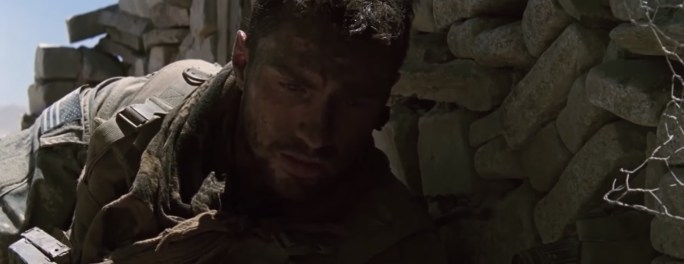
Dwain Worrell’s ultra-focused screenplay was the first spec script purchased by distributor Amazon Studios, with the plot centering on two American soldiers, played by Aaron Taylor-Johnson and John Cena, who become trapped by an Iraqi sniper near a small compound and partially destroyed cement wall. When Cena is hit, it’s up to Taylor-Johnson to save himself and his partner, all the while contending with the enemy combatant who has hacked into their radio, remaining unseen for the entire film, and clearly enjoying his close yet hidden proximity. Taylor-Johnson is very effective as the panic-stricken soldier who is also dealing with a potentially life-threatening bullet wound, Cena spends most of the narrative with his face down in the dirt but is still quite strong, and the calm yet chilling voice-over performance of Laith Nakli understandably makes you anxious.

1

The Wall hugely benefits from Roman Vasyonov’s exceptional and jittery widescreen cinematography (the film was shot on 16mm film stock), while Julia Bloch’s no-fat editing keeps the pace lightning quick without ever sacrificing any of the fired-up dramatics. The solo location keeps things intense and claustrophobic despite being set outside, and the lack of a traditional musical score keeps the film all the more tense and unnerving. The ending is startling and exactly as it should be. The Wall was released last weekend to a questionable Rottentomatoes score of 62% (if the Marvel logo were attached it’d be in the 90’s), and practically non-existent box-office returns. To be fair, I doubt many people are aware of this movie, which is a huge shame, as smart and ruthless thrillers like this are in small supply, especially during the increasingly empty-headed summer movie season.

1

Mindscape: Anna 


Mindscape, given the less tantalizing title ‘Anna’ upon release, is a thinking person’s thriller, and perhaps a little bit too much so. In the near future, or perhaps some alternate reality, some humans have evolved into pseudo clairvoyants who can enter the memories of other people and interact with their subjects within them. This talent has been trademarked by law enforcement, who employ ‘memory detectives’ to psychologically resolve conflict or retrieve otherwise out of reach information. Mark Strong is one such man, but his talents have dimmed a bit following the deaths of his family and a crippling stroke. Hauled out of retirement by his former boss (Brian Cox, sly as ever), he finds himself tasked with navigating the labyrinthine mind of Anna (Taissa Farmiga) a girl accused of murder and deemed a potential sociopath pending diagnosis. The film is deliberately dense and elliptical, not standard Hollywood fare at all, which is nice to see, but it also trips just a little bit on its own cognitive aspirations, especially in the third act. It’s one of those pieces that’s less like The Cell, and more like Vanilla Sky or Danny Boyle’s Trance (two absolute favourites of mine) where so much of the story wades through muddy mindgames that at a certain point we think to ourselves ‘well who’s to say if any of this is actually real if it’s gotten so complex’, and indeed it’s very difficult to piece together what has transpired here, especially with a conclusion that would require multiple viewings to even get an inkling. It’s stylish as all hell though, given a clinical, steely grey palette punctuated by flourishes of startling red to show the capacity for violence lurking just out of sight within the opaque and enigmatic human psyche. The acting is top tier as well; Strong is reliably committed and intense, Farmiga is deeply disconcerting as the most fascinating and ambiguous character, showing blossoming talent that I look forward to seeing more of, while Cox steals his scenes as per usual. The film trips over itself a few times and like I said, overly convoluted, but it’s one mesmerizing effort for the most part, albeit after a second or third viewing. 

-Nate Hill

TIM HUNTER’S RIVER’S EDGE — A REVIEW BY NICK CLEMENT

2

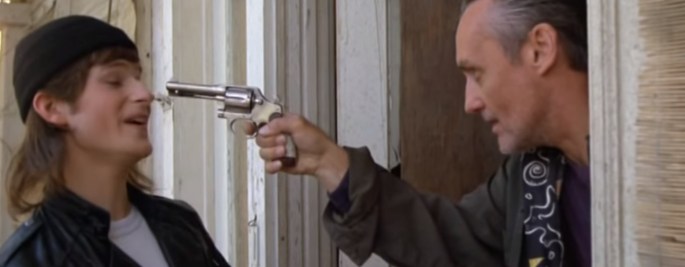
Tim Hunter’s brutal and unforgettable drama River’s Edge is one of the most unflinching looks at dysfunctional teen life ever put on screen, and serves as a grim reminder of how powerful true-crime based cinema can be when properly handled. Inspired by a real murder that took place in 1981 in California, Neal Jimenez’s hard-hitting script never soft pedaled any of the scary, emotionless nihilism that permeated a group of kids who were all tangled up in thoughtless killing, with an amazing cast of then-young actors doing sensational work, including Keanu Reeves, Ione Skye, Roxanne Zal, Josh Richman, and Crispin Glover, with Dennis Hopper providing his usual brand of sinister character acting from the fringes of this chilling film. With evocative cinematography by Frederick Elmes and a haunting score from Jürgen Knieper, this is one of those absolutely harrowing efforts that once you’ve seen you’ll never forget, and despite shining a light on some very unsympathetic characters (Larry Clark must love this film!) who are all caught in a deadly scenario, Hunter’s steely direction keeps the film from ever becoming cloying or sentimental, as he stressed the inherent cruelty and sadness of the story without over doing it.

3

Ariel Vroman’s Criminal 


Ariel Vroman’s Criminal does its best to pay homage to beloved pseudo science fiction genre films of the nineties like Face/Off or Eraser, and for the most part it succeeds. All the elements are in place: padded, eclectic cast, implausibly sketchy high concept brain tampering, slick anti-terrorist war games, a brash arch-villain and adorably clunky emotional interludes. When a deep cover agent (Ryan Reynolds, weirdly uncredited) is killed in London, his FBI handler (Gary Oldman), has a shit fit at the lost secrets he knew and commissions Dr. Tommy Lee Jones to use sketchy cutting edge science and transfer Reynold’s memories into another man’s cerebrum. Of course they choose some violent, irreparably damaged convict, namely Jericho Stuart, played with growling, feral panache by Kevin Costner. “You hurt me, I hurt you back worse”, is this deeply sociopathic dude’s mantra, and it’s expectedly hilarious that the bureau shoots themselves in the foot by picking such a wild card for the program, but there you have it. With new memories, Jericho’s basic primal instinct is diluted with emotional scar tissue from Reynolds, haunted by his former wife (Gal Gadot, terrific), as well as a host of clandestine secrets from Ryan’s noggin that propel him on a globetrotting (well, London trotting, really) excursion to bring down a radical cyber criminal (Jordi Molla, the Spanish Gary Oldman, coincidentally sharing the screen with his counterpart). This is the Kevin Costner show all the way, it’s really the best work I’ve seen from him in years. He would have been way better taking the antagonist route with his career, as showcased here. Jericho is a bitter, psychotic outsider and Kevin plays it up royally, dishing out bone smashing beatdowns on random pedestrians and calling anyone he sees a ‘fucker’. Oldman yells at everything, and I mean everything. It’s like there were cue notes next to his lines that said ‘just scream your lines the whole way through’, but he’s fun too, that early career intensity showing through his weathered gaze. Michael Pitt also shows up with a hysterical Dutch accent, doing the boy with the dragon tattoo hacker shtick, looking pale and sullen. The cloak and dagger stuff is uproariously silly, as it should be, the emotional core appropriately sappy too. Smart move in keeping the hard R action movie alive, unlike some movies we know (I’m casting a disgusted look over at Expendable 3), and indeed Kevin gets some overly bloody kills in that fulfill the carnage quota and then some. He kicks ass, Oldman hollers, Reynolds cameos, Gadot cries, Jones looks weary, and so it goes. Not a total slam dunk, but it will make you feel nostalgic for those good old Sly/Armie/Van Damme blitzkriegs of yore. 

-Nate Hill