Join Frank, Ben, Kent, and Frank’s buddy Terry who attended Star Wars Celebration in Orlando as they discuss THE LAST JEDI trailer, who Rey’s parents are, and Frank plugging a return of Lor San Tekka.
Join Frank, Ben, Kent, and Frank’s buddy Terry who attended Star Wars Celebration in Orlando as they discuss THE LAST JEDI trailer, who Rey’s parents are, and Frank plugging a return of Lor San Tekka.
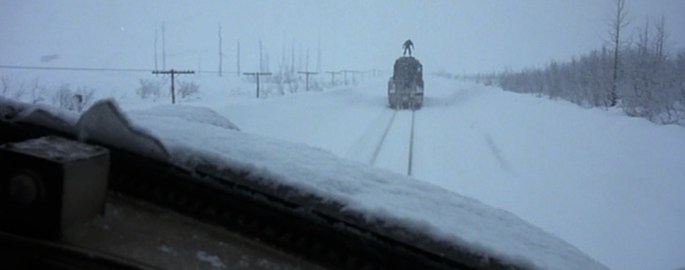
Directed with iron-fist intensity by Andrei Konchalovsky, the 1985 actioner Runaway Train is easily one of the best films to bear the Cannon Films/Golan-Globus logo. There’s just as much devastating personal introspection as there is macho bluster and bloody fisticuffs, with the narrative combining aspects of the prison and train film with a story about friendship, sacrifice, honor, and living life by your own moral code. Starring Jon Voight and Eric Roberts as escaped convicts who board a runaway train that’s careening towards the remote and snowy wilds of Alaska, both actors were Oscar nominated for their wildly passionate performances, and were matched by Rebecca De Mornay as an unlikely railroad worker caught up in the madness.

Everything about this movie feels real and dangerous and forbidding, with the busy yet focused screenplay never taking a rest for a moment; Djordje Milicevic, Paul Zindel, and Edward Bunker got writing credit, having adapted an original screenplay by Akira Kurosawa. Look for Danny Trejo (Heat, Machete) and Tommy “Tiny” Lister (No Holds Barred) in their feature debuts. Alan Hume’s rough and muscular cinematography made terrific use of open and closed spaces, with all of the action centered on the train delivering high-adrenaline excitement that will make your palms sweat, while an early prison riot gets up close and personal in the melee. Trevor Jones’ thundering and operatic musical score is the cherry-topper. The final moments of this film are lump-in-your-throat perfection.

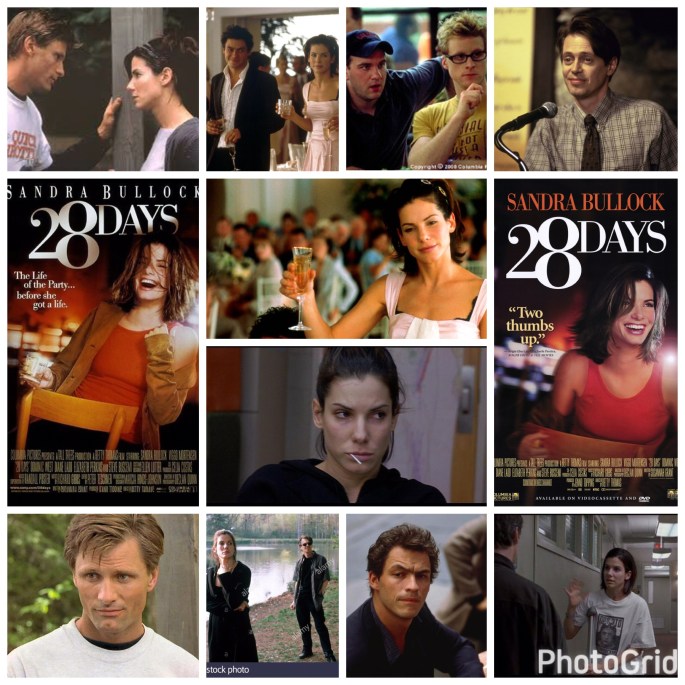

I’ve always had a thing for 28 Days. So often in Hollywood there are films that try tackle real issues, but not all of them feel like they’ve achieved anything, or even portrayed said issues in a realistic, compassionate way. This one shines a probing, nonjudgmental spotlight onto alcoholism, in all it’s subtleties and absurd truths, like few other films have. Many films portray alcoholism like a raging mania that turns you rabid and irrational, and while that certainly can be the case, I like how here they show what a semi-functioning addict looks like, as opposed to your atypical abusive archetype. It’s also just more pleasant fare too. Despite being a story about great struggle and personal woe, there’s lightheartedness to it that’s welcome in such stressful territory. Sandra Bullock, that luminous brunette, is pretty much instantly likeable in anything, a beautiful, effortless, natural born movie star, giving any film an instant advantage simply by having her headline. Here she plays Gwen, a NYC newspaper columnist who, along with her Brit boyfriend (Dominic West), has a fairly serious problem with the booze. After spectacularly ruining her poor sister’s (Elizabeth Perkins) and recklessly crashing a stolen limousine, the thin line between functionality and outright self destruction is crossed, and it becomes time to seek help. Court ordered into rehab, Gwen ships off to an upstate clinic to sleep off the hangover, but the real progress comes from first admitting she has a problem at all. Like any film about rehab, the facility is home to many quaint, quirky people for her to meet, bond and squabble with, fellow addicts on the road to whatever recovery means to them. Steve Buscemi underplays a sly turn as the program founder and lead social worker, Viggo Mortensen is sorta kinda a love interest, but also not really, in an ambiguously written supporting role, and there’s solid work from Alan Tudyuk, Marieanne Jean-Baptiste, Azura Skye and Margo Martindale too. Parallel to her treatment we see hazy flashbacks to Gwen being raised by her severely alcoholic mother (Diane Ladd), and get a glimpse of how the hectic, sprawling life of someone who drinks just seems like the mundane to them, internally until they decide to swallow that proverbial red pill, step outside the routine and examine their choices. It’s a great little film with an organic, realistic arc for Bullock that she inhabits with grace, humility and humour.
-Nate Hill

Marijuana and the movies have had a long, mostly potent relationship. Cannabis has inspired any number of cinematic artists, and it’s important to note how public perception of pot has changed throughout the years, with evolving laws and a recent explosion of smoker-friendly content. The social hysteria that greeted the infamous 1930’s exploitation film Reefer Madness can now of course be laughed at as an overreaction to a plant that has progressively become less demonized.

The Cheech and Chong films will forever be seen as stoner comedy gold, providing inspiration for modern efforts like Harold & Kumar, Half Baked, and Dude, Where’s My Car? Easy Rider is the definitive counter-culture item that opened the doors for more square viewers, while the 1970’s ushered in a new crop of pot movies, including Milos Forman’s American debut Taking Off, Ralph Bakshi’s animated Fritz the Cat, Cisco Pike with Kris Kristofferson, and the more obscure Dealing: Or the Berkeley-to-Boston Forty-Brick Lost-Bag Blues, a heady mix of paranoid thriller and laconic romance featuring an early John Lithgow performance.
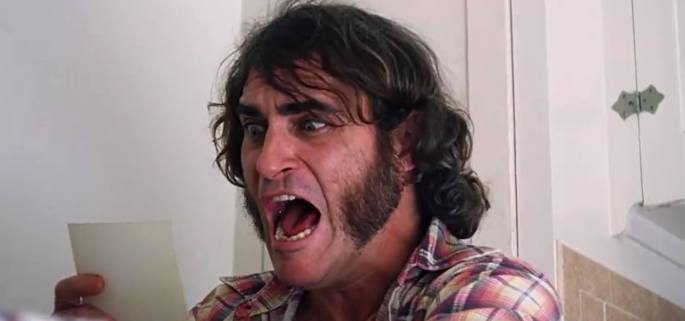
Marijuana has been used in an erudite fashion by filmmakers, woven into the narrative like a character in Curtis Hanson’s masterpiece Wonder Boys, the iconic Coen brothers sensation The Big Lebowski, and the underrated Leaves of Grass. Oliver Stone’s entire cannon feels especially indebted to ganja, as does Terry Gilliam’s psychotropic adaptation of Hunter Thompson’s Fear and Loathing in Las Vegas. Self-professed cannabis enthusiast Robert Altman left a misty haze over much of his work, most notably The Long Goodbye, California Split, and M*A*S*H, while his protégé, Paul Thomas Anderson, crafted a pot-infused ode to private eye cinema with Inherent Vice. And F. Gary Gray’s sly, smart, and hilarious pot comedy Friday still stands as one of the most influential cannabis narratives.
The Seth Rogen/Judd Apatow connection has helped to legitimize marijuana to the masses, with box-office hits Pineapple Express and Knocked Up majorly emphasizing marijuana, treating it like a character as much as any of the leading actors. Musical biopic spoof Walk Hard: The Dewey Cox Story has some hilarious moments concerning reefer, the two Neighbors movies nearly give off a contact high, and the meta-comedy This Is The End carried a lit-joint torch of pro-pot components. And let’s not forget Danny McBride getting stoned with some sheep in Your Highness, which shared the skunky whiffs of 80’s cult-classics Krull and The Beastmaster.

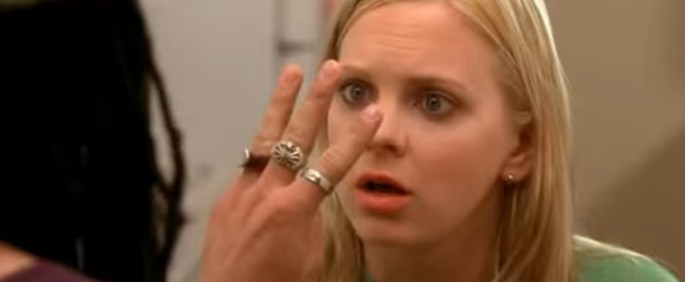
High school comedies have consistently thrown marijuana into the equation, with Amy Heckerling’s Fast Times at Ridgemont High and Richard Linklater’s Dazed and Confused standing as cultural touchstones. Nearly all of Kevin Smith’s films seem to have been born out of a cloud of bong smoke, with the Jay and Silent Bob characters feeling like zeitgeist-tapping creations of cannabis-happy comedy. Greg Araki’s Smiley Face with Anna Faris is one of the more perceptive and giggle-inducing movies to feature a stoner at its center, while Jonathan Levine’s unique 90’s time capsule The Wackness painted a portrait of people’s lives fully dictated by marijuana, and how it can be used both for good and bad.
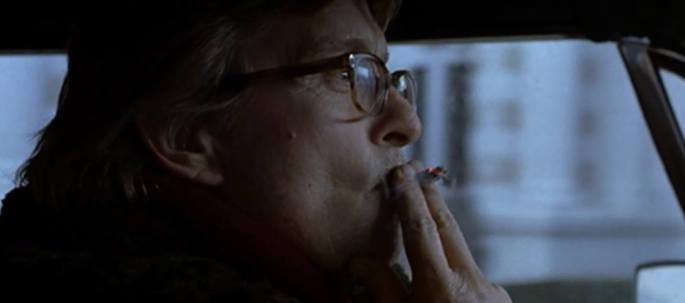
Star Wars Episode III: Revenge of the Sith
2005. Directed by George Lucas.
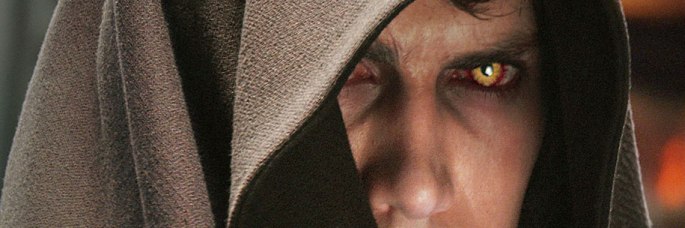
The final entry into the often maligned prequel trilogy, Revenge of the Sith is a Shakespearian tragedy interwoven with a sly exploration of the cultural phenomenon of the Star Wars universe. Featuring one of the greatest duels in cinematic history, refreshingly dark subject matter, and evocative visual compositions, this is Lucas’ swan song.
The final episode chronicles the downfall of the Jedi at the hands of The Emperor and a pre-Vader Anakin Skywalker. On the surface, Lucas’s script features everything you would expect. Corny romantic dialogue and puzzling character decisions abound, however, Revenge of the Sith is an epic story that aims to overcome the space opera camp of its origins through exploration of seemingly just actions and their unforeseeable consequences. Lucas conceived the story during the Vietnam War and the inner turmoil of a nation undone is everywhere; from the dying Republic to the stagnant Jedi temple. Lucas weaves threads of political domination throughout the final chapter of the Jedi, creating a noose of self-destruction out of their carefully constructed mantras. At its core, Star Wars is a story about extremes, both the presence of extreme passion with the Sith and the extremities of stoic servitude of the Jedi. More so than any other film in the franchise, Sith dissects this concept, never shying away from the ultimate results of good natured hubris and the power of personal tragedy.

These concepts are given finality in a thrilling confrontation between Anakin and Obi-Wan. The saga has always been about families, fathers and sons and how these relationships color the search to find ones place in the universe. Revenge of the Sith comes full circle, meeting Luke’s loss of Obi-Wan with Obi-wan’s loss of Anakin, forcing the viewer to confront not only the deaths of their favorite characters but also the myths that pervade the innocence of childhood that are conjured with every reference to the trilogy to come. Revenge of the Sith darkens the lightsaber parable, presenting Lucas’s magnum opus as a digital fury of kinetic action and near hopeless defeat. David Tattersall’s unbelievable cinematography harnesses the film’s impossible scope with intense close ups and breathtaking shots of the aftermath of the fall, scenes whose ramifications would not be fully appreciated until years after their inception, with the highlight being a funeral procession in the final act.
Peter Russell’s art direction houses the events in a plush mixture of digital voodoo and sublime practical effects. Trisha Biggar’s costume design returns to the glory of The Phantom Menace, while Nikki Gooley’s makeup design continues the franchise’s gold standard of extraterrestrial presentation. Ewan McGregor and Hayden Christensen work well within the confines of Lucas’ often derided dialogue, dancing around one another’s secrets until the blade becomes the only option. The original trilogy is a fixture of the American subconscious because it created a world of approachable wonder. Dinged and dirty, broken and forgotten, Star Wars is a universe populated by dusty rogues and second hand samurais that grabs the imagination with its deceptive candor and larger than life personalities; all of which made by possible by the downfall of the republic. Lucas recreates the end with a focused, almost cathartic presentation that ultimately is a love letter to the legions of fans and the dreams of a new generation that will inevitably find these films and treasure them in a way both familiar and alien to those of us who lived through their creation, the ultimate legacy for one of the most iconic generational stories ever conceived.
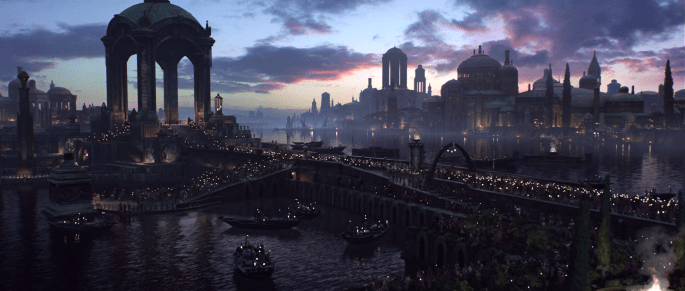
Available now for digital rental, Star Wars Episode III: Revenge of the Sith is George Lucas’s finest film. While it does not eclipse the sentimental hold of A New Hope, it is a film that displays an artist who has honed his craft, lovingly ending on the highest notes of a storied career. Unparalleled sci-fi visuals blend with a classic story of the student versus the teacher amidst a backdrop of galactic oppression to remind the fan (both old and new) that movies are made not with big budgets, sound, or fury; but with magic.
Highly Recommend.
-Kyle Jonathan
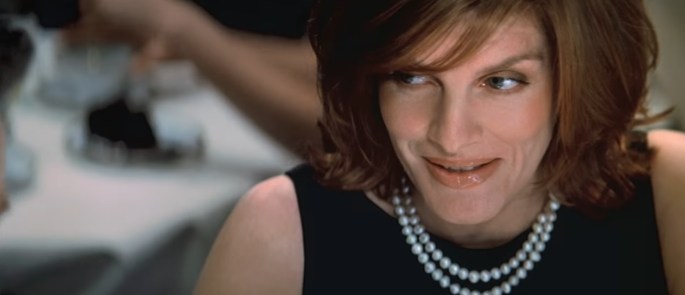
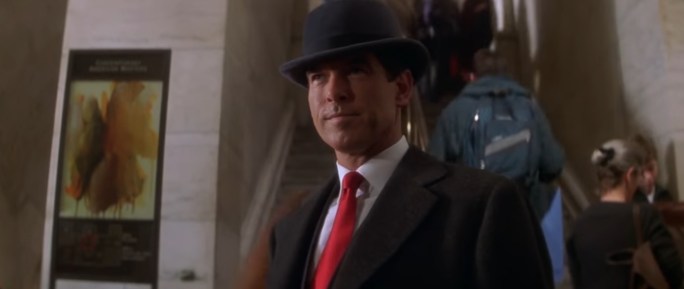
John McTiernan’s supremely entertaining and exceedingly stylish remake of The Thomas Crown Affair is a film that I saw multiple times in the theater, and absolutely love revisiting multiple times per year. I remember seeing this picture with my then-girlfriend-now-wife back in 1999. and the zest and sizzle that this film emits never ceases to amaze me. Pierce Brosnan was icy-suave perfection in the title role and Rene Russo was real-woman sexy in ways that Hollywood actresses rarely achieve; what a ridiculous run of movies she had in the 90’s. Brosnan and Russo shared tremendous on-screen chemistry in this glamorous, high-end romance, with Pierce looking lethal in his finely tailored suits, and Rene never more beautiful on-screen than she was here, with a wardrobe to die for and hair/make-up design that took her already wonderful physical attributes to the upper stratosphere. This is a movie about surfaces, and how attractive people are drawn to each other thru the thrill of the chase, always on the prowl, always primal, and always ready to pounce.
At the time, their much-buzzed-about sex scenes became a public talking point; in retrospect, it’s a further reminder of how crass on-screen lovemaking has become, as what’s show in The Thomas Crown Affair is steamy without ever being needless. And on a visual level, the film is just marvelous. The simplest of scenes are made to be extravagant by Tom Priestley’s muscular widescreen cinematography, with various shots that are souped-up to the max, and which absolutely pop on Blu-ray. The terrific finale with all of the lookalikes in bowler hats with Sinnerman on the soundtrack is the film’s final ace up its sleeve, and the tempo that McTiernan and editor John Wright set during this sequence is positively electric. There can be no debating that McTiernan’s visual style was one of the most influential when his career was in full swing, as he always brought a big-budget luster to all of his work, which was all stylish in its time but still holds up and never feels dated. Especially this movie.

The Thomas Crown Affair also has a stellar supporting cast including Denis Leary (so awesome here!), Fritz Weaver, Frankie Faison, Ben Gazzara, Mark Margolis, and Faye Dunaway, slyly cast as Brosnan’s therapist in a sultry, wink-wink performance that never felt tacky due to her legendary ability to hold the camera’s attention. Leslie Dixon and Kurt Wimmer’s screenplay was a perfect blend of character dynamics, action, suspense, and adult sexuality, with McTiernan no doubt bringing his own ideas into the mix, while Bill Conti’s jazzy and energetic musical score keeps the film’s pulse moving at an elegant pace. The Thomas Crown Affair hums along like a fine-tuned luxury ride, and many people (including myself) find it superior to Norman Jewison’s 1968 original, which is a totally fine piece of entertainment in many respects. There’s just something different about McTiernan’s version that has kept me engaged for nearly 20 years and I suspect that I’ll continue to enjoy watching this one for many years to come.
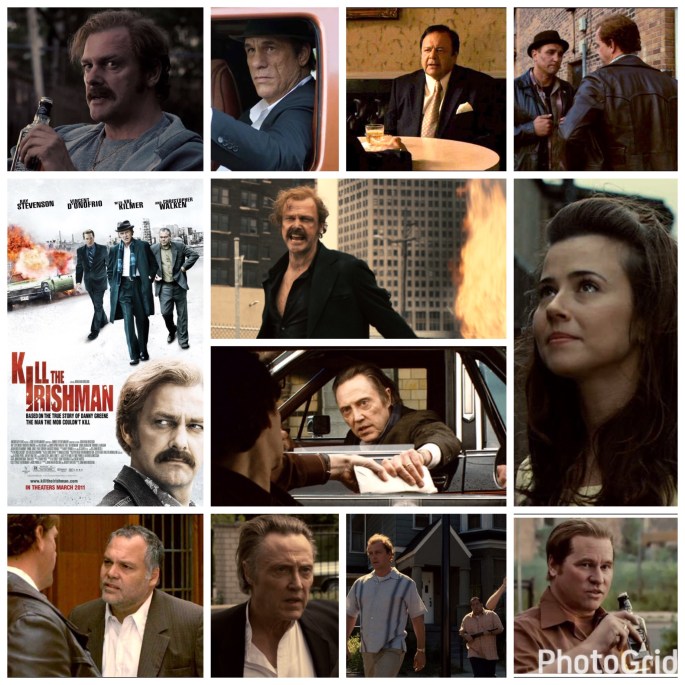

I’m not too sure just how much of Kill The Irishman is based in actual truth, but if even half of what we see on screen did happen, that is some pretty impressive shit. The film focuses on the life of Danny Greene (a bulked, sturdy Ray Stevenson), who was an Irish American mobster working out of Cleveland back in the 70’s, a guy who seems to have caused quite a stir of chaos amongst organized crime back then. Getting a leg up from the longshoreman’s union, Danny quickly rose to power alongside several other key figures including numbers man John Nardi (Vincent D’Onofrio), enforcer Joe Manditski (Val Kilmer) and nasty kingpin Shondor Birns (Christopher Walken). It seems it all went south pretty quick though, because before he knew it he was at odds with Birns, and dodging multiple brash assassination attempts coming at him from all directions. What’s remarkable about Danny’s story is his sterling resilience: something like over a dozen attempts were made on his life and the darn mick just kept on going, even taunting the underworld between car bomb blasts and raucous shoot outs. Of course, such a life alienates him from his wife (Linda Cardellini) and puts him in perpetual crosshairs, but Stevenson plays it casually cavalier, a gentleman gangster who really cares not for the danger he’s wading into, and treads lightly amongst the mess, making me wonder if the real Greene had such an attitude and the sheer luck to back it up. Walken is quiet and dangerous in a somewhat underplayed role, but he is entertaining doing anything, so it’s all good. The cast is enormous, and includes the like of Vinnie Jones as a bruiser of an Irish street soldier, Robert Davi in an explosive third act cameo as a lethal specialist brought in to neutralize Danny, and your usual kennel of Italian American character actors like Mike Starr, Bob Gunton, Tony Lo Bianco, Steve Schirippa, Paul Sorvino and others. It’s loud, fast paced and ever so slightly tongue in cheek. As a crime drama it works great, could have been slightly longer, but Stevenson keeps things moving briskly with his affable, hyperactive performance and it goes with out saying that the rest of them provide excellent supporting work.
-Nate Hill

I’m a huge fan of this slick and gritty urban sci-fi item with British flavor and lots of energy courtesy of director Joe Cornish. Released in 2011 and starring John Boyega, Jodie Whittaker, Nick Frost, and many others, Attack the Block is an equal parts funny and nasty alien invasion movie that stays intimate rather than opting for the epic, telling a self-contained story that is fresh and original despite being a part of one of the most traveled genres imaginable. The practical effects and creature design are especially cool (love those mouths!) and cinematographer Tom Townend gave the flick a strong sense of visual style. The filmmakers also valued their R-rating while never going too far over the top.

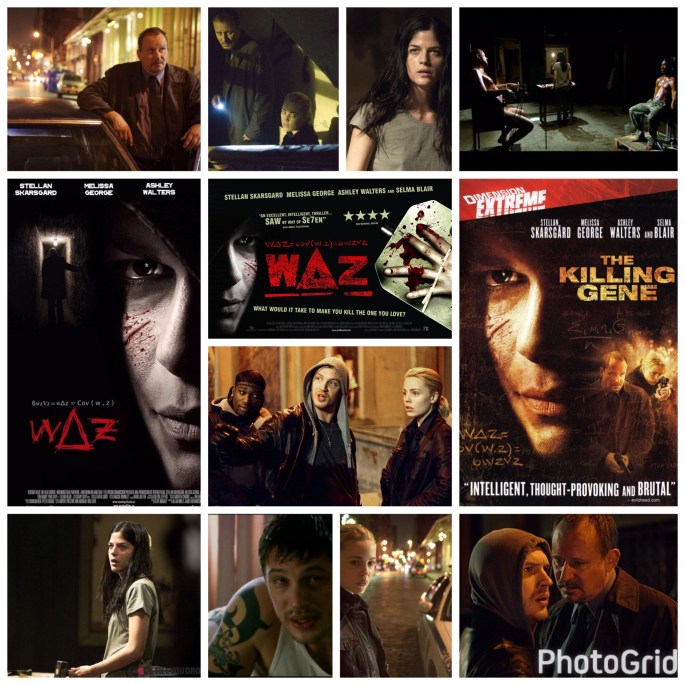

I’ve written about this film before, but I just keep coming back to it and having tantrums at just how unseen and overlooked it is. Crafted in Europe and given the darkly ambiguous title ‘W Delta Z’, it was picked up stateside by Dimension Extreme and now has the decidedly more accessible title ‘The Killing Gene’, but it’s like they say, a rose by any other name. This is one seriously blood soaked rose too, with a few deeply unsettling ideas to go along with copious amounts of grisly violence. People have compared it to both Saw and Sev7n, and while not inaccurate, it’s smarter than those two combined and twice as gruesome. The premise is terrific: Amidst a brutal gang war in some nameless inner city inferno, there’s a serial killer loose with a few elaborately cerebral methods. Kidnapping people and forcing them to the brink of death via torture, giving them one way out: flick a switch that promptly kills a loved one in front of their eyes, also in captivity right next to them. The goal? To try and find tangible proof that real ‘love’ exists beyond an illusory notion or simply to serve human function, based on a controversial mathematical equation. Pretty grim stuff, but fascinating as well. Weary Detective Eddie Argo (Stellan Skarsgard has never been better) does everything he can to find this maniac, stop the gangs from tearing up the city and wrestle demons from his own past, which have more to do with matters at hand than he thinks. Saddled with the obligatory rookie partner (Melissa George) and at odds with the psychotic ringleader of a gang (Tom Hardy), it’s a rough week for him and everyone in this hellhole. This is the first role I ever saw Hardy in and he’s terrifying, a mumbling urban joker who delights in doling out horrific violence and assault, just a pitch black, on point performance early in his now prolific career. I have to spoil one plot detail which is fairly evident from trailers anyway, and that’s the the identity of the murderer. Selma Blair is the perp in question, and not not once elsewhere in her career has she taken on a role that requires this kind bravery, grit and conviction. Her character is driven by fury, fuelled by vengeance and infected with the sickness that both those attributes fester among damaged people. She’s simultaneously a terrifying fiend and someone you can sympathize with, and even wish to protect. Her character has a bitter, twisted past and we soon realize that the chosen victims are all intricately woven into Eddie’s past, a dark web of violent secrets involving Hardy, another cohort (Ashley Walters) and all of the double dealing that has gone on between them in the past, a precursor of a narrative that comes back to haunt each and every one of them, including Blair herself. The distinct European flavour rushes up to meet the classic urban American crime aesthetic and creates a flavour both stark and irresistible, as we realize that the journey we’re being taken on is very, very different from most of the cop vs. killer flicks made by Hollywood. I can’t stress enough how great this one is. I rarely re-review films unless I feel like they really didn’t get a fighting chance out of the gate or that marketing wasn’t properly put in, and not enough people took notice. This one got seen by few, and just begs to be discovered by many folks out there who I know would really dig it.
-Nate Hill
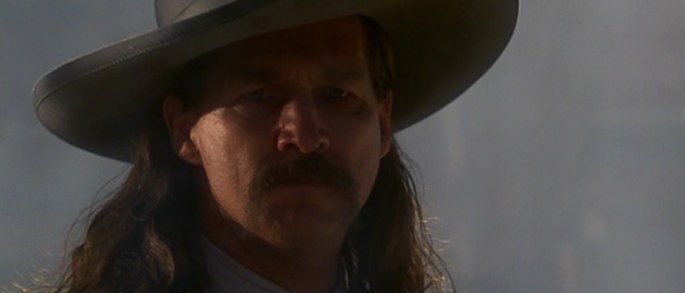
Despite an embarrassing theatrical roll-out where it grossed a dismal $2 million off of a $30 million production budget, Walter Hill’s 1995 oater Wild Bill is a damn fine piece of old-school western filmmaking, and while recently revisiting, it’s clear that the creative team on HBO’s Deadwood were paying attention in retrospect, as Hill’s sturdy and masculine work on this film would clearly pave the way for him being recruited to direct the pilot to one of the pay cabler’s greatest dramatic series. Featuring the perfectly cast Jeff Bridges as the titular hero, there’s a wonderful supporting ensemble including a fiery Ellen Barkin as Calamity Jane (should’ve been Oscar nominated), John Hurt, Diane Lane, Keith Carradine, James Gammon, Bruce Dern, Christina Applegate, James Remar and a sketchy and sweaty David Arquette as the trigger man who turned the legend’s lights off for good. Lloyd Ahern Jr.’s dusty cinematography captured the essence and lethality of the old west, while Hill’s poetic yet terse screenplay nailed the various, grizzled voices from the ensemble. Both Barry Levinson and Sydney Pollack were attached to direct at various stages in the film’s development, and the film was produced by Richard and Lili Fini Zanuck, and distributed by United Artists. Available on DVD; wish there was a Blu!
 Podcasting Them Softly