B Movie Glory with Nate: 13 Sins 

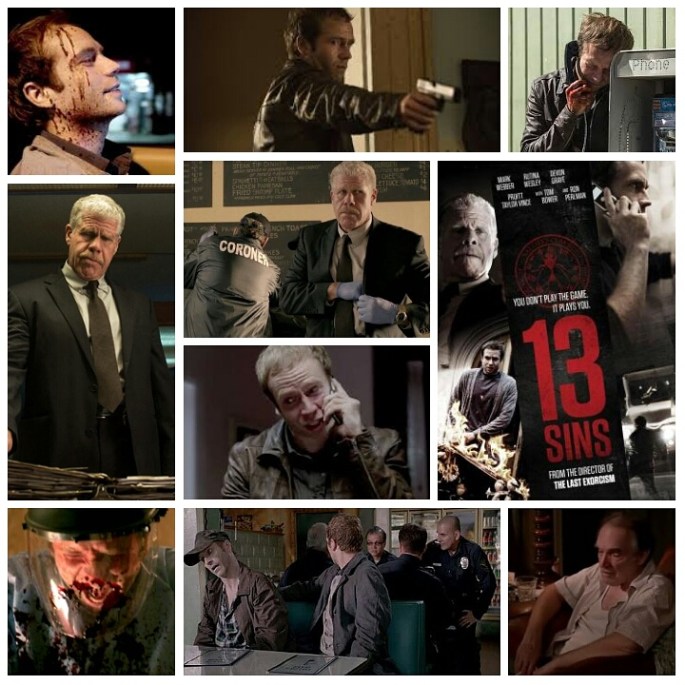
13 Sins is a mean, mean movie, one that pushes it’s audience as far as the central premise does it’s characters. By push I mean it gleefully tries to figure out just how many acts of nasty human depravity it can parade before you before the laughs turn to “oh damn, that’s actually horrible.” Me being the sicko that I am, I laughed pretty much straight through til the bombastic finale, but I recognized the rotten nature in the story and felt the weight all the same. The idea is simple: One day a financially troubled man (Mark Webber, who just has one of those faces you want to punch) gets a mysterious phone call from a game show host sounding dude, telling him to swat a fly, after which one thousand dollars will be deposited into bis account. Easy enough, right? Yeah, sure. Now he’s had a taste of money, wants in on the game and has no clue what soul crushing horrors await. Each new task gets more violent, disgusting, risky, disturbing and (if you’ve got the right mind for it) increasingly hilarious. Make a child cry. Push an old woman down a flight of stairs. Set a church nativity scene on fire. Cheery stuff. Then shit gets real and he’s asked to do things right out of a horror movie, all in the name of green money. The aim, besides of course amusement, is to prove that anyone can be turned into a monster if the price is right. As funny as it is, it leaves a sickening feeling in the pit of your stomach, like you’ve been kicked in the nuts by every horrible news report of late, a gnawing reminder of what levels humans are capable of sinking too when they have too much time and money on their hands. Ron Perlman plays the obligatory baffled police detective, always one step behind the action, and watch for veteran Tom Bower too. The film kind of falls apart near the end, as what little believability it had evaporates alongside the forced plot twists, but had it remained lean and simple I think it would’ve fared better. All its forgiven when considering the impact it makes though, both as action social horror story, extremely black comedy and alluring thriller. 

Michael Cimino’s Desperate Hours: A Review by Nate Hill 

Michael Cimino’s Desperate Hours, despite only really being a servicable home invasion/hostage thriller, still has a lot of fun with it’s two leads, brash sociopath Mickey Rourke and even brasher estranged family man Anthony Hopkins. Based on a creaky old Humphrey Bogart film, Cimino obviously vamps up the violence and eroticism that simmers beneath it quite a bit, and when you have Rourke as your antagonist you know it’s not going to be anywhere near a relaxed affair. He plays Michael Bosworth,  a dangerous felon on the run with two other goons, his volatile brother (Elias Koteas) and another creepy lowlife (David Morse). He crashes into the home life of Tim Cornell (Anthony Hopkins) a boorish father visiting his wife (Mimi Rogers) and children. The film mainly takes place inside the house, as the creep factor rises along with the threat of blaring violence which we know will come, made all the more likely by the growing police presence outdoors, and the tensions of everyone involved, threatening to snap at any moment. Rourke walks a tightrope between amiable and unstable, a man sure of himself, who always gets his way, and is capable of bad, bad things if he feels he won’t. Hopkins plays Cornell as a man used to being in control, but his inability to hold his family together is made worse by the gang’s arrival, rubbing salt in an already festering wound. Cimino has a brawny style to his violence, a trademark that’s seemingly born of both De Palma and Peckinpah, rich bloody gun battles and accentuated slow motion death scenes. Most of the film is held back, but the flood gates do eventually open and action hounds will get what they came for. Watch for Lindsay Crouse, Kelly Lynch, Shawnee Smith, James Rebhorn and Dean Norris as well. Not groundbreaking in the least as far as thrillers are concerned, but still an entertaining little piece made memorable by Rourke and Cimino’s ever interesting pairing. 

TONY SCOTT’S CRIMSON TIDE — A REVIEW BY NICK CLEMENT

1

Crimson Tide remains one of the very best Don Simpson/Jerry Bruckheimer collaborations with the late, great Tony Scott at the helm. Don’t you miss that old lightning-bolt logo crashing down before a big-budget popcorn movie? Shot for a now-paltry $55 million and released in May of 1995, it featured an on-the-rise Denzel Washington going head-to-head against Gene Hackman as dueling nuclear submarine commanders engulfed in a hostile battle for command of the ship and the fate of the free world. An interrupted communications message leaves the crew of the sub unsure of what to do during a tense military stand-off with the Russians; will we or won’t we launch our warheads which will inevitably lead to WWIII? This film has a ton of replay value because Scott cared enough about his believable screenplay and his full-bodied characters to the point where his unavoidably stylish creative leanings didn’t overpower the entire production – it was a perfect match of material and filmmaker. A return to blockbuster form after the commercial failure of his mid-career masterpiece, True Romance, working in this souped-up fashion brought back the rollicking Tony Scott, and while his artsier offerings are always of massive interest (Revenge and Domino lead the pack), he knew exactly how to calibrate a big-budget thrill-ride movie. Recalling the claustrophobia of Das Boot and the grittiness of The Hunt for the Red October, Crimson Tide sits alongside those genre classics and many others as a first-rate submarine drama with narrative complexity to match its high-powered pyrotechnics, of which there are plenty.

2

Intelligently written by Michael Schiffer (Colors, Lean on Me, and the underrated The Peacemaker) with uncredited punch-ups by Quentin Tarantino (and others…), Crimson Tide has story tension, strong macho dialogue, and a credible finale after all of the angry dust has settled between Hackman and Washington. Both actors delivered power-house performances, sweating and snarling their way through each adrenaline filled scene. Budding master cinematographer Dariusz Wolski bathed the widescreen images in greens, reds, and blues, playing off of the submarine’s read-out screens with fantastic shadows covering the actor’s faces in numerous sequences. As Scott and Wolski’s camera darts down the sub’s narrow corridors and swings back and forth with almost primal ferocity, the film picks up a tremendous sense of visceral energy that continues all the way to the heated finish. The heavy use of extreme close-ups in tandem with Chris Lebenzon’s razor-sharp editing only further heightened the intensity. Hans Zimmer’s epic, often-borrowed score is one of his best, filled with moments of soaring grace that stirs your insides. And then there’s the ridiculous supporting ensemble, assembled by the legendary casting director Victoria Thomas, which includes no less than James Gandolfini, Viggo Mortensen, Matt Craven, George Dzundza, Ricky Schroder, Rocky Carroll, Steve Zahn, Danny Nucci, Lillo Brancato, Ryan Phillippe, and an uncredited Jason Robards. The film was a hit with critics and audiences, grossing $160 globally ($91 domestic), thus putting Simpson and Bruckheimer back on serious track after two previous hits that year in Bad Boys and Dangerous Minds. It also garnered three Oscar nominations for Film Editing, Sound, Sound Editing. I’ve watched Crimson Tide probably 50 times and I’ll likely watch it 50 more.

3

An excerpt from Conquest of the Planet of the Tapes: Straight to Video III – Commentary by Richard Stanley

I ran naked through the night, bare foot over the African veldt, a bucket clutched to my chest. Inside the bucket was approximately a pound of marijuana and VHS copies of Lucio Fulci’s “HOUSE BY THE CEMETARY” (1981), “CUT AND RUN” (1985), “ATLANTIS INTERCEPTORS” (1983), “ROCKY HORROR PICTURE SHOW” (1975) and George A. Romero’s “DAWN OF THE DEAD” (1978.) From somewhere behind me came the crackle of walkie talkies and a flicker of flashlight beams.

It was the summer of 1984 in Orwellian apartheid era South Africa, o my sisters and brothers and I was running for my life. Few folk in the outside world know that in the declining years of the fascist Afrikaner regime’s rule the besieged and sanction-beset republic was subject to draconian and quixotic domestic censorship legislation, dictated by the warped morality of the Dutch Reformed Church. Strangely enough, politically themed anti-apartheid movies like “CRY FREEDOM” (1987), “A WORLD APART” (1988) and “A DRY WHITE SEASON” (1989) were released uncensored to the mainstream multiplexes whereas the religiously driven censors turned their ire on anything they thought might put the devil or what they considered to be black magic in a positive light. “THE EXORCIST” (1973) was banned and the OMEN movies were only released with massive cuts that deleted their closing scenes in a vain attempt to imply that Damien hadn’t really won after all. The first time I saw Hammer’s “FRANKENSTEIN AND THE MONSTER FROM HELL” (1974) at a midnight show at my local flea pit someone had laboriously gone over the print with a felt tip marker and hand colored out the ‘FROM HELL’ bit from every frame – the net effect being the onscreen title now read ‘FRANKENSTEIN AND THE MONSTER’ followed by a weird, jiggling psychedelic smudge.

Sex was basically illegal in the old Republic and pornography non-existent. Films were carefully shorn of any trace of nudity leaving those that did make it into distribution such as “CAT PEOPLE” (1982) and “QUEST FOR FIRE” (1981) jumbled and confused, running at a fraction of their original length. PLAYBOY and HEAVY METAL magazine never made it across the borders and men’s magazines of the period were filled with articles on cars, guns and other consumer durables. Adult content never got any racier than occasional lingerie images with sexuality replaced time and again by violence: the traditional centrefold substituted for images of dead terrorists or mangled car accident victims. No wonder then that the nation effortlessly managed to rear a generation of child abusers and psychopaths. Hard as it may be to believe, Romero’s “DAWN OF THE DEAD”, David Cronenburg’s “SCANNERS” (1981), Joe Dante’s “THE HOWLING” (1981), the FRIDAY THE THIRTEENTH flicks and a whole bunch of lesser titles such as “MONSTER” (aka “HUMANOIDS FROM THE DEEP” – 1980) were banned outright. People actually went to jail for owning copies of “THE ROCKY HORROR PICTURE SHOW”.

So there I was, running through the dark, clutching a copy of that very video cassette amongst my contraband, fleeing pell-mell from the forces of Big Brother. I wasn’t much older than sixteen years at the time but it was a dangerous age because it meant I was eligible for conscription or an adult jail term. The authorities had marked me from an early age on account of my unfashionably long hair and penchant for abrasive anti-establishment T-shirts. Worst of all I carried a camera and had been shooting my own deeply weird home movies for some years. Like most kids of my generation I started on super 8, mucking about with stop motion dinosaurs before graduating to live action, persuading my friends to dress up as cave men, aliens, mutants and various other refugees from fictional future conflicts, the end of the world being a pet obsession.

By the time I was fifteen I had managed to get myself my first paying gig, a job for the South African College of Music, who equipped me with one of those huge old fashioned video cameras, powered by a bulky battery kit worn on my belt, with an eye towards documenting tribal dance and music for their archives. This meant that I all too often spent my weekends hanging out on what the apartheid authorities considered to be the “wrong side” of town, chasing down initiation rituals and illegal public gatherings in order to document the traditional music and dance that accompanied them. In the course of my “field work” I covered political protests along with circumcision ceremonies, children sniffing methylated spirits, demonic possession and tribal magic, all of which fell within the broad remit of “social anthropology.”

In their extraordinary arrogance, the apartheid regime’s censorship laws only applied to the white population, as if the rest of the country somehow didn’t matter. Accordingly titles that were considered too cheap or just plain scuzzy for mainstream release went direct to video, bypassing gated white bourgeois suburbia to surface in dusty racks and cardboard boxes at the back of the Portuguese or Greek-owned trading stores that catered to the townships. Battered VHS copies of Japanese kung fu epics, peplum, keiju eiga, spaghetti westerns and other titles that seemed at times to coast right under the censor’s radar, hence that uncut copy of Fulci’s “HOUSE BY THE CEMETARY” that I clutched to my teenage chest as I fled through the night. It was to be a great many years until I saw the film again in such a mercifully intact state. Those ratty larger than life VHS boxes were, for me, a vital lifeline to the outside world, a sign that beyond the electrified fence that the Dutch Reformed Church elders had tried to erect around South African culture there were other folk who shared and cherished my warped sensibilities. At the time I firmly subscribed to Roger Corman’s definition of what constituted good entertainment – namely a healthy serving of action, a decent car crash or helicopter explosion, some breast nudity and a slight social comment. I have no doubt that my taste for junk movies, along with their kissing cousins, the American underground comic books of the Seventies and early Eighties, formed my fledgling notions of morality, of what I believed to be right and wrong, honest and true. In short they made me into what you might call a “liberal.” My politicization surely didn’t come from my parents and teachers, nor from the state approved television programming on the old republic’s one bilingual channel. I was the only one of my high school class to prematurely develop any vestige of a “social conscience” or to ultimately resist conscription into the apartheid regime’s standing army, then involved in bloody military action in Angola and the other so-called “front line states.” Both my sisters happily joined up and eventually married army brass. To this day they believe I betrayed both my family and my country by refusing to take up arms against the indigenous people and communist backed liberation movements such as SWAPO and the ANC (the South West African People’s Organization and the African National Congress.) As I grew older I was clearly identified by the regime as a potential trouble maker. I was frequently flagged down for no discernible reason, interrogated or made to report to the local police station and fill out endless questionnaires. My record for this sort of harassment was seven such “arrests” in a single day as I attempted to shoot a simple scene involving a three eyed mutation nursing a wounded soldier in a mocked up 21st Century field hospital. I was literally just finishing up dealing with one set of cops and be about to get back to work when another would arrive and the whole rigmarole would start all over again. The police simply didn’t understand what I was doing and instinctively wanted to stop me from shooting, even if I wasn’t committing any recognizable crime.

My amateur efforts at movie making were crimes against reality, at least their definition of “reality,” and accordingly their efforts to close me down grew more frantic as my work grew more accomplished and mature. Determined to catch me breaking some sort of law, they would repeatedly check the treads on my tyres or measure their distance from the painted lines on the pavement to make certain I was properly parked. They would check my license and insurance discs over and over or grab my hands and sniff at my fingertips like dogs in the hope of finding some trace of marijuana smoke. The lack of tangible evidence clearly enraged them and I knew in my heart it was only a matter of time until they found some way of getting me where they wanted me, namely in the back of a concrete holding pen at the local police station, where the sound of the trains in the shunting yard beyond covered up the sound of the screams. I had been in those pens once before, as a thirteen year old, and knew all too well what it was like.

By the time I turned sixteen they had started to make house calls. I was just clambering into bed after a marathon late night viewing session with a couple of friends when I heard the crackle of a two way radio outside my bedroom window and knew at once there was going to be a bust. My buddies were already asleep in another room and there was simply no time to wake them, nor was there any time to put on my shoes or get dressed. I made a headlong lunge for the bucket of dope resting on the lounge table, pausing only to sweep up the offending videotapes that still lay scattered beside my television set. I didn’t even know if “ATLANTIS INTERCEPTORS” and “CUT AND RUN” were banned or not but wasn’t taking any chances. Then, without further ado, I plunged straight out the back door into the night. That’s one of the many good things about Africa. It was real African night out there, the kind that comes without street lamps. My house was the last one on the street. Beyond it lay a dry ravine and open mountainside stretching as far as the local game reserve; moreover it was home turf and I knew the terrain, even barefoot and by night, a whole lot better than the local cops ever did. I knew when to move, but I also knew when to stay put which can be vital when you’re being chased through the dark. I ended up climbing a tree only a few hundred yards from the back of the house and improvising a hide from the canopy of overhanging leaves. Pressing myself as close to the trunk as possible with my contraband wedged between my thighs, I waited as the first wave of flashlight-wielding cops passed below. People seldom bother to look up, especially at night, their attention concentrated on the flashlight beam and the path ahead. Then I waited a while as the mountainside fell silent. And waited some more. After about half an hour I heard the voice of one of my buddies whom I had left sleeping back at the house calling after me.

“Rich-ard! It’s okay! You can come out now. They’ve gone…”

But the crackle of a walkie talkie told otherwise. I held my breath as the cops made a second pass, using my friend for bait in the hope of luring me out. I stayed put, perched in that tree until dawn when I finally tiptoed home, cautiously circling the house first to make certain I didn’t still have company. It had been a close call. Too damn close for my liking. I knew that sooner or later my luck was going to run out and I decided to make myself scarce before that happened. A couple of weeks later, shortly after receiving my induction papers in the mail, I slipped across the border into Namibia, then a South African mandate, and caught a plane to Frankfurt, working my way down the Rhine to Rotterdam and hence to the United Kingdom where I sought asylum as a South African war resister.

I sought out the address of a cousin in north London, my sole relative in that labyrinthine city but failed to get my ass through the front door. The face of my sole blood relative appeared at one of the terrace house’s upper windows and informed me that he was kind of busy just then. He suggested I should call back in a week or two and maybe we could meet for lunch. In fact I didn’t see or hear of him again for a good five years. Alone and footloose in north London, with little more to my name than the clothes I wore and a pair of boots already past their sell-by date, I purchased a ticket to an all night movie show, hoping to catch a few winks before rethinking my options. At two pounds and fifty pence the all-nighter was a viable alternative to seeking out a hostel or a bed and breakfast.

The Scala cinema in King’s Cross was a former ape house, London’s first and only “Primatarium,” its flaking walls lined with crawling jungle murals. The sort of thing Rousseau might have produced if you’d dosed him with Black Pentagram LSD. The murals were painted over in the early Nineties when the cinema’s fortunes went into decline, but when last I looked there were still deserted cages in the basement and if you inhaled deeply enough you could catch the faint hint of musk and dried urine mingled with marijuana smoke and stale popcorn, a reassuring safari smell that connects to my earliest memories. Although I didn’t realize it at the time, when I purchased my ticket to that first all-nighter, I was arriving at a pivotal moment in the Scala Cinema’s illustrious history. The bankrupt ape house had been converted into a movie theatre in 1981 by its initial programmer, the young Stephen Woolley and his partner, Nik Powell, who had been one of the prime movers in the foundation of Richard Branson’s Virgin empire. Together, the two young entrepreneurs had set about using the crumbling venue as a platform for the launch of a profitable independent distribution company known as Palace Pictures.

Several inspired choices in acquiring British distribution rights helped to bankroll Palace’s eventual move into production, notably Jean-Jacques Beneix’s “DIVA: (1982) and a hyper-kinetic ultra-low budget American horror film entitled “THE EVIL DEAD” (1983), directed by the 21 year old Sam Raimi. Despite unease at the British Board of Film Censors (BBFC), one of whom complained that her “bodily integrity” had been threatened by the film, it was passed (albeit with cuts) and Palace released it theatrically and simultaneously direct to video in order to make the most out of their meagre promotional budget, a decision that effectively changed the British film industry – which at that time was still terrified of the home video revolution. Nor were the film industry’s old guard the only ones to be outraged. Late in 1983 the moral crusader Mary Whitehouse screened clips from “THE EVIL DEAD” and a number of other so-called “video nasties” to a large number of MPs at the House of Commons, as a highly effective means of lobbying the Thatcher government to introduce tighter state controls on the burgeoning home video industry. Hysterical press coverage in the Sun and Daily Mail, wildly exaggerating the potential effects of violent videotape on the nation’s youth, helped create a climate in which the government felt obliged to take action, partly to appease traditional Tory voters but also to deflect attention from the more deep rooted social, economic and environmental factors underlying the rising crime statistics which were then embarrassing the traditional “law and order” party.

Empowered by the Director of Public Prosecutions’ willingness to use the Obscene Publications Act against violent (as opposed to simply pornographic) material, the British police began a series of raids on video retailers, eating their way steadily back up the supply lines to distributors such as Palace and their headquarters above the Scala Cinema. Acting on a last minute tip off, Irving Rappaport, the manager of Palace’s marketing and home video distribution, had the master copy of “THE EVIL DEAD” removed from the premises and hidden in a local church. Enraged when they came up empty handed during their initial raid on the Scala, the forces of law and order then descended on the main warehouse, confiscating every copy they could find of the film as prima facie evidence when it came to asking the Director of Public Prosecutions to prepare a case against the company. After Sam Raimi, Nik Powell and several others testified at Snaresbrook Crown Court a verdict of not guilty was returned on 7 November 1983. It was a resounding triumph. Indeed the judge sternly criticized both the Public Prosecutor and the police for having brought such a frivolous case to begin with, a ruling that effectively took the wind out of the pro-censorship lobbies sales, giving “THE EVIL DEAD” all the free publicity it needed to become an enormous runaway success. Rapidly rising to the top of the home video charts, “EVIL DEAD” broke all previous records and put Palace Pictures squarely onto the map.

By the time I stumbled onto the scene Palace had already launched into production with their first feature film, Neil Jordan’s dark faery tale “THE COMPANY OF WOLVES” (1984.) In those days the cinema was managed by a feisty young redhead named JoAnne Sellar who had previously worked the house as an usherette, trolling the sepulchral cat haunted aisles in her “China Blue” wig and scraping gum off the seats between shows. With the cinema’s parent company booming I stumbled onto the scene just as JoAnne’s programming scaled new heights, which was how on my very first visit to the Scala I came to see all of writer/director Dario Argento’s major works for the first time in chronological order in a single, mind wrenching sitting. I’d been too busy dealing with apartheid to be fully aware just yet of the struggle for the heart and soul of the nation that had been going on behind the scenes in the UK but I revelled in the creative freedom on display. It was all so much brighter, bigger, louder, more violent and infinitely more seductive than anything the moral guardians would have allowed to pass in the Dutch Reformed police state I had left behind. By the time I emerged, still sleepless, into the mid-Eighties dawn; I knew I had been changed in various complicated ways I couldn’t immediately comprehend.

In the months and years to come the Scala would become my sanctuary, my alma mater, a house of dreams redolent of an opium den with its haze of psychoactive smoke and its delirious, half-glimpsed denizens. I would camp with my bed roll on the front tiers of the red lit, cat haunted auditorium as a relentless progression of imagery flowed past and over me. Sometimes I would open my eyes at three in the morning and have no way of knowing if I was dreaming or not and as I slowly learned about the art of light, so the Scala brought me into contact with some of the auteurs who had helped create this formidable body of work. If I didn’t exactly grow up in the ape house then I certainly came of age there. I found employment, initially as a delivery boy, kitchen porter and short order cook to finance my movie habit and began to experiment with Super 8 and 16mm once again, my early efforts, not to mention my penchant for staging well-orchestrated guerrilla shoots, leading to music video work. By the late Eighties the video work became sufficiently lucrative for me to be able to give up the day job once and for all.

Spurred on by the success of “THE EVIL DEAD” and Clive Barker’s “HELLRAISER” (1987), Steve Woolley was determined to come up with his own horror hit,. To this end he optioned my first professional screenplay, “HARDWARE” (1990), a cyberpunk fantasy with strong lashings of gore, a project that grew organically out of the music video and album cover work I’d been turning out for the nascent goth scene. “HARDWARE”, a fusion of so many of the influences that had acted on me up to that point, was produced by the Scala’s former programmer, Jo-Anne Sellar. As much as anything Hardware was a love letter to the Scala, lit and designed to extend the auditorium into the screen, with some beats in the lunatic dialogue left deliberately open, begging bellowed comebacks from the aisles (Sorry kids, but the experience just ain’t the same at “home” and never could be. You need bad plumbing, genuine rats, resident psychos and hundreds of other psychotic people you’ve never even seen before to get the hang of it. It was my version of “home” viewing so long as the Scala lasted.)

Although ‘HARDWARE’ was inevitably softened by its US distributor, Miramax, the completed feature was still strong enough to be handed down an X rating in the States, a classification that effectively prevented us from getting the film into cinemas without further cuts. In keeping with tradition, Jo-Anne and I toured the US, hitting the daytime chat show circuit, aggressively campaigning for reform in the Motion Picture Association of America (MPAA)’s rating system and generally doing our best to get up the establishment’s collective nose. Harvey and Bob Weinstein, Miramax’s legendary CEOs, having ridden out similar controversies on ‘THE BURNING’ (1981) and other productions, actively encouraged us, hoping to reproduce Steve Woolley’s strategy on “THE EVIL DEAD”. They had several other films in the distribution pipeline at that stage that had all been tarred with the same ‘X-rated’ brush, notably Peter Greenaway’s “THE COOK,THE THIEF, HIS WIFE AND HER LOVER” (1989), Pedro Almodovar’s “TIE ME UP. TIE ME DOWN” (1989) and Wayne Wang’s “LIFE IS CHEAP. TOILET PAPER IS EXPENSIVE” (1989). That campaign lead directly to the introduction of the R rating in the United States of America and my first feature film, “HARDWARE”, that I had initially imagined would go direct to video, ended up opening wide in a seven hundred print release. The mainstream press hated us. Stephen King stormed out of the advance screening claiming “the pointless strobe lighting” had given him a headache, but Joe Bob Briggs gave “HARDWARE” a big thumbs up and Fangoria Magazine declared it the “sci-fi horror movie of the year.” Although I didn’t know it yet I was at the very crest of my fifteen minutes of dubious fame. Back in the UK something had started to go horribly wrong with the repertory cinema scene, like milk left too long in the back of a fridge. It was the advent of home video (ironically spearheaded by the runaway success of “THE EVIL DEAD”) that killed midnight movies as a social phenomena, depriving what people now call “cult movies” of their context and the fertile soil that nurtured them, but I was having too much fun to notice at the time.

“HARDWARE” premiered at Cannes to glowing notices and the Scala crew and I partied the night away on the decks of a Russian research vessel anchored offshore between Polanski’s galleon from “PIRATES” (1986) and an American aircraft carrier. Abandoning ship just before dawn I tried to go for a spin in a power boat with one of the producers of “HELLRAISER” and two young actresses from “LETTER TO BREZNHEV” (1985), only to run out of gas and find ourselves floating slowly but steadily out to sea. The 1980s were over, the Berlin wall had come down and the wave we’d been riding was about to dry up. Although never quite the runaway hit Steve had wanted, “HARDWARE” still performed extraordinarily well for a film made for well under a million pounds, grossing enough to keep Palace afloat through a particularly lean season with one disaster coming after another, the year of David Leland’s “THE BIG MAN,” Neil Jordan’s “THE MIRACLE,” “THE POPE MUST DIE” and not one but two friggin’ Lenny Henry comedies.

My second feature, “DUST DEVIL”, had been put into production in the rush of euphoria that followed “HARDWARE’s” initial box office, but by the time we reached post-production the writing was already on the wall for British independent cinema. Palace Pictures was experiencing grave cash flow problems that exerted a heavy toll on the production, and although Nik Powell and Steve Woolley continued to choose their projects wisely with “THE PLAYER” (1992), “RESERVOIR DOGS” (1992) and “HOWARD’S END” (1991) awaiting release, they found themselves hard hit by the recession and forced against the wall by the new corporate culture that was steadily taking control of the industry. When Polygram reneged on a deal to buy the group outright Palace were left with little choice other than to file for administration, winding up the company in May 1992 and leaving debts outstanding all over Soho. Polygram promptly took over their back catalogue, including “HARDWARE” and my second film “DUST DEVIL,” which remained incomplete, trapped in the distribution pipeline. I never saw my director’s fee for the production and was forced to pour my remaining funds into its completion, bringing myself to the verge of bankruptcy trying to finish the cut while fleeing the bailiffs from one safe house to another. By the winter of ’92, I was back on the street and after a grim night in a bus shelter in South London, the Scala’s new programmer, Jane Giles, allowed me to take refuge in a room above the ticket office.

The Scala had developed some major problems of its own by then. The building’s lease had expired and the unscrupulous landlord was doing his best to force out the cinema and the freaks that ran it. The expanding home video market had eaten into the Scala’s attendance, reducing the audience to a trickle, none of which was helped by the programming growing a little stale given the absence of new product or the necessary revenue to procure prints from abroad. The all-day-all-nighters had simply dried up as people preferred to abuse themselves in the privacy of their own homes and the auditorium had fallen into increasing disrepair. As King’s Cross slid into decline the surrounding streets began to grow so crime-ridden few people wanted to risk getting beaten up just to catch a few scratchy old Italian horror flicks that everyone had seen a million times before. At first we believed the advent of home video would bring about a revolution in mass communication, an age of wider public access and unprecedented freedom but in the end it was a flickering CCTV image that really brought the house down. The ultimate British horror film turned out to be a simple thing. One static wide angle and just one location – a shopping centre on the outskirts of Liverpool – and a cast of three, their backs turned towards camera: two children leading a toddler by the hand like friendly older brothers, the crowd flowing by oblivious, extras in an unwitting drama.

It was February 1994 and two-year old James Bulger had been abducted by two older boys from outside a butcher’s store in Bootle. The rest of this simple, awful story is too well known to need retelling but the key point, in this context, is that once the two boys who were charged with killing Jamie were in custody it was only a matter of time before talk turned to their viewing habits, a move encouraged by the police releasing to the press a list of video titles which their parents had recently rented. Although there was no discernible connection between the titles in question and the facts of the Bulger case itself, the reality that an emotionally disturbed ten-year old might have gained access to a string of violent “18” certificate horror movies in the first place gave the average punter, and in the end the Conservative government, an easy way out, a convenient explanation for an otherwise unthinkable crime. The abuse that at least one of the young killers had suffered at the hands of his own family was tacitly ignored while child psychiatrists pontificated endlessly on chat shows about the effects of “violent media” on fragile young minds. The tabloids had a field day, reviving the popular myth of the “video nasties” (“snuff” movies apparently available over the counter freely to kids somewhere in the phantom zone,) their front pages sporting images of ad hoc neighbourhood watch committees rounding up horror titles and ceremonially burning the tapes on communal bonfires. It was like the Beatles versus Jesus thing all over again, only on VHS with tits and blood. A classic example of shooting the messenger. No-one could give Jamie back his life or begin to solve the social problems that had created the conditions of his murder. The last thing they wanted to do was examine their own hearts or the possibility that children could be capable of such a thing in the first place, so instead the horror genre provided a simple, larger than life outside evil that could be safely tackled in public to show the leadership had the situation in hand and were taking the necessary measures to prevent such a thing from ever happening again.

Liberal democrat M.P. David Alton skilfully rode the wave of opinion, using the Bulger case to lobby for tighter state controls over the mass media, threatening to introduce a measure which would have effectively banished most horror titles and perhaps all titles unsuitable for children from the shelves of British shops. Under the circumstances I did the only thing I could. Putting on my sole surviving suit I infiltrated a sub-parliamentary committee hastily convened to debate the bill. I was the only film maker and, apart from a drowsy-looking Martin Amis, the only “creative” person to appear before the committee. At one point a number of video boxes were passed around as an example of the sort of filth that the Alton bill was designed to put a lid on. I recognized Romero’s “DAWN OF THE DEAD” alongside Lucio Fulci’s “HOUSE BY THE CEMETARY” and several Argento titles. In fact, some of the titles tut-tutted over by the assembled politicos and social scientists were so old they included silent movies such as F.W. Murnau’s “NOSFERATU” (1921), Benjamin Christensen’s “HAXAN” (1921) and Carl Dreyer’s “VAMPYR” (1931), that had fallen into public domain and been routinely tarted up with lurid S&M-orientated covers for the home video market. I couldn’t help remarking on the fact a handful were old enough to have run into trouble once before: in Nazi Germany, where another set of “idealists” tried to rid society of decadent art, a campaign that scarcely resulted in a kinder or gentler society. Of course I realize I should have kept my mouth shut but I was still young then and new to politics.

“Well I happen to be Jewish…” spluttered one of the care workers, “and you have no right invoking the spectre of the holocaust at this table!”

I made a hasty, half-assed apology, but the damage had been done. Although anxious not to be portrayed by the right wing press as “soft on crime,” the Conservative government nonetheless recognized that tighter controls on film and video would inevitably impact on the lower end of an industry already hard hit by the recession and struggling to maintain a share of a marketplace dominated by American product. You need the low budget home video sector to maintain the ecology that makes the high end product, the E.M. Forster and Hugh Grant movies possible, so I put my case as succinctly as I could, appealing to the consumer/capitalist bottom line and avoiding any further reference to the thornier issue of so-called “artistic” freedom. When I was done Lady Howe of the Broadcasting Standards Commission looked me in the eye and summed my whole life up in a single rhetorical question.

“Are you a mother, Mr. Stanley?”

I wasn’t. So she went into her “well, I happen to be a mother…” routine and after that it was all downhill. She’d said it all before but she said it again anyway and I’d heard it all before so I didn’t bother listening. That’s what politics is about in the old country.

The last nail in the coffin was driven home by the Scala’s projectionist, when he grassed on a longstanding practise of illegally screening Stanley Kubrick’s “CLOCKWORK ORANGE” (1971) as a “surprise film” filling out a triple with Lindsay Anderson’s “IF” (1968) and “O LUCKY MAN” (1973.) The bill drew a loyal core of skins and wannabee droogs, who sometimes brought their staffies and bulls with ’em, but if the Scala came to rely on their unsteady revenue it was against the iron will of Kubrick himself, who had personally withdrawn the film from distribution in the UK, allegedly as part of a deal with the Home Office who in return had granted the expatriate American director permanent residence in the country. The projectionist earned a pay-off from the great auteur himself and sheltered employment at an MGM preview theatre in return for testifying against the Scala’s management in the subsequent legal action doggedly pursued by the reclusive genius. Just over a year after the death of its parent company, after a series of unsuccessful fund raising drives to try and cover the escalating legal costs, the Scala finally went dark. “KING KONG” (1933) was the first film I ever saw, at the tender age of four when my father brought home a print and 16mm projector – what amounted to home viewing in the far off year of 1970. It inspired my early passion for stop motion animation and my first experiments with Super 8.

It was also the first movie to play in the ape house when it was converted to a cinema in 1981. Accordingly it was the last print to go through the gate, ironically in a censored print, shorn of some of its racier moments as Kong playfully paws at Fay Wray’s satin slip. Those of us who were in the audience on that last night were either drunk or weeping or both. But then I always cry when I see the big guy go through his jerky motions, progressing once more towards Calvary atop the Empire State, confused, outflanked and outnumbered by the swooping, droning biplanes, the mechanized avatars of an uncaring new age. The beast took the fall as usual and Carl Denham proclaimed his eulogy, but I was already in the foyer stealing the posters, not wanting to see the lights go up.

Most of the films we fought for, indeed risked our liberty for, are commonly available now. You can pick up “TEXAS CHAINSAW MASSACRE” (1974) or “DRILLER KILLER” (1979) in Wal-Mart or at the supermarket checkout counter, but where’s the fun in that? It’s impossible for words to convey what it was to be young in those days and the unalloyed joy of those contraband tapes. Despite all the huffing and puffing, all the sturm and drang over censorship and artistic freedom, the simple truth remains that most of the titles involved were never much fun anymore after it became legal to watch them. If truth be told, I first got laid thanks to a murky seventh generation dub of “TEXAS CHAINSAW II” (1986.) I’ll always have the home video medium to thank for that, whatever else. Ten years later the same lady I’d fallen for that long ago night finally moved out on me, tossing a VHS copy of Argento’s “THE BIRD WITH THE CRYSTAL PLUMAGE” (1970) disdainfully at my feet whilst succinctly delivering the era’s epitaph: “That’s exactly the kind of shit I don’t need in my life anymore.”

Twelve years have passed since the Scala passed into non-existence. “A CLOCKWORK ORANGE” was re-released to packed houses following the death of Stanley Kubrick and is now commonly available on DVD and BLURAY, the media that subsequently displaced video as the home movie format of choice. In a few years even DVD will be gone, replaced by streaming and high-def television. James Bulger’s killers, now dubbed Adult A and Adult B and shielded by new identities have been long since released back into society, having been apparently rehabilitated. Nelson Mandela was himself released from his island prison in 1990 and in the euphoria following the collapse of the apartheid regime all the films that had been banned under the previous administration were opportunistically granted mainstream release. With nothing to fear from the military police now I was able to revisit my birth place and it was a curious thing to drive through Cape town and see “TEXAS CHAINSAW MASSACRE,” “CANNIBAL HOLOCAUST” (1980), “THE EXORCIST” and “I SPIT ON YOUR GRAVE” (1978) competing for space at the multiplexes. I screened “DUST DEVIL” for the first time in my home country. It received rave reviews, was endorsed by the ANC leadership as one of the key films of the apartheid era and I was symbolically given the keys to the city by the town mayor. Then, when we tried to get the film released onto the South African circuit, it was abruptly banned once again by the new administration, who ultimately decided they were just as frightened of the devil as their racist predecessors. Jo-Anne Sellar, the producer of “HARDWARE” and “DUST DEVIL” went on to become one of the most successful movers and shakers in modern Hollywood and Nik Powell, Palace’s former CEO who once defended “THE EVIL DEAD” in court, is now the well-loved principal of the UK’s National Film and Television School in Beaconsfield. What we thought of as the “underground” has long since been effectively subsumed by the uber-culture. Every so often I still plug in my VHS player and revisit some of those tapes that have been gathering dust at the back of my shelf but fewer and fewer of them play these days and the spindles make a nasty screeching sound whenever I hit rewind. “HARDWARE” and “DUST DEVIL” are both currently (insanely) owned by Buena Vista, the supreme corporate predator that ate the other predators, nor does the mouse pay royalties despite the fact both titles have been in continuous circulation for 25 years on cable, streaming, DVD and every other platform you could care to name. A nightclub now operates out of the former ape house and while I frequently walk past the venue I have never had the heart to look too closely. That’s me now, going down the street, eyes down, looking at the cracks between the paving stones, still wondering what it was like to be a boy only yesterday, and running through the night with a bucket of clunky VHS videotapes clutched protectively to my chest.

Read more great commentaries from filmmakers like Ed Neumeier (Robocop), Albert Pyun (Cyborg), Russell Mulcahy (Highlander), Todd Farmer (Jason X) as well as great ultimate B-movie stories from hot new authors all part of the Straight to Video series.

STVCOVER2


Not Yet a Major Motion Picture (but hopefully one day): An Interview with the creators of The Man they call Ned by Kent Hill

In this age where the next hot graphic novel can most assuredly become the next big Hollywood blockbuster it brings me great pleasure to introduce PTS readers to a book in the making that I for one really want to be a hit so I can go see the movie.

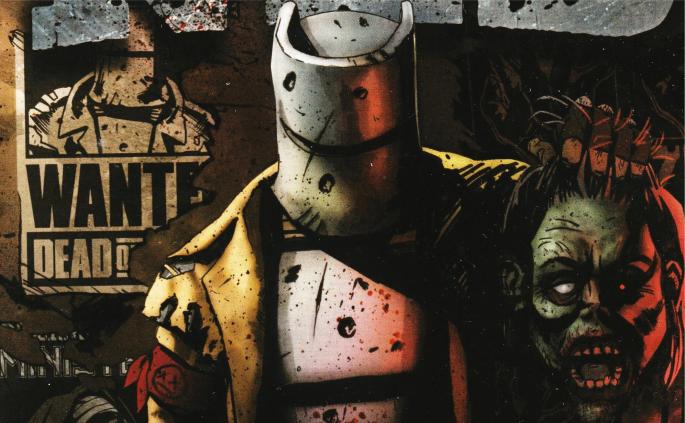
It’s Mad Max meets Batman meets Lansdale’s On the far side of the Cadillac Desert with Dead folks. It’s post apocalyptic madness along hard boiled action. It is The Man they called Ned.

And then there were the zombies – in their hundreds and thousands and millions. They have taken over society in a damned and desolate land down under; splitting into different casts, no longer merely the slow, mindless automatons feasting on anything with a pulse. The ZWO (Zombie World Order) is all powerful – controlled by a mysterious shadowy figure known simply as The Minister.

But from out of the wastes, a lone figure emerges. Coated in steel, driven by vengeance – he strikes fear into the lifeless hearts of the flesh-eating hordes. His justice explodes from the barrel of a gun and the edge of a blade. In this land where those living are plagued by the dead, in a low voice he tells the wind, “I am the man they call Ned.”

I was at Supanova (an Australian pop culture expo) selling books on the far side of the convention centre, when the awesome took hold. All I remember seeing was this big-ass poster with a futuristic-looking Ned Kelly holding a decapitated head and I was smitten. He might have been the man they called Ned but the lads at the booth were Max Myint and Yuu Matsuyama. They were there to generate interest, put the word out about this uber-cool juxtaposition of a fresh take on the quintessential Australian outlaw. Throw that into a blender with Robocop, Batman and the Man with no name in a Planet of the Apes style dystopia with the monkeys replaced by zombies. A man, a symbol hope, a vigilante hitting the undead powers-that-be where it hurts the most. The dynamic and electrifying artwork of Zac Smith-Cameron turned heads and sparked excitement, even in the most casual of observers. But this was merely the hook. After you stopped at the table you heard more about the man, the legend, the world he inhabits: a dilapidated and discarded world where the decaying dominates. Max and Yuu are empire builders, and as I spoke with them, I was in awe of the depth and detail to which they had infused this incredible new incarnation of the mythical Australian icon.

Lads, firstly it was great to meet you and share the alley with you over the weekend.

YM: Fantastic to meet you too, Kent. It was actually our first con, so we were wondering who we were going to meet, but it turned out just really great, enthusiastic people.

MM: Awesome to meet you too Kent. Couldn’t have asked for a better neighbour at our very first con! Time sure flied didn’t it?

I admit I was hooked from the get-go. That poster just spoke to me and I wanted to take the ride.

YM: Tell me about it! The thing is over 2 metres tall, and even we were surprised when we first saw how big it was. It’s just got that great vibe to it of that dark, dystopian future and with Ned almost busting that decapitated head right through it.

MM: We’re very cinematic when we approach things, and both Yuu and I have a particular affection for theme parks – so the emphasis is always on creating a display that sucks people into our mythology right from the get go! It’s in your face and absolutely demands intrigue from by-passers. And let’s not forget the fact that it’s an amazing piece of art because it communicates so much. The best comic covers always tell you enough of the story to pique your interest so that you’ll want to turn that page and take the ride!

So enough from me, let’s talk you. Give the audience a little of the backstory; your creative roots and the like.

YM: I think you’ve explained it pretty well in your intro, and I don’t want to give too much away, but – Australia in the near future has been taken over by zombies, but not just any zombies. Zombies that have formed their own society and culture, an undead civilisation with its own way of living, its own economy (in human flesh, of course) and its own leader. This man, protected by a strangely familiar armour, comes in to take back the country against the oppressive authority that is now the Zombie World Order. His armour is a symbol, much like Ned Kelly is now, for the everyman, fighting back against impossible odds until the bitter end, inspiring others to do the same and for generations to come.

In terms of creative roots, for me, I studied creative writing at university as well as getting into some acting in a small theatre group locally (Brisbane). It was such a small group, we had to set up our own lights and build our own props and everything, but it really got you working hands on in a lot of different forms. The study at university also really sparked my interest in all sorts of mediums as well, everything from script writing (which isn’t dissimilar to comics) to novels.

MM: Yuu couldn’t have said it better. We have taken a genre and completely subverted it in order to tell a story that demands the rebirth of the essence of Ned Kelly, and re-defines what he symbolizes in a new era.

I have a passion for film and art and all the mediums that present these elements, be it in video-game, comic etc. I just love telling stories and creating mythologies…it’s about getting that emotion out of people and taking them on that epic rollercoaster. I started as a self-taught sculptor working as hands for hire on independent projects. I soon found work at a small little film studio where I got into some prop work and prosthetic FX in some truly god-awful indie horror flicks. Despite the calibre of pictures I was working on, ironically it was my exposure to the indie film industry that really fuelled my desire to start my own projects and it’s been a great journey so far.

 When did you team up?

YM: Well, it seems like yesterday, but it was actually back in university, which was (and now I feel old) almost 8 years ago. We were just hanging out because we were in some of the same classes and we just ended up talking about how much we both wanted to start creating things, build worlds and tell stories through different mediums, and the rest, we hope, will be history.

MM: We have very similar interests when it comes to pop culture and it’s just the case when you meet someone and things just click instantly. I was at a stage where I was looking for like-minded people to collaborate with and we just ended up talking for hours whenever the topic of pop culture came up. It’s great to have someone whom you can share a creative chemistry with which contributes to the evolution of ideas, and ultimately leads to a better story.

How far into your friendship was it before Ned came about?

YM: I think the genesis of the Ned idea started about 4 years ago? It took a few iterations for it to come to the form we see today, and the idea came about just amongst a bunch of other projects we were working on.

What was the project’s genesis?

YM: We wanted to see something uniquely local, as in Australian, because one of the things that seem lacking in this country are pop icons that go beyond the occasional pop/movie star. There is certainly a dearth of cultural, symbolic exports from this country. So we thought, what’s instantly recognisable as Australian, but also something that crosses generations and be able to be reimagined in a way that is relatable and contemporary? The answer seemed so obvious when we first thought about it, I was really worried that it had already been done. But it turns out, it hasn’t, and we would like nothing more than bring the image of Ned to the world stage.

MM: I wanted to see an Australian ‘superhero’. I felt that this was something that was greatly absent in Australian pop culture. Initially the idea was to play it as a straight anti-hero story where Ned was taking down a corrupt and oppressive government. We had discussed a lot of elements and started to develop the story – and to be honest something didn’t feel right. To me, it felt flat and Ned as a concept deserved better than that. One day we were discussing the plot and we basically just threw out a ‘what if?’ – What if our Ned was in a reality that fought zombies?

I saw this new direction as an opportunity to go deeper into the mythos of zombies and that’s where I decided to infuse inspiration from the Planet of the Apes, because I felt like that that angle had never been fully explored to this extent before with zombies. I really wanted to venture into what a pseudo-intelligent zombie culture would be like and how people would co-exist under their dominion. It’s been interesting to dream up all the different facets of the universe we are creating, and the hope is that fans out there will appreciate the amount of detail and thought we have put into building this world to deliver something that really no-one has ever seen before!

Tell us of your collaboration with Zac Smith-Cameron?

MM: Well…simply put neither of us can draw for sh*t, and most certainly not to the level that would do this comic justice. We searched high and low for the right artist, and as it turns out we just happened to stumble along the right one when we were looking into publishing resources in Brisbane. Zac is not only super talented, but also one of those uniquely enthusiastic artists that you could just talk to for hours. At the time Zac was running his own collaboration of collected indie comics and we were looking to get our man Ned into it. Ironically, Ned missed out because we couldn’t find an artist in time…but as fate later would have it we crossed paths with Zac further down the road and the rest is history.

You are putting the story out there with this awesome little trailer-comic. Was that something you wanted to do or was it a necessity before moving to the next step in the project’s evolution?

MM: There’s a lot of story to tell and we have spent so much time building an intricate plot as well as a uniquely rich world that it was certainly a necessity to market it properly. We felt that with such a unique concept, a trailer type comic was the right way to go. As Yuu said earlier, our campaign is to build awareness and build that fan base, so that we can grow an audience and demand for the official release of the story. We wanted to ensure that people didn’t just dismiss this as your average tough guy fights zombies schtick. There really is a more heart to it than that.

Max you sculpt as well, and you had a killer bust of Ned on display.

YM: I think I saw Ned being killed as opposed to being a killer – his head fell off a few times.

MM: Cheers Kent! I actually designed the look of Ned from head to toe in sculpture. I felt it was necessary to update his armour for the universe we created rather than just re-using the original. It was certainly a challenge to undertake because that armour is so iconic. There are very subtle updates to really illustrate a level of angst and intimidation that lends more character and presence to the helmet. I don’t want to give too much away…but the bust that you saw on display was only Mark I. There’s a lot more in the works!

I am a movie geek so I am always looking at things from a cinematic angel. I guess, could you perhaps discuss what I perceive as a definite cinematic quality that is apparent in Ned?

YM: Totally agree with the angle that it would make an epic film. It’s such a visual story, and I think that’s why it comes off as cinematic.

You are the writers – was it always multi-media (book, film etc.) or were you always looking at getting into comics?

YM: I think both of our passions are actually to write for film, but there are so many similarities between a film script and a comic script that it came pretty naturally to us. Although there are different consideration to make such as how many panels need to be on the page, to make sure that the last panel of each page is a micro cliff-hanger, there certainly are cinematic considerations when writing a comic. The idea of writing comics came a couple of years after we started working together, but now we have a bunch of different ideas in that medium that it’s become something we work on fairly regularly, not just Ned.

MM: Our work has always been pre-dominantly film based, but there was always a desire to work on other mediums where we could tell our stories. For me, I’ve always had a desire to get into comics. There are many freedoms that a comic allows when you don’t have to worry about the costs involved in funding a film. And so when it comes to crafting the fantasy you can really focus on the mythology without feeling constrained on concerns of practicality. I really believe that there is still a sacred magic in the ability that a comic book holds to teleport readers into their world simply through the exploration of panels.  

What do you see is the next step for you, where does the journey take Ned from here?

YM: At the moment, we want to keep spreading the word on Ned. We want to get this out there, create more awareness, more of a following, because we want the comic series to come out. We are literally two guys that collaborate in a lounge room, so the challenges are definitely there. But I think that the idea is great, the story is fantastic, and people will love it even more. We want to build that world, tell the story, get people excited and lost in the world of Ned.

MM: I don’t want to give anything away – but there is LOTS more to come!

Boys, again it was swell hanging out, and a genuine pleasure doing what I can to tell the world about this super-cool concept of yours. Just promise me you’ll remember me when you make it big – oh, and keep me a ticket when the flick comes out.

YM: Will do, Kent. I’ll be there with the armour on.

MM: YES! Remember Yuu, we have that in writing now. It’s been fantastic meeting a person like you who is as passionate about this stuff as we are. How’s about we get you IN the movie as a zombie cameo?

I already feel humbled knowing that people have enjoyed what we have to offer so far!

That was a couple of exciting talents with an equally exciting work that is, I believe, set to take the world by storm. It was a privilege to be here at the beginning and to meet you both. Final words?

YM: He is Ned, and you’re either with him, or with the zombies.

MM: I really think it’s long overdue and about time, that a true badass like our man Ned represented Australia! Stay tuned, and keep supporting our campaign to bring The Man they call Ned to life!

Max Myint, Yuu Matsuyama ladies and gentlemen. For more on The Man they call Ned you can find them currently on Facebook @ IAMNEDCOMIC. I sure the progression of the masterwork in the making you’ll able to keep track of by giving their page a like. I know I will be waiting eagerly for news of the exploits of these fine creators and the future of Ned.

THE LIVING HAVE SURRENDERED…

EXCEPT FOR ONE MAN.

THEY CALL HIM NED.


B Movie Glory with Nate: Point Blank 

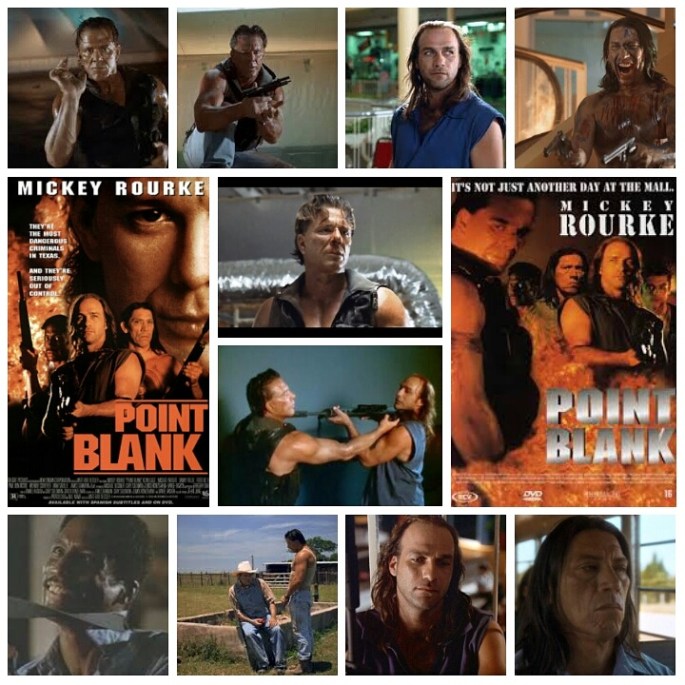
Point Blank takes a big, silly macho whack at the trashy action genre, and gives fans of such lowbrow, cheese saturated stuff a huge sloppy kiss. It’s so ridiculous you have to laugh, but you’re laughing with it because it sheepishly knows what an outlandish hoot it is, which is somewhat reassuring in this territory, because a lot of them play it dead straight and are oblivious to their own vapid density. Not this baby. It wears it’s stupidity loud and proud, and there’s many a moment that will have you howling. Mickey Rourke was in the height of his juicing heyday here, and he looks like Buffalo Bill covered the incredible Hulk in the tanned leather of some poor broad (should have put the lotion in the basket like he told you). He plays Rudy Ray, an ex special ops turned farmhand of few words and lots of action. Rudy’s brother (Wainegro himself, Kevin Gage) is mixed up with a nasty bunch of escaped convicts who have hidden out in a rural strip mall and taken multiple hostages. Rudy is summoned by the local Sheriff (Fredric Forrest), and with the resolute blessing of his crusty father (the immortal James Gammon) proceeds to go redneck John McClane on these whackos and basically tear the place apart. Gage is the leader of the pack, but the most dangerous one by far is a coked up, homicidal Danny Trejo, who terrorizes a poor female captive and basically empties clips at anything that moves. Throw in Michael Wright as a seriously intense war vet with a rocky past (he has a monologue that dips between scary and campy quite a bit) and Paul Ben Victor displaying acting so far over the top it’ll make your eyes and ears bleed, and you’ve got one inane B movie crew ready to fulfill your every schlocky need. It’s funny because there’s an ’emotional’ scene near the end where Rourke and Gage go brother to brother and it’s supposed to be touching. The writing is so godawful, and the music so beyond ludicrous, but the two of them are such good actors that they end up completely selling it without even trying, like they couldn’t turn in bad work if they wanted to. It’s basically Die Hard in the sticks, with Rourke instead of Willis, a mall instead of a skyscraper, and you know… the fact that it’s obviously not a good movie. It’s a hell of a lot of fun though, if you’re in the mood to get silly with it. 

Star Trek: Beyond Not Quite a Review by Kent Hill

So the other day my wife had to go into the big smoke on a work assignment. I figured I’d tag along and since there would be time to spare, I’d go to the movies. After all the lure of the multiplex, its plush seating, its well stocked candy bar – a far cry it is from the local, tired twin cinema that hasn’t had work done to it since the week it opened – and that my friends, was a long time ago.

So the next item on the agenda, what to see? Well what was playing? Not a lot, at least nothing I was absolutely chomping at the bit to see anyways. It came down to two choices. The controversial Ghostbusters Reboot or Star Trek: Beyond. Time would be the factor which would decide and being that I missed the 10 o’clock Ghostbusters I had to look Beyond. Now I glanced at Vern’s review of the film the night before and he had gone on about, as he was a fan of Lin’s (Justin) Fast flicks, how they were connected in some aspects and the director had brought fluent and frenetic directing style to the table. Well, I haven’t see any of the Fast films and I was disappointed with Into Darkness. Abrams first outing I had so much fun at. it was the first time in a long time I had go in and come out and gone in again to the next screening. It was (for this dude in the audience) that much fun. It all worked.

Now I aint no Trekker or Trekkie or whatever it is y’all call yourselves – but, I love The Wrath of Khan. I saw that when it first came out and not knowing anything much of the whole Trek universe I loved it – and continue to do so. Into Darkness, took a lazy crap on a good movie. It brought back the rage I have against the Matrix Reloaded. It’s just sloppy storytelling. You start out with something vital and then you smoke eight packs of cigarettes, chow down on ten Big Macs, drink a case of beer and go make the next one. Sad, lazy, but I’ll save the my contempt for The Matrix Reloaded for another time.

Alright, Beyond. So we got a new director, new scribes, same crew, new villain. The movie opens with a return to traditional Trek formula: they are boldly going where no one has gone before but, there are folks there. The early exchanges between  Kirk (Pine) and a bunch of pissy little aliens is fun. Then he gets back aboard the Enterprise and when are reunited with the gang. I gotta say there is a lot of Scotty, and it is to be expected I suppose, since Simon Pegg is one of the writers. Turns out Kirk is bored. He’s Bored. He joined Starfleet on a dare and now he couldn’t give a hoot. So he’s throwing them back with Bones (Urban) who pinches Chekov’s booze, “thought he be a vodka guy.” Right, so he’s as bored as my son gets without his electronics and then come to this very cool space station. Everyone gets off. Uhura (Saldana) and Spock (Quinto)  are not sharing kisses anymore, turns out Sulu (Cho) has been made gay because it’s fashionable it seems for art to imitate life. I do care if you’re gay or straight or like to pull rabbits out of your ears. I really thought that was something that was thrown in for no reason except as social commentary. Let’s stick with plot shall we. Ok, so sadly Nimoy has passed away and Spock is discombobulated. Kirk tells the honcho at the space station he looking for a desk job and then its time to off and deal with a distress call. Enter the alien bad dude Krall (Elba) and his swarming hordes. They rip the Enterprise a knew butthole looking for the artefact that Kirk was offering as gift at flick’s opening.

First he has it then he doesn’t. Kirk and Krall fight as everybody jumps ship and are captured by the bad dudes so they can keep Krall alive. He sucks energy out of folks or something. So then we get to the planet and we are broken up into pairs. We got Spock and Bones, we got Kirk and Chekov (the late Yelchin), we got Uhura and Sulu and Scotty, that’s right, more Montgomery Scotty. Scotty hooks up with Jaylah (Boutella) and its turns out she is sitting on a hundred-year-old Starfleet vessel. Spock tells Bones he is going to go be more Vulcan and has him a laughing fit. Kirk and Chekov hook up with Scotty and the white alien chick and Kirk finds a motorbike just like the one dad used to have and then …

…then I had to go and pick up my wife, the only thing I love on this earth more than movies. She was done early and though there was a good portion of the flick to go, I walked because my wife need me. So you’ll have to tell me what happened and if it was any good cause I gotta go pick up my wife again. Kirk out.

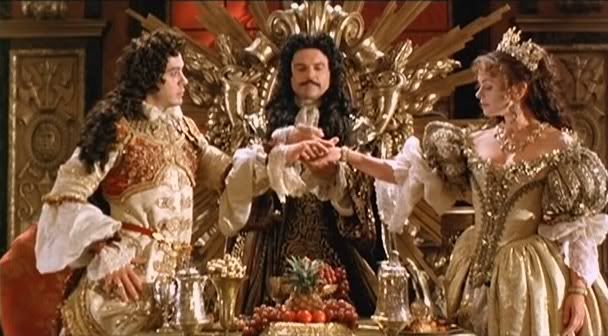
Restoration (1995) A review by Kent Hill

I admit a hidden passion for the depictions of this age and the language used by the people of the period. I first read the opulent novel by Rose Tremain in the form of its movie tie-in edition. It is language that you can devour with glorious passages like:

“I am fond of Bathurst. His claret is excellent, and his table manners worse than mine. His conversation is pure drivel, but spoken with a perpetual passion, emphasised by his constant farting and thumping of the table.”

Sad it is, and I will spoil it for you here, Lord Bathurst does not survive the adaptation. But, take heart. This is a period film with a fart joke in it.

Robert Downey Jr. gives another silently beautiful performance as Robert Merivel, the son of a glove-maker, a talented physician. He and his friend John Pearce (played by the always dependable David Thewlis) work at the local hospital where the sick flock to in droves; so much so that as it is uttered in Merivel’s dialogue (and I’m paraphrasing here) “there isn’t enough time to eat, there isn’t enough time to sleep, and there is barely enough time for us to look after our patients.”

After an extraordinary event where Merivel and Pearce are brought in to examine a man whose beating heart is exposed, save for a plate which he straps to his chest to cover it, he catches the eye of the visiting King Charles II (portrayed exultantly by Sam Neill). Merivel his hence plucked out his gloomy existence and is given a place at court after curing the King’s sick spaniel.

Oh what bliss, a life of sophisticated debauchery and decadence, all Merivel need do is at every moment please the King, care for the royal dogs, and make people laugh via his ability to fart at will. (told you, fart joke)

Things however, such as they are often disposed to do, take on an degree of complication when the King decides to offer Merivel up as a husband (in name only) to his mistress Lady Celia Clemence (Polly Walker). He is given a splendid wedding party, a knighthood and an agreeable estate in Suffolk. The King’s plan is to hide his mistress as Merivel’s wife and commands him only to not, in any way, shape or form, fall in love with her.

So leaving his new wife in the King’s bed, Merivel takes to the river and to his new home. Here he meets and becomes close friends with his steward Will Gates (a grand little performance by Ian McKellen). Merviel sets about making something of the house and takes also to drinking and entertaining until that is, his wife comes to the house. Celia, it turns out, has been temporarily banished from court for being too forward with his majesty. She is commanded to wait for return of the King’s favour, during which time she is to have her portrait painted by one Elias Finn (a deviously stuffy performance by Hugh Grant). Everything is going swimmingly but then love, O forbidden love rears its head. The one thing prohibited of the newly knighted Merivel sees him cast out of paradise.

Grudgingly the wheel turns and Robert takes to his horse, off to find his friend Pearce who has found his peace in Quakerism and a job at country mad house. Merivel lost and dismayed begins to rediscover his gifts as a physician and also becomes intrigued with the case of self-inflicted insomnia and she that is haunted by it, a young Irish woman named Katharine (an actorly turn by Meg Ryan). Thus life continues for a time and Merivel introduces alternative methods of healing such as the joy of music. This is not automatically welcomed by the Quakers but soon their elder Ambrose (Ian McDiarmid) begins to warm to these notions. But just as all seems harmonious the dark clouds gather and Merivel’s long-time friend Pearce is taken, try though he does to heal him.

The journeyman Sir Robert (Merivel) leaves the Quakers, taking Katharine with him: as she is carrying his child.

After a whimsical journey back to London, Merivel takes up his work again in the hospital under the guise of his deceased friend Pearce. He has arrived at the heart of darkness, the black plague is running rampant in the streets and the sick and the well are quarantined together. Merivel works tirelessly until he is marked again by tragedy. He loses Katharine whilst delivering his own daughter Margaret.

Little time passes and his reputation garnered for his work in the hospital sees him again summoned to court. Lady Celia is feared to have been struck by the plague. As John Pearce, Merivel examines her and finds that she is in the clear. Leaving the name of his friend as the man to whom the lady, his former wife, is indebted.

On his way back from the royal summoning, Merivel is just in time to witness the great fire of London. He rushes carelessly, with no fear for his own life, into the blaze in search of his daughter. The burning ruin that was his lodgings gives way and he tumbles into the Thames. The broken Merivel is carried in a small boat away from the fire and back into fate’s waiting hands.

When he awakes Sir Robert finds that he has returned to his former estate and is in the company again of his former steward Will Gates. Gates is not far into the explanation of Merivel’s unexpected arrival when another occurs hard upon it. The corridor is flooded by the royal dogs flowed by courtiers and finally the King himself. He explains that a nurse-maid came to the court looking for her master and father to the baby she is carrying, the physician Robert Merivel.

O for joy and happy endings, Robert has at last come full circle and is restored. His daughter is reunited with him, his title and house returned to him by the King, he wandered the path long and winding and has suffered and been blessed by the hands of fate.

This is a largely overlooked gem of a film that not only boasts a wonderful cast but has extraordinary work behind the camera. It is helmed handsomely by Michael Hoffman ( Gambit/ The last Station) and superbly adapted for the screen by Rupert Walters (Some Girls/True Blue). The look of the film garnered it an Oscar for Eugenio Zanetti’s (Flatliners/The Last Action Hero) sumptuous production design and it is stunningly captured by the eye of Oliver Stapleton (The Grifters/Accidental Hero). The film’s final architect is the hands of the skilled editor Garth Craven who has cut everything from Bloody Sam’s Pat Garrett & Billy the Kid to My Best Friend’s Wedding.

I find it hard I’ll admit to sugar-coat films I think are passable to mediocre. I also find it difficult not to gush or spew hyperbole about the films that I love. Still I have endeavoured to keep this one coming to you neat and off a measured tongue. But, don’t I beg you, take my word for it. Find this film and enjoy a story which is one that we can all identify with; a story about how we all go on journeys; about how we seize days and regret deeds. It’s about winning and losing and finding your way even in the midst of hopelessness. We are all travellers and are travelling still. Take a chance on this, I pray thee.

Danny Boyle’s Trance: A Review by Nate Hill 

Danny Boyle’s Trance is that rare head spinner that follows through with it’s audacious vision, uses dazzling sleight of hand to win us over and make us believe we’ve discerned the outcome, then whips the technicolor rug out from under our feet, hurls a psychedelic curve ball at us and makes a beeline for a conclusion that is both unpredictable and shocking, to say the least. Not to mention the fact that the journey leading up to said conclusion is a reality shattering cerebral laser show that will have you questioning not only your own sanity, but that of every character as well. I watched it with a friend who was nonplussed, dazedly uttering the sentiment “Who can ever tell what of that was real or not?”. A fair enough concern, but not really the kind of hangup you should trip over if you expect to have fun in a film like this. Boyle has a knack for bucking the trends, both in the versatility of his career and in the uniqueness found in each project as an individual. I guarantee that you haven’t seen anything like this before, and that any brief plot description you see on netflix or the like won’t even begin to prepare you for it. Read any further online and you’ll deliberatly spoil what will be a divine treat. James Mcavoy is the meek art curator who finds himself on the wrong end of a heist. Vincent Cassel is the volatile thief determind to find a piece that’s been hidden by Mcavoy, and subsequently forgotten after severe head trauma. Rosario Dawson is the enigmatic hypnotherapist hired by Cassel’s crew to help unlock the secrets of his mind and locate the painting. That’s all you really need to know. The rest is a spiraling cyclone of mind tricks, betrayals, candy colored cinematography that blasts you along with fiercely hopped editing, a whizz-banger of an electronic soundtrack that leaves your pulse playing hopscotch double time and some surprising emotional depth, taking you just as off-guard as the frequent and unforseeable plot twists. Mcavoy just continues to put forth commendable work in sublime films (if you haven’t seen Filth or The Disappearance Of Eleanor Rigby, please queue them up immediately), his turn here being one of the best in recent years. I’ve never been super hot on Cassel, but he holds his ground here nicely. Dawson is just groundbreaking in what is so far the performance of her career. This kind of arc is just so tricky to land, let alone carry believably the whole way, especially when there’s so much cognitive commotion to distract the audience from her work. She’s an emotional lighthouse in a sea of pixelated madness, and serves as the heart of the whole piece. Boyle is a director who is hopelessly in love with film. What it can do. How it can make you feel. The many and varied ways which it can entertain us and make us fall for the medium over and over again anew. He’s crafted a corker of a psychological slam dunk here, with an essential human core that gives all the trippy heady stuff some discernable weight. I’d say it’s a tad overlooked, to be sure. It has its audience but I wish it’d been the smash hit it so deserved to be. Imaginitive, confusing, unconventional, visually alive and crackling with an auditory soundboard in both score and soundtrack. Masterpiece for me. 

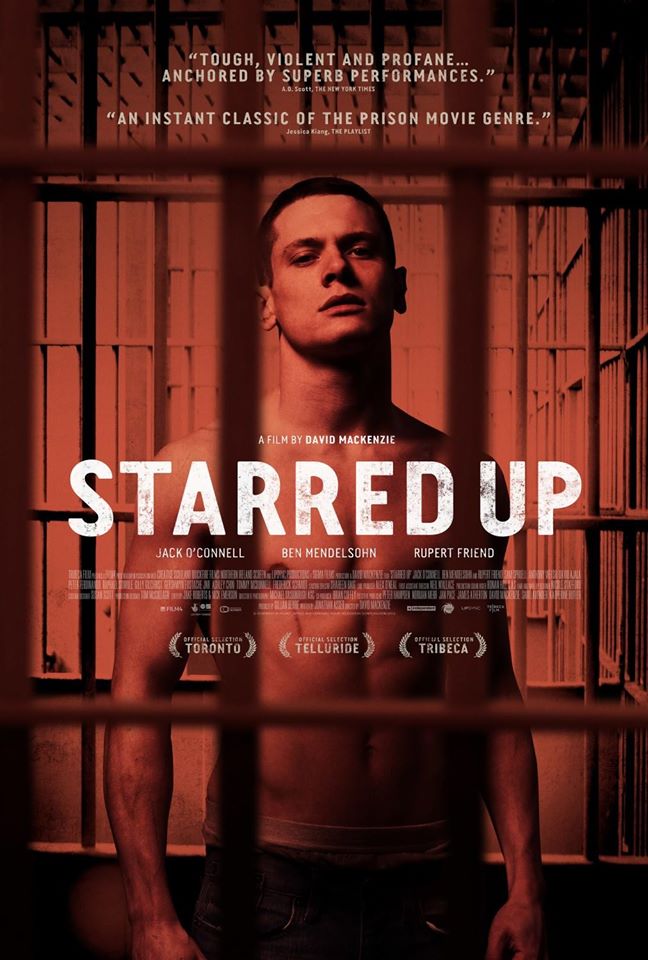
DAVID MACKENZIE’S STARRED UP — A REVIEW BY NICK CLEMENT

1

David Mackenzie’s startling and brutal prison film Starred Up brilliantly upends genre conventions, offering the familiar glimpse into hell that one expects from this sort of milieu, but taking it a step further psychologically by focusing on a surprising, compelling father-son dynamic that comes off as one of the most disturbing displays of dysfunctional family bonding that I’ve ever seen. Jack O’Connell is riveting as a 19 year old violent offender who is “starred up” (or transferred) from juvenile detention to an adult facility, where he encounters any number of obstacles, including one he never expected – meeting his estranged and unstable father behind bars, played by the amazingly skeevy Ben Mendelsohn, who has fast become one of my absolute favorite actors. This is a violent movie, both physically and emotionally, and O’Connell lets it all hang out in more ways than one; similar to Tom Hardy’s transformative work in Bronson, this is a film that required intense physical dedication at all times, and O’Connell burns up the screen with charisma and rage to spare.

Mendelsohn, who has essayed some of the most memorable cinematic creeps in recent memory (Animal Kingdom, Killing them Softly, The Place Beyond the Pines, Blacksea, the Netflix series Bloodline), is again beyond engrossing to watch, his every move worth studying, as he creates a tragic and bizarrely sympathetic portrait of a man who will never be able to make things better for himself or his son. Rupert Friend, so good as Quinn on Homeland, is a prison therapist who attempts to help O’Connell and a variety of other inmates. The tightly wound script was written by Jonathan Asser, who based the story on his experiences as a prisoner rehab specialist. Mackenzie’s direction is crisp and clean, with a stylish but un-showy style that relies more on exacting camera placement than overt tricks and flourishes. The economical and compact editing only helps to ramp up the tension from scene to scene. This is excellent, truly hard-hitting stuff.