GEORGE P. COSMATOS’ RAMBO: FIRST BLOOD PART II — A REVIEW BY NICK CLEMENT

5

This movie is absurd. Absurdly fucking amazing. EVERYTHING EXPLODES POWER. TESTOSTERONE GALORE POWER. Where the first film in this phenomenal franchise was more of a lean and mean and stripped-down chase movie, this overblown and undeniably thrilling sequel opted for period appropriate bombastic spectacle, with hindsight results that are beyond perplexing and rewarding in equal measure. There’s nothing in this film that isn’t jacked, juiced, and fully loaded, with every single performance teetering on the edge of cartoonish respectability, and yet, it’s so damn sincere you just have to laugh and marvel at all of its blazing idiocy. Released in 1985 and grossing $300 million worldwide and becoming one of the most iconic action films of all time, Rambo: First Blood Part II was directed by George P. Cosmatos in a smack-you-in-the-face fashion, with every single action set-piece destroying the last and laying waste to entire villages, multiple armies, and entire populations. Definitely one of the premium gonzo-action movies of its day, there’s nothing on the Hollywood landscape, for multiple reasons, that remotely comes close to replicating this sort of insane summer fun.

r2

The story cooked up by Stallone, Kevin Jarre, and James Cameron involves Rambo being sent to look for POW’s in Vietnam, only to be double-crossed by his own side, and then delivering repeated smack-downs to every single person he comes into contact with, foreign and domestic. The bold and beautiful anamorphic widescreen cinematography by the historic talent Jack Cardiff showcased every fire ball, every glistening muscle, every single machine gun casing with slick and gritty glee. A chorus of top-flight editors including Larry Bock, Gib Jaffe, Frank E. Jiminez, Mark Helfrich, and Mark Goldblatt, whose legendary credits include Commando, Terminator 2, and Bad Boys 2, made strict and coherent sense of all of the pyrotechnics, throat-slicings, and hand-to-hand combat, whittling everything down into a tight, 96 minute package that wasted not a single moment of screen time. Jerry Goldsmith’s pounding, triumphant score is a lesson in pure cinematic bad-assery. Richard Crenna, Charles Napier, Steven Berkoff, Martin Kove, all provided studies in gruff masculinity, while Sly anchored the entire production with a sense of 100,000 watt movie-star magnetism. This was the first film ever to receive a 2,000 screen release nationwide. A Carolco Pictures production of a TriStar release.

r3

THE ROCKETEER – A REVIEW BY J.D. LAFRANCE

rocketeer1

With the massive commercial success of Tim Burton’s Batman (1989), other Hollywood studios scrambled to find their own comic book franchise in the hopes of replicating the boffo box office of the Caped Crusader. With the notable exception of Dick Tracy (1990), most of these films failed to appeal to a mainstream audience. These included pulp serial heroes The Shadow (1994) and The Phantom (1996), and the independent comic book The Rocketeer. Originally created by the late Dave Stevens, it paid homage to the classic pulp serials of the 1930s. For some reason, Disney decided that it would be their tent-pole summer blockbuster for 1991, cast two unproven leads – Billy Campbell and Jennifer Connelly – and hired Steven Spielberg protégé, Joe Johnston to direct. Despite promoting the hell out of it and spending a ton of money on merchandising, The Rocketeer (1991) underperformed at the box office.

It’s a shame because out of the lot of retro comic book films done in the 1990s, The Rocketeer was the best one and the most faithful to its source material. While both The Shadow and The Phantom looked great, they were flawed either in casting or with their screenplays while Dick Tracy was top-heavy with villains and director (and star) Warren Beatty’s ego, but The Rocketeer had the advantage of its creator actually being involved in bringing his vision to the big screen. The end result was a fun, engaging B-movie straight out Classic Hollywood Cinema albeit with A-list production values. The film has quietly cultivated a cult following and deserves to be rediscovered.

Cliff Secord (Billy Campbell) is a young, hotshot pilot who races planes for a living with the help of his trusted mechanic and good friend Peevy (Alan Arkin). One day, while out testing his new plane, Cliff stumbles across an experimental jetpack stolen from Howard Hughes (Terry O’Quinn). Soon, he finds himself mixed up with the FBI, who want to recover it, and unscrupulous gangsters who stole it in the first place. Also thrown into the mix is Neville Sinclair (Timothy Dalton), an Errol Flynn-type matinee idol who wants the jetpack for his own nefarious agenda. Cliff’s beautiful girlfriend Jenny Blake (Jennifer Connelly) is an aspiring actress who catches Sinclair’s eye, which further complicates Cliff’s life. With Peevy’s help, Cliff figures out how to use the jetpack and fashions himself an alter ego by the name of the Rocketeer.

Billy Campbell does a fine job as the scrappy Cliff Secord. He certainly looks the part and has great chemistry with co-star Jennifer Connelly (they fell in love while making the film). Connelly plays Jenny as the gorgeous girl-next-door and looks like she stepped out of a 1930s film. Jenny loves Cliff but dreams of being a movie star, not hanging around the airfield. Connelly, with her curvy figure, shows off her outfits well and does the best with what is ostensibly a damsel in distress role.

Timothy Dalton has a lot of fun playing the dashing cad as evident in the scene where he “accidentally” wounds a fellow actor during filming for stealing a scene from him. Sinclair is a vain movie star with big plans and there’s a glimmer in Dalton’s eye as he relishes playing the dastardly baddie. Alan Arkin is also good in the role of Peevy – part absent-minded professor-type and part father figure to Cliff.

The Rocketeer features a solid supporting cast with the likes of Ed Lauter playing a no-nonsense FBI agent, Terry O’Quinn as the brilliant Howard Hughes, Jon Polito as the money-grubbing airfield owner, and Paul Sorvino as a blustery gangster begrudgingly in league with Sinclair. His casting is a nice nod to the patriarchal mobster he played in GoodFellas (1990) only a lot less menacing (this is Disney after all). The always entertaining O’Quinn is particularly fun to watch as a dashing Hughes that could have easily stepped out of Francis Ford Coppola’s love letter to American ingenuity, Tucker: The Man and His Dream (1988).

The attention to period detail, in particular the vintage planes, is one The Rocketeer’s strengths. The film gets it right with the clothes that people wear and how they speak so that you feel transported back to this era. The recreation of old school opulence is fantastic as evident in the South Seas nightclub sequence where Sinclair works his charms on Jenny. Even Joe Johnston’s direction feels like a throwback to classic Hollywood filmmaking as he gives the flying sequences the proper visual flair that they deserve. He wisely keeps things simple, never trying to get too fancy or show-offy as he takes a page out of his mentor, Steven Spielberg’s book. There’s never any confusion as to what is happening or where everyone is – something that seems to be missing from a lot of action films thanks to the popularity of the Bourne films. Johnston is an interesting journeyman director whose best work is old school action/adventure films, like Hidalgo (2004), or slice-of-life Americana, like October Sky (1999), which is why he was the wrong choice to helm the ill-fated reboot of The Wolfman (2010) and the right director for Captain America: The First Avenger (2011).

rocketeer2Filmmaker Steve Miner (Friday the 13th, Parts II and III) was the first person to option the film rights to Dave Stevens’ independent comic book The Rocketeer but he ended up straying too far from the original concept and his version died an early death. Screenwriters Danny Bilson and Paul DeMeo (Trancers and Zone Troopers) were given the option in 1985. Stevens liked them because “their ideas for The Rocketeer were heartfelt and affectionate tributes to the 1930’s with all the right dialogue and atmosphere. Most people would approach my characters contemporarily, but Danny and Paul saw them as pre-war mugs.” Their subsequent screenplay kept the comic book’s basic plot intact but fleshed it out to include the Hollywood setting and the climactic battle against a Nazi zeppelin. They also tweaked Cliff’s girlfriend to avoid comparisons (and legal hassles) to Bettie Page (Stevens’ original inspiration), changing her from a nude pin-up model to a Hollywood extra while also changing her name from Betty to Jenny.

Bilson and DeMeo submitted their seven-page outline to Disney in 1986. They studio put the script through an endless series of revisions and, at one point, frustrated by the seemingly endless process, the two screenwriters talked to Stevens about doing The Rocketeer as a smaller film shot in black and white. The involvement of Disney put the project on a much bigger level as the writers remembered, “you can imagine the commitment Disney was making to develop a series of movies around a character. They even called it their Raiders of the Lost Ark.” With Stevens’ input, Bilson and DeMeo developed their script with director William Dear (Harry and the Hendersons) who changed the zeppelin at the film’s climax to a submarine. Over five years, the mercurial studio fired and rehired Bilson and DeMeo three times. DeMeo said, “Disney felt that they needed a different approach to the script, which meant bringing in someone else. But those scripts were thrown out, and we were always brought back on.”

They found this way of working very frustrating as the studio would like “excised dialogue three months later. Scenes that had been thrown out two years ago were put back in. what was the point?” Disney’s biggest problem with the script was all of the period slang peppered throughout. Executives were worried that audiences wouldn’t understand what the characters were saying. One of their more significant revisions over this time period was to make Cliff and Jenny’s “attraction more believable … how do we bring Jenny into the story and revolve it around her, and not just create someone who’s kidnapped and has to be saved?” DeMeo said. In 1990, their third major rewrite finally got the greenlight from Disney. However, when the studio acquired the rights to the Dick Tracy film from Universal Studios, DeMeo was worried that executives would dump The Rocketeer in favor of the much more high-profile project. However, when Dick Tracy failed to perform as well at the box office as Disney had hoped, DeMeo’s fears subsided.

All kinds of actors were considered for the role of Cliff Secord, including Bill Paxton, who almost got it, and Vincent D’Onofrio, who was offered the role but turned it down. Finally, Billy Campbell was cast as Cliff. Prior to this film, his biggest role to date was regular on the Michael Mann-produced television show, Crime Story. For the role of Jenny, Sherilyn Fenn, Kelly Preston, Diane Lane, and Elizabeth McGovern were all considered but lost out to Jennifer Connelly, fresh from making the comedy, Career Opportunities (1991). Dave Stevens wanted Lloyd Bridges to play Peevy but he turned the film down and Alan Arkin was cast instead. The Neville Sinclair role was offered to Jeremy Irons and Charles Dance before Timothy Dalton accepted the role.

Campbell wasn’t familiar with Stevens’ comic book when he got the part but quickly read it and books on aviation while also listening to period music. The actor also had a fear of flying but overcame it with the help of the film’s aerial coordinator Craig Hosking. To ensure Campbell’s safety, he was doubled for almost all of the Rocketeer’s flying sequences. Hosking said, “What makes The Rocketeer so unique was having several one-of-a-kind planes that hadn’t flown in years,” and this included a 1916 standard bi-wing, round-nosed, small-winged Gee Bee plane.

The numerous delays forced William Dear to leave the production and director Joe Johnston signed on to direct. He was a fan of the comic book and when he inquired about its film rights was told that Disney already had it in development. He approached the studio and was quickly hired to take over when Dear departed. Johnston said, “One of the great appeals of Stevens’ work was his attention to detail, which really placed the reader in the period. I’ve tried to do the same thing cinematically.” Pre-production on the film started in early 1990 with producer Larry Franco in charge of securing locations for the film. He found an abandoned World War II landing strip in Santa Maria, which the filmmakers used to build the mythical Chaplin Air Field. The Rocketeer’s attack on the Nazi zeppelin was filmed near the Magic Mountain amusement park in Indian Dunes. The film was shot over 96 days and ended up going over schedule due to weather and mechanical problems.

rocketeer3Like The Right Stuff (1983) before it, The Rocketeer is a love letter to the wonders of aviation and the brave souls that risked their lives pushing the envelope. In a nice touch, Cliff even chews Beeman’s gum, the same kind that Chuck Yeager uses in The Right Stuff. The comic book is masterfully translated to the big screen, right down to recreating the iconic Bull Dog Diner. The filmmakers also got all the details of Cliff and his alter ego right, including the casting of Billy Campbell. The same goes for Jenny, although, because Disney backed the film, they downplayed the blatant homage her character was to famous pin-up model Bettie Page. With Dave Stevens untimely passing in 2008, watching this film is now a bittersweet experience but there is some comfort in that at least he got to see his prized creation brought vividly to life even if failed to catch on with the mainstream movie-going public. The Rocketeer is flat-out wholesome fun with nothing more on its mind than to tell an entertaining story and take us on an exciting adventure.
ANDREW HAIGH’S 45 YEARS — A REVIEW BY NICK CLEMENT

1

45 Years loves its silence. This is a patient, slow burn drama about the power that secrets have over a very long marriage. Featuring immaculate performances from Charlotte Rampling and Tom Courtenay, writer/director Andrew Haigh steeps his film in small details, both written and visual, with results that are nothing short of quietly riveting. A true two-hander and really hard to “explain,” this is a film that requires your strict attention, not unlike something like Certified Copy by Abbas Kiarostami, and is less about “big moments” than it is about the cumulative sum of many intimate sequences that highlight all of the many qualities, happy and sad, that form married life. The story centers on a retired couple living in the British countryside, who are blindsided by the news that the husband’s long-ago lover, from before their marriage has died, and has  apparently left the man as her next of kin. Why would she do that? What could the husband not be letting on to his wife after all of these years? What will this life development do to them as they prepare to celebrate 45 years of joyous unity? Haigh prefers low key dramatics as opposed to over the top histrionics, so as a result, everything in this film feels very measured and carefully parsed out; not a word is wasted and not a glance is out of place.

2

45 Years asks hard questions and doesn’t provide easy answers, and because Haigh is too smart to try and wrap up his tender and provocative narrative with a tidy bow, some people might feel cheated by the final scene, despite the fact that Rampling essentially puts on an acting clinic with only using that amazingly expressive face of hers; it’s a moment like the one in Jonathan Glazer’s Birth where you see Nicole Kidman in long shot with a major realization hitting her like a ton of bricks. Rampling, who looks stunning at 70 years of age, crafts a tremendous portrait of a woman slowly realizing that she might not know some of the more important sides to her husband, while Courtenay suggests frailty, both physical and mental, which adds to the sympathy you feel towards him as his character is put through something he could never have anticipated or asked for. The invisible editing by Jonathan Alberts was in perfect synch with the carefully chosen visual presentation favored by the sharp cinematographer Lol Crawley. 45 Years is a very internal piece of storytelling, never telling you once how to feel, and always asking you to engage with it on multiple levels so as to better understand the various thematic complexities on display and up for discussion.  This is a fabulous piece of work for people who want to actively engage with their art.

3

Green Room: A Review by Nate Hill 

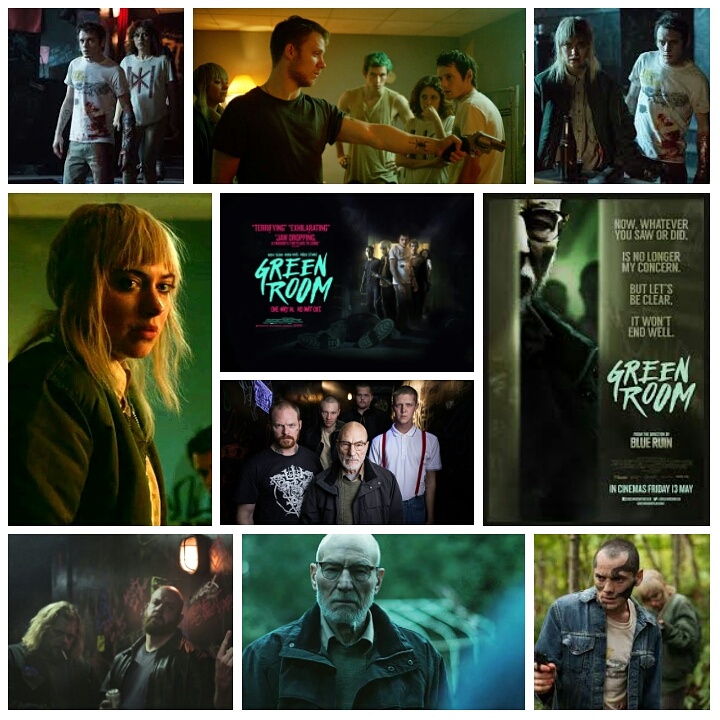
Green Room has the same vicious, simplistic edge to it that director Jeremy Saulnier’s 2011 thriller Blue Ruin had, but sharpened and honed to near perfection this time around. This is one grim thriller, a claustrophobic little odyssey of desperate violence that’s thick with a sick, overwhelming atmosphere that isn’t for the faint of anything. A big part of what makes it work so well is the fact that it makes sense, in terms of scene to scene actions and character motivations. These aren’t cardboard horror protagonists darting through a predetermined rat maze of a narrative, these are real humans in a deadly situation who act accordingly, with both purpouse and realism. Atmosphere was a huge part of Blue Ruin, and now again Saulnier weaves a tense auditory cloak that puts the characters in the hot seat of danger and the audience in conniptions of suspense. It’s a situation straight out of a seething nightmare: a down and out punk band led by Anton Yelchin are on a dead end tour, severely strapped for cash and getting desperate. When a vague buddy hooks them up with a rural gig, they jump at the chance, until they find out they’re playing for a clubhouse full of angry neo nazi skinheads in a backwoods bar. Everything is going marginally well (as well as coexisting with nazis for a set could go, I suppose) until a member of their group accidentally witnesses one of these freaks brutally slaughter a girl, suddenly branding them all as witnesses. With nowhere to go, the band barricades themselves into the green room and descends into a collective panic as the reality of their situation sets in. Outside, an armada of furious Aryan psychopaths prepares to siege the bar and kill them, led by the clubhouse owner, Darcy (a wicked, malevolent Patrick Stewart, loving every second of a rare villain role). The film clocks in at a scalpel sliced 90 minutes, with not a second wasted on anything that doesn’t propel the story forward with the momentum of a machete ripping through bone. These dudes are out to get them at any cost, and the band in turn are whipped into an adrenaline overdrive of base survival instinct, using anything they can to dispatch their tormentors and escape. Yelchin does an excellent job of making their plight feel uncannily real, the terror emanating from every pore until there’s none left, and empty, deadly resolve sets in. Imogen Poots is great as one of the clubhouse girls, a no nonsense spitfire with revenge on the brain and the will to make it happen. Stewart chomps at the bit with an eerie calm and articulate, insidious presence, a genius casting decision and a joy to see in menacing action. I’m curious to see how much farther Saulnier can push the envelope with his next film, which I’ve heard will be the last entry in this episodic trilogy. This one shows us what a real thriller is, one that pumps your pulse to a boiling point and makes you glad there are filmmakers out there with the balls and creative know-how to make something like this happen. Just bring a thick skin, there’s a ton of graphic and very realistic looking violence. Unbelievably terrific stuff.

CHE – A REVIEW BY J.D. LAFRANCE

hero_EB20090114REVIEWS901149990AR

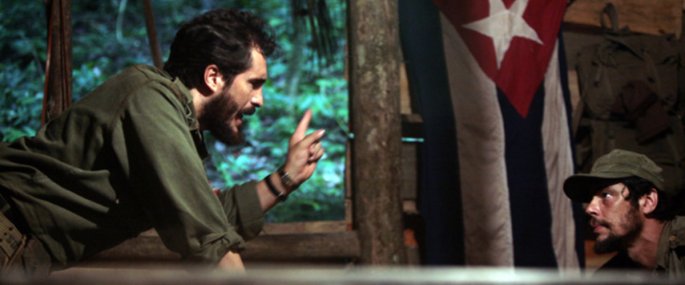
Che (2008) began as a personal project for actor Benicio del Toro around the time he was making Traffic (2000) with Steven Soderbergh. Originally, he planned on making the film about iconic revolutionary Ernesto “Che” Guevara with Terrence Malick and its focus was to be on the disastrous Bolivian campaign in 1967. Malick eventually dropped out to go off and make The New World (2005). Soderbergh helped out Del Toro by agreeing to direct and in the process expanded the film’s scope by depicting Che’s role in the Cuban Revolution as a way of explaining his motivations for going to Bolivia.

Amazingly, Soderbergh raised the $58 million budget entirely outside of North America, which allowed him much more creative freedom. The result was a four-and-half-hour epic that refused to champion or demonize Che and instead opted to objectively depict his rise in Cuba and his fall in Bolivia. This approach ultimately doomed Che’s chances in North America where, despite breaking the film up into two, more digestible parts, it received limited distribution. Predictably, it divided critics and was criminally ignored by all of the major award ceremonies – rather fitting for a film about someone who refused to rest on his laurels, always hungry to get back to the jungle and get back to work.

I think that the key to understanding Del Toro and Soderbergh’s take on Che comes from an interview with director where he said, “Clearly this is a guy whose priority is going into the jungle and starting a revolution. That is the most important thing in his life … If you take away all the words and just look at what he did, the guy kept going back into the jungle.” Del Toro and Soderbergh were faced with the daunting task of making a film about an iconic historic figure, someone whose image has graced countless t-shirts and posters. Che is an extremely polarizing figure and so it makes sense that they would step back and take a more objective look at the man. Then, it would be up to the audience to decide how they felt about him.

Those looking for a crowd-pleasing underdog story a la Erin Brockovich (2000) will be disappointed by Che. The famous Argentinean is not as easy to like as the scrappy Brockovich. As depicted in Che, he’s a much more complex individual. He cares about the cause and those that fight with him but does not feel the need to show a lot of emotion. When he’s in the jungle it is all about the task at hand and living in the moment. Che never loses sight of what his objective is and his conviction never wavers, not even in the face of death. He’s like a Method actor that stays in character on and off-camera during a shoot.

Part One juxtaposes Che’s efforts to remove Batista from power in Cuba in 1958 with him addressing the United Nations in 1964 and in doing so we see Che in his element, putting into practice guerrilla warfare tactics, and we see Che the superstar espousing his beliefs to the media in New York City and the international community at large. At first, the Bolivia campaign as depicted in Part Two starts off well enough with Che sneaking into the country and meeting with his fellow revolutionaries. We see them get supplies and train in preparation for the task at hand. However, the country’s Communist party refuses to support an armed struggle, especially one led by a foreigner. The support of the peasants, so crucial in Cuba, is lacking in Bolivia, making food hard to come by. A feeling of dread creeps in as government troops gradually close in on Che, cutting off any avenue of escape.

Soderbergh maintains an objective stance by refusing to show any close-ups of Che. We always see him from a certain distance and often grouped with others. During the battle at El Uvero on May 28, 1957, Soderbergh conveys the noisy, chaotic nature of combat as men are seemingly wounded at random but there is never any confusion visually about what is going on. Twice during the battle, he takes us out of it by having a voiceover by Che where he espouses his philosophy of guerrilla warfare. With a widescreen aspect ratio, Soderbergh opens things up in Part One and this is particularly evident during the battle scenes. In Part Two, this all changes, as the smooth camerawork is replaced with hand-held cameras and a more standard aspect ratio which creates a claustrophobic feel and look. The long takes and deliberately slow pace may frustrate some expecting a more traditional biopic but I found it a welcome change from the cookie cutter mentality of most Hollywood depictions of history.

During the Cuban campaign it is evident that Che is very much a man of the people, whether it is making contact with and befriending peasants that he comes across in the jungle or treating a wounded comrade. However, Che eschews character development in favor of showing the nuts and bolts of a revolution. As Che says at one point, “A real revolutionary goes where he’s needed. It may not be directly in combat. Sometimes it’s about doing other tasks … finding food, dressing wounds, carrying comrades for miles … and then, taking care of them until they can take care of themselves.” The film takes this philosophy to heart by showing the day-to-day activities of Che and his fellow revolutionaries. We see him dressing wounds, the wounded being carried through the jungle and strategizing with his men and Fidel Castro (Demian Bichir).

Benicio del Toro effortlessly becomes Che and tones down his tendency to sometimes resort to Brando-esque acting tics (see The Way of the Gun) and plays the iconic revolutionary as a man confident of his own convictions. He conveys Che’s sharp intellect with his eyes and also does an excellent job with the physical aspects like his recurring asthma that constantly plagued him. Del Toro provides us insight into the man’s character through attitude, behavior and the way he acts towards others.

24a125_34547ac222f04702b5e68cb83dd8629cChe is ultimately a study in contrasts. What worked in Cuba did not work in Bolivia. Soderbergh’s film illustrates the differences. In Cuba, the revolutionaries were able to get the trust and support of the peasants while in Bolivia they feared the rebels. It must also be said that Castro played a key role in the success of the Cuban revolution and his absence in Bolivia, the galvanizing effect he had, is sorely missed. With Che, Soderbergh has created an unusual biopic that does its best to not try and manipulate you into feeling one way or another about the revolutionary. Instead, it shows two very different examples of the man’s philosophies put into practice and how they played out – one a success and the other a failure. Che was a polarizing historical figure long before this film came along and will continue to be long afterwards.
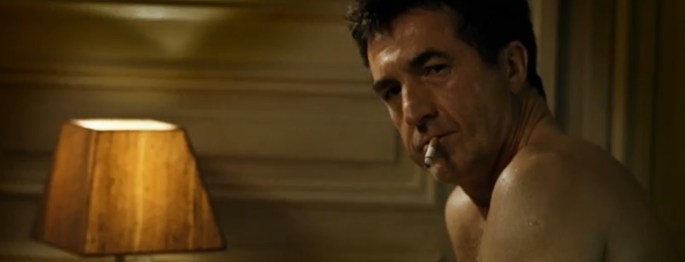
GUILLAUME CANET’S TELL NO ONE — A REVIEW BY NICK CLEMENT

1

The breathless and extra crafty French thriller Tell No One is a propulsive “wrong-man” chase movie that Hitchcock would have flipped for. And while I would be lying if I said that upon first viewing that I totally followed every single plot development over the two frenetic yet somehow coherent hours that Tell No One occupies, it’s pretty clear that filmmaker Guillaume Canet has directed an awesome mind-bender that takes you on a fantastic ride. This is a complicated narrative that offers multiple twists, turns, and surprises, and the less you know about it going in, the better the viewing experience will become. I will say, at the film’s mid-section, there is a stunning foot and car chase, with one of the most spectacular high-way pile-ups I’ve ever seen. If special effects were used, they were flawless. If not, the multiple stunt drivers involved should be given medals. I’ve never seen a chase quite like it. Tell No One is a vigorously contrived thriller, almost to within an inch of its life, much like David Fincher’s vastly underrated The Game, and other brain-teasers of this sort.

2

But that’s sort of the point – everyone involved knows that the movie they’re in is wildly ludicrous, but it’s the level of skill that everyone brings to the table the makes Tell No One as effective as it is. The rug is continually pulled out from underneath the weary and sympathetic protagonist as well as the audience, who is consistently left at the edge of their seat. Francois Cluzet’s manly, commanding performance is engrossing to watch, and it’s crazy how much he looks like a French Dustin Hoffman. Canet’s stylish, energetic direction hurtles the movie forward at a brisk pace, never allowing you to think too hard about the ridiculous yet highly entertaining scenario that’s unfolding. This is a movie that demands multiple viewings and improves when you view it more than once because it allows you to see just how effectively Canet is able to turn the screws and keep the final truth from coming out. The “missing wife” narrative has been a constant in cinema for years, but the way that everyone takes each aspect of Tell No One up a notch, from the actors to the crew, elevates it to one of the best examples in the genre.

3

Paul Verhoeven’s Robocop: A Review by Nate Hill 

  
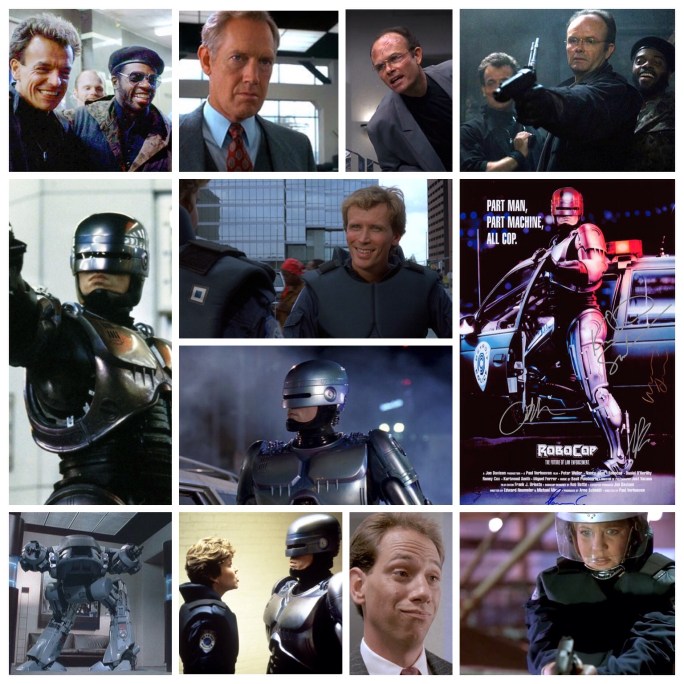
“Bitches, leave!!” I direct that sentiment towards anyone out there who thinks the remake of Robocop can hold a candle to Paul Verhoeven’s brilliant, incredibly graphic and bitingly satirical 1987 classic. Everything that was special and amazing about the original was absolutely pissed on with the remake, and it kills me that I run into people my age these days who aren’t even aware that the remake IS a remake, and think it’s the original Robocop. Ugh. Get out. No, this is the real, steel deal, accented by Verhoeven’s blunt approach to characterization and overly ultraviolent, near Cronenberg-esque flair for carnage. Peter Weller only gets to act as regular joe police officer Alex Murphy for a brief and chaotic prologue, but makes the most of it with his deadpan delivery and piercing gaze. Murphy is assigned to a precinct in the heart of Old Detroit, a district so corrupt, rotten and infested with crime it literally resembles a war zone, and cops wear heavy riot gear on their beat. Paired Nancy Allen, he beelines it for a suspicious truck leaving the scene of a heist. Only one problem: this particular truck happens to belong to evil arch criminal Clarence Boddicker (Kurtwood Smith) and his merry band of psychopaths, who are armed to the teeth with heavy artillery. Cornered in a warehouse, Murphy is brutally, and I mean fucking brutally dispatched by Boddicker and his gang, shredded by a hail of gunfire that turns him into raw hamburger meat. What’s left of him is quickly swooped up by corporate, and used in a high tech, absolutely silly program run by coked up suited opportunist Bob Morton (Miguel Ferrer). His idea has gotten in the way of nefarious plans put in motion by the top dog of the company, a maniac named Dick Jones played by Ronny Cox in a frighteningly funny turn that makes you terrified in between fits of giggles. Once Murphy has been through Morton’s wringer, Robocop emerges, an epic, unstoppable android enforcer who lays waste to criminal scum all over town, until traces of Murphy’s consciousness bubble up past the circuit boards and he gets his own agenda. Jones is determind to take him down, along with Morton, undermining The Old Man (Daniel O’Herlihy), the acting CEO. For a film called Robocop that came out in 1987 you’d think were in for a cut and dry action cheese fest. Not with Verhoeven at the helm. The Dutch madman is never one to play it safe (a refreshing trait among European directors) and pulls out all the stops here for a bloody good time that pauses ever so slightly to nudge you with its cynical side that just loves to bash social convention into oblivion. The effects are so 80’s you’ll swoon, especially when Jones’s own robo creation shows up in clanking, drunken stop motion that you can practically reach out and touch. Smith is a homicidal wonder as Boddicker, the smarmy fury and unrestrained behaviour hijacking every scene he’s in. Leland Palmer himself, Ray Wise plays Leon Nash, his equally dastardly second in command, and a host of gnarly character actors back them up, all of which have curiously guest starred on Fox’s 24 at various points in time, including Weller too. The level of fucks given with this film goes into the negative region of the thermometer, and to this day few studio films have been able to boast such disregard for discretion or lay claim to a sheer love of bombastic villains, a blatant lack of subtlety and a willingness to take things to cinematic infinity, beyond and back again just so they can throw a few more bullets into the mix. Accept no substitutes.

Indie Gems with Nate: A Broken Life 

A Broken Life stars Tom Sizemore as a hopelessly depressed dude who has the notion of killing himself, after he spends a whole day going around to visit the various people in his life, tie off loose ends, make amends and right some wrongs. It’s a concept that could get silly, theatrical and self indulgent, but it’s handled swimmingly enough here, mostly thanks to Sizemore’s honest work that doesn’t really mug for emotional payoff or squeeze pathos where there’s nothing to mine. This is probably because he’s usually the hoped up maniac who is putting other people in the morgue, and like I always say, casting actors against type brings out the best intuitive nature. He’s also the lead, which means he gets to bring more than just a supporting dose of his power here, assisting the film greatly. He’s joined by his assistant  (Corey Sevier), who records the whole thing on a video camera, adding to the already indie flavor. His adventures include a visit to his old boss (Saul Rubinek) who mistreated him years earlier. Sizemore and Rubinek have faced off before in Tony Scott’s True Romance, in kinetic fashion. Here they’re just as electric, but reign it in a bit as the material requires, crafting one of the film’s most effective scenes. Other ventures include a reunion with his estranged ex wife (Cynthia Dale), and frequent run ins with a sagely homeless man (Ving Rhames) who spouts a lot of benevolent wisdom that seems to be profound and nonsensical all at once. These type of films either work or they don’t, plain and simple. They’re either giant mopey ego balloons or terrific little eleventh hour character studies that come from a place of honesty. This one has a few off key notes of the former, but fpr the most part glides smoothly along the tracks of the latter category, thanks to Sizemore’s committed performance.  

Michael Cimino’s DESPERATE HOURS – A Review by Frank Mengarelli

DH 2

Remakes are rarely a good idea, particularly if you’re a semi defrocked filmmaker and your headliners are Mikey Rourke who’s self-infliction was becoming more rampant in the late 80’s and early 90’s and a pre-SILENCE OF THE LAMBS Anthony Hopkins who’s star was on the fade.  Back all of that up by remaking a seminal Bogart film and releasing it to critical annihilation and an uninterested box office and we are left with a film that doesn’t find its audience until decades later.

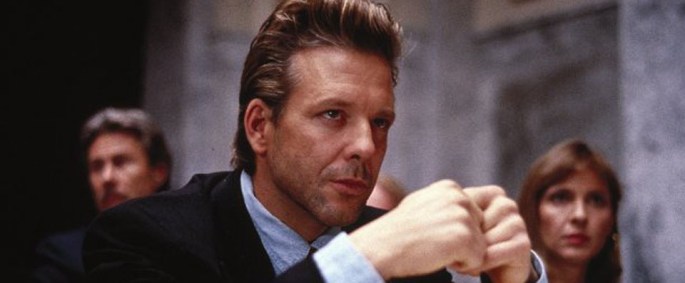
Michael Cimino’s DESPERATE HOURS is a remarkable film.  It’s angry and brooding, wonderfully shot by Doug Milsome, and features two fierce performances from Rourke and Hopkins.  Mickey Rourke gives one of the finest performances of his career as Michael Bosworth whose freakishly high IQ wrapped along with his sociopathic tendencies makes for a fantastic villain and a very showy performance from Rourke.

Rourke is an escaped murderer on the lamb, he holds up in Hopkins’ house, where his family gets held captive by Rourke and his two lackeys.  Hopkins slowly pits Rourke’s paranoia and anxiety against him and his crew, slowly manipulating and faking them out at every turn.  Seeing Rourke and Hopkins go head to head in a fight between alpha males is worth the price of admission alone.

We all know about the rise and fall of Michael Cimino, and while the tide has completely turned on HEAVEN’S GATE, Cimino’s back catalog is more than deserving of being revisited.   DESPERATE HOURS isn’t a perfect film, but for anyone who loves dark and brooding films, this film is perfect for you.

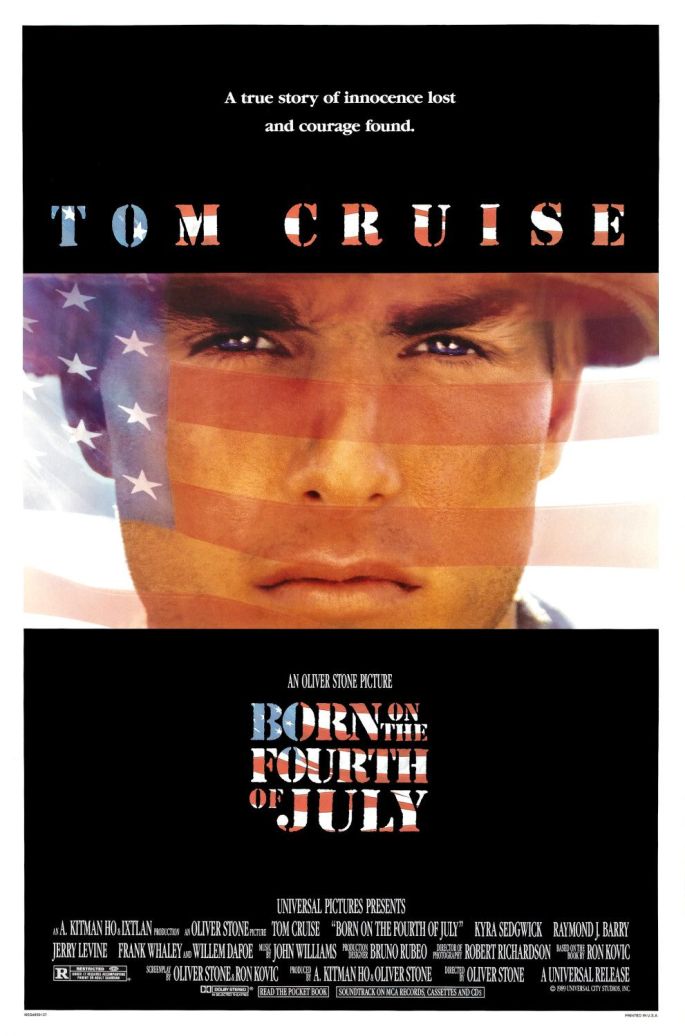
OLIVER STONE’S BORN ON THE FOURTH OF JULY — A REVIEW BY NICK CLEMENT

born_on_the_fourth_of_july_xlg

This is an overwhelming cinematic experience, and one of many masterpieces for Oliver Stone. Tom Cruise went long and deep here, easily delivering one of his best and most passionate performances. This entire film singes the senses, with every single craft contributor working at the very top of their class. Robert Richardson’s mesmerizing widescreen cinematography created hellish epic landscapes of war-time fury that’s both nightmarish and slightly surreal, while still nailing the intense intimacy of the domestic sequences. Every performance from the ridiculously stacked supporting cast was dialed-in and extra heartfelt. Stone wanted everyone to FEEL SOMETHING with this one, from his actors to his crew to his audience, and in that sense, this film is similar to Michael Cimino’s The Deer Hunter. And while that film is more than likely a bit more uncompromising, I can’t help but feel that both of these fiery works share many artistic sensibilities. The score by John Williams skillfully added layers of sadness to an already bleak yet oddly triumphant narrative. A reminder of how horrible war is for all participants and a shattering indictment of the way America treated its many Vietnam veterans, Born on the Fourth of July scalds the viewer, on purpose and by design, and in doing so, likely registers as unforgettable cinema for anyone who encounters it.