DRUGSTORE COWBOY – A REVIEW BY J.D. LAFRANCE

tumblr_njtzsqon201tus777o3_1280

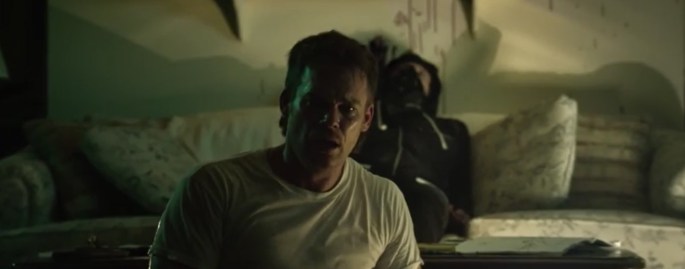
Filmed in “beautiful” Portland, Oregon, Drugstore Cowboy (1989) is an unapologetic look at the life of a junkie during the early 1970s. As the film opens we see the protagonist, Bob (Matt Dillon), flat out on a stretcher in a speeding ambulance. He stares at the camera and his voice narrates, “I was once a shameless full-time dope fiend.” It is this confessional voice that sets the tone for the rest of the film as Bob takes us back in time to show how he reached his current state. He was the leader of a gang of drug users who robbed drugstores to maintain a constant high.

The gang follows a family mentality with Bob acting as the street smart “father,” and Diane (Kelly Lynch) as the “mother” who keeps everyone else in line. “I loved her, and man, she loved dope,” Bob remembers. Rick (James Le Gros) is the “son,” a quiet guy who clearly views Bob as a father figure. Nadine (Heather Graham) is Rick’s wife, the “daughter” figure, and a recent addition who is forever trying to prove her worth to the others. Director Gus Van Sant introduces this “family” in a great opening scene where they work together to rob a drugstore in broad daylight. Each one enters the store, apparently by themselves, each casing the place, waiting until Nadine provides the signal – a faked epileptic fit that draws everyone’s attention, leaving Bob free to sneak behind the counter and take the drugs. The plan is flawlessly executed with Diane even having the time to steal a paperback novel from a rack.

As the group flees the scene in a getaway car, Bob shoots up in the back seat and Van Sant uses this action to enter Bob’s head and show us the worldview of a junkie. As the drug takes hold Van Sant has the real world fade into the background and a dreamy, surreal world filled with floating syringes, spoons and houses complete with a hypnotic, monotone rap of a stoned Bob narrating the action: “Upon entering the vein, the drug would start a warm edge that would surge along until the brain consumed it in a gentle explosion that began at the back of the neck and rose rapidly until I felt such pleasure that the whole world sympathized and took on a soft, lofty appeal.” It’s a dreamy logic that seems to suit Bob’s own little world perfectly. In fact, much of the film is seen from Bob’s viewpoint. Van Sant takes the basic ritual of shooting up and focuses in on the primary components: extreme close-ups of the pills, a lit match, and a syringe sucking up the drugs off a spoon. It is almost like we are preparing for a fix right along with Bob.

And yet for such an accurate portrayal of the highs of drug use, oddly enough Van Sant does not show Bob or any of his crew in the throes of withdrawal, especially when, later on, he decides to go straight. While some of the negative aspects of this kind of life are shown, like people dying, the film refuses to show what happens when one tries to stop using drugs, unlike, say Trainspotting (1996), which does it so well and with such frightening intensity. What sets Drugstore Cowboy apart from other films about drug users are nice little touches like Bob’s superstitions: dogs, hats on beds and, strangely enough, looking at the back of mirrors. It is the hats, however, that is the most important hex and one that comes back to haunt him later in the film.

Matt Dillon does an excellent job of portraying someone high on drugs, in particular, the scene where Bob has taken speed. The actor nails all of the fidgety mannerisms, like clenching his job repeatedly. In Dillon’s long, illustrious career, this performance is his most relaxed and naturalistic. He gives Bob a cool, confident swagger that seems so right for the character. Dillon presents Bob as a smart person, always thinking ahead, always one step ahead of the law. He’s smart because as he says, “I just know, from years of experience, the things to look for, the signs…All you gotta do is look for the signs.” It is this ability that keeps him on top of his game. Dillon’s voiceovers are particularly effective in filling in the gaps and giving little tidbits of junkie culture. There is no wall between him and the camera and there are no artificial mannerisms in his performance.

The rest of the “family” is also excellent, in particular Kelly Lynch who is the perfect foil for Dillon. Diane’s role in the crew is evident in the way she deals with the other members. For example, when she steps in and breaks up a heated argument between local speed-freak David (Max Perlich) and Bob, it is like a mother breaking up a fight between two little boys fighting over a toy. James Le Gros is a greatly underappreciated character actor who dabbles in mainstream films like Point Break (1991) and Zodiac (2007), usually in small roles, and meatier parts in independent films like Living in Oblivion (1995) and Scotland, PA (2001). In Drugstore Cowboy, he plays Bob’s inexperienced right-hand man and protégé. At first, Rick seems a little on the dumb side as he speaks simply but there’s more to him. Le Gros spends a lot of time watching Bob and learning as becomes evident later on. Rounding out the crew is Heather Graham as Nadine. Before her performance as Rollergirl in Boogie Nights (1997) launched her career on a mainstream level, she had a memorable turn as Agent Cooper’s doomed love interest in Twin Peaks. She’s good as the hopelessly naive and inept member of the crew and her sole purpose is to be a pain in Bob’s ass but you kind of feel sorry for her at times.

James Remar brings a real sense of humanity to what could have been a stock cop role. He usually plays bad guys (48 Hrs.) or disreputable types (The Warriors) and gets to show off his range with Gentry in Drugstore Cowboy, playing a cop trying to bust Bob and his crew. At first, he comes across as a typical antagonist, always giving Bob a hard time but something happens over the course of the film. As Bob attempts to kick his drug habit, Gentry becomes a more sympathetic figure. He recognizes that Bob is trying to make an honest go of things and supports him in his own way.

What would a film about junkies be without a cameo by the king of them all, William S. Burroughs who plays a defrocked priest. Van Sant uses Burroughs as a sort of prophetic figure who delivers a sage monologue on the future of drugs: “Narcotics have been systematically scapegoated and demonized. The idea that anyone can use drugs and escape a horrible fate is anathema to these idiots. I predict, in the near future, right wingers will use drug hysteria as a pretext to set up an international police apparatus.” The legendary writer apparently wrote all of his own lines and it shows, as these words seem like vintage Burroughs, coming right off the pages of Naked Lunch. His presence also helps give the film an authenticity.

Drugstore Cowboy 1Drugstore Cowboy
is a film filled with strong performances, and stunning cinematography as Van Sant mixes Super 8mm with 35mm, using time lapse photography with elements of surrealism to create a world as seen through the eyes of a junkie. Van Sant does not judge his characters, he merely presents them as they are and leaves it up to the audience to make their own minds. Even though the film deals with depressing subject matter it never dips down the murky level of a film like Sid and Nancy (1986), but rather offers a ray of hope at the end as Bob tries to come clean and kick his habit. It won’t be easy for him, but at least he has a chance to give it a shot.

MICHAEL BAY’S BAD BOYS — A REVIEW BY NICK CLEMENT

1.jpg

Michael Bay’s feature film debut, 1995’s Bad Boys, still stands as one of his best, most purely enjoyable pieces of cinema, with a solid story, effective action sequences, and that famous chemistry between his two hilarious lead performers. The plot is no more or no less than what you’d find on a typical episode of Miami Vice. Two Miami cops are searching for a massive stash of heroin that’s been stolen from a secure police evidence vault. But it’s personal to them because the missing contraband was from the biggest bust of their professional lives. Was it an inside job? How could a crew have orchestrated such a brazen heist? Mike Lowrey (Will Smith, still best known as The Fresh Prince at that point in his career) is a smooth-talking, womanizing, Porsche-driving, trust-fund inheriting super-cop who loves to shoot first and ask questions later. Marcus Burnett, an impossibly thin Martin Lawrence who would later explode as a comedic force and was starring on his own hit TV show Martin at the time of the film’s release, is Lowery’s beleaguered partner, a married cop with kids and a house and a mortgage and responsibilities – the exact opposite of Lowrey. The insanely entertaining rapport that Smith and Lawrence shared on this film went a long in making it as successful as it was. There’s a hot chick thrown into the mix (Tea Leoni at her sexiest), a shady bad guy (Tcheky Karyo, best known at the time for his transcendent work in The Bear), and a deep supporting cast (always a Bay specialty), which included Michael Imperioli, Joe Pantoliano, Theresa Randle, Nestor Serrano, Marg Helgenberger, and ex-basketball great John Salley. It’s an A-to-B-to-C narrative, told in fast-paced fashion, with the inherent charm of Smith and the barbed hostility of Lawrence always shining through in every scene. Throw in Mark Mancina’s indelible original score and bam!

2

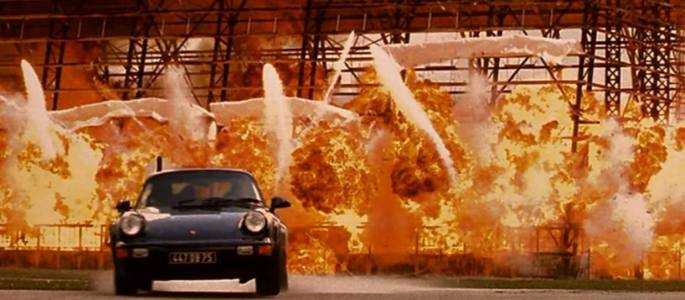
Bay was coming out of the world of music videos and commercials before tackling his first feature project, an arena that he had completely conquered, so it was inevitable that he would try his hand at directing a big budget movie. After catching the eyes of producers Don Simpson and Jerry Bruckheimer due to a music video that he had shot for them for Days of Thunder, Bay was recruited by the uber-producers, and his whiz-bang career got off to a fast, propulsive start. Originally conceived as a buddy-movie vehicle for John Lovitz and Dana Carvey(!), Bay ditched some of the older drafts, hired a new writing team, and went to work at crafting an unpretentious throwback to the 70’s & 80’s cycle of rambunctious cop films; think Freebie and the Bean for modern times. He even famously paid for the film’s elaborate and utterly amazing final explosion, telling the studio that he had to have it just-so because the image was “Trailer Ready.” After the film recuperated its costs, Bay was reimbursed by the studio for his out-of-pocket-fireball-expenses, or so the old story goes. Simpson and Bruckheimer were about to have their big comeback year in 1995, as along with Bad Boys they’d release Crimson Tide and Dangerous Minds, while the first Bad Boys would start an obscenely successful relationship between the director and the producers. Bay never allowed the action to sag in Bad Boys; right from the film’s priceless pre-credit opening bit, he made it clear that his film was going to be aggressive, vulgar, in your face, and lots of fun.

bad_boys_xlg

One of Bay’s premiere strengths as a popcorn moviemaker is that he genuinely knows how to make his films feel big, with striking clarity and depth of field, constantly opting for telephoto lenses and almost always shooting in full 2.40:1 widescreen (Bad Boys is the only film of his to be framed 1.85:1). And when it comes to CGI, he demands the absolute best from his technicians; if it’s not “photo-real,” he doesn’t want it included. His sun-bleached, primary color infused, overly saturated visual style got its start with cinematographer Howard Atherton calling the shots behind the camera, and when viewed in retrospect, it’s interesting to note how Bad Boys has that Bay feel, but it’s a decidedly “early” Bay feel, as his calling-card aesthetic would really take shape with The Rock, Armageddon, Pearl Harbor, and Bad Boys 2. Bay loves to create maximum impact images, almost always opting for shots with intense visual elegance and sophistication. The original Bad Boys feels like a student film when compared to the insanely over the top sequel and the complicated visual structure of Bay’s Transformers movies. Bay is has earned his status as an auteur because of his instantly identifiable style that matches his testosterone-fueled narratives of impossible heroics, mixed with that insane brand of visual mania that he’s become known for. I’d love to see him go back for a third helping of buddy-movie antics, as I really and truly feel that these were the movies he was born to make.

3

Dear Frankie: A Review by Nate Hill

image

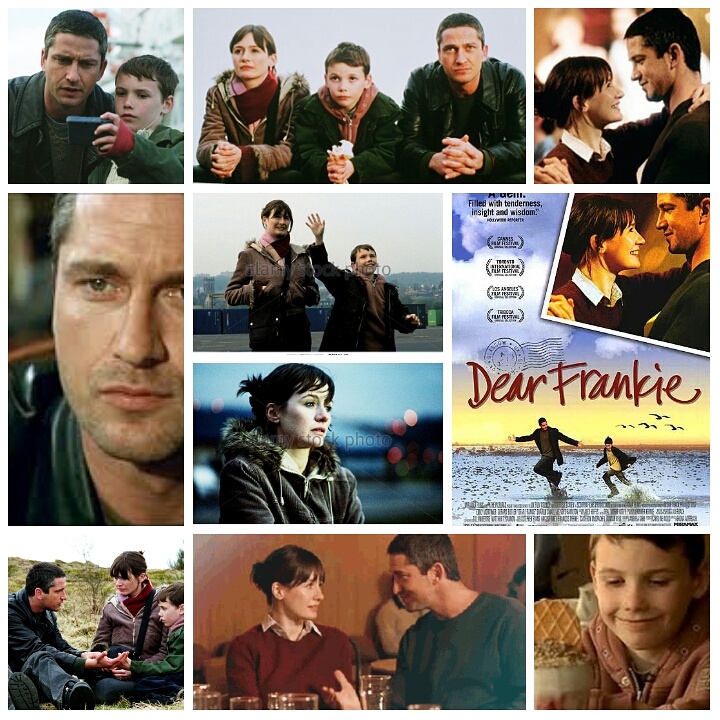
Dear Frankie is a sad yet life affirming little modern fairytale set on the evocative Scottish coastal region, in a small fishing village home to many trawlers and vessels which are always coming or going. This is the place that Lizzie (Emily Mortimer) has chosen to raise her young son Frankie (Jack Mcelhone). The one thing missing is a father, who has been missing ever since he was born. Filled with love and a need for Frankie to know at least who he was, she writes him letters as if she were his dad, telling him tales of life at sea and corresponding with him for some years. As he gets older she wishes he could have met him at some point, and comes up with a slightly strange plan. She meets a Stranger (Gerard Butler) in town, who is a sailor himself, and hires him to pose as Frankie’s father, and spend some time with him. Butler agrees, but it’s clear he hasn’t spent much time around kids in his life, and the meeting is awkward at first. Soon they get on well enough, which pleases Lizzie and is good for Frankie. Still, the issue remains that the Stranger is not Frankie’s real father and Lizzie knows this, torn between the cathartic interaction she sees for her son, and the facts that she knows to be true. Mortimer is sorrowful and harbours clear hurt and loneliness, the reaching out she does to Butler as much for herself as it is for Frankie. Butler starts off charming and be used by the proposition, until he realizes the gravity of the situation he is in and learns so,etching about himself that was dormant in his life until he met Lizzie and Frankie. The human relationships are explored tenderly and with patient reverence that ebbs and flows with the English Channel tides. Beautiful stuff.

THE FUNHOUSE (1981) – A REVIEW BY PATRICK CRAIN

Poor Tobe Hooper. Unlike other genre contemporaries such as John Carpenter, George Romero, and David Cronenberg, he really didn’t waltz into the 1980’s with unlimited potential and the brightest of futures. Despite helming the Texas Chain Saw Massacre in 1974 and the well-received television adaptation of Stephen King’s Salem’s Lot in 1979, Hooper’s reputation was one of an unreliable commodity; a combative personality who had been a contributing factor to the troubled production of Eaten Alive, Hooper’s third feature, and someone who had been outright fired from the William Devane/Cathy Lee Crosby vehicle, the Dark, in 1979.

But with horror at peak interest in the early 80’s, every studio was looking to get in on the action. And what studio wouldn’t want to splash “From the director of the Texas Chain Saw Massacre” across the front of the poster? Universal Studios certainly did. What emerged from Tobe Hooper’s major studio debut did him little favors in terms of his future (Poltergeist was a life-raft tossed his way by Steven Spielberg). But, in retrospect, the Funhouse is one of Hooper’s strongest films; another addition in a line of narratives about an almost folklorish, ruined America, where families are still separated by class and equally troubled. If the cannibalistic Sawyer family represented the unmanageable pioneer lifestyle amid an industrial society in the first Texas Chain Saw Massacre and a gluttonous shark swimming in Reagan’s pools of unfettered hypercapitalism in the sequel, the Funhouse’s twin families reflect America’s white hot fascination with both nightmarish tragedies that were being peddled by television magazine shows and tabloids and their voyeuristic curiosity for the malformed versus a travelling family populated by society’s outcasts.

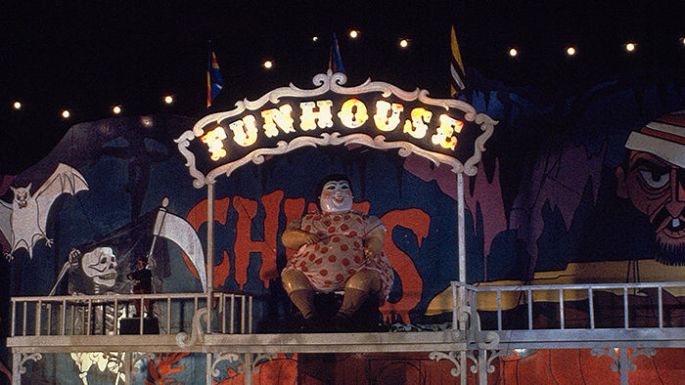
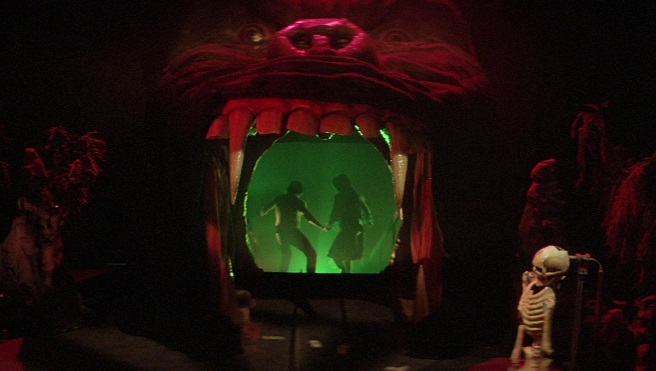
There is a certain urban myth flavor permeating the central idea of the Funhouse. After a night of pot smoking and grab-ass at the local carnival, the wise guy in a group of four kids on a double date proposes they all spend the night in “The Funhouse” (which, as Wikipedia would correctly point out, is actually a dark ride). What lives within the Funhouse is the Barker and his hideously deformed son who helps work the Funhouse with the cloaking aid of a Frankenstein’s Monster mask. Not long after the kids witness the murder of a fortune teller at the hand of the Barker’s son, they are discovered by the Barker and their attempts to exit the Funhouse are thwarted at every turn. Will they survive the night?!?

Funhouse_43

In 1981, the failure of the Funhouse was partly due to Universal’s decision to make the film look more like it was an entry in the slasher genre than what it really was; an homage to the horror film in general with elements of multiple eras represented throughout. While it was certainly made sense from a production standpoint to utilize as much no-charge Universal Monster iconography as possible, it’s hard to discount that the monster in the Funhouse is, like the majority of those early creatures, truly a monster to be pitied and goaded on to aggressiveness by his abusive, alcoholic, and manipulative father. For more modern influences, the opening shot recalls both the shower scene in Psycho and the opening moments of John Carpenter’s Halloween (and even Brian De Palma’s Dressed to Kill, if you’re being generous). The traveling carnival setting has its roots in the oldest of American folktales including those that are represented in our films, such as Tod Browning’s Freaks.

But the Funhouse also hints at a true, simmering horror within in the modern family, and if there’s a nagging issue with the film, it is that its less successful in fleshing this out effectively. The mother for the representative “good” family seems to be a short-tempered alcoholic that instills nothing but fear and dread in her children but we can only guess at this given her scant screen time and the opaque dialogue surrounding her character.

Other than that, the characters and situations do offer up a certain dark streak that runs throughout the film and hints at something deeper. The clean-cut daughter, our identifiable “Final Girl,” isn’t exactly the frigid, do-gooder as in other films from the era. Instead, Elizabeth Berridge’s all-American Amy Harper disobeys her dad, smokes grass, engages in some free-spirited sexual misconduct, and goes along with the crowd without much resistance at all. The ubiquitous younger brother character has a certain perverseness given his prank in the opening moments of the film. I mean, it never occurred to me to, as a goof, take pictures of my older, naked sister in the shower. Additionally, in a nifty plot pivot, the “good kids” find themselves in double-jeopardy after the wise guy pulls a dick move and steals from the Barker and his son. Sure, this is a standard horror device but the motivation suggests a certain deterioration in Hooper’s overall worldview. After all, in both the Texas Chain Saw Massacre and Eaten Alive, the protagonists’ transgressions were no greater than simply stumbling upon the antagonists’ hunting ground.

But from most standpoints, the Funhouse is an impressive film. The cast is uniformly great; Elizabeth Berridge radiates a nervous and apprehensive sweetness, Kevin Conroy is perfectly greasy as the corn liquor-soaked Barker (Conroy actually turns up as three different barkers, hustling for the strip tease, the freak-of-nature tent, and the Funhouse), Cooper Huckabee sports the right amount of Dirk Daring-Do as Barrage’s lunkheaded date with a heart of gold, De Palma regular William Finley turns up as the nip-taking, ghoulish Magician, and the always exciting Sylvia Miles, sporting the hammiest gypsy accent this side of Grayson Hall on Dark Shadows, steals each scene she occupies as the Fortune Teller. The film also sports some really beautiful widescreen camera work (including some fun split-diopter compositions and epic crane shots) courtesy of the great Andrew Laszlo, a master of color and darkness who gave Walter Hill’s the Warriors and Streets of Fire their distinctive comic book look. Here, much like in Hooper’s Eaten Alive, the colors give the film a roadside attraction garishness the look of which is as threaded into the American consciousness as the colors of the flag.

Like anything Tobe Hooper made after 1974, the Funhouse is far from perfect. The ending confrontation feels anticlimactic, uninspired, and deflated and there is a wish that at least some of the backstory that was written into the Dean Koontz’s novelization (initially released under the pseudonym Owen West) could have been incorporated into the domestic moments, if only to flesh out the parental conflicts with the children and restore a much-needed balance of subtext. But, as it stands, the Funhouse remains an overlooked, colorful homage to the institution of American horror, both real and imagined.

0dc7633a56c59a7bf7a2eb423a780e04

JOHN FRANKENHEIMER’S THE FRENCH CONNECTION II — A REVIEW BY NICK CLEMENT

1

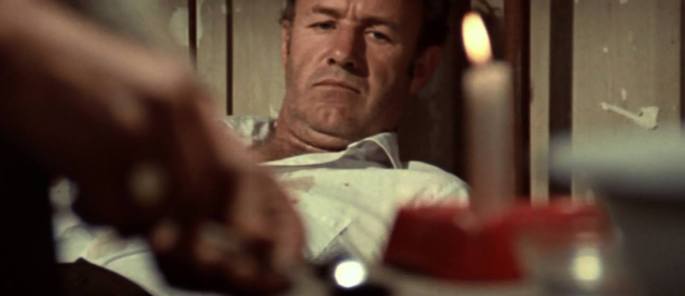
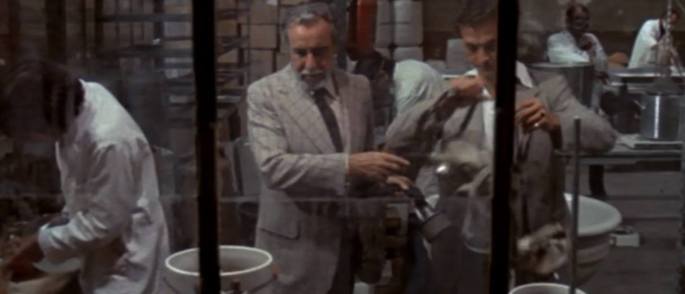
What’s so thrilling and unexpected about John Frankenheimer’s underrated The French Connection II is that at no point did the legendary filmmaker try to totally mimic the success of the Oscar-winning original. William Friedkin’s The French Connection is certainly a masterpiece of American cinema, one of the only “action movies” to win Best Picture with the Academy, and a film that holds up staggeringly well because of how ahead of the curve Friedkin and cinematographer Owen Roizman were with their mise-en-scene and the gritty realism of the fact based story, to say nothing of the gripping performances from Gene Hackman and Roy Scheider. In The French Connection II, Frankenheimer, himself no slouch to great action adventure movies (The Train, Ronin, Black Sunday, 99 and 44/100% Dead, Grand Prix), continued on with the same immediate and visceral visual style that Friedkin had pioneered with the first effort, but he opened up the scope of the story, both visually and narratively, setting a majority of the plot in Marseilles, which was only glimpsed in part one. What results is a film that, while never reaching the glorious heights of its predecessor, hits all of its marks with efficiency and toughness, and seems to be a work that’s been relegated to long-forgotten status.

5

Hackman’s Popeye Doyle and arch nemesis drug kingpin Alain Charnier (the slippery Fernando Rey) were the only two returning cast members from the first installment, and the sequel finds Doyle following various leads to France in an effort to track down Charnier and his drug smuggling operation. Charnier memorably escaped capture during the final moments of The French Connection (you got to love that final freeze frame!), which still ranks as one of the ballsiest endings ever. Upon arriving in France, Doyle is greeted by inspector Henri Barthélémy (a fiery Bernard Fresson), who in typical fashion, resents Popeye’s distinctly American way of handing police business, with Popeye getting irritated upon realizing that foreign police officers on French soil aren’t allowed to carry guns. In classic fish out of water style, Doyle struggles with the customs, language, and people, and hates having to work with the French police. He ditches them, but is followed and attacked by Charnier’s goons, who then tie him down with restraints, and forcibly inject him with heroin in the hopes that he’ll either cooperate or die. Hackman is in a totally different zone in The French Connection II; he’s unsure of himself and paranoid and not confident, a major departure from his demeanor in the first film. You watch as Doyle is rescued, fights the symptoms of smack withdrawal, and then gets back on his feet to lead one last charge against Charnier, staging a massive gun battle and final chase.

3

Upon initial release, it seems that most critics were indifferent to Frankenheimer’s film, which feels nothing like the obviously more revered initial installment. The exotic setting set the film apart in atmosphere, and the film’s dark and depressing mid-section with Doyle addicted to horse in the shittiest of environments was probably too unrelentingly nasty for mass audience appeal. Also, the lack of a massive car chase or a truly substantial or genre-busting action sequence probably left some people feeling hoodwinked. But what I think makes The French Connection II worthy of re-assessment is because it took something that worked so well the first time, and instead of being lazy and trying to re-hash those elements, it used the material as a spring board to broaden the overall story and take the Doyle character to edgier, tougher realms. Hackman was fantastic here, never stopping with the full-blown intensity, consistently providing Doyle with a vital integrity that always made you care, no matter how harsh the character spoke or behaved. And it goes without saying that Frankenheimer, ever the reliable craftsman, shot the hell out of the film with his director of photography Claude Renoir, giving it that rough and tumble 70’s aesthetic that we all love so much in present day. Many, many people have seen The French Connection. Not enough people have seen The French Connection II. I’d like that to change.

2


Barry Sonnenfield’s Wild Wild West: A Review by Nate Hill

image

I don’t get the hate for Barry Sonnenfield’s Wild Wild West. I just don’t.  It’s like I saw a completely different film than the entire rest of the continent. To my knowledge, there’s me and a couple other friends I know who love and cherish it, and the rest of the world has seemingly cast it out into the cold, inexplicably bashing it no end. Wtf. It’s a rollicking good time, full of a brilliant blend of situational and slapstick humour, lively characters from a great group of performers, incredible production design, and a dash of swash and buckle. It may not have much in common with the 1960’s era tv show its based on, but kudos to it for breaking new ground. Will Smith plays Marshall Jim West, a cocky (there’s literally a small window of freeze frame where you can see his ebony schlock in full glory. And don’t even ask me how I know that), ballsy (ok sorry I’ll stop) secret service cowboy badass who is working a case against some nasty villains who want to use president Ulysses S. Grant for diabolical ends. He’s led to old foe General ‘Bloodbath’ McGrath (Ted Levine in a show stopping, wickedly devious southern psycho role) a confederate lowlife who will hopefully lead him to whoever is kidnapping the nation’s best and brightest scientists for some Bond villain-ish scheme. West is joined by kooky inventor Artemis Gordon (a classy Kevin Kline) and the two embark on a shoot em up quest to thwart the evil plan of Dr. Arliss Loveless (Kenneth Branagh), a dastardly mega villain with plans for America that don’t involve presidents or laws or anything sane. The film is endlessly inventive, wildly funny and parades forth a reel of set pieces, each more amazing than the last until we realize we’re actually watching a fifty foot tall steam punk mechanical spider stomp all over the Utah desert (there’s a priceless story involving that and the film’s odd duck of a producer Jon Peters, which you can watch Kevin Smith regale an audience with over on YouTube). West and Gordon are joined by sultry Rita (Salma Hayek) a Femme Fatale with a hidden agenda who tags along under the guise of damsel in distress. It’s just plain fun and I still don’t get how anyone could dislike it. Witty barbs, raunchy double entendres and sarcastic banter permeate the wonderful script. Nifty gadgets, detailed costumes and clanking machinery speckle the epic production  design. An atmosphere of playful fun oversees all of it from beginning to end. Smith and Kline make a dysfunctional buddy duo for the ages, squabbling right up until the last frame. Branagh hams it up so far over the top as the bad guy that he nearly implodes on himself. Levine is deliciously creepy and crusty. Watch for other gem performances from Bai Ling, M. Emmett Walsh, Debra Christofferson, Sofia Eng, Rodney A. Grant and Musetta Vander. If you’ve seen it and already love it, good for you let’s go have a beer. If you’ve seen it and hate it, you’re a silly bum (to put it mildly). If you haven’t seen it, do so, form your own opinion and fall into one of the above two categories. It’s a classic for me.

Guy Ritchie’s Rocknrolla: A Review by Nate Hill

image

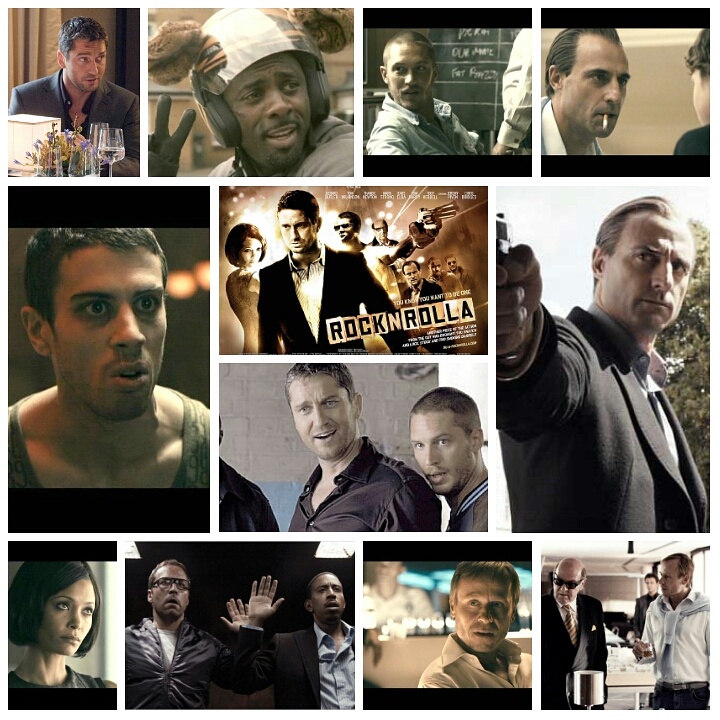
Guy Ritchie’s Rocknrolla was the third British crime comedy caper for the director, and it could have easily been the misstep that signaled him wearing out his welcome. Happily I can tell you that it’s a winner, and although not as cracking as Lock Stock or Snatch, it sinks into its own distinct groove that’s fairly removed from it’s two predecessors. Once again we are treated to the life and times of a bunch of hoods and gangsters in London, but not the grungy, back alley soup kitchen London that we’re used to from Ritchie. No, this is a glistening, prosperous London, filled with real estate money ripe for the taking and developers making underhanded deals with shady businessmen. The climate has definitely changed in Ritchie’s aesthetic, but the characters remain the same, just as witty, eccentric and chock full of piss and vinegar. The story centers around the wild bunch, a cozy little clan of East end petty thieves led by One Two (Gerard Butler) and Mumbles (Idris Elba). Their third musketeer is Handsome Bob, played by a hilarious Tom Hardy who has a secret up his sleeve that spills out in what is the most adorable scene Ritchie has ever written. The gang is hired by a mysterious chick (Thandie Newton) to rob some dudes, and that’s where the trouble starts. Elsewhere in town, arch gangster Lenny Cole (a frothing Tom Wilkinson) negotiates a land deal with dangerous russian billionaire Uri (Karel Roden switches up his trademark psychosis for smooth talking menace here) that hinges on a missing painting. Lenny dispatches his right hand bloke Archie (Mark Strong, subtly trolling us) to find it along with his rock star nephew Johnny Quid. Got that? Nevermind, half the fun is the how and not the why of Ritchie’s stories, and I find it best to just let the flow of it wash over you as opposed to thinking out each detail and missing the sideshow. Toby Kebbell is off the hook as Quid, a wiry stick of dynamite and a comic force to be reckoned with, truly the most exciting performance of the film. Ritchie has a knack for bringing out the funny side in actors, even ones that aren’t usually the type to make you laugh. Strong is terrific, with a few carefully timed moments of sheer hilarity that deftly make you forget how dangerous he is. Ludacris and Jeremy Piven are fun, if a bit out of place as two event promoters. Butler and Elba have an easy-peasy rapport that’s light, friendly and believable. Wilkinson dances between alpha assuredness and aging buffoonry nicely, always commanding the scene and oddly reminding me of Mr. Magoo. There’s a playful tone to this one, glitzy and celebratory in places where Snatch was grim and sketchy, and the whole affair feels like a new years party with a bunch of old friends. Watch for cameos from Matt King, Nonzo Anonzie, Jimi Mistry, Mundungus Fletcher and Gemma Arterton. Very fun stuff.

MENAHEM GOLAN’S DIAMONDS — A REVIEW BY NICK CLEMENT

1

Out of all of the directorial efforts from former Cannon Films head honcho Menahem Golan that I’ve seen thus far, Diamonds is easily the best. This movie is exceedingly entertaining. The music by Roy Budd (The Wild Geese, Get Carter) is absolutely sensational, all 1974 funkadelic and ear-popping, and the cast is as amazing as it is eclectic – Robert Shaw, Richard Roundtree, Shelly Winters, and Barbara Seagull (aka Barbara Hershey) in her extra-hot early years. Shot in Tel Aviv and centering around a brazen diamond heist, Shaw turned in a dual performance as twin brothers who go up against one another over a massive cache of diamonds which are stashed away in a supposedly impenetrable vault, with results that are wildly fun to observe. Golan and co-screenwriter David Paulsen borrowed heavily from other popular heist films of the time, while peppering the script with some witty lines and a few nice action sequences. Seagull/Hershey, as one might expect from her work in this era, wasn’t afraid to disrobe, and it can never be discounted just how beautiful she was back in the 70’s – the camera REALLY loved her. Contains sharp early work from cinematographer Adam Greenberg (Terminator 2, Ghost) and editor Dov Hoenig (Heat, The Fugitive, Manhunter). Co-produced, as one might imagine, by Yoram Globus. Again – I must reiterate – the musical score by Budd in this film is extraordinary. Released in some corners of the world as Diamond Shaft, despite having no relation to Roundtree’s previous success. Currently available on DVD or as a streaming option via Amazon video.

JIM MICKLE’S COLD IN JULY — A REVIEW BY NICK CLEMENT

1

Jim Mickle’s twisted, darkly humorous, and all together exciting thriller Cold in July is one of those movies that tells one story for 50 minutes and then shifts gears into a second, almost completely new narrative that totally takes you by surprise. I love nasty little gems like this one, where you can’t truly predict where the wild plotting will take you, and by the end of it, you know you’ve watched something nifty and clever. I had read lots of comparisons to Blue Ruin, which I think are specious at best; this isn’t a locked-down genre-transcender like Jeremy Saulnier’s Coen-brothers esque effort. Rather, Mickle tells a juicy neo-noir story that aims to entertain rather than enlighten, with a beyond colorful Don Johnson supporting performance in the second act which compliments the already terrific work being done by Michael C. Hall and Sam Shepard. Also, will someone PLEASE give Vinessa Shaw the lead on a TV drama; she’s always so excellent and natural and unforced (and not to mention gorgeous) and you always want to see more from whatever character she plays. It’s criminal that she doesn’t have an HBO or Showtime series to call her own. She should have gotten a huge career push after her revelatory turn in James Gray’s deeply underrated romantic drama Two Lovers, which remains one of the best recent films that nobody has seen.

2

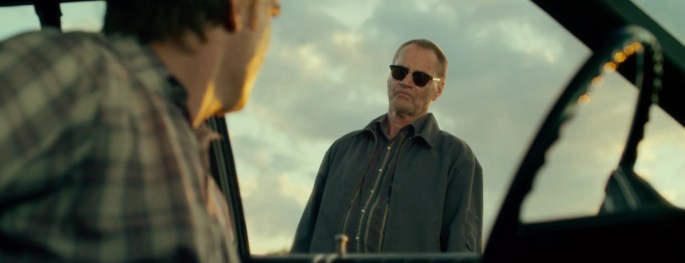
The sordid plot to Cold in July, which Mickle concocted with longtime co-writer Nick Damici) involves murder, revenge, and all sorts of general brutality, and the film packs a truly ultra-violent punch during the final 15 minutes. After a home invasion leaves the intruder dead, Michael C. Hall receives a visit from the slain baddie’s father, played by a menacing Sam Shephard, who isn’t so happy that his son has been shot and killed. What follows is a cat and mouse game of terror, which then leads down some even darker and more transgressive tunnels of human behavior, all before a final act that has bloodshed on its mind like few others. Mickle served as co-editor (with John Paul Horstmann) and the entire film stings like pin-prick, with fast yet coherent pacing, while cinematographer Ryan Samul stressed the deviousness of the night, with shadowy and gritty cinematography that accurately conveyed the violent desperation of the various characters. All of it is pulled together by Jeff Grace’s creepy musical score, which never gets bombastic, instead opting for low-key accentuations and a general sense of casual sketchiness. Despite grossing less than $1 million in theaters (off of a VERY limited theatrical release), Cold in July has become an instant cult favorite, and is currently streaming on Netflix, as well as available on DVD/Blu-ray. Mickle is clearly a filmmaker worth keeping tabs on; I need to check out both Mulberry Street, We Are What We Are and Stake Land.

3


The Fifth Element: A Review by Nate Hill

  
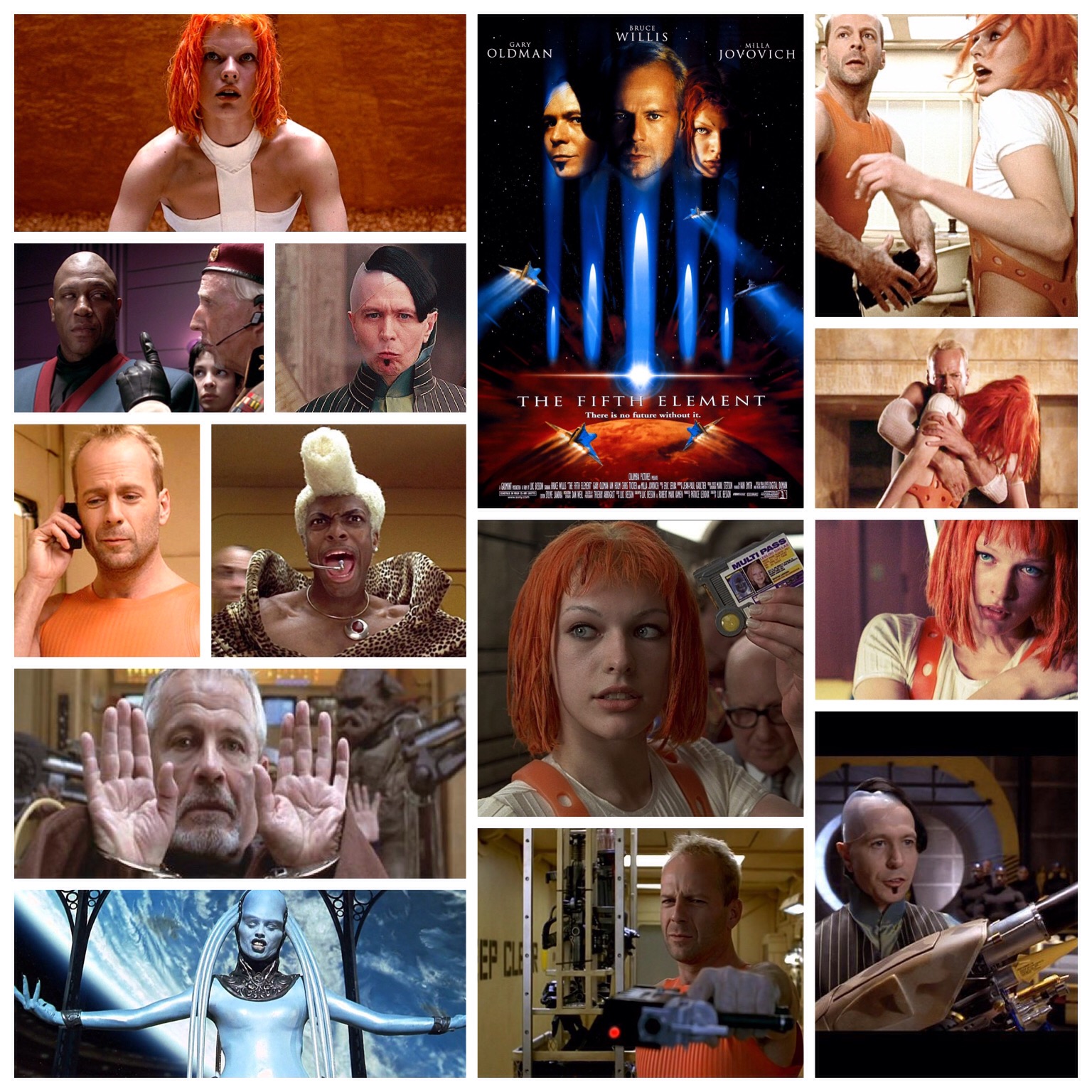
Luc Besson’s The Fifth Element is what you get when you give a massive budget to a director who has an otherworldly flair for imagination and a creative pulse that doesn’t subside for one single second. It’s one of the best sci fi films ever made, a pure intergalactic rush of absurdist qualities anchored by a solid blueprint that’s both akin to and far removed from countless space movies out there. The surprise, and what works so well, comes from Besson and his team crafting a warped and almost Dr. Seussical world that dabbles in cartoonish territory, boggles the eyes endlessly and continually assures you that anything goes in terms of style and tone. It’s an all timer for me, a blast of zany ideas, lovable characters (even the villains are teddy bears to me), a celebration of off the cuff production design and a goddamn certified barrel of fun. Most who read this will know the plot inside out and up and down, but we all know how much I love babbling on about actors and events, so bear with moi. There’s an adorable prologue (“Aziz, light!!!!”) In which an alien race called the Mondosheewans arrive on earth to remove a sacred and very powerful item from an Egyptian pyramid. They resemble shambling steam punk Volkswagen beetles, and are a force of good. This takes place in the 1800’s, and before you can say Luke Perry, we’ve flashed forward to a dazzling futuristic New York City where the events that came before come full circle. Self depracating cabbie Corben Dallas (Bruce Willis) has a day of unending bad luck, until a gorgeous humanoid being named Leeloo (Milla Jovovich was my first cinematic crush in this role ♡) literally falls into his lap, or rather, crashes through the roof of his cab and incites a high speed chase in hover cars, a fantastic sequence, I might add. It turns out this slender, orange deadlocked babe is the human manifestation of the coveted artifact that the Mondosheewans took into their possession. Willis and Jovovich have an immediate exasperated chemistry that practically leaps off the screen as giddily as your heart does whenever they’re seen together. They’re one of the cutest couples in history, and soon embark on a wild adventure to prevent mass destruction at the hands of a giant ball of pure evil that threatens earth (and no I didn’t make that up). Also threatening them is Jean Baptiste Emanuel Zorg (wish that was my name), played by Gary Oldman in a preening, gaudy display of theatrical evil that must be seen to be believed. Zorg is an arrogent megalomaniac who basically runs the city, out to find the ancient stones that are the key to stopping that malevolent force that hangs out just outside of earth’s atmosphere. This is the only film that can claim it has a scene where pure evil itself calls up Gary Oldman on the phone for a chat, which has to be some kind of achievment. There’s a gaggle of incredible actors running around as well, including Bilbo Ba-, I mean Ian Holm as Father Cornelius, a priest of an ancient order sworn to protect Leeloo, the president of the united states (Tiny Lister, once again I’m not making this up), a hapless general (John Neville), a tweaked out petty thief (Mathieu Kassovitz in a scene of pure WTF), Brion James, Lee Evans, and Chris Tucker. Oh good lord Chris Tucker. I don’t know how the guy has the energy, but he keeps it in mania mode as Ruby Rod, a flagrantly horny loudmouth prima donna radio DJ that tags along with Corben for a few gunfights and explosions and shrieks like a banshee all the while. Willis has never been as amiable as he is here, it’s as if John McClane wandered into an episode of Mystery Science Theater 3000 and decided to have some fun. Truly a great protagonist. You will fall deeply in love with Milla as Leeloo. Her lithe physicality, unearthly dialect that she actually learned in full for the film, striking naivete and burgeoning compassion all make her one of the most unique and mesmerizing heroines to ever exist in a film. Oldman mugs, chews scenery like a bulldog, prances about like he’s in a grade school play, and is a sheer diabolical delight. The scene where he demonstrates the ‘swiss army gun’ for his dimwitted extraterrestrial cohorts is time capsule worthy, as is the entire film. Besson directs and stages his world with a reckless abandon that plays like a watercolor painting of pure expression. If there’s an idea someone had, it ended up in this film no matter how outlandish and random it is. That’s the kind of carefree artistic qualities that all movies should have; a willingness to be silly, to be crazy, to step outside the box and then trample on it whilst hurling confetti all about the place. This film is a shining example of that, and stands out as not only one of my favourite films of all time, but one of the best ever made. Big BADABOOM.