As silly, gaudy and drawn out the Ocean’s franchise had gotten by its third outing, I still somewhat enjoyed Ocean’s Thirteen, an overblown attempt to keep the magic alive that most of the time trips over its own bells and whistles. That being said, the gang is all there, and that alone is good for some laughs. This time around, Eliott Gould’s cranky charmer Reuben has been ousted from his Vegas property by Willie Bank (Al Pacino) a ruthless and ludicrously rich casino tycoon with big plans for the future. Reuben is left in a dazed depression, and the gang all drifts back together to try and rob the hell out of Pacino, using methods and cons so over the top they almost seem like a parody of the former films. Pacino is a bit more clownish than Andy Garcia’s grim Terry Benedict was in the first film, which adds to the cavalier absence of any sense of real danger. In fact, Benedict is now chummy with the gang himself, which is a cute turn of events but kind of seems to silly. Ellen Barkin adds a lot of class as Pacino’s head honcho, fitting into the Ocean world nicely. The gang I’d all back and more eccentric than ever, with Matt Damon scoring comedic points in one of the funniest prosthetic jobs I’ve ever seen. Newcomers to the show include Julian Sands, Oprah Winfrey and a reliably hapless David Paymer. It’s not that this one takes the formula too far, it’s just that we’ve been there, done that, got the t-shirt and there was really not much need for it. I won’t say no though, because the blue print of what made the first so fun is still there, it’s just been jazzed up and adorned with a few too many gilded sequins and fancy jib jab. Still enjoyable.
Category: Film Review
GRIDLOCK’D – A REVIEW BY J.D. LAFRANCE

“This is gonna be a fucking nightmare day, I can just feel it.” These rather prophetic words are spoken by Stretch (Tim Roth) as he and his best friend, Spoon (Tupac Shakur) start the day trying to kick their drug habit in the film, Gridlock’d (1997). But it’s not going to be that easy as the duo run into bureaucratic red tape at every turn.
The film begins on New Year’s Eve as Spoon’s girlfriend, Cookie (Thandie Newton) overdoses on heroin. This intimate brush with death forces Spoon to face his own mortality. “Do you ever feel like your luck’s run out, man? Lately, I’ve been feeling like my luck’s been running out.” These lines take on a rather eerie significance when you realize that Shakur was killed shortly after this film finished shooting.
And so, the two struggling musicians make a New Year’s resolution: to go into rehab and get off drugs for good. The only problem is that not only are they constantly given the runaround, hassled, and turned away by government workers, but an evil and very persistent drug dealer (Vondie Curtis-Hall) and his henchman (Tom Towles) are also pursuing them.
Now, this may sound like the makings of a moralistic film but Gridlock’d refuses to fall into this trap. Instead, it comes across as a very stylish social satire — a strong indictment against the United States health care system and their welfare programs. The ultimate irony is that Stretch and Spoon want to do the right thing but their attempts are constantly thwarted at every turn by overburdened social workers that are too burnt out to care.
Gridlock’d marked the directorial debut of Vondie Curtis-Hall, an actor by trade who has appeared in such films as Die Hard 2 (1990), Broken Arrow (1996), and a regular spot on television’s Chicago Hope. Hall wrote the screenplay for Gridlock’d in 1993 and it was originally conceived of as his final film school project, based on his actual experiences with drug addiction in the 1970s in Detroit. “Heroin is the drug of the ’90s. But it was also the drug of the ’70s, when I was doing it,” he said in an interview. Much like the two main characters in his film, Hall and a friend sought treatment for their addiction only to be told that it would take weeks for them to get admitted into a program.
But Hall kicked the habit, paid his dues an actor, and cashed in some favors to get this personal project off the ground. Polygram agreed to finance the film with a modest $5 million budget. Hall sent the script for Gridlock’d to actor Tim Roth while he was working on Rob Roy (1995). Initially, Roth wasn’t interested in doing the film but Hall met and convinced him to do it. For Roth, it was the script that attracted him to the film. “Normally you’d work through a screenplay and say, ‘We’ll have to change that and that and somehow try to make it work’, but here the dialogue was always dead-on.”
Hall wrote the character of Spoon with Laurence Fishburne in mind but couldn’t afford the veteran actor. He had considered Tupac Shakur for the role but thought that the rapper was too young and was also just out of jail. However, someone gave Shakur the script and Hall ended up auditioning the rapper who really wanted to do the film. Shakur made the cut and Hall said that with this film, the rapper “wanted to prove that he was a good actor,” and felt that he was “actually a lot like I was at the time the film was set. He wanted to sort himself out and was looking for some help.”
Gridlock’d’s strength lies in its two leads. The interaction between Roth and Shakur is excellent. For example, there is a scene where the two men sit at the bedside of their unconscious friend and Shakur delivers a heartfelt speech where he decides to stop doing drugs. It is an emotional moment as Shakur looks over at Roth who says nothing — he gives Shakur a little smile. It is an action that says a lot more about their friendship than any words could. They also display crackerjack comic timing with Roth’s Stretch a manic goofball to the laidback cool of Shakur’s Spoon. They play well off each other which is crucial in a buddy film like this one.
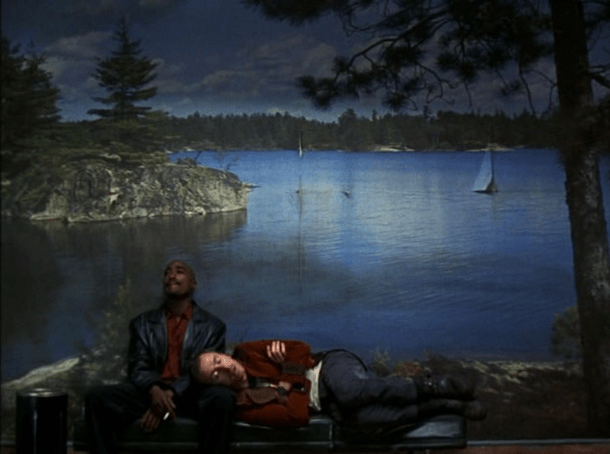
The visuals in Gridlock’d are also worth mentioning. The film’s camerawork is very stylish but never overwhelms or obscures the story or its characters. Instead, the film’s imagery only enhances the mood of any given scene. There is a great shot early in on the film when Spoon and Stretch wait in the hospital to hear any word on Cookie’s condition. The two men are sitting on a bench with a huge mural of an idyllic setting: a peaceful cottage scene complete with lake and a sailboat. It is an ironic image when you consider where they are, what has happened, and how they feel. And yet, coupled with very soulful music on the soundtrack, it is an oddly peaceful image juxtaposed in a fast-paced film.
Gridlock’d is filled with many clever moments that elevate it above the usual drug movie. Without resorting to preachy sermons, it does an outstanding job of showing how bad the drug problem is the United States and how badly equipped they are in dealing with it. Gridlock’d is a smart film with plenty of humor and action to alleviate the rather serious subject matter. Best of all, it refuses to sentimentalize or romanticize its characters. And in an age of political correctness, this is a refreshing concept.
PTS Presents WHEN PODCASTS COLLIDE with NEVER HEARD OF IT PODCASTERS

Nick and Frank were extremely lucky to be joined by Craig Moorhead (editor of Damian Lahey’s The Heroes of Arvine Place) and writer Shawn Harwell (Red Oaks, The Campaign, East Bound and Down), the co-hosts of the excellent podcast Never Heard Of It (www.neverheardpodcast.com), to discuss the weird, wild, and totally transgressive 2015 indie black comedy Buzzard, as well as a few other surprises. This is a film that can be rented through the disc-at-home service via Netflix and found on various streaming platforms like Amazon and YouTube and is well worth seeking out, as it combines black comedy, social critique, and unexpected graphic violence to create something tragically original. And if you’re a fan of the obscure movie, be sure and check out Craig and Shawn’s site, as Never Heard Of It routinely shines a spotlight on forgotten cinematic gems that deserve more recognition. We hope you enjoy this extremely entertaining discussion about Buzzard and movies in general!
JOEL POTRYKUS’ BUZZARD — A REVIEW BY NICK CLEMENT

There aren’t many movies like Buzzard. This film takes chances, daring the audience to turn it off at times, and features one of the more angry antiheroes that I’ve seen in a movie since Observe and Report. Also taking some visual and thematic cues from Taxi Driver, Joel Potrykus’ movie feels dangerous by design, showcasing 20-something angst in a very visceral fashion. Joshua Burge gives nothing less than a tour de force performance, really going for broke in the final act, but because his character is so relentlessly sullen and more than likely psychotic, it creates this great dichotomy for the viewer: You’re forced to get to know someone who you might not otherwise want to get to know. Burge plays an office temp who is so apathetic towards his own existence that he can barely get through the day without some sort of mental rage flip out. He fills his time by ordering office supplies to his temp jobs, then stealing the supplies to sell back to pawn shops. Then there’s his favorite — close a checking account only to immediately open a new one to make the promotional $50. Things get out of control when an illegal check cashing spree goes upside down, with Burge seeking refuge in the basement of his friend’s house with increasing amounts of paranoia seeping in.

And then there’s that old Nintendo Power Glove that he’s been retrofitting into a Freddy Krueger-esque hand weapon. Where this wild narrative goes is for you to discover, but I will allow that very little of anything expected happens during the course of the 90 minutes. There are some shades of societal anger that reminded me of Joel Schumacher’s Falling Down and the film’s anarchic spirit recalls some passages from David Fincher’s Fight Club. But Buzzard isn’t on a level that’s as grandiose as those films, and the film’s low budget and general rough and tumble aesthetic really helps to magnify every single aspect of this crazy little movie that had snuck totally under my radar. Potrykus also appears as Burge’s pseudo-friend; their various interactions are absolutely hysterical. Buzzard made its premiere at the SXSW Film Festival in 2014, before receiving a very small theatrical release in early 2015. Available to stream via ITunes, YouTube and Amazon, while Netflix carries the DVD for disc-in-the-mail subscribers. Dark comedies don’t get much more dark than this one.

SIDNEY LUMET’S PRINCE OF THE CITY — A REVIEW BY NICK CLEMENT

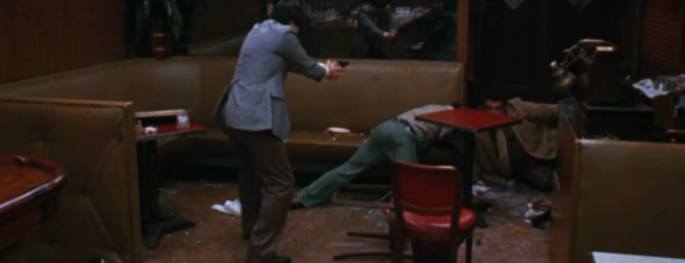
Few did gritty NYC movies better than Sidney Lumet and it’s amazing how his greatest films (many of which were in the 70’s and 80’s) don’t feel like they’ve aged one bit – excellent storytelling will always be excellent storytelling. Morally complex, epic in narrative scope, intimate with its fine details, and having a filmic sweep that rarely graces the cop genre, Prince of the City is easily one of the best, most absorbing cinematic policiers ever crafted. Treat Williams should have been a much bigger star — his fiery, totally riveting performance as a conflicted and corrupt cop investigating internal police transgressions is one for the ages, with one of the best character arcs for any protagonist within this well traveled milieu. Jay Presson Allen’s authentic and minutiae rich screenplay rings true in every scene, and with Lumet’s steady directorial hand guiding us through the many plot threads, the viewer is never lost within the proceedings, despite a no-hand-holding approach by the filmmakers. The great Polish cinematographer Andrzej Bartkowiak’s hand held, extremely naturalistic cinematography amps up the tension resulting in a film that gives off a “fly-on-the-wall” quality.

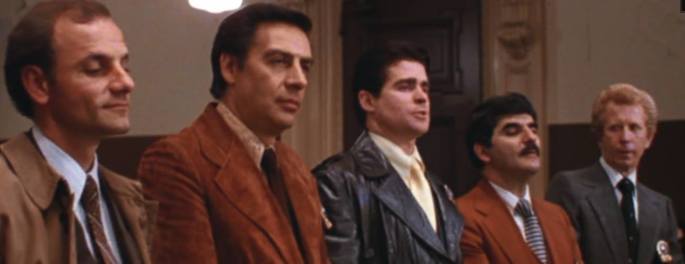
And then there’s LOOK AT THIS CAST POWER — Jerry Orbach, Bob Balaban, Lindsay Crouse, Lance Henriksen, James Tolkan(!), Richard Foronjy, Cynthia Nixon, and Alan King(!), along with tons of perfect character actors with lived-in faces that gave every scene that realistic quality that all of Lumet’s films always possessed. Sadly, Prince of the City was basically ignored by audiences (it recouped its $8 million budget but that’s it), and while certainly getting critical respect at the time, it’s stature as a pinnacle of the genre has been cemented over the years. And with fewer and fewer big-screen cop films getting the greenlight from studio execs in recent years, a film like this deserves to be treasured. The film was nominated for Best Original Screenplay, and despite not being available on home media format, there’s a four hour cut that has made the television airwaves over the years. Let’s hope that someone puts out a much needed Blu-ray release of this seminal American film, with any and all versions. The WB 2-disc DVD does a nice job with image quality and sound so at least we have that for the time being.

Outlander: A Review by Nate Hill
“Beowulf meets Predator” boasts the enthusiastic critic blurb on the poster of one of my favourite sci fi genre benders, Outlander. It’s pure outlandish fun, and better yet it knows it is and therfore doesn’t feel any need to spend a bunch of time on grasping exposition to convince you of any shred of authenticity. It simply hums along on a pure rush of unchecked adventure, always aiming to please and for the very most part, doing so wonderfully. Jim Caviesel stars, and he’s an unassuming Ken doll of an actor who has more intensity than anyone gives him credit for, which always makes me spring to attention when he’s in the driver’s seat. Here he plays Kainen, a voyager from a far away galaxy who has crash landed his spacecraft on earth way back in the time of the Vikings, stranded and in need of refuge. Only problem is, he’s been on the run for some time from a large, hideous and very dangerous creature from his home planet called Moorwen. Moorwen has a very personal and deadly vendetta against Kainen, one which threatens the Viking tribe who give him shelter, led by noble king Hrothgar (John Hurt). Kainen comes from a planet with technology and civilization far advanced from Earth at that time, which makes him a hit with the tribesmen and even more so with Hrothgar’s daughter (Sophia Myles). Moorwen threatens their way of life in its rampage against Kainen, causing tragic collateral damage to a rival clan led by Gunnar (Ron Perlman makes heartbreaking and stone tough work of what is essentially an extended cameo). It’s an awesome movie no matter what anyone says. Any film about an astronaut from a far off galaxy who bands together with friggin vikings to battle a fluorescent space dragon is just automatically a winner. In all seriousness though, this one really is something special,and almost seems like a Dennis Quaid vehicle if it were made in the 80’s. Fun, thrilling and never too serious, it knows it’s place and owns the genre shelf it sits on.
B Movie Glory With Nate: Dark Reel
Dark Reel is severely damaged goods no matter how you look at it. It sucks because there’s some good ideas trying their best to flourish beneath a mountain of sludge, but nothing of any value can breech the surface of this purely shitty B movie with scant traces of a decent outing. It starts off with a black and white prologue that looks like the only part of the film that wasn’t shot with an etch-a-sketch. Scarlett, a young aspiring actress, is lured into a dark abandoned set warehouse under the pretence of an audition, and brutally murdered. Fast forward about six decades, where a young groupie (Edward Furlong, looking like a sack of shit warmed over) wins a walk on role in a sickeningly trashy B movie monstrosity, starring a legendary scream queen (Tiffany Shepis, also a legendary scream queen in real life). It’s not long before so,done with ties to the murder in the prologue starts skulking around the set after hours and hacking people to pieces in ways that are as tasteless as they are cheap looking. The film has one redeeming quality, if you are a fan: Lance Henriksen. He plays Connor Pritchett, schlock movie producer and general whacko. Lance seriously plays the part like he has no idea what the script is, making up verbal diarrhea on the fly, undergoing titanic mood swings and displaying the coherency of someone with serious issues. It’s fun to watch him crash and burn, and even in the most awful poop material like this, he still shines, as batshit crazy as he is. There’s also a cop played by Tony Todd who acts just as unstable as Lance, and Todd rides the wave of his awfully written dialogue and poor direction like a sheepish pro. This is literally one of the worst movies I’ve ever seen, and the funny thing is that it didn’t have to be. The premise itself is great, and even on the couch change budget it was stuck with, they could have at least tried. But no, they threw in the bloody towel and instead of a gem or even an admirable failure we get this monumental piece of festering garbage instead. I had to keep myself occupied in any scenes without Henriksen by hitting half speed fast forward so the characters sound like chipmunks. It says a lot about a flick when you have to do that. Avoid at any cost.
Jim Jarmusch’s Down By Law: A Review by Nate Hill
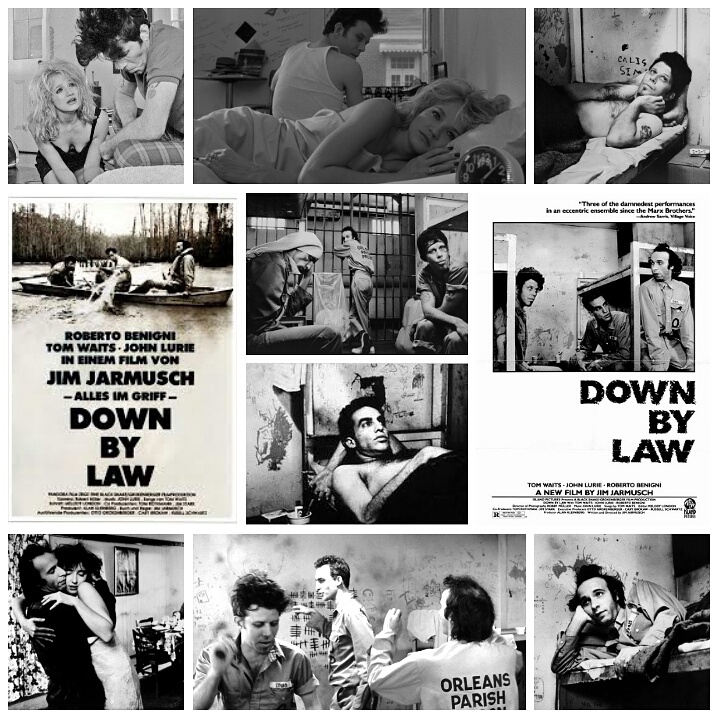
You have to be in a very particular type of mood to properly tune into a Jim Jarmusch film. He populates his often black and white and always slightly mournful films with awkward, dazed individuals who more comfortable in the uncertain pauses between dialogue than the actual words themselves. When I feel like a Jarmusch film (other than Dead Man which is an all timer for me) it’s always during times when I feel the daydreamy grey matter coming on, an otherworldly, downbeat relaxation that his work is rife with. Down By Law is a signature example of this, and most likely the film I connect with most of his, after Dead Man. This one concerns three wayward and very different souls who by fate and unfortunate circumstance end up in jail together. Zach (Tom Waits) is a radio DJ who is hounded by his girlfriend (Ellen Barkin) to be more proactive and less relaxed. Jack (John Lurie) is a laid back pimp, and they both find themselves incarcerated in a Louisiana prison where they meet the eccentric Italian tourist Roberto (Roberto Benigni, hilarious). The trio are a puzzling gaggle of misfits, moments of startling pathos and stinging humour sprouting as their time together goes on. Soon they discover that Roberto may know of a way to escape, and see it as their chance. The characters in any given Jarmusch film never seem the same as usual film archetypes; they’re always quirky and completely their own person, which is no doubt a product of a very intuitive directorial process, and an excellent relationship with the actors. It can be disarming to spend time with such distinct people in film, but when you stop to realize just how weird everyone around you in real life is vs. what is common for movie scripts, it feels geniune. This one is lived in, authentic and funny in that intangible way where you can’t even say why it’s so hilarious. We all a-scream for ice a-scream!
MARCO BRAMBILLA’S DEMOLITION MAN — A REVIEW BY NICK CLEMENT

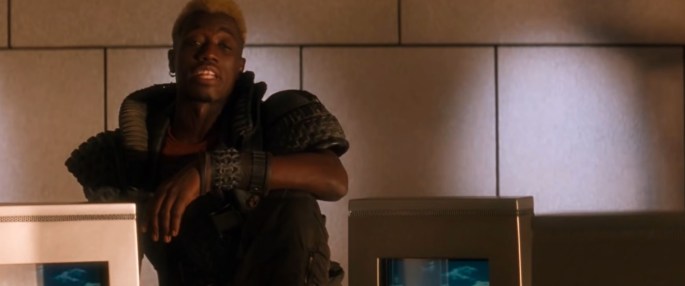
I can’t even believe this movie is real. But it is. And it’s glorious. Every super-high-concept-inch of it. A true product of 1993. Was blown away when I saw the film in theaters. The script by Daniel Waters, Robert Reneau, and Peter Lenkov is absolutely wonderful, balancing smart satire with the expectations of a summer blockbuster, despite the film being an October release. Though apparently heavily edited from its initial, more violent cut, this is a wild and rollicking action adventure that had a futurist sci-fi angle with reverse rules and strange interpersonal dynamics. Concerning two men on opposite sides of the law — one a super-cop (Stallone), the other a super-villain (Snipes) — who are cryogenically frozen only to wake up in a future society they no longer recognize or understand, the film becomes one of the more wacky and insanely fun romps from this era, primarily due to the great star performances from both leads, and a deep supporting cast including Sandra Bullock, Nigel Hawthorne, Benjamin Bratt, Rob Schneider, David Patrick Kelly, Denis Leary, Jack Black and Jesse Ventura in small background roles, and personal favorite character actor Bob Gunton, who can do smug better than anyone on the planet.

Well reviewed by critics and a worldwide box office hit, Demolition Man has gained immense popularity throughout the years; it was a staple HBO item back in the day, and it can’t be underestimated how massive it was on VHS and DVD. It’s stunning to think that this was director Marco Brambilla’s only major directorial highlight, with his only other credit being the ill-fated Excess Baggage. A pioneering visual installation artist, Brambilla took his skills as an intense imager maker and brought a distinct and extremely unique style and eye to one of producer Joel Silver’s more subversive audience pleasers. And because the tonally adventurous script always seemed like it was dipping one toe into weirdness and one toe into the familiar, you’re left with a film that carries a curious, playfully violent attitude that feels almost impossible to replicate. Features a robust score from Elliot Goldenthal, terrific cinematography by Alex Thomson, and razor sharp editing by Stuart Baird. I am beyond pleased that this film hasn’t gotten the reboot treatment.

REAL GENIUS – A REVIEW BY J.D. LAFRANCE

In the 1980s, Martha Coolidge’s films were a welcome antidote to the dominance of John Hughes’ output. On the surface, her films appear to be quite similar, but whereas Hughes’ films ultimately play it safe and are conservative in nature (i.e. the status quo is preserved), Coolidge’s films champion the outsider in society – for example, Nicolas Cage’s punk rocker hooks up with Deborah Foreman’s Valley girl despite societal pressure in Valley Girl (1983). Real Genius (1985) appears to be just another mindless college comedy like Revenge of the Nerds (1984), but whereas that film had its outsiders ultimately become part of accepted mainstream society, the nerds in Real Genius rebel against it and are proud to be different.
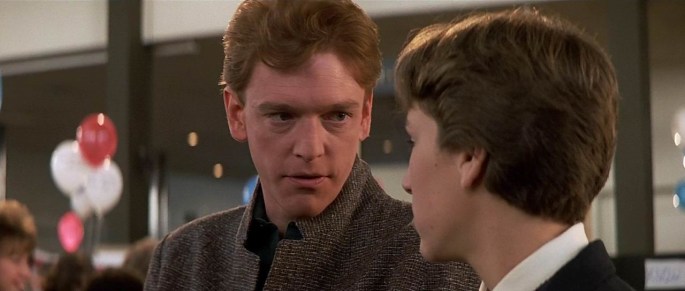
Mitch Taylor (Gabe Jarret) is a brilliant high school student recruited by Professor Jerry Hathaway (William Atherton) to become a student at Pacific Tech and join a special team working on an experimental laser. Hathaway tells Mitch and his parents in person at a science fair. The exchange between them is priceless. His parents obviously have no idea just how smart their son is and only want him to get the best education. At one point, Mitch’s mother asks Hathaway, “I saw your show the other night on radioactive isotopes and I’ve got a question for you. Is that your real hair?” He cheerfully replies, “Is Mitch by any chance adopted?” They are oblivious to the implied insult and Hathaway pulls Mitch aside and tells him, “We’re different than most people. Better.” Hathaway’s elitist attitude is established early on, setting him up as an arrogant snob that must be taught a lesson in humility by our heroes.
Hathaway rooms Mitch with Chris Knight (Val Kilmer), the top brain on campus – at least he used to be until Mitch showed up. We first meet Chris as he’s being taken on a guided tour of a top science laboratory. He has a t-shirt on that reads, “I love toxic waste,” and a set of alien antennae on his head that demonstrate he is the antithesis of Hathaway. He may be super smart but he’s not a stuffed shirt. At one point, his tour guide asks him, “You’re Chris Knight, aren’t you?” Without missing a beat, he replies, “I hope so, I’m wearing his underwear.” Val Kilmer’s deadpan delivery is right on the money and he demonstrates an uncanny knack for comic timing. The film could have so easily set up a rivalry between Chris and Mitch but instead they become friends and team up against a common foe: Kent (Robert Prescott), an arrogant senior student who is also working on the laser.
Chris is super smart, but something of a loose cannon, always cracking jokes and never taking anything too seriously, much to Mitch’s consternation because he doesn’t know how to loosen up and have fun. Mitch also has trouble adjusting to campus life and this isn’t helped by Kent who enjoys tormenting Mitch when the senior student isn’t busy sucking up to Hathaway. Coolidge replaces the class warfare in Valley Girl with in-fighting amongst academics in Real Genius. The setting may be different, but the tactics are no less mean-spirited as Kent delights in publicly humiliating Mitch. Meanwhile, Hathaway puts pressure on Chris to produce a working laser before the school year ends. Failure to do so will result in Hathaway making sure that Chris doesn’t graduate or work in his field of expertise. Unbeknownst to the ace student, his professor is getting pressured by a flunky and his superior from the CIA who want to use the laser for their own covert actions (assassinations from outer space?).
Every so often, Mitch catches a glimpse of a mysterious long-haired man who goes into his closet at random times during the day. His name is Lazlo (Jon Gries) and he lives deep in the bowels of the school. He used to be the smartest student on campus back in the 1970s but cracked under the pressure and now spends all of his time generating entries for the Frito Lay sweepstakes (enter as often as you like) so as to get as many of the prizes as possible. Jon Gries plays Lazlo as a shy genius, smarter than Chris and Mitch combined. He’s a gentle soul and a far cry from the arrogant blowhard he would go on to play in Napoleon Dynamite (2004).
Over the course of the film, Mitch finds himself attracted to Jordan (Michelle Meyrink), a hyperactive student who never seems to sleep. She sports an adorable Louise Brooks-style bob haircut and a nervous energy that is oddly attractive. I had a huge crush on her when I first saw this film back in the day, quite possibly one of my earliest cinematic crushes. She was the ultimate nerd sex symbol in the ‘80s with her undeniable beauty and brains. Sadly, after a few films she grew disenchanted with the movie making business and retired to Canada to become a Zen Buddhist.
Remember when Val Kilmer was funny? Between this film and Top Secret! (1984), he displayed some impressive comedic chops. Kilmer excels at delivering smartass quips and jokes but is also capable of delivering an inspirational speech that convinces Mitch to stick it out at school and get revenge on Kent. There are two scenes where he dispenses with the jokes and has a relatively serious conversation with Mitch about life. They are refreshingly heartfelt and elevate Real Genius above the usual ‘80s teen comedy.
Gabe Jarret is perfectly cast as the helplessly square Mitch with his dorky haircut and his J.C. Penney’s wardrobe. We aren’t meant to laugh at him and Coolidge shows that he’s a good kid thrust into a new and strange environment. He’s smart, but lacks the emotional maturity, which he will acquire over the course of the film. Jarret does a nice job of conveying his character’s arc. He doesn’t totally transform into Chris but instead absorbs some of his traits while remaining true to himself.
In the ‘80s, William Atherton seemed to be the go-to guy for playing douchebag authority figures, with memorable turns as the unscrupulous journalist in Die Hard (1988), the “dickless” EPA guy in Ghostbusters (1984), and, of course, his turn in Real Genius. Atherton’s job, and man, does he do it oh so well, is to provide a source of conflict for our protagonists. He portrays Hathaway as the ultimate arrogant prick and we can’t wait to see him get his well-deserved comeuppance at the hands of Chris and Mitch.
Real Genius does plug in the usual tropes of ‘80s teen comedies with the now dated soundtrack of New Wave songs, most of them forgotten except for “Everybody Wants to the Rule the World” by Tears for Fears, which plays over the blissfully carefree ending of the film. There are the wacky comedic set pieces involving pranks. There’s also the T&A factor when Chris takes Mitch to an indoor pool party populated by sexy beauticians. Not to mention, the dorm that Chris and his classmates live in which vaguely resembles the chaotic frat house in Animal House (1978), only inhabited by really smart people.
However, it is how the film presents these generic elements that sets it apart from the typical ‘80s teen comedy. For example, the pranks are quite inventive, like when Chris and Mitch manage to place Kent’s car in his dorm room. There are several and they all lead up to the mack daddy of them all, which occurs at the climax of the film. While there is the requisite T&A factor in Real Genius, the PG rating assures that we don’t see much, just some girls in bikinis. Instead, we get the understated romance that develops between Mitch and Jordan, which is rather sweet in its own unassuming way. The dorm is certainly not the debauched chaos of Delta House, but it clearly is a place of fun, led by Chris and his various antics.
Producer Brian Grazer loved the humor and the sensibility that Martha Coolidge brought to Valley Girl and asked her to direct Real Genius. She thought that the screenplay was funny, but it had “a lot of penis and scatological jokes” that reminded her of other teen comedies she had turned down in the past. However, Grazer brought in Lowell Ganz and Babaloo Mandel to give the script a polish and had Coolidge re-read it. She liked it and Grazer’s boundless enthusiasm convinced her to commit to the project. Still not completely satisfied with the script, Grazer brought in comedy writer P.J. Torokvei to help Coolidge create the story, come up with the ending and fully develop the characters. For example, it was Torokvei who came up with the character of Jordan and was responsible for many of Chris Knight’s memorably smartass remarks.
Coolidge insisted on researching laser technology and policies of the CIA. The producers even brought in top-level consultants from the military and weapons development experts. To make Real Genius distinctive from other teen science fiction films at the time, the director went to great lengths to make sure the science was authentic and the science fiction aspect was plausible. At the time, scientists were actually working on the powerful laser Chris and his fellow students were developing for Hathaway, but the filmmakers could only work with a smaller wattage for reasons of safety and cost. The production used real lasers with very little visual effects enhancement, of which was used only sparingly at the film’s climax.
In addition, she interviewed dozens of Cal Tech students and based most of the stories in the film and the visual depiction of their school on Cal Tech, in particular Dabney Hall. Coolidge also met with all kinds of scientists and students, including the legendary Cal Tech mathematician grad that was rumored to have lived in the steam tunnels. To say that the director was a stickler for authenticity was an understatement. The graffiti in the dorm was copied from the actual dorm graffiti by scenic painters and then embellished further by Cal Tech students brought in by the production.
Not surprisingly, Coolidge and producers saw many young actors for the role of Chris Knight. It became obvious that Val Kilmer was the best actor to embody the role, but John Cusack was also considered at one point. However, once principal photography began, Coolidge found Kilmer not so easy to work with because he was “intellectually challenging and erratic.” He avoided working by asking a lot of questions and was sometimes late to the set and acted moody. That being said, over the 75-day shoot, they gained a lot of trust and worked well together.
The filmmakers also spent a lot of time trying to cast an actor for the role of Mitch Taylor. At one point, they seriously considered hiring a true young genius that had graduated college in his early teens. They discovered Gabe Jarret late in pre-production and he had the “right combination of seriousness, gawkiness, intelligence and emotion that we needed,” Coolidge remembers.
For the house that explodes with popcorn at the film’s exciting climax, the special F/X people designed all kinds of hydraulic systems to move the popcorn. The next challenge was generating all the stuff. They couldn’t buy all the popcorn needed for the scene in the short amount of time they had so the film crew popped 40 tons themselves on the lot over six weeks. All the popcorn was stored in 38 40-foot tractor-trailer trucks.
Real Genius argues that nerds can have fun too, but there needs to be a balance. You can love solving problems but it can’t be all science and no philosophy as Chris tells Mitch. People like Kent and Hathaway have no sense of humor and are self-obsessed egotists. They are ambitious to a fault, not caring who they step on the way, while Chris and Mitch are aware of the consequences of their actions. There is sweetness to this film that is endearing and rather strange considering that Neal Israel and Pat Proft wrote the screenplay (authors of such paeans to sweetness, like Police Academy and Bachelor Party), but Coolidge is firmly in charge and wisely doesn’t let Real Genius get too sappy. She also doesn’t let the funny stuff devolve into mindless frat humor, instead maintaining a proper mix that doesn’t insult our intelligence. The end result is a film that the characters in the film might enjoy, if they weren’t already in it. Achieving just the right alchemy may explain why the film continues to enjoy a modest cult following and is one of the few teen comedies from the ‘80s that stands the test of time.