Michael Cimino’s Year Of The Dragon: A Review by Nate Hill

image

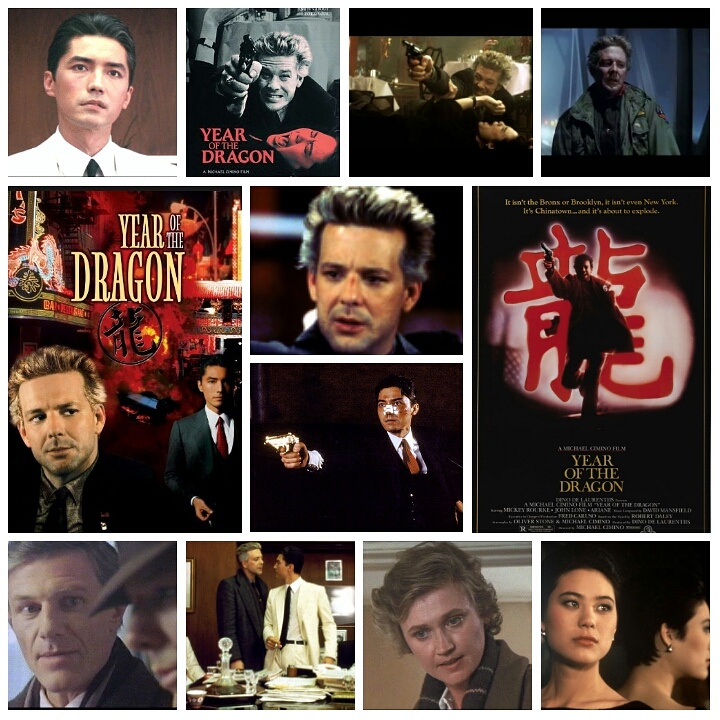
Michael Cimino’s Year Of The Dragon is a visceral blast of pure Americana as only the man could bring us. It kills me that he suffered through that whole Heaven’s Gate fiasco (which is actually a really good movie, but that’s another story and argument entirely) because it extinguished any hopes of him making future films, and in doing so the studios effectively committed genocide against their own. Sure the guy was crazy as hell, but damn could he ever make a great film. This one is one of the most criminally overlooked cop flicks of all time, partly due to Cimino’s scorching direction and partly due to a a performance of monolithic grittiness from Mickey Rourke as Captain Stanley White, the cop who won’t stop. White is fresh out of Nam and mad as hell, launching a unilateral crusade of racist violence and self righteous fury against the Chinese crime syndicate in New York City, particularly a young upstart in their organization named Joey Thai (John Lone). Thai is as ruthless as White is determind, and the two clash in ugly spectacle, causing leagues of collateral damage on either side and inciting them both to roar towards an inevitable, bloody conclusion. Thai’s elderly superiors warn him of men like White, men who are fuelled purely by anger, bitterness and nothing else, smelling the fire and brimstone in the air and wisely stepping out of the way. Thai is of a younger, more petulant generation and foolishly decides to meet the beast head on by essentially kicking the hornet’s nest. White is warned by his caring wife (Caroline Kava) and fellow cop and friend Lou (Raymond J. Barry is excellent, firing Rourke up further with his work) not to mess with such a dangerous crowd. He has a volatile relationship with a beautiful Chinese American reporter (Arianne is the only weak link in the acting chain) who puts herself on the line for him by digging around in dangerous corners. The intensity level of this film is something straight from the adrenal gland; even in episodic scenes of introspect we feel the hum of the character’s emotions, and when the conflict starts again, which it does in fast and furious amounts, the actors are simply in overdrive. Rourke has never been better than he was in the 80’s, it was just his zenith of power. This isn’t a role that gets a lot of recognition, but along with Angel Heart, Rumble Fish and Pope Of Greenwich Village, I think it’s his best. He puts so much of himself into Stanley White that the edges which separate performer from performance begin to blur and waver, until we are locked into his work on a level that goes beyond passive consumption of art and elicits something reflective in us. Not to sound too hippie dippy about it, but the guy is just that fucking good. On the calmer side of the coin, John Lone brings both evil and elegance to Joey, a slick surface charm that’s constantly disturbed by Rourke’s hostility, leading to an eventual meltdown that’s very cool to see in Lone’s expert hands. This is one for the ages and should be in the same pantheon with all timers like Heat, Serpico, The French Connection and others. Rourke fires on all cylinders, as do his colleagues of the craft, and Cimino sits cackling at the switchboard with a mad calm, yanking all the right levers in a frenzy of unhinged genius. Not to be missed.

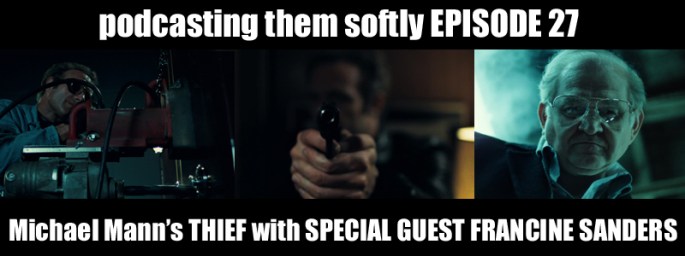
Episode 28: Michael Mann’s THIEF with Special Guest FRANCINE SANDERS

FRANCINE POWERCAST

We covered Michael Mann’s 1981 neo noir Chicago crime film, THIEF, that starred James Caan, Tuesday Weld, James Belushi, Dennis Farina, and Willie Nelson.  We’re joined with Frank’s former film professor, Francine Sanders, who teaches classes at Columbia College of Chicago.  Frank took her Studies of the Films of the 1970’s.  Francine teaches film courses at Oakton Community College’s Emeritus Program, and has served on the faculty of Tribeca Flashpoint Media Arts Academy and Roosevelt University.  Not only is she a published and awarded writer, but she worked for the Chicago Police Department for eight and half years as a civilian investigator for the Office of Professional Standards and helped uncover police torture and corruption under Chicago Police Department’s former Cmdr. Jon Burge.  Francine is a key component for Frank’s love of film, and there wouldn’t be a Podcasting Them Softy (at least from Frank’s end) without her!

NIXON – A REVIEW BY J.D. LAFRANCE

Nixon5

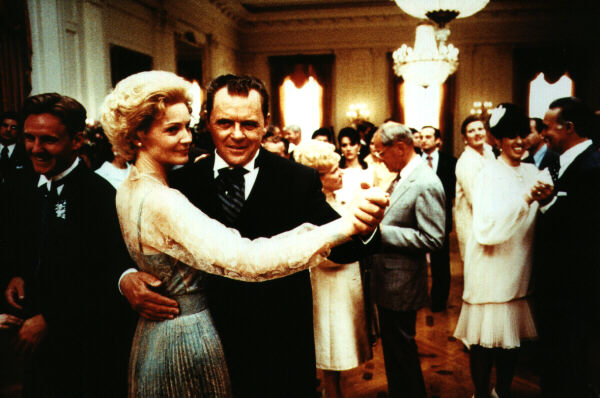
Oliver Stone’s film, Nixon (1995) portrays the American political process as an unpredictable system that politicians have no hope of ever fully controlling. The best they can do is keep it in check most of the time. This theory can be seen in its embryonic stage in JFK (1991) with President John F. Kennedy being assassinated by shadowy forces within the political system, but it was not until Nixon that Stone was able to fully articulate it. As film critic Gavin Smith observed, “Nixon is a historical drama about the constructing and recording of history, assembled as we watch.” Stone has created a unique version of the historical biopic that combines fact and speculation with a cinematic style that blends various film stocks in a seamlessly layered, complex narrative. This fractured, overtly stylized approach draws attention to the fact that we are watching a film. As Stone has said in an interview, “I don’t pretend that it is reality.” This, in turn, allows him to deliver his message with absolute clarity.

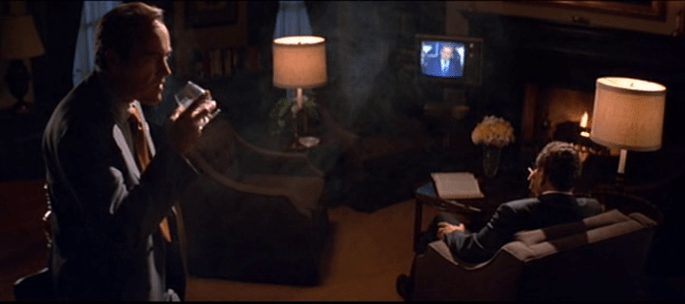
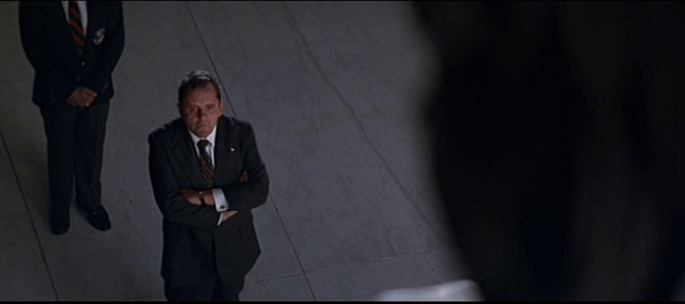
Like Citizen Kane (1941) before it, Nixon traces the dramatic rise and fall of a historical figure who tried so hard to be loved by all but ended up being infamous and misunderstood. While Orson Welles’ film was a thinly-veiled attack on newspaper tycoon, William Randolph Hearst, Stone paints an almost sympathetic portrayal of Richard Nixon (Anthony Hopkins). Stone may not like Nixon personally, but he does try to explore what motivated the man’s actions and really get inside his head. The director even throws in a stylistic nod to Kane as part of the opening credits play over a shot of a dark and stormy night at the White House. The camera moves through the fence in a way that evokes the opening of Welles’ film with Kane’s imposing estate. And like Welles’ film, Nixon employs a flashback device as Nixon listens to the Watergate tapes and reflects on his life, from his tough childhood in Whittier, California, to his beleaguered political career that culminates with his tumultuous stint in the White House.

The first real indication of Stone’s thesis of the political system as a wild, untamable animal comes when Nixon talks to FBI director J. Edgar Hoover (Bob Hoskins) at a horse race about running for President. There are all kinds of shots of horses snorting wildly – the first hint, visually, of what Stone is trying to get at. Hoover makes it known that he will support Nixon if he, in turn, supports him, and is willing to supply him with dirt on Robert Kennedy to help the cause. Hoover makes an intriguing comment when he tells Nixon, “I look at it from the point of view that the system can only take so much abuse. It adjusts itself eventually … But there are times there are savage outbursts.” He cites Martin Luther King’s promiscuity and continues, “Sometimes the system comes very close to cracking.” The implication in this scene is that Hoover is a significant cog in the United States political machine and one that Nixon must respect and work with.

The second significant example where Stone gives support to his thesis is when Nixon meets with Richard Helms (Sam Waterston), director of the CIA. Like Hoover, Helms is a powerful man within the system because he knows and protects so many of its dirty little secrets. They get to talking about Cuba and Nixon’s involvement to assassinate Fidel Castro, which Helms has evidence of via memos. He refers to it as “not an operation so much as an organic phenomenon. It grew. It changed shape. It developed appetites.” Helms is fiercely protective of his position and of the CIA, resisting Nixon’s request for incriminating documents. Where Hoover is portrayed as gruff and obvious, Helms is elusive and distant, played with icy intensity by Sam Waterston.

The third and most important example occurs when Nixon spontaneously meets with war protesters on the steps of the Lincoln Memorial. This is where Stone lays it all out and the film features a fascinating exchange between the President and a female protester (Joanna Going):

Protester: You can’t stop it can you? Even if you wanted to. ‘Cause it’s not you, it’s the system. The system won’t let you stop it.
Nixon: There’s more at stake here then what you want or what I want.
Protester: Then what’s the point? What’s the point of being President? You’re powerless!
Nixon: No. No, I’m not powerless. ‘Cause I understand the system. I believe I can control it. Maybe not control it totally but tame it enough to do some good.
Protester: Sounds like you’re talking about a wild animal.
Nixon: Maybe I am.

Of this scene, Stone has said that Nixon realizes that the system is “more powerful than he is. We can’t get into it that much, but we hint at it so many times – the military-industrial complex, the forces of money.” Stone’s film argues that Nixon really did want to institute change and make a difference in the world, but his own shortcomings, coupled with the complex infrastructure that is the United States political system, ultimately led to his downfall. Stone and the screenwriters conceived of the concept of the political system as “the beast,” which one of the film’s screenwriters Christopher Wilkinson described as “a headless monster that lurches through postwar history,” and served as a metaphor for a system of dark forces that resulted in the assassinations of the Kennedy brothers and Martin Luther King, and the Vietnam War, as well as helping Nixon’s rise to power and his fall from it. In an interview, Stone elaborated further. He saw “the beast” as a “system … which grinds the individual down … it’s a system of checks and balances that drives itself off: 1) the power of money and markets; 2) state power, government power; 3) corporate power, which is probably greater than state power; 4) the political process, or election through money, which is therefore in tow to the system; and 5) the media, which mostly protects the status quo and their ownership’s interests.”

Anthony Hopkins’ stunning portrayal of the former President humanizes this historical figure. From the way the film is shot and edited, we are seeing the events of U.S. history through Nixon’s perspective. This approach also helps in creating a sympathetic portrait of the man. Hopkins wisely does not opt for a Rich Little imitation but instead captures the essence and spirit of the man. He shows Nixon’s aggressive side, where he speaks in football metaphors and refers to himself in the third person, and also a vulnerable one in the scenes with his wife, Pat. It’s a wonderfully layered performance that Hopkins hasn’t equaled since because he hasn’t been given material and a director that has challenged him in quite the way that Stone did with Nixon.

Opposite Hopkins is Joan Allen as Pat Nixon. She more than holds her own with the Academy Award-winning thespian, portraying Pat as a long suffering yet incredibly strong-willed wife who has to sit by and watch her husband strive for unattainable goals. There’s a scene where she reacts in private to her husband losing the 1960 Presidential election to John F. Kennedy and she looks visibly upset, wiping away tears while trying to maintain her composure. In the following scene with her husband, Pat tells him about the toll his political career is taking on their family, which comes across as quite touching. Tears well up in Pat’s eyes as she consoles her husband while he looks tired and defeated. It’s a wonderfully intimate moment that humanizes both of them considerably. All of the scenes between Allen and Hopkins crackle with a kind of tangible intensity as we see the toll politics takes on them. This is not one of those token wife roles that is so often seen in these kinds of films. The well-written screenplay and Allen’s performance flesh out Pat Nixon into a three-dimensional character.
vlcsnap-00006

As always, Stone’s knack for casting is impeccable. Much like he did with JFK, Stone surrounds his leads with an impressive roster of big names in the supporting roles: James Woods, Ed Harris, Bob Hoskins, David Hyde Pierce, Paul Sorvino, Powers Boothe, J.T. Walsh, and, in a restored scene, Sam Waterston delivers a deliciously chilling performance as Richard Helms. These recognizable faces help one keep track of the historical figures that pop up throughout the film.

Originally, Stone had been developing two projects – the musical Evita (1996) and a film about Panamanian dictator Manuel Noriega. When they both failed to get made, he turned his attention to a biopic about Nixon with the president’s death in April 1994 being a key factor in the director’s decision. The project actually originated with Eric Hamburg, a former speechwriter and staff member of the House Foreign Affairs Committee, after having dinner with Stone. In 1993, Hamburg mentioned the idea to writer Steve Rivele with the concept being that they would incorporate all of Nixon’s misdeeds, both known and speculative. Hamburg encouraged Rivele to write a screenplay with his partner Christopher Wilkinson. They wrote a treatment in November 1993. In it was the concept of the political system as a beast and this is what convinced Stone to get involved. He immersed himself in research with the help of Hamburg.

Stone commissioned the first draft of the film’s screenplay from Rivele and Wilkinson and it was completed on June 17, 1994, the anniversary of the Watergate break-in. The script was based on research from various sources, including documents, transcripts and hours of footage from the Nixon White House. Early on, Rivele and Wilkinson hated Nixon but the longer they worked on the film, and “the more we knew about him, our contempt was slowly eroded to the point where we more than pitied him, we empathized with him.” Stone structured his film into two acts with the first one about Nixon’s loss of power and the second one about Nixon in power only to lose it again.

Stone pitched the project to Warner Bros. but, according to the director, they saw it “as a bunch of unattractive older white men sitting around in suits, with a lot of dialogue and not enough action.” They also didn’t agree with Stone’s choice to play Nixon – Anthony Hopkins. Instead, they wanted Tom Hanks or Jack Nicholson – two of Stone’s original choices and both of whom had passed on the role. Stone even met with Warren Beatty but the actor wanted to make too many changes to the script. Stone went with Hopkins based on his performances in Remains of the Day (1993) and Shadowlands (1993). The director remembered, “The isolation of Tony is what struck me. The loneliness. I felt that was the quality that always marked Nixon.” Upon meeting Stone for the first time, Hopkins saw the director as “one of the great bad boys of American pop culture, and I might be a fool to walk away.” He was convinced that to take on such a challenging role that would require him to “impersonate the soul of Nixon” by the scenes in the film when he talks about his mother and father. “That affected me,” he said. To prepare for the role, Hopkins watched a lot of documentary footage on Nixon. At night, he would go to sleep with footage playing so that it would seep into his subconscious.

Joan Allen auditioned for the role of Pat Nixon over a period of several months. During one of these auditions, she read opposite Beatty when he was briefly interested. After this audition, Beatty told Stone that he had found his Pat Nixon. She learned, through her research, that Pat was a strong person who had a difficult life. Allen based her performance on interviews with former Nixon aides, books about the First Lady and a Barbara Walters interview in the early 1970s. Stone, Hamburg, Hopkins, and Woods flew to Washington, D.C. and interviewed the surviving members of Nixon’s inner circle: lawyer Leonard Garment, Attorney General Elliot Richardson and Robert McNamara, a former Secretary of Defense under the Kennedy and Lyndon Johnson administrations. In addition, Stone hired Alexander Butterfield, a former secretary in the cabinet and special assistant to Nixon and who first revealed the existence of Nixon’s secret tapes of his oval office conversations, John Sears, former deputy White House counsel, and John Dean as consultants. To research their roles, Powers Boothe, David Hyde Pierce and Paul Sorvino met with their real-life counterparts, but J.T. Walsh decided not to contact John Ehrlichman because he threatened to sue the production after reading an early version of the script and was not happy with how he was portrayed.

Stone’s producing partner and financier Arnold Milchan had a deal with the director to make any film he wanted up to a budget of $42.5 million but refused to honor their agreement, saying that he would put up no more than $35 million because he felt Nixon was an uncommercial project. Stone refused to make the film with that budget and a week before shooting was to begin he approached Hungarian financier Andrew Vajna who had a co-financing deal with Disney’s Hollywood Pictures. At the time, Vajna was hoping to get some respectability in Hollywood and possibly an Academy Award and agreed to provide the $43 million budget. In order to cut costs, Stone leased the White House sets from The American President (1995).

Reportedly, there was a lot mischievous jokes exchanged between the actors on the set. Early on, Hopkins was intimidated by the amount of dialogue he had to learn, more of which was being added and changed all the time, and then Sorvino told him that “there was room for improvement” and that he would be willing to help him. According to James Woods, Sorvino told Hopkins that he was “doing the whole thing wrong” and that he was an “expert” who could help Hopkins. Sorvino took Hopkins to lunch and then afterwards the British thespian told Stone that he wanted to quit the production. The director managed to convince him to stay on. Hopkins remembered, “There were moments when I wanted to get out, when I wanted to just do a nice Knot’s Landing or something.” Woods also cracked several good natured jokes with Hopkins. He said, “I’d always tell him how great he was in Psycho. I’d call him Lady Perkins all the time instead of Sir Anthony Hopkins.”

What is perhaps most stunning about Nixon is the style of the film. Employing the editing techniques and innovative camerawork he perfected in JFK and Natural Born Killers (1994), Stone created a unique version of the historical biopic that combines actual documentary footage with fictional material and that blends various film stocks in attempt to shed light on a figure most people knew very little about. This fractured, overtly stylized approach suggests that we are seeing historical events through the prism of Nixon’s perspective. The film is not meant to be the definitive word on the man but rather, as Stone said in an interview, the “basis to start reading, to start investigating on your own.”

Stone had his editors in three different rooms with the scenes from the film revolving from one room to another, “depending on how successful they were.” If one editor wasn’t successful with a scene it went to another. Stone said it was “the most intense post- I’ve ever done, even more intense than JFK” because he was screening the film three times a week, making changes in 48 to 72 hours, rescreening the film and then making another 48 hours of changes.

Seven days before Nixon was to be released in theaters, the Nixon family issued a statement calling parts of the film “reprehensible” and that it was designed to “defame and degrade president and Mrs. Nixon’s memories in the mind of the American public.” The statement also criticized Stone’s depiction of Nixon’s private life and that of his childhood and his part in planning the assassination of Castro. This statement was actually issued by the Richard Nixon Library in Yorba Linda, California on behalf of the Nixon family based on a published copy of the script. Stone responded that his “purpose in making the film Nixon, was neither malicious nor defamatory,” and to attempt “a fuller understanding of the life and career of Richard Nixon – the good and the bad, the triumphs and the tragedies, and the legacy he left his nation and the world.” The attacks didn’t stop there. In a letter to Nixon’s daughters, Walt Disney’s daughter, Diane Disney Miller, said that Stone “has committed a grave disservice to your family, to the presidency, and to American history.”
vlcsnap-00004

Nixon is a powerful historical biopic – arguably the last great film Oliver Stone has made to date. It is also, coincidentally (or maybe not), the last film he and regular collaborator Robert Richardson made together. The legendary cinematographer was as much responsible for defining the distinctive style of Stone’s films as the director himself. Stone’s work has never been the same since they parted company. Nixon was also the last time he had enough juice in Hollywood to command such an impressive cast of actors. Admittedly, Hollywood has changed considerably since this film was made and Stone has had to adapt with the times but hopefully he has another great film like Nixon left in him.
MIKE LEIGH’S HAPPY-GO-LUCKY — A REVIEW BY NICK CLEMENT

4

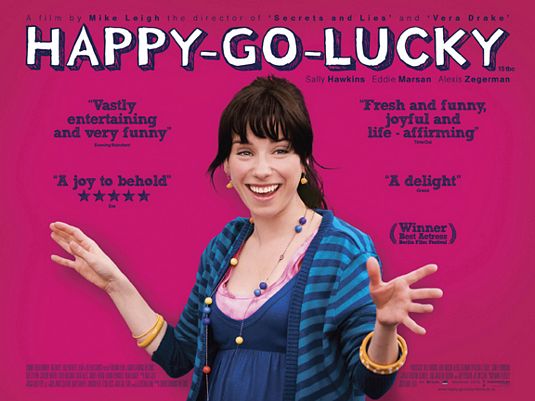
Happy-Go-Lucky is a deceptively simple British film from writer-director Mike Leigh that was easily one of my favorite films from 2008. In its own low-key and oddly charming way, this offbeat little movie engages the audience right from the start, but it’s hard to tell where the story wants to take you. With splendid performances from its entire cast, this is one of those small, talky films that might seem to be going nowhere but you realize how deep the narrative is cutting by the end. This isn’t a film with a “plot” per se, but rather, it’s about people, their relationships, and how the human spirit thrives in each and every one of us. There are no “bad guys,” no massive plot twists, no shoot-outs or car chases, as this is a movie about the human condition, and beneath its sunny exterior, rests some dark truths that everyone faces at one time or another in their lives. I’ve long been a fan of Leigh’s smart and stylish work, as he’s been one of the most dependable filmmakers over the last 20 years. This is one of his best films despite it not having as high of a profile as others in his phenomenal filmography.

2

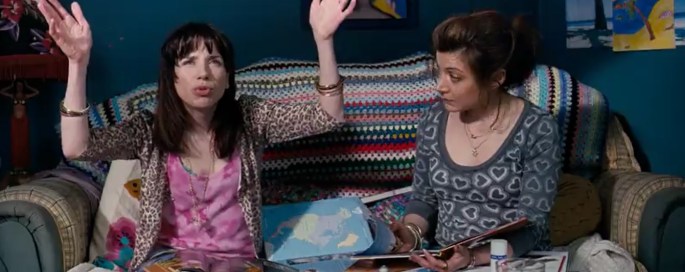
Sally Hawkins, in a tour de force performance, is Poppy, an eternally good-natured woman living in London with her friend and sister. She’s a teacher, a great friend, a caring sister, a party animal, and above all, a woman with the capacity to love, respect, and think positively about anything and anyone, no matter how flawed they may be. We see her in class, working with her students, trying to give them a better education. We see her with her friends, having a blast, and bringing joy to their lives. This must have been an extremely tough role to pull off for Hawkins, as she had to imbue Poppy with the sunniest of dispositions and never once stray from her upbeat spirit. Even when things around her aren’t quite properly working, she never loses her cool, and always remains optimistic. For instance, after her bike is stolen, the first thing that crosses her mind is sadness in that she wasn’t able to “say good bye” to her precious set of wheels. Never mind that some asshole has stolen it; that’s just part of life to Poppy. She’s upset that she didn’t get to say good bye. Some cynical viewers might find her character to be annoying, too upbeat, and too unrelenting. And they might be correct. But those people need to realize that there are plenty of people like Poppy out there in the real world. We just don’t often get a chance to spend time with them when we go to the movies, as storytellers tend to dwell on the depressing or the dark. Happy-Go-Lucky is that rare film about the celebration of life and how some people can raise the spirits of everyone around them, no matter how problematic their lives may be.

3

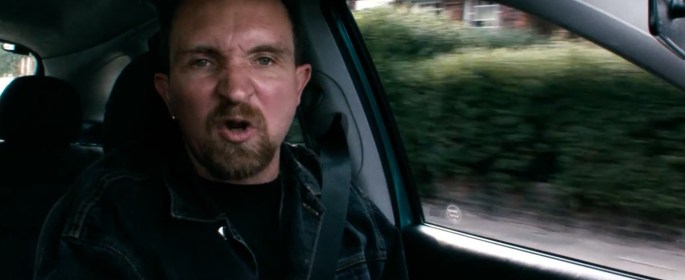
This theory is put to the test when Poppy starts taking driving lessons from a rather unpleasant driving instructor named Scott, brilliantly played by veteran character actor Eddie Marsan, who has made memorable appearances in a diverse range of films including Miami Vice, The New World, and Hancock. Scott is damaged goods and Poppy knows it. But she doesn’t let that deter her. Through their weekly lessons together, Poppy starts to work her happy-magic on Scott, who alternates between being receptive to her charms, and completely shut off from them. Scott’s got a whole series of rage management issues and through his interactions with Poppy, some of those issues become more troubling, and some are put to rest. Marsan got to unload in a fiery, explosive scene towards the end of the film that is the most emotionally hard-hitting moment of the piece; he’s absolutely terrific.

happy_go_lucky_ver3

And so is the film overall. I didn’t know too much about it before I walked into the theater and viewed it nearly eight years ago, and since then, I’ve seen it a few more times, and I always marvel at its humanistic qualities and how Leigh really wanted to present a lead character who had a lot going on under the surface. A film like Happy-Go-Lucky is rare in that it celebrates all that is potentially wonderful about people rather than focusing on the inherent flaws of human beings. And while there is a dark subtext to some of the narrative upon further reflection, you get swept up by Poppy’s unending love for life and her ability to make all those around her smile with delight. Leigh has always been a filmmaker interested in human behavior, and in films such as Secrets & Lies, Vera Drake, Naked, Topsy Turvy, and Mr. Turner, you fall totally under his smooth filmmaking spell, which gives way to the elegant manner in which in which people interact with each other. Happy-Go-Lucky is a pure delight from start to finish.

happy_go_lucky_ver2

Sinner: A Review by Nate Hill

image

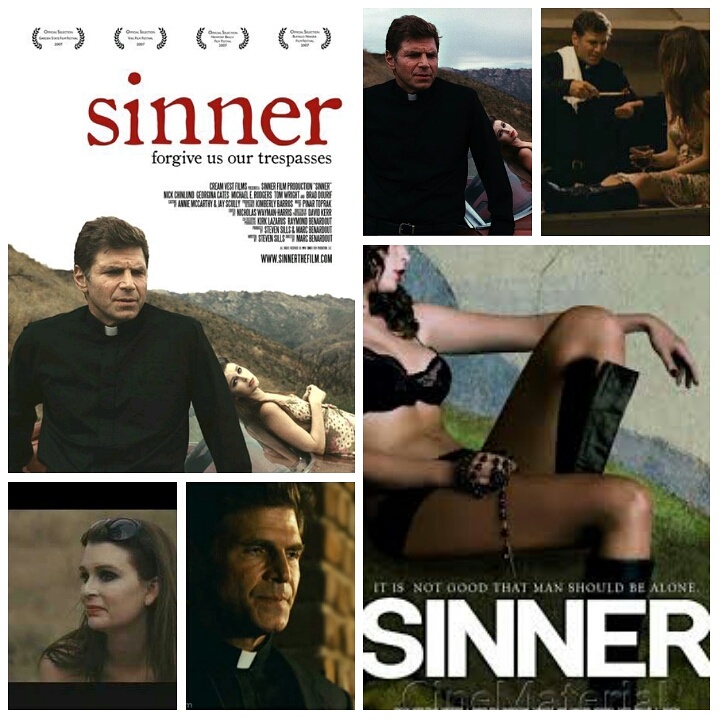
Sinner is a 2007 indie buried in the depths of obscurity, and defined by its very bold choice to cast an actor in the lead role whose career so far has been so different from the type of character he plays here, it’s a true blessing for fans to see him in this new light. The actor in question is Nick Chinlund, a rough looking bruiser with a filmography almost entirely made up of villainous creeps, grizzled detectives and other assorted hardcases (see Con Air, Training Day, The X Files and The Chronicles Of Riddick for his most critically celebrated work). Here he drops every trait he’s been known for, playing small town catholic priest Anthony Romano, a man with a troubled past and an almost bankrupt parish who is facing an internal crisis, only made worse by the arrival of skanky grifter Lil (Georgina Cates) who preys on celibate priests, amongst other bottom-feeding life choices. After an incident involving Romano’s lecherous fellow preacher, he allows Lil to take refuge from the police in his rectory, against better judgment. She’s a nasty piece of work at first and Cates’s performance is far too over the top, only simmering down to meet the character arc in the script long after it calls for action, making her work too little, too late, yet still rather affecting. Chinlund is nothing short of mesmerizing, giving Romano the internal conflict and vulnerability the character deserves, which is not an easy task when one considers the complex nature of the writing. Underrated doesn’t begin to describe this actor, and lately I’ve been sad to see he hasn’t been given many roles that are worthy of his talent. I’ve searched far and wide for Sinner many years, finally finding an amazon seller who would send me a copy. I loved it, and it made me so happy to see Chinlund get the kind of role that goes against the grain of much of his work. Romano uses the sort of golf as a release from priestly and personal hardships, the script using lots of golfer’s lingo as sly similes for his personal issues. Tagging along with him is his scrappy and seemingly imaginary Caddy, played by Brad Dourif. Dourif can make any role, and I mean any, into pure magic with his dedication to the craft. Seeing him and Chinlund share a few wonderful scenes with bushels of chemistry was a nerd’s dream come true for me, and part of the reason I searched so long for a copy of this film. For casuals this may be a bit offbeat to really sink into, but for fans of the actors and idiosyncratic indie flicks, this is a bona fide goldmine.

GREEN ROOM – A Review by Frank Mengarelli

“He still breathing? Let him bleed…”

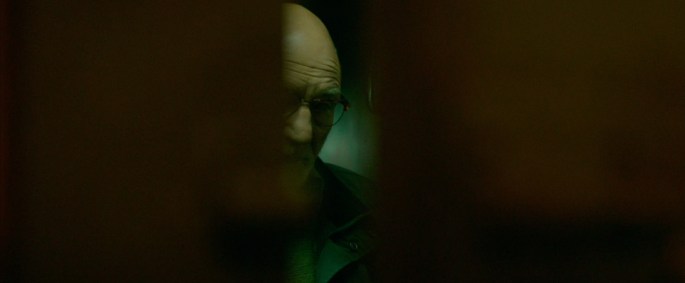
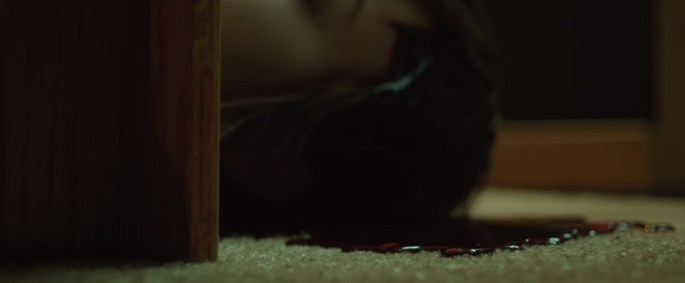
GREEN ROOM is extreme. An indie band is in the absolute wrong place at the absolute wrong time. After the band performs at a rural locale, they accidentally walk in on the aftermath of a murder committed by skin heads. The impending doom of the film is such a fast burn and with each act it escalates at the most rapid pace possible. You can’t watch the gruesomeness of what’s happening, but you can’t look away either.

GR 1

This film is the hardest R rating in recent memory. No, it’s not over-the-top violence like DEADPOOL or a Tarantino film; the violence is all too real, all too frightening. The onscreen extremism is effective in two parts. Visually, it’s stomach turning. Razor blades, machetes, and pitbulls are all weapons of heinous destruction. The second part is the psychological warfare that is strategically released by the Neo Nazi leader, Patrick Stewart.

The casting of Patrick Stewart may be the most genius casting since William Hurt’s turn in A HISTORY OF VIOLECNE. Writer/director Jeremy Saulnier knew exactly what he had with Patrick Stewart. Stewart cashes in on his careers worth of affability to give a frightening and horrifying performance.

GR 2

Saulnier brilliantly constructs a films that is so terrifying, that it gives Lars von Trier at his absolute darkest a run for his money. GREEN ROOM is amazing. Sean Porter’s cinematography not only pops, but also casts a shadow over images that misdirect us in a brilliant way.

The biggest gut punch from the film is that there are actual people like this. The White Power movement, while subtle at times, is still a very large demographic of America, some more extreme as others. There isn’t an explanation as to why they do what they do, or believe what they believe – because they are so filled with hatred that nothing else matters. And that’s the scariest part of GREEN ROOM. It is reality. Man is the cruelest animal.

GR 3

Clay Pigeons: A Review by Nate Hill

image

Clay Pigeons is one of the odder films floating around out there, but it’s a damn good time at the movies. It fits into a subgenre that I have lovingly dub as ‘desert noir’, other prime examples being Oliver Stone’s U Turn and John Dahl’s Red Rock West. Intrigue and murder abound under a sun soaked, parchment dry landscape in these types of films, always with a healthy helping of dark humour and unsettling, psychopathic characters running around, perpetually up to no good. Joaquin Phoenix (adding to the U Turn vibe) plays Clay, a good guy who seems to have a real problem with bad luck. He finds out his friend has killed himself, which seems to be the first swirl in a spooky spiral of trouble that veers towards him like a dust devil. Soon nosy FBI agent Dale Shelby (reliably perky Janeane Garofalo) comes to town, turning her attention towards him. Dan Mooney (ever great Scott Wilson stealing scenes with perched stealth) is Clay’s friend and the town Sheriff, also on the lookout for clues. These two are the least of his worries though, as the worst is yet to come with the arrival of charming serial killer Lester Long (Vince Vaughn). This is my favourite Vince Vaughn performance because he shows his versatility with the brittle, lightning quick turns of personality injected into Lester. One minute he’s your best buddy and a lovable loudmouth, the next a coiled viper with untold violence beneath the jovial exterior. They always say serial killers are charmers, and Vince Vaughn takes that sentiment, dances around you in circles with it and then proceeds to strangle you with it when you least expect it. So yeah. The bodies pile up and no one seems to be able to tie them to anyone. Lester treats everyone like his best friend until they’re too comfortable to see the blind side coming, and poor Phoenix wanders around looking disshvelled and stressed out. It’s good fun all the way through, doing a nice see-saw rhythm between quaint, cartoonish antics and a grim, scary turn of events. Underrated and more than worth your time.

JFK – A REVIEW BY J.D. LAFRANCE

JFK5

The assassination of American President John F. Kennedy is a watershed event in American history and one that has provoked people to question their own beliefs and those of their government. Yet, for such a highly publicized affair there are still many uncertainties that surround the actual incident. Countless works of fiction and non-fiction have been created concerning the subject, but have done little in aiding our understanding of the assassination and the events surrounding it. Oliver Stone’s film, JFK (1991) depicts the events leading up to and after the assassination like a densely constructed puzzle complete with jump cuts and multiple perspectives. Stone’s film presents the assassination as a powerful event constructed by its conspirators to create confusion with its contradictory evidence, to then bury this evidence in the Warren Commission Report, which in turn manifests multiple interpretations of key figures like Lee Harvey Oswald. JFK offers a more structured examination of the conspiracy from one person’s point of view where everything fits together to reveal a larger, more frightening picture implicating the most powerful people in the United States government.

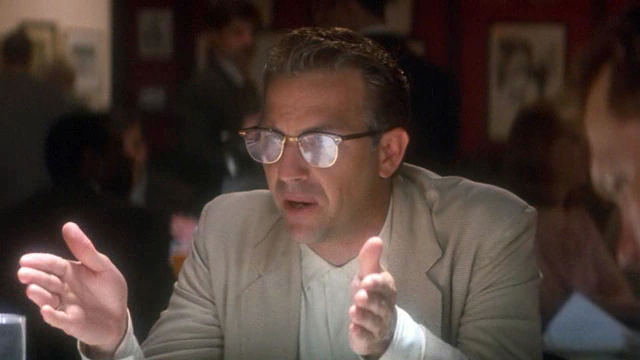
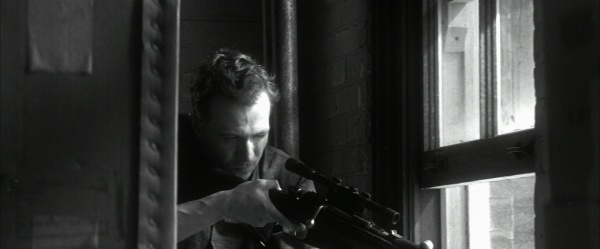
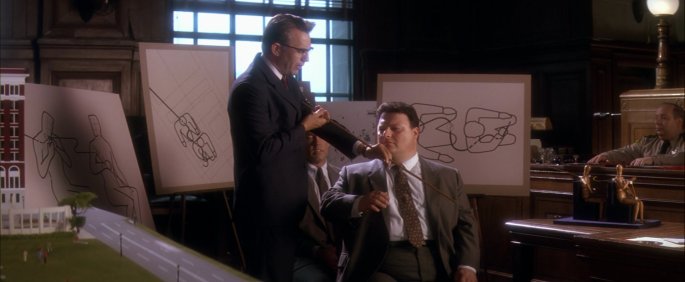
JFK presents the assassination of Kennedy as a powerful event constructed by its conspirators to create confusion with its contradictory evidence and then theorizes that the evidence was buried deep in the Warren Commission Report. Stone’s film filters a structured examination of two conspiracies, one to kill the President and one to cover it up, from one person’s point of view — Jim Garrison (Kevin Costner) — who then assembles all of the evidence at his disposal to reveal a larger, more frightening picture that implicates the most powerful people in the United States government. Stone saw his movie consisting of several separate films: Garrison in New Orleans against Clay Shaw (Tommy Lee Jones), Oswald’s (Gary Oldman) backstory, the recreation of Dealey Plaza, and the deep background in Washington, D.C.

While attending the Latin American Film Festival in Havana, Cuba, Stone met Sheridan Square Press publisher Ellen Ray on an elevator. She had published Jim Garrison’s book On the Trail of the Assassins. Ray had gone to New Orleans and worked with Garrison in 1967. She gave Stone a copy of Garrison’s book and told him to read it. He did and quickly bought the film rights with his own money. The Kennedy assassination had always had a profound effect on his life and eventually met Garrison, grilling him with a variety of questions for three hours. The man stood up to Stone’s questioning and then got up and left. His hubris impressed the director.

Stone was not interested in making a film about Garrison’s life but rather the story behind the conspiracy to kill Kennedy. To this end, he also bought the film rights to Crossfire: The Plot That Killed Kennedy by Jim Marrs. When Stone set out to write the screenplay, he asked Sklar to co-write it with him and distill the Garrison book, the Marrs book and all the research he and others conducted into a script that would resemble what he called “a great detective movie.” Stone told Sklar his vision of the movie: “I see the models as Z (1969) and Rashomon (1950), I see the event in Dealey Plaza taking place in the first reel, and again in the eighth reel, and again later, and each time we’re going to see it differently and with more illumination.”

Sklar worked on the Garrison side of the story while Stone added the Oswald story, the events at Dealey Plaza and the “Mr. X” character. To tell as much of the story as they could, Stone and Sklar used composite characters, a technique that would be criticized in the press, most notably the “Mr. X” character played by Donald Sutherland and who was a mix of several witnesses and retired Air Force colonel L. Fletcher Prouty, an adviser for the film.

600px-JFK_017

Stone ambitiously wanted to recreate the Kennedy assassination in Dealey Plaza and his producers had to pay the Dallas City Council a substantial amount of money to hire police to reroute traffic and close streets for three weeks. He only had ten days to shoot all of the footage. Getting permission to shoot in the Texas School Book Depository was more difficult. They had to pay $50,000 to put someone in the window that Lee Harvey Oswald was supposed to have shot Kennedy from. They were allowed to film in that location only between certain hours with only five people on the floor at one time: the camera crew, an actor, and Stone. Co-producer Clayton Townsend has said that the hardest part was getting the permission to restore the building to the way it looked back in 1963. It took five months of negotiation.

Filming was going smoothly until several attacks on the film and Stone began to surface in the mainstream media including the Chicago Tribune, published while the film was only in its first weeks of shooting. Five days later, the Washington Post ran a scathing article by national security correspondent George Lardner entitled, “On the Set: Dallas in Wonderland” that used the first draft of the JFK screenplay to blast it for “the absurdities and palpable untruths in Garrison’s book and Stone’s rendition of it.” The article pointed out that Garrison lost his case against Clay Shaw and claimed that he inflated his case by trying to use Shaw’s homosexual relationships to prove guilt by association. Other attacks in the media soon followed. However, the Lardner Post piece stung the most because he had stolen a copy of the script. Stone recalls, “He had the first draft, and I went through probably six or seven drafts.”

The film depicts the events leading up to and after the assassination as a densely constructed story complete with jump cuts, multiple perspectives, a variety of film stocks and the blending of actual archival footage with staged scenes dramatized by a stellar cast of actors. This blurring of reality and fiction by mixing real footage with staged footage makes it difficult to discern what really happened and what is merely speculation. Stone does this in order to create what he calls “a countermyth to the myth of the Warren Commission because a lot of the original facts were lost in a very shoddy investigation” and simulate the confusing quagmire of events as they are depicted in The Warren Commission Report. Stone creates different points of views or “layers” through the extensive use of flashbacks within flashbacks. Stone has said that he “wanted to the film on two or three levels — sound and picture would take us back, and we’d go from one flashback to another, and then that flashback would go inside another flashback . . . I wanted multiple layers because reading the Warren Commission Report is like drowning.” This technique conveys the notion of confusion and conflict within evidence.

Kevin Costner acts as the perfect mouthpiece for Stone’s theories. The auteur’s infamously forceful directorial approach to his actors pays off here as he reins in the actor’s usual tics and mannerisms. Stone was no dummy — he knew that by populating his film with many famous faces, he could make the potentially bitter pill that was his film, that much more palatable to the mainstream movie-going public. The rest of the cast is phenomenal. Gary Oldman’s delivers an eerily authentic portrayal of the enigmatic Lee Harvey Oswald. Tommy Lee Jones is note-perfect as the refined, self-confident businessman, Clay Shaw. Even minor roles are filled by such name actors as Vincent D’Onofrio, Kevin Bacon, Jack Lemmon, and Walter Matthau.

The film throws many characters at us and it is easier to keep track of them by identifying them with the famous person that portrays them. Stone was evidently inspired by the casting model of a documentary epic he had admired as a child: “Darryl Zanuck’s The Longest Day (1962) was one of my favorite films as a kid. It was realistic, but it had a lot of stars…the supporting cast provides a map of the American psyche: familiar, comfortable faces that walk you through a winding path in the dark woods.” Future biopics with sprawling casts, like The Insider (1999), and Good Night, and Good Luck (2005), and The Good Shepherd (2006) would use this same approach.

Seeing JFK now, one is reminded that first and foremost, it is a top notch thriller. There are so many fantastic scenes of sheer exposition that would normally come across as dry and boring but are transformed into riveting scenes in the hands of this talented cast. For example, the famous scene between Garrison and X (Sutherland) where the mysterious man lays out all the reasons why Kennedy was killed and how is not only a marvel of writing but also of acting as the veteran actor gets to deliver what is surely one of the best monologues ever committed to film.

capture91

JFK is an important film in the sense that it accurately portrays the assassination of Kennedy as a complex public event surrounded by chaos and confusion. It presents a main protagonist who exposes the conspiracy to be an intricately constructed coup d’état. Stone paints his canvas with broad brushstrokes and powerful images. JFK takes a larger, confrontational stance by boldly implicating the government in the conspiracy and the mainstream media in conspiring to cover it up. Stone is using the persuasive power of film to reach the largest number of people he can in order to wake them up and to reveal how they have been deceived by higher powers. There is no mistaking the importance of the assassination of Kennedy in American culture. Based on the excitement that surrounded Stone’s film, the American public is still greatly interested in the event with more and more people believing in a plot to kill Kennedy.

MARK CHRISTOPHER’S 54: THE DIRECTOR’S CUT — A REVIEW BY NICK CLEMENT

1

I absolutely can’t believe how heartbreaking it must’ve been for writer/director Mark Christopher to see his disco party opus 54 get completely dismantled and released as a hodgepodge of his original vision back in 1998. Now, almost 20 years later, people are able to see the film as the filmmaker intended, as the Director’s Cut of this undeniably entertaining film has finally hit digital platforms, with a rumored Blu-ray release possibly in the cards in the near future. When this film first hit screens in late August of ’98, it was promptly attacked by critics who seemed all too eager to rip it to shreds. And after the bad buzz settled in, the film never stood a chance at the box office; it would gross less than $20 million before heading off to a second, slightly more robust life on VHS/DVD/cable. I can remember seeing (and enjoying) the film on opening weekend, and with no understanding of the trouble-filled production, there was no baggage for me to bring into the viewing experience.

2

But now, having seen the newly restored version in all of its glitz and glamorous glory, it’s absolutely ridiculous to compare the two films, as they are so totally different that it’ll make your head spin. And it sadly reinforces the notion that young filmmakers can become easy targets by the money people. This was a project that Miramax paid to develop based off of Christopher’s treatment and short films, with the studio then approving the material, and letting him shoot the film he wanted to shoot. But after disastrous test screenings that were held in all the wrong places suggested that audiences would hate the film en masse, producers the Weinsteins and honchos at Miramax asked for wholesale narrative edits, alterations in tone and character motivation, and the scrubbing of anything remotely salacious or homoerotic. And this, coming exactly a year after Boogie Nights busted down the normally puritanical doors of American cinema – it’s all so crazy that it almost can’t be believed.

3

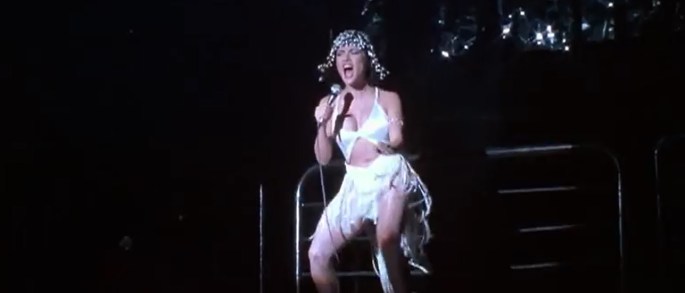
The plot is your traditional rags to riches/fish out of water narrative, concerning a young, sexy guy named Shane O’Shea (Ryan Phillippe at his most breezy and engaging) living in New Jersey with his dad and two sisters, who lucks his way into a coveted bartending job at the titular night club. In a very memorable bit, he’s admitted into the club by 54’s owner Steve Rubell, the fantastic Mike Myers, but only after taking his shirt off to expose his chiseled physique. Before you can say sex, drugs, and rock and roll, Shane gets in way over his head with his fellow employees (Breckin Meyer and Salma Hayek as a debauched couple), his boss (Myers absolutely steals every single scene), and himself.

4

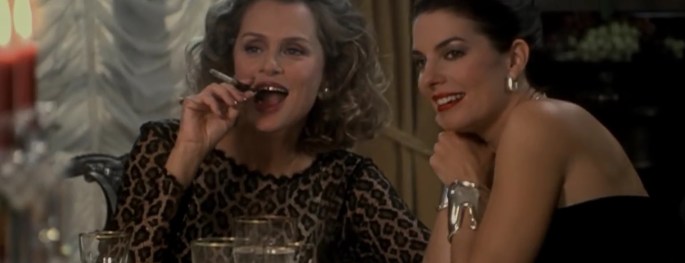
The film takes on the scope of a personal journey quest, centering on a guy who is still trying to figure himself out as a person, let alone attempting to navigate the extreme partying and emotional thrills of the era. An absolutely amazing supporting cast was along for the ride, including Sela Ward at her absolute hottest, Michael York, Neve Campbell, Heather Matarazzaro, Lauren Hutton, Sherry Stringfield, and Mark Ruffalo in a blink or you’ll miss him bit part, with various real life celebrities making walk-ons and cameos. Again, the differences between the two cuts of 54 are huge, with the director’s cut taking on a totally different edge and tone, while the theatrical release plays it much more straight, in all sense of the phrase. Phillippe’s character in particular is much more interesting in the director’s cut, with morally ambiguous decisions being made, with more of a sexual edge on display.

2

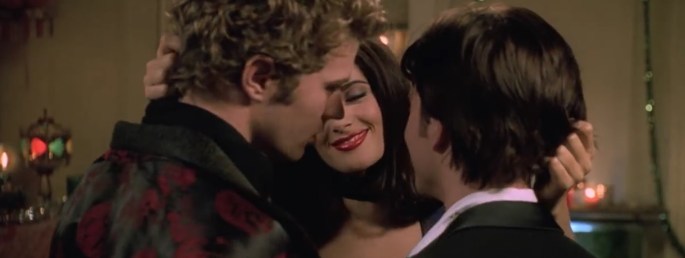
Skillfully edited by David Kittredge from the original version and 44 minutes of previously unreleased footage, this new cut of 54 moves more gracefully, with scenes feeling more organic, and relationships more fleshed out and multilayered. The big kiss between Phillippe and Meyer has been reinstated, along with a refocusing of Meyer’s character in general, with the romantic triangle of Hayek and the two guys producing even more dramatic heat. The film certainly takes a cue from Boogie Nights in that the narrative revolves around a slightly dim, wide-eyed pretty boy who enters into a world that he could never anticipate or predict, and while the film never hits the peaks that Paul Thomas Anderson’s picture did, it certainly displays its own sense of confidence and flamboyant style. Cinematographer Alexander Gruszynski shot the film with lots of close ups and neon, going full-tilt inside of the night club, with his swerving, observant camera picking up the various bits of sex and fun all happening inside the pleasure palace. The soundtrack, of course, pops with period authentic tunes that set the mood immediately, with the entire film feeling like a dreamy descent into bacchanalian excess that finally feels fully unleashed.

1

It’s amazing to think that this film ruffled so many feathers with its gay content 20 years ago, because when looking at it in retrospect, it feels quaint to a certain degree when compared with what’s recently been shown on screen. People weren’t ready to accept the themes that 54 explores, and didn’t want to see their latest heartthrob (Phillippe had just had the smash hit I Know What You Did Last Summer) making out with guys. If Christopher made this film today, it gets released 100% as is, and to a certain extent, he probably would have been able to take things further. But what’s exciting is that this filmmaker has been able to see his project fully realized, and as a result of the dedication of his technical and restoration team, has been able to silence those initial naysayers with a movie that proudly announces itself as a secret gem waiting to be rediscovered by an entirely new generation of movie lovers.

3

ANDREW NICCOL’S GATTACA — A REVIEW BY NICK CLEMENT

gattaca_ver5

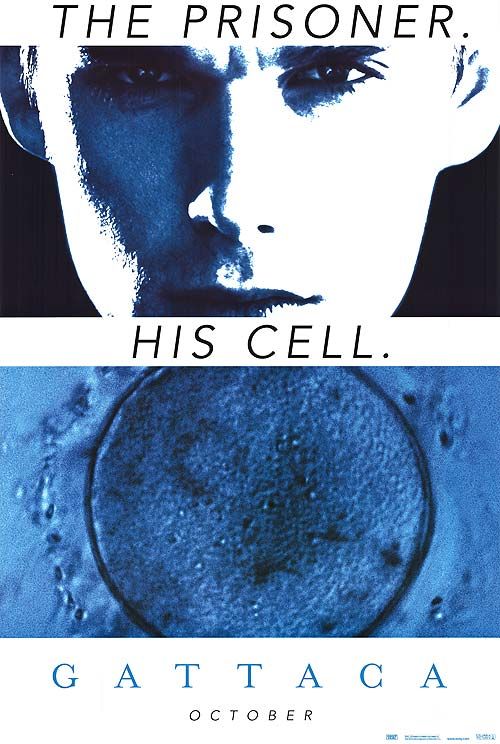
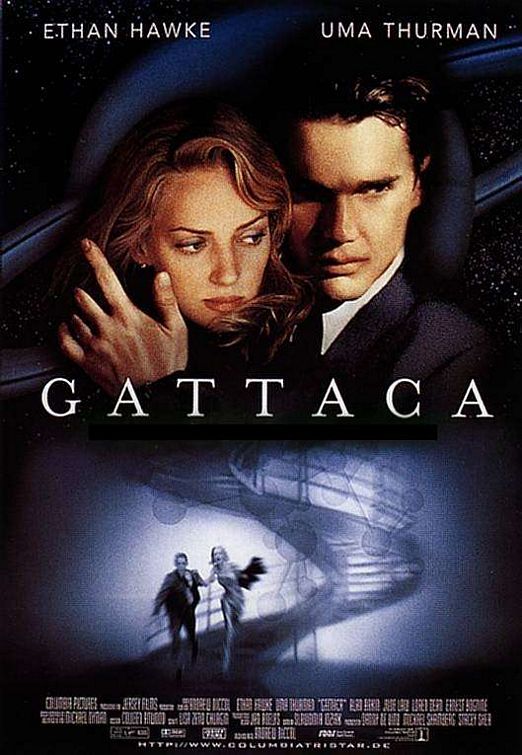
Gattaca is one of my favorite genre-benders, a unique effort that combines film noir and believable science fiction in a tight and sleek package that greatly benefits from writer/director Andrew Niccol’s supreme sense of style and his usual brand of topical, thought provoking storytelling. Niccol, who also wrote The Truman Show for Peter Weir and wrote/directed Lord of War, Simone, In Time, and last year’s underappreciated Good Kill, is a big ideas guy, prone to heady narratives with juicy hooks, and with Gattaca, he crafted a film that can now be seen as very much ahead of its time. Released to great critical acclaim but a box office debacle back in 1997, and featuring one of the coolest print ad campaigns of all time, the film foreshadowed the genetic testing onslaught of the 2000’s, with a story that involves a future society that’s become all but determined by work done in labs. Embryos are genetically engineered with imperfections all but eradicated, while the antiseptic environment stresses environmental reconstruction and stunning advances made in the field of science.

gattaca_ver1

The story pivots on a man who is born genetic flaws, and who can’t progress as far as he wants in society, so he tricks the system, in order to achieve his goals. The trio of Ethan Hawke, Jude Law, and Uma Thurman all did stellar work, the cinematography by ace shooter Sławomir Idziak (Black Hawk Down) is extraordinary, and Michael Nyman’s elegant and mournful score set an appropriately chilly and evocative tone, suggesting loss with a smidge of a hope. Gattaca is also a production designer’s dream come true, with each location and set perfectly chosen and art directed to the max, but never in a flashy or gaudy manner; Jan Roelfs deserved an Oscar nomination for his mesmerizing work. Niccol also smartly populated the cast with a bevy of excellent character actors, including Loren Dean, Elias Koteas, Xander Berkeley, Tony Shaloub, Blair Underwood, Dean Norris, Alan Arkin, Gore Vidal(!), and Ernest Borgnine(!) This is a film that gets stronger and stronger with each viewing, and I love how it can be seen as a detective story with sci-fi elements, or a science-fiction love story set against the backdrop of a mystery.

gattaca_ver3