SIDEWAYS – A REVIEW BY J.D. LAFRANCE

MCDSIDE FE018
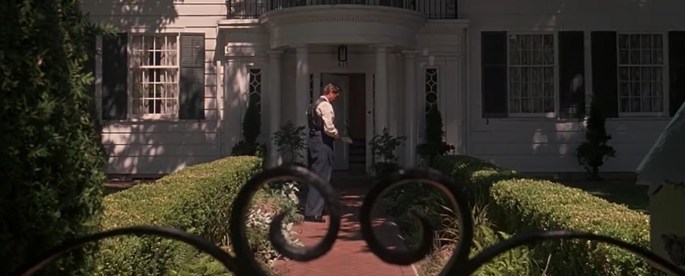
SIDEWAYS, Sandra Oh, Thomas Haden Church, Paul Giamatti, Virginia Madsen, 2004, (c) Fox Searchlight

Alexander Payne is part of an exciting wave of filmmakers who grew up during the 1970s and were subsequently influenced by the films from that era. His contemporaries include the likes of Wes Anderson, Paul Thomas Anderson, and David O. Russell to name but a few. And like his fellow filmmakers, Payne eschews the Hollywood trend of placing an emphasis on special effects and trendy actors in favor of character-driven, comedy-drama hybrids populated with character actors like Laura Dern, Matthew Broderick and Kathy Bates.

Payne’s About Schmidt (2002) continued his fascination with American cinema in the ‘70s by featuring one its biggest (and most prolific) stars, Jack Nicholson. His next film, Sideways (2004), continued the road movie motif from Schmidt and combined it with the buddy film. Jack Cole (Thomas Haden Church) is a failed actor about to be married. He decides to go on one last week of uninhibited fun with his best friend, Miles Raymond (Paul Giamatti), a grade school teacher and struggling author. They go on a wine-tasting tour through California’s Central Coast and squeeze in a bit of golfing as well.

Miles is an avid (nay-elitist) wine aficionado while Jack is completely ignorant of wine beyond what tastes good to him and what doesn’t. Miles is trying to get his book published with little success and he’s grown cynical and defeated as a result. Initially, he comes off as an unlikable loser not above stealing money from his mother. Jack counters Miles’ repressed nature by coming off as something of an instinctive kind of person who indulges in his raging id. He was on a hit television show… 11 years ago and is now relegated to doing voiceovers for commercials. Along the way, Jack and Miles meet Maya (Virginia Madsen), a beautiful waitress who Miles knows from way back when, and Stephanie (Sandra Oh), who works at a winery and catches Jack’s eye.

Jack and Miles are complete messes as human beings. They lack direction and are hypocrites. Miles says he’s an author but his book is going nowhere, while Jack is getting married but hits on anything in a dress. They are hardly a sympathetic pair. And yet Payne is able to get a lot of comedic mileage from them. Miles is a wine snob who rambles on about the taste, color, and so on, only to have Jack sum up his opinion simply, “I like it,” which comically deflates Miles’ pontificating. They have an intriguing dynamic. While they lie to others – Miles to Jack’s friends about the status of his novel and Jack being nice to Miles’ mother when he clearly wants to get back on the road – they are no pretenses between each other. These guys are getting to the stage in their lives where they’re looking back as opposed to looking ahead. Jack sees marriage as an institution that will stifle his freedom while Miles has a very negative outlook on life, finding any excuse not to ask Maya out despite obviously liking her because he assumes that it will go nowhere.

An interesting thing happens during the course of the film. At first, Miles starts off as an unsympathetic character while we warm up to Jack’s funny repartee as the charming rogue. Halfway through the film they flip roles and it’s Jack who is exposed as a pathetic womanizer and Miles becomes more sympathetic thanks to Maya’s influence. She humanizes him and is easily his intellectual equal. She knows her wine and this clearly impresses Miles. She’s smart and beautiful so why is she even wasting her time with a sad sack like Miles? She gets to know him beyond his looks and liquefies the pretension of his character. Maya pierces his wine-speak armor that he throws up all the time with her easy-going nature and Miles realizes that he doesn’t need to constantly impress her. There is a nice scene where they get to know each other and it is great to see two skilled actors getting a chance to act and really delve into their characters. In this scene, we finally see someone thaw out Miles and get him to open up, stop worrying and thinking so negatively. They use their mutual love for wine as a way to share their passions and aspirations with each other. It’s a beautifully realized scene because you are seeing two people starting to fall in love with each other. Like a fine wine, Maya allows Miles to breathe and he gets better as time goes on. She’s a romantic who is able to cut through his cynicism and soften his hard edges.

Fresh off the success of American Splendor (2003), Paul Giamatti is one of those actors who make it look effortless as he inhabits the characters he plays so completely. Miles is a neurotic mess; a depressed cynic who is definitely a half glass empty kind of guy. Giamatti is able to tap into his character’s deep reservoir of pain and anger. In a couple of shots early in the film, Payne hints at Miles’ past when he looks at old photographs in his mom’s room. They evoke happier times with his father (now out of the picture) and wife (now divorced). Giamatti’s sad expression in this moment conveys more than any words could. During the course of the film, we find out more about why Miles is so miserable and a lot of it has to do with self-loathing, which explains why he tries to sabotage things with Maya. In some ways, Miles is a variation of Giamatti’s take on the equally acerbic Harvey Pekar in Splendor.

Ever since the short-lived television sitcom Ned and Stacy, Thomas Haden Church has been an untapped resource and with Sideways he was given the role of his career. As Miles’ crass, philandering best friend, he plays Jack as a middle-aged frat boy who still calls women, “chicks.” Haden Church has never been afraid to play abrasive, bordering on unlikeable, characters and he expertly does the same here as a guy who presents a jovial façade but underneath lurks a lot of pain and an insensitive mean streak. Haden Church’s dead-panned delivery of smart-ass lines works well against Giamatti’s uptight straight man. Together, they make an excellent team. After years of playing supporting character roles, it’s great to see Haden Church and Giamatti starring in a film. They play so well off each other that you’d swear they’d acted together before. Haden Church and Giamatti are very believable as long-time friends from the way they interact with each other.

For years, Virginia Madsen has been biding her time in direct-to-video hell and so it is great to see her in a high profile role like this one. From The Hot Spot (1990) to Candyman (1992), she’s always been an interesting actress to watch and with Sideways, Madsen is given strong material to sink her teeth into and she delivers a nuanced performance. Sandra Oh has been quietly building a nice body of work over the years and was unfairly overlooked in the numerous awards that have been lavished on this film. Granted, of the four main cast members, she has the least amount of screen time but she makes every moment she has count.

Producer Michael London was a former Los Angeles Times journalist and studio executive who had become frustrated by the studio development process of shepherding a film from script to screen. He bought the rights to the unpublished semi-autobiographical novel Sideways by Rex Pickett with his own money and gave it to Alexander Payne to read in 1999 while the filmmaker was promoting Election. Payne found himself drawn to “the humanity of the characters” and how it tapped into his desire to make films about “people with flaws,” and “unfulfilled desires.” He was not a wine expert but always liked it and thought that the subculture would be fun to explore and act as a backdrop to the relationship between Jack and Miles. However, he was committed to making About Schmidt next and so he and London kept optioning the book over the years. Then, he and his long-time writing partner, Jim Taylor, wrote the screenplay for free. Payne and London drew up a budget and financed pre-production themselves thereby allowing themselves the kind of creative control they wanted. They only began approaching movie studios once they had the script, budget and a preferred cast in place. Four studios were interested with Fox Searchlight winning out.

Based on the reputation of his previous films, several big name actors campaigned for roles in Payne’s film. Both Brad Pitt and George Clooney were eager to play the role of Jack and met with the filmmaker but it ultimately came down to Thomas Haden Church and Matt Dillon. Edward Norton expressed an interest in playing Miles and Payne seriously considered him for the role. With the exception of Sandra Oh, his wife at the time, all the actors auditioned for Payne and London. Haden Church had auditioned for both Election and About Schmidt (narrowly losing out to Dermot Mulroney on the latter) and even though Payne did not cast him in those films, he had been impressed with the actor. When it came to Sideways, Payne felt that Haden Church “kind of is that character,” and cast him as Jack. At the time, he had moved away from acting and when he read the script in May 2003, thought to himself, “I have no shot at this whatsoever, but I have to answer the call of duty. If I get a chance, then I gotta take it.” When Paul Giamatti auditioned for the film, he had not read the whole script, just an excerpt – the scene where Miles talks about his love of Pinot Noir wine to Maya. The actor found Miles’ obsession with the wine to be “an interesting theme for this guy” who was constantly “striving for transcendence through the wine and the wine milieu, and it just keeps collapsing in on the guy because he’s such a wreck.” After casting Giamatti and Haden Church, Payne insisted that they spend some time together before filming, hanging out and practicing their dialogue so that characters’ friendship would be believable.

The setting of the story was very important to Payne as he brought a documentary sensibility to capturing the people that inhabit the area. Before shooting, he spent four months living in the wine country of California, taking notes so that it would be accurately depicted in his film. The actors spent two weeks of rehearsals with Payne, “shooting the shit and indulging in good food and wine,” according to Giamatti. With a budget in the range of $16-17 million, Sideways was shot over 54 days in the Santa Barbara area. For the look of the film, he drew inspiration from the photographic style of Hal Ashby’s The Landlord (1970), screening it for his director of photography, Phedon Papamichael (Moonlight Mile), in order to study the softness of colors and the lack of sharp, vivid lighting that he wanted in his own film.

Payne’s film harkens to Bob Rafelson’s classic character-driven films from the ‘70s, like Five Easy Pieces (1970) and The King of Marvin Gardens (1972), featuring prickly protagonists. Payne rejects traditional mainstream tastes in favor of presenting unsympathetic characters and a conclusion that refuses to wrap things up neatly. He even employs multiple split-screen montages and snap zooms, which were very much en vogue during the ‘70s. Miles is the voice of reason while Jack is the voice of fun in Sideways. However, Miles understands who he is and is honest with himself and his lot in life unlike Jack who continues to live a lie, or rather play a role. Jack lives in a bubble and they always break. Miles doesn’t have to worry about that because he bursts his bubble on a daily basis. These men are idiots and it is the women who are smart and truthful. The men lie, cheat and are forced to face the repercussions of their actions. This provides them with a chance at redemption as embodied in Miles who learns to loosen up and finally let someone new into his heart.
X-MEN: A Retrospective by Joel Copling

Rating in Stars: *** (out of ****)
Cast: Hugh Jackman, Patrick Stewart, Ian McKellen, Famke Janssen, James Marsden
Director: Bryan Singer
MPAA Rating: PG-13 (for sci-fi action violence)
Running Time: 1:44
Release Date: 07/14/00

X-Men satisfies threefold: As an introduction to a team of superheroes, it is comprehensive, immediately defining the character’s personality traits and supernatural abilities simultaneously in a way that connects us to their struggle in a world that rejects them. As a spectacle, it is engaging, with action sequences that have pizzazz and pop, even in spite of visual effects that might seem a little less refined (but are still effective) 16 years later. As an allegory with genetic mutation as the stand-in for differing racial heritage or sexual orientation, it may be a bit obvious, but at least screenwriter David Hayter is willing to go there. The film is, in many ways, a precursor to something like The Avengers, and it holds up now as something just as good.

The heroes are members, not of some elite squad (although later installments in the series would place them into one), but of a school belonging to Charles Xavier (Patrick Stewart), aka Professor X, who has advanced telepathic powers. His primary teachers are alumni who include Scott Summers (James Marsden), aka Cyclops, who can shoot a fiery beam from his eyes or the visor that protects them, Ororo Munroe (Halle Berry), aka Storm, who can control the weather (Ok, not all powers are equally sensible, I guess), and Dr. Jean Gray (Famke Janssen), who shares telepathic powers with Professor X and has telekenesis, to boot. The students have an array of powers, from the ability to create and control ice to, well, the ability to produce and control fire (Another can walk through walls).

Our central protagonists here, though, are Logan (Hugh Jackman), aka Wolverine, who can heal rapidly and out of whose knuckles protrude knives of hardened steel, and Marie (Anna Paquin), aka Rogue, whose touch invites some sort of allergic reaction. Rogue happens upon Wolverine in a rundown bar in the middle of nowhere and latches onto him just in time to be attacked by a pair of fellow mutants, the wolfish Sabretooth (Tyler Mane) and the amphibian Toad (Ray Park), before being saved by Cyclops and Storm and brought to the “X-Mansion.” The attackers were merely pawns of Magneto (a commanding Ian McKellen), who can control metal and whose minions are rounded out by Mystique (Rebecca Romijn-Stamos), a blue-skinned beauty skilled in martial arts and the ability to transform into others.

The real conflict stems from within a system rigged against these mutants in such a way that they are forced into hiding from the outside world. The allegory isn’t exactly subtle, especially when a heavily conservative Senator (Bruce Davison) claims, “We must know who they are, and we must know what they can do” (a statement that seems even more relevant today than it did in the film’s pre-9/11 era). Professor X believes that there is some sort of peaceful resolution to be had, but Magneto, an old colleague who helped him to build a large room that tracks mutation, disagrees and fashions a machine that can manipulate DNA to cause rapid mutation.

Hayter expertly weaves between this major plot strand (which is thankfully unburdened by any others, with the exceptions of a lingering attraction between Jean, who is Cyclops’s fiancée, and Wolverine, as well as Rogue’s increasing feelings of inadequacy and fear of her own powers) and action sequences (such as a nifty one that pits Storm against Sabretooth and Cyclops against Toad and the charged climax atop the Statue of Liberty), and director Bryan Singer keeps the film streamlined at well below two hours. X-Men is a solid entertainment machine and a promising start to a franchise.

IRA SACH’S MARRIED LIFE — A REVIEW BY NICK CLEMENT

1
Films like Married Life don’t come around very often. Ira Sachs’ sly genre bender was given a limited release in 2007 but I doubt many people are familiar with it, which is weird given its starry cast: Chris Cooper, Pierce Brosnan, Patricia Clarkson, and Rachel McAdams. A highly stylized cross of Todd Haynes’ superior Far From Heaven and the various work of Alfred Hitchcock, Married Life is a low-key entertainment with a script that bounces back and forth between noir-tinged thrills and cutting social satire. Set in 1949 in a suburb outside of Seattle, the film centers on Harry Allen (a tamped down Cooper), unhappily married to his wife Pat (Clarkson, solid as always), who decides to murder her in order to spare her of the humiliation of divorce. Harry has met the alluring vixen Kay (McAdams, scheming and dangerous) who he wants to run away with. The problem is that Harry’s debonair friend Richard (Brosnan, oozing sex-appeal) also has eyes on Kay. The script by Sachs and Oren Moverman (co-writer of Love & Mercy and I’m Not There, writer/director of Rampart, The Messenger, and last year’s brilliant homeless drama Time Out of Mind) is tight at 90 minutes with deft character work and an atmosphere that’s generally hard to pin down.
2
We get some satirical jabs about domestic life in the early 50’s and there’s a thriller element introduced about half-way through the narrative that definitely throws some surprises into the mix. I really have to give some credit to Sachs, as this was an independent film which probably had a limited budget but you’d never know it from the look of it. Beautifully shot by Peter Deming (I Heart Huckabees) with gorgeous period detail in the production design by Hugo Luczyc-Wyhowski (Dirty Pretty Things, Snatch), Married Life has a cinematic time capsule quality much in the same way that Mad Men brought to television. Evocative of wealthy suburban life from 60 years ago, the film is always visually impressive and all of the performances are top-notch, especially Cooper and Brosnan. Cooper has made a career out of playing the dour, put-upon schnook, and in Married Life, he was able to take his character in a few interesting psychological directions. And Brosnan, who will always have that James Bond twinkle in the corner of his eyes, was smooth as brandy and very likable even when playing a devious character. This is a very unique film and one that’s likely to surprise many people.
3

B Movie Glory With Nate: Oblivion

  
“It’s high noon at the far end of the universe”, the dvd poster of Oblivion states. Years before the underrated Cowboys & Aliens came out, Oblivion came along, and it’s definitely gives the concept a better, and quirkier run for its money. Granted it’s essentially a B movie, and it’s meagre budget shows to the point where it looks like a grade school play. But therein lies it’s charm. It’s got a cast of supremely wacky old west stereotypes played by some surprising, familiar genre faces who you’d never thought to be seen rough housing together in the same flick. It also has some lovingly crafted, creaky stop motion animation that calls Harryhausen to mind and brings to life some super weird alien hybrid thingies that look almost Henson-esque as well. When a lone spaceship lands on the outskirts of an intergalactic desert town, it’s occupant brings trouble along with him. He’s a nasty, one eyed reptilian alien gunslinger named RedEye, played by the inimitable Andrew Divoff. He growling, bad tempered son of a bitch, and his first order of business is to ruthlessly slay the town’s sheriff, and claim it for himself. What he doesn’t count on is the Sheriff’s son (Richard Joseph Paul), a prospector who soon returns to Oblivion looking for answers, along with his Native friend Buteo (the late great Jimmie F. Skaggs). All kinds of townsfolk end up in the crossfire, including drunken Doc Valentine (a priceless George Takei), slinky brothel owner Miss Kitty (Julie Newmar), a cyborg police deputy (Meg Foster), a pawnbroker (Isaac Hayes) and the town’s elegant undertaker, played by Carol Struckyen who some may remember as the giant from Twin Peaks. RedEye has a smoking hot henchwoman and girlfriend named Lash, played by B movie scream queen Musetta Vander, who gets the vibe they’re going for here and sinks her teeth into the material with admirable abandon. The film sticks to its guns despite being obviously silly and somewhat falling apart in a climax that oddly is too darkly shot to make out properly. What it lacks in resources it makes up for in imagination, which it has in spades. Alien scorpions, cyborg deputies, leather clad babes are but a few of the genre mashing treats to be found here. Great stuff. Oh and check out the sequel as well, called Oblivion 2: Backlash, it’s a nice companion piece. 

Denis Villeneuve’s Enemy: A Review By Nate Hill

  
Denis Villeneuve’s Enemy is one of the most unsettling film experiences you will ever sit through, and the damn thing is only 90 minutes. It’s disconcerting, ambiguous and seems to exist simply to spin the viewer’s anxiety reflex into a storm and make our stomach turn loops. It’s a trim entry into the psychological upset sub genre, and puts a frazzled looking Jake Gyllenhaal through a wringer as he pursues a mysterious doppelgänger through the streets of Toronto, a bustling city that feels oddly desolate as glanced upon by Villeneuve’s camera, adding to the themes of paranoia and mental unrest. Gyllenhaal plays a twitchy college professor who is stuck in a closed loop routine: he gives lectures at the local university, drives home to his emotionally inaccessible girlfriend (Melanie Laurant), rinse and repeat. A chink appears in the chain when he becomes aware of another man in the city who appears to be his identical twin. The other man is a small time actor with a pregnant wife (Sarah Gadon) and a decidedly more nasty approach to the situation than the professor. The two of the, circle each other in a disturbing game of not so much cat and mouse, but Jake and Jake, both of them having not a clue as to what is going on, the edges of madness inching closer to both of their perception. Are they twins? Are there even two? Is it just one of them, losing their mind? There’s very freaky dream sequences with the constant imagery of spiders, both large and small, and what do they mean? Who’s to tell? Denis has stated in interviews that there is both rhyme and reason to his creation here, but whether he will ever divulge them remains to be seen. Perhaps it’s better left illusory, a formula for entrancing audiences that has already proved to work well for David Lynch. The moment that the man behind the curtain reveals the conscious meaning of his very subconscious efforts, the spell is no doubt broken. In any case, it’s a very hard film to process or focus on, our nerves jittering constantly and sabotaging any modicum of rational though that we might employ in deciphering the piece. This may be called style and atmosphere over substance by some, but even in not comprehending what’s going on, we feel deeply that there is some sort of cryptic cohesion if we are able to feel between the lines, maybe coming up empty handed ultimately, but knowing within us that we’ve attained wealth to our soul simply by bearing witness. I can’t say it’s a film that I love, or that I would watch again, but it’s certainly one that won’t leave my memories any time soon, and that is an achievement no matter how you look at it. It’s also got one of the scariest and most unexpected endings to any film I’ve ever seen, taking you so off guard that you feel like you’re going to have a coronary. It’s filmed in sickening piss yellow saturation which adds to the overall disconcerting nature, and quite the striking colour choice as well. I can see why this one was released with little fanfare or marketing, despite the presence of heavyweights Villeneuve and Gylenhaal. It’s difficult stuff, a movie that frustratingly soars above your head, onward towards its intensely personal and psychological destination. It’s up to us to jump, grasp and attempt to reach as high as the piece in order to get what we will out of it. Good luck. 

Victor Nunoz’s Coastlines: A Review by Nate Hill


Victor Nunoz’s Coastlines is a nice small town drama with some top players all giving fine work, causing me to wonder why more people haven’t heard of it, and how come it didn’t get a wider release. In any case, it’s low key and really captures the quaint rural vibe of less densely populated areas in the states. The cast is absolutely to die for, consisting mainly of very distinct, frequently garish actors who all play it dead straight and relaxed, which is a huge switch up for most of them. Timothy Olyphant plays Sonny Mann, an ex convict recently released from prison, quietly arriving back to his Florida hometown, and the dregs of the life he left behind. His Pa (the ever awesome Scott Wilson) is conflicted by long simmering resentment, and the love for his son buried just beneath. Sonny reconnects with his best friend Dave Lockhart (Josh Brolin), who has become the town’s sheriff in the years gone by. Sparks fly between Dave’s wife (Sarah Wynter) and Sonny, creating a rift between the two and illustrating Sonny’s unavoidable knack for creating trouble for himself, and those around him. Further tension comes along when the town’s local crime lord Fred Vance (William Forsythe at his most genial and sedated) tries to strong-arm Sonny into assisting with nefarious deeds, using his younger brother Eddie (Josh Lucas) to convince him. Even when tragedy strikes and these characters go head to head, it’s in the most relaxed, laconic way that permeates southern life. Robert Wisdom has a nice bit, Angela Bettis shows up as a girl with a thing for bad boys, and watch for the late great Daniel Von Bargen as the local Sheriff. This one fits nicely into a niche that leans heavily on small town drama, dips its toes ever so slightly into thriller territory, and is a charming little piece that’s worth a look to see these actors on an acting sabbatical.  

THE STREET FIGHTER – A REVIEW BY J.D. LAFRANCE

chiba12

Like many people of my generation in North America, the first exposure to The Street Fighter (1974), starring Sonny Chiba, was probably the brief clip shown in Tony Scott’s True Romance (1993), which was written by Quentin Tarantino, a big fan of Chiba, an actor who got his start appearing in science fiction and crime thrillers but is best known for his martial arts movies, chief among them The Street Fighter series. True Romance’s main character celebrates his birthday by going to see a Sonny Chiba triple feature at a local theater and there he meets the girl of his dreams. In explaining the allure of Terry Tsurgui – Chiba’s character in the film – he sums it up best by telling her, “Well, he ain’t so much a good guy as he is just one bad motherfucker. I mean, he gets paid by people to fuck guys up.” Based on the worldwide success of Enter the Dragon (1973), the Toei Company decided to release its own martial arts action films and the result was The Street Fighter. It would be this film that would make Chiba an international movie star. The film went on to garner a notorious reputation for its bone-crunching violence, which earned it an unprecedented X rating in North America – the first film to do so based solely on violence.

Terry Tsurgui (Chiba) is a mercenary hired by the Yakuza to free a convicted killer named Junjo (Masashi Ishibashi) from prison who is about to be executed. The man killed seven people with his fighting skills, which one prison guard says sarcastically, “He must think he’s Bruce Lee.” Terry enters the prison under the guise of a Buddhist priest (?!) and engineers quite a clever breakout by zapping Junjo with a move that induces paralysis thereby making him unfit for execution. It takes less than four minutes into the film and we get a pretty cool fight sequence in slow motion complete with funky sound effects that were the hallmark of 1970s era martial arts films. If that weren’t enough, a fantastic spaghetti western-esque theme song by way of Shaft-era Isaac Hayes plays over the opening credits sequence and off we go.

With his sidekick and comic relief Ratnose (Goichi Yamada), Terry hijacks the ambulance carrying Junjo en route to the hospital. When the man’s brother and sister are unable to pay up, Terry proceeds to mess them up, including sending the brother out a window to his death and selling the sister into prostitution. When Terry dares to ask for more money to kidnap a rich Japanese heiress in order to control her fortune, his employers decide to kill him because Terry knows too much. As we all know from these kinds of films that that is a fatal mistake and boy, does he make them pay.

Terry only really cares about money and asks a lot for his services. He is a gruff, no-nonsense kind of guy. The film wastes no time in establishing Terry’s badass credentials as he takes on more than six guys that stupidly try to ambush him in his apartment. There’s a wild-eyed intensity that is quite unnerving to his opponents. What Terry lacks in finesse, he more than makes up for in ferocity. Subtlety is certainly not his forte. For example, he attempts to tail his target in a car without caring about or knowing to follow from a discreet distance. For his troubles, the car he and Ratnose are in is grabbed by a construction vehicle and dropped off a bridge! However, Terry’s not invincible and gets his ass handed to him when he takes on the head of a karate school who knew his father. There’s no denying that Sonny Chiba has a unique screen presence and an intense stare that puts guys like Jean-Claude Van Damme and Steven Seagal to shame.

Goichi Yamada’s Ratnose is a character whose only purpose appears to be as comic relief (“Who do you think you’re talking to, Madame Butterfly?” he says to Terry at one point in reference to his lousy cooking skills), groveling and being endlessly insulted by Terry. However, he does get his self-sacrificing heroic moment in the sun and this selfless act draws a rare tear of emotion from Terry, which in a weird sort of way humanizes the film’s brutal protagonist.

The Street Fighter is chock full of great, cheesy B-movie dialogue intoned by a guy dubbing Terry’s voice trying to affect a gravely Clint Eastwood-esque vibe. One choice gem has Terry tell some assailants, “So I’m to die because I know who it is that controls the Yakuza here? Isn’t that mean and nasty?” Another gem comes when Junjo goes into an oxygen coma, collapses right before being executed and a prison official asks someone nearby, “You’re a lawyer – what must I do?” It is how this line is said – in stilted, badly done dubbing – that makes it funny. However, there are also some pretty cool lines, too, like when Junjo confronts Terry and tells him, “I’ve waited a long time to settle the score.” Terry replies dismissively, “Sorry, I’ve more urgent things right now.” How cool is that? Yeah, I’m not too busy completing a job to kick your ass right now… maybe later.

In The Street Fighter, Terry punches, kicks and viciously gouges his way through a series of brutal encounters. Among the scenes that earned the film an X rating are one in which Terry castrates a would-be rapist with his bare hands, which still manages to shock with its intensity and graphic nature even by today’s standards. Guys are punched so hard they spit out mouthful of teeth and spew judicious amounts of blood. But the film saves the best (and nastiest) move for the final showdown, an impressive battle as Terry proceeds to single-handedly decimate a tanker boat full of henchmen with a climactic fight on deck in the pouring rain.

Shigehiro Ozawa’s direction is appropriately dynamic with plenty of skewed camera angles, slow motion, black and white flashbacks and even an X-ray shot of Terry crushing a guy’s skull with his fist. How badass is that? He makes excellent use of the widescreen frame, especially during the fight scenes, letting them play out along the entire length of the frame.

When New Line Cinema picked up the film in North America, it was renamed The Street Fighter from its original title, which translated into the infinitely cooler sounding, Clash, Killer Fist! It earned an X rating for the gory violence and the studio re-edited the film significantly, cutting out 16 minutes in order to get an R rating. The Street Fighter was an international hit spawning two sequels, Return of The Street Fighter (1974) and The Street Fighter’s Last Revenge (1974) as well as a spin-off film, Sister Street Fighter (1974). None of them hold a candle to the one that started it all – a cult film that dispenses with niceties like political correctness and restraint for an unbridled romp through the criminal underworld led by Chiba’s unrepentant mercenary. For fans of down ‘n’ dirty martial arts movies, this one is pure catnip and a potent reminder of how good a decade the ‘70s was for the genre where you could have a mainstream masterpiece like Enter the Dragon along with no-holds barred carnage on display in The Street Fighter.

ANDREW DOMINIK’S KILLING THEM SOFTLY — A REVIEW BY NICK CLEMENT

5

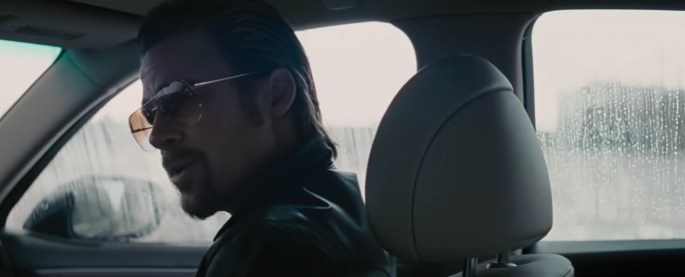
Lethal. Cold. Innovative. Andrew Dominik’s wildly underrated crime thriller Killing Them Softly was one of the best movies from 2012, and it stands as a personal favorite in this well-travelled genre. I love sleazy stories about disreputable characters and this film lovingly explores the criminal underworld with dark humor, graphic (and scary) violence, and a ruthless and impactful message about capitalism that perfectly serves the savage material. Based on the novel Cogan’s Trade by George V. Higgins, Dominik went for the throat with this spare and brutal piece of crime fiction, presenting a bleak worldview that feels appropriately cynical. Brad Pitt went extra mean in this film as a deadly mob enforcer who lives by a very strict code of conduct. His tack-sharp performance feels like a spiritual cousin to his work and character in Ridley Scott’s brilliant, diamond-cut thriller The Counselor; I love how Pitt seems unafraid to shred his pretty-boy image with degenerate scum such as these guys in these particular films, going with ungainly facial hair and allowing his great looks to be repeatedly upended. He’s been one of my favorite actors for the last 20 years for many reasons; I can think of so few films that he’s starred in that I haven’t enjoyed. And coming after The Assassination of Jesse James by the Coward Robert Ford, Dominik yet again switched gears and styles, but presented no less of an all-encompassing atmosphere and cinematic world.

8

In Killing them Softly, Pitt is called in to handle a relatively straight forward situation after two drug-addict losers (the fantastic pair of Scoot McNairy and Ben Mendelsohn, grimy and glazed-over and lovingly desperate) knock over a mob-controlled poker game being supervised by a low-level hood (Ray Liotta, perfectly pathetic). Richard Jenkins lays on the smarm as Pitt’s casually funny criminal world contact who serves as the middle man, and James Gandolfini brilliantly subverts his own gangster visage with a sad and delicate portrayal of an alcoholic, depressed hit-man who doesn’t have the physical energy or mental strength to do what’s asked of him. The scene with Gandolfini, Pitt, and a tired prostitute who takes no shit is one of the sharpest, funniest bits of cinema in recent memory, totally vulgar and grotesque and beautifully acted by the trio; just watch Pitt’s genius facial expressions during this entire back and forth. This is a nasty movie about nasty people doing nasty things, with lots of vulgar discussions of sex by low-class hoodlums, and more than one instance of punishing, crushing violence. And I love the ferocious final moment of the movie with Pitt and Jenkins at the bar – it’s note perfect how this movie finishes up. Dominik’s terse dialogue is grim and masculine and poetic, and the obsessive detail he takes with each character makes for an extremely rewarding viewing experience. Greig Fraser’s dynamic, beyond stylish cinematography is always finding new and interesting ways to visually convey ideas and themes, with the wonderfully attuned editing in perfect synch with the style of the imagery. And the way Dominik uses sound is nothing short of show-stopping, as numerous scenes take on an extra, ominous edge due to the sonic quality.

15

At this point, I’ll happily follow Dominik anywhere he goes as a filmmaker. His searing debut, the Australian prison film Chopper, showcased a then-unknown Eric Bana in a performance that sits alongside Tom Hardy in Bronson, Michael Fassbender in Hunger, and Jack O’Connell in Starred Up. His second film, The Assassination of Jesse James by the Coward Robert Ford, was one of many masterpieces released in the crowded 2007 season, and it never truly got the attention it deserved. And much like Jesse James, Killing Them Softly was another effort that came and went with barely a mention from critics at zero attention from the Academy, a movie that was well received but that died a quick commercial death. Granted, it’s not a happy-go-lucky little movie or an easy to digest studio potboiler with at least one sympathetic character, but it deserved to do better at the box office, and it’s a movie that seems to have slipped by a great number of people. If you like your crime films to be unsentimental, menacing, and distinctly funny thanks to a sick sense of humor, look no further than this edgy, volatile effort that seems delighted by the sordid lives of low-class reprobates.

11

RICHARD LINKLATER’S FAST FOOD NATION — A REVIEW BY NICK CLEMENT

1


All Richard Linklater has done throughout his stellar if often overlooked career is make one excellent film after another. He’s worked in a variety of genres but always with that effortlessly casual style, and Fast Food Nation easily ranks as one of his best, and most curiously least discussed pieces of work. It’s sort of like The Insider in that, take something that a vast majority of the American populace is addicted to, in this case fast food instead of cigarettes, and nobody is going to really want to hear about it from a cinematic entertainment standpoint. This film is fantastic, topical, and purposefully alarming, featuring an insane cast of stars and character actors including Patricia Arquette, Luis Guzman, Bobby Cannavale, Bruce Willis, Greg Kinnear, Kris Kirstofferson, Wilmer Valderrama, Paul Dano, Lou Taylor Pucci, Ashley Johnson, and Catalina Sandino Moreno, with Linklater basing his scapel sharp screenplay on Eric Schlosser’s best selling novel, and taking no prisoners at any point during his tapesty style narrative. The bloody and disgusting sequences inside of the cattle slaughterhouse are painful to watch, Cannavale is absolutely fantastic as an evil letch taking advantage of a seriously corrput system, and the “There’s shit in the meat” sequence between Kinnear and Willis is absolutely hilarious. This is a very dark satire and all too honest indictment of American life and it’s ridiculous how low of a profile this film has.

Girl, Interrupted: A Review by Nate Hill

image

James Mangold is a director who takes nothing but top shelf scripts and spins them into gold, and Girl Interrupted is a shining example of this. It’s based on a book by Susannah Kayson in which she outlines an 18 month stay at a mental ward sometime during the 60’s. Mangold adapts her book for the screen, gathers an excellent cast of talented gals and a couple guys, and makes a film that holds up today like it was still it’s release week in 1999. Winona Ryder plays Susanna, a reckless girl who is labeled wayward and unstable by her parents, committed to a facility by her stern psychiatrist (Red Forman himself, Kurtwood Smith). She’s a little rough around the edges, but one senses the innate sensibility to her that perhaps has been buried under turbulent behaviour not by anything within her, but by the constricting nature of the time period she has been born into. In any case, she finds herself thrown into an environment she didn’t expect, with many other girls, some of which she clashes with, some of which she ends up befriending, and one that.. well, defies classification, really. The girl in question is Lisa, played by a fantastically fired up Angelina Jolie who nearly combusts upon herself in her furious performance. Lisa has been dubbed nearly unable to treat, yet simply has the kind of soul that doesn’t fit into a box, let alone lend itself to scholarly dissection. Ice cool one moment, a raging typhoon the next, and holding a dense riot shield over any trace of her true emotions every second, she’s an enigmatic, elemental wild card. It’s the best work I’ve ever seen from Jolie, getting her a well earned oscar nod. She teaches Susanna some lessons that only people on that side of the glass can comprehend, confounding the facility’s head doctor (Vanessa Redgrave) and puzzling a kind orderly (Whoopi Goldberg), two rational people who simply can’t understand the kind resolution and companionship that often comes out of irrational, unconventional interaction that almost always is seen as ‘unstable’. Ryder is pitch perfect and carries her share of the load, but despite being the protagonist, it’s Jolie’s show all the way. She’s unbelievably good and will break the heart of both first time viewers and veterans who put the dvd in every so often for a tearful revisit. The late Brittany Murphy is great as Daisy, another complicated girl, and Clea Duvall scores points as Georgina, the shy and reserved one. There’s also work from Jared Leto Elizabeth Moss, Angela Bettis, Bruce Altman, Mary Kay Place, Kadee Strickland, Misha Collins and Jeffrey Tambor. Tender, patient and non judgmental are qualities which are essential in films of this subject matter, as well as empathy from both viewer and filmmaker, to take a look at these girls and even though we may not understand what is going on with them or their beaviour, to simply bear witness, and be there for them. Mangold knows this and acts accordingly, leading to a beautiful film of the highest order. Viewers are sure to do the same, completing the artistic ring full circle.