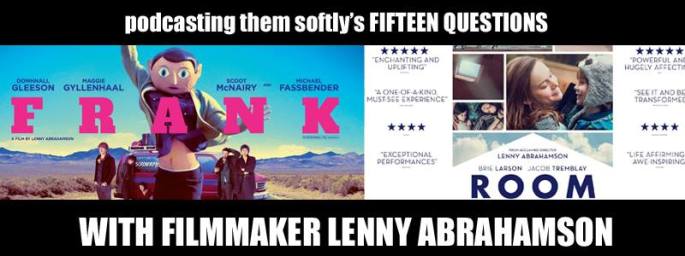
PTS PRESENTS: 15 QUESTIONS WITH OSCAR NOMINATED FILMMAKER LENNY ABRAHAMSON

In a very short period of time, rising star filmmaker Lenny Abrahamson has crafted an exceptional and challenging body of cinematic work, with his most recent film, the Oscar winner Room (Brie Larson, Best Actress), becoming one of the most celebrated pictures from 2015, with Abrahamson receiving a nomination for Best Director. He recently spoke with Nick about his career, his inspirations, the success of Room and Frank, his Irish roots, and what’s in store for the future. We hope you all enjoy!
lenny banner

I just wanted to say, at the start, what a fan I am of the film Frank. That movie totally took me by surprise and to see your further cinematic progression with Room is really striking. I tell everyone I know to see Frank. It’s really not like much else I’ve seen.

Lenny-Abrahamson-directing-Frank

Thank you very much! Yeah, we got lucky with Frank, that was something that was very unique, and to have Fassbender involved meant that this challenging little film might get a proper audience. The script was perfectly balanced, and the material really resonated with me.

Lenny-Abrahamson

You rose through the ranks io the Irish film industry, which is a country having a major cinematic boom right now. What’s it like to be a part of this new wave of talent?

I’ve been very lucky to be supported by the Irish Film Board, the IFB, and because of them, myself and so many other filmmakers have been given a chance to make films and tell interesting stories that mean something to us personally. That’s what’s so interesting and I think real about Irish cinema – a lot of it seems to be coming from the heart, from an honest place. It’s increasingly harder to find proper financing for films and the most interesting filmmakers need outlets to tell their stories in their own personal way. The IFB is known to nurture and develop talent, allowing filmmakers to find their voice.

richard did

How important is Irish cinema to you?

Oh it’s very important. My first film was entirely made possible by the IFB, with my initial three films all being shot in Ireland. My filmmaking career was certainly born out of my experiences growing up in Ireland.
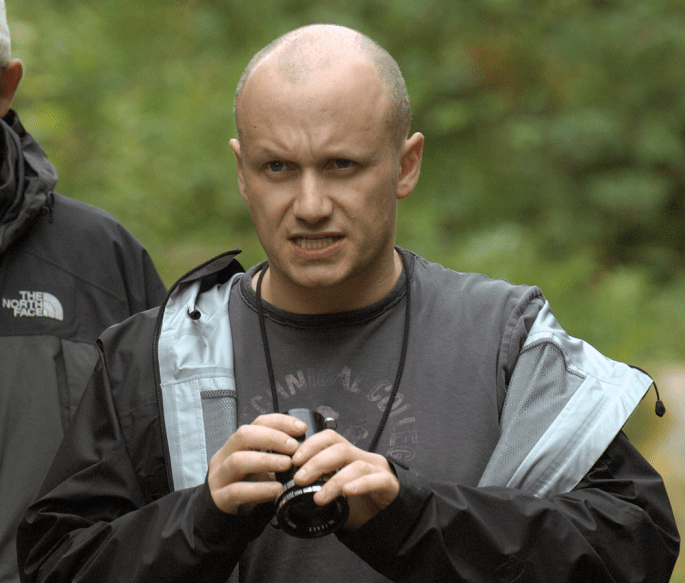
Lenny-Abrahamson

Were you a film buff growing up?

When I was growing up I had a lot of interests, and I came to film and filmmaking later than most. I guess I was most attracted to classic European films, filmmakers like Fellini and Bergman and then the big Hollywood blockbusters like Indiana Jones and Star Wars and Jaws, the films I’d watch with my friends. John Cassavetes was also of interest, and I can remember becoming obsessed with The Killing of A Chinese Bookie. That was a film that made a big impact on me when I started to take cinema seriously. 
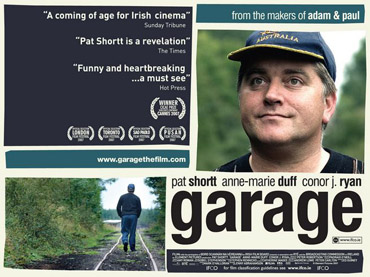
garage370

Are there any filmmakers who made an impression on you when you first started to look at cinema in a serious way?

Absolutely, yes, Jim Sheridan and Neil Jordan – their work really spoke to me, and still does. They’ve been able to work in Ireland and in Hollywood, going back and forth between small and large projects, movies with big stars and big subject matter and then smaller films that clearly have felt more personal and organic. Those two have had fabulous careers.

Frank-Sidebottom-film-still-770

How do you feel about the longevity of the Irish film landscape?

We are in a great spot right now. We have a serious opportunity to create an even more substantial industry that’s already been put in place. The cinematic voices right now are strong and confident. I’m genuinely excited about it. I mean, you’ve got people like Terry McMahon on one end, and John Carney on the other. It’s a vibrant scene right now and it doesn’t seem likely to fade away anytime soon. And I think a crucial role to the success of our industry at home is the role of the Irish government.

Michael Fassbender as Frank

Jumping back to Frank for a moment — it’s such a startling film that hits a lot of interesting tonal notes and goes to some unexpectedly sad and dark places. What was it like when you discovered this project?

The script was so incisive without ever feeling preachy, and that was something that I loved about the project and attracted me to the material. It’s a sad movie but one with a big heart and my hope is that the idea of love and acceptance was conveyed. We always knew it’d be interesting, with Fassbender under that mask, so I guess my goal was to make it as emotional as possible.

room

What was your first reaction to Room?

I was bowled over by it, totally emotionally on the hook and devastated. But in the best sort of way. It’s the type of project that could mean one thing to one filmmaker, and quite another thing to a different filmmaker. It’s how Emma O’Donaghue wrote it. The script afforded me the chance to get very visual, which is an area I am very interested in, how to communicate ideas visually, while still allowing for the performance to shine through.
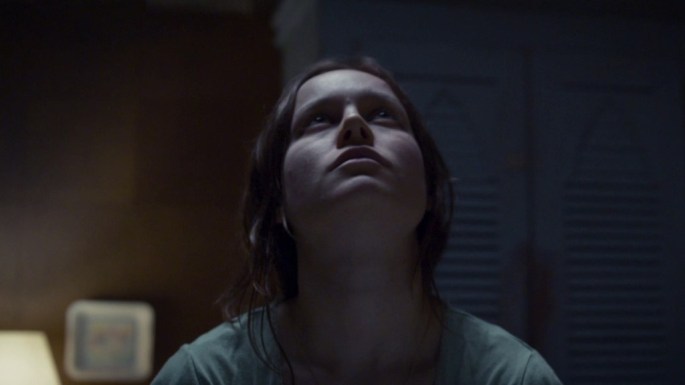
room-brie-larson

Brie Larson is magnificent in this film, and after her incredible work in Short Term 12, feels like a true star in the making. What was it like working with her?

She’s just sensational. Really. She can do it all. I was in awe by her every day on the set, and her level of commitment and dedication to her character was so laser precise as to almost be scary. I am just so happy and surprised about the success of Room, and Brie was a huge part of everything positive with this project.
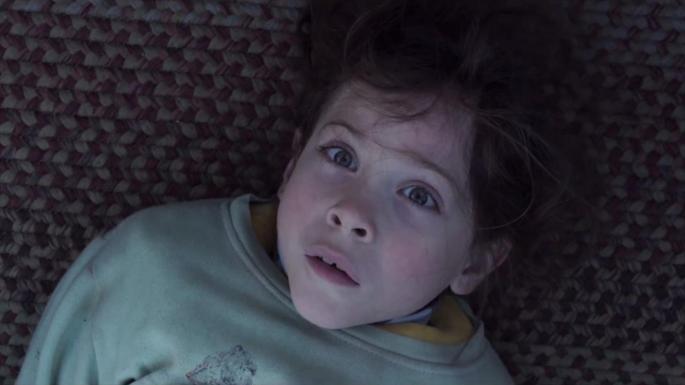
tremblay

And working with Jacob Tremblay – how did he respond to direction and the intensity of the material?

He’s an amazingly intuitive young actor, and he brought an incredible amount of maturity to the shoot. Watching him interact with Brie was fascinating on one hand, and sort of sad on another. I don’t think I was prepared to see them bond in the way that they did. If he decides to continue acting, the sky’s the limit for him.
1

Were you worried that, despite being based on a popular book, it would have a tough film to sell to large audiences?

Things rarely go this well with a movie this challenging. For Room to be found by a large audience I think speaks to the material and the performances and the universal quality of the story. Making a film that’s based on a popular book is an interesting proposition, and in this case, we were certainly embraced by those dedicated original fans.

A24_Films_logo

What was it like working with A24? They’ve established themselves as one of the premiere film companies right now, with a slate of movies that can be described as nothing less that tremendous.

A24 made a serious investment in all of us, before they even saw a finished script. With a company like them, one that’s young and energetic and hungry for great material, it was a match made in heaven. They kept plugging away, carefully building our audience.
 black and white

Given that you’re a filmmaker with intrinsic ties to the Irish film community, how do you feel right now, overall, about your home country’s film landscape?

Oh, I’m very excited by it. It’s a very vibrant scene right now, with tremendous storytelling talent being cultivated. I don’t think this upward trend is going to fade away anytime soon. I think there’s a big and crucial role that our government can play in the success of the industry back in Ireland, and right now, because of so many serious voices, we have a real opportunity to create a major and lasting industry. People are very excited because of the investments being made by the government in our industry.

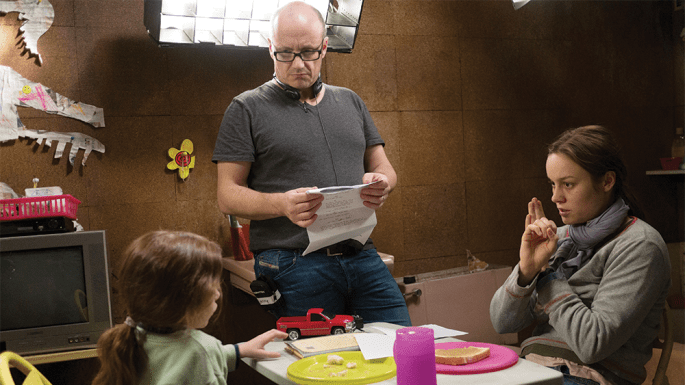
room on set

Do you find yourself attracted to Irish stories or Irish material?

I gravitate towards anything that I find compelling on a human scale, whether that’s a story set in Ireland or one set elsewhere. I see myself as a filmmaker who is able to make films in the states and back at home. Irish stories tend to be a bit more intimate and small, sometimes more personal. And those are the Irish stories that interest me the most.

element-pictures1-300x71

What do you have coming up in the near future, anything you can share?

I’ve got another picture with Element Pictures, who I worked with on Room, that we’re developing. It’s an adaptation of a book that’s being written called The Grand Escape. It’s a WWI story, something very different than Room and my previous films, but a true story that I feel is very cinematic. I’m very excited about it. I’m also working on a boxing film called A Man’s World. I look forward to new challenges.
lenny banner

NICOLAS WINDING REFN’S VALHALLA RISING — A REVIEW BY NICK CLEMENT

VR

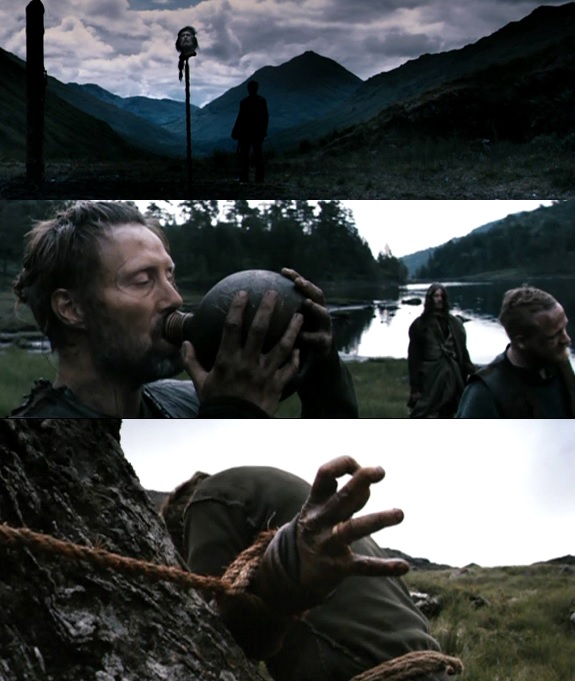
Meditative, head-splittingly violent, and narratively trippy, Valhalla Rising, from auteur in the making Nicolas Winding Refn (Bronson, Pusher, Drive), is not your grandfather’s Viking adventure. Centering on a one-eyed mute warrior-slave, stoically played by Refn’s go-to-guy Madds Mikkelsen in a tremendously forceful performance, who has to fight in order to stay alive while under capture, Valhalla Rising is like some sort of acid-trip nightmare come to life. It appears to have been filmed literally at the edge of the fucking earth, the musical score is brooding and unsettling, the violence is shocking, repulsively awesome, and at times very tough to watch, and the lyrical, loopy narrative takes any number of creative liberties and sojourns. This isn’t an A to B to C type endeavor with a concrete finale that ties everything up – far from it. Very similar in tone and spirit to Ben Wheatley’s black and white descent into madness A Field in England, this is challenging, and for some, frustrating cinema.

Refn isn’t out to coddle or make it easy for his audience, sometimes daring you to look away, and forcing the viewer to take this journey into hell along with a group of disgusting savages. But there’s also a beautiful poetry to his brand of ultra-violence, and when put into historical context (the Vikings weren’t a gentle bunch of explorers), one gets the idea that the brutality shown on screen would have likely been on par to what might have gone down back in the day. He wants you to think and while he makes you think he’s going to screw with your head while bashing it in with a smile. Valhalla Rising feels like a Terrence Malick film crossed with a little bit of Werner Herzog and then a dash of Jerry Bruckheimer thrown in with a sprinkle of psychological horror and a pinch of existential journey and a side order of hallucinogens. It’s like nothing you’ve ever seen and for that fact alone it should find its way into your viewing cycle soon if you’ve never experienced it. And trust me, experience is the operative term with this intense, harshly gorgeous, instant cult classic.

Spirit: Stallion Of The Cimarron – A Review by Nate Hill

image

I feel like part of the reason why DreamWorks’s Spirit: Stallion Of The Cimarron works so well (Ebert noted this in his excellent review) is the fact that none of the animals talk. Although the titular horse is given internal narration by Matt Damon (of all people), not once does Spirit, or any other creature ever speak themselves. This allows for more time spent on music, visuals and storytelling free from banter or exposition. When you have a movie with such sweeping scope and majestic beauty, it’s nice to just relax and let it wash over you, almost like a music video. I’ll always love 2D animation, and here its done exquisitely, the wild frontier rendered in richly colored strokes, the horses vividly brought to life through the illustrations. It’s one of the last classic 2D outings, before the eventual switch to computer generated stuff. Don’t get me wrong I’m just as in love with 3D animation, but I will always have deep nostalgic pangs for this style as well. Someone once told me that cinema is the only art form in which every single artistic medium you can think of can all inhabit the same space, interacting and complimenting each other to create a symphony for all the senses and perceptions. Spirit is a shining example: exceptional drawing and animation, terrific voice acting, and the music, which is a standout. Both the stirring score by Hans Zimmer and the original songs by Bryan Adams are heartfelt compositions which soar along with the visuals in perfect harmony. Spirit is a wild young mustang, who is captured by a vicious Colonel, gruffy baritoned by James Cromwell. He tries to train the horse and break him, but Spirit has that wild spark of vitality that any protagonist of the animal kingdom must posess. He refuses to give in, never losing hope of one day returning to his herd. He is befriended by young native man Little Creek (Daniel Studi) who is also searching for home. The two form an adventurous bond, putting them against man and nature to return to their origins. Mountains, valleys, corals, trees and the untamed northwest wilderness are all presented in a fashion so gorgeous that the colors nearly pop off the screen. It’s just terrific entertainment through and through, never too silly, sappy or frightening, hitting all the right notes along the whole breadth of its breezy 80 minute runtime. DreamWorks doesn’t often give Disney a run for its money, but consider this a glowing exception.

Barry Levinson’s Sleepers: A Review by Nate Hill

image

Barry Levinson’s Sleepers is a deliberately paced, downbeat look at revenge, and is one of the most brilliant yet seemingly overlooked dramas of the 90’s. Part of it could have been marketing; The cover suggests blistering violence, confrontation and courtroom intrigue. While there are such moments within the narrative, they live to serve the story, which Levinson and his dream cast are doggedly intent on telling. It’s a sombre affair to be sure, slow and methodical as well, but never to be confused with boring. It’s just such a great story, one that unfolds exactly as it needs to. It starts in the 1950’s, where four young rapscallions run wild on the streets of Manhatten. It kicks the story off with a sort of urban Stand By Me vibe, and if you thought that film went to some heavy placed, stick around through Sleepers. When an innocent prank ends in tragedy, the four are sent to an austere children’s correctional facility, where they run afoul of some sadistic and abusive guards, led by Kevin Bacon, who is scummier than scum itself. They endure months of ritual abuse at the hands of these sickos, until their eventual release. Life goes on, as it must, the four boys grow up and follow very different paths from one another. Michael (Brad Pitt) becomes an esteemed lawyer. Shakes (Jason Patric) lives a quiet life, while Tommy (Billy Crudup, wonderfully cast against type) and John (Ron Eldard) take a darker road to drugs and crime. Eventually their past rears it’s head, and they are presented with an opportunity for much delayed revenge. It doesn’t all play out the way you may think though, and half the fun of this one is being surprised by geniunly lifelike plot turns and characters who behave as real humans would. Pitt is the highlight in a performance of quiet torment. Dustin Hoffman is fun as a washed up lawyer who gets involved, Minnie Driver shows up as a tough NYC gal who gets involved with Patric, Robert De Niro has a nice bit as a kindly priest who counsels the boys even until adulthood, and there’s further supporting work from Jonathan Tucker, Bruno Kirby, Frank Medrano, Brad Renfro, Terry Kinney and more. Levinson usually takes on bright, chipper comedies and razor sharp political satire. With Sleepers he deviates into tragic dramatic material, and shows his versitility excellently. This one gets grim, no doubt about it. However, it’s a story not only worth the telling, but worth the watching for us.

HIGH FIDELITY – A REVIEW BY J.D. LAFRANCE

highfidelity

Have you ever spent hours organizing your record collection in chronological order and by genre? Have you ever had heated debates with your friends about the merits of a band who lost one of its founding members? Or argued about your top five favorite B-sides? If so, chances are you will love High Fidelity (2000), a film for and about characters obsessed with their favorite bands and music. What Free Enterprise (1999) did for film geeks; High Fidelity does for music geeks. Based on the British novel of the same name by Nick Hornby, it is a film made by and for the kind of people who collect vintage vinyl and read musician and band biographies in their spare time yet is still accessible to people who like smart, witty romantic comedies.

Rob Gordon (John Cusack) is an obsessed music junkie who owns a record store called Championship Vinyl. He has just broken up with Laura (Iben Hjejle), a long-time girlfriend and the latest in a countless string of failed relationships. Rob addresses the audience directly throughout the film (just like Woody Allen did in his 1977 film, Annie Hall) about this latest break-up and how his top five break-ups of all-time inform his most recent one. It’s a great way for Rob to try and come to terms with his shortcomings and the reasons why his past relationships did not work out. He is talking directly to us and in doing so we relate to him and his dilemma a lot easier. And so, he goes on a quest to find out why, as he puts it, “is doomed to be left, doomed to be rejected,” by revisiting his worst break-ups. The purpose of this trip down memory lane is an attempt to understand his most recent falling out with Laura.

Along the way we meet a colorful assortment of characters, from his past girlfriends (that includes the diverse likes of Lili Taylor and Catherine Zeta-Jones) to his co-workers at Championship Vinyl (Jack Black and Todd Louiso). They really flesh out the film to such a degree that I felt like I was seeing aspects of my friends and myself in these characters. Being a self-confessed obsessive type when it comes to film and music, I could easily relate to these people and their problems. And that’s why High Fidelity works so well for me. The extremely funny and wryly observant script by D.V. DeVincentis, Steve Pink, and John Cusack (the same team behind the excellent Grosse Pointe Blank) not only zeroes in on what it is to love something so passionately but why other things (like relationships) often take a backseat as a result. A girlfriend might not always be there for you, but your favorite album or film will. A song will never judge you or walk out on you and there is a kind of comfort in that.

The screenplay also makes some fantastic observations on how men view love and relationships. Throughout the film Cusack’s character delivers several monologues to us about his thoughts on past love affairs, one of my favorite being the top five things he liked about Laura. It’s a touching, hopelessly romantic speech that reminded me a lot of Woody Allen’s list of things to live for in Manhattan (1979). Usually, this technique almost never works (see Kuffs) because it often comes across as being too cute and self-aware for its own good but in High Fidelity it works because Cusack uses it as a kind of confessional as Rob sorts out his feelings for Laura and sorts through past relationships and how they led him to her.

The screenplay works so well because not only is it well written but it is brought to life by a solid ensemble cast. The role of Rob Gordon is clearly tailor-made for John Cusack. Rob contains all the trademarks of the kinds of characters the actor is known for: the cynical, self-deprecating humor, the love of 1980s music, and the inability to commit to the woman of his dreams. Even though High Fidelity is not directed by Cusack, like Grosse Pointe Blank, it is clearly his film, right down to the casting of friends in front of and behind the camera (i.e. actors Tim Robbins, Lili Taylor, his sister Joan, and screenwriters, D.V. DeVincentis and Steve Pink). Along with Say Anything (1989), this is Cusack’s finest performance. I like that he isn’t afraid to play Rob as a hurtful jerk afraid of commitment despite being surrounded by strong women, like his mother who chastises him for breaking up Laura, and his sister Liz (Joan Cusack) who is supportive at first until she finds out why he and Laura really broke up. Rob had an affair with someone else while Laura was pregnant and as a result she got an abortion. This horrible act runs the risk of alienating Rob from the audience but Cusack’s natural charisma keeps us hanging in there to see if Rob can redeem himself.

All of the scenes that take place in the record store are some of the most entertaining and funniest moments in the film, from Rob listing off his top five side one, track ones, to Barry schooling an Echo and the Bunnymen fan on The Jesus and Mary Chain, to Rob fantasizing about beating the shit out of Laura’s new boyfriend Ian (Tim Robbins) when he shows up one day to clear the air. These scenes showcase the excellent comic timing of Cusack and his co-stars, Jack Black and Todd Louiso. The interplay between their characters instantly conveys that they’ve known each other for years by the way they banter and bicker.

Louiso’s Dick is a shy, introverted guy that you can imagine listening to Belle and Sebastian religiously, while Black’s Barry is a rude, annoying blowhard who says everything you wish you could actually say in public. It’s a flashy, scene-stealing role that Black does to perfection, whether it is discussing the merits of Evil Dead II’s soundtrack with Rob or doing a spot-on cover of Marvin Gaye’s “Let’s Get It On” for the launch of Rob’s record label. And yet, Barry isn’t overused and only appears at the right moments and for maximum comic effect. His sparing usage in High Fidelity made me want to see more of him, which is why he works so well. However, Louiso, with his quiet, bashful take on Dick, is the film’s secret weapon. The scene where he tells a customer (Sara Gilbert) about Green Day’s two primary influences which is a nice example of the understatement he brings to the role.

The casting of Danish actress Iben Hjejle is an atypical choice but one that works because she brings an emotional strength and an intelligence to a character that is largely absent from a lot of female romantic leads. She’s not traditionally beautiful, like Catherine Zeta-Jones, who plays one of Rob’s ex-girlfriends, Charlie Nicholson. Sure, Charlie is drop-dead gorgeous but her personality is so off-putting that any kind of deep, meaningful relationship would be impossible. Laura is so much more than that. While Rob refuses to change and to think about the future, Laura is more adaptable, changing jobs to one that she actually enjoys doing even if it means she can’t have her hair dyed some exotic color. Laura is easily Rob’s intellectual equal, if not smarter, and the voice of reason as well as having no problem calling him on his shit.

Nick Hornby’s book was optioned by Disney’s Touchstone division in 1995 where it went into development for the next three years. Disney boss Joe Roth had a conversation with recording executive Kathy Nelson who recommended John Cusack (whom she had worked with on Grosse Pointe Blank) and his screenwriting and producing partners D.V. DeVincentis and Steve Pink adapt the book. They wrote a treatment that was immediately green-lit by Roth. In adapting the book into a screenplay, Cusack found that the greatest challenge was pulling off Rob’s frequent breaking of the fourth wall and talking directly to the audience. They did this to convey Rob’s inner confessional thoughts and were influenced by a similar technique in Alfie (1966). However, Cusack initially rejected this approach because he thought, “there’d just be too much of me.” Once director Stephen Frears came on board, he suggested utilizing this approach and Cusack and his writing partners decided to go for it.

The writers decided to change the book’s setting from London to Chicago because they were more familiar with the city and it also had a “great alternative music scene,” said Pink. Not to mention, both he and Cusack were from the city. I like how they shot so much of the film on location, making the city like another character and even including visual references to local record labels like Touch & Go and Wax Trax! Another challenge they faced was figuring out which songs would go where in High Fidelity because Rob, Dick and Barry “are such musical snobs.” Cusack, DeVincentis and Pink listened to 2,000 songs and picked a staggering 70 cues for the film. DeVincentis was the record-collection obsessive among the writers with 1,000 vinyl records in his collection and thousands of CDs and cassettes. They also thought of the idea to have Rob have a conversation with Bruce Springsteen in his head, never thinking they’d actually get him to be in the film but that putting him in the script would get the studio excited about it. They were inspired by a reference in Hornby’s book where the narrator wishes he could handle his past girlfriends as well as Springsteen does in the song, “Bobby Jean” on Born in the USA. Cusack knew the Boss socially, called the musician and pitched the idea. Springsteen asked for a copy of the script and after reading it, agreed to do the film.

High Fidelity is now a historical document thanks to the rise of iTunes and the subsequent demise of brick and mortar record stores. The film is a tribute to these places where one could spend hours sifting through bins of vinyl records and used CDs, looking for that forgotten gem or a rare deal on something you were looking for. I’m not talking about places like Tower Records or Virgin Megastore but those cool, local stores that catered to obsessive collectors. This film is a love letter and a eulogy to these stores. It’s scary to think that it’s only been more than ten years since High Fidelity came out and indie record stores are almost an extinct breed, except for the ones hanging on in big cities. Even though the world and the characters in High Fidelity are unashamedly of a rarified type: the obsessive music geek or elitist, which some people may have trouble relating to, the film’s conclusion suggests that there is much more to life than one’s all-consuming passion for these things. It also helps to be passionate about someone. And that message is delivered in a refreshingly honest and cliché-free fashion as it provides what is ultimately the humanist core of High Fidelity.

THE INVITATION: A Review by Joel Copling

Rating in Stars: ***½ (out of ****)
Cast: Logan Marshall-Green, Tammy Blanchard, Emayatzy Corinealdi, Michiel Huisman, Michelle Krusiec
Director: Karyn Kusama
MPAA Rating: NR
Running Time: 1:40
Release Date: 04/08/16 (limited)

(Note: It is impossible to discuss The Invitation without potential spoilers. Part of the film is about the inevitable outbreak of climactic violence, but I have done my utmost not to give away the film’s motivation to get to that point. Proceed with caution if you must, but you might want to see the film before reading this review.)

The Invitation gains most of its considerable mileage from moments of silence and consideration. It’s difficult to talk about the film’s achievements without delving too deeply into spoilerish territory, but let it be noted that screenwriters Phil Hay and Matt Manfredi are dealing with heavy thematic material here, and their movie climaxes in an even more desperate emotional state. Yes, this is a psychological thriller that adds up to a scene of extended violence, but the sense of inevitably reaching that violence is more upsetting than the ultimate shift toward it. When it comes, the narrative has earned it, and the intimacy of the act makes it all the more appalling.

It helps, too, in a feeling-of-helplessness sort of way, that the characters feel human from the moment we meet them. After a highly suggestive prologue involving our principal protagonist (who leads what ultimately becomes something of an ensemble) and his wife hitting a wolf on their way to the house in and around which the rest of the film will take place, Will (Logan Marshall-Green) and Kira (Emayatzy Corinealdi) arrive as his old place of residence. It was the family home until tragedy struck (We see flashes of a birthday party and some commotion; our imagination goes into overdrive with details involving, perhaps, a piñata), and Will hasn’t been back inside its walls since then. It’s painful, having to return to this place, like rubbing salt on a wound that may never truly heal.

It’s about to become unthinkably worse. Will has been invited to this house, which was once his own with ex-wife Eden (Tammy Blanchard), by the woman herself, who has settled down with a new beau named David (Michael Huisman) and reappeared after two years of being in Central America. They’ve brought back with them a newly found wisdom–or so it seems–borne of a desire to let go of the material things and all the usual trappings of a cult. A disconcerting and disturbing video tells another story, and the party that has formed–consisting of mutual friends played by the likes of Michelle Krusiec, Mike Doyle, Jordi Vilasuso, Jay Larson, Marieh Delfino, and Karl Yune, all inhabiting their roles very well–suddenly feels like a group of incarcerated victims of kidnap.

David keeps the doors locked, claiming local robberies as the reason why. There are a couple of strangers in their presence, including a free spirit named Sadie (Lindsay Burdge) and the soft-spoken Pruitt (John Carroll Lynch). Will questions why, exactly, these intruders upon what is supposed to be a nostalgic evening with old friends are present as company, and Eden simply won’t allow him to question it (She slaps another guest when he suggests the group’s lessons are a bunch of baloney). The evening becomes downright nightmarish–and, later, in a different way–but there is more at stake here than simple, genre-related matters of payoff to build-up.

The screenwriters and director Karyn Kusama do an superb job of following through with the inevitable, and the performances do most of the legwork on this score. Marshall-Green, in particular, is superb at allowing the audience to question whether Will’s suspicion is legitimate or his own psyche. Blanchard is very good as a woman barely veiling her own shock and grief at the loss of a child. Lynch is unnerving as Pruitt, able to convey threat and detached amiability without so much as a shift in expression. After the potential for violence becomes active during the climax, he final shot introduces an apocalyptic and pitiless element into the thematic structure of The Invitation, and it’s downright terrifying to consider.

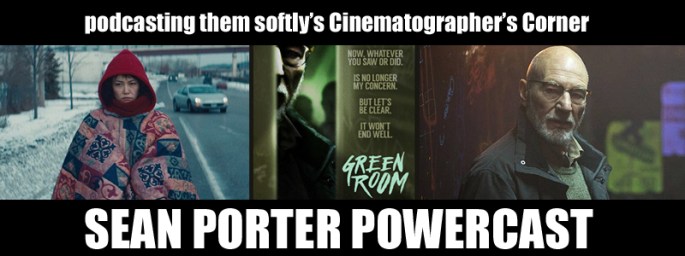
PTS Presents Cinematographer’s Corner with SEAN PORTER

porter powercast


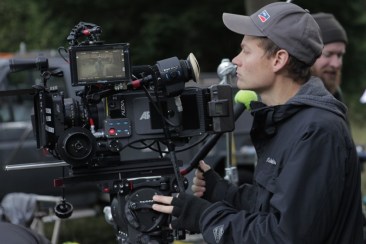
sean_porterPodcasting Them Softly is thrilled to present a chat with cinematographer Sean Porter, who recently shot the film KUMIKO, THE TREASURE HUNTER, and who has the highly anticipated thriller GREEN ROOM set for release later this year from A24. He’s also finished a pair of very intriguing projects with THE TRUST, which stars Nicolas Cage, Jerry Lewis and Elijah Wood, and 20TH CENTURY WOMEN, from director Mike Mills, and starring Elle Fanning, Alia Shawkat, Greta Gerwig, and Annette Benning. Sean got his start working on a variety of shorts, features, and documentaries, and has roots firmly planted in indie film community, and you can just tell from observing his work that he’s a talent to seriously look out for in the near future. His work on KUMIKO was beyond striking, announching an exciting and dynamic new visual eye to emerge on the cinematic scene, and it’s a film that we here at PTS are massive fans of and hope everyone will get a chance to check out. We hope you enjoy this most excellent discussion!

WALTER HILL’S THE WARRIORS — A REVIEW BY NICK CLEMENT

warriors

Walter Hill’s The Warriors is a fever dream action thriller, made at a very specific juncture in American pop culture history, as one radical decade of filmmaking was ending, with the start of something new forming in a period that would reinvent the expectations of the studio blockbuster and pave the way for more independent modes of filmmaking. The influence that Hill’s energetic and extremely entertaining film has had on filmmakers over the last 30 years can’t be ignored or denied; it’s been riffed on in numerous other films, and remakes have been proposed more than once, only to rather wisely fall apart (even with Tony Scott at the helm of one reimagining at one point). The streamlined plot played to Hill’s extreme strengths as a visual storyteller, as he’s always been a director obsessed by visual texture and the ways that a bold image can tell a story without the need for many words. Look at his body of work as a whole and just ponder some of the classics on his filmography; if there’s another once major American filmmaker deserving of career reconsideration it has to be Hill.

The Warriors rightfully sits near the top of his greatest accomplishments, if for no other reason than it served as a socio-political wake-up call in the form of filmed entertainment, taking the issue of gang violence and vigilante justice and tweaking the formula, with Hill taking bold chances with the terse screenplay he co-wrote with David Shaber, which favored forward physical momentum with the energy of rock and roll and comics. Andrew Laszlo’s muscular and endlessly stylish cinematography brought out an almost hallucinatory quality to the nighttime NYC streets, while the infectious musical score by Barry De Vorzon set a spirited yet dangerous tone right from the start. And the vintage cars and flashy costumes totally seal the aesthetic package. Hill would release an expanded Ultimate Cut in 2005 on DVD, which would include scene transitions done in the style of comic book panels, as this had always been his original intention. At the time of its release, critics came down harshly on the film, criticizing the violence and spectacle, but over time, the film has earned a massive and deserving cult following, despite actually being a box office hit to the tune of $22.5 million dollars.


Tony Scott’s Spy Game: A Review by Nate Hill


Tony Scott’s Spy Game is a kinetic yet heartfelt espionage thriller that sees the director maintain considerable shards of his assaulting sensory overdrive of style, whilst pausing along the way for a story that is really rooted in the personal story of the bond and friendship between two men. A lot of his films are predominantly visual and auditory, a bullet train of sound and fury, with plot and characterization as passengers onboard. Here those elements are cogs in the machine, resulting in a very touching, extremely exciting outing and perhaps the director’s most overlooked piece. Robert Redford used to be the younger, more naive faction in a lot of cinematic pairings, especially with Paul Newman. Here he flips the coin, taking on the grizzled mantle of both father figure and mentor to Brad Pitt. Pitt is Tom Bishop, an operative taken under the wing of veteran agent Nathan D. Muir (Redford). Nathan no doubt sees some of himself in the lad, and takes a shine to him, grooming him with all the skills and cunning that a lifetime in the business has given him. Life throws curveballs though, and more often than not they involve love. Bishop has gone rogue in an attempt to rescue relief worker Elizabeth Hadley (the brilliant Catherine McCormack, who needs to be in more movies) from a Chinese prison. In his eagerness he is captured, leaving Muir to make some tough decisions, pull some hidden cards and use all of his talent and resources to extract them. Now in many films like this there would be several blistering action set pieces to show how it’s done. Scott instead chooses to give Redford the intellectual grit and subversive genius to pull hidden strings and come up with a wicked fun solution that is endlessly more satisfying than an explosion ridden shock and awe campaign. His struggle to get his friend back is laced with flashbacks of his training, with a 70’s flavour that feels authentic and writing that lovingly builds the blocks of their dynamic. Stephen Dillane provides wonderfully understated work as a quietly smarmy CIA prick, and watch for a quick appearance from the great Charlotte Rampling. To see Scott’s frenetic aesthetic hired for a script that takes its time and plays out less like a conventional thriller and more like the paced, elliptical spy thrillers of years past (vaguely reminiscent of aspects of Le Carré) is a somewhat rare treat. Terrific thriller with Redford at his best, highly, highly recommended. 

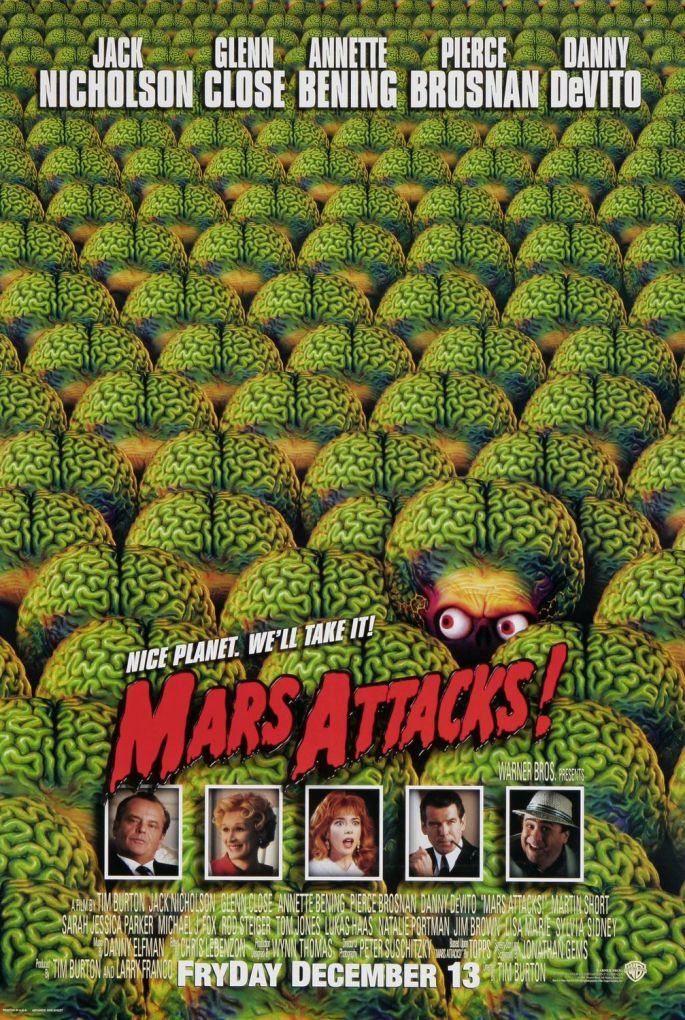
TIM BURTON’S MARS ATTACKS! — A REVIEW BY NICK CLEMENT

mars_attacks_ver1_xlg

This movie makes me happy. It makes me laugh. It leaves me with a fat grin on my face every time I see it. Jack Nicholson as POTUS and a sleazy car salesman in the same film! I can remember seeing this bit of craziness on opening night 20 years ago (this December!), hot on the heels of Independence Day, and holy moly this was NOT ID4. Laying a fat egg at the domestic box office, Mars Attacks! remains one of Tim Burton’s most underrated and underappreciated films. It’s a hoot and a holler, completely entertaining, with its tongue planted very, very firmly in its cheek. It’s silly, it’s reverential, and it looks absolutely fabulous in a purposefully low-tech and kitschy manner. The playful score by Danny Elfman is one of his best, the opening title sequence is an all-time classic, and the absurdly star studded cast is a roll call of the likes that is rarely seen outside of one of the old-school Irwin Allen disaster films.

The film had a very long development process, with names like Alex Cox and Martin Amis taking early and separate stabs at the property, which was famously based off of the 1950’s era Topps Trading Card series, before final screenwriters Jonathan Gems, Scott Alexander, and Larry Karaszewski put the finishing touches on this most ridiculous and clever and all together wild film. In retrospect, it’s very easy to see how this material must’ve set Burton’s world on fire, as it was a chance for him to make an outsized version of an Ed Wood movie, and given his love for that iconic filmmaker, seems almost like one of the most expensive personal love letters that a director has ever made.

The visual design of the aliens is aggressively awesome, I love the fact that they only say the phrase ACK-ACK, and when their heads explode inside of their space helmets – priceless! It’s a pity that critics couldn’t just embrace this film for what it was and have some fun, as they seemed eager and almost happy to pounce on this back in the day. And audiences weren’t likely expecting the light and breezy and absurdist tone, especially after the traditional heroics and bombast from Independence Day just a few months earlier. Mars Attacks! is a film that I could watch any day of the week, and whenever I come across it on the movie channels, I almost always have to pick it up in progress, as it’s never not a delightful pisser.