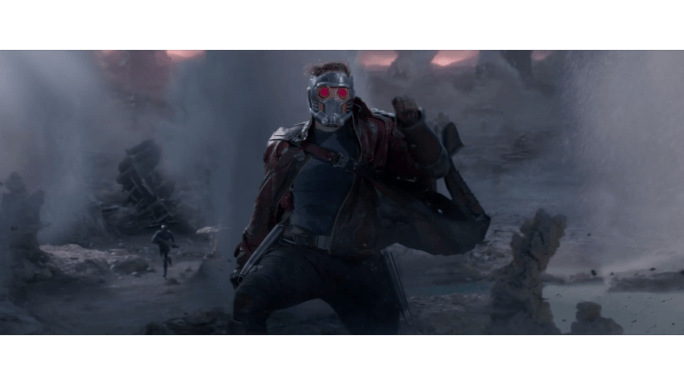
GUARDIANS OF THE GALAXY – A REVIEW BY J.D. LAFRANCE

Image19Much ado has been made about the huge risk Marvel Studios took adapting Guardians of the Galaxy (2014) for the big screen. Since The Avengers (2012), they’ve been content cranking out sequels to their mega-successful franchises of Iron Man, Thor and Captain America. Guardians would be a real test of the Marvel brand with most industry insiders forecasting a modest success and a few predicting it to be the studio’s first big flop.

Based on a fairly obscure comic book set in a galaxy far, far away featuring the misadventures of a ragtag group of aliens led by a human orphaned from Earth, Guardians of the Galaxy enjoyed a resurgence in 2008 but still lacked the name recognition of the aforementioned superheroes. Furthermore, it was to be co-written and directed by James Gunn, the B-movie maverick responsible for modern cult classics like Slither (2006) and Super (2010), starring up and comers like Chris Pratt, Zoe Saldana and professional wrestler Dave Bautista. The two biggest movie stars – Bradley Cooper and Vin Diesel – would not actually be appearing on-screen, instead providing voices for completely computer generated characters. Marvel’s canny and pervasive marketing blitzkrieg paid off. Guardians smashed opening weekend records for August.

We first meet Peter Quill as an eight-year-old boy losing his mother to cancer only to be subsequently abducted by a group of notorious space pirates led by a blue-skinned bandit known as Yondu Udonta (Michael Rooker). They raise the young boy to be a smuggler and an outlaw a la Han Solo complete with the self-applied moniker Star-Lord (Chris Pratt). He steals a mysterious orb and plans to sell it on the Nova Corps homeworld Xandar, ripping off Yondu in the process, which results in a hefty bounty being placed on his head.

Little does Quill know that this theft has caught the attention of several interested parties: Groot (voiced by Vin Diesel) and Rocket Raccoon (voiced by Bradley Cooper), a mercenary duo, and Ronan the Accuser (Lee Pace), a powerful Kree alien who wants the orb so that it can be handed over to Thanos (Josh Brolin), an even more powerful being last seen at the end credits of The Avengers, in exchange for destroying Xandar, his sworn enemies. To this end, Ronan sends Gamora (Zoe Saldana), a deadly assassin, to retrieve the orb.

However, Quill when crosses paths with Groot, Rocket and Gamora, the resulting chaos has them arrested by the Nova Corps and thrown into an outer space prison known as Kyln. It is here that they meet Drax the Destroyer (Dave Bautista), a warrior with a thirst for revenge on Ronan for killing his family. They form an uneasy alliance and break out of prison to sell the orb with Yondu, the Nova Corps, and Ronan and his trusted lieutenant Nebula (Karen Gillan) in hot pursuit.

With this film, Parks and Recreation’s Chris Pratt becomes a bonafide action star, deftly blending amusing quips with heroic feats. He does a nice job of also portraying Peter Quill as a man haunted by his past, like many of his cohorts. All of the Guardians have lost deeply personal things in their lives and this is what unites them – that, and saving their own lives and, by default, the galaxy. Zoe Saldana gets to portray yet another alien, but instead of being buried under CGI as she was in Avatar (2009), the actress sports a striking green look and a fierce attitude to match. A pleasant surprise comes from the casting of WWE wrestler Dave Bautista who is excellent as Drax, the gruff warrior that tags along with the rest of these ne’er-do-wells. It is a lot of fun to see this athlete bounce off of the other actors and who more than holds his own.

If Quill provides the film its heart, then Rocket provides the bulk of its humor, stealing almost every scene he’s in by not just getting to spout the bulk of the film’s funniest lines, but also the impressive CGI that brings him vividly to life so that he actually emotes convincingly. Special effects technology has finally caught up to Groot and Rocket, creating expressive, fully realized characters. Early on, you stop thinking of them as CGI characters and look at them as part of the team thanks to the voice work of Vin Diesel and Bradley Cooper who give Groot and Rocket distinctive personalities.

The banter between Quill, Rocket, Gamora, Drax, and even Groot is a large part of the film’s charm. Quill is the wisecracking smartass while Gamora is all business, Rocket has anger management issues, Drax doesn’t understand metaphors (making for some pretty funny exchanges between him and Quill), and Groot just says, “I am Groot” at key moments. Credit should go to the witty screenplay by Gunn and Nicole Perlman that plants the seeds of jokes early in the film only for them to successfully pay off later on.

There is a fantastic mix of character moments and visual eye candy in Guardians of the Galaxy as Gunn immerses us in this strange galaxy and the colorful characters that populate it. His production team has crafted a textured, lived-in universe that is rich in detail and drenched in atmosphere. The film’s vibrant color scheme is complimented by a stellar soundtrack featuring songs from the 1970s and 1980s via a mixtape in Quill’s vintage Walkman that also acts a touchstone to his childhood on Earth and memories of his departed mother. As a result, the songs run the gamut from commenting humorously on the action (“Hooked on a Feeling” by Blue Swede) to also adding poignancy to more reflective moments (“I’m Not in Love” by 10cc) as well.

The only problem I have with Guardians of the Galaxy is that its villainous trio isn’t all that interesting. Ronan and Nebula look cool, but the former is yet another power-mad baddie that Marvel likes trotting out in all of its films with only a few notable exceptions, and the latter suffers from Darth Maul syndrome – a character with a badass reputation but with very little actual proof of such. It’s no surprise that Loki and the Winter Soldier are the Marvel Cinematic Universe’s strongest villains – they both have deeply personal and compelling motivations for what they are doing, which is something that is lacking with Ronan. As for Thanos, he only gets a cameo this time out with hints that he might figure more prominently in either Guardians 2 or The Avengers 3, but that’s a long way off. Fortunately, our heroes are so interesting and so much fun to watch that the lack of substantial villains is a minor quibble at best.

Gunn has pulled off a real coup with this film. He maintains a tricky balancing act of creating a gonzo space opera full of weird characters and loaded with a dense plot while somehow making it palatable for mainstream consumption without compromise. After the debacle that was the Star Wars prequels, cinema needed a good space opera to expunge the bad vibes of George Lucas’ movies. Only Joss Whedon’s Serenity (2005) bravely stepped up and showed everyone how do it right, but now Guardians of the Galaxy joins it by providing an alternative for those hungry for an entertaining science fiction film, fulfilling a need that Lucas was unable to with his prequels.

Guardians of the Galaxy is an unabashed science fiction film full of exotic aliens, power-hungry villains, and exciting spaceship battles with the fate of the entire galaxy at stake. It is also a funny film – as close as Marvel has come to making a full-on comedy. Their other films have had humor, but were largely dramatic in nature. Guardians inverts this formula so that it is largely comedic with dramatic moments and the result is another entertaining and engaging film from Marvel who continue their impressive winning streak. More importantly, this film opens up the Marvel Cinematic Universe in a big way by introducing an entire galaxy for its increasing number of characters to inhabit.
PTS PRESENTS: 15 QUESTIONS WITH FILMMAKER JOHN CROWLEY

Crowley Banner

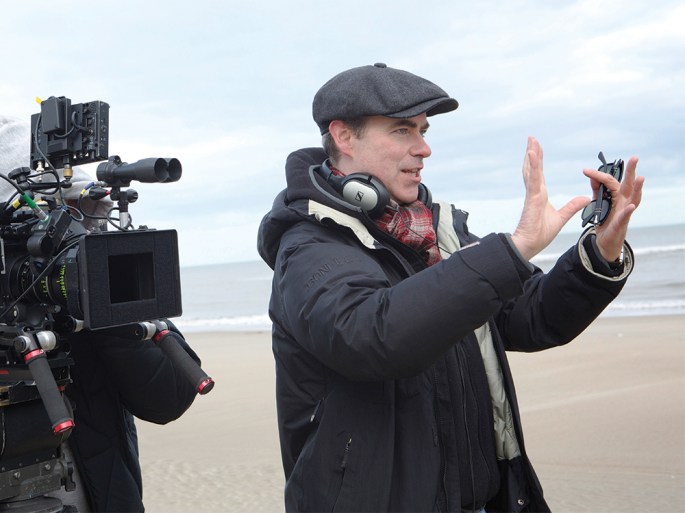
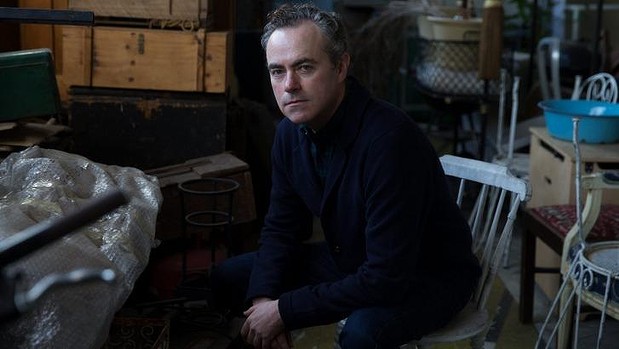
John Crowley’s eclectic and underrated career has spanned various genres and mediums. After kicking off his creative talents via the stage, he’s since transitioned into feature films and television, with credits including Intermission, Is Anybody There?, Boy A, Closed Circuit, and most recently, the Oscar nominated Brooklyn. He contributed to True Detective Season 2, and his sterling theater resume includes such diverse works as A Behanding in Spokane, A Steady Rain, The Pillowman, MacBeth, Into the Woods, The Crucible, and The Master Builder. He recently chatted with Nick about his career, his Irish roots, the amazing success of Brooklyn, and what the future holds. We hope you enjoy this informative Q&A!

behanding

Thanks for chatting with me, John. Ok, off the top, I just want to tell you how much I loved A Behanding in Spokane! My wife and I went to NYC and sat in the second row early in the run and that was just a blast. What was it like when you read that play for the first time?

Thanks so much! Yeah, that was a surreal one. It was like nothing I had seen or heard before. Coming from the great Martin McDonagh, you know you’re in for a treat, something special every time. But this just had that special combination of humor and drama, with a sort of Tarantino-inspired sense of quirky violence. It was a tricky tone to pull off on stage, but I think we nailed it. Audiences really sparked to it.

walken

And what an amazing cast of actors you had to work with, that must’ve been a treat.

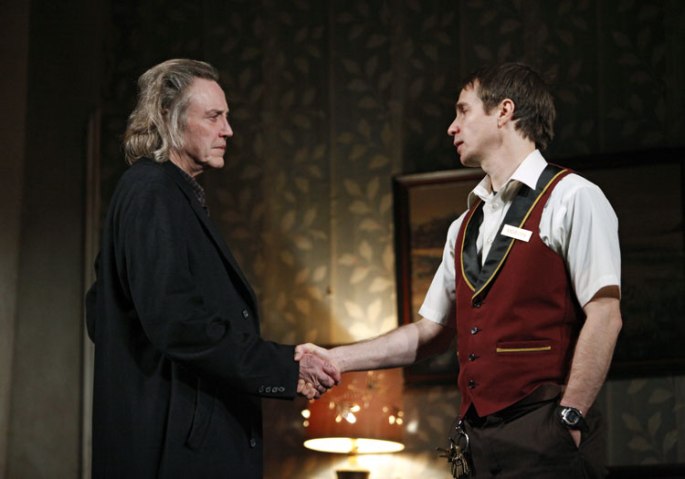
Yeah, we were blessed with some serious talent on that show, with Christopher Walken really running away with the entire piece. It was good and nasty fun.

crowley 2

How did you get your start in the film industry? Was it initially through the Irish film community?

Yeah, after starting in the theater, I moved into features and television, and yes, the Irish film world has been a big part of my understanding of the business and the artistic process. I’ve done projects like Intermission where we had an Irish crew and cast, and I’ve been able to do stuff like True Detective, this most recent season, which allowed me to expand a bit. I’ve done work in television in Europe as well.

intermission_ver2

I’ve long been a fan of Intermission, one of your early films with Colin Farrell. What was it like when you read that script?

Mark O’Rowe had really written something special, and I felt like it was a story that I knew exactly how to tell. It was an Irish production, and the energy was great, and I think we made a lasting piece that many people have found over time. Great cast of Irish actors, too.

Layout 1

Boy-A. I want to tell you how brilliant I think that film is. It’s so brutal and honest. It’s one of those small gems that I tell everyone to see. How did that come about?

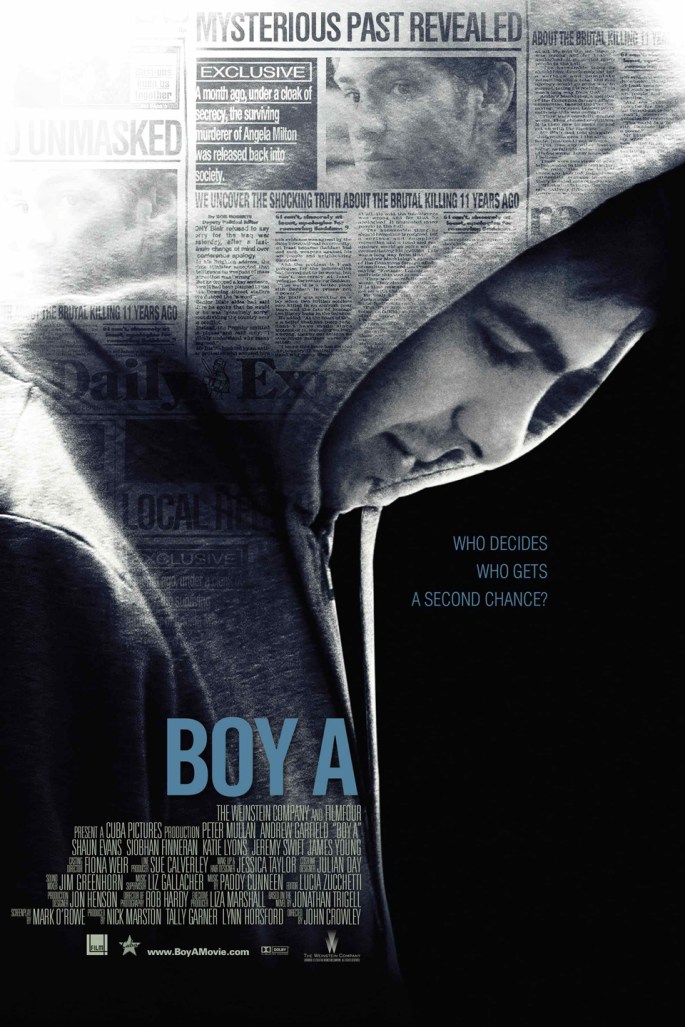
Thank you! Yeah, that was a challenging piece, Peter Mullan and Andrew Garfield both had heavy loads to carry, and they both did it with serious resolve, and without ever backing down to the material. Challenging stuff for sure, with a script that pulled no punches. That was an interesting project because of its gestation, how it was on television here in the UK and then the Weinstein brothers saw and it and got interested and put it out in a small number of theaters in America. It’s a hard-hitting piece that has thankfully found a passionate group of supporters.

brooklyn_xlg

How did you first get involved with Brooklyn?

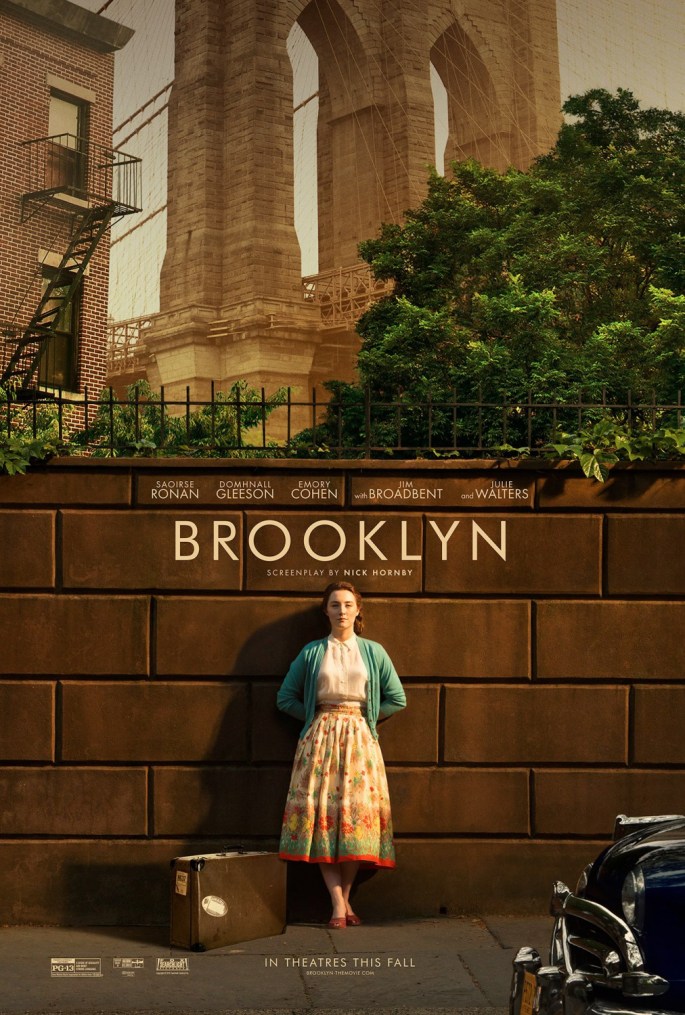
I had read the book for pleasure while working on the Broadway show A Behanding in Spokane and I immediately responded to it, in a very emotional way. However, the studios weren’t interested in making it, which presented some interesting challenges in getting it made. But people got it very quick with this project, or they just didn’t. It’s just not their business model, the studios, to make a film like Brooklyn. The financing came from a patchwork of sources, including Telefilm, The Irish Film Board, BBC, BFI, with some Canadian money in there, too. It was a true and classic independent production.

brooklyn on set

Were you nervous about how an intimate project like Brooklyn might be perceived by audiences who are growing more and more accustomed to CGI spectacle and bombast?

Nobody trusted this project except for a core group of people. I knew what we had because I had read the book and Nick Hornby’s wonderful script. It was a story I felt I could do justice. There was never a doubt in my mind. And audiences found it. It helps when your film is based on a beloved book, but I was always confident that audiences would be smart and patient enough to find our little film.

brooklyn on set 2

What was it like working with Saoirse Ronan? She really came into her own as a full blown leading actress in Brooklyn delivering one of the best performances in 2015.

Saoirse is wonderful. She’s so talented, and I’ve been such a fan all throughout the years. Her work in Atonement demonstrated a certain degree of stability, a sense of maturity that you rarely see in an actress that young. And she’s taken on interesting roles ever since, with Brooklyn serving as her big moment. I couldn’t be more proud of her. She anchored our film with a quiet reserve, this sense of nobility. And that’s not on the page, that’s something that comes from within a performer.

is anybody there

How do you feel that Ireland has progressed in terms of cinema? Are you happy with the current state of affairs?

The way it’s looking right now, there’s a lot of very interesting directors moving up the ranks. We’ve got confident filmmakers telling universal stories, without trying to be American in any sense of the word. There’s a filmmaking contingent in Ireland that’s very passionate about homegrown stories. And on the other end of it, you have Hollywood bringing over talents like Lenny Abrahamson and Fassbender and Saoirse – suddenly there’s this spotlight on Irish talent. And I think the result of all of this is a healthy funding situation in Ireland with quite a number of interesting projects getting made.

closed circuit

How connected are you to the Hollywood machine?

I’ve lived in London the last 18 years! Hollywood is important for my career, of course, and without some of the relationships I’ve made, I might not have gotten some work, or been considered for some jobs. But I like to think of myself as living outside of the intensity of the system, but ready to work with anyone if the material is proper.

saoirse

Are you consciously looking for “Irish stories” to tell?

Not in the sense that a story needs to be Irish in order for me to be interested in it. I’m attracted to the universal quality of storytelling, and a film like Brooklyn, even with its Irish sensibility, is still a work that can speak to any nationality. It’s all about the experience and the journey for the character, that’s what attracts me to material. And while I am certainly drawn to Irish stories and homegrown material on a personal level, I certainly never set out to be known as strictly an “Irish filmmaker.”

crowley

How hard is it to move back and forth from the stage to the cinema?

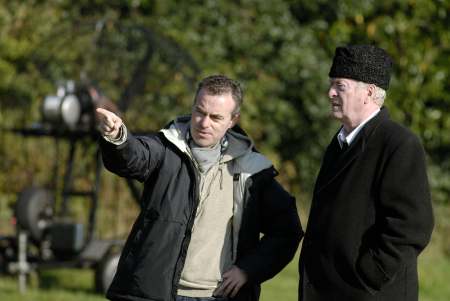
It’s different yet similar. My experiences have been great on both sides, but I think it comes down to how you interact with the actors, and how they adjust to their roles and to their surroundings. I grew up in the theater, and sort of used my experiences there as a way to get into the film and television world. One thing prepared me for the other.

1

Do you have a preference?

No, not really, because both mediums allow for different levels of success, or failure. I like being challenged by the intricacies of both forms, and the experiences I’ve had from stage work has informed my film work, and vice versa.

true_detective_ver3_xlg

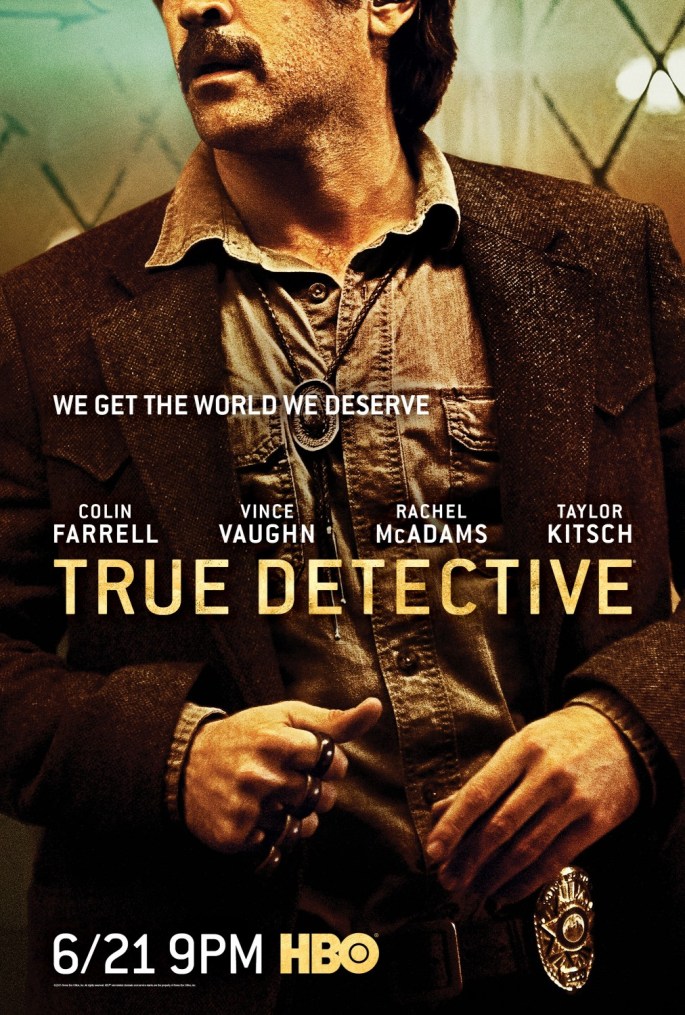
You recently directed episodes of True Detective: Season Two, which reunited you with Colin Farrell. What was your experience there?

That was interesting because of the hype and the serious interest in the show. It had that water cooler effect, whether people liked it or not. And from the scripts, I knew that season two would be very different from the first. Justin Lin had set a very solid foundation for the other directors to step in and continue the story. I enjoyed working with HBO very much.

2

What are you currently working on now? Any new theater offerings or new films in development?

Next up is The Present, an updated version of Chekhov’s first play Platonov. I directed it at Sydney Theatre Company last August and it features Cate Blanchett and Richard Roxburgh. We’re transferring it to Broadway later in the year. Meanwhile I’m at the early stage of development on a bunch of things, some TV and some feature films but I can’t say what just yet!

Crowley Banner

NICHOLAS MEYER’S TIME AFTER TIME — A REVIEW BY NICK CLEMENT

TIme

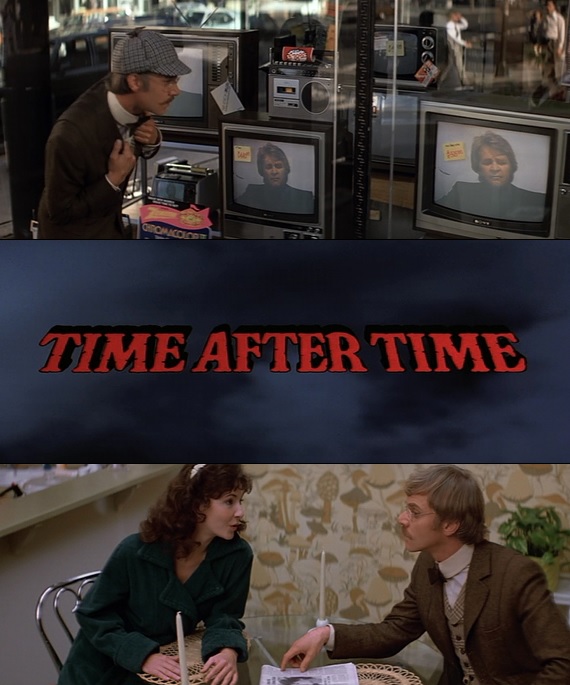
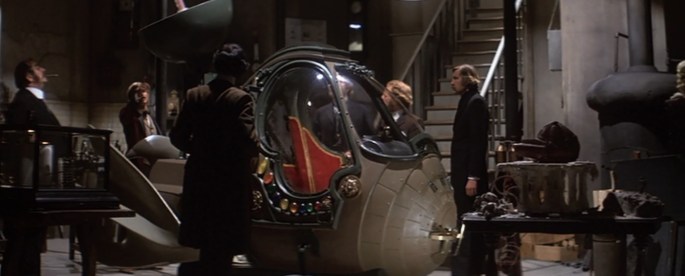
Time After Time is a wonderful film. Yes, the special effects are dated, but there’s a certain charm to the now antiquated, low-fi quality of the entire piece. Malcolm McDowell was tons of fun, as usual, in a role he seemed born to play, and David Warner made for the perfect villain for him to go up against. Written and directed by Nicholas Meyer, the film served as his helming debut, and the final result is a piece that straddles multiple tones, involves science fiction, romance, drama, and thriller elements, with nods to film noir and a perfect sense of period splendor. McDowell stars as H.G. Wells, with the narrative pivoting on the notion that Wells built a time machine, with the intention of using it in an effort to travel to a supposed Utopian paradise in the future. But in a high concept twist, before he’s able to use the time machine for his own devices, an on-the-run Jack the Ripper (Warner) hijacks it so that he can escape, inadvertently traveling to San Francisco circa 1979.

5

Wells gives chase, and upon arriving in the present day, falls in love with a pretty bank teller named Amy (Mary Steenburgen, so young, so cute). The mismatched pair work feverishly to catch Jack the Ripper while romance blossoms around them. Time After Time has witty dialogue and great performances, and if Meyer hadn’t yet mastered directorial pacing, you can certainly see why he’d land the job on Star Trek II: The Wrath of Khan, as he was able to comfortably mix big ideas with solid technical execution, never forgetting about narrative coherence or skimping out on nuanced performances. The film features a terrific and operatic musical score from Miklós Rózsa which kicks in right from the start, and the cinematography by Paul Lohmann (a frequent collaborator with Robert Altman), evoked multiple time periods with ease and casual style. Released in 1979, the film was a moderate box office success, and was met with mostly favorable reviews from critics, but for some reason this film still has a fairly low profile. No Blu-ray is currently available, which seems a shame.

4

B Movie Glory with Nate: 2103 The Deadly Wake

image

2103: The Deadly Wake strives to stand out from the B-movie masses by giving turning it’s straightforward sci-fi concept somewhat on its head. It’s set in the very distant future, in which earth’s oceans have become so contaminated that they have all taken a gaseous form, with corporations sending forth spaceship type vessels that deliver goods and wage warfare. They resemble submarines basically sailing through colored fog, and it’s one of the neatest and adorably ambitious futuristic settings I’ve seen. Malcolm McDowell is damn excellent in a rare hero role as Captain Sean Murdock, a salty old sea dog who lost a ship years before and is somewhat disgraced. Forlorn and fed up, he’s in a slump when hired to transport a massive ship across the ocean, with a mysterious cargo that’s guarded by a sinister mercenary and security expert  (Michael Paré). Usually in this type of thing it’s Paré as the hero and Mcdowell as the villain (which has actually happened in Roland Emmerich’s Moon 44), but here they pull a Tarantino and switch up the type casting which is wonderful to see and makes for a fresh vibe. Paré works for the sultry, sleazy (Heidi Von Palleske), the company CEO who wants an eye kept on the cargo hold. Paré and Mcdowell bit heads, there’s murky conflict and the ship’s Artificial Intelligence engine is called B.A.B.Y. and is quite literally a fetus in a big gooey tank with wires attached to its brain. If that isn’t worthy of a medal in the ambition department I don’t know what is. Theres an odd sort of climactic fight scene that plays like a dream and doesnt involve fighting at all really, more like just a laser show with strange dialogue. Despite it being set in the future there’s a nifty retro style, with soldier uniforms and the darkly poetic tone almost calling forth the sensibility of the 40’s. I was reminded of Titanic in scenes, but that could be my weird cinematic free association. This one’s a keeper for fans of off kilter, under the radar oddities.

RICHARD RUSH’S THE STUNT MAN — A REVIEW BY NICK CLEMENT

1

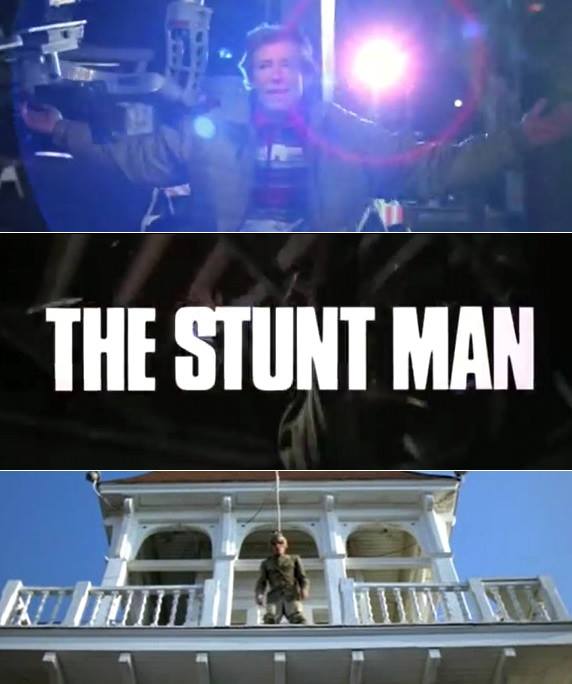
I’ve never seen anything like The Stunt Man. There will never, ever be another movie quite like The Stunt Man. This film has a very unique tone that is nearly impossible to pin down. It’s a satire of Hollywood. It’s a romance. It’s a drama. It’s a break-neck action picture. It’s a madcap comedy. This film is so many things, but most importantly, it has a wildly distinct personality, feeling like a film that just HAD to be made by the person who made it. The Stunt Man isn’t even really a film – it feels more like a carnival of ideas and action, totally off the reservation, made with a jocular style that has moments of peculiar beauty, and featuring performances that just have to be seen to be believed. There’s a raggedy quality to the film, an “in-progress” ambience that befits the movie-within-a-movie structure of the story, and the freewheeling style allows for much self-reflexivity on the part of Rush and his team of craftsmen. A notoriously tortured production, The Stunt Man has taken on the label of “lost classic” over the years, and it’s a film that many people probably have seen a long time ago but have fuzzy memories of now. It’s absolutely worth a revisit and reconsideration, if for no other reason that something this singularly bizarre and eccentric should be discussed more often than the generic, franchise-able crap that so often litters our multiplexes.

The Stunt Man, which was released in 1980, was adapted for the screen by Rush from Paul Brodeur’s novel, and centers on a Vietnam veteran named Cameron (Steven Railsback in an emotionally wild performance of astonishingly broad range) who has an run-in with the cops, flees, and accidentally ends up on the set of a big-budget WWI movie that’s being filmed on a near-by beach by a flamboyant and utterly tyrannical director named Eli (Peter O’Toole in a massively entertaining wink-wink performance) who hides the man under the guise of being a stuntman on his picture, who he then uses in a series of outlandish and death-defying set-pieces, sometimes without his participant’s full knowledge of all of the rules. Cameron can’t help but fall in love with the film’s leading lady, Nina (Barbara Hershey, sexy and funny), whose romantic past with her director causes Cameron to become a tad unhinged.

Cameron also starts to realize that his potentially insane boss has made it a habit of pushing his previous stunt-men to their limits, with possibly deadly results. Will Cameron’s cover be blown? Will he survive the increasingly crazy film production? Will he and Nina be able to live happily ever after? Cameron’s life starts to bleed from reality to fantasy and then back to reality, sometimes within the same scene, as Eli continues to press on in the most insane of manners, creating hostility between him and his crew, his actors, and pretty much everyone around him. Then the day comes for the film’s climatic action scene to be shot, and Cameron isn’t sure if Eli is out to sabotage him in an unsuspecting way, or if he’s just doing everything all in the name of cinema and for the perfect shot.

Rush was a filmmaker who understood the idea of madcap comedy better than most, and in The Stunt Man, he brought a level of gonzo energy to the film’s multiple action sequences, which, simply put, are all fabulous to observe and dissect. If you’re going to call your movie The Stunt Man you better have some great stunts to show off, and I just don’t understand how people weren’t killed while making certain sequences of this hilariously over the top film. One bit in particular, with Railsback running along the sides of houses and over roof-tops while planes are flying overhead and soldiers are firing rounds at him and jumping on him from all angles – it’s berserk, it’s hysterical, it’s all totally over the top, and finally amazing. No blue screens, no CGI, all real stunt work, with people crashing through balsa wood and sugar glass. This is a film that is all about the art of deception, and how cinema has the ability to lie to us yet make it look real and honest.

The Stunt Man also has a casual vulgarity that I just loved, with out of the blue nudity, random bits of seemingly improvised dialogue, a ton of looped audio that unintentionally ramps up the odd humor, and a general sense of anything goes/anything can happen which keeps the film hurtling along with a sense of unpredictability that is rarely matched. And then there’s the truly insane ending, with the film’s credits rolling while one of the actors is still talking, trying to make sense of his situation, and it’s like Rush is saying to everyone, himself included: “Hey, it’s just a movie.” Because Rush was attempting to bite off SO much with this effort, it feels like his ultimate “kitchen sink” film, something he made as if he were never going to direct a film again, cramming it with as many ideas and obsessions as he possibly could.

And that was sort of the case. After sitting on the shelf for over a year due to a lack of completion funds, 20th Century Fox bought the film, but Rush ended up battling it out with the studio over a botched release, despite the film being nominated for Best Director, Best Adapted Screenplay, and Best Actor for O’Toole. It then took Rush 14 years to return to the director’s chair (he was fired off of 1990’s Air America, for which he wrote the original script) for the ill-fated erotic thriller Color of Night, which became infamous as “that movie where Bruce Willis felt the need to show the world his bellend.” It’s a shame that Hollywood loves to forget about genuine voices like Rush, and Martin Brest, and Michael Cimino, filmmakers who were interested in telling stories outside of the cookie-cutter norm, guys with too much of an idiosyncratic view and style for the studio bean-counters.

PETER BERG’S THE KINGDOM — A REVIEW BY NICK CLEMENT

3

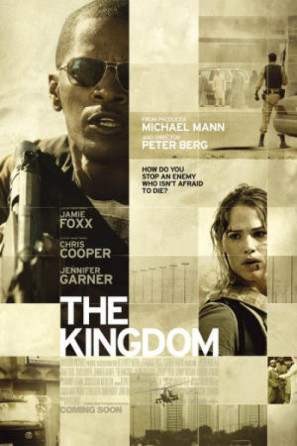
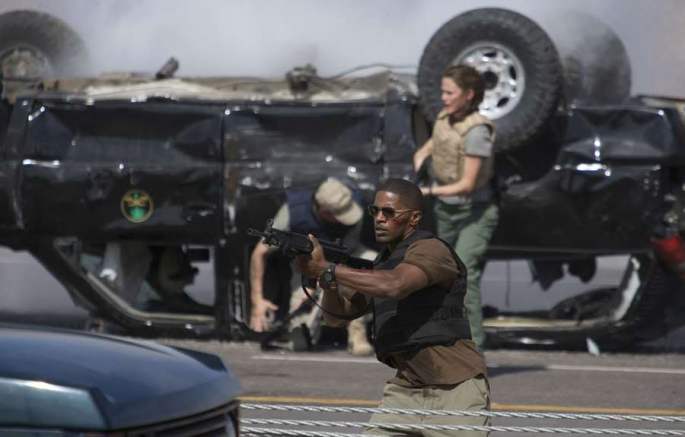
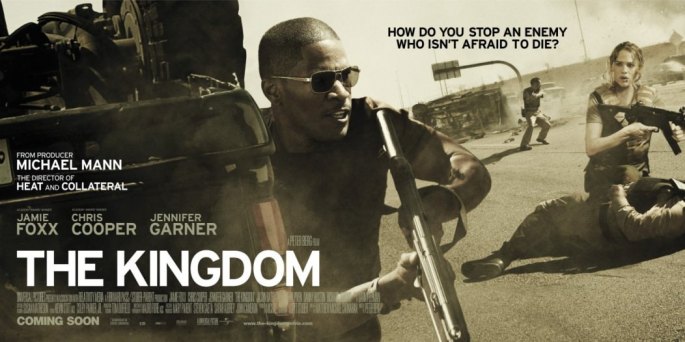
Peter Berg’s thrilling action picture The Kingdom is a ballsy, big-budget production that brings a surprising level of smarts to its relatively predictable and straight forward story. It’s a bummer that this movie didn’t find the theatrical audience it deserved. It’s a tightly focused procedural with solid acting, credible plotting, and shot with an amazingly immediate, semi-chaotic but still coherent visual style that puts you in the middle of the action at all times. The opening credits sequence is a total wowser, dispensing with a ton of information and political backstory during the first five minutes, while the audience is presented with an arresting animated timeline detailing the Unites States’ relationship with the insanely corrupt nation of Saudi Arabia, all stemming from the importance of oil. We’re then plunged right into the middle of a multi-stage terrorist attack on an American housing complex in Saudi Arabia which leaves 100 people dead, many of whom are women and children. Berg didn’t shy away from graphic violence in The Kingdom; rarely do you see a big-budget Hollywood action film that will actually show you on-screen deaths of women and children and innocent bystanders like THE KINGDOM does. Those moments, while shocking, are important. Without them, the filmmakers would be diluting the situation of its impact and realism. Innocent people die when terrorists strike, yet for the most part, Hollywood enjoys its killings bloodless and faceless. Not here. Multiple strikes are coordinated against U.S. interests, the stakes are raised, and it’s time for a response.

2

The FBI learns that a few agents were also killed in the attacks so they send Jamie Foxx, playing senior agent Ronald Fleury, and his team to try and apprehend the killers. Chris Cooper, Jennifer Garner, and Jason Bateman make up his squad and each are give more than a few moments to shine. They rendezvous with a sympathetic Saudi policeman named Faris, played by the excellent Ashraf Barhom, who was also fantastic in the supreme (and controversial) political drama Paradise Now, in an effort to gain solid footing. The middle section of the movie resembles a television procedural, but it becomes deeper than that. The relationship that develops between Fleury and Faris is serious and complex, never feeling phony or contrived. These two men are fighting the same fight, and while their backgrounds are different, they are able to agree on what is right and what is wrong. The character shadings that Faris has are important and distinct, and this is where The Kingdom elevates itself over most other action films in the genre. As much as it’s concerned with blowing stuff up real good (and that it does), Berg, and screenwriter Matthew Michael Carnahan, no doubt guided by producer Michael Mann, showcase the frustrations that would accompany an investigation like this. The filmmakers keep the storytelling efficient and coherent, with Foxx in fine form as the commanding officer in charge, and Cooper, as always, giving a sturdy supporting performance as a take no nonsense soldier ready to throw down at a moment’s notice. Garner is also excellent, channeling her role from Alias in some extremely physical fight sequences, and lending the movie a tender heart in a few sequences. And Bateman does his usual self-effacing routine but this time with a machine-gun; he gets all the script’s wisecracks and delivers them in an unforced manner while also getting a chance to flex his action muscles.

1

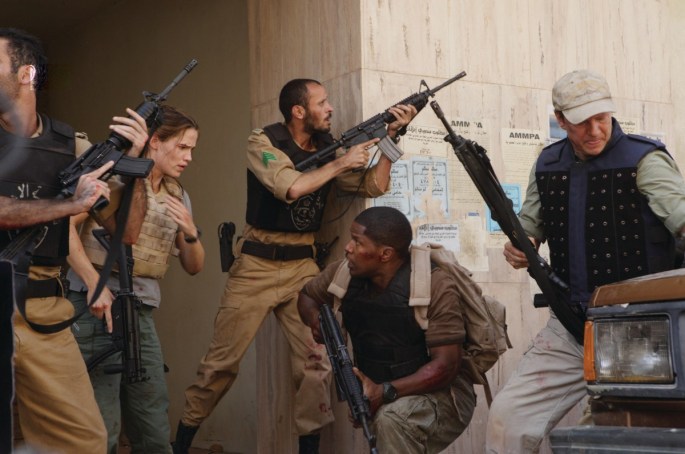
The Kingdom served as  Berg’s coming out as a big-time director of action (he’d later go on to direct Hancock, Battleship, and most impressively, Lone Survivor). The last third of The Kingdom, which basically boils down to 30 minute long extended action sequence, is a tour de force of staging, logistics, and pyrotechnics. Beginning with a high speed car chase and highway ambush that evolves into a Black Hawk Down-style urban-combat sequence, Berg never lets the viewer out of his grasp. RPG’s fly all over the place while automatic gun-fire explodes from every direction. Cinematographer Mauro Fiore, who has worked for action vets like Michael Bay on The Island, Jim Cameron on Avatar, and Antoine Fuqua on Training Day and The Equalizer, covers the action at the ground level, heightening every visceral moment for maximum impact. Employing a similar shooting and editing style to that of what Paul Greengrass cultivated with his work on the Bourne franchise and United 93, the restless camera never stops moving and searching, which amps up every sequence. You haven’t seen an SUV flip over like the way you do here. The highly bloody and intimate machine gun violence, reminiscent of the close-quarter shoot-outs in Munich, are pulse-pounding and flinch-inducing. And one sequence, with Garner engaged in hand-to-hand combat with a baddie, is unrelenting in its primal impact. Berg has a feeling for authenticity that’s reminiscent of the works of Mann, and the here-and-now quality of the locations and sets are incredible. But the real coup of the movie are its final moments. The Kingdom ends on a note of surprising darkness and honest reflection; without spoiling anything, you’re reminded that the cycle of violence in our current climate is something that will never end and can’t be easily fixed. It’s a small moment but it adds weight to everything that has come before it.

5

PTS Presents Cinematographer’s Corner with Ken Kelsch Vol. 2

Kelsch v2.jpg

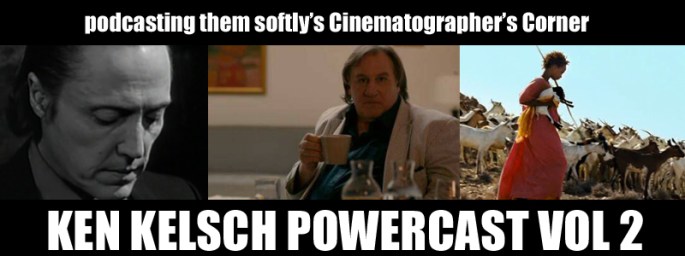
kelsch ferraraWe’re back with our second volume with cinematographer Ken Kelsch.  This time we speak with him about more of his work with Abel Ferrara including WELCOME TO NEW YORK, THE ADDICTION and retouch on BAD LIEUTENANT.  We also speak with Ken about working with Eric Red on 100 FEET, his work with Stanley Tucci on BIG NIGHT and THE IMPOSTERS, and Sherry Hormann’s DESERT FLOWER.  Hope you guys have as much fun listening to this as we did recording this with Ken!
UNFAITHFUL – A REVIEW BY J.D. LAFRANCE

unfaithful_15

Sometimes it’s frustrating being a Diane Lane fan. For an actress so talented, she appears in a lot of dreck. For every The Outsiders (1983) or A Walk on the Moon (1999), there are three or four Must Love Dogs (2005) type clunkers. Yet, she gamely plugs along, turning in consistently good performances in even the most routine films (Murder at 1600). With Unfaithful (2002), she finally found material that could challenge her by portraying a fascinatingly flawed character in a provocative film. It was a remake of Claude Chabrol’s 1968 film, La femme infidele and was directed by Adrian Lyne, a filmmaker not afraid to court controversy by bringing a European sensibility to sex and sensuality in films like 9½ Weeks (1986), Indecent Proposal (1993), and Lolita (1997). With Unfaithful, he proposed a simple yet intriguing premise: why would a woman with a successful, loving husband and nice child threaten this security with an illicit affair with another man? While his film ultimately conforms to clichéd thriller conventions, Lane transcends the material with a career-best performance that garnered her all kinds of critical accolades and awards, chief among them an Academy Award nomination.

Constance Sumner (Lane) has it all: Edward (Richard Gere), a handsome husband with a successful business in New York City, and Charlie (Erik Per Sullivan), an adorable son. They live in a beautiful house on a lake outside of the city. Not to mention Connie has a body most women her age would kill for. The worst you could say about Connie and Edward’s marriage is that it’s gotten routine. They obviously still love each other and have that familiar shorthand that couples do after living together for years. For example, one morning she notices that he’s wearing a sweater inside out and lets him know before he goes off to work. We first see her in the midst of domesticity, doing the dishes and getting Charlie ready for school. She’s loving and supportive towards her husband and child.

Diane Lane and Richard Gere play this sequence well and are quite believable as a married couple by the way they interact with each other. Lyne inserts little details to reinforce their comfortable domesticity, like how Connie stops the dog bowl from moving around as their pet hungrily chows down on his food – it’s a move that looks like she’s done many times over the years. It also didn’t hurt that Lane and Gere were paired up previously in Francis Ford Coppola’s The Cotton Club (1984) and while they didn’t have much chemistry together on that film, they at least had something to build on.

One particularly windy, blustery day, Connie goes into the city to run some errands and literally runs into a young man (Olivier Martinez) carrying an armful of books. They both go sprawling and she ends up scraping her knees. He invites her up to his apartment so that she can tend to her wounds and call for a taxi. His offer isn’t difficult for her to accept. He’s gorgeous looking and has a sexy French accent. Paul is a book dealer who just happens to look like fashion model – of course he does or how else are the filmmakers going to explain Diane Lane cheating on someone like Richard Gere? Paul is aloof and accommodating but when Connie goes off to use his telephone, he checks her out. The camera adopts his point-of-view, slowly moving up her long legs to her face. No one can quite make a trenchcoat look sexy like Lane does in this scene.

Paul startles Connie by gently placing an ice pack on her knee and first physical contact is made. The look she gives him, a sly smile, makes you wonder if it is at this moment that she first thinks about having an affair with this man. The extremely windy day that starts off this scene is a harbinger, an ominous warning of how turbulent Connie’s life will become once she accepts this man’s invitation. After this alluring encounter, Connie comes home to reality: toys lying around, the dog roaming around and her son watching television. Later, she and Edward try to make love but are interrupted by Charlie – the ultimate mood killer.

Home alone during the day, she checks out the book Paul gave her and inside is his business card. On an impulsive whim, she takes the train into the city and calls him on a pay phone. Paul invites her over and Connie accepts, turned on by the attention she is getting from this mysterious, attractive young man. Once there, he slyly puts the moves on her, taking off her coat so that his fingers brush up against her neck. Lane is excellent in this scene as she conveys the excitement her character feels being with this man, the apprehension of being unsure of what she’s doing, and the inner turmoil as you can tell that she’s trying to decide whether to leave or stay. Ultimately, Connie leaves and visits her husband at work, giving him a present out of the guilt she feels for seeing Paul.

She visits him again and he excites her in the way he looks and touches her. Paul looks at Connie in a very seductive way that makes her feel wanted and desired – something that she doesn’t feel with Edward. She has a moment of conscience where she tells Paul that what they are doing is a mistake, to which he replies, “There’s no such thing as a mistake. There’s what you do and what you don’t do.” Connie leaves and then comes right back to get her coat. Before she can say anything, Paul embraces here and literally sweeps her off her feet. Lyne does an interesting thing here. Instead of just showing their subsequent love scene, he breaks it up by intercutting Connie’s train ride home, juxtaposing her emotional reaction to what she’s done with the act itself. As he demonstrated with 9½ Weeks, Lyne certainly knows how to capture the erotic intimacy of a sex scene.

Lyne shows Paul gently touching Connie’s body, which is trembling in fear and excitement. The emotional turmoil that plays across Lane’s face is astounding as she displays a vulnerability that is quite raw. This gentle foreplay segues into something more primal as Connie attempts one more time to stop this and Paul tells her to hit him so that her aggressive passion that he knows lurks under her conflicted surface will take away her fear. It does as she pummels him and this gives way to passionate kisses as she hungrily devours him. This is intercut with Connie’s train ride home as she reflects on what she’s done. The range of emotions that play across her face as she replays it over in her mind is incredible to watch. She smiles to herself and her hand absently runs across her chest. Her mood darkens ever so gradually before lightening again as she smiles and then breaks out into a laugh. Finally, her face takes on a slightly sad expression. In only a few moments, she has run a whole gamut of emotions and pulls it off masterfully.

Edward has been married to Connie long enough to sense when something is off with her. Early on, he doesn’t have any definite indicator that something is amiss except for a possible small lie that she told him. But it’s enough for him to ask her one night if she loves him. Richard Gere asks Lane in such a way that your heart goes out to his character. He’s done nothing wrong while she’s off having an affair with another man.

Lyne orchestrates another fascinating montage that juxtaposes Connie spending time with Edward and her son at their home with her spending time with Paul in the city. She has fun with both men but in different ways. With Edward, she feels safe and secure in domesticity, and with Paul, she feels excited and passionate. Ultimately, she is looking for someone who can make her feel both safe and passionate. Connie’s affair emboldens her to take unnecessary risks, like kissing Paul in a public place and, by chance, one of the men (Chad Lowe) that works with her husband sees them.

As he demonstrated in both 9½ Weeks and Indecent Proposal, Lyne really knows how to photograph women and bring out their beauty. Unfaithful is no different as he does an incredible job of conveying Lane’s beauty, both naked (the scene where she takes a bath) and clothed (she can even make wearing a t-shirt and jeans look sexy). It is the way he lights her and the angles he uses that bring out her natural good looks. Lane has never looked or acted so well.

When Edward suspects that Connie isn’t being truthful with him yet again, he checks up on her excuse and finds out that she lied to him. To add further risk, when she’s in the city to meet Paul for another tryst, Connie runs into a friend of hers with a co-worker. Unable to ditch them, they all go out to lunch. Connie calls Paul and tells him what happened and he shows up. On the spur of the moment, they have sex in a bathroom stall. Lyne shows a playful side during this scene as he cuts between Paul and Connie’s brief but passionate bout of sex and Connie’s friend talking to her co-worker about how good Connie looks, which is rather obvious. As Edward’s suspicions grow, he decides to have Connie followed and what he finds out and how he acts on it, changes the entire complexion of the story and the film.

The longer the affair goes on, the more selfish Connie becomes and she loses sight of what’s important to her – Edward and Charlie. She has become addicted to her rendezvous with Paul as he consumes her thoughts to the point where she even gets jealous when she spots him with another woman. Connie becomes more desperate and her behavior more erratic as the affair continues.

Richard Gere has the thankless role of playing the spurned husband and he does a good job of eliciting sympathy early on. Edward may not be has handsome as Paul but, c’mon, it’s Richard Gere! The man has aged incredibly well and looks handsome no matter how many frumpy sweaters Lyne tries to put him in. Gere’s finest moment in Unfaithful is when his character confronts Paul. Edward starts off angry but Gere doesn’t chew up the scenery – it’s a slow burn as Edward questions Paul and then he gradually becomes unglued. Gere has to convey a wide spectrum of emotions in this scene and does so quite expertly. From that scene on, his character undergoes a very profound change and it is interesting to see how Gere plays it out.

After years of playing heroic roles in films like Judge Dredd (1995), Lane began to seek out projects that gave her the chance to play more flawed characters. In many respects, A Walk on the Moon was a warm-up for her role in Unfaithful. In that film, she played a 1960s housewife who gets caught up in the sexual revolution of the era and cheats on her husband with a good-looking traveling clothes salesman. Whereas her character’s motivation was clearer in that one, it is more ambiguous in Unfaithful. In fact, Lyne cast Lane based on her work in A Walk on the Moon in which he found her to be “very sympathetic and vulnerable.”

During the production, Lyne fought with 20th Century Fox over the source of the affair. Executives felt that there needed to be a reason while the director believed that chance played a large role. Early drafts of the screenplay featured the Sumners with a dysfunctional sexual relationship and the studio wanted them to have a bad marriage with no sex so there would be more sympathy for Connie. Lyne and Gere disagreed and the director had the script rewritten so that the Sumners basically had a good marriage. He said, “The whole point of the movie was the arbitrary nature of infidelity, the fact that you could be the happiest person on Earth and meet somebody over there, and suddenly your life’s changed.”

When it came time to assemble the crew for this film, Lyne asked director of photography Peter Biziou, with whom he had made 9½ Weeks, to shoot Unfaithful. After reading the screenplay, Biziou felt that the story lent itself to the classic 1.85:1 aspect ratio because there was often “two characters working together in frame.” During pre-production, Biziou, Lyne and production designer Brian Morris used a collection of still photographs as style references. These included photos from fashion magazines and shots by prominent photographers.

Initially, the story was set against snowy exteriors but this idea was rejected early on and the film was shot from March 22 to June 1, 2001 with Lyne shooting in sequence whenever possible. Much of the film was shot in Greenwich Village and Lyne ended up incorporating the city’s unpredictable weather. During the windstorm sequence where Connie first meets Paul, it rained and Lyne used the overcast weather conditions for the street scenes.

Lyne also preferred shooting in practical interiors on location so that, according to Biziou, the actors “feel an intimate sense of belonging at locations,” and use natural light as much as possible. A full four weeks of the schedule was dedicated to the scenes in Paul’s loft which was located on the third floor of a six-story building. Biziou often used two cameras for the film’s intimate sex scenes so as to spare the actors as little discomfort as possible. For example, Olivier Martinez wasn’t comfortable with doing nudity. So, to get him and Lane in the proper frame of mind for the sex scenes, Lyne showed them clips from Five Easy Pieces (1970), Last Tango in Paris (1972), and Fatal Attraction (1987). The two actors hadn’t met before filming and didn’t get to know each other well during the shoot, a calculated move on Lyne’s part so that their off-camera relationship mirrored the one of their characters.

Lyne tested his cast and crew’s endurance by using smoke in certain scenes to enhance the atmosphere. According to Biziou, “the texture it gives helps differentiate and separate various density levels of darkness farther back in frame.” Lyne used this technique on all of his films; however, on a set where cast and crew were filming 18-20 hour days, it got to be a bit much. Gere remembered, “Our throats were being blown out. We had a special doctor who was there almost all the time who was shooting people up with antibiotics for bronchial infections.” Lane even used an oxygen bottle for doses of fresh air between takes.

The last 25 minutes of Unfaithful slides dangerously into formulaic thriller territory, threatening to derail what had been up to that point an engrossing drama about an illicit affair. Why did Lyne feel the need to go in this direction? Did the studio influence his decision and mandate that he incorporate more commercial elements? Lane and Gere do their best to keep things on track and it’s a credit to their abilities that they keep us interested in what is happening to their characters as they transcend the material. In some respects, Unfaithful is a horror film for married couples or for people in some kind of long-term relationship as it shows the ramifications of cheating on one’s spouse. The tragic thing is that all of this could have been avoided if Connie and Edward just talked to each other openly and honestly about how they felt about things. After all, communication is the key to a successful marriage or any meaningful relationship. As Unfaithful shows, lies only complicate things and drive people apart. It’s a harsh lesson that Connie and Edward learn the hard way.

TONY SCOTT’S BEAT THE DEVIL — A REVIEW BY NICK CLEMENT

devil.jpg

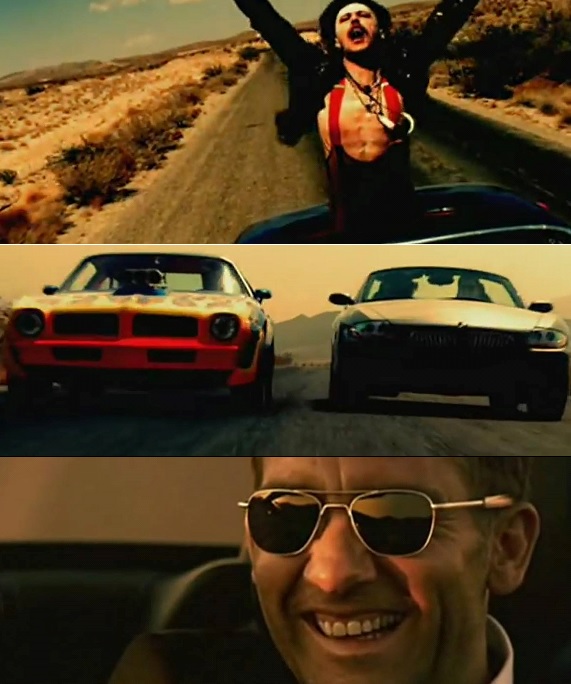
Tony Scott’s late-career, ultra-impressionistic style began taking its roots with the gloriously hyperactive Beat the Devil, his contribution to the historic BMW film series, The Hire, which was a series of extended car commercials in the guise of slick and exciting short films with serious Hollywood pedigree. The talent in front of and behind the camera on The Hire was staggering. Directors included John Woo, Wong Kar-Wai, Joe Carnahan, Ang Lee, Alejandro Gonzalez Inarritu, Guy Ritchie, John Frankenheimer and Scott with an acting lineup featuring the likes of Don Cheadle, Mickey Rourke, Madonna, Gary Oldman, James Brown, Danny Trejo, Stellan Skarsgard, F. Murray Abraham, Ray Liotta, Dennis Haysbert, Maury Chaykin, and Marilyn Manson. And for those of us who had hoped to see Clive Owen as the next James Bond, we’ll always have The Hire, where Owen plays the nameless Driver, an expert behind the wheel (always a BMW, naturally) who is tasked with various life-threatening missions with differing degrees of difficulty. The one linking thread between the different films was Owen, who brought a manly command to the lead role that helped solidify the entire series.

Beat the Devil is the most out-right entertaining film of the bunch, and it’s the one that seems to be having the most fun. It centers on the idea that James Brown (who played himself), back in his youth, sold his soul to the Devil (a hysterical Gary Oldman, in flashy make-up and garish costume that has to be seen to be believed) in exchange for the chance to have a legendary career. But now that the rocker is getting old, he wants to renegotiate the terms of his deal so he can go back to being young, so he suggests that his Driver (Owen) will race Lucifer’s driver, Bob (Trejo), from the Vegas strip out into the dessert. Winner takes all. For roughly 10 minutes, Tony Scott makes cinematic rock ‘n roll love to his camera; every image is cranked, every sound effect is juiced, every edit is sharp as a tack. His fragmented, cubist style that would be seen in future efforts like Man on Fire and Domino was being first experimented with here (and in the Amazon short Agent Orange – seek it out, it’s very cool), with overlapping subtitles, a washed-out and de-saturated color scheme, staccato editing patterns, and skewed camera angles. Beat the Devil exists primarily as a sensory blast but it’s also got a great sense of humor, probably the best sense of humor out of any of the entries in The Hire, which is why it’s my favorite of the bunch.


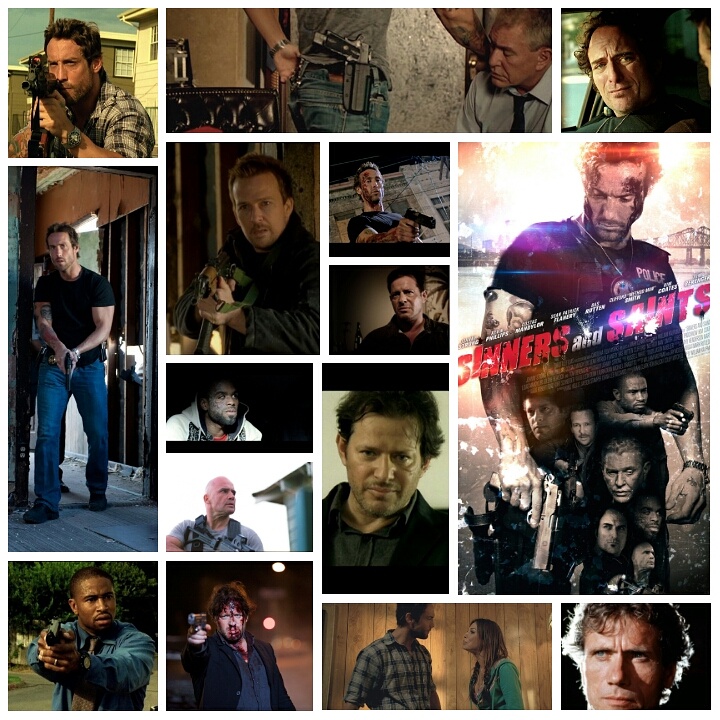
Sinners And Saints: A Review by Nate Hill

image

Sinners And Saints is a very adeptly made New Orleans set cop thriller that pays homage to tough archetypes of yore such as Lethal Weapon, Dirty Harry and Bad Boys. It’s far more serious and sinewy than those movies though, sucking the humour off its own bones and leaving a grim tale of one man ditching the force and going rogue in an attempt to hunt down some extremely bad people. Johnny Strong, a formidable, mscular guy, plays Detective Sean Riley, trying to sort through the post-Katrina chaos of the city whilst internally dealing with the loss of his wife and infant son. Strong is known for The Fast And The Furious as well as Black Hawk Down, quickly making it his calling card to play tough outsiders who get shit done with a fiery knack for not always playing by the rules. As it turns out, New Orleans is rife with psychopathic criminals up to no good, starting with evil mercenary Raymond Crowe (a badass, hateable Costas Mandylor), leading a crew of paramilitary scumbags into some very nefarious deeds. Riley discovers that his old army buddy Colin (the blonde half of the Boondock Saints, Sean Patrick Flanery, getting some nice, quiet moments of introspect before the firefights) is involved somehow, spurring him further into action. His commanding officer Trahan (Tom Berenger, stoically reminiscing about the youthful days in which he headlined flicks like these), worries that the path he’s headed down is too dark and similar to the men he is hunting. He’s paired with an unseasoned rookie (Kevin Philips), and an inevitable bond is forged in between and during bouts of gunfire. The action is wickedly staged, rising above the ineptitude that usually brands direct to video efforts like this. No, these filmmakers know exactly what they are doing and how to raise a pulse, demonstrating care and passion in creating their battle scenes. The cast is stacked high as can be as well. A boisterous Kim Coates has a fleeting scene to kick off the film. Resident baddie Jurgen Prochnow shows up a few times as malicious arch villain Mr. Rhykin, pulling strings which we are never fully privy to (I’ve heard rumblings about a sequel, hopefully with answers regarding his character). The other Mandylor brother Louis plays a bleach blond Australian mercenary and is beyond priceless. UFC legend Bas Rutten plays Dekker, a frightengingly nasty dude who proves a tough obstacle for Riley. Rapper Method Man even rears his head as a bad tempered, disfigured street thug who has his part to play in the whole cluster fuck. I watch countless direct to video action flicks that try their absolute adorable best to emulate the films they admire, often very lazily and without adding any new flavors. Can’t say that about this one. It fires up such a wicked, visceral punch while maintaining it’s own solid gold originality that it can scarcely even be called a B movie save for the fact that it wasn’t released theatrically. It’s pure, first class action, and demands a watch from anyone who says they’re a completist of the genre, before that claim can be validated.