JONATHAN MOSTOW’S U-571 — A REVIEW BY NICK CLEMENT

u_five_seven_one_ver2_xlg.jpg

Historical inaccuracies notwithstanding, U-571 is excellent in that old-fashioned, paying homage to the classics fashion. If you’re a fan of this well-worn genre, it’s a hard film not to watch when it turns up on cable or one of the HD movie channels. It’s got a fantastic, extremely masculine cast comprising of Matthew McConaughey, Bill Paxton, Harvey Keitel, Jon Bon Jovi, and a host of young hotshots and gruff veterans filling the edges. Confidently directed by journeyman Jonathan Mostow (the terrific Kurt Russell thriller Breakdown, the somewhat ill-advised Terminator 3), the film benefited from a lean screenplay (co-written by Mostow, David Ayer, and Sam Montgomery) that stressed forward moving action with just the right amount of character interplay and human drama. But the filmmakers knew that the star of their modestly scaled but no less thrilling film would be the ship contained in the title, and the numerous action sequences were expertly shot by master cinematographer Oliver Wood (Face/Off, The Bourne Identity) and cut with sharp precision by editor Wayne Wahrman (A Civil Action, I Am Legend). Released in the spring of 2000, the film was a solid box office success and received strong reviews overall, and it’s one of those unpretentious action films that is a perfect rainy Sunday afternoon matinee.


Michael Mann’s Thief: A Review by Nate Hill

image

With Thief, Michael Mann distilled his crime film style into an archetypal, haunting aura that would go on to influence not only his excellent later work, but other filmmakers as well, everything from Refn’s Drive to the police procedural we see on television today. A style that consists of kaleidoscope neon reflections in rain slicked streets, Chrome cars bulleting through restless urban nocturnes and a lyrical, pulsating score, here provided by underrated German electronic maestros Tangerine Dream, who would go on to provide their dulcet tones for Mann’s phenomenal 1983 The Keep. Thief weaves the age old tale of a master safe cracker(James Caan in a beautifully understated performance) the high stakes at risk of him performing one last job to escape, with said stakes represented as his angelic wife (Tuesday Weld) and newborn son. Robert Prosky in his film debut is a serpentine wonder as Leo, Caan’s boss, whose chilling metamorphosis from paternal employer to domineering monster is a joy to watch. The jewel heist scenes are shot with a researched, assured and authentic feel, spurred on by Tangerine Dreams cosmic rhythms and are especially dynamic points of the film. Thief, for me, belongs that special subcategory of Mann’s career along with Heat, Miami Vice and Collateral, (Public Enemies doesn’t get to come in this elite cinematic treehouse club, it didn’t do anything for me) that are very special crime films. They possess an intangible, ethereal quality of colour, metal, music, and shady people moving about a thrumming urban dreamscape, professionals at what they do, cogs in the ticking clock of crime that inexorably drives toward the narrative outcome, be it bitter confrontation and violence (of which Thief has an absolute gorgeous, poetic revenge sequence) or cathartic resolution (like the conventionally satisfying way Collateral ends). Mann has captured neon lightning in a bottle with Thief, and against the odds of people saying you can’t catch lightning twice, he has spark plugged a good portion of his career with that same lightning, creating an artistic aesthetic all his own. To me that is the ultimate outcome of filmmaking, and art as a medium.

Haunted: A Review by Nate Hill

image

Haunted is an atmospheric, valiant yet frustratingly uneven ghost story effort, in the tradition of stuff like The Awakening and The Haunting. If the plot seems close to last year’s Crimson Peak, it’s because it is, and I’d bet that Del Toro had this forgotten entry in mind when he embarked on that journey. I say frustrating because there’s a certain few absolutely terrific moments of gothic horror that truly shiver your timbers, but they’re hopelessly mired in a mucky moor of a plot that unfortunately is not as effective as those key scenes. You David Ash is rough housing around wit his sister in the English countryside when she hits her head on a rock, and drowns in the pond below. He grows up soaked in guilt, dedicated to disproving the existence of paranormal phenomena. As an adult he’s played by Aiden Quinn, who is an average dude with slightly wild looking eyes who is always effective in the sense that he seeks out challenging, odd projects which test his everyday aura nicely. In the early 1900’s he is summoned back to rural Britain by an elderly woman (Anna Massey) who is convinced that she is surrounded by ghosts. He is greeted there by the luminous, attractive Christina (Kate Beckinsale), a friendly young thing with a distinct untrustworthy vibe and a penchant for getting creepy close with her two strange brothers (Anthony Andrews and Alex Lowe). She lives out there in isolation with them as well as their disturbed mother, and one gets the sense right off the bat that something is wonky. I suppose that’s the point though isn’t it? Beckinsale has carved a path of playing either somber, distraught women or tough, silent warrior chicks. This is the most animated work I’ve ever seen from her, and the most radiant she’s ever looked as well. It’s aslso to date the only nude scenes she’s ever put forth, and I don’t use the term lightly… she really bares it all here. The middle portion of the film meanders around with these characters, not revealing enough to push the plot forward enough, until the curtain  is whisked away jarringly in the third act, cementing it’s pacing issues for good. It’s a picturesque enough journey, I just wish we had something to latch onto besides that, some substance and a consistency in the creepiness factor to keep us invested. Alas. It’s got a spookily wonderful beginning, and an electric, full blooded ending, the only two instances where it shows true feeling and commitment. The rest is, well… stale. It’s worth a peek for a few reasons though, including Beckinsale’s solid performance and that one uber-scary scene in the opener.

ROBERT TOWNE’S ASK THE DUST — A REVIEW BY NICK CLEMENT

ask

Back in 2006, the lovely yet sad romantic drama Ask the Dust came and went in theaters after being met with a muted critical response and a noticeable lack of studio publicity, despite a handful of passionate supporters (Ebert, Dargis, and Todd McCarthy most notably), not to mention a starry cast. Written and directed by cinema legend Robert Towne, the film is a honeyed, romanticized version of the 1939 John Fante novel, a clear labor of love and passion project for Towne, who used his clout to tell a uniquely personal story that few others would have likely attempted. I love movies about writers, and that’s what Ask the Dust primarily is – a love letter to the craft of writing and to the passionate spirit that is required to create. If the film is mildly awkward, that’s OK; there’s a traditional quality to the storytelling that feels quaint and old-fashioned, which may not feel modern enough for some viewers. Tremendously evocative of time and place (1930’s Los Angeles), the film was radiantly lensed by master of light Caleb Deschanel (The Natural, The Passion of the Christ, The Right Stuff), and each and every shot is a model of visual perfection, with a quality of light that’s stunning to behold. The Criterion Collection or Twilight Time should be looking into putting out this underrated item on Blu-ray because only a DVD is currently available.

This film was part of that amazing run for Colin Farrell (Alexander, Miami Vice, The New World) and he brought a restless quality to the role of Arturo Bandini, an Italian immigrant who is attempting to write the next great American novel while living in a rundown apartment in Bunker Hill. He unexpectedly falls in love with a Mexican immigrant, Salma Hayek, who has dreams of escaping the only life she knows. Hayek may have been too old for the role, but she brought a passionate sexuality that’s rarely been glimpsed on screen from her. It’s almost as if certain filmmakers have been scared to unleash her full, fiery potential, but in Ask the Dust, Towne got a performance from her that’s full of life and tenacity and zest. I love how Farrell and Hayek throw barbed zingers at each other during their courting process, and when it’s finally time for the two of them to take it to the next level, the inherent drama in the story creates speed-bumps that they don’t see coming. Ask the Dust feels like it HAD to be made by Towne, a movie that clearly was born out of a long-time admiration for the material, and a film that only a Gentlemen of the Cinema could have gotten made. Co-starring a sweaty, disheveled Donald Sutherland, and a pre-infamous Adelle Dazeem, errr, Idina Menzel.


The Killer Inside Me: A Review by Nate Hill

image

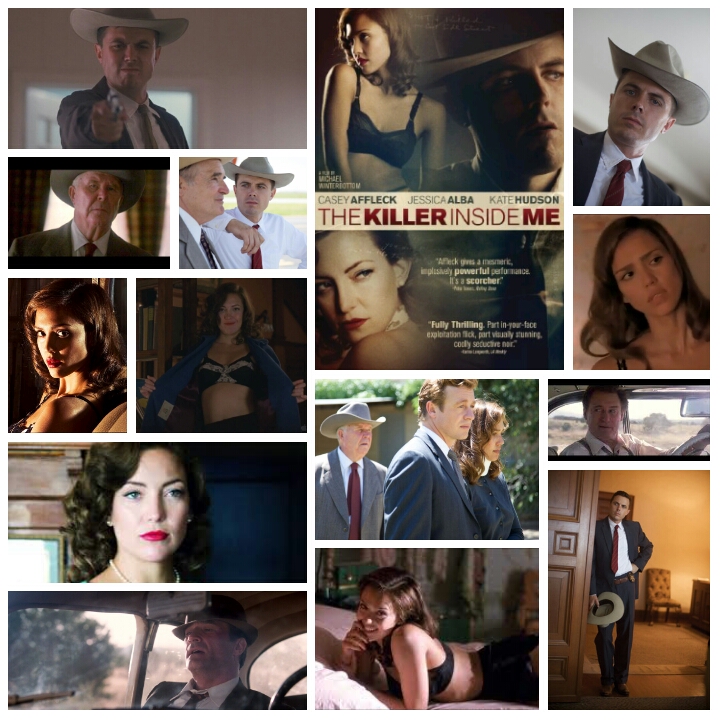
Michael Winterbottom’s The Killer Inside Me is one of the most flat out disturbing films ever made under the sun, even if only for a few brief, harrowing sequences encased in a lurid, laconic, southern fried oddity of a story that defies genre confinement while still planting vague roots in crime drama. When the sequences I speak of show up, and you’ll know exactly when, it takes you right off guard and immediately notifies you that the film has no intentions of towing a line within anyone’s comfort zone. It’s an odd story for someone to strive to tell, and one wonders what inky black corners of the psyche that Jim Thompson was spellunking in when he scribed the novel on which this is based. It starts off conventionally enough, under the prosperous sun of the West Texas desert in the heat of the 1950’s. Sheriff’s Deputy Lou Ford (Casey Affleck) is a regular enough guy, tasked with rousing a local prostitute (Jessica Alba) living in nearby suburbia. He also deals with the dodgy real estate kingpin  Chester Conway (a blustery Ned Beatty) and his cronies. He’s also got a cute fiance (Kate Hudson). He’s calm, cool and connected, right up until the part where he turns out to be a certifiable grade murdering psychopath. Affleck let’s the authoritarian composure bleed away and reveal the layers of eveil beneath, until we begin to wonder if the film we are watching has been interrupted by someone taping over it with something far darker. But no… it’s the same movie. It just veers into territory we didn’t expect and may be taken aback by. Affleck discovers the psychopath within himself, and fits inside the characteristics like a glove. The first person to stray into his path is Alba, and there’s a sequence where he gives her a royal, merciless, and bloody beatdown that will shiver your spine in its blunt, head-on realism. It’s seriously stomach churning shit, and levels off both the film and Affleck’s role in pure stone cold seriousness. He’s a budding lunatic, made all the more dangerous by bis position of power within law enforcement and shielded by his trustworthy reputation. The film resists generic story beats, and instead meanders about, diligently following Affleck from encounter to macabre encounter, discovering his dark interior nature without much rhyme or reason as far as conventional plot goes. This has a wickedly prolific cast for such a risky film, with fine work from Bill Pullman, Brent Briscoe, Tom Bower, Simon Baker and the ever reliable Elias Koteas who adds to the cumulative unease. It’s Affleck’s  shown though, and he splinters nerves with his unpredictable, hollow and fascinating portrait of a psychopath. Soon we begin to wonder what he sees and heats is real,   as characters he interacts with seem to come back from the dead and knowingly coach him towards trouble in trademark indications of serious mental distrbance. This one arrives at it’s end severely south of where it started from, taking the viewer off guard. Those who appreciate the tantalizing, prickly nature of a thriller that isn’t afraid to seriously shake up your shit and take you places you’ve only been to on clammy nightmares will appreciate it. Just mentally psych yourself up for that scene I mentioned, because it will scar you and then some.

HELLO, MY NAME IS DORIS: A Review by Joel Copling

Rating in Stars: *** (out of ****)
Cast: Sally Field, Max Greenfield, Wendi McLendon-Covey, Stephen Root, Tyne Daly
Director: Michael Showalter
MPAA Rating: R (for language)
Running Time: 1:35
Release Date: 03/11/16 (limited)

The older woman latches on to the younger man because she feels the spark of her youth decades removed from it. The truth is that she didn’t really seem to have a period of youth. Her mother, who has just recently died, required care from early on in the daughter’s independent life. She even refused the chance to move with her husband to a city that would take her away from mom, even if it was her first chance at real love. This was, it is clear, a conscientious decision on her part, but it seems that years of being with her mother have rubbed off on her. She is socially awkward, hoards everything that “might” come in handy in the future, and, for lack of a better term, stalks the young man she meets on the elevator at their place of work to discover common interests.

The truth at an even deeper level is that Doris Miller is a lonely woman getting up in years without the slightest clue of what she’s done with her life until this point. This is the central motivation for every, tiny thing, even a particularly unsavory decision made while drunk on wine, that we see her doing in Hello, My Name Is Doris. Screenwriters Michael Showalter (who is also the director) and Laura Terruso (working from her short film “Doris & the Intern,” unseen by me) understand the woman, sometimes to a fault. Sally Field, who plays Doris, sympathizes with her and shows a compassion with such depth that the fault does not exist for the actress. It’s a strong performance that takes the quirk at the center of Doris Miller and makes it a character trait.

The catalyst for her shift is John (Max Greenfield), a handsome co-worker in his twenties, who reciprocates her awkward, shy demeanor with cordiality and, at times, bemusement. Doris’ best friend Roz’ (Tyne Daly) granddaughter Vivian (Isabella Acres) sets her up on a social networking website, through which Doris is able to learn all of the particulars of John’s personal life, from his music taste (an electronic pop group central among them, whom Doris surprises herself by rather enjoying) to the definition of the slang word “baller” when he uses it to describe her. Meanwhile, a social worker (Elizabeth Reaser) hired by her brother (Stephen Root) and sister-in-law (Wendi McLendon-Covey) wants to talk about that hoarding habit.

Both of these subplots play generally as expected. Doris discovers that John is not exactly looking for such a senior partner in life when he starts dating Brooklyn (Beth Behrs), a chatty, blonde aspiring singer whose first job entertaining an actual crowd Doris attends (It’s amusing the way Field navigates several emotions in this scene in particular, from trying to convey disgust through fake smiling to turning a sweet smile into a death glare when Brooklyn’s lyrics turn lovey-dovey). That drunken act, a transgression through the website that has certainly been committed by many in real life, puts a real damper on things between herself and John.

Somehow more crucial, though, is her resentment of a brother who left her in her time of need; he, meanwhile, must remind her of her conscious sacrifice (The subsequent unconscious realization that occurs late into the third act is particularly touching), and Root, one of our great current character actors, is as solid a presence as ever. Daly is also quite good as a lifelong friend who eventually feels abandoned (A mealtime prayer is pitch-perfect in both its uncomfortable humor and bitterness). The real story, though, remains Field, who takes a potentially impossible-to-warm-up-to woman and makes her impossible to dislike. Hello, My Name Is Doris is the affecting study of the age gap that it is because of its central actress.

EYE IN THE SKY: A Review by Joel Copling

Rating in Stars: *** (out of ****)
Cast: Helen Mirren, Aaron Paul, Alan Rickman, Barkhad Abdi, Jeremy Northam
Director: Gavin Hood
MPAA Rating: R (for some violent images and language)
Running Time: 1:42
Release Date: 03/11/16 (limited)

The central argument will, to some people of one frame of mind and to others who ascribe to the opposite one, seem a false equivalent. The former group might argue that surely the casualty of one small girl as collateral damage in the midst of a heated military operation is acceptable for the greater good of more than eighty who might perish instead. The other group will balk at such an idea, stating firmly that the girl should be given a chance to live, even at the cost of dozens more lives. By offering a literal argument to that end, Eye in the Sky lives in between the two arguments and, simultaneously, outside of it. This is partly a political thriller, but the crux of Guy Hibbert’s screenplay is procedural in nature.

There has been a terrorist attack in Kenya via suicide bombing that left almost seventy people dead and hundreds more wounded. The same group massacred nearly 200 students at a school. One gets the idea that the terrorist cell is, perhaps, stridently against the education of young women when one girl is asked by her father to put away her schoolbooks, lest the knock at his door be a member of the cell. They live behind the house that is currently the meeting place for former British and American nationals who radicalized years before and are, along with the British national’s Nairobian husband, three of the top five targets for capture or kill by the U.S. in the region.

We meet the players in motion. Coordinating the capture is Col. Katherine Powell (Helen Mirren) somewhere onsite in England. She and her team have a direct line with Lt. Gen. Frank Benson (Alan Rickman, whose final role in a live-action setting utilizes the actor’s commanding stillness well) in London as he hosts a viewing party for the capture with members of the British Parliament (played by Monica Dolan, Richard McCabe, and Jeremy Northam). In Las Vegas, rookie airman Carrie Gershon (Phoebe Fox) is partnered with Lt. Steve Watts (Aaron Paul) to man the drone that will overlook the operation (Director Gavin Hood, who expertly builds tension alongside editor Megan Gill and cinematographer Haris Zambarloukos, appears as their CO). On the ground are Major Moses Owiti (Vusi Kunene) and his subordinates Damisi (Ebby Weyime), who runs point, and Jama (Barkhad Abdi), who mans cameras disguised as a bird and a beetle for surveillance.

A major problem arises. Their targets do, indeed, all converge in the same place, but it occurs at a different house in a neighborhood that is nearly impossible to penetrate. Surveillance of the house uncovers the fact that suicide vests and explosive devices line the top of one of the house’s beds, causing the intended capture to become a kill chain into which Powell and Benson both feel locked. The officials cannot agree on a solid option, while the Foreign Secretary Minister (Iain Glen), suffering from a case of food poisoning on a trip to an arms trade gala, and the U.S. Secretary of State, playing a table tennis competition in China, tell them to get a move on. Watts and Gershon await orders.

And then there is a further kink in the works that changes some minds, doesn’t change others, and runs the risk of getting to the brink of another, potentially deadlier attack than what has come before: That aforementioned schoolgirl begins selling bread directly outside the house that is their target. The rest of the film is meticulous in the way it presents each side of this argument: some are united in the opinion that the risk of letting the terrorists leave is too great to save the girl, others are appalled by the idea of allowing her to die, and meanwhile the situation resolves itself in the only way it possibly can. There is another element to Eye in the Sky that raises its head within the final ten minutes, a cruel irony that doesn’t belong except to manipulate, but this is a fittingly tense examination of desperate choices and the spaces between them.

WALL STREET – A REVIEW BY J.D. LAFRANCE

00ef81a325de4cc6a07dcab0cbd38c42

When Oliver Stone made Wall Street (1987), he was riding high from the commercial and critical success of Platoon (1986). His father, Lou Stone, had been a stockbroker on Wall Street in New York City and this film was a son’s way of paying tribute to his father. Almost twenty years later, it has become one of the quintessential snapshots of the financial scene in the United States and epitomizes the essence of capitalism, greed, and materialism that was so prevalent in the 1980s.

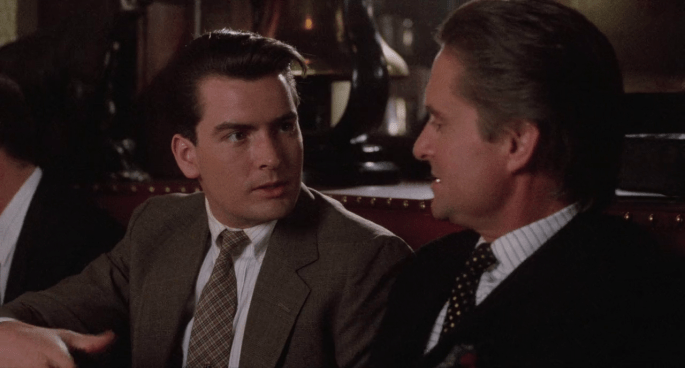
Right from the opening frame, Stone establishes the dominant presence of greed and money by using a gold filter over shots of the New York City skyline with Frank Sinatra (known by his cronies as Chairman of the Board, no less) singing “Fly Me to the Moon,” foreshadowing the dizzying heights that the film’s protagonist, Bud Fox (Charlie Sheen), will briefly ascend. He is an up-and-coming stockbroker in the cutthroat financial world. He is hungry and willing to do anything to get rich. He idolizes Gordon Gekko (Michael Douglas), one of the most ruthless Wall Street tycoons who buys and then takes apart companies for profit. Bud aggressively pursues Gekko in the hopes that he can work for the businessman and follow in his footsteps. Bud soon finds himself in a moral dilemma: does he sell his soul for the gold key to Gekko’s world, or remain true to the blue collar roots of his labor union father (Martin Sheen)?

After the success of Platoon, Stone started researching a film about quiz show scandals in the 1950s. However, at lunch with a film school friend and Los Angeles screenwriter Stanley Weiser, Stone heard an idea for a film that could be “Crime and Punishment on Wall Street. Two guys abusing each other on Wall Street,” as he remarked in an interview. The director had been thinking about this kind of a film as early as 1981. He knew a New York businessman who was making millions and working long days, putting together deals all over the world. This man started making mistakes that cost him everything. Stone remembers that the “story frames what happens in my movie, which is basically a Pilgrim’s Progress of a boy who is seduced and corrupted by the allure of easy money. And in the third act, he sets out to redeem himself.” Stone and Weiser began researching the world of stock trading, junk bonds and corporate takeovers. They met a lot of powerful Wall Street movers and shakers. Reportedly, Bud Fox is said to be a composite of Owen Morrisey, who was involved in a $20 million insider trading scandal in 1985, Dennis Levine, Ivan Boesky, and others.

Stone met with Tom Cruise, who expressed an interest in playing Bud Fox, but the director had already committed to Charlie Sheen for the role. To research his role, the actor spent two days talking with David Brown, a Goldman Sachs trader who pleaded guilty to insider trading charges in 1986. Stone and Weiser began researching the world of stock trading, junk bonds, and corporate takeovers. They met a lot of powerful Wall Street movers and shakers. Weiser wrote the first draft, initially called Greed, with Stone writing another draft. Originally, the lead character was a young Jewish broker named Freddie Goldsmith, but Stone changed it to Bud Fox to avoid the misconception that Wall Street was controlled by Jews. According to Weiser, Gekko’s style of speaking was inspired by Stone. “When I was writing some of the dialogue I would listen to Oliver on the phone and sometimes he talks very rapid-fire, the way Gordon Gekko does.”

Stone wanted to shoot the film in New York City and that required a budget of at least $15 million. The studio that backed Platoon felt that it was too risky a project to bankroll and passed. Stone and producer Edward Pressman took it to 20th Century Fox, who loved it, and filming began in May 1987. Stone switched from 12 to 14-hour days in the last few weeks of principal photography before an impending directors’ strike and finished five days ahead of schedule.

Stone brilliantly sets everything up in the opening minutes of the film. Bud is first shown as an insignificant cog in the city. He’s mixed in with all the other 9-to-5ers — packed in a subway and then in the elevator up to the company where he works. Bud looks uncomfortable and unhappy. He does not want to be in there with all of these other people. He wants to be on the other side with all the money and with Gekko, who rides alone in his spacious limousine. As soon as Bud gets into work, Stone shows a montage of a typical business day — the hectic, rapid-fire pace as people buy, sell, and trade shares.

Taking his cue from another Faustian New York City tale, Sweet Smell of Success (1957), Stone prolongs the first appearance of the film’s most charismatic character. When Bud goes to visit Gekko, we do not see him; we only hear his voice from within his office. It is an enticing teaser that makes Bud and the audience curious to see this man that everyone regards with such awe and reverence. When we finally do meet Gekko, it is a whirlwind first appearance. The camera roves around him aggressively as he never stops talking, making deals, and truly embodying the phrase, “time is money.” According to Stone, he was “making a movie about sharks, about feeding frenzies. Bob [director of photography Robert Richardson] and I wanted the camera to become a predator. There is no letup until you get to the fixed world of Charlie’s father, where the stationary camera gives you a sense of immutable values.” This is such a fantastic way to introduce Gekko as it perfectly conveys what makes him so alluring to someone like Bud: he is always in control, he is smart, and he knows exactly how to get what he wants.

Michael Douglas owns the role of Gekko, and by extension, dominates the film with his larger than life character. He gets most of the film’s best dialogue and delivers it with such conviction. Douglas remembers when he first read the screenplay. “I thought it was a great part. It was a long script, and there were some incredibly long and intense monologues to open with. I’d never seen a screenplay where there were two or three pages of single-spaced type for a monologue. I thought, whoa! I mean, it was unbelievable.” There is a scene between Bud and Gekko in a limousine where he tells the younger man how the financial world works, how it operates and lays it all out, pushing Bud hard to go into business with him. It is one of the strongest scenes in the film because you really believe what Gekko is saying and how Bud could be seduced by his words.

Douglas had just come off heroic roles, like the one in Romancing the Stone (1984), and was looking for something darker and edgier. The studio wanted Warren Beatty to play Gekko, but he was not interested. Stone initially wanted Richard Gere, but the actor passed and the director went with Douglas despite having been advised by others in Hollywood not to cast him. Stone remembers, “I was warned by everyone in Hollywood that Michael couldn’t act, that he was a producer more than an actor and would spend all his time in his trailer on the phone.” But the director found out that “when he’s acting he gives it his all.” The culmination of Douglas’ performance is his much lauded, often quoted, “Greed is good” speech that his character gives to a shareholders’ meeting of Teldar Paper, a company he is planning to take over. He concludes by saying, “Greed is right; greed works. Greed clarifies, cuts through, and captures the essence of the evolutionary spirit. Greed, in all of its forms, greed for life, for money, for love, knowledge, has marked the upward surge of mankind, and greed – you mark my words – will save not only Teldar Paper, but that other malfunctioning corporation called the U.S.A.” This is one of the best delivered monologues ever put to film, as Douglas goes from charming to downright threatening and back again, succinctly summing up the essence of ’80s capitalism and greed.

Stone was smart to cast Martin Sheen as Bud’s dad. He gets a lot of mileage out of the real father-son relationship between them. It makes their chemistry that much more genuine. It also lends itself to their heated conversations — especially the one in an elevator where Bud accuses his father of being jealous and ashamed that his son is more prosperous and successful. The shocked, wounded expression on the elder Sheen’s face says it all, and makes this scene that much more painful to watch. This scene also makes their tearful reconciliation at the hospital after the father suffers a heart attack all the more poignant. It is an intense, emotional moment as the tears start flowing and Bud begins along the gradual road to redemption.

However, Stone made the mistake of casting Daryl Hannah as Bud Fox’s materialistic girlfriend. She was having problems relating to her character and struggled with the role and personal problems. The director was aware early on that she was not right for the role, but arrogantly refused to admit the mistake. He remarked, “Daryl Hannah was not happy doing the role and I should have let her go. All my crew wanted to get rid of her after one day of shooting. My pride was such that I kept saying I was going to make it work.” Stone also had difficulties with Sean Young, who made her opinions known that Hannah should be fired and she should play her role instead. Young would show up to the set late and unprepared. She also did not get along with Charlie Sheen, which caused unnecessary friction on the set. In retrospect, Stone felt that Young was right and he should have swapped roles between her and Hannah.

Visually, Stone ends the film much as he began it, with Bud reduced to an insignificant cog in the city yet again, his future uncertain. Wall Street is a morality play about the seductive nature of greed, examining how far someone is willing to go and what they are prepared to do to become rich. The irony is that many people admired Gekko, and Stone has said on the supplementary material to the film’s DVD that people have approached him saying that they were inspired to get into the financial world because of this character. The 2000 film Boiler Room even features a group of young stockbrokers watching Wall Street on video and quoting along to some of Gekko’s more memorable dialogue. People who admire Douglas’ character don’t seem to realize that Stone is not idealizing him, but merely showing the seductive lure of someone like Gekko. He is not someone to admire, and the film leaves his fate somewhat ambiguous, while it is Bud who goes to jail. It is this stinging indictment that lingers long after the credits end — that rich, powerful men like Gekko never seem to get punished for their transgressions, while the common man, like Bud, suffer instead.

PTS Presents Director’s Chair with PETER HYAMS

HYAMS POWERCAST

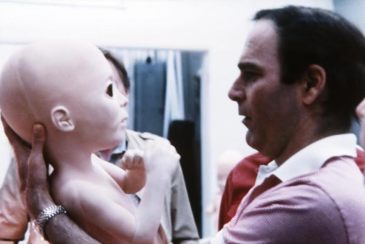
2010, director Peter Hyams on set, 1984, © MGM

Podcasting Them Softly is extraordinarily excited to present a chat with cinematic legend Peter Hyams! An esteemed director, screenwriter, and cinematographer, Peter is extremely well known for the science fiction thriller Outland with Sean Connery as well as the Connery thriller The Presidio; the fake-moon landing actioner Capricorn One which has somehow escaped the clutches of the current remake craze; 2010: The Year We Make Contact, which was the daring sequel to Kubrick’s original classic 2001: A Space Odyssey; the action comedy Running Scared with Gregory Hines and Billy Crystal; the influential thriller The Star Chamber with Michael Douglas, which consciously or unconsciously served as a blueprint for David Fincher’s The Game; Timecop and Sudden Death, which are two of action superstar Jean Claude Van Damme’s best films; horror thriller and audience favorite The Relic with Tom Sizemore and Penelope Anne Miller; the cult classic Stay Tuned with John Ritter; and the Arnold Schwarzenegger vs. The Devil showdown End of Days. You can also hear us talk excitedly about one of Peter‘s early efforts, the trendsetting cop film Busting, with Elliot Gould and Robert Blake, and discuss how that film began to give a particular genre a new and modern feel. Peter has had a tremendous career, and we were beyond lucky and honored to have him as a guest on the show. We hope you enjoy this momentous discussion!

DAVID GORDON GREEN’S MANGLEHORN — A REVIEW BY NICK CLEMENT

manglehorn movie

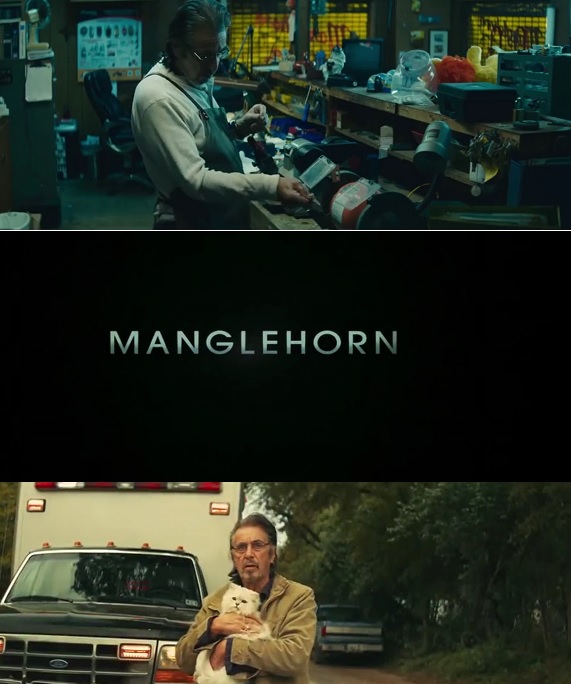
Manglehorn continues the low-key trend of eclectic filmmaker David Gordon Green; I’m not sure if there’s a more restless, unpredictable talent out there directing major films. He’s been amazingly prolific over the last 10 years, dropping close to one film per year (sometimes two), and each one is different than the last, while still displaying some common stylistic and thematic trends from project to project. Teaming with acting legend Al Pacino must’ve been a huge draw for Green, and he was able to coax from this iconic actor a soulful and downbeat performance that ranks as one of the more memorable from Pacino in many years. Screenwriter Paul Logan’s intimately scaled story is small and simple and it’s the type of thing you’ve seen before in some form or another, but it’s the way that Green fills the edges of his film with quirky beats and strange flights of fancy that all seem to work despite the fact that, at times, you sort of wonder where the piece is heading.

Green is a master of tone, able to mix comedy, violence, dramatic pathos, and honest emotion throughout all of his films, and as the years progress, his name is one that I am always on the lookout for. Shot by his regular and versatile cinematographer Tim Orr, Manglehorn has a stylish but reserved style, smartly using the 2.35:1 widescreen frame, while the dreamy score by Explosions in the Sky and David Wingo fills the background with a perfect sense of despair, whimsy, and hopefulness. Co-starring Holly Hunter as a bank teller/romantic interest for Pacino’s cat loving, aging locksmith, the two of them have wonderful chemistry, while the film gets a lot of comedic mileage out of supporting player/filmmaker Harmony Korine as a spastic salon owner. After premiering at the Venice International Film Festival, Manglehorn screened at the Toronto Film Festival, before receiving an extremely limited theatrical release by IFC Films last June. It’s available on various streaming platforms and on disc.