GASPAR NOE’S LOVE — A REVIEW BY NICK CLEMENT

Untitled

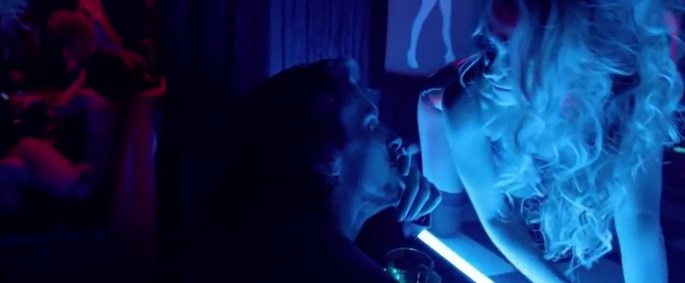
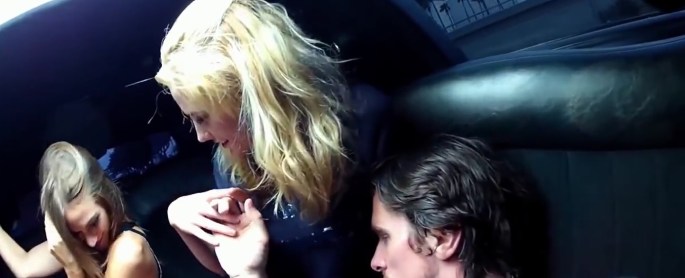
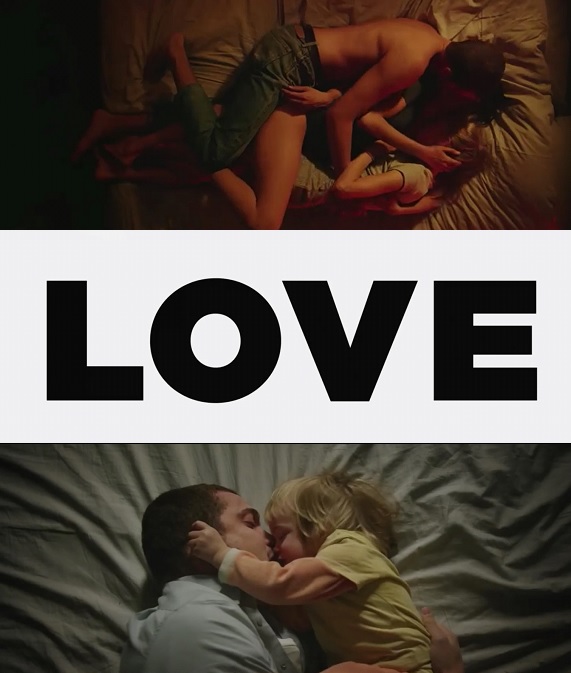
The French cinematic outlaw Gaspar Noe loves to provoke his audience. It seems to be his job. And it’s clear that he’s immensely enjoying himself. Throughout his overwhelmingly intense career as a filmmaker, he’s fashioned a body of work that could best be described as ugly-beautiful; he’s a man who sees genuine wonder and sometimes transcendent beauty in some of the most vile and visceral moments of human behavior. If I Stand Alone and Irreversible were both endurance tests and warm-ups for his magnum opus, Enter the Void, his newest picture, the hardcore sex drama Love, represents a nicer Noe to adventurous cinema lovers. Not that he’s not interested in taking his audience on a sometimes surreal, all the time wild ride through the sexual relationships of a particular trio, because in this film, which was presented in some theaters in 3-D, Noe joins the ranks of other filmmakers (Michael Winterbottom, Catherine Breillait, etc) who show honest sexual behavior as a way of communicating truth and reality to the viewer. Because our society is still so openly Puritanical, especially in America, where nothing is thought of if heads explode on TV but freak-outs occur if nipples are unleashed, this movie will certainly shock those who are unprepared for what Noe has up his sleeve, or I guess, in this instance, down in his pants.

The film’s very first scene, a three minute static shot of a man and a woman mutually pleasuring each other, sets the tone immediately, and it’s because Noe forces you to watch in an unblinking fashion that the action becomes more than just a rush of primal sexual energy, but a glimpse into the private world of two people who seemingly have a lot of affection for each other. The story to Love centers on a guy named Murphy (Karl Glusman), an aspiring American filmmaker living in Europe who enters into a volatile relationship with damaged-goods stunner Electra (Aomi Muyock), a dark haired vixen who runs away with Murphy’s heart and libido. As the two of them have always fantasized about a threesome, they bring a sexy young blonde into the mix named Omi (Klara Kristin), and in the film’s sexual centerpiece, you see the three of them make love for what seems to be an eternity; this sequence is easily one of the most rigorously and sensually realized bits of on-screen sexuality that I’ve ever seen, and it’s sort of insane (and sort of cool) to learn that Noe didn’t necessarily choreograph what went down during this sequence and others during the film.

But things get very complicated when Murphy begins an outright affair with Omi, gets her pregnant, and then Electra snaps, which sends the film down some narrative paths that it’s not necessarily interested in answering, offering more of a mosaic atmosphere and stressing its nonlinear structure as a way of showing the emotional complications that stem from people not being able to accept the past and move on. And like the sexual content of Blue is the Warmest Color, you feel an undeniable passion during each carnal encounter, with the film achieving an incredible sense of primal energy that frequently bubbles to the surface. The rest of the film is your typical Noe shock fest, with trips to neon-lit sex clubs with strobe light effects, discussions of fate, life, death, drugs, movies, and infidelity. I liked the film, but I never fell head over heels for it like I did with Enter the Void, which I consider to be one of the most amazing cinematic experiences that I’ve ever encountered.

The acting in Love is rough around the edges, as it was probably hard to find extremely skilled thespians who would be willing to get as down and dirty as Noe wanted them to get. Glusman, in particular, strains to achieve the emotional heft required to make the audience truly care about his plight, and the fact that he’s not the most likable of characters isn’t helped by the lack of subtlety required to turn his role into something more than two dimensional. And while I liked the content of the voice over that Noe wrote, Glusman’s reading of the lines seemed strangely flat. Nothing particularly enlightening is offered from a narrative POV, and while certainly stylish and glisteningly photogenic (Noe’s regular cinematographer Benoit Debie was behind the sinuous camera yet again), there’s a reserved sense of normalcy in comparison to Noe’s other works. I’m glad I experienced Love, but unlike Enter the Void, I don’t have the immediate desire to revisit, and with Noe, I am always expecting and prepared to have that itch, even if it’s an itch that can never be scratched again (Irreversible is the only film I can’t watch a second time, despite many attempts and an interest in doing so). Love is currently available in its completely uncensored form via Netflix streaming and Amazon streaming, and will hit Blu-ray on March 15.

Untitled


31st Santa Barbara International Film Festival Centerpiece Film: Terrence Malick’s KNIGHT OF CUPS

image

“You don’t want love, you want a love experience.”

Despite the little we collectively know about Terrence Malick, it has become apparent since THE TREE OF LIFE that he has been telling us his own story through the guise of abstract filmmaking.  His new film, KNIGHT OF CUPS, was this year’s centerpiece film at the 31st Santa Barbara International Film Festival, and it is one of the best films I have ever experienced.

image

Set in modern day Los Angeles, the camera follows a screenwriter, Rick (played by Christian Bale as a placeholder for the filmmaker), who hasn’t so much lost himself, because he doesn’t know who he is.  He has been wandering through his adult life, questing through money, drugs, and women.

image

This cast is huge, it’s akin to THE THIN RED LINE.  Bale is the mainstay, but the abundance of recognizable actors in miniscule parts is awesome.  Malick’s producer, Sarah Green, was on the red carpet for the premiere and I asked her what it’s like casting a Malick film and what the actor’s responses are to Malick’s interest.  She told me that even though this film did not have an orthodox script, Malick has reached the point in his career where if there is interest shown in the actor, they immediately say yes.

image
KNIGHT OF CUPS producer Sarah Green on the red carpet for its US premiere at the SBIFF

This film marks Green’s four collaboration with Malick, with an addition two more films pending release.  I asked her if there was something about KNIGHT OF CUPS that sets it apart from her other films with Malick, and she said that this film was set modern day (like TO THE WONDER) but was set and shot in LA.  And that this film was shot on a whim, run and gun style. 

image

KNIGHT OF CUPS is a journey through Malick’s subconscious.  It is a remembering of faded memories.  Some are reconstructed, some a fantasy.  Rick is a placeholder for the camera, who rarely interacts with anyone or anything.  He watches, he broods, and most importantly he remembers.  When he does interact with others, maybe it is real, maybe it is what he thinks is real, or maybe it is what he thinks he should have done. The film chronicles life–his life, our life.  Success, fame, love, emotion, family, safety – that doesn’t even scratch the surface. 

image

A Malick film is like Hemingway’s iceberg theory but reversed.  We are shown everything, yet we know nothing.  We piece it together through an overwhelming abundance of emotion captured on screen, and what’s beneath the water is Malick’s intent.  His answer, his reasoning, his life.  KNIGHT OF CUPS is a painfully beautiful and personal journey of escaping the darkness and finding the light.

image

“You gave me peace.  You gave me what the world can’t give.  Mercy.  Love.  Joy.  All else is cloud.  Mist.  Be with me.  Always.”

CHARLIE KAUFMAN AND DUKE JOHNSON’S ANOMALISA — A REVIEW BY NICK CLEMENT

anamolisa.jpg

Anomalisa is more miserable brilliance from Charlie Kaufman. He’s got a distinctly pessimistic world view that’s not going to sit well with some people, and his latest effort, which feels birthed from the same source as his previous masterpiece Synecdoche, NY, is just as dryly hilarious and caustically introspective, if even more interested in the crushing banality of life. Co-directed by Kaufman with animation superstar Duke Johnson, all of Anomalisa is designed with stop motion animation, with digital effects used to smooth things over, and the results are positively unique and at times distractingly curious. I spent the first 15 minutes of this film just staring at the construction of the faces and bodies, not to mention becoming sort of obsessed with the cracks in the sides of the heads; there’s a beguiling sense of wonder that comes from watching this strange and unique piece of cinema, and it truly feels like nothing I’ve ever seen before. The story is classic Kaufman stuff: A man is VERY disappointed with his life, and through a series of unfortunate circumstances, has to learn that not much is going to change, and that he’s doomed to repeat his frustrations again and again. David Thewlis voices the lead character, all filled with self-doubt and existential paranoia, and totally unimpressed with the fact that he’s married and has a kid and is still obsessing over an ex-girlfriend. Then, he meets a woman, exquisitely voiced (not to mention sung) by Jennifer Jason Leigh, and he thinks that this is it – he’s found his EXACT match. But, this being a romance from the poisoned soul of Kaufman, I’m not spoiling anything by saying that by the conclusion, happiness will likely still be out of reach for everyone.

It really reminds, in lots of ways, of the Coen brothers film A Serious Man, which I think is one of the top five efforts from those acerbic artists. Like A Serious Man, Anomalisa is about temptation, regret, disappointment, and the general principle that if something bad can happen, it more than likely will, even if there are moments of levity along the way. Lots of people will be immediately turned off by this film, and that’s cool. I get it. Scenes of oral sex comprised by Claymation characters shot in stop motion probably aren’t what everyone has in mind for their Saturday afternoon. But for me, this film was a non-stop (if incredibly dark) visual and verbal treat, a further reminder that there is only ONE Charlie Kaufman, and that his collective work has formed some sort of overall treatise on the human condition. Tom Noonan’s phenomenal voice work went a long way in cementing this film’s confidence, and without spoiling it, the central conceit to the sonic nature of the film was beyond heady. Joe Passarelli’s impossible to fully understand cinematography is worthy of repeated viewings as to dissect all of the subtle and ingenious ways that ideas were visually conveyed to the viewer. To be honest, I never thought this movie was going to open in my area, and including myself and my wife, there were four people in the theater, with the other two individuals displaying ZERO outward response to the film. Very interesting. I consistently wonder if people know about the films they choose to see before buying a ticket. The film was based on a 2005 play that Kaufman wrote for a Carter Burwell produced theater series comprised of “sound plays”, and it’s the first R-rated animated film to be nominated for an Academy Award for Best Animated Feature.

anamolisa


Peter Jackson’s The Lovely Bones: A review by Nate Hill

Peter Jackson’s dreamlike adaptation of The Lovely Bones gets unfairly beat down way too much. While I will concede that, having never read the book myself, I’ve heard it differs considerably in story, I view the film on a standalone level. And what a film. It’s an absolute stunner, on every level, from effects and casting to acting and production design. It contains elements of the subconscious and astral planes which are a huge draw in any film for me, and are visualized here spectacularly. Saoirse Ronan plays Susie Salmon, an adolescent girl barely coming into her own when she is cut down like a flower that has jus begun to bloom. Her killer, a skin crawling creep named George Harvey (Stanley Tucci) is a neighbor and well disguises his inner nature, making the search for her murderer lead to cold dead ends. Her father (an oddly cast Mark Wahlberg makes it work) doesn’t give up for a minute, tormented by not knowing what happened to his little girl. Her mother (Rachel Weisz) and grandmother (Susan Sarandon) slowly come apart at the seams from the insidious trauma that such an incident inflicts on loved ones left behind. Only her plucky sister Rose (an excellent Rose McIver) is able to find any clues which lay the blame on Harvey. She quietly scopes him out for proof of the murder, providing a scene of hair raising suspense that will leave you needing a change of pants. Meanwhile, Susie finds herself in a place beyond space and time, a dazzling purgatory filled with the sights, sounds and memories of her short life all projected through the abstract prism of the unconscious mind, and is simply the most innovative and eye opening look into the unconscious dream world of the human mind since Tarsem Singh’s The Cell. Ronan is a beacon of hope in her performance, projecting resilience frayed with the vulnerability of a young soul achingly wounded at the tragedy of her outcome, yet determind to set things right and make peace with the life she was ripped out of so soon. Tucci is flat out genius as Harvey. Gone is his usual spitfire cameraderie, giving us an empty, psychopathic shell of a human with a reptilian gaze that causes shudders all round. He’s made Harvey a truly harrowing movie villain to rank as one of the very best, and when viewed alongside other performances of his, one can scarcely comprehend his versatility, let alone believe it’s the same guy in both roles. Peter Jackson has a yearning for every project he takes on to be the longest, flashiest, most opulent vision he can conjure up, and while that sometimes causes his own masterful technique to  buckle in on itself a bit, here its employed wonderfully to make the very best version of this story that anyone probably could have. He also doesn’t shy away from showing the blunt brutality of the situation, or the undeniably ugly event, which is hard to sit through yet neccesary for the arc of the story to have full impact. In the end, elements of the story both nasty and uplifting alike combine with a set of impressive visual effects and earnest acting all across the board to create a treasure of a film.

STEVEN SPIELBERG’S MUNICH — A REVIEW BY NICK CLEMENT

Munich

I thought so after the first viewing and 10 years later my feelings are still the same – Munich is a great film, one of Steven Spielberg’s top five movies of all time (Jaws, Close Encounters, Saving Private Ryan, and Schindler’s List would be the other four, with Minority Report nipping at heels), and a reminder that when a filmmaker is passionately involved in the thematic ambition of the story they are telling, the results can be incendiary and all-consuming. The Blu-ray retains the film’s overwhelming visual beauty and sonic glory. This is a raw and angry story about the impact of violence, grief, and revenge, and the way that Spielberg and his writers, Eric Roth and Tony Kushner, explored various themes and topics within the confines of the political thriller, elevate this film from merely a rush of ruthlessly staged and exhilarating action sequences, resulting in a deeply heartfelt study of a country’s need for vengeance and emotional catharsis. Munich covers the massively upsetting and extraordinarily intense story of the various Mossad agents who were dispatched to find and kill the 11 Palestinian terrorists who made up Black September, and who killed 11 Israeli athletes at the 1972 Olympics. This is a profoundly moving film experience, a piece of work that juxtaposes sex and violence in a way that’s rarely glimpsed, and the way that Spielberg designed the film stylistically with his immensely talented cinematographer Janusz Kaminski is a thing of geometric beauty. Using zooms, pans, hand-held camera, and always finding ways to cover the proceedings in a stealthy manner, the film has a rich visual style that’s endlessly engrossing and amazing to study in the fine details. The bombing sequences are handled in an ultra-tense fashion, and the raid in Beirut still stands as one of the most visceral, most unsettling displays of close-quarters AK-47 combat ever put to film. Bullets rip apart flesh in this film, with the unflinching camera never turning a blind eye to the bloody carnage all round it.

This is the harshest film of Spielberg’s career, a movie born out of the ashes of 9/11, one that simmers with burning rage and resentment. I love when Daniel Craig’s character so bluntly states “Don’t fuck with the Jews.” It’s a comment that’s meant to sort of be funny, but it’s also meant to reinforce the notion that when push comes to shove, a body of people can take their collective pain and return it to those who caused it in the first place; the cycle of violence that Munich perpetuates is both honest and frustratingly real. The ensemble is stellar across the board, with a perfectly cast Eric Bana leading the unit as the commanding agent, with terrific support coming from underrated Irish actor Ciarán Hinds as a “cleaner”, a pre-Bond Daniel Craig as the getaway driver, Geoffrey Rush in a slyly humorous performance as the group’s government contact, Mathieu Kassovitz as the group’s apprehensive resident bomb maker, Mathieu Amalric as a shadowy French informant who helps the group with tracking down their targets, and other familiar and not so familiar faces rounding out the edges. There are so many great scenes in this film it’s almost a joke to try and list them all. The film crackles with violent, propulsive energy during the numerous action scenes, there’s a truly wonderful sequence with Bana and his crew arriving in an already occupied safe-house with members of the opposition, and an Amsterdam-set interlude that finds the crew going after a drop-dead gorgeous female assassin who has taken out members of their group. And the final, haunting image of a changing-through-the-years NYC skyline pumps up the film’s ultimate message that things are never going to get any better despite how hard we try to change our societal landscape. It’s a troubling, cynical comment to make at the end of such an emotionally draining film, but just look at how things have progressed since the time of this film’s release, and tell me we’re any further along at correcting the mistakes of the past. If anything, we’re headed down an even more dangerous path.


Peter Weir’s Picnic At Hanging Rock: An appreciation by Nate Hill

  Yesterday I went into HMV, looking for a standard Blu Ray edition of a film I’ve recently seen that has stuck with me since in a way that I can’t quite describe, Peter Weir’s Picnic At Hanging Rock. The only version they had was a pricy Criterion Blu Ray/Dvd combo which also included the original novel which Weir based his film on. Now normally I’m reluctant with Criterion, as I almost always disagree with the films they pick for their releases. Also..it was expensive as shit. But then I remembered how much it affected me when I first watched it on my humble iPad, and realized that I wanted to have the snazziest output that money could buy, as this is one I’ll be revisiting probably until my years on this rock have run out.   At it’s heart it’s a mystery of the deepest primordial resonance, laced with the burgeoning sexuality of its female lead characters, and ultimately leaving an aftertaste of such yearning, mournful sadness that I had no idea movies were even capable of. Weir sets his story in 1900 Australia, with amusing attempts by the British to tame the near prehistoric nature of the land. Their prim, drawn up customs seem ludicrous and surreal in the face of a wild, abstractly formed landscape that meets their need for order and custom with unimpressed chaos. 

  A group of girls from a nearby boarding school embark on an annual picnic to Hanging Rock, an ominous geological gnarl set in a scorched, unearthly swath of land that evokes the feeling one might get from a partially recalled dream of some far off dimensional plane. For the conservative visitors and the audience alike, the surface of the moon might feel more at home. In a gust of unsettling foreshadowing, several members of their party note that their watches have mysteriously stopped at dead noon. A group of four girls venture forth to explore the upper plateau of the rock, promising their teacher Mademoiselle (radiant, elemental Helen Morse) they’ll be back before tea. Four enter the jagged, awaiting maze; two disappear and are never heard from again. It’s an enigma that shakes the foundations of the boarding school to its core. From stoic headmistress (Rachel Roberts) to a tragically abandoned orphan girl (Margaret Nelson, staggering for a girl who’d had no previous acting experience) no one is quite the same after the incident, almost as if whatever intangible forces responsible for the girl’s disappearance have reached out and deeply disturbed every form of life in its vicinity, the very madness of the continent itself driving these civilized newcomers to the brink of soul shaking distress. In spite of the film’s beauty, there are also moments of sheer horror that rival anything in your garden variety fright flick. The key scene where the girl’s are last scene is fogged over with such a feeling unshakable dread, crafted through sound and editing alone, no actual discernible violence or threat. It’s utter genius and you begin to question why you’ve got hordes of goosebumps from so ambiguous a scene, but you’re left snatching for the same answers to a feeling akin to the sensation of a quickly dissipating nightmare I mentioned above. That’s how powerful the filmmaking is… You are shaken without ever really knowing why or what’s the matter, which is really the concept of a mystery distilled to its purest form.

  What claws at your mind and lingers in the fringes of your awareness long after watching the film is its atmosphere of mounting dread, like knowing for certain the the worst possible type of end is coming for you, yet being utterly unable to articulate exactly what it is. The soundscape is thick with melancholic unease as well, evident in a knockout pan flute solo from Georghe Zamfir, providing a hazy chorus that will stand up the hairs on your arm in its beauty and terror. The scenes at Hanging Rock are lifted straight out of a subconscious place and laid down on the canvas of film with the same exquisite care of pressing flowers, which we see the girls doing early on. Film essentially does this: the painstaking preservation of beauty for countless generations to be pleased, terrified and puzzled by. There’s no better version of this film I’d rather have that with than this one. 


31st Santa Barbara International Film Festival Opening Night: THE LITTLE PRINCE

image

Opening the 31st Santa Barbara International Film Festival was the new film by Mark Osborne, THE LITTLE PRINCE.  The film completely honored Antoine de Saint-Exupéry’s legendary novella. SBIFF’s director, Roger Durling, introduced the film, spoke of how much the novella means to him, and then he joyfully introduced Santa Barbara’s favorite son, donning an incredibly glorious beard, Jeff Bridges.

image
Jeff Bridges attending the SBIFF premiere of THE LITTLE PRINCE

The voice cast is one of the most eclectic and brilliant voice casts ever.  Bridges headlines as the Aviator, Rachel McAdams as the Mother, Paul Rudd as Mr. Prince, Marion Cotillard as the Rose, James Franco as the Fox, Benico Del Torro as the Snake, Bud Cort as the King, Paul Giamatti as the Academy Teacher, Riley Osborne as the Little Prince, Mackenzie Foy as the Little Girl, Ricky Gervais as the Conceited Man, and Albert Brooks as the Business Man.

image

The film itself has a wonderfully unique animation style that was a merger of stop motion looking animation and clean and crisp animation that was masterfully fastened together by Osborne.

image

The film was as funny as it was sweet and struck the perfect balance of the importance of child’s development of daring to be yourself and adult oriented entertainment.

Episode 23: Chicago Films with Mike Krumlauf

Episode 23

We were joined by Chicago native and independent filmmaker, Mike Krumlauf.  The three of us discuss our favorite films set and/or shot in Chicago.  We had a great time chatting, and hope you guys enjoy the chat as much as we enjoyed recording it!


TERRENCE MALICK’S KNIGHT OF CUPS — A REVIEW BY NICK CLEMENT

1

Terrence Malick, at this point, isn’t going to make any new fans with the distinctly personal direction his work has taken him in over the last five or six years. You’ve either accepted the radical change in his intent as an artist, or you haven’t. I was absolutely soul shaken by The Tree of Life (one of the best movies ever made) and his continued reinvention of the cinematic language continued with the perhaps even more personal To the Wonder. Now, with Knight of Cups, Malick has crafted his most openly sexual film of his career, telling a familiar story of hedonistic Los Angeles excess through a filter of dreamy poetry and the blinding beauty of the incomparable Emmanuel Lubezki’s bewilderingly seductive images. Christian Bale is the Malick stand-in this time around, and he continues where Ben Affleck impressively left off in To the Wonder, acting as a wandering cipher for most of the runtime, yet allowing you, crucially, into his headspace at key moments for maximum emotional impact.


4

Bale plays a screenwriter named Rick, aimlessly living a potentially toxic and empty existence in Los Angeles, and in a Fellini-esque stroke, Malick fills the film with strange and surreal moments that seem designed to test and tempt his flawed hero. Still haunted by the death of one brother and the troubling lifestyle of another, it’s clear that Rick’s chosen brand of self-medication is women and the carnal pleasures they can provide him. He stunts his sadness with a series of romps with a slew of impossibly attractive women, each one more potent than the last, with the voiceover slyly informing us that “sometimes you want raspberry…and then…sometimes…you want strawberry.” But instead of cheaply reducing women to nothing more than fanciful play objects, Malick makes it clear that women hold the key to Rick’s full understanding of his life, and that without the sometimes painful and challenging experiences that he faces, he wouldn’t be the complete man that he has become without these moments of potential discomfort.

2

Knight of Cups feels like Malick’s response to the overwhelming attraction that men can have when seeing a beautiful woman, and I found, at times, that the film seemed terrified by the power of the female form and mindset. Malick, never one to show on-screen sexual behavior or nudity in any sort of graphic fashion, cuts loose in Knight of Cups, filling the screen with one sexy and sensual image after another, all in a quest to capture the female body in ways that you’re not normally used to seeing. Similar to the recent work of Paolo Sorrentino in The Great Beauty and Youth, there is an almost fetishistic love for the female body in Knight of Cups, with the camera lingering on legs, breasts, faces, and derrieres, with Bale encountering one beguiling beauty after another, and the narrative taking on an impressionistic quality; this film is a blur of sound, image, and color, with a fleeting sense of randomness that thematically and aesthetically ties it neatly into Phase 2 Malick.

3

If To the Wonder was born out of The Tree of Life, then Knight of Cups feels like the next logical extension from To the Wonder, with Malick continually pushing the boundaries of non-linear, free-form storytelling. It’s also sort of thrilling to see a totally modern film from Malick, who is prone to period pieces, and to my knowledge, has never shot in the city of Los Angeles before working on Knight of Cups. The city is given the glow of a halo, with a lyrical vibe projected under Malick’s starry-eyed gaze, and it’s rather astonishing that he’s made one of the most recognizable cities look totally different than what you’re used to seeing. There are some nighttime shots of downtown Los Angeles that will produce feelings of apoplexy for Michael Mann when he sees this shimmery piece of work. The overwhelmingly alluring supporting cast of females includes Nathalie Portman, Cate Blanchett, Teresa Palmer, Imogen Poots, Freida Pinto, and Isabel Lucas, while Antonio Banderas, Brian Dennehy, Wes Bentley, and Armin Mueller-Stahl all provide memorable bits and pieces that help to solidify the clearly personal and internalized story. I’m sure I’ll have more to say about this decadent piece of cinema throughout the year as more viewings occur, but for now, I’ll state that I was positively engrossed immediately from the start, and after two screenings, it feels as different and new as one could hope from a filmmaker who never seems content to play it traditional or safe.


HAIL, CAESAR!: A Review by Joel Copling

Rating in Stars: ** (out of ****)
Cast: Josh Brolin, George Clooney, Alden Ehrenreich, Ralph Fiennes, Scarlett Johansson
Directors: Ethan Coen, Joel Coen
MPAA Rating: PG-13 (for some suggestive content and smoking)
Running Time: 1:46
Release Date: 02/05/16

(Note: The following review may have spoilers. It’s impossible to tell. Seriously.  You might want to see the movie before reading this or any other piece written on it. Good luck.)

So here I am two-and-a-half hours after an advance screening of Hail, Caesar!, the new film from writing/directing duo (and siblings) Ethan and Joel Coen, attempting to write a review. Questions spring up in my mind, mainly one in the form of an acronym that includes the 23rd, twentieth, and sixth letters of the alphabet, in that order. This movie is not one for classification of any particular sort, yet here I sit, trying to classify it with a rating in stars. The advertisements, once again proving their inadequacy at conveying a film’s qualities, sell it as a comic mystery, yet the joke isn’t a very funny one and the central mystery is solved almost immediately. That alone raises a whole load of other questions, most of them personal in nature.

For instance, how in the world can I possibly lead into the narrative-summation part of this review when so much of it is a potential spoiler? Further, how can I detect what is and is not a spoiler when almost all of it, by the final shot, is reduced to being inconsequential? Is all of it really inconsequential, or is the veiled commentary on the capitalistic structure of the Hollywood machine (and one group of men’s response to it) part and parcel with the oddities surrounding that thread? Does one despise the movie for the abject nonsense of the plot’s trajectory, or does one admire it for going whole-hog and not caring what anyone else thinks?

I’m in a state between these two extremes. I could tell you that Baird Whitlock’s (George Clooney) kidnap at the hands of a sort of tribunal with specific political leanings is crucial, but it doesn’t even seem to be so by the man himself, an actor currently shooting a movie within the movie whose name it shares. I could tell you that the ransom money given to them by Eddie Mannix (Josh Brolin) is significant, but I’m not even sure to what end it was supplied. The film is an explosion of ideas that are promptly handled so ineffectually as not to exist and characters that are either dropped unceremoniously or handled as the inspiration of what amounts to a series of extended and pointless cameos.

There’s Hobie Doyle (Alden Ehrenreich), a dreadfully awful actor whose latest starring role in Lawrence Laurentz’s (Ralph Fiennes) Broadway production of Merrily We Dance is going predictably unwell. There’s DeeAnna Moran (Scarlett Johansson), who is caught in a pickle with her latest romantic relationship and must adopt her own child (or something like that). These seem to be the foremost subplots in the Coens’ screenplay, playing second fiddle (I think?) to the kidnap, which itself seems to be of no consequence even to the culprits of the crime.

The result is a mishmash of form that is occasionally inspired (anything involving Fiennes and Ehrenreich, both of whom are very funny as industry folk on two sides of the camera) and, at an equal pitch, grueling (Sequences that show the process of filming often go on for far too long in a movie that may or may not be padded, even at less than two hours). The actors are constantly playing to the room, the production is glossy but unrefined (Roger Deakins is the director of photography here, but he seems to be having an off-day), and it all comes to mean absolutely nothing before cutting to credits. So, back to a previous question: Despise or admire? With Hail, Caesar!, I’m settling for polite incredulity at an extended in-joke that I didn’t get.