The Revenant: A review by Nate Hill

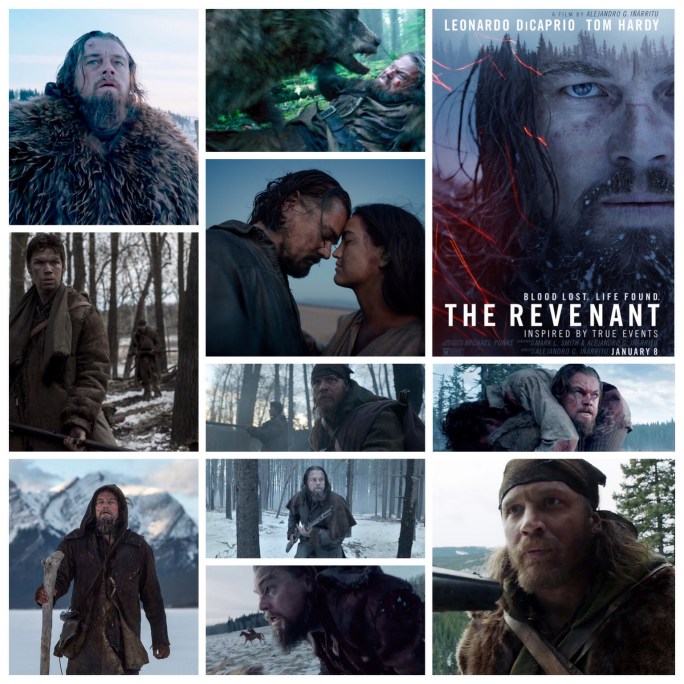
If the rumblings from director Alexander Gonzalez Inarritu and his intrepid cast and crew about The Revenant being the most tumultuous, challenging shoot of their lives, it’s all in service of the loftiest of causes one could achieve: to produce great art. I say that without pretension or monocle wagging patronization, and mark my words: The Revenant is by and far the greatest film this year, and possibly of the last decade. It is monumental in scale, meticulous in pacing and erects the fundamental pillars of the human condition so flawlessly that we feel we are watching actual history materialize before our eyes, untethered from the notion that it’s just a movie.
Let’s start with the ocular deity that is Emmanuel Lubezki: This film contains the best cinematography I have ever seen in my life. The bold location scouting is a catalyst for the prodigy of a DOP to work his ethereal magic. Time and time again throughout the film I found myself marvelling at the stunning patience and skill displayed by the man in attaining his precious shots, constantly chafed by what I imagine was an impossibly stressful environment, bogged down by time constraints and the pure, uncaring call of nature itself. He shot with natural light for all but one scene, an unimaginable achievement that plays out in endless beauty that rocks your soul to its foundation for the entire two and a half hour running time. The locations, lovingly culled from deep within northern Canada and briefly Argentina, are an unforgiving cacophony of serene snowfalls, cascading rivers and jagged, untamed mountain ranges. This is the landscape I have grown up in and call home and to such holy places captured with such reverence on film, gilding a story of such primordial importance had me next to tears.
Leonardo DiCaprio pulls out all the stops in his ferocious portrayal of Hugh Glass, a frontiersman who lives by his feral gut instinct alone, attempting to guide his fur trapping expedition through the terrain while looking out for his half Pawnee Native son who he already rescued from aching tragedy years before. After a harrowing raid in the dawning minutes of the film that makes it abundantly clear how serious the film intends to be, he and a small band of men are stranded and forced to contend with the land, and the threat of the natives finding them. Glass then gets attacked by a bear in a nerve shattering sequence that had my adrenal glands running a marathon. The frank, unapologetic nature in which the scene plays out reminds us all that nature isn’t our playground of opportunity and commerce, but a living organism that can bite the hand that it refuses to feed with alarming abandon. The sheer level of carnage inflicted upon Glass by both beast and man will shake you to your core, as will the excellent makeup and CGI effects that drive the point deep into your retinas. Tom Hardy disappears into his role better than Glass’s expedition blends into the treacherous blizzards, playing John Fitzgerald, a cowardly motherfucker who is content to leave Glass to the elements and seek fortune elsewhere, dragging sympathetic Jim Bridger (Will Poulter, excellent) along with him. The military component of their expedition (Domhall Gleeson, superb) suspects Fitzgerald and is wary. Hardy is the very definition of an acting chameleon, and disappears headlong into the role that had me riveted, and rooting for a best supporting actor win. The entire cast was subjected to a brutal nine weeks exposed to the elements, each other, and the raw, archetypal narrative of the piece that was being made, and each of them shows it in spades.
At its core it’s a revenge piece, spurred by aching character interaction involving Leo and his family in affecting flashbacks. Leo goes through somewhat of a transformation here.. He loses all he has left to an uncaring, cold faced world that would sooner see him tossed around a moss stained forest in pieces than avenged. But his Hugh Glass rages against the dying of the light right alongside Lubezki’s lens, creating in tandem the perfect voyage of a man who has become so consumed with the forces of nature in his quest to attain some semblance of his former self, that he has become somewhat of an element himself. Leo truly deserves gold this time around.

Adventure/survival epics are my favourite. This one stands out, and yet.. does more than that, if possible. It delves deep into the lush, echoing vastness of the past and pulls forth a story so human, so recognizable, in such a force of construction where the fruits of everyone’s labour are so obvious, it can’t help but be worshipped as a classic in the art form of cinema and a treatise on how to excel in every single area of the medium.
Inglourious Basterds – A Review by Josh Hains

“I think this just might be my masterpiece.” – Lt. Aldo Raine

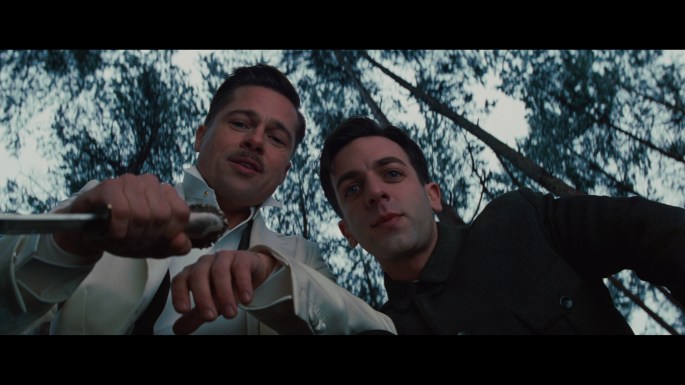
The quote above that leaps from the mouth of Lieutenant Aldo Raine, and both echoes an earlier scene in Inglourious Basterds, and closes out Quentin Tarantino’s sixth film, is not a gleefully pretentious boast as one could blindly assume, but in my eyes, a coy wink to the audience from a director who seemed to be aware at the time, that he had in fact concocted his masterpiece. To this day, Tarantino holds the film’s notorious opening sequence, where Christoph Waltz’s Nazi Colonel Hans Landa (in an Oscar winning turn) slowly and methodically removes vital information about the whereabouts of a Jewish family from the mouth of farmer Perrier LaPadite, in high regard as the best thing he has ever written. Whether he believes the film in its entirety is a masterpiece or not remains ambiguous to me. Whether you find it to be his masterpiece, or far from it, is another story. What I think of the film is coming right up.

I can recall with reasonable clarity the first time I saw Inglourious Basterds, on DVD in the comfort of my bedroom, and how I found myself both thrilled and bored at the same time. I had heard from friends and even a couple teachers at my high school that I was guaranteed to love Tarantino’s latest feature, and there I was at films end underwhelmed and sorely disappointed. At the time of the film’s release, I was quite the action movie junkie who seemingly lived and breathed violent cinema, and was expecting a simplistic, wickedly graphic WWII action adventure extravaganza, something so relentlessly bloodthirsty and violent it would make Rambo 4 and Shoot ‘Em Up look like Forrest Gump in comparison. What I did not expect, or want, was the deeply resonant, audacious blackly comical war picture I was served on a silver platter. You could say I was rather cinematically ignorant. Roger Ebert had it pegged right on the forehead when he said it would annoy some, and startle others. I was certainly startled by unexpected moments of frightening violence, and as mentioned, I was annoyed that I had not received that ultraviolent action movie I so desperately wanted. But by the same token, I was pleasantly surprised by Inglourious Basterds.

What took me by surprise were two vastly different aspects of the film: the craft, and the impact. Initially, I was taken back by how great the performances were, in particular and quite obviously, Pitt and Waltz’s, and just how much fun and wild and odd, and yet, deeply layered, three dimensional, and even kind of powerful those two performances and plenty of others, to this day still are. I was hypnotized by Tarantino’s musical selection, captivated by his editing and the offbeat and bold manner of storytelling he was shoving down my throat. But what really caught me off guard, was just how damn suspenseful the entire film was. I sat with my eyes glued to the screen while Landa interrogates LaPadite, quite literally chewing on my nails and almost giddy from the overwhelming tension and suspense I felt boiling over within myself. Or in the case of the sequence in the basement bar, where the identities of three Basterds hinge on the validity of one of their accents that sounds a wee bit off to a nosy and understandably suspicious Nazi Major, the threat of impending violence growing at the drop of every letter that falls from their respective tongues…I could have chewed my finger off, I was so consumed by suspense. Or even later in the film, in a moment toward films end to be more specific, when Shosanna is ever so close to watching her unseen reel of film displayed before Hitler himself and an unhealthy number of Nazis, when the ever persistent and fairly annoying Fredrick Zoller comes knocking at the door to the projection room…oh damn. I could have swallowed my arm whole like a shark.

But what has surprised me the most is the second item I mentioned, the impact the film has had on me in the years since my first viewing of it. Over time, and with expected subsequent viewings, I have come to adore it more and more with each individual viewing. Long gone is the lust for a purely cathartic action packed ride, the days of me wishing Tarantino had made the movie I wanted to see, and not the incredible piece of cinema I am praising today. The more I see Inglourious Basterds in all its angry, hilarious, gutsy, and riveting glory, the more I come to appreciate the cinematic gift Tarantino gave those receptive enough to see the film for what it is, and not what it could be.

Which brings me to one final point. On January 2nd, I sat down in a crowded theatre with quite a good seat in the middle if the room, and found myself completely engrossed in Quentin Tarantino’s eighth film, The Hateful Eight, for its entire 168 minute long duration. Yes, this was the widely seen digital theatrical cut. After seeing the film, I informed my friends that I felt it was the high point of Tarantino’s career, his masterpiece plain and simple, and likely my favourite film within his short repertoire. A week later, I find myself stumped. The Hateful Eight is like a well oiled machine with nary a hiccup along the way. It is so finely tuned, so boldly and magnificently performed, so passionately manufactured, and so angrily powerful and intensely resonant, I find myself unable to shake the memory of it from my mind for even a second. I called it his masterpiece after all. But prior to seeing The Hateful Eight, I called Inglourious Basterds his masterpiece. Surely he can have two masterpieces, but one will always stand a little taller than the other, so which one takes the high ground? I judged them by their endings. Now, for those of you who have not had the pleasure, or displeasure (depending on where you stand on the film once you’ve seen it), of seeing The Hateful Eight, you need not worry about spoilers, because I will not provide any.

The Hateful Eight, while complicated in the dialogue that leads to its inevitable conclusion, is to put it bluntly, simple entertainment, and almost could have been quite the superficial film. Much of the meat of the film is not bloody killing or hyper stylized visual gimmickry that seems to be the meat of a couple of his other films (at least three), but the very dialogue that propels the film forward, at least for me, with the velocity of a hot bullet. Additionally, The Hateful Eight is as angry, spiteful, nasty, brutal, profane, and humorous as Inglourious Basterds, and unexpectedly hopeful. It is a blast, a real treat, and a true gem of a film. At films end, I felt so deeply that the film is perfect, and in the way the ending is constructed and performed, I found myself swept up in its sublime power in a way only a small, and I do mean small, handful of films had ever done beforehand. I felt like I could breathe again, as if I had been holding my breath in as I sat in a disquieted and unnerved, suspense ridden state, completely caught up in the twisting and turning of this Western mystery. I felt pure relief, and yet I felt like I was still grappling with the angry, societally relevant morality tale spinning at the centre of the film, a sensation I have yet to shake.

Inglourious Basterds is not simply entertainment for the sake of entertainment or the mastering of craft…not that The Hateful Eight is either. It is an intricate, complicated piece of work. Here is a film that gives Jews hypothetical revenge against Nazism, with richly textured, yet goofy and nearly sadistic characters enacting swift justice with their guns, knives, and a baseball bat, creating chaos within France, and with every bullet riddled scalped Nazi, sending the coldest shivers all the way up the ranks of the Nazi war machine, echoing the horror of Nazi atrocities. In its final moments, one senses an air of achievement in much the same way the surviving characters surely do, having won the war and overcome pure evil, and yet we sit still, frozen, almost shell shocked, utterly disquieted. Because in those final moments, we are still dealing with the ramifications of their actions, cleansed of nothing, and left with a powerful, overwhelming sensation burning in our guts. Even as Aldo revels in his mastery of scarring Nazis with swastikas carved into their foreheads, and Tarantino winks at the audience with that clever last line that rings as truthfully as anything he has ever written, we cannot help but feel unsettled, disturbed, disquieted, shocked. I think we are supposed to.

But none of that answers the question of which film do I hold in higher regard as Tarantino’s clearer masterpiece. And on that note, here is my verdict: Inglorious Basterds is bound for the same iconic glory as Pulp Fiction, and fully deserves every ounce of it, but The Hateful Eight, flawless in its execution and utterly unforgettable in its sublime power, takes the high ground. A dramatic film has not stuck to my mind as hard as The Hateful Eight has in the last three years since I saw Killing Them Softly in its theatrical run. It is just that damn good.

But of course, I have a sneaking suspicion another film will replace The Hateful Eight in my mind as if I never saw it: the Golden Globe winning The Revenant.

We’ll see.

ALEJANDRO GONZALEZ INARRITU’S THE REVENANT — A REVIEW BY NICK CLEMENT

The Revenant, Alejandro González Iñárritu’s aggressively masterful new wilderness epic, is the true definition of a consummate big-screen experience. Comparisons to Apocalypse Now, Aguirre, The Wrath of God, Jeremiah Johnson, Deliverance, and so many others before it are apt and fair; even after only one viewing, I feel confident in saying that this film belongs on the short list of great, filmed-at-no-expense extravaganzas. So few movies have attempted this sense of physical verisimilitude, and it all registers as a towering work that frequently boggles the mind, and most importantly, shakes the soul. Taking the simplest but most effective (not to mention timeless) of narrative conceits and setting this ferocious story of survival and death against one of the harshest environmental backdrops was a stroke of genius that would make Herzog envious; we know that Malick will be doing cartwheels during the show and after the lights have raised, as this is a film that feels cut from the same cloth as that legendary filmmaker – it’s like The New World on crystal meth.

The Revenant is extremely gory and unrelentingly mean and necessarily violent and not interested in holding your hand and being your friend or giving you “entertainment” in the classic sense of the word. But in ways that few studio movies dare to do, it challenges your expectations, dares you to keep watching, and asks you to submit yourself to a piece of filmmaking that’s been expressly designed to showcase death and suffering in all its forms. Nobody and nothing is safe in this film – men, women, children, animals, the landscape – it’s all there to be destroyed, ripped apart, and shattered. The performances from Leonardo DiCaprio and Tom Hardy are both wholly consuming, but in very different ways. DiCaprio is the hero of the piece, and his emotional core can be traced easily – his son has been killed, he’s been left for dead, revenge is all that matters. These are inherent instincts inside of every one of us, whether we want to believe it or not. That this is a true story, all I can say is, good God damn. Tom Hardy is brilliant – yet again – and brilliant in ways that will fly over the heads of many viewers. What he’s able to convey with just his eyes, from film to film, is nothing short of extraordinary, and despite playing the villain in The Revenant, he’s a man of strict moral code, understandable to some degree, which makes his decision making, and finally his cowardice, all the more fascinating to observe. And when the two of them face off in the final act, all bets are off, anything goes, and the way that the filmmakers showcase their brutal face off with one another grabs you by the throat and never lets up.

But the star of the show is director Iñárritu and his peerless cinematographer Emmanuel Lubezki, who with movie after movie, keeps making the case for the label of greatest working cinematographer in the world. And in a world filled with Deakins and Elswit and Richardson and Doyle and Debie and all of the rest of the greats, it’s even more impressive how consistent and extraordinary his films have been. Every shot in The Revenant is glorious; half of the film feels as if it were captured during magic hour, the use of natural light is stunning, and I just don’t understand how some of these long takes have been achieved; movie magic at its finest. Please reflect on this partial list: Children of Men, The Tree of Life, To the Wonder, Gravity, Birdman, The New World. Say what you want about the movies themselves (their all personal favorites from the last few years), but the visual nature of each and every one of them has been second to none, always groundbreaking, and frequently spellbinding. His work on The Revenant is likely his best, taking some of the visual cues he’s picked up from his now iconic (and often copied) collaborations with Malick, and infusing his imagery with a harsh sense of the extreme that is impossible to ignore. I can’t believe that Fox put up $135 million for a wildly savage, proudly R-rated movie that offers zero chance of sequels and lunchboxes and toys and action figures; in this respect it’s this year’s Interstellar, an ambitious, auteur driven anti-blockbuster blockbuster made by a singular filmmaker who isn’t interested in capitulating to anyone.

The Revenant asks a lot from the viewer – to remain patient, to witness an unending amount of bloodshed and bodily terror, and to put you in the position of both of the two lead characters, for better or for worse. The bear mauling is one of the great modern CGI set pieces that I’ve ever seen, and trust me, I’m ALWAYS looking for wonky effects or anything to pull me out of moments like these – NOPE. It never happened. It’s virtually flawless, with some individual shots that are as gnarly as it’s going to get. That steam that releases from the bear’s mouth and that mists the camera lens is a movie moment I’ll not soon forget, to say nothing of the bear’s foot pressing down on Leo’s face, claws out and ready. That’s the thing about this movie – there are SO many of THOSE moments – it’s pure cinema, fusing image and sound (seriously, the sound work in this movie is extraordinary, from the diverse score to the perfect use of ambient sound effects) and ideas into an incredible package that feels thrillingly alive and desperate to blow us away. It sits alongside George Miller’s Mad Max: Fury Road as the defining movie, for this viewer, of 2015, and a work that I cannot wait to see again.

Mulholland Drive – A Review by Josh Hains

I do not hate Mulholland Drive, nor do I like Mulholland Drive.

David Lynch’s most celebrated film, the aforementioned Mulholland Drive, is also his most ambiguous piece of work to date. To call it confusing would be a disservice to his crafting of this meticulous, multifaceted surrealistic experience. It is not that Mulholland Drive is merely confusing from a lack of directorial control and self indulgence leading to unintended confusion and incoherence, but that the film intentionally lacks in many sequences, the connectivity necessary to compose a complete and full picture. This is not a film that ends with all loose threads tied up with a bow, but a film that purposely leaves loose endings, which generates room for interpretation of the films events, similar to the equally as confounding Birdman Or (The Unexpected virtue Of Ignorance) released in 2014. As I watched the film, captivated by most of its aspects but completely befuddled by the seemingly impenetrable plot, I began asking myself questions I would revisit in time. Who is the grungy, grotesque man who spookily appears from around a corner as if he sensed someone approaching? Is he just a random piece of a large intricate puzzle, or is he the physical embodiment pure evil, fear, or death, or perhaps all three? Who is the cowboy, and what is the reason behind Kesher’s interaction with him? Is everything just inside Diane’s mind at films end? Unlike Birdman however, upon finishing my first viewing of Mulholland Drive in 2014 (months prior to seeing Birdman), and in the case of subsequent viewings in the time since my initial viewing, I reacted both poorly and foolishly toward the film. Rather than approach the ambiguous nature of the film at its end with the same open-mindedness and childlike curiosity as I did with Birdman some months later, I greeted it with frustration and disdain for not closing in similar fashion to Blue Velvet or Wild At Heart, for not allowing me the relief of a “Hollywood ending” with all loose ends tied, and for leaving me absolutely confused and underwhelmed.

What I discovered in later viewings was not the truth of the film and its hidden meaning, but that the more I dissected and analyzed the material, the more time I spent engaged in the mystery of the film, the more frustrated and confused I would become. Justin Theroux, who portrays Adam Kesher, has expressed the belief that people such as myself, who take the time to dissect the film as thoroughly as we have done, will only end up further frustrating ourselves, due to the lack of what he called “connective tissue”. Once I recognized this aspect of the film this morning watching a brief clip of Theroux discussing the mysterious nature of Lynch’s films, in particular Mulholland Drive, after a revisit of Mulholland Drive last night, I saw the light at the end of a vast dark tunnel. I saw that the power of the film lies in its inability to be interpreted, or as Roger Ebert put it in his review of the film (which later made its it way into his “Great Movies” list) “It was a tribute to Lynch that the movie remained compulsively watchable while refusing to yield to interpretation.” I could not have said it better myself.

A question has remained in my mind for the rest of today, the question of what do I think of the film now that I have freed myself of compulsively searching the depths of the film for its meaning and some semblance of a clear resolution? Considering that in viewings past, my issues were not with any other aspect of the film; not the performances, not the cinematography and startling imagery, not the dread ridden bleak atmosphere, not the music, or the sex sequences and unexpected violence; beyond the purposely ambiguous and open-to-interpretation nature of the puzzling narrative, and seeing as how that issue has been cleared up rather nicely as of today, I think that the film is possibly David Lynch’s finest film. His masterpiece. The film upon which all his other works will forever be compared to. I could also say that the impenetrable nature of the film, the unwillingness to yield to interpretation and modern cinematic standards, places the film upon a pedestal above most other films that thrive in surrealistic realms, though unlikely above but quite possibly on par with Werner Herzog’s Aguirre, The Wrath Of God, or Alejandro Jodorowsky’s El Topo, both similarly mystifying, confounding, and surreal. Of course, these points are open to discussion and interpretation, and subsequent to change dependent on perspective.

All of this brings me back to my opening statements, and my final verdict on the film as a whole. I do not hate Lynch’s Mulholland Drive in any facet, nor do I like Mulholland Drive. I love it, and I want to see it again soon so I can once again become entangled in that mysterious dreamlike realm that seemingly inhabits one dark corner of Los Angeles. Or Diane’s demented imagination. Or both.


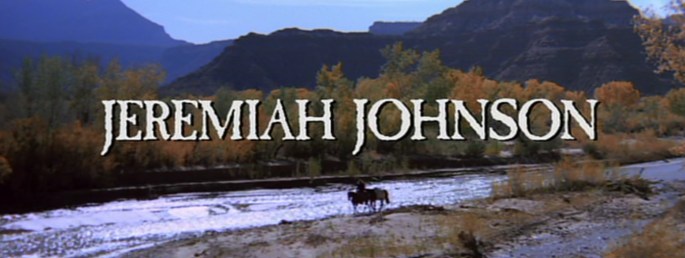
SYDNEY POLLACK’S JEREMIAH JOHNSON — A REVIEW BY NICK CLEMENT

2

Overwhelming amounts of machismo. 1972 Sydney Pollack POWER — directing with tough, elegant grace. John Milius POWER — he pisses manliness and this film is further proof of this fact. Duke Callaghan POWER — one shot after another of staggering beauty. Jeremiah Johnson is a thoroughly absorbing relic from another time, and a perfect movie for a chilly winter’s night. Robert Redford in his GOLDEN GOD years. No CGI. No lame-ass blue-screens. No studio sets. Let’s get out there in the mountains and film an epic. A true epic. Every movie NEEDS an overture. This one has one. And it’s glorious. Based in part on the life of mountain man John “Liver-Eating” Johnson, with Redford in the leading role, and the excellent Will Geer as “Bear Claw” and shot on location in Utah, the film has that extra special feeling of something that was crafted in the outdoors and without the aid of easy studio assistance. Lee Marvin and Clint Eastwood had been considered for the lead role at various points, and filmmaker Sam Peckinpah had been attached to direct before Pollack ended up getting the job. Shot on a reported $3.1 million budget, the film screened at the Cannes Film Festival, and would then become a big box office hit, grossing $45 million, and garnering tremendous critical praise. The Blu-ray release is extremely spiffy, cleaned up for sure, but still retaining that gritty, old-school-film-texture that seems to be slipping away into the cold of the night…


BILL PAXTON’S FRAILTY — A REVIEW BY NICK CLEMENT

f

This movie is so scary because I believe every second of it. No manufactured scares, no fake-outs, no cheap and easy genre traps. Bill Paxton directed this film with the intensity of a vice grip; it’s as uncompromising as storytelling gets. The performances are searing, with Paxton off the Richter scale amazing, and Matthew McConaughey doing fantastic pre-Renaissance work as a man trying to figure out how to grasp the most fucked up of situations. Murder motivated by the warping of religion is something that you read about all the time, which is why the very fibers of this movie have the ability to make your skin crawl. And the way that the Paxton character implicates his children…it’s the stuff that true nightmares are made of. Why hasn’t Paxton directed more after this utterly masterful debut? Are there no stories he feels that are worth telling? Released to excellent reviews but close to zero box office back in the spring of 2002, this film is so ripe for rediscovery, especially considering how popular horror movies have become over the last 15 years. This one has brains, though, which is probably why its profile is so low; this is my sort of horror movie, the type of film where I get hooked because of how much I could see the story unfolding in real life. Bill Butler’s crisp cinematography maximizes space and utilizes all the right angles to cover the bone chilling twists and turns of the narrative, while the creepily effective musical score by Brian Tyler doesn’t go over the top with gotcha! musical cues. Powers Boothe is superb in one of his customarily gruff supporting turns. This is a thought provoking thriller that has remained swept under the rug for far too long. The final moments will send a chill up and down your spine.

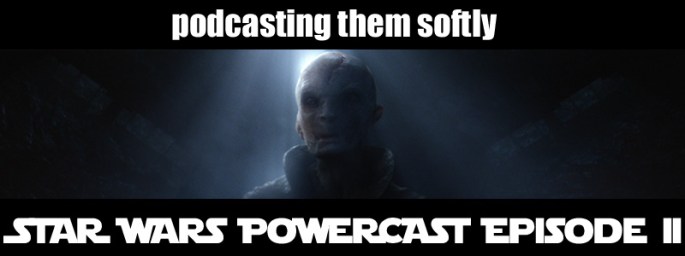
PTS Presents STAR WARS POWERCAST EPISODE II

STAR WARS POWERCAST 2

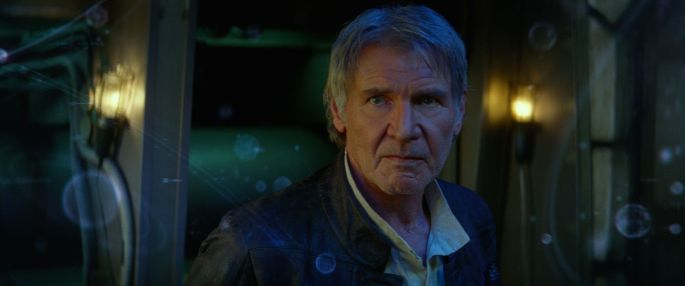
Frank and Tim discuss their reactions to STAR WARS THE FORCE AWAKENS.  They get into who Supreme Leader Snoke is, who Rey is, Harrison Ford’s brilliant return as Han Solo, the prequel tie-ins, the new Funko Pop FORCE AWAKENS series that just got released, and much more!

SEAN S. BAKER’S TANGERINE — A REVIEW BY NICK CLEMENT

3

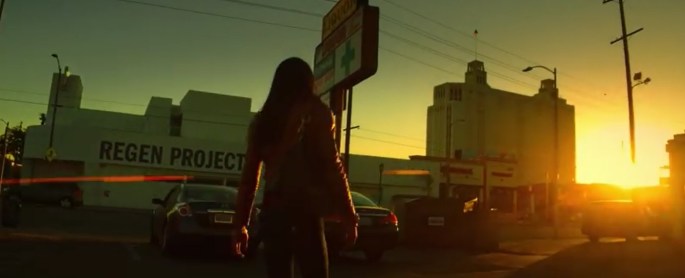
Tangerine is a bold, raw, and deeply felt independent film from director and co-writer Sean S. Baker; it’s the first film I’ve seen of his and now I eagerly anticipate his next move as a filmmaker. This is the often hysterical, often draining story of two African-American transgender prostitutes, played with loud charm by Kitana Kiki Rodriguez and Mya Taylor, living VERY rough-and-tumble existences on the dangerous and dirty streets of Los Angeles. The believability factor of this project lies in the fact that the lead actresses, both of whom had zero major acting experience in the past, were former sex workers; this is their territory and they both explode off the screen in this abrasive and frequently uproarious movie. I can’t stress how unexpectedly hilarious I found large portions of this vibrant movie to be — there’s a direct honesty to almost every single scene, and while this is a world that I know nothing about on a personal level, you can’t help but get wrapped up in this whirlwind of people and places and confrontations and life moments; sometimes you don’t need to relate to the on-screen characters in order to empathize and sympathize with them. Yes, there’s a plot, a rather traditional one at its core, but what makes this movie so fresh and exciting are the progressive aesthetic decisions, the progressive social values, and the earned sweetness of the rather touching final moment. Co-produced by the Duplass brothers (do these guys ever sleep?!), this has the spontaneous feel of their best work, while much has been made of Baker’s interesting stylistic decision to shoot the entire film on a series of iphones; the 2.35:1 widescreen cinematography is extremely impressive and expressive for such a shoe-string approach to filmmaking. Tangerine is one of the year’s most interesting and unique films, and it’s currently streaming on Netflix for those who are interested.

CHRISTIAN PETZOLD’S PHOENIX — A REVIEW BY NICK CLEMENT

2

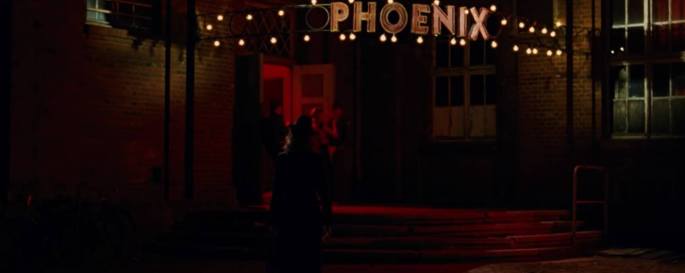
Lurid, improbable, and highly entertaining, Phoenix, from director Christian Petzold, plays like a rarefied version of Face/Off. Set against the backdrop of Nazi-infested Berlin during WWII, the story centers on a female Holocaust survivor and former cabaret singer, who becomes horribly disfigured after being shot in the face. After reconstructive facial surgery leaves her looking nothing like her previous self, she sets off on a course to track down her husband, who may have been responsible for selling her out to the Gestapo. Nina Hoss gives a very effective and sympathetic lead performance, inviting the viewer into this crazy story and keeping you invested despite the inherently contrived nature of the piece; it’s all VERY cinematic, and extremely confident, so as a result, you just go with it. The movie, at times, felt like Paul Verhoeven’s Black Book, and while I liked that film a tad more than Phoenix, there’s much to admire with this fancy looking and exceedingly engrossing thriller. There’s a slight element of light Cronenberg-esque body horror during the first act, with a more restrained sensibility of course, while also mixing traditional historical touches and the war-time setting. The cinematography by Hans Fromm is lush and very stylish, with a complimentary musical score from Stefan Will. The script is as tight as the editing, with zero wasted scenes and all 100 minutes used very well in an effort to tell a zippy, crafty story. The film’s final scene might be one of the single best movie moments of the year in general, as so much is said with zero back and forth dialogue.

ALAN J. PAKULA’S COMES A HORSEMAN — A REVIEW BY NICK CLEMENT

2

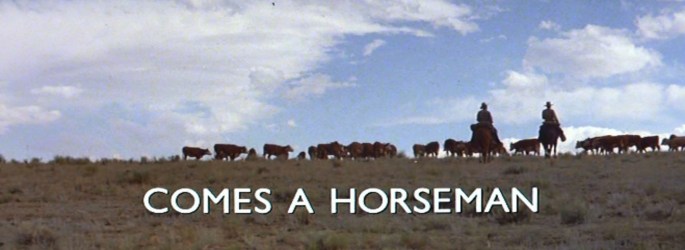
Director Alan Pakula and cinematographer Gordon Willis reteamed for the revisionist Western Comes a Horseman, which on the face of it, seems like a project a bit out of their comfort zone on initial inspection. But upon actual viewing, Comes a Horseman is a fascinating piece of work that set out to demystify the genre, joining a group of gritty westerns that traded off of iconic imagery while skewering the very conventions that they stridently presented. Certainly not a traditional Western but set in the American West of the 1940’s, the narrative pivots on two ranchers (James Caan and Jane Fonda, both steadfast and excellent) who operate a small farm and who become threatened by economic hardships and the greedy plans of a local land baron (Jason Robards, commanding and menacing). Fonda was at her career peak when she signed on for this post-modern genre item, having just won an Oscar for Hal Ashby’s masterpiece Coming Home, and the film reunited her with Pakula, who had directed her in Klute, which was the film she won her first Oscar for. It also reteamed her with Robards, as the two had co-starred in Fred Zinnemann’s 1977 box office hit Julia. Pakula and Willis brought a more simple visual style to Comes a Horseman than one might expect, and while the two talents certainly paid respect to the milieu that they were working in, they opted for a more reserved aesthetic, stressing striking yet unadorned widescreen compositions as opposed to anything fancy or overtly ostentatious. There’s visual sweep to the imagery but at the same time one gets the sense that Willis was interested in subverting expectations, even while the filmmakers tipped their hat to classic staples like Red River. A film ripe for rediscovery, it’s available on DVD, but a Blu-ray would really make this underrated effort pop and sing.