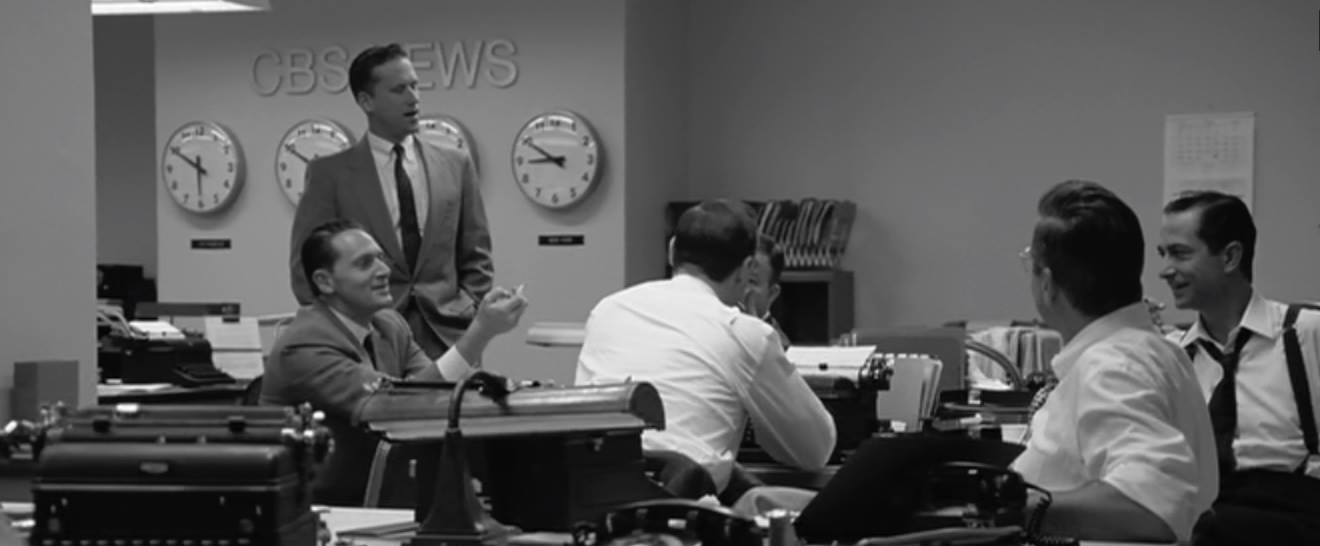
I love the mood and rhythms of George Clooney’s magnificent Good Night, And Good Luck. This film has so much classy style and verbal sophistication that it’s always a pleasure to revisit, and it’s loaded with an utterly obscene cast that included David Strathairn, Jeff Daniels, Robert Downey Jr., Patricia Clarkson, Tate Donovan, Matt Ross, Tom McCarthy, Grant Heslov (who also co-wrote the tack-sharp script with Clooney), Robert John Burke, Ray Wise, Robert Knepper, the always awesome Reed Diamond, and Frank Langella. Cinematographers must jump at the chance to shoot in black and white (or have their images digitally converted to the format), and Robert Elswit’s gloriously beautiful work in the monochromatic style is beyond shimmery and old-school-wonderful to take in. The film recounts the period in which Senator Joseph McCarthy began his absurd quest to expose Communists in America, while CBS News icon Edward R. Murrow (the elegant Strathairn in the performance of a lifetime) dedicated himself to highlighting the indecencies being perpetrated by McCarthy’s crooked Senate “investigation.” Clooney’s film discussed morals and ethics, both on the journalistic and human side of life, and by shooting in black and white, Elswit was able to convey simple truths of good vs. evil, and correct vs. wrong. The smoky atmosphere made up of the constant sight of lit cigarettes added ambience and texture to the old-fashioned yet still slightly heightened pictorial quality. There’s an intimacy to the images in this film, with the 1.85:1 aspect ratio used smartly and efficiently; Elswit always understands the importance of utilizing the space within the frame regardless of how wide he shoots any given film. The agile and varied aesthetics in Good Night, And Good Luck perfectly mixed with the smoky and shadowy black-and-white lensing, and when combined with the vintage 16mm news material which showcased McCarthy and other real life members from this exciting chapter of American History, a sense of almost surreal verisimilitude is achieved. And as usual, when a production looks and feels as realistic as this one did (the TV-set detail and period appropriate studio/camera equipment is remarkable) it’s that much easier for the filmmakers to create a distinct and believable visual atmosphere. It’s no surprise that Elswit was nominated for an Oscar for this evocative piece of work, while the film in general was bestowed with six Academy Award Nominations, including nods for Best Picture (Heslov), Best Director (Clooney), Best Actor (Strathairn), Best Screenplay (Clooney and Heslov), and Best Art Direction (James D. Bissell and Jan Pascale). Top to bottom, from first frame to final shot, this is a terrific piece of storytelling and moviemaking.
Category: Film Review
TODD FIELD’S LITTLE CHILDREN — A REVIEW BY NICK CLEMENT
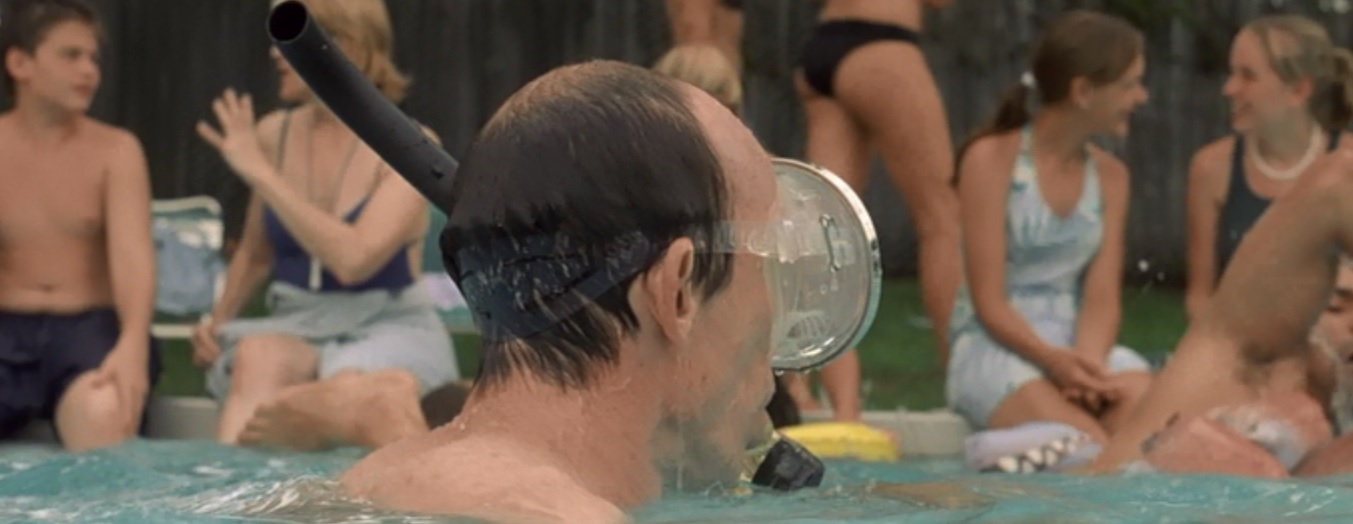
Incisive writing. Sharp performances. Astute direction. Todd Field REALLY needs to work more, because between Little Children and In the Bedroom, the guy has demonstrated serious filmmaking and storytelling chops. He also gets MASSIVE POINTS for portraying the mysterious piano player in Eyes Wide Shut. Patrick Wilson is one of the most underrated actors out there and he’s dynamite in this movie. Kate Winslet, as always, is terrific, and Jennifer Connelly is her typically moody and gorgeous and dramatic self, all furrowed brows and emotionally fragile beyond belief. But it’s Jackie Earle Haley who completely steals the show. His heartbreaking portrayal of a man struggling with intense inner demons was a rich characterization that hit lots of multilayered notes of sadness, and the way he used his expressive eyes to convey his mental anguish was nothing shot of extraordinary. The scene at the pool is an all-time classic of suburban satire, shot and acted as if it were the set-piece of a horror film, but saying so much about society that the moment becomes two-fold in its meaning. Noah Emmerich has yet another memorable supporting role; how many times has this guy spiced up a movie?! The cinematography by Antonio Calvache is slick and precise and designed with an almost Kurbickian level of attention to detail, and there’s an Incredibly effective score from Thomas Newman. This is yet another filmed adaptation based on the novelistic work of Tom Perotta (Election, The Leftovers), and here, Perotta received an Oscar nomination along with Field for their writing duties. And the dryly humorous voice-over that narrates the film was an added bonus; this aspect of the film, while contentious with some, is what separates it from others in this well-traveled milieu of white picket-fence satire. Little Children fits snugly in the realm of “diseased suburbia Connecticut movies,” where the seemingly all-American and successful family unit is placed under an intense microscope, resulting in all manner of scrutiny. Husbands and wives are having affairs, there’s a potentially reformed pederast living down the street, and the façade of the perfect life is shattered via the daily rituals that all of the characters pretend to be living up too. Field is an incredibly literate filmmaker, mixing dark comedy with biting social commentary, resulting in a work that feels like a poison-pen letter to the ideas and notions of perfect domestic bliss and harmony.
SYDNEY POLLACK’S THREE DAYS OF THE CONDOR — A REVIEW BY NICK CLEMENT
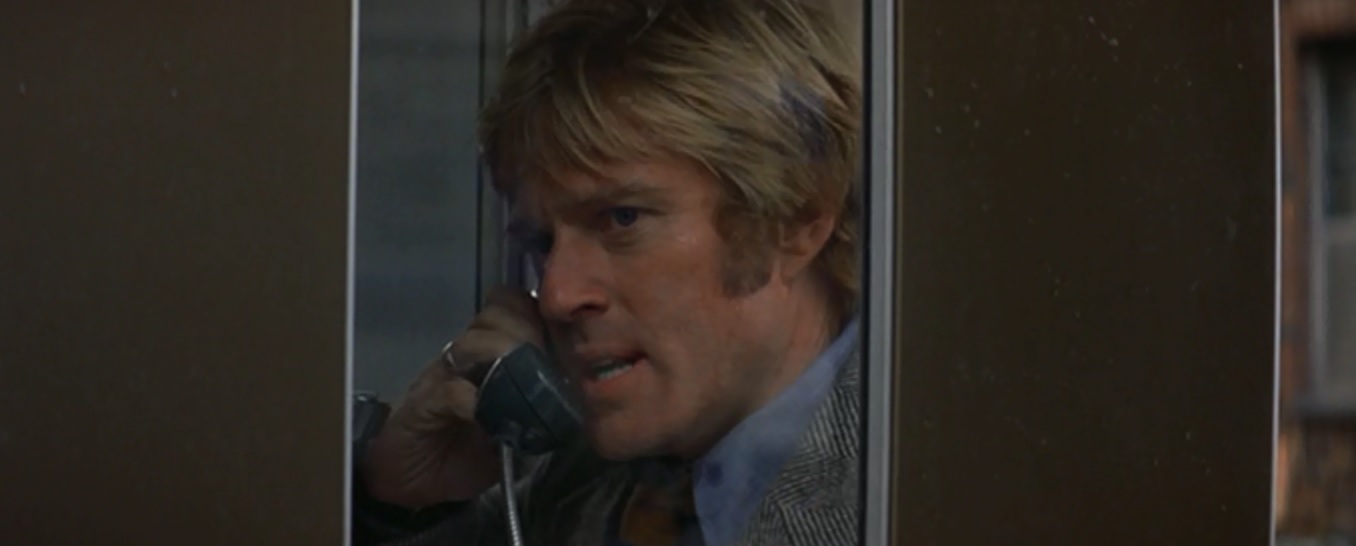
Lethal, cold, smart, and totally gripping, Sydney Pollack’s classic spy film Three Days of the Condor is a top-class genre entry, benefitting from its post-Watergate, paranoia induced atmosphere, with a charismatic star turn by Robert Redford as CIA codebreaker Joe Turner, an unassuming worker-bee who comes to the office one morning and finds all of his co-workers executed. Totally alarmed by the situation, Turner flees the scene, and reports the incident to his duplicitous bosses, who then set a menacing hitman, played by the legendary Max von Sydow in a silently ruthless bit of acting, to dispatch of him. Who, if anyone, can Turner trust, and will it be possible to escape the nefarious clutches of crooked government agents? Lorenzo Semple Jr. and David Rayfiel’s lean and graceful screenplay cut away any sense of narrative fat in favor of forward moving plotting with credible dialogue and exciting bursts of violent action. The supporting cast, including a gorgeous Faye Dunaway, Cliff Robertson, Addison Powell, and John Houseman, all provided excellent counterpoints to Redford’s leading-man heroics, which never end up going over the top, which keeps the film relatively grounded for the genre. Dave Grusin’s moody score provided an ominous tone right from the start, and as usual, Owen Roizman’s crisp and clean cinematography exerted a clarity and visceral force that kept everything in the moment and tension-filled, while Don Guidice’s expert editing made terrific use of jump-cutting, while also demonstrating a clear understanding of how long to keep any given scene going; this film feels needle-point precise. This is a film that has aged like a fine wine, and one that’s always worth a revisit.
DAN GILROY’S NIGHTCRAWLER — A REVIEW BY NICK CLEMENT
Unnerving. Unforeseeable. Unforgettable. Writer/director Dan Gilroy’s thrillingly caustic media satire Nightcrawler shows some seriously vicious teeth, taking you on a dark and twisted trip through nocturnal Los Angeles, all shot in 2.35:1 Mann/Refn-vision by the obscenely talented Robert Elswit, with James Newton Howard’s moody synth-dominated score pounding away in the background. Jake Gyllenhaal is utterly brilliant as Lou Bloom, a diseased creature of the night, appearing in virtually every scene, totally live-wire, spewing rapid fire dialogue with sociopathic glee. Shades of Travis Bickle abound in his portrayal of a freelance videographer hustling from crime scene to crime scene trying to sell his gruesome and exploitive footage to the highest buyer. This is the best performance of Gyllenhaal’s career so far, and over the past few years, he seems incapable of not being thoroughly excellent in whatever he appears in (Brothers, Source Code, End of Watch, Prisoners, Enemy, Everest; still need to see Southpaw). It’s great to see Renee Russo in a substantial role again, as she brings sass and class to her role as a beleaguered news producer. She gets to cut a nasty portrait of what it might be like to run a struggling local news station in the big-city that’s fighting for a piece of the ever-competitive ratings pie. Original movies from a single voice seem less and less common these days, and as Nightcrawler races through its propulsive and lurid narrative, you begin to realize that you’re watching something that’s playing by its own sick and cynical set of rules, unafraid to peek at the nastiness that’s running through our cities, news outlets, and members of society. This is an instant classic that defies expectations, and a film that’s gotten richer and richer on repeated viewings. Hopefully Gilroy has a new project on the horizon sooner than later…
STEVEN SPIELBERG’S BRIDGE OF SPIES — A REVIEW BY NICK CLEMENT
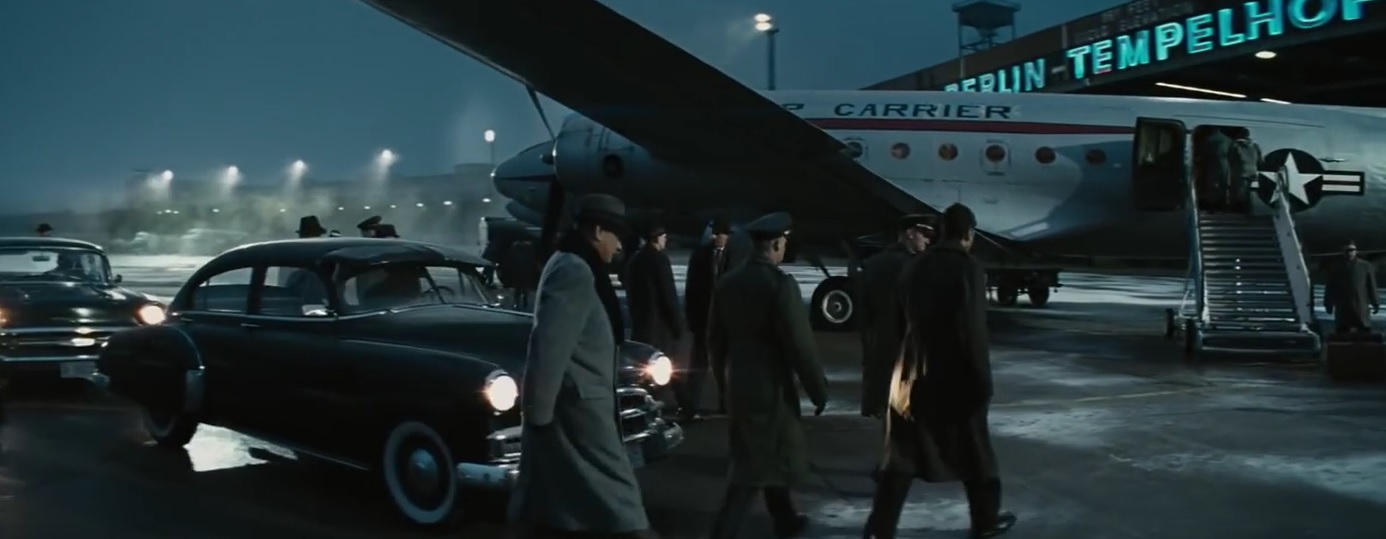
Steven Spielberg’s Bridge of Spies is a good story that’s well told, thoroughly absorbing, and spectacular in terms of production values. Tom Hanks and Mark Rylance are wonderful, with the latter putting on a subtle acting clinic for the ages, and the former reminding us how consistently excellent he is as our American everyman. The screenplay often times tells when showing would have been enough, but that’s The Beard for you from time to time, and it’s interesting to note the screenplay involvement of the Coen brothers on this project. There’s nothing surprising in terms of the plot – the film is based on a true story so there’s not much that could or should have been changed, and while the film never becomes as suspenseful as it might have liked, there’s a reliable, old-fashioned quality that comforts the viewer with a sense of solid familiarity. Janusz Kaminksi, as usual, shows off his stuff as cinematographer, bathing the film in blues, greys, blacks, shadows, snow, and his customary shafts of blinding, white light streaming through windows; this film feels cold and shivery, with the extraordinary production design by Adam Stockhausen totally evoking the bombed out ruins of post WW-II Germany, just as the Berlin wall was being constructed. There’s a magnificent shot in this film of a character riding his bike along the edge of the wall, showing the hectic maneuverings of everyone involved on a political, military, and social level, as the camera catches small bits and pieces of visual information that helps to paint a portrait of impending sadness. The narrative focuses on a POW/spy swap between the Americans and the Russians during the peak of the cold war, and Spielberg, as usual, knows exactly how to get the proper mileage out of his studied locations, fantastic mise-en-scene, and performances that are never less than splendid. Bridge of Spies the sort of film that The Beard could have directed with one armed tied behind his back, and that’s not a knock, but rather, a statement that suggests supreme confidence with this sort of historically rooted material; this is his genre and he knows how to deliver the expected goods.
THOMAS VINTERBERG’S FAR FROM THE MADDING CROWD
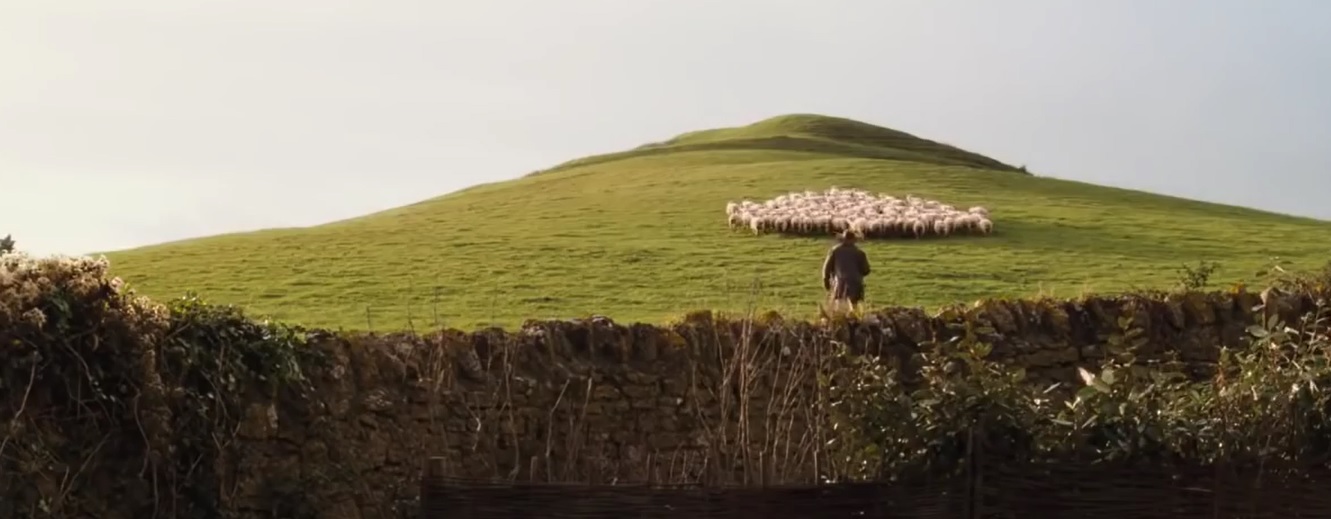
Charlotte Bruus Christensen is the true star of Thomas Vinterberg’s exquisitely produced film version of the classic Thomas Hardy novel Far From the Madding Crowd. Christensen is a camera artist that I’ve previously not been aware of, but now my attention is on full alert. Her work here is the definition of painterly and sumptuous, with one shot after another that feels museum worthy, utilizing lush color, a terrific sense of composition, and more than a few instances of natural light that felt like the actors and crew were filming at some very extreme or odd hours in an effort to capture the organic beauty of the landscape. I’m always ready to get swept up by intoxicating cinematic imagery, so I have to say, this one immediately grabbed me from that perspective. The film itself is a solid soap opera, anchored by the radiant Carey Mulligan, playing an interesting if emotionally prickly character that makes a bunch of mistakes along the way to potential happiness. The trio of suitors who all come calling for her are played by Michael Sheen (perfectly square), Jim Sturgess (perfectly sleazy), and Matthias Schoenaerts (perfectly hunky). All three men get some quality moments, and the script changes perspective a few times which I found clever, but this is certainly Mulligan’s story, and she, rather expectedly, handles it all with class and charm. There are some WTF? moments of character motivation and there’s a haphazardly directed scene involving Juno Temple missing her wedding (I know these were the days before texting but c’mon!), but overall, this is an enjoyable, comforting piece of costume drama, splendid in all area of production value (the costumes and set decoration are divine), but really bolstered by the magnificent eye of a cinematographer who took full advantage of the pristine landscapes, over-cast British skies, and lots and lots of sheep. Did I mention there’s tons of sheep in this film? Be still my heart.
Ace Ventura, Fear & Loathing and mourning Laura Palmer: A chat with actor Troy Evans
Very excited to bring you my recent interview with actor Troy Evans, who has appeared many films including Ace Ventura as Roger Podactor, Twin Peaks as Principal Wolchezk, Kathryin Bigelow’s Near Dark, Halloween 5, Terry Gilliam’s Fear And Loathing In Las Vegas, Article 99, Planes Trains & Automobiles, The Frighteners, The Black Dahlia, Demolition Man, Phenomenon, My Favourite Martian, The Book Of Life and more. He’s also appeared in television shows including Hannah Montana, Without A Trace, CSI Miami, The Practice, Amazon’s Bosch and ER in a legendary hundred plus episode arc as Frank Martin. He’s an awesome guy who has actually given me some of the most in depth, thought out answers I’ve received thus far in my work, and I’m so grateful to him for that. Please enjoy!
Nate: How did you get into acting? Was it something you always wanted to do, or did you fall into it by chance?
Troy: I grew up as a political Junky. In the 1950’s there was a Montana Governor named Don Nutter who was considered Presidential material. He died in a plane crash but that planted the idea in my head that a Montana lad could become President. I was about 8 at the time and set a plan to do just that. I intended to become a lawyer, a legislator, Governor of Montana, US Senator from Mt., and then President in that order. I was a page in the Legislature when I was 14, was giving speeches at political dinners at 16, and President of the Flathead High School student body at 17. Many classmates signed my Senior yearbook asking that I remember them when I was President of the US. I started college at the University of Montana in 1966 and was paying for school with a Rock and Roll Band called GANG GRIEN. I was having way to much fun to go to class, my grades were awful, and in the spring I lost my student deferment and was drafted. I shipped to Viet Nam in the Spring of 1968. I spent 16 months with the 25th Infantry Division and came home in July of 1969. At this point I didn’t realize it, but I was completely out of my mind. Instead of returning to school I opened a Rock and Roll bar in Kalispell, Montana called THE POWDER KEG. It was. I developed an acute case of the bartenders disease. alcohol, insanity, and anger are not a recipe for a peaceful existence and I had a plethora of legal problems (mostly from drunken bar fights) which eventually landed me in “The Rancho Deluxe”. That has been cowboy slang for Montana State Prison for over 100 years. I had been drunk enough for long enough that it took me about 6 months in stir to suddenly realize that I was not going to be Governor. You have to do those things in the opposite order.
I started to try to form a new plan, but soon realized that many doors were now closed to me. I couldn’t return to the Military. Couldn’t be a teacher, a Police officer, a lawyer, or an accountant. I couldn’t own a bar. One day I thought, “ I’ll bet no one ever asks an actor if he has a felony conviction.” That day I sent the warden a request for a copy of Hamlet. That was the day my life changed. Troy.
Nate: Twin Peaks: you have a brief but very memorable appearance as Principal Wolcszheck. How was your experience filming that, and doing the iconic intercom broadcast about Laura Palmer’s death? Are you a fan of the show?
Troy: When I got the job on TWIN PEAKS I was very intimidated. I had so much respect for David Lynch that I decided the best thing for me to do was to learn the material cold and make no choices about it. I was sure that he would have something specific that he pictured. We shot that scene at the High School in Snoqualmie, Wa. I was first shot up at about 6:30 AM. They had already lit and set the camera when I got there. You are probably aware that a simple scene like this can take hours to film with many camera angles, and lens changes,etc. so I was prepared for that. David asked if I minded if he shot the rehearsal and, of course, I said, “fine”. I assumed he was just working out some technical kinks. I started the scene doing what I planned, just “verbal typing” really. I was consciously trying to just say the words with no mustard on them. About halfway through the horror of what I was saying started to roll over me and I found myself being overwhelmed by emotion. I fought to get through the rehearsal without breaking down in tears. The High School PA system had a wall of switches so you could turn off the sound to each room separately. As I finished the speech, purely by instinct, I reached up and started batting at the switches. They cut and David said, “Are you happy with that?”. I thought he meant the general approach and said “yes, if you are.” David said, “Moving on”, and my moment on Twin Peaks was in the can. I am still amazed at the whole thing.
One additional thing. David Lynch was born in Missoula, Mt. in Jan. of 1946. I was born in Missoula in Feb. of 1948. It was a small town with one hospital. That means that if David was born in the hospital, it is likely that we were born in the same room. I can’t prove it, but I like the idea. Troy.
Nate: Near Dark: another brief but awesome appearance, as the stern but sympathetic Detective. How was the experience working with Kathryn Bigelow?
Troy: I have a lot of jobs like NEAR DARK on my resume. By “like NEAR DARK” i mean one day’s work, 30 years ago. I have never been drawn to the horror genre, maybe because I am a Viet Nam vet, and I remember being really grossed out by the polaroids the makeup people had up by the mirrors for reference. Just too much gore for me (though I do like Al Gore). As for Kathryn Bigelow I just barely remember her being competent, and nice. Of course she was years from being the powerhouse she is now. I really liked the role, and enjoy when people mention it now because I have always thought of it as my Ben Johnson scene. The guy is just there. And just a little nicer than he has to be. Sweet. Troy.
PS: When I do a nice little scene like that I always hope that the director will remember it and use me again but I have never seen K. Bigelow since that day. Not a knock on her, just the way things work now.
Nate: Fear And Loathing In Las Vegas- Your experience working with Terry Gilliam on such a unique project? I read that you ad libbed your tirade at the hotel clerk. Is improvisation something you enjoy? Do you you use it a lot in your work?
Troy: If it had been anyone but Gilliam I would not have auditioned for FEAR AND LOATHING. The part wasn’t really scripted, just a scenario of a Mid-west Police chief being denied a hotel room because they were oversold, and then Johnny Depp as Hunter S. Thompson shows up and gets the royal treatment right in front of me. Gilliam asked me to add-lib the scene with him and at the end I had a shit-hemichal and said, “Wait a fucking minute— This asshole gets a room and I don’t???? What are having—— Some kind of Dick Suckers convention here.?” Gilliam loved it, but some time passed and I forgot all about it. About 3 months later I had my right knee replaced and when I woke up after the surgery my agent called and said, “Congrats, you got that movie!” I said, “What Movie?” He said FEAR AND LOATHING and I asked when it shot. “Next week”. I said, “you know you I’m in ICU, right?”
He said, “oh, yeah, what should we do?” I said I had to turn it down and that would have been that except Terry Gilliam would not take No for an answer. He said he wanted me even if I had to be in a wheel chair, so about a week later I flew to Vegas to do the scene. Terry came to my dressing room to see how I was and saw that I had an epic 26inch incision on my leg that was really raw (stapled, not stitched) and oozing a lot of colorful stuff. He immediately called wardrobe and had them cut off my pants. He said if anybody in his movie had a leg like that he wanted to see it. Unfortunately, I don’t think you see the leg in the movie, but I still like the idea.
The shooting it self was amusing because of the subject matter of the film, and the fact that I was loaded of Vicodin so I could stand on the leg during takes. After each take there was a guy there who would run and get my crutches and get me sodas, etc. His name was Jonny Depp. I will always remember how terrific he was to a guy doing a really small part in his movie. Ellen Barkin was not working that day but was on the set, I guess just because she liked it. She was also the epitome of class. She felt like old Hollywood to me. And she actually looks better in real life than on film, if that is possible.
Just in case you think I am the biggest Pollyanna in History I might add that Chris Meloni was playing the desk clerk, and apparently felt that I was beneath him. He and his wife declined to speak to me, or Heather, either in the vans from the Hotel, or on the set. What a dick.
Here is the problem with add libs: All actors think they are really clever, and some actors are not. Once you open that door you get a lot of drivel and often a well crafted scene is diminished. It is really hard to say, “well, Bob can add lib, but the rest of you stay on script.” Often this is just decided by $$$. The actors who are making the big money are assumed to be better so they are allowed to do whatever they want and the “role players” (to borrow a sports term) just have to scramble. Many big actors have the luxury of just saying whatever they want and the poor sucker in the scene with them has to try to make some sense out of it although you never get a cue. One of the reasons ER was so good was that the script was sacred. If Noah Wylie wanted to change a line they would consider it, of course, but if the writer said “No, I like it the way it was.” it stayed as written . That is why ER didn’t sound like a bunch of bozos bullshitting at Starbucks. Having said all that, like all other actors, I think i’m pretty fucking clever and if they want to fuck around I’ll be fine.
One more thought on this. If a line is difficult, or doesn’t seem to make sense, I like the challenge of finding a way to make it work as written. I like to remind myself that lots of times people say some pretty random shit. Make it work.
Nate: Bosch- How are you enjoying your experience on that show right now?
Troy: BOSCH is the perfect job for me right now. I love Connelly’s novels and the television adaptation is being handled by Eric Overmeyer. He is just a sensational writer/producer. He was a producer on TREME, HOMICIDE, and THE WIRE. Pretty impressive. I also love the rest of the cast. Jamie Hector stands out as an actor who I think will have a huge career, but the whole cast is stellar. I really like the characters of Crate and Barrel, but the show is called BOSCH and you are either Harry Bosch, or you aren’t, so we will never have a lot to do. I am really comfortable with a nice little taste here and there. As the saying goes, “Take it easy, but take it.” I’ll take it.
Nate: Ace Ventura: your experience working with Jim Carrey in the comedic atmosphere? Amy stories from set?
Troy: ACE VENTURA was a boffo job all the way. For starters we were in Miami. We had a great cast Noble Willingham, Raynor Scheine, John Capodice, Randall “Tex” Cob for instance, plus Jim Carrey, and Courtney Cox (they were both sweethearts, by the by). Then you add a really funny script, and Tom Shadyac directing——— Gold. Having said all that I have to admit that I didn’t have any idea the movie would blow up like it did. Jim, who was not really a star yet, kept saying, “this movie is going to do $200 million.” and I would say to myself, “I want some of whatever he’s smoking”. Well, fortunately for all concerned, Jim was right.
I have one little story about how great the crew was. We were on, I think the third floor of the Miami Beach city hall set up to shoot the scene where N. Willingham rants about how superstitious football players are. We were all in place and about 1 minute from shooting when it occurred to me that it would be funny if I had a rabbit’s foot and tried to hide it in that moment. It was obviously too late, but I asked the prop guy if he had a rabbit’s foot on the truck. He took off at a dead run, and when the camera’s rolled 60 seconds later I had a rabbit’s foot. THAT is a prop-master.
Nate: What are some of your favourite roles you have played in your career?
Troy: My favorite role ever was JOE KELLER in Arthur Miller’s ALL MY SON’S at a place called Pacific Conservatory of Performing Arts in about 1979, when I was still doing theatre. Just a really good role, in a really good play, with a really good director (Michael Winters, who was on the Gilmore Girls). In film and TV I would have to go with SGT.PEPPER on CHINA BEACH, and PAT TRAVIS in ARTICLE 99. The role of ARTIE MAC DONALD on LIFE GOES ON was a good one too. When I get to a set I almost always have a good time. I get a lot of satisfaction out of being the guy that just gets it done. Generally, if things are not going well and the production is hours behind for the day, the director knows he can do my scene in one take and make up a lot of time. I like that.
Nate: Do you have any upcoming projects you are excited and would like to talk about?
Troy: Other than BOSCH I really don’t have much going on now, which suits me. There are 20 BOSCH novels, and each season is loosely based on one of the books, so if they do all 20 I will be doing the last 10 from Forest Lawn. Fine with me. Troy.
BONE TOMAHAWK – A Review by Frank Mengarelli
S. Craig Zahler’s gruesome and gnarly BONE TOMAHAWK is the epitome of a slow burn, and it hits all the marks in this concoction of a horror-western, b-movie, grind house-ish ode to everything that’s transgressivley amazing about cinema.
Set in the late 1800’s, a search party made up of the town’s Sheriff (Kurt Russell), the affable “backup” deputy (Richard Jenkins), the missing woman’s husband (Patrick Wilson) and a mysterious gunslinger gentleman (Matthew Fox) set out on a suicide journey into the heart of darkness to rescue a kidnapped woman (Wilson’s wife played by Lili Simmons) who was taken by a nasty and ghoulish group of indigenous people.
This is a film that I can’t really peg down. For a genre film, it’s production value is incredibly high, costume design is fantastic and the score by Zahler and Jeff Herriot achieve in a tranquil way, the characters journey to impending doom. For having a deserving, gruesome and bloody climax, it was made without CGI and makes it that much more rewarding. The way Zahler captures the locations, the actors and builds an unprecedented amount of suspense is truly awe-some and admirable.
Kurt Russell is absolutely who we want him to be, the archetypal, honorable, ultimate bad ass alpha who will stop at nothing to rescue this woman. Richard Jenkins is charming as he is affable providing unexpected and quirky comic relief that is an audacious line to walk in a film like this, but is completely welcomed and works perfectly. Patrick Wilson gives one his best performances as the rage filled husband, forcing himself to go on this journey with a broken ankle, pushing himself to the brink. And then there is Matthew Fox, who absolutely steals every single scene he’s in as the very cool and calculated gunslinger with his own dark past.
Rounding out the fantastic cast is David Arquette, the always wonderful Fred Melamed, and surprising and welcome additions by Sean Young, Michael Pare, James Tolkan and the legendary Sid Haig.
The only way I can articulate my admiration and description of the film, is that this film is as if John Carpenter directed THE DESCENT meets THE THING with a dash of THE PREDATOR, set in the late 1800’s. I’ve watched the film twice back to back, and I can’t wait to revisit it again. This film certainly isn’t for everyone, but if the trailer and premise excite you, seek it out immediately. You will not be disappointed.
DANNY BOYLE’S STEVE JOBS — A REVIEW BY NICK CLEMENT
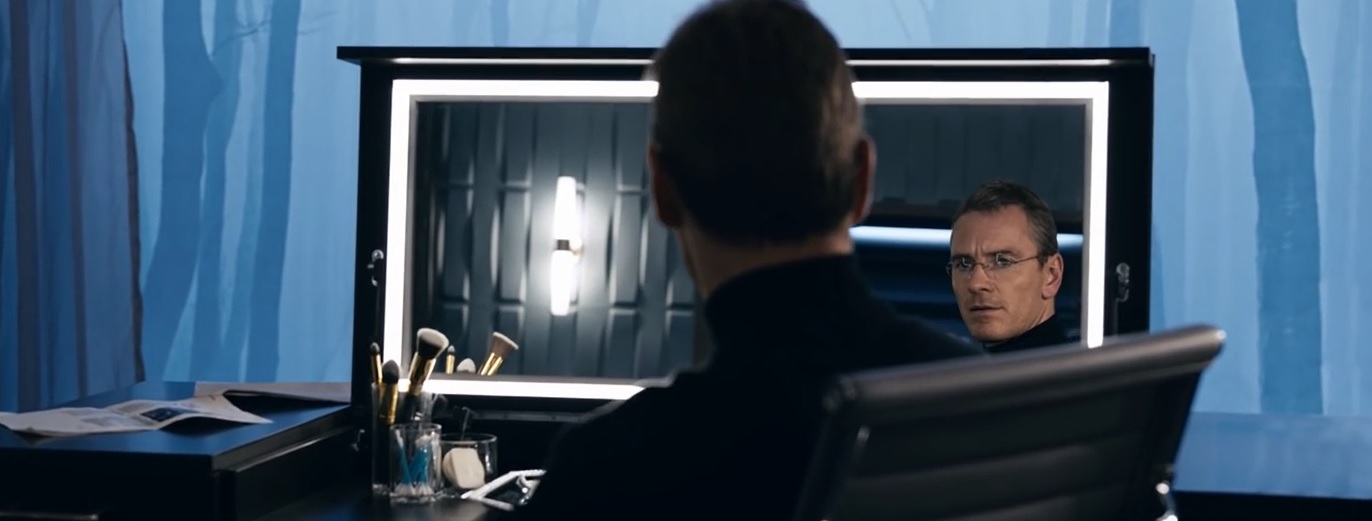
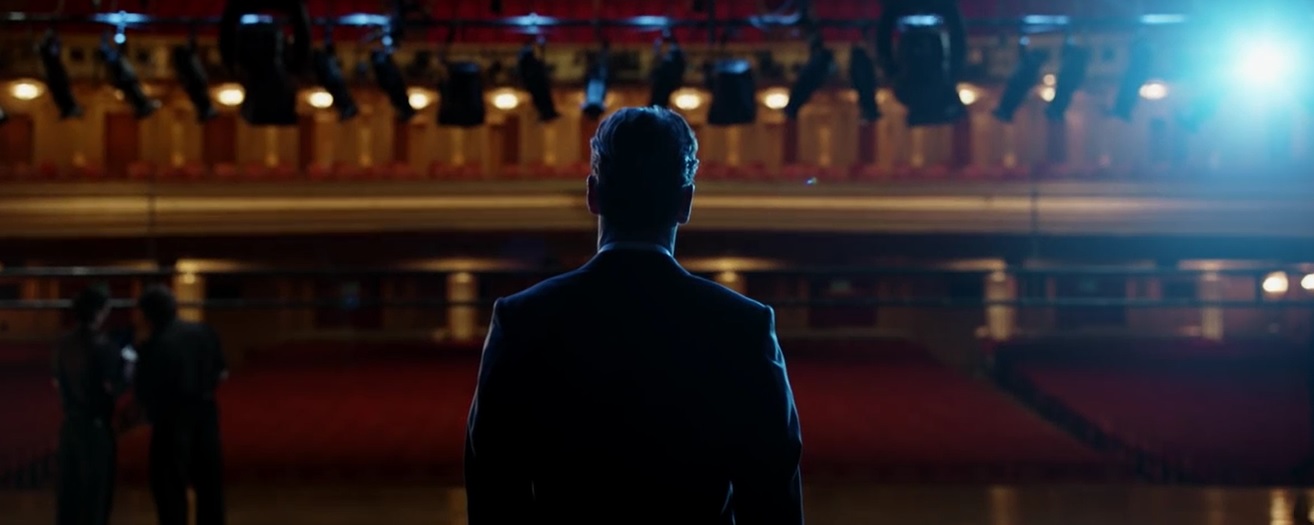
Danny Boyle’s riveting and unconventional biopic Steve Jobs is a complete knock-out from start to finish, and as bracingly un-Hollywood as this sort of material is going to get. This is laser-precise filmmaking, acted with extreme gusto, written with absurd skill, and shot and cut in a manner that suggests erudite style without ever feeling ostentatious. Aaron Sorkin’s classic rat-a-tat-tat dialogue is on full display from the opening scene, never relenting for two crisp and clean hours of storytelling; it’s an audacious screenplay in terms of structure, and overall, the film feels like a concert or a three act play, with maestro Boyle handling the glorious conducting. Some people are going to say that the film has been designed to never have any payoff – this couldn’t be further from the truth. It’s just that Boyle and Sorkin upend our expectations (especially for the genre) and give us something we haven’t seen before. By framing the picture in three acts and showing the final 40 minutes leading up to three iconic product launches — the original Macintosh in 1984, the NeXT in ’90, and the iMac in ’98 – there’s a purposefully restrictive quality to the storytelling and filmmaking that might have been detrimental to the overall finished product had the endeavor not been in control by shrewdly talented filmmakers.
The hectic, emotionally turbulent, sometimes painful, and always awkward interactions that Jobs had with his creative/business team and family members make up the bulk of the picture, with a remarkable supporting cast all getting their chance to shine (Kate Winslet, Michael Stuhlbarg, Seth Rogen, Katherine Waterston, and Jeff Daniels are all fantastic). But it’s the Michael Fassbender show all the way, with this marvelous actor appearing in almost every single scene, giving a tour de force performance as a man driven to greatness by something I’m not sure he could ever fully explain or understand. Alwin Kuchler’s intensely stylish yet never ostentatious cinematography still gets to show off some trademark Boyle visual flourishes (Dutch angles, sped-up film speeds, saturated color, projected images that give off a trippy vibe), but this is a decidedly tamped down Boyle in comparison to his Tony Scott-esque aesthetics that were on display in Slumdog Millionaire, Trance, and 127 Hours. The decision to shoot each act in a different medium (16mm for Macintosh, 35mm for NeXT, high-def digital for iMac) is nothing less than a sensational aesthetic conceit which heightens the already slightly surreal quality to the narrative.
And most crucially, the filmmakers, never at any point, try to soften their lead character’s dick-ish-ness, and it must be said that Fassbender is absolutely remarkable as Jobs, crafting a portrait of extremely flawed yet obscenely brilliant human being who likely learned too late (if this film is to be believed) in life that sometimes you should be a bit nicer to others. You sort of have to wonder why so many people stuck with him for so long, to go off what’s presented in this film. Yes, he was a genius, a true iconoclast who revolutionized the world we currently inhabit. But he did so at an intense personal cost to his own personal well-being, creating just as many enemies as friends, with many people likely realizing that they had no choice but to stick it out with working for Jobs, because no matter how egomaniacal he was, you could pretty much bet that he’d come out on top at the end. And make no mistake about it – the line of the year so far is: “I’m poorly made.” This is a film that I’m already jazzed to revisit, and it represents everything I want to see in a film.
A chat with Icelandic filmmaker Marteinn Thorsson
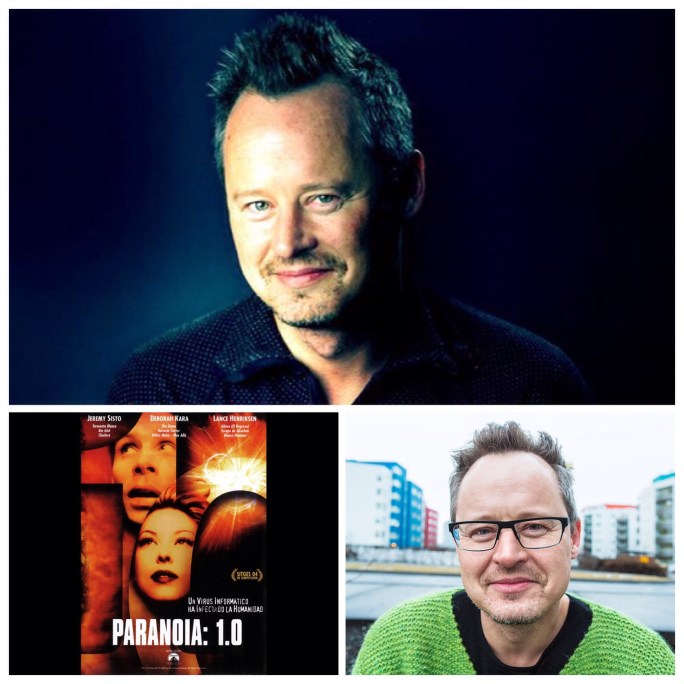
Proud to present my interview with Marteinn Thorssen, an Icelandic filmmaker who’s responsible in part for one of my favourite indie movies ever made, Paranoia 1.0. An extremely talented guy with a lot of projects on the go, and awesome to speak with. Enjoy!
1. Care to speak a bit about your background, what lead you into film making?
I think I always wanted to do something creative. My uncle ran this cinema which was housed in a WWII army barrack in Reykjavik. Mom sold tickets and my grandpa was an usher. Place was called Hafnarbio (The Harbour Cinema). They showed b-movies and light-blue movies. Alakazam the Great had the biggest impact on me. Surreal and weird. That has stayed with me. I was also a bookworm and spent many hours in the local library. I remember owning a super-8mm camera and later I was into stills. In college I started making horror flicks with friends. Those were a great technical exercise but it’s only lately that I feel I’ve been developing my own perspective. I’m a late bloomer.
Paranoia 1.0:
2. How was the writing process; What I spires ypu and Jeff, how did you envision script to screen, and did it eventually end up going how you thought it would?
Jeff and I had both been working in advertising and music videos and decided to create a collaborative entity we called waterfall/fjord. We wanted it to be anti-commercial and just be this experimentation hub for no-budget fun stuff. We did some music videos for an Icelandic band DIP (which was the brainchild of Siggi Baldursson of the Sugarcubes and Johann Johannson who is now scoring films for Denis Villeneuve and won a Golden Globe for Theory of Everything) and we had so much fun doing this we decided to try to write a script and make a feature. We worked on several stories but it wasn’t until we decided to something about the advertising world that a narrative formed which we were happy with. We were both very much into nanotech and sci-fi, Ray Kurzweil, Neal Stephenson and William Gibson. I can’t remember where the plot came from, I think I had written a treatment about a detective who receives an infant’s dismembered foot in his mailbox. I think that’s where the plot started. But the main theme, though, is about loneliness, it’s really a film about Toronto (where we studied and lived at the time) and loneliness. When you start something like this you never know where it will take you. We thought we were going to make a low-budget Canada/Iceland co-production but Télefilm and other funding bodies in Canada didn’t want to have anything to do with it. We got a grant from the Icelandic Film Fund early on but we had no luck in Canada. So it became a US/Iceland/Romanian production in the end. Even when we had managed to finance the film in Hollywood we tried to shoot it as an indie film in Winnipeg but there they wanted to unionize it because we had 2 American producers on the film, so, ironically Canada didn’t want us but the Americans and Romanians and Germans did (the main producer, Chris Sievernich, is a German living in L.A.) and we ended up getting the film into Sundance, main competition. I had no idea at the time what a big deal that was. Anyway, all this affected the way the film eventually came together. What was supposed to be a portrait of a crumbling capitalist society became a portrait of a crumbled communist society just about to emerge as a capitalist entity. Very interesting and Bucharest is an amazing place to shoot in. I hope to go back sometime. I’m actually working on one project which might happen next year. But we had to cut out some of the scenes we wanted as well as some of the effects. In the original script we wanted to show the Farm headquarters as well as Howard’s place where he keeps all the brains he’s been collecting and Adam’s progress as an Internet conscience was explained more. Also, Howard’s intentions were clearer but it was always about loneliness and corporate control and that stayed intact.
3. Casting: you assembled an eclectic cast of cult favourites, did you seek out these people, Udo Kier, Deborah Unger, Bruce Payne etc., or did they find their way to the projects through their agents? I did hear the story about finding Lance Henriksen at the hotel. What was it like working with the cast?
We wrote the script with Udo Kier and Deborah Unger in mind and were very lucky to get them. Udo had made a Danish film (“Besat” or “Possessed” in English) with one of our original producers (Thomas Mai of Zentropa) and he was the one we cast first. We met him at the American Film Market in L.A. and he liked the script. We became friends. I owe him some lamps he bought in Montreal but they got lost in Toronto on their way to Los Angeles. We got to Deborah through our casting director, Carmen Cuba (who is now casting for Steven Soderbergh and the Wachowskis among others). Carmen did most of the casting for us in L.A. At one point we had Gabriel Macht as Simon but he pulled out, we spoke with Gael Garcia Bernal who showed interest and then Adrian Brody signed on to be Simon just after he’d shot The Pianist but then our financing fell through and Brody got an Oscar. Jeremy Sisto was always in the mix though and he stuck with us and he did a fantastic job. I love Jeremy. For The Neighbor part we had Djimon Hounsou at one point but Bruce Payne got on board quite late when we were already in Bucharest. We did find Lance at the Marriot in Bucharest, Jeremy had done a series with him (Lincoln I think), a lot of people were there at the time shooting: Dennis Hopper, Andy Garcia, Gina Gershon, Eva Mendes. It was a busy town, still is, I think.
4. How was the shoot for everyone? How was your experience?
It was a difficult but fantastic experience. This was our first feature and we were used to doing everything ourselves so it was a bit weird having a crew of something like 100 people but the Romanian crew was amazing and I have such good memories of Bucharest. It was also weird to stay for more than 2 months in The Marriot right beside Ceausescu’s mad Palace, The Marriot is such a place of luxury and we were doing this little, low budget movie. Our producer, Chris Sievernich, said: “Enjoy this, it will probably never happen again.” We were lucky to be able to have some of the people from film school to work on the film with us like our editor Dan Sadler, cinematographer Chris Soos, Gio Sampogna who did the making-of, Eggert “Eddi” Ketilsson from Iceland who did the Production Design, Jeff’s dad showed up and helped us and more friends came from Canada, the US and Iceland. It was the first feature for so many and everyone was really excited. We storyboarded everything (although I don’t really like that practice) and were really well prepared, we got everything in the can and more, actually. When we showed the first AD (Chris Landry) our shot list he said we’d never cover it but we did, with 2 directors you can do more if you tag-team it.
5. Some films/actors/filmmakers who have inspired your work and who you really admire?
When I was younger I used to have favorite films and filmmakers but I don’t really today but I admire everyone who is a real artist and they don’t have to be filmmakers. My wife is a novelist and before I met her, I was influenced by her work, it’s amazing. I’m also influenced by music, painting, photography, performance art, literature and kind, interesting people who give me real human experiences. But, yes, in the past, Alakazam the Great influenced me a lot as did Don’t Look Now, Picnic at Hanging Rock, The Brood, Red Desert, Blade Runner, Alien, Brazil and Raiders of the Lost Ark. I love the films of Hayao Miyazaki, David Cronenberg, Trần Anh Hùng, P.T. Anderson, Jonathan Glazier, Terrence Malick, Roy Anderson and others who surprise me and show me something new. When I saw Old Boy, I was giddy with delight. I’m quite fond of 70’s Hollywood. I don’t understand the popularity of some filmmakers and movies though, like Slumdog Millionaire, Argo or Wes Anderson’s work since The Royal Tenenbaums (with the exception of Fantastic Mr. Fox). Some of the new TV is great although it’s not the future of movies. I don’t like to dwell on the past and I love new things and new technologies, I’m glad to be rid of “film” although it smells nice. I hated editing on film, when non-linear came around with AVID, I was the first to sign up and it was a liberating progress and digital cinema is wonderful.
6. Any upcoming projects you are excited for and would like to mention?
I have so many projects in development and none of them might come to fruition, I’m actually shooting two no-budget projects that I might never finish. I think I have to move back into making films in English, preferably genre, because as an Icelandic filmmaker I need to supplement my income by working nights as a concierge in a hotel and that takes time away from my writing and shooting the micro budget stuff. But what might be my next film is a genre film, a supernatural thriller or horror film called UNA, we’re in the financing stages for that, that means we have applied for the big production grant at The Icelandic Film Centre and if we get that grant, we’ll be able to go for the rest of the money. UNA is produced by Gudrun Edda Thorhannesdottir of Duo Productions in Reykjavik. It’s based on a novel by Ottar M. Nordfjord and is about a young woman who’s lost her 5 year old son but his body has not been found a year after his disappearance. She starts suspecting he might still be alive when she becomes haunted by an “outcast”, a shapeshifting monster which may or may not want to do her harm. It’s dark, fun stuff, intense and has roots in Icelandic mythology and violence against women. Needs extensive special effects work which I mostly want to do in camera but it will benefit from CGI enhancement. I’m also working on a TV series based on the novel YOSOY by Gudrun Eva Minervudottir (yes, my wife), I’m developing it with two other writers, Lilja Sigurdardottir and Michael Sillery and we’re aiming it at the US market for now, if HBO/Netflix/AMC/ETC don’t want it then we’ll try the Scandinavia/Nordic version. Yosoy is wonderful and intense stuff, like Carnivále, Twin Peaks and True Detective rolled into one. I have a big budget Hollywood type sci-fi in the works. It’s called PROTOS and is loosely inspired by Joseph Conrad’s “Heart of Darkness”, it’s a bit like BLADE RUNNER meets APOCALYPSE NOW. I have oodles of micro-budget ideas, one is ERASERHEAD-like horror called DARKNESS KNOWS, another the drama I want to shoot in Reykjavik and Bucharest, GOD’S HEART, I actually have this God trilogy I want to do: GOD’S HEART, THE PATH OF GOD, and TOMORROW, WE BECOME ONE. Another adaptation from my wife’s novel ANGEL DUST. An English language adaptation from a novel by Arni Thorarinsson, WE, a very dramatic love story. There’s a thriller called EXIT I’m working on with writer Ottar Nordfjord and producer Snorri Thorisson. Inspired by true events, it tells the story of two French sisters whose hiking trip around Iceland turns into a nightmare when they hitch a ride with a charming but sinister stranger. I have another English language horror script ready called FROM THE DEEP which I wrote with this wonderful horror writer, Thorsteinn Mar (co-writer of DARKNESS KNOWS) and we have quite a few ideas milling about. So, plenty to work on but an agent and a production company would be nice. And some cash, please. But life is good. I’m trying to be a good husband and father. Life is such an interesting trip, you never know where it will take you.