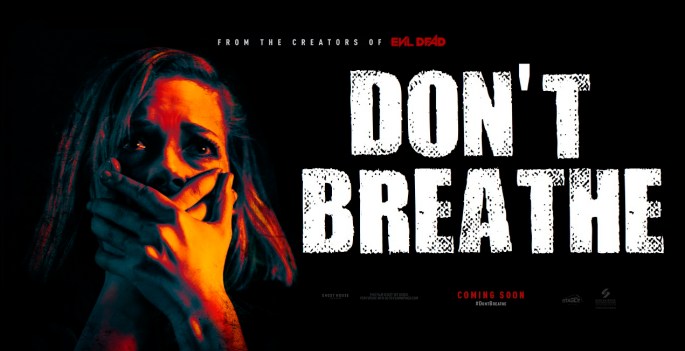
Don’t rob an old blind dude in Detroit, especially if the dude is Stephen Lang with an angry Rottweiler backing him up. Seriously don’t though, you don’t wanna know the consequences involving a turkey baster, a pair of scissors and a jam jar full of… I won’t spoil it but it’s fucking grim. Don’t Breathe is a pretty damn effective shocker from director Fede Alvarez, who did that Evil Dead remake that had the nerve to be way better than it should have been. In an especially derelict Detroit neighbourhood, three hapless street kids (Jane Levy, Dylan Minette and Daniel Zovatto) unwisely decide to burglarize the home of gulf war veterans Lang, who reportedly has a nice wad of cash stashed in his basement. Well.. he’s got more than that down there, let me tell you. Once he gets wind of their presence, his lithe warrior reflexes, keen hunter instincts and heightened sense of hearing make their experience between his walls a living nightmare, not to mention… other things he gets up to. Lang is the perfect actor for this because before he got super jacked for Avatar he was a pretty lanky guy, so you have this sinewy frame with sizeable muscle mass packed on, not the body type you want to be trapped in a narrow hallway with. Plus he’s just a terrific actor and plays this guy like a feral beast with touches of sorrow curdled into madness. Alvarez makes great use of his cameras here, doing long sweeping takes that utilize hallways, door frames and wide rooms, evoking David Fincher’s Panic Room just enough to garnish his own style. The acting aside from Lang is just ok; Levy does the wide eyed, tomboy Final Girl thing well, Minette is just not a naturally gifted actor and it shows, while Zovatto is saddled with horribly written lines from the Hollywood ‘this is what street punks act like’ typewriter bot and is just cartoonish. Still though, it’s a highly suspenseful effort that benefits greatly from Lang’s presence. As for the turkey baster, I’m not sure the film needed such a stark, sickening set piece (Fincher himself would squirm) but I won’t soon forget it, which I suppose is half the point. Tense stuff.
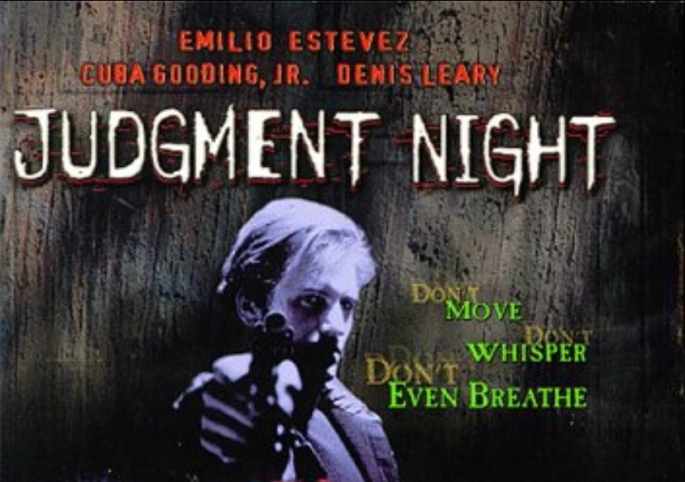
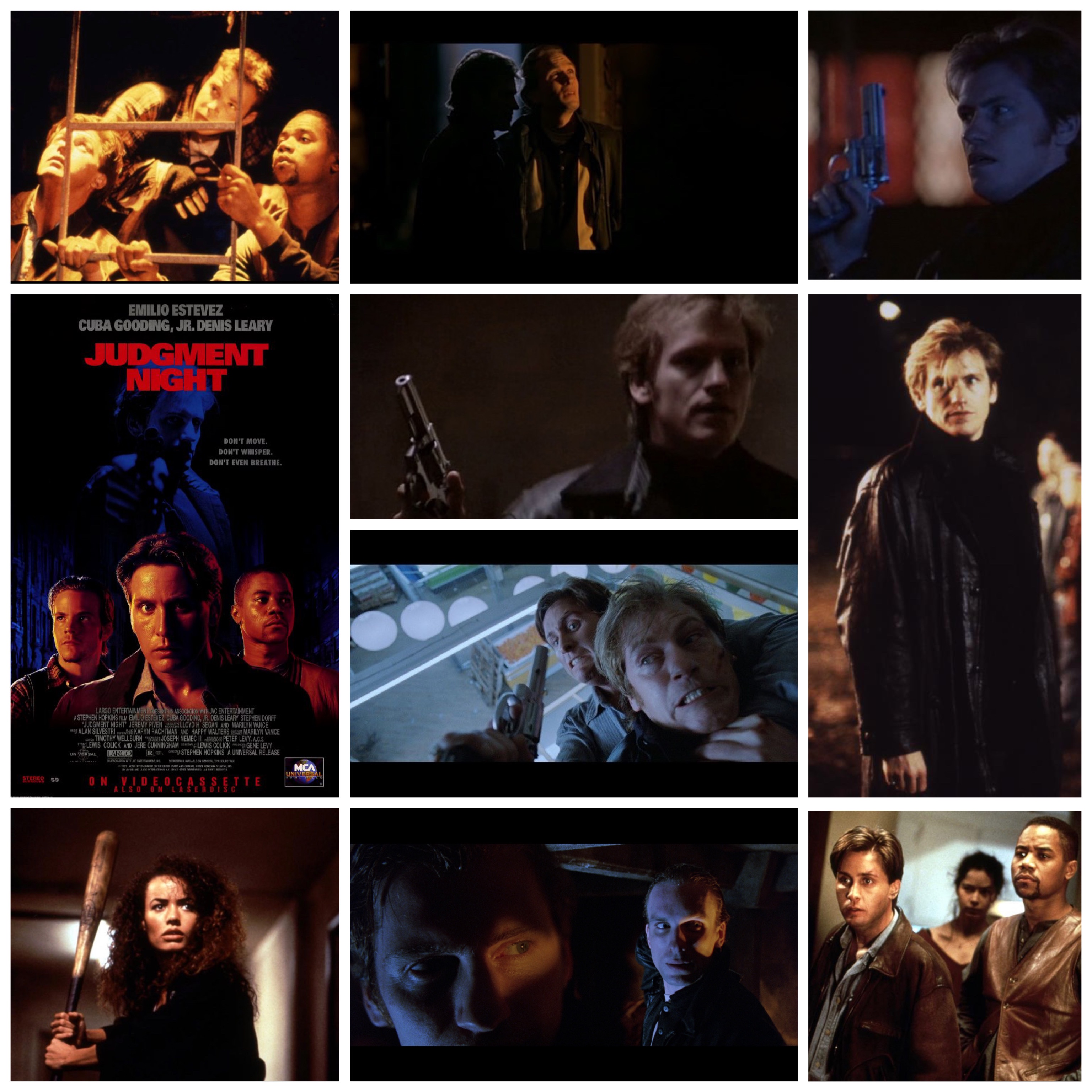
Who remembers Judgment Night? I do, and I’m only randomly bringing it up because I had a dream about it last night where I was a character in the movie, and if you’ve seen this thing you’ll know just how nerve wracking any dream about it would be. It’s one of those greasy 90’s ‘all in one urban night from hell’ thrillers that’s pulpy, over the top, formulaic yet absolutely captivating, in this case because of the villains. So basically there’s four dysfunctional yuppie bros headed from the burbs into darkest downtown Chicago for the basketball game. They’re played by Cuba Gooding Jr, Emilio Estevez, Jeremy Piven and Stephen Dorff, four varied and interesting personalities who clash even before conflict finds them. On their way home through an especially gross part of town they accidentally witness a gang of criminals full on execute a disloyal homie, and from there the thugs make like jackals and hunt our boys through the nightmarish urban jungle with plans on slaughtering them one by one. Now, the top dog thug is played by Denis Leary, who is a solid choice because even when he’s playing good guys you still get the sense you can’t really trust him. He’s a verbose, sociopathic animal here and he’s backed up by perennial badass Peter Greene as his second in command, the two of them making genuinely memorable villains. Director Stephen Hopkins (The Ghost & The Darkness, Predator 2, A Nightmare On Elm Street 3) has real talent in evoking thick, tangible atmosphere be it jungle, urban sprawl or dreamscape and he makes the slums of Chicago look like a fiery vision of hellish alienation and hidden danger around any cluttered, garbage strewn alley or rooftop. The script mostly follows the breathless, brutal pursuit motif but there’s also some clever bits of social satire thrown in, particularly in Leary’s scenery chewing dialogue and rants. The fun lies in watching him and Greene stalk, terrorize and try to kill the four bros though, and it’s all executed very well. Good times.
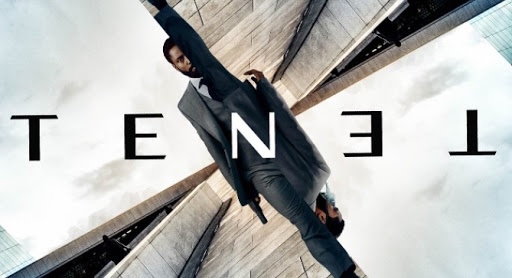
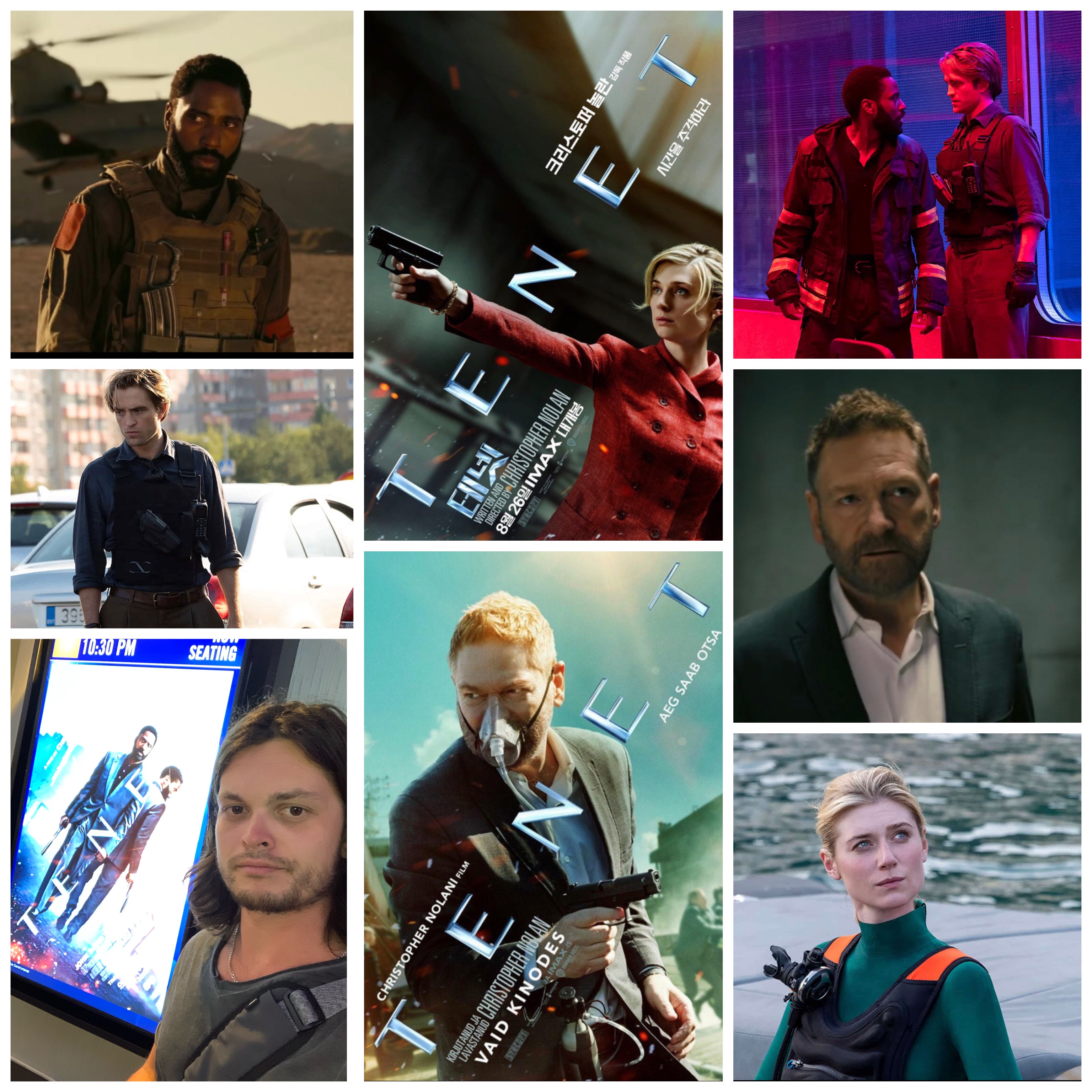
I never thought I’d say I was even slightly underwhelmed by a latter day Christopher Nolan film, but such is the case with Tenet, a new pseudoscience mind bending espionage barnstormer from the filmmaker that didn’t so much blow my mind as tie it’s proverbial shoelaces in a knot. That’s not to say I didn’t enjoy it, there’s plenty to get excited by here, but swaths of the narrative feel dry and uninvolved, the central premise that should be rich and tantalizing is painfully underdeveloped and the main character is less a character than a blank game piece scooting around a chessboard of intrigue and action. He’s ‘The Protagonist’, given the ironically opaque title and played by John David Washington in a performance that is sadly devoid of much life or expression. Tasked with playing a vital part in an incoming Cold War whose implications reach beyond science and physics, he’s teamed up with 007-esque operative Neil, played by Robert Pattinson in a turn that’s blessedly engaging, subtle and picks up Washington’s slack. I don’t want to give too much away because the film’s secrets are pretty fun, as they race all over Europe smoking out vague intel, having fierce gun battles and car chases and trying to prevent… what, exactly? There’s a spectacularly nasty Bond villain played by Kenneth Branagh who is a genuinely scary, fascinating piece of work, and I greatly enjoyed his arc and that of his long suffering wife (Elizabeth Debicki, solid) as well as some well mounted, intricate action set pieces. There’s a quick Michael Caine cameo that exists purely so Nolan can seat him at a table for all of two minutes to deliver clipped exposition, and appearances from Martin Donovan, Fiona Dourif, Aaron Tyler Johnson and Clemence Poesy. Nolan makes his paradoxical concept so dense and intricate that by the time the scintillating finale rolls around, parts of it are so much in the clouds that you just raise your arms in defeat and go “ok bro” and trust that he knows what he’s doing, because I sure didn’t, yet perhaps will with some more viewings a lá Inception. That isn’t the bone to pick here though, it’s mainly the fact that the narrative feels rushed, staccato, unnatural in places and doesn’t possess the fluidity, grace, cohesion or focus of his earlier works. Half the time the dialogue and editing during interaction scenes is so brisk, so chopped up and so hurried that its tough to really be drawn in, before you’re off to the races in a flurry without a proper roadmap to prep you for the fun. There are some very exciting sequences involving the premise which I won’t spoil, some terrific character work courtesy of Branagh, Debicki and Pattinson. But man, Washington is just not a dynamic actor and can’t carry the weight expected of him, while much of the film’s setup isn’t strong enough for payoff later on that isn’t strong enough either. I loved the super sonic, unconventional score by Ludwig Göransson, the action is neatly photographed and intensely realized when its good, and somewhat incomprehensible when it falters, especially in a hectic third act paramilitary incursion that I’m sure made sense to Nolan on the drawing board, but comes across as pandemonium on film. There’s a lot to enjoy here, but I have to be real and say this could have been so much more, especially for an artist as accomplished as Nolan.
The first major theatrical release since theatres have opened coincides with my first movie review in some time (been a stressful few months in many ways) and it happens to be Unhinged, a brutal, fucked up road rage thriller starring Russell Crowe emulating a pissed off pufferfish who’s had enough and is not gonna take it anymore. That doesn’t even begin to cover the heinous, psychopathic atrocities this dude inflicts on an already stressed out family in this cheerfully deplorable, extremely disturbing yet somehow sheepishly enjoyable B-grade thriller that plays like Falling Down by way of The Hitcher with a dash of Cape Fear (Crowe sports a southern dandy drawl that wavers hilariously yet is nonetheless reminiscent of Robert DeNiro’s Max Cady, except this dude makes Cady look like a kindergarten teacher). Crowe’s character here, credited as simply ‘The Man’, is an irredeemable monster from the very opening scene of the film, where he viciously slaughters his ex wife and some dude she’s with, then burns the house down around them, disappearing into the night in his big loud pickup, only to resurface the next day to make life hell for a single mother (Caren Pistorius) and her kid (Gabriel Bateman). All it takes is one aggressive honk from her and the last straw of his sanity snaps, his mission now to teach her exactly ‘what a bad day is’ and go to some very shocking lengths to do so. The opening credits adeptly show what an arbitrary downward spiral road rage can be as various newscasters and radio personalities lament the morning crawl with snippets that escalate from “gonna need that second cup of coffee” to “Oh my god!!” as barbaric (and very real) newsreel footage of actual incidents ratchets up the unease. The thing is, Crowe’s character is already long gone down a rabbit of rage, prescription meds and mental illness when we meet him and he only gets worse. As a frequent flyer on the Oscar bait express I admire his courage in taking the kind of terrifying, knowingly sadistic antagonist that we’d usually see the likes of Ray Liotta in. He’s beefed out, bulked up, constantly sweating, sneering, scowling, capable of shocking violence at the drop of a hat and utterly.. well, fucking unhinged. He makes the character work without much backstory or rhetoric, simply by being a bulldog off the chain causing chaos wherever he goes and since the guy even admits he’s got nothing to love for and he’s welcome suicide by cops, there’s literally no depths of violence he won’t sink to, which is quite an energy to sit with for an hour and a half. The film itself? Not gonna lie, it’s an unpleasant, nerve wracking, gratuitous, distressing, unrelentingly gruesome slice of mean spirited trash, and I’m not sure it’s the film we need at this juncture of a year already filled with suffering thus far. However, I’d be lying if I said I wasn’t on the absolute edge of my seat for most of the tight 90 minute runtime, and I gotta say this thing really works as a thriller, with Crowe being the key element. It’s noisy, immersive, scary as fuck, unforgivingly dour, excellently paced and excitingly edited, and I’m glad I got to see it on the big screen. Just don’t go for it if you’re in a bleak headspace already, because it’s quite the dose of pain.
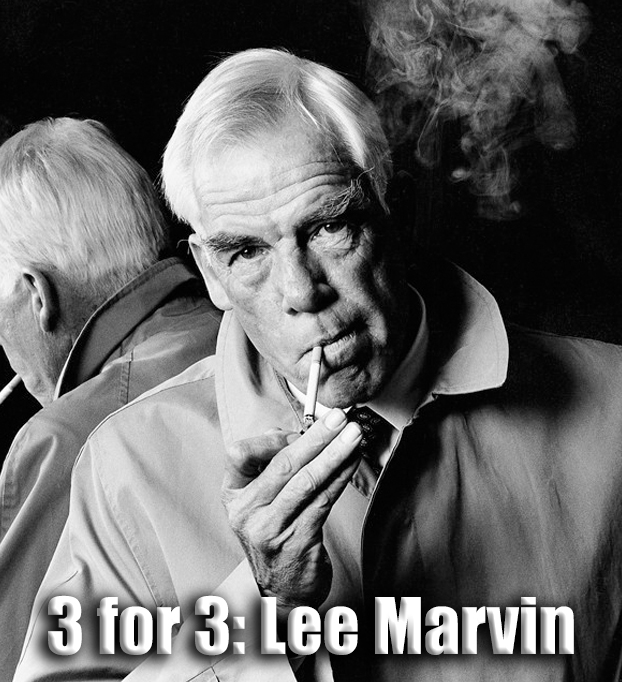
Lee Marvin is the topic of discussion for this installment of 3 for 3 with Frank Mengarelli, Tom Zielinski, and Mac McSharry. Marvin was well known for his early collaborations with John Ford, his steely persona in POINT BLANK, THE DIRTY DOZEN, and DELTA FORCE. For all things Lee Marvin, author and film historian Dwayne Epstein’s biography, LEE MARVIN: POINT BLANK is available on Amazon.
We’re pleased to bring you the first volume of our chat with the remarkable actor Joshua Burge. Josh dives deep in the first installment of our extensive interview, talking about his beginnings as an actor, to his relationship with filmmaker and friend Joel Potrykus and working on BUZZARD to being cast in THE REVENANT. More to come in our second installment! You can currently see Josh in THE CURRENT OCCUPANT which is now streaming exclusively on Hulu.
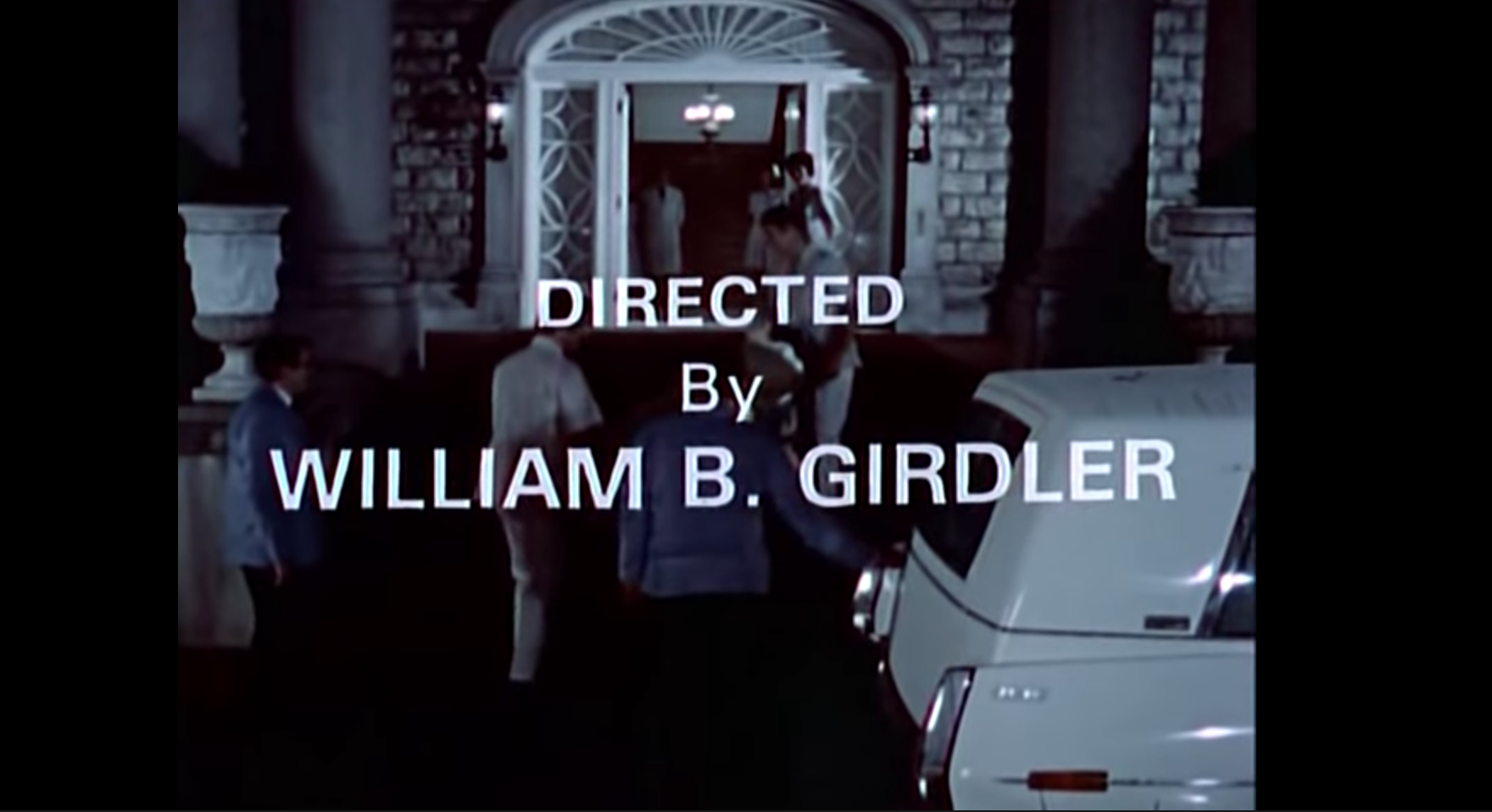
It’ll just be a matter of time before William Girdler has his own reconsideration — or reckoning, if you will — in the history of cinema. If the blood feaster, Herschell Gordon Lewis, can get a section on the Criterion Channel, then look for Girdler’s one day. He was a prolific, guerrilla-filmmaking veteran of war who set out to start his own film production company with his brother-in-law, ended up in Hollywood making what is maybe the most successful Jaws ripoff to date, and over a six year period, directed nine features and wrote six, only to die a martyr at the hands of the cinema itself in a helicopter wreck in the Philippines as he was location scouting for his next film. As he fostered his obsession, he found his place, working with the likes of Tony Curtis, Leslie Nielsen, and Pam Grier. To this day he’s relatively unknown, generally under-appreciated by the late-night TV horror crowd, and yet persists as an underground, underdog hero, especially in the state from which he hailed, Kentucky.
Exteriors of the asylum in the film were shot at a mansion in Glenview, while the interiors were shot in a warehouse off the Ohio River.
And a quick personal note: Perhaps I’m biased on the Bill Girdler front, given so many of my two-to-three degrees of connection to the filmmaker’s history. As a former manager who programmed midnight features at a local theater in the very town Girdler was from, I was bound to connect to a few folks who consider themselves experts on the local low-budget midnight grindhouse king of Louisville, so I’ve heard his name for years from folks who really do know a lot about the matter. My many thanks to my own personal Girdler aficionados, and former theater managers themselves, Dave Conover and Beau Kaelin, for finally making me sit down to watch his first film.
And who would’ve guessed it, Asylum of Satan might just be as definitively Louisville as it gets — and not just because Louisville around this time of year is a real-life asylum for Satan, being wedged right in the center of the hot, humid Ohio Valley — but rather the “relatively small potatoes, with a big heart, and lots of charm” appeal oozes the same charisma as the city itself. (And, hey, you want a little tour of the 1971-set cityscape? Check out all the scenes of TV-commercial-extraordinaire-turned-leading-man Nick Jolley driving Girdler’s cute, tacky, yellow 914 Porsche around town!)
Nick Jolley, one-time leading man, driving past the Big Four Bridge, which connects Louisville to Jeffersonville, Indiana over the Ohio.
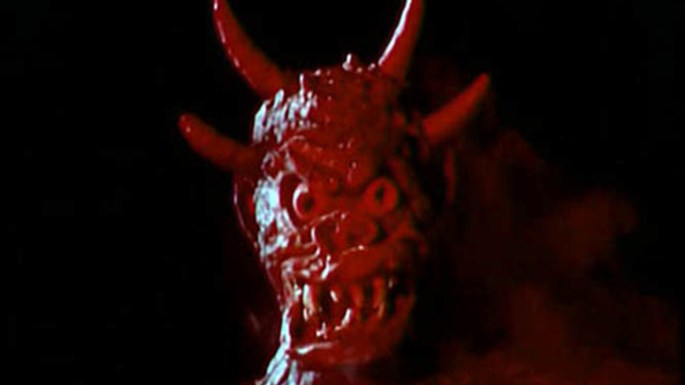
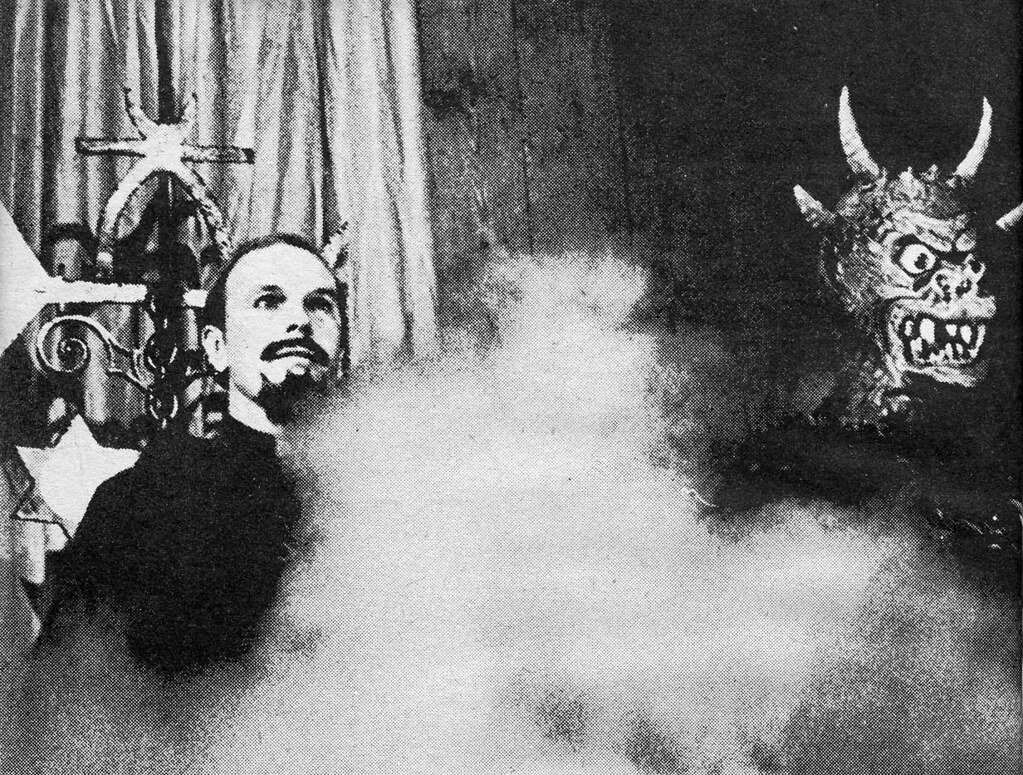
Asylum of Satan is indeed, just as the title suggests, an asylum horror flick; perhaps akin to the Amicus-produced Asylum from the same year, but less anthology-based, it feels more like Shock Corridor meets Rosemary’s Baby. Simple in premise, dirt cheap in budget, but surprisingly effective with certain scare tactics and wholesome in its cheese. The gorgeous Carla Borelli is our entrapped damsel, the victim of a Satanic conspiracy (supervised on set by the Church of Satan itself, who sent an advisor to serve for Girdler on the set) which is headed by the evil Dr. Specter, a hilariously goatee’d Charles Kissinger, a regular for Bill (and Louisville’s own years-long Fright Night host, the Fearmonger, on our local FOX-affiliate, WDRB), who comes across as a deliciously villainous, Rust Belted version of Hammer-era Peter Cushing or Christopher Lee, willing to do ham only with the utmost class and style… and not afraid of a little Hitchcockian cross-dressing either! It’s ultimately up to our leading lady’s boyfriend, who doesn’t exactly ooze protagonistic sex appeal, to annoy the police into searching the asylum in which she’s trapped — ultimately revealing the asylum’s direct connection to Satan himself.
Don’t get it wrong — this is cheap, low-grade, and was meant to be made for money (but don’t call it bad!) At one time or another, it was probably a heart-stopping name to speak around a wealthy Louisville investor, causing Vietnam-like flashbacks of money wasted. As one of the film’s investors noted in the Courier Journal in 1975, “[The film] was a training ground, and we paid the price.” The investors did eventually gain the rights to the film after it bombed, and after Girdler signed the rights away, so they could make their money back. (Today, it’s hardly available on DVD and is free on YouTube… great work, guys!)
A fantastic interview with Don Wrege, the then-17-year-old kid who served as the set’s clapperboard operator, reveals Girdler as a businessman first, filmmaker second. He was interested in making money and films, in just that order. It’s an assertion that ties Girdler directly to the genre’s other great “businessified” passion directors — think of the infamously budgeted Ed Wood, or the gimmick-master, ticket selling guru, William Castle — and there’s truly a great charm in that, ultimately revealed in the oddly oxymoronic, haphazard dedication on display, which grew that retrospective legend I’ve come to respect.
Billy Reed, the legendary sports writer who covered Ali’s fights, the Kentucky Derby, and the World Series, apparently pulled the short straw at the office on this day.
When the film premiered worldwide at the now-closed, sadly vacant Vogue Theater in St. Matthews, my city-within-the-city (the Vogue is right around the corner from my old house, the school at which I teach is right down the street), Billy Reed wrote that the actors wore tuxedos as if they were in Hollywood and “it was not Graumann’s Chinese, but it was a worthy try.” That seems to tap directly into the soul of the movie. Amidst the mix of occasionally phony, occasionally effective horror, lined along all the fake water snakes and crawling bugs and devil make-up falsely purported to have been stolen from the set of Rosemary’s Baby, there really is heart. And there’s merit. And there’s love.
And that’s clearly the Girdler touch.
Tyler Harris is a film critic, English teacher, and former theater manager from Louisville, Kentucky. His passionate love for cinema keeps him in tune with his writing.
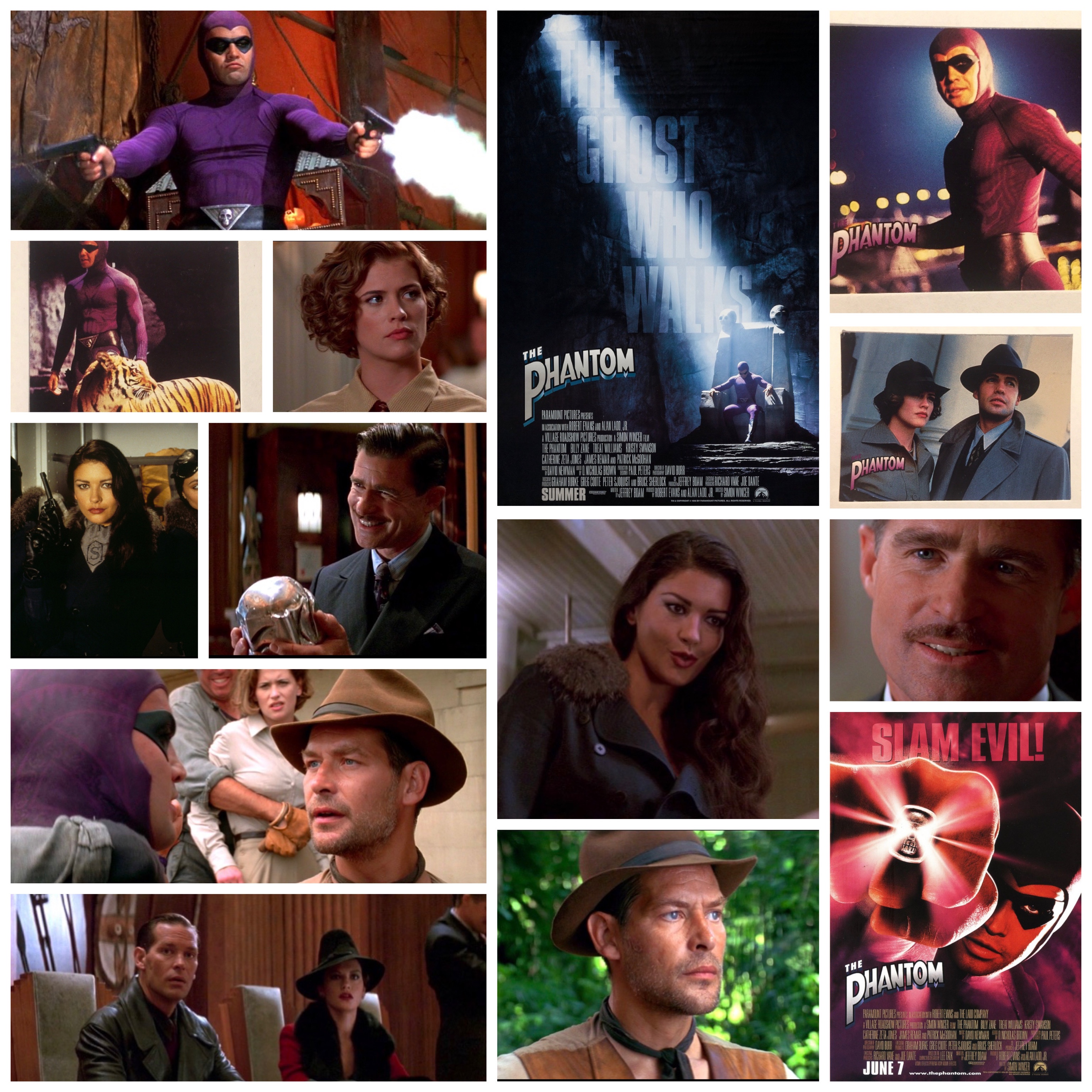
I love big, bold, colourful feature film updates of vintage 1930’s pulp comic books or radio plays and Simon Wincer’s The Phantom is just an absolute blast of escapism that’ll put a smile on your face no matter what. These days Billy Zane has become kind of a forgotten comedic totem but people forget what genuine charisma and star power he once had, and he rocks it here as Kit Walker aka The Phantom, a jungle born superhero descended from a long line of Phantoms before him, thus creating the reputation of being immortal, at least in his enemy’s eyes. Clad in a swanky purple suit with dual colt pistols and joined by a horse and a trusty wolf named ‘Devil’ at his side, he’s probably one of the most aesthetic superheroes I’ve ever seen in a film and I wish this led to sequels. Here he must protect three sacred skulls with supernatural power from power mad, psychopathic NYC tycoon Xander Drax (Treat Williams), fighting side by side with intrepid reporter Diana Palmer (Kristy Swanson) through a series of exciting adventure set pieces in incredibly exotic, gorgeous locations around the world. Zane is terrific and gives The Phantom just the right mixture of cavalier attitude, genuine empathy and swashbuckling magnetism, plus he rocks that suit solidly, which given this suit, not all actors could do and be taken seriously at it. Williams is a hammy hoot as Drax but his thunder is ever so slightly stolen by two terrific secondary villains: James Remar as Quill, a sort of evil doppelgänger version of Indiana Jones and Catherine Zeta Jones as Sala, an impossibly bad tempered femme fatale who has the hots for the Phantom and goes through a hilariously conflicted meltdown mid-film. The supporting roster is excellent and includes Bill Smitrovitch, Cary Hiroyuki-Tagawa, Leon Russom, Jon Tenney, David Proval, John Capodice and the great Patrick McGoohan as the ghost of Phantom’s father who appears to him as voice of counsel and occasionally wingman. I thought this was just a brilliant good time, a solid, beautifully retro old school adventure flick and I was disappointed to read that it was a box office flop. It’s like the Lone Rangers, the Indiana Joenses, The Rocketeers, the Sky Captains, just this rollicking old world American pulp hero aesthetic that translates so well into action adventure in cinema. Oh and watch for a sly reference to William Friedkin’s Sorcerer. Great film.
The Cat In The Hat is one of those movies that probably shouldn’t have been made, but it did get made and, well, it just kind of sits there nursing incisively negative reviews, nonexistent box office attention and quietly fading into obscurity. The problem is simply that Dr. Seuss’s material is so singularly, specifically eccentric that any attempts to adapt it into a faithful and successful film fail by default, like trying to accurately describe a dream in non-abstract terms hours after you’ve woken from it. The vernacular, the drawings, the poetry, it’s just not made for cinema other than the incredibly literal animated shorts they did narrated by Boris Karloff (The Grinch has one that imparted eons more in like ten minutes than the feature length Jim Carrey version could). It’s like your Roald Dahls, your Maurice Sendaks, your E.B. Whites etc.. Big Hollywood can just never seem to nail the transition. Mike Meyers hasn’t had the best luck in character work outside Austin Powers and Wayne’s World and unfortunately he strikes out here, mugging, contorting, quipping, creeping, crawling as the famed feline home invader, to little effect. The fleeting, surreal whimsy of Seuss’s book is lost on a Fisher Price phantasmagoria of admittedly elaborate and impressive yet ultimately hollow and cornea splitting production design. Dakota Fanning and Spencer Breslin try their best as the two kids but just kind of come across as awkward in a story that’s reduced from a quick, lighthearted parable into a cacophonous jumble of hijinks that posses neither rhyme nor reason, dual qualities that were abundant in Seuss’s volumes. Alec Baldwin is there for some reason, debasing himself as an oafish slob. I’m only really reviewing this for Kelly Preston and she’s lovely as the kid’s mom, but not in it nearly enough and forced to share most of her scenes with the tone deaf, excruciating Sean Hayes. I don’t want to shred Dr. Seuss Hollywood adaptations too viciously because they don’t all miss the mark completely (check out The Lorax for one that’s actually half decent) but the magic from his books will never be recreated onscreen, it’s just not a tangible, realistic alchemy. And I gotta say, this one has to be bottom of the barrel in terms of them all, it’s an embarrassment to the book.
It still amazes me that Kevin McDonald’s How I Live Now didn’t endure to become a more widely known or appreciated film, because it’s one of my favourites and in my mind one of the strongest, most affecting pieces of work in recent decades. I guess it kind of comes across as this Young Adult Book adaptation if you check out the cover and trailer but the film therein is extremely honest, disarmingly disturbing and very, very brutally frank about how widespread disaster may hit any region and those who live within it. It’s not without poetry, authentic romance, beauty or hope though and there’s this beautiful, life affirming balance between light and dark that makes for the perfect mixture.
The always exceptional Saoirse Ronan stars as Daisy, an American girl who suffers from severe anxiety and feelings of alienation, sent overseas to rural UK to live with an aunt and a whole pile of cousins she’s never even met. Slowly, bit by bit she comes out of her shell and warms up to this family, especially local boy Eddie (George MacKay) who she begins to fall in love with. Gradually the place she’s in and the people she’s with start to feel like home… until something unspeakable happens. Hundreds of miles away in London, a nuclear bomb goes off, cataclysm sets in and oppressive foreign forces slowly invade across the land. Her Aunt is gone doing humanitarian crisis work and so herself and Eddie, the closest thing the family has to leaders, must embark on a cross country odyssey fraught with dread, misery, peril and bleakness everywhere they turn.
This film hits me hard because of how real the danger and horrific aspects feel, how potent and believable the acting and relationships are and how brisk yet dense, heavy yet wistful and dark yet light the story ultimately feels. This is not a children’s film and it is most definitely *not* one geared solely towards teenagers either, there’s scenes of abject horror (it’s got an R rating that it more than earns), children thrown into impossibly complex and harrowing situations beyond their comprehension and is steeped in the harsh reality that in life things can go horribly wrong and if you find something anywhere near a happy ending you’re incredibly lucky rather than owed one by a pandering narrative. Ronan and MacKay are incredibly heartfelt and genuine, their romance and resilience anchoring the whole family as well as the film. Few films with children and young adults in the forefront have the bravery and honesty to show that the world can be just as harsh to them as to any adult protagonist, and show in the same token how said youngsters can have a tremendous amount of survivalism, intuition, spirit and courage to overcome adversity and do the best in an unforgiving world. This film is light and dark to me; the womb-like, sun dappled meadows and rivers of the English countryside where these children play and begin to grow up and then the blackened, nuclear poisoned land they venture out into and must find their way back to the light from. Light and dark. The blossoming romance between Daisy and Eddie, a force of great light in the face of encroaching evil and callous destruction approaching them, and the decision to use that love as a weapon in order to get them through, no matter how it might change either of them. In this film, the light wins and I watch it whenever I need a reminder of that. Masterpiece.








 Podcasting Them Softly