Danny Cannon’s Phoenix

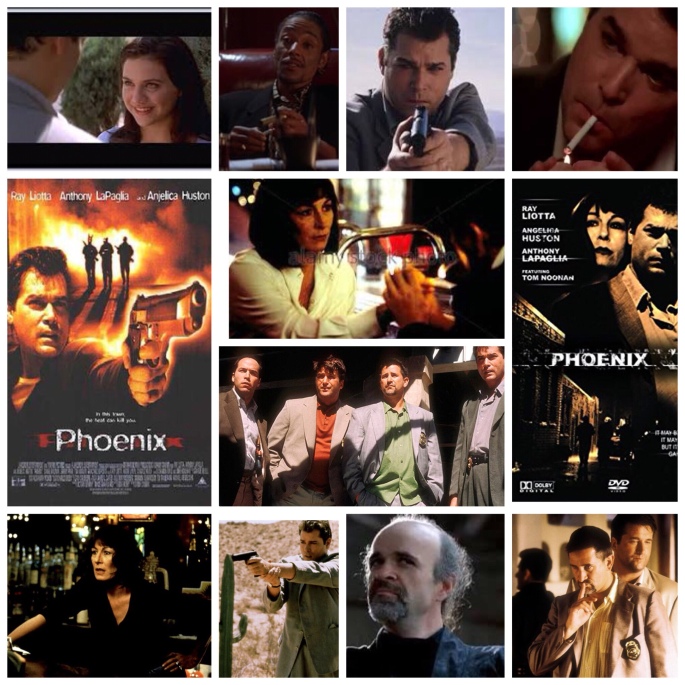
Phoenix is a half forgotten, neat little Arizona neo-noir noir that isn’t about much altogether, but contains a hell of a lot of heated drama, character study and hard boiled charisma anyways, which in the land of the crime genre, often is an acceptable substitute for a strong plot. Plus, a cast like this could hang around the water cooler for two hours and the results would still be engaging. Ray Liotta is terrific here in a mid-career lead role as an a police detective with a nasty temper, huge gambling problem and just an all round penchant for trouble. He’s joined by his three partners in both crime and crime fighting, Daniel Baldwin, Jeremy Piven and Anthony Lapaglia. There’s no central conflict, no over arching murder subplot and no orchestrated twist or payoff, it’s simply these four sleazy cops just existing out their in the desert on their best, and it’s a lot of sunbaked, emotionally turbulent fun. Liotta vies for the attentions of a weary older woman (Anjelica Huston, excellent) while he’s pursued by her slutty wayward teen daughter (Brittany Murphy) at the same time. He’s also hounded by eccentric loan shark Chicago (Tom Noonan with a ray ally funny lisp) and trying to close countless open cases in his book. Piven and hothead Lapaglia fight over Piven’s foxy wife (Kari Wuhrur) too, and so the subplots go. The supporting cast is a petting zoo of distinctive character acting talent including Glenn Moreshower, Royce D. Applegate, Giovanni Ribisi, Xander Berkeley, Al Sapienza, Giancarlo Esposito and more. I like this constant and obnoxious energy the film has though, like there’s something in that Arizona sun that just drives peoples tempers off the map and causes wanton hostility, a great setting for any flick to belt out its story. Good fun.

-Nate Hill

SBIFF Maltin Modern Master Awards Gary Oldman

Gary Oldman is charming. He’s effortless and he’s incredibly affable, which is a stark contrast to many of the prickly characters he’s most well known for playing. He spoke with Leonard Maltin for a little under two hours before the dapper and coarse Ben Mendelsohn presented him with the Maltin Modern Master Award.

Oldman said it was seeing Malcom McDowell in THE RAGING MOON that lit the burning desire for him to pursue a career in acting, which led to Oldman being turned down by a premiere drama school in England where a lot of the greats had studied, including Peter O’Toole.

Oldman spoke about how he fanboy gushed over John Hurt while working with him on TINKER TAILOR SOLDIER SPY, Anthony Hopkins during the filming of DRACULA, and over Denzel Washington while working with him on the set of THE BOOK OF ELI.

A very charming moment in the show was when Maltin showed a clip from a Harry Potter film, and Oldman went on to speak about his fondness for the young co-stars he worked with and how they were like a family, and he watched them grow up over the course of ten years. It was a very special period of his career for him, stating that his fanbase went from forty year olds to ten year olds overnight.

During the filming of BATMAN BEGINS, Oldman attributed James Gordon’s world weariness to jetlag, due to the fact that he was flying from LA to England a day or two at a time to film his scenes, not staying on set due to the fact of being a single dad and raising his two young sons.

Maltin asked Oldman about his character of George Smiley, and asked if he would be playing him again. He responded with an almost certain yes, telling Maltin that he really loved playing Smiley, and missed that character dearly. Asked about his preparation for Smiley, Oldman said that he was overly particular on the glasses his character would be wearing, and that he tried on at least one hundred pairs before settling on the pair that was used in the film.

When asked about his many accents he’s used, from Dracula to Churchill, Oldman said he uses not a voice coach, but an opera singer to condition his voice to drop or gain octivs, and once he is done filming said character he essentially unlearns how to speak that way, saying it’s like a muscle and that he can no longer recreate the Dracula voice or his Churchill voice on command.

Ben Mendelsohn was there to present Oldman with the Maltin Modern Master Award once the Q&A was finished. Mendelsohn gave a speech only he could give with his token outback roughness and lewd wit, speaking of Oldman’s many masterpiece performances and how he is one of his idols.

Gary Oldman is a cinematic treasure. He has crisscrossed many aspect of film from hard independent pictures, genre films, as well megabudget franchises. His latest turn as Winston Churchill in Joe Wright’s DARKEST HOUR will surely award him the Best Actor Oscar, which for a performer like Oldman an Academy Award is long overdue.

B Movie Glory: LA, I Hate You

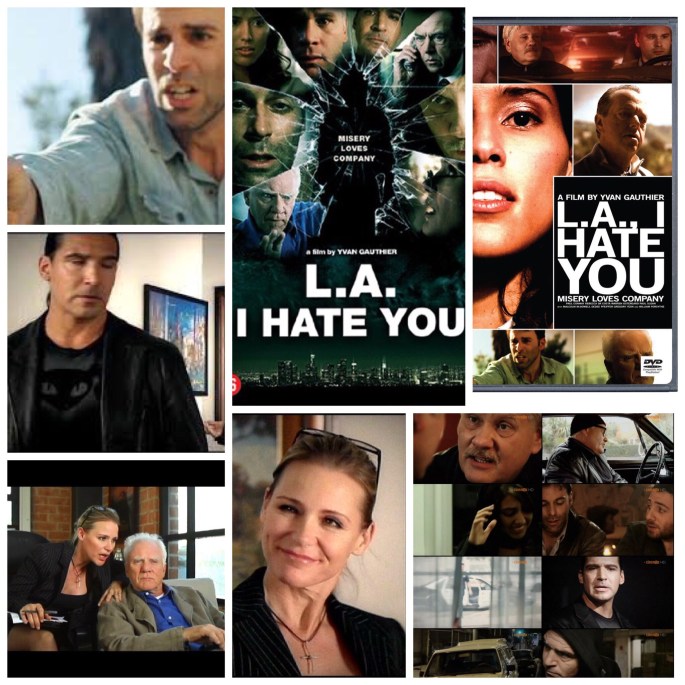
There’s this odd trend in art films these days to make a haphazard anthology thing with various actors in a string-along parade of vignette cameos, title them with the name of a city followed by the sub header ‘I Love You’, or ‘I hate You’. Examples include ‘Paris, Je T’ame’, ‘New York, I Love You’, and you get the idea.. it’s as weird trend, most of the entries I haven’t seen, but the copycat effect trickled down into direct to video town, and I did catch one called ‘L.A. I Hate You’, a strange and cheaply made noir knockoff that doesn’t have much to offer except a few decent actors in sly parody roles. It’s made in three segments, all set in Hollywood and revolving around the film industry, all three chunks of the story ultimately going nowhere. There’s a down on his luck dude with a paraplegic wife who gets sucked into a violent scheme involving his estranged, dangerous uncle (William Forsythe doing his ultra-sleazy tough guy shtick) and the wife’s morally bankrupt father (Gregory Itzin). A struggling wannabe actor (Paul Sloan) is coaxed into stardom at a high cost by a devilish movie producer (Malcolm McDowell, also in scumbag mode), and attempts are made to make these three seemingly separate narratives intertwine here and there, but neither that script, editing or acting is good enough to make us either believe or care. Oh, there’s also a really unnecessary UFO subplot too, just in case it wasn’t cluttered up with enough nonsense. A cheaply made, half assed turkey.

-Nate Hill

33rd Santa Barbara International Film Festival: Willem Dafoe Honored with Cinema Vanguard Award

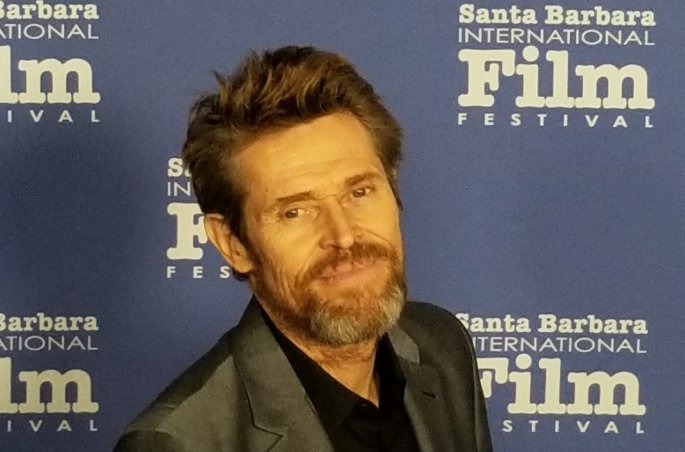
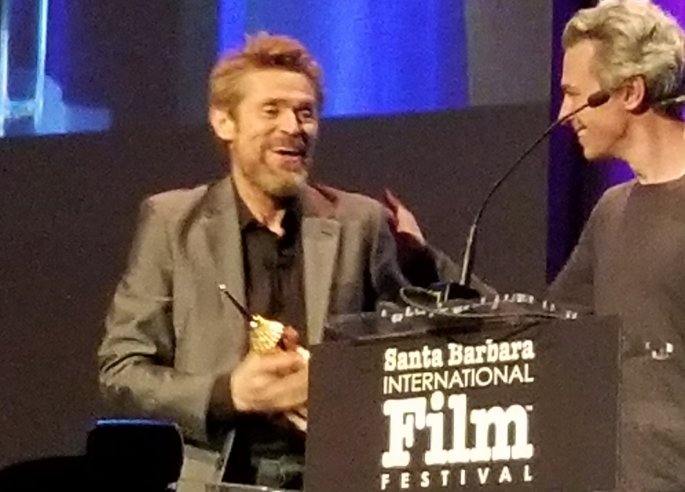
Willem Dafoe is an actor. He’s not a celebrity, he’s not a movie star, he’s an actor. An actor’s actor like Robert Mitchum or Lee Marvin. He arrived early in Santa Barbara where he was receiving the Cinema Vanguard Award with an hour and a half long Q&A moderated by Deadline’s Peter Hammond. Dafoe took his time with his fans lined up; taking photographs and signing autographs and then spending an ample amount of time speaking to the press.

Dafoe is currently on his third Academy Award nomination for best supporting actor. He was first nominated for Oliver Stone’s PLATOON, then SHADOW OF THE VAMPIRE, and now for Sean Baker’s THE FLORIDA PROJECT where Dafoe plays a motel manager and surrogate grand father to a six year old daughter of an unruly tenant.

Inside the Arlington Theare, a highlight reel started and showed everything from STREETS OF RAGE to PLATOON to THE LAST TEMPTATION OF CHRIST to SPIDER-MAN and THE GRAND BUDAPEST HOTEL. Noticeably missing from Dafoe’s greatest hits and Hammond’s Q&A were the four (soon to be five) collaborations with Abel Ferrara and his three films with Lars von Trier. To be fair any one of Dafoe’s performances from any one of his films would be worthy of being in the reel; yet those seven films are incredibly seminal to the Dafoe canon.

He spoke about being fired from his first feature film, Michael Cimino’s HEAVEN’S GATE for laughing out loud at a joke during a set break. He then went on to speak about how he was asked by Cimino to narrate a feature length documentary about the making (and unmaking) of HEAVEN’S GATE.

Dafoe spoke freely about his rich filmography. He stated the most physically demanding performance of his career had been when he played Jesus for Martin Scrosese. He talked about how taxing the crucifixion scene was, and how he could only stay in that pose for a maximum of twenty minutes before his body would start to give out.

Regarding MISSISSIPPI BURNING, Gene Hackman actually did hit him, they really smoked marijuana during the party scene in PLATOON, and how he was on three foot stilts doing motion capture work for JOHN CARTER ON MARS.

Dafoe is overly deserving for an Academy Award. Both on the account of his performance as Bobby Hicks in THE FLORIDA PROJECT and for one of those “lifetime achievement/we owe you one” Oscars. As Bobby Hicks, Dafoe is playing the guy, and for a career of playing that guy, he finally gets to shine and give one of his best performances as the guy.

B Movie Glory: Killing Season

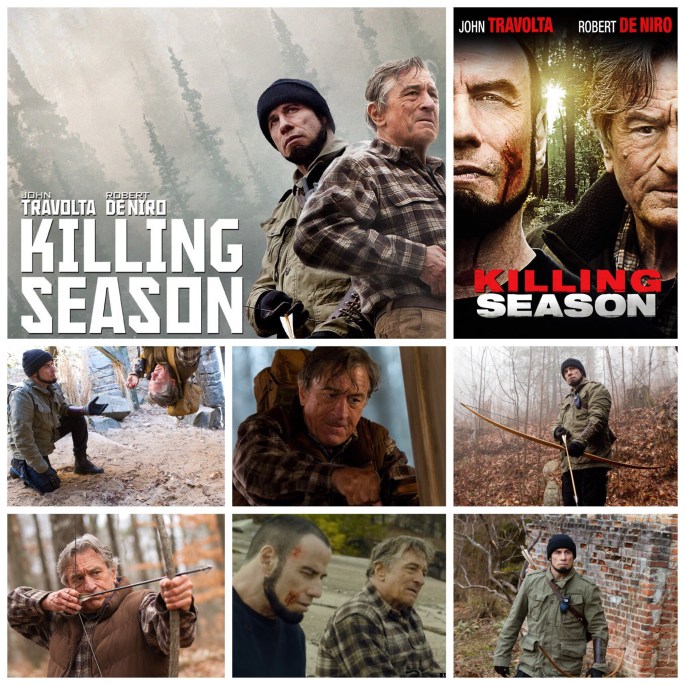
As much as Killing Season has it’s flaws, and would have been better suited to a half hour short film rather than a slightly stretched out feature, it has strong points as well and entertains as best it can as a passable genre flick. Going the rugged survival/revenge route, a low key Robert Deniro plays Ben, decorated veteran who makes his homestead in the remote isolation of the the Smoky Mountains, scarred from battle both physically and mentally, ready to rest. Down time isn’t in his cards just yet, however, as trouble arrives in the shape of John Travolta as Emil, a Serbian/Bosnian warrior with wounds of his own and one big unresolved grudge against Ben. Both skilled hunters and survivalists, the two engage in a deadly geriatric cat and mouse game against a spectacular wilderness backdrop until the pasts and intentions of both are laid bare, and that inevitable climax rolls on in. Their close quarters warfare is quite fun, surprisingly brutal and just cartoonish enough to elicit a dark laugh here and there. Speaking of laughs, Travolta is so oddly characterized here he begs the query “Are you for real?”, sporting a dime-store fake beard and warbling out the most unconvincing Eastern European accent since John Malkovich in Rounders. That aside though, his actual acting isn’t half bad, especially in the final confrontation with Deniro that contains pathos the film never knew it had. The real allure here is the Smoky Mountain scenery, and I would give a shout out to the cinematographer but honestly with a location this good, a six year old and a smartphone could point n’ shoot and it would look like something Deakins wrought. This is by no means a great film, but is it entertaining and engaging? Absolutely, and any of these critics ripping it a new one on all fronts are just bitter, it seems.

-Nate Hill

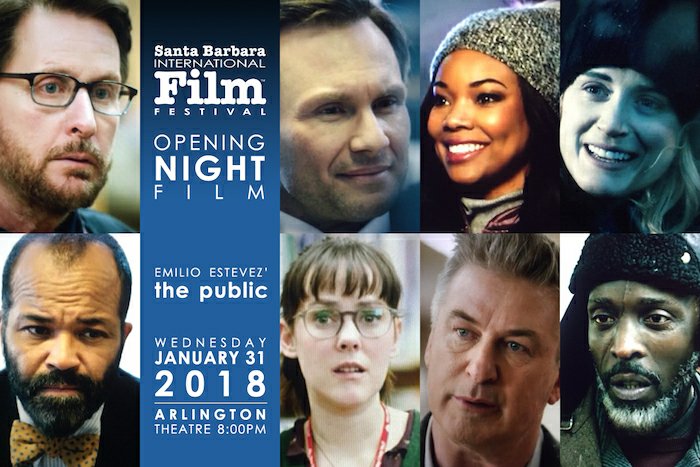
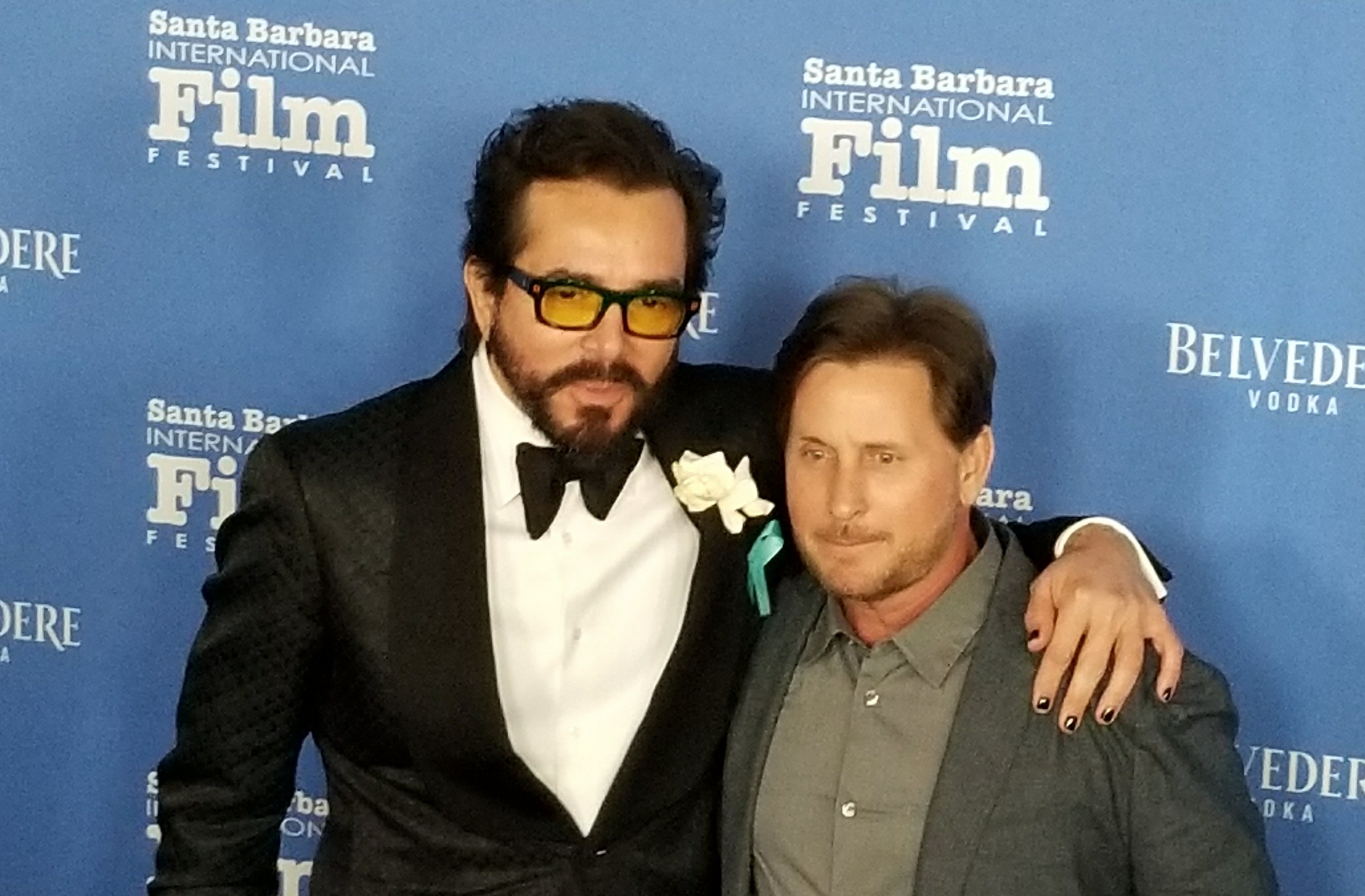
33rd Santa Barbara International Film Festival Opening Night: Emilio Estevez’s ‘the public’

Opening the 33rd Santa Barbara International Film Festival was Emilio Estevez’s new film, ‘the public’ which is set in a library deep in the harsh Midwest winter in the heart of Cincinnati where the local homeless population seeks refuge during the day, stages a sit-in to spend the night after all the local shelters reach their maximum capacity and numerous others had frozen to death.

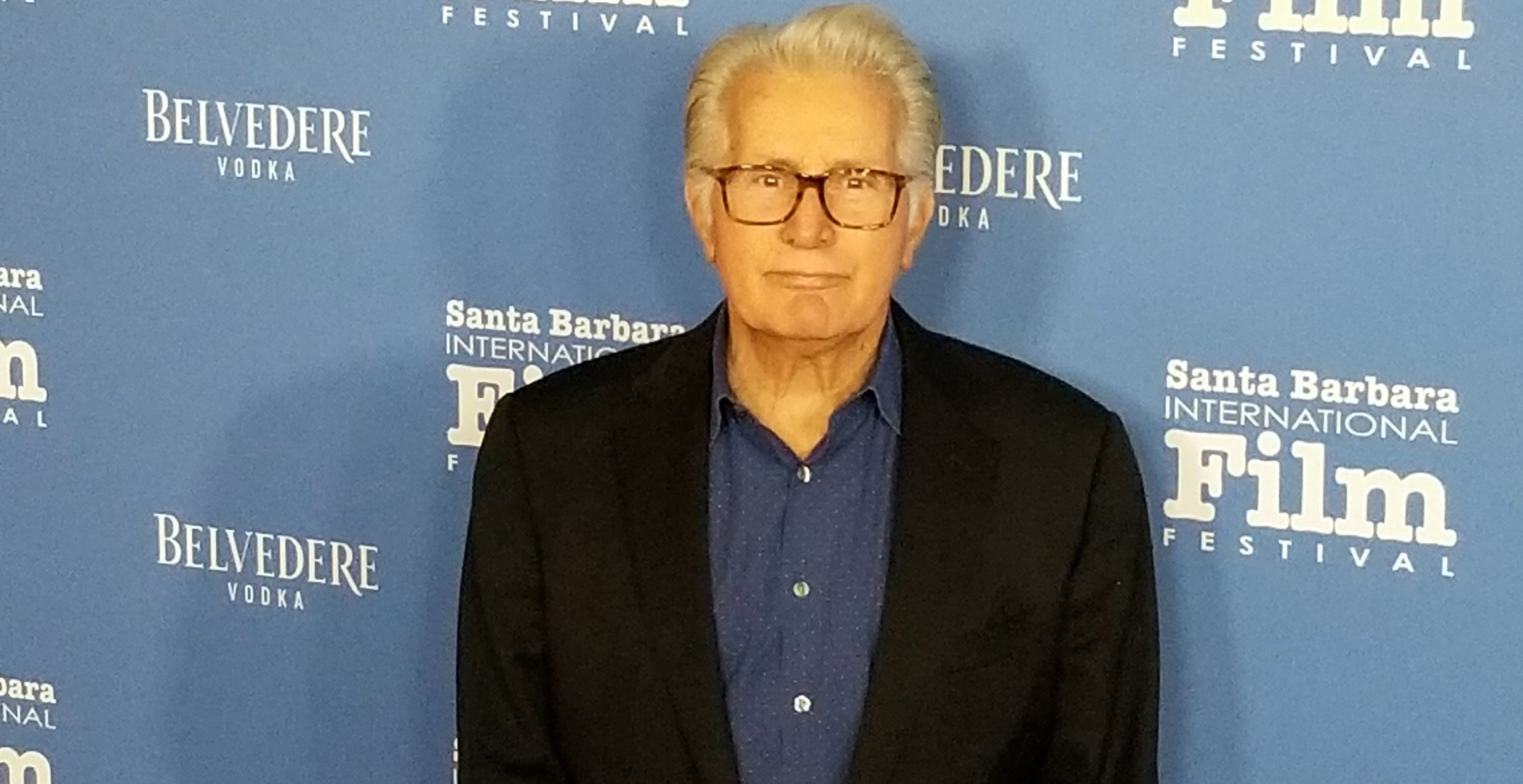
Estevez, Jena Malone, Alec Baldwin, and Michael K. Williams were among the stars of the film that took to the red carpet along with Martin Sheen who did not appear in the film, but was there to show support for his son.

Introducing the film with an elegant and impassioned speech was dashing Executive Director of the festival, Roger Durling, who spoke about the recent catastrophic mudslides that deeply affected the community.

‘the public’ is a gripping, topical film that is a reflection of the many humanitarian crisis in America, and particularly one; the homeless population. The film is incredibly cunning. The focal point isn’t solely aimed at the social and economic injustice of America’s homeless population, but also the opioid epidemic as well as mental illness and how it is currently viewed by the poisonous symbiotic relationship between window dressing politicians and manufactured news and how that information is then fed to the populous of America.

This film is a lot to absorb.

Estevez wrote, produced, directed, and starred in this feature and he assembled a remarkable cast from those who walked the red carpet premiere to those who did not including Jeffery Wright, Gabrielle Union, Christian Slater, and Taylor Schilling in a film that is a subtle recognition of one of Estevez’s most seminal films, John Hughes’ The Breakfast Club.

‘the public’ asks a plethora of serious and substantial questions whilst also pulling a strong emotional response from its audience. It is a great film that not only reflects present day America, but also exposing a problem that no one is seriously addressing in mainstream America.

Satoshi Kon’s Paprika

It’s always fascinating to me how other countries use the animation genre to do much more innovative and imaginative things than the states. Don’t get me wrong, Disney Pixar films and such are brilliant, but the potential in a visually boundless medium like that is somewhat more untapped than those studios realize. Japanese filmmakers, however, have been diving headlong into it for decades now, and Satoshi Kon’s Paprika practically reinvents the genre with it’s extreme brand of surrealistic storytelling and dense, provocative mind games. The film focuses on the R&D of a device called the DC Mini, a dangerous contraption that brings one subconscious mind into another for a dream-melding process that’s supposed to break new frontiers in psychiatry. The technology is soon hijacked by an elusive terrorist though, and used to create all kinds of pseudo-synaptic chaos in which elements from inside the collective unconscious bleed over into the real world and make the line between reality and dreams awful blurry. It’s up to lead scientist Chiba (Megumi Hayashibara), her dream alter ego Paprika, a police detective (Akio Atsua) with his own trippy demons, and the techies at their research firm to stop this dimensional crossover before existence as they know it turns into one big kaleidoscopic nightmare. That’s the over-simplified version though, for director Kon uses the template to go simply wild and ballistic with both the visual and written narrative, for an utterly confusing, hypnotic tapestry of future-shock imagery, primal forces at work and intangible mood-scapes that defy description. Once the dreams invade the conscious plane, a deranged parade of nonsensical beings marches through the film, turning people mad and making the illogical take centre stage, as the film truly manages to capture that ‘other’ set of feelings and impressions we all know of in dreams but can’t quite articulate. It’s one hell of a confusing film though, and multiple viewings are in order before one can unravel every elliptical plot point and reason behind each of the carefully constructed yet audaciously impulsive visuals. Speaking of visuals, rarely has animation been used to this mind blowing extant, a colourful, fierce blast of artistry and storytelling that fires on all cylinders. There’s a disturbing quality to it as well, a subtle doomsday vibe with the subject of technology, the human mind and the unwitting dangers we set loose when we meddle around with forces bigger and badder than us, and as playful as the tone sometimes gets, there’s a cautionary tale hinted at that gives the whole thing a grounded, ‘adult’ feel. Not to mention a haunting, endlessly catchy score by Susumu Hirasawa that adds to the film’s own vibrantly memorable personality. A classic.

-Nate Hill

Indie Gems: The Art Of The Steal

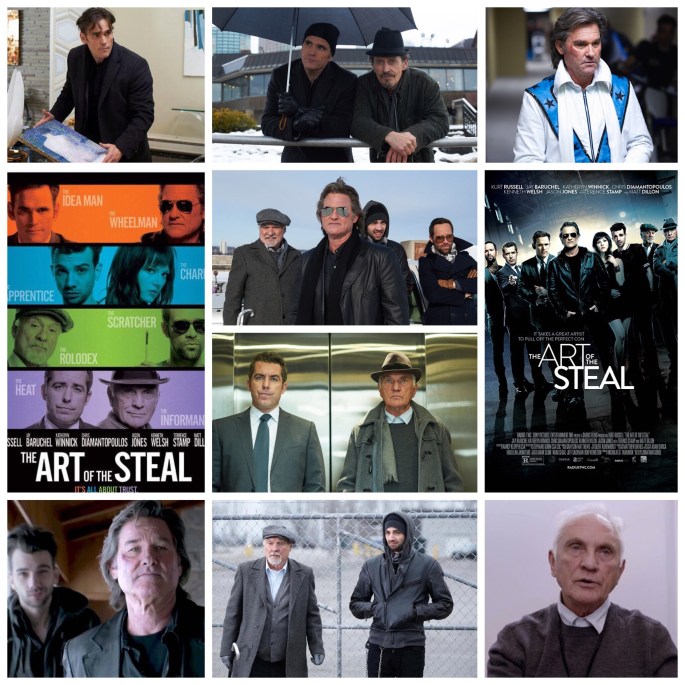
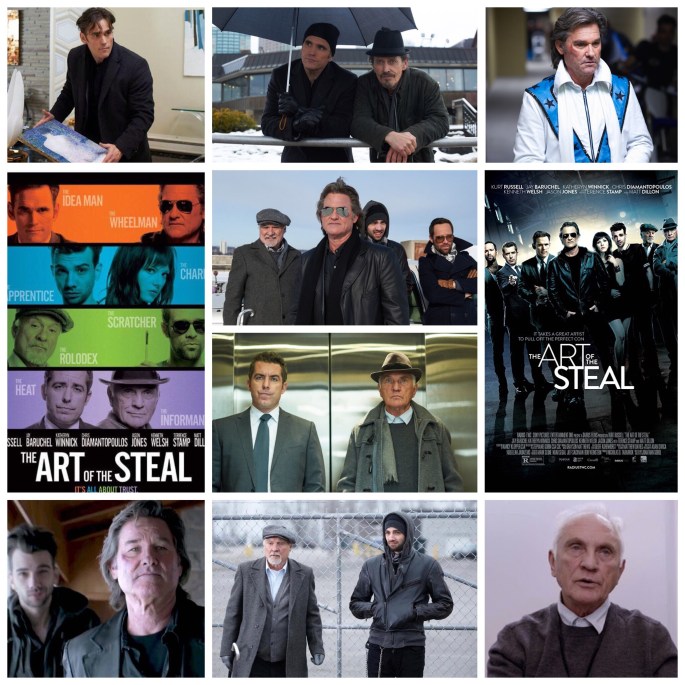
I’ve reviewed The Art Of The Steal before, but it constantly kills me how underrated this banging heist comedy is, so here goes again. Imagine a wickedly funny, smartly written all star art thievery caper starring Kurt Russell, Matt Dillon and a host of others at the top of their game and you’ll have some idea. It’s strange that it’s so unheard of with this pedigree of actors involved, but it’s a joint Canadian production so that may have had an effect on marketing, or lack thereof. In any case, it’s the funniest, smartest heist flick since Ocean’s Eleven, and maybe tops it too. Russell is Crunch Calhoun, an Evel Kneval type ruffian who moonlights as a driver for a crew of fine art pilferers he leads. He’s hard up for cash and fresh out of a stretch in polish jail after his brother and second command Nicky (Matt Dillon, sleazy as ever) rats him out as a fall guy. Now back in Canada, he reluctantly agrees to work with brother dearest, as well as his old crew, for one last job, the theft of an obscure gospel manuscript. Their plan involves swerves, dekes, double-crosses, cons, conniving, hysterical fuck ups, roper dopes and double entendres, so much so that one marvels all that’s in this goody bag of a narrative can fit into a ninety minute film, a testament to both editing and direction. Crunch’s crew is is a roll call of varied talent, including twitchy rookie Jay Baruchel, wily old dog Paddy (Kenneth Welsh), Crunch’s sexy wife (Kathryn Winnick) and their flamboyant French forger (Chris Diamantopoulos). The real treat is Terence Stamp as a weary ex thief working with an Interpol snot-rag (Jason Jones) to lift time off his sentence. Stamp doesn’t show up too often in films these days but he’s comic gold here and has a surprisingly touching bit that brings a bit of reverence and gravity to the world of grand-theft-art amidst the mostly madcap tone. It’s sad that films like this don’t get a theatrical run anymore these days, because they end up on Netflix or wherever and the only way they get mass exposure is through word of mouth, chance or crazed cinephiliac zealots like me shamelessly plugging them on blogs. So go fucking watch it..now.

-Nate Hill

Tim Burton’s Sleepy Hollow

Sleepy Hollow

1999.  Directed by Tim Burton.


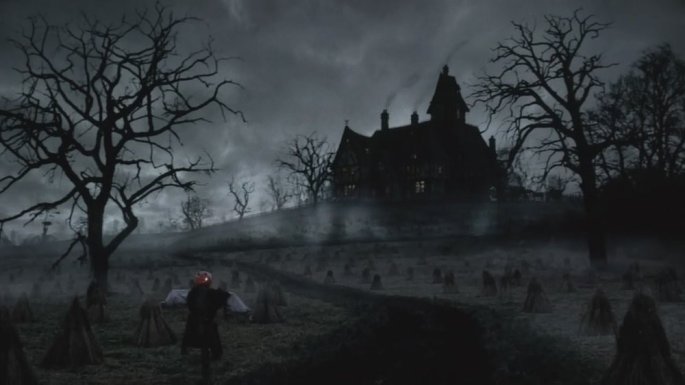
Tim Burton’s Sleepy Hollow takes a loose interpretation of Washington Irving’s classic story and infuses it with poetic Gothic visuals, a fragile Johnny Depp performance, and a heart felt homage to Hammer Film Productions, to create an artistic slasher film that defies genre conventions with its astounding art direction and beautifully captured sequences of operatic violence.

Ichabod Crane is a scientific police investigator who is dispatched to Sleepy Hollow to investigate a series of murders in which the corpses are being found without their heads.  Soon after his arrival, Crane is thrown into the midst of scheming aristocrats, malignant chicanery, a precarious love interest, and the impending arrival of the spectral Headless Horsemen.

Filmed almost entirely on set, Peter Young and Rich Heinrich’s art direction creates the town of Sleepy Hollow from the ground up, with the artificial feeling of the sets enriching the dreamy atmosphere.  The architecture has a Byzantine quality that offsets the colonial designs with a menacing undercurrent.  Young and Heinrich would go on to win the Oscar for their work.  Colleen Atwood’s Oscar nominated costume design takes Victorian tropes and uses a dash of steampunk to reinforce Crane’s outsider status, contrasting his big city cop with the town’s nobility, who cling to anachronistic ideals of pomp and circumstance.


Cinematography icon Emmanuel Lubezski uses a Stygian color palette and soft lighting to both emulate the Hammer Film ambiance and to present Sleepy Hollow as an ethereal revelry.  While the action sequences are violent, even the bloodshed has an art house quality, so much so that the viewer often forgets they’re viewing a horror film, an undeniable byproduct of El Chivo’s Oscar nominated work.  Long time Burton collaborator Danny Elfman scored the film, accentuating the Gothic vibe with droning organs and whimsical vigor.

Johnny Depp gives one of his most understated performances as Crane, the would be hero who is completely out of his element.  He’s supported by Christina Ricci, Jeffrey Jones, Miranda Richardson, Michael Gambon, Christopher Walken, Caspar Van Dien, Richard Griffiths, Michael Gough, Christopher Lee, and Martin Landau.  Yes, you read that right.  Burton assembled a well oiled machine of top shelf talent in which every participant gladly submits to the melodramatic terror with a playful sense of abandon.  While Andrew Walker’s script doesn’t allow much time for attachment, the sheer amount of talent makes each kill scene a story unto itself, with each of the formidable actors having their moment in the fog drenched spotlight.


Available now on Netflix, Sleepy Hollow is vintage Burton and a riotous horror departure.  Using amazing visual flourishes and tight cinematography to frame a well known story in a humorously violent package, this film is a welcome addition to any Halloween viewing list. Using a fable like presentation, replete with witches, demons, and redemption, Sleepy Hollow is a unique exercise in American folklore that delivers is a devilishly good fright film.

Highly Recommend.


download.png


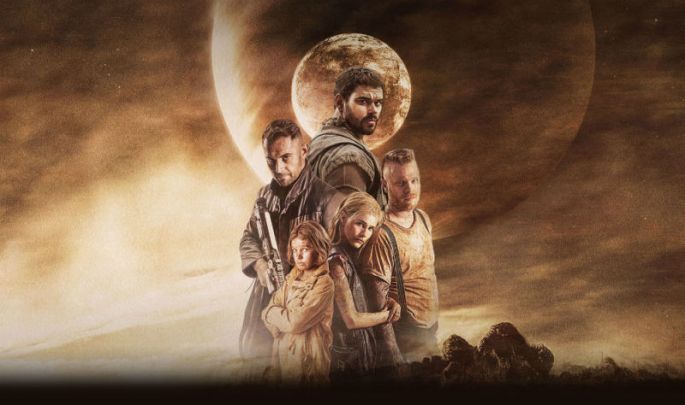
Genre-Defining: An Interview with Shane Abbess by Kent Hill

Continue reading “Genre-Defining: An Interview with Shane Abbess by Kent Hill”