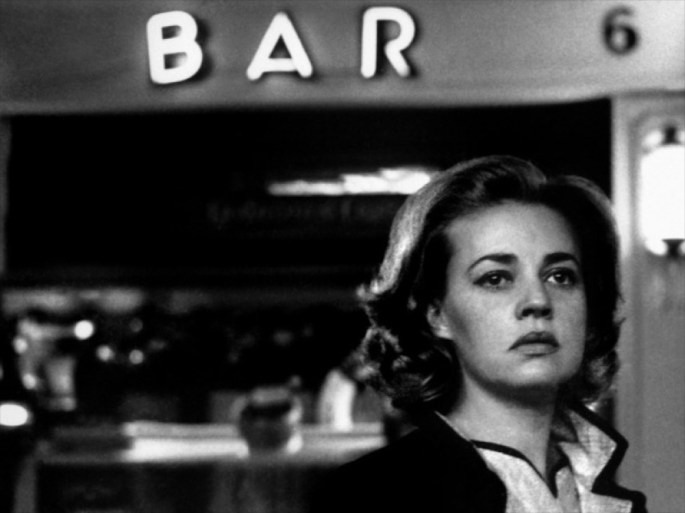
In Memoriam – Chimes at Midnight & Jeanne Moreau


lift-to-the-scaffold-1958-003-jeanne-moreau-1000x750.jpg

In honor of Jeanne Moreau’s passing, this week Kyle and Ben sit down to discuss one of Orson Welles’ crowing achievements, Chimes at Midnight (Fallstaff).  Having been released in Spain in December 1965, in France in May 1966, and in the United States in March of 1967, it was initially a critical failure and it did not achieve the box office success that Welles had sought.  Over time, critical reappraisal has lauded the film as one of Welles’ finest works.

BEN: I have to be honest, I’m not big on Shakespeare.  I read him when I was in school and he confounded me and my imagination.  I sincerely enjoyed Welles’ Chimes at Midnight.  I knew Shakespeare’s works were replete with intimate locations and rich characters, but I did not realize how sharp the tongues were.

KYLE: I’ve been revisiting all of Welles’ works recently and I was blown away by this one.  I think it is Welles’ finest performance and an honest masterpiece.  I absolutely adore the tonal shifts and the somber portrayal of Shakespeare’s legendary hedonist.
CHIMES_MAIN2050.jpg

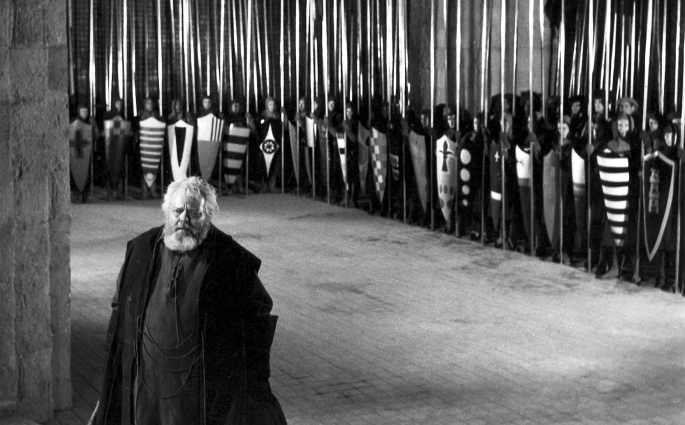
BEN: Welles layers his story of a rebellious father, King Henry IV and a rebellious son, Prince Hal who is at the behest of a literal father figure, Sir John Falstaff.  The majority of the film is spent within the confines of the Boar’s Head Tavern carrying on the intimacy of a stage play, allowing our characters to develop their identities.  Hal, played by Keith Baxter is the roguish playboy, a philanderer without a care in the world.  He is encouraged by Falstaff to enjoy the spoils of life, without the responsibilities, nurturing his rebellious nature as well as his growing desire for power.  There was a point in the film where Hal nearly became a Robin Hood, but he started to see that his ways were not germane to his status as a future king.  Returning to his father’s side, he fought the noble Henry Percy, played by Norman Rodway in a stunning battle set piece.  I was surprised at the level of gruesomeness displayed; it served as a striking counterpoint to the jubilant celebrations that mark the earlier parts of the film.  Edmond Richard’s cinematography is simply gorgeous, from the placement of the camera, to the tracking shots to the use of light.  His outdoor work, especially during the battle sequence is something for the history books.

KYLE: I think the swing in tone is the best part of the film because it focuses on the point that Welles was making.  All good things come to an end, and while Hal’s journey from miscreant to monarch is a perfect example, I think the deeper meaning involves the trauma of responsibility and the death of innocence when adulthood, and all of its dangerous and wondrous revelations arrive.  This is highlighted during the battle scene that you mention.  I really enjoy the framing as well, particularly in the scenes at the inn because position is almost as important as dialogue, and of course the parody of the king scene is not only iconic, it is a wonderful summation of what is in store for the viewer.

Chimes_at_Midnight_7.jpg

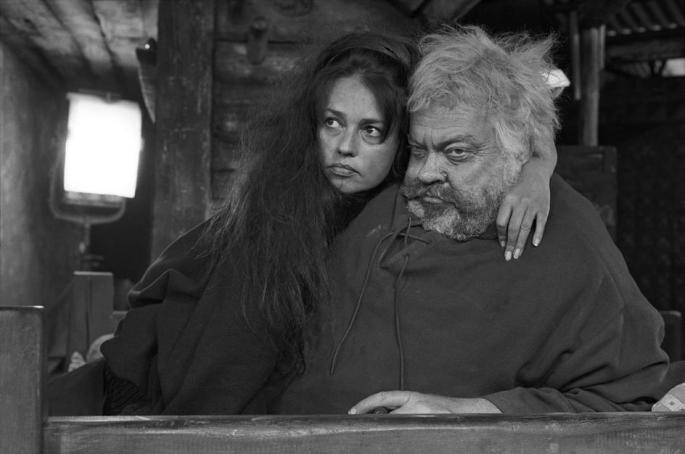
BEN: Of course, we wouldn’t be discussing this film if not to celebrate the life of Jeanne Moreau, who I confess to not having seen much of her work.  Here she plays Doll Tearsheet, a prostitute at the Boar’s Head.  She is as sensual as she is vociferous.  I liken her performance to being a chameleon, blending into the background in the beginning, falling for Falstaff’s charms.  Then, as events heat up, she raises her voice in protest.

KYLE: Pure icon.  My first film of hers was Jules and Jim and I was not only blown away by her free spirited and tragic performance, but I instantly respected her nuanced presence, something that I continue to enjoy each time I view one of her films.  From Jules and Jim, La Notte, and my favorite Diary of a Chambermaid, Moreau has left a legacy behind.  It is truly a thing of greatness to witness her layered performances, harnessing a variety of complex emotions and combining them into unforgettable characters…because they are so human, the viewer can’t help but to identify.  That was her talent.  She is incomparable and one of the truly great actresses of all time.
campanadas_rodaje 2.jpg

BEN: I really enjoyed watching this film.  It’s amazing to learn that this film released over a three-year period.  Can you imagine something like that happening now?

KYLE: It still happens, with films debuting at festivals across the world and then not making it into the theater or on demand in different countries for several years, but technology has, for better or worse, changed distribution procedures across the world.

BEN: I’ve already found a certain affection for Welles’ works over the years and this is something that I will be revisiting again, especially with Criterion’s fine Blu-ray.  I will also be exploring more of Jeanne Moreau’s works in the future.  Something tells me I’m in for a treat.  Although this was a French-Spanish release, none other than Mr. Harry Saltzman was involved in its production.

KYLE: Touch of Evil is my favorite Welles’ film, despite the undeniable importance of Citizen Kane.  I recently viewed The Lady from Shanghai after learning about its history from the You Must Remember This podcast.  It is a very strange, yet fascinating film and I recommend that you start there on your journey through Welles’ legendary portfolio.

Touch-of-Evil-DI.jpg

Ben: Thank you for sitting down with me again this week, Kyle.  I know we were originally going to do a quick review of Umbrellas of Cherbourg this week, but we decided to hold that for now to do something a bit more special with it.  Later this week, we’ll be back with something timed for the upcoming Logan Lucky release.

KYLE: Looking forward to it!

jm.jpg

NACHO VIGALONDO’S COLOSSAL — A REVIEW BY NICK CLEMENT

3
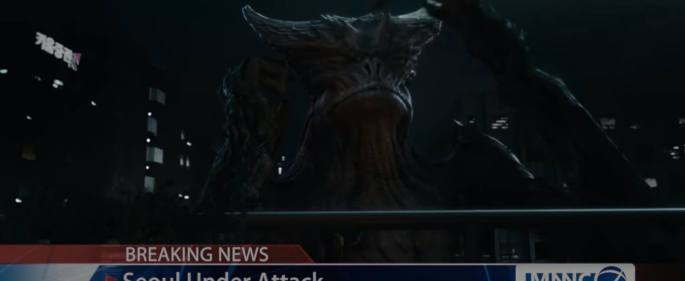
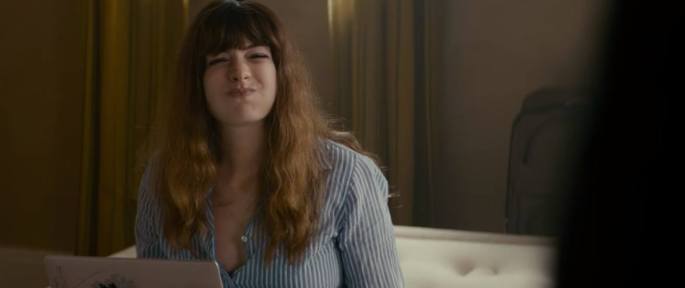
Colossal is a cute and clever “monster movie” where the CGI is kept to a minimum and done on a cool scale with a unique looking monster and some game performances from Anne Hathaway (long haired Anne POWER!), Jason Sudeikis, and everyone else in the cast, who all signed up for an inherently asinine little film but played it totally straight, and it all works even if the central narrative pull isn’t as compelling as it might’ve been with a few more passes on the script. The notion of an irresponsible person conjuring up a city-destroying monster as a result of their alcoholic behavior is what this Nacho Vigalondo written and directed film is mostly about, and it marks yet another quirky genre-bending effort from this stylish Spanish filmmaker, after the rather excellent Timecrimes and the sly-sexy Extraterrestrial (I’ve not yet seen Open Windows).
2
Produced and released independently on a reported budget of $15 million, Colossal is the type of project where I could see all of the creative execs and studio producers reading it as a spec and saying “Damn, that was great and original and fresh, but yeah, we’re not going to make this movie here.” Which is a bummer. Because while not perfect, this is the type of original idea movie that used to get moved along at the studio level, but is no longer seen as important or fiscally responsible. There’s a nice undercurrent of social subtext that runs throughout the loopy narrative, and while I wished that certain elements had been taken a bit further to develop even more conflict, I definitely had some fun watching this off-beat item, and I think it’ll develop into a cult favorite for many people over the years.
1

“I didn’t leave you.” The Hains Report Presents: A review of The Sixth Sense – by Josh Hains

You need not worry, I won’t spoil the ending.

I never knew what happens at the end of The Sixth Sense until either late 2005 or sometime in early 2006. I found out the ending of The Sixth Sense when I was reading an adaptation of the film that I’d found in my high school’s library when I was in my first year. I was 14, and more than a little foolish. I read the first 3 chapters of the book (perhaps a fourth, perhaps even more but I can’t recall), and was then hit with the idea that I had guessed the ending based on what I’d read. I flipped to the end of the book and read the ending, found my guess validated, then placed it back on the shelf and never looked back. Just last year I watched the film for the first time. Oddly enough, despite knowing the ending years prior, I somehow felt a sense of shock wash over me as I watched the scene unfold in front of my eyes. Watching it for a second time over this past weekend, the ending still held the same impact. Proof you can know the ending of a movie and still be surprised by it on more than one occasion.

I observed that The Sixth Sense isn’t much of a thriller it was pitched to audiences as being (not straight horror either), but rather a ghost story where good people fall prey to those who torment them from beyond the grave. The latest victim of ghosts is the young boy Cole Sear (Haley Joel Osment), who claims one night to “see dead people”. Many believe that children are more susceptible to seeing ghostly apparitions than adults, and Cole is no exception, scribbling or screaming the ravings of ghosts he has terrifying eencounters with. I don’t know who’s more afraid, he of the ghosts, or his mother Lynn (Toni Collette) for his safety and mental well being.

Cole’s psychologist becomes Dr. Malcolm Crowe (Bruce Willis), who we first meet at the start of the film when a former patient shoots Malcolm, then himself. Malcolm seems defeated these days, tired and worn out from work and life in general. His wife Anna (Olivia Williams) doesn’t seem to notice he’s even around, barely utters a word or gives a look in his general direction. Maybe she’s having an affair. Perhaps the trauma from that night was too much to bear for her. Maybe Malcolm was never the same after.

Malcolm seems to approach Cole and his predicament with a “Sure, whatever you say kid” demeanor. It seems fair to me that Malcolm has this attitude, he probably doesn’t believe in ghosts and is just going along with whatever Cole says because he knows he needs guidance, without ever appearing condescending toward him. I doubt I’d believe the root of the issue is ghosts either, just a troubled soul in need of nurturing. Malcolm shares the same perspective, and is more than willing to help where he can. In turn, Cole helps Malcolm a little too, telling him to talk to his wife while she sleeps, because “That’s when she’ll hear you.” I don’t know who my heart bleeds for most.

Haley Joel Osment showed us 18 years ago that he was a force to be reckoned with even as a child. He wasn’t playing the typical child role where you just look cute, act silly for the camera and get your lines out with some amount of authenticity. No, here in the Sixth Sense, he actually has to act, and convincingly plays a good kid plagued by appearances of gruesomely murdered ghosts. When he’s afraid, we believe he is. When he’s sad, our hearts break. Neither he nor Willis overshadow each other, and the two have a chemistry that feels authentic and adds layers to the nature of their relationship.

Bruce Willis is a rare down to earth actor, always wearing his heart on his sleeve. He doesn’t over play his hand here, he never gets wild or over the top. Again he’s down to earth, as well as honest and subtle. In my two viewings of the film, I have almost entirely forgotten at various points that the man on screen is in fact Bruce Willis, mostly because he’s not playing the typical Bruce Willis role. Gone is any sense of his star persona or real life personality. He is just Malcolm Crowe, and I believe it. Much of the best acting of Willis’ career can be found split between The Sixth Sense and Unbreakable (his second collaboration with M. Night Shyamalan after this film), and oddly enough the best acting I’ve seen from him comes in big reveals toward the end of each film. In the case of Unbreakable, it’s when David Dunn silently reveals to his son that he’s the lone saviour of two kids whose parents were murdered by a local psychopath.

Here in The Sixth Sense, it’s the sequence in which Malcolm comes to truth with some harsh realities, none of which I will spoil here. I’m sure you’re aware of what happens by now, and if you haven’t seen the movie and don’t know the famous ending, I implore you to give it a look, you just might love it. Willis doesn’t dip into manic theatrics or parody when the truth is uncovered (though he easily could have), he remains truthful to the performance he had been giving beforehand and to the character of Malcolm, which helps to ground the movie in a believable reality.

As for that ending itself, it’s one of the few Hollywood twist endings that works, and works well enough 18 years later to be considered one of the true great twist endings in film history. Admittedly, when I read it in that book all those years ago, I was surprised by the boldness of such an ending. It’s not very often a movie ends on such a bold note, in a way that pulls the rug out from underneath you, yet invites you to come back for another visit and see things from a newfound perspective. Maybe you’ll see dead people too.

B Movie Glory: The Rift


The Rift is a nifty little underwater creature feature in the tradition of stuff like The Abyss and Leviathan, a low budget affait that uses neat practical model effects to churn out some gooey thrills, and a cool cast to run around being hunted by them. When an experimental submarine dubbed the ‘Siren II’ (after the disappearance of the Siren I, naturally) descends into a deep fissure in the ocean, things begin to pop up that shouldn’t be down there. By things I mean cleverly designed miniature models that are lit just right enough to fake us out into believing they are actually giant underwater behemoths from the darkest nightmares of marine cryptozoology. Captained by R. Lee Ermey, giving the character gravitas the film almost doesn’t deserve, it’s a doomed mission from the start, especially when you factor in the shady presence of first mate Ray ‘Leland Palmer’ Wise, who has a few tricks up the old sleeve. It’s up to man of the hour Jack Scalia to swagger their way out of danger, but the rift is deep, dark and pretty soon all kinds of gooey things find their way aboard the craft. It’s not half bad, at least nowhere near the second tier hack job some critics dubbed it as. Any effort that puts that much artisan ingenuity into deep sea monsters with as little money as they were given gets a handful of gold stars from me. Plus, you can’t go wrong with that cast. 

-Nate Hill

Tab Murphy’s Last Of The Dogmen


Tab Murphy’s Last Of The Dogmen is a beautiful story, providing assurance that on a rapidly shrinking modern world there can still be some undiscovered wonder to be found, sometimes in the last place anyone would look. Tom Berenger, gruff as ever, stars as Lewis Gates, a rural bounty hunter charged with pursuing a gaggle of escaped felons who’ve hightailed it into Montana wilderness so dense that the usual branches of law can’t track them. Joined by his anthropologist friend (Barbara Hershey), he searches day and night for these convicts, and in the process finds something far more incredible. Buried far in the heart of this mostly untouched frontier is a tribe of Native Americans, thought to be wiped out by settlers generations earlier, living since then with no contact to the outside world. Gates is wary but fascinated, while Hershey recognizes this for the miracle it is and tries her best to communicate with the people, who in turn are fiercely protective of their land, especially towards the escaped prisoners who have wandered onto it as well. Hot on Berenger’s tail as well is his ex father in law (Kurtwood Smith) who is also the county Sheriff, bitter towards him for a past tragedy, volatile and unpredictable, another risky faction to flare up conflict between all sides. The action is kept to a necessary minimum, and the real meat of the piece lies in the pure spectacle of their situation, a reverence for both parties involved and a keen eye for interaction between human beings who couldn’t be more different yet have shared the same region for eons. The Native actors, including Sidel Standing Elk, Dawn Lavand, Eugene Blackbear and Steve Reevis, are all superb, as are Berenger and Smith. The real magic comes cascading through the lens of cinematographer Karl Walter Lindenlaub, who beautifully captures Banff National Park in it’s full glory, as well as other such locations not far from my Canadian home. The film hangs onto the notion that there is still undiscovered splendour out there, from rushing rivers to ancient mountains, and the mysterious tribes who once, and perhaps still do, call it home. 

-Nate Hill

NICK’S NOTES: JANE CAMPION’S IN THE CUT

The Auteur Series: Stanley Kubrick Volume II with Special Guest Raymond Benson

Image result for stanley kubrick eyes wide shut

Benson

Tim and Frank are back with author and film historian Raymond Benson for their second part of their Stanley Kubrick chat. They start with returning to 2001 A SPACE ODYSSEY to talk about the music that Kubrick used, and continue through Kubrick’s filmography to EYES WIDE SHUT and AI. The three of them will be returning soon to discuss the filmography of David Lynch.  To learn more about Raymond, please visit his website here.

KINO LORBER PRESENTS: ROBERT PARRISH’S THE DESTRUCTORS/THE MARSEILLE CONTRACT — A REVIEW BY NICK CLEMENT

2

The Destructors, aka The Marseille Contract, is a 1974 British thriller from director Robert Parrish (Journey to the Far Side of the Sun, A Town Called Hell) and producer/screenwriter Judd Bernard (writer of Inside Out, producer of Point Blank), and features a very solid cast including Michael Caine, Maureen Kerwin, Anthony Quinn, Marcel Bozzuffi, Maurice Ronet, Alexandra Stewart, and James Mason. The plot hinges on a U.S. drug agent who teams up with an old friend and assassin in order to take down a French drug kingpin. The film’s action centerpiece is a superb car chase between a Porsche 911S and an Alfa Romeo, and of course, because it was all done for real, the entire segment feels that much more dangerous and exciting. Roy Budd (Get Carter, The Wild Geese) composed the film’s robust musical score, while the legendary cinematographer Douglas Slocombe (the first three Indiana Jones films, Julia, Rollerball, Never Say Never Again, The Italian Job, Lion in Winter, The Great Gatsby) brought the appropriate amount of visual grit to the proceedings while still allowing for the beauty of the streets of France to be captured in numerous spots. Willie Kemplen’s crisp editing keeps a fast pace. Parrish directs in a no-nonsense fashion, allowing the layered plot to move along quick, while emphasizing the violent showdowns with a clear-eyed sense of fatalism. The Destructors feels as if it could have been directed by 70’s-era John Frankenheimer, with melodrama and crime genre elements confidently mixed-up into the narrative. Kino-Lorber’s visual and audio presentation on the Blu-ray are strong as usual, but the lack of special features is a little disappointing. But for fans of gritty crime cinema from this time period, this is a total keeper and tons of fun.

3

B Movie Glory: Francis Delia’s Freeway


In the vein of highway set psycho thrillers, stuff like Robert Harmon’s The Hitcher and Steven Spielberg’s Duel paved and pioneered the way, fertilizing the ground for countless other similar efforts, some terrific and others not so much. Freeway falls into the former category, an atmospheric little B movie that delivers more clammy thrills than it frankly has any right to. It’s not to be confused with the classic Reese Witherspoon trash-terpiece of the same name though, this is a different animal altogether. There’s a serial killer terrorizing the nocturnal arteries of the L.A. highway system in this, an unhinged whacko in a Lincoln of or some such automobile of equally austerity, firing off love rounds into people’s faces whilst bellowing out bible verses extremely out of context all over the overpass in the wee hours. He’s mostly heard and unseen, but he’s played by none other than Billy Drago when he does show that leering visage, and the man let’s it rip in a performance that should be legendary. He’s hunted by another cool-as-ice character actor, tough guy James Russo as a Detective of few words and tons of action, namely shooting anyone that won’t give answers or spur his leads. There’s a dark, dreamy nocturnal aura to this, love and care put into atmosphere, showing is that the filmmakers, despite working with a low budget, actually give a darn about quality in their work as opposed to a throwaway second tier genre mad dash where the lack of passion is evident. A low rent classic in the realm of homicidal vehicular themed exploitation. 

-Nate Hill

NICK’S NOTES: CLOSE ENCOUNTERS OF THE THIRD KIND

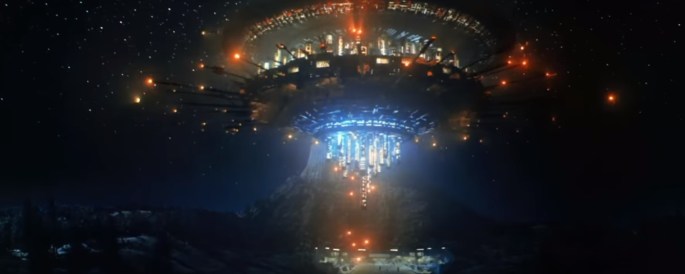
3Close Encounters of the Third Kind is my favorite film by Steven Spielberg. This movie makes me smile during every single second of its running time. It simultaneously scared the crap out of me as a kid and filled me with an overwhelming sense of wonder, and it has never left my imagination since the first time I viewed it with my parents on VHS in the old-school living room on the old-school “box” TV. I projected myself into this film; I became everyone in the narrative at a certain point, and over the years, every single time I watch this movie, I’m taken back to my childhood, and I’m also reminded of just how damn good everything is in this fantastic piece of work. It’s gorgeous (massive Vilmos Zsigmond POWER), it’s got tons of heart, the performances by everyone in the deep and varied cast are magnificent, it’s extremely funny, the close-up/reaction shots are some of the best ever captured, and the ending is so awe-inspiring and so thought provoking and so filled with wide-eyed joy that it’s impossible for me not to think about its general existence at least once a week. The lens flares used in this film are downright magical, the musical score and various melodies are infectious, and I’m still afraid of toys that feature a monkey playing the cymbals. Mashed potatoes have never looked the same, I think we can all agree on that. And those feverish moments with Dreyfuss acting like a personal disaster in his living room with half of his garden on the living room floor – it’s all of a piece and massively enjoyable and I can’t wait until it’s re-released in theaters later this year to celebrate its 40th anniversary, as I’ve never seen it on the big-screen. I’ll need to bring a change of pants for sure. 
 1