Guy Ritchie’s Wrath Of Man

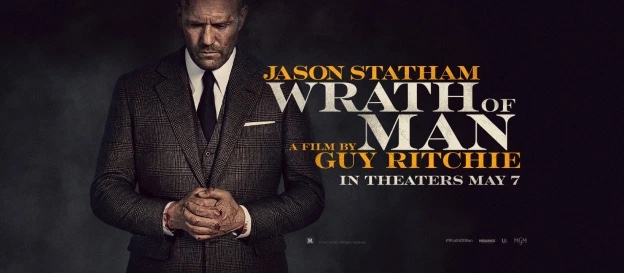
Wow man, Guy Ritchie isn’t fucking around with this one. What I mean by that is, his body of work in film thus far is marked by rambunctious characters, robustly flavourful dialogue, cartoonish mayhem, jubilant humour and just an overall house party vibe. His new heist/revenge/horror film Wrath Of Man is a jarring, impressive and welcome change of pace that plunges headlong into an aesthetic wrought with darkness, grim portent, ominous atmospherics, ruthless violence and nary a trace of whimsy to be found; Playtime is over. Jason Statham is Ritchie’s perennial muse and his gives what might be a career best performance here or at least their finest collaboration, playing a mysterious individual named H who infiltrates a no nonsense armoured truck syndicate as one of their employees, silently and lethally carrying out some dark agenda that is revealed beat by beat, flashback by flashback, scene by meticulously edited scene in a carefully calibrated nesting doll of a narrative. His coworkers are a varied bunch of assholes, tough guys and eccentrics including the top dog and natural born leader Bullet (Holt McCallany) and a dysfunctional pretty boy played by Josh Hartnett, who I was very happy to see in something again and does great cast just about as against type as possible for him. The supporting cast extends into very solid work from Andy Garcia, Jeffrey Donovan, Laz Alonso, Eddie Marsan, Post Malone, a scene stealing Darrell D’Silva and a vicious standout turn from Scott Eastwood who is looking so much like his dad these days it’s getting scary. I don’t want to spoil too much in terms of narrative because this is one serpentine, labyrinthine piece to work through and although the overall story isn’t the most complex or revolutionary endeavour, it’s in execution, tone, atmosphere and mood that Ritchie and his team do something thoroughly extraordinary. Statham makes H a truly elemental force here, like Keyser Soze, Hannibal Lecter, Michael Myers or The Devil himself he just exudes this inky menace and doom soaked ethos that fills the screen in every frame. One of the film’s strongest features is its dark, grinding, methodically rhythmical score by Christopher Benstead, full of guttural, agonized strings and stabbed by jagged notes in between the chords, standing out in the vividly stylized and blessedly old fashioned opening credit sequence and accented by several key soundtrack picks including a haunting, ghostly rendition of Folsom Prison Blues playing alongside one of the most visceral sequences. The film works as an action heist flick as it has many propulsive, bloody shootouts and chases but what really makes it something special, and for me the best of the year so far, is the time it takes in between beats, the measured, steady and grisly slowed down sequences that immerse you in its world using score, trademark colourful Ritchie dialogue albeit of a dark variety this time, hellishly overbearing, dreamscape-esque atmosphere of danger, anger and slowly burgeoning, ultimately cataclysmic vengeance. Absolutely sensational film.

-Nate Hill

THE JACK HILL FILES: MONDO KEYHOLE (1966)

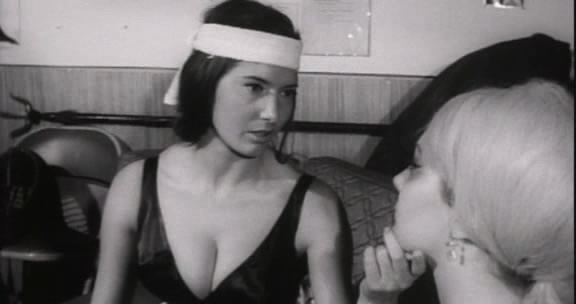
The “roughie” was a subgenre of sexploitation that mixed the kind of soft-focus, waist-up nudity with a hard and dangerous edge of violence of some sort. Invented (accidentally, probably) in 1963 with Herschell Gordon Lewis’s Scum of the Earth, the roughie gave audiences of a certain stripe the ability to indulge in a motion picture focused solely on their specific fetish, already a staple for pornographers who shilled their wares in the back of adult magazines and distributed stills and the like through the postal service. Jack Hill’s Mondo Keyhole is a mad slice of sexploitation that, like Scum of the Earth three years before it, wallows in the world of mail-order pornography. But despite ostensibly being a cheap-thrills quickie, Mondo Keyhole artfully subverts the audience’s expectations while also giving them what they came for (and then some).

Mondo Keyhole concerns the exploits of Howard Thorne (Nick Moriarty), head of a shabby, mail-order pornography clearing house that sends out still photographs, 8mm S&M films, and 33 LP’s containing ersatz sounds of Sadean pleasure. Thorne is also an inveterate rapist to whom it makes zero difference whether he’s committing his vile crimes while carrying out a nighttime home invasion or during a stalk-and-assault in the bright, mid-day outdoors. This generally leaves him retreating to his (impossibly cool) Hollywood Hills home totally spent and without anything left for his amorous wife, Vicky (Adele Rein), who has become addicted to heroin out of pure boredom and likes to meet him at the door while wearing a revealing neglige and a fright mask.

So far, this thing sounds typical to the genre and possibly boring. However, when the worm turns as the film enters its final set-piece, you can almost hear Keith Morrison’s voice in the back of your head saying “But this is exactly the point where things began to (pregnant pause) take a turn for old Howard Thorne. And not a pleasant one, either.” For in act one, Vicky reminds Howard of the costume party they have to go to the following evening. Act three is the party itself and… hooboy… it would be criminal to spoil it.

To be up front, this is very much an exploitation film. But while it’s not necessarily something I would recommend to my mother, I would be more than comfortable screaming about its virtues at the top of my lungs after a couple of glasses of wine among friends with likeminded taste. Primarily, this is very much a Jack Hill film and it reveals itself as such due to its female characters. If they don’t show up strong, they learn to become so. While the film sets the audience up to think the narrative is going to be all about Howard’s criminal misogyny, it smartly pulls the rug out from under by ultimately making the film about Vicky s journey out of her drug-fueled doldrums and into a sexual fantasia of personal agency and a more independent life. As Vicky makes love to herself in the mirror in a truly remarkable moment halfway through the picture, Mondo Keyhole shifts from a film you want to sneak home in a brown paper bag to a celebration of sex as a mutual adventure of understanding and unbridled joy. That’s Jack Hill all over; the guy who could make a trashy cheerleader movie do double duty as a sociopolitical treatise.

Not to oversell it but the orgiastic party at the end is one of the wildest things I’ve ever seen captured in a non-pornographic motion picture and it needs to be seen to be believed. Sure, it’s not exactly something that would see a lot of traffic on Pornhub and likely will be seen as pretty tame by most these days but there is a meditative quality to it as you realize that what’s unfolding in front of your eyes isn’t at all scripted. What kind of party is this? What are we not seeing that’s just out of frame? Except for those that we know are actors, this feels like a very real party thrown in the very large abode of the film’s producer where the lights of Los Angeles tinkle down below and god-knows-what kind of hedonism is happening behind closed doors and tall hedges, the warmth of the summer night fueling the notion that the endless possibilities of the time were all for the taking.

Mondo Keyhole is definitely what it purports to be but, due to the uncanny filmmaking skill of Jack Hill, it’s even more than that. It’s a slow-walk of genre material through a door and into a place where it could have deeper dimensions, loftier intentions, and artier craft, yet still remain wickedly entertaining.

(C) Copyright 2021, Patrick Crain

B Movie Glory: Larva

I love a good, simple, blessedly cheesy SyFy creature feature flick, back when cable tv was around you could tune in any night of the week, settle in for the midnight hours and watch all kinds of monsters, ghouls, aliens and cryptid nightmares terrorize small towns. Whenever I get the chance these days I grab them on DVD where I can find them for sheer nostalgic value and Larva is a great example of that. Set in blessed small town Americana, we meet a farmer (the great William Forsythe) who is having trouble with his cows getting sick and dying of some mysterious and very deadly parasite. He contacts the environmental board who sends a representative (Vincent Ventresca) who discovers that the animals are falling prey to a brand new subspecies that is aggressive and altogether catastrophic to the region, especially when it starts infecting humans and we are treated to an impressive array of gut busting, chest bursting, skull exploding gore as these beasties grow from their larval state and bust loose from human hosts into these weird leathery winged, tooth ‘n fang adorned monsters that fly, crawl through tight spaces and kill with speed and ferocity. There’s a neat subplot about the dangers of outsourcing agricultural and livestock resources to big experimental corporations that don’t follow the rules until nature bites back which is a nice touch too. Forsythe is terrific as the stoic, capable farmer who keeps an arsenal of ‘just in case’ weaponry in his barn for occasions such as these and gets to blast many a monster to smithereens. The effects are terrific in the close quarters gore department and perfectly serviceable as far as visuals of the full grown creatures go and overall this is exactly the kind of good, splattery, brainless fun you’d expect from stuff like this. Good times.

-Nate Hill

THE RUSS MEYER FILES: EROTICA (1961)

One of the drawbacks of the nudie-cutie film is that there are just so many interesting ways to show nudity for nudity’s sake for the sixty minutes that made up the average length of the movies. Most of the time, as was the case with The Immoral Mr. Teas and Eve and the Handyman, the films were a string of adult party jokes come to life in episodic fashion. In Erotica, Russ Meyer’s third feature, there is more emphasis on the episodic as the film is built out of what literally feels like a series of differing nude scenarios with Meyer and Jack Moran’s corny narration spot-welded to the images after the fact.

Beginning as an industrial film about the construction of a motion picture, Erotica jumps off the screen with Meyer’s strong visual flourishes that promises to unleash a more sophisticated nudie film than the two previous productions and one that hints that it may in fact act as a meta commentary on them; kind of like Herschell Gordon Lewis’s Boin-n-g from 1964 but… you know… good. It jumps with a breathless narration that employs Russ Meyer’s trademark double entendres, equating the filmmaking process to masturbation in a cadence that makes you feel like you’re going to be asked to buy something by the time it’s all over.

However, once the film opens up, Erotica becomes a hugely hit or miss affair. Its segmented structure serves it well as if you find yourself stuck in the tedium of a segment, you can bet that it will likely end soon. However, that same structure is what causes the film to lurch forth in fits and starts which does not help the sixty minute running time move any quicker. Truth be told, Erotica truly feels like a Meyer sizzle reel that he may have carted around to living room parties with him; kind of like an animated portfolio to the discerning viewer, as it were. The filmmaker’s unsettled legs are apparent as he rocks back and forth between these well-staged pieces of breathing cheesecake and moments in which there seems to be an honest sexual expression that doesn’t feel like a wax put-on. Like putting Esquivel on the jukebox and looking at what once passed as your great-grandfather’s porn stash, Erotica has a kitschy charm that cannot be denied and, on a technical level, it’s quite good. But composition and color aren’t the film’s major problem as much as time is. The humor is a mixed bag of cornpone laffs for the hicks with some inspired moments that are reminiscent of a slower and bawdier Rocky and Bullwinkle episode. But hardly any of it works today which moves this further away from “entertainment” and into the arms of “museum piece.”

In watching the film, though, I began to wonder if the overwhelming feminine appeal for Meyer’s work rests not only in the agency and representation of the strong, independent, and dominate female characters but also in his gravitation to the Rubenesque, where dimples, rolls, and imperfections were all part of the package. Sure, they’re objectified, but they also seem more than exploited; they seem genuinely loved. That said, when compared to Eve and the Handyman, Erotica reflects a clear difference between women who Meyer directs and women who direct Meyer. Erotica is too much of the former and not enough of the latter and Meyer was at his best when his sexual drive and his creative energy were both motivated by a insatiable sense of wanting to be dominated by 50% hard-ass mom and 50% woman he wanted to sleep with. He could set up brilliant compositions of women in pools in his sleep. Creating something while completely obsessed with the central figure? Now THAT would be a real challenge.

Some of the framing in a few of the vignettes appear to be dry runs for much later work such as Supervixens and Cherry, Harry, Raquel!, further giving credence to the idea that Meyer used the nudie cutie to give the audiences what they wanted but also to employ trial and error in seeing what created the most aesthetic and sexual value on screen. By the time he got to his Gothic period three years later with the potent Lorna, he had an arsenal of shots, angles, and visual framing in his back pocket that allowed him to move through his productions like a hot knife though butter while creating something bold and artistic at the same time.

In the end, Erotica doesn’t add up to anything much but is still a fascinating addition to the evolution of Meyer from nudie huckster to narrative trickster. While that metamorphosis occurred in a herky-jerky manner, all points of interest are worth exploring given the incalculable amount of value Meyer gave to American film.

(C) Copyright 2021, Patrick Crain

House 3: The Horror Show

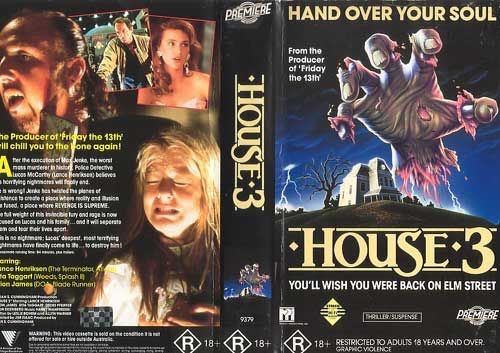
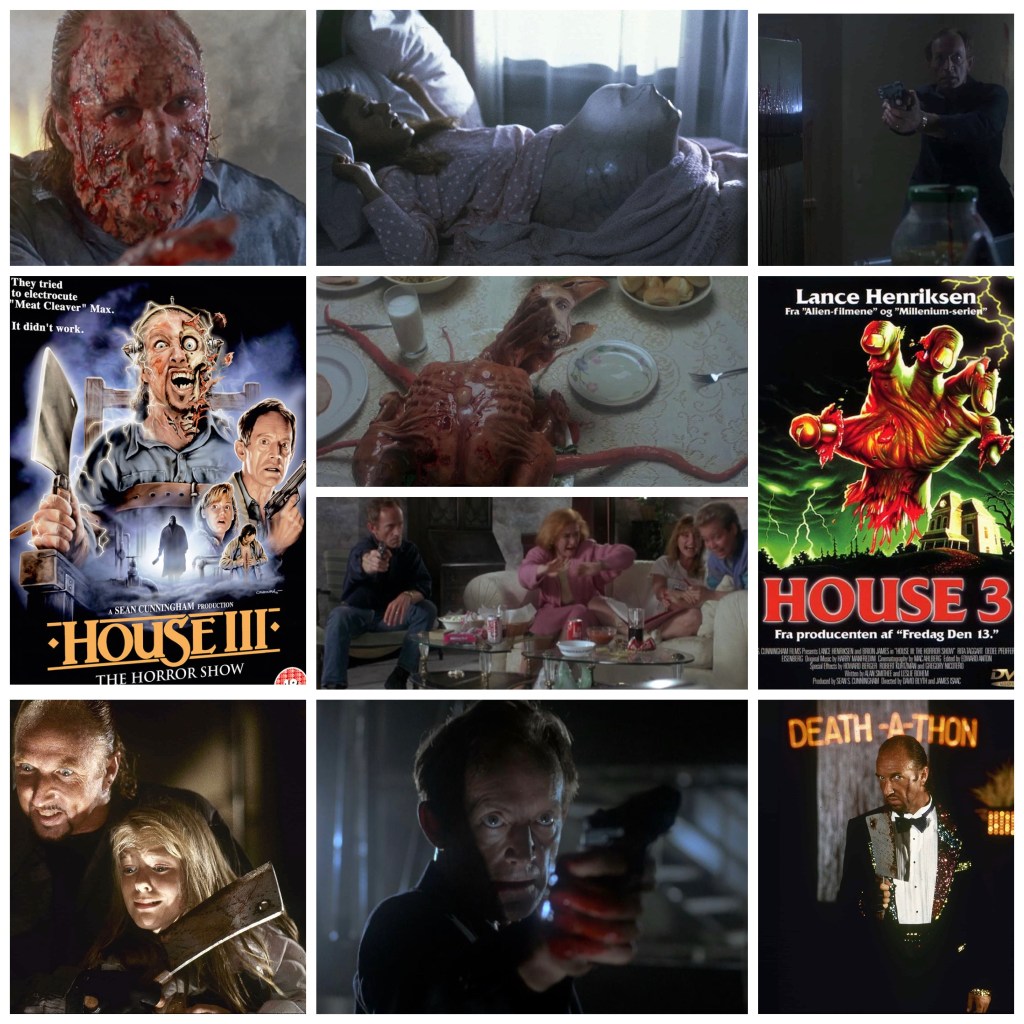
After checking out the first House flick and digging it I skipped right ahead to the third one, given the subheading ‘The Horror Show.’ I did this because it was more readily available to me than than the second and because they’re anthology anyways but mainly because it stars Lance Henriksen, who I’m a huge fan of. This one has a super bad reputation for some reason and I see from some reviews (Ebert, notably) that they had no idea this was even connected to the House franchise and thought it was an attempt at a standalone horror flick. This is understandable as it has almost zero connective tissue to at least the first film, which is odd they’ve used the House name but no matter, it’s still a perfectly entertaining, impressively gruesome cop versus slasher outing. Henriksen is Detective Lucas McCarthy, a tough cop and gentle family man who has successfully tracked and apprehended ‘Meat Cleaver’ Max (the great Brion James), a profoundly vicious mass murderer whose weapon of choice is, you guessed it, a giant meat cleaver. When they try to fry the fucker in the electric chair it literally goes haywire and somehow Max’s ghost is able to escape via electric currents and continue to kill as well as make life hard for Lucas and his family as he lurks about their home turning inanimate objects very animate. What to do? Lucas must think outside the box of his usual cop skill set towards more metaphysical methods before Max literally kills everyone. Henriksen is terrific and gives the role a genuinely haunted aura and PTSD afflicted frenzy that is very effective and believable. James is a mad dog monster as Max, imbuing him with a devilish trademark laugh and chewing scenery like there’s no tomorrow. There’s some very unnerving prosthetic effects, a standout moment sees a turkey dinner some nauseatingly to life in front of Lucas, provoking a hilariously deadpan reaction from the man. While I don’t see quite what this has to do with the House franchise in essence and could have easily just been it’s own unrelated thing, I really enjoyed it for it’s energy, the brutal cat and mouse game between Henriksen and James who are both at the top of their acting game here and the inspired, deranged special effects. Good times.

-Nate Hill

THE ROBERT ALTMAN FILES: COME BACK TO THE 5 & DIME JIMMY DEAN, JIMMY DEAN (1982)

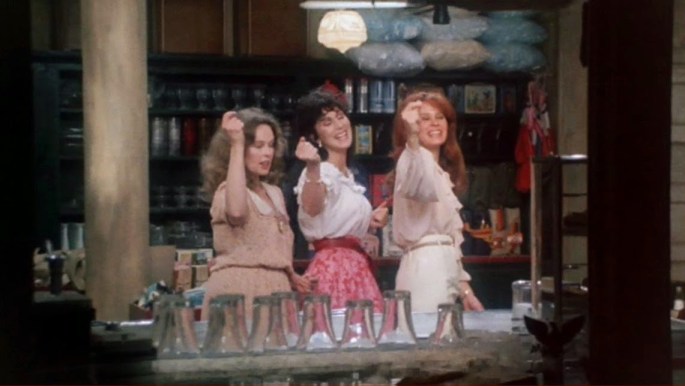
With cinematographer Pierre Mingot’s camera crawling across the dusty and crowded aisles of the shabby Woolworth’s five-and-dime aided by nothing but the sound of the hot Texas wind blowing in the background, the stillness is shocking and the silence is deafening. After the assaultive soundtracks and busy tableaux of Robert Altman’s body of work from 1970 through 1980, this seems downright pastoral; retrograde, in fact. For this quiet solemnity is the brief calm before the kickoff of the 20th anniversary reunion for the Disciples of James Dean, a small gaggle of friends who once wore matching sweaters, dreamed of being in a singing group like the McGuire Sisters, and worshiped at the alter of James Dean while sweating out life in McCarthy, Texas during the early fifties.

Set on September 30th, 1975, the 20th anniversary of the death of James Dean, Come Back to the 5 & Dime Jimmy Dean, Jimmy Dean tracks the sad, lonely, and scarred lives of those for whom the Woolworth was once the nexus of their universe; a place you could get an orange Crush and read Photoplay magazine while waiting for your friends to get off work. And in 1975, time has not been kind to the Woolworth, itself slowly beginning to feel the pressure as regional retailers like TG&Y, Target, and Wal-Mart began to slowly creep across the map all the while watching smaller stores burn out and die as their host towns did the same.

The McCarthy Woolworth is situated not sixty miles from Marfa where, in 1955, director George Stevens and company travelled to film portions of Giant, a film that would prove to be James Dean’s last. This proves to be a crucial point in time in the lives of those at the Woolworth, most especially high-strung Dean fanatic, Mona (Sandy Dennis), and Joe (Mark Patton), her co-worker and friend whose homosexuality is becoming a point of rancorous contention in the conservative town. A day-trip to Marfa in the hopes to be extras in the film leads to a secret that will be revealed twenty years later in the course of the reunion just as everyone else in the store’s purview will see their lives peeled back and exposed.

It’s perhaps no accident that 1982 marked the 25th anniversary of the release of The Delinquents and The James Dean Story, Robert Altman’s first two films that were bathed in the ghost of Dean and his legacy. For 5 & Dime, Altman’s adaptation of Ed Graczyk’s stage play, is a film about, among a lot of things, a gulf of time, starting over, and reassessment; a mirror of disillusionment and reconciling the past with the present. After the death of HealtH and the perceived folly of Popeye, Altman was on the other side of the Hollywood gates, reconfiguring his strategy and finding new energy for the march through the wilderness ahead.

In 5 & Dime, Robert Altman gets to start the 80’s off with a big “fuck you” to the type of salt of the earth community that was so lionized in the ascension of Reagan’s America. Steeped in religious hypocrisy and homophobia, the town of McCarthy deserves to shrivel up and die on the vine. We see that this isn’t a town where the righteous and the upstanding live, but, instead, its a lifeless husk inhabited by the sad denizens of a religious culture that has proved ruinous. We never see anything of McCarthy outside the store but we really don’t need to, mostly because movies like Peter Bogdanovich’s The Last Picture Show exist and it’s a well-traveled landscape. This is a town in which the skating rink closed in 1965. You really only need to understand that.

Populating this world are only those who work at the Woolworth or those from its past. Randy and foul-mouthed Sissy (Cher, extraordinary in her first serious dramatic role) still works the counter twenty-five years later but now is cemented to Lester T, a husband we never see but about whom we will hear plenty. Juanita (a perfect Sudie Bond) runs the place with the same kind of starchy, unforgiving attitude that was its brand when it was being run by her late husband, Sidney, who, like Lester T, is a man we will not see but about whom we will hear plenty. Coming in from out of town are Stella Mae (Kathy Bates, hurling it to the back row), a wealthy but terminally empty woman whose acrid ribbing of the plain but sweet-natured Edna Louise (Marta Heflin) reveals a deep pain of jealous resentment. Mona still lives in town and arrives a little late from a trip to Marfa, carrying another piece of Reata, the false front from Giant built in the middle of that town’s arid wasteland that slowly became dismantled by the natural elements and tourists who wanted a piece of its memory. Finally, the one stranger to the group arrives in the form of Karen Black’s Joanne, a mysterious woman with bold and striking features who drives a fancy yeller Porsche who… somehow… reminds everyone of someone they once knew.

It should go without saying that there is a feeling by some that this film is poorly representative and isn’t without issues. While I certainly understand and to a certain extent agree with some of those concerns, I do think they miss a wider point of just how rare it was in 1982 to see any film that dealt with LGBTQ issues as openly and with any sympathy for those characters who had been traditionally marginalized. But aside from being a very brave, LGBTQ-positive film, 5 & Dime is pointedly reflective for Altman on a personal level. Along with Popeye, here, too, lies a dark self-assessment regarding the regrets of misspent parenthood as it is revealed that Mona’s child, long-heralded in McCarthy as the illegitimate love child of James Dean, has been smothered and emotionally abused by his mother. And it is again Mona who acts as the vessel in which Altman places some of his wistful nostalgia for his salad days. “I should have kept up with all of them,” she says as the transparent scrim in the mirror gives way to a reminiscence that feels like it’s bathed in CinemaScope, revealing a sadness that independent, cinematic productions of one-set plays was the extent of Altman’s professional reach. In Sandy Dennis, Altman had a rare creature who could be as pitiful in her neurosis as she could be tender and hers is the character who slowly fades away over the course of the film, her life no more than an empty shell of lies disguised as memories.

If Hollywood bet Altman would wilt without his widescreen trickery and ephemeral bullshit, they bet wrong. With nothing but one set and a handful of actors, Altman spans twenty years of hurt and pain that feels epic in scope. Not only is it a roaring success, it’s a remarkable piece of filmmaking and one of Altman’s very best pictures. And even if he would eventually pare his mise-en-scene down even further in 1984’s blistering Secret Honor, the amount of production value Altman gets from just the performances and the theatrical utilization of the mirror as a window into the past reflects just how incredibly gifted he was when it came to brass tacks of visual storytelling. 5 & Dime could obviously be done in a master shot but every cut and camera setup seems considered and, unlike other adaptations of stage plays to the big screen, Altman does absolutely nothing to open the piece up to make it more cinematic, correctly gauging that the claustrophobia would make the microscopic examination all the more riveting.

In adapting the play to the screen, Altman is reporting on an America that is breathing its last breath. It’s a place where the plastic pinwheels refuse to move in its atmosphere. There is a stagnancy and a ripening; rain threatens to roll in but always passes by without showing up. Most everyone in the group promises each to reunite again in the year 1995 but there’s little question that it’s a reunion that won’t occur. As the ending credits roll, the audience is reminded that time will eventually wear everything down into a bittersweet, faded memory. From the structure of Reata in which nobody dwelled to entire towns that once bustled with actual life and energy, absolutely nothing is spared in the end.

(C) Copyright 2021, Patrick Crain
Steve Miner’s House

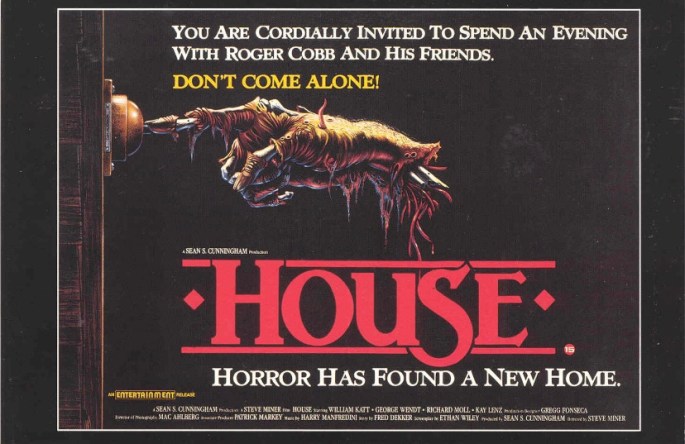
There’s a lot going on here for a film with the simple and straightforward title ‘House,’ and not all of adds up for a coherent or clear minded horror flick but it’s still a lot of warped, gooey fun with some great 80’s practical effects, a decidedly anthology vibe despite, well, not being anthology at all really and the same kind of mischievous, rambunctious, irreverent tone to the horror that one might find in Sam Raimi’s Evil Dead films. It’s also directed by Steve Miner who has deep horror roots, having helmed the very first Friday The 13th long ago so the force is solidly strong with this one, in terms of horror speak. William Katt plays a writer who moves into a creaky old house with his family and before they even have a chance to unpack their shit his kid goes missing, like literally before you even get properly introduced to the characters, it’s wild and hilarious. As the ominous yet silly tone is set we also meet all kinds of other ghosts and ghoulies including some spectacularly gruesome monsters that live in the closet, a fat bottomed zombie girl who keeps showing up to torment him (this is where the film feels most like Evil Dead), some pesky sentient gardening tools that follow him around, George Wendt as his sorta friendly sorta nosy neighbour who keeps bringing him beer in offers that he rudely snubs and the mummified remains of an old Nam war buddy (Richard Moll) who come back to haunt and remind him of some psychological incident regarding the war that can’t be put to rest. There is a LOT going on and unfortunately the film can’t make proper sense of it or make it all feel like it’s coherently connected beyond a kind of scattered episodic feel, hence my references to anthology films above. However, what it lacks in clear vision it makes up for in cheer lunatic energy and boisterous charm, each oozy new set piece and special effect clearly showing a level of artistry, creation and off the wall deadpan humour that is impressive and fun, the acting from everyone, Wendt in particular, is very good and it all feels like everyone was having a good time.

-Nate Hill

HBO’s Mare Of Easttown

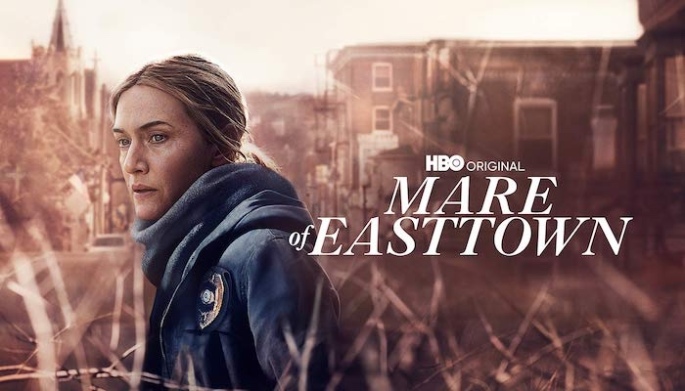
HBO has another unbelievable strong drama on their hands in Craig Zobel’s Mare Of Easttown, a season of television so good, so emotionally winding and narratively compelling on all fronts that I’m still processing it weeks later and just haven’t felt qualified or equipped to write a review on. It’s one of those shows that I’ll gladly take another season of but if not that’s cool too because the story here is so wonderfully encapsulated into one single season that it feels appropriately bookended and self contained in one sensational eight episode run. Kate Winslet has to be one of the greatest of her generation as an artist and she simply outdoes herself here in a stunning turn as Mare, a long suffering police detective in a troubled working class borough of Pennsylvania who has just about enough distressing things in both her personal and professional life as one human being can take. She’s trying to solve the murder of a local girl who turns up dead in a river one morning and also can’t let go of the cold case where another girl went missing a year ago.. are they connected? Meanwhile she’s trying to cope with trauma she hasn’t even properly processed yet in her family, manage a stormy relationship with her mother (Jean Smart, superb as ever), raise her wonderful teenage daughter (Angourie Rice, brilliant) right as the three of them struggle to look after her grandson. I won’t go too much into the interpersonal relationships because they’re so intricate, unorthodox and painfully realistic you just have to explore them for yourselves and despite being intimidatingly complicated as a narrative web, the show somehow manages to juggle them all concisely so that you have a clear, mosaic like sprawl of who relates to who and very well developed characters who are acted flawlessly all across the board by a beautiful cast in a sort of ‘rust belt gothic true Detective deep drama’ recipe. The story is damn near perfect, juggling the procedural and personal aspects intuitively and seamlessly for an experience that feels raw, down to earth and relatable. I will warn you that this one one bleak, depressing and emotionally pulverizing experience, one that isn’t afraid to fully show, in complicated and upsetting minutia, how human beings suffer, hurt each other, make horrible mistakes, are dealt unfair and rough hands in life and how they attempt, bit by bit, to work through their pain, struggle forward and move on through the difficult times towards something hopefully better. It’s dark, it’s relentless, it’s an emotional gauntlet to walk through but it’s not without it’s catharsis, lessons learned and just enough light at the end of the tunnel. Pretty much perfect as far as I’m concerned.

-Nate Hill

HBO’s Friends: The Reunion

As someone who watched Friends casually, in the background, when it was on cable in my kid and teenage years, tuned in absentmindedly but never became and active, engaged fan of the series, I have to say that Friends: The Reunion is kind of brilliant and can be greatly enjoyed by someone who isn’t quite a hardcore disciple of the show itself. Friends is a lynchpin sitcom that meant and still means a lot to a lot of people who fell in love with these characters, watched every week and got swept up in the cultural phenomenon of a sitcom that became a way of life. So, what made this such a hit for someone like me who isn’t a super fan? It’s the way they go about this reunion, that being the key word. This isn’t a reboot, continuing season, cap-off feature film, animated series or otherwise fictional addition to the canon, it’s simply a loving documentation of these six actors having a catch-up, an emotional, totally unscripted trip down memory lane on detailed recreations of the sets they lived, worked and made core memories of for decades and I think the format here is kind of a stroke of genius, really, and that employed just right for any show’s reunion will be a showstopper. Jennifer Aniston, Matt Leblanc, Courtney Cox, David Schwimmer, Matthew Perry and eternally lovely Lisa Kudrow (Phoebe was always my personal favourite character) have come such a long way since Friends, their lives are very different now but watching them get together in the same sacred space where they changed the history of television feels like they never left their evening cable slot and really just brought me back to former times in my life when I’d get home and watch Friends, That 70’s Show and others all in a giddy lineup. This reunion spends a reverent opening segment just letting these actors play, rediscover their characters and touchstone areas of the set that hold significance to them while clips from the show are spliced in in parallel fashion. There’s also a more formal, organized part where they sit and discuss various things by that iconic fountain and yes this sequence is hosted by that James Corden dude and yes he’s annoying as ever but oh well. There are some shocking celebrity cameos that no doubt come from a place of love as they’re mostly people who would have themselves grown up with the show but I much preferred video testimonials from fans all over the world who give their thoughts and feelings on why the show was so important and what it means to them personally. Say what you want about Friends, I know it’s become one of those things that it’s just cool to hate on (never a good look, honey) but there’s no denying the fact that it pioneered a subculture of television and pop culture, and did a lot of good for a lot of people who may not have had much else in their lives to hang onto at the time. This reunion is a loving testament to that, a life affirming, blessedly nostalgic and just plain happy look back for six actors whose careers were defined by it.

-Nate Hill

HBO’s Friends: The Reunion

As someone who watched Friends casually, in the background, when it was on cable in my kid and teenage years, tuned in absentmindedly but never became and active, engaged fan of the series, I have to say that Friends: The Reunion is kind of brilliant and can be greatly enjoyed by someone who isn’t quite a hardcore disciple of the show itself. Friends is a lynchpin sitcom that meant and still means a lot to a lot of people who fell in love with these characters, watched every week and got swept up in the cultural phenomenon of a sitcom that became a way of life. So, what made this such a hit for someone like me who isn’t a super fan? It’s the way they go about this reunion, that being the key word. This isn’t a reboot, continuing season, cap-off feature film, animated series or otherwise fictional addition to the canon, it’s simply a loving documentation of these six actors having a catch-up, an emotional, totally unscripted trip down memory lane on detailed recreations of the sets they lived, worked and made core memories of for decades and I think the format here is kind of a stroke of genius, really, and that employed just right for any show’s reunion will be a showstopper. Jennifer Aniston, Matt Leblanc, Courtney Cox, David Schwimmer, Matthew Perry and eternally lovely Lisa Kudrow (Phoebe was always my personal favourite character) have come such a long way since Friends, their lives are very different now but watching them get together in the same sacred space where they changed the history of television feels like they never left their evening cable slot and really just brought me back to former times in my life when I’d get home and watch Friends, That 70’s Show and others all in a giddy lineup. This reunion spends a reverent opening segment just letting these actors play, rediscover their characters and touchstone areas of the set that hold significance to them while clips from the show are spliced in in parallel fashion. There’s also a more formal, organized part where they sit and discuss various things by that iconic fountain and yes this sequence is hosted by that James Corden dude and yes he’s annoying as ever but oh well. There are some shocking celebrity cameos that no doubt come from a place of love as they’re mostly people who would have themselves grown up with the show but I much preferred video testimonials from fans all over the world who give their thoughts and feelings on why the show was so important and what it means to them personally. Say what you want about Friends, I know it’s become one of those things that it’s just cool to hate on (never a good look, honey) but there’s no denying the fact that it pioneered a subculture of television and pop culture, and did a lot of good for a lot of people who may not have had much else in their lives to hang onto at the time. This reunion is a loving testament to that, a life affirming, blessedly nostalgic and just plain happy look back for six actors whose careers were defined by it.

-Nate Hill