W Delta Z: The Killing Gene


I’ve written about this film before, but I just keep coming back to it and having tantrums at just how unseen and overlooked it is. Crafted in Europe and given the darkly ambiguous title ‘W Delta Z’, it was picked up stateside by Dimension Extreme and now has the decidedly more accessible title ‘The Killing Gene’, but it’s like they say, a rose by any other name. This is one seriously blood soaked rose too, with a few deeply unsettling ideas to go along with copious amounts of grisly violence. People have compared it to both Saw and Sev7n, and while not inaccurate, it’s smarter than those two combined and twice as gruesome. The premise is terrific: Amidst a brutal gang war in some nameless inner city inferno, there’s a serial killer loose with a few elaborately cerebral methods. Kidnapping people and forcing them to the brink of death via torture, giving them one way out: flick a switch that promptly kills a loved one in front of their eyes, also in captivity right next to them. The goal? To try and find tangible proof that real ‘love’ exists beyond an illusory notion or simply to serve human function, based on a controversial mathematical equation. Pretty grim stuff, but fascinating as well. Weary Detective Eddie Argo (Stellan Skarsgard has never been better) does everything he can to find this maniac, stop the gangs from tearing up the city and wrestle demons from his own past, which have more to do with matters at hand than he thinks. Saddled with the obligatory rookie partner (Melissa George) and at odds with the psychotic ringleader of a gang (Tom Hardy), it’s a rough week for him and everyone in this hellhole. This is the first role I ever saw Hardy in and he’s terrifying, a mumbling urban joker who delights in doling out horrific violence and assault, just a pitch black, on point performance early in his now prolific career. I have to spoil one plot detail which is fairly evident from trailers anyway, and that’s the the identity of the murderer. Selma Blair is the perp in question, and not not once elsewhere in her career has she taken on a role that requires this kind bravery, grit and conviction. Her character is driven by fury, fuelled by vengeance and infected with the sickness that both those attributes fester among damaged people. She’s simultaneously a terrifying fiend and someone you can sympathize with, and even wish to protect. Her character has a bitter, twisted past and we soon realize that the chosen victims are all intricately woven into Eddie’s past, a dark web of violent secrets involving Hardy, another cohort (Ashley Walters) and all of the double dealing that has gone on between them in the past, a precursor of a narrative that comes back to haunt each and every one of them, including Blair herself. The distinct European flavour rushes up to meet the classic urban American crime aesthetic and creates a flavour both stark and irresistible, as we realize that the journey we’re being taken on is very, very different from most of the cop vs. killer flicks made by Hollywood. I can’t stress enough how great this one is. I rarely re-review films unless I feel like they really didn’t get a fighting chance out of the gate or that marketing wasn’t properly put in, and not enough people took notice. This one got seen by few, and just begs to be discovered by many folks out there who I know would really dig it. 

-Nate Hill
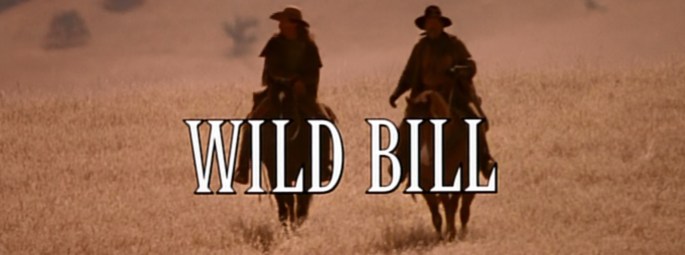
WALTER HILL’S WILD BILL — A REVIEW BY NICK CLEMENT

1

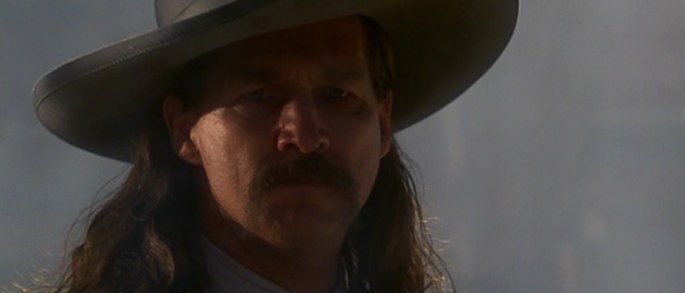
Despite an embarrassing theatrical roll-out where it grossed a dismal $2 million off of a $30 million production budget, Walter Hill’s 1995 oater Wild Bill is a damn fine piece of old-school western filmmaking, and while recently revisiting, it’s clear that the creative team on HBO’s Deadwood were paying attention in retrospect, as Hill’s sturdy and masculine work on this film would clearly pave the way for him being recruited to direct the pilot to one of the pay cabler’s greatest dramatic series. Featuring the perfectly cast Jeff Bridges as the titular hero, there’s a wonderful supporting ensemble including a fiery Ellen Barkin as Calamity Jane (should’ve been Oscar nominated), John Hurt, Diane Lane, Keith Carradine, James Gammon, Bruce Dern, Christina Applegate, James Remar and a sketchy and sweaty David Arquette as the trigger man who turned the legend’s lights off for good. Lloyd Ahern Jr.’s dusty cinematography captured the essence and lethality of the old west, while Hill’s poetic yet terse screenplay nailed the various, grizzled voices from the ensemble. Both Barry Levinson and Sydney Pollack were attached to direct at various stages in the film’s development, and the film was produced by Richard and Lili Fini Zanuck, and distributed by United Artists. Available on DVD; wish there was a Blu!

2

The Void 


The best horror film of the year so far has arrived in the form of The Void, a genuinely spooky, deliriously gruesome 80’s throwback that gets tone, pacing and atmosphere right on the money, hitting that sweet spot that not all homages can fully grasp. It’s this year’s It Follows, I’ll put it that way. Balls out ballistic, atmospherically eerie and gorier than a chainsaw mud wrestling competition for spastics, it starts somewhat reigned in and then amps up to feverish nightmare fuel once it gets going, and boy does it ever get going. When emulating classics from distant eras, it’s important that these films find their own specific flavour and unique groove, as well as cleverly wearing influences on their sleeve. There’s an obvious adoration for John Carpenter’s The Thing running through it like an undercurrent, but the filmmakers find their own otherworldly pulse, and the fabulously icky body horror is subservient to an overarching plot involving forces from another dimension beyond ours, which a few lunatics are foolishly trying to contact. That happens later on though, once that special ripcord within the horror genre is pulled, the one that separates an uneasy opening act, a calm before the storm and the craziness to follow as soon as that first inciting attack occurs. The premise? Solid and simple: a small town cop (Aaron Poole) brings a blood soaked drifter to a nearly shut down county hospital run by a weary skeleton crew. No sooner has he arrived, bad shit starts happening. Some of the night staff go madly insane and start lobbing their own body parts off, while white cloaked cult weirdos gather outside to prevent anyone from leaving the building. A gruff, shotgun toting badass (Daniel Feathers) breaks in and pretty much violently threatens anything that moves. Corpses come alive and transform into glistening, pulsating piles of aborted pizza pocket waste, and to use the time honoured slogan, ‘all hell’ quite literally breaks loose. The head doctor (veteran character actor Kenneth Welsh, aka Windom Earle, is devilishly scary) clearly knows more than he lets on, and the new bodies pile up on the rotting older ones as dark forces gather for some kind of… birth. The actual how’s and whys of the story are left appropriately vague, as is tradition in hectic 80’s creature features with a supernatural twist. The term ‘void’ is never mentioned by anyone, rather hinted at by glimpses of a dreamy, austere parallel dimension that calls to mind everything from Altered States to Beyond The Black Rainbow to The Cell. A buddy of mine referred to the film as “Carpenter Fanboy Porn”, and while that’s definitely one angle you can look at it from, there’s more than just that, if you widen your gaze. It’s clearly a love letter to the man and his work, but it has its own thing going on as well, and feels at once as fresh as the titles it looks up to must have when they came out, and as lovingly nostalgic as a throwback piece should. The filmmakers have deliberately left it open for a sequel as well. Bring on the franchise, I say, the genre can really use stuff like this to fill the Void. 

-Nate Hill

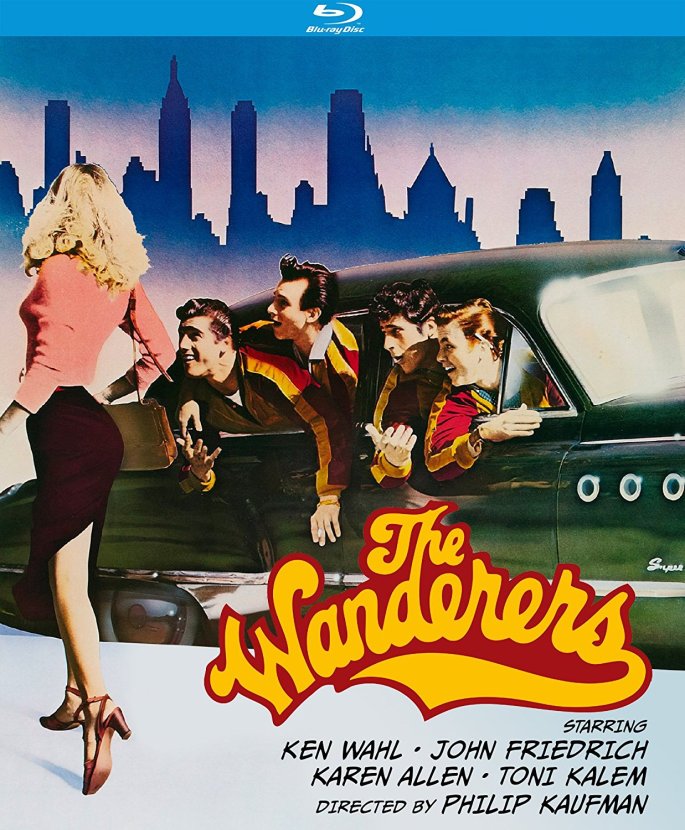
PHILIP KAUFMAN’S THE WANDERERS — A REVIEW BY NICK CLEMENT

3

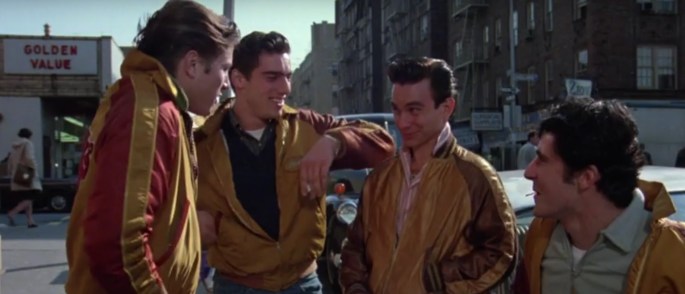
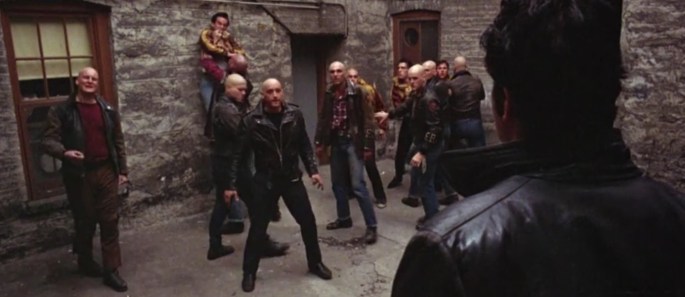
Philip Kaufman’s The Wanderers, financed by Orion and released in 1979 by Warner Brothers, is a special movie, and special for so many reasons. It defies genre, it’s got a live-wire spark that few other movies could ever match, and the blast of young, hot-blooded talent that this film featured in front of and behind the camera would be very hard to replicate. Grossing $23 million worldwide and receiving mixed reviews at the time of its release, this is the type of movie that just seemed to be born as an immediate cult classic, as it’s one of those idiosyncratic efforts that can’t really be compared to too much else, though intentionally or not, it did seem to set the stage for Walter Hill’s Streets of Fire. Co-written by Kaufman and his wife Rose, the film stars Ken Wahl, John Friedrich, Karen Allen, Toni Kalem, Jim Youngs, Alan Rosenberg, Dolph Sweet, and Linda Manz, and is set in the Bronx circa 1963, with the action revolving around a gang of Italian-American teens who go by the name the Wanderers, and how they butt heads with rival groups, including the Ducky Boys, Del Bombers, and the Fordham Baldies.

4

Based on the novel of the same name by crime scenarist Richard Price, the film had a long journey through development, with Kaufman finally able to get The Wanderers made due to his previous box office success, Invasion of the Body Snatchers. The depiction of American youth through the prism of the coming-of-age narrative was a perfect way to stage the passionate material, with multiple romances taking center stage of the story, which was peppered with wild and woolly bouts of fisticuffs-laden action and beat-downs. Cinematographer Michael Chapman stressed fluid, lateral movement, bold and vibrant color, and a shooting style that maximized energy at every turn. Stuart H. Pappé and Ronald Roose’s sharp editing kept a faced pace and was in perfect synch with the dynamic, pop-vintage soundtrack that was selected by Kaufman and Price, while Robert De Mora’s fabulous costumes were characters in and of themselves. John Hay Moore’s evocative production design is the icing on this particularly sweet piece of cinematic cake.

1

Kino-Lorber went all out with their two-disc special-edition of The Wanderers, presenting the theatrical cut of the film in 1.85:1 widescreen via a 2K scan, while a second disc includes Kaufman’s “preview cut,” which runs roughly seven minutes longer, and is featured in 1.78:1 and looks expectedly rough considering a likely obscure source. The main platter offers superb overall picture quality, with bright whites, deep blacks, and punchy reds, and always retaining that shot-on-celluloid texture that can easily be lost during digital conversions of older films; purple and gold look positively velvety here. The audio pops at every turn, with a 2.0 DTS-HD sound mix that feels especially well balanced during the various scenes of multiple audio sources being utilized. Special features include two commentaries, interviews, various featurettes and trailers, and a wonderful two minute text intro written by Kaufman that plays before the film begins, and which clearly demonstrates his love for The Wanderers.

2

BARRY LEVINSON’S WAG THE DOG — A REVIEW BY NICK CLEMENT

3

I can vividly remember the opening night for Wag the Dog. It was back in 1997, I was in high school becoming a budding film lover, and I went with a group of friends to see this bitter black comedy about Hollywood and politics and I can remember being one of the few people in the theater who seemed to love what they were seeing. It was very topical material at the time, and still is today, with razor-sharp satire always at the forefront, and a whiff of pompous, know-it-all-humor that probably alienated many people. Energetically directed by Barry Levinson and craftily adapted by Hilary Henkin and David Mamet from Larry Beinhart’s novel American Hero, Wag the Dog centers on a presidential sex scandal, and the Washington DC-based spin doctor (Robert De Niro, wonderfully affable and light on his feet) who is called in for crisis management by the White House.

wag_the_dog_ver1

His big idea? He’ll start a fake war with Albania and spread various media rumors and lies in an effort to deflect the country’s attention from the real scandal at hand. De Niro enlists the help of an aging, full-of-himself Hollywood mega-producer, perfectly played with smarmy glee by a bronzed and absurdly coifed Dustin Hoffman, who brings along his various production contacts so that he can “produce a war” that nobody will ever realize is fake. And one that he can, rather frustratingly, never tell anyone he had a part in creating. The comic mileage that’s derived from this ironically painful fact for Hoffman is a constant source of hilarity all throughout this happy-to-be-mean little movie. And when you actually pay close to attention to the dialogue, you’ll notice just how tack-sharp the spoken words are, with various individual lines carrying a wicked punch (“No more make-up, she’s just been raped by terrorists!”).

2

An amazing supporting cast rounds out the brittle edges of this scathing media takedown, with Anne Heche, a diseased Woody Harrelson, rapid-fire Dennis Leary, Willie Nelson, Andrea Martin, John Michael Higgins, David Koechner, William H. Macy, and Kirsten Dunst all showing up for memorable cameos and bit performances. But the black heart and acidic soul of this punchy little movie belongs to the amazing team of De Niro and Hoffman, who both seemed to be in love with the idea of occupying the same space as one another, generating tremendous chemistry, and letting the zippy screenplay do most of the heavy lifting. Mamet and Henkin’s script throws out a variety of nastily barbed zingers, and Levinson’s snappy direction is in perfect tandem with Robert Richardson’s agile, hot-white cinematography. Also, the idea that this movie was released exactly one month before the Monica Lewinsky scandal broke is just too wild to contemplate.

1

Eye See You 


You know those films that you just seem to get fixated on and love for no particular reason, like they’re not even that good, you just… really like them? That’s Eye See You for me (known as D-Tox to all you folks across the pond), a heavy handed snowbound horror vehicle for a sedated Sylvester Stallone. It’s silly to the max, thoroughly implausible and perforated with cliches, but for whatever reason I just can’t get over the damn thing. Now, I admittedly have an affinity for the Agatha Christie style murder mysteries, especially ones set in the snow (cue fond memories of Hateful 8 and The Thing), and this one piles on a blizzard of red herrings, multiple shady characters, extremely graphic violence and paranoid unease. Maybe it’s that cast, a platoon of tough guy characters actors backing Sly up in one serious roster of a supporting cast. Old Rocky plays a big city FBI agent who is trying to find a jarringly vicious serial killer that targets law enforcement and has that classic obsession with his pursuer. After his girlfriend (Dina Meyer) falls victim to this beast, Sly unravels and following a suicide attempt, is sent up north by his mentor (Charles S. Dutton) for a little R&R,

and both R’s in that stand for rehab in a special remote facility designed just for cops with issues to work out. The place is run by Krusty Kris Kristofferson, and home to so many recognizable faces one has to give the casting director a tip of the fedora. A disgraced Mountie (Robert Prosky), emotionally fragile ex SWAT commander (Sean Patrick Flanery),

former Scotland Yard (Christopher Fulford), hostile ex narc (Jeffrey Wright with some pretty Harvey Dent facial scars), an insufferable macho asshole (Robert Patrick), ex military (Tom Berenger) who serves as caretaker, sympathetic therapist (Polly Walker) and a seriously creepy Stephen Lang. That’s a whole lot of suspicious characters to pick a killer from, because (you guessed it) the meanie has followed Sly out to the mountains and is posing as a member of their group. It’s a guessing game right up until one severely bloody climax, with ex cops dropping dead all over the place along the way, and Stallone looking more hollow and dishevelled as each body turns up. He’s not in action mode here at all, hell, he’s not even in sorta kinda Cop Land action mode, he’s a broken man trying to heal who’s forced back into shit kicking, and it puts a visible strain on him that the actor handles surprisingly adeptly. The rest do their job terrifically, with Flanery standing out in the scant but affecting screen time he’s given, and Patrick blustering through every scene until you’re just praying for the killer to target him next. There’s downsides galore, mind you, this isn’t well thought out territory, it’s gory genre nirvana and not much else. There’s a level of predictability that could have been avoided by making the identity of the killer a bit less… obvious, for lack of a non spoiling term, but oh well. It’s also just overblown lurid potboiler madness, but what else do you expect from this type of thing? I get exactly what I want out of it: a nice helping of ultra-violent intrigue to tune into on a cozy night, and not much more. In fact, I think I feel a revisit happening this week.

-Nate Hill

Episode 43: M. Night Shyamalan’s SPLIT and UNBREAKABLE

episode 43

SPOILER WARNING

This week Frank and Tim breakdown M. Night Shyamalan’s new movie universe with his latest film SPLIT, and how it brings forth the long awaited return of David Dunn from UNBREAKABLE.

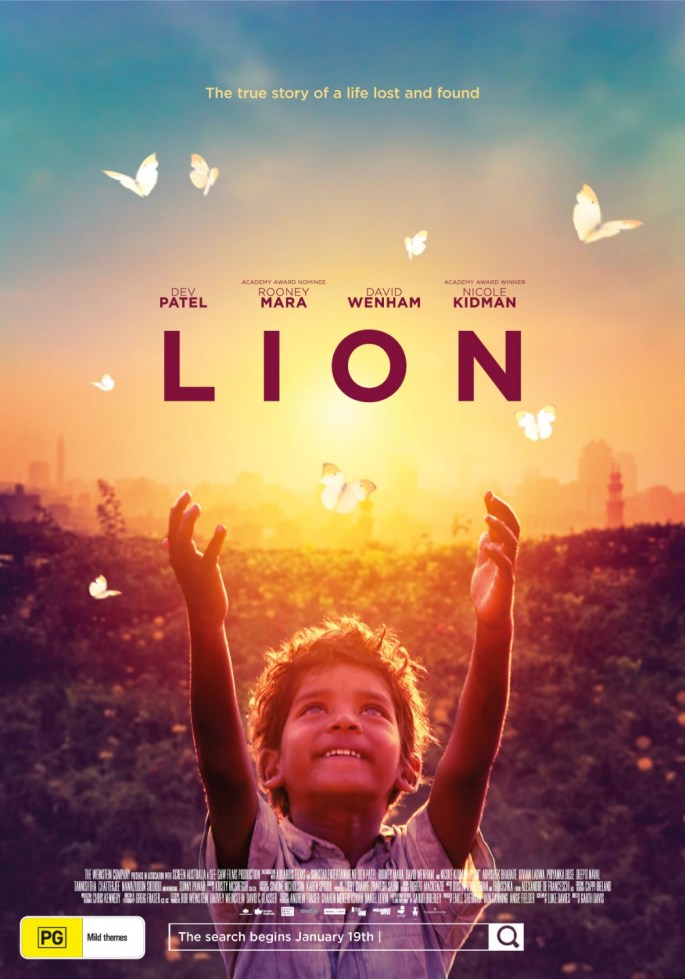
GARTH DAVIS’ LION — A REVIEW BY NICK CLEMENT

lion_ver10_xlg
You would have to be mostly dead inside to not have a nearly immediate emotional reaction to Garth Davis’ stunning true life story Lion. I was a personal disaster all throughout this film; it hit me with blunt-force impact and I can’t stop thinking about the film and its message and how life throws insane curve-balls to many, many people. Confidently directed by Garth Davis in his big-screen debut and written with sensitivity and open honesty by Luke Davies, this magnificent piece of work certainly tugs on your heartstrings, but how could it not? The tragic yet uplifting story of Saroo Brierley and how he was separated from his family as a child only to be reunited as a young man, Lion is soul-stirring cinema, and because Davis doesn’t force any one particular aspect too hard, the entire film feels honorably cathartic by the poignant conclusion.
3
 
Greig Fraser’s gorgeous cinematography finds beauty in some truly horrific situations, and the sweeping musical score by Dustin O’Halloran and Hauschka builds and swells yet never overpowers. The central performances by Sunny Pawar and Dev Patel are both superb, especially Pawar, who imbued his character with a plucky sense of resourcefulness and grace under pressure that I found positively astonishing to observe; I can’t imagine most five year-old children acting in the same manner as the real Brierley did, and it was nearly overwhelming to get a condensed glimpse of his 25 year journey. Nicole Kidman was also excellent as the adoptive mother; she even got to rock out with her classic frizzy-red pseudo-afro, while still looking all sorts of porcelain-doll beautiful.
2
 
Lion, intentionally or not, doesn’t paint a particularly inviting portrait of India as a country, and the postscript includes a note that 80,000 children are reported missing every year in the country. Shot on location in India and Australia on a $12 million budget, Lion grossed over $130 million worldwide and got nominated for six Oscars, including Best Picture. This is the type of moving, life-affirming cinema that more people should be checking out as a reminder that existence, for most of us, is a privileged experience. I’m continually drawn to true stories, and narratives that define us as a collective species, as I find that it’s important to be humbled by the plights and sacrifices of others.
1

Ronin

Ronin

1998.  Directed by John Frankenheimer.

02021510

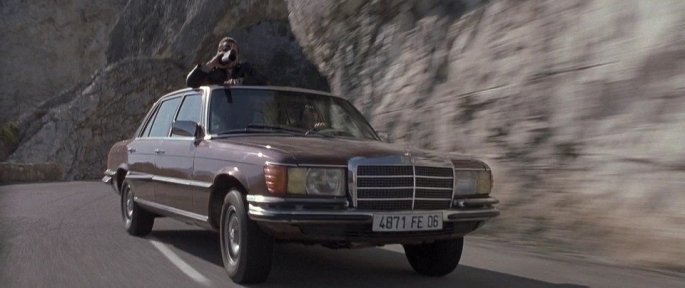
One of directorial icon John Frankenheimer’s final films, Ronin is a supercharged action thriller that moonlights as a commentary on the plight of the ghosts of a post-cold war world.  Featuring some of the most ambitious car chase sequences ever filmed, an uncanny amount of environmental control, and a suave ensemble playing off David Mamet’s script, Ronin delivers a wily mix of intelligent tradecraft and white knuckled set pieces.

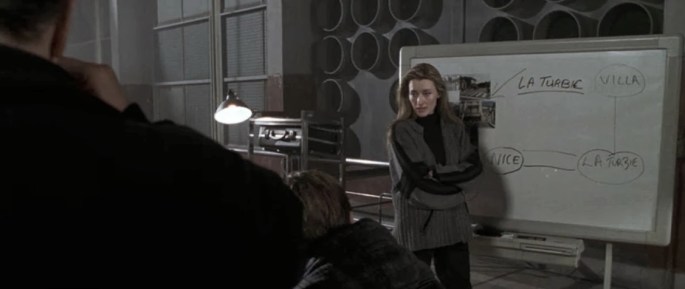
A group of operatives come together to fulfill a contract for the IRA.  Their mission is to obtain a case that is highly coveted throughout the intelligence community.  Competing interests and fair weather alliances test the unit’s loyalties as high octane pursuits and fully automatic conflicts flood the crowded streets of sun washed French locales.  Robert DeNiro stars as Sam, an ex-patriot CIA operator who teams with Jean Reno’s Vincent.  Watching these two fierce talents bond is a thing of beauty.  Mamet’s trademarked dialogue works as the glue, drawing each man into a fraternal cycle of comradery and violence that repeats itself throughout the terse narration.  One of the film’s best scenes involves their characters sitting in a cafe pondering their next move.  Mamet’s deliberate refusal to impart motivation or glimpses into the subconscious would fall flat with subpar talent, but Reno and DeNiro seize on the Spartan approach, slowly walking the viewer through their professionally trained thought process.  This is foreshadowed during an intense and endlessly quotable scene in which the crew argues about how to conduct their mission.

9

They are supported by Sean Bean, Stellan Skarsgard, Natasha McElhone, and Jonathan Pryce.  Skipp Sudduth has a role as the crew’s getaway driver and he performed almost all of his own driving.  The chase sequences involved hundreds of stunt drivers and Frankenheimer supervised each of the complex scenes directly.  Ronin is a prime example of how a director’s ability to not only grasp the concept, but to control it is essential.  Mamet’s script deftly avoids explaining the McGuffin of the case, leaving only a world of characters and action.  While the cast is able to engross with their shady underworld tactics, it is the action, more specifically the chases that complete the picture.  Filmed on location across France, Ronin features a Big and Little Dipper pairing of automotive mayhem.  The first involves a heist, in which the team is positioned throughout the target’s route waiting to ambush.  Robert Fraisse’s color-drained cinematography captures the chase with a frenetic rhythm made possible by quick-fire editing and the use of handheld cameras, giving the events a sense of urgency while keeping the material pleasantly in the vein of the 70’s classics which inspired it.

The crown jewel involves a chase against the flow of traffic, with the actual cast members in the vehicles.  Sound editor Steven Livingston recorded each individual car used in the sequences to ensure that they would sound authentic in the final version.  Sound, both the edited effects and Elia Cmiral’s pulsing score are essential ingredients in Ronin’s rubber banding cadence of flashing lights and gunfire, in between which lies pockets of rigorous world and character building.  This is an actor’s action film, in which the shallow plot becomes an inconvenience rather than a force of coherence.   Within seconds, after the film’s methodical first scene we all know why we’re here.  The magic is that Ronin not only delivers with respect to jaw dropping pursuits and 70’s chic gunplay, it has a non-handholding sense of respect for the viewer which makes its rogue protagonists even more endearing.

Zdjęcie-8

Available now for digital rental, Ronin is a slick piece of film making and a surprisingly smart action film.  While its lack of a traditional pay off may underwhelm some, its vintage aesthetics, outstanding performances, and adrenaline fueled chase sequences are more than enough to propel this film into the upper echelons of the genre.

Highly Recommend.

ronin-hd-movie-title

B Movie Glory: The Code


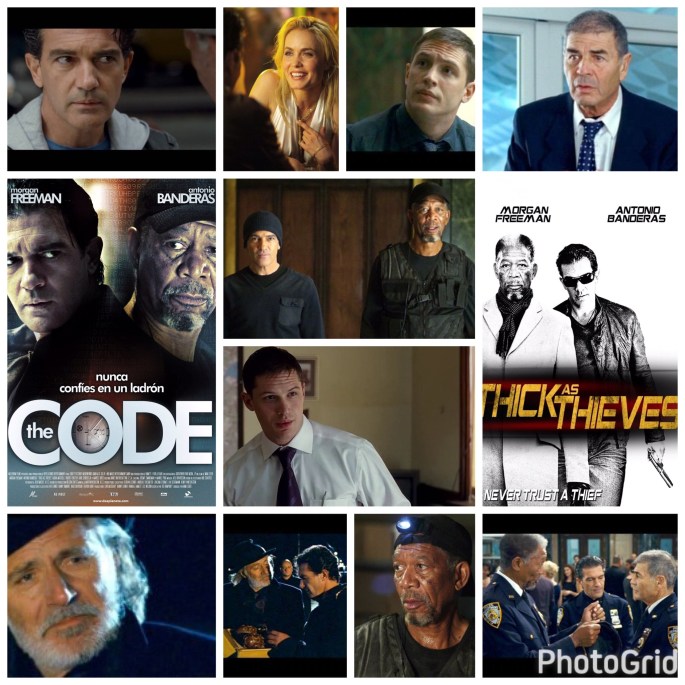
The Code, or Thick As Thieves as it’s known on DVD in some regions, is pretty much just Morgan Freeman and Antonio Banderas strutting their way through a B-grade, R-rated Ocean’s Eleven. It’s second tier stuff, but it has one hell of a cast and enough serpentine twists and betrayals to keep the viewer interested. Freeman plays a slick master burglar, recruiting Banderas’ younger thief to pull off one of those ‘impossible’ heists that requires all kinds of over elaborate planning and stylish execution. This is all in order to pay an outstanding debt to the Russian mob in the form of dangerous Rade Serbedzija, aka Boris the Blade, aka Boris the Bullet Dodger, who has a few surprising secrets of his own. All of them are also hounded by a classically dogged detective (Robert Forster, intensely excellent) and his rookie partner, who of all people is played by Tom Hardy in a role so small and random I’d love to hear the tale behind his casting. There’s also an obligatory love interest for Antonio, played by leggy Radha Mitchell. Now, it’s all mostly as pedestrian as it sounds, except for a few garnishing touches that elevate it just enough that it sticks in your memory. The master thief. The Ahab-esque cop. The vicious Eastern European gangster. The love triangle. Backstabbing. These are all ancient archetypes that have been done quite literally to death, and they’re all present and accounted for here, but there’s a few moments that genuinely surprise and break feee of that somewhat. Revelations involving the Russian who isn’t what he appears to be, a third act twist that feels welcome, and snares of dialogue that snap our attention amidst the cliches. For what it is, it does its job well enough, and a few times shows actual inspiration. Not bad at all. 

-Nate Hill