Terrence Malick’s SONG TO SONG

It is getting more and more difficult to quantify Terrence Malick as a filmmaker, particularly with his abstract and introverted narratives with his last three features.  TO THE WONDER, KNIGHT OF CUPS, and now SONG TO SONG are a trilogy of films that are visual interpretations of fragmented memories that Malick holds within his psyche.  The picture (filmed back to back with his previous film KNIGHT OF CUPS) centers on three major characters woven within the music scene in Austin, Texas.  Rooney Mara is the wannabe musician, working her way up through the ranks of Michael Fassbender’s production company, and Ryan Gosling is a musician who falls deeply in love with Mara.  A tragic and tangled love story ensues, and we watch as these three people zigzag throughout each other’s lives.

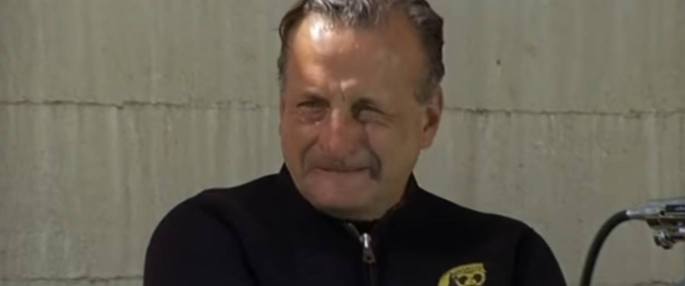
Michael Fassbender Song to Song

The film is very much a natural progression of Malick’s previous two films.  It is as if you’re trekking through a reflection of someone’s memories.  We see prominent moments, with a slurry of small, yet important details that bridge together a kaleidoscope of a narrative.  Where KNIGHT OF CUPS was playfully sensual and very erotic, SONG TO SONG is brutally perverse at times, seeing and experiencing a very dark portrayal of sexuality.

The actors assembled are remarkable.  There are a few carryovers from KNIGHT OF CUPS, Cate Blanchett and Natalie Portman in particular, but the bulk of the cast is a new Malick ensemble.  Michael Fassbender is nasty as ever as the record producer who is without emotion.  He constantly pushes himself in transgressive ways.  He forces threesomes upon his acquired lovers, he experiments with drugs, and he undercuts anyone whose support he has gained.
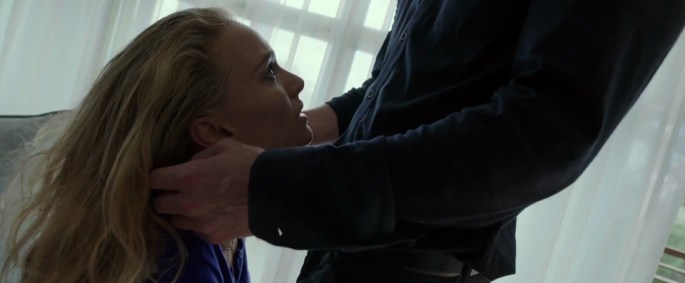
Natalie Portman Song to Song

Ryan Gosling is very different than we’ve seen him in a film before.  He’s very sweet, he’s very romantic.  While he maintains his stoic cinematic image, he sheds the mystery and hamminess that we’ve become too used to.  His interactions with Rooney Mara are wonderfully beautiful.  He gives a very touching and soft performance, a clear contrast to the menace and dirtiness of Michael Fassbender.  Natalie Portman gives yet another completely vulnerable turn as a young woman distracted by Fassbender’s charm and monetary value, ultimately suffering from it.  Val Kilmer and Holly Hunter briefly show up.  Kilmer is a singer, who greatly plays off his Jim Morrison persona, and Holly Hunter is the mother of Natalie Portman’s tragic darling.

What separates this from the previous two people twirling features, is that for the first time Malick has used popular music, while still using classical numbers.  Del Shannon’s RUNAWAY was prominently featured in the trailer and in an important scene in the film.  Along with his use of popular music, the film also features cameos from the Red Hot Chili Peppers, Johnny Rotten,  a significant scene between Michael Fassbender and Iggy Pop, and a narrative affecting performance from Patti Smith who acts as a mentor to Rooney Mara.
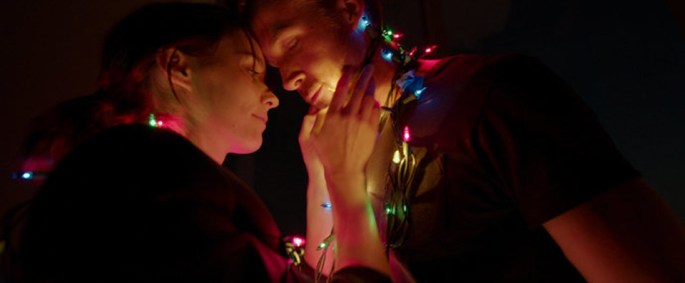
Ryan Gosling Song to Song

The collaboration between Malick and cinematographer Emmanuel Lubezki is a pairing that is cinematic nirvana.  It’s a match that tends to not be talked about nearly as much as it should be.  The picture looks and feels organic, it doesn’t look like a movie, nor does it feel emulated; it is real life.

If you haven’t been with Malick on his last two pictures, it would be difficult to recommend this film to you.  Yet the film is powerfully filled with beautiful and transgressive emotions.  The film is an experience, it’s as unorthodox as one might think.  The film is challenging, it is an experience that is worthy of anyone’s attention.  If that album cover of Pink Floyd’s WISH YOU WERE HERE were a film, it would be SONG TO SONG.
 

SCOTT STEWART’S DARK SKIES — A REVIEW BY NICK CLEMENT

2

I’m a sucker for a good extraterrestrial narrative, and the supremely wicked Dark Skies, which was released to ho-hum reviews and weak box-office back in 2013, is one of the more enjoyable genre offerings in recent memory. This is an intimately scaled sci-fi horror thriller with engaging performances from Keri Russell and Josh Hamilton as suburban parents who are being visited, along with their children, by something spooky in the night. J.K. Simmons is very effective as the alien hunter who helps them solve the mysteries that are plaguing their house. Written and directed by Scott Stewart and produced by the now-on-fire Blumhouse Productions, the film has an absolutely chilling and upsetting final scene, which really drives a stake through the heart of any parent who might be watching. The crafty cinematography is by David Boyd, while Joseph Bishara provided the ominous musical score and was in perfect tandem with Peter Gvodas’ sharp editing. Dark Skies isn’t groundbreaking, but sometimes a nasty and efficient little chiller is all that’s required.

3

Bone Tomahawk

Bone Tomahawk

2015. Directed by S. Craig Zahler

screens_feature6

The romanticizing of the Western has become a low hanging fruit that films have been attempting to deconstruct for years.  While a handful manage to succeed, the majority of these films fail to present any semblance of resonant ideas, let alone understand the concepts they seek to undo.  S. Craig Zahler’s harrowing debut feature, Bone Tomahawk begins in an attempt to distance itself from this camp, using a profane marriage of glacial pacing and unrelenting acts of violence to produce a singular, unforgettable film.  However, it is this dark design; a seething meditation on masculinity and the Western’s self-aggrandizing of its heroes that completes the cycle, firmly cementing Bone Tomahawk as an near perfect masterpiece of the genre.

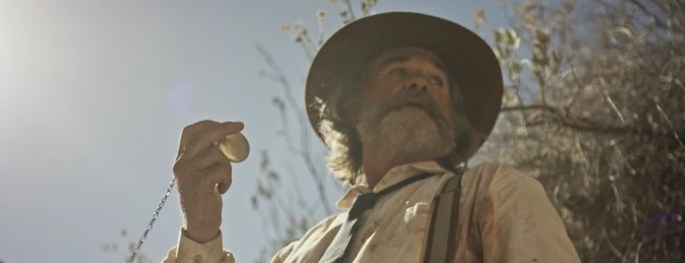
Four men set out to rescue a group of townsfolk who have been kidnapped by a cannibalistic tribe on the frontier.  The posse features an atypical grouping of gunslingers, one of the many details of Zahler’s potent script that hints at the depth beneath the dusty surface.  Each man is representative of the male ego at different stages in life.  Patrick Wilson portrays an injured man whose wife has been taken.  Young, in love, and fiercely devoted to his wife, Wilson, who is the weakest of the pack if only for screen time, communicates the vibrancy of youth through his labored delivery while courageously displaying the self-doubt that can plague a relationship at its inception.  Icon Kurt Russell plays the town Sheriff, a violent, but noble man with an ailing wife.  Russell brings his expected level of grit to the role, but it is his candid bravado that elevates his performance to the upper tier of his fabled career.  Sheriff Hunt is a man who lives by order and the gun; a willing participant in killing when needed, who has managed to come through a life of gunplay with a grim understanding of the darkness, but also an appreciation for love and the simplicity of life.

008 Geno Segers as Boar Tusks

Russell is contrasted by Matthew Fox who gives the performance of his career as the town’s mysterious gunslinger, Brooder.  Where Russell’s sheriff was able to extricate himself from the darkness, Fox’s gentleman killer has embraced it, wrapping himself in the coldness of death.  Some of the best scenes of the film are when the façade of bravery slips; revealing the broken souls behind the mask of machismo and Fox’s understanding of this is a thing of tragic beauty.  Prolific character actor Richard Jenkins rounds out the heroes with Chicory, the town’s venerable deputy.  Jenkins steals virtually every scene and his exchanges with Russell are a ray of light in the endless darkness of the story.  There’s a scene in the bloody final act in which the heroes are in grave peril and Chicory begins to ruminate on the reality of a flea circus.  He is joined by the sheriff and both Russell and Jenkins’ intimate understanding of death becomes reflexive of the journey, even more so than the act itself, a feat made possible by Jenkins’ towering performance.  He takes what is obviously the comic relief and turns it into a grounded, vulnerable exposition that becomes the surrogate for the audience’s preconceived notions of right and wrong.

Bone Tomahawk’s central theme explores various notions of time.  Zahler takes the Western framework, especially The Searchers and separates the story from the hook by grinding the narrative to a turtle’s pace, forcing the characters to become flesh and blood before summarily ripping them to shreds.  Where the main characters represent the masculine life cycle, the simple, yet unforgettably brutal story is not only a plausible tale from the past; it is painful reminder that monsters are very real.  The pursuit itself is dictated by time, with Wilson’s injured combatant serving as a constant reminder of not only the very real danger but that fate ignores such temporal constraints, dictating death and clemency in an instant.  Violence is the medium through which these bleak truths are explored, both in its commission and in its aftermath. The movie is at its best when the guns are holstered, both in the philosophical maze of the second act and the terrifying climax.  Men facing creatures outside their understanding is nothing new, however it is Zahler’s understanding of the central conceits of the genre that make this undertaking an uncomfortable itch that the viewer is powerless to not scratch.

bonetomahawk

Benji Bakshi’s digital cinematography presents an interesting conundrum.  The crisp digital shots bring a sense of cleanliness to a dirty world, framing the exterior locales with sweeping wide shots that keep the harriers in focus, offset by blistering oranges and burned browns that hint at the danger that surrounds them.  The interior shots, particularly in the beginning have a wooden quality that leaves the eye eager to return outdoors, however, this only lasts for a few previous moments of set up.  Chantal Filson’s rigorous costume design is the final piece, using period vintage in creative combinations to solidify the symbolic representations of the gunmen and contrasting them with the sparse, totemic appearances of the cannibals.

Available now on Amazon Prime, Bone Tomahawk received Independent Spirit Award nominations for Zahler’s screenplay and Jenkins’ performance.  This is a vicious film that will frustrate some viewers with its fatigued pacing and downright nasty portrayals of violence.  If you can get past these two issues, there is a wealth of splendor underneath the gory veneer.  If you’re of strong stomach and are interested in a unique Western film that will follow you into your dreams, Bone Tomahawk is the experience you’re looking for.

Highly.  Highly Recommend.

bone-tomahawk-title-card

DIFF 2017: Review of 44 PAGES

A documentary directed by Tony Shaff. No MPAA Rating. 97 minutes. 2017.

Garry and Caroline Myers loved kids, and they loved kids so much that they wanted to create a magazine directed toward children that would have a sense of respect for their level of intelligence and capture the time in which they lived. The year was 1946, so of course the decision to create such a magazine must be informed by the social, cultural, and political sphere of an Earth still recuperating from a world war and amid the advent of the Boomer generation. The creation of Highlights for Children, a publication that would come to be known by the first word of its title, is the subject of 44 Pages, a documentary that tracks the construction of the magazine’s June 2016 issue.

The structure of the documentary is simple and, admittedly, not very cinematic in any inherent way. We are introduced to the major players in the publishing group, such as the current editor-in-chief Christine French Cully. We meet the various copy editors and illustrators who put in the daily work of a nine-month process to build a single issue. We learn only a little about these people beyond how fate has led them to work for Highlights, the publishing company that has taken its name from the magazine they work tirelessly to foster into the more-than-respectable brand that it is now.

We are also witness to the process of the creation of an issue of Highlights, which begins at ground level with thousands of fiction and non-fiction manuscripts the staff combs through, determining what could belong in an issue and what, sadly, must be left out. Much of the documentary’s most potent material comes from our glimpses into these submissions. One child sends a drawing of the attacks of September 11, 2001, something that disquiets the copy editor who receives it. The “Dear Highlights” feature, which publishes a letter per month from children with genuinely pressing concerns, regularly turns up a plea for help in domestically volatile situations (although such letters are not published, of course) or in socially uncertain ones.

The publication’s aim from the old days remains in the current climate: to be respectful of the intelligence of children in a way that can contribute to their emotional growth but also to be respectful of the social mores that dictate the family model of today. The struggle to remain relevant is also a pressing matter of the heart for many of these people. The path to such relevance is slow: We see the first illustration featuring a same-sex couple arriving in February 2017 (after the production of this documentary was completed), while a growing interest in scientific articles is relatively recent, a direct response to children worrying about climate change.

Much of director Tony Shaff’s method is dependent upon talking-head interviews, which are interspersed with archival photographs and behind-closed-doors footage of the staff at work. The simplicity of the method works because the result is a fascinating study of process. We also get a clear, if rather simplified, picture of the impact of Highlights, which has and will hopefully continue to be considerable. 44 Pages is certainly modest, but the documentary is also an affecting tribute to a beloved brand that stands out by sheer force of will.

Review of THE BLACKCOAT’S DAUGHTER

Kiernan Shipka, Lucy Boynton, Emma Roberts, James Remar, Lauren Holly. Directed by Osgood Perkins. Rated R. 93 minutes. 2017.

Here is a film that could quite possibly show up in a dictionary as an illustration of the term “slow-burn.” The Blackcoat’s Daughter is a puzzle movie whose pieces are put into place with patience and caution until a climax must allow the audience to put them together. Even so, it’s more than a little frustrating how director Osgood Perkins’s screenplay plays its cards a bit too early for the ultimate revelation to be much of a surprise. At some point in the puzzle, its solution becomes quite clearly the only one that makes sense, and then a sense of inevitability sets in. With that inevitability also comes a sense of routine. It’s subtle, but once the observant viewer pinpoints said sensible solution, every piece of the puzzle that we receive feels obligatory.

The film concerns events that surround three young women and the strictly religious institution that houses or has housed all of them at some point. Kat (Kiernan Shipka in a phenomenal performance) has been defined by trauma from a young age, after she and her father found her mother dead in a mangled and totaled vehicle on an icy street. Rose (Lucy Boynton) has more typical, teen-aged concerns on her mind, such as the consequences of a fling with a fellow student that potentially left her with an STD. Joan (Emma Roberts) is a mysterious visitor into their midst, finding herself at the school on its winter break after hitch-hiking with a married couple (played by James Remar and Lauren Holly) who are a bit mysterious themselves. It seems a dark force is at work in this small town of Bramford.

It is important to tiptoe around the film’s events because so much of it is dependent upon a third act in which all of the relevant details are either called into question or made irrelevant by a screenplay that wants desperately to jerk its audience around. The performances alleviate some of the film’s troubles, with Shipka leading the charge in an unnerving role that demands a lot from the actress. Boynton and Roberts are also good in reactive roles that are ultimately informed by the events of a climax that folds in on itself twice and redefines what we are supposed to have learned. The puzzle-like framing of the narrative is both innovative, in how it consistently restructures itself, and increasingly trivial, as the restructuring is built around a mystery that becomes less involving the weirder the story becomes.

The film’s ultimate impact comes from an atmosphere almost entirely provided by Perkins and cinematographer Julie Kirkwood’s staging, framing, and compositing of sequences to be the eeriest that they can be. The snowy exteriors and blank, suffocating interiors are attractively captured and certainly reflect the hopeless goings-on in the school and around it. Unfortunately, the craft is wasted on a film that becomes a parlor trick with a last-minute bait-and-switch that undermines any and all of the good will that the film has built up in its solid foundation in characters. There are various questions to be asked during The Blackcoat’s Daughter, but the one that we ask upon the end-credits roll is the most telling and important: Is that it?

S. CRAIG ZAHLER’S BONE TOMAHAWK — A REVIEW BY NICK CLEMENT

2

Bone Tomahawk is a gruesome western-horror hybrid that has ice-water running through its cinematic veins. Terse, blunt, and very, very cruel, the film was written and directed by S. Craig Zahler (who also contributed to the creepy musical score), and clearly shows a filmmaker in total command of his story and craft. The phenomenal ensemble cast includes Kurt Russell, Patrick Wilson, Richard Jenkins, Matthew Fox, David Arquette, Michael Pare, Fred Melamed, James Tolkan, and Sid Haig, with everyone strutting their gruff and macho stuff. Cinematographer Benji Baski’s strong visual sense is a huge plus, the costumes by Chantal Filson are appropriately grubby and lived-in, and the desolate production design by Freddy Waff aids in the overall sense of menace that the script affords. The film pivots in the third act into truly nightmarish territory, which might lose some viewers, but for those with strong stomachs and an affinity for down and dirty narratives, this will be a shock to the system, and a reminder that unpretentious and thoroughly ass-kicking genre filmmaking still exists just outside the margins of the Hollywood studio system.

1

MIKE NICHOLS’ THE DAY OF THE DOLPHIN — A REVIEW BY NICK CLEMENT

3

I am not exactly sure why I’ve become so obsessed with the lethargic 1973 odd-ball flick The Day of the Dolphin. Directed by Mike Nichols, written by Buck Henry, and starring a visibly annoyed George C. Scott as a dolphin trainer/scientist who has to deal with a shady group of terrorists who steal his prized dolphins with the intention of using them as a vessel for bombs in order to kill the president while he’s on his yacht, the film seems to want to be multiple things at once, with not one particular strand ever feeling fully formed. Paul Sorvino shambles around in the background as some sort of covert government operative, George Delerue’s score is rather amazing, William Fraker’s widescreen cinematography is strong and always visually interesting, and yet, there’s so little true suspense ever generated, and the entire film just feels silly rather than serious, which I can’t imagine was the intention by the creative team.

2

And yet, I’m still drawn to this movie like bees are drawn to honey, and I just can’t fully articulate why this is. Roman Polanski and Franklin Schaffner were at various points considered for the directing job, while Nichols apparently claimed that filming The Day of the Dolphin was extremely challenging. Reviews were mixed and the film was a non-starter at the box-office but it certainly worth watching, if for nothing else than observing the seemingly irritated George C. Scott and some really fun footage of dolphins splashing around in the water. This is film is currently OOP on DVD (very expensive copies can be found on Amazon) and oddly enough, there’s a seemingly new listing for a new DVD release, but without a street date listed at Amazon. The Day of the Dolphin is ripe for a Blu-ray from a boutique label, like Criterion, Kino Lorber, Shout! Factory, Olive, or Twilight Time.

1

Review: Tom McGrath’s “The Boss Baby” is a clever, familiar mess

When I was a kid, I had grand adventures on the bridge of the Starship Enterprise, battling the Klingons.  Sometimes, I would become general manager Ben, setting up a ‘front desk’ in my parent’s basement pretending to check people in to my ‘hotel’, or even being the debonair James Bond.  At the same time, I had an insatiable desire to rule the world.  At least that’s what my inside voice told me.  Of course, when I open my mouth, something completely different than what I thought comes out.  It’s never a good combination.  Just like Tom McGrath’s animated comedy, The Boss Baby.

Narrated by an adult Tim Templeton (Tobey Maguire), he is as carefree as any seven-year-old only-child (Miles Bakshi) ever has been; something his parents (Jimmy Kimmel, Lisa Kudrow) reinforce in him.  From swashbuckling adventures on the open sea to fantastic moon landings, young Tim’s mind can take him to any place or any time.  When his parents announce that they’re about to have another child, his overactive imagination goes into overdrive trying to win back their affection from the Boss Baby (Alec Baldwin).

McGrath’s Baby gets its inspiration from many sources.  If you’ve seen the teaser trailer, you immediately recall oft repeated bits from James Foley’s Glengarry Glen Ross.  The featured sequence in the trailer was not greatly expanded on in the actual movie; combined with the lead-in sequence, the huddled meeting between Baldwin’s Boss Baby and other neighborhood kids and the ensuing chase is a hoot.

Themes of family, friendship, trust, love and sharing are all inherent in Michael McCullers’s script.  The threadbare plot fumbled because it is strung together by a series of vignettes leading to an in effective climax.  This is coupled with an ineffective villain, voiced by Steve Buscemi.  The problem wasn’t with Buscemi’s voice acting, but a character with a familiar exposition that has been seen many times before.

All of this made for a rather frustrating experience.  Some of the sequences will seem familiar; others were filled with the requisite poop jokes.  After all, we’re talking about a baby.  Like Amy Heckerling’s Look Who’s Talking, there should be something smart and funny about a talking baby.  Boss should have been even funnier with talking baby who craves sushi and a macchiato while carrying around a briefcase.  It just doesn’t pan out.

What does pan out is the stunning animation; something that DWA is extremely proficient at.  And, that’s truly the strength of this film.  McGrath understands his framework, allowing the characters and the voice talent to shine.  Hans Zimmer and Steve Mazzaro deliver the goods with the score.

If anything, Tom McGrath’s familiar The Boss Baby reinforces the fact that I am indeed not nuts.  I’m crazy for listening to my inner Alec Baldwin.

Opening this Friday in theatres, The Boss Baby is reluctantly Recommended.

The Crow: Salvation 


Now let’s be real, there’s only one good Crow film. They were just never able to catch that midnight magic again, though they tried, with four more films and a dud of a tv series. Each of the sequels is nearly the exact same as the first, in terms of plot: a man is killed by feral urban thugs, only to be resurrected one year later by a mysterious crow, blessed with invincibility and begins to work his way through the merry band of scumbags in brutal acts of revenge, arriving at the crime lord sitting atop the food chain, usually a freak with vague ties to the supernatural or occult. All the films in the series are structured that way, but only one deviated and tried something slightly different with the formula. City of Angels, the second, is a boring, almost identical retread of the first, it’s only energy coming from a coked up Iggy Pop. Wicked Prayer, the fourth, had a premise with potential aplenty, and turned out so maddeningly awful I’m still dabbing the blood from my eye sockets. Salvation, however, is the third entry and almost finds new air to breathe by altering the premise slightly. Instead of lowlife criminals, it’s a posse of corrupt police detectives who frame an innocent dude (Resident Evil’s Eric Mabius) for crimes they themselves committed, fry him to a crisp in the electric chair and get off scott free. His girlfriend (Jodi Lyn O’Keefe) is also killed in the process. Now, not only is it cops instead of criminals, but the arch baddie at the top of the pile is the police commissioner, who has occult written all over him. *Not only* that, but he’s played by Fred Ward, who is brilliant in anything. While nowhere near an iota of the atmosphere or quality of the first film, this one works better than any of the other sequels, thanks to that spark of an idea that changes the game ever so much. The detectives are a nice and skeevy bunch too, played by the reptilian likes of William Atherton, Walton Goggins and others. Ward wears the starched, proper uniform of an authoritative figure, but his eyes gleam with the same secrets and dark magic we saw in the two other previous underworld kingpins, Top Dollar (Michael Wincott) and Judah Earl (Richard Brooks), but it’s that contrast that takes you off guard and makes things more intriguing. And as for Eric, does he hold his own with the others who’ve played the role? Mabius he does, Mabius he doesn’t, you’ll just have to watch and see. He definitely knocks Vincent Perez out of the park, that silly Frenchman. Real talk though, no one will ever dethrone Brandon Lee, not even whatever piss-ant they get for the remake that’s been hovering on the fringes of preproduction for the last half decade. On top of it all we also get Kirsten Dunst, of all people, as a sympathetic attorney who works alongside Mabius to clear his name, as he clears the streets of no-good crooked cops. So there you have it. If you ever find yourself meandering around the kiosks in blockbuster, and see the Crow films lined up on the shelves like emo ducks in a row, the first film will naturally already be rented out. Where then to turn? You can certainly do worse than this one. 

-Nate Hill