THE ROBERT ALTMAN FILES: HealtH (1980)

When you begin to consider the high-level talent that went into the formula that produced Robert Altman’s HealtH, it’s difficult to recall another movie in film history that was, and continues to be, treated as poorly. Coming directly after Altman’s twin failures of 1979, Quintet and A Perfect Couple, its production was relatively quick and on-the-fly; an attempt to get one in the can while things at 20th Century Fox were still being run by Alan Ladd, Jr., a staunch Altman proponent who once gave the maverick filmmaker a million and a half dollars to make 3 Women, a movie that came to Altman in a dream and had no real cohesive story.

Sure enough, things did change and Ladd left for form the well-intentioned but doomed Ladd Company. HealtH, which had an initial scheduled release date in late 1979, began to get slowly pushed back on the schedule. Early 1980 came and went and a series of test runs arranged by the new management proved to be less than promising. The master plan of having it released before the 1980 presidential election never materialized. It’s safe to assume that when Altman began shooting the lavishly budgeted, dual-studio event picture Popeye in 1980, he couldn’t dream that he would get it shot, edited, and in theaters before HealtH.

But Popeye was released in time for Christmas in 1980 and HealtH was eventually pushed off of the Fox release schedule entirely (its final replacement on the Fox release schedule being Oh, Heavenly Dog!, a movie starring Chevy Chase and Benji). It did manage to play a limited engagement at Film Forum in 1982 but, aside from its occasional, stealthy appearance on various television movie channels, HealtH has never seen a release on home video. Every once in a while, a widescreen rip from one of those movie channel broadcasts makes its way onto YouTube, but it’s difficult to know if it’s been edited for time or whether the somewhat squeezed visual presentation is a representation of the film’s true aspect ratio.

Given its obscurity, the perceived notion is that HealtH must be some kind of otherworldly dog of a film; a real hubristic bonanza crafted amidst a barrage of likeminded projects by Altman. But the truth of the matter is that HealtH is a surprisingly strong and wicked look at the ridiculousness of the American political system as filtered through the world of the then-bourgeoning consumer health industry. A fine addition to the busier, wide-canvas ensemble pieces Altman could engineer with remarkable skill and dexterity, HealtH performs double duty as a sly comedy and a prescient warning of the toxic injection of empty personality and media-driven messaging into our electoral process. And having rewatched it in 2021 to rejigger this piece (originally written in early 2016), HealtH comes off as an even stronger film today given the twisted road down which we’ve travelled as a country.

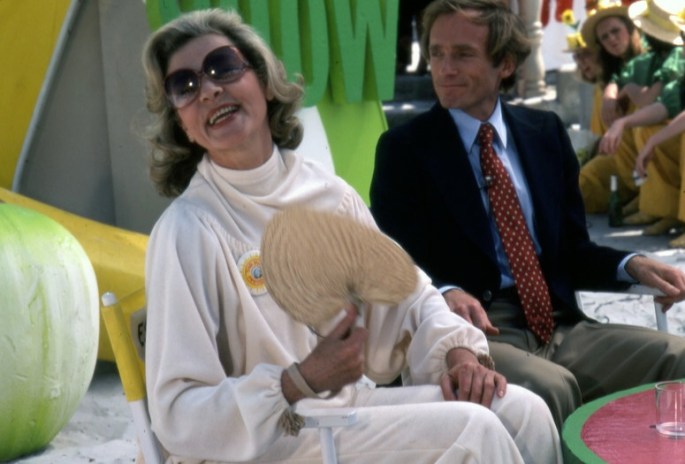
HealtH is, on the surface, about two days at a health convention in which two candidates are running for the title of “President of HealtH.” Present at this convention are product pitchmen, authors, political functionaries & fixers, glad-handing bureaucrats, dirty tricksters, aides, liaisons, and PR staff all centering around the two presidential hopefuls. In one corner, Esther Brill (Lauren Bacall), 83 year-old virgin whose ubiquitous campaign slogan “Feel Yourself,” is delivered with an astounding cluelessness as Brill believes that each orgasm shaves 28 days off of your life. Her staff is made up of PR guru Harry Wolff (James Garner), oversexed campaign manager, Dr. Ruth Ann Jackie (Ann Ryerson) Brill’s undersexed personal physician who secretly lusts after Wolff, and a gaggle of nurses who are constantly drinking behind Brill’s back. In the other corner is Isabella Garnell (Glenda Jackson) a pragmatic-yet-cold idealist whose speeches all seem swiped from Adlai Stevenson. Her entourage consists solely of Willow Wertz (Diane Stilwell), a sweet-natured aide whose ongoing sexual frustration is rooted in her inability to feel anything sexual for anything whatsoever. And between the two candidates are Gloria Burbank (Carol Burnett), a representative from the White House and Wolff’s ex-wife; Dr. Gil Gainey (Paul Dooley), an independent candidate for president and shill for something called “Vita-Sea;” Colonel Cody (Donald Moffat), a bellowing political string-puller; Bobby Hammer (Henry Gibson), a slimy, Roger Stone-adjacent political operative sent to disrupt the Garnell campaign; Sally Benbow (Alfre Woodard), the convention hotel’s PR director; and, finally, Dick Cavett, as himself, who is there to cover the event for his talk show. Oh, yeah, and the Steinettes, an a capella outfit that acts as a ridiculous (but appropriate) greek chorus to HealtH’s very odd portrait of 1979 America.

In the film, we’re told that HealtH (which stands for “Happiness, Energy and Longevity through Health”) is an organization more than three times the size of the NRA and whose members can be similarly motivated to vote one way or the other. So the film certainly exists in an America that could also produce the cockeyed presidential campaign of Nashville’s Hal Phillip Walker. But Walker didn’t much have a real-life counterpart in 1975. The populist politics of Nashville reflected a hopelessness that washed through the post-Watergate, pre-Carter country like a rotten fever. The politics of HealtH were much more immediate. While sending up the then-current political climate, the film seems to anticipate the cultural shift that occurred in the presidential election in 1980. Even if the other candidates in the film could be composites of many other political figures, Esther Brill is a certain representation of the perceived image of Ronald Reagan, a man who counted on a network of advisors and aides to keep him informed and aware and who was about to enter the presidential race with a boatload of sunny optimism and slogans aplenty.

While HealtH isn’t perfect due to its unfocused and rushed production and its occasional tendency to get lost in the sauce of its own mix of satire and reality (you never really feel like you should be investing in it as you really should), it’s Altman’s strongest film since 3 Women. The script, by Altman regular Frank Barhydt, actor Dooley, and Altman does an amazing job keeping the film equally steeped in reality (through the characters of Woodard and Garner), television (Cavett and, eventually, Dinah Shore), and fantasy (basically everything else). The performances, too, are all top-notch. Burnett, Bacall, and Jackson are all terrific but the film is absolutely stolen at every turn by Woodard whose polite facade hilariously begins to give way to disdain as the convention rolls along. Among the men, Garner turns in a reliably easy-going performance, Paul Dooley is as energetic as I’ve ever seen him, and Dick Cavett, remarkably comfortable in a sizable role, has a great deal of fun.

As history marches on, HealtH’s chances of being anything other than a completely forgotten and mostly unseen film become slimmer and slimmer. Fox’s catalog is now owned by Disney, Altman passed away in 2006, and, aside from his centennial that will occur in 2025, there simply seems to be few occasions that could plausibly act as a catalyst for its release. This is a genuine shame because while sometimes chuckling and sometimes wincing while watching it in the midst of our own current absurd political climate that certainly seems like it could play out in an Altman film, it’s almost guaranteed that HealtH could still find an audience today. Sadly, it will probably never have the chance.

(C) Copyright 2021, Patrick Crain

Lorcan Finnegan’s Vivarium

Lorcan Finnegan’s Vivarium is one of those films that takes one simple premise and attempts to wring just about as much mileage out of it as one feature length story possibly could and it’s… *mostly* a successful endeavour. As it opens a young lower middle class couple (Imogen Poots and Jesse Eisenberg) are house hunting for something in their price range. She’s an elementary school teacher and he’s a landscaper, relatable choices I admired from the writer, as you don’t normally see this down to earth demographic in the protagonist arena. They browse into a development office for a project called ‘Yonder’, that seems to have units affordable to them, the estate agent (Jonathan Aris) bizarrely informs them, he’s one of those eerily, painfully cheerful characters that you just want to boot in the jaw and trusting him is definitely their first, and gravest mistake. They go with him to Yonder which is basically the kind of horrifying, cookie cutter, piss green pastel suburbia that even Dr. Seuss would shudder at, and before they know it they’re stuck there, for good. It seems to be a kind of labyrinthine ‘living algorithm’ that traps them, and even when they try to drive away they consistently just end up at the house this guy was showing them, and he’s never seen again. What is this place? Can they ever get out? Who is the absolutely nightmare fuelling Little Rascal reject (Senan Jennings, dubbed over with someone else’s impossibly scary voice who isn’t listed anywhere and I’d like to keep it that way) who one day shows up and demands to be fed, cared for and raised as if he were their own kid? I’ll let you come to those answers on your own because it’s quite a fuckin ride. Imogen and Jesse give fantastic performances, stripped of their usual comedic flourishes and trademark mannerisms for two portrayals that are dark, desperate, down to earth, strikingly emotional and show none of their usual personas. The visual landscape of this artificially tranquil doldrum they are stuck in is both beautiful and threatening, orchestrated by something that knows what a human neighbourhood with cloudy skies above it *should* look like but can’t properly make it look that way because… well, you’ll see. The score by Kristian Eidnes Anderson (Von Trier’s Antichrist) is an unsettling aural piece that seems to hang languidly in the very air of this place and emanate from around every spooky deserted suburban street corner, a very effective lowkey composition. Everything works… so why didn’t I like this film as much as I should have? Well.. I can’t say because it’ll spoil the experience but I will say that this is one disquieting, unpleasant, hopelessly bleak tale in terms of thematics. There’s a scene right at the beginning of the film where Imogen teaches one of her students about a particularly nasty reality in the animal kingdom and the kid bluntly observes “I don’t like nature, it’s horrible.” To which Imogen replies, “It’s not horrible all the time.” This is very true, but this film is pretty much horrible all the time and it is essentially the forces of nature simply playing out on a much grander scale, and we have to watch two inherently decent and kind people preyed upon, broken down and used most heinously. To quote that kid: “I don’t like it, it’s horrible.” That’s not to say I disliked the entire film, I just felt like shit after. There is one moment late in the third act where all seems to be lost and Imogen cradles Jesse in her arms as they share a moment of reminiscence back to the day they met. It’s a beautiful, sweet, tender moment that is handled with maturity, gravity and staggering emotional intelligence from both actors but still served to further accent their despairing situation. It’s a good film and everyone involved should be very proud of their work, and I would never lay blame on artists for how *their* narrative and tone made *me* feel, but I’ll sure as hell be honest about it and this one felt like the world just might end.

-Nate Hill

Ryan Whitaker’s After

Countless films give their visual interpretation of what purgatory and the afterlife may look like, and Ryan Whitaker’s After paints a misty, darkly entertaining tale of two souls stuck in the great beyond who must work together to discern their situation and escape. As a greyhound bus ploughs through the rural night, it’s two lone passengers (Steven Strait, Karolina Wydra) are strangers who flirt briefly before the bus takes a wrong turn and crashes horribly, sending them both hurtling out the windows. When they awaken they are trapped in some sort of deserted, hazy twilight zone version of their hometown, as a curtain of ominous black vapour surrounds the area on all sides, walling them in. It soon becomes clear that they are both stuck in comas out there in the real world and inside this sort of, spiritual simulation if you will, they have to delicately find a way out by delving deep into their respective pasts, processing painful memories, finding the right key (literally and metaphorically) to escape this hovering inter-zone and either pass on to the other side in ethereal form or reawaken once again in the physical realm to continue this incarnation. It’s heavy, philosophical stuff that is given the somewhat surface level thriller treatment yet still manages to be just metaphysical enough to keep me intrigued. There’s a terrifying Stranger Things type monster that hunts them and is clearly there to represent the trauma in both their pasts manifesting in tangible form to haunt them. There’s a romance angle that I’m not sure if I altogether bought but the film and actors seem assured enough in and some of the finer plot turns could have been more richly developed, I found myself wishing that this concept could be done as a long form 8 episode miniseries or something, but the film serves well enough as a perfectly decent told story with a truly fascinating concept. Good times.

-Nate Hill

Alien Vs Predator: Requiem

There’s a lot of trash been talked about the Alien Vs Predator films and.. yeah, I’m not going to argue, they’re not the greatest thing in the universe, let alone the canon. But at least the second film, given the appropriate subheading Requiem, had the decency to actually be R rated and go for broke with gore, violence and ooze as we are accustomed to from each respective franchise and, as dutiful fans, no doubt deserve. While the first film was a lore-heavy, multidimensional Antarctic set SciFi horror with a ton of exposition, this one ditches all of that for a lush Canadian Pacific Northwest setting and a very thinly plotted slasher aesthetic wherein the residents of a quiet Vancouver suburb encounter both species when a predator research spacecraft carrying a bunch of alien face-huggers crash lands nearby. I won’t go too much into detail regarding the characters because they are just beyond cliched. Hot dumb blonde dating the asshole jock, underdog pizza delivery boy hopelessly in love with her, cue violent altercations blah blah who honestly cares, the writers literally put less than no effort into that arena. Tough guy town sheriff (John Ortiz) rallying the troops to fight these beasties and a mysterious army colonel (Robert Joy, adding the film’s only recognizable horror pedigree as far as cast goes) who has some egregious agenda connected to the Yutani corporation. Much of the film is shot in dim or dark settings like the first, so the action isn’t always discernible or legible, but there are a whole parade of Xenomorphs just crawling all over the place which is fun. One way this one succeeds is in its gruesome viciousness; the gore, kills, splatter and deaths here are an absolutely spectacular array of surprisingly nasty (we see kids and a pregnant mother in a hospital butchered by the marauding Aliens) set pieces and carnage, and when it comes time for the two species to have their WWE Smackdown the series of fights between them are brutal and not disappointing. The film has zero mythology and strips down all of that world building for a simple tale of one Canadian town being decimated by these two warring species as they beat each other senseless, and that’s pretty much it. I didn’t hate this film, and I didn’t love it but I sure as hell admired its willingness to go full on hard R like these franchises were always meant to be, unlike its pansy ass predecessor. And one more thing: this is the only film on record in either canon to feature an Alien/Predator crossbreed creature that seems to show up out of nowhere, and while that probably just means it was created in a lab by the Predator species who appear to be busy bees as far as experimentation goes here, I’d fondly like to think that at some point two of them fucked and had gnarly acid-lubed intergalactic alien sexy time, and I’ll leave you with whatever lovely mental image that may conjure up. Good bloody fun.

-Nate Hill

Andrew Patterson’s The Vast Of Night

Andrew Patterson’s The Vast Of Night is one of the only films I’ve seen that almost flawlessly captures that incredibly specific feeling of ‘a summer night right around school ending’, that magical, magnetic, ‘stay up all night’ vibe right as the year gets exciting. The film itself is about two high school students in the 50’s who receive a very strange radio frequency signal at a local broadcast station one of them works at, a signal that may or may not be coming from a mysterious unseen UFO hovering above the small town’s airspace. That plot thread is really just the groundwork for what can only be described as a very atmospheric, unbelievably well written and candidly acted mood piece where, for most of the film, we simply follow these characters talking amongst themselves and interacting in a very realistic fashion until slowly, bit by bit, the underlaying SciFi narrative makes itself known. Now, naturally such a style and pace requires a modicum of nearly meditation level patience from the viewer, but when your dialogue, atmospherics, acting and physical blocking of people and objects are this fluid, assured and endearing it’s not a tough task for a viewer to fully surrender themsef to the experience. Our two young leads (Sierra McCormick and Jake Horowitz) are both superb and have the kind of whip smart, intuitive chemistry you can relate to being a teenager once yourself, and every character they meet over the course of this night (unfolding in cohesive real time) is very well casted and acted, from their friends and family, high school faculty and a couple spooky informants who provide theories and personal experience as intel on this UFO scavenger hunt. This is director Andrew Patterson’s debut film and he goes for the boy wonder routine by basically doing almost everything himself including editing, and I have to give it to the guy, this is one hell of a first time effort. The camera moves elemental from scene to scene with unobtrusive cuts, gorgeous nocturnal summer photography and the sheer ballet of movement as characters move across town, in and out of cars, buildings and the central hub of the high school basketball stadium feels like an understated dance of near flawless blocking and storyboard translation. I won’t spoil whether or not these two kids actually find a real UFO or not because this is decidedly a ‘the journey, not the destination’ experience, but what a transfixing little journey it is. Anyone who has ever laid out in a field on a hushed summer evening, gazed up at the stars and felt that special indescribable feeling when they wonder what’s out there and are we really alone will heavily relate to this film and vibe on its atmospheric frequency, because it achieves something that is often so hard for films to tangibly and effectively alchemize onto the screen: a genuine sense of wonder. Very fine film.

-Nate Hill

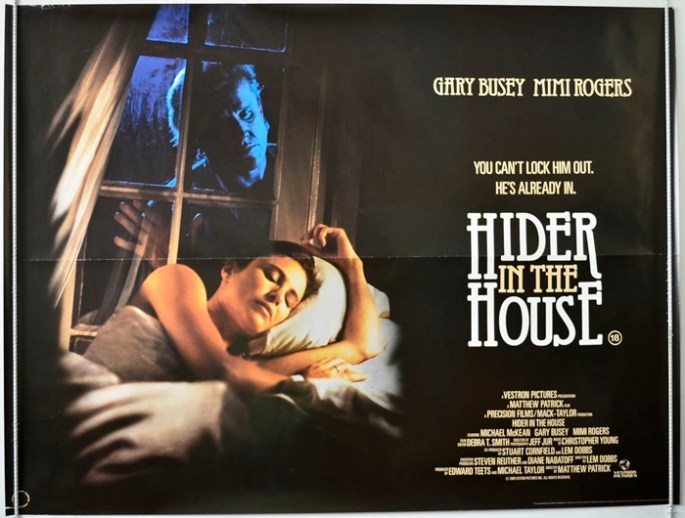
Hider In The House

Hider In The House is pretty much your average ‘unhinged loner stalking a suburban American family’ thriller, and the psycho in question is played by Gary Busey, which seems like your perfect setup for a maniacal ride. However, this film presents its antagonist as a surprisingly sympathetic individual who was abused viciously for year by his own parents until he finally had it and burned the house down around them. Fair enough. Upon being released from psychiatric care and a halfway house as an adult he decides to take up residence in the attic of an empty house, just to see what normal life feels like. Well the house doesn’t stay empty for long as a yuppie couple (Mimi Rogers and Michael McKean) prepare to move in. Busey just keeps on living up there and eventually insinuates him self into their lives under the guise of a ‘neighbour,’ eventually becoming downright disturbed, menacing and dangerous. The film is pretty relaxed as far as thrillers like this go, it takes a while to amp up to anything resembling tension and Busey, given the perfect runway to cut loose and turn in one of his patented loony performances, chooses instead to almost entirely rein it in except when the situation legit calls for a touch of hysteria. It’s decent enough and I’ll pretty much watch the guy in anything, he’s just got such a presence, but this is low budget, melodramatic silliness no matter how you slice it.

-Nate Hill

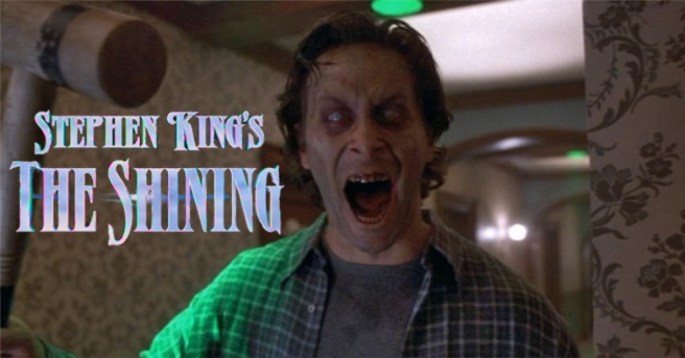
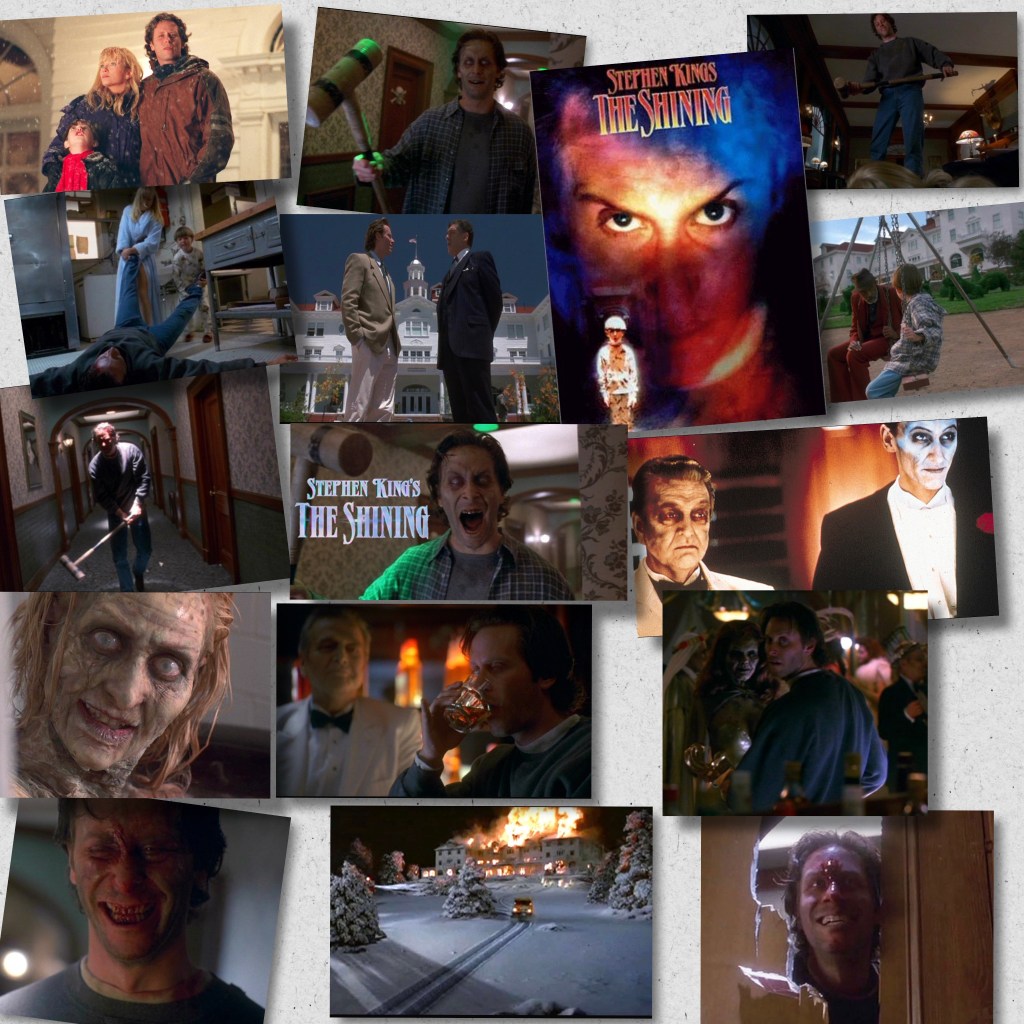
Stephen King’s The Shining

This is going to be a tough one to review no matter how I slice it, so I’ll be upfront with my thoughts and afterwards I’m open to any and all discussions regarding them: I finally got a chance to watch the entire miniseries of Stephen King’s The Shining from 1997 (not in the right order I might add, as the discs in my DVD set were somehow labelled wrong) and in quite a few ways I much prefer it to Stanley Kubrick’s film, which I also love and consider a stronger piece in some aspects as well. Please hear me out: it’s no secret that King prefers this one and that it follows his book far more closely than than Kubrick’s film, but this was irrelevant to me as I’ve never read the book. What I enjoyed a lot about this is that it dives far deeper into the character of Jack Torrence, here played by Steven Weber in a performance I much prefer over Nicholson’s, his alcoholism and inability to control the addiction and anger issues, how that mirrors the evil forces at the Overlook Hotel who are trying to win over his soul and prompt him to murder his wife Wendy (Rebecca DeMornay) and son Danny (Courtland Mead). Here we see Jack go from a loving husband and father and slowly disintegrate into the deranged, possessed lunatic that stalks his family through the hallways in the third act. But what struck me here is how we clearly see a good yet troubled man with demons in his past who encounters new and very literal ones in the present yet fights fiercely against them, we see a clear trajectory from decent man to stressed out cabin fever victim to unwitting host of dark forces to full on, mentally deranged homicidal maniac and it’s an actual *arc* as opposed to Jack Nicholson, who just seemed like a loony oddball right off the bat and never earns or even asks for your sympathy or understanding. Now, what falls flat here? I mean obviously it’s made for TV miniseries so it feels chopped up by the obligatory commercial breaks and just, you know, has that ‘TV feel’ that’ll knock it down a peg in the eyes of cinephiles by default alone. There’s some startlingly terrible CGI including hedge animals that come to life, that could have totally been done with practical effects and just look laughable. The weakest link though is this young actor Courtland Mead who plays Danny, he is just painfully unbearable to even look at and when he talks you just want to flip the coffee table over, *very* bad casting choice. The dynamic between Jack and Wendy is explored far more in depth here with entire sequences devoted to dialogue that feels like a beautifully dark stage play unfolding, scenes that are incredibly well acted and affecting. The supporting cast is terrific with work from Pat Hingle, Melvin Van Peebles, Miguel Ferrer, Shawnee Smith, Elliott Gould in a brittle cameo as the Overlook’s bluntly skeptical owner and Stanley Anderson in a chilling turn as the place’s former caretaker, the ghostly Delbert Grady. One way in which this truly outshone Kubrick’s for me is location: this was shot at the Stanley Hotel in Colorado where King actually wrote much of the book and my god does it ever show; breathtaking Rocky mountain vistas surround the place, the architecture is baroque and creepy and gorgeous all at once and there’s just this atmospheric alpine feel outdoors and this spooky, lived-in aura within the building that drew me right in. Weber is truly terrifying, deeply sympathetic and even frequently very funny and candid as Jack, it’s an overlooked performance that struck many chords with me and felt palpably threatening, despite the fact the he carries around a Denver croquet mallet instead of an axe. I could go on, but the simple truth is this is more up my horror alley overall, it feels like a campfire tale, decidedly genre and very hot blooded, dramatic and full of rich storytelling whereas Kubrick’s, no doubt an incredible film that I also enjoy quite a bit, simply comes across as colder, more detached, scant on King’s mythology and ideas with a far less developed and intriguing Jack Torrence and very much like an art film in many instances. I love both, but this version just vibes with me more, and I don’t know what else to say, really.

-Nate Hill

Arthur Hiller’s Silver Streak

Is this what was considered funny in the 70’s? Because it felt lukewarm, awkward and stretched over a super long runtime to me. Don’t get me wrong I love Gene Wilder with all my heart and Richard Pryor is cool too but if Silver Streak is any kind of barometer as to what their comedic pairing in cinema back then is all about (this is my first one) then, well… meh. Wilder plays a mild mannered businessman on a long distance rail trip who gets unwittingly yanked into all sorts of espionage shenanigans involving a femme fatale (Jill Clayburgh), a malevolent Bond type villain (Patrick McGoohan), a boisterous undercover federal agent (Ned Beatty) and many others aboard the speeding train, all of them looking for some sort of highly incriminating McGuffin object that we never really see. Pryor himself doesn’t even show up until at least halfway through the film playing a rowdy petty thief who is proud of his vocation (“I’m a thief” lol) and sort of forms an uneasy alliance with Wilder to outwit all these competing forces. That sounds like a ton of fun, right? Not so much. It all just comes across as awkward, weirdly paced and WAY too long, this is a brisk 90 minute comedy posing as a two hour big budget thing that just doesn’t have the juice to fill that runtime with enough to keep us occupied. There’s a jarring sequence where Wilder gets done up in blackface, *with* Pryor’s assistance no less, and get coached in jive turkey talk as some harebrained disguise gimmick, but it’s only really in the film as a shtick to serve itself and makes no logical or comedic sense whatsoever. Now I know this was the 70’s and comedy was a lot different back then, and I’m the last one to ruffle my feathers over stuff like that but time period aside it just feels lame, awkward and unnecessary, with both actors making painfully embarrassing asses of themselves. There is one scene that genuinely made me laugh hard, in which a frazzled Wilder frantically tries to explain his predicament to a dozy small town sheriff (Clifton James) who simply cannot wrap his mind around the complexities of a multi-character spy dilemma unfolding in real time. This part is genuinely hilarious and shows some spark but it was the only instance of that for me. The film is packed with recognizable faces including Fred Willard, Scatman Crothers, Ray Walston, Richard Kiel and more, none of whom make very vivid or memorable impressions. This just felt like a misfire to me overall, with two actors who I know to be surefire winners most of the time that just sort of flatline here in oddly conceived skits, a hopelessly cluttered and not particularly engaging caper that just feels like a lot of sitting on a train, running around and then more sitting on the train without much that kept me entertained. Check out the sheriff’s station scene over on YouTube though, it’s a hoot.

-Nate Hill

Brad Furman’s City Of Lies

Question for you: did the LAPD use propagandist maneuvers and media manipulation in the 90’s to fictitiously outline an ongoing east coast/west coast gang war that never even existed and then, using covert tactics and unstable deep cover operatives, deliberately and unlawfully orchestrate behind the scenes murders of influential rappers Christopher ‘Notorious BIG’ Wallace and Tupac Shakur? This film certainly seems to think so, and the fact that it was suspiciously buried in distribution hell for three plus years following its production and snuck unceremoniously into release just this year has me thinking so as well. City Of Lies, based on the documentarian book LAbyrinth, is a fascinating, paranoia laced, very well written procedural thriller starring Johnny Depp as real life LAPD detective Russell Poole who never stopped trying to find out who really shot Biggie and Forest Whitaker as a reporter interested in the case who spends some time with him trying to get to the truth. The film is centralized around 2015 when the final chapter of Russell’s almost career-long investigation arrives at a conclusion but it leaps all over the 90’s for stylish, eerie, memory laden flashbacks that evoke everything from Tony Scott to Bourne movies and the filmmaking aesthetics, score, soundtrack and performances are all exemplary. Depp has had the misfortune of being dealt a few shitty hands lately which I won’t go into too much, but a mystifying scandal was whipped around this film itself to scapegoat him when it appears the real reason this film was buried was… well, just look at the subject matter. He gives a pained, haunted, understated, against type and altogether gripping performance here that hopefully is the start of a surge of roles that sees his phoenix ascent upwards from the quagmire of bullshit he’s been put through. Whitaker is fantastic as well and quite soulful in the third act and director Brad Furman (The Lincoln Lawyer) assembles an unbelievable supporting cast just packed with character actor talent including Michael Paré, Toby Huss, Xander Berkeley, Rockmund Dunbar, Laurence Mason, Louis Herthum, Shea Wigham, Dayton Callie, Biggie’s real life mother Voletta Wallace playing herself, Obba Babatundé, Kevin Chapman, Glenn Plummer and the great Peter Greene as a particularly acid tongued LAPD commander. The film has a way of swerving just south of every question asked and a knack for making you feel like this story is open ended and unsolved. Unsolved is different than unproved though, and if everything that Depp’s Russell Poole cataloged and uncovered is for real then it’s no wonder this film never saw a major release and was held up for so long. Whatever really happened back then, this is one finely crafted thriller with a galaxy of terrific performances, a taut, engaging narrative and an incentive to shed light on those who abuse power, should know better, and need someone to call them out on it. Who better than a good cop like Poole, and who better to bring his story to life than an actor like Depp, who can pretty much do anything but tries something we’re not used to seeing from him everyday: play a regular guy just trying to do the right thing in the face of absolute corruption.

-Nate Hill

THE ROBERT ALTMAN FILES: A PERFECT COUPLE (1979)

Coming off the universally reviled and glum Quintet, Robert Altman began to move back toward the warmth of human relationships with A Perfect Couple, a lighthearted romantic-comedy that tracks a mismatched couple through a series of sweet-natured misadventures as they connect, decouple, and reconnect. Put against Paul Newman’s fight for survival in a world not fit to survive, the synopsis of a middle-aged man (Paul Dooley) falling in love with a backup vocalist in a rock band (Marta Heflin) probably seemed much more in tune with what moviegoers in 1979 were wanting. Unfortunately, Altman wasn’t in much of a mood to tackle such a light project and as a result of being weighed down by a number of elements on top of which it can never seem to climb, A Perfect Couple both registers as one of Altman’s weakest efforts and the one that marked the end of his relationship with 20th Century Fox as his fifth picture delivered to them, 1980’s HealtH, would slowly bump its way down their release schedule, eventually dropping off of it completely, never to return.

The movie opens promising enough as Alex Theodopoulis (Dooley) and Shiela Shea (Heflin) enjoy an outdoor performance at the Hollywood Bowl of the LA Philharmonic, for which his sister, Eleouisa (Belita Moreno), is a cellist. As a torrential downpour disperses the crowd and ends the concert, Alex and Sheila escape to cut short what we learn is their first date which has been powered by their participation in a video dating service. During this time we also learn that Sheila lives in a cramped loft among numerous members of Keepin’ ‘Em Off the Streets, a rock outfit she has just recently joined. Alex, on the other hand, is part of a starchy and conservative Greek family where almost nothing is done individually, Friday nights are spent watching their father (Titos Vandis) mock-conduct along to orchestral music, and men who are almost halfway done with their entire existence on this planet still have to ask for permission to go on a date.

All of this is to set up a story of opposites where two sides of a relationship are viewed with elements in both sets of families that mirror each other and, surprisingly, this is where the film really fails. This is a movie that wants to show how clever it is by drawing parallels between the two disparate worlds but, unfortunately, neither world is appealing and Altman further cheats the audience by giving too much of one and not enough of another. One of the biggest examples of this is how Altman treats the gay characters in his film. Always one step ahead of his peers in his treatment of LBGTQ characters on the whole (most notable in the remarkable Come Back to the Five and Dime, Jimmy Dean, Jimmy Dean), Altman wears down a lot of shoe leather discussing the inner workings of the relationships between three gay members of the band (which is commendable) but then gets tight lipped and opaque when dealing with the other side of the coin, namely, Eleouisa and her relationship to band mate Mona (Mona Golabek) which is clearly non-platonic. It’s unclear if Altman keeps it coy to underline Alex’s clueless, almost juvenile and stunted view of sex and relationships or if Altman is making a point in regards to the sad sickness in Alex’s family that causes Eleouisa to code-talk her way around it but, by doing so, he shortchanges the audience by closing off an interesting avenue for dramatic exploration.

In fact, throwing up road blocks to anything interesting is what Altman seems to do well in this movie. Almost every side character that saunters into the frame is preferable to the couple at the center. Whether it’s co-screenwriter Allan Nicholls popping up as well-meaning suitor Dana 115 or Ann Ryerson’s hilarious turn as a randy veterinarian, the urge overwhelms me to cling to their legs and beg them to take me away with them. Likewise, I’m almost certain a better movie could be made out of the exploits of Alex’s bored yet obsequious brother, Costa (Dennis Franz) and/or his creepy, effete brother-in-law, Fred Bott (Henry Gibson, fabulous as ever), both of whom feel like characters who escaped from an episode of the brilliant sitcom Soap. Hell, give me a movie featuring nothing but the exploits of the emergency room doctor, drolly played by frequent Altman collaborator Frank Barhydt and one of the few in the film who seems to understands he’s in a Robert Altman picture.

Throughout the film, Alex is an uppity scold who is continually turned off by things in both Sheila’s world and outside the confines of his own familial sarcophagus. He’s disdainful of the “weirdos” in her world but he also runs like a scared man-child when he realizes that a video date he is with likes a little slap and tickle. He seems to be a man of little intestinal fortitude, reuniting with Sheila after a disastrous video date only to leave again when he realizes that the rigors of the road and the lack of privacy just aren’t for him. His final return to her, almost insultingly, occurs only after he’s banished from his family following a left-turn tragedy that occurs in the third act and, unfortunately, one which the film simply cannot emotionally support, creating a fatal tonal imbalance. I would almost say that Alex is maybe a spiritual cousin to the distaff sexual cripples that populated 3 Women and That Cold Day in the Park excepting we see the patriarchal squeeze that makes Alex into the person he is and we are triply frustrated when he never does anything proactive about it.

Her performance maybe three slight shades of beige, Marta Heflin makes zero impression in this movie. This is a shame because Heflin is a natural and good actor (she’s underused in A Wedding and she’s perfect in Five and Dime). Only ever getting the heart pumping during a scene where she is roundly humiliated by Alex’s ridiculous family, Heflin never seems like she’s fully bought in to the relationship nor does she give off the impression that she wouldn’t be fine without it. After all and in the end, is Alex REALLY worth all the trouble she goes through in the film? But Altman and Nicholls don’t give her character much life and, like the contrast between the gay characters, the comparison between the stern patriarchs of the Theodopoulis clan and Keepin’ ‘Em Off the Streets is a cosmetic afterthought; the kind of thing you’d be able to show an elective film course made up of seventh graders as to teach about thematic balance.

This is a film that doesn’t resolve as much as it ends. It feels like a much longer film was shot but a hacksaw was taken to it and only the items that really interested Altman (namely, the stuff with the band) were left in. But, by keeping one eye on the clock and delivering a crowd pleasing rom-com (which, at just a hair under two hours, is still overlong) the cuts to the film create gaping holes and so many questions remain as the credits roll. Is Sheila now out of the band and replaced by the singer we see for the first time right before the end? How did the band and the LA Philharmonic wind up playing together at the Hollywood Bowl? Is Alex completely done with his family without ever standing up for himself? How in the world did Alex ever have a first wife without ever telling her he really liked her? Does Sheila even have a backstory? Is she so weak that she takes Alex back with no kind of discussion about his shitty attitude and his penchant for leaving her? If Altman thought he could pull a Minnie and Moskowitz and simply get by with a “love conquers all…EVEN TWO WILDLY OPPOSITE PEOPLE” movie, he missed the gritty charm and the attention to character that infused every frame of that film that made it work despite all of its logical holes and corners cut by its writer and director, John Cassavetes.

And let me pause on here to remark on the thing I most dislike about A Perfect Couple, which is the entirety of Keepin’ ‘Em Off the Streets. From their candy-ass stage routine to their insistence on using two apostrophes in their name to the soft rock musical arrangements that are so tethered to 1979 they sound like they were composed while sitting in wicker furniture and recorded under a hanging plant supported by macrame, I hate everything about this band and despise any and all moments spent with the group in rehearsal or in concert. Like a Grateful Dead full of Donna Jean Godchauxes (but only if Donna Jean Godchaux could actually carry a tune outside of the studio), this is a band far too large to be plausibly functional. Ted Neeley has the thankless role of prick band leader, Teddy, but my disdain for his character goes beyond what’s written given his stupid wardrobe and his annoying habit of jamming his hands in his pockets while he’s performing on stage. All of it combines to create a grating, overexposed idea that is not entertaining nor do I buy any of it as something audiences would care to see, regardless of the fact that they were, indeed, a real band who had split before production but reformed specifically for the film. When people tell me that they have the soundtrack to A Perfect Couple, I have to fight back the urge to snakily tell them that I don’t bother them with my personal troubles so I don’t know why they can’t return the favor.

Throughout the film, we witness a silent “perfect couple” (Fred Beir and Jette Seear) as they pop up in various scenes through the story as a visual counterpoint to the messiness that happens around them. Only at the big ending at the Hollywood Bowl do they fall apart as our imperfect couple of Alex and Sheila reunites for the final time. It’s a cute idea, I guess, but stuck in the midst of one of Robert Altman’s worst films, it’s an idea wasted on a film that doesn’t deserve it.

(C) Copyright 2021, Patrick Crain