
With nightly viewings at home (many of which were first time screenings) and close to 50 trips to the theater, I was able to see over 400 movies in 2016. I don’t subscribe to official Top 10 list-making; it’s fun to keep track and look back at what you’ve seen, but I don’t feel that there’s any true way to know what the “best” movie of the year is. Cinema viewing is a highly subjective and deeply personal experience for many, so I’d never tell you that you’re wrong for loving a movie that I didn’t connect with; that’s what affected you the most and what hit you in all the proper ways. So while I can certainly say, without hesitation, that Kenneth Lonergan’s masterpiece Manchester by the Sea is my favorite film of the year by a wide margin, there are many other films that provoked an emotional or psychological response from me, that challenged my expectations and abilities as a viewer, and that appealed to me on a personal level, and probably more than they will to others. And that’s totally fine, and to be honest, that’s sort of the point of cinema in general. So, rather than rank these selections in any particular fashion, and outside of the fact that nothing even came close to the overall impact of Manchester by the Sea, here’s a rundown of the movies that spoke to me the most as a human being and cinephile, and will likely be the films that I will revisit the most in the coming years. And all of this is written with the caveat that some big titles remain unviewed, including Loving, Gold, Paterson, Certain Women, Jackie, Silence, 20th Century Women, The Handmaiden, Elle, and The Founder, to name just a bunch.

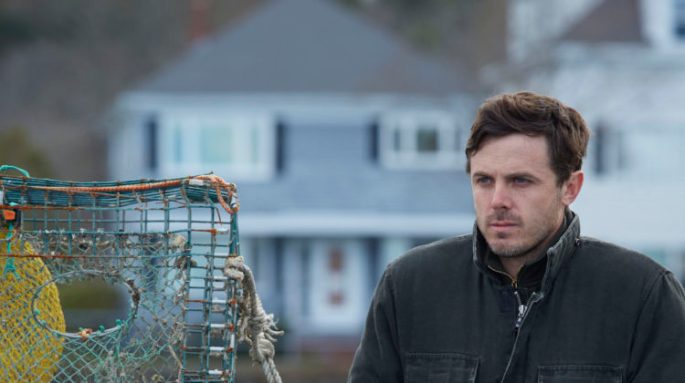
Kenneth Lonergan’s eloquent slice of life, Manchester by the Sea, is not going to be for everyone. Its characters are flawed and not easily likable (if sympathetic), the setting and atmosphere is grim and chilly and forbidding, and the themes explored go to some serious emotional depths that not everyone will feel constitutes a “nice night out at the movies.” But those are the reasons why I love it so much, and why it towers over anything else I’ve seen all year. Casey Affleck is remarkable in a Brando-esque performance as a man shattered by his past, and tentatively looking to the future, while he’s surrounded by an estimable cast of familiar faces, relative newcomers, and total unknowns, all of whom deliver the lived-in, just outside of Boston goods. The scene between Affleck and Michelle Williams which is hinted at in the trailer is spellbinding stuff, and yet there’s an even more powerful scene, a confessional involving Affleck that will leave you speechless. I’ve only seen this movie once, and I remember every single second. I can’t wait to revisit this work of art, as it reconfirms that Lonergan (You Can Count on Me, Margaret) is the most unsung voice of his generation.
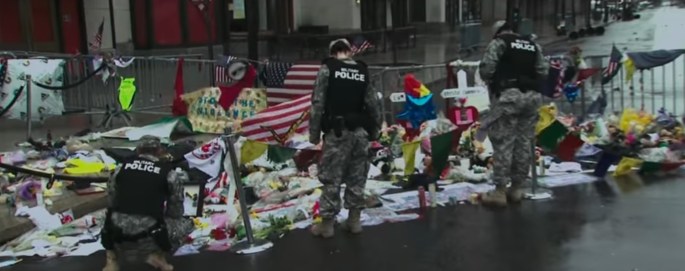
Director Peter Berg had a banner year in 2016. He first released his disaster movie epic Deepwater Horizon in September, and most recently, his late December release, the Boston Marathon bombing drama Patriots Day, has gone into nationwide expansion, and is easily the most important and riveting piece of work that he’s likely made to date. The film is gripping, sad, expertly directed, with verisimilitude levels off the charts (Tobias A. Schliessler’s outstanding and highly visceral camerawork is stunning), and I can’t believe this film isn’t getting the respect it deserves. It’s a total crime that Berg will go unrecognized during awards season for either of his two topical films from 2016; I can’t imagine the intensity of working on these projects back to back. Everyone knows, or thinks they know, about the Boston Marathon bombing and what ensued during the immediate aftermath, so even if the events seem familiar, that doesn’t keep Berg and his creative team from establishing a tremendous amount of suspense through his customary hand-held shooting style, while being aided immensely by the pulsating, unnerving musical score by Trent Reznor and Atticus Ross. The Watertown shoot-out sequence was beyond thrilling and more than a little scary; you’re not accustomed to seeing full-scale combat in the streets of American suburbs. Maybe it’s because I live in Connecticut and the massive theater was absolutely PACKED and nobody spoke a word and there was huge applause at the end, but this movie is going to hit hard for some people.

And listen, I get it – it’s a scary world out there, and most people don’t want to be reminded that they can get blown up at a marathon, but I’m continually stunned by what a nation of ostriches we’ve mostly become. I can’t wait to see this film again, as it reminds me to live every day to its fullest, and how nothing is certain in life. Ever. Something this immediate and cinematic can’t get lost in the shuffle. In general, the cinematic depiction of urban warfare was on high display in 2016, with Michael Bay bringing a very vivid and explosive eye to his vastly underrated Benghazi-set 13 Hours. In both Patriots Day and 13 Hours, the two directors applied the run-and-gun filmmaking aesthetic, with some key artistic differences, and achieved maximum results, with Bay ditching the toy robots and telling a grown-up story of survival and bloodshed that’s similar in spirit to Ridley Scott’s Black Hawk Down, while Berg opted for his customary doc-style to evoke those jittery fears that everyone had on that terrible day in April. Way less jingoistic than certain members of the press would lead you to be believe and far from “right-wing propaganda” as many clueless people have been labeling them as, both of these fantastic actioners are cut from current events which keeps them vital and important, and they are the two most potent action films of the year, along with Paul Greengrass’ exciting Jason Bourne, which took things in a more personal and less mythic direction.
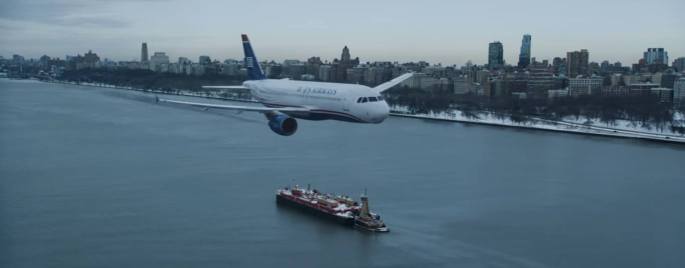
Clint Eastwood’s bold and humanistic drama Sully is a monument to humble American professionalism, a tribute to a man and to a city in general that feels both modern and old-fashioned in equal and appropriate measure. As written by Todd Komarnicki, the film wisely places a narrow focus on its narrative, never overreaching, concentrating mostly on the immediate aftermath of the “Miracle on the Hudson” jetliner incident, while allowing for some smart uses of flashbacks in order to bolster the notion that Sullenberger was just about the only man fit for this particular emergency. And of course, the entire film is anchored by the amazing Tom Hanks, who yet again crafts a compelling portrait of a regular man thrust into circumstances beyond his control; this is a companion piece, of sorts, to his intense performance in Captain Phillips, and similar to that great piece of true-story entertainment, Hanks’ confident work informs every aspect of the film, allowing himself to become consumed by the material. Sully is an important cinematic reminder that human beings are still capable of greatness in ways that could never be predicted.
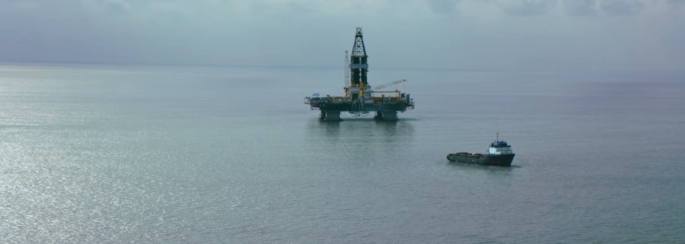
But back to Peter Berg for a moment, because speaking of American professionalism, look no further than the visually astonishing disaster epic Deepwater Horizon, which was an absolute tour de force of action filmmaking, and one of the most gargantuan physical productions that I’ve ever witnessed on a movie screen. Seeing this film in the IMAX format was a total treat; the experience was damn near overwhelming. I am predisposed to being interested by true life, topical stories that define our lifetime, and the BP oil spill is one such event. There are any number of ways that one could fashion a story around this monumental disaster, but what Berg, screenwriters Matthew Sand and Matthew Michael Carnahan, director of photography Enrique Chediak, production designer Chris Seagers, and the rest of the insanely committed crew and cast did was put the audience on the middle of an exploding oil rig for nearly an hour, after some very effective character intros coupled with almost unbearable tension building. Berg, a director mainly drawn to projects either based in truth (Friday Night Lights, Lone Survivor) or inspired by the world around us (The Kingdom), has been one of the most continually underrated filmmakers for the last 15 years, inspired by the work of cinematic greats like one-time mentor Michael Mann, Tony Scott, and Michael Bay, and seemingly always hard at work on something new and exciting. Deepwater Horizon was made on a scale that would make James Cameron blush, and is a testament to heroism, and the idea of sudden, catastrophic loss, and similar to Sully, is a study of doing one’s job and doing it extraordinarily well. And in many instances, going above what could ever be expected. Berg and his team recreated the Deepwater Horizon to 85% scale, and in doing so, produced a film that feels 100% authentic at every turn. Had this film been shot on a closed stage with wrap-around green screens, it would be nowhere near as effective. CGI was brilliantly and seamless integrated into each shot, and there are so many moments of “How they do that?” movie magic that a second viewing is necessary. Chediak’s breathtaking hand-held cinematography is appropriately rough yet extremely coherent, with the camera trying to make sense of the devastation, but no more so than how any member of the crew would have experienced it.
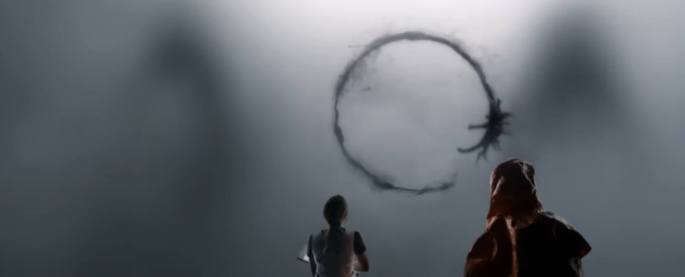
Arrival is cinema I crave – a thought-provoking, somber yet stylish, and thoroughly cerebral piece of storytelling within one of my favorite milieus, and produced independently of the major studios, thus feeling resolutely unconcerned with satisfying endless rounds of notes and enduring creative compromises that could have potentially sabotaged the crux of the piece as well as the emotional wallop it delivers well after the fade to black. Telling a legitimate story about actual people rather than CGI/spandex superheroes, the writing favors pragmatic decision-making and reactions, instead of going for the bombastic or over the top. The filmmakers have concocted a narrative that weaves a scholarly sense of linguistics into its eerie, otherworldly implications, which makes the film stand out even more. Hot-shot director Denis Villeneuve (Incendies, Prisoners, Enemy, Sicario, the upcoming Blade Runner 2049) and genre specialist screenwriter Eric Heisserer (this past summer’s surprise horror hit Lights Out) have retooled the original short story by author Ted Chiang into an intelligent science fiction tale that not only intelligently explores what first contact with an extraterrestrial species would most likely resemble, but also contains a full dose of the mind-bending and unexpected. Heisserer’s script perfectly balanced the need for the audience to connect with Adams’ psychologically fraught character as well as our demand for something new and exciting, and because Villeneuve is such a strong image maker with a tremendous feel for mood, texture, and atmosphere, every shot inside the ship is goose-bump inducing and always photo real. The film has been given a smoky and full-bodied visual sheen by rising star cinematographer Bradford Young (A Most Violent Year, Selma, Pawn Sacrifice), who has an absolutely tremendous eye behind the camera. The creepy, almost mournful score by Johann Johannsson feels oh-so-right in every single moment, both big and small, while the final act really sticks the landing, offering up visceral excitement which feeds into the story rather than overtaking it with needless special effects.

The experience of watching Midnight Special was akin to eating 50 Oreos with a humongous glass of ice cold milk. In short, I loved every single second of this fantastic film, but I’m not too surprised, considering how Jeff Nichols has only made quality films, with his sophomore effort, Take Shelter, registering as a masterpiece of introspective, existential cinema. He’s back in semi-ambiguous mode here after the solid southern drama Mud, and to be honest, I want Nichols to stick to this arena, the thought provoking genre bender that you can’t quite pin down. It’s a miracle that a major studio funded this film – bravo, Warner Brothers. But it’s egregious how this film was marketed and half-heartedly released to a dumbfounded public! And yet, something must be said for a movie like this with no chance of a sequel or lunchboxes or action figures to get made in this day and age. Midnight Special was crafted with BRAINS as the motivating factor, not endless action scenes or noisy visual effects. Instead, the audience is treated to tantalizing ideas, smart dialogue and riveting plotting, excellent performances, realistic family dynamics that propel the narrative, and CGI that’s used to enhance the story, and not act as the central focus. I loved the Amblin-ness of Midnight Special, and how it reminded me of John Carpenter’s Star Man and other nostalgic offerings from the 80’s, yet still made with modern panache and overall exquisite style, rarely ever calling overt attention to itself. Adam Stone’s shimmery and bold widescreen cinematography meshed perfectly with Chad Keith’s inspired and subtly stylish production design, which went a long way in evoking these feelings. And the last 20 minutes of the film are spellbinding in their ability to transport you out of the theater and into a movie world where you just have to know what’s going to happen next.

Released in limited theatrical markets last August, the rather stunning WWII espionage thriller Anthropoid deserved a much higher profile. Co-written, produced, and directed by the hugely talented filmmaker Sean Ellis (the brilliant Metro Manila and the sexy-cool Cashback), who also served as his own astute cinematographer and nimble camera operator, this riveting piece of work tells the true story of Operation Anthropoid, which centered on the assassination of Reinhard Heydrich, one of the chief architects of the Nazi’s Final Solution, and the harrowing battle that took place in the immediate aftermath. The always focused Cillian Murphy and fast-on-the-rise Jamie Dornan (similarly gruff and commanding in Netflix’s The Siege of Jadotville) are both excellent as the Czech soldiers who are sent into their occupied homeland with a dangerous mission in tow, and because I didn’t know anything about this particular story, I was continually left guessing as to how it would all play out, and if the dangerous plan would be successful.
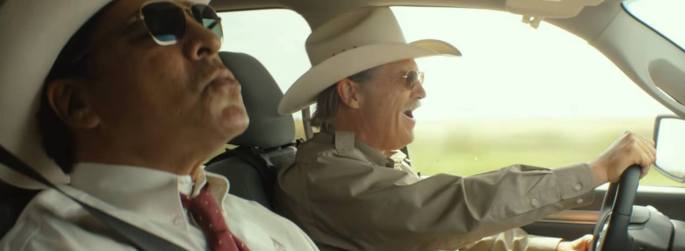
Hell or High Water is easily one of the most satisfying films from 2016. Of course Peter Berg produced (and was at one point attached to direct) this shit-kicking, extra-dusty, Texas-set tale of brotherly love and bank robbing. It’s nothing revolutionary, but rather, underrated filmmaker David Mackenzie does everything just about perfect, with a complete command of tone, atmosphere, and dramatics. Jeff Bridges brilliantly garbles his way through yet another study of neo-Western machismo, the volatile Ben Foster is literally a loose-cannon all throughout this dangerous little film, and Chris Pine delivers the best, most nuanced performances of his career, while resembling Colin Farrell in both Miami Vice and True Detective Season 2. There’s zero fat on Taylor Sheridan’s terse and authentic screenplay, and after his firecracker of a script for last year’s thoroughly absorbing Sicario, he’s at the top of my list in terms of writers whose name means quality. Shot with striking clarity in a no nonsense fashion by cinematographer Giles Nuttgens, the film never overreaches, and gets down and dirty with its locations, themes, and overall presentation. Pacing is kept crisp and clean by ace cutter Jake Roberts. The score from Nick Cave and Warren Ellis is evocative without ever becoming cloying, hitting repeated grace notes to match more menacing chords of sonic edginess. The topical overtones about the greediness of banks and the lunacy of open-carry gun permit laws only sweeten the deal. Honestly, watching this film slightly restored my faith in the theatrical experience, after months of films that have failed to lived up to their various expectations, or just a lack of interesting options in general. I was on board with Mackenzie as a filmmaker after the one-two-punch of Perfect Sense and Starred Up, but this movie really announces the arrival of someone special, and is one instance where the critical acclaim is highly warranted.

A narratively complex, visually arresting coming of age story set in 1989 off the coast of Maine, director Derek Kimball’s Neptune is a fascinating indie offering that will delight just as many as it confounds, leading to passionate praise in some circles; look for it On Demand and on DVD/Blu-ray in the coming months. I had a chance to view this film for an article I wrote in Variety Magazine about last year’s Slamdance film festival, so while the film’s profile is limited, it’s no less exceptional or worthy of praise. This is a film that’s interested in having the audience feel something, and because it’s less concerned with traditional plot points and story structure, the dreamy tone might be considered to slow for less attentive viewers. Centering on the peculiar life lessons of a 14 year old girl as she develops a fixation on a local boy who has gone missing, but more a study of a mind in flux and a body and spirit in transition, Kimball and his co-writers Matthew Brown, Matthew Konkel, and Douglas Milliken add layer upon layer of subtext to their emotionally gripping story in an almost fevered effort to stack the deck. First time actress Jane Ackermann is fantastic as Hannah Newcombe, a teen living with her strict guardian who happens to be a Reverend (Tony Reilly, commanding). She’s attending an all-girls school when something tragic happens in her small town which takes her down a road of unexpected self-discovery. A local boy goes missing, prompting her to deeply question everyone and everything around her, with the film possessing an experiential quality that becomes instantly engrossing. She abandons her religious upbringing, which of course spurs on resentment from the Reverend, and she develops a unique relationship with the missing boy’s father, Bill McDonough in a subtle yet emotionally frazzled performance, taking a job working on his fishing boat, helping him with the lobster traps.

What Kimball and his co-writers were going for with this somber and introspective tale is to hold accountable a society and its seeming randomness as a way into the psyche of a young woman as she herself takes on a certain level of outward and inward change. Ackermann is up to the task in more ways than one, fleshing out here character in nonverbal ways which help to anchor her quiet performance with a level of severity, and projecting a young Sarah Polley quality that was noticeable in any number of scenes and instances. Kimball infuses his unpredictable debut with a creepy sense of atmosphere all throughout, while displaying a firm grasp of the material and essentially crafting exactly the sort of film that it seems he set out to make. Refreshingly uninterested in traditional narrative, his surrealist strokes come across as studied, adding a further component to the evocative mix of ingredients. Whether or not that will satisfy certain audience members remains to be seen, because while Neptune does contain what many would consider to be expected payoff, the journey to get to those moments is one filled with a sense of unplanned discovery and an interest in mood more than concrete plot developments. The tech package may be low in budget but it’s high on smarts and confidence, with dual cinematographers Jayson Lobozzo and Dean Merrill making huge, deeply moody impressions (the underwater photography is especially memorable), while Kimball’s astute editing creates a steady sense of unease. Sound design produces the intended chills in all the right spots. Neptune recently screened as part of the 2016 Slamdance Film Festival.

Directed with grace and simplicity by first-timer Alex Lehmann, Blue Jay moves through its 80 heartfelt minutes with a great sense of atmosphere and casual style; Lehmann also served as his own cinematographer and camera operator, making great use out of the chilly California mountain locations. This little gem, both funny and poignant, utilizes the walking-and-talking format, essentially operating as a coyly sexy yet surprisingly sad two-hander with Mark Duplass (who also wrote the terrific script) and Sarah Paulson (fabulous, yet again). Certainly reminiscent of Richard Linklater’s Before Trilogy but definitely its own thing, this story of two, long-ago lovebirds who randomly reconnect moves in some surprising directions, and always allows for the narrative to be born out of the characters and the generous performances from the well-matched co-stars. And look out for Clu Gulager in a rather wonderful scene at a convenience store that underscores the humanity at the heart of Duplass’ tricky script. Because the film revolves around two characters, there has to be something at the center of the narrative that’s important to the both of them, and because the final act involves confessions and realizations from their past (none of which I’d spoil), all that has come before it takes on even more meaning. When they first see each other, it’s clear that there’s something unfinished between the two of them; both Duplass and Paulson do a great job conveying emotion through casual facial gestures and awkward body language. And throughout the sometimes painful and often times hilarious story, there’s an eternal bond that re-emerges between the two characters, becoming nearly unbreakable, even if their futures are uncertain. Duplass is one of the busiest people in Hollywood, and this film is his first production to hit Netflix streaming in a multi-film deal; I’m so excited that he’s found an outlet for his particular brand of low-key cinema because there’s been very little (if anything) that he’s been creatively involved with that I haven’t enjoyed.




![manchester-by-the-sea-1[1].jpg](https://podcastingthemsoftly.com/wp-content/uploads/2017/01/manchester-by-the-sea-11.jpg?w=685)

 Denzel Washington delivers a volcanic performance in his latest directorial effort, Fences, while the magnificent Viola Davis counters with her own blistering piece of internalized acting; the two artists literally explode off of the screen. Efficiently directed by Washington, the film was adapted for the screen by playwright August Wilson, whose original, Pulitzer-winning effort was performed on Broadway by both of the leads. It’s a story about unfulfilled potential and shattered dreams and how anger can run its way through a person in a variety of ways; the manner in which Washington projects inner resentment and regret is astounding. Playing a former Negro Leagues slugger who never made it to the majors for a variety of reasons, Washington is the ultra-commanding backbone to the narrative, which pivots on the relationships he has with his wife of 18 years (Davis), his two sons (Jovan Adepo and Russell Hornsby, both excellent) by different mothers, his mentally challenged and war-scarred brother (Mykelti Williamson, superb in a tricky role), and his best friend, played with sagaciousness by Stephen McKinley Henderson. The bravura performances from everyone in the tightly-knit cast easily cements Fences as one of the strongest pieces of purely dramatic storytelling from 2016.

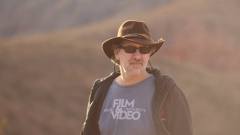 Tim and Nick were delighted to talk with Dan Mirvish, independent filmmaker and co-founder of the infamous Slamdance Film Festival. We discuss his entry into the business, how Slamdance came about, and his new book, The Cheerful Subversive’s Guide to Independent Filmmaking, which is a must read for any up and coming auteurs.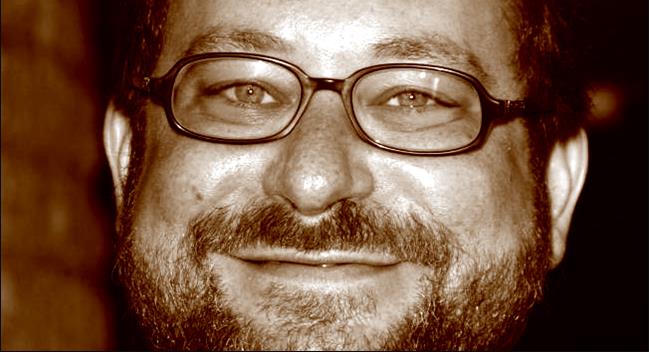
 Podcasting Them Softly