BARRY JENKINS’ MOONLIGHT — A REVIEW BY NICK CLEMENT

3.jpg

Moonlight is bravura filmmaking and storytelling, a thrillingly cinematic exploration of identity, sexuality, and repressed desires. From the startling and engrossing opening Steadicam shot all the way until the absolutely perfect final image, writer/director Barry Jenkins crafts a narrative, from an original story by Tarell Alvin McCraney, which feels personal, honest, tragic, and uniquely uplifting. This film has been rapturously received by critics, and rightfully so, as it’s an important piece of work at a very important time in society, and while focusing on something specific and largely absent from movie screens in wide exposure (the black gay experience), its themes are universal and will hit hard for many people, regardless of race or sexual orientation. Progressive, introspective, and directed with extreme care by Jenkins, Moonlight is the type of film that will be seen as a rallying cry for some, and deserves to find the widest possible audience, as its message is one that feels authentic and enormously human. James Laxton’s bold and beautiful widescreen cinematography absolutely simmers with visual possibilities, with Jenkins totally embracing aesthetic artifice without projecting a self-conscious sense of false importance; the emotional power of the material matches the expressionistic shooting style so as a result, there’s a harmonious quality to the entire piece.

2

The film revolves around a young man named Chiron who has been dealing with an extremely dysfunctional home life (his mom is an addict and dad is absent), living in the rougher parts of Miami and just trying to get through each day. The narrative has been broken into thirds, with each chapter highlighting a particular moment in time (middle-school, teen-years, and manhood), while painting a portrait of a changing world and the various issues that a gay black man would face while living in the ghetto. The cast is sensational from top to bottom, with Trevante Rhodes, André Holland, Janelle Monáe, Ashton Sanders, Alex Hibbert, Jharrel Jerome, Naomie Harris and Mahershala Ali all delivering richly drawn portraits which helps to create an organic flow to the time-jumping story. Rhodes, in particular, is spellbinding in his ability to project bottled up feelings and intense vulnerability, with his buff physique masking his warm and open heat at his center. Holland, so incredible on the Cinemax series The Knick, shows up in the final act and steals all of his scenes with a quiet sense of melancholy and grace. And I love how Jenkins consistently subverted expectations all throughout, starting with the tense opening bit, showing characters to be more than meets the eye on more than one occasion, and allowing the audience to fill in the blanks during some key sexual moments which make them all the more powerful. Leave it to go-to-indie distributor A24 to be the ones to get this earth-shaker out there.

1

B Movie Glory with Nate: The Steam Experiment 


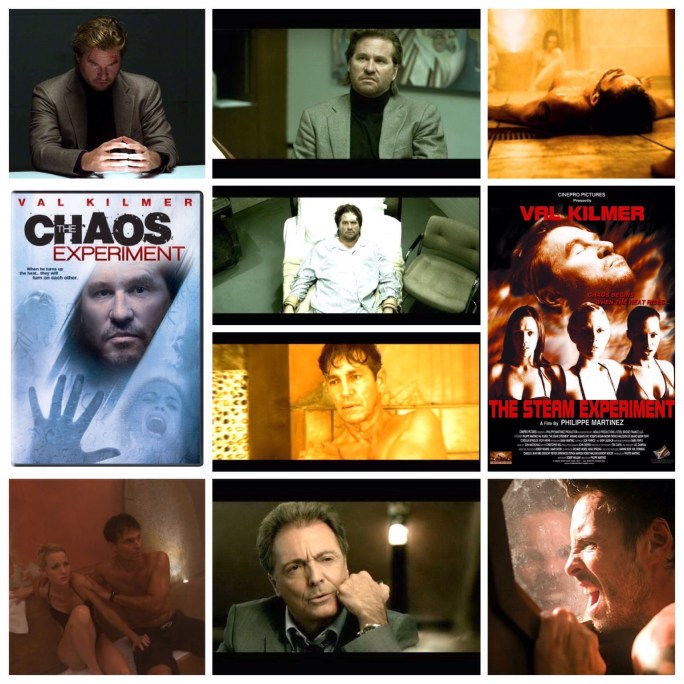
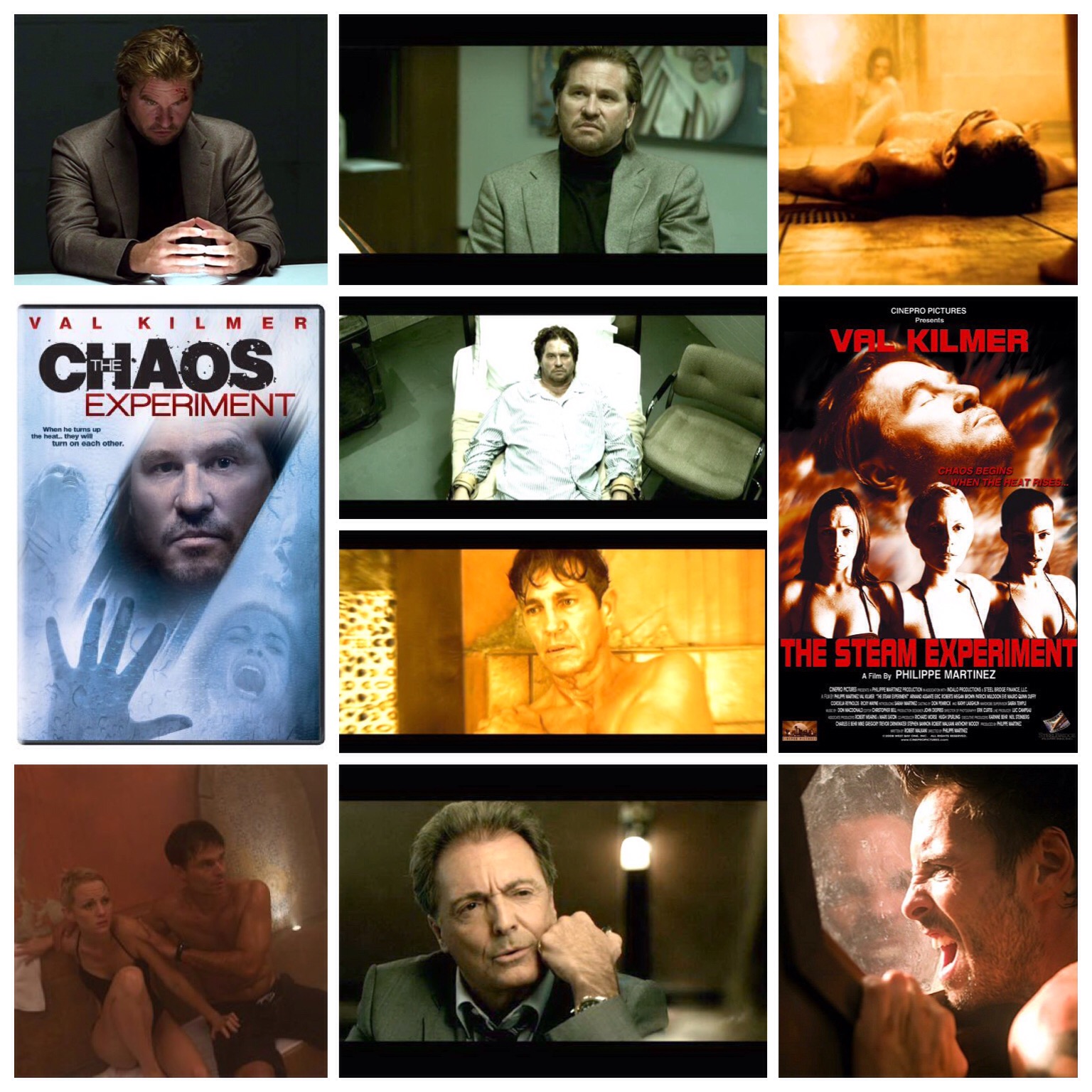
What’s the best way to raise awareness about climate change and the melting of the polar ice caps? In The Steam Experiment, it’s to lock a bunch of people in a swanky new spa and steam room and crank up the heat until they start to panic and suffocate, of course. Well at least according to half mad scientist Val Kilmer, it is. Tired of his global warming research being rejected and scoffed at, he comes to some fairly… extreme conclusions as to what should be done, and actually goes through with his plans, the absolute madman. Setting his experiment under the pretence of a high end spa getaway for a few lucky contest winners to test out his brand new prototype ‘ultra spa’, he shuts them all in and threatens to turn that heat dial up wayyy past safety standards and boil the poor suckers alive inside, if the local paper doesn’t publish his material for all to see. Radical? Yes. Ridiculous? Definitely. It makes for one shit show of a film though, and awful one, no doubt, but pretty legendary just for being able to boast a plot line in which Val Kilmer kills people with a steam room. One of the unwitting participants in this sick charade is Eric Roberts, who seems equally terrified of being trapped in this type of mucky film as he is of being stuck in the room itself. An irritating police detective played by Armand Assante hunts Kilmer down and tries to talk him out of carrying his steamy threats through to their sweaty end, but old Val is stubborn as a mule, and keeps that heat coming on, as fast and hard as the cliches, stale cookie dialogue and eyebrow raising plot turns. He approaches the role cloaked in near catatonic depression, reaching a point where he’s not even sure what he’s doing anymore, giving the film a feeling of trailing off into an aimless, clamouring conclusion where no one knows what’s up, and Assante won’t stop laughably grilling him for answers and mugging the camera, that enthusiastic Italian mess of a man. A pressure cooker of mediocrity, a disaster that ends melting down just as hard and fast as those ice caps that cause poor Val such sociopathic anxiety. Did I use enough puns in my review?

To Live and Die in L.A. – A Review by Kyle Jonathan

To Live and Die in L.A

1985.  Directed by William Friedkin.

to-live-and-die-in-la-window-shatter-william-friedkin-william-petersen-willem-dafoe-john-pankow-michael-greene-debra-feuer-john-turturro-darlanne-fluegel-dean-stockwell-robert-d

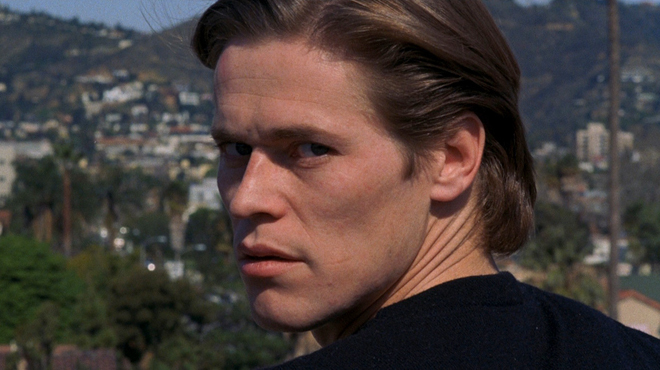
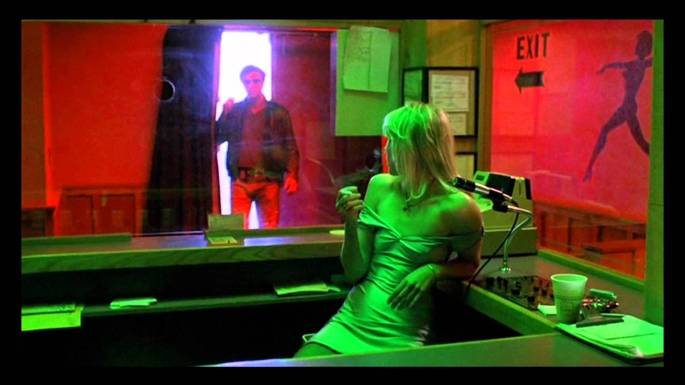
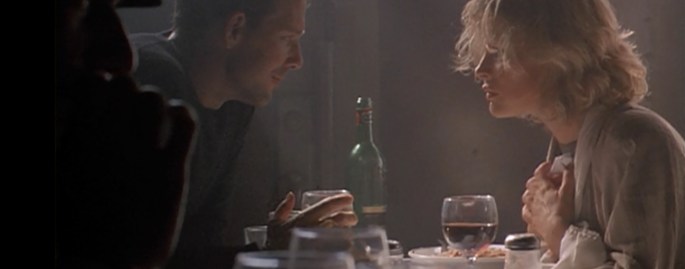
William Friedkin’s renegade gut shot, To Live and Die in L.A. is a brilliant neo-noir and a painfully detailed crime thriller.  Filled with desperate lawmen and intriguing criminals, Friedkin’s neon drenched city of fallen angels delivers a nihilistic deconstruction of the hero cop films that were prevalent during the 1980’s and remains an important example of artistic freedom today.

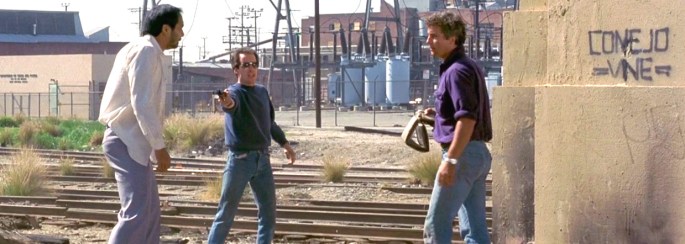
Chance is a secret service agent stationed in LA.  His partner is murdered by a slick counterfeiter named Masters.  Chance vows revenge at any cost, bending the law whenever he can to get closer to Masters.  His antics pull him and his new partner Vukovich across the line when the two become involved in a conspiracy to obtain cash to buy Masters’s confidence.  Things predictably go awry and soon the two agents are involved in one of the greatest car chase sequences ever filmed and forced to confront their evil deeds head on, resulting in a brutal finale in which Friedkin’s dissent becomes clear: Not only does no one ever get away clean, life inevitably and mercilessly goes on.

to-live-and-die-in-la-holdup-william-friedkin-william-petersen-willem-dafoe-john-pankow-michael-greene-debra-feuer-john-turturro-darlanne-fluegel-dean-stockwell-robert-downey-s

This is one of the most authentic crime films ever made.  Friedkin consulted a convicted criminal and used him as a consultant on the counterfeiting scenes.  The money that was produced was so realistic, the Secret Service interviewed a dozen cast members and Friedkin himself after some of it was used off set.  Based on a novel by a retired secret service agent, the dialogue and weary agency politics feel frustratingly real, as do the natural reactions of the agents.

William Petersen’s Chance is an urban cowboy, a summation of rogue cop bravado and red blooded Americana.  Petersen does an outstanding job, portraying Chance as a zealot, a true believer in his cause whose bravura is his armor.  Willem Dafoe plays Masters, the foil.  While Chance is the bull, Masters is the fox, with Dafoe gliding through his scenes with a fatalistic quality that makes him stand out from his criminal counterparts.  While Chance is the epitome of the law in Friedkin’s poisoned city, Masters is the streets, the promises that LA whispers in the viewer’s ear.  On the surface, Dafoe appears handsome, almost androgynous, a black angel who operates in the open, exploiting loophole after loophole.

image

John Pankow has the most understated role as Vukovich, the reluctant partner who helplessly orbits around Chance’s fury, beginning as an idealist and slowly transforming into a disciple.  Dean Stockwell and John Turturro round out the cast as a compromised lawyer and a nervous bagman.  It’s one of the many things in this unique vision that make it memorable, no one is exactly what they appear to be, and the hidden agendas reinforce the noir paradigm with a calculated design.

Robby Muller’s gritty cinematography captures the elusive city with blistering wide shots that open the film, illustrating the pressure cooker environs with an ominous red dawn.  Every exterior has a primal feel, bringing the urban jungle to life, while each of the interior locations, designed by Cricket Rowland, offset the danger by giving the illusion of sanctuary.  The film’s major set piece, a high speed car chase going against the flow of traffic is a must see.  Petersen did most of his own driving, with Pankow’s backseat hysterics being real.  The scene took six weeks to shoot, putting the film a million dollars over budget, with the crew shutting down traffic for several hours a day.  The end result rivals Friedkin’s work on French Connection’s infamous car chase sequence.

toliveanddieinla

80’s band Wang Chung did the soundtrack, combining pop culture elements with a downbeat synth score that oozes in the background.  Everything was done as fast as possible, with Friedkin filming the actors during “takes” and using the test footage rather than formal clips.  One such segment, involving a chase in an airport got the crew in hot water with the airport authorities, as Petersen ignored their warnings and ran atop the divider between two moving sidewalks.  Add in the film’s surprisingly abrupt climax and the result is a one of kind potboiler that would never get made today.

Available now for digital rental or on an amazing Shout Factory blu ray, To Live and Die in L.A. is a must see film for fans of the crime genre and an outstanding offering from one of the greatest directors of all time.  Friedkin had several misses that did not connect with audiences and To Live and Die in L.A. was a lean and perfectly nasty return to form.  A film that has no heroes, only manipulators of opportunity, if you’re looking for a nostalgic jaunt into the dark side of the 80’s, you can’t got wrong with this one.

Highly.  Highly Recommend.

11-600x324

PTS PRESENTS DIRECTOR’S CHAIR with OREN SHAI

shai-powercast

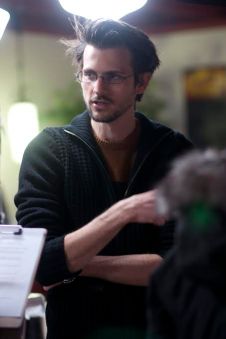
unnamed-2Podcasting Them Softly is thrilled to present a chat with filmmaker Oren Shai, whose debut feature THE FRONTIER is playing in limited release in select cities right now, and is also available for streaming via ITunes, Amazon, VUDU, and Hulu, with a DVD and Blu ray release via Kino Lorber set for December 6, 2016. Co-written by Shai and Webb Wilcoxen, The Frontier is an extremely stylish and wildly entertaining neo-noir with juicy performances, twists and turns, and lots of hard-boiled dialogue. Reminiscent of films such as Blood Simple and Red Rock West, The Frontier pays respects to various genre classics while carving out its own distinct piece of the pie. We hope you enjoy this exciting discussion about a very exciting new cinematic voice!

Phase IV – A Review by Kyle Jonathan

Phase IV

1974.  Directed Saul Bass.

dvd_phase

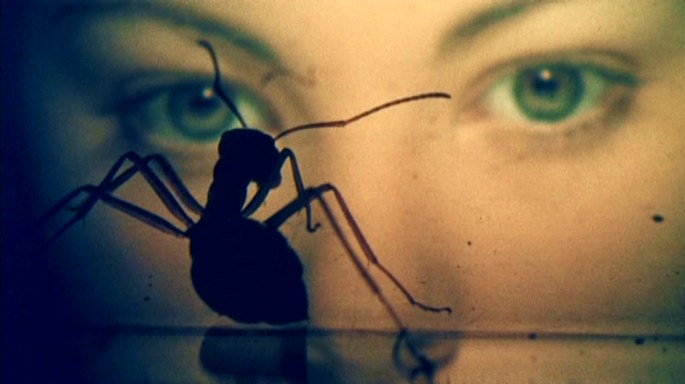
An absolutely insane visual head trip, and legendary artist Saul Bass’s only feature film, Phase IV is a science fiction horror mind ripper that asks impossibly complex questions and offers few explanations.  The definition of high art, this is a film that will infuriate as much as it entrances, using stunning micro-cinematography to capture an insect revolution from the inside out.

A cosmic event endows the ant population of Arizona with a higher form of intelligence.  They become a hive mind and begin to erect strange pillars in the desert.  A scientific duo, along with a hold out family, begin a war against the increasingly dangerous insects.  One of the scientists believes that ants may have a deeper purpose, while his counterpart is obsessed with destroying their queen.  As the stakes rise and the ants begin to reveal their true intentions, mankind is conscripted into a higher form of existence, in which their etymological overlords could redefine their species or annihilate it.

tumblr_nj1lq6rjyy1qa0uc2o8_1280

Renowned wildlife photographer Ken Middleham, whose terrifying cinematography on The Hellstrom Chronicle caught Bass’s eye, captures the insect evolution with intricate closeups.  Despite the ants beginning as the antagonists, the viewer is helplessly drawn into their emergent society, complete with head decorations, espionage missions, and one of the most somber funeral scenes ever depicted.  Phase IV is a hypnotic voyage, following the likes Kubrick in which it takes extremely grandiose concepts and machine guns them across the screen and into the subconscious.  Mayo Simon’s script is a minefield of coffee house ethics and LSD prophecy, moving from the inevitability of the ant kingdom to the desperate and fractured human response.  The characters run the gambit from sexpot, vengeful hunter, and quizzical scientist, with each transforming into a specifically designed piece for the insect agenda.  Dick Bush handles the human side, capturing their plight in a lurid explosion of red and orange, using vibrant color to mirror the extreme emotional chaos.

Cult movie king Michael Murphy stars as Dr. Lesko, a mathematician who believes he can communicate with the insects via numbers.  His counterpart is Hubbs, played by the legendary Nigel Davenport, the voice of HAL from 2001: A Space Odyssey.  Davenport brings a delicious amount of obsession to an already crowded party, with Hubbs refusing peace and embarking on a one man extermination mission.  The conflicting scientific approaches is an interesting feature, showcasing how even the most intelligent scholars are vulnerable to primal paranoia.

tumblr_nj1lq6rjyy1qa0uc2o9_1280

John Barry’s art direction is a Frankenstein mismatch of Escher and Giger, presenting the ant colony as a cold, otherworldly place filled with odd angles and bizarre constructions.  The human world is filled with technology and overwhelmed with metallic silver, while being completely surrounded by the ever encroaching red sands of the desert, hyper visualizing the ants rise to supremacy.  Brian Gasciogne’s score enhances these concepts by blending classical and electronic melodies, harmonizing with the stoic insects and the frantic humans, with both genres presenting as opposites, and yet, oddly complimentary.

All of these wonderful and atypical elements combine into an instant B movie classic.  Phase IV is one of the most popular Mystery Science Theater 3000 episodes, and late night airings on less than reputable cable channels allowed the film to develop a cult following and quietly escape the 80’s VHS graveyard.  The original ending was cut by the studio, considered to be even more of a psychedelic departure than the rest of the film.  It was thankfully rediscovered in 2012 and can be found on Youtube.  The film has been cited as an inspiration for songs, video games, and Cosmotos’s Beyond the Black Rainbow.

4957topphas

Available now for digital rental, Phase IV is a thinking person’s film…if said person was overdosing on psychotropics.  Featuring a unique premise, outstanding micro visuals, and an unusually poignant representation of insect culture, Phase IV is a kaleidoscopic fever dream in which the war between man and nature is revealed to be a much deeper, and possibly sinister undertaking.  If you’re in the mood for a time capsule experience that mainlines 70’s aesthetics and preternatural ethical dilemmas, Phase IV delivers a singular experience.

Highly.  Highly Recommend.

maxresdefault

The Usual Suspects: A Review by Nate Hill 

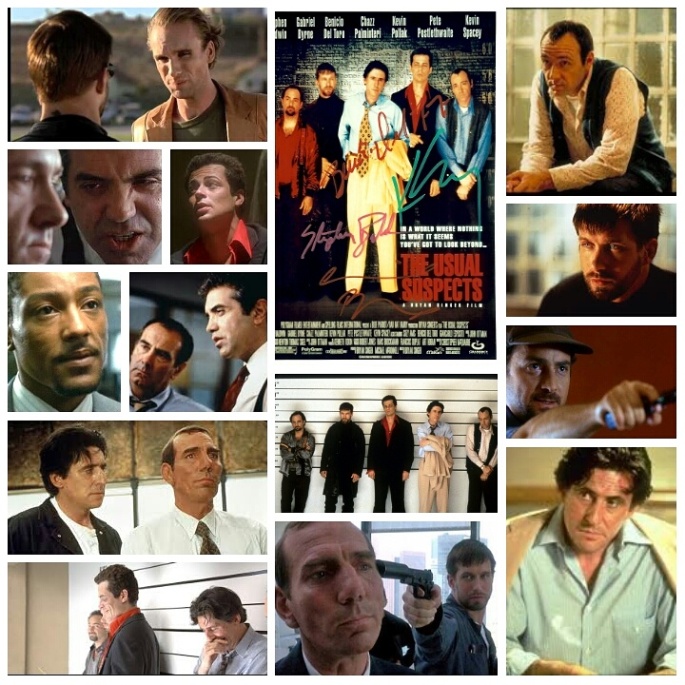
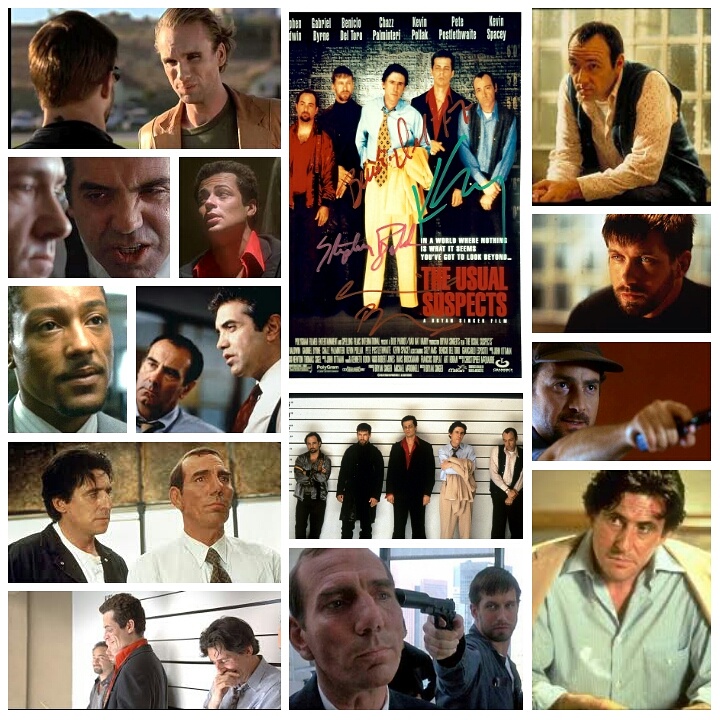
No matter how many times I watch The Usual Suspects, and believe me it’s been many, I still get the same diabolical thrill, the same rapturous excitement and the same rush of storytelling and dramatic payoff as I did the very first time I saw it. Every performance from the vast and diverse cast is a devilish creation packed with red herrings, juicy dialogue and bushels of menace, every scene piles on the mysticism of the criminal underworld beat by beat, until the characters begin to pick it apart and the whole thing unravels like a great serpent coiling forth bit by bit, scale by scale, swerving toward the shocking, disarming third act that has since become as legendary as it’s elusive and terrifying antagonist. In the crime/mystery corner of cinema, there’s no arguing that this delicious piece of hard boiled intrigue reigns supreme, and it’s easy to see why. In a seemingly random police lineup, five career criminals are harassed by an unseen hand, pushed into carrying out dangerous heists and violent manouvers by a shadowy campfire tale among the world of organized crime, a Boogeyman called Keyser Soze, if he even exists at all. Slick and sleazy ex cop Dean Keaton (Gabriel Byrne) heads up this dysfunctional crew of vagabonds which includes hothead McManus (Stephen Baldwin in a role originally intended for Michael Biehn, which kills me to this day), weirdo Fenster (Benicio Del Toro, using an indecipherable mishmash of an accent that would be the first of many), spitfire Hockney (Kevin Pollak) and Verbal Kint (Kevin Spacey) the runt of the litter. The lot of them are intimidated into performing risky enterprises by lawyer Kobayashi (Pete Postlethwaite) until the climate of their actions reaches a boiling point and answers emerge from the darkness. This is all told in retrospect by Spacey, to a rabid customs agent (Chazz Palminteri) who has designs on ensnaring Soze. Spacey scored Oscar gold for his heavy work here, spinning a tale whose layers interweave and pull the wool over our eyes time and time again before offering any glimpses of truth. Byrne is a fiercely guarded storm as Keaton, a man with secrets so deep even he doesn’t know who he is anymore, letting the anger set and smoulder in those glacial eyes of his. The supporting cast adds to the class and confusion terrifically, with fine work pouring in from Dan Hedeya, Suzy Amis, Giancarlo Esposito and a wicked cameo from Peter Greene, who provides a moment of inspired improv. The score of the film rarely relies on dips and swells until all is said and done, keeping a tight lid on the orchestra and feeding us nervous little riffs of anxious portent that keeps tension on a tightrope and anticipation on call. A mystery this tantalizing is irrisistable the first time around, but the trick is to make your story rewatchable, and I’ve seen this thing over a dozen times. Every viewing provides some new angle to the story I didn’t see before, or I notice a subtle interaction in the very naturalistic and funny dialogue which escaped me in the past. My favourite thing to do is watch films with someone who hasn’t seen them before, observe their reactions and opinions on every little story beat and cinematic flourish, it’s almost more fun for me than the actual film itself. The Usual Suspects is a showcase piece for that activity, because you get to see this very complex revelation unfold through new eyes as you watch them experience the revelations. Whether your first viewing or your fiftieth, it never loses its power, and the spell it casts just doesn’t dim. Masterpiece.

ADRIAN LYNE’S NINE 1/2 WEEKS — A REVIEW BY NICK CLEMENT

1

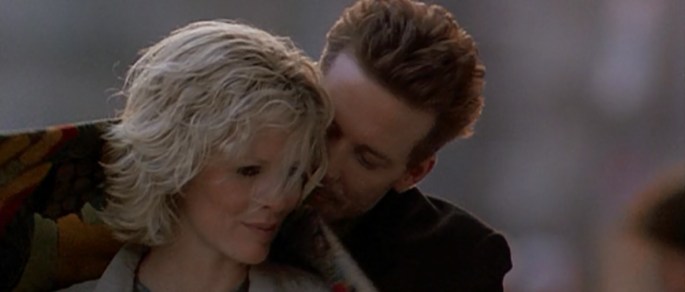
Sleek, slick, and supremely sexy, Adrian Lyne’s unconscionably gorgeous erotic drama Nine ½ Weeks is still one of the better cinematic explorations of pure carnal lust, and upon a recent revisit, I was struck by how genuine and sincere the screenplay felt, while being totally consumed by the performances of Mickey Rourke (rarely more appealing) and Kim Basinger (insanely hot). A notorious film at the time of its release, critics were all over the map in their appraisals of the film, and while audiences in America ignored it on a theatrical level, its international release was a massive success, before becoming one of the biggest VHS items of its time.

4

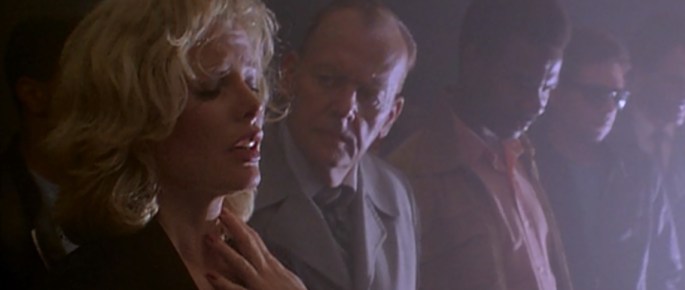
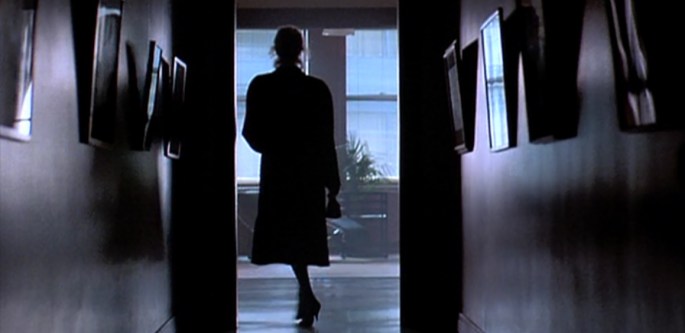
Released in 1986, Lyne’s glossy and sensational drama was based on the 1978 memoir by Ingeborg Day, with the screenplay written by Sarah Kernochan, Zalman King, and Patricia Louisanna Knop. Basinger is Elizabeth McGraw, a somewhat shy art gallery worker living in New York who enters into a short lived but wildly intense affair with a mysterious Wall Street broker named John Gray (Rourke). Margaret Whitton, David Margulies, Karen Young, and Christine Baranski all co-starred, but this was the Rourke and Basinger show all the way. The chemistry between them is absolutely scalding in this film, with each sexual set piece truly steaming up the camera lens; Hollywood stars rarely share this much on-screen heat.

66

The genius cinematographer Peter Biziou (The Truman Show, Pink Floyd: The Wall, Mississippi Burning, Monty Python’s Life of Brian) bathed the film in soft, warm light, giving off that special 80’s visual sheen that Lyne and other filmmakers like Alan Parker and Tony Scott helped to cultivate. There’s a pleasant graininess to the imagery, with jet blacks in the foreground and cool, white light from above in many scenes; every single shot in this film was lusciously composed. Jack Nitzsche’s sleazy, romantic, and at-times bombastic musical score heightened every moment, especially in conjunction with the pop-centric soundtrack. Despite being shot in 1984, the film took two years to complete, with the director famously going to great (and emotionally turbulent) lengths to coax blistering performances from his two white-hot leads.

55

This film is so much better than its reputation, and so much more than an easy target due to its more over-the-top moments. A direct-to-video sequel, Another 9½ Weeks, followed in 1997, while money-hungry producers dished out a direct-to-video prequel in 1998 called The First 9½ Weeks. I haven’t seen either of those titles, so I can’t speak to their merits (or lack thereof), but in terms of hot-blooded cinematic artistry, Lyne always knew how to set pulses racing, exploring provocative themes with a tremendous sense of style. He made so many great films (Fatal Attraction, Jacob’s Ladder, Unfaithful, Lolita) that it’s a shame he wasn’t more prolific.

3

Is that your first name or your last name?: Remembering Deathstalker 2 with Jim Wynorski by Kent Hill

This slideshow requires JavaScript.


Dear PTS reader,

In my brief period in writing for this site, I have enjoyed the privilege of interviewing a number of actors, directors, writers and a composer I admire. But this time out of the gate, I must tell you that I was completely star struck when at long last I was gifted the opportunity to sit down and interview my hero Jim Wynorski.

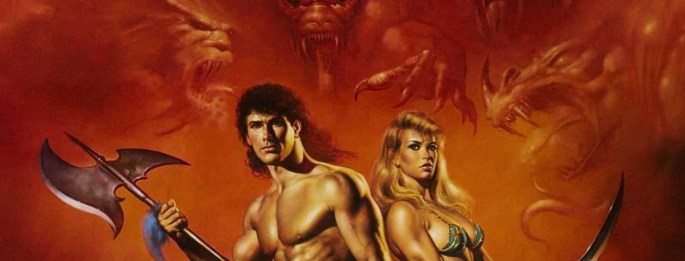
Not only that, but we talked about one of his many movies which is right up there with my favourites of all time, Deathstalker 2. Now, I know what you’re thinking. There are, I’m sure, those film lovers out there that will look at this and say: “Deathstalker 2, yeah that’s a milestone in the history cinema.” To those of you who are not true believers, I tell you this: one man’s trash is another man’s treasure . . . and Deathstalker 2, I treasure, in fact the only thing I treasure more than Deahtstalker 2 is my wife. Like my wife, Deathstalker 2 is truly one of a kind. I watched every cheap little sword and sorcery flick there was growing up, and Deathstalker 2 struck me as the first subversive sword and sorcery flick. It has all of the hallmarks of a sword and sorcery film, just as Jarmusch’s Dead Man has all the hallmarks of revenge westerns. But unlike the brilliant starkness of Jarmusch’s film, Wynorski (who completely reworked the script with star John Terlesky) takes off the brakes and lets the irreverence thunder as hard as fast as he can push it.

In the film’s commentary track (featuring Wynorski, Naples and Terlesky) John “Deathstalker” Terlesky makes a comment about how there are two guys down in Australia who watch the movie every Friday night. I don’t know about the other guy, but just as Back to Future 2 forecast the Cubs winning a World Series, Terlesky was half right, cause I don’t know the other guy, one Australian does kick back and watch this gloriously cheap little barbarian movie every Friday night. In fact, any chance I get.

I first got a hold of Jim when I saw he was on Facebook. I had just had my second book DeathMaster: Adventures in the 39th Uncharted Dimension come out, and it was dedicated to him. I was at first humbled when he accepted my friend request and two; he gave me his address, allowing me to send him a copy of DeathMaster. The second time I reached out was to have Jim’s input in my Straight to Video anthology series. He couldn’t make the first volume, but graciously wrote the blurb for the rear cover of The Sequel: Straight 2 Video. Sadly Jim’s mum passed away during this period, so the book is in part dedicated to her.

Now I’ve never been much of a gambler, but when I have put all the money on black, whatever I win, I leave the table soon after. I thought I’d reach out to Jim again, looking to him to write an introduction to my new book (and my tribute to Deathstalker 2) Sword Dude 2. Again he graciously worked something up and after this I asked, since by then I was writing for PTS, if I could do an interview with him. He sent me his number and we set a date.

If you have not seen Deathstalker 2, then I urge you to do so, if cheap little barbarian pictures tickle your fancy. You can read this beforehand; there is nothing here that will really spoil the experience for you. I also urge you to seek out the new Blu-Ray release of the film. But if you can’t get that, at least try for the Shout Factory release which has commentary and all of the scenes, including the tyre – if you watch it you’ll see what I mean.


KH: Jim you’ve done so many films, it would probably take us a while to cover them all?

JW: Oh my god, you can’t do that – you can’t do that, it would take too long.

KH: Yeah I know, so figured we’d talk about one that’s dear to my heart…

JW: Deathstalker2?

KH: That’s the one. You read my mind.

JW: Okay, what would you like to talk about?

KH: Well I figure best to start at the beginning. This was your third film, so how did the DS2 gig come your way?

JW: Well I had just finished Chopping Mall for Roger Corman and I think he had a four picture deal in Buenos Aires, to make four pictures there, or maybe it was five. I was the last one, and he wanted to make Deathstalker 2, and I said sure, I’ll go down there, you know, Buenos Aires. So, I flew to Argentina and I brought some good friends with me, John Terlesky, Monique Gabrielle, Toni Naples and I had hired John Lazar because he had been in Beyond the Valley of the Dolls. So I got there, and the script was awful, I mean the script was by this guy Neil Ruttenberg and it was awful, it was just – it was bad, so I decided to start from scratch and rewrite it with John, and we kinda did our version of It Happened One Night which is a Frank Capra movie from the thirties that had won an Oscar. And, so I wrote two parts in for Monique because it gave me an extra person, I needed a lot of people who could speak English and, so by creating a dual role for Monique, I created yet another character and every night, John and I would go back to the hotel and rewrite new stuff and shoot it over the next couple of days – and that’s how it came to be.

KH: I noticed on the screenwriting credits there’s a name, R.J. Robertson . . .

JW: R.J. Robertson was a good friend of mine who . . .

KH: I notice he worked on some other scripts with you like Beastmaster 2, Think Big and movies like that?

JW: Yeah he wrote a lot of stuff, he’s passed on now but he was a very good guy and he helped me construct the plot line for Deathstalker 2. Cause I really had thrown away the script by Neil Ruttenberg, but he had to get credit, so that’s why that happened.

KH: Noticed when I’d watched DS2 for the thousandth time, I don’t know I’ve lost count, I noticed in your commentary of the film, you commented on the sets down there, and they do look very familiar, like a lot of those sword and sorcery pictures made at the time use and reuse those sets?

JW: Yeah same sets. I had them do new signage and you know, I think at the very beginning it says “Boobs for Food,” “Open 24 hours,” you know, all that stuff was added by John and I when we were doing the movie. But the sets were pretty much trashed, you know, the sets were pretty much trashed by the time I got there, cause I think I was the last guy to use them before they got torn down.

KH: Yeah, cause a lot of those pictures made at the time like Wizards of the Lost Kingdom and Sorceress, which you had a hand in the script on that one didn’t you?

JW: Yeah I did, but that was not shot in Argentina, that was shot in Mexico.

KH: Okay Mexico hey. It just looked to me that some of the castle interiors looked vaguely familiar…

JW: Well they were used in a picture called Amazons, I think the original Deathstalker was also shot on those sets, Warrior and the Sorceress was shot on those sets, you know – there was quite an array of films made down there.

KH: Something I always been curious about – you obviously had the freedom to rewrite the script – did you enjoy the same freedom during the shooting, for instance, was there a producer around giving you a hard time?

JW: Well we had a producer and he was very upset that I kept changing stuff . . .

KH: Is this Mr Isaac, Frank Isaac?

JW: Yeah Frank Isaac, he was very upset because I kept – he had the original script translated, and we kept changing it and, finally he got so angry about it he called Roger Corman, and Roger Corman’s family came down and Roger watched dailies and said, “This is fine, keep going.” So when Roger got back to California, I called him one day and I said I want you to send down the biggest lady wrestler you can find, and he did, then we shot that great stuff with Queen Kong – and again, we were using sets that were just there – I saw that they had a small arena and I said I’m gonna write a scene for that okay, so that’s how it became the Queen Kong scene.

KH: You just looked at what was there and figured out how to make it work?

JW: That’s right.

KH: Because, as you have mentioned in other interviews and in your commentary, the original script was very heavy-handed – trying to be on par with the Conan movie?

JW: Yes it was, it was trying to be a Conan movie, and I just said, you know, not what I want to do and I want to be entertaining and I had John who was very, very personable, and I had Toni and Monique and John (Lazar) and Queen Kong, when she was there, and some of the Spanish actors spoke English very well, and they were very happy to do something different.

KH: After watching your films for so long, a lot of the actors you had in Deathstalker 2 have consistently worked with you on other films. Monique was in Return of Swamp Thing and Munchie, John was Chopping Mall and Hard Bounty and Little Miss Millions?

JW: Yep, I like to use the same people over and over again. Yeah and I was going out with Monique at the time so that’s why she did the film.

KH: She was very good in Deathstalker 2, didn’t have much dialogue in Return of Swamp Thing but again displayed a range?

JW: She was versatile. As I recall I was going out with her from 1985 till 1991, so that was like six years there, so she was in a lot of my movies during that period.

KH: She was a Penthouse Pet as well wasn’t she?

JW: Yes she was.

KH: In 1982 wasn’t it?

JW: You know I don’t recall. I met her in 85 just before I went to Argentina, and I had been going out with Toni Naples, and that relationship was kind of ending, so, you know, I took Toni, and I took Monique and John and we had a great time.

KH: I love how you open your commentary of the film and introducing Toni Naples by saying and introducing the beautifully big breasted Toni Naples wearing something very low-cut.

JW: (laughter) Well that’s what she was wearing that day and I said okay, look forward to doing this commentary with you.

KH: It was a great commentary. Another actress you had in Deathstalker 2, who also appeared in a number of these sword and sorcery movies was Maria Socas?

JW: Maria Socas was/is a very sweet person, she was trying to do the role serious and finally I just said play it serious and we’ll do comedy around you so, you know, it was a lot of fun to work with her, I’m still friends with her on Facebook, and she looks pretty good for her age.

KH: I remember John Terlesky in the commentary claiming she was a very heavy smoker; in fact something along the lines that all the Argentinians were on four packs a day?

JW: Yeah, everybody smoked four packs a day, I’m pretty sure I said, you people are gonna die quickly, because they were smoking a lot and, you know, I didn’t care, but they never had a moment without a cigarette in their hand so, you know, I didn’t want any cigarettes in the movie so, it worked out, we had fun, it was a good time.

KH: What was it like directing Arch Stanton?

JW: I don’t understand the question.

KH: I believe that was your part in the film, you are credited as Arch Stanton, the dying soldier?

JW: Oh. I’m the guy that was raping Monique that gets shot with an arrow, so that’s my role.

KH: Your little Hitchcockian cameo?

JW: Exactly, exactly.

KH: You’ve touched on it briefly in the past, we know the sets were trashed, but what were the rest of the conditions like, for instance, your lodgings during production?

JW: Well we stayed at a very nice hotel that was empty on weekdays. It was a big hotel that was very popular on Friday, Saturday and Sunday, so everyone would come up from Buenos Aires to this hotel. They had a bowling alley, they had a swimming pool, they had everything you wanted, and they had good food on nights that, well, we were alone there too. Some nights we called it the Overlook because it was like The Shining hotel on weekdays.

KH: Obliviously it was a low budget film so were the choices you ended up making purely to facilitate that fact that there was no money for certain things?

JW: Well the Argentine people, producers, where out of money, they didn’t want to spend any money on this production, and it was difficult to get them to pony up a little money for extras or anything, but, you know, Roger kept calling up and saying, you owe me this, give it to the guy – and again, we were trying to be fun, without spending a lot of money and I think we got away with it, a lot of people enjoyed the movie because it doesn’t take itself seriously at all. It’s a comedy with action.

KH: I noticed Roger is uncredited as a producer on a string of these sword and sorcery films but obliviously he had a soft spot for the genre?

JW: Yes he did, yes he did. He was upset that he didn’t do the first one, that he didn’t do Conan, he should have done Conan, but he didn’t, someone else did it and he said I’m gonna copy it, so that’s what he did.

KH: So the shoot, how long were you down there for?

JW: I think I was down there six weeks.

KH: That’s reasonably swift.

JW: And had a lot of fun, you know, on weekends we would take the girls into Buenos Aires, stay out all night and have a good old time. It was a lot of fun, LOT OF FUN. I’m still good friends with Toni but Monique has disappeared, don’t think she’s even on Facebook. So I don’t know where she is or what she’s doing.

KH: She worked pretty steadily though, not just on your films, but also television?

JW: She worked till about 91, and that’s when we broke up and she moved to Florida and then I don’t know where she is now. It’s very sad that she did that because she had a good career, she could have used it, you know, she could have done more. I was very sad when she disappeared.

KH: Her role in Deathstalker 2 really gives the impression that she could have gone on and been a great comedienne?

JW: She was very good, you know, she was very happy when the reviews came out and they said how funny she was and, cause it took a lot from me to get her to do that stuff. You know, she had more apogee for playing the evil queen, but I said you have to play yourself, which is very sweet and you have to play as a funny, you know, waif, and she did, she did a good job.

KH: You worked with Leonard Solis or Leonardo Rodriquez Solis on the picture. He filmed a number of these kinds of films including the first Deathstalker?

JW: Yes, he spoke very good English and he was a good DP. He had a guy that also shot for him, I forgot his name (the guy Jim is thinking of is Marcelo Pais), he had a guy that also shot for him and, you know, we had a good time. I mean, there was a point where we shooting and there was a tyre, a bald tyre, in the middle of some lake and they just recently put out a Blu-Ray, and they took that shot out.

KH: They took the tyre out hey?

JW: They took the tyre out. I laughed when I saw it. They pushed in on the shot so you wouldn’t see the tyre. (laughter)

KH: That’s a shame, kinda like that tyre in there.

JW: But I wanted that tyre right there and since you’re a fan of the movie you probably have the DVD with the extra scenes on it right?

KH: Sure do.

JW: All right, so you’ve got it all.

KH: I think the tyre should stay in the picture.

JW: I did too. But that’s not my doing. The Blu-Ray looks phenomenal by the way.

KH: Yeah I can’t wait to see it I’ve ordered mine.

JW: It’s sold out already.

KH: Really?

JW: It’s sold out.

KH: I’ve ordered mine and it always takes a couple of weeks to get to the great southern land.

JW: I gotch ya, all right well I hope you enjoy it.

KH: Yes very much look forward to, anyway, that brings us to the edit – when you finally got to cutting, how much control over the shaping of the finished product?

JW: I had complete control.

KH: Final cut?

JW: Yeah.

KH: So at what point – I know you’ve said in your commentary that scenes from the original were added for length?

JW: Well we cut everything, everything we had we cut. I mean, we made a long version of the picture, and then I went in and I took stuff out that I thought slowed the film down – and then they found the footage and put it back in for the DVD.

KH: So the version we’ve seen, that’s a cut your happy with?

JW: Yes, yes, the Blu-Ray version is the good version.

KH: Okay, I just heard you say on the commentary whenever they put in the shots from the original Deathstalker …

JW: No I put those in. I put those in.

KH: Just wondered…

JW: I put those in, cause I wanted to beef up the film – and in the USA, we shot the scene in the bar with the girls dancing naked, that was shot in the USA. I’m in that scene too, I think there’s a big bar fight and suddenly there’s two people trying to strangle each other and one of them is me, and we also shot the scene with Toni Naples, it’s not even Toni Naples it’s another girl doing the topless bit. So that was all shot in the USA after the fact.

KH: I was just curious that the cuts that exist, they are your director’s cuts?

JW: Yes. The version that came out on VHS originally and the version that came out on laserdisc, that’s my cut. And then the new Blu-Ray is also my cut.

KH: I was always curious to know of the various cuts I’ve see, which of those you were happy with?

JW: I happy with the one that’s out right now, the Blu-Ray, and there’s another version that’s just a DVD from Shout Factory and that’s also my version.

KH: All-righty, so after the cut, did you have a premiere somewhere?

JW: It came out on video, no premiere.

KH: No black tie affair?

JW: No, no. I’ve shown it in theatres because I have a 35mm print, and I’ve shown it to appreciative audiences that fell in love with the VHS years ago, but it never really had a theatrical release.

KH: The man who is credited with editing Deathstalker 2 is Steve Barnett?

JW: Yes, Steve Barnett.

KH: It is the only film he is credited as editor; most of his work seems to be that of a production supervisor and has gone on the work on some big movies since?

JW: Yep, he and I put that film together because the Spanish editor Silvia Ripoll had done such a shitty job that we had the original negative and everything sent back up to the US, and I sat with Steve for what must have been a month and a half recutting the picture because it was so badly cut by this woman in Argentina.

KH: Chuck Cirino, who you’ve also worked with quite a bit, wrote the score?

JW: Yeah Chuck Cirino has done a lot of scores for me over the years.

KH: So for him to write the score did he have to wait till the film was finished or was he looking at footage as you went through production?

JW: No, I sent him a script and he composed all the music before I started shooting.

KH: Wow, so it was a Leone/Morricone type deal?

JW: Yeah Leone. I wanted that score in the movie and that’s how it happened. He scored the music before I left for Argentina based on the script – and it was only when the film came back, he can back with a few more little versions like when the midget is playing the theme on the guitar or on the sitar or whatever that thing is – that is something that Chuck composed after the fact. But most of that music was done prior to shooting. It was very good.

KH: I don’t suppose you did like Leone did and play the music on the set?

JW: No, no, no, we didn’t play it on the set.

(At this point Jim shared a great anecdote, but dear reader; I regret to inform you that it was for this fan’s ears only.)

KH: Any other great anecdotes that haven’t surfaced?

JW: Oh, no, I guess all the really great ones I can’t tell you because they all involve . . . you know . . . too much revelation but, Kent, it’s been great talking with you, do you have one other question if you want, I can do one other question then I have to go.

KH: Okay, I guess, looking back on the film, which I know you have already done a number of times, what are your up-to-the-minute feelings looking back on Deathstalker 2?

JW: What are my up-to-the-minute feelings, I really don’t have that many up-to-the-minute-feelings – IT’S THIRTY YEARS AGO KENT! THIRTY YEARS AGO! But I remember it fondly okay, I remember it fondly, I was, you know, going crazy down there, I had a good time, I was, I was, I was just having a good old time – there was so many pretty girls around you didn’t know where to look next so, anyway – that’s what I remember.

KH: Well thank you Jim, it’s been a real pleasure, I have wanted to talk with for such a long time, it’s been a blast.

JW: It was nice talking to you, good luck with all your work and I’m glad you like Deathstalker 2 and I’ll be watching for you on Facebook, okay?

KH: No worries Jim, cheers.


Jim Wynorski, ladies and gentlemen, still the man I want to be when I grow up, and my favourite of the 101 movies that he has directed.

I found him to be every bit as courteous and exacting as I had imagined. I am so grateful to him for the films he has made which have in turn, inspired the stuff that I’ve written. I was also able to thank him for his contributions to my work as I again look forward to sending him a copy of my new book that I, having missed out like Corman did with Conan, in being able to make a picture like that myself . . . well like Roger I just thought I’d copy it, and do my own version of that cheap little barbarian movie that I love so very much…


COMING SOON: A SKY SO FULL OF SHARKS: AN INTERVIEW WITH THUNDER LEVIN BY KENT HILL
 

Christine – A Review by Kyle Jonathan

Christine

2016.  Directed by Antonio Campos.

14-christine-2-w750-h560-2x-738x240

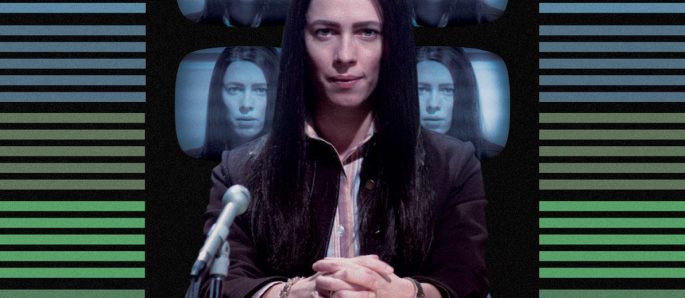
Giving the viewer a front row seat to mental devastation , Christine is a claustrophobic character study that chronicles the last days in the life of Christine Chubbuck, a TV reporter who ultimately lost her struggle with depression, and committed suicide on live television.  Featuring one of the most profound performances by an actress this decade, Christine approaches its subject matter in a scholarly manner, observing the events from arm’s length and allowing the viewer to form their own conclusions.

Christine is the lead field reporter for a local news station in Sarasota, Florida, having recently relocated with her mother after a serious bout with depression.  She spends her spare time fantasizing about landing a more reputable job, interviewing politicians and celebrities, while pining for a handsome coworker.  The arrival of the station’s owner puts the crew under duress as rumors swirl about promotions and firings, with the station manager pressuring Christine to find more provocative stories to cover, going against her ideal that the joy of the human condition is paramount when it comes to the press.  Christine’s mother begins seeing a man, sparking resentment from Christine who is yet to experience intimacy.  As Christine’s depression returns, her sanity begins to succumb to attrition, culminating in one of the most shocking incidents in the history of live television.

14-christine-2-w750-h560-2x-738x240

Rebecca Hall’s portrayal of Christine is terrifying in its organic presentation.  Watching her Christine go step by step through her psyche’s utter destruction is a harrowing experience, akin to Polanski’s Repulsion, but without the visual hallucinations, a telling omission that is a direct result of Hall’s undeniable power of communication.  She remains on screen for the duration of the film, thus trapping the viewer inside Christine’s mental nightmare along side her and it never relents nor does it become tiresome.  Christine is not the type of character that you root for, but she is awkwardly mysterious, stubbornly complex, and completely exposed.The amount of research Hall did in preparation for the role is evident in the details of Christine’s tragic existence.  Her retreat from big city living to a false paradise, coupled with her obsession over mundane details are representative of the silent horror that many people endure on a daily basis.  As Christine passes the point of no return, the viewer is left in an odd place, empathizing with the need for Christine’s pain to end and yet puzzled by her decision.  The film’s refusal to add commentary is yet another gesture of the immense trust it places in Hall’s capable hands.

Joe Anderson’s cinematography captures the 1970’s backroom reporting vibe adequately, featuring smoky backdrops and close ups on the rudimentary camera equipment that would eventually capture the act.  Craig Shilowich’s script relies heavily on Hall’s prowess, but manages to inject not only a sense of nostalgia, but a hint of the new age psychedelic mysticism that was prevalent during the time period, enhancing the atmosphere with free love antics.  The dynamics between the crew are vintage representations of drug culture and sexual politics, but are easily eclipsed by Hall’s dangerous elephant in the room at all times.  This is Christine’s story, and every other aspect takes a backseat.

christine

In theaters now, Christine is a fascinating film about a woman’s decision to end her life live and in color.  Hall will garner awards for her memorable and scary portrayal of a woman who has lost her way and cannot, despite everything, find her way back.  A cold, academic analysis of a mental breakdown, Christine is disturbing in its casual attitude, presenting the events without opinion, reminding the audience that there is a Christine on every street, in every office, and in every classroom.  If you’re interested in a sterile biopic that focuses entirely on its central character, Christine is an excellent psychological exploration of the perils of untreated mental distress.

Highly Recommend.

christine-1193x520

Paul Schrader’s DOG EAT DOG – A Review by Frank Mengarelli

​DOG EAT DOG is akin to noir films of the 1950’s and 1940’s like KILLING THEM SOFTLY is akin to noir of the 1970’s and 1960’s.  The kinship doesn’t stop there; DOG is a film that not only is absurdly funny and brutally violent, but it is also an examination of the economy, the justice system, and the blue collar working class.

Filmmaker Paul Schrader is at his best when he dabbles in quasi topical films.  Matthew Wilder (who has a voice cameo on the phone during the opening scene) pens a sharply chaotic and humorous script adapted from Edward Bunker’s novel. 
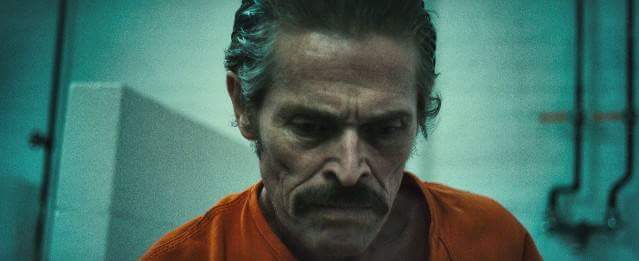
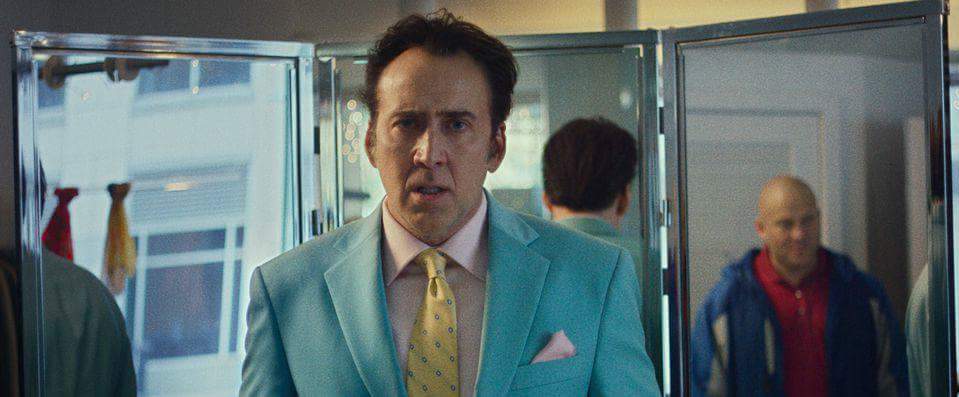
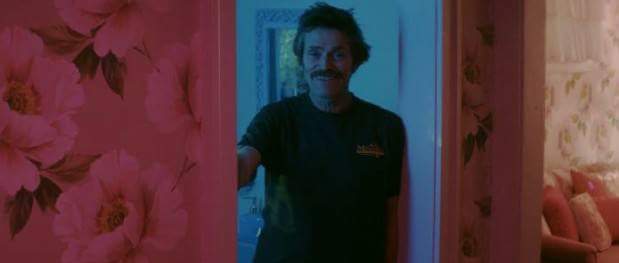
Nicolas Cage, Willem Dafoe, and Christopher Matthew Cook headline the film as a trio of career criminals who for an extended period of time have been removed from society and spent time in prison and are now simultaneously readjusting to society while struggling to survive.  Their plights are real, as they fight to live in a society that has cast them out and turned it’s back on them.

Cage and Dafoe are on fire.  Cage has never been so good.  A complete return to his zany and almost abstract form.  Willem Dafoe is cinematic treasure.  I can’t think of another actor who is a staple in the works of Lars von Trier, Paul Schrader, Abel Ferrara; yet is a viable mainstream draw, showing up in the upcoming JUSTICE LEAGUE.  
Much like KILLING THEM SOFTLY; DOG EAT DOG is not a film for the masses (or critics for that matter).  For as fun and as topical the film is, it is proud at how perversely humorous and transgressive it is as a whole.  DOG EAT DOG is the cinematic answer to the turbulence and dilapidation of contemporary America. 

DOG EAT DOG is available on VOD and is now playing theatrically in select cities.