An Excerpt from Conquest of the Planet of the Tapes: Straight to Video III, Commentary by Todd Farmer.

This slideshow requires JavaScript.

My first video game was Pong. I was not a fan, even though it was ground breaking at the time … boring.  I can remember riding my bike three miles to the local Wal-Mart to play Asteroids.  Atari, Commodore 64, I had them all.  But video games weren’t my only love.  There were also comic books and movies.  I wish I’d kept all of the old comics by the way – and the GI Joes – and the Evel Knievels.  But alas, I was in a rush to grow up.  As for movies, they existed in the theater and what you saw on TV or free HBO weekends.  But as a founding member of Generation X, I saw the birth of the VCR.  And later I attended its funeral.

The VCR changed everything … because we could record. We were no longer at the mercy of theaters or TV schedules.  Record and re-watch.  It was brilliant.  But what if the movie you wanted to see wasn’t on TV to record?  That too would change.  Although this was ten years before the first Blockbuster, mom and pop video rental shops spread like a small town virus.  Rent, watch and take it back!  The VCR was to movies what the internet became to information.

The VCR revolutionized the “sleepover.” Friends and pizza and a VHS of family friendly movies like 9 TO 5 or XANADU … until that was … mom and dad when to bed. Then we’d quietly pull out THE SHINING, CHEECH & CHONG, FRIDAY THE 13TH, THE FOG, CADDYSHACK,THE OCTAGON, USED CARS, MAD MAX … it was a cultural awakening.  And by the way, those are just movies released in 1980.  Every year presented us with a treasure trove of movie magic … all in the comfort of your own home.

And shall we embarrassingly speak of the sexual awakening? This was before Skinamax.  Before the Internet, before our parents were ready to talk the birds and the bees.  Does anyone actually use that term these days?  Doubt it.  Point is, we learned about sex from the VCR.  ANIMAL HOUSE, PORKY’S, FAST TIMES AT RIDGEMONT HIGH, PRIVATE SCHOOL, MY TUTOR, SPRING BREAK, REVENGE OF THE NERDS, SIXTEEN CANDLES, BACHELOR PARTY, POLICE ACADEMY, and every slasher that came out in the 70s and 80s.

We could record movies from TV, rent, buy and then there was the boom in home videos. With a camcorder the size of a small refrigerator, we could make our own spy movies and play them back for friends on the VCR.  Or record our high school band slaughtering the vocals on Boston’s More Than a Feeling.  I have an old VHS of my smashing performance as Frederick in the Pirates of Penzance.  I also have one of my stretching to catch an end zone pass while dragging my toes.  6 points.  And for those fearless few who felt confident no one would ever find and watch their hidden VHS tapes, there was homemade porn.  Eh… I may have been guilty once or twice.

OH! And let us not forget those rare, oft-forgotten VHS surprises you simply didn’t see coming.  I remember crashing at a buddy’s house; he was snoring and I couldn’t sleep so started scanning his VHS shelf.  He had FRIGHT NIGHT!  I popped it in the VCR and sat back to enjoy some Roddy and team… um.  It was porn.  Although official studio released movie tapes were “protected”, we’re not talking about breaking into the CIA here.  There was simply a tiny little plastic chad that when “popped” out, meant any tape could be recorded over with anything you wanted.  We all did it.  Instead of buying blank tapes, just grab a purchased movie that you either hated or no longer watched, pop the chad and bingo, you were recording JAWS from HBO!  That said, why anyone would tape over FRIGHT NIGHT… blasphemy!

Also let us not forget the impeccable durability of the VHS tape. We’re talking plastic cases made by the lowest bidder to protect roughly 570 feet of remarkably flimsy and utterly unrecyclable Mylar.  With each play the tape would degrade slightly.  If you were recording over said tape, then the degradation was even higher.  You were lucky if they lasted 10 years, and it wasn’t uncommon to eventually end up with VHS tracking lines: those thin, white horizontal lines at the top or bottom of the screen – sometimes both.  You could pop the VHS out and try to spool tighter.  Sometimes that worked.  More often it did not.  The fancier VCRs had a tracking adjustment but once those lines started… the end was near.  So, no – not really durable, but … at the time it was all we had.  And we were blessed to have it.

Laser disks gave the VHS a scare but the high price kept them out of the everyman and woman’s homes. But once DVDs appeared on the scene, the offer of better quality, more storage and longer shelf life meant the looming end of the VCR and VHS.  Although you can oddly enough still find the DVD/VHS combo on the market if you desire.

The last VHS I bought was actually a three pack. It was 1997 and I purchased the Star Wars Special Edition Trilogy.  And strangely enough they are the only studio VHSs remaining in my possession. In fact, I can see the set from here, on a shelf next to my Stephen King books.  I loved the VHS era.  It was a big part of my growing up.  The movies that inspired me to seek out the business of Hollywood were movies I viewed over and over on VHS tapes.  If I had a time machine, would I go back, would I live through that era again?  Nope.  Let’s not live in the past.

A Nice day for Superman’s Return by Kent Hill

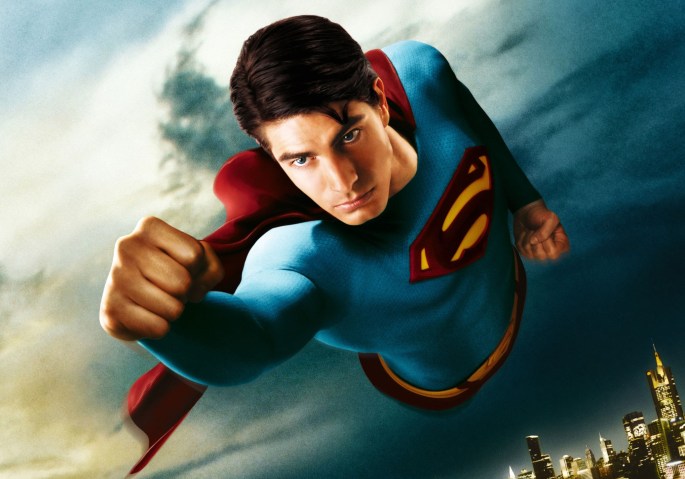
It was my birthday the day we saw the first Superman hit the big screen after a long absence. I was, as was my station in those days, in the projection booth putting a movie together and placing it on the platter ready for threading. These were the dark ages you understand, when film still passed through the projector. It was a fine time for me. I was learning to fence, fight, anything anyone would teach me.

The movie I had just finished assembling was Superman Returns. Now, in these times, it is almost impossible, unless you spend your days with your head buried in the sand, not to watch the development of movies from the announcement to the first teaser trailer, from the photos and the ever present prognostications of the obsessives.

I was going to see the movie that night. It was going to be my birthday movie, that was a given, and I had done my utmost not to know anything, or as little as humanly possible about the film prior to what would be my first viewing. There was however, a problem. There was going to be a screening in twenty minutes. The movie was on the platter, threaded, and ready to fly – so to speak.

This during the week, so the crowds were not going to be expansive and the lunchtime sessions had begun. I was threading the other projector when the inaugural screening of Superman Returns started rolling – the first Superman movie in a long time.

For the uninitiated, in the projection booth you can hear the movie, you can see the movie, when everything that you are supposed to be doing is done, you can even sit and watch the movie – that is if you are not bothered by the clattering of the projector in one ear. I didn’t want to hear or see Superman Returns, not yet. But like I said, I was busy on the other side of the room. The last thing I would hear before the credits began was this: “As a courtesy to others, please turn off your mobile phones, and keep your feet off the seats. On your way out, please put your rubbish in the bins provided.”

At least, that’s what I would listen for. Then the trailers roll. You’d splice these onto the head of the film, and at the theatre I worked at, we would tag on trailers of a similar style or genre of the film playing – just to put the audience in the mood. When the trailers roll, it is really the projectionist’s last opportunity to make sure the film is framed up right, the focus is good, the sound is on the level and the automation system has the curtains open and the lights down.

Okay. So I went over and check it, it was my job. The trailers were running smoothly, everything was cool, and I knew what the last trailer was, thus I knew my cue to stick in the earplugs and rock on, busy myself assembling another print while Superman rolled. Then, the phone rang. It was one of the many times I had answered the phone and it was some bozo on the other end, wanting to know what movies were playing, what was worth watching and finally the plots of said films recommended, thus negating the need really, to watch them at all. To each his own, to each his own.

Then, shit. Beautiful spoiler. Before I could get my own private soundtrack rolling, and because of the phone call delay, I heard the movie begin. I heard John Williams. I was excited. I was pissed.

For my own present relief at the time, that’s all I heard, before going back to what I was doing till the film was over, shifted to the bottom of the platter, and the next film was threaded and rolling.

At that point, since I knew my shift was going to be over in time, I thought I would catch the afternoon screening. Buzzing to the point of being annoyingly frenetic, I went down stairs to ask the boss if I could get a ticket for the 4pm. I recall feeling genuinely crushed when I came to the ticket counter and he told me the screening had been cancelled ‘cause no one had showed.

Shit, my inner monologue cried to heaven.

“You’re coming back tonight though, aren’t you?” the boss said.

“Yeah but I…”

“I know, it’s your birthday – birthday movie,” he said, a wry smile on his face.

“Yeah sure it’s that. But it’s Superman for god’s sake. I was one of those kids that tried to fly off the garage roof with my mother’s red table cloth tied around my neck,” I wasn’t lying.

“How’d that work out for you,” he said.

“It didn’t,” I said, “but I still wanted to be Superman.”

The boss was and is a good guy, but I could see, and knew him well enough to know that he was busy with important affairs of state. When he was like that, he was best left alone.

I walked away not saying anything when I heard his voice:

“You know how to run a projector don’t you?”

I turned.

“Yeah,” I said.

“Then go watch Superman,” he said, without looking up.

“Seriously?”

“Happy Birthday,” he replied.

Now I don’t know about any of you; if you’ve been the only person in a theatre on a rainy day, the only person that showed up.

I do know rich cats like Tarantino have their own home theatre set up. But for the little boy in me that loves movies, the idea of walking into a theatre, threading the movie you want to see and being able to sit there, to revel in it without the hindrance of an audience. It’s the stuff that dreams are made of. Did I know how to run a projector? You bet your sweet ass I do.

So for the first time in my cinema history, I walked into a movie theatre, threaded the projector and went and sat alone in the dark and watched a movie on my birthday. And it was a Superman movie.

For the record, Superman Returns is what it is. I know you probably all have seen it by now, and most likely have your own opinions which I shall not attempt to alter in any way, shape or form. I have my opinion too, but that is not what I am writing about here. What I am saying is, for that moment, for that afternoon, I loved that movie. I felt it had all the ingredients, all the reminders of a movie I had seen before. A movie I hold most dear – needless to say that that movie is also a Superman movie.

So though Superman Returns struggles to fit into its cape – for that afternoon it was a great experience – a Superman movie on my birthday. It would happen again several years later. But that’s another story; a story involving Zack Snyder, shit, and the man of steel – much to my chagrin.

Alan Rudolph’s Trixie: A Review by Nate Hill 

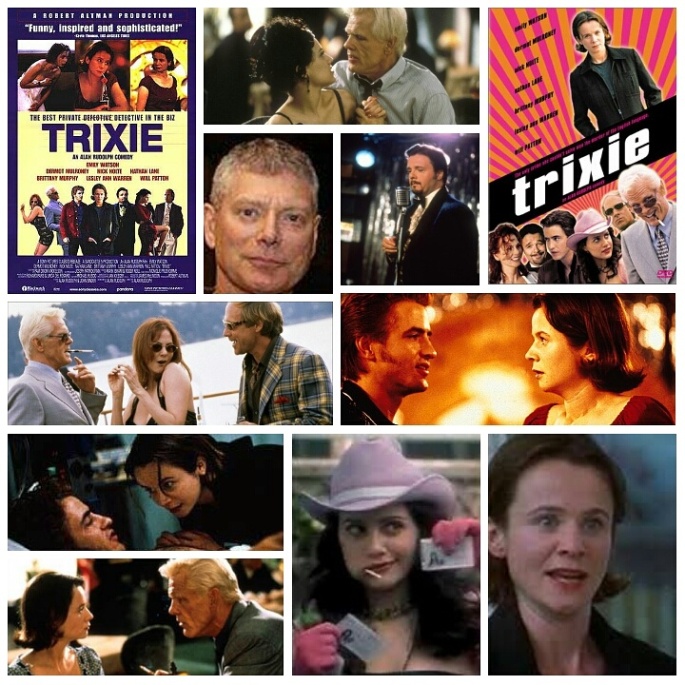
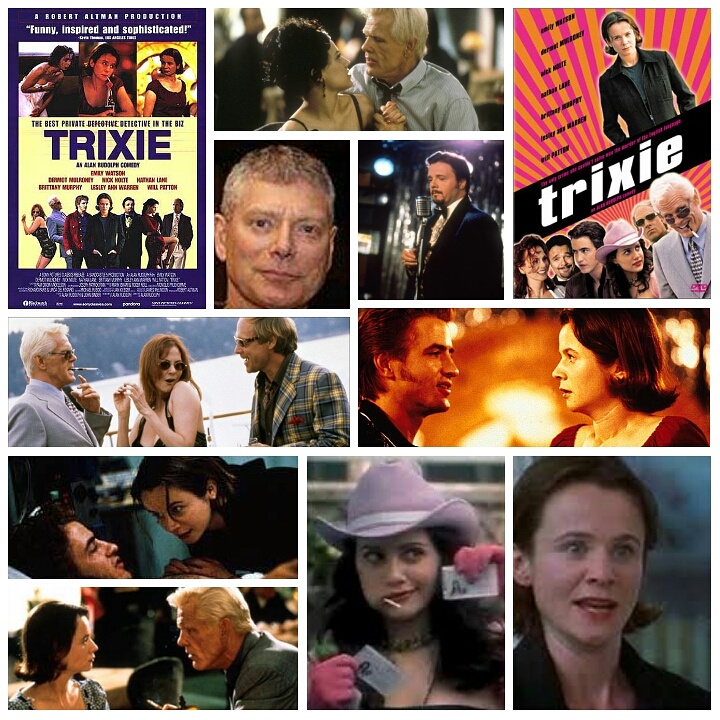
What the hell did just watch. Oh boy, what can I say about this one without tearing it a new one. Alan Rudolph’s Trixie is a dud, a paperweight, a misguided, clumsy disaster of the highest order. It has the tonal equilibrium of heart attack on a flow chart, and a troupe of actors who mercilessly embarrass themselves into the ground with work that goes beyond tireless pantomime. It’s sad, because I’ve seen this type of thing work nicely before, with the right amounts of quaint and quirky qualities, but here the mixture tanks in a god awfully messy cannonball of a landing. It tries to be a detective story, but fails to realize that you need some semblance of a  story to care about, and I just…. didn’t care. It’s a slog to get through, a struggle to stay focused on, and basically a big awkward failure on every level. Also puzzling is the fact that cast, all of which are excellent actors who I love in almost everything they do, all made me want to hit them here, and when you’ve got a cast this good, that’s no easy feat. Emily Watson will make you want to tear your hair out as titular Trixie, a casino security guard with aspirations of taking on a big detective case, an irritating Chicago accent and apparantly mild brain damage that causes her to mispronounce every expression, figure of speech and slang term in a fashion that is neither cute nor funny. She’s wooed by Dex (Dermot Mulroney) a goon who works for sleazy land developer Red Rafferty (Will Patton). Soon, through a set of circumstances both inane and cartoonish, they find themselves deep in some sort of backhanded scheme involving murder most foul, tied to a corrupt state senator played by Nick Nolte, who is the peacock of the bunch, sucking all the energy out of the room with dialogue that is literally lifted straight from political speeches from the past. I’m not even kidding, he blusters out platitudes that vaguely have a place in whatever seen is going on, but barely. There’s also a hot young waitress (a bouncy Brittany Murphy), a flamboyant lounge singer (Nathan Lane is excruciating), a washed up pop star (Lesley Ann Down) and a bizarre cameo from Stephen Lang who attempts an accent that made me supremely uncomfortable. It’s weird, cumbersome and altogether pointless as everything it tries: comedy, thriller, romance, whodunit.. all fall miserably flat. Bummer. I’m gonna go make a list of all the things I could have been doing with the two hours I spent on this wreck.

THE SEA OF TREES – A Review by Frank Mengarelli

Gus van Sant’s THE SEA OF TREES is a pulverisingly beautiful film. It takes place within despair, as we’re guided by Matthew McConaughey, who after the death of his wife flies to Japan to kill himself in the Aokigahara Forest, know as the “suicide forest”.

14095820_10101657553072637_3101074635888121368_n

When McConaughey gets to the forest, he meets a man played by Ken Watanabe who is wandering with his wrists cut open and is slowly bleeding out. As the two men pair up, traveling deeper into the forest their hope for survival inadvertently grows.

The film premiered at Cannes and was blasted by critics. Yet again, I find myself falling in love with a “poor” film that has been deemed van Sant’s “worst movie”. Is this film for everyone? No. Is it for the average person Redbox’ing the latest McConaughey disc? Probably not. But you should still watch it.

This is a film that asks a lot of hard questions. A painstaking majority of the film is introspective reflection by McConaughey. What happens to love when it is concretely gone? What is left when life has no more person value?

14102467_10101657553042697_4524413847596352014_n

It is a heavy film told through quiet moments and unromantisized flashbacks between McConaughey and his wife played brilliantly by Naomi Watts. At times, this is a very hard film to watch. McConaughey and Watanabe give equally emotionally charged performances that are draining. Yet, through all the despair and grief we see on screen, the film’s message of survival and hope is effortlessly inspiring.

WAR DOGS–A REVIEW BY TIM FUGLEI

war-dogs-movie-review-jonah-hill-miles-teller-2016

Martin Scorsese’s 1990 gangster opus Goodfellas ushered in a modern cinematic genre tweak I’ll call the American Scoundrel Biopic.  A true story of American Exceptionalism gone wrong, narrated in cheeky, self-congratulatory tones, cut through with flashy montages documenting quick rises in fortune and immense falls from grace set to a rock and roll soundtrack filled with familiar hits, it’s a form that Scorsese has revisited to more or less successful effect several times throughout his career.  Others have jumped in as well, from Ted Demme’s Blow to Adam McCay’s The Big Short we’ve been treated to brisk, glib takes on what it means to job the system and pay the price—it’s a familiar enough form that we’ve even gotten comedic satires of it like McCay’s Anchorman: The Legend Of Ron Burgundy.  Director Todd Philips, best known for his Hangover comedies, offers up War Dogs as his ASB entry, and I’m glad to report it’s a very solid one, with strong central performances and the sadly ever-relevant issues of war profiteering and global malfeasance on its mind.  The style may be as familiar as a favorite old pair of jeans, but Philips and his performers make you glad to slip into them one more time.

We are introduced (in montage, with voiceover, natch) to David, played affably by Miles Teller, a Jewish kid trying to make good in the world but not blessed with the greatest business sense—his plot to make millions by reselling high end bedsheets to retirement homes doesn’t have an interested market base to peddle to, and his personal massage services do little aside from goosing his desire for a successful materialistic life.  News of his wife’s impending pregnancy only heightens this instinct, and fate steps in to deposit childhood friend and professional shoulder devil Efraim back into David’s world.  Efraim, portrayed with gusto by the ever surprisingly charismatic Jonah Hill, has figured out how to weasel his way into the middle of arms deals and is looking for a partner.  David is quickly drawn in by a few wins, and we’re off to the races.  The exceedingly murky morality behind their chosen field of work—supplying guns and ammo to war zones in the Middle East—swirls around the proceedings with a sense of impending doom, as the pair’s brazen strategies are half thought out at best and their luck in evading violence or exposure as hucksters simply can’t last forever.  It doesn’t in real life, and it certainly doesn’t in ASB films.

If all of this sounds familiar, well, much of it is, but Philips has a few tricks up his sleeve that insure War Dogs sits towards the top of the pile in this particular genre.  First and foremost, the filmmaker’s comedic chops are on full display throughout the film, it’s a damn funny ride, moreso than any of its brethren that come to mind.  Even though the story actually happened a decade back, its resonance is strong as the West continues to be embroiled in military actions across miserable deserts half a world away.  In the tale of David and Ephraim, taken from a Rolling Stone article on their exploits, Philips has also found a razor sharp metaphor for US interventions abroad:  Occasionally well meaning, often misguided and ultimately leaving blood on many sets of hands.  Finally, he’s coaxed a career defining performance out of Hill, whose Ephriam is Zelig-like in his chameleonic  charming of everyone in his life and Patrick Batemen-esque in his sociopathic reduction of said people to pawns being moved around on his personal chessboard.   Teller’s David is a sympathetic straight man who the viewer rides shotgun with, but Ephriam is the cackling black hole we find ourselves sucked into whenever he’s on screen.  War Dogs is a smart, funny story of greed and guns, delivered with all the trimmings of American Scoundrel Biopics.

jonah-hill-and-miles-teller-are-pro-money-in-war-dogs-e1472095918503

RADIOLAND MURDERS – A REVIEW BY J.D. LAFRANCE

radioland-murders_still1

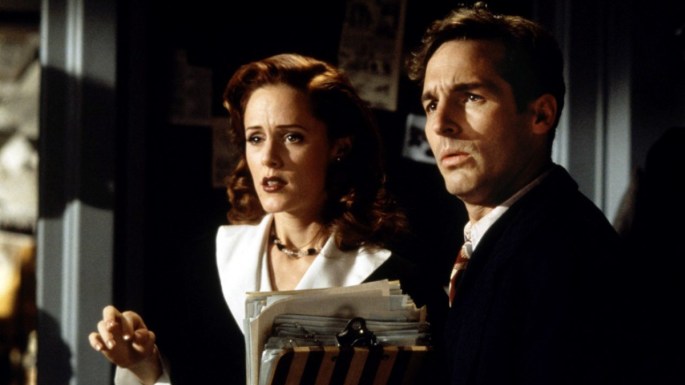
Radioland Murders (1994) was one of George Lucas’ rare forays outside of the Star Wars universe and like others (Willow and Howard the Duck) it was a critical and commercial failure. Lucas seemed to be following in the footsteps of Woody Allen’s Radio Days (1987) by paying homage to the heyday of radio in the 1930s before television and when it was the source of news and entertainment for millions of Americans. It was a time when The Shadow captured people’s imaginations and Orson Welles’ War of the Worlds broadcast fooled thousands into believing we were actually being attacked by Martians. It is the twilight of this era that Lucas’ film depicts.

It’s 1939 on the night that WBN radio goes nationwide and the whole station is abuzz with activity. Roger Henderson (Brian Benben) is the head writer and his wife Penny (Mary Stuart Masterson) is an assistant to the director (Jeffrey Tambor). They are forced to deal with an unhappy sponsor who doesn’t like the scripts, unhappy writers who don’t like their working conditions, and unhappy actors with inflated egos. As if that wasn’t bad enough, during the opening musical number the orchestra’s trumpeter dies from a heart attack.

Soon, the station’s director turns up dead as well from an apparent suicide. However, it is revealed that both deaths are actually murders. Radioland Murders starts off as a farcical comedy and gradually mutates into a classical whodunit with no shortage of suspects and with the Hendersons out to solve the case while keeping the radio show going. Roger and Penny are married but their union is in big trouble because she caught him with another woman (the star of the station’s radio programs no less) and hasn’t forgiven him while he claims that nothing happened. To make matters worse, Roger ends up becoming one of the primary suspects and has to rush to clear his name.

Mary Stuart Masterson looks beautiful and is lit like a glamourous 1940s movie star but with screwball tendencies. However, she’s let down by the screenplay and saddled with a miscast co-star in the form of Brian Benben who’s not very funny. His character is a sap and it’s hard to see what Penny sees in him.

The problem with Radioland Murders is that it relies too much on broad, slapstick humor with many of the jokes falling flat. There is also too much going on. The movie gets too busy at times. A stronger director might have been able to handle it better but then again, maybe not because the problems are inherent in the screenplay. The movie is written by four different people and this may explain why it is such a mess. Screenwriting by committee is rarely a good idea.

The vintage big band music and the slick production values are the film’s only highlights. There are even cameos by Rosemary Clooney and George Burns (unfortunately his last film role) but they do little to help this mess of a movie. It’s not hard to see why Radioland Murders failed and why Lucas returned back to the safety of the Star Wars universe. One of his contemporaries, Francis Ford Coppola, also ran into difficulties trying to recreate a bygone era with The Cotton Club (1984). Obviously, people are not particularly keen on revisiting the 1920s and the 1930s, or, at least, the way Coppola and Lucas envisioned it.

Good Journey: Remembering Masters of the Universe with Gary Goddard by Kent Hill (The Director’s Cut)

This slideshow requires JavaScript.

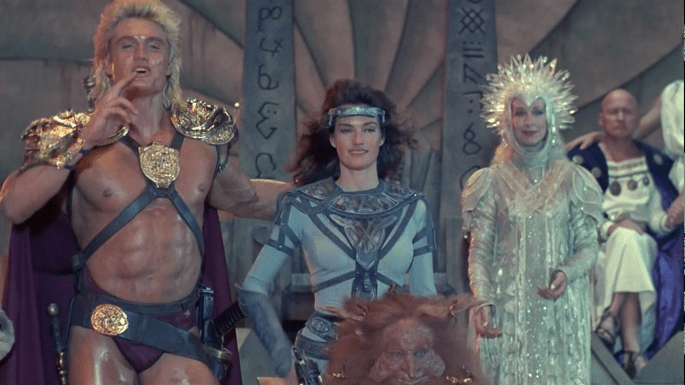
It is fitting that I am sitting watching Masters of the Universe as I write this. Today’s generation, while they may yet receive a new Masters movie, they will never have any idea what it was like to grow with He-Man & Co and then one fine day you hear wondrous news: it’s going to be a movie.

There was no internet then, which for this guy in the audience, was a great thing. The only information you received before you saw the film was these things called poster books; these, and at times articles in the trades and finally perhaps a short ‘making of’ on TV.

I remember going with my cousins to see the film for the first time. Bill Conti’s score was perfect, the Vader-esque reveal of Skeletor (who was utterly incredible), the scale of the sets. It was all quite magical, and why not, it was Masters of the Universe – the live action movie.

Now I was perplexed when they left Eternia and came to Earth, and I often lament the fact when He-Man held his sword aloft for the final battle he didn’t utter the immortal line: By the power of Greyskull! Then of course Skeletor did promise he’d be back.Yet these are things that are minor in comparison to the sheer joy and nostalgic glee I exude as  I watch MOTU now. I was a staple of my childhood, as it is for many, and this was our film version. It happens often nowadays. Something becomes huge, leaves a high water mark on the measuring stick of popular culture and bingo – there is pretty much a guarantee that there will be a movie.  This was not always the case when I was young.

I recently had the good fortune to interview the maestro responsible for helming the movie that brought the beloved cartoon and toy line of my young life, to life.

We’ve heard all the stories surrounding the production of MOTU so I wasn’t going to ask him to rehash those. What we did discuss was some of the elements surrounding the film.

KH: The marketing of the film was not overwhelming as it is in these times, what was it like promoting the movie back then?

GG: Well the main issue was that Cannon Films was going bankrupt at the time, so they really didn’t have the kind of promotional funding one would expect for what was supposed to be their big summer film. In addition, because the studio had been unlucky for the year or two (or perhaps even longer) with the film slates they had been putting out, their credibility with exhibitors was not strong. This meant they could not get theatres to keep a movie playing in the 2nd or 3rdweek or beyond because they didn’t have any up and coming hits to bargain with.  So “Masters” really made almost every dime in the first and second weeks of distribution.  I know for a fact that by the second weekend, in my hometown of Santa Barbara, that by the second week it was only playing matinees.  The movie was perceived as a “kids film” so a lot of theatres only played in the afternoons.  The reason I know this is that I went to Santa Barbara that second week and planned to take my family and friends to see it, only to find out it was not playing in the evenings.  Very disappointing.  Another example was that Cannon had no money for a premiere – and the only reason we had one was because Mattel stepped up to pay the costs for the opening night premiere.  Funny enough, I couldn’t attend because I was in Toronto overseeing the television series CAPTAIN POWER that I had created in partnership with Mattel.  But the fact that Cannon could not “open” the film, with the proper ads, billboards, television commercials and so on is testament to the fact that they were just out of gas by the time we opened.  In truth they were also low on funds to finish the film as I’m sure you already know from the documentary.

KH: Were you keenly aware of the MOTU phenomena before accepting to helm the film, were you a fan of the material?

GG: I was not a “fan” in the way that I was (and remain) for books like Lord of the Rings, The Hobbit, The Dark is Rising series, The Book of Three, Doc Savage, John Carter of Mars, CONAN, and so on; or of The Fantastic Four, X-Men, Dr. Strange, Nick Fury: Agent of SHIELD, The Avengers, Captain America and the Marvel Universe, or with films like Star Wars, Raiders, ALIEN and ALIENS — -the list is endless. I was definitely a fan of the genre(s) in all their many forms.  I knew of He-Man – because how could you NOT at that time? I had seen some of the animated shows, I knew the toy line as I was consulting with Mattel at the time on a number of their toy lines, and with She-Ra – being part of the concept development (for instance, I created the concept for The Crystal Castle for another line, which they appropriated for She-Ra.)  But I came at the movie not through Mattel, but through Ed Pressman who was looking for a director – he had already commissioned a script, and he had signed Dolph Lundgren following his star-making turn in ROCKY II – but he needed a director.  Pressman saw the live stage spectacular that I wrote, designed, directed and produced (“The Adventures of Conan: A Sword & Sorcery Spectacular”) for Universal Studios in Hollywood and felt that I was a director, and one that I understood the genre.  The fact that I was a fan of the genre but NOT a super fan of He-Man worked well I think – it allowed me to shape the world for this particular movie in a way that had consistent rules, and that certainly were in sync with the world of MOTU – but I was able to come at it with fresh eyes too.

KH: They are often stories of directors retaining props from the movie, I don’t suppose you came away with something cool like the sword of Greyskull or Skeletor’s staff?

GG: Of course! How could I NOT have a few reminders of my days on Eternia? I have SKELTOR’S SWORD and it is pretty cool. I have HE-MAN’S SWORD as well, but I loaned it to a friend.  (This reminds me I need to get it back.)  I also have the breastplate that BLADE wore, and a few other items.

KH: My wife is also a long-time fan, she wanted to ask if you still hand any of the MOTU toys and what kind of access were you given by Mattel in terms of research?

GG: I have a few of the toys from that time period, and yes I was given EVERYTHING on HE-MAN at the time. Originally they wanted to have tons of characters, and they showed me ALL of the, past, present and future. Animation, videos, toy catalogues, actual toys, books, comics – the works!  They also had wanted us to literally bring the characters to life as they appeared as toys which would have been – no so great.  What I really wanted to understand was the lore – the backstory and the legend along with the characters.  I also knew we did not have a budget that was going to allow for tons of additional characters (as say in the Cantina scene in STAR WARS) and I was very much into trying to keep the story “real” within the context of the fantasy and it’s world.  The story that David Odell devised, again because of budget limitations, was a “fish out of water” story with He-Man suddenly on present-day Earth.  What I liked about that was that it gave me the freedom to select only the characters I thought we could focus on while not ignoring the other ones.  By that I mean I am not saying there is no BATTLECAT or ORKO in this story – they just were not there to make the Cosmic Key jump to earth.  They are still there on Eternia waiting for He-Man and the gang to return.  We also did not have a need for Prince Adam in the Earth setting and to use it would have seemed forced – at least I thought so at the time. I convinced Mattel (who had approval over script, star, director, and costume design among other things) that we should follow the STAR WARS or WIZARD OF OZ model – a character that has to reach somewhere and accomplish something, picking up a series of friends and comrades along the way.  In the end, it’s their combined talents and powers that allow for defeat of the antagonist, thereby restoring the universe.  And in this case I went with ACTUALLY restoring the Universe!

KH: The movie has had great longevity, what do you attribute this to?

GG: Well I think it’s a combination of a few things. First, I worked very hard once production began to transform the script from a simplistic “teens meet alien warrior on earth and fun ensues’ to something with a bit more gravitas. Remember I grew up on fantasy and action adventures and Arthurian myths along with comics and movies – I wanted to try and lift the material up – I did not want to make a campy movie that didn’t take the characters seriously.  I wanted to make it real, and I wanted the story to have some weight, and I wanted the performances to be outstanding. The Odell script had nothing on Eternia other than a final scene in a cave there where the Eternians find an American Flag – suggesting it was Human from Earth (and Americans at that) who somehow created Eternia. I proposed, even with the limited budget, that we bookend the movie on Eternia so that we had a context for He-Man and Skeletor and the Eternians.  I also took a page from Lucas, from Jack Kirby and from most of the great heroic sagas  – I started with the Villain having the upper-hand – -with He-Man on the defensive.  I knew that Dolph was relatively new to acting, and so I decided to surround him a cast of strong actors that would help to bring out the best in him.  I also wanted the movie to speak to the kids (and parents) that would see it – so we had the action, we had the fantasy, we had the cool stuff like the Air Centurions and the Laser Whip and Skeletor turning into a God.  But the movie – in terms of it’s core message – was when Kevin is about to give up on trying to recreate the musical key that will get our heroes back home.  And Gwildor steps in and says “Only one of you Kevin – only one of you in all the Universe..”   +And that is great paring down of an incredible quote from Martha Graham about the uniqueness of every artist — )  I thought “well if one kid “gets it” that he or she is unique – the ONLY one of him or her in the Universe – “ that it might inspire them to follow their own star.  As it turns out, many adults now quote that to me when they know I directed the film – though they don’t know I wrote that line.  I also came up with “Good Journey” and the parting gesture – because as the Eternians meet and then head in different directions to take care of business – it sounded strange for them to say “good bye” (too earth-like), or “farewell” (too Shakespearean) and so I remembered the saying “life’s a journey, not a destination” – and said let’s try “Good Journey” and that worked.  People also remember “I will have all or I will have NOTHING!” and “I am not in a giving mood this day” (which is from Richard the 2nd I believe).  All of this is simply background for what I was trying to do.  Key to everything was deciding to essentially build the picture around Skeletor – and getting Frank Langella to play him.  Meg Foster followed.  In these two I had the foundation for great villains that I thought would drive the dramatic through line.  Gwildor was created as a kind of stand-n for Orko (though some reviewers thought it was an attempt to emulate R2/D2 which is really a stretch).  I guess the short answer is that we really tried to work the script into something more than a quickie “let’s make a buck off He-Man”, we got some committed actors to take on the roles, led by Langella’s amazing performance as Skeletor, and we were all committed to the vision of trying to treat the material seriously even though it was based on a toy line.  I think the sincerity of the cast shines through, and I think the story was timeless (even though most of it took place on present day earth) and I think it had enough “cool stuff” that was at least a bit original.  Ultimately if something stands the best of time, it’s because it made an emotional connection with the audience – and I think in this case – it seems it really did.

KH: Hollywood technology is at a place now where so much that had to be reconfigured to do He-Man on a budget could be achieved with significantly less difficulty then when you made the picture. There have been reports of a new MOTU film in the works for a while. What do you think given the constraints you faced could be the outcome for a new production?

GG: Well I just read an interview with McG who has signed on to direct it. There have been multiple writers and directors announced over the last decade or so – but this time it seems real. And in the interview that McG gave, he was not only complimentary about my film, he went on to state that there were only THREE great screen villains:  VADER, GRUBER, and SKELETOR – which was great to read.  While a lot of people have acknowledged Frank’s incredible performance in MOTU, he’s always left off the “Top 20 Greatest Sci Fi/Fantasy Villains” and on other such lists.  And I can tell you – his performance as Skeletor is one for the ages – far away and above many of the so-called ‘great screen villains” on some of these lists.  Also, McG’s take seems strong to me.  I had hoped there would be a sequel to my film, and if so, my desire was to take the story to Eternia and to develop Eternia as a world of its own but with the depth of Middle-Earth.  The difference being that Eternia is not only sword & sorcery and magic and strange creatures – it’s also high tech with flying battle stations and advanced weapons.  It sounds like McG intends to create that world, and with what is possible with digital creation now – there’s no limit obviously.  And he can bring BATTLECAT to life in a way we could not have in 1987.  So I am happy to know that McG has some appreciation for my film, and for Frank’s Skeletor (and I would presume Meg Foster’s intense Evil-Lyn) – and I think he’s got a firm take on what that film could be.

KH: Time has flown, do you have any endearing memories of the making of MOTU you can share and did you in the wake of the film stay in contact with any of your collaborators?

GG: Too many stories for this interview – and all of the quite good – but then memory is that way, we tend to remember the good things and block out the arguments and battles and all of that. As John DeCuir (production designer of films that include CLEOPATRA, KING AND I, SOUTH PACIFIC, GHOSTBUSTERS) advised me when I started on MOTU – “Remember Gary, the pain is temporary, film is forever.” I didn’t quite get it when he told me that, but by the time the production was over, I understood it very clearly.  A number of stayed in contact for a long time – including Courtney, Frank, Chelsea, and our editor Anne Coates (who prior to MOTU edited a little film called LAWRENCE OF ARABIA and many, many other great films).  Bill Stout – the production designer – was a friend before the film began and has been a steadfast friend since.  We’ve worked on may projects together since then.

KH: You never know if a film is going to be a success, and Francis Coppola said time is the ultimate critic. Has time, in your opinion been kind to MOTU?

GG: BY THE POWER OF GRAYSKULL YES IT HAS!!! While we had some very good reviews, a lot of them just went for the jugular – the negative reviews always started with several paragraphs on the property and how it was a toy line, then an animated show – and always with a sense of looking down their nose on the entire enterprise. I’m not saying it was Academy Award material, but there is no question that many critics went to this with their knives out – finding very little to applaud.  But – in the last few years – I see so many positive thoughts, reviews (from the DVD and Laser Disc releases) and I have had so many people react when they hear I directed it – with a big smile and “Oh my god – I LOVED that movie when I was a kid” – and you know, that’s a great feeling.  The critics are long gone, never to have had they challenge or joy or creating something – they live only to feed of the work of others.  But what I did remains, and it seems to have done what it was supposed to –  it ENTERTAINED a generation, and in some cases, it delivered a positive message, and many years later, a lot of people cherish it.  For me, that is simply fantastic.  If you think of all the tens of thousands, hundreds of thousands of movies, television shows and other popular entertainment that gets made – the fact this is one of those that has stuck around.  And that seems to have a sizeable number of people who remember it fondly – well – that’s a testament to film that we made, and to the cast and crew and incredible team that worked to make it happen.  I’m quite proud of it – on so many levels.  And someone just sent me a new review from inverse.com where the guy actually says that MOTU is – “in a way” with its way of juggling tongue in cheek drama tone with heavy drama – that it’s a rough prototype for the modern Marvel films.  I love that comparison – and when you know I wanted to dedicate the film to Jack Kirby – you can certainly see that Marvel comics influenced a lot of where I took the movie story.

KH: Directorially, if given the opportunity, would you get back in the saddle and reboot MOTU, possibly reaching for that grander vision that during the time it was made was unattainable?

GG: I would LOVE to – but I think McG is going to do a great job. But if Marvel needs a director for the INHUMANS, I’m ready.

KH: In summation, what was/is MOTU to you?

GG: An amazing adventure. In fact, even as the characters in the movie were on a journey, our little company of actors and key craftsmen – we were on a journey together too. That was a magic summer, challenging as it was.  And for me, as someone who grew up in a lower middle class family, who dreamed to one day make movies, to create stories and epic sagas, it was a dream come true.  At times I was dead tired, and at times I was frustrated at fighting the time, the weather, the effects team, the countless kobayashi-marus’ one must solve to get a movie made, completed, and into the theatres – I loved every minute of it.  I think back on it as my “Summer of ‘42” but my affair was with the movie itself – the making of the movie, and all of the love and pain that goes with it.  I wouldn’t trade that for anything.

KH: Thank you wholeheartedly for this opportunity Mr. Goddard, as a kid form whom MOTU was a staple and to you for bringing to life on the big screen I am sure I speak for all fans when I say thank you.

Good Journey.

GG: Only one of you Kent – only one of you in the entire Universe…

Thanks for letting me reminisce!


After the interview was over I watched MOTU again.

Don’t wait any longer, hold aloft your magic sword, and say it with me:

BY THE POWER OF GREYSKULL!

Now go and watch the movie. Relax, Relive, Reminisce, Rejoice. You have the power.

Good Journey…
 

JAMES GRAY’S THE IMMIGRANT — A REVIEW BY NICK CLEMENT

1

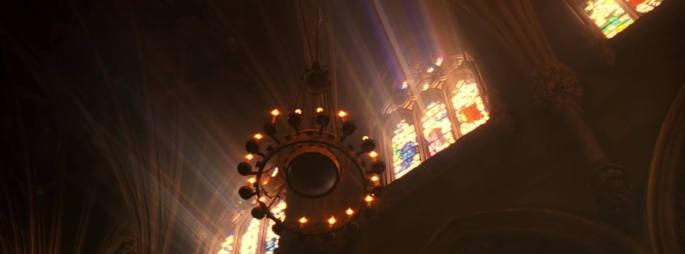
James Gray’s The Immigrant is a great film in hiding, practically buried by its distributors and not embraced enough by the critical community; even its greatest reviews seem subdued. The Weinsteins should be ashamed of themselves for the embarrassing way they treated this movie – it’s like they thought they had a dud on their hands and they pretended that it didn’t exist. It’s better than pretty much every other movie they put their company logo on in 2014, and over time, I truly hope it attains the status it deserves as a captivating, frequently brilliant and completely consuming work of American historical art. Every single shot in The Immigrant is worthy of museum placement. Legendary cinematographer Darius Khondji (Seven, Evita) is a visual genius, and the way he paints with light is a marvel to behold. Engrossing doesn’t cover it as this film overwhelms you with both epic and intimate details. It’s easily the best, most fully realized work from Gray, and he’s made some superb movies (Two Lovers, Little Odessa, The Yards, We Own the Night), so that’s no small compliment. There’s an ambiguous nature to the patient narrative, and by the end of this tragic and distinct piece of work, you’ll have experienced a serious range of emotions.

2

Marion Cotillard is a magnetic screen presence, portraying a European immigrant coming to America in the early 1920’s, arriving with nothing in her hands at Ellis Island (how were these scenes achieved?), and meeting the potentially nefarious Joaquin Phoenix, doing customarily intense work as a shady business man with various ties to unseemly individuals. He’s smitten immediately, and whisks her away to his apartment, eventually putting her to work as a high-end call girl. She then meets a frisky and upbeat stage magician played by an always in-the-moment Jeremy Renner, who also starts to fall in love with her. From there, Gray tells a tale about love, the American dream, and the idea of people coming to this country and trying to navigate the slippery waters of citizenship. It’s simply mind boggling why this haunting, uniquely adult, and magnificently mounted production got buried with a half-assed release during the summer movie season. This was a “fall prestige picture” all the way, and I hope that Gray steers clear of the Weinsteins moving forward (they also botched the release of his Godfather-esque drama The Yards). And just wait for the final shot – it’s astonishing in its quiet beauty and utterly devastating in its narrative implications.

5

Smokin’ with Boll: (A brief chat with a filmmaker I happen to like) by Kent Hill

293524-uwe%20bollSay what you like about Uwe Boll. But I dear reader, happen to like his movies. I like the man’s visions, the unintentional humour, his ability to get a hold of some big names to appear in his flicks. I like that fact that people think he’s a joke, a maker of bad movies; the fact he was willing to put on the gloves and settle it. I like all these things because it’s not how I feel. I think there is a raw splendour to the man’s work, something that reminds me of the bottom-of-the-shelf VHS greats of my youth.
I first contacted Boll some months ago when I was looking for someone to write a foreword for my friend Don Noble’s book. I found him surprisingly approachable. He took Don’s story and read it. He is a shrewd customer and when he had finished he sent me something back. I wasn’t quite the foreword I was looking for – more like a quote for the cover – which is what it ultimately will be.

Still he took the time to read the story, and Don seemed pretty stoked that he had a seal of approval, if you will, from Mr. Boll. We jump forward in time and I am here, dear reader, writing for PTS. The only thing I love more than my wife is movies, and the only thing I love more than watching movies is talking with those that bring them to life. With that in mind I reached out again to the director of House of the Dead, Alone in the Dark, Postal among others, to see if he was up for a brief chat in this, the wake of his filmmaking career.

He gave me a brief window, but for this fan it was more than I hoped for. That’s the thing I have learnt in getting in contact with the filmmakers I love. There is no need for fear. At the very least they are simply going to say, “No.”

Last night Uwe Boll said, “Sure, why not.”

KH: Mr Boll thank you for your time. You are quite a prolific director. Can you talk about how it is you were able to mount productions so quickly?

UB: I did 33 movies in 25 years . . .so overall a doable number. But, in 10 years within the 25 years I did almost 20 of them. It is hard work and you have to start a new movie before the other movie is finished production.

KH: How is it you came to making movies, was it always your passion?

UB: Absolutely. I always wanted to make movies since I’m 10 years old . . . I watched over 18.000 movies before I was 30.

KH: A number of the films you have made are based on video games. Are your talents sought out by the games developers or to you acquire the ability to direct the properties a different way?

UB: Yes . . . I bought the rights, and to be honest the videogame companies didn’t care at all about the movies . . . they zero interfered with the production . . . and so also didn’t care about their properties.

KH: Do you enjoy the variety of genres that your films span? Do you have a genre you have not tackled yet but would like to?

UB: I did it all, and I love that I did so many genres . . .action is fun to do . . .but POSTAL  is my favourite.

KH: I have some favourites among your movies and was wondering if you might favour us with a few productions tales from:-

Bloodrayne?

UB: Horrible shoot in Romania . . . Michael Madsen always drunk . . . Michelle Rodriguez always changing the script…

Far Cry?

UB: Great action scenes . . . Til Schweiger great team player…

In the Name of the King?

UB: Long shoot . . . my most expensive movie . . . took me 2 years to do it . . . great shoot in Canada.

KH: In your films you have worked with big stars. The likes of Ben Kingsley, Burt Reynolds, Ray Liotta, Jurgen Prochnow. What was it like working with these stars plus the others you’ve had the privilege to direct:

UB: Mixed up . . . most professional . . . positive.

KH: Critics have never been kind to your work, which I think is unnecessary. You definitely have a distinct style, a unique voice. How to you respond to these detractors?

UB: It is what it is . . . that is the reason I boxed them and knocked them out.

KH: Can you tell us any anecdotes from the vast array of movies you have directed?

UB: In Bloodrayne 2 we burned down by accident, the wild west town . . . my biggest insurance case.

KH: Do or have you taken home any props from your movies like so many directors do or have done?

UB: I have the rampage suit . . . and some boxing gloves from Max Schmeling.

KH: What does the future hold for the cinema of Uwe Boll?

UB: Rampage 3 is my last movie . . . I retired now.

There was an exchange of pleasantries, and just as fast as the opportunity arose it was all over. My brief conversation with the director most loath, but some love. I happen to fall into the latter category. There will be no more Uwe Boll movies; to me that is kinda sad. There are so few people making movies just because they love making movies anymore. It all about profits and prestige. You may think that guys like Boll should never have been allowed behind the camera? But if that is the case you have missed the point; even though his films are generally considered bad, that doesn’t exclude the  fact that he didn’t set out to make them that way. His life was all about his passion, his passion was movies. Love the cinema of Uwe Boll or not, his movies are infused with the passion he had to tell these stories, despite the reaction a future audience may have. Love them or hate them, they are his. You can’t fault him for that.

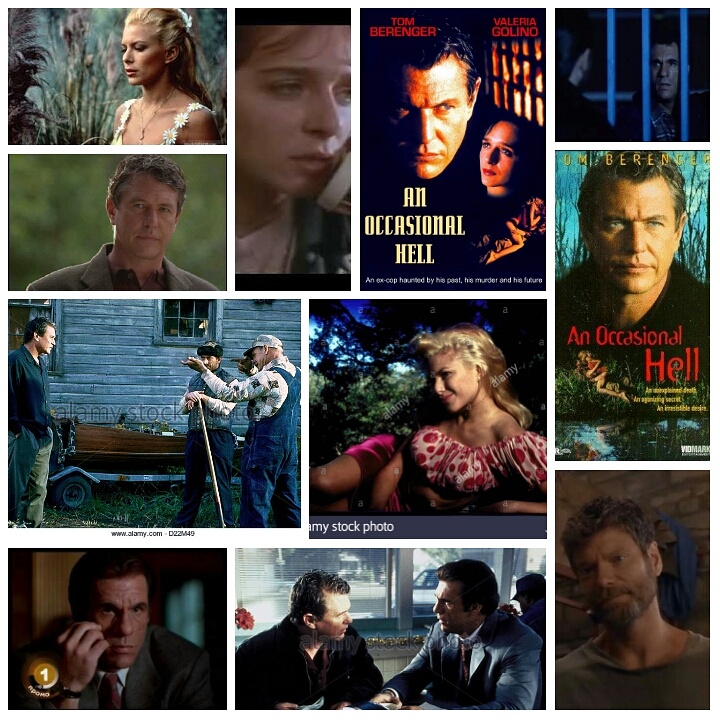
B Movie Glory with Nate: An Occasional Hell 

An Occasional Hell is one of countless cable TV crime melodramas that start to blur together if you’ve seen enough. They don’t often have high budgets, and as such usually only contain a few elements: a handful of actors, a murder mystery, deception, eroticism and very little in the way of fancy special effects. This one has a solid lead in Tom Berenger, who can make anything watchable, and great supporting players who pitch in as well. The story, or lack thereof, is where the problem arises. Berenger plays an ex cop and forensics wizard turned college professor, who is hired by sultry widow Valeria Golino (remember her from Hot Shots? Lol) to solve the murder of her husband and his hot young mistress (Kari Wuhrer), who has vanished. It turns out the mistress may have been involved with drug runners (random) the state troopers get involved and it’s all one big mess that neither Berenger nor the plot can seem to figure out. There’s a cynical lead Trooper played by a snarky, laid back Robert Davi, and other assorted people including Richard Edson, Ellen Greene, Geoffrey Lewis and a kooky Stephen Lang, who shows up in flashbacks as Golino’s eccentric civil war enthusiast husband. None of it makes all that much sense or seems to flow in a way that’s believable, but Berenger makes it somewhat worthwhile, as do that other players. Just below average stuff.