TIM BURTON’S BEETLEJUICE — A REVIEW BY NICK CLEMENT

1

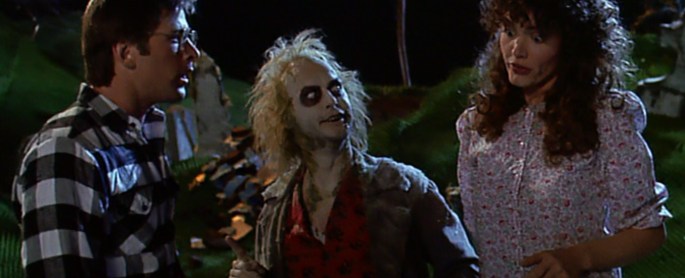
The thrill and creativity of Beetlejuice will never be replicated. Directed with insane zest by an in-his-prime Tim Burton, I can’t stress how many times I’ve seen this wild and wacky movie, and I am beyond excited to show this film to my son when he’s at a very impressionable age. This was a MEGA-EVENT for me as a seven year old; the fact that this film got a PG when PG-13 was an option still makes me laugh. Between the coupling of “Nice fuckin’ model!” with the testicle-double-honk to all of the rather gory and sometimes gruesome special effect make-up work to the various sexual innuendos – it just makes me laugh how this one escaped through the system. Everyone was on fire in this film; Geena Davis, Alec Baldwin, Jeffrey Jones, Catherine O’Hara, Winona Ryder, Sylvia Sidney, Glenn Shadix, and of course, Michael Keaton, in one of his signature roles, all delivered note-perfect performances. I love how this movie never feels like its playing by any set of predetermined rules, with Michael McDowell and Warren Skaaren’s witty and subversive screenplay being a perfect match for the idiosyncratic stylings of Burton’s fertile visual imagination. Danny Elfman’s score is an all-timer and the creepy production design by Bo Welch a tremendous accomplishment, while the playful yet ominous tone gave off a vibe that allowed for endless possibilities. It’s interesting to read how the original script evolved significantly, and how at first it was a much darker and more sinister piece. Produced by The Geffen Company and released by Warner Brothers in late March of 1988, Beetlejuice would become a critical success and audience favorite, and over the years, thank the Cinema Godz, any talk of a sequel or reboot has never formalized. I’d love it if we could all keep it that way. Oh, and Bob Goulet “Putz” POWER.

2

Thursday: A Review by Nate Hill 

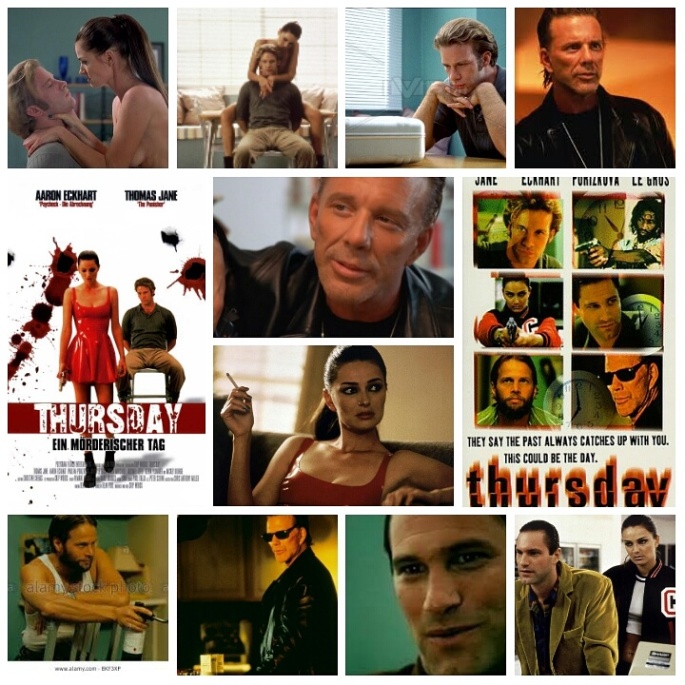
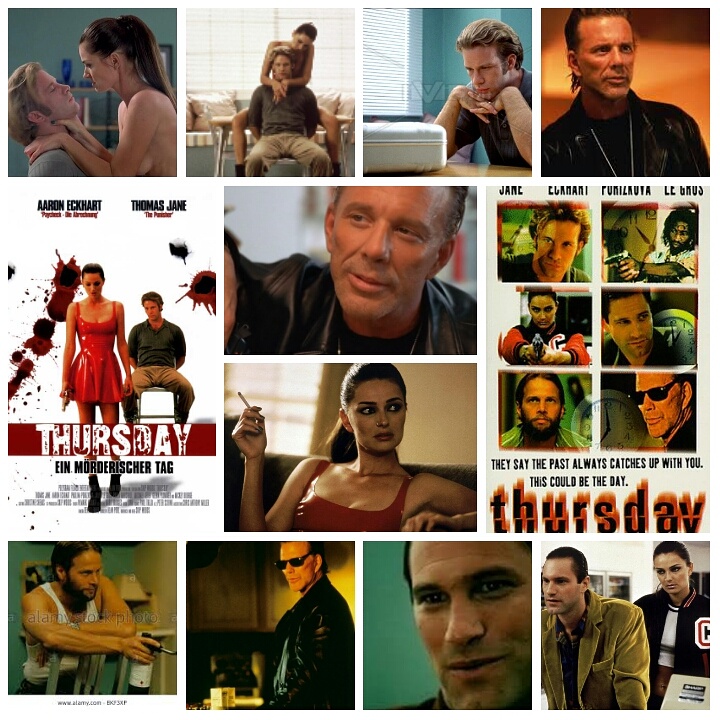
Thursday is one of the great forgotten neo-noir comedies of the 90’s, floating on the wake of everything from Tarantino to Verhoeven. It’s almost impossible to find these days (I watched an old youtube version years ago), but worth hunting down for its vehement hedonism, mean spirited dark humour and cast members who take a walk down the dark end of the street, and clearly have fun with the shamelessly disgusting material. There’s a spirited willingness to be nasty, a bottom feeding urban sleaziness that almost reminded me of Wayne Kramer’s Running Scared, or Joe Carnahan’s Stretch. Thomas Jane, riding the wave of a supporting role in Face/Off, plays Casey, an ex drug dealer trying to go straight and adopt a child with his wife (Paula Mitchell). Suddenly his old buddy Nick (a ferocious Aaron Eckhart) blows back into his life with big ideas and an even bigger amount of heroin he stole from god knows where. This sets off a wild and exceedingly weird chain of events including convenience store robbery, murder, a psycho named Billy (James LeGros) with a penchant for elaborate torture, a kinky femme fatale (Paulina Porizkova) and a scary rogue cop (Mickey Rourke). It’s a big bloody hot mess, but a brilliant one that nails the feverish tone of stuff like Natural Born Killers, a complete disregard for discretion or moderation, tossing everyone and everything into the fire until the audience feels like they need a big collective shower. Eckhart is a treat to watch, taunting the laid back Jane with a knowing glee, waiting for that inevitable revert to bis old, crazy self. Rourke is relegated to what is essentially an extended cameo, but he makes the most of it with quiet tension and the menace of a junkyard dog. This film has what is probably the weirdest sex scene I’ve seen, which the youtube version won’t show (being the sicko that I am, I had to track it down elsewhere). Brutally reckless stuff, and a howl if this is your type of thing. Watch for a brief and hilarious cameo from Michael Jeter. 

WHERE THE BUFFALO ROAM – A REVIEW BY J.D. LAFRANCE

oQYFByZ

Many filmmakers over the years have tried to make films out of Hunter S. Thompson’s books but the first completed effort did not surface until 1980 with Where The Buffalo Roam. It is not a good film. And yet, I find myself oddly fascinated by this deeply flawed effort. Perhaps it is Bill Murray’s truly inspired one-note performance and the stories of his deep immersion into the role. So deep that he has never fully been able to shake Thompson’s persona since. From articles that appeared at the time of its release, the project seemed doomed from the get-go with a first-time director clearly out of his depth and a problematic screenplay that Murray and Thompson tried in vain to improve during filming. The end result speaks for itself.

The film begins with a situation familiar to anyone who’s read Thompson’s work – under pressure to get an article done by a strict deadline for Blast magazine (aka Rolling Stone) for his long-suffering editor Marty Lewis (Bruno Kirby wasted in a thankless role). Up against it, he decides to write about his friend and attorney at law Carl Lazlo, Esq. (Peter Boyle). The film proceeds to flash back to San Francisco, 1968 and Thompson is holed up in a hospital room with a Wild Turkey I.V. drip (nice touch) and his own private nurse. Lazlo shows up (through the window no less) and springs his client for a road trip in a muscle car that bears more than a passing resemblance to the one James Taylor and Dennis Wilson drove in Two-Lane Blacktop (1971).

After this promising start, the film stalls with a bit where Thompson pretends to draw a lady’s blood which is pointless and painfully unfunny. Although, things perk up slightly in the next scene where he attends a court case that Lazlo is working. In the courtroom, he proceeds to mix up a Bloody Mary while he waits for the proceedings to begin, which is fairly amusing. Lazlo’s defense of four hippies stops the film cold. It is supposed to show his righteous fight for the underdog and the futility of working within the system. It is supposed to set up the struggle between the counterculture and the establishment, which epitomized the 1960s. Instead, it just comes across as dull and preachy.

Where the Buffalo Roam
jumps to Los Angeles, 1972 as Thompson covers the Superbowl as depicted in the book Fear and Loathing on the Campaign Trail ’72. After a tedious bit where he checks in, the film reaches its funniest point (not a hard feat, mind you) as Thompson stages his own Superbowl in his hotel room. He corrals a maid and a room service waiter into playing an impromptu game and, in the process, trash the room in a humorous scene that is the closest this film gets to realizing Thompson’s writing that was often filled with absurdly comical passages.

However, the film stalls yet again when, surprise, Lazlo shows up to take Thompson (and us) away from fun and sidetracks the narrative with painfully obvious political and social commentary as the crazy attorney tries to get his client to join a band of revolutionaries. The whole sequence makes no sense and is a total bore but does make you thankful for the fast-forward button. At this point, I really appreciated what a great job Terry Gilliam and Johnny Depp did adapting Fear and Loathing in Las Vegas (1998) to the big screen.

Fortunately, Thompson doesn’t have much time for Lazlo’s revolution and splits. The film segues into an amusing example of one of Thompson’s infamous college lecture appearances where he conducts a rowdy Q&A session to an adoring crowd of students. It is here where he utters one of his most famous pearls of wisdom: “I hate to advocate weird chemicals or insanity to anyone but they’ve always worked for me.” For anyone who has seen vintage footage of Thompson at one of these college campus appearances, the film’s recreation is spot on – a rare moment of verisimilitude.

Where the Buffalo Roams
ends on a high note as it traces Thompson’s misadventures on the campaign trail, pitting him against the elite press corp. as he invades the plane carrying respectable journalists from newspapers like the Washington Post, much to the consternation of a White House representative (played by Animal House alumni Mark Metcalf). Not surprisingly, Thompson gets banished to the “zoo” plane with all of the technicians. It’s a chaotic, noisy crowd where Thompson fits right in. He proceeds to get a straight-laced journalist (played wonderfully by Rene Auberjonois) whacked out of his skull on prescription drugs (he’s later found in the plane bathroom singing, “Lucy in the Sky with Diamonds”). This allows Thompson to steal his press credentials, which he uses to meet President Richard Nixon in a bathroom where he proceeds to freak the man out with his Gonzo behavior.

1-20160609152105

Bill Murray certainly has Thompson’s distinctive voice and unique physical mannerisms down cold. In the opening scene, he nails the man’s tendency to sudden outbursts of anger and conveys his love and use of guns. Thompson also had a tendency to mutter to himself, often dictating into a tape recorder, which Murray does quite well. Best of all, the comedian spouts many Thompson-erisms at certain points that make you wonder if they were the parts that Murray and Thompson rewrote or that Murray, channeling Thompson, improvised. But for all of this hard work it still feels like a caricature of Thompson, or rather his public persona, like the Uncle Duke character in Doonesbury, but it is still fun to watch. Murray’s performance does contain moments of inspired lunacy, like the hospital room scene and the hotel Superbowl sequence. He does the best with what he has to work with but it’s an uphill battle and he’s constantly thwarted by the unorganized screenplay and ho-hum direction.

In the late 1970s, Thompson’s agent Lynn Nesbit called him one day and told him that movie producer Thom Mount wanted to pay $100,000 for the rights to “The Banshee Screams for Buffalo Meat,” a eulogy for his attorney Oscar Zeta Acosta, which appeared in the October 1977 issue Rolling Stone magazine. Thompson agreed to have it optioned without seeing a script figuring that the film would never get made because Fear and Loathing in Las Vegas had been optioned several times and never made. He remembers, “Then all of a sudden there was some moment of terrible horror when I realized they were going to make the movie.” In 1978, illustrator Ralph Steadman (who had worked with Thompson on numerous occasions) was asked to create a poster for the film. He used a drawing entitled, Spirit of Gonzo as the basis but this incarnation disappeared and in 1979 he created a completely different poster.

Thompson met with the film’s screenwriter John Kaye but felt that the man understood more than what was in the script. “I was very disappointed in the script. It sucks — a bad, dumb, low-level, low-rent script.” By his own admission, Thompson admitted that he signed away having any control so that he couldn’t be blamed for the end result. In the early drafts, Lazlo’s surname was Mendoza but this was changed after Nosotros, a group of Chicano actors and filmmakers, threatened to generate controversy if the character was played by Anglo actor Peter Boyle.

Before principal photography began, director Art Linson took a four-month crash course on directing. Steadman observed the first-time filmmaker on the set and said that it was “pretty obvious that he was in no frame of mind to catch the abandoned pure essence of Gonzo madness, which can only happen in uncontrolled conditions.” However, Steadman also felt that Linson’s “fanaticism for the subject he was trying to portray was undoubtedly there, and his sincerity, too,” but that the director was under the impression that the film was going to be a runaway hit before he’d even begun filming it and therefore refused to take any chances with the material.

While making Where the Buffalo Roam, Murray hung out frequently with Thompson. They were known to pull some wild stunts, like the time, at Thompson’s Aspen, Colorado home, after many drinks and arguing about who was the better escape artist, the writer tied the comedian to a chair and threw him into the swimming pool. Murray nearly drowned before Thompson pulled him out. The comedian also hung out with Steadman, who gave Murray his impressions and observations of Thompson’s mannerisms. According to Steadman, within two weeks of Thompson being on set, Murray had transformed into him.

Just before principal photography began, Murray became apprehensive because of the shortcomings of the script. Kaye claims that Thompson and Murray changed parts of it during filming and, at that point, he chose to no longer be involved. Linson did allow Murray, with Thompson’s help, to add lines on the set. Years later, Thompson said that he and Murray wrote and they shot several different beginnings and endings for the film but none of them were used. Murray and Thompson continued to be concerned with the film’s lack of continuity and in early 1980 added voiceover narration. Where the Buffalo Roam was sneak-previewed in late March and the last two scenes and most of the narration were missing. Murray was reportedly furious. Universal ended up shooting a new ending and three days before release, a press screening was canceled because of editing problems.

Thompson even served as a consultant on Where the Buffalo Roam but this did little to translate the author’s warped vision to the big screen. While watching the film, it becomes readily evident that, despite Murray’s inspired performance, Kaye and Linson had no idea what Thompson’s books were trying to say. The film seems more like a collection of rather tame highlights from the man’s work, including Fear and Loathing on the Campaign Trail ’72, The Great Shark Hunt and Fear and Loathing in Las Vegas. Where the Buffalo Roam owes more to the sensibilities of Animal House (1978), with its goofy humor, than Thompson’s savage political satire. Mount also produced Animal House and ended up casting a few of the supporting actors from that film in this one. With Terry Gilliam’s adaptation of Fear and Loathing in Las Vegas, we laugh along with Thompson and his attorney but at a certain point the film makes it a point to show that these guys aren’t very nice and are quite destructive – to themselves and those around them. It is this darkness that is missing from Linson’s film, which is a light-hearted romp, a slob comedy.

In an interesting post-script, Murray had a tough time shaking Thompson’s persona after filming. Murray made the film between the fourth and fifth seasons of Saturday Night Live. When the fifth season began, the comedian was still channeling Thompson, showing up to meetings with the long black cigarette holder and sunglasses. One of the show’s writers said, “Billy was not Bill Murray, he was Hunter Thompson. You couldn’t talk to him without talking to Hunter Thompson.” Early in the fifth season of the show, Murray sometimes looked bored on-air and was described as acting like “a tyrant” backstage by some. He seemed to be angry at everyone and very uncooperative. After the film was released and tanked at the box office, as well as being trashed by the critics, the studio quickly pulled it from theaters. Murray started to act more like himself and no one brought up the strange period where he acted like Thompson. Years later, Murray reflected on the film: “I rented a house in L.A. with a guest house that Hunter lived in. I’d work all day and stay up all night with him; I was strong in those days. I took on another persona and that was tough to shake. I still have Hunter in me.”

Where-the-Buffalo-RoamAfter the film’s dismal reception, no other adaptations were completed. It took actor Johnny Depp and his friendship with Thompson to get any kind of serious attempt at an adaptation of Fear and Loathing in Las Vegas even considered. In the end, I think that the problems I have with Where the Buffalo Roam are best summed up in a speech Thompson gives at the end of the film where he says, “it just never got weird enough for me.” Amen, my brother.
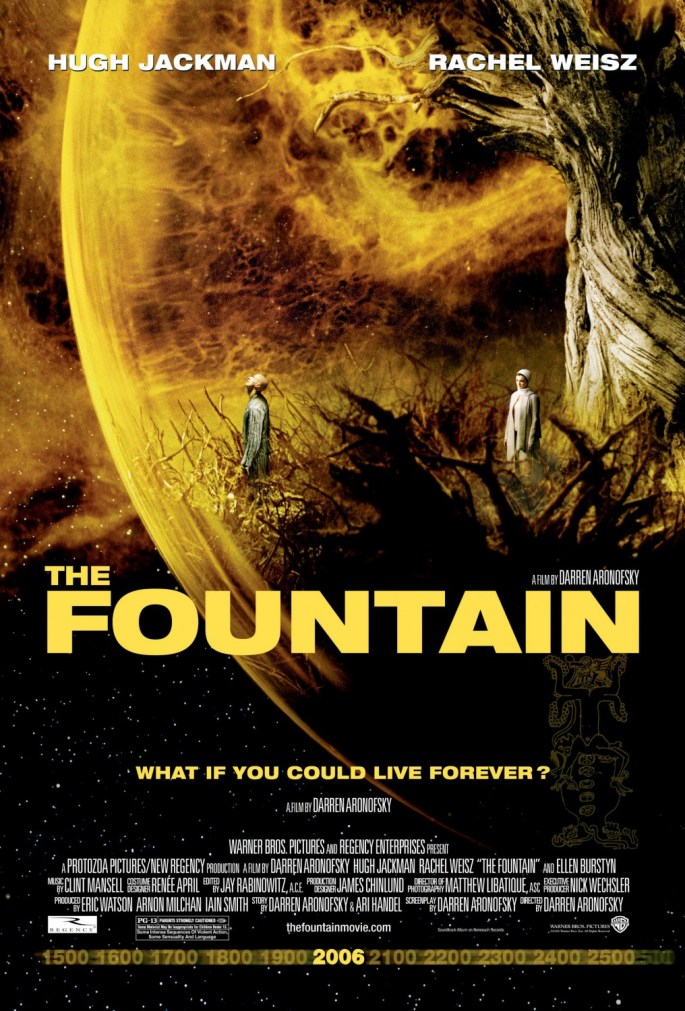
DARREN ARONOFSKY’S THE FOUNTAIN — A REVIEW BY NICK CLEMENT

1

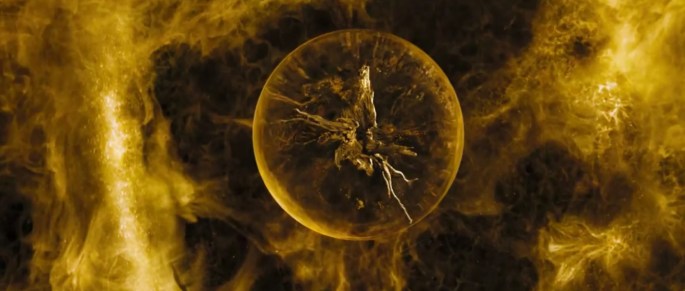
It’s very hard for me to completely describe my feelings of respect, love, and admiration for Darren Aronofsky’s uber-ambitious, boundary pushing The Fountain – it stands as a towering artistic achievement made by a filmmaker in total control of his vision. This is awe-inspiring cinema-as-magic, crafted by a director who was interested in stretching the limits of the form, delving deep into his wild, fertile imagination, and delivering something completely uncompromising and unique. The Fountain lives in the same cinemascape as 2001: A Space Odyssey, The Tree of Life, Enter the Void, Cloud Atlas, and Under the Skin, and as in those world-creating films, The Fountain has been hand-crafted by a filmmaker with an intensely personal vision, resulting in a work that is beyond thought provoking and visually astonishing at every turn. And I understand that MANY people will not share the same level of appreciation that I have for this movie; something this artistic and challenging and unique is bound to have its detractors. But I don’t care about any of that. Matthew Libatique’s cinematography on this film was transcendent; I’ll never completely understand how some if it was achieved. Originally intended to be a $70 million production with Brad Pitt in the lead role, the film was delayed, scrapped, then resurrected with Hugh Jackman in the hot-seat and a comparatively “low” budget of $35 million. Even though I wouldn’t change a frame of what Aronofsky delivered, I’ll always be curious to know what the larger, Pitt-led version would have been like. And it’s also been on my mind for a while now: Is there a “director’s cut” of The Fountain in Aronofsky’s back-pocket waiting to be unleashed at some point in the future?

2

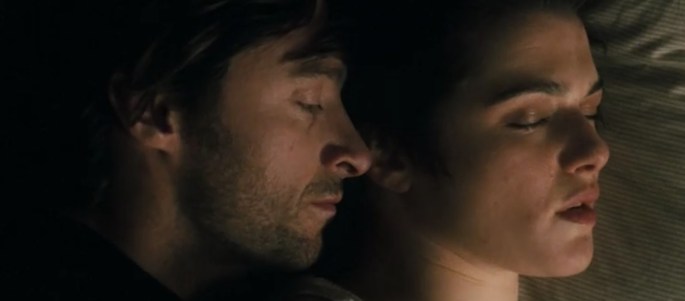
The complex narrative is going to be extremely dense for some, and to be honest, I’d be lying if I said that I’ve pulled everything from the story, even after countless viewings. And that’s fine. I’m not sure I need or want to know all of the secrets of The Fountain. Something this heady and layered needs to be experienced more than once, and as with all of the best art, every time you view The Fountain it will mean something different. At least that’s how it’s worked for me. The Fountain is an intentional and surreal hodgepodge of various elements from multiple genres, inspirations, and topics: History, religion, science, science-fiction, nature, and above all else, love. Aronofsky devised his mind-bending tale over three story lines, each one featuring Hugh Jackman and Rachel Weisz. Both actors deliver some of their best work in The Fountain, providing rich, full-bodied performances that are somehow never overwhelmed by the film’s visual grandiosity. The film is set in three vastly different eras, in which Jackman and Weisz play different sets of characters who might possibly be the same two people in the grand scheme of the universe. In the present day, Jackman is a fevered scientist racing around the clock, trying to save his dying wife (Weisz) from cancer. A second track follows an ancient conquistador (Jackman) and his queen (Weisz), and the third bit is that of an advanced astronaut (Jackman) who ostensibly hallucinates (reincarnates?) his long-lost love (Weisz). Aronofsky and his phenomenal editor, Jay Rabinowitz, brilliantly match-cut and jump-cut all throughout the film, creating an All-is-One type sense of encompassment. Add in the legendary score from Clint Mansell, which soars to grace notes previously undiscovered, and the overall results are nothing short of hallucinatory and spellbinding.

fountain_xlg

I vividly remember seeing this film in the theater on opening weekend, in a massive, mostly empty auditorium, and the experience I had at the time was extraordinarily different than the ones I have had over the last few years. I had never seen anything like The Fountain before when I first encountered it, and even if it trades off of some other classic pieces of cinema, this is one of the most thrillingly original films that I can think of.  As a piece of filmmaking, The Fountain feels like an organic creation, a living and breathing piece of art, something that reveals new sides and textures of its being each time you sit down to view it. And over the years, as my life has changed and as my cinematic tastes have progressed, the themes of The Fountain (love, death, life, the power of hope) have come into focus on an even stronger level. When you boil it down, The Fountain is an almost overwhelmingly sad film, filled with desperation, the longing for your soul mate, and our intrinsic desire to spend as much time with that one special person we love the most. The film makes you contemplate all that you value and hold dear to your heart, which is something that can’t be said for too many pieces of cinematic fiction. The surreal nature to the craftsmanship heightens each segment of this constantly over-lapping tale, which gives your mind a wonderful mental work-out. Aronofsky seemingly designed The Fountain to be something unique for every viewer, with each viewing holding the potential to teach you something new about yourself and the film in general. This is a cosmic and trippy ode to the very idea of love and the process of loving another human being, a work that allows for constant rediscovery and reinterpretation.

3

Shanghai Noon: A Review by Nate Hill 

I forgot how much goddamn fun Shanghai Noon is. It’s pretty much the quintessential east meets west buddy flick (sorry Rush Hour, love you too bbz), and upon rewatching it I realized that it’s every bit as awesome, and more so, than I remember as a kid. You take Jackie Chan, a stoic, robotic Chinese fighting machine with the sense of humour god gave a sock, and pair him with Owen Wilson, a wishy washy surfer dude of a cowboy who can’t take one second out of the day to stop talking or cracking jokes, and you’ve got gold. Of course, they need a film to run about in that’s just as solid as they’re team up, and that’s just what we get. This is a bawdy, unapologetic roll in the hay, a genre bender that tosses the American western, the buddy cop flick and the Kung Fu picture into a big cauldron, fires a few bullets in and gives it a big old stir. It’s ridiculously fun for its entire duration, an achievement which the sequel just couldn’t keep up with. Chan is Chon Wang (say it fast), a Chinese imperial guard on the trail of runaway Princess Pei Pei (Lucy Liu), who has runoff to America.  No sooner does he set foot on Yankee soil, he’s bumped into peace pipe smoking Natives, and clashed with a band of train robbers led by Roy O Bannon (Owen Wilson), a fast talking soldier of fortune who doesn’t seem to have much skill besides yapping his way out of a situation. The two are thrown into a mad dash across then west, Chon looking for the princess, and Roy after the missing gold from the train. It’s what movies were made to be, a pure rush of gunfighting and chop socky, kick ass action sequences, all given the boost of Chan’s insane talents. He’s like a rabid squirrel monkey, and Wilson a drunk sloth, constantly mismatched yet always coming out on top, like the best comic duos always do. They’re faced with taking dpwn a few baddies, including Walton Goggins as the dumbest outlaw this side of the Rockies, and a terrifying Xander Berkeley as a corrupt, homicidal marshal.  The core of it rests on Chan and Wilson to entertain us though, and even in the down time between action, their energy is infectious, especially in a manic drinking game that just can’t be described in writing. Like I said, the sequel, Shanghai Knights, just doesn’t capture he magic quite like this one does, and seems to fall flat. You can’t go wrong with this original outing though, and it just gets better with age. 

Bullet: A Review by Nate Hill 

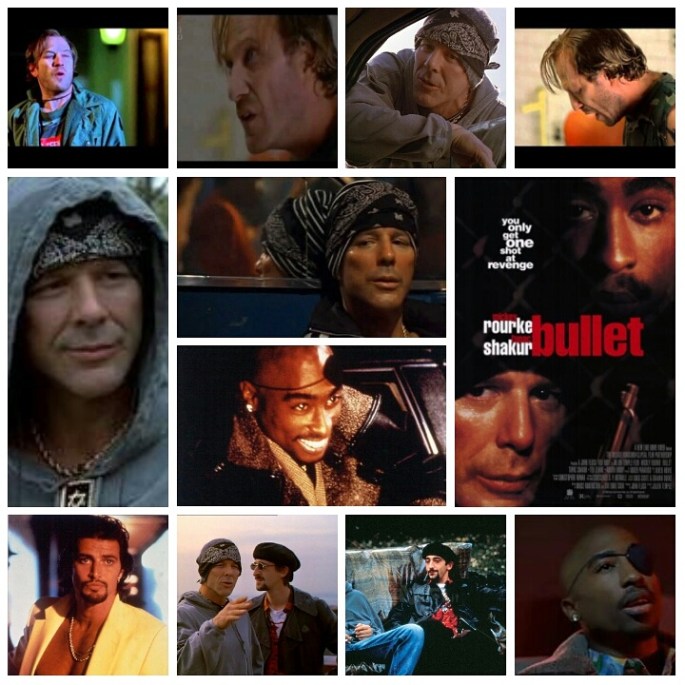
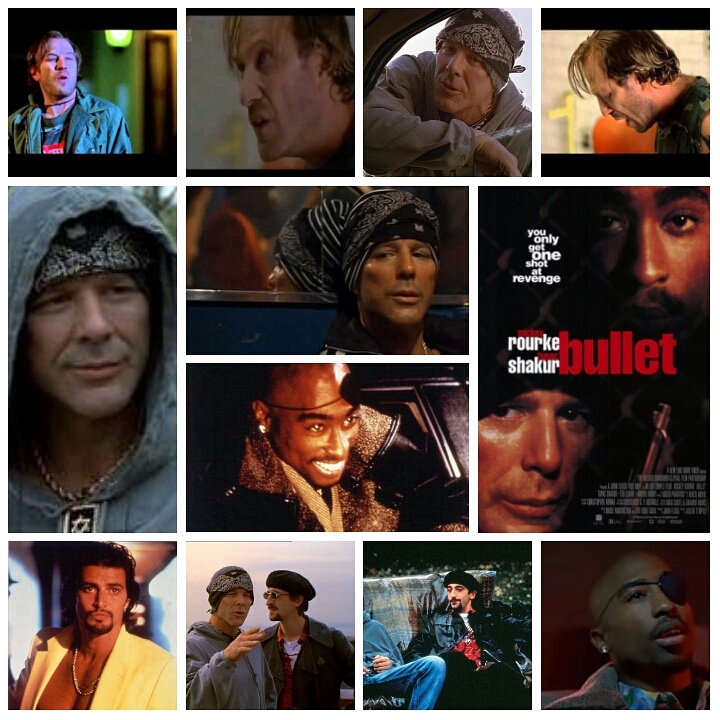
Bullet is a violent cautionary tale about what it means to live a life of crime in New York City’s brutal Hell’s Kitchen, to live (and die) with all the baggage and tragedy that comes along with it. Mickey Rourke is excellent as Butch Stein, a pathetic yet somehow endearing Jewish American hoodlum locked in a personal war with local drug dealer and gangster Tank (Tupac Shakur). Butch still lives with his family, and spends his nights slumming about with slick wannabe wiseguy Lester (John Enos III) and his gangly brother Ruby (Adrien Brody). One gets the feeling that all of them are essentially still little kids who never learned to grow up or use their words, but the sandbox they’re squabbling in now is a dangerous area of town, and their toys are heavy artillery. Butch has another brother, a reclusive weirdo played phenomenally by Ted Levine. He’s distant and strange, but there’s breaks of clarity that shine through, and in those moments he’s pretty much the voice of reason amongst all the tomfoolery that adds to the mortality rate in their district. Levine is unique and shelters the gold in his work until right at the end, letting off an emotional stinger of a cap to his performance that is yet another testament to his skill. Rourke broods through his work with sombre self loathing and a grim resolve, dead set in his ways, perhaps unable to live his life differently, and feeling helpless at the road he’s taken, a dark one that has strayed far from what might have been. Tupac’s role is somewhat underwritten, which isn’t quite fair to the guy, because he has more acting talent than pretty much any other rapper I’ve seen in film. Reduced to a mostly a jive talk sterotype gangsta antagonist, I would have liked to see them allow him to level with Rourke in a way that made their locking horns seem a little bit more than just a petty turf war. Director Julien Temple comes from a music video background, and transitions nicely into the world of the urban crime drama, shooting the seedy NYC locales with glittery precision that suggests festering rot below. It’s an anti-crime film, and I’m always curious to see if such a sentiment is undone by the glorification of such a lifestyle, intentional or otherwise (it’s easy to get caught up in sensation and cinematics, losing sight of what you set out to say in the first place). This one stays true to its word, showing us characters who have irreparably lost their way, and assuring bullet by bullet, death by death, that this isn’t any kind of life for anyone. Searing stuff. 

GUS VAN SANT’S TO DIE FOR — A REVIEW BY NICK CLEMENT

3

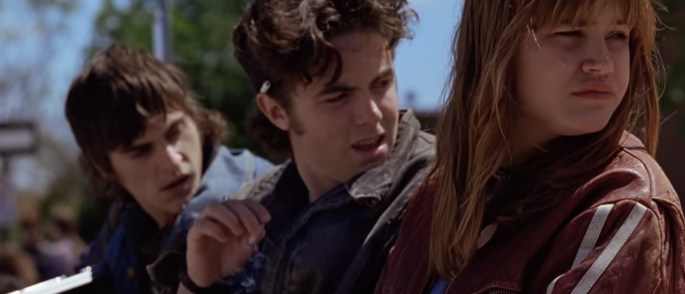
Gus Van Sant has made some terrific movies during his eclectic career, but one of his absolute best (and easily my personal favorite), is the scalpel-sharp 1995 satire To Die For. Ultra-vicious, scandalous, and gleefully nasty, this film is still as incisive now as it was at the time of its release over 20 years ago. Van Sant employed a mockumentary approach to a portion of the highly-stylized narrative, which was in perfect tandem with the truly hysterical and dark humor in Buck Henry’s absolutely brilliant screenplay. Henry, an old-pro-master of caustic, sexually charged cinema (The Graduate), biting social commentary (Catch-22), and playful comedy (What’s Up Doc?), wrote a poison-pen letter to the entire country with To Die For, and delivered some of the smartest, saddest laughs that I can possibly think of. This is a scathing indictment of our constant need to be celebrated, and it’s downright crazy how many similarities it shares with the recent and equally disturbing Nightcrawler; both films revel in outright contempt for our hyperactive media and the ever celebrated notion of “15 minutes of fame.” Loosely based on the real-life Pamela Smart murder case based out of Derry, New Hampshire, Nicole Kidman delivered the trickiest, iciest performance of her career, totally investing herself in a sociopathic character who sits at the same table as Lou Bloom in Nightcrawler.

2

The comparisons are striking between the two films, as both feature self-possessed lead characters who are consumed with the need to be important and famous, both drive flashy red sports cars, both have coldly detached, murderous instincts, and both will stop at nothing to accomplish their “goals.” I’m assuming that Dan Gilroy is a big fan. Kidman has only matched her overall work in To Die For a couple of other times (Birth, Eyes Wide Shut), and has always been an actress of stunning, porcelain-doll beauty, but in the role of Suzanne Stone-Maretto, she tapped into something scary deep within herself, subverting her intense physical appearance, resulting in a performance for the ages. The stellar supporting cast includes the perfectly selected Matt Dillon as the poor, unfortunate husband, the impossibly unique Illeana Douglas, an absurdly young Casey Affleck and Joaquin Phoenix as two ultimate high school stoners, a dry Kurtwood Smith, Wayne Knight, Dan Hedaya, Michael Rispoli, and Buck Henry in a deliciously evil cameo as the high school teacher from Hell. Tragic, absurd, and mean-spiritedly honest about the delusions of a certain type of person, To Die For holds up remarkably well as a damning portrait of cinematic narcissistic self-involvement that extends its grasp to the fringes of our demented society.

1

Animal Factory: A Review by Nate Hill


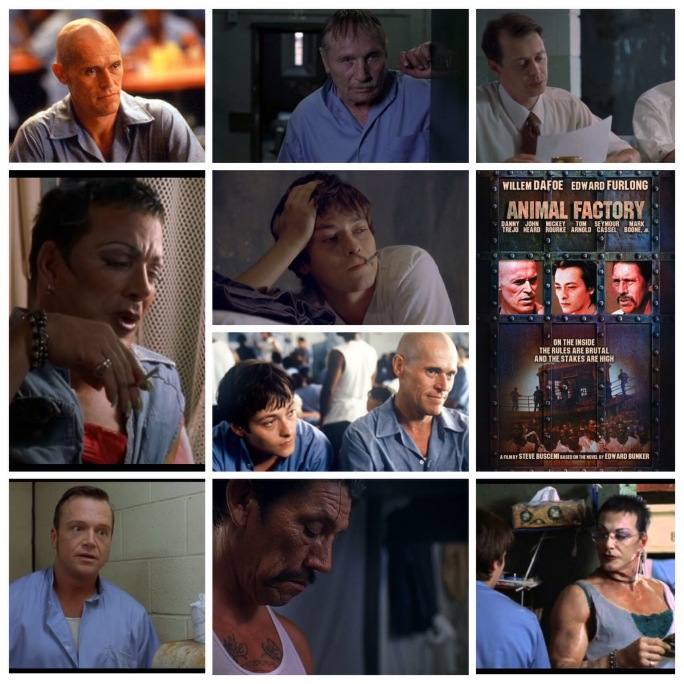
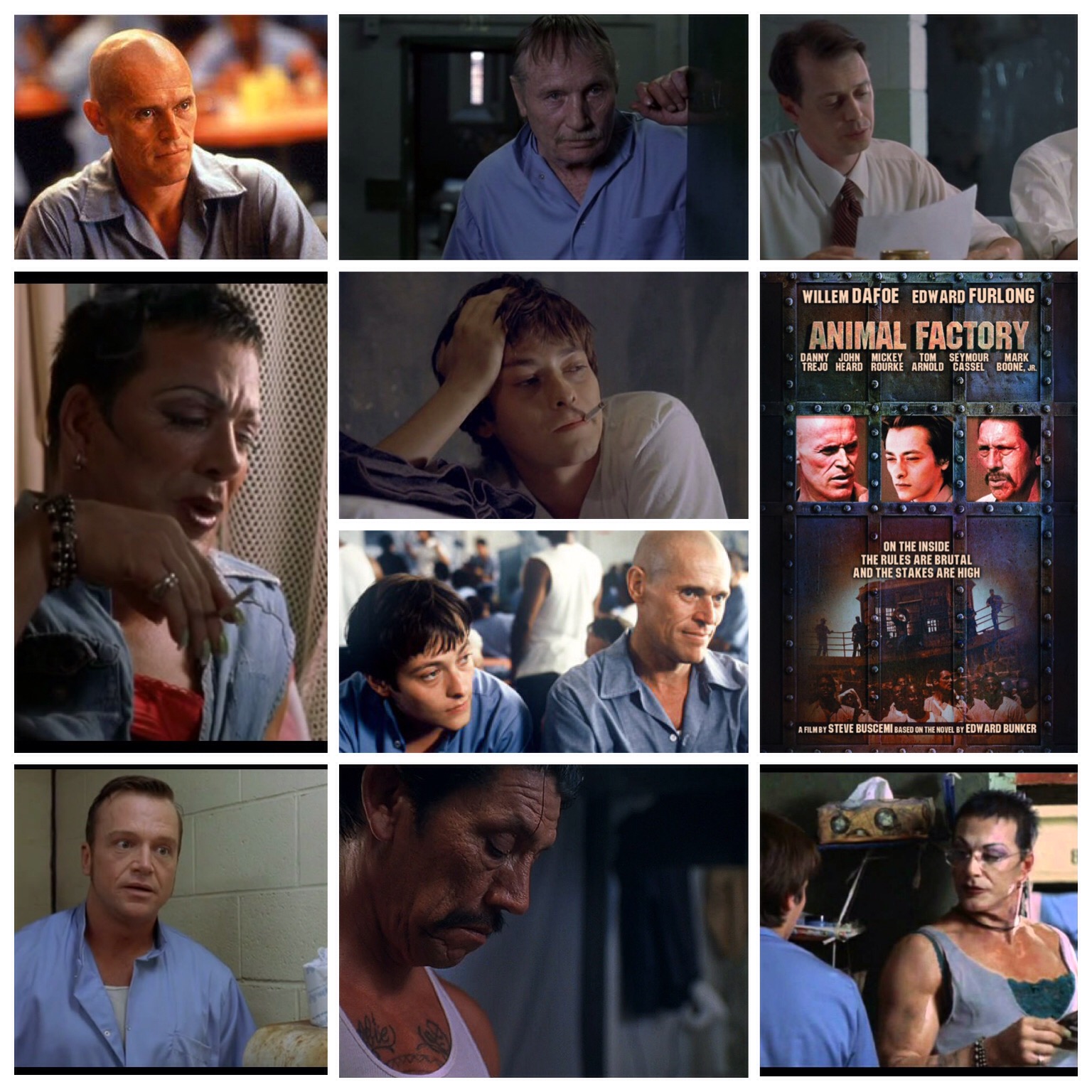
Animal Factory is a prison set film directed by actor Steve Buscemi and based on a novel and subsequent screenplay by Edward Bunker, a real life ex convict, who played Mr. Brown in Reservoir Dogs. If that sounds like an irresistible team up to make this type of thing work, you’re thinking right. And I haven’t even mentioned the epic cast yet. It’s a scrappy little film that almost takes stage play form, as we watch a plethora of raggedy and very diverse inmates navigate the difficult, tragic and often touching life of incarceration. Edward Furlong (before he ballooned out) plays a young man barely out of his teens, locked away for marijuana possession, essentially a victim of the extremely harsh system they got down there in ‘Murica. He’s a sitting duck on the inside, but receives kindness and mentorship from veteran con Earl Copen (Willem Dafoe, excellent). It’s all done in an almost Robert Altman style way; characters jump in and out, events trundle by in centrifugal motion with little regard for one solid narrative, instead choosing to arbitrarily shift focus from prisoner to prisoner, whilst periodically checking back in on Furlong, who is the closest thing to a main protagonist. The cast is wonderful: Danny Trejo shows up (another guy who has done time in real life), Tom Arnold plays a pervert sicko who preys on Furlong, and Mickey Rourke is an absolute standout as Jan The Actress, a transvestite cell mate with a peppy life lesson or two for young Furlong. Watch for Bunker himself, Seymour Cassel, Mark Boone Jr., Chris Bauer, Buscemi as a parole board member and John Heard as Furlong’s father. Bunker no doubt based much of the story on his actual prison experience, and the dedicated authenticity shines through in every aspect of the film. Buscemi is no doubt an actor’s director (being one himself), and he lets every player have their moment to shine, while always contributing to the story as a whole as well. Prison films don’t get much better than this. Not to be missed. 

PHILIP KAUFMAN’S THE RIGHT STUFF — A REVIEW BY NICK CLEMENT

1

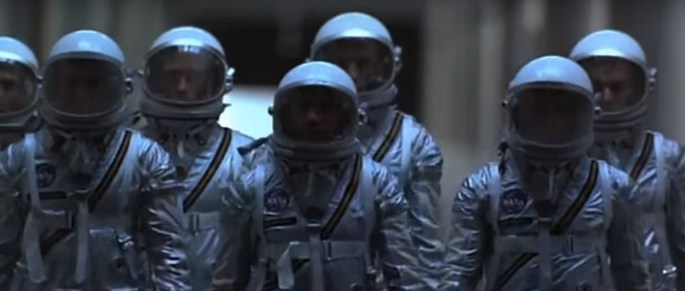
Epic yet somehow light on its feet, incredibly heroic and patriotic without ever slipping into phony jingoism, and massively entertaining above all else, Philip Kaufman’s iconic 1983 American masterpiece The Right Stuff is a shining example of dramatic, true life cinema done absolutely correct. The story of the great space race between the U.S. and Russia has been explored many times throughout pop culture but it’s never been given this sort of grand, sweeping treatment. The cast assembled for this film was extraordinary: Sam Shepard, Scott Glenn, Ed Harris, Fred Ward, Jeff Goldblum, Barbara Hershey, Veronica Cartwright, Lance Henriksen and Harry Shearer, with everyone getting their chance to shine and nobody ever forgetting the value of a great ensemble. Caleb Deschanel’s soaring, gorgeous cinematography fills the screen with one unforgettable image after another, all crafted in camera before the onslaught of CGI, in various aspect ratios, mixing archival footage and re-enactments into the proceedings flawlessly thanks to the remarkably fluid cutting from a five editor team.

2

Bill Conti’s massive musical score envelopes the entire film but never overpowers it, with stirring passages that rock the heart and soul. The three hour and 15 minute director’s cut Blu-ray has a fantastic image quality and the Oscar winning sound design roars from speaker to speaker with all levels perfectly calibrated. It’s hysterical how much Michael Bay stole from this movie for Armageddon, and I never realize how much Christopher Nolan cribbed from The Right Stuff during the first hour of Interstellar; it was also lovely to see the influence that Kubrick’s 2001 had on Kaufman during numerous scenes in The Right Stuff. Filmmakers have inspired their peers throughout the years with their boundary pushing work, and with a movie like The Right Stuff, it’s easy to see why so many people hold it close to their heart. It’s an impossibly mythic film, stretching from 1947 to 1965, tracing the birth of the test-pilot era all the way to the first men sent up into space, told in classic linear fashion, at an unhurried but smooth pace, with no boring spots or wasted moments. What a magnificent accomplishment.

3

SUICIDE SQUAD – A Review by Frank Mengarelli

suicide-squad-trailer-image-79-600x252

“Will you live for me?”

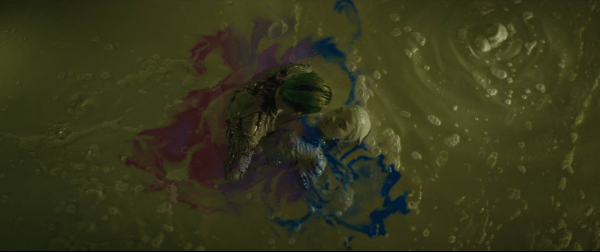
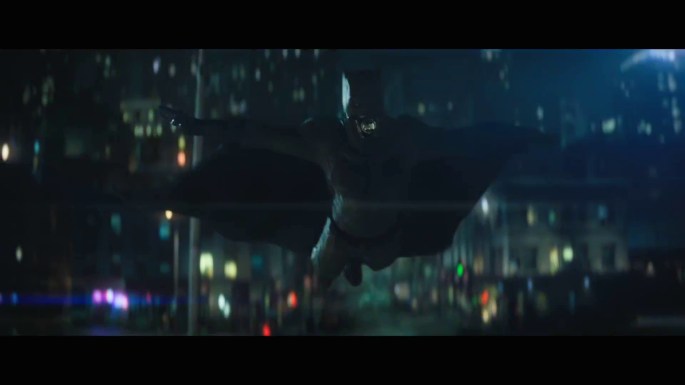
SUICIDE SQUAD is a complete mess, yet it is a total glory. I know, relax. Hear me out. Since the resurrection of Christopher Nolan’s Batman, there has been a forceful push to ground a superhero film in reality. Sometimes it works, other times is does not. SUICIDE SQUAD removes itself from that universe and takes place within movie world.

wp-1470375845553.jpg


There’s a lot that is blatantly strange and oddly incoherent about the film. Whether it was from studio tinkering (panic) or that everyone was on acid while making the film. None of that matters. The film has a great soundtrack and devilishly fun performances from the entire cast.

The film isn’t bright and glossy with a drumbeat joke every five minutes, it’s sloppy and dirty with perverse humor that will curl even the most uptight hipster’s mustache, while he’s passive aggressively using the Oxford comma to demean this film.

wp-1470375812740.jpg

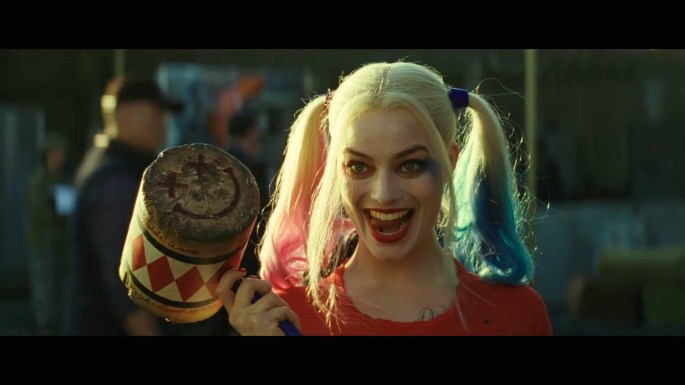
Will Smith’s overly stereotypical ghetto jive, the over objectifying of Margot Robbie’s butt, the uppity bitch mode of Viola Davis, and Jared Leto’s insane transformation into a Joker that’s feverishly in love, are a step away from the safe mediocrity we’ve seen in recent tent-pole films.

wp-1470375831463.jpg

Director David Ayer has received so much critical flack for this film, it isn’t even funny. This wasn’t a film made for critics, nor was it seeking the approval of top ten lists. It’s loud, it’s obnoxious, it’s gratuitous, and it’s everything that the new DC Universe should aim for going forward. Let other studios play it safe with their glossy sheen, DC; keep forming a lewd and egregious world for the rest of us.