STAR WARS EPISODE II: ATTACK OF THE CLONES – A Review by Frank Mengarelli

AoTC 2

The galaxy has begun to divide amongst the Republic and the newly formed Separatist Movement, led by former Jedi Master who was trained by Yoda and mentored Qui Gon Jinn, Count Dooku (perfectly played by Christopher Lee). ATTACK OF THE CLONES follows in line with THE EMPIRE STRIKES BACK as the transgressive center of the trilogy.

Like the rest of the prequels, the film has its recurring base of people who champion to dismiss the film at all costs. Yes, some of their points are valid, but some of them are ridiculous just to be ridiculous. We know people hate the prequels, but that will never stop the ones who love the films from continuing to do so.

The darkness of Episode II is very subtle, and upon first glance, it’s hard to pick up on due to the films cinematic glossiness. The first being the forbidden love between Padme and Anakin Skywalker. We know how this is going to end, and watching the beginnings of their courtship is the equivalent to looking for a gas leak with a match.

AoTC 1

For me, the most fascinating aspect in which Lucas included in the film is Anakin’s motivation for accepting the dark tendencies he feels. Anakin’s mother gets kidnapped by Tusken Raiders, and he returns back to Tatooine to save her. He approaches the camp, and finds his Mother, who has been gone for months, beaten, bloodied, and chained up face first on a rack.

Anakin’s mother dies in his arms, and then he proceeds to kills every single Tusken Raider in the village. Including the women and children in a fury of anger. Yoda and Qui Gon call out to him, but that can’t stop him form seeking vengeance.

Anakin’s mother was being raped. Repeadly. There is not another sound explanation as to why she was still alive, or why she would be chained up face first against a rack. This was the spark that lit the dark fire inside of Anakin.

While, at times, the second act featuring the overly romantic love story between Padme and Anakin can drag it’s feet, it is all worth it for the final act that a lot of us have waited our entire lives to see: an all out Jedi battle.

AoTC 3

At least thirty Jedi, led by Yoda and Mace Windu, backed by the Republic’s new Clone Army descend upon the Separatist hub planet of Geonosis and wage war against the Geonosians and the Separatist’s droid army.

The film includes my favorite (yet widely unpopular) light saber duel featuring Yoda facing off against his former Padawan turned Sith Lord, Count Dooku. This is the moment when we are shown exactly why he is the head of the Jedi Council, General of the Republic’s Army, and how powerful he is with the Force.

ATTACK OF THE CLONES remains an imperfect film, aside from some clunky dialogue and misguided casting, I’ve come to wholeheartedly accept the film, and still marvel at George Lucas’ unbelievable command and vision behind the camera.

JAMES GUNN’S SUPER — A REVIEW BY NICK CLEMENT

1

Out of all of the cinematic output from writer/director James Gunn, my favorite thing he’s done is Super, his low-tech “superhero” deconstruction which was released in 2010 to mixed reviews and scant box office returns. Which is a shame, because this film has more wit, both verbal and visual, than most “comedies” that get released on a weekly basis, and it demonstrated that Gunn is one the best when it comes to mixing tones within the narrative. Like a less slick and expensive Kick-Ass, Gunn’s film centers on superheroes who don’t have any superpowers, and gets tons of comedic mileage out of poking fun at the various idiocies that these overblown movies tend to revel in, while still sticking with its playing-for-keeps attitude.

2

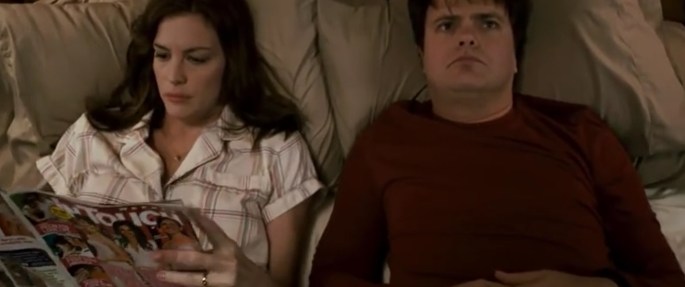
Starring the fantastic Rainn Wilson as a meager guy pushed to his emotional and physical brink by various external forces, the plot hinges on him becoming a regular-guy vigilante named The Crimson Bolt, intent on taking out society’s trash (murderes, rapists, pedophiles, etc.) any way he sees fit. Gunn’s wild little film, which feels like Falling Down on crystal meth, has a great supporting cast, including the phenomenal Ellen Page as Wilson’s unhinged sidekick, Liv Tyler as Wilson’s wife, Nathan Fillion, Michael Rooker, Gregg Henry, Rob Zombie as The Voice of God, and an extra-smarmy Kevin Bacon as a truly nasty chief villain. Taking full advantage of its hard-R rating, this is a super-charged, super-funny, and super-violent satire that has generous doses of devilish black comedy, strange sexual hijinks, and rough-house action sequences that truly bring the pain.

3

BEAUTIFUL GIRLS – A REVIEW BY J.D. LAFRANCE

b1

There is something about turning 30 that makes one re-evaluate their life. It is that time when you are forced to grow up, find direction, settle down, and become an adult. Beautiful Girls (1996) concerns a group of men faced with this dilemma. They have been living in the past and recent events have forced them to confront it head on. This is also the late director, Ted Demme’s best film in an all-too brief career. As he said in an interview at the time of the film’s release, “I don’t think there are too many movies about turning 30, or just about to turn 30. Those issues are whether to get married or not, whether to have kids or not, am I happy in my job, do I need to find another job, am I unsettled with myself. You’re not a teen anymore, and you don’t want to admit you’re an adult either.”

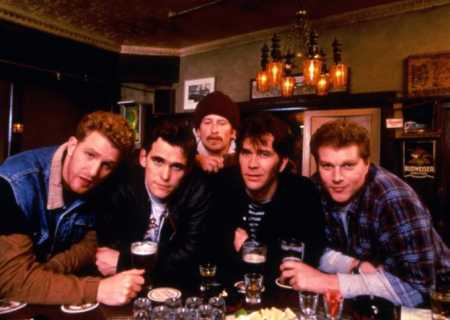
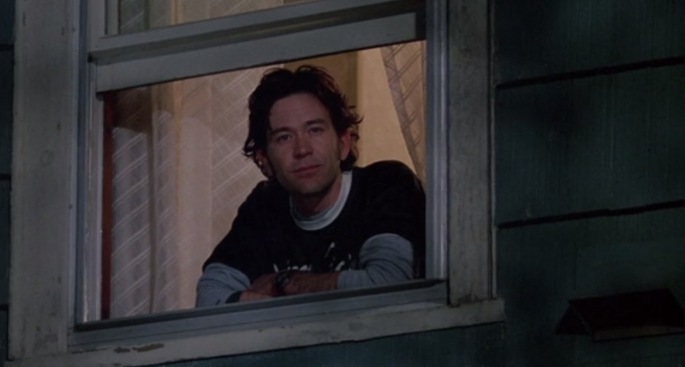
Willie (Timothy Hutton) returns to his small, Northeastern hometown for his ten-year high school reunion, hook up with buddies, and get his life in order. His mom has recently died (leaving his younger brother and father in a deep funk) and all of his friends are having relationship problems. Willie strikes up a friendship with a young girl named Marty (Natalie Portman) who has moved in next door. She is a character out of J.D. Salinger short story – wise beyond her years. Marty sets the tone for the rest of the women in the story. They are all intelligent and end up suffering with men who don’t appreciate what they have right in front of them.

Screenwriter Scott Rosenberg was living in Boston, waiting to see if Disney would use his script for Con Air (1997). “It was the worst winter ever in this small hometown. Snow plows were coming by, and I was just tired of writing these movies with people getting shot and killed. So I said, ‘There is more action going on in my hometown with my friends dealing with the fact that they can’t deal with turning 30 or with commitment’ – all that became Beautiful Girls.” The resulting screenplay turned out to be quite autobiographical, with Willie being Rosenberg’s surrogate.

The friendship between Willie and Marty pushes the boundaries of what is comfortable in a comfort movie but it never goes beyond it. Rosenberg’s screenplay is smart enough to be self-aware of this and even addresses it in a scene between Willie and his friend Mo (Noah Emmerich). Fortunately, the film narrowly avoids letting things get too uncomfortable and therefore taking us out of the captivating spell established by the movie. It also avoids clichés like the beautiful Andrea (Uma Thurman) having sex with one of the guys. Instead, she rebuffs them all because she is loyal to her boyfriend who, makes her martinis listens to Van Morrison and reads the newspaper with her on Sunday mornings – simple pleasures. She is not a perfect ideal, just on another level than these guys.

Rosenberg’s script is also able to juggle the various subplots without resorting to cliché resolutions. Tommy (Matt Dillon) is cheating on his girlfriend Sharon (Mira Sorvino) with his high school sweetheart (Lauren Holly). When he gets beat up by her husband (Sam Robards) and his buddies you anticipate Willie, Paul (Michael Rapaport) and Mo to mobilize and kick some ass but at the last second they stop because the man’s child will see her father get beaten up. This stops Mo who also has kids.

In addition to the clever plotting, Rosenberg’s script also features a lot of funny, memorable dialogue. Tommy chastises Paul for getting his on again-off again girlfriend, Jan (Martha Plimpton) a brown-colored diamond when he tells him, “Buddy, you been eating retard sandwiches.” There is also great throwaway dialogue like Stinky (Pruitt Taylor Vince) with his proprietor lingo, “We got apps!” or the often-used word “crease” to convey frustration at something, like when Tommy asks, “What’s got him creased?”

b2All of the guys in Beautiful Girls are essentially the same person. Willie is just finding his luck, Paul just lost his luck as the film begins, Tommy loses it over the course of the movie, and Mo has already found and achieved it with his family. Demme does not waste an opportunity to subtly illustrate his point. In one scene, he frames all three guys together: Paul (lost luck) is driving with Willie (finding luck) and Mo (achieved luck) along for the ride. The women counterpoint their men in this cycle: Tracy (Annabeth Gish) for Willie, Jan for Paul, Sharon for Tommy, and Sarah (Anne Bobby) for Mo.

The women in the film are smarter than the guys and make them (and us) feel like they are lucky that their behavior is even tolerated much less loved despite all of their failings. This is epitomized in Gina (Rosie O’Donnell)’s famous monologue where she chastises Tommy and Willie for obsessing over the women in Penthouse magazine. She tells them, “If you had an ounce of self-esteem, of self-worth, of self-confidence, you would realize that as trite as it may sound, beauty is truly skin-deep.” Gina speaks for the women in the film when she reminds the men to forget the airbrushed ideal of women that we see in magazines and movies. They do not exist or are unattainable to any normal guy.

To counter her argument, later on in the movie, Paul delivers a monologue defending men’s idealization for the impossibly perfect image of women. “She can make you feel high full of the single greatest commodity known to man – promise. Promise of a better day. Promise of a greater hope. Promise of a new tomorrow.” It is a rare, articulate moment for Paul, suggesting that he may be more than some lunkhead who drives a snowplow. He may actually be a romantic. It is nice to see a film that is obviously told from a man’s point of view trying to show both sides of the argument.

The women in the film are not treated like excess baggage. They all have a soul and a brain which is rare for a film written and directed by men. There is a tendency to make them perfect or marginalized with their problems defining them. This is not the case with Beautiful Girls. This is reversed and it is the problems that define the men.

Ted Demme assembled a fantastic cast of independent character actors for his movie: Michael Rapaport, Max Perlich, Pruitt Taylor Vince and Mira Sorvino to name only a few. They all work so well together and their friendships are believable because of the preparation the director made them do. He had the entire cast come to Minneapolis and live together for two to three weeks so that they could bond. One only has to watch a scene like Andrea’s first appearance in Stinky’s bar as Willie and his friends try desperately to impress her that the two week bonding session paid off. There is an ease and casual nature between everyone that is authentic.

The setting is a character unto itself. Demme has set his film in a charming east coast hamlet that is filled with little diners and bars that look so inviting that you want to go there, you want to be there. It all looks so comforting, so inviting and this is so hard to achieve properly in any film. He commented in an interview that he “wanted to make it look like it’s Anytown USA, primarily East Coast. And I also wanted it to feel like a real working class town.” To this end, Demme drew inspiration from Michael Cimino’s The Deer Hunter (1978). “The first third of the film is really an amazing buddy movie with those five actors. You could tell they were best friends, but they all had stuff amongst them that was personal to each one of them.” Demme wanted to make Beautiful Girls more than just a buddy movie. When he read Rosenberg’s screenplay he told him, “‘You know, we really need to take this to another level.’ If I was ever going to make a buddy movie, which I never thought I would, I wanted to make sure it had some real depth to it.”

b3The film does not wrap everything up nice and neatly. Paul and Jan’s subplot is not resolved in the sense that we don’t know if they settle their differences and get back together. Tommy and Sharon will probably get back together but it is not spelled out. Instead, as the closing credits appear we are left to imagine what happens to the characters. It is Paul’s parting comments to Willie as he is about to go back to New York City, “Come and see us any time, Will. We’ll be right here where you left us. Nothing changes in the Ridge but the seasons.” This is also a message to the viewer as well. Come back and see Beautiful Girls again. The film’s world and its characters are comforting and making you want to revisit them again and again.

MICHAEL BAY’S THE ROCK — A 20th ANNIVERSARY RETROSPECTIVE REVIEW BY NICK CLEMENT

16

The Rock remains the best film that Michael Bay has made. It might not have the action-bombast of Bad Boys 2, the satirical edge of Pain & Gain, or the overwhelming intensity of 13 Hours, but the film simply works on every level as a tremendous piece of audience pleasing, late 90’s, high-concept action filmmaking that has only gotten better over the years as countless genre entries have come and gone. Directed with slick and gritty efficiency by Bay, who was in major Tony Scott mode with his first big-time blockbuster after 1995’s surprise hit Bad Boys, The Rock features a trio of big, brawny star turns from Nicolas Cage (the reluctant hero), Sean Connery (doing a riff on Bond), and Ed Harris (the morally conflicted villain), with a ridiculous supporting cast in tow. Made back when you could make such a picture for a somewhat affordable price tag and far more reliant on practical effects than excessive CGI, this is exactly the sort of movie we aren’t getting in cinemas these days, and that’s a damn shame, because when done correct, you get summer popcorn fun like this.

55

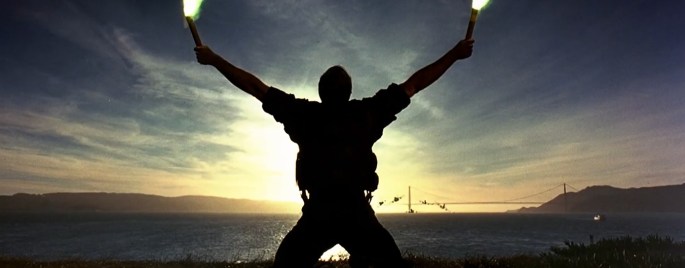
Successfully merging the buddy picture with formula elements from Die Hard, Bay was able to tap into his lightning-quick visual sensibilities, creating a super glossy San Francisco in 2.35:1 anamorphic widescreen; while viewing this film on the Blu-ray format, one marvels at the filmic quality to the entire presentation. Bold, saturated colors dominate the endless horizon, almost always seen at sunrise or sunset, a classic visual motif that has been a signature shot for Bay in almost every single one of his features (if not all…), as John Schwartzman’s gorgeous cinematography set a modern standard that so many would ape in the following years. Richard-Francis Bruce’s dynamic editing was in perfect synch with the loaded visuals, while the tremendous musical score by Nick Glennie-Smith, Harry Gregson-Williams, and Hans Zimmer is a bonafide all-timer, becoming sampled by numerous trailers over the years. The action was huge, from a breathless car chase throughout the crowded S.F. streets, to the all-out assault on Alcatraz that comprised much of the second and third acts.

8

The impact that The Rock has made on the action movie landscape is nearly indescribable, and stands as one the greatest Simpson-Bruckheimer collaborations, primarily because of its script. As written by David Weisberg, Douglas S. Cook and Mark Rosner (with additional uncredited work done by Aaron Sorkin, Jonathan Hensleigh, Quentin Tarantino, Dick Clement, and Ian La Frenais), the film presents a semi-plausible yet still over the top scenario that’s just believable enough, but far-fetched to the point that the audience can disengage a bit and watching something extremely cinematic unfold. The decision to ground Harris’s chief baddie, General Hummel, in a fog of moral confusion and militaristic outrage has been one of the key ingredients to the overall success of The Rock, as it gives the film an edge in the character department. Because you’re able to understand General Hummel’s anger, his reason for action is all the more drastic and exciting. Harris brought his usual brand of steely intensity to every scene, and as a result, The Rock bristles with menace whenever Harris appears. But beneath the hostility were shades of confusion suggesting a complexity not normally afforded a gene picture such as this.

12

And then when you combine the Odd Couple-esque pairing of Cage and Connery, who honor the time-tested tradition of great buddy pairings, the narrative takes on yet another angle and runs with it all the way to the finish line. Cage got all the overtly funny lines, and would pave the way for his ascent into action hero mode with this quirky and sympathetic performance. And Connery, clearly having a blast playing a version of 007 within the more visceral confines of an R-rated picture, was all class at all times, bringing vigor and elegance to his role of an imprisoned spy who gets to use his old skills one more time to save the day. When you look at the list of actors in the supporting cast, the mind does somersaults: Michael Biehn, William Forsythe, David Morse, Tony Todd, Philip Baker Hall, John Spencer, John C. McGinley, Vanessa Marcil, Claire Forlani, Stuart Wilson, Danny Nucci, Philip Baker Hall, Bokeem Woodbine, David Greg Collins, Gregory Sporleder, Brendan Kelly, David Marshall Grant, Xander Berkeley, and Jim Caviezel as F/A-18 Pilot. Bay had all the ingredients here – a disciplined screenplay, a phenomenal cast of actors, producers who knew exactly how to maximize every situation, and a populace of moviegoers who were extremely interested in this sort of decadent, big-budget cinematic pyrotechnics show. It still feels like yesterday that I went to see this film on opening night and then the next afternoon; 20 years have breezed by.

1


Crime & Punishment In Suburbia: A Review by Nate Hill

image

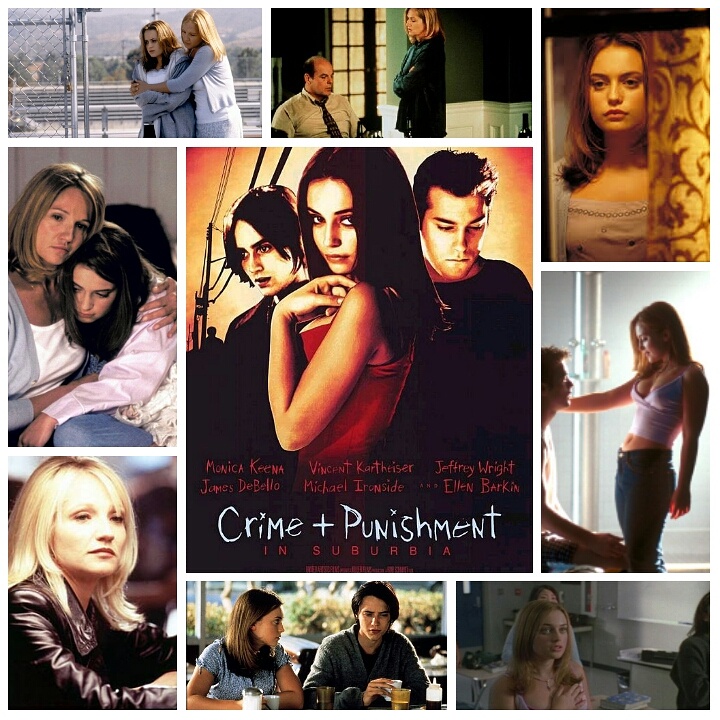
Crime & Punishment In Suburbia follows the theme and story just as loosely as you’d imagine by glancing at both title and poster. It’s It’s own little nasty deviation on the classic tale, set in a decadent white neighborhood, and full of characters who are barely hiding the decaying darkness behind their fake personalities. Having never read Dostoyefsky’s book myself, I can’t in fact tell you how much is different, but I could damn well know that it’s probably very much so. It concerns a hot young teen named Roseanne (Monica Keena, with a dash of Brittany Murphy in those eyes) who is outwardly a normal girl, but has elements in her life which start to taint that image and prompt violent behaviour. Her stepdad Fred (Michael Ironside, dialing up the drunken sleaze to a slow boil) is abusive towards her, and a alcoholic train wreck to boot. Her mother Maggie (Ellen Barkin in screeching cougar mode) is an unstable, clueless mess. Situations like that almost always end badly, which is an understatement here. One night when Fred gets too friendly with Roseanne, she snaps, something comes over her and Maggie and they both brutally murder him in an extended, grisly sequence that would give Oliver Stone bad dreams. From there on in its a dark and trashy morality play involving deception, false incarceration and manipulation on all the everyone’s part. The film seems to revel in the excessive bad behaviour of it’s characters, a decision which can be polarizing for audiences. It’s ugly, sleazy stuff, but it does that very well, with all the actors taking full advantage of the mean spirited script, especially Ironside and Barkin. Just don’t expect any pathos or straight arrow characters, this is a sociopath’s game, through and through.

JAMES MOTTERN’S TRUCKER — A REVIEW BY NICK CLEMENT

1

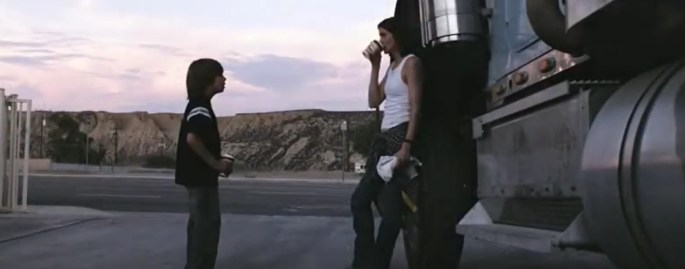
James Mottern’s indie gem Trucker is one of those little movies that’s still waiting to be fully discovered, having only received an extremely limited release back in 2008 after premiering at the Tribeca Film Festival. Despite attracting favorable reviews, most notably a four out of four star rave from the late, great Roger Ebert, who included the film on his list of the 10 Best Independent Films of 2008, this film got sadly lost in the shuffle for many people. Starring Michelle Monaghan in her best performance to date as a long-haul truck driver named Diane, Mottern’s satisfying and unpredictable original screenplay zigs and zags in ways unexpected, grounding the film with a solid emotional hook in the sudden arrival of Diane’s 10 year old son, Peter (the excellent Jimmy Bennett), and pivoting off the big question of whether or not she’s ready to finally be the mother that she never gave herself a chance to be. Diane is a woman very much used to a hardscrabble life on the road, tempted by booze and casual sex, and Monaghan brought just the right touch of salt-of-the-earth toughness that a role like this would require in order to feel believable.

2

Lawrence Sher’s unassuming yet stylish cinematography showcased the open road, along with Diane’s trusted big-rig, with a visual crispness which gave the picture a sharp aesthetic edge, while Monaghan handled most (if not all) of her own driving, which really ups the level of verisimilitude to the entire project despite it being a roughly $1 million production. Refreshingly, there is a noticeable lack of “process driving shots,” which I absolutely detest seeing in any film; all of Trucker feels lived in and authentic. Nathan Fillion shows up as Diane’s married neighbor, with the two of them entangled in a directionless affair, while she juggles the various issues stemming from her ex-husband’s cancer treatment (Benjamin Bratt in a small but effective performance). Mottern smartly uses melodrama to extract painful life lessons while never cheapening his story with anything artificial or unnecessary, as every scene in Trucker feels exactly as it should, with a finish that’s particularly sublime. Mychael Danna’s subtle yet impactful score seals the deal. This is definitely one of those true, under the radar titles that deserves a much higher profile.

3

ALI – A REVIEW BY J.D. LAFRANCE

Ali-Michael-Mann

Ever since Ali was released in 2001, I have felt that it has been one of Michael Mann’s most under-appreciated films. It received decidedly mixed reviews and underperformed at the box office. While Will Smith was praised for his impressive physical transformation into legendary boxer Muhammed Ali, the film itself was criticized for revealing nothing new about the man. Herein lies the problem that Mann faced: how do you shed new light on one of the most documented historical figures of the 20th century? His angle on the material was to look inwards.

Proposals for an Ali biopic had been around since the early 1990s when producer and one-time business partner of the boxer, Paul Ardaji, pitched the idea to the man on his 50th birthday. Ali gave the project his blessing and financing quickly fell into place. A number of scripts were written by the likes of Gregory Allen Howard (Remember the Titans) and Stephen J. Rivele and Christopher Wilkinson (Nixon), but they all failed to please the powers that be. The project bounced around various studios for years as executives tried to decide who should make it, who should star in it, and would it even make a profit? In 1991, Oliver Stone met with Ali about making a film about his life but the collaboration ended when the director refused to share creative control. In 1992, Ali’s best friend and personal photographer Howard Bingham and Ali’s wife Lonnie got together with Ardaji. Gregory Allen Howard’s take on Ali was delivered in 1996. His angle was that the key to the boxer’s life was his relationship with his father, who ignored him.

When Will Smith met Ali in 1997, the boxer asked the actor to play him in the film. Smith was flattered but said no. He was not ready and too intimidated for such a demanding role. The actor almost did it when Barry Sonnenfeld agreed to direct. Both men had worked together on the Men in Black movies and Wild Wild West (1999). Thankfully, their version never saw the light of day. After he turned 30, Smith realized that he had to make the decision about playing Ali. However, when no one could settle on a script, Sonnenfeld dropped out. There were several more rewrites and directors, including Curtis Hanson who expressed interest. Smith was ready to give up on the project.

It then came down to Spike Lee or Michael Mann to fill the director’s chair left empty by Sonnenfeld. Sony Pictures, the studio bankrolling the film, was faced with a $100+ million budget and went with Mann who had just received several Academy Award nominations and all kinds of critical praise for The Insider (1999). Upset, Lee voiced his anger through a friend in The New York Post: “Only a black man could do justice to the Cassius Clay story,” he was reported as saying. Mann responded that he “wanted the film to come from the point of view of the main character, Muhammed Ali. I’m not interested in showing a white man’s idea of how someone suffered racism. The perspective of the film has to be African-American.” When asked why he did not pick a black director Ali said that he wanted the best qualified person regardless of color, and his wife said, “Muhammad didn’t want it to be a movie just for black audiences. He wanted it to be a movie for all cultures and all people.”

When Mann was approached to direct he wasn’t even sure if he wanted to tackle such challenging subject matter but was sure of one thing; he did not want to make a docudrama or idealize Ali’s life. After meeting with Ali and his wife, they told him that they did not want “a teary Hallmark-greeting version of Muhammad Ali … What they didn’t want I didn’t want,” Mann remembers. The director liked Rivele and Wilkinson’s screenplay but rejected their flashback structure and their use of Ali’s 1978 fight, the “Thrilla in Manila,” as the present frame of the story. Mann felt that Ali’s 1974 fight in Zaire was more significant. He was also not interested in spelling things out for the audience: “I wanted to insert you into the stream of this man’s life, orient you without doing it in a blatant way with exposition.” Ironically, this is what would scare off a lot of people.

Smith’s agent arranged a meeting with Mann that changed his attitude towards the film. According to the actor, it was “the clear picture he had of the road from Will Smith to Muhammed Ali. He explained it in a way that made it seem, in my mind at least, not so utterly impossible, just marginally improbable.” Smith and Mann agreed that the film’s focus should be on ten turbulent years of Ali’s life, from 1964 to 1974. The director set the film during these years because “that formation of everything by ’74 is the beginning of what is now culturally in the United States.” Mann identified Ali with the spirit of change that occurred in the 1960s. “He consistently defied the establishment and its conventions, and we loved him for it.” Ali led such a colorful, eventful life that a focused story was crucial to the film. Mann said in an interview, “It would be catastrophic to divert into every interesting story. Everything this guy does is fascinating. I could have made an entire movie about Ali’s relation to women. Music, Cadillac convertibles and women. It would have been great.”

By February 23, 2000, Mann signed on to the film and went to work transforming Will Smith into Ali. Smith remembers that Mann created the “Muhammad Ali Course Syllabus” that began with a study of the boxer’s physical attributes: “learning to run how he ran, to eat the food he ate, spar the way he sparred. Essentially creating the physical life and physical appearance of Muhammad Ali.” From there, Smith moved on to the mental and emotional aspects and finally the man’s spirituality. Boxer trainer-choreographer Darrell Foster spent a year training Smith. Foster was Sugar Ray Leonard’s conditioning coach when the boxer turned pro. According to Foster, the key to becoming Ali was “looking for specific movements. Hand speed, ring generalship, how he made guys miss. Will had to become Ali, because you can’t demonstrate those moves through choreography.” Foster created a high-carb, high-protein diet for Smith and had him run in combat boots through snow in the thin air of Aspen, Colorado for ten months before the start of filming. His training schedule consisted of five miles of roadwork starting at 5:30 am, in the gym at 11:30 am, six days a week for three hours of ring work and weight training, watching fight films at 3 pm, and weight training in the evening. Smith put on 35 pounds of pure muscle in four months and went from bench-pressing 175 pounds to being able to press a very impressive 365 pounds. The finishing touch was being fitted with a hairpiece and a prosthetic nose.

For the fights, Foster started Smith on the basics: balance, footwork and defense. Then, he worked with the actor on the offensive aspects: a mix of overhand rights, hooks and upper cuts. Foster remembers that Smith “thought he knew how to fight because he had some street fights. But really, he couldn’t fight at all.” Smith worked on his hand and eye reflexes in order to perform eleven of Ali’s signature moves. Smith spent days studying film of Ali, including early footage shot when he was an Olympic boxing champion to interviews with Howard Cosell. Much of the material, unseen for years, was supplied by Leon Gast, a documentary filmmaker who made When We Were Kings (1996), a celebrated and acclaimed documentary about Ali’s championship bout with George Foreman. Smith also took classes in Islamic studies at the University of California.
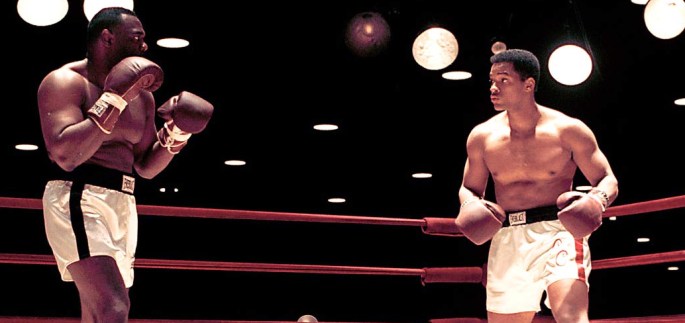
aliThe focus on the years 1964 to 1974 are arguably the most fascinating ones of Ali’s life because they are so rife with dramatic possibilities. It was during this period that Ali became the World Boxing Champion after beating Sonny Liston, then lost it when he refused to serve as a foot soldier in the Vietnam War, and finally reclaimed the Championship Title after beating the odds-on favorite, George Foreman in Zaire. It was also a time of great social and political upheaval in the United States with the assassinations of Malcolm X and Martin Luther King, Jr. Finally, Ali also shows the man’s private side: his numerous wives and failed marriages, and his friendships with Malcolm X and Howard Cosell.

Mann immediately immerses the audience in the time period with a montage of footage that features Sam Cooke performing in front of a live audience juxtaposed with Ali jogging alone at night and being harassed briefly by the police. Mann then goes into a montage of Ali training and two boxers fighting with Ali watching. Mann fractures time by also intercutting footage of Ali as a child witnessing the brutality of racism and its effects as he sees a newspaper article about the vicious beating of Emmet Till. The film then cuts back to a mature Ali sitting in on a lecture by Malcolm X. The entire montage is masterfully edited to the beats of a medley of Sam Cooke songs. This opening sequence establishes the Impressionistic take that Mann is to going to have on Ali’s life. It is also one of his most complex, layered opening credits sequence because he shifts time frames and presents us with all of these apparently unconnected images without explaining them. This is done on purpose in order to establish a mood, give an impression of the look and feel of the film and to set up that we are seeing the world through Ali’s eyes.

The fight scenes are covered from every conceivable angle as Mann cuts back and forth from shots outside and inside the ring. The first shot we get of the ring is a close-up of the red ropes and in Mann’s films this color signifies danger. There is the potential for Ali to not just lose the fight but possibly his life. This is a risk every time a boxer steps into the ring. In the Liston fight, Mann alternates between camerawork inside the ring, with tight and close point-of-view angles so that we are right in the ring with the boxers, and shots just outside of the ring but still close to the fighters. This gives the fight scenes a real visceral impact and immediacy that has not been seen since Martin Scorsese’s Raging Bull (1980). The Liston fight also shows how Ali could work a crowd of boxing fans just as well and in just the same way as the crowd of journalists before the fight.

Unlike most boxing films, Mann wanted to get inside the ring in order “to bring you inside the strategy and tactics, to bring you into the round as far as I could.” To this end, Mann would often be in the ring with the fighters with a very small digital camera. To achieve the most realistic fight scenes possible, Mann really had Smith and the other boxers hit each other. The director recalled one such incident: “When James Toney as Joe Frazier knocks Will down, we did three takes of that — every single one of those left hooks he connected. When Will stands up on the one that’s in the film, that wobble is not acting — you can tell how shaky he is.”

Mann also uses a cool, blue color to suggest intimacy and does so in the scene where Ali and Sonji (Jada Pinkett Smith), who would become his first wife, dance in a nightclub. They are close together, flirting with each other as Mann drenches the scene in blue much like he did with Neil McCauley entering his house in Heat (1995) and Will and Molly making love in Manhunter (1986). Ali is temporarily in an area of safety and love but this will change very soon.

After an interview with legendary broadcaster Howard Cosell (Jon Voight), Ali’s life takes a turn for the worse as he refuses to be inducted in the Army and is arrested. He then denounces the war in an interview and is subsequently labeled as being unpatriotic. He is stripped of his boxing title as Heavyweight Champion of the World, his boxing license and his passport. Like Jeffrey Wigand in The Insider, Ali is threatened by the powers that be for telling the truth and being his own man. It becomes obvious that this is a war of attrition in an effort to bleed Ali dry financially and threaten him with five years in jail. Then, as if to add insult to injury, the Temple of Islam suspends him just like they did to Malcolm X.

Cosell and Ali meet up and the veteran broadcaster, conscious of how bad off his friend is but not acknowledging it publicly, puts him on television despite network pressure. Cosell allows Ali to speak his piece about his ban and dazzles everyone again with his showmanship. It really is a testimony to Cosell that he did this. When everyone else had abandoned Ali, the T.V. personality stuck by him and used his considerable clout to put him back in the public eye. This interview is the turning point for Ali who wins a fight. Only then does Herbert and the Temple of Islam come back to him but Ali makes it clear that they do not own him. His eyes have been opened and he now knows just how much he can trust them.

Ali culminates with the legendary Rumble in the Jungle where Ali fought George Foreman in Zaire. Ali was not the favorite going in as Foreman was younger, stronger and the Champ. Mann, again, hints at the potential danger of this opponent when we see Foreman training, pounding a punching bag with powerful hits all with a greenish filter, a sign of peril in a Mann film. Sure enough, during this period Ali drives away his second wife (Nona Gaye) who does not like his relationship with the Temple of Islam because she feels that they are exploiting him. While still married to her, Ali becomes interested in a female journalist (Michael Michele) from Los Angeles who is in Zaire doing a profile on the boxer. This relationship effectively ruins his second marriage and Mann does not gloss over this showing that Ali was clearly in the wrong.

This portion of the film was shot in Johannesburg, South Africa and from there, an hour journey to Maputo, Mozambique because Mann liked the architecture in Maputo. In 1974, the legendary “Rumble in the Jungle” bout between Ali and George Foreman took place in Kinshasa, Zaire which had since become the Democratic Republic of Congo, but there was too much political unrest for Mann to shoot there in 2000. Associate producer Gusmano Gesaretti remembers that Mann fell in love with the architecture in Maputo. It was predominantly built by the Portuguese during the middle to later part of the century with buildings done in Art Deco-style curves and arches alongside others with straight lines in the block style of the 1960s. All were very aged and weather-beaten and looked very much the way Kinshasa was in the 1970s.

The “Rumble in the Jungle” was filmed over five weeks in Machava Stadium, five kilometers northwest of Maputo. The stadium was used to host large international soccer tournaments but had fallen into disrepair — there wasn’t even any electricity. The production spent $100,000 repairing and upgrading the 64,000-seat capacity stadium. They structurally engineered and replicated a ring and canopy that was 40 feet high, 82 feet wide and weighed over 40 tons. Over 10,000 extras were needed for the scene where Ali makes his entrance into the stadium. Fliers were distributed in Maputo inviting people to watch the filming. The production also cast 2,000 extras that would be costumed and fill seats on the floor around the ring. On the night of the scene, over 30,000 people showed up.

Known mostly for mindless, yet entertaining action films like Bad Boys (1995) and Independence Day (1996), Will Smith was not exactly most people’s first choice to play Muhammad Ali. However, Smith shows that he has the capacity for more substantial work with Six Degrees of Separation (1993) but he had never attempted anything as challenging as this project. Smith captures Ali’s distinctive speech patterns, especially his flamboyant, larger-than-life public persona. Like Anthony Hopkins before him in Nixon (1995), Smith does not look exactly like the actual person he is playing. Instead, he manages to capture the essence and the spirit of the man. He also does a good job of conveying Ali’s conflict between his loyalty to Islam and to his family and friends. Smith peels back the layers to show that there was so much more than Ali’s flashy public side. For example, most people only saw Ali and Cosell as antagonists, but this was only for show. In fact, they were good friends and the sportscaster was willing to help him out in any way possible.
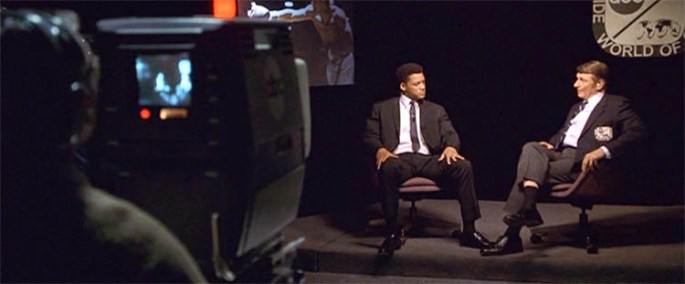
Ali-Howard-CosellWhile Smith was praised for his impressive physical transformation into legendary boxer Muhammed Ali, the film itself was criticized for revealing nothing new about the man. Herein lies the problem that Mann and company faced: how do you shed new light on one of the most documented historical figures of the 20th Century? Ali eschews the traditional docudrama for a more impressionistic take on the man and life. Mann’s film may not say anything new about the famous boxer, but it does depict an exciting ten years of his life in a masterful and richly evocative fashion. It’s a surprisingly soulful take on Ali and an excellent addition to Mann’s impressive body of work.


DAVID CRONENBERG’S EASTERN PROMISES — A REVIEW BY NICK CLEMENT

1

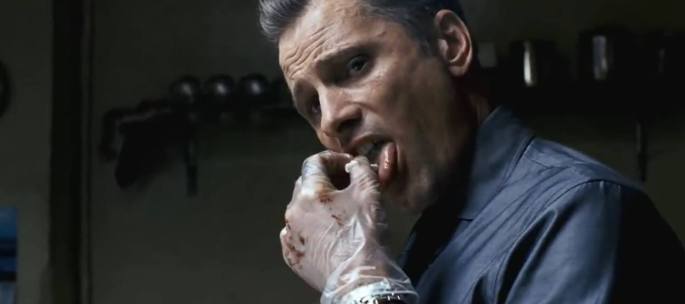
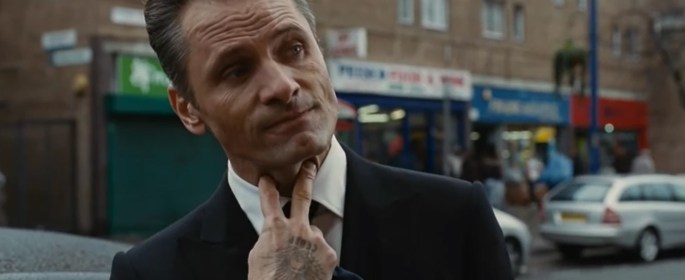
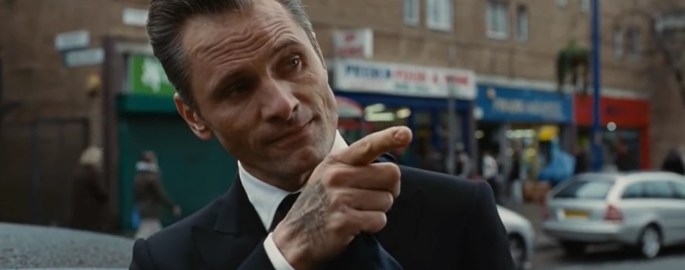
David Cronenberg’s Eastern Promises is as ruthless and nasty of a thriller as you’re likely to find. The director’s uniquely cold, semi-detached style perfectly fit with the pitch-black script from writer Steven Knight, who also penned the underrated thriller Dirty Pretty Things and the confined-to-a-car knock-out Locke. Without giving anything away, Eastern Promises has more than a few extremely smart, completely unpredictable surprises and twists, all of which are casually revealed like it’s no big deal. That’s one of the many sly pleasures that this film affords; Cronenberg and Knight pay their respects to the genre they’re working in, but they do enough to subvert our expectations, which results in a film that has the power to immediately engross the viewer in the dangerous underworld of violent Russian gangsters, but also allowing for thoughtful moments of introspective character development which allows the film to become so much more than a series of violent set-pieces.

5

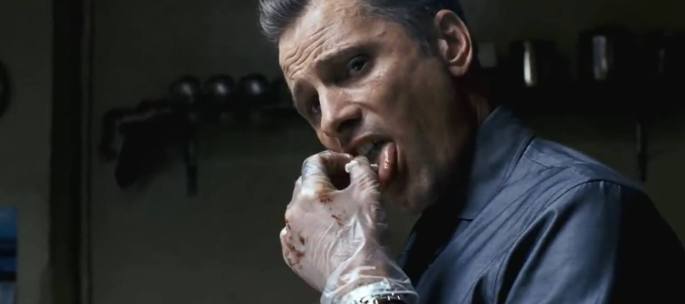
But about those set-pieces, of which there are a few – this movie takes zero prisoners when it comes to the visceral impact of murder, and the film’s ultimate bit of action, a five minute fight-to-the death with Viggo Mortensen taking on two thugs in a steam bath, completely nude, is easily one of the most brutally punishing movie fight I have ever seen. I’ve see a lot of ass-kicking, and the last bout in The Raid 2 certainly went to hell and back, but the choreography in that film turned it into a violent dance, something John Woo would wet himself over. The steam bath fight in Eastern Promises is raw, sloppy, scary, and never slick, which is why I love it so much.

8

We’ve seen countless scenes in movies and television shows were someone pulls off the perfect murder, all tidy, no blood, no loose ends. The steam bath fight is the opposite of that – things don’t go as planned for the various characters, split second decisions are made, and blood gushes like a babbling brook. Eschewing guns in favor of small knives, Cronenberg’s masterful direction is the definition of riveting, and Mortensen, working completely nude throughout the entire fight, delivers a tour de force of physical acting, something you’ll never forget. The brutal yet realistic violence all throughout this film will turn off some, but because each incident so neatly serves the air-tight script, nothing ever feels cheap or exploitive – just the way it would go down if you were a part of an extremely volatile group of murderers and psychopaths.

6

The “Russian-ness” of this film is a character unto itself, with the fantastic production design giving every scene a realistic feel, and the observant cinematography never turning a blind eye. Every once in a while a thriller like this one comes along and reminds you what can be done with familiar material, and while satisfying in the conventional sense, Cronenberg is still able to play with all of his customary themes, with characters who serve more than one purpose on the outside as well as the inside. Vincent Cassell provides juicy, sweaty, paranoid support, and Naomi Watts, as usual, does commanding work, bringing welcome sass and a much needed vulnerability to her small yet important role within the tricky narrative. Eastern Promises and A History of Violence make for a great one-two punch of rarefied crime cinema.

1


Who’ll Stop The Rain: A Review By Nate Hill

  
Who’ll Stop The Rain is a sadly forgotten Nam era film that deftly blends genre better than most movies can ever hope to. The level of quality ratio to the amount of people who remember it is criminally unbalanced, but that’s commonplace in cinema. The title comes from the Creedence Clearwater Revival song of the same name, serving as both a metaphor in itself and a theme for the film, an anti war outcry that warbles forth beautifully at least five different times during the movie, becoming the script’s national anthem. Plus,who can say no to CCR on loop. It’s actually one of the best and most fervent anti war films out there, showing you an extended look at just how many ways the Vietnam War followed soldiers home and infected many customs, institutions and individuals. That kind of important sentiment wrapped up in a thriller is the kind of package I strive to find in film, and this is a glowing example. Nick Nolte plays Ray Hicks, an american GI getting ready to head back stateside after a tour. His best buddy John Converse (Michael Moriarty) convinces him to smuggle a brick of hash back with him and deliver it to his wife (Tuesday Weld). Only problem is, that ain’t where it ends. The people John was in contact with turn out to be a dodgy bunch, and before Ray knows it he’s o the run from some very dangerous dudes with his best buddy’s wife in tow, headed straight for a violent confrontation via a slow burn of a plot that sits on a low boil before you realized it’s reached a fever pitch. Nolte and Weld are a corrosive romantic couple, making the downbeat best of their situation, evading two nasty drug runners (Anthony Zerbe and Richard Masur being scary and classy as fuck) and getting a feel for each other along the way. Thriller. Drama. War. Moral dilemma. This one’s got it all, in a very specific concoction that never forces anything and treats you to more than it ever promised, before you have the chance to realize it. All timer stuff. 

Operation Endgame: A Review by Nate Hill

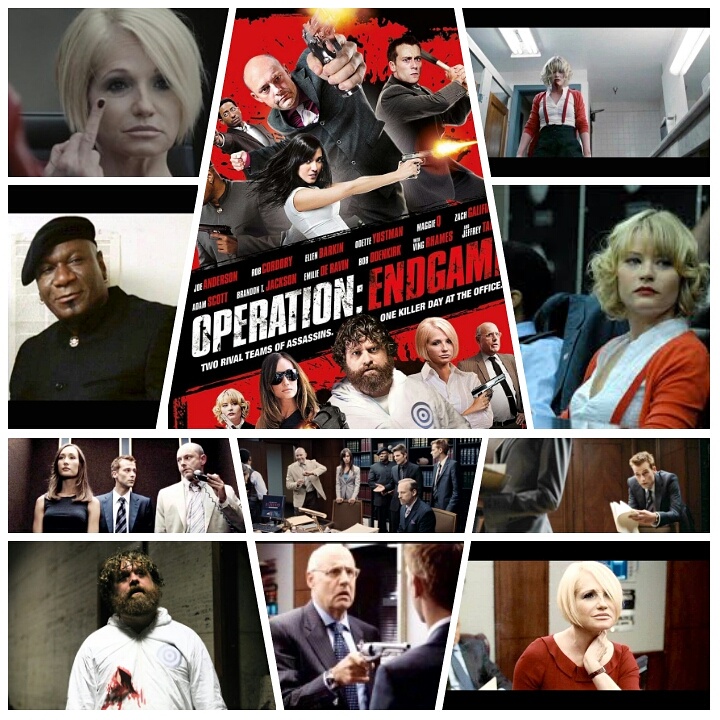
image

Rogue’s Gallery, given the slightly lamer title of Operation: Endgame, is a very odd little amalgamation of extreme violence, comedic banter and wannabe spy intrigue. It concerns a group of government agents holed up in some remote bunker, basically taking each other out one by one after someone among them murders their boss, Emporer (Bob Odenkirk). The cast is made up of two types of actors: sleek, distinct genre bad asses and quirky, less aesthetically streamlined comedians who stand out in this type of material very strangely. Fool (Joe Anderson) is the rookie, being shown the ropes of his first day by Chariot (a hilarious Rob Cordry). That’s where the plot starts, and that is also where it lost me. The rest of the film is just al of them bickering until it gets way beyond words, and then murdering each other in shamelessly gratuitous ways. Ellen Barkin stands out as Empress, a bitchy old tart who has it in for Devil (Jeffrey Tambor) another senior operative. Emilie De Ravin steps wayyyy outside her comfort zone as Hierophant, a psychotic little doll faced southern Belle who gives hulking Juggernaut (Ving Rhames) a run for his money. There’s also work from Odette Yustman, Maggie Q,  Adam Scott, Brandon T. Jackson, and Zach Galifianakis as a weird character that I still can’t figure out, perhaps because he does not much of anything at all except mope around wearing a hazmat suit and looking very hungover. It’s cool to see these actors give each other shit and fight like two raccoons in a burlap sack (the violence in this is really vicious, especially when Ravin is involved), if not much else. Very odd stuff.