NICOLAS ROEG’S THE WITCHES — A REVIEW BY NICK CLEMENT

witches_xlg

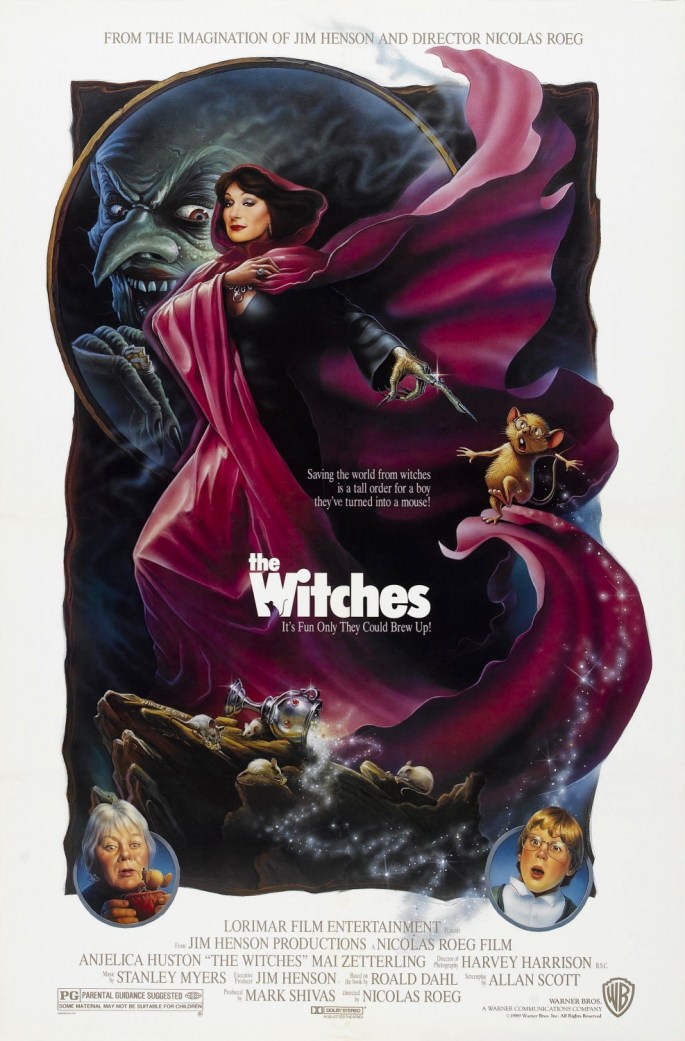
I can remember seeing Nicolas Roeg’s The Witches on opening day with my mother and sister back in late August of 1990 and I think I’m still losing some sleep over it. This is a funky, wild, frightening, and totally delightful family film that kids will be equal parts amazed and horrified by. And for just cause, as the human-to-mice transformation effects in this movie are bewildering and playfully creepy, all done in those glorious pre-CGI days where cinematic artisans and technicians all joined forces to create true movie magic before everyone got extra lazy by relying on computers to create their art. Based on the classic Roald Dahl book and produced by Jim Henson’s production company, this film sadly only grossed $10 million in the United States, as it was probably deemed too “British” or weird for most audiences. However, over the years, I’d like to think that it’s become a cult classic, as it represents the type of PG-rated filmmaking you rarely see these days. Anjelica Huston’s performance as the head witch haunted me for years, well before I knew who she “was” as an actress, while Rowan Atkinson provided all sorts of funny comic relief. But when you really boil it all down, this is a NASTY movie, centering on a witch population who are interested in destroying every child they can possibly find. There’s a sense of menace to much of this movie that always left me on edge but that always made me want to come back for repeat visits. The Witches was the final film that Henson worked on before his untimely death and the final theatrical film from production company Lorimar Productions. Apparently, Dahl wanted Cher for the lead role, but she was busy with other projects. The puppet work is extraordinary.

CALIFORNIA SPLIT – A REVIEW BY J.D. LAFRANCE

californiasplitgould

“I’ve had a couple of good wins, but they don’t compare to the losses. People only remember the wins.” – Robert Altman

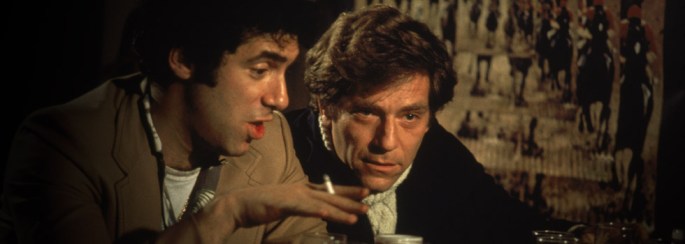
In the 1970s, Elliott Gould and Robert Altman were an unbeatable team. They first worked together on M*A*S*H (1970), a savage satire of the military, then again on a radical, contemporary reworking of Raymond Chandler’s novel The Long Goodbye (1973), and finally completed the hat trick with California Split (1974), an ode to obsessive gamblers. For years, this film has been relegated to obscurity, showing up occasionally on television and tied up in legal issues over the music, which delayed its release on DVD.

A nice, self-reflexive moment kicks things off: gambler and card shark, Charlie Waters (Elliott Gould) is killing time before a poker match by watching an instructional video on the game. The voiceover narration intones, “It has been said that everyone in America understands poker or wants to. It is one of America’s most popular games and since you’ve shown an obvious interest in coming here we have prepared a short film to teach you the fundamentals.” This voiceover could easily be talking to the audience watching this film as Altman introduces us to this world and the characters that inhabit it.

While this video is playing, Altman’s camera sweeps across the game room, setting the scene and introducing the film’s other main character, Bill Denny (George Segal). The video is also functional, providing a crash course on a couple of actual poker hands and the house rules. The opening poker game does a good job of showing the dynamics of professional poker playing and is also very funny as Charlie fleeces an irate player who then punches Bill, thinking that they are in league with each other. In a nice bit of business, a dazed Bill has enough sense to pick up his poker chips while all hell is breaking loose. For this scene, the poker club was built in a dance hall. Altman set up a few gambling situations and filmed them happening. None of the actual poker players’ dialogue was scripted.

Fed up with the unrealistic dialogue he and other actors were forced to say on a regular basis, struggling actor Joseph Walsh wrote a screenplay about his own gambling addiction in 1971. Steven Spielberg, fresh from directing the made-for-T.V. film Duel (1971), was originally supposed to direct. He and Walsh worked on the script every day for nine months. The director was fascinated by the characters and would react to Walsh’s script, offering suggestions. At the time, the screenplay was called Slide and the two men had a deal to make it at MGM with Walsh as producer and Steve McQueen in the starring role. The whole story was going to be set at Circus Circus in Las Vegas because the studio owned the casino.

A month before filming started, the studio experienced a shake-up at the executive level and with it came a new set of changes. MGM wanted the story to be a Mafia-related “sting” concept with Dean Martin as one of the two main characters. Walsh would no longer be the producer. He and Spielberg left MGM because he realized that they did not understand the point of the film: “I wanted the picture to be almost a celebration of the gambling, the joy of it, going along with it, and then, at the end, you could see where the trap comes in.” Spielberg and Walsh took the script to Universal Pictures where they had an agreement with executives Richard Zanuck and David Brown. However, Spielberg decided to work on another project called Lucky Lady (1975) leaving Walsh and his film stranded.

The writer’s agent, Guy McElwaine, contacted Altman’s agent, George Lito, and the director was given the script, read it and loved it. For years, he had wanted to do a gambling film with “the ambience of gambling, and then point out it had nothing to do with money.” He was drawn to Walsh’s script because he liked to gamble himself, his father was a gambler, and the director knew a lot of gamblers. David Begelman, the new studio chief of Columbia Pictures, was a former agent who knew Altman’s agent and greenlighted the screenplay to be made into a film. Walsh was a novice and unaware of Altman’s reputation for taking liberties with the scripts of for his films. However, Walsh was very protective of his script and argued with Altman numerous times over certain details. The only serious revisions to the script that the director made before filming were to background scenes. The writer had seen other Altman films and wasn’t always satisfied with how these scenes played out. He told the director that they could be changed but that he would rewrite them. Walsh wrote a full script for the background scenes, three to four page scenes for good actors to play.

George Segal was cast early on and Altman mentioned Gould but Walsh, even though he was childhood friends with the actor, held back. Altman and Walsh saw other actors, like Peter Falk and Robert De Niro, but kept coming back to Gould. Finally, the actor called Walsh and convinced him that he was right for the role. According to Walsh, on the set, Gould was full of confidence while Segal was insecure. The writer remembers that on the first day of shooting Gould “was there as that character…After seven days, George Segal came to me and said, ‘This guy’s [Gould] unbelievable. He’s an octopus. He is absolutely strangling me to death. I don’t even know what to do.’” Walsh told Segal that Gould had lived the life of his character and said, “Don’t try to act with him, don’t try to outdeal him…be off-base – just what you’re feeling – and it’s all working.”

Altman employed members of Synanon, the rehab organization of former convicts and addicts, as extras. The organization received a flat sum and delivered as many as needed each day. California Split marked the first time Altman experimented with the use of the eight-track sound system that allowed eight separate audio channels to be recorded and helped develop Altman’s trademark of overlapping dialogue. To this end, he gave the supporting actors and extras significant emphasis on the soundtrack. On the first day of shooting, the effort to keep eight separate channels clean and distinct made everyone very anxious. Haskell Wexler had originally been approached to shoot the film but Altman opted to go with relative newcomer Paul Lohmann who would go on to shoot Nashville (1975) and Buffalo Bill and the Indians (1976).

California Split
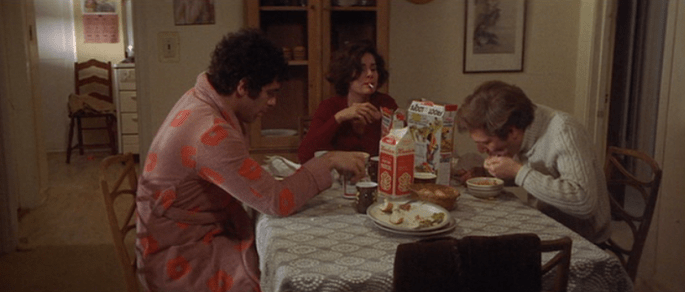
is one of Altman’s trademark character-driven films. It is less concerned with plot than behavior as we watch the friendship between Bill and Charlie develop over a mutual love of gambling. Charlie is a wisecracking joker and experienced gambler constantly looking for the next score. Initially, Bill isn’t as committed a gambler (he works at a magazine during the day) but he’s well on his way and hanging out with Charlie doesn’t help. As the film progresses and the two men hang out more, Bill starts to become more addicted to the gambling lifestyle. He blows off work early to meet Charlie at the track and sells his possessions for money. Bill and Charlie are gambling addicts who ride the high arcs and the low valleys, never passing up a bet. At a boxing match they put money on the outcome of the fight with a fellow spectator.

Those who know Elliott Gould and George Segal only from their contemporary sitcom appearances (Friends and Just Shoot Me, respectively), should see California Split if only to see these guys in their prime and working with a master filmmaker at the top of his game. Gould and Segal have never been better and play well of each other. There is good chemistry between them as Gould plays the more experienced gambler in contrast to Segal’s more naïve one.

justtalkingonthetelephoneCalifornia Split
is not afraid to show the ugly side of gambling. Bill sells his car and his possessions for a big poker game in Reno. Charlie exacts a rough, bloody revenge on the guy who mugged him at the beginning of the film. These are not always likeable guys and to Altman’s credit he doesn’t try to romanticize or judge them, leaving that up to the audience. Altman wanted to convey the empty feeling that winning from gambling gives these guys as he told Film Heritage magazine, “The mistaken feeling that winning…you can’t spend that money; you don’t go out and pay the milk bill with it unless you’re about to go to jail. It just means that you can play that much longer…In other words, it’s passes. It’s more tickets to the amusement park – that’s all it is.” California Split is arguably Altman’s loosest film in terms of plot and one of the richest in terms of character and observing their behavior.

Top Ten Mickey Rourke Performances: A list by Nate Hill


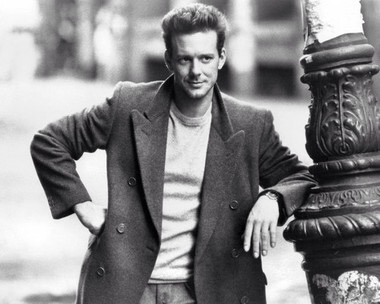
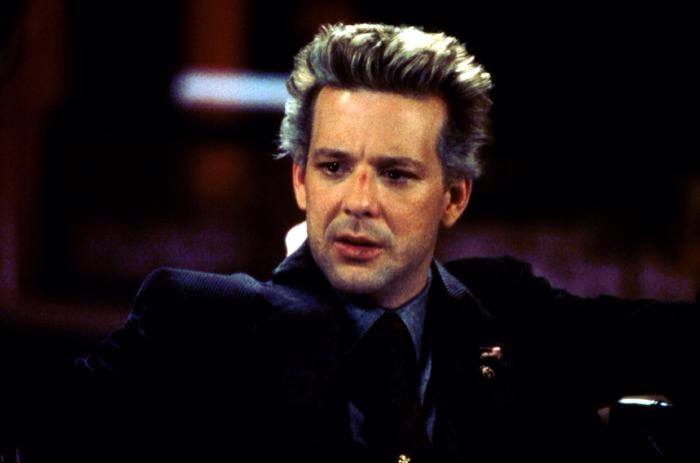
Mickey Rourke has been called the Hollywood outlaw by some, a difficult outsider by others, a master of his craft by anyone with sense, and has never not been a completely surprising thespian who refuses to reside within one box for long. He’s an outspoken, candid guy who has never been afraid of speaking his mind or laying down the verbal hammer. For me, Mickey is an undisputed genius of his craft and has shined like a brilliant nebula of talent, intuition and brilliance in each and every role he has brought to our screens. Here are my personal top ten performances from one of my all time favourite actors: 

10. Billy Chambers in Once Upon A Time In Mexico
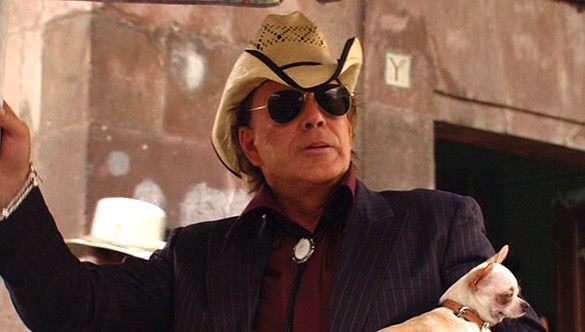
  

Director Robert Rodriguez allowed Mickey to carry around his own personal chihuahua (something that he has walked off of a set in a huff over in the past), and encouraged him to wear his personal shiny purple suit to play Chambers, a gruff cowboy hiding out in Mexico and working for a ruthless cartel boss (Willem Dafoe, a frequent Rourke collaborator). Chambers seems like a sly amalgamation of several early characters he played, world weary from too many skirmishes and events gone wrong, marinating in the Mexican sun and wishing for an exodus from criminal life. Billy has trouble with the sadistic tasks which the cartel orders him to carry out, showing a delineation between a life of crime and an evil path. Regretful, posturing and laconic, the first team up between Rourke and Rodriguez turns out to be a delight. 
9. Captain Stanley White in Year Of The Dragon
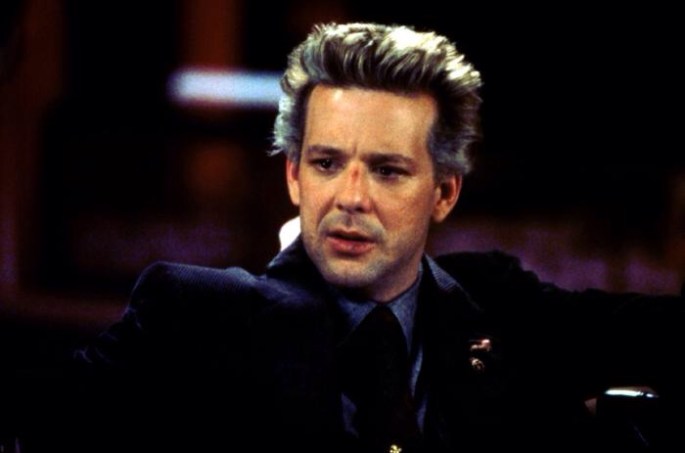
  

Rourke first did a bit part for manic maestro Michael Cimino in the notorious Heaven’s Gate, a precursor to his turn in this blistering cop film as a belligerent, hard nosed and uncompromising cop who will do anything in his power, and even a few things outside it, to bring down a Chinese crime syndicate. White has tunnel vision, a Viet Nam war veteran whose internal battery is set on search and destroy mode regardless of any collateral damage, of which there is a considerable amount. Rourke takes a blow torch to the character until the edges flare and fray, never letting the heat lower for a second, be it an introspective moment that smoulders or one of many thunderous outbursts of self righteous, racist fury. 
8. Randy ‘The Ram’ Robinson
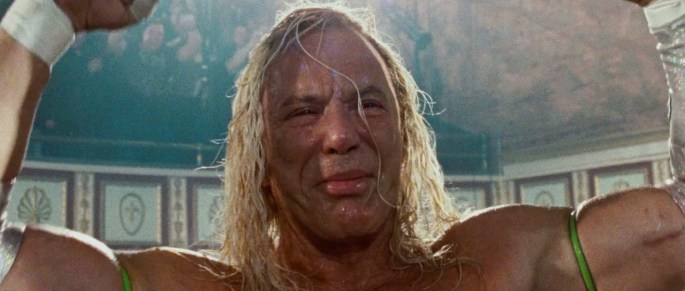
  

Some see this role as Rourke’s comeback, but similar to Randy ascending the ranks of his former glory only to take a hazardous dive off the ring and back down again, such was the case for Rourke, who is back to smaller films. For a single piercing couple hours, he brought us legendary work in an Oscar nominated turn that burns deep, encased in Darren Aronofsky’s intrepid direction. Randy is a fallen Titan who is looking for another shot in both his professional and personal life, and Rourke gives him the presence to hit home. 
7. The Motorcycle Boy in Rumble Fish
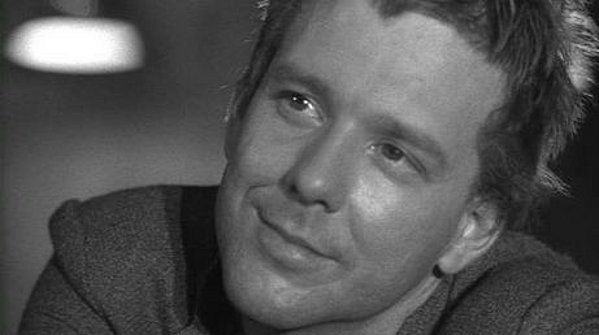
  

Returning from a mysterious motorbike odyssey, speaking in cryptically poetic fashion and filling out the restless bad boy archetype like no other, this is one of Rourke’s most fascinating turns, in a surreal black & white tumble town that evokes the 1950’s beautifully. He’s relaxed yet uneasy, friendly yet vaguely portentous and obtains an intangible state of heightened awareness with his work that you can never quite pin down or explain properly in words. His character’s resolution seem fittingly oblique, matched by his performance that simultaneously cries out and holds back, often mirroring each other eerily. 
6. Jim Olstadt in The Pledge
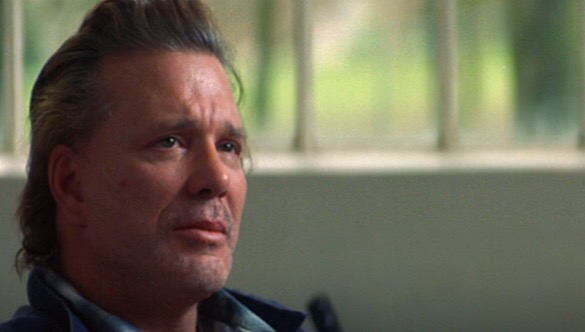
  

Sean Penn cast Rourke for an appearance that lasts for less than a minute, and he manages to quietly devastate and then some within that time. He plays a grieving father who is questioned by Jack Nicholson’s obsessed detective about his young daughter, who disappeared several years before. Unshaven, chain smoking and hiding behind a vacant expression, Nicholson’s queries trigger a well of raw anguish which spill out unforced into the certain and seem remarkably genuine. It’s uncomfortable, despairing and you just want to walk right into the screen and give poor Olstadt a hug. His work is that good, a gem of an appearance in probably the best film on this list. 
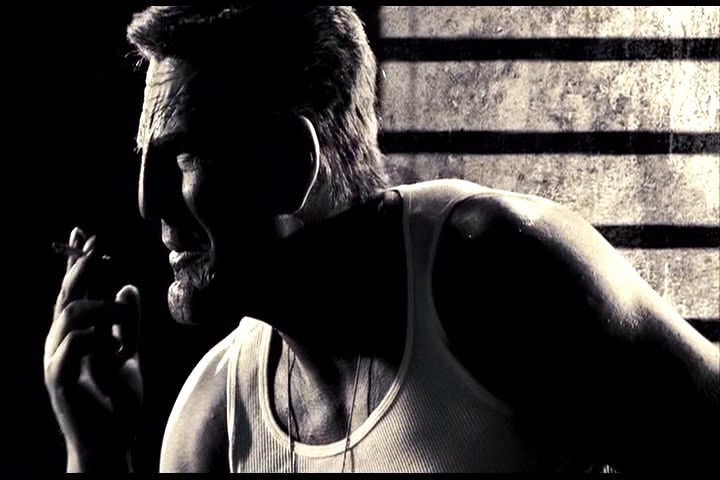
5. Marv in Sin City
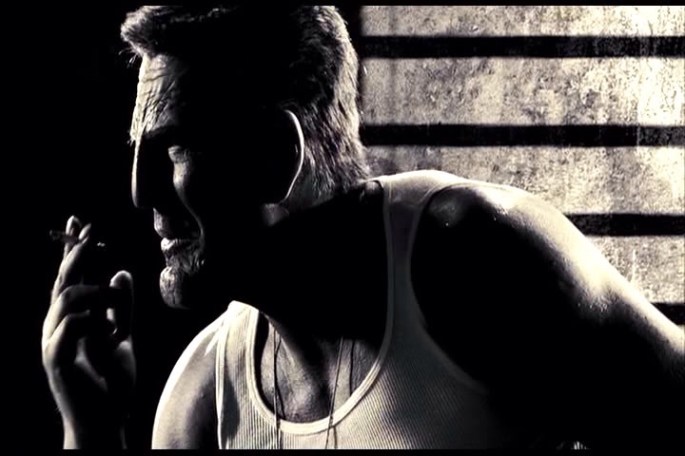
  

When Robert Rodriguez told Frank Miller of his notion to cast Rourke as the hulking bruiser Marv, Miller’s response was “What, that skinny guy from Body Heat?”. Rodriguez had a vision though, which Rourke followed through with in legendary fashion. Marv has to be played by a performer with the right presence (Ron Perlman and Clancy Brown could have taken a decent crack), someone with somber grit and just the right shot of blackest humour. Rourke sets the role on fire, filling every gorgeously composed frame with his Boulder tough, terrifying and surprisingly touching take on the character.
4. Ed Moseby in Domino
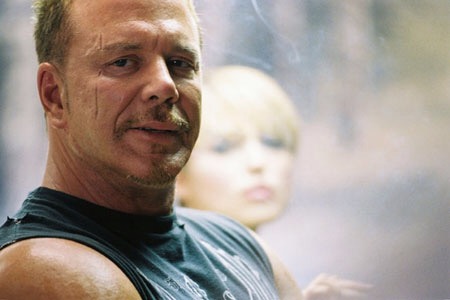
  

The title of most legendary bounty hunter in Los Angeles is a pretty steep hill for any actor to start out on in at the beginning of their performance. Mentor to Domino Harvey, street smart professional, world weary badass and all around character, Ed is one third of the film’s psychedelic soul and Rourke charges full guns ahead with the work, pausing at penultimate crossroads to show us the seething regret and sadness that Ed harbours beneath the violence and tough guy shell. There’s one scene with co star Edgar Ramirez that seems pulled straight from Rourke’s own history, where the camera sits still long enough to allow him to show piercing truth. 
3. Charlie in The Pope Of Greenwich Village
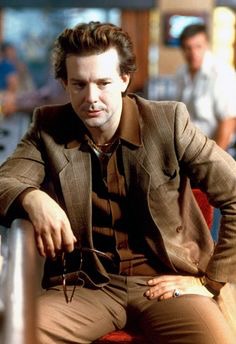
  

Charlie is a small time thug who does his absolute best to not be a screw up. Only problem, he’s saddled with best friend Paulie (Eric Roberts) who happens to be the biggest screw up this planet has ever seen. The pair are comic dynamite, Rourke setting off on exasperated tirades whenever Roberts gets them in hot water, and then using his brand of cunning and survival instinct to bail them out. Rourke shows a fox-like resourcefulness, a hurricane of anxious energy that cools over when evasive action is required. Charlie is Rourke in his youth and loving the game, firing synaptic bursts of energy at Roberts and receiving them back in synergy, showing off what a great onscreen duo they make.
2. The Cook in SPUN
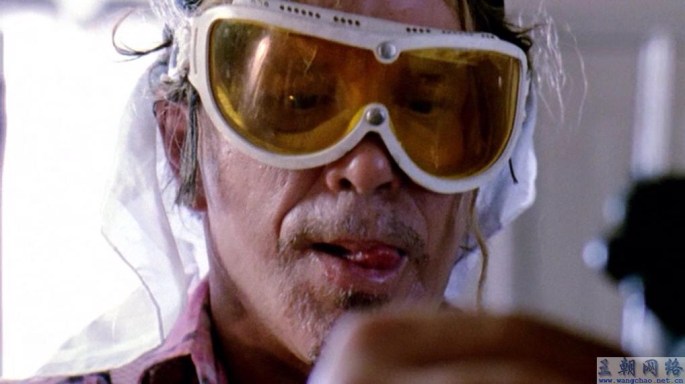
  

A cowboy hat wearing, meth cooking oddball hardly seems like the type of character to land an emotional punch, and for the most part you’d be right to think that. Rourke is like Jim Carrey in the mask here, inhabiting an overblown and dizzyingly stylistic aesthetic that exists to show us the unhinged lifestyle of meth addicts. He jumps from serious to scary to funny to sad so quick it’s hard to put the puzzle of his character together, until a n emotional wipeout of a monologue that’s delivered late in the last act, bringing his sad arc full circle. Be it a seminar on the political qualities of Pussy, a whopper of a tiff with girlfriend Brittany Murphy or a brief tongue in cheek encounter with Eric Roberts, it’s glitzy grungy playtime all the way, until we get to that one extended speech, which halts the mayhem and sobers the viewer up post-delirium. It’s tearful in a film where you’d last expect it, and Rourke handles the 180 degree turn like the master he is. 
1. Harry Angel in Angel Heart
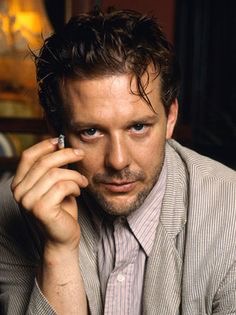
  

In one of the finest and most flat out unnerving southern gothic horror films ever made, Rourke throws himself at the role of a down and out private detective who is hired by a sinister Robert De Niro to find a missing singer who doesn’t even seem to exist at all. Harry starts off in control, assured, well travelled. His nerves begin to shake when a trail of hideously murdered bodies pile up behind him, seemingly connected to his search. Rourke slowly unscrews the lid of Harry’s sanity in a sweaty frenzy of fractured machismo and blossoming terror, his fear riling up the audience with each new grisly discovery. There’s plot revelations, shocking violence, the mother of all graphic sex scenes, steeped melodrama and a near constant state of primeval fear, all infused into his performance with skill and tact. For me, Rourke has never been more ‘Rourke’, in all facets, than he was as Angel. 
B Movie Glory with Nate: Unspeakable

image

Unspeakable revels in its southern fried trashiness, pulling forth a lurid and grotesque pseudo mindfuck serial killer story that I don’t recall making a whole lot of sense, yet is still barrels of fun to behold the seasoned cast play out. The film’s writer, Pavan Grover, also stars as Jesse Mowatt, a mysterious serial killer with ties to the occult who frames an innocent Mexican migrant (Marco Rodriguez) in several horrific murders. When a scientist (Dina Meyer) uses an experimental mind mapping and truth seeking method on the wrongfully accused man, she is led to Mowatt via some dodgy telepathy. To be sure that Mowatt is guilty, she tries the same method on him and comes across readings that suggest he may be not only inhuman, but altogether unspeakably evil. The gung ho, sadistic prison warden Earl Blakely (a hopped up Dennis Hopper) is ready to pull the switch, but Meyer wants more time to examine Mowatt. Her colleague and mentor Jack Pitchford  (Lance Henriksen) advises her against it, sensing the evil. She appeals to the state Governor (a brief Jeff Fahey) who happens to be her former lover, but he is unyielding. Her curiosity towards Mowatt puts her in grave supernatural danger, as Mowatt leers from the shadows of his cell and causes all sorts of unexplainable havoc. It’s a B movie thrill ride through and through, the plot barely registering to the viewer beyond the shock value tactics it employs, mainly giving Grover and Hopper scenery to voraciously gnaw on. In fact, Hopper is so rabid in one particular sequence it makes the viewer question whether the director just told him to ‘go full retard’. I enjoyed it for the actors, all of which I greatly admire. It’s schlock, of the marginally nonsensical variety. As long as you go in with that pre-notion, you can’t blame me for the reccomendation. At least the startling instances of gore are guaranteed a spike in our pulses.

Felon: A Review by Nate Hill


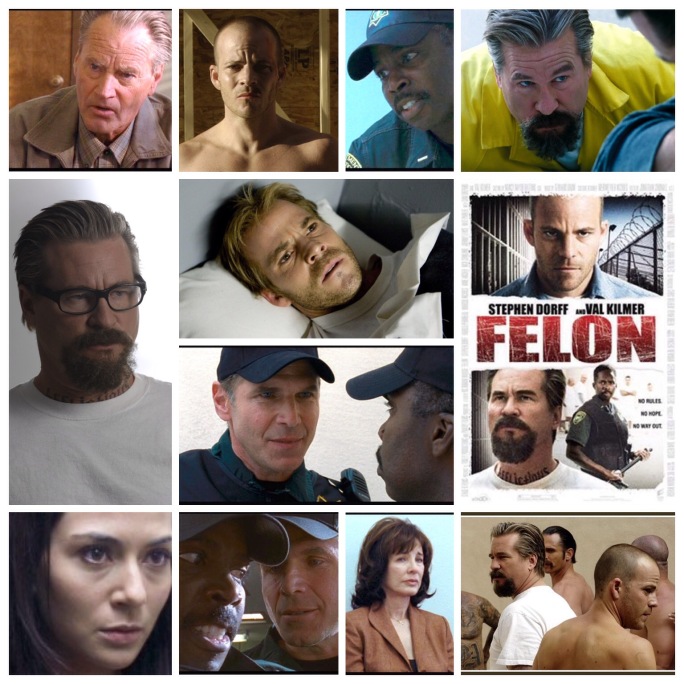
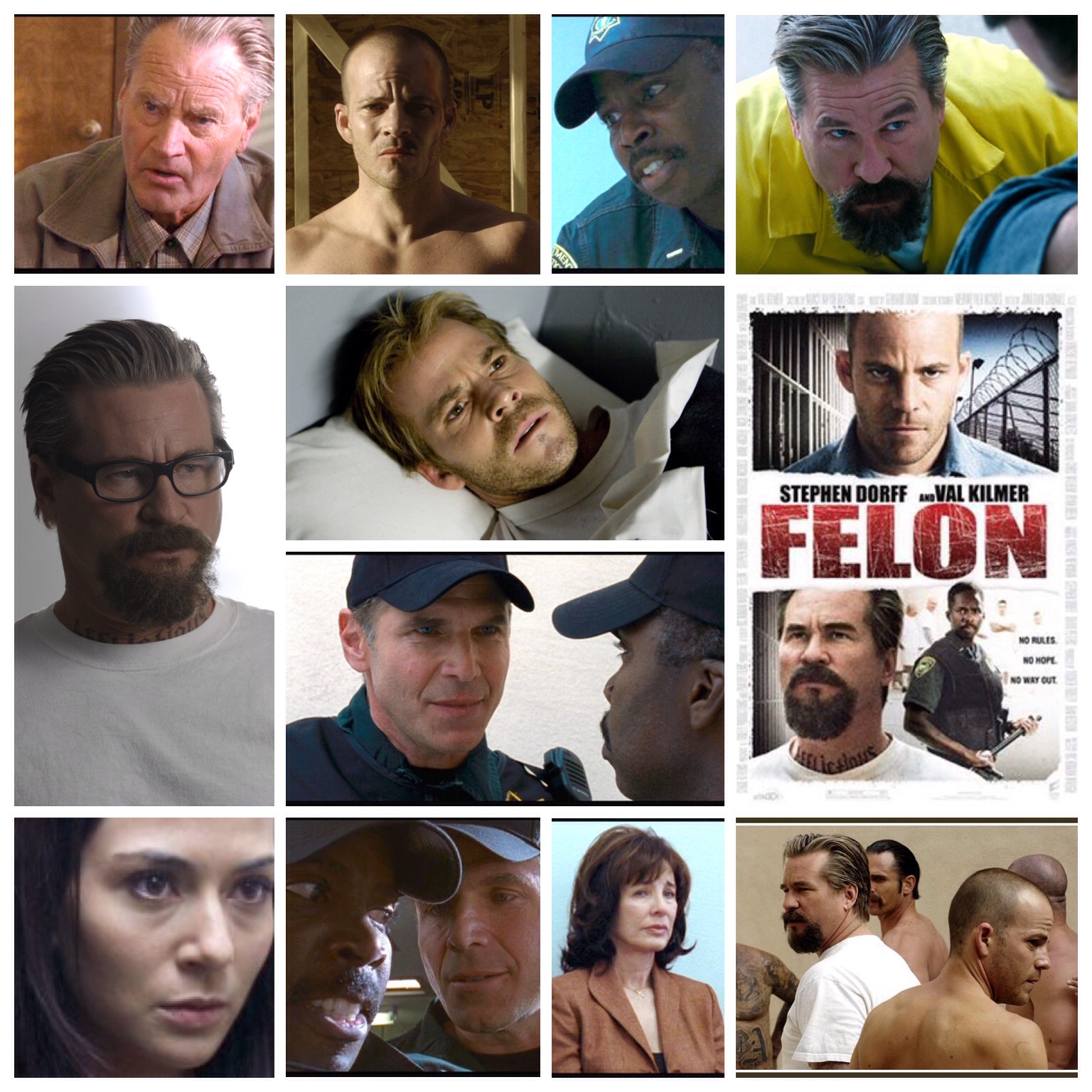
Felon is a bitter,and tragic prison drama that’s packed with wrenching injustice, simmering anger and caged animal violence. Loaded with the kind of tough guy elements which make prison films exciting (check out Lock Up with Stallone), it’s also has a tender side brought forth by its extremely thoughtful and well written script, which explores ideas that are both hard to swallow and very sad. Stephen Dorff, a guy who already has the gritty look as soon as he walks into a frame, plays Wade Porter, a simple family man who is just starting out at life along with his wife (Marisol Nichols). Their hopes and dreams turn into a nightmare, however, when a violent intruder breaks into their home one night. Wade strikes out in defence of himself and his wife, accidentally killing the criminal. Because of the backwards ass way the States run things, he is accused of manslaughter and sentenced to serve out jail time. He is then thrown into the dog pit, literally and figuratively. The penitentiary he is sent to is run by sadistic and corrupt Lt. Jackson (Harold Perrineau) along with his brutal enforcer Sgt. Roberts (Nick Chinlund). Jackson organizes vicious fight club style matches between the inmates, totally off the books and beyond any correctional legislations. Wade is forced to adapt, adjust and bring out monstrous aspects within himself to survive, and make it through his sentence with both his life and humanity intact. It’s not an easy turn of events to watch unfold onscreen, but necessary in the sense that this probably happens quite frequently to people in real life, and should be seen. The only solace Wade finds is with his gruff, veteran cell mate John Smith (Val Kilmer) a lifer who once went on a massacre of revenge against individuals who murdered his family. Smith is his guiding light, steering him through the hellish carnage of what he’s forced to do and helping him to keep the candle of compassion alive within him, never losing sight of what is essential in his fight to claim his life once more. Kilmer is a force that will knock you flat in this role, an old bull with dimming fury in his eyes, a man with a bloody history that has forged the weary dog we see in the film. Late in the film he has an extended monologue to Wade, giving him both blessing and advice with some of the most truthful and affecting gravity Kilmer has showed in his career. The writer/director, who appears to be primarily a stuntman, should be commended for such a script, that could have easily been a straight up prison flick without the pathos that drips off its heartstrings. We as an audience view this painfully and prey nothing like this ever happens to us or anyone we know, hoping to see a light of hope at the end of the dark tunnel for Wade. I won’t spoil it, but it’s worth the hit that your emotions will take while watching, and there is hard earned catharsis to be had, and penance for the characters you want to shoot in the face along the way. The extends to brilliant work from Chris Browning, Anne Archer, Nate Parker, Johnny Lewis and a fantastic Sam Shepherd as another seasoned convict. This was correct to video as I recall, which is a crime. It’s up there as my favourite prison set film that I’ve ever seen, a soul bearing piece. 

CLINT EASTWOOD’S SPACE COWBOYS — A REVIEW BY NICK CLEMENT

1

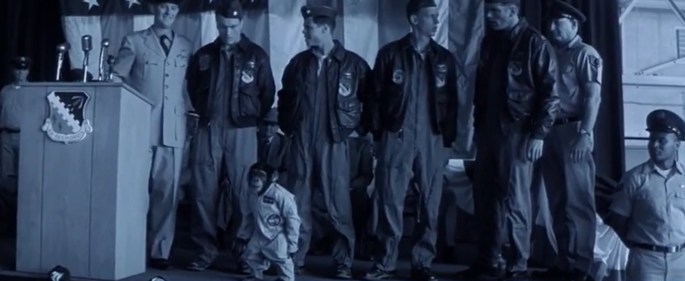
I’ve always been a big fan of Clint Eastwood’s Space Cowboys. Released in August of 2000, the film is a sincere and compelling tale of retired ex-test pilots who take the chance of a lifetime. It appears that an old Soviet satellite is in need of repair, and nobody knows how to handle business better than Eastwood, Donald Sutherland, Tommy Lee Jones, and James Garner. Sort of like Armageddon for the AARP audience, this refreshingly small-scale but still high-stakes scenario got a lot of comic mileage out of the collective ages of the co-stars, but still told a lean and effective story, with Ken Kaufman and Howard Klausner’s peppy screenplay giving each actor their moment to shine, and not wimping out at the finale. In fact, the final shot of this movie has continued to haunt me for the last 16 years; I’ve never forgotten it as it still chills me to the bone whenever I think about it. A great supporting cast including Loren Dean, Marcia Gay Harden, William DeVane, Courtney B. Vance, Rade Šerbedžija, and James Cromwell all did solid character work, while Jack N. Green’s stylishly composed cinematography never called overt attention to itself while still displaying visual gravitas and a smart use of the widescreen frame.

2

This isn’t a game changer, but rather, a comfortably solid film, the sort of late summer programmer that was better than it had any right in being, which is mostly due to Eastwood’s classy sense of direction, and the amusing performances by all of the old-timers. There’s emotional pay-off, terrific action, and a genuine sense that everyone involved was having fun. The opening sequence, set in 1958, is a stunner, showing the test-piloting exploits of the guys when they were young hot shots, with the entire prologue captured in a unique shade of black and white which also gave off a cool blue-grey visual sheen; I always get totally engrossed in this film from its opening moments. Shot for an economical $60 million but never feeling skimpy at any moment, the film became a solid box office hit, taking in $90 million domestically and another $40 million overseas. Nominated for an Oscar for Best Sound Editing and carries a triumphant musical score courtesy of frequent Eastwood collaborator Lennie Niehaus. The film marks the feature film debut of Jon Hamm. Fly Me to the Moon POWER.

3

ROCK ‘N’ ROLL HIGH SCHOOL – A REVIEW BY J.D. LAFRANCE

rock-n-roll-high-school_0

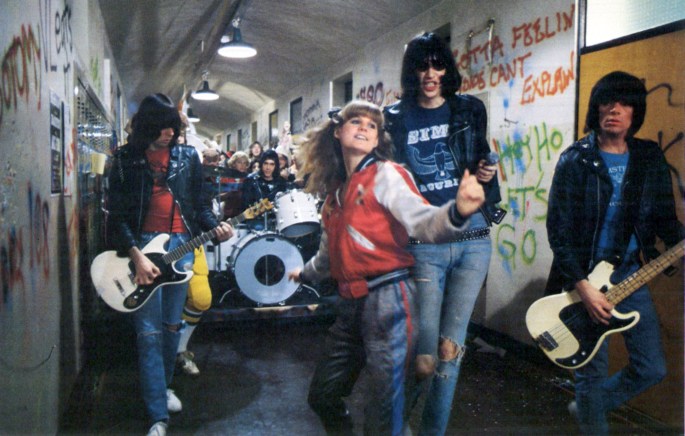
Hey Ho! Let’s Go! Listen up, kids. Rock ‘n’ Roll High School may have been released way back in 1979 but it still kicks the ass of any of those square MTV movies. Forget about Britney Spears and Mandy Moore’s brand of bubblegum pop music and their equally bland movies – they don’t hold a candle to the unbridled power of those punk rockers from New York City… the Ramones! Making a band the central focus of a film is nothing new. The Beatles did it with A Hard Day’s Night (1964) and The Monkees with Head (1968). Hell, the Spice Girls even did it with Spice World (1997). But to do it with an anti-social punk rock band like the Ramones?! And to have it produced by legendary B-movie mogul Roger Corman?! The results: a cult classic in the proud tradition of juvenile delinquent films of the 1950s.

Riff Randell (P.J. Soles) is the ultimate Ramones fan. She’s introduced gleefully bypassing Vince Lombardi High School’s PA system so that she can blast “Sheena is a Punk Rocker” to the entire school population. The energetic song wakes up the students, shatters glass, and shakes tables and pictures right off the wall. The school erupts into complete anarchy as the student body begins to spontaneous dance to the boisterous rock ‘n’ roll music. How kick ass of an opening sequence is that? It also does a great job of conveying the excitement and energy of the Ramones’ music.

Riff dreams of meeting the Ramones and giving them a song she wrote entitled, “Rock ‘n’ Roll High School.” She tries it out on her gym class causing all the girls in their skimpy gym outfits (ah, Corman and his exploitation tendencies) to dance around in what can only be described as the greatest gym class ever.

Riff even camps out for days to get tickets for the Ramones’ upcoming concert while her best friend, Kate Rambeau (Dey Young) covers for her by telling the nasty, shrewish Principal Togar (Mary Woronov) that various members of Riff’s family have died. Not surprisingly, Togar doesn’t fall for it and takes Riff’s ticket away, forcing the two girls to find another way to meet their heroes. Meanwhile, good girl Kate has a major crush on the school’s quarterback, the bland Tom (Vincent Van Patten), but he has his sights on the dynamic Riff.

The film was originally called Girls Gym, then it was changed to Disco High by Corman, who wanted to capitalize on the disco craze, but was (fortunately) persuaded otherwise by director Allan Arkush. Originally, the filmmakers wanted Devo and then Van Halen before approaching the Ramones. They finally settled on Rock ‘n’ Roll High School after Arkush convinced Corman that the Ramones were the perfect band for the film. To their credit, the Ramones knew that it was the right move. Guitarist Johnny Ramone was a huge fan of Corman’s films and when he heard that the producer was behind the film, he agreed to do it. And the rest, as they say, is history.

Rock ‘n’ Roll High School
does a great job of playfully championing the Ramones as rock gods and yet shows them being accessible to their fans as well. The band first appears in a car driving down the street on the way to their venue as they play “I Just Wanna Have Something To Do.” Once outside the club, they get out of the car and interact with the crowd of ticket buyers (who were, incidentally, actual Ramones fans). The editing, coupled with the insanely catchy song, gives the scene an infectious energy that is so much fun to watch. Incidentally, Dean Cundey was the film’s cinematographer and he would go on to shoot some of John Carpenter’s best films, including Halloween (1978) and Escape from New York (1981).

From B-movie veterans like Paul (Eating Raoul) Bartel and Mary (Death Race 2000) Woronov to newcomers (at the time), P.J. (Halloween) Soles and Dey (Strange Invaders) Young, the entire cast has a lot of fun spouting the film’s wonderfully inspired cornball dialogue (“If you don’t like it, you can put it where you the monkey puts the nuts,” Riff says defiantly to Togar at one point) courtesy of National Lampoon magazine writers Richard Whitley and Russ Dvonch. I would be remiss without also mentioning the presence of Corman regular Dick Miller (as a cop) and Clint Howard who plays matchmaker for Tom. The Ramones are good sports and mumble their way through the film and truly come alive during the music sequences like the pros that they are. This film rightfully cements their reputation as legends.

Shot in only 15 days (which, when you think about it, is entirely appropriate for this kind of film), Rock ‘n’ Roll High School embodies the essence of the punk rock music that made the Ramones famous. The film is bursting with youthful energy, a dose of good ol’ fashion anarchy, and is loads of fun to watch. These are also the ingredients that made Rock ‘n’ Roll High School a cult film. Corman cannily marketed it as a Midnight Movie in the hopes that the same people who flocked religiously to The Rocky Horror Picture Show (1975) would come to see the Ramones. It was a modest commercial success upon its initial release and actually garnered critical praise – very unusual for a cult film.

While Rock ‘n’ Roll High School will appeal predominantly to fans of the Ramones (duh!), it is also one of those fun, goofy movies to invite friends over and watch with copious amounts of junk food on hand. This film is all about loving music and a particular band unabashedly. Riff gives herself up to the music and this translates into an enthusiastic celebration of the Ramones and the rowdy, rebellious spirit of rock ‘n’ roll music. Repeated midnight screenings, coupled with steady appearances on T.V., have helped the film endure over the years so that is has become a beloved cult classic.

Quentin Tarantino’s THE HATEFUL EIGHT – A Review by Frank Mengarelli

Quentin Tarantino’s eighth film, THE HATEFUL EIGHT, came out at a hostile time in contemporary America. Tarantino joined marching protests against police violence; then the overly sensitive millennial online “journalists” chastised the film, and Tarantino, for painting shades of misogyny and racism. Tarantino was unfairly attacked by the extreme wings of each political party. Had no one paid attention to Tarantino films prior? Of course racism and misogyny plays a vital part in this film, because not only did those elements exist in the post-Civil War 1800’s, but also exist in reality.

Hateful Madsen

This film is a cataclysm of Tarantino’s self-indulgence. He constantly references his prior works (mainly RESERVOIR DOGS) while homaging Sergio Leone, Billy Wilder, and John Carpenter. His limited casting is formed of new Tarantino players: Kurt Russell, Walton Goggins, and Bruce Dern who Tarantino has worked with twice prior; as well as his seminal ensemble made up of Samuel L. Jackson, Zoe Bell, James Parks, Tim Roth, and Michael Madsen. Joining the Tarantino crew for the first time is Jennifer Jason Leigh, Demian Bichir, and Channing Tatum.

For as visionary as Robert Richardson’s cinematography is and Ennio Morricone’s Academy Award winning hypnotic score, the greatness of this film lies within one of Tarantino’s best screenplays and one of the best acting ensembles since GLENGARRY GLEN ROSS. Tarantino is one of the most talented actor’s directors who has ever sat behind the camera. He carefully crafts each character with an actor in mind, playing on their strengths and bringing out untapped potential from even the most veteran actor he’s working with. The cast is absolutely brilliant.

Hateful.jpg

Kurt Russell does the best John Wayne impression ever as the hard barked simpleton whose stupidity is even more outrageous than his facial hair. Russell is always a joy to watch, and Tarantino’s use of him are highlights in an already legendary career. Samuel L. Jackson is one of the best linguists to ever grace the screen. Tarantino’s dialogue has never sounded better than coming out of Jackson’s mouth (aside from Harvey Keitel). Tim Roth gives one of his best performances delivering an English shtick of Mr. Orange from RESERVOIR DOGS. Perhaps the most surprisingly great performance in this film is that of Michael Madsen playing a caricature of himself. I can’t say anything more about Jennifer Jason Leigh that hasn’t already been said. She should have won the Oscar.

Tarantino outdoes himself with THE HATEFUL EIGHT; the script is outrageously funny, giving these talented actors so much to play with. Only Quentin Tarantino would be able to craft an epic western built upon heightened paranoia that is three hours long, set inside a tiny cabin that is filled with eight larger than life characters, filmed with a wide angle lens that is constantly on the move. Tarantino has reached Terrence Malick status by making films for himself, not for an audience, or a demographic, and that’s what he has excelled since GRINDHOUSE. No one loves movies more than Quentin Tarantino. Oh, and about that overt racism in this film, did those people not stay until the end?

Hateful ending.jpg

Antoine Fuqua’s Tears Of The Sun: A Review by Nate Hill

  
Antoine Fuqua’s Tears Of The Sun is a brutal, tough war machine of a flick in the tradition of the old 70’s war films, kind of like a brooding Dirty Dozen. Bruce Willis stoically heads up a team of special ops soldiers who are sent into a war torn region of Africa to rescue a doctor (Monica Belucci) from a missionary camp. Genocidal maniacs are encroaching into the area and it’s no longer safe for locals or relief workers. His orders are simple: locate and extract the doctor, and no one else. However, when he comes face to face with the refugees, and their situation, he simply can’t find it in himself to turn his back on them when he can do something to help. He then disobeys his orders, collects both his team, Bellucci and the Africans and makes a run through the jungle for diplomatic protected soil. His team are a grizzled band of warriors, each with their own unique qualities and opinion on his decision. Kelly (a badass, mohawk adorned Johnny Messner) believes it’s too much of a risk, and not their concern). Michael ‘Slo’ Slowenski (Nick Chinlund, excellent and understated) takes a compasionate standpoint. Second in command Red Atkins (Cole Hauser) trusts Willis is making the right call. Soon they are pursued by the extremists, led by a hulking Peter Mensah, before King Leonidas kicked him into the Sarlak pit. The combat scenes are hard hitting, seemingly very well rehearsed and researched. The only problem for me was the overbearing and extended sequences of genocide, which are harrowing and quite tough to watch. When it’s combat based it’s a damn fine piece, with a rugged, thoughtful band of heroes who are an absolute joy to see in action. Rounding out the team are Eamonn Walker, Charles Ingram, Paul Francis, Chad Smith and a briefly seen Tom Skerritt as Willis’s commanding officer. Tough, muscular and no nonsense, with burgeoning compassion that gives that soldiers purpouse beyond the cold lethality of the mission. Fuqua has a terrific collection of lean and mean action flicks under his belt, and this is one of the best.

FRANK OZ’S BOWFINGER — A REVIEW BY NICK CLEMENT

bowfinger

Silly and smart in equal measure, the Frank Oz showbiz comedy Bowfinger hit some really sharp notes of pointed satire, while still displaying a care-free, absurdist sense of its own willfully unbelievable plot. Released in the summer of 1999 and feeling more and more unique as the years have progressed, the film showcased Steve Martin (who also penned the witty screenplay) in pure rapscallion mode, portraying a bottom-barrel Hollywood producer looking to trick the world’s biggest action star, Kitt Ramsey (an absolutely superb Eddie Murphy), into starring in his sci-fi B-movie that he’s been shooting undercover. After the plot gets entangled in various idiocies, Ramsey disappears, which causes Bowfinger to hire a dimwitted lookalike, again played by Murphy, with serious comic hijinks ensuing. The sequence on the freeway is an all-timer; I can’t believe that the studio asked Martin to cut it out of the script as it’s the funniest sequence in the film. And it goes without saying that Murphy hasn’t been this good in years, maybe since Bowfinger, delivering two very different and equally successful comedic performances.

Coming on the heels of the more serious minded The Truman Show and the more audience friendly EDtv, this was the third meta-reality-TV-movie in this late 90’s cycle of prophetic filmmaking, and if Bowfinger didn’t go for the jugular the way Truman did or play it as enjoyably safe as EDtv, Oz and his collaborators were still able to craft their own special little gem, a movie that moves to its own beat and plays by its own rules. Featuring a fantastic supporting cast featuring Heather Graham, Christine Baranski, Terrence Stamp, Robert Downey Jr., Jamie Kennedy, and Adam Alexi-Malle, and including some hilarious jabs at Scientology throughout the playfully mischievous script, Bowfinger feels like very few other studio comedies that I can think of, as it deftly juggled multiple tones in an effort to create something purposefully different. Warmly embraced by critics, the film did $60 million domestic and just about $100 worldwide, which seems about right, as the ingredients were certainly more challenging than most of your typical big budget offerings from roughly 20 years ago. Originally titled Bowfinger’s Big Thing. Chubby Rain POWER.