DAMIEN CHAZELLE’S WHIPLASH — A REVIEW BY NICK CLEMENT

1

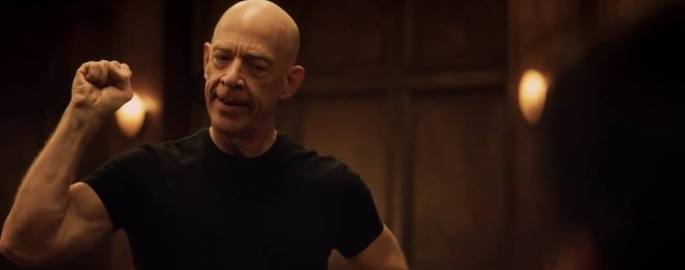
Pauline Kael once said something along the lines of: “Great movies are rarely perfect movies.” If she were around today, she’d hopefully think that Whiplash is both great and perfect, because after only a few viewings, I’m pretty much convinced that it’s a nearly flawless piece of cinema, something that couldn’t possibly be improved upon, made with exacting care and precision. Yes, it lives inside of its movie-movie world, but that’s one of the things that I look for in captivating cinema; I want to be grabbed by something with almost unnatural force. Writer/director Damien Chazelle made one of the most promising debut features in recent memory, demonstrating commanding technique and a raw understanding of how to ruthlessly move your narrative forward without shortchanging character and emotion and depth. Led by two of the best performances from 2014 by Miles Teller and J.K. Simmons, Whiplash tells the laser-focused story of a determined college drumming prodigy (Teller) and his psychotically passionate band instructor played with extreme ferocity by J.K. Simmons (channeling R. Lee Ermey in Full Metal Jacket), who will stop at nothing in order to bring greatness out of his students. I will spoil no more about the twists and turns that the high-voltage story takes but I will allow this: There’s not a false moment to be had at any point during the two crisp hours that the story unfolds.


3

To say that Chazelle has been influenced by Full Metal Jacket would be an understatement; Whiplash feels like a war movie, from Simmons’ intensely verbal and vulgar taunts, to the fetishizing of the instruments on display, while the obsessive details of rehearsals and recitals feel wholly authentic. This is clearly a world that Chazelle feels in his bones and he’s made a picture that grabs you from frame one and never lets you go. Sharone Meir’s dynamic and agile cinematography gets intimate and personal with the all of the musical action, bringing the viewer one step closer to the loud and rhythmic world on display. It goes well beyond being just another Mean Teacher Movie because of the way that Chazelle explores the psyches of his stop-at-nothing-to-achieve-greatness characters. Whiplash is about striving for greatness, never losing sight of the task at hand, and how certain people have an almost obsessive desire to always be perfect, no matter what’s being asked of them. And just wait for the absolutely dazzling and utterly impeccable final shot – it’s the best single shot in any film from its calendar year, and that includes Birdman! Not just because of how it looks visually, but for what it suggests thematically and emotionally. It’s a wowser of a cinematic moment.

2

Top Ten David Lynch Characters: A list by Nate Hill

The cinematic universe in which legendary director David Lynch has chosen to tell his stories is a yellow brick road which leads the way to a rabbit hole, wherein can be found dreams, nightmares, horror, love, spirits, small towns, psychological torment, offbeat humour, danger and endless gallons of hot black coffee. Within this mesmerizing realm lives a whole armada of strange and wonderful human beings, often with antennas extended out into both the metaphysical, the supernatural and the just plain undefinable. This makes them some of the most richly fascinating, deeply felt individuals to ever dance across our screens. If you have clicked on this post, you will see below a list of my personal top ten characters to have ever wandered out of the one of a kind mind of Mr. Lynch and been brought to life by the intuition, grace and startling gut instinct of many fine actors. Enjoy!
 
10. Marietta Fortune, played by Diane Ladd in Wild At Heart


Diane Ladd plays the ultimate mommy from hell in Lynch’s wacky, colourful romance road trip flick and livens the proceedings up no end with her mental instability, overprotective mania and frequent banshee screams that echo the terrifying melodrama of an exaggerated and psychotic Joan Crawford. Ladd rightly earned an Oscar nomination for her feral work, and one only needs to witness the unnerving sight of her sprawled across the bathroom floor with a liver full of martinis and a face smeared with crimson lipstick to appreciate the work funnelled into both the performance and direction to give us this horrific harpy.  

9. The Man From Another Place, played by Michael J. Anderson in Twin Peaks 
  

No other character solidifies Lynch’s pipeline to the collective subconscious like the red suited, inter-dimensional man of limited stature, a haunting presence who dances, speaks backwards and is always one step ahead of every fellow character and watching audience member who lays eyes on him. He serves as an image of what lays beyond, and no doubt an experimental choice for Lynch, one that would go on to become a token image of the television series, and his career as well. 

8. Bobby Peru, played by Willem Dafoe in Wild At Heart
  

The uniting forces of Willem Dafoe’s brand of creepiness morphed together with Lynch’s intuition for everything weird resulted in Bobby Peru, a disgusting psychotic whacko who only shows up in the last quarter of the film, yet dominates every frothy frame. Peru is a scary son of a bitch, and Dafoe lends every Joker grin, sallow grimace and harsh syllable he can muster in a very discomforting scene in which he abuses Laura Dern’s character to squirm inducing effect. This heinous outburst only makes the explosive end he meets all the more satisfying. A true Lynch monster, a Dafoe creation to remember and spin yarns about in years to come beside the cinematic campfire. 

7. Nikki Grace/Susan Blue, played by Laura Dern in Inland Empire
  

Dern turns the performance of her career in what is perhaps Lynch’s most peculiar film to date, a purposefully meta, altogether perplexing soul bender of a tale that revolves around two incredibly strong female characters, both played by her. There’s a galvanizing monologue buried within the heart of this dense saga that’s at once both a savage outcry and a self reflective summary to the character, Dern nailing every sharp turn of both that passage, and her work in the film as a whole. Lynch sat on Hollywood Boulevard with a cow and a sign advocating an Oscar nomination for her powerful work here, and upon viewing it it’s easy to see why. ‘A woman in trouble’ cries the DVD cover. Dern cries out into the dark and lets us know this character is exactly in that place, but her and Lynch lay out the breadcrumb trail in an ambiguous fashion that never really lets us in on the how and the why of said trouble. Such an achievement is pure collaboration, and worth every penny spent on the cow rental. 

6. Margaret Lanterman, aka The Log Lady, played by Catherine E. Coulson in Twin Peaks
  

The Log Lady is the symbolic lynchpin of Twin Peaks, a woman who lost her husband in a fire long ago, and quite literally carries a log around in memorial, speaking to it as if it were a person. Such a concept could be seen as silly, but in Lynch’s hands it simply is compelling. Coulson too treats it with reverence, giving her the undefined gravity that is a key ingredient in the Twin Peaks mystery and will be remembered by fans, loved by veterans and discovered by newcomers for eons.

5. Frank Booth, played by Dennis Hopper in Blue Velvet
  

The third scariest person on this list comes in the form of Booth, an oxygen loving, volatile kinkster played with primordial menace by a wild eyed Dennis Hopper. Booth took audiences by storm when Blue Velvet was released, showcasing a villain’s ability to completely shatter the idealistic and womblike notions of small town, old world bliss that came before him. He barges into the film and immediately flips the table as far as tone goes, catching everyone off guard with his criminal and very twisted antics. A true Pabst Blue villain and force of perverted nature that we won’t soon forget. 

4. BOB, played by Frank Silva in Twin Peaks
  

No demon has shivered the timbers of viewers quite like Killer Bob. He was a fluke, a lightning bolt of creative energy that Lynch channeled into what would become the scariest and strangest villain in his stable. A nightmarish and all too real apparition who feeds on rape, murder, fear, abuse and all the tools which reside within the darkest corners of humanity’s toolkit. Silva is a salivating horror, feeling his way through a performance that is rooted directly within the forces of undiscovered nature and firmly committed to scaring the pants off of us. 

 3. Mystery Man, played by Robert Blake in Lost Highway
  

Blake unsettles big time as a pasty faced, hollow laughed denizen who torments the protagonist at the most unexpected of moments and can’t help but utter a grinding giggle every time he can harvest an iota of confusion from his quarry. Whether the accusations against Blake in real life are true or not, the guy just has a corrosive vibe to his work and it kills me that he never got a chance to live out more years in cinema. This was one of his last two roles, and he’s the acrid soul of the piece, a snarling symbol of mental instability and otherworldly nastiness within the main character’s psyche.

2. Special Agent Dale Cooper, played by Kyle Maclachlan in Twin Peaks
  

Ahh, Dale Cooper. No one puts a big old smile on my face like him. In a career that has a whole bunch of lunatics and weirdos running amok, Lynch has given us the ultimate good guy, a comforting, likeable lawman with a keen sense of character and a deep love for both coffee and copious amounts of cherry pie. Maclachlan soars into pop culture legend with his winning smile, delightful idiosyncrasies and unyielding dedication to the law. 

1. Laura Palmer, played by Sheryl Lee in Twin Peaks
  

The battered angel, the homecoming queen, the beauty wrapped in plastic. No one represents both the decaying, corrupted human spirit and the same purity that wages war upon the sickness as well as Laura. When Twin Peaks was cancelled and Lynch launched plans for a big screen follow up, he stuck with the one element that made the show so special: Laura. Through hell, high water and every horror in between he stuck with Laura, turning the film into a final loving ode to her that would be seen by many as too much, and a stark deviation from the show. He was simply following through with the uneasy themes which mean so much to him, represented by the ultimate girl in trouble, whereby spiritual forces or simply the malfunction within humanity. Lee has never been better, serving as the rose within the centre of the dark bouquet of characters which Lynch  draws forth from his dreams. 
Top Ten Harvey Keitel

Harvey Keitel is one of cinema’s most valued actors.  His brand: tough alpha male, career criminal, and the all-around bad motherfucker.  His filmography is unique; he has been a mainstay in the works of Martin Scorsese, Quentin Tarantino, James Toback, Abel Ferrara, and most recently Wes Anderson.  While his hallmark is the tough guy, he’s been able to transform that archetype into colorful dimensional characters that only he could have portrayed on film.  Whether he’s in a crime film, a big budget opus, or an incredibly small independent film, Keitel is always on the mark and he is always fascinating to watch.
ALICE DOESN’T LIVE HERE ANYMORE 1974 Dir. Martin Scorsese

HK ADLHA

In his third collaboration with his friend Martin Scorsese, Keitel gives a dual layer performance.  He starts out being the affable and charming suitor of Ellen Burstyn’s Alice – until he isn’t.  He’s the all too real sociopath that is able to cover his anger and inner frustration with his charm.  Keitel is frightening in this film, the way he’s able to camouflage the character’s actual motivations and drive is unique to the range he has as an actor.

BAD LIEUTENANT 1992 Dir. Abel Ferrara

HK BAD LT

There has never been a performance like Keitel’s turn in BAD LIEUTENANT.  It is as pulverizing as it is soul bearing.  He removes the audience from their comfort zone, and takes them into the heart of darkness, watching a man spiral out of control.  He’s a killer, a gambler, a junkie, a cop – yet he accidentally finds a reason to live through redemption.  While the Bad Lieutenant is incredibly vile, the subtle vulnerability that Keitel graces makes this performance all that more tragic.  Aside from being one of Keitel’s finest performances, this remains one of the best performances in cinema history.

DANGEROUS GAME 1993 Dir. Abel Ferrara

HK DG


Off the heels of BAD LIEUTENANT, the seminal trio of Abel Ferrara, Harvey Keitel, and cinematographer Ken Kelsch embarked on one of the most daring and transgressive pseudo autobiographical films, DANGEROUS GAME.  Like Fosse’s ALL THAT JAZZ or Felini’s 8 ½ Abel Ferrara uses his actor as a vessel to tell his own story on film.  Keitel completely shakes his gangster vibe but leaves his darkness and intensity completely intact to play filmmaker Eddie Israel in a movie within a movie.

FINDING GRACELAND 1998 Dir. David Winkler

HK FG

In the vastly underseen FINDING GRACELAND, Keitel plays a quietly broken drifter who claims to be Elvis Presley.  While on the road to Graceland, he gives his most quietly heartfelt performance with an incredible amount of soul and reach.  We’ve seen characters like this before in cinema, but seeing Keitel playing a man claiming to be Elvis, along with singing SUSPICIOUS MINDS, is a one of a kind performance.  Yes.  Harvey Keitel sings Elvis.  That’s worth watching it on its own.

FINGERS 1978 Dir. James Toback

HK FINGERS

Somewhere there needs to be a theatre showing a double bill of FIVE EASY PIECES and FINGERS.  This is a key performance from Keitel, where he plays the gangster and the intellectual.  He’s a brutal enforcer for his father, yet doubles as a piano prodigy.  Both sides of himself have one thing in common: sexual addiction.  FINGERS is Toback’s finest hour as a filmmaker, and is yet another performance of Keitel’s that is chalked up in the underseen category.

THE LAST TEMPTATION OF CHRIST 1988 Dir. Martin Scorsese

HK TLTOC

Martin Scorsese’s most seminal film, THE LAST TEMPTATION OF CHRIST is controversial and monumental for a variety of reasons.  One of the most enamoring aspects is Keitel’s reinvention of Judas.  He’s an insurgent warrior, he’s the loyal follower, and then he becomes the voice of reason while Jesus is being guided through his final temptation.  Keitel’s turn earned him a Razzie nomination, and that is completely off base.  Keitel is brutish and forceful; purposely directed to speak with an overt Brooklyn accent with a new take on the Biblical character.

MEAN STREETS 1973 Dir. Martin Scorsese

HK MEAN STREETS

MEAN STREETS is often mentioned as the film that birthed the brilliant collaboration of Scorsese and De Niro, but the film is much more than that.  Keitel takes the lead, as the morally conflicted Charlie who is set to take over for his gangster Uncle, yet having to constantly juggle his wild card best friend Johnny Boy (brilliantly played by De Niro).  De Niro has the flashy role, but Keitel is the foundation of the film.  He’s Scorsese’s alter ego; he is struggling with his faith, his family, and his identity.  Keitel gives an incredibly soft and vulnerable performance as a man who is stuck in his own quagmire, having no way out.

RESERVOIR DOGS 1992 Dir. Quentin Tarantino

HK RD

This is the performance where everything Keitel has done before comes to a perfect culmination.  There isn’t an actor who has delivered Tarantino’s dialogue with as much weight as Keitel.  Keitel walks Tarantino’s walk, and in particular talks his talk.  There is a Shakespearean quality to Keitel’s performance in this film.  From the start of the film, we know he’s heading for impending doom, and he does it all with gravitas and honor.

TAXI DRIVER 1976 Dir. Martin Scorsese

HK Taxi Driver

Originally, Scorsese wanted Keitel to play the campaign staffer Tom (the role Albert Brooks knocks out of the park), but instead Keitel wanted to play the pimp who had only a few lines of dialogue in the original screenplay.  Keitel transforms into a smooth and funny character, yet in his private encounter with Iris (Jodie Foster) we see what a master of manipulation and control he is in a creepy and quiet way.

SMOKE 1995 Dir. Wayne Wang

HK SMOKE

SMOKE is another one of those quietly underseen gems of independent cinema.  In a very low key way, we see Keitel in a new light. He’s himself, in a certain regard, a brash New Yorker who smokes, runs a tobacco shop, yet he has an undying pension for art.  In this film’s case, he’s a photographer, who has taken the same photograph in the same intersection every day for the past twenty years.  This is a very touching film, and Keitel gives one of his sweetest performances.

YOUTH 2015 Dir. Paolo Sorrentino

HK YOUTH

In a character that is fusion of Charles Bukowski and John Cassavetes, Keitel plays writer/director Mick Boyle who is on his annual holiday in the Swiss Alps with his best friend, Michael Caine.  This was a role that Keitel was born to play.  He’s the artist that is overflowing with creativity and inner torment.  He’s being torn apart by his own emotions and ego, and he gives is a bittersweet showboat of a performance of what it is truly like to be an artist.

Honorable mentions: BAD TIMING, BLUE COLLAR, BUGSY, CITY OF INDUSTRY, COP LAND, FROM DUSK TILL DAWN, THE PIANO 

Brown’s Requiem: A Review by Nate Hill

image

Brown’s Requiem is a neat little slice of Los Angeles film noir in the tradition of L.A. Confidential and Mulholland Falls. It’s based on a book of the same name that’s written by James Ellroy, who actually wrote L.A. Confidential as well, so the crime vibe here is thick, rich and geniune. Michael Rooker is flat out fantastic as Fritz Brown, a world weary, hard bitten private investigator who is hired by a rotund caddie named Fat Dog (Will Sasso) to find his kid sister (Selma Blair) a wayward girl who has apparantly run off with a her sugar daddy, and may be in danger. Brown noses around and before he knows it he’s neck deep in police corruption, violence and murder. It’s convoluted, but film noir always is, and when the plot is left to bake in the California sun, it’s going to be nicely sinewy and labyrinthine to please all the filmgoers put there who fancy themselves gumshoes and like to decipher the happenings along with the protagonist. The trail leads Brown to sinister police captain Cathcart (the late Brion James), brutal thug Richard Ralston (Jack Conley) and many other bottom dwelling nasties. This is a rare lead role for Rooker and he’s riveting, fitting this genre protagonist like a glove. His innate menace and gruff whisper of a voice are put to good use as the hangdog tough guy takes care of business in style. Watch out for Kevin Corrigan, Tobin Bell, Christopher Meloni and a brief but darkly funny cameo from Brad Dourif. Where L.A. Confidential hid it’s grit beneath a sheen of glamour, Brown’s Requiem wears it proudly on its seedy sleeve, a scrappy little cousin to Confidential, and a sturdy little noir mystery boosted by Rooker’s work.

Barry Levinson’s What Just Happened: A Review by Nate Hill


Barry Levinson’s What Just Happened is an unfairly overlooked little Hollywood satire, a little less bombastic than his excellent Wag The Dog, but no less biting. It’s like Entourage on Zanax, a surprisingly laid back entry into an oeuvre that is usually foaming at the mouth with frenzy. Robert De Niro plays Ben, a very stressed out movie producer who is dealing with a zillion different things at once, most of which are going wrong. The character is based partly on real life Hollywood producer Art Linson, and his book. Ben has a lead actor (Bruce Willis playing Bruce Willis) who refuses to shave his bushy beard for a film. Anyone who remembers the film The Edge with Alec Baldwin and how big his beard was in that, well, that’s where the idea came from. That’s just a taste of how many weird things that both Hollywood and his personal life toss at Ben. He’s also in post production on a Sean Penn film (Penn also plays himself) with a very stubborn and flamboyant director named Jeremy (Michael Wincott) who refuses to cut the film in accordance with the studio’s wishes (here manifested by an icy Catherine Keener). Ben’s daughter (a weepy Kristen Stewart) is going through personal crisis, he’s also got a bitter rivalry with an obnoxious writer (Stanley Tucci) and has to babysit an anxiety ridden agent (John Turturro). It’s all a lot for him to handle and we begin to see the turmoil start to boil under Ben’s cool exterior. The cast is beyond ridiculous, with additional work from Moon Bloodgood, Peter Jacobson, Lily Rabe and Robin Wright as Ben’s estranged wife. Standouts include Michael Wincott who is a comic gem and gives the film it’s life with his pissy, enraged and altogether charming performance. Willis is also priceless as he ruthlessly parodies himself to the hilt. It’s slight, it’s never too much and is probably a bit too laid back for its own good, but I had a lot of fun with it, and it’s always cool to see meta movies about the inner workings of Hollywood. 

MARTIN DAVIDSON’S LONG GONE — A REVIEW BY NICK CLEMENT

1

Released in 1987 as an HBO movie of the week, the minor league baseball film Long Gone is something of a coveted genre entry by baseball film fans. Never receiving a proper release on DVD and only available on VHS, the film was based on Paul Hemphill’s 1979 novel, and was directed by Martin Davidson (The Lords of Flatbush, Eddie and the Cruisers, Heart of Dixie). Featuring superb camerawork by then up and coming cinematographer Robert Elswit (Boogie Nights, There Will Be Blood, Mission: Impossible — Rogue Nation), this is a loving and funny and extremely entertaining throwback to the 1950’s, showcasing a time and place when baseball truly was America’s favorite sport. Starring a super cocky William Petersen as a broken-down player and reluctant manager with WWII battle scars, the narrative charts an up and down season for the Tampico Stogies, a Class D farm team competing in Florida’s Gulf Coast League.

A super-hot and super-young Virginia Madsen was cast as Petersen’s love interest, and Dermot Mulroney (was he even 20 years old?!) got some great scenes as a young second basement who, in addition to another recent free agent pick-up, might hold the key to his team’s potential reversal in the standing. Thrown in a shady subplot with the team’s corrupt owners and social observations and comments about the racial barrier in sports about to broken open and you’ve got a richer than expected film that really deserves a much higher profile; surely HBO could release a DVD, no? Shot on location in Bradenton, FL and featuring some excellent action on the baseball field, the script is peppered with witty zingers and a nice amount of casual vulgarity, while Petersen’s inherently brash vibe is felt in scene after scene, as he totally owned this film with boozy swagger and supreme confidence. Try to track this one down – it’s so much fun.

The Devil Wears Prada: A Review by Nate Hill

  
The Devil Wears Prada is an interesting one. It’s one part sincerity, two parts cynicism and possesses a certain love for each and every character within its narrative that it’s reluctant to admit to at times, perhaps jut to keep a low profile with its realism. I’ve never read the book, but the film starts off going one way and seems like it will tidy itself up in a nice little resolution, and abandons it’s comfort zone two thirds of the way through for something that cuts cuts a bit deeper. Anna Hathaway starts her arc in the adorable zone and progresses through confidence and finally arrives at in a jaded daze at a tough life lesson. She plays Andrea Sachs, a would be journalist who decides to take a detour and work as second personal assistant to Miranda Priestly (Meryl Streep) the editor and slave driver at Runway magazine, in hopes that doors will eventually open for her in her field. Not quite the breezy excursion she hoped for, as Priestly turns out to be a full on nightmare. Streep blusters into the film like an acy tornado, steady at the reigns of her character and completely owning every syllable of her delicious dialogue. Streep plays her as the ultimate boss from hell, and then cleverly shows us the woman beneath in one key scene that resonates nicely. Most of the time her personality resembles that of my fifth grade schoolteacher on a bad day, and it’s utterly hilarious to see Streep, a god amongst progessionals, go for it like a praying mantis. Andrea also comes under the scrutiny of prim Emily (Emily Blunt, excellent), Miranda’s first assistant who is aghast at her decision to hire this walking fashion disaster. Andrea quickly catches on though, holding her own with this difficult job at the expense of her relationship with her boyfriend (Adrian Grenier of Entourage). Stanley Tucci is equal parts snazzy and snooty as Nigel, Miranda’s associate and eventual mentor figure for Andrea, superb as always. Simon Baker also shows up as a hotshot who tries just a little too hard to sweep Andi off her feet. Like I said before, the film tricks you with fluff and banter and eventually ends up somewhere more serious, with a painful look at what it takes to cut it in the business world, and the allegiences which sometimes get slashed and burned in favour of covering your own ass. Ugly stuff, for sure, but necessary and honest, a decision that helps the film greatly. Plus, it’s pretty damn funny most of the time. Great stuff.

BEST SELLER – A REVIEW BY J.D. LAFRANCE

best_seller_03

Best Seller (1987) is an example of an odd convergence of talent with a screenplay penned by B-movie schlockmeister Larry (It’s Alive) Cohen, directed by journeyman crime film director John (Rolling Thunder) Flynn, and starring A-list talent like James Woods and Brian Dennehy. The key to enjoying this film is if you can swallow Cohen’s pulpy B-movie nonsense: a slick, corporate hitman convinces a hard-boiled police detective, and sometimes author, to write his memoirs. Once you get past this rather odd premise, Best Seller is quite enjoyable to watch, especially the interplay between the two lead actors who do their best to sell the film’s set-up.

Flynn’s no-nonsense, self-assured direction quickly establishes itself in the film’s prologue set in Los Angeles circa 1972 with an ill-fated bank heist. There are some nice touches in this sequence, like the lone bum sleeping on the steps of the building that is about to be robbed, and all of the crooks wearing Richard Nixon masks (anticipating the Ex-Presidents in Point Break). A cop named Dennis Meechum (Brian Dennehy) barely survives the heist (although, a couple of his fellow officers aren’t so lucky) and goes on to write a best-selling book about the incident.

Fifteen years later, Meechum has graduated to undercover work, despite being a high-profile author in his spare time (?!), busting bad guys. During one case he’s almost killed if not for the last minute intervention by an enigmatic stranger. We are given a little insight into this cop. He’s a widower raising a teenage daughter (Allison Balson), facing lots of unpaid bills, and has missed the last four deadlines on his latest book. He’s not quite the burn-out cop that Nick Nolte was known for playing in the 1980s but he’s stuck in a rut.

Meechum finally meets the mystery man known as Cleve (James Woods) who proceeds to pitch an idea for a new book about his life and the dirty work he did for tycoon David Madlock (David Shenar) and his company Kappa International. During one of their meetings, Cleve lays it all out for a skeptical Meechum: “Corporations deal in two things, period: assets and liabilities. I removed the liabilities and I provided some assets.” It turns out that Cleve was in on the bank heist back in ’72 and helped Madlock get his start. However, he’s had a falling out with the businessman and wants to expose his corrupt enterprise with Meechum’s help. And so, Cleve and Meechum form an uneasy partnership that is volatile at best as the hitman attempts to back-up his wild claims to the understandably wary cop.

James Woods had quite a run in the ‘80s with intense performances in films like Salvador (1986), Cop (1987) and True Believer (1989). He’s in fine form here as an ultra-confident killer. His best moments are when he tries to convince Brian Dennehy’s cop of some of the people he murdered for Kappa International. Woods brings his customary intensity to these scenes and a certain reptilian charm as a corporate assassin. Cleve really isn’t a nice guy – in fact’s he’s an arrogant prick – but Woods manages to get us to like him anyways because the actor is so charismatic in his own right.

Woods plays well off of Dennehy’s variation of the cop he portrayed in F/X (1986). He’s not as rumpled and still has his issues but there’s the same sharp intellect. Meechum plans to string Cleve along until he gives him enough evidence to bust him and get some much deserved payback for the ’72 bank job. While Woods is all wiry intensity, Dennehy is a solid, imposing figure with his stocky figure. Most of the film’s best scenes involve watching these two top notch actors bounce off each other.

This is evident in a scene where Cleve tries to pick up a woman at a bar and gets into it with her date only for the guy to be put in his place by Meechum. Just one look by Dennehy makes the man back down. I know I wouldn’t want to mess with someone like Dennehy. Cleve demonstrates his considerable willpower (and threshold for pain) and, in doing so, reveals a part of his past that sets off Meechum. The tension between the two characters in this scene is tangible and ups the ante in their relationship.

Cleve’s crusade against his former corporate handlers is Larry Cohen’s blatant attack on corporate greed so prevalent in the “Greed is good” decade. Cohen wrote the screenplay, reportedly based loosely on Los Angeles cop Joseph Wambaugh, who tried to remain on the police force after several of his novels became best-sellers, in 1981 for Columbia Pictures but it was stuck in development hell due to a change in management. Orion Pictures eventually picked it up. Flynn rewrote Cohen’s script but was unable to get credit because he failed to prove to the Writers Guild of America that he had written 51% of it. The film was originally called Hard Cover but was changed to Best Seller in post-production as the former title didn’t test well with preview audiences. At the time of the film’s release, Cohen said, “I think the idea of being a killer for a major corporation was a little bizarre seven years ago. But time has caught up with the story when we’re reading all these stories about corruption in big business and corruption in Wall Street and the craziness in Washington.” Cleve’s ruthless tactics for Kappa International are meant to show just how far corporations are willing to go to exert their influence and power. It is this commentary that elevates Best Seller above your typical crime thriller – that, and the performances of Woods and Dennehy.

Best Seller
was backed by Orion, an independent studio that pushed through all sorts of fascinating cinematic gems in the ‘80s, from efforts by auteurs like Woody Allen, to genre fare like RoboCop (1987). None of the major studios would’ve touched pulpy material like this and it’s a shame because a film like this has become scarce in the 2000s. The film does a good job delivering the requisite genre conventions under John Flynn’s workman-like direction and the television cop show production values only add to the tawdry B-movie vibe. Best Seller is certainly no masterpiece but it is a solid piece of entertainment and one of those underappreciated gems from the ‘80s waiting to be rediscovered.

TONY SCOTT’S TOP GUN — A 30TH ANNIVERSARY RETROSPECTIVE REVIEW BY NICK CLEMENT

1

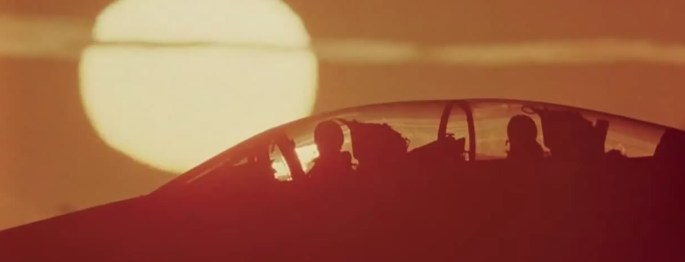
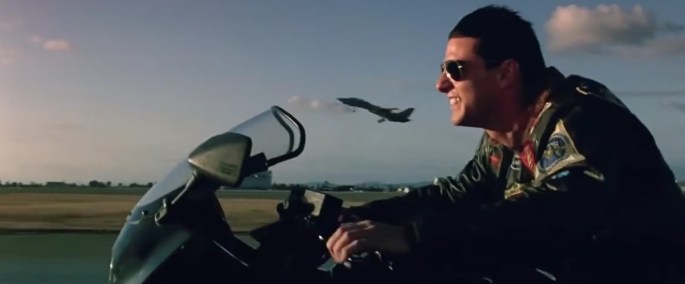
At this point in our culture, it’s nearly impossible to discuss Top Gun with any amount of clear-eyed objectivity. The film is a milestone for all of its key contributors, a pop culture touchstone for multiple generations of people, and an often imitated and parodied relic from a very specific time and place in cinematic history. For director Tony Scott, it was his early-career masterpiece, the film that announced an exciting new voice in commercial cinema while showcasing his slippery-slick yet still gritty visual aesthetic, which would come to dominate the action genre for decades. It’s also the film that got him out of director’s jail after the critical and box office failure of his artsy debut, The Hunger, which is now of course a premiere cult classic. For producers Don Simpson and Jerry Bruckheimer, it was the movie that truly solidified them as the uber-showmen of the 1980’s, with Flashdance and Beverly Hills Cop arriving before and Beverly Hills Cop 2 and Days of Thunder immediately following.

10

As legend has it, Simpson and Bruckheimer were in their office, and an issue of California magazine was sitting on their desk, featuring a clean cut fighter pilot standing next to a jet. And with that evocative and elaborate “Nothing On Earth Comes Close” Saab commercial that Scott had made in the early 80’s continually turning heads (the one that showed a Saab 37 Viggen fighter jet going neck and neck with the Saab 900), it was clear that it would be a match made in heaven between the producers and their ace in the hole. And for star Tom Cruise, it was his first runaway blockbuster sensation, his first taste of global superstardom, and the film that made him a house-hold name. Top Gun is a product of its time in a way that so few films can claim to be, and over the years, has come to mean so many different things to so many different people, which is why it remains imminently watchable 30 years later.

2

Released in the summer of 1986, Top Gun played on the still lingering fears of war with the Soviets, and carried a rah-rah, jingoistic spirit that seems laughable to some nowadays, but probably felt very honest at the time of release. It feels pointless to rehash the plot of Top Gun – anybody with a pulse has seen it and knows all about Maverick (Cruise, in all his perfect-grinning excellence) and Goose (Anthony Edwards, everyone’s best buddy) and Iceman and Jester and Charlie and the rest of the crew. The scenes on the ground carry an earnestness to them, playing off of melodrama (the mysterious death of Maverick’s father, himself a legendary pilot; workplace romance; the death of a best friend), but the film truly comes alive when it’s up in the sky, as Jeffrey Kimball’s gorgeous, smoky, 2.40:1 anamorphic widescreen cinematography is still a lesson in mid-80’s perfection. Every single shot in this film is spectacular, whether the moment is big or small, with cool blues and sunset reds dominating the horizon. It can’t be understated how influential the look and feel of Top Gun would become for so many films and filmmakers to follow in the years, and whether or not this style is your favorite or not, it’s undeniably exciting on a visceral and stylistic level, with an emphasis on the balance of light, visual minutiae, and overall atmospheric texture. It’s commercial cinema without a shred of pretension, smartly focusing on the drama and action inherent to the story’s scope, and all balanced out by Harold Faltermeyer’s propulsive, oh-so-80’s musical score and the lightning quick editing patterns of Billy Weber and Chris Lebenzon. And when you add in the ridiculously quotable one-liners conjured up by co-screenwriters Jim Cash and Jack Epps, Jr. (who knew that rubber dog shit originates from Hong Kong?) and the high-flying airborne camerawork which is still unmatched to this day, then it’s no wonder that the film plays every Sunday on TNT and has become one of the most influential and iconic movies ever made, with so many other movies attempting, and failing, to ape its success.

3

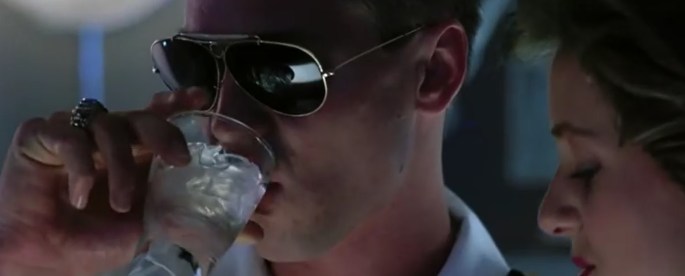
On a thematic level, the film is all about machismo (a major theme in all of Scott’s work), and how men deal with expectations, loss, tragedy, acceptance, and success. Those classic scenes in the shower (or during a particular game of beach volleyball…) seem homoerotic in hindsight (and maybe they did upon first glance…), but what they’re really about is men trying to one up each other, trying to figure out how to best your opponent, and always remembering that there are no points for second place. To say that Top Gun is one of the most macho movies ever made would be understatement; you can practically smell the testosterone on the set. I’ve often wondered if PA’s were kept solely for the purpose of spraying down the actors with water in order to simulate excessive sweat, because everyone is glistening in this film. Top Gun also expertly understands male camaraderie and friendship, and how people are willing to go the extra step for those that they care about, both professionally and personally. Kelly McGillis and Meg Ryan were the objects of affection for Cruise and Edwards respectively, while the absurdly masculine supporting cast included Val Kilmer, Anthony Edwards, Tom Skerritt, Michael Ironside, John Stockwell, Clarence Gilyard, Jr., Whip Hubley, James Tolkan(!), Barry Tubb, Rick Rossovich, Duke Stroud, Tim Robbins, and Adrian Pasdar.

5

Shot for a now hard to believe $15 million, Top Gun opened on roughly 1100 screens nationwide, grossing $8,193,052 on its opening weekend. The film would eventually gross $176 million in the U.S. and another $177 million overseas, truly cementing the Simpson-Bruckheimer brand after the similar worldwide gross two years previous from Beverly Hills Cop. Top Gun would also break every single VHS sales record, as it was one of the first movies made available to the public at the $20 price point. Scott would continue his legendary streak with the two producers in the following years with the equally huge Beverly Hills Cop 2, and then in 1990 with the summer hit Days of Thunder, which while not becoming the blockbuster some might have thought, is still a splendid piece of action moviemaking that was all accomplished with zero CGI and some of the greatest racing footage ever put on film. But Top Gun would be the film that all of the creative parties would become remembered for, what with its sleek visual design, tough guy banter, love story for the ladies, and the dynamic aerial combat footage that still pops off the screen to this day, especially when viewed in the Blu-ray format. In 2015, the United States Library of Congress added the film to their preservation vaults, deeming it “culturally, historically, or aesthetically significant.” And if you’re not a fan of Top Gun, then just remember, the plaque for the alternates is in the ladies’ room.

11


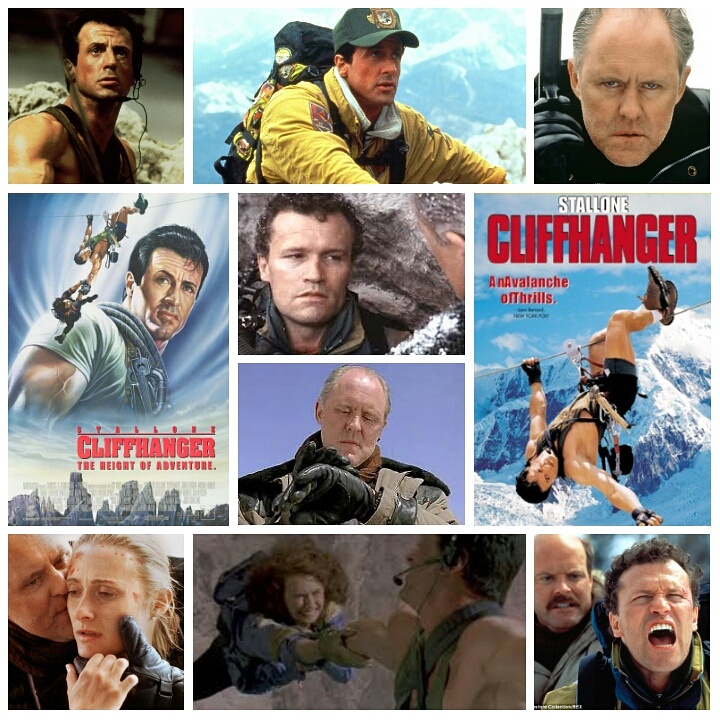
Renny Harlin’s Cliffhanger: A Review by Nate Hill

image

Renny Harlin’s Cliffhanger is to this day one the best and most exhilarating action films of the 1990’s. It’s big, bold and full of protein for lovers oft the genre. From the lively villain to the unbelievable stunts to the set pieces, it’s a tough package to beat. A stunning, vertigo inducing opener set high atop a snowy peak that ends in tragedy. A breathtaking airial heist carried out between two planes via cable wire. A whopper of a helicopter crash. Countless bone snapping, visceral hand to hand combat scenes. The list goes on. Sylvester Stallone puts his physique to great use as Gabe Walker, a rock climbing mountaineer guide who is accidentally responsible for the falling death of his best friend’s girlfriend. His buddy Hal (Michael Rooker) blames him no end, and he leaves in personal disgrace. Elsewhere, ruthless backstabbing psychopath Eric Qualen,  (John Lithgow) leads a team of dangerous mercenaries through aforementioned heist, plundering millions from a US treasury department plane and disappearing into the snowy desolation. Soon they come across Hal and a group of people touring the region, who are soon hostages. Word somehow gets out to Stallone and he’s back in business, out for redemption and then chance to brutally dispatch this gang of snow pirates. The action, refreshingly absent of digital gimmicks, packs one hell of a punch. Every fight scene feels breathless, dangerous and desperate. Every blow is thunderously felt, courtesy of director Harlin’s commitment to his work and the efforts of a stellar stunt team. Stallone isna beast and I forget that every time I haven’t seen him in a while. He’s almost as big as the mountains he scales here and each and every bad guy damn well finds this out. Rooker is as intense as he always is, love the guy. Lithgow is a freaking villain for the ages, in a role intended first for David Bowie, then Christopher Walken. I’m glad the ball ended up in his court, because he subsequently knocks it back out of the park with his cold blooded, deliciously evil performance. He makes Qualen so scary and merciless that even his own people get the jitters around him. There’s also work from Rex Linn, Caroline Goodall, Craig Fairbrass, Max Perlich, Paul Winfield, Ralph Waite, Don S. Davis, Bruce McGill and Janine Turner. This is just one of the finest action movies to ever swing into theatres or onto dvd. Brutal, scenic, adventurous, exciting, violent, snowy, just plain kick ass. If you don’t like this movie, you don’t like ice cream.