RENNY HARLIN’S CLIFFHANGER — A REVIEW BY NICK CLEMENT

cliffhanger_ver1

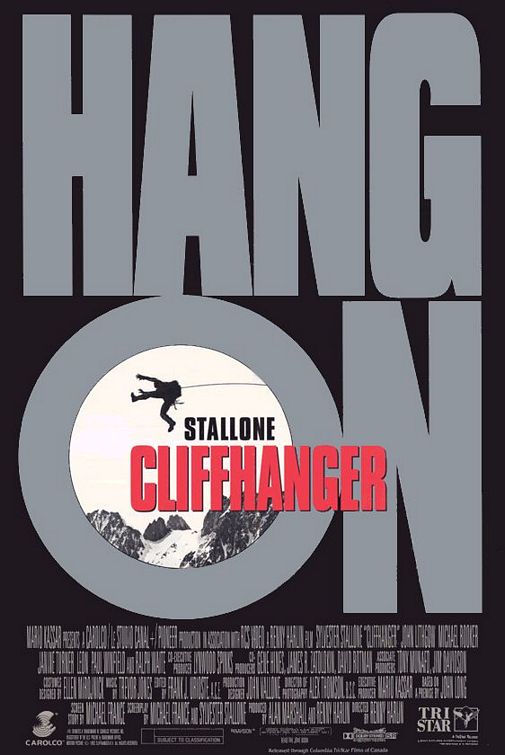
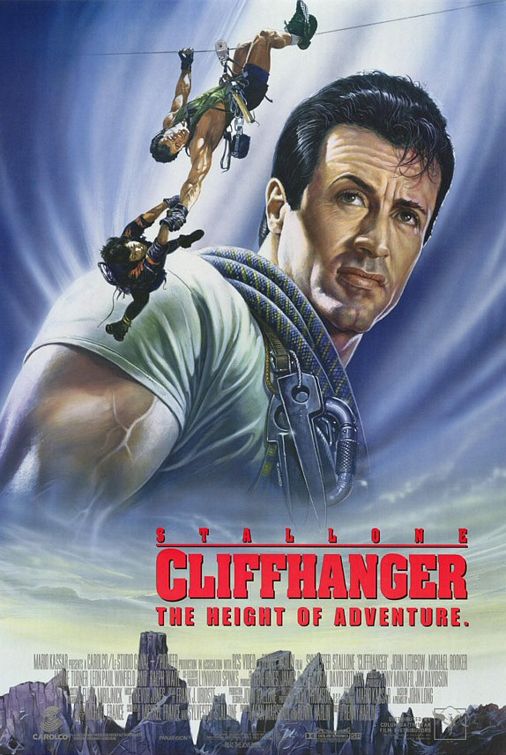
I can remember my father taking me to the cinema on opening weekend to see Cliffhanger back in the summer of 1993. I was 12 years old, and as one might imagine, totally blown away by what I witnessed. Other than Terminator 2, I don’t think I had ever seen an action picture as elaborate as Cliffhanger on the big screen at that point in my life, so it was very easy to be totally consumed and then become obsessed with this totally thrilling action picture. Directed with extreme intensity by action maestro Renny Harlin and lavishly photographed in glorious 2.35:1 anamorphic widescreen by the late, great Alex Thomson, the film would become a massive blockbuster for superstar Sylvester Stallone, who delivered one of his better action movie performances in this chilly, violent, over the top spectacle. Crafted in the final moments of the pre-CGI onslaught that awaited most major action films, this is one of the most believably realized mountain climbing films, even if purists have long claimed numerous technical inaccuracies with the mountaineering sequences. But regardless, there is a stunning level of beauty in so many individual shots, John Lithgow gave a sensational turn as a truly evil villain, and the supporting cast of 90’s familiar faces was packed to the gills, featuring Janine Turner, Michael Rooker, Paul Winfield, Rex Linn, Craig Fairbrass, Leon Robinson, Denis Forest, Ralph Waite, Max Perlich, and Bruce McGill. Seriously – that cast is just ridiculous. The rousing musical score by Trevor Jones hit all of the heroically triumphant notes that one would expect from an actioner such as this, and Frank J. Urioste’s judicious editing kept a fast moving pace, never allowing the story’s momentum to slow for a moment. I’ve always loved this film as it has an R-rated integrity that feels mostly lost these days, with Stallone delivering a hugely sympathetic performance, even hitting some dramatic grace notes in the first act. Thankfully, no sequel or remake has been attempted. This one still holds up as supreme entertainment for the genre.

cliffhanger_ver2


RUMBLE FISH – A REVIEW BY J.D. LAFRANCE

20150410-6

History remembers Francis Ford Coppola’s, Rumble Fish (1983) as a film that was booed by its audience when it debuted at the New York Film Festival and in turn was viciously crucified by North American critics upon general release. It’s too bad because it is such a dreamy, atmospheric film that works on so many levels. It is also Coppola’s most personal and experimental project — on par with the likes of Apocalypse Now (1979). From the epic grandeur of The Godfather films to the excessive Bram Stoker’s Dracula (1992), Coppola has pushed the boundaries, both on-screen and off. He has almost gone insane, contemplated suicide, and faced bankruptcy on numerous occasions, but he always bounces back with another intriguing feature that is visually stunning to watch. And yet, Rumble Fish curiously remains one of Coppola’s often overlooked films. This may be due to the fact that it refuses to conform to mainstream tastes and stubbornly challenges the Hollywood system with its moody black and white cinematography and non-narrative approach.

Right from the first image Rumble Fish is a film that exudes style and ambiance. It opens on a beautiful shot of wispy clouds rushing overhead, captured via time lapse photography to the experimental, percussive soundtrack that envelopes the whole film. This creates the feeling of not only time running out, but also a sense of timelessness. Adapted from an S.E. Hinton novel of the same name, Rumble Fish explores the disintegrating relationship between two brothers, Rusty James (Matt Dillon) and the Motorcycle Boy (Mickey Rourke). The older brother derives his name from his passion: stealing motorcycles for joyrides. The film begins with the Motorcycle Boy absent, perhaps gone for good, while Rusty James tries to live up to his brother’s reputation: to act like him, to look like him, and, ultimately, to be him. Rusty James’ brother is viewed as a legend in the town as he was the first leader of a gang and also responsible for their demise.

Much like Harry Lime in The Third Man (1949), the Motorcycle Boy is initially physically absent, but his presence is felt everywhere — from the shots of graffiti on walls and signs that read, “The Motorcycle Boy Reigns,” to the numerous times he is referred to by characters. This quickly establishes him as a figure of mythic proportions. When the Motorcycle Boy finally does appear — during a fight between Rusty James and local tough, Biff Wilcox (Glenn Withrow) — it is a dramatic entrance on a motorcycle like Marlon Brando in The Wild One (1953). This appearance marks a significant change in the film. We begin to see the world through the eyes of the Motorcycle Boy, almost as if the whole film is taking place in his head.

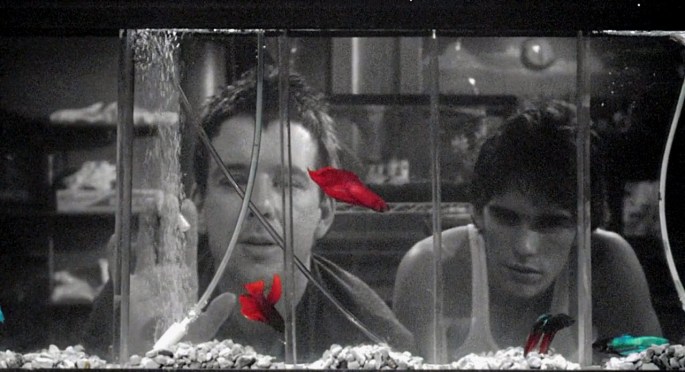
Consequently, Rumble Fish is shot entirely in black and white to simulate his color blindness. We even begin to hear the world like he does: voices sound echoey, disembodied, with his own heartbeat threatening to drown everything else out. It is this existential worldview that makes the Motorcycle Boy a tragic character. The rest of the film explores his attempts to come to grips with this outlook and his relationship with Rusty James, who views him as a hero — a label that the older sibling has never been able to accept.

Coppola wrote the screenplay for Rumble Fish with Hinton on his days off from shooting The Outsiders (1982). As the filmmaker said in an interview, “the idea was [that] The Outsiders would be made very much in the style of that book, which was written by a 16-year old girl, and would be lyrical and poetical, very simple, sort of classic. The other one, however, Rumble Fish, which she wrote years later, was more adult, kind of Camus for teenagers, this existential story.” Coppola even went so far as to make the films back-to-back, retaining much of the same cast and crew. Warner Brothers was not happy with an early cut of The Outsiders and chose not to distribute Rumble Fish. Despite a lack of financing, Coppola completely recorded the film on video during two weeks of rehearsals in a former school gymnasium, encouraging his young cast to improvise.

Actual filming began on July 12, 1982 on many of the same Tulsa, Oklahoma sets used in The Outsiders. The attraction to Rumble Fish, for Coppola, was the “strong personal identification” he had with the subject matter: a young brother hero-worships his older, intellectually superior sibling. Coppola realized that the relationship between Rusty James and the Motorcycle Boy mirrored his own connection to his brother, August. It was an older, more experienced August who introduced Francis to film and literature. Coppola always felt like he was living in the shadow of his brother and saw the film as a “kind of exorcism, or purgation” of this relationship.

As always, Coppola assembled an impressive ensemble cast for his film. From The Outsiders, he kept Matt Dillon, Diane Lane, Glenn Withrow, William Smith, and Tom Waits, while casting actors like Mickey Rourke and Vincent Spano who were overlooked for roles in the film for one reason or another. They fill out their roles admirably, but Mickey Rourke in particular, is mesmerizing as the Motorcycle Boy.

To get Rourke into the mindset of his character, Coppola gave him some books written by Albert Camus and a biography of Napoleon. “There’s a scene in there when I’m walking down the bridge with Matt; and I’d try and stylise my character as if he was Napoleon,” the actor remembers. The Motorcycle Boy’s look was patterned after Camus complete with trademark cigarette dangling out of the corner of his mouth — taken from a photograph of the author that Rourke used as a visual handle. He portrays the character as a calm, low key figure that seems to be constantly distracted as if he is in another world or reality. Rourke “Methodically” conceived the Motorcycle Boy as being “an actor who no longer finds his work interesting.” To this end, he uses subtle, little movements and often cryptic phrases that only he seems to understand.

This feeling is further enforced by the two brothers’ alcoholic father, played brilliantly by Dennis Hopper in a surprisingly low key performance. He describes the Motorcycle Boy perfectly when he says that “he is merely miscast in a play. He was born in the wrong era, on the wrong side of the river. With the ability to be able to do anything that he wants to do and finding nothing that he wants to do.” Rourke’s Motorcycle Boy is almost embarrassed by the myth that surrounds him, that threatens to drown him. He openly rejects it when he says, “I’m tired of all that Robin Hood, Pied Piper bullshit. You know, I’d just as sooner stay a neighborhood novelty if it’s all the same to you… If you’re gonna lead people, you have to have somewhere to go.” It is this reluctance to embrace his legendary reputation that gives the Motorcycle Boy an element of humanity that was not in the novel.

Not only did Coppola assemble a talented cast of actors, but he also gathered an impressive crew to create the images and the proper mood to compliment them. The striking black and white photography of the film’s cinematographer, Stephen Burum, lies in two main sources: the films of Orson Welles and German cinema of the 1920s. Welles’ influence is particularly apparent in one scene where the Motorcycle Boy and Steve bring a wounded Rusty James home. While Steve and Rusty James talk in the background, the Motorcycle Boy looms into a close-up, as if the lens were a mirror in which he was admiring himself. He is clearly a character who suffers from what one critic called, “fatal narcissism,” a trait common in many of Welles’ films. This deep focus shot (a favorite of Welles) shows how far removed the Motorcycle Boy is from his brother and from everyone. He is like a mirror, impenetrable and impossible to read as Steve observes, “I never know what he’s thinking.” This scene harkens back to Welles’ masterpiece, Citizen Kane (1941), which used the deep focus technique to give characters that look of “fatal narcissism,” to live a doomed existence.

Before filming started, Coppola ran regular screenings of old films during the evenings to familiarize the cast and in particular, the crew with his visual concept for Rumble Fish. Most notably, Coppola showed Anatole Litvak’s Decision Before Dawn (1951), the inspiration for the film’s smoky look, and Robert Wiene’s Cabinet of Dr. Caligari (1919) which became Rumble Fish‘s stylistic prototype. Coppola’s extensive use of shadows (some were painted on alley walls for proper effect), oblique angles, exaggerated compositions, and an abundance of smoke and fog are all hallmarks of these German Expressionist films. Godfrey Reggio’s Koyaanisqatsi (1983), shot mainly in time-lapse photography, motivated Coppola to use this technique to animate the sky in his own film. The result is an often surreal world where time seems to follow its own rules.

Coppola envisioned a largely experimental score to compliment his images. He began to devise a mainly percussive soundtrack to symbolize the idea of time running out. As Coppola worked on it, he realized that he needed help from a professional musician. And so he asked Stewart Copeland, drummer of the musical group The Police, to improvise a rhythm track. Coppola soon realized that Copeland was a far superior composer and let him take over. The musician proceeded to record street sounds of Tulsa and mixed them into the soundtrack with the use of a Musync, a new device at the time, that recorded film, frame by frame on videotape with the image on top, the dialogue in the middle, and the musical staves on the bottom so that it matched the images perfectly. One only has to see Copeland’s evocative score matched with the film’s exquisite imagery to realize how well the musician understood Coppola’s intentions.

Rumble Fish is a rare example of a gathering of several talented artists whose collaboration under the guiding vision of a filmmaker results in a unique work of art. Why then, did the film receive such scathing reviews when it was released? The film alienated former head of production for Paramount, Robert Evans, who “remembers being shaken by how far Coppola had strayed from Hollywood. Evans says, ‘I was scared. I couldn’t understand any of it.'” Rumble Fish’s failure may have been due to the climate of American cinema at the time. The film was released in the early 1980s when art films and independent cinema were not as widely celebrated as they are now. Nobody was ready for a stylish black and white film with few big name stars and little sign of mainstream appeal. American critics and studio executives, on the whole, just did not “get it.”

It is a marvel that Rumble Fish was even made at all. Only Francis Ford Coppola’s unwavering determination and his loyal cast and crew could have made such a project possible. He had the clout and the resources to assemble such a collection of talented people to create a challenging film that acts as the cinematic equivalent of the novel by capturing its mood and tone perfectly. Every scene is filled with dreamy imagery that never gets too abstract but, instead, draws the viewer into this strange world. Coppola uses color to emphasize certain images, like the Siamese fighting fish in the pet store — some of the only color in the film — to create additional layers in this complex, detailed world.

With a few odd exceptions, Coppola has been content to merely rest on his laurels and reputation and crank out safe, formulaic films that lack any real substance or passion. Perhaps Coppola is tired from the numerous battles he has had with Hollywood studios over the years and simply does not have the energy to make the daringly ambitious films that he made during the ’70s and early ’80s. It is too bad, because Rumble Fish shows so much promise and creativity. Tossed off as a self-conscious art film, now that some time has passed, I see it as a movie clearly ahead of its time: a stylish masterpiece that is obsessed with the notion of time, loyalty, and family. Perhaps the most distinctive feature of Coppola’s film is that it presents a world that refers to the past, present, and future while remaining timeless in nature.

MILOS FORMAN’S ONE FLEW OVER THE CUCKOO’S NEST — A REVIEW BY NICK CLEMENT

cuckoos nest

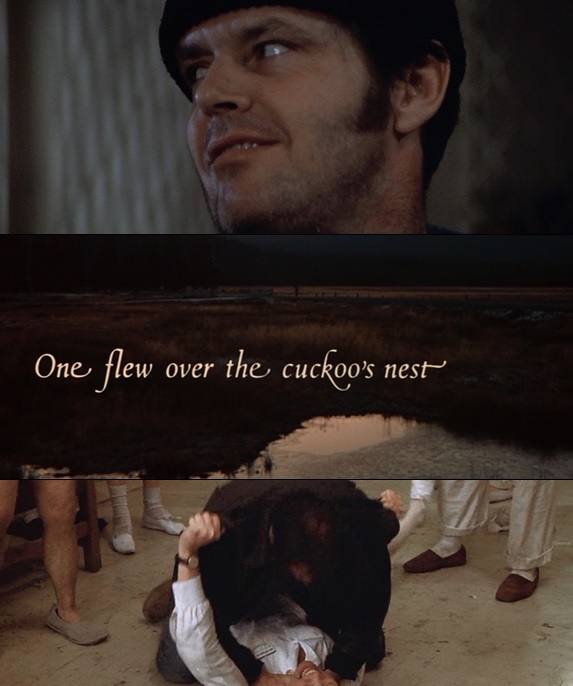
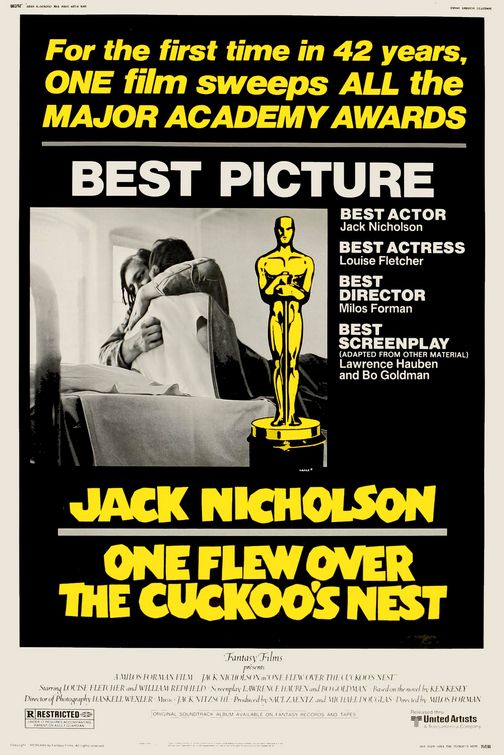
In cinema, as in life, there are absolutes. Up is up, down is down, water is wet, and One Flew Over the Cuckoo’s Nest is a masterpiece. Released in 1975 and directed with consummate intelligence and intense vigor by the supremely talented filmmaker Miloš Forman, the film would become, at the time, only the second motion picture to win all five major Academy Awards (Best Picture, Actor in Lead Role, Actress in Lead Role, Director, and Screenplay). It Happened One Night had accomplished this in 1934, and The Silence of the Lambs would win the five biggies in 1991. One Flew Over the Cuckoo’s Nest is enduring cinema, and it’s easy to see why. There isn’t one bad scene, it’s a work that will mean one thing during one viewing and something totally different the next, and the narrative moves with a graceful sense of humanity while still displaying some of the darkest moments that a human being can experience.

4

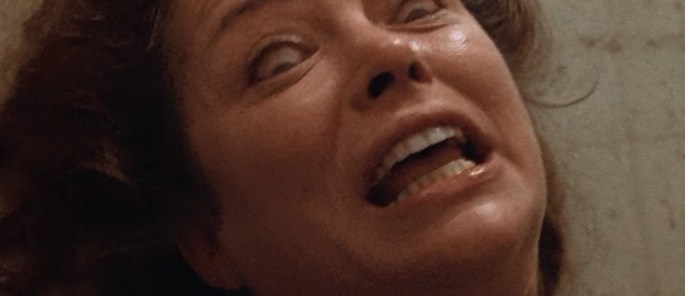
Based on Ken Kesey’s classic 1962 novel, the film contains one of the premiere screen performances of all time from Jack Nicholson. Simply put, there can be only ONE Jack Nicholson, and his performances in the 60’s and 70’s were some of the most provocative and vital pieces of acting that have ever been dished out. He’s an emotional powerhouse in this film, and he was surrounded by one of the best ensembles imaginable, while going head to head with Louise Fletcher as the spiteful Nurse Ratched. Danny Devito, Christopher Lloyd, Brad Dourif, William Redfield, Dean Brooks, Scatman Crothers, Marya Small, William Duell, Sydney Lassick, and the iconic Will Sampson as “Chief” all registered with deeply memorable performances, solidifying the entire picture around Nicholson’s bravura turn.

one_flew_over_the_cuckoos_nest_ver2

There’s a stinging urgency to this film, made palpable by Forman’s unflinching direction, and the carefully measured screenplay by Bo Goldman and Lawrence Hauben, with Jack Nitzsche’s moody, sometimes quirky score bouncing around in the background. Controversially, cinematographer Haskell Wexler was fired during production, with Bill Butler serving as his replacement; both men would be Oscar nominated for their contributions, though Wexler had gone on record before his death stating that almost the entire film had been lensed by him. Shot for $3 million and grossing $110 million, it’s a film that perfectly encapsulates the time it was made in, and yet transcends any notion of feeling dated or socially irrelevant. Draining, amazing, and thought provoking in ways that few films can ever match, One Flew Over the Cuckoo’s Nest is one of those films that will be discussed and studied for years. It’s a cinematic artifact of the highest order.

cuckoos nest

44 Inch Chest: A Review by Nate Hill

image

44 Inch Chest is packed full of bloated, preening masculinity, cold hard chauvinism and dense, wordy exchanges that seem pulled right off the stage, an intense bit of British pseudo-gangster quirk with two writers who seem intent on heightening every syllable to near surreal levels of style. The same scribes are responsible for the glorious verbal stew that can be found in Paul McGuigan’s brutal Gangster No. 1 as well as Sexy Beast, and while the level of viciousness here is left almost entirely to the spoken word alone, the elliptical sting of their script still hits home, and even ramps up a bit from those films. A mopey, consistently weepy Ray Winstone stars as boorish Colin Diamond, an gent whose wife (Joanne Whalley Kilmer) has been caught in an affair with a chiseled french pretty boy (Melvil Poupoud). He resorts to a melancholy, comatose state as his perceived manliness visibly circles the drain. His circle of friends arrives, each with their own flamboyant ideas for resolving the situation. Velvety Meredith (Ian McShane, cool as a cucumber) looks on in snooty amusement. Violent guttersnipe Mal (Stephen Dillane, replacing Tim Roth) has the brawn but neither the brains nor ambition to act. Archie (Tom Wilkinson) is the bewildered everyman. Old Man Peanut (a fire and brimstone John Hurt who devours the script like a lion feasting on a gazelle) is a bible thumping, crusty old pot of fury who suggests that wifey should be stoned to death for her indecency and betrayal. They spend the better part of the film pontificating like a babbling senate, whilst Winstone languishes in despair. One wonders what the point of it all is and where it’s going, until we arrive at an oddly satisfying third act that somehow negates almost everything we’ve seen before it. Strangely enough, though, it works, if only to give us something we’ve never quite seen before, pulling the rug of genre convention out from under us and giving us a piece that almost could resemble a spoof of other works, if it weren’t so damned straight faced and persistent in its execution. In any case, I could watch this group of actors assemble ikea furniture and it would still be transfixing. It’s just a room full of talent shooting the shit for most of the running time, and in a genre where one can scarcely here the performers talk over the gunfire and cheekily referential soundtrack a lot of the time, I’ll damn well take something a bit more paced, quiet and stately. Winstone smears over his usual seething anger with a morose depression would almost be endearing if it weren’t so pathetic. Wilkinson brings his usual studious nature. McShane is pure class in anything (even a few B movies I’m sure he’d love to forget) and he swaggers through this one like a regal peacock, getting some of the best lines to chew on. Dillane is detached and indifferently cruel, with seldom a word uttered, his lack of mannerism contrasted by the vibrant animosity of his three peers. Hurt is pure gold as the closest the film comes to caricature, just a vile old coot who belongs in the loony bin raving to the walls about awful things that happened ‘back in his day’. Different is the key word for this one, and one might be easily fooled by the poster and synopses into assuming this is a revenge flick populated by action and violence. Not so much. Although a lot of the time that is my cup of tea, it’s nice to get a welcome deviation once in a while, and this one is a real treat.

THE AVENGERS: A Retrospective by Joel Copling

Rating in Stars: *** (out of ****)
Cast: Robert Downey Jr., Chris Evans, Mark Ruffalo, Chris Hemsworth, Scarlett Johansson
Director: Joss Whedon
MPAA Rating: PG-13 (for intense sequences of sci-fi violence and action throughout, and a mild drug reference)
Running Time: 2:22
Release Date: 05/04/12

The Avengers is simultaneously an exercise in the same formula that plagued all but one of the films that built to it in the Marvel Cinematic Universe and a relief from such a burden. By allowing the audience both to see the heroes’ interactions when such sizable egos are forced into getting along (which doesn’t, it turns out, always work) and then to see them in their element, writer/director Joss Whedon is open to explore their personalities. That’s the strongest element of watching what amounts a toy store exploding onscreen. It is also, admittedly, limited by that formula: We are re-introduced to our favorite superheroes, they are united against a foe, and they fight for the world’s sake. By the time we get to that last one, it’s almost inevitably the least interesting of them.

Following a prologue in which that foe, who has a more-than-incidental connection to one of our heroes, arrives on Earth, causing S.H.I.E.L.D. director Nick Fury (Samuel L. Jackson) to unite them, we find ourselves back together with those superheroes. Tony Stark (Robert Downey Jr.), aka Iron Man, has stopped the process in his miniaturized, protective arc reactor from killing him and become the leading name in clean energy in the process. Bruce Banner (Mark Ruffalo, taking over the role from Edward Norton), aka the Hulk, is in hiding and must be found by Natasha Romanoff (Scarlett Johansson), aka Black Widow.

Those are the heroes who serve the most significant purpose to this narrative, which finds them each facing Loki (Tom Hiddleston, who is the unexpected highlight of a starry cast), the trickster from the realm of Jotunheim who has been searching for the Tesseract, the all-powerful artifact that was the MacGuffin of the story that told of Steve Rogers’s/Captain America’s (Chris Evans) origin before shifting him seventy years into the future (He’s readjusting here, though in a half-hearted sort of way). A new hero, Clint Barton (Jeremy Renner), aka Hawkeye, is introduced and promptly possessed by Loki (He is then defined almost exclusively by his skills with a creative quiver of arrows). Thor (Chris Hemsworth), the Asgardian, is mostly here to confront his half-brother, who has aligned himself with mysterious forces (whom we do not properly meet until a teasing, mid-credits sequence–and even then we do not properly meet them) elsewhere in the universe and been afforded an army of aliens with which to do battle.

Before that final battle, though, are the film’s best segments, in which each hero comes up against another’s ideology. Tony sees Steve as a relic, constantly mocks his old-fashioned nature, and wonders if this is really the guy his dad went on about (“You might have missed a lot, you know, when you were a Capsicle,” he says with dripping sarcasm). Steve sees Tony as a cynical byproduct of his own egotism (“Take away the suit, and what are you,” he asks; “Genius, billionaire, playboy philanthropist” is Tony’s unabashed answer). Thor’s internal battle is limited to his interactions with Loki, which is as it should be, Natasha wants her violent past as a KGB agent erased while juggling conflicting emotions about Clint’s capture, and Bruce lets everyone in on the secret new way he turns into a big, green rage monster with no opinion on any of it.

The second half is entirely comprised with a duet of extended action set-pieces. In the first, the helicarrier that acts as S.H.I.E.L.D.’s headquarters (wherein Clark Gregg returns as the straitlaced Agent Coulson and Cobie Smulders appears as fleet-footed agent Maria Hill) is in freefall as a result of Loki’s attempt to escape (Our heroes’ egos are put to the test in a way that dissipates as the sequence goes on and a camaraderie is built). In the second, the army of aliens is unleashed upon New York City, and the resulting fight is a bit generic (a lot of running and jumping and soaring through the air), if well-staged by Whedon and cinematographer Seamus McGarvey (The Hulk in particular shines in this sequence, getting neither one nor two but three punch lines as the end of hero shots to call his own). The Avengers verges on being a skeleton of its potential, but its infectious energy is where its considerable, if relative, success lies.

GUARDIANS OF THE GALAXY – A REVIEW BY J.D. LAFRANCE

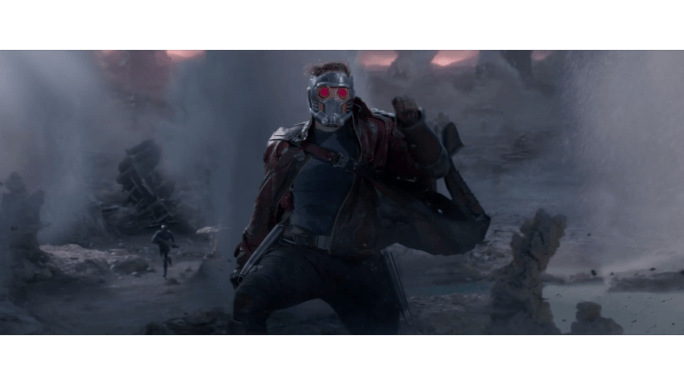
Image19Much ado has been made about the huge risk Marvel Studios took adapting Guardians of the Galaxy (2014) for the big screen. Since The Avengers (2012), they’ve been content cranking out sequels to their mega-successful franchises of Iron Man, Thor and Captain America. Guardians would be a real test of the Marvel brand with most industry insiders forecasting a modest success and a few predicting it to be the studio’s first big flop.

Based on a fairly obscure comic book set in a galaxy far, far away featuring the misadventures of a ragtag group of aliens led by a human orphaned from Earth, Guardians of the Galaxy enjoyed a resurgence in 2008 but still lacked the name recognition of the aforementioned superheroes. Furthermore, it was to be co-written and directed by James Gunn, the B-movie maverick responsible for modern cult classics like Slither (2006) and Super (2010), starring up and comers like Chris Pratt, Zoe Saldana and professional wrestler Dave Bautista. The two biggest movie stars – Bradley Cooper and Vin Diesel – would not actually be appearing on-screen, instead providing voices for completely computer generated characters. Marvel’s canny and pervasive marketing blitzkrieg paid off. Guardians smashed opening weekend records for August.

We first meet Peter Quill as an eight-year-old boy losing his mother to cancer only to be subsequently abducted by a group of notorious space pirates led by a blue-skinned bandit known as Yondu Udonta (Michael Rooker). They raise the young boy to be a smuggler and an outlaw a la Han Solo complete with the self-applied moniker Star-Lord (Chris Pratt). He steals a mysterious orb and plans to sell it on the Nova Corps homeworld Xandar, ripping off Yondu in the process, which results in a hefty bounty being placed on his head.

Little does Quill know that this theft has caught the attention of several interested parties: Groot (voiced by Vin Diesel) and Rocket Raccoon (voiced by Bradley Cooper), a mercenary duo, and Ronan the Accuser (Lee Pace), a powerful Kree alien who wants the orb so that it can be handed over to Thanos (Josh Brolin), an even more powerful being last seen at the end credits of The Avengers, in exchange for destroying Xandar, his sworn enemies. To this end, Ronan sends Gamora (Zoe Saldana), a deadly assassin, to retrieve the orb.

However, Quill when crosses paths with Groot, Rocket and Gamora, the resulting chaos has them arrested by the Nova Corps and thrown into an outer space prison known as Kyln. It is here that they meet Drax the Destroyer (Dave Bautista), a warrior with a thirst for revenge on Ronan for killing his family. They form an uneasy alliance and break out of prison to sell the orb with Yondu, the Nova Corps, and Ronan and his trusted lieutenant Nebula (Karen Gillan) in hot pursuit.

With this film, Parks and Recreation’s Chris Pratt becomes a bonafide action star, deftly blending amusing quips with heroic feats. He does a nice job of also portraying Peter Quill as a man haunted by his past, like many of his cohorts. All of the Guardians have lost deeply personal things in their lives and this is what unites them – that, and saving their own lives and, by default, the galaxy. Zoe Saldana gets to portray yet another alien, but instead of being buried under CGI as she was in Avatar (2009), the actress sports a striking green look and a fierce attitude to match. A pleasant surprise comes from the casting of WWE wrestler Dave Bautista who is excellent as Drax, the gruff warrior that tags along with the rest of these ne’er-do-wells. It is a lot of fun to see this athlete bounce off of the other actors and who more than holds his own.

If Quill provides the film its heart, then Rocket provides the bulk of its humor, stealing almost every scene he’s in by not just getting to spout the bulk of the film’s funniest lines, but also the impressive CGI that brings him vividly to life so that he actually emotes convincingly. Special effects technology has finally caught up to Groot and Rocket, creating expressive, fully realized characters. Early on, you stop thinking of them as CGI characters and look at them as part of the team thanks to the voice work of Vin Diesel and Bradley Cooper who give Groot and Rocket distinctive personalities.

The banter between Quill, Rocket, Gamora, Drax, and even Groot is a large part of the film’s charm. Quill is the wisecracking smartass while Gamora is all business, Rocket has anger management issues, Drax doesn’t understand metaphors (making for some pretty funny exchanges between him and Quill), and Groot just says, “I am Groot” at key moments. Credit should go to the witty screenplay by Gunn and Nicole Perlman that plants the seeds of jokes early in the film only for them to successfully pay off later on.

There is a fantastic mix of character moments and visual eye candy in Guardians of the Galaxy as Gunn immerses us in this strange galaxy and the colorful characters that populate it. His production team has crafted a textured, lived-in universe that is rich in detail and drenched in atmosphere. The film’s vibrant color scheme is complimented by a stellar soundtrack featuring songs from the 1970s and 1980s via a mixtape in Quill’s vintage Walkman that also acts a touchstone to his childhood on Earth and memories of his departed mother. As a result, the songs run the gamut from commenting humorously on the action (“Hooked on a Feeling” by Blue Swede) to also adding poignancy to more reflective moments (“I’m Not in Love” by 10cc) as well.

The only problem I have with Guardians of the Galaxy is that its villainous trio isn’t all that interesting. Ronan and Nebula look cool, but the former is yet another power-mad baddie that Marvel likes trotting out in all of its films with only a few notable exceptions, and the latter suffers from Darth Maul syndrome – a character with a badass reputation but with very little actual proof of such. It’s no surprise that Loki and the Winter Soldier are the Marvel Cinematic Universe’s strongest villains – they both have deeply personal and compelling motivations for what they are doing, which is something that is lacking with Ronan. As for Thanos, he only gets a cameo this time out with hints that he might figure more prominently in either Guardians 2 or The Avengers 3, but that’s a long way off. Fortunately, our heroes are so interesting and so much fun to watch that the lack of substantial villains is a minor quibble at best.

Gunn has pulled off a real coup with this film. He maintains a tricky balancing act of creating a gonzo space opera full of weird characters and loaded with a dense plot while somehow making it palatable for mainstream consumption without compromise. After the debacle that was the Star Wars prequels, cinema needed a good space opera to expunge the bad vibes of George Lucas’ movies. Only Joss Whedon’s Serenity (2005) bravely stepped up and showed everyone how do it right, but now Guardians of the Galaxy joins it by providing an alternative for those hungry for an entertaining science fiction film, fulfilling a need that Lucas was unable to with his prequels.

Guardians of the Galaxy is an unabashed science fiction film full of exotic aliens, power-hungry villains, and exciting spaceship battles with the fate of the entire galaxy at stake. It is also a funny film – as close as Marvel has come to making a full-on comedy. Their other films have had humor, but were largely dramatic in nature. Guardians inverts this formula so that it is largely comedic with dramatic moments and the result is another entertaining and engaging film from Marvel who continue their impressive winning streak. More importantly, this film opens up the Marvel Cinematic Universe in a big way by introducing an entire galaxy for its increasing number of characters to inhabit.

PTS PRESENTS: 15 QUESTIONS WITH FILMMAKER JOHN CROWLEY

Crowley Banner

John Crowley’s eclectic and underrated career has spanned various genres and mediums. After kicking off his creative talents via the stage, he’s since transitioned into feature films and television, with credits including Intermission, Is Anybody There?, Boy A, Closed Circuit, and most recently, the Oscar nominated Brooklyn. He contributed to True Detective Season 2, and his sterling theater resume includes such diverse works as A Behanding in Spokane, A Steady Rain, The Pillowman, MacBeth, Into the Woods, The Crucible, and The Master Builder. He recently chatted with Nick about his career, his Irish roots, the amazing success of Brooklyn, and what the future holds. We hope you enjoy this informative Q&A!

behanding

Thanks for chatting with me, John. Ok, off the top, I just want to tell you how much I loved A Behanding in Spokane! My wife and I went to NYC and sat in the second row early in the run and that was just a blast. What was it like when you read that play for the first time?

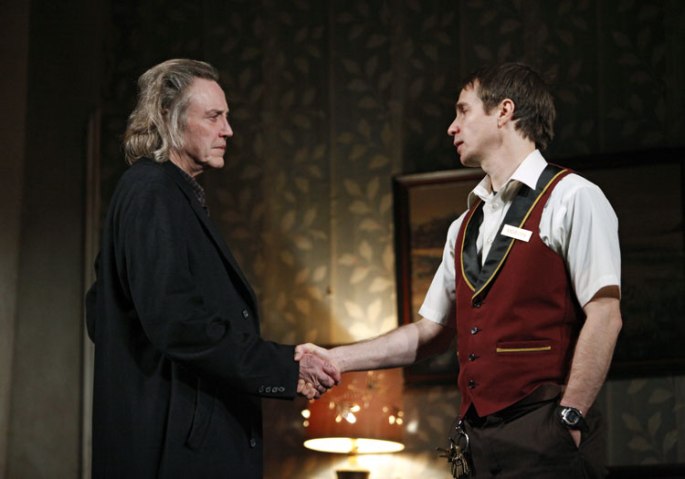
Thanks so much! Yeah, that was a surreal one. It was like nothing I had seen or heard before. Coming from the great Martin McDonagh, you know you’re in for a treat, something special every time. But this just had that special combination of humor and drama, with a sort of Tarantino-inspired sense of quirky violence. It was a tricky tone to pull off on stage, but I think we nailed it. Audiences really sparked to it.
walken

And what an amazing cast of actors you had to work with, that must’ve been a treat.

Yeah, we were blessed with some serious talent on that show, with Christopher Walken really running away with the entire piece. It was good and nasty fun.

crowley 2

How did you get your start in the film industry? Was it initially through the Irish film community?

Yeah, after starting in the theater, I moved into features and television, and yes, the Irish film world has been a big part of my understanding of the business and the artistic process. I’ve done projects like Intermission where we had an Irish crew and cast, and I’ve been able to do stuff like True Detective, this most recent season, which allowed me to expand a bit. I’ve done work in television in Europe as well.

intermission_ver2

I’ve long been a fan of Intermission, one of your early films with Colin Farrell. What was it like when you read that script?

Mark O’Rowe had really written something special, and I felt like it was a story that I knew exactly how to tell. It was an Irish production, and the energy was great, and I think we made a lasting piece that many people have found over time. Great cast of Irish actors, too.
Layout 1

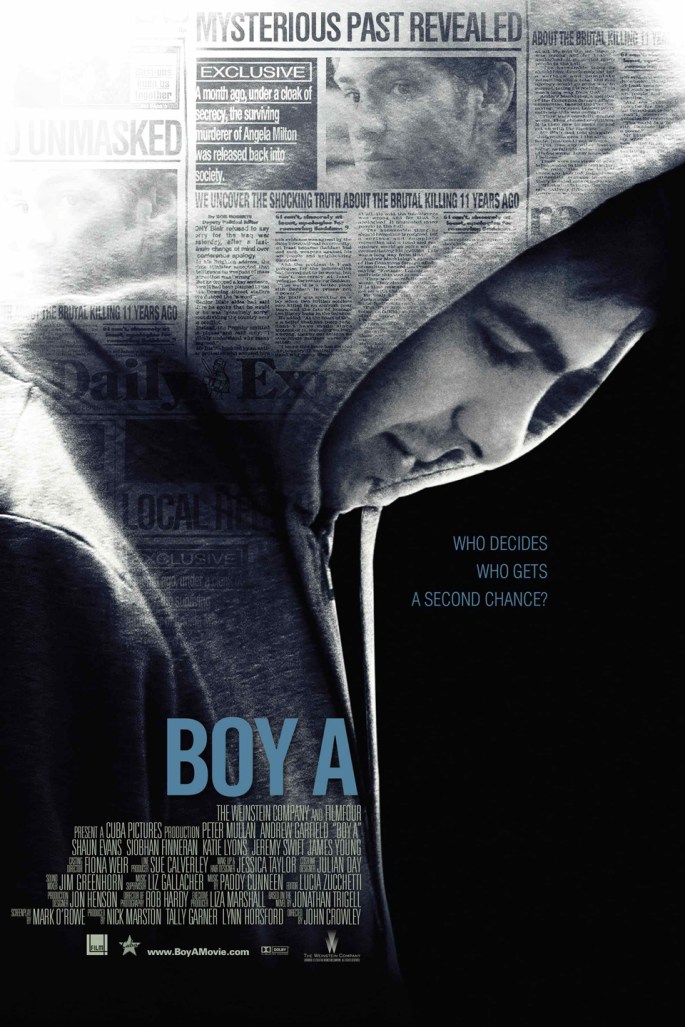
Boy-A. I want to tell you how brilliant I think that film is. It’s so brutal and honest. It’s one of those small gems that I tell everyone to see. How did that come about?

Thank you! Yeah, that was a challenging piece, Peter Mullan and Andrew Garfield both had heavy loads to carry, and they both did it with serious resolve, and without ever backing down to the material. Challenging stuff for sure, with a script that pulled no punches. That was an interesting project because of its gestation, how it was on television here in the UK and then the Weinstein brothers saw and it and got interested and put it out in a small number of theaters in America. It’s a hard-hitting piece that has thankfully found a passionate group of supporters.
brooklyn_xlg

How did you first get involved with Brooklyn?

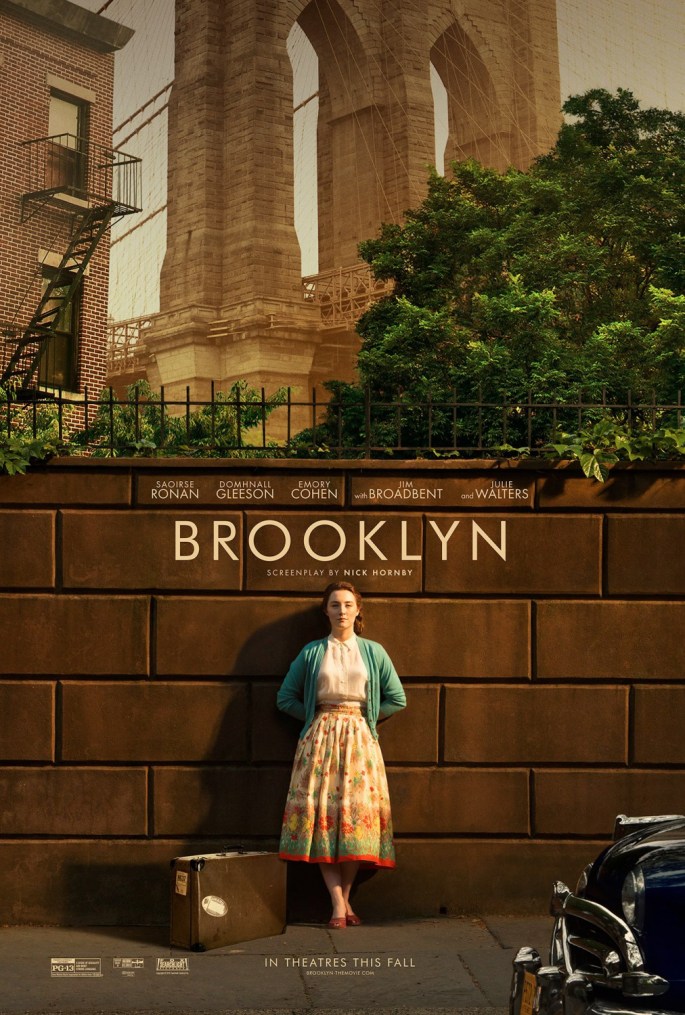
I had read the book for pleasure while working on the Broadway show A Behanding in Spokane and I immediately responded to it, in a very emotional way. However, the studios weren’t interested in making it, which presented some interesting challenges in getting it made. But people got it very quick with this project, or they just didn’t. It’s just not their business model, the studios, to make a film like Brooklyn. The financing came from a patchwork of sources, including Telefilm, The Irish Film Board, BBC, BFI, with some Canadian money in there, too. It was a true and classic independent production.

brooklyn on set

Were you nervous about how an intimate project like Brooklyn might be perceived by audiences who are growing more and more accustomed to CGI spectacle and bombast?

Nobody trusted this project except for a core group of people. I knew what we had because I had read the book and Nick Hornby’s wonderful script. It was a story I felt I could do justice. There was never a doubt in my mind. And audiences found it. It helps when your film is based on a beloved book, but I was always confident that audiences would be smart and patient enough to find our little film.

brooklyn on set 2

What was it like working with Saoirse Ronan? She really came into her own as a full blown leading actress in Brooklyn delivering one of the best performances in 2015.

Saoirse is wonderful. She’s so talented, and I’ve been such a fan all throughout the years. Her work in Atonement demonstrated a certain degree of stability, a sense of maturity that you rarely see in an actress that young. And she’s taken on interesting roles ever since, with Brooklyn serving as her big moment. I couldn’t be more proud of her. She anchored our film with a quiet reserve, this sense of nobility. And that’s not on the page, that’s something that comes from within a performer.
is anybody there

How do you feel that Ireland has progressed in terms of cinema? Are you happy with the current state of affairs?

The way it’s looking right now, there’s a lot of very interesting directors moving up the ranks. We’ve got confident filmmakers telling universal stories, without trying to be American in any sense of the word. There’s a filmmaking contingent in Ireland that’s very passionate about homegrown stories. And on the other end of it, you have Hollywood bringing over talents like Lenny Abrahamson and Fassbender and Saoirse – suddenly there’s this spotlight on Irish talent. And I think the result of all of this is a healthy funding situation in Ireland with quite a number of interesting projects getting made.

closed circuit

How connected are you to the Hollywood machine?

I’ve lived in London the last 18 years! Hollywood is important for my career, of course, and without some of the relationships I’ve made, I might not have gotten some work, or been considered for some jobs. But I like to think of myself as living outside of the intensity of the system, but ready to work with anyone if the material is proper.

saoirse

Are you consciously looking for “Irish stories” to tell?

Not in the sense that a story needs to be Irish in order for me to be interested in it. I’m attracted to the universal quality of storytelling, and a film like Brooklyn, even with its Irish sensibility, is still a work that can speak to any nationality. It’s all about the experience and the journey for the character, that’s what attracts me to material. And while I am certainly drawn to Irish stories and homegrown material on a personal level, I certainly never set out to be known as strictly an “Irish filmmaker.”

crowley

How hard is it to move back and forth from the stage to the cinema?

It’s different yet similar. My experiences have been great on both sides, but I think it comes down to how you interact with the actors, and how they adjust to their roles and to their surroundings. I grew up in the theater, and sort of used my experiences there as a way to get into the film and television world. One thing prepared me for the other.

1

Do you have a preference?

No, not really, because both mediums allow for different levels of success, or failure. I like being challenged by the intricacies of both forms, and the experiences I’ve had from stage work has informed my film work, and vice versa.
true_detective_ver3_xlg

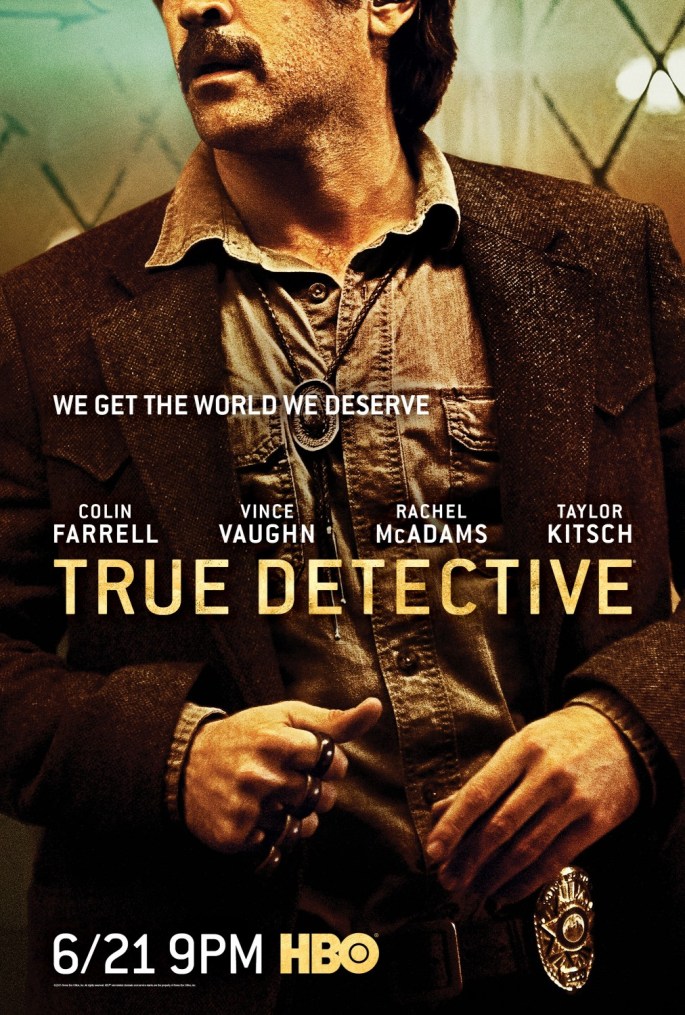
You recently directed episodes of True Detective: Season Two, which reunited you with Colin Farrell. What was your experience there?

That was interesting because of the hype and the serious interest in the show. It had that water cooler effect, whether people liked it or not. And from the scripts, I knew that season two would be very different from the first. Justin Lin had set a very solid foundation for the other directors to step in and continue the story. I enjoyed working with HBO very much.
2

What are you currently working on now? Any new theater offerings or new films in development?

Next up is The Present, an updated version of Chekhov’s first play Platonov. I directed it at Sydney Theatre Company last August and it features Cate Blanchett and Richard Roxburgh. We’re transferring it to Broadway later in the year. Meanwhile I’m at the early stage of development on a bunch of things, some TV and some feature films but I can’t say what just yet!
Crowley Banner

NICHOLAS MEYER’S TIME AFTER TIME — A REVIEW BY NICK CLEMENT

TIme

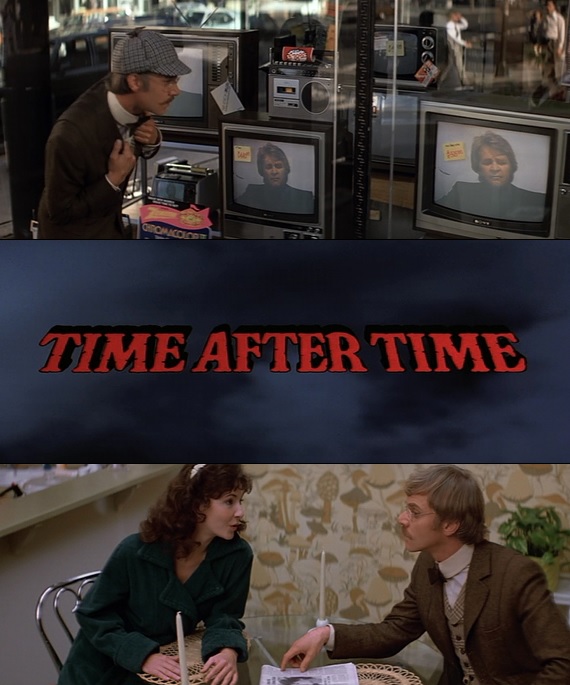
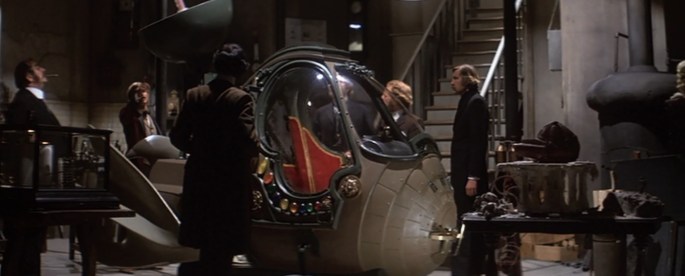
Time After Time is a wonderful film. Yes, the special effects are dated, but there’s a certain charm to the now antiquated, low-fi quality of the entire piece. Malcolm McDowell was tons of fun, as usual, in a role he seemed born to play, and David Warner made for the perfect villain for him to go up against. Written and directed by Nicholas Meyer, the film served as his helming debut, and the final result is a piece that straddles multiple tones, involves science fiction, romance, drama, and thriller elements, with nods to film noir and a perfect sense of period splendor. McDowell stars as H.G. Wells, with the narrative pivoting on the notion that Wells built a time machine, with the intention of using it in an effort to travel to a supposed Utopian paradise in the future. But in a high concept twist, before he’s able to use the time machine for his own devices, an on-the-run Jack the Ripper (Warner) hijacks it so that he can escape, inadvertently traveling to San Francisco circa 1979.

5

Wells gives chase, and upon arriving in the present day, falls in love with a pretty bank teller named Amy (Mary Steenburgen, so young, so cute). The mismatched pair work feverishly to catch Jack the Ripper while romance blossoms around them. Time After Time has witty dialogue and great performances, and if Meyer hadn’t yet mastered directorial pacing, you can certainly see why he’d land the job on Star Trek II: The Wrath of Khan, as he was able to comfortably mix big ideas with solid technical execution, never forgetting about narrative coherence or skimping out on nuanced performances. The film features a terrific and operatic musical score from Miklós Rózsa which kicks in right from the start, and the cinematography by Paul Lohmann (a frequent collaborator with Robert Altman), evoked multiple time periods with ease and casual style. Released in 1979, the film was a moderate box office success, and was met with mostly favorable reviews from critics, but for some reason this film still has a fairly low profile. No Blu-ray is currently available, which seems a shame.

4

B Movie Glory with Nate: 2103 The Deadly Wake

image

2103: The Deadly Wake strives to stand out from the B-movie masses by giving turning it’s straightforward sci-fi concept somewhat on its head. It’s set in the very distant future, in which earth’s oceans have become so contaminated that they have all taken a gaseous form, with corporations sending forth spaceship type vessels that deliver goods and wage warfare. They resemble submarines basically sailing through colored fog, and it’s one of the neatest and adorably ambitious futuristic settings I’ve seen. Malcolm McDowell is damn excellent in a rare hero role as Captain Sean Murdock, a salty old sea dog who lost a ship years before and is somewhat disgraced. Forlorn and fed up, he’s in a slump when hired to transport a massive ship across the ocean, with a mysterious cargo that’s guarded by a sinister mercenary and security expert  (Michael Paré). Usually in this type of thing it’s Paré as the hero and Mcdowell as the villain (which has actually happened in Roland Emmerich’s Moon 44), but here they pull a Tarantino and switch up the type casting which is wonderful to see and makes for a fresh vibe. Paré works for the sultry, sleazy (Heidi Von Palleske), the company CEO who wants an eye kept on the cargo hold. Paré and Mcdowell bit heads, there’s murky conflict and the ship’s Artificial Intelligence engine is called B.A.B.Y. and is quite literally a fetus in a big gooey tank with wires attached to its brain. If that isn’t worthy of a medal in the ambition department I don’t know what is. Theres an odd sort of climactic fight scene that plays like a dream and doesnt involve fighting at all really, more like just a laser show with strange dialogue. Despite it being set in the future there’s a nifty retro style, with soldier uniforms and the darkly poetic tone almost calling forth the sensibility of the 40’s. I was reminded of Titanic in scenes, but that could be my weird cinematic free association. This one’s a keeper for fans of off kilter, under the radar oddities.

RICHARD RUSH’S THE STUNT MAN — A REVIEW BY NICK CLEMENT

1

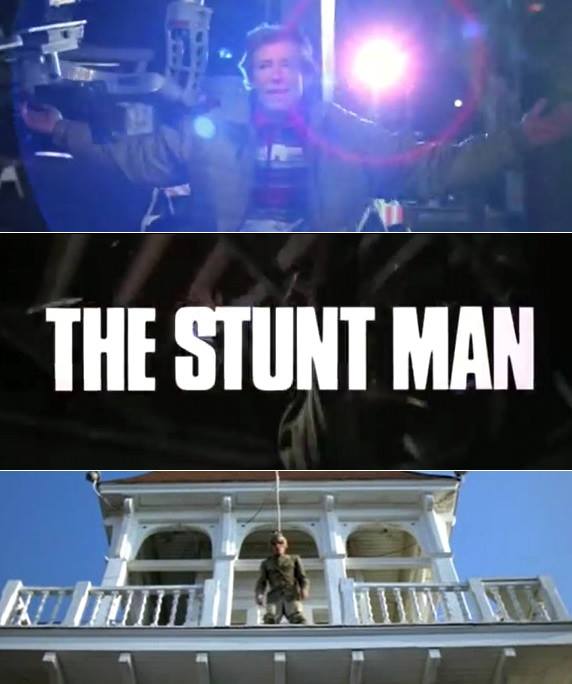
I’ve never seen anything like The Stunt Man. There will never, ever be another movie quite like The Stunt Man. This film has a very unique tone that is nearly impossible to pin down. It’s a satire of Hollywood. It’s a romance. It’s a drama. It’s a break-neck action picture. It’s a madcap comedy. This film is so many things, but most importantly, it has a wildly distinct personality, feeling like a film that just HAD to be made by the person who made it. The Stunt Man isn’t even really a film – it feels more like a carnival of ideas and action, totally off the reservation, made with a jocular style that has moments of peculiar beauty, and featuring performances that just have to be seen to be believed. There’s a raggedy quality to the film, an “in-progress” ambience that befits the movie-within-a-movie structure of the story, and the freewheeling style allows for much self-reflexivity on the part of Rush and his team of craftsmen. A notoriously tortured production, The Stunt Man has taken on the label of “lost classic” over the years, and it’s a film that many people probably have seen a long time ago but have fuzzy memories of now. It’s absolutely worth a revisit and reconsideration, if for no other reason that something this singularly bizarre and eccentric should be discussed more often than the generic, franchise-able crap that so often litters our multiplexes.

The Stunt Man, which was released in 1980, was adapted for the screen by Rush from Paul Brodeur’s novel, and centers on a Vietnam veteran named Cameron (Steven Railsback in an emotionally wild performance of astonishingly broad range) who has an run-in with the cops, flees, and accidentally ends up on the set of a big-budget WWI movie that’s being filmed on a near-by beach by a flamboyant and utterly tyrannical director named Eli (Peter O’Toole in a massively entertaining wink-wink performance) who hides the man under the guise of being a stuntman on his picture, who he then uses in a series of outlandish and death-defying set-pieces, sometimes without his participant’s full knowledge of all of the rules. Cameron can’t help but fall in love with the film’s leading lady, Nina (Barbara Hershey, sexy and funny), whose romantic past with her director causes Cameron to become a tad unhinged.

Cameron also starts to realize that his potentially insane boss has made it a habit of pushing his previous stunt-men to their limits, with possibly deadly results. Will Cameron’s cover be blown? Will he survive the increasingly crazy film production? Will he and Nina be able to live happily ever after? Cameron’s life starts to bleed from reality to fantasy and then back to reality, sometimes within the same scene, as Eli continues to press on in the most insane of manners, creating hostility between him and his crew, his actors, and pretty much everyone around him. Then the day comes for the film’s climatic action scene to be shot, and Cameron isn’t sure if Eli is out to sabotage him in an unsuspecting way, or if he’s just doing everything all in the name of cinema and for the perfect shot.

Rush was a filmmaker who understood the idea of madcap comedy better than most, and in The Stunt Man, he brought a level of gonzo energy to the film’s multiple action sequences, which, simply put, are all fabulous to observe and dissect. If you’re going to call your movie The Stunt Man you better have some great stunts to show off, and I just don’t understand how people weren’t killed while making certain sequences of this hilariously over the top film. One bit in particular, with Railsback running along the sides of houses and over roof-tops while planes are flying overhead and soldiers are firing rounds at him and jumping on him from all angles – it’s berserk, it’s hysterical, it’s all totally over the top, and finally amazing. No blue screens, no CGI, all real stunt work, with people crashing through balsa wood and sugar glass. This is a film that is all about the art of deception, and how cinema has the ability to lie to us yet make it look real and honest.

The Stunt Man also has a casual vulgarity that I just loved, with out of the blue nudity, random bits of seemingly improvised dialogue, a ton of looped audio that unintentionally ramps up the odd humor, and a general sense of anything goes/anything can happen which keeps the film hurtling along with a sense of unpredictability that is rarely matched. And then there’s the truly insane ending, with the film’s credits rolling while one of the actors is still talking, trying to make sense of his situation, and it’s like Rush is saying to everyone, himself included: “Hey, it’s just a movie.” Because Rush was attempting to bite off SO much with this effort, it feels like his ultimate “kitchen sink” film, something he made as if he were never going to direct a film again, cramming it with as many ideas and obsessions as he possibly could.

And that was sort of the case. After sitting on the shelf for over a year due to a lack of completion funds, 20th Century Fox bought the film, but Rush ended up battling it out with the studio over a botched release, despite the film being nominated for Best Director, Best Adapted Screenplay, and Best Actor for O’Toole. It then took Rush 14 years to return to the director’s chair (he was fired off of 1990’s Air America, for which he wrote the original script) for the ill-fated erotic thriller Color of Night, which became infamous as “that movie where Bruce Willis felt the need to show the world his bellend.” It’s a shame that Hollywood loves to forget about genuine voices like Rush, and Martin Brest, and Michael Cimino, filmmakers who were interested in telling stories outside of the cookie-cutter norm, guys with too much of an idiosyncratic view and style for the studio bean-counters.