THE INCREDIBLE HULK: A Retrospective by Joel Copling

Rating in Stars: *½ (out of ****)
Cast: Edward Norton, Liv Tyler, Tim Roth, William Hurt, Tim Blake Nelson
Director: Louis Leterrier
MPAA Rating: PG-13 (for sequences of intense action violence, some frightening sci-fi images, and brief suggestive content)
Running Time: 1:53
Release Date: 06/13/08

The most intriguing thing about The Incredible Hulk, a decidedly non-intriguing superhero movie, comes right at the beginning. Instead of regurgitating the story of the scientist whose experimentation with gamma radiation turned him into a green, supersized human with rage issues, heightened strength, and toughened skin (Perhaps screenwriter Zak Penn reasoned that, given the source comic book series, a television show of the same name, and 2003’s far superior but less popular Hulk, audiences weren’t clamoring for a re-telling), the whole origin story plays over the opening credits. What follows is constantly underwhelming.

It is an immediate sensation upon seeing how the action sequences are framed and shot by director Louis Leterrier and cinematographer Peter Menzies Jr. The beats are choppy and visually grimy, highlighting every bead of sweat upon the characters’ face to denote an exhaustion that is only the audience’s when every tired genre trope raises its head. The Hulk himself is hidden in shadow until the Big Reveal, upon which is disappointment that a character with such a crucial need for impressive effects work looks, instead, like computerized plastic. Then again, when the Other Big Reveal of his chief adversary happens, the resulting throwdown looks like something out of a PlayStation 2 video game.

The plot has all the scope of an extended chase and doesn’t have much more on its mind. Bruce Banner (Edward Norton), the scientist in question, has been in hiding in Brazil for several years under an assumed name and a false trail leading to his “death.” It happened when the Hulk took over, of course, but General Ross (William Hurt), the man who oversaw the transformation, knows he’s somewhere and is forever looking. The general’s daughter Betty (Liv Tyler) is already dating another man (Ty Burrell), whom she drops when Bruce manages to find his way Stateside after an escape from her father’s men.

One of those men is Emil Blonsky (Tim Roth), a military man who is actually a power-hungry adrenaline junkie with a raging death wish and no conscience. He desires what he sees in the Hulk and blackmails Samuel Sterns (Tim Blake Nelson, who is truly dreadful here), the doctor with whom Bruce has been communicating, to transform him into a similar beast. The result is an abomination in itself. Well, actually, he’s now the Abomination, a foe of the Hulk’s from the comic books, but let’s not break the fourth wall here. It’s an epic and enormously disappointing showdown in the works.

That’s basically everything to which the film both aspires and adds up. The actors don’t help, with only Hurt escaping unscathed (and even that is mostly because he adds outward dignity and poise to a character who doesn’t have any genuine depth). Norton’s behind-the-scenes annoyance at a cut he preferred being axed in lieu of this forgettable slice of nothing is evident on his face, Tyler exists to be saved and cry (a lot), and Roth attempts to ham it up as Blonsky while revealing his boredom with a role that eventually just becomes a computerized character. The Incredible Hulk is, indeed, far from it.

Ridley Scott’s American Gangster: A Review by Nate Hill


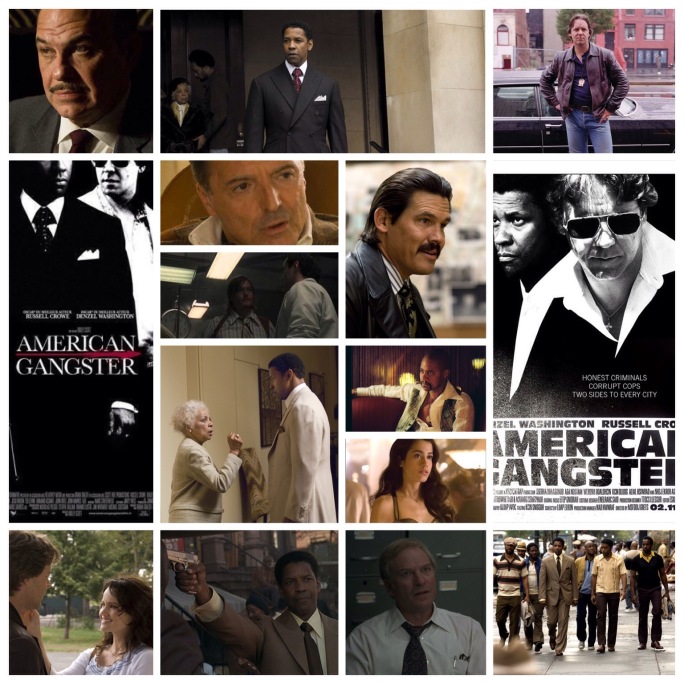
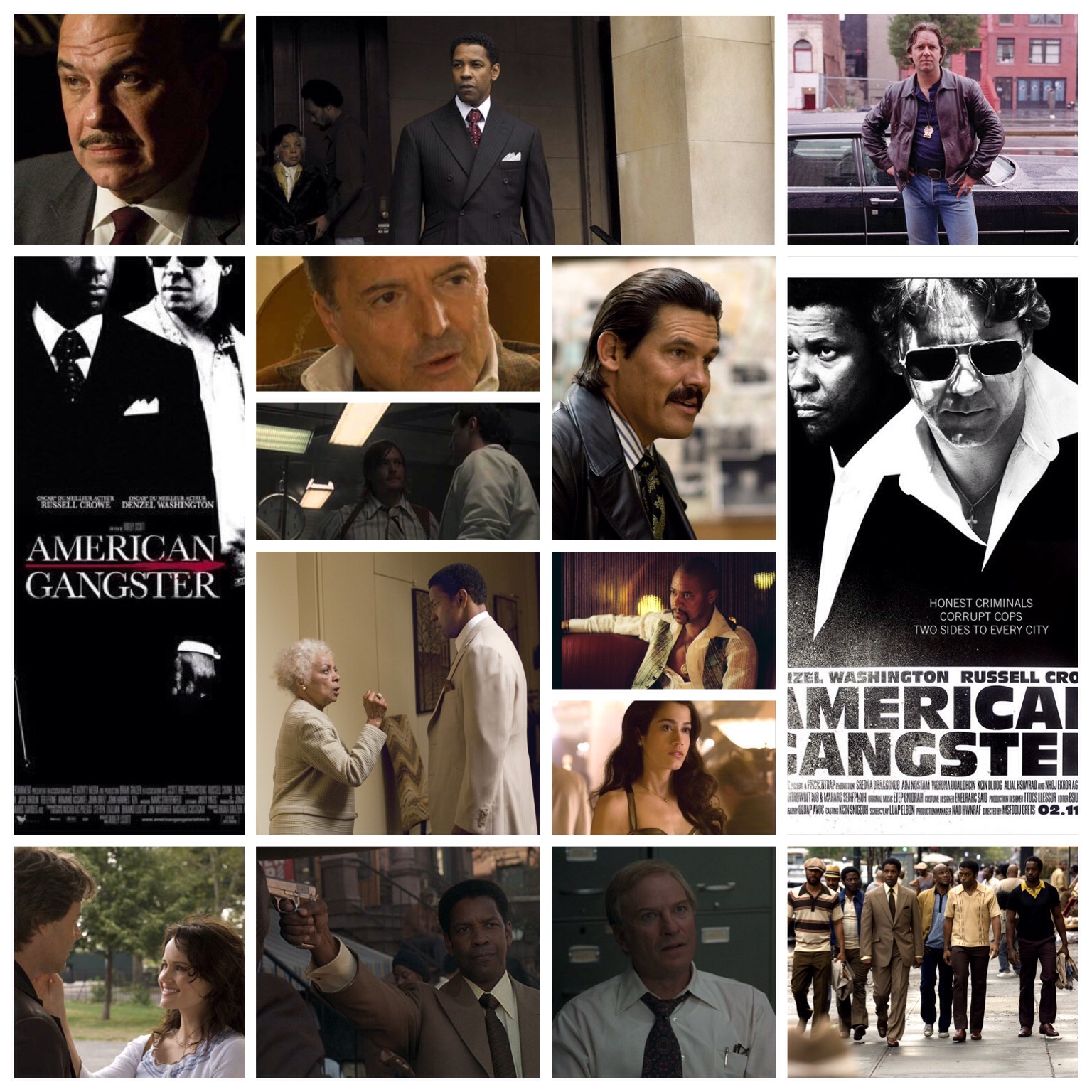
Ridley Scott’s vast, intricate crime epic American Gangster is one of the director’s finest achievement in film to this day. It’s sprawling in nature, expansive in scope but never chaotic or muddled. It always maintains a laser focus on its characters and story, thumping along at a rhythmic pace which swells and falls to the time of one of the most iconic stories in true crime. It’s Scott’s Heat, a titanic tale of cop vs. criminal in which neither are the villain or hero, but simply men adhering to rigid, ruthless principles moulded by the environments they have grown up in. Both men have an intense set of morals completely different from the other, yet equally as captivating. Russell Crowe is a troubled bruiser as Detective Richie Roberts, a cop so determined to convince himself of his own upstanding nature that he won’t take any illicit payoff in any amount or context. In contrast, every other aspect of his life is a shambling mess. Denzel Washington is quiet fury as Frank Lucas, an enterprising gangster and drug smuggler who rides the tidal wave of capitalism like there’s no tomorrow, flooding the streets of Harlem with pure heroin directly from the southeast Asian source, and rising swiftly to the peak of underworld infamy. The two are on an inevitable collision course, two juggernauts with different empires backing them who will stop at nothing. Lucas believes himself to be untouchable, shirking the flashy, preening nature of his peers and remaining out of the limelight, until cunning Roberts catches onto him. The rough and tumble world of New York in the 60’s and 70’s is lovingly brought to life by Scott, his cast and crew who go to impressive lengths in order to bring us that grit, realism and specific anthropological aura of another time, another setting. Speaking of cast, this has to be one of the most rip roaring collection of actors ever assembled, even to rival that of Heat itself. In Richie’s corner there is senior Detective Lou Toback (a sly Ted Levine, perpetuating the vague Michael Mann vibe even further), a scummy colleague (Yul Vasquez), and an off the books team of gangbusters including John Ortiz, John Hawkes and a mumbling RZA. He also clashes with his bitter ex wife (Carla Gugino) in an ugly custody battle for their young son. Over on Frank’s side of the hill are his huge extended family including Common, TI, Chiwetel Ejfor and Ruby Dee in one of the film’s finest performances as his strong willed, passionate mother, one of the only people who could talk sense into him and keep the animal inside at bay. Lymari Nadal is great as his bombshell Puerto Rican wife as well. His rivals include superfly-esque Nicky Barnes (Cuba Gooding Jr.) and a brief, hostile turn from Idris Elba. He also deals with the Italian mafia, personified by a hammy Armand Assante, an earnest Jon Polito and a slimy Ritchie Coster. One of the best performances of the film comes from Josh Brolin as positively evil corrupt narcotics detective Trupo, threatening everything that moves with his grease slick hair, porno moustache and silky, dangerous tone. As if that army of talent wasn’t enough, there’s also work from Kevin Corrigan, Joe Morton, Clarence Williams III in a powerful turn as an ageing Bumpy Johnson, and a blink and you’ll miss it cameo from Norman Reedus as well. What. A. Cast. The whole thing rests on Crowe and Washington, though, and both are like Olympian titans of crime and conflict, sweeping up everyone around them in a whirlwind of explosive violence, shifting alliances and the booming arrival of capitalism giving the American people in every walk of life a defibrillator jolt of economic change, laying the foundation for the world we live in today, one brick, one bullet, one business deal at a time. Scott achieves legendary heights with this one, a crime film for the ages that one can always revisit to see not how one hero cop took down a villainous drug lord, but how the forces which inexorably bind humans to various fates in accordance with their decisions swept up two extraordinary yet mortal men into historic infamy. In a word: Epic.

IRON MAN: A Retrospective by Joel Copling

Rating in Stars: **½ (out of ****)
Cast: Robert Downey Jr., Gwyneth Paltrow, Jeff Bridges, Terrence Howard, Leslie Bibb
Director: Jon Favreau
MPAA Rating: PG-13 (for some intense sequences of sci-fi action and violence, and brief suggestive content)
Running Time: 2:06
Release Date: 05/02/08

The casting coup at the center of Iron Man is the best and only chance the film takes in just more than two hours, and it almost makes the film work. This is a surprisingly insular superhero movie, the first of its own franchise and a stepping stone into a wider one that has now, eight years later, taken over the mainstream film world. The pieces are here for something that could examine both its titular hero and the human who inhabits the suit that (despite the fact that, as the hero points out, it is made of a gold titanium alloy) has inspired the moniker. The problem is that they never quite come together into something that breaks free of the constraints of a familiar origin story that leads to an equally familiar conflict.

But let’s get back to that casting coup. Robert Downey Jr. stars as Tony Stark, the heir to a multimillion-dollar company that shares his surname and produces everything from electronics to weaponry, with the latter being his biggest money-spinner yet. The film opens to the sound of an AC/DC track somewhere near the middle of the story as Tony is escorted to and from an exhibition of a new weapon called the Jericho missile (which is actually many tiny missiles inside a bigger one that self-destructs after its counterparts are engaged), only to be hit by a terrorist cell using his own weapons. As the title slams into place and disappears, we rewind to find him absent from an awards ceremony in his honor, instead playing the casinos.

We get an immediate sense of this man from the opening half-hour, the film’s strongest segment, which presents him as sarcastic to the verge of misanthropic. He isn’t quite unlikable, and therein lies why he is so likable. That is in large part due to Downey, who is smart enough to capture the man’s personality without relegating it to be merely a caricature. It’s a genuinely good performance that, unfortunately, only highlights the weaknesses of what surrounds him. The formula is simple and, as a result, restrictive: We are introduced to a hero, the hero is faced with conflict both internal and external in nature, the external conflict in the form of the hero’s first nemesis takes center stage.

That happens to be Obadiah Stane (Jeff Bridges), the man who created Stark Industries with Tony’s father, and if you think that’s anything remotely close to a spoiler, consider that everything Stane does is to his own (and, superficially, the company’s) interest. He wants Tony locked out, especially when, following Tony’s abduction and near-death experience (He places miniaturized arc reactor in the center of his chest to ward off shrapnel from the attack entering his heart), Tony shuts down the weapons manufacturing part of his company. He also becomes Iron Man, a hot-rod-red-suited metal figure whose use could also be turned into a weapon. This establishes what transpires during the climax.

It also simplifies everything else about Tony’s life–from his struggle not to be an arbiter of weaponry (ironic, as Stane points out, that he created a perfect weapon in response) to his relationships with personal assistant Pepper Potts (Gwyneth Paltrow) and military liaison James Rhodes (Terrence Howard) to action sequences that have some spark (such as Tony’s retaliation upon the terrorists, which introduces light humor into the mix with ease) but aren’t much more than flights of fancy. Downey is the film’s secret weapon, and he almost elevates Iron Man itself above its rudimentary nature.

JOHN CURRAN’S THE PAINTED VEIL — A REIVEW BY NICK CLEMENT

painted_veil

John Curran’s The Painted Veil came and went and that’s a shame because it’s a very well appointed period piece with multilayered performances from producers/stars Edward Norton and Naomi Watts. I think part of the issue might’ve been due to the fact that both characters are so selfish and rude to each other that it’s the sort of brittle drama that might not appeal to as many people had it been more traditional. And the fact that the production company behind the film went bankrupt after production – never a good thing. Watts plays a woman who is caught in an affair (Liev Schreiber is her suitor) by her husband (Norton), a virologist who forces her to accompany him to cholera-stricken China. Set in the 1920’s, the film has tremendous production value, benefitting enormously from the all-on-location shooting in China, with the great cinematographer Stuart Dryburgh (Blackhat, The Piano, The Secret Life of Walter Mitty) capturing the golden light against the lush greenery of the country. Watts’s confused wife is tested emotionally all throughout the film, as she and a volatile Norton go at each other with frustration and anger, mostly due to the fact that they weren’t a perfect match to begin with, let alone appropriate spouses.

Adapted from the classic W. Somerset Maugham novel by screenwriter Ron Nyswaner (Philadelphia), there’s definitely a literary quality to the dialogue and to the plotting, and it’s the sort of movie that picks up serious steam as it heads into the last act that makes its rocky beginning all the more rewarding. Not “rocky” as in poorly constructed, but rather, this is no lovey-dovey romance set against picturesque backdrops. Both lead characters are flawed, with the filmmakers not shying away from this fact or making it easy for the audience to latch onto them. Featuring a fabulous musical score from Alexandre Desplat that more than matches Dryburgh’s gorgeous visuals, The Painted Veil deserves a higher profile; at the moment there’s no American Blu-ray but a region free German import is available. But that’s sort of been the case with all of Curran’s films. His edgy Robert De Niro/Ed Norton thriller Stone and the introspective Mia Wasikowska drama Tracks were both terrific in their own ways, and his troubling script for Michael Winterbottom’s nasty The Killer Inside Me was very memorable. And his 2004 drama We Don’t Live Here Anymore strove for and found 70’s-esque grittiness with its story of marital discontent. He’s a continually interesting filmmaker and I look forward to seeing more from him.


JOHN CURRAN’S THE PAINTED VEIL — A REVIEW BY NICK CLEMENT

painted_veil

John Curran’s The Painted Veil came and went back in 2006 and that’s a shame because it’s a very well appointed period piece with multilayered performances from producers/stars Edward Norton and Naomi Watts. I think part of the issue might’ve been due to the fact that both characters are so selfish and rude to each other that it’s the sort of brittle drama that might not appeal to as many people had it been more traditional. And the fact that the production company behind the film went bankrupt after production – never a good thing. Watts plays a woman who is caught in an affair (Liev Schreiber is her suitor) by her husband (Norton), a virologist who forces her to accompany him to cholera-stricken China. Set in the 1920’s, the film has tremendous production value, benefitting enormously from the all-on-location shooting in China, with the great cinematographer Stuart Dryburgh (Blackhat, The Piano, The Secret Life of Walter Mitty) capturing the golden light against the lush greenery of the country. Watts’s confused wife is tested emotionally all throughout the film, as she and a volatile Norton go at each other with frustration and anger, mostly due to the fact that they weren’t a perfect match to begin with, let alone appropriate spouses.

Adapted from the classic W. Somerset Maugham novel by screenwriter Ron Nyswaner (Philadelphia), there’s definitely a literary quality to the dialogue and to the plotting, and it’s the sort of movie that picks up serious steam as it heads into the last act that makes its rocky beginning all the more rewarding. Not “rocky” as in poorly constructed, but rather, this is no lovey-dovey romance set against picturesque backdrops. Both lead characters are flawed, with the filmmakers not shying away from this fact or making it easy for the audience to latch onto them. Featuring a fabulous musical score from Alexandre Desplat that more than matches Dryburgh’s gorgeous visuals, The Painted Veil deserves a higher profile; at the moment there’s no American Blu-ray but a region free German import is available. But that’s sort of been the case with all of Curran’s films. His edgy Robert De Niro/Ed Norton thriller Stone and the introspective Mia Wasikowska drama Tracks were both terrific in their own ways, and his troubling script for Michael Winterbottom’s nasty The Killer Inside Me was very memorable. And his 2004 drama We Don’t Live Here Anymore strove for and found 70’s-esque grittiness with its story of marital discontent. He’s a continually interesting filmmaker and I look forward to seeing more from him.

“It’s just you and me now, sport.” – A ‘Manhunter’ Review by Josh Hains

12383626_169631770076406_1936271223_n Of the film and television productions based on Thomas Harris’ series of acclaimed “Hannibal” novels, Manhunter is the most underrated piece. When the film was originally released in 1986, it met with (surprising to me) mixed reviews, with some critics calling into question director Michael Mann’s use of music, and the film’s unique visual aesthetics. Leading performer William Petersen’s acting skill was also the cause for concern amongst some critics, and the film was sadly a box office failure, raking in just 8.6 million dollars. In recent years, thanks to the popularity of The Silence Of The Lambs, its sequels and prequels, and a television series based on the books, Manhunter has been critically re-reviewed and wildly accepted as more than just a cult film, but as one of the finer films Mann has made to date, and quite possibly a superior film to The Silence Of The Lambs. Not every critic is right every time they put pen to paper.
Manhunter is a rich, meticulously layered, deeply psychological experience that crawls under your skin and seeps into your mind with its concoction of pulsating music, gorgeous cinematography, unsettling production design, and tortured characters. The film chronicles the investigation by former FBI criminal profiler Will Graham (Petersen) into a recent slew of grisly murders of rich families committed by the elusive Tooth Fairy, as the police have dubbed him after the bite-marks he leaves on his victims.

We first meet Will relaxing at his secluded Florida beach house with his wife and son, when his friend and former FBI superior Jack Crawford (the late Dennis Farina, who was a Chicago cop before his film career) comes knocking, asking Will to help authorities nab the killer. After a prior attack involving a certain cannibalistic serial killer I’ll mention later, Will is hesitant to become involved in the case. Most of him wants to stay far, far away from the dangers of this line of work, and doesn’t want to bear the deep psychological burden these kinds of cases can have on law enforcement. However, an unsettled part of his soul is thirsty for one last hurrah, and so Will joins up with authorities in the hunt for the Tooth Fairy.

Simultaneously, the Tooth Fairy himself, Francis Dollarhyde (Tom Noonan), continues to kill including the unlucky journalist Freddy Lounds (Stephan Lang), all the while becoming involved romantically with a co-worker at a St. Louis film lab, Reba McClane (Joan Allen). Meanwhile, both Graham and Dollarhyde receive help from that particular cannibalistic serial killer, the famous Dr. Hannibal Lektor (Brian Cox). Yes, you read that right. Lektor. Spelled that way just for this film, but “Lecter” in the books and other film and television properties. I know that seems odd, but it works. By the time the film’s violent conclusion erupts with the ferocity of a blood craving tiger to Iron Butterfly’s ominous In-A-Gadda-Da-Vida, between the pulsating score, the dazzling cinematography, the tense psychological atmosphere, and the nuanced performances, you’ll surely be white knuckled and riveted to the bone.

In The Silence Of The Lambs, and subsequent Hannibal oriented products, Lecter is somewhat of an over the top, grandiose villain. Sir Anthony Hopkins plays him with a venomous, spiteful, cynical aura and personality, with a twinkle in his eye and a grin ever present on his face. He seems to have waltzed out of a Shakespeare production, with his colourful verbiage and posturing. Even his slightest physical movements seem grand. But here in Manhunter, Lektor is brought down to Earth by Cox’s nuanced performance. Cox is genuinely creepy and unnerving in a  way Hopkins isn’t (Cox based his performance on Scottish serial killer Peter Manuel), precisely because Hopkins Lecter is so gloriously over the top, while Cox maintains a relaxed, collected atmosphere about his Lektor. One can imagine his Lektor character prowling the streets, conning unsuspecting folks into his maniacal grasp with his classy vocals and subtle charms, feasting upon their corpses without breaking a sweat. That sounds plenty terrifying on its own to me, and thus I don’t find the larger than life qualities of later Hannibals all that necessary. I suppose the staying power of Hopkins’ performance is partially reliant on that larger than life aura, because it sticks out stronger in one’s mind than the perfectly realistic, bone chilling performance Cox delivers that doesn’t rely on operatic antics for impact.

Part of what makes Manhunter great is that with it, we are given a film that isn’t reliant on the grisly violence the television series is most famous for. In fact, there’s hardly any onscreen violence at all, the most carefully tame of any Hannibal adaptation, never once gratuitous or overly detailed in the aftermath of violence. Mann is careful to never reveal too much violence, which could easily have turned the film into an unnaturally violent splatter-fest, the lack of which perfectly suits the material and the general themes and tonalites of the film. Instead, Mann cares more about the creation of a sensation of anger toward the killer coupled with the anxiousness and tension within the viewer akin to Graham’s own feeling of these sensations. I think we are meant to feel as though we have stepped into his shoes.

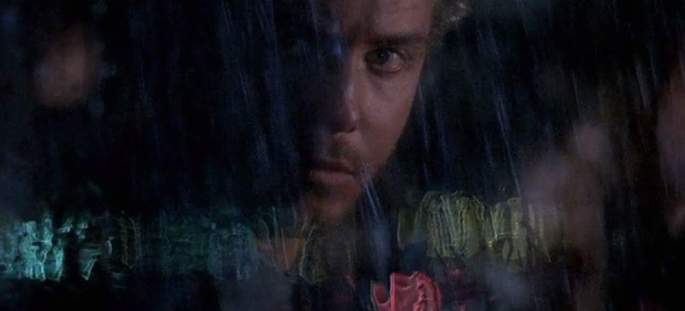
The beauty of the film always manages to catch me off guard more than anything, specifically during a sequence midway through the film when Graham, seated before a rain soaked window, professes his desire to catch the so-called “Tooth Fairy”, arguably one of the films most beautifully realized moments thanks to brilliant cinematographer Dante Spinotti, who also worked with Mann on The Last Of the Mohicans, Heat, The Insider, and Public Enemies. The combination of the psychological nature of the film and the undeniable beauty of Manhunter makes it a very difficult experience to shake. Like other serial killer thrillers such as Seven, Zodiac, American Psycho, and Frailty (to name a few), Manhunter tends to leave a stain on my mind for a little while that no soap known to man could ever wash away, and that’s a good thing in my book. I’m greatly looking forward to seeing this film restored in all its grim glory thanks to the folks at Shout Factory, whose slick new box art for the Collector’s Edition of Manhunter is the second image featured at the top of this review.

WILLIAM FRIEDKIN’S TO LIVE AND DIE IN L.A. — A REVIEW BY NICK CLEMENT

to live and die in LA


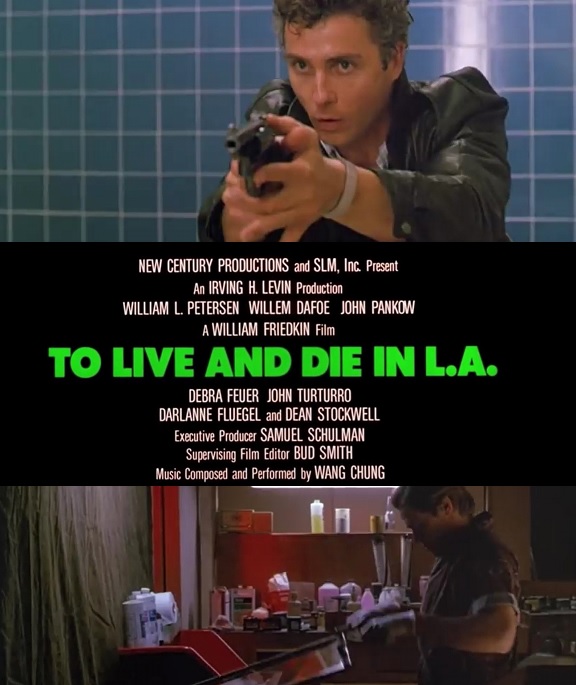
To Live and Die in L.A. is most likely the best Michael Mann film that Mann didn’t actually direct. Yes, the film certainly shows some trademarks of it’s legendary director, William Friedkin, but there’s a general ambience and sense of style that feels cut from Mann’s early-80’s cloth; call it a fascinating amalgam of two of cinema’s best tough-guy directors. William Petersen got one of his absolute best roles as a volatile Secret Service agent hot on the trail of counterfeiter Willem Dafoe, who has figured out a way to mass produce nearly flawless fake cash. Petersen is also deadest on avenging the death of his partner, who is dispatched in the first act via shotgun blast to the face, a moment of cinematic violence that once seen cannot be unseen. The plot is somewhat standard but never uninvolving, mixing the expected cops and robbers tropes into a sprawling, Los Angeles-set narrative that makes tremendous use of the city and all its potentially dangerous locales. Robby Müller’s stylish cinematography portrayed Los Angeles and its surrounding areas as lethal, neon-scorched hell-pits, while also evoking Alan Pakula’s seminal 70’s thriller The Parallax View during the frightening opening sequence.

Most of the action takes place during the day, whch separates this film from Mann’s mostly nocturnal urban playgrounds of violence and mayhem. The film’s main action set-piece, featuring a car chase that’s set against traffic along the 405, is phenomenally well-staged, feeling dangerous at every turn, and done with zero CGI, making it even more impressive. John Frankenheimer would riff on the against-traffic car-chase in his masterful thriller Ronin. Friedkin based his screenplay on Gerald Petievich’s novel; before becoming an author, Petievich was a member of the U.S. Secret Service. The famous Wayne Chung score only underscores this film’s essential 80’s-ness. Features a boisterous supporting performance from John Pankow. Real life counterfeiters were brought on as technical advisors, thus ensuring legitimacy during the various sequences showing the manufacturing of the phony greenbacks. Two endings were shot, with Friedkin ultimately going with the downer finale, which certainly has helped to keep this film a cult favorite after a solid theatrical run in the fall movie season of 1985.

KNIGHT OF CUPS: A Review by Joel Copling

Rating in Stars: **** (out of ****)
Cast: Christian Bale, Brian Dennehy, Wes Bentley, Cate Blanchett, Natalie Portman
Director: Terrence Malick
MPAA Rating: R (for some nudity, sexuality and language)
Running Time: 1:58
Release Date: 03/04/16 (limited)

One must remember that suffering is relative to the sufferer. A certain Republican Presidential candidate’s woes regarding his father’s “small” loan of a million dollars and the subsequent problems that so “little” money caused for him are, to the wide universe and to any moral measure, as nothing to a child starving in a third-world country. Getting by on an amount of money that doesn’t actually get one very much within his circles, however, is, to the candidate, akin to that child’s starvation in an existential way. Neither he nor the child, in his mind, has it easy when taken in the context of their individual situations. That is neither to defend the candidate’s cheap way of playing victim when he is one of the richest individuals in the world nor to trivialize the starving child’s predicament within economic strife. But, as Terrence Malick’s Knight of Cups wisely reasons, suffering is suffering to the individual, no matter what it looks like.

On the privilege scale, the central figure of Malick’s newest slice of poetic visual storytelling in the vein of his two previous efforts, a screenwriter named Rick (Christian Bale), is closer to the aforementioned Presidential candidate than a child in an impoverished country. This is a man beset on all sides by an existence mired in materialistic woes to go along with the ones of reflection and regret that come with the territory of a brother who has ended his own life (or so they say). Rick’s other brother Barry (Wes Bentley) is a ball of nerves and rage that explodes out of him when even thinking upon their father (Brian Dennehy), whom they resent for his lack of outward sympathy (Their mother, played by Cherry Jones, was a mostly uninvolved one).

Rick lives a cozy life in a Los Angeles apartment constantly fraught by low-level earthquakes. His writing projects take him to parties and raves populated by celebrities (Recognizable names and faces, such as Antonio Banderas, Kevin Corrigan, Nick Offerman, Clifton Collins Jr., and even Fabio, appear in cameos as themselves or perhaps not) and into the employ of agents played by Michael Wincott, Patrick Whitesell, and Rick Hess who try to “tell [him] about [him]” and to encourage him to take various projects for various studios. Rick, meanwhile, is reflecting on his five failed relationships with women in his life and looking forward to the sixth (played by Isabel Lucas) as the ideal to which he aspires (That a romance with her is, on the face of it, as materialistic as what he’s escaping proves that, perhaps, we do not ever truly change, except in the baby steps of recognizing we must).

In chronological order of when the narrative, split into chapters named after figures on tarot cards, presents them to us, the women are as follows. Della (Imogen Poots) is a free spirit, unencumbered by worries but unsure of her own emotional drive. Helen (Freida Pinto), whom Rick meets at one of those lavish parties, is just in search of a fling after feeling a burden to every man with whom she truly connected. Nancy (Cate Blanchett) is Rick’s ex-wife, who ended because he never felt as if the marriage was worth the trouble of sharing in her enthusiasm for children or even being kind to her after a while. Karen (Teresa Palmer) is a stripper who, like Helen, is only looking for something temporary and distracting. Elizabeth (Natalie Portman) is a woman who consciously entered an extramarital affair with Rick that ultimately splinters apart.

These women are not characters, which might inspire controversy in a current climate of examining female roles in cinema, but figureheads that represent much for Rick the roller coaster shifts in his life–from progressing in his romantic pursuits to regressing once again. Each actress, but especially Blanchett and a devastating Portman, is up to the task of Malick’s challenging performance showcase of alternating plaintive gazes with disaffected blank stares (and so, for that matter, is Bale, who excels especially in the quietest moments of a very quiet performance). The film is also another magisterial collaboration between Malick and cinematographer Emmanuel Lubezki (who makes a conscious decision to frame the actors mostly from behind, highlighting their disassociation with each other and with their situations). Knight of Cups is stirring, searching, soulful stuff.

B Movie Glory with Nate: For Which He Stands

  
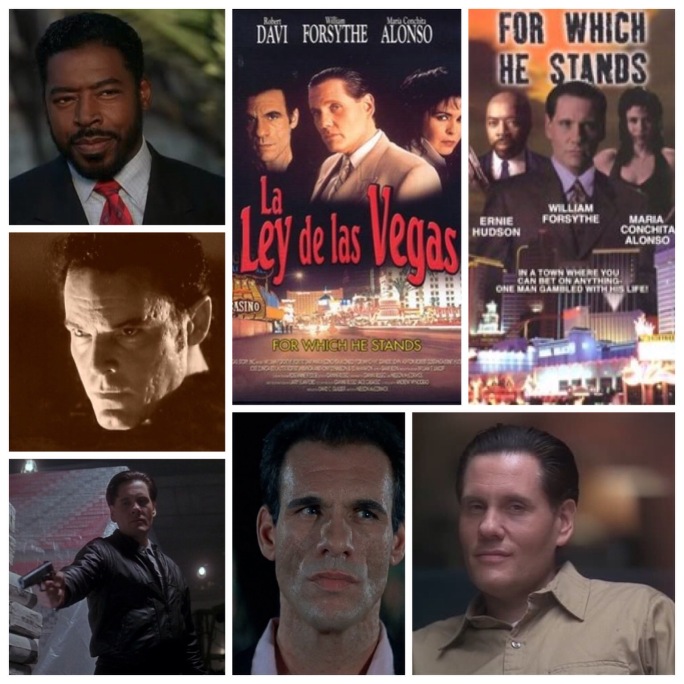
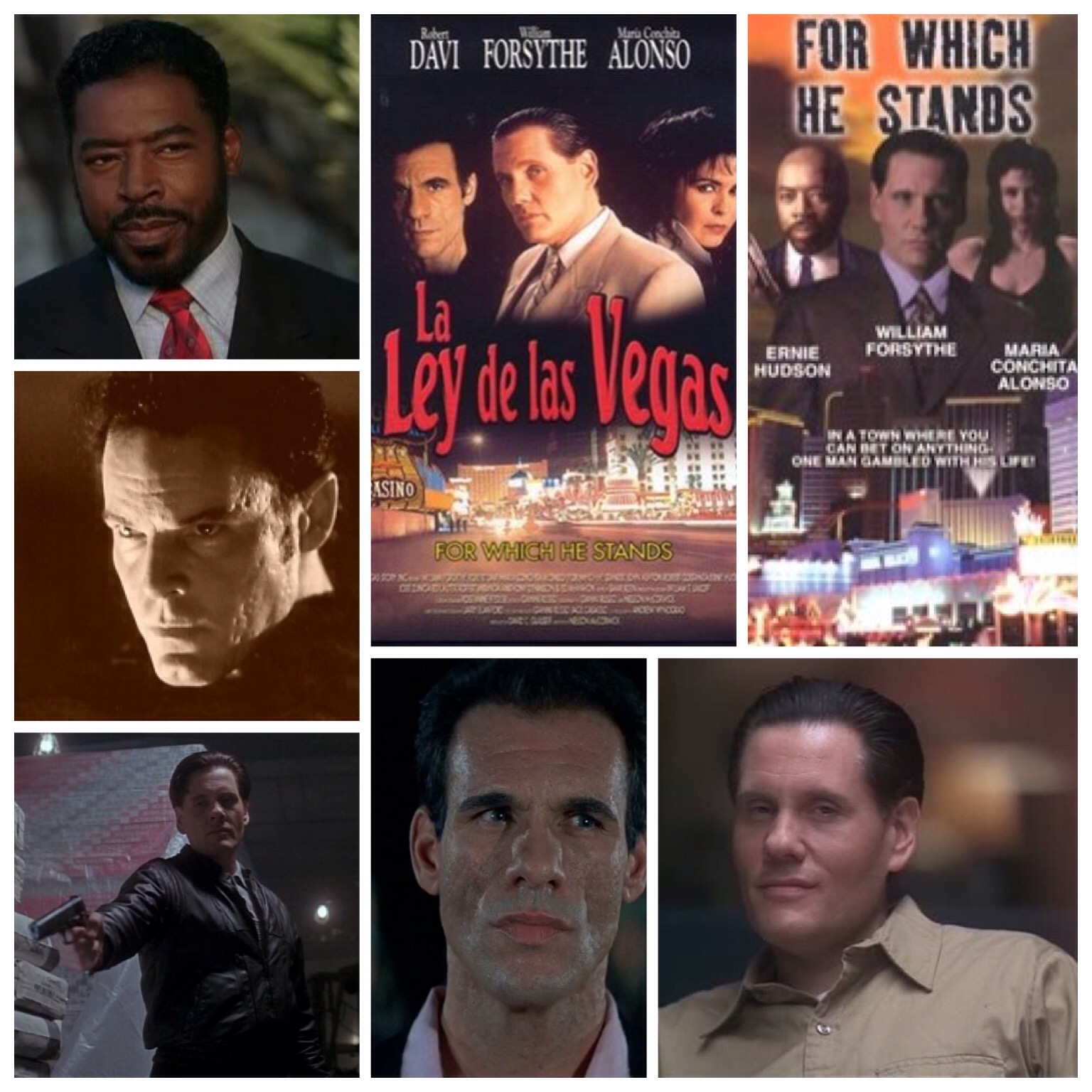
For Which He Stands is a lean, mean, nasty crime drama and cautionary fable about the dangers of pride and ego, and the spiralling disaster ones life can turn into when these qualities within the human nature go unchecked. It’s also a shamelessly slimy B movie treat featuring a tough as nails lead performance from William Forsythe as Johnny Rochetti, a small time Vegas casino mogul who runs afoul of some extremely dangerous South American criminals. He plays the role like Liotta from Goodfellas crossed with Bronson from Death Wish, an initial belligerent cockiness wiped promptly out of his personality by the very real danger stalking him, replaced by a reckless calm and willingness to get his hands dirty to defend his loved ones. One night, a Latin scumbag causes a raucous in his casino by violently threatening a girl. Johnny has a reflex reaction to defend her, and inadvertently kills the prick. This makes him a local hero, but also paints a huge target on his back for the Colombian cartel, who his deceased quarry had connections with. He’s forced to leave his wife (Maria Conchita Alonso) and contend with the dangerous criminal forces aiming to eliminate him. There’s some truly freaky cartel baddies here, including Andrew Divoff in a cameo as a gravel voiced psycho, and Robert Davi in a fire so,e turn as Carlito Escalara, a ruthless assassin hell bent on destroying Johnny. He’s got some legendary villain roles in over the years, and this one is among the nastiest, and best. Johnny’s only help comes from an intrepid federal agent (Ernie Hudson) and a D.A. (John Ashton’s). It’s Forsythe’s show though, and his transformation from untouchable big shot to caged animal on the run to eventual pistol packing hero is fun to watch. The atmosphere is pure crime cinema, told almost like a dark fairy tale that just happens to be set in Vegas. This one is positively buried in obscurity though, I had to seek out a screener VHS copy of a dusty corner of Amazon to get my hands on it. Good luck. 

MEAN STREETS – A REVIEW BY J.D. LAFRANCE

Mean Streetts 4

Martin Scorsese’s truly great films have all had a personal touch to them. One only has to look at films like Mean Streets (1973), Taxi Driver (1976) and Raging Bull (1980) to see a real vitality and energy to the action on-screen. It is these early films that convey a real sense of someone intensely in love with film — which may be due in part to the fact that Scorsese and his cast and crew were just starting out. Mean Streets, in particular, is a visceral, intimate experience that is just potent today as it was when it first came out.

Mean Streets
takes the notion of the American success story and reduces it to almost nothing. The characters that inhabit this film are small-time hustlers and punks with no real direction in life and no future. Set in the “Little Italy” neighborhood of New York City, we are introduced to most of the main characters in the opening moments of the film. Each one is given his own little scene in order to showcase his distinct character-defining obsession. We first meet Tony (David Proval), the order-obsessed owner of a local bar, as he throws out a junkie and then chastises his bouncer for his lack of initiative. Next, is Michael (Richard Romanus), a serious looking loan shark who ineptly tries to sell a man a shipment of German lenses only to be told by the customer that they are actually Japanese adapters. This is followed by the explosive Johnny Boy (Robert De Niro), a happy-go-lucky punk who gleefully blows up a mailbox and then runs off. Finally, we meet the film’s protagonist, Charlie (Harvey Keitel), an ambitious young man who is embroiled in conflict — both personal and external.

Charlie is torn between two worlds: the static isolation of his uncle’s environment and the constricting chaos of Johnny Boy’s lifestyle. He must make a choice between the two, while trying to exist in both. Conflict occurs when these two worlds inevitably collide and Charlie is left to pick up the pieces. This revisionist approach is in stark contrast to the traditional gangster film which almost always follows a curve that traces the criminal’s rise and eventual fall. However, Scorsese disrupts this notion by having no rise and leaving the fall unresolved. The only thing that is truly alive and vital in the film is Scorsese’s camera which dollies and tracks all over the place with incredible energy and enthusiasm which is truly infectious.

The source of this intensity stems from Scorsese’s personal identification with the material. At the time, the young filmmaker was writing the screenplay for Mean Streets (then known as Season of the Witch) and he had just finished wrapping up Boxcar Bertha (1972) for B-Movie guru, Roger Corman. Scorsese showed the rough cut of the latter to famous actor/director John Cassavetes who told him, “you just spent a year of your life making a piece of shit. You’re better than that stuff, you don’t do that again.” Cassavetes asked Scorsese if he was working on something that he really wanted to do. He showed him the Season of the Witch script and Cassavetes urged Scorsese to work on his own material and not on others.

So, the aspiring auteur began to seek financial backing for his script which initially began as a continuation of the characters in his first film, Who’s That Knocking At My Door? (1968). Scorsese changed the title to Mean Streets, a reference to famous pulp writer Raymond Chandler, and sent the script to Corman who agreed to back the film if all the characters were black. Scorsese was so anxious to make the film that he actually considered this option, but fortunately actress Verna Bloom arranged a meeting with potential financial backer, Jonathan Taplin, who was the road manager for the musical group, The Band. Taplin liked the script and was willing to raise the $300,000 budget that Scorsese wanted if Corman promised, in writing, to distribute the film.

According to Scorsese, the first draft of Mean Streets focused on the religious conflict within Charlie and how it affected his worldview. “See, the whole idea was to make a story of a modern saint, a saint in his own society, but his society happens to be gangsters.” Along with fellow writer Mardik Martin, Scorsese wrote the whole script while driving around “Little Italy” in Martin’s car. They would find a spot in the neighborhood to park and begin writing, all the while immersed in the sights, sounds, and smells of what would eventually appear on-screen. Mean Streets, for them, was a response to the epic grandeur of The Godfather novel. “To us, it was bullshit,” Martin remembers, “It didn’t seem to be about the gangsters we knew, the petty ones you see around. We wanted to tell the story about real gangsters.” It is this rejection of the often pretentious and operatic approach of The Godfather films that really makes Mean Streets distinctive. It was one of the few gangster films, at the time, to use a personal, almost home-movie view of its subjects. The settings and situations are so intimate and personal that you almost feel embarrassed, as if you are intruding on someone’s actual life.

Once the financing was in place, Scorsese began to recruit his cast. Robert De Niro had met the director in 1972 and liked what he had seen in Who’s That Knocking. De Niro was impressed with how the film had so accurately captured life in “Little Italy” where he had also grown up. Scorsese offered the actor four different roles, but he could not decide which one he wanted to portray — they all had interesting aspects to them. After another actor dropped out of the project, Scorsese cast Harvey Keitel in the pivotal role of Charlie. Keitel’s first film was also Scorsese’s debut with Who’s That Knocking and as a result, the two already had a rapport. This may explain why the director ignored the fact that the actor had little experience, and instead opted for a certain amount of rawness and a familiarity with the subject matter that Keitel possessed. Scorsese’s gamble paid off and Keitel’s strong performance is one of the many highlights of Mean Streets. He manages to convey the inner turmoil that threatens to consume Charlie’s character as he struggles to save everyone around him and ends up saving no one.

Keitel was also responsible for convincing De Niro to play Johnny Boy. “I didn’t see myself as Johnny Boy as written, but we improvised in rehearsal and the part evolved.” This improvisation also resulted in some of the most memorable scenes in the film, including the back room conversation between their two characters where Johnny Boy explains to Charlie, in a rather humorous fashion, why he has no money to pay off his debt to Michael. It is also incredible to see how much energy De Niro instills in Johnny Boy — the embodiment of the film’s frenetic force. He is the unpredictable element in Charlie’s otherwise, structured world. Whenever Johnny Boy is on-screen the camera mimics his furious pace that absolutely bristles with intensity. Scorsese reinforces this energy in an early scene where Johnny Boy enters Tony’s bar to the strains of “Jumpin’ Jack Flash” by the Rolling Stones. Even though the entrance is captured in a slow motion tracking shot, De Niro’s character is so energetic that not even this technique can slow him down.

The whole cast was prone to improvising dialogue and Scorsese only encouraged them more by creating a very collaborative atmosphere to the whole shoot. This provided actors like Keitel room to grow and learn their craft. “Mine was a gut, root, raw experience of trying to express myself, and express the character of Charlie in Mean Streets, and trying to discover what it meant to express yourself in a character. I was learning my technique, learning how to apply it. Marty and I always discussed a scene, and usually he trusted me to do what I had in my mind to do.” This trust resulted in a great performance from not only Keitel but the whole cast who transformed into their characters effortlessly.

Keitel was not the only actor who felt like he could make his character his own, the whole cast was encouraged to personalize their roles. Richard Romanus, who played Michael in the film, remembers that Scorsese “allowed you to flesh out the character. Even if you were in the middle of a scene and something came up that was organic, he wouldn’t dismiss it. He would respond to it, and he would probably include it. To me, that is his great gift. He’s an actor’s director.” This approach created a fun environment for the cast and crew to work in and allowed them more opportunity to be creative. As a result, Scorsese, as he put it, “kept pushing the limits of the budget and drove everybody crazy. But that was the only thing we could do because the more we got down there, the more fun we had and the more we realized the atmosphere we wanted to get.” To his credit, Scorsese and his crew achieve this effect with smoky, dimly-lit bars for his characters to inhabit and an amazing classic rock soundtrack to compliment the proceedings. There are several moments in the film where the actors are laughing at something and it seems like they are genuinely enjoying the moment and the experience of making this film which only enhances the enjoyment of watching it.

One of the real joys of Mean Streets is the way Scorsese’s camera captures the action. The camera is restless and frantic as it moves in tight, narrow spaces that lead to dead ends. This is done to convey the destiny of the characters. They are full of energy, but are going nowhere in life. In Mean Streets, Scorsese also used a hand-held camera to create a jerky, off-balance effect that conveys the sensation of disorientation. There is no center of power. No other scene demonstrates this effect more than the famous pool hall brawl where Johnny Boy, Charlie, and Tony go to collect some money from the owner. A fight breaks out when Johnny Boy’s bravado insults the owner. Scorsese uses a hand-held camera to convey the constant confusion of the fight. The camera darts and weaves all over the place, following one fight for a while before shifting to another brawl in an indiscriminate fashion. This effect raises the fight to a frightening level as the audience is drawn right into the middle of the pool hall melee.

We are in as much danger as the characters and this adds an element of realism not seen in traditional gangster films. The combatants in Mean Streets are not easily identified and separated, but instead everything is mixed up and obscured to duplicate the spontaneity of the ensuing chaos that constitutes a real brawl. The violence has no meaning or nobility and no one becomes a hero or succeeds as a result of using excessive force. After the pool hall fight is broken up, the conversation continues as if it never happened. The fight served no purpose and achieved no real end, except to enliven the characters’ mundane existence for a few minutes. Mean Streets excels in its realistic portrayal of violence that goes so far as to implicate the viewer in the spectacle, as the pool hall fight scene illustrates. The camera, and by extension, the viewer enters the fracas, which creates a sense of danger not only for the characters but for the audience as well.

Mean Streets
opened at the New York Film Festival to good reviews and good business. It did so well that Scorsese wanted to show it in Los Angeles where, despite favorable reviews, it promptly flopped. However, it began to gradually find an audience and has since become an influential and much imitated film amongst up-and-coming independent filmmakers who identify with the low-budget exuberance of Scorsese’s film. Even Scorsese himself returned to the same neighborhood, only with greater command of his craft and on a bigger scale with Goodfellas (1990). One only has to look at indie films like Laws of Gravity (1992), A Bronx Tale (1993), and Federal Hill (1995) to see that Mean Streets still continues to inspire filmmakers more than twenty years after its release.