SHANE BLACK’S KISS KISS, BANG BANG — A REVIEW BY NICK CLEMENT

kiss kiss

I can still remember seeing Shane Black’s wild and crazy genre bender Kiss Kiss, Bang Bang in the theater, at the Arclight in Hollywood, on opening weekend. I immediately fell in love with this film. It’s got great action, lots of pointed humor, terrific style from cinematographer Michael Barrett, with a satirical spin that allows for a unique tone to take over. The theater was packed and everyone loved it. There was a near constant stream of laughter, and all of the well-timed action and playful yet lethal violence was perfectly integrated into a smart, twisty screenplay that holds up remarkably well on repeated viewings. So it’ll always boggle my mind why, after premiering at the Cannes Film Festival, the film never broke out at the U.S. box office in the manner that it deserved; I don’t even think it got a fully wide release at any point during its theatrical life despite excellent critical support. It’s certainly become a recent cult item, which isn’t hard to see why. Predating the rapid A-list ascension for future Iron Man Robert Downey Jr. by three years, Black’s hugely entertaining shaggy-dog crime film involves a small-time criminal named Harry Lockhart (Downey Jr.) who accidentally stumbles into a movie audition while he’s being chased by the police after a botched robbery has left his partner shot.

A totally absurd set-up, but due to the near-whimsical way that Black stacks the deck from the opening sequence, the entire film feels pleasantly over the top if frequently quirky and always engaging. Much to his surprise, Lockhart gets the part after an impressed casting director mistakes him for a method actor, and once ensconced in Hollywood, he gets mixed up with a shady private eye (a hilarious Val Kilmer) and a sexy, potentially dangerous femme fatale (Michelle Monaghan) with ties to his past. A terrific and eclectic supporting cast including Corbin Bernsen, Rockmond Dunbar, Dash Mihok, Larry Miller, and Shannyn Sossamon all make memorable appearances. And as per usual for Black, there’s a Christmastime setting, thus continuing his tradition of writing actioners that take place over the winter holidays. This was Black flexing his witty and subversive neo-noir muscles, poking fun at a genre that he helped to shape and expand, with results that feel extremely knowing and well observed. And yet, it would take eight more years before Black would find himself back in the director’s chair, for one of the best Marvel offerings to date in Iron Man 3. But if you’re a Shane Black fan, don’t worry, because he’s about to bust loose with this summer’s hilarious looking The Nice Guys, and is hard at work with his Monster Squad co-writer Fred Dekker on The Predator. Fun tidbit: Black titled his film after film critic Pauline Kael’s 1968 film reviews and essay collection.
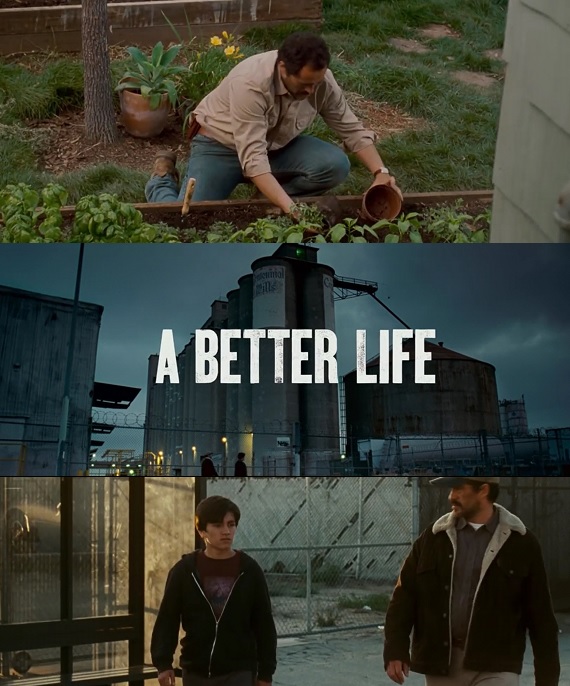
 

CHRIS WEITZ’S A BETTER LIFE — A REVIEW BY NICK CLEMENT

abl

A Better Life is a wonderful film. Released to warm critical support in 2011, Chris Weitz’s poignant and frequently well observed film garnered lead actor Demian Bichir a much-deserved Oscar nomination for Best Actor. Loosely based on the classic Italian film The Bicycle Thief, Eric Eason’s intelligent, touching, and humanistic screenplay was based on the short story The Gardener, by Roger L. Simon, and concerns a Mexican gardener named Carlos (Bichir) living in Los Angeles and trying to provide for his impressionable son Luis, the excellent José Julián, a high school underachiever who is dating the sister of a local gang member. When Carlos’ new pick-up truck and tools are stolen by a devious day laborer, life begins to get even more complicated for the father-son duo, as they attempt to better one another in ways that only the two of them individually know how to do. This is a fairly devastating piece of cinema, and a rarity for Hollywood in that it features an almost entirely Hispanic cast, and concerns the realistic challenges that face immigrants in a city, that, for years, has thrived off of exploitation of the illegal day laborer market.

Weitz and Eason made changes to the script to reflect the various language differences and slang being used on the streets, consulting with gang members and local community figures in an effort to accurately portray this specific lifestyle, which is starkly contrasted with the comings and goings of a mostly indifferent city. Bichir’s performance is absolutely remarkable, conveying fear, love, and hopefulness for his son at all of the key points in the narrative, essentially allowing the audience to peer into his mind, soul, and heart. The ending stings with honest sentiment, never going “Hollywood” at any point, while reminding the audience of how hard it is for so many people to make ends meet for their family. Javier Aguirresarobe’s unfussy and golden-hued cinematography meshed perfectly with Alexandre Desplat’s contemplative score. Foolishly buried in mid-summer with a why-bother? release by Summit Pictures, the film completely died at the box office, grossing less than $2 million, thus making Bichir’s righteous Oscar nomination something of a tremendous surprise.

ROMAN POLANSKI’S FRANTIC — A REVIEW BY NICK CLEMENT

1

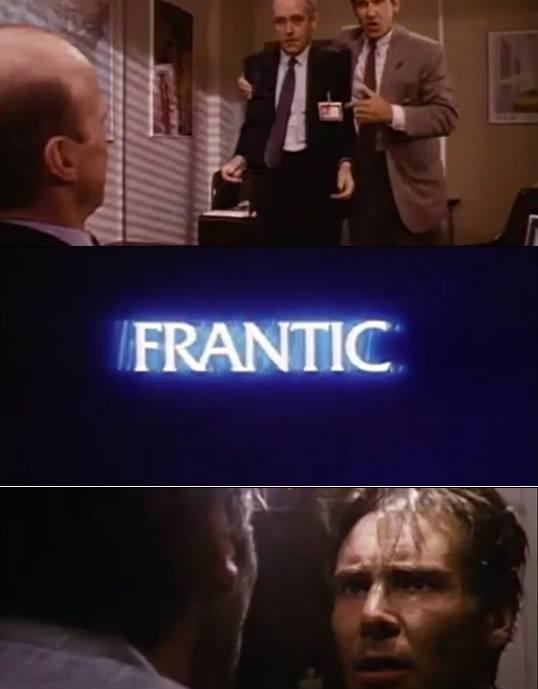
Roman Polanski’s Frantic was maybe his most overt nod to Hitchcock, and features a strong turn from Harrison Ford as a man who has his life turned upside down when his wife is kidnapped while on vacation in France. One thing leads to another, and before you know it, he’s caught in a game of international intrigue, with a potentially dangerous femme fatale waiting to muck things up. There’s a bit of some tonal inconsistency at times, but nothing to derail the picture, and you might question some of Ford’s actions in the final reel, but overall this is a fun mystery thriller that seems to be mostly forgotten in the realm of Polanski’s filmography. It’s got visual and verbal wit, Ennio Morriconne’s twisty score adds an extra layer to the entire piece, and Polanksi seemed to be delighted by throwing Ford through the ringer all throughout the piece. Look for a very young and gorgeous Emmanuelle Seigner (Polanski’s wife) as the mysterious woman who may or may not be more than she appears to be, while the eclectic supporting cast includes Dominique Pinon, John Mahoney, Betty Buckley, and David Huddleston. The film was well received by critics but did only moderate box office. Witold Sobocinski’s sharp cinematography keeps the vantage points smartly out of focus in crucial moments, while possessing an overall visual crispness at almost every other turn. Robert Towne did uncredited rewrites on the screenplay.

John Hillcoat’s Triple 9: A review by Nate Hill

John Hillcoat’s Triple 9. Bloody. Nasty. Blistering. Nihilistic. And surprisingly deft in its presentation of character. The only clear cut, out and out protagonist is Casey Affleck’s Marcus Allen, a young detective with a wife and kid, brutally unaware that he’s been targeted by a group of stunningly dirty cops and a few ex special forces hardcases to bite the dust in a planned homicide, sparking an ‘officer down’ over the airwaves to distract the force from what’s really going down. With the exception of his straight arrow heroics, the entire rest of the cast is a snake pit of depraved, slimy, reprehensible degenerates, populating a decayed, gang infested Atlanta where the cops are just as likely to empty a clip into your skull as the cholos. Chiwetel Efjor plays Atwood, leader of a most unfortunate crew of misfits who are forced to perform near suicidal heists for tyrannical Israeli-Russian mafia bitch Irena (a bleach blond, terrifying Kate Winslet). Their newest venture is so impossible that they’re attempting to use a slain officer as a ditch effort to get their stake. Of course it all goes to high hell, as we’ve come to expect and love in these type of films, with bullets, profanity, self destructive behaviour and wanton violence languishing all over the screen in glorious excess. Efjor is crackling good, showing brief glimpses of humanity in a dude who has lost his soul down a deep dark well, a caged animal fighting tooth and nail to no avail. The rest of his crew spend the film savagely trying to out – sleaze each other, and I mean that in the best way possible. They are really a bunch of snot rags, and this is a group of outstanding actors having bushels of fun being irredeemable bad boys. Anthony Mackie is walking C-4 as Efjor’s right hand, a guy rotten to the marrow with moral conflict. Norman Reedus leaks grease as an ex special ops prick and their getaway driver. I didn’t think Aaron Paul could be anymore despicable than in breaking bad, but somehow manages it here, playing a dude so grungy you’ll squirm. It’s Clifton Collins Jr. who scores the points though. He hasn’t had a great role in years and he comes out blazing as the icy sociopath of the group. Then there’s Woody Harrelson. Oh, Woody. He’s clearly having a ball as Affleck’s stoner uncle and high ranking cop. He spends the entire film ripped off his gourd on joint after joint, and take it from me, he knows how to play stoned impeccably. Despite the laconic bumbling, he shows that fire and ferocity we’ve come to know from him in brief unmistakable flashes, especially where it matters. Throw in Teresa Palmer as Affleck’s loving wife and Gal Gadot in full slut mode and you’ve got a cast for the time capsule. Hillcoat wastes not a second in propelling his narrative forward with the force of a bulldozer, giving us minute moments of respite amongst the surging monsoon of bloodshed and dirty deeds. Composer Atticus Ross whips up a foreboding, hair raising war cry of a score that kicks in from the first frame and doesn’t quit till the last shell casing has hit the ground. The only misstep the film makes is killing off its best actor way too early on, vut its not enough to be an actual concern or hurt it overall. If sickeningly satisfying ballets of blood, broken limbs and morally bankrupt people engaging in all kinds of giddily fun criminal activities are your thing, this is a great way to kick off the year, cinematically speaking. Hell even if it’s not your thing go check it out. It’ll shake your shit up and then some.

THE WITCH: A Review by Joel Copling

Rating in Stars: *** (out of ****)
Cast: Anya Taylor-Joy, Ralph Ineson, Kate Dickie, Harvey Scrimshaw, Ellie Grainger
Director: Robert Eggers
MPAA Rating: R (for disturbing violent content and graphic nudity)
Running Time: 1:33
Release Date: 02/19 (limited)

In its most sinister form, religious fundamentalism can look a lot like its complete reverse, or so says The Witch, an unnerving and effective look at the blurred lines between such a religious persuasion and that of Satanic paganism. The film’s screenplay, written by director Robert Eggers, purports to have gained a lot of momentum from writings in the era in which it is set (the 1630s). The dialogue takes on the Early Modern English dialect of the setting (New England), and the actors perform it with the sincerity of a stage production of something written by Shakespeare. The film is also positioned, rather awkwardly, as studio horror, which it is pretty firmly not for at least 85 of its 93 minutes.

Instead, we have about 45 minutes of build-up to a chamber drama that happens to sometimes take place outdoors. The central characters are the members of a close-knit, Christian family. William (Ralph Ineson) and Katherine (Kate Dickie) are the mother and father, whose strict control of their children is clearly a loving and not abusive attribute of their relationship with them. The elder daughter is the hard-working Thomasin (Anya Taylor-Joy), after whom her prepubescent, hormonal brother, eldest son Caleb (Harvey Scrimshaw), yearns in a way that speaks fairly openly about the confined nature of their tiny, household society, and there are a couple of adorable twins, too, named Mercy and Jonas (Lucas Dawson and Ellie Grainger).

Katherine has just given birth to another son, who goes missing during an innocent game of peek-a-boo with Thomasin. Evil forces are at work on this piece of land owned by the family, and they do their damnedest to try and ward off those demonic spirits to whom they are merely seven more victims. Eggers and cinematographer Jarin Blaschke appoint a suffocatinguse of natural light to the proceedings, which fits well with their oppressive grimness. The film has drawn comparisons in the critical community with the work of Ingmar Bergman, and the film’s insular nature certainly gives those comparisons some weight, especially in the climax that proceeds the baffling final moments.

Those final moments, by the way, offer a kind of black-and-white choice and disturbing sort of sacrifice that feel at odds with the calmer cautionary tale that proceeded them but no matter. The film does quite the job of building the kind of tension that can’t be cut with the proverbial knife, and those performances, kept on that knife’s edge, are an enormous part of this. Not a single cast member here lets the material down, even the younger ones (Scrimshaw is particularly effective during a possession sequence), though Taylor-Joy is very good as Thomasin, whose innocence is quickly corroded by the penetrating forces surrounding her.

Before that baffling final few minutes, the film takes on the patience of an old-school thriller from the 1970s (to be specific, it feels like Nicolas Roeg’s Don’t Look Now, especially in how it all seems to lead up to those final shocking moments, though they were more suggestive in the earlier picture). It’s a considerable achievement of craft and performance in holy matrimony that occasionally outshines a script that isn’t exactly stretching the boundaries of its central thesis. Luckily that theme is striking enough that crafty effort is all it needs to work. The Witch reciprocates the effort with frightening precision.

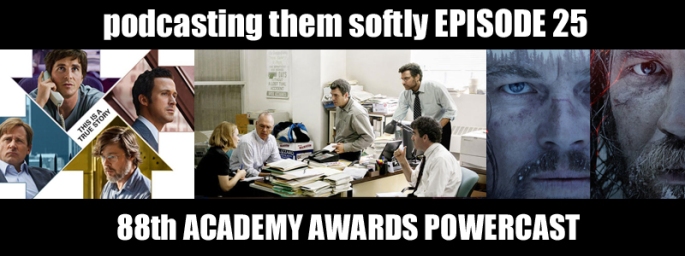
Episode 25: 88th ACADEMY AWARDS POWERCAST

OSCAR PODCAST

Join us for our Oscar podcast.  We give our predictions in all the major categories, and we discuss what we think will win and what should win.  Tune into the Oscar’s and see if we are geniuses or complete idiots!

FICARRA & REQUA’S I LOVE YOU PHILLIP MORRIS — A REVIEW BY NICK CLEMENT

1

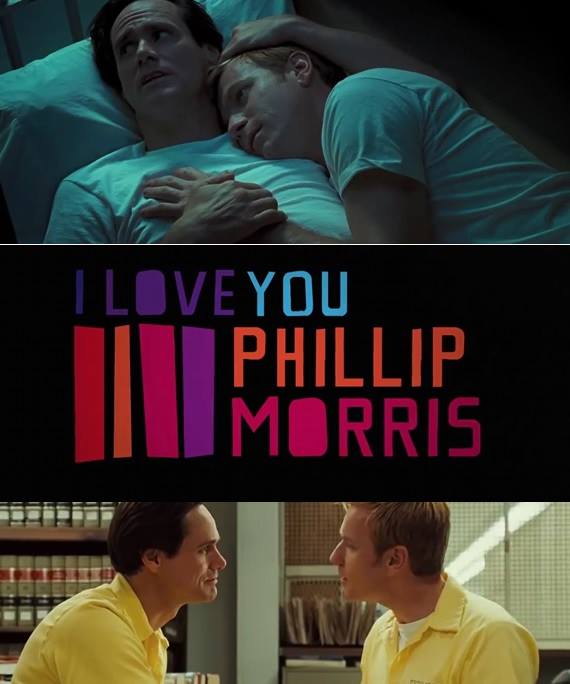
I Love You Phillip Morris is so under the radar it almost hurts. It’s a small gem, something unique and special and a film that doesn’t play by the normal rules. This movie sleighed me. The less you know about the real-life antics of Steven Russell and the plot of this darkly hilarious movie the better. This is a film containing constant surprises and frequent twists and turns. You’ll find yourself repeatedly saying “This can’t be true” or “This couldn’t have really happened,” but like the filmmakers state at the front of the film that it did. All of it. And then some (post-movie I read up online about the particulars and there’s even more that was left out of the wildly unpredictable narrative). I Love You Phillip Morris deals with Steven Russell (an amazing Jim Carrey in one of his best performances, if not THE best…), a family man living a secret life as a con-artist. Then, one day, after a life-changing moment, he finally admits to himself that he’s gay. He immediately gets a hunky boyfriend and moves down to Miami Beach, continuing the art of the con, and still maintaining a civil relationship with his wife and kids. Then, he gets pinched after a job goes awry, and he winds up in jail. And that’s when things get really complicated. Steven immediately falls in love with fellow jailbird Phillip Morris (wonderfully played by the always likable Ewan McGregor) and basically makes it his life’s goal to never be separated from him.

That’s all I am going to say. The rest is for you to discover and hopefully fall in love with. What I will allow is that there was a moment where I was in total tears, emotionally crushed by what I was watching, only to have the rug pulled out from under my feet, leaving me in a state of stunned hysterics. The film marked the directorial debut of Glenn Ficarra and John Requa, the duo who are best known for writing the black-heartedly brilliant Bad Santa, writing/directing the solid rom-com Crazy Stupid Love, and last year’s Hitch. They are natural born directors, with a quirky-stylish visual sensibility, while also possessing an amazing talent for mixing crude one-liners with believable and earned sentimentality which keeps their work grounded in reality, never pushing it into farce. I Love You Phillip Morris effectively juggles the tricky task of voicing multiple tones throughout the narrative, and while many sequences seem too crazy to be true, there’s always something real and honest about an individual moment or line of dialogue that brings everything back down to reality. It’s a shame that there wasn’t a wider release for this film because it’s so damn good and so surprising and enjoyable that it just goes to show you how pathetically homophobic our society really is. My assumption is that the graphic gay sex scenes/dialogue were a turn off for all of the major Hollywood studios (indie distributor Roadside Attractions handled the movie and Luc Besson’s French company Europa put up most of the production budget) because despite the name cast and accessible genre, nobody in Tinseltown wanted to deal with this film. Pretty bogus if you ask me. I Love You, Phillip Morris is the best movie you haven’t seen.

STANLEY KUBRICK’S EYES WIDE SHUT — A REVIEW BY NICK CLEMENT

1

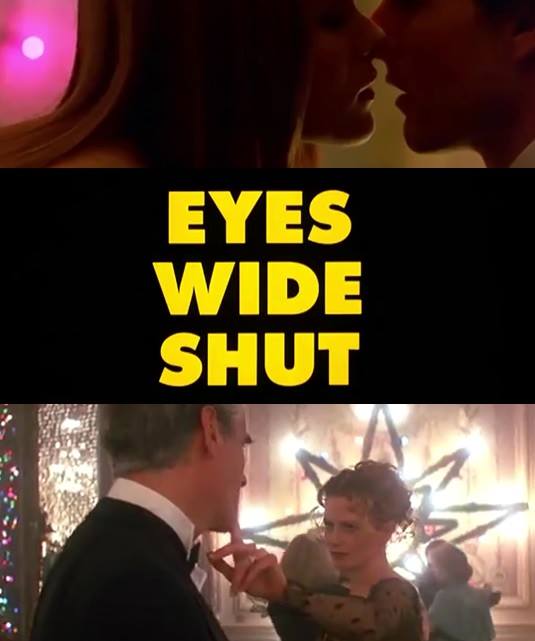
Eyes Wide Shut operates as a vivisection of a failing marriage, and is easily one of the most incisive and abrasive comments on the idea of monogamy and the modern family unit that’s ever been put up on screen. It’s also incredibly dreamy, more than a tad surreal, and highly erotic if never being truly sexy, except for the bit with Vinessa Shaw, because there’s no way that Vinessa Shaw couldn’t be sexy. Tom Cruise and Nicole Kidman took some serious personal and professional …risks here, with those risks and challenges cinematically paying off, if not personally. I love that Todd Field is THAT piano player. Kidman’s final line of dialogue to close the film is absolutely perfect, summing up the psychological stance of the film in two succinct words. The now infamous orgy sequence is something of a tour de force (the notorious prudes at the MPAA still be damned!), while Larry Smith’s hot-light cinematography singes the eyes while repeatedly playing with your expectations. There’s also a stilted quality to portions of the film which always make me feel like I’m watching Kubrick’s idea of a waking dream (or nightmare), with Jocelyn Pook’s sketchy piano-dominated score pecking away at your nerves. Arthur Schnitzler’s highly influential Traumnovelle served as the basis for the narrative with the film being co-written by Two For the Road screenwriter Frederic Raphael and Kubrick. This is an endlessly debatable film and was designed to be so, and in retrospect, feels like an appropriately cryptic and final piece of work to come from one of the most legendary and of filmmakers. Kubrick, who started thinking about the project in the late 60’s, died four days after screening his final cut for Warner Brothers execs, and it’s truly a shame he never lived to see the reception that the film received.

RYAN COOGLER’S CREED — A REVIEW BY NICK CLEMENT

creed movie

Creed is rock solid. It doesn’t wish to reinvent the wheel, but rather, grease the ones that have been riding the track for years. Michael B. Jordan was thoroughly engaging in an extremely physical performance; I’ve liked him since Friday Night Lights and he showed in both Chronicle and Fruitvale Station that he’s got major screen presence. He more than holds his own with Sylvester Stallone, who drops a poignant bomb all over this movie, especially in the second half – you’d have to sort of have no heart not to be choked up or emotionally affected, even if your Rocky knowledge is cursory at best. The fight sequences are vigorously and creatively shot by the incredible French cinematographer Maryse Alberti (The Wrestler, Black Swan) who gave each bout its own distinct rhythm and personality, with lots of long stedicam shots and frequent use of medium and wide shots, thus showing the boxing matches in all their sweaty glory. In yet another ridiculously competitive year for cinematography choices, she made a strong case for a nomination, which regrettably didn’t happen. Ludwig Göransson’s musical score is appropriately triumphant, leaning on the old school flavor of Bill Conti’s rich and bold original theme, while still injecting its own distinct personality, and the ending is satisfying and pleasantly surprising, never going over the top or feeling forced. It’s a very good movie, extremely well told, and a fitting extension of one of the more storied franchises that Hollywood has created. Jordan probably should have gotten an Oscar nomination, as stepping into such an iconic series couldn’t have been easy, and as you watch him practically carry the entire film on his absurdly chieseled shoulders, you begin to wonder what the future has in store for him as an actor. The film makes excellent use of its hardscrabble Philadelphia locations, and the backstory that co-screenwriter/director Ryan Coogler cooked up for the offspring of Apollo Creed felt believable and just organic enough. Shrewdly packaged and very entertaining, Creed feels like it could be the start of a new series of films, or a sly farewell to one of cinema’s most popular series of movies.

Tom McCarthy’s SPOTLIGHT – A Review by Frank Mengarelli

SPOTLIGHT is a film that can win as many awards as possible, gain the attention and high praises of anyone who sees it, and the film would still be an understatement.  What this film achieves, is something that most films never come close to; accountability.  This film holds everyone accountable; from the Catholic Church, the lawyers making easy money on out of court settlements, society that has turned a blind eye, and above all – the journalists themselves.

image

Director and co-writer Tom McCarthy brings a subtlety masterful hand to this film.  There are not any sweeping camera movements in the direction, there’s nothing that explodes from the screenplay.  As wonderful as the performances are, there isn’t a scene stealer, there isn’t one juicy role for an actor to come in and show off.  It is meticulously crafted by McCarthy and his GLENGARRY GLEN ROSS worthy ensemble.  In a word, this film is perfection.

image

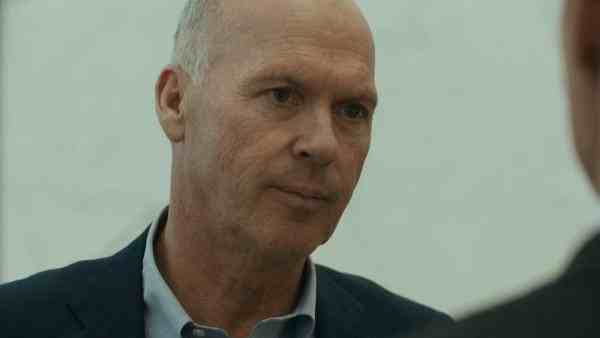
Michael Keaton headlines the cast as the tough Robby Robinson, whose floating Boston accent heads the Boston Globe’s investigative unit Spotlight.  Keaton gives a tremendous low key performance, doubling down on his cache he had received from his brilliant turn in BIRDMAN.  Mark Ruffalo and Rachel McAdams follow behind Keaton as his two forwards, obsessively losing themselves in their quest to find the truth.

image

The subject matter is very hard to watch, and very hard to re-live for those affected by sex abuse at the hands of the Catholic Church, those affected by lawyers quietly arranging hush money in the shadows of the Church all the while making sure there isn’t a paper trail of court documents, and lastly, those affected by the oversite of reporters who either missed tips, or did not take them seriously.  This film is not about atonement, this film is about it’s accountability to the survivors.