ALEX ROSS PERRY’S QUEEN OF EARTH — A REVIEW BY NICK CLEMENT

1

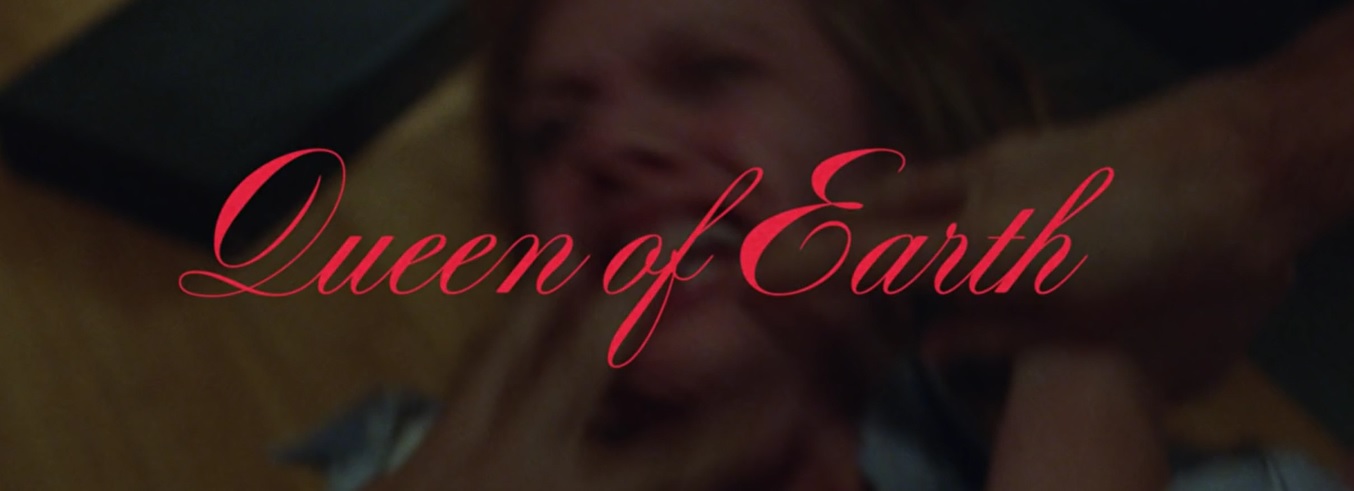
I recently had two viewings of Queen of Earth on successive nights and the film has stuck with me ever since. This one won’t be for everyone. It’s challenging, it’s uncompromising, and it features a riveting lead performance from the stunningly talented actress Elizabeth Moss (Mad Men, Top of the Lake) that will leave you emotionally drained by the end of the 90 minute run time. Up and coming filmmaker Alex Ross Perry (last year’s bitterly funny Listen Up Philip, which also s…tarred Moss) could do a lot worse than be wholly inspired by Robert Altman’s one of a kind masterpiece 3 Women, and even if Queen of Earth isn’t on that level (NOTHING could ever be…) I’d rather see a young talent emulating Altman as opposed to half-dozen other filmmakers I won’t mention. This is the sort of film that isn’t really “about” anything tangible, but rather, it’s an intensely internalized piece of storytelling that holds at its center the chance for an actress to go to some genuinely pained places as an artist. And it’s unquestionably one of the most unique films I’ve seen all year, a bold piece of work that feels crafted by a smart group of collaborators who knew exactly the story they wanted to tell.

There’s an unnerving quality to much of the film, due largely in part to the ominous score by Keegan DeWitt and the measured, highly stylized cinematography by Sean Price Williams. The elliptical editing by Robert Greene only intensifies the unpredictability and vulnerability being demonstrated by Moss, and the sense of uncertainty being felt by Waterston. Perry’s film centers on Catherine (Moss), a psychologically fragile woman who is still suffering the traumatic effects of her father’s recent suicide, who reconnects with an old friend (Katherine Waterston, making good on her promise from Inherent Vice) at a cabin in the woods, trying to calm her life down. But that’s not going to happen. It’s pretty clear from the get-go that this isn’t going to happen. So you just watch as Moss presents the ultimate portrait of a person coming apart at the seams, unable to gather her thoughts coherently, and the way that Perry doles out implied backstory and various narrative clues demands that viewers actively engage with the film rather than passively experiencing it. I have a lot of respect and admiration for the filmmaking, for Moss, and for the overall ambition on display, but it’s a film that will likely leave many people feeling uncomfortable, if for no other reason than it literally feels like you’re a secret guest to a mental breakdown, which is something that many individuals just won’t want to deal with when deciding what movie to watch on a Friday night.

2

TIM BURTON’S ED WOOD — A REVIEW BY NICK CLEMENT

1

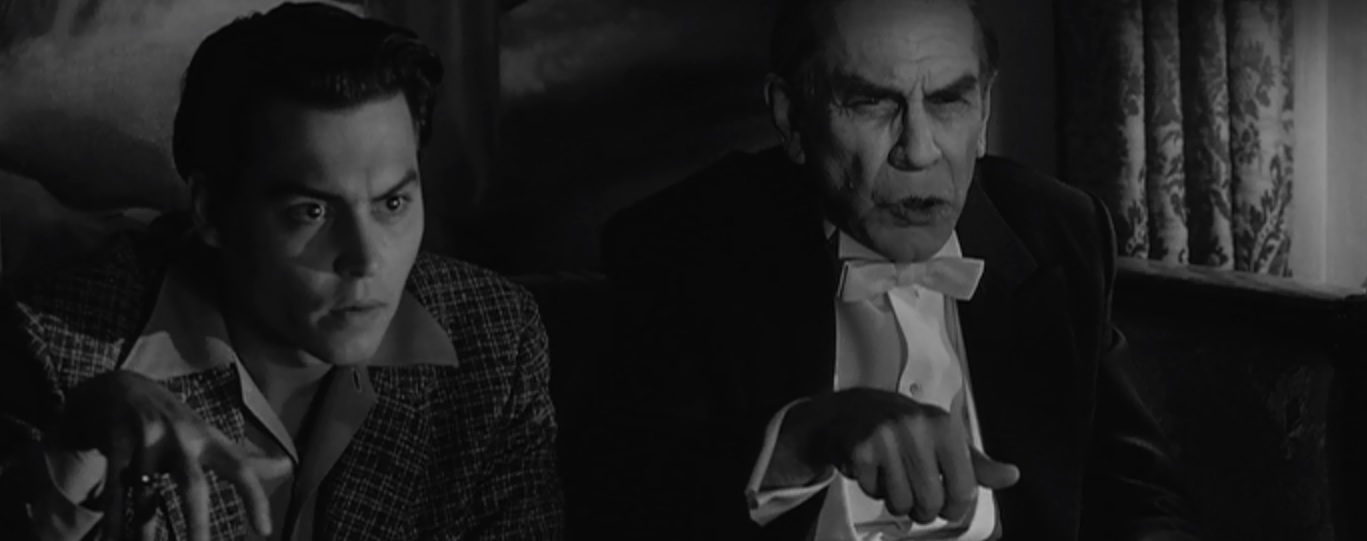
Other than Pee Wee’s Big Adventure and Beetlejuice, Tim Burton’s Ed Wood is my “favorite” film from this phenomenally adventurous and eccentric filmmaker, but I think it clearly stands as his “best” piece of work to date. Working with the invaluable screenwriting duo of Scott Alexander and Larry Karaszewski (Man on the Moon, The People Vs. Larry Flynt, the upcoming original FX series American Crime), Burton was able to craft a black and white ode to a Hollywood of yesteryear, and because the ingenious screenplay bucked the traditional notes of the conventional biopic, the film takes on a more layered feel and structure, examining not only Wood the director but Wood the man and Wood the mystery, as well as stopping to consider all of the colorful people who surrounded his bizarre life. Shot by the great cinematographer Stefan Czapsky (Batman Returns, Edward Scissorhands), it’s one of the rare modern movies to get the studio approved monochrome treatment (after switching homes from Columbia Pictures to Disney/Touchstone), but let’s be honest, there was NO other way to present this material; this is one instance where the content dictated the style, and not the other way around. Johnny Depp was marvelous in the picture, easily giving one of his greatest performances as a man caught in eternal confusion, both personally and professionally, never truly understanding his place in society or how to grasp all of the straws around him. Some of these themes would be later explored by Burton and Alexander and Karaszewski in last year’s underappreciated (at least by theatrical audiences) art world exploration Big Eyes, which featured a splendid lead performance from Amy Adams. The dynamic supporting cast includes Oscar winner Martin Landau, giving an unforgettable performance as screen legend (and notorious drug addict) Bela Lugosi, and also featured terrific turns from a pensively hilarious Bill Murray, the always awesome Patricia Arquette, an exasperated Sarah Jessica Parker, Mike Starr, Vincent D’Onofio, Max Casella, Lisa Marie, and G.D. Spradlin. The film opens with a charming and creative opening credit sequence evoking all of Wood’s disasterpieces, with Danny Elfman’s imaginative and playful musical score setting the tone early on. The film would receive overwhelming critical praise and also garner two Oscars, one for Landau for Best Supporting Actor, and the other for make-up artist Rick Baker. Alexander and Karaszewski would receive a WGA nomination for Best Original Screenplay. Despite not attaining box-office success in theaters, Ed Wood has lived on as one of Burton’s most respected and mature films, a piece of work that feels extremely personal and incredibly generous in spirit.

2

My chat with veteran actor Pat Skipper

Greetings again! I just had the chance to interview veteran actor Pat Skipper, who has appeared in countless films including Erin Brockovich, Lethal Weapon 2, Demolition Man, Rob Zombie’s Halloween, Seabiscuit, Ed Gein, Independence Day, Predator 2 and more. He’s also shown up in many a  TV Show, including Mad Men, ER, That 70’s Show, Charmed, Buffy The Vampire Slayer, Bosch, The West Wing, Bones, Cold Case, Criminal Minds, Medium, Justified, The Mentalist and an intense character arc on The X Files as Bill Scully. He’s been a force to reckon with in the industry for a long while, and it was a pleasure to speak with him. Enjoy!
Nate: How did you find your way into acting, was it something you always knew you wanted do? What was your background before that?


Pat: I was a total TV head when I was a kid. I loved Lost in Space. I loved Billy Mumy (Will Robinson). Then, I saw him in a Twilight Zone re-run and he scared me to death. That’s the first notion that I had that someone was “acting.” I was amazed. But I got into doing it myself in the way that most kids from the sticks do. I got a part in the high school play. I probably had six lines. I was an Irish cop, I think. I realized that actors were “my people.” I kept doing it and never stopped.


Nate: Tell us a bit about your book, ‘The Working Actor’. How was the process of writing, and coming up with it? I will also include a link here in the blog post so that anyone reading who is interested can take a look.


Pat: I had been coaching a friend of mine, a young woman–a girl really–on auditions. I began to look back over my career. I saw my younger self reflected back at me while I was working with her. I thought, “I wish I had me for a teacher when I was 21.” So I started taking notes. Six drafts and 2.5 years later, I have my book, The Working Actor.


Nate: You have an impressive, intense character arc on The X Files. Did you enjoy creating the character of Bill Scully, and how was working on the series for you?


Pat: I loved X-Files. I was a big fan of the series. I thought then (and still think) that Gillian Anderson is one of the best actors alive. Playing opposite her was so engaging. She’s a tremendous athlete. She made me better.


Nate: I saw a comment from Michael Connelly on the website for your book. Did you know him prior to being cast in Bosch, or did you meet as a result of that. He’s a wicked author, and you are an incredible actor, I feel like he should write something just for you. Did you enjoy working on Bosch?


I was very excited to get cast in Bosch. I had been aquainted with the Producer Eric Overmyer 30 years before (when we were both starting out in New York). Something happened in that audiiton room. I just fell apart emotionally. I got the part. I was over the moon to meet Mike Connelly as I had read every single one of his novels. I couldn’t wait to meet him. When I did, he reminded me that I had worked with him before in a pilot for a TV show that he had written in the 90s! I didn’t remember him at all. I loved working with Titus Welliver. The guy is the quintessential Working Actor. He’s worked his way all the way to the top. Titus wrote the foreword to my book. That said, playing Sam Delacroix was brutal. Such an awful, selfish, morally corrupt and lost person. It cost me a bit of my soul to play him.


Nate: thank you for sharing that, and it’s super exiting about Bosch, I hope to start it soon. Any hobbies, interests besides acting and writing?


Pat: I had 12-year-old twins. They keep me busy. I play very mediocre golf. I read A LOT. I love football season.


Nate: Working with Rob Zombie on Halloween- Did he pursue you for that role? He tends to specifically request actors, and cast his films, even down to the minutest role, with old familiar faces and impeccably picked talent. Did you enjoy your experience on that film? Working with Scout, Dee Wallace and everyone?


Pat: Rob Zombie is a very sweet guy, surprisingly. And he’s remarkably inventive. He creates a very fertile work environment. Dee, Scout and I loved each other. He helped us create a very credible little family. Then he covered me with gallons of blood. I went to audition. That’s how I get all my jobs. No one has ever requested me for shit.


Nate: In your website bio it says you initially had trouble finding jobs just out of school. Care to elaborate? Specifically the esoteric nature of preparing for a performance or audition, versus the practical, professional way to go about searching for the work. The art vs. the know how etc.


Pat: Everybody has trouble starting out. Everybody. I had no idea how to audition for jobs. I totally sucked. I came to a revelation. If I was going to work in this business, I was going to have to create my own work. Cutting to the chase, I produced a hit play starring the then 21-year-old (and unknown) actress, Marisa Tomei. It opened doors–for both of us. I have come to the conclusion that Acting is not an art form. Acting is a sport. Acting is taught as if it were some fancy, magical, mystical thing. I advocate in my book (and with the people that I coach) that we should attack our careers–and our work–with the dedication and tenacity of professional athletes. Take the magic out. Work our asses off. Have a repeatable process. Learn through repetition. Work out to stay sharp. Never settle. Never stop getting better. Expect the best out of ourselves. Deliver every time.


Nate: Your career is primarily acting, and now the book. Have you ever considered getting into other aspects of filmmaking such as script writing, producing or directing your own projects?


Pat: I act. I coach actors. I wrote a book. That’s it.


Nate: What are some of your favourite roles you’ve gotten to play?


Pat: Bosch, X-Files, Bones, Boston Legal, Halloween. A lot of my best stuff has been in other projects that no one ever watched. So it goes.


Nate: Besides Bosch, any other projects coming up, cinematic or otherwise that you are excited for and would like to mention?


Pat: I’m a Working Actor. Right now, that means I’m looking for work. I auditioned for some TV show today. I’m running my studio. I’m coaching other people’s auditions. The book comes out in a month. I’m as busy as hell making that happen. It’s exhausting. It’s also kind of scary. Mostly, though, it’s pretty cool.
Nate: It’s the coolest profession anyone could hope to a part of indeed. Best of luck, I’ll see you soon in Bosch, and will most definitely be getting ahold of your book. Thanks so much!

DAVID GORDON GREEN’S PINEAPPLE EXPRESS — A REVIEW BY NICK CLEMENT

2

David Gordon Green, the indie specialist of such films such as George Washington, All the Real Girls, Undertow, and Snow Angels, was just about the last person I’d ever expect to get the directing job on a Cheech & Chong inspired stoner-action-comedy like Pineapple Express. Up until right before Pineapple Express, his style would have been considered much more in the vein of Terrence Malick than Judd Apatow (who produced Pineapple Express). But almost to prove a point that he could change it up and play in the big leagues of studio financed product, Green stepped out of his comfort zone and crafted, along with screenwriters Seth Rogen (who also stars) and Evan Goldberg, the ultimate bromance marijuana movie, a film that playfully mixes genres, blending simple yet extremely effective pot humor with the sensibilities of John Woo’s ultra-violent action movie period of The Killer and Hard Boiled and Face/Off. The results are a bizarrely awesome, hard to define piece of work, a movie that has big laughs, a surprising and almost giddy amount of blood, a never ending stream of creative profanity being uttered from the stacked cast, and a huge supply of generous heart and friendship born from the two perfectly matched leads (Rogen and a scene-stealing James Franco, playing everyone’s friendly neighborhood weed dealer). I’ve been a fan of this film from day one, and I’ve watched it repeatedly over the last seven years, and it’s proven to be a comedy that just won’t die for me. The summer of 2008 will always be remembered for Pineapple Express and Tropic Thunder, two blockbuster comedies that grabbed their R-ratings by the balls and embraced the hell out of their crazy ideas.

3

The set-up is simple in Pineapple Express. Rogen, playing a ganja-loving process server named Dale Denton, stops over at his dealer’s apartment to grab some little green trees. His dealer, Saul Silver (an utterly priceless Franco, looking beyond glazed-over), has the best stuff in town: Pineapple Express. Oh yeah – notice their initials? SS and DD? Same Shit Different Day. Ha! After getting his fresh new stash, Dale heads over to serve someone with their papers, only this someone happens to be the city’s main importer of the fabulous Mary-Jane. What Dale also doesn’t expect to see is Ted Jones (a disheveled and drugged-out Gary Cole, reliably funny as always) murder his rival, shooting him in the back of the head in the living room of his glass-walled house. Fleeing the scene, but not before throwing his roach of Pineapple Express out the window, Dale high-tails it back to Saul’s to tell him what he’s witnessed. Ted observes Dale making his escape, heads out to the street, sniffs the roach, and because Saul is the only one that he’s given the Pineapple too, he knows immediately where to start looking. The film speeds along with Dale and Saul on the run from Ted and his goons, getting stoned every chance they get, and finally culminating in a wonderfully graphic shoot-out that would make Woo and Michael Bay blush.

1

What’s so fun and unique about this wild and sometimes out of control movie is the irreverent tone and blissful disregard for logic. The first portion of the film is an easy-going, herb-scented comedy, with Franco’s Saul tossing out one incredible zinger after another. Franco seemed utterly baked in this film, and I wouldn’t be surprised if he was, though he’s repeatedly claimed that he wasn’t. Either way, he looks incredibly at ease in the role, laughing and snorting and having a blast with his absurdly lovable character. Rogen, who can do no wrong at this point for me, plays the guy we’ve come to love from films such as Knocked Up and The 40 Year Old Virgin, but here, he’s in action-hero mode towards the second half, and it was a blast to see Rogen clearly going wild during the raucous action scenes. One of the film’s highlights is a ridiculous, apartment-destroying brawl between Rogen, Franco, and the hilarious Danny McBride playing the world’s worst best-friend/middle man, who gets tons of laughs with his dead-pan line delivery and vulgar idiocies. Cinematographer Tim Orr, who has shot all of Green’s features, opted for 2.40:1 widescreen, and he was able to mix an anything-goes-atmosphere with creatively chosen angles that maximize the jokes and punchlines while heightening the action. Orr’s work is always visually interesting, and here, he was able to riff on the stylings of a studio action picture while still retaining his inherently organic qualities as a craftsman.

5

Pineapple Express is, at its heart, a male weepie. Dale and Saul love each other, and like any lovers, they have some fun, they fight, they separate, and then they get back together. Whether it’s the two of them blowing clouds of smoke onto unsuspecting caterpillars or wielding double shotguns and blowing people away, they are a duo that can’t be separated. A great supporting cast is also along for the ride, including Bill Hader in the film’s hilarious 1930’s set prologue showcasing the sad prohibition of the magical plant, Craig Robinson and Kevin Corrigan as bickering, hysterically inept hitmen, Rosie Perez as a corrupt cop and Cole’s henchwoman, the sexy Amber Heard as Rogen’s high-school(!) girlfriend, and Nora Dunn and Ed Begley Jr. as Heard’s disapproving parents. And when the action-fireworks take place during the film’s final and extremely bloody act, you’re all the more invested in the characters because of the time spent with them watching their characters evolve. It’s a film that’s fairly layered and sort of dark when you cut down to the bone, and it’s easily the most subversive item in Apatow’s catalogue of cinematic craziness. Pineapple Express is the sort of stony movie gift that keeps getting you buzzed, even if you don’t partake in Item 9.

MARCUS NISPEL’S EXETER — A REVIEW BY NICK CLEMENT

1

Exeter marks a return to the straight-up horror genre for slice-and-dice specialist Marcus Nispel (The Texas Chainsaw Massacre, Friday the 13th, Pathfinder, Conan the Barbarian). This gonzo, surprisingly funny, high-energy, EXTRA-gory horror flick puts a simple and fresh spin on the classic exorcism narrative and throws in some twists along with a supreme sense of style. A bunch of teenagers have decided to turn a run down children’s mental hospital into the makeshift location of a rave, and after doing some excessive partying, a group of friends splinter off and begin to get into some seriously messed up situations with the ghosts of dead children. Possessions ensue, exorcisms are attempted, people can no longer be trusted, the bodies start to hit the floor, and the film goes totally nuts in the final act, featuring one of the nastiest bits of horror movie violence I’ve seen in a while. This isn’t my normal cinematic milieu, and I’m not as well versed in this sort of material as so many others clearly are, but I was drawn to the project by Nispel (long an effective stylist drawn to hardcore material) and the involvement of the great character actor Stephen Lang, who gets the film’s best scenes and lines of dialogue. One of those talents who spruces up any picture that is lucky enough to cast him, Lang clearly had a blast getting down and dirty with this bit of extreme nastiness. Shot on a low budget but never looking anything less than spectacular, Nispel and cinematographer Eric Treml bathe the film in saturated colors, lens flares, and jet blacks with cool blues, employing hand-held cameras with variable shutter speeds, creating a visceral effect that puts you in the middle of all of the limb-lopping, glop-filled fights and kills that Nispel so clearly has a ball in staging. One bit, involving the loss of half of one’s face, is, for the lack of a better word, horrifically memorable. Production designer Guy Roland and set decorator Sarah Hill Richmond had fun with the scuzzy and threatening solo location, and the editing by Blake Maniquis never rests for a moment but never overwhelms the picture with incoherence. For fans of this sort of extra-grisly yet still playful horror madness, Exeter should more than easily hit the mark.

2

WERNER HERZOG’S BAD LIEUTENANT: PORT OF CALL NEW ORLEANS — A REVIEW BY NICK CLEMENT

2

This is an unhinged, deranged movie, filled with scenes that are so oddball and offbeat and at times rather transgressive that you just have to stare in awe at the screen, wondering what it is exactly that you’re watching. Why they chose to recycle the Bad Lieutenant title for this movie will never make any sense to me, at least creatively. It had to have been done by one of the “money guys,” as there were a lot of them on this picture. The film should have simply been called Port of Call: New Orleans. That’s all that was necessary. Why bother evoking Abel Ferrara’s outlaw masterpiece when your film isn’t close to being a remake or sequel? It’s different in every way — atmosphere, plot, style, intent — the only thing they really share in common is that the lead character is a loose-cannon cop. Here, you get Nicolas Cage totally unleashed, smoking crack pipes and sticking guns in the faces of elderly and infirmed women, sexually pleasuring a female in the street in front of her boyfriend, and tending to a zonked-out Eva Mendes who looks like 10 tons of shit (on purpose) in this scuzzy yet incredibly stylish riff on genre material. And much of the zaniness has to be attributed to director Werner Herzog, here an amazingly inspired gun-for-hire choice, probably taking his paycheck and funding his next 10 small documentaries or personal projects that we’ll never hear about.

Seeing Herzog run through the conventions of the modern cop thriller was wonderful because he seemed happy to upend your expectations at various turns, and he afforded his ace production team the chance to run wild with distinct locations (Tony Corbett handled the gritty production design), snazzy photography (shot by Herzog’s regular collaborator Peter Zeitlinger), and a jazzy musical score (crafted by the always awesome Mark Isham). It’s a film that shouldn’t be taken 100% seriously (I see it as a black comedy more than anything else, like Ridley Scott’s underrated Hannibal in some respects), but because Herzog puts an emphasis on the strange (those iguanas!) while still having a firm grasp on the procedural aspects of the plot, the entire concoction becomes this bewildering brew of new school and old school, with Cage popping like a top for two hours, never relenting for a moment, in essence going for broke the entire damn film. The eclectic supporting cast includes Val Kilmer, Shea Whigham(!), Fairuza Balk, Brad Dourif, Jennifer Coolidge, Shawn Hatosy, Vondie Curtis-Hall, Tom Bower, Michael Shannon, and Xzibit. That the film was shot entirely on location in South Mississippi and Louisiana in the aftermath of Katrina only upped the surreality factor. Despite not doing big box office (it was barely released), the film received hugely supportive reviews from critics (Ebert and Dargis were massive fans), and it will certainly find its rightful place amongst instant cult classics from the modern age. Herzog was nominated for the Golden Lion at the Venice Film Festival. Shoot him again — his soul is still dancing POWER.

1

I HEARD IT FROM MATTHEW WILDER: THE NEW GOLDEN AGE OF TELEVISION

I Heard it From Matthew Wilder

Our latest monthly edition is with filmmaker Matthew Wilder.  Matthew’s credits include writing and directing YOUR NAME HERE, and he penned the screenplay for the upcoming Paul Schrader film, DOG EAT DOG which he adapted from Edward Bunker’s novel.  Matthew is also casting his next film, OLD MONEY and working on a miniseries based on Norman Mailer’s HARLOT’S CHARIOT.  Stay turned for more adventures of, I HEARD IT FROM MATTHEW WILDER!

GERARDO NARANJO’S MISS BALA — A REVIEW BY NICK CLEMENT

1

It doesn’t matter how many times I view it – Gerardo Naranjo’s Miss Bala is a provocative blast of unpredictable action-drama storytelling, a movie that truly takes ZERO prisoners. I would dream of spoiling ANY of this film, but I will warn: This is mean and nasty and ugly-gorgeous, with a dénouement that’s in no way shape or form “happy.” But the filmmaking is flat-out expert all throughout (director Naranjo needs to make another film ASAFP), the script is succinct and raw and thrillingly topical, the lead performance from the stunningly beautiful Stephanie Sigman is something of a tour de force (she’s soon to be seen in the newest Bond adventure, Spectre), and the various shoot-outs and action sequences are Mann-esque in their immediacy and violent consequences (the visceral sense of sudden violence in a film like in A Prophet also comes to mind). Centering on a Mexican beauty queen (Sigman) who is kidnapped and forced to become a drug smuggler for a South of the border cartel, this is a film that explores the insanely violent criminal underworld currently infesting Mexico, with an exceedingly sad (yet inevitable) final sequence that will send a chill down your spine, elevating the film beyond just another stylish shoot ’em up, albeit one with the unique beauty queen angle. Trust me…just check out the trailer which I’ll link below and try telling me that it doesn’t look beyond exciting and completely wild. I dare you. This is one that deserves a big audience. Available as a DVD, but sadly, no Blu-ray is yet available.

DANNY BOYLE’S MILLIONS — A REVIEW BY NICK CLEMENT

2

It must be exhausting being Danny Boyle. Judging by his frenetic yet coherent filmmaking aesthetic, he must never stop moving, thinking, twitching, or doing. He’s a restless artist, interested in telling propulsive stories through a break-neck sense of pacing and stylistic ferocity. His “kids movie” from 2004, the obscenely underrated Millions, is one of the edgiest, most subversive PG-rated efforts that I can think of, and a film that explodes with a creative burst of technical energy and narrative surprise. This delightful piece of work centers on eight year old Damian (the terrific Alex Etel), a Catholic school student who lives with his father (the wonderful James Nesbitt) and his brother Anthony (Lewis McGibbon, excellent), and whose mother has recently passed away. Then, one day, while allowing his active imagination to take center stage (he’s constantly having surreal discussions with various saints from throughout history), he has the happiest of accidents: A cash-stuffed duffel bag somehow lands directly on top of his cardboard fort, seemingly thrown from a passing train. Unsure of what to do with the money at first, Damian shows Anthony his discovery, and the two brothers decide to keep it a secret. Which proves hard. Very hard. And then, somewhat menacingly, they must contend with the original owner of the duffel bag, who has some very good reasons for wanting all of his money back. The exceedingly imaginative script was adapted by the writer Frank Cottrell Boyce (who also wrote the novel), who fills the narrative with surprise after surprise, tons of great dialogue, and a willingness to bend the expectations of a children’s film at almost every turn. This is the only Danny Boyle film not to be rated R (at least that I can think of off the top of my head) and yet it still feels totally within his cinematic worldview; this is a lightning-quick piece of storytelling that’s clearly in love with the endless possibilities that the medium can offer on a visual level. The tremendous cinematographer Anthony Dod Mantle shot the film in a gorgeous yet gritty fashion, injecting bold color and photographic expressiveness to convey feeling and mood. Etel’s dialogue-heavy performance is one of the best I’ve ever seen from a youngster on screen, and because Boyce’s smart screenplay is so deep where it counts, you come to adore both Damian and Anthony and their father, resulting in a film that feels extremely heartfelt while also clearly made with a zest for form and technique. This is easily one of Boyle’s best films and the one that gets the least amount of acclaim or attention.

1

TERRY MCMAHON’S PATRICK’S DAY — A REVIEW BY NICK CLEMENT

1

Terry McMahon’s blistering drama Patrick’s Day is unquestionably one of the best films I’ve seen all year. This Irish film, which debuted at various film festivals before finding general release earlier this year in its home country, deserves to find a wide audience here in the states, but thanks to a zero theatrical release (as far as I can tell) strategy and the lack of any streaming or physical media options, the only way one can see this is to do something illegal on the internet (which I don’t do) or own a Region Free disc player and purchase the Region 2 DVD from Amazon UK (which I did). Intelligent, romantic, deeply troubling, and all together devastating, few films that I can think of feel more timely or of the moment than this one; mental illness is a massive issue all around the world, and McMahon’s multilayered narrative takes a harsh look at parenting gone wrong and a system that consistently fails those that it’s looking to rehabilitate. It’s a shame that the awareness levels for this movie feel as low as they do – I talk about movies all day long, and if it weren’t for one of my FB buddies, Richard Finlay, I might not ever know about this tour de force hidden gem. Sometimes, the most potent and effective of films come from the places you’d least expect. Maybe it’s because I’m not familiar with the actors or that I didn’t know what to expect with this film that it hit me as hard as it did. Whatever the reason, when movies are your passion, and something this consistently thoughtful and daring comes along, you feel like screaming from the top of your lungs to all who’ll listen – this is a tough, draining, but essential piece of work.

3

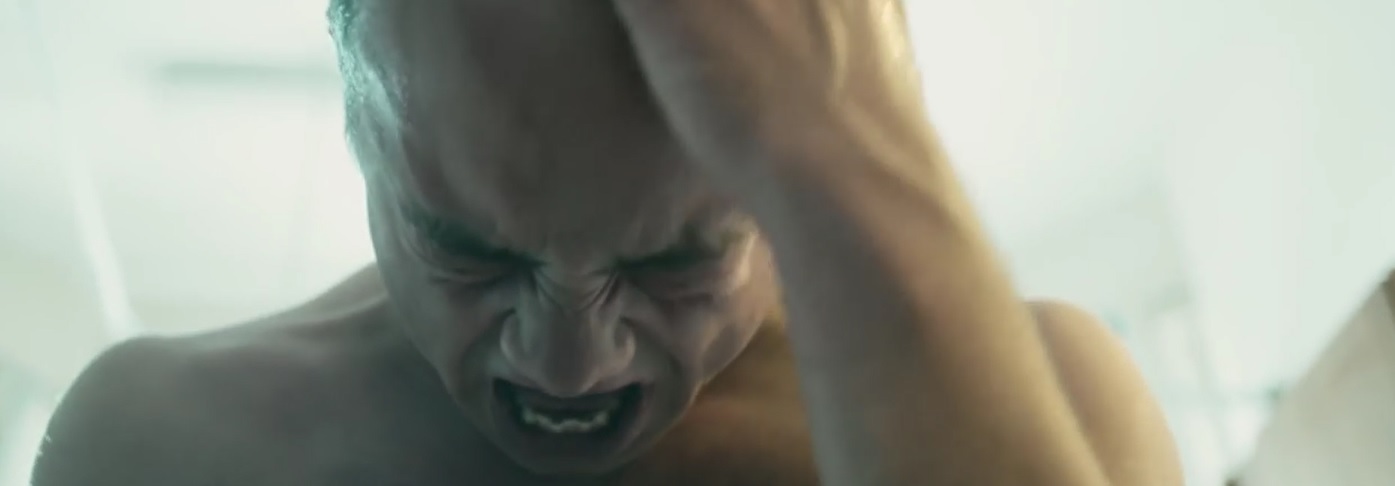
The narrative centers on Patrick (the incredible Moe Dunford), a mentally ill 26 year old man who is out for his annual birthday amusement park excursion with his wildly overbearing mother Maura, the fabulously evil Kerry Fox. Patrick gets separated, and ends up back at the bar of the hotel where he and his mother are staying. There, he meets-cute with a suicidal flight attendant named Karen (the excellent Catherine Walker), an incredibly damaged person in her own right, who rather impetuously strips Patrick of his virginity, which opens up an entirely new world for the previously buttoned-up grocery store clerk. Mom is none too pleased with these developments, and the rest of the story hinges on her attempts to destroy the relationship that her son is building, despite the obvious sense that it might be something that’s helping him. Dunford is extraordinary as the titular character, evoking deep personal pain all throughout the movie, while still mixing in a sense of hopeful optimism that he might finally be connecting with another human being. Walker is vulnerable, a lost and drifting soul searching for meaning, and because the character has been written in a slightly cryptic fashion, she’s forced to use her body language and expressive eyes to convey some character beats that were not on the page. And in a performance that sits right next to Jackie Weaver’s brilliantly amoral work in David Michod’s crime drama Animal Kingdom or Hye-ja Kim’s sinister matriarch in Joon-Ho Bong’s exquisite thriller Mother, Fox is nothing short of mesmerizing as Patrick’s confused, pained, and ultimately misguided caretaker, never once realizing that her actions may be doing more harm than good. In one of the film’s more upsetting moments, Fox tares down a wall filled with framed pictures of Patrick from each of his birthdays from throughout the years, and it’s in this explosive moment that you finally realize that the overall toll that’s been taken on this woman is almost too much for one person to handle.

2

As a writer/director, McMahon clearly has a distinct point of view that he sticks with during the visceral and turbulent events of Patrick’s Day, and it’s clear to me that he’s definitely bothered by the idea that many people, from family members to the professionals who are supposedly “experts,” don’t do the proper things when it comes to taking care of those who are in need. Shot in a semi-subjective fashion by the fantastic cinematographer Michael Lavelle, the filmmakers draw the viewer into Patrick’s fractured psyche, and by shooting in a heightened, artistic fashion, the film carries a dream-like quality that extends all the way to the final shot, which might leave some viewers with more questions than answers. But as with all great art, it’s always best to leave people with something to think about and ponder rather than spell everything out for easy digestion and consumption. McMahon should be commended for never taking the cheap way out of any of the difficult corners that he puts his fragile characters in, always allowing the story to rationally unfold from scene to scene, even when the actions on the part of some of the characters make you wince with anger or even disgust. Who should say when someone else is allowed to fall in love? If a person has mental issues, does that mean that they aren’t capable of feeling love, or being loved by another person? And when is it ever acceptable to introduce rehabilitation methods, in this case shock treatment, in an effort to “fix” someone? Patrick’s Day will be a film that will test the limits of some viewers, as it goes to some dark yet truthful areas in search of enlightenment and answers, even if some of those answers will forever be out of reach. McMahon has crafted a brave and intimate and surprising piece of cinema, and I absolutely cannot wait to see what he does next.