Episode 8: Brad Bird’s TOMORROWLAND, Tod Williams’ THE DOOR IN THE FLOOR, Top Five Jeff Bridges and Kim Basinger

Episode 8 is now live!  We discuss the current theatrical release of Brad Bird’s TOMORROWLAND, and our feature film of the week, Tod Williams’ THE DOOR IN THE FLOOR as well as our top five performances of Jeff Bridges and Kim Basinger!  Enjoy everyone!


KATHRYN BIGELOW’S POINT BREAK — A REVIEW BY NICK CLEMENT

11187752_10204677621876686_6975547608249485115_o

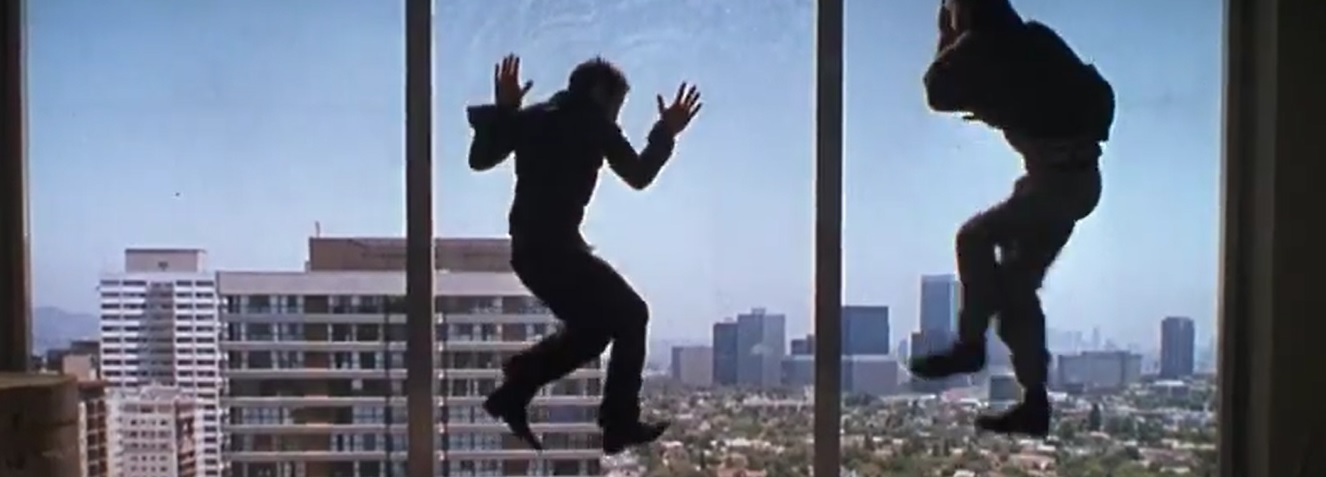
A thrilling sense of kinetic filmmaking has guided the work of Kathryn Bigelow over the last 25 years, and Point Break is just a go-for-broke action picture, complete with moments of total absurdity, fantastic and unexpected humor, and dead serious thrills. Bigelow’s film, from a clever and exceedingly entertaining screenplay by W. Peter Iliff (Rick King received a story credit), is an incredible piece of vigorous action filmmaking — a heist picture, an undercover policier, a romance, an extreme sports movie that feels ahead of its time in retrospect — the creative team threw a little bit of everything into this film and it’s no surprise that the movie has taken on a massive cult following after a solid but not break-out box office performance. Donald Peterman’s dynamic and muscular cinematography is always bracing and exciting, while Mark Isham’s awesome score swells and builds to some great peaks. Ultimate Patrick Swayze POWER here, Gary Busey steals the entire film, and it goes without saying, Keanu Reeves was just all live-wire terrific here, letting his inner Surfer Dude attitude shine through but also getting a chance to kick some ass when called upon; call it a warm up for his heroics a few years later in the blockbuster action pic Speed. Howard Smith’s editing is fluid and keeps the pace at a fast clip (that backyard chase!) and Bigelow really shined with the action sequences, which have been cribbed from repeatedly throughout the years by various filmmakers. The film was a solid success in the theaters, doing $80 million worldwide on a 50/50 split, but the movie would really cement Bigelow’s action chops, after early efforts like Blue Steel and Near Dark announced a new, distinctive voice, and setting up more ambitious future endeavors like Strange Days, K19: The Widowmaker, and the one-two punch of The Hurt Locker and Zero Dark Thirty. Hell – I’ll even go to bat for The Weight of Water! And it must be said: Jumping out of airplanes with no parachute POWER!

11357043_10204677622196694_4091379395212596949_o

STEVE KLOVES’S FLESH AND BONE — A REVIEW BY NICK CLEMENT

11312601_10204673940264648_4599984441642191957_o

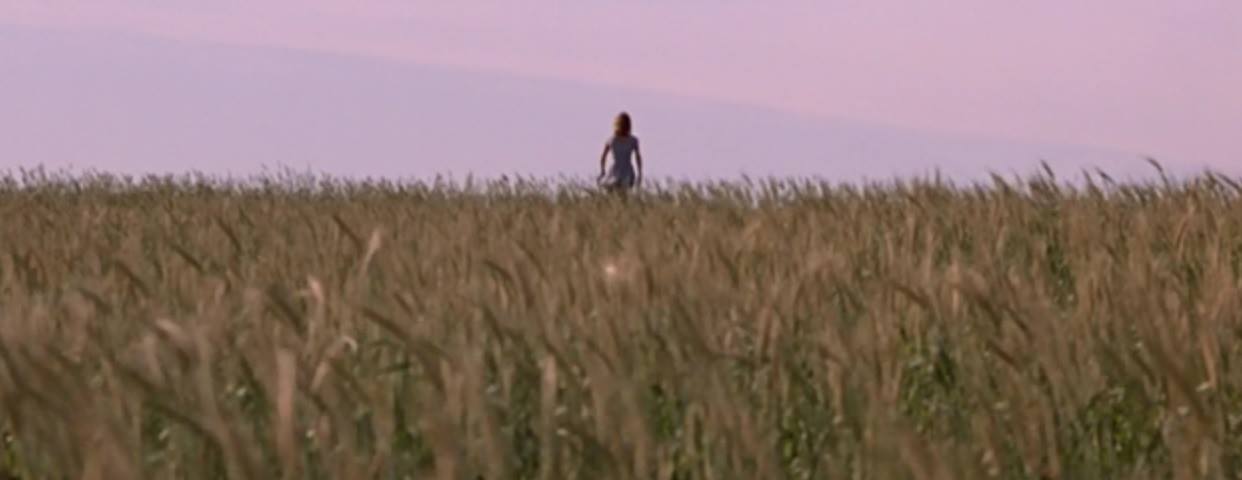
Four Big Ones. Four Stars. Dark-hearted brilliance. How was this movie shrugged off by critics and audiences back in 1993? Just ridiculous. Steve Kloves did a phenomenal job with this bitter neo-noir, throwing out references to In Cold Blood and other genre staples while investing his own sense of moral shading and thematic exploration of love, violence, and the effects of lingering tragedy. The quiet, devastating narrative grips you right from the start, with one of the most… tension packed home invasion sequences I’ve ever seen on film. No music, perfectly edited, all pure cinema — a truly startling opening to an incredible film. Shot with unrelenting patience and style by master cinematographer Philippe Rousselot (Big Fish, The People vs. Larry Flynt, A River Runs Through It), this is a picture that feels like it was filmed literally in the middle of nowhere, with broken down homes and motels dotting the forbidding Texas horizon, as Rousselot’s camera endlessly surveys the bleak qualities of the barren landscape. There’s no smiling here for Dennis Quaid — that famous mile-wide grin is nowhere in sight during Flesh and Bone. It’s a tremendously internal performance, filled with sadness and a steely rage that feels as if it’s been brewing inside of him for years. James Caan is perfectly evil as Quaid’s menacing father who has done some things that can never be undone. A new to the business Gwyneth Paltrow steals every single scene she appears in (and does some side-action nudity), giving a sultry, creepy supporting performance as a drifter who gets mixed up with Caan’s ruthless father figure and which spices up the final act. And Kloves got an interesting turn from eternal screen-cutie Meg Ryan, playing a beaten-down stripper who crosses paths with Quaid, and whose life will forever be changed after falling in love with him. I love how Kloves had Ryan sport a black eye for much of this hard-bitten film, and the ending was a true wowser, giving you the pay off you’re hoping for while still subverting your final expectations. Total Crimes Against Cinema that this film isn’t available as a Blu-ray special edition; I’ll grab the $5 DVD for now and add it to the collection.

11257879_10204673940024642_3737766360720385788_o

THE DOOR IN THE FLOOR 2004 Dir. Tod Williams – A Review by Frank Mengarelli

“Don’t ever, not ever, never, never, never, open the door in the floor.”
hero_EB20040714REVIEWS407140301AR

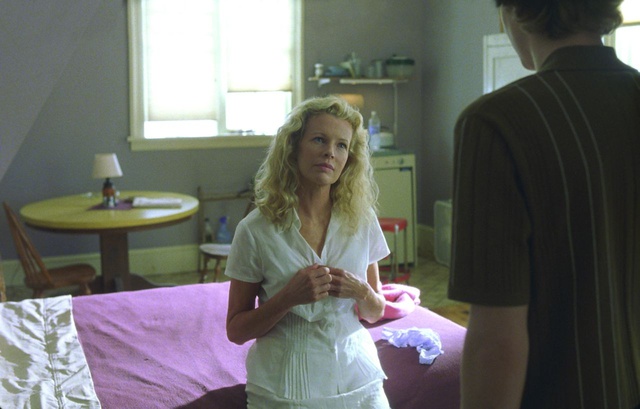
            Simply put, THE DOOR IN THE FLOOR is one of the best films from the previous decade.  It is small, intimate and arousing.  Set in present day in New England, the film follows a young man, Eddie, who is set to graduate from a prestigious prep school, Exeter Academy, the same school where Ted Cole (Jeff Bridges) went, and his two deceased teenage sons went as well.  The intent of Eddie’s summer is meant to be spent interning for Ted, Ted was a novelist who became a popular children’s writer, and Eddie is an aspiring writer himself.  As the summer moves along, revelations are made, tragedy, old and new are summoned, and a love affair between Ted’s wife Marion (Kim Basinger) and Eddie formulates.

This film is tough.  Pain, love, loss and isolation surface almost immediately.  Marion never got over the death of their two sons, and Ted has transformed the pain into raising their young daughter Ruth (Elle Fanning) and working on a new children’s book featuring his recurring characters, Thomas and Timothy which are hauntingly named after their two sons who died.
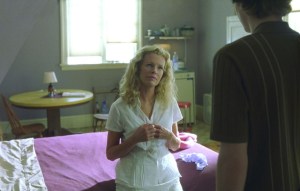
Film Title: Door in the Floor

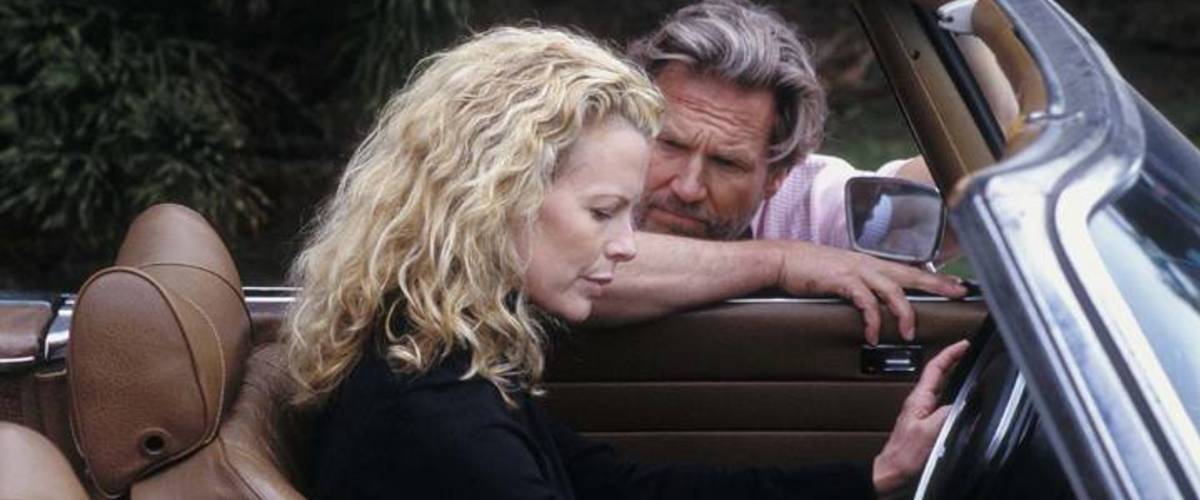
            Jeff Bridges gives him most vicious and turbulent performance as Ted.  He is an alcoholic philanderer who emotionally uses people, and softly degrades them.  Basinger gives her finest performance as the broken and stoic Marion, who has never fully recovered from the loss of their two sons, and who uses Eddie sexually as a vessel to channel her pain.

There are few, but the scenes between Bridges and Basinger are absolutely beautiful.  These two characters are so broken, and everything they have been through together was only sustainable by their love for each other.  Even though it is not expressed physically, nor shown at all, you can feel how pure it is, how undying it is.

So many films are made about love, and very few can express it the way THE DOOR IN THE FLOOR does.  Pure love at times messy, filled with pain, and beautifully tragic and this film is an absolute visual and musical interpretation of that love.  The film is beautifully shot by Terry Stacey, and remarkably scored by Marcelo Zaruos.   The film’s score is as important as any other aspect of the film, it does not arbitrarily show up and is not easily ignored.  It is designed to provoke an emotional reaction in a scene of a film that is layered with joyous yet heartbreaking emotion.

door-in-the-floor-81

            The film’s title is taken from Ted’s most famous children’s book, which upon watching him read it to an audience, and seeing the dark drawings of the book (which Bridges drew himself), it is perhaps the most intense children’s book ever written.  The film begs a question to the audience.  Have you opened your own door in the floor?  Will you open your own door in the floor?  Will you face your own desires, your fears?  Will you come to terms with the realities of everything that you love, everything that you hate?  It is simple for anyone to open the door in the floor, but not many can withstand what comes through it.
DAVID VELOZ’S PERMANENT MIDNIGHT — A REVIEW BY NICK CLEMENT

2

My parents instilled a good set of values in me. Before I left my home-state of Connecticut for my Hollywood Experience in my early 20’s, I made a promise to them: Nothing in my arm, nothing up my nose; just do it how Harold Ramis said to do it in Knocked Up. I had some temptations, I was given a few “packages to deliver,” and believe me, when you’re in LA, no matter how lowly you are, anything’s possible. But it’s a promise I’ve always kept. And I think two big reasons that I kept that promise were my father’s urging of me to know the story of a man named Jay Moloney (Google if not familiar), and thru my experience of watching a variety of harrowing films depicting substance abuse, with one in particular, David Veloz’s Permanent Midnight, making a huge impression on me. This deeply underrated 1998 effort starred Ben Stiller in one of his best performances, portraying drug-addled TV writer Jerry Stahl (Alf, Moonlighting, Northern Exposure, so many others…) and his various exploits. Based on Stahl’s autobiographical book of the same name, the narrative takes the form of the classic rise-and-fall tale, showing how a relatively small-time talent blew up rather quickly, eventually earning up to $5,000 per week writing for various productions. Only problem – he had an insane Heroin addiction to match, and much of the film details the nasty, intense effects of Stahl’s drug abuse and numerous attempts at getting clean. There’s a stinging quality to this movie that I’ve never forgotten, and it could never be a film that’s misinterpreted as a glamour piece for a hedonistic lifestyle. I’ve always loved when Stiller plays it serious (Greenberg, While We’re Young, Flirting with Disaster, and Walter Mitty are my other favorite pieces of acting from him), and while he’ll ALWAYS be Derek Zoolander, I can’t help but feel that this is one of the most personal performances of his career, the sort of project you invest yourself in only if you’re extremely interested in going to some truly tough and sad places on a daily basis. Maria Bello co-starred as a fellow detox survivor whom Stahl develops a unique friendship with, and Owen Wilson is ace as a fellow addict and one of Stahl’s friends. Elizabeth Hurley was in the prime of her sexiness as Stahl’s wife, Peter Greene makes an unforgettably sketchy appearance, and Janeane Garofalo reminds you of how much of a scene stealer she was when cast in the proper role. The film barely saw release which is a crime because if it were to come out now, we’d be talking an ENTIRELY different game; way more people would be sitting up and paying attention. I’d like to excerpt the last paragraph of Roger Ebert’s favorable review, because he always had such a fantastic way of bridging film history when he was writing in the moment. Case in point: “Last month I saw a revival of Otto Preminger’s ‘The Man with the Golden Arm,’ the first of Hollywood’s drug movies, with Frank Sinatra in the title role. Sinatra got an Oscar nomination for the role, in which he portrayed the pain of withdrawal. Stiller, playing Stahl, makes it look incomparably worse. Either the drugs are getting stronger, or the actors are.” Killer soundtrack, too.

3

JULES DASSIN’S RIFIFI — A REVIEW BY NICK CLEMENT

r

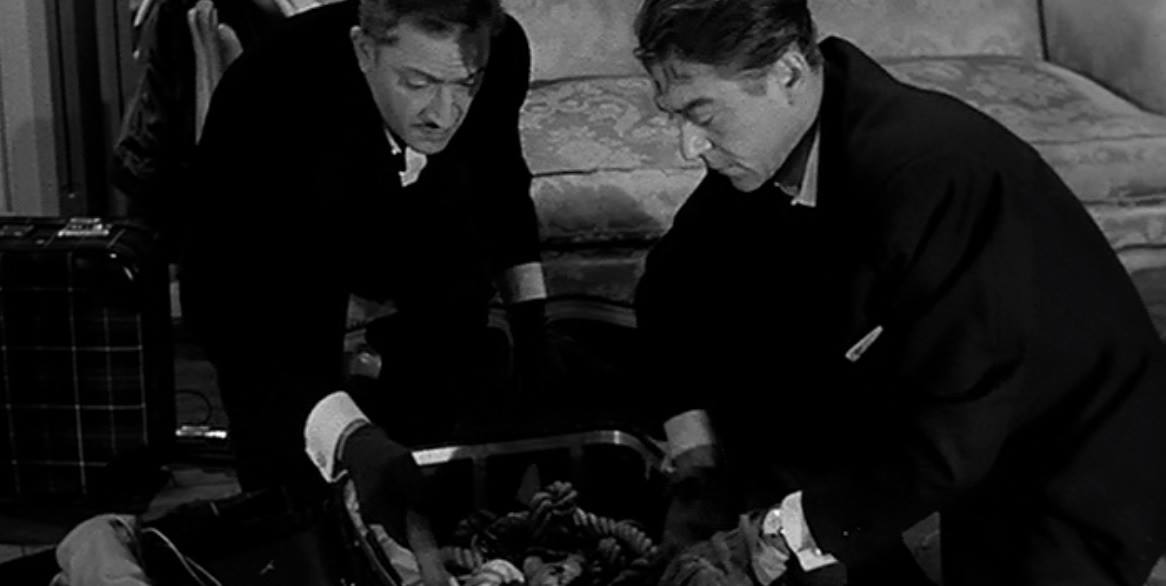
Stark. Silky. Smoky. Smooth. Almost purely visual — always the best way to go! Blacklisted filmmaker Jules Dassin’s 1955 French crime film Rififi is a masterpiece of pure cinema, a striking example of form complimenting narrative, with not one wasted moment or superfluous scene. This elegant caper film revolves around four criminals who pull off a daring heist, with the centerpiece theft comprising of nearly 30 minutes of screen time, and unfolding in a virtually silent fash…ion. I love all of the details that Dassin lays out for the viewer, as the script is terse and rigid, totally befitting the hard-edged nature of the entire piece. Jean Servais, Robert Manuel, Carl Mohner, and Jules Dassin himself were all terrific as the gangsters, and Philippe Agostini’s cinematography is worthy of study by all young camerapersons. Dassin would win Best Director at the Cannes Film Festival for his work on this film, which still stands to this day as one of the absolute best French noirs to ever get produced (or at least that I’ve seen). There was talk roughly a decade ago about Harold Becker directing a remake from a Bo Goldman script that would have starred Al Pacino; I’m glad this notion came to pass. This is one of those films that should NEVER be remade, no matter how good the intentions might be. There’s no doubt that this movie had to inspire Michael Mann when crafting his epic crime thrillers Thief and Heat.

r2

TONY SCOTT’S DEJA VU — A REVIEW BY NICK CLEMENT

10866267_10204648218701625_2613934978185956878_o

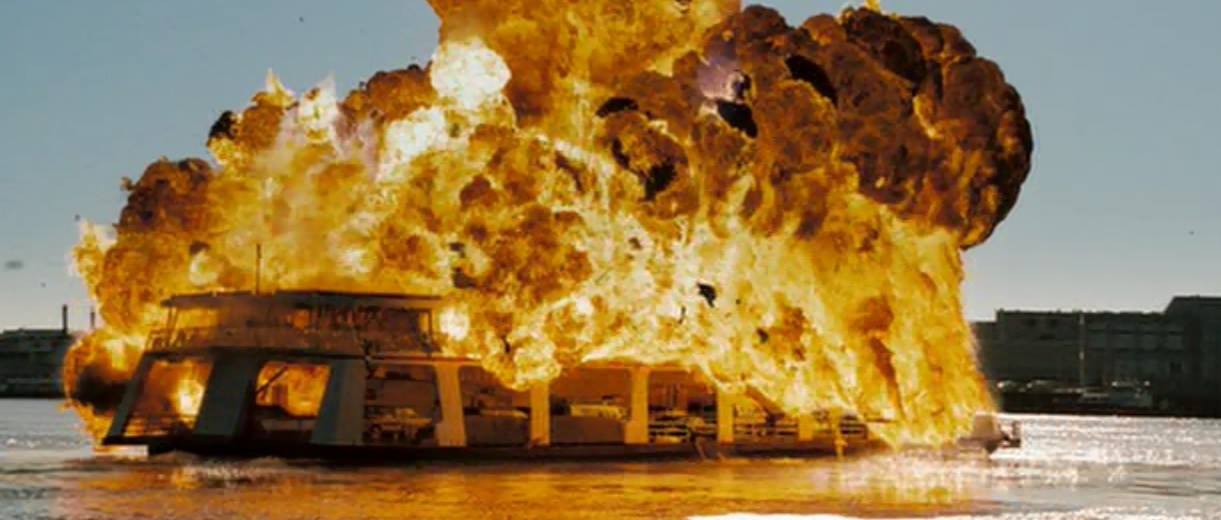
Déjà Vu is a mind-bending thriller with fantastic nods to real-world science fiction, a genre that Tony Scott only had the chance to dip into once.  Snazzily photographed by Paul Cameron (Collateral, Man on Fire), Déjà Vu contains some incredibly rendered explosions (the one that opens the film is mind-blowing in its intensity to be perfectly honest), a heady murder/conspiracy plot, and one of the coolest car chases ever devised (it’s certainly one of a kind).  When a massive bomb goes off killing hundreds of Navy sailors and their families, ATF agent Doug Carlin (a headstrong Denzel Washington) is called in to investigate.  However, he never would suspect that the U.S. government has time-travel technology that might be able to help catch the terrorist (a sleazy Jim Caviezel).  The production design in Déjà Vu is extraordinary and one of the film’s best assets; the fast moving computer images and zooming of the time-machine’s controls keep your head buzzing.  And then there’s the breathless car chase set on a bridge in which Denzel is in two planes of time at once, trying to track the killer via his whereabouts from four days previous.   As his character says mid-chase, “This is trippy!”  It’s probably Tony’s most underrated movie, a film that’s smart, exiting, and as usual for the filmmaker, filled with lots of heart. At its core, the film is a romance, about a man falling in love with a dead woman, only this time, he might have the chance to bring her back and have the opportunity for her to reciprocate the feelings. As always with a Tony Scott film, the supporting cast was ace; Val Kilmer, Bruce Greenwood, Adam Goldberg, and the spectacularly gorgeous Paula Patton as Denzel’s love interest round out the proceedings. Coming off the box office failure of Scott’s passion project Domino, this was his way of retreating within the safe confines of a Jerry Bruckheimer production (their sixth and final), but you can still tell from the restless visuals that he still had plenty of style to burn. This is easily one of the artsiest, most gorgeously conceived big-budget movies of all time, with each image retaining a stark visceral quality as well as the occasional descent into expressionistic realms; even when making “one for them,” Tony Scott was never content to play it 100% safe. There’s even an existential bent to the film, which automatically kicks it up a notch; I doubt all involved knew how well this one would ultimately turn out. With a silly 55% Rottentomatoes score and only $180 million in worldwide box office ($65 million in the U.S., where it was overshadowed by Casino Royale during the busy Thanksgiving movie season), it really stands as undervalued and underappreciated.

11270512_10204648218461619_5865430198111990728_o

BRAD BIRD’S TOMORROWLAND — A REVIEW BY NICK CLEMENT

2

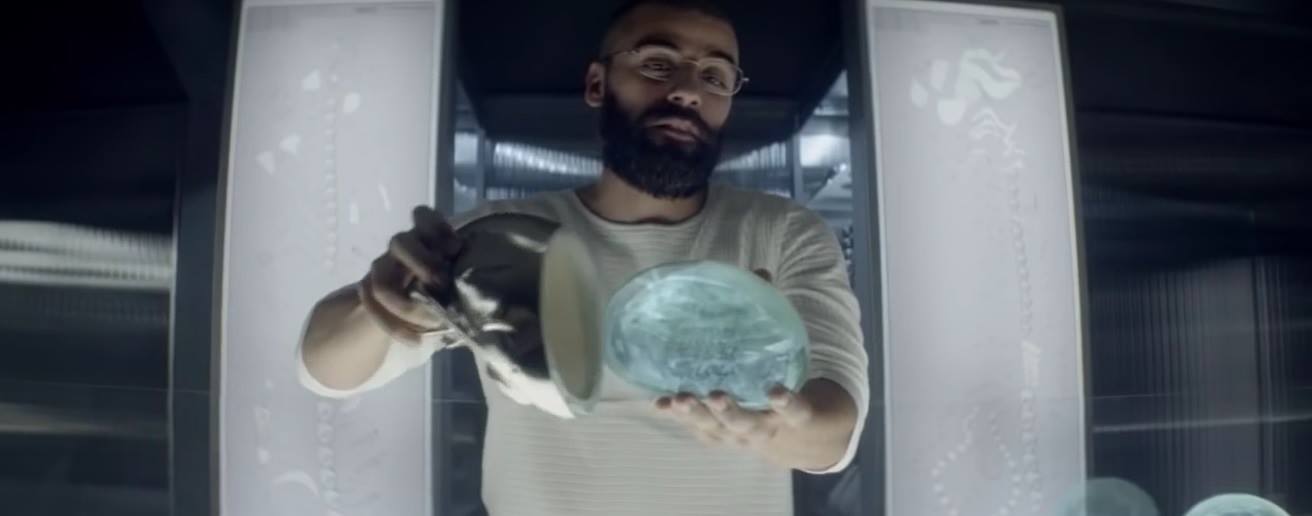
Tomorrowland is the most expensive movie that Joe Dante never got a chance to make. It’s a lot of fun, a creative blast of thoughtful ideas and colorful imagery, trading off of familiar properties while still retaining a unique identity to call its own. For a film to be this dependent on CGI and special effects, for the most part, the visuals are stunning, due in large part to Claudio Miranda’s luminous cinematography. This is the genius who shot The Curious Case of Benjamin Button and The Life of Pi, and as such, Tomorrowland has a twinkle-glisten aesthetic that’s beyond eye-catching. The busy – and I mean busy – plot involves so many elaborate ingredients, and while the finale spends a bit too much time with people explaining stuff rather than showing, it’s a minor quibble to lob at a $180 million gamble (given that it’s not based on a toy or a comic book or a lunch pail or a remake of something) that clearly has tons on its energetic and fertile imagination. Gee-whiz filmmaker Brad Bird and co-writers Damon Lindelof and Jeff Jensen throw in allusions to Charlie and the Chocolate Factory, The Wizard of Oz, Indiana Jones, Epcott Center and good old Walt Disney himself, television’s Lost, with nods to real life inventors and scientists whose greatest achievements might have been even greater if they had the opportunity to play with the technology of today and tomorrow. There’s a wide-eyed wonder to much of Tomorrowland, carrying a massive whiff of Amblin-inspired Spielberg movie-magic, with The Beard’s influence felt over much of the film, from having children act as fearless lead protagonists, adults who need to be shown the way, and a bright eyed optimism that extends from the themes to the visuals. This is as earnest of a blockbuster as I can think of, crafted with a ton of heart, never feeling shallow, if for no other reason than it just so clearly wants to be seen as an alarm for what might occur to our planet if we don’t stop and look around to see what it is we’re doing to the place we call home. Yes, Tomorrowland is as liberal as it gets, with Clooney essentially playing a version of Bill Maher (minus the cursing), and the core of the story involves an incredibly overt plea for environmental activism. As it should. We’ve been destroying our planet with casual disregard for years, and we absolutely love paying next to no attention to the consequences; climate change deniers will positively hate this film, and I’m glad, because it further underscores the diseased notions that these monumental asses are espousing to weak willed individuals who look to Fox News for their main source of daily information. Brad Bird, no stranger to blockbusting with a touch of the humanistic (Ratatouille, The Iron Giant, The Incredibles, Mission: Impossible – Ghost Protocol), directs as if he were making a live action Pixar movie – anything, and I mean anything – is possible in the world of Tomorrowland. The PG-rating, as is customary for a Spielberg-influenced production (his name may not be on it but there’s no way this film would have been made without his iconic cinematic contributions), is stretched to the max, and while kids will enjoy the incredible sights and sounds, the themes and messages are going to sore way over their heads. As I said up top – this felt at times like a passionate movie from the likes of 80’s master Joe Dante (Explorers, Matinee, Innerspace, Gremlins) – a filmmaker who always brought a sense of awe and wonder to his efforts. Britt Robertson is going to be a BIG star; she’s got a wonderfully expressive face and the perfect type of optimistic attitude to bring to a project such has this. And wow, loved the performance from Raffey Cassidy, who makes you care in all the correct spots. And as always, Clooney is the reliable anchor, allowing himself to be continually upstaged by his younger co-stars, while navigating the demands of a summer blockbuster with grace and class. I only hope that parents take their kids to see this instead of upcoming schwill like Pixels or more-of-the-same from Marvel Studios. Embrace the idea that sometimes a family movie can be made that isn’t afraid to show some mental creativity to go along with the special effects.

3

PHILIP KAUFMAN’S THE WHITE DAWN – A REVIEW BY NICK CLEMENT

2

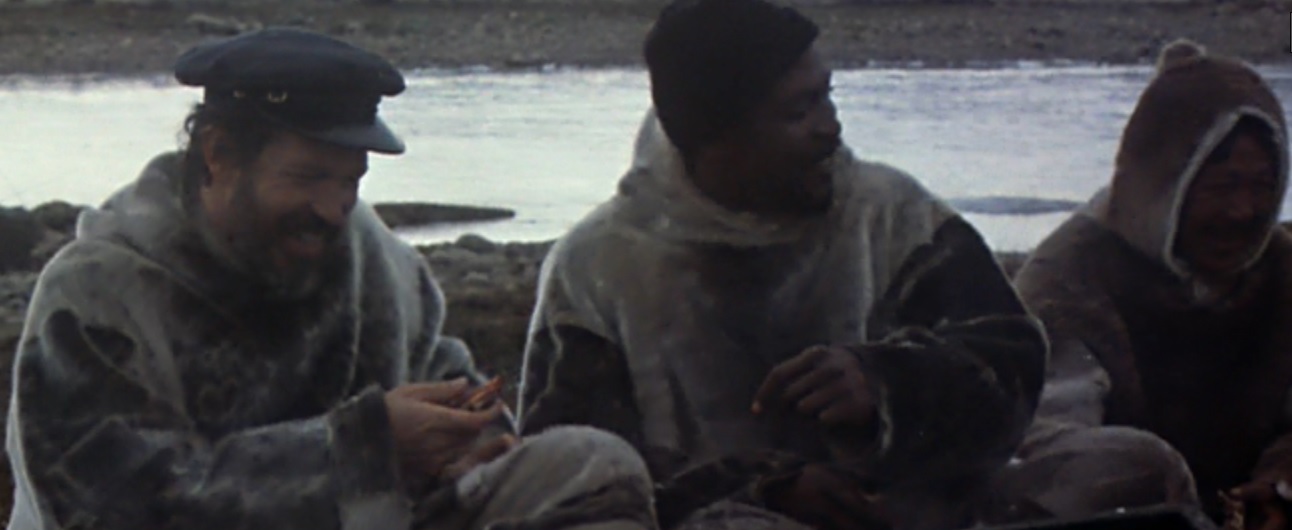
The White Dawn is a rugged, cold, manly film, directed with an intense muscularity by Philip Kaufman (The Right Stuff, The Wanderers). Released in 1974, the film tells the story of three whalers who become stranded in the Arctic Circle in 1896, and details their rescue by Inuit strangers. Warren Oates, Timothy Bottoms, and Louis Gossett, Jr. are the three men trapped in the barren tundra, unaware of how their cultural differences could potentially lead them down a path of violent conflict with their saviors. Shot on location on Baffin Island in Northern Canada, the film feels desolate and forbidding, with the constant snow and wind peppering the visuals and soundtrack with an icy chilliness that you can feel in your bones. What’s more, the filmmakers employed authentic dialect on the part of the Inuit characters, in many instances sans English subtitles, which ratchets up the tension and the verisimilitude of the entire project. Based on the 1971 novel The White Dawn: An Eskimo Saga, original author James Houston was able to co-write the screenplay with producer Martin Ransohoff and Thomas Rickman (Coal Miner’s Daughter), which details how the whalers ingratiate themselves into the Inuit tribe, and then how they slowly try to take control over the group by foisting their American/European values on a group of people who have become accustomed to a VERY particular way of life. Warren Oates makes the biggest impression (no surprise) out of the trio of rapscallions, playing a boozer who is more than happy to teach the natives the values of the drink and gambling, while Bottoms’s affair with one of the women certainly raises some local eyebrows. But the most impressive aspect of this production was clearly the physical demands that Kaufman placed on his brave crew and dedicated cast, many of whom were clearly amateurs. There are shots that defy logic (especially for the time and on the relative miniscule budget when compared with today’s blockbuster standards), with Michael Chapman’s bleak cinematography offering up a blunt, unassuming, and matter of fact view of this harsh lifestyle, while the musical score by Henry Mancini is appropriate in all respects, never overpowering the story, but contributing to the overall sense of exploration and finally dread that settles in for the characters. This is a macho stuff, and I’d recommend it to anyone who likes survival based cinema.

1