Galactic Beauties & Melting Men: An Interview with William Sachs by Kent Hill

Movies are a lot like songs. You hear a song and you rekindle a feeling, a moment, a memory. And films work in exactly the same way. As I often reflect on my life, I have come to realize how many great moments have been marked by the good, the bad and the ugly movies that a town called Hollywood has unleashed upon the world.

I flashback to the third grade. This was still in the era of the massive video stores. I distinctly remember overhearing a conversation among a group of my peers about wandering through the ‘horror’ section one fine day. At this point in history, some of these stores were really decked out and ‘themed.’ The kids section had cartoon characters on the walls, the adult section was contained in a tiny house that had red curtains covering the door and two small windows (this was affectionately known in our local store as the ‘smut hut’). Then their was the horror section, set in a cave filled with black light, with fluorescent ‘scary’ eyes painted on black brick walls.

These kids that I overheard were talking about a particular horror film that had both fascinated and horrified them, though, none of them had seen it. All of their talk and speculation they were basing purely on the cover. And we all know that old chestnut. So, I became king for a day in my class when I summoned the moxie to go rent this video that had aroused so much interest. It was called The Incredible Melting Man.

The director of the movie was William Sachs. As was my custom of the day, I then proceeded to seek out any and all of the other films he had directed. I was fascinated with the movies that I uncovered.

I recently had the very large pleasure of chatting with Bill about his career, not solely as a filmmaker, but as a legendary Hollywood ‘fixer.’ I’m a fan of the Leprechaun movies, and Bill had a hand in the first installment which, to his surprise, has gone on to become a much-loved, ongoing series.

He is a great gentleman of the old school and it was a real treat indeed, for this fan, to hang out and talk movies with him. As ever, it is awesome to present, yet another interview with one of the great cult filmmakers and a stalwart independent spirit.

Dear listeners . . . I give you . . . William Sachs.

Jonathan Glazer’s Sexy Beast


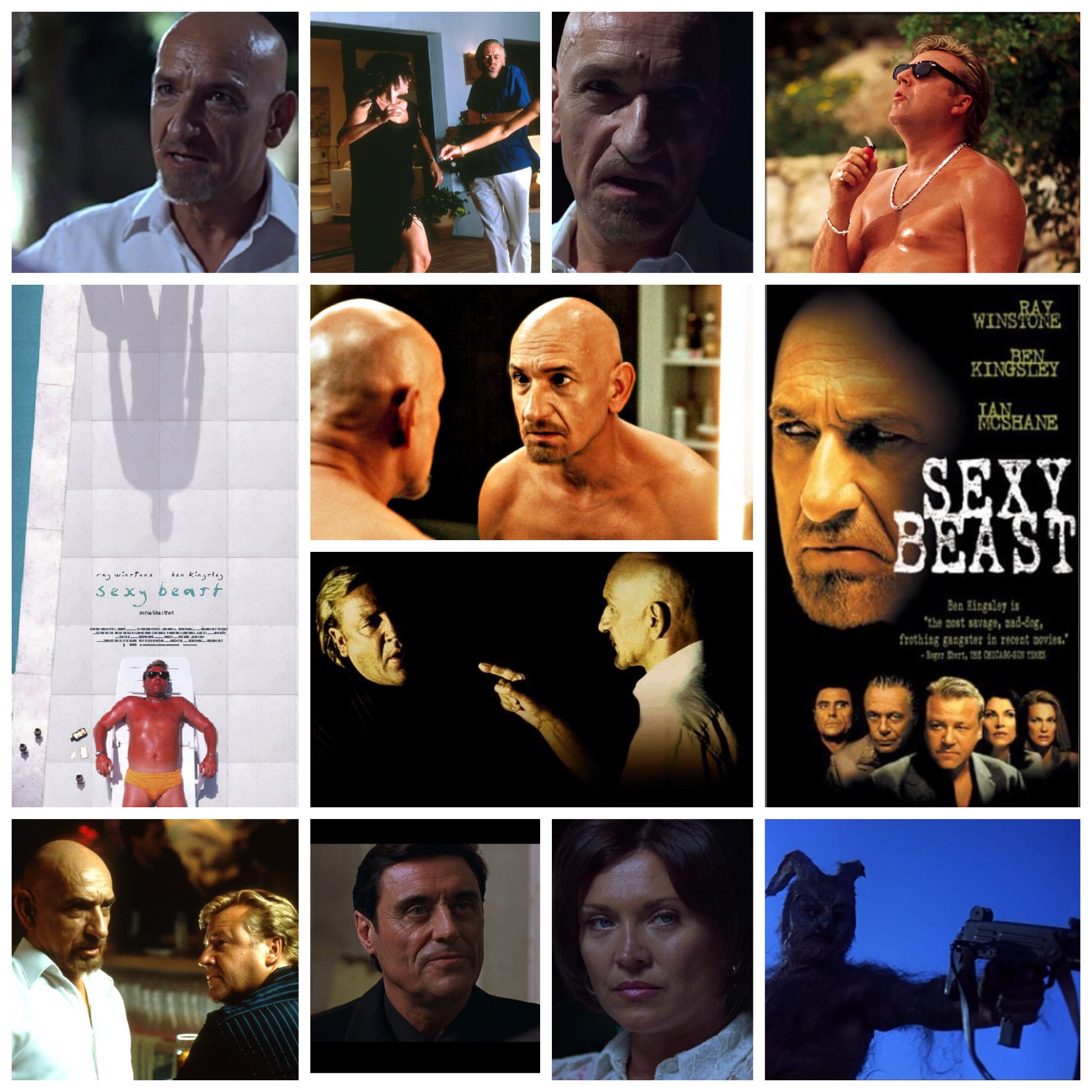
Whenever someone asks me to provide the showcase example of the actor’s process done as close to perfection as one can get, I direct them towards one earthquake of a performance: Ben Kingsley in Sexy Beast. It takes a considerable amount of work to fully realize a character, bring them to life, make them seem genuine, lifelike and idiosyncratic so as to win over the viewer and elicit the modernized ‘putting down the iPhone to engage with full attention’ reaction’, but Kingsley’s rabid London hoodlum Don Logan is just that creation, and then some. He’s not even the lead character either, yet royally steals the film, which earned him an oscar nomination. The film itself couldn’t be more brilliant either, cooked up via a stinging, gorgeously verbose script by Louis Mellos and David Scinto, glossy wit from director Jonathan Glazer and actors who go the extra mile to give a fairly arch story some tangible depth. Ray Winstone, reliably superb, is Gal Dove, a boisterous ex criminal who has retired to sunniest Spain with his sexy wife (Amanda Redman) and best friend (Cavan Kendall). Retirement is tricky for someone with Gal’s past though, and soon his past barges through the front door in the form of Kingsley’s Logan, a terrifying bald beast of a man that would give any sensible person cause to immediately run and hide in the nearest cupboard. From the moment he shows up, heralded by bad dreams that plague Gal and a literal boulder that cascades down the hill into his villa pool uninvited (hello metaphor), things go from worse to hellish. Logan isn’t the type of man to take no for an answer, and is a complete and total nightmare to deal with even before Gal tries to shut him down. Logan wants him for a job in London, organized by shark of a mob boss Teddy Bass (Ian McShane, creepy as all hell), but Gal has no interest leaving the sunny shores and just wants the nutter out of his house. Any time Kingsley is on screen you can feel the tension crackle in the air. He’s the unvarnished hyena to Winstone’s aloof, relaxed teddy bear, a force to be reckoned with and feared. His use of profanity lands like a backhander from Dwayne Johnson, his body language is erratic enough to induce seizures and that cobra gaze could melt adamantium. He’s the penultimate antagonist and raises the stakes to the stratosphere, berating every person in sight and maintaining a cold, detached veneer that’s more than slightly disconcerting. Not to mention the fucker talks to himself in the mirror, which alone is cause for worry. While the story takes place in our world, there’s an off kilter, demonically surreal undertone that derails genre conventions. The artfully dirty, near poetic screenplay, stark visions of some sort of evil Chernobyl rabbit thing, lurid editing transitions, whatever it is it’s hard to pin down or describe, but you feel miles from your comfort zone and ever so slightly removed from our solar system while watching this odd, scary, compelling and uniquely peculiar piece of work. 

-Nate Hill

Episode 28: JONATHAN GLAZER’S SEXY BEAST

Ep28

We get back to our roots with a REGULAR episode dedicated to a single film with two top fives.  This time we talk about Jonathan Glazer’s SEXY BEAST and top five Ben Kingsley performances and top five English gangster films.  We plan on doing more of these regular podcasts in the future, hope you guys enjoy!

House Of Sand And Fog: A Review by Nate Hill

image

House Of Sand And Fog is an emotional thunderclap in ways you won’t see coming, leaving the viewer gutted after a finale that feels spare and detached yet wracked with emotion in the same moment. You feel haunted after witnessing the story unfold, and I was particularly affected by Ben Kingsley’s determind, tender performance for days after my viewing of the film. He plays an Iranian man, a proud man who was a Colonel in the air force in his home country, and has been forced to work construction labor jobs in America to support his family, and to keep up the appearances of their lifestyle. When neglected taxes force a troubled woman (Jennifer Connelly) out of the house she grew up in, Kingsley sees an opportunity to buy the the property for a fraction of what it’s worth, essentially leaving Connelly homeless. She has a history of alcoholism and instability, and this unfortunate situation really worsens her condition, leading to angry and confrontational behaviour towards Kingsley. He has no ill will towards her, he’s simply trying to make a better life for his family whom he loves very much. His wife (Shohreh Aghdashloo) is still very much rooted in Iranian culture, and much of what’s going on goes over her head. There’s also a cop (Ron Eldard) who strikes up a reckless romance with Connelly and tries to strong arm Kingsley into selling the house back to her, pretty much reasoning with his dick instead of his brain. This is a film that refuses to take a side, showing us unblinking and compassionate views of both people within the conflict, and never lifting a judging eyebrow. It’s a sad, sad turn of events and the film wants to show us the tragedy, but it does so with the utmost care, and always has a loving hand in presenting it’s two lead characters. Connelly is heartbreaking, showing us the burning humiliation that frays her spirit to the last sinew. Kingsley is flat out brilliant in the kind of performance that holds up for decades to come. He rightly won an Oscar for his galvanizing turn that breaks hearts and opens tear ducts. Ron Eldard is the only piece that doesn’t fit, because he’s usually not fund in this type of stuff. He’s really talented as an offbeat character actor, but just seems out of place here playing it straight, and it also doesn’t help that his character is just damn unlikable. Aghdashloo is the third leg of the acting table, and her work earned her an Oscar as well, she is plain superb. Be careful of what mood you’re in when you give this one a go, it’s pretty devastating. It’s also powerful cinema, and a story that could happen to anyone, anywhere in the world, giving us something real to latch onto and connect with.

The Jungle Book: A Review by Nate Hill

image

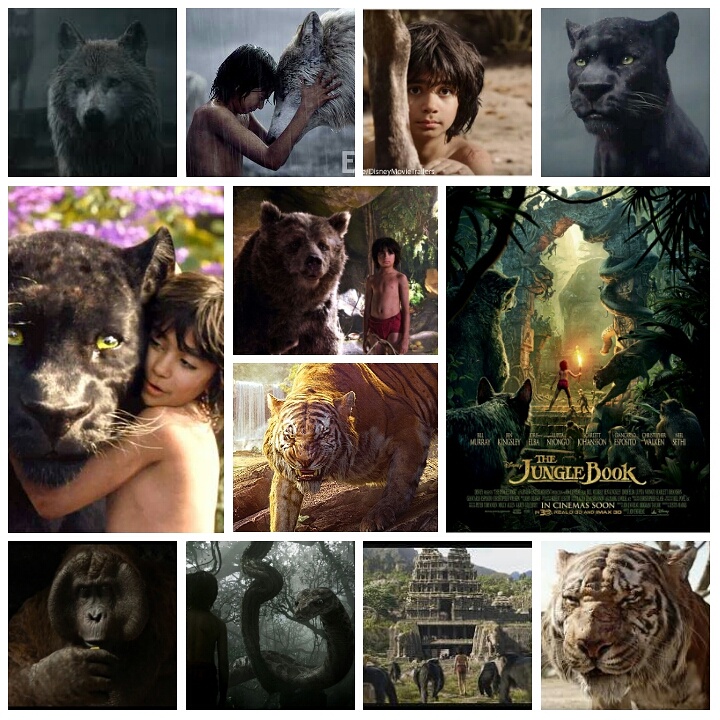
Prepare your eyes for maximum bogglement, work out your abs so you don’t bust a gut laughing, and most importantly, dust off that childlike sense of wonder before going to see Rudyard Kipling’s The Jungle Book, boldly and lovingly retold by Jon Favreau in what is the most flat out exciting, adventurous film of the year thus far. The director pulls  off a balancing act between palpable tension, character interactions that come straight from the heart and land squarely in ours, and some of the most believable, jaw dropping CGI I have ever seen on screen. The animals look so impressive and lifelike that after seeing them I shelved away some of my inherent reservations about computer generated effects as a dominant force in a piece, and simply gave in. The atmosphere is lush, intoxicating and deeply detailed, with a naturalistic feel and tone. Young Neel Sethi is tasked with being the only fully human component, and is perfect. His interactions seem real and rehearsed, immersing the viewer further into the visuals. Mowgli is a young man cub, found on the edge of the jungle by the panther Bagheera (stately, compassionate Ben Kingsley) and given to a wolf pack to be raised by alpha Akela (Giancarlo Esposito) and Raksha (Lupita Nyong’o). Not all in the animal kingdom are receiving of this man cub, especially a terrifying Bengal tiger called Shere Khan, given the rumbling tones of Idris Elba, inspiring fear in animals and audience alike. He has a rocky relationship with man, and wants Mowgli dead. Bagheera takes him far into the jungle, where they are separated and Mowgli’s adventure truly begins. He wanders into the path of Kaa (a slithery Scarlett Johansson) a monstrous, seductive python, and is taken under the wing of Baloo, an adult Winnie the poo voiced by Bill Murray. Murray is one of the film’s great delights, and as soon as he shows up we forget about all the menace and threat which preceded his arrival, and are swept up into his affable, lounging lifestyle and brightly colored neck of the woods. Murray clearly ad libbed a lot of Baloo’s dialogue, and anything he didn’t he still gives that unmistakable, winking ‘Murray’ twinge that I so love. Mowgli’s adventure continues, as he stays one step ahead of Shere Khan and is visited by the king of the monkeys, a twenty foot tall, lumbering orangutan named Louie, voiced with demented, pithy glee by Christopher Walken. As soon as he showed up the laughs erupted from within me, and reached a manic peak as he belts out the ‘Oobie Doo’ song in priceless Walken fashion, his monkey mannerisms uncannily starting to resemble Walken’s own distinct visage. Many of the animals serve as differing parental figures to Mowgli, representing elemental factions of raising one’s young. Bagheera is cautious, doubting and skeptical. Baloo is the fun loving, lenient one. Even Shere Khan has a curdled paternal feel to him, like the brutal stepfather who is damaging to his offspring. Raksha is the unconditional mother, and that devotion comes out wonderfully in Nyong’o’s souful performance. The vocal performances are aided by the stunning effects; the CGI of facial features allow the actors work to truly extend into the realm of what’s visible, with real emotions displayed by the creatures, and not a single rendering that’s anything short of lifelike. The film evokes true wonder and primal excitement, escapism that takes itself seriously yet knows when and how to play, a dazzling technical marvel, a timeless story well told, all in one cinematic package that is not to be missed. Oh, and stick around for the credits, instead of Walken out of the theatre and missing a final musical treat.

31st Santa Barbara International Film Festival Centerpiece Film: Terrence Malick’s KNIGHT OF CUPS

image

“You don’t want love, you want a love experience.”

Despite the little we collectively know about Terrence Malick, it has become apparent since THE TREE OF LIFE that he has been telling us his own story through the guise of abstract filmmaking.  His new film, KNIGHT OF CUPS, was this year’s centerpiece film at the 31st Santa Barbara International Film Festival, and it is one of the best films I have ever experienced.

image

Set in modern day Los Angeles, the camera follows a screenwriter, Rick (played by Christian Bale as a placeholder for the filmmaker), who hasn’t so much lost himself, because he doesn’t know who he is.  He has been wandering through his adult life, questing through money, drugs, and women.

image

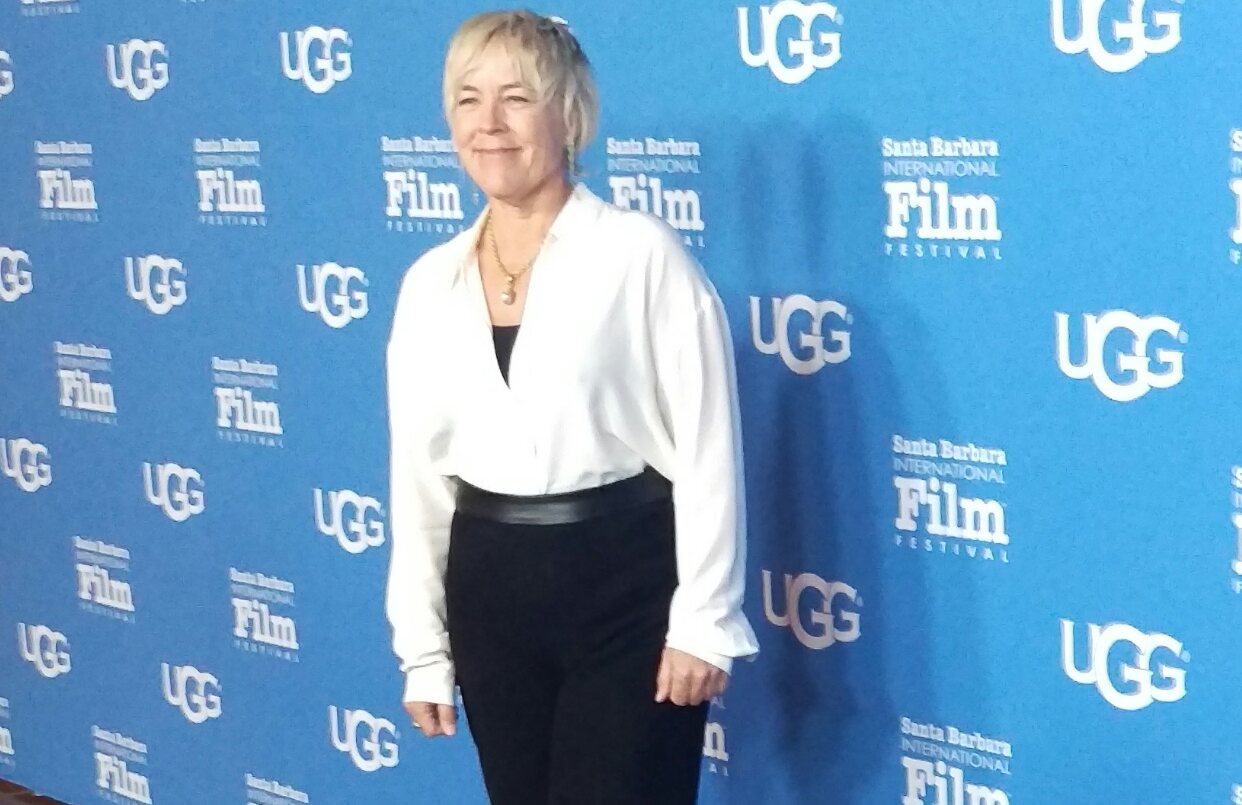
This cast is huge, it’s akin to THE THIN RED LINE.  Bale is the mainstay, but the abundance of recognizable actors in miniscule parts is awesome.  Malick’s producer, Sarah Green, was on the red carpet for the premiere and I asked her what it’s like casting a Malick film and what the actor’s responses are to Malick’s interest.  She told me that even though this film did not have an orthodox script, Malick has reached the point in his career where if there is interest shown in the actor, they immediately say yes.

image
KNIGHT OF CUPS producer Sarah Green on the red carpet for its US premiere at the SBIFF

This film marks Green’s four collaboration with Malick, with an addition two more films pending release.  I asked her if there was something about KNIGHT OF CUPS that sets it apart from her other films with Malick, and she said that this film was set modern day (like TO THE WONDER) but was set and shot in LA.  And that this film was shot on a whim, run and gun style. 

image

KNIGHT OF CUPS is a journey through Malick’s subconscious.  It is a remembering of faded memories.  Some are reconstructed, some a fantasy.  Rick is a placeholder for the camera, who rarely interacts with anyone or anything.  He watches, he broods, and most importantly he remembers.  When he does interact with others, maybe it is real, maybe it is what he thinks is real, or maybe it is what he thinks he should have done. The film chronicles life–his life, our life.  Success, fame, love, emotion, family, safety – that doesn’t even scratch the surface. 

image

A Malick film is like Hemingway’s iceberg theory but reversed.  We are shown everything, yet we know nothing.  We piece it together through an overwhelming abundance of emotion captured on screen, and what’s beneath the water is Malick’s intent.  His answer, his reasoning, his life.  KNIGHT OF CUPS is a painfully beautiful and personal journey of escaping the darkness and finding the light.

image

“You gave me peace.  You gave me what the world can’t give.  Mercy.  Love.  Joy.  All else is cloud.  Mist.  Be with me.  Always.”