Conceptually Speaking: An Interview with Sylvain Despretz by Kent Hill


Sylvain Despretz really is the personification of honnête homme. And he has been a man of the world since an early age. Travel was a part of his life; the other constant being his love of the cinema.

He is an artist of great style and skill and after his schooling he worked as an art director for a top Madison Avenue agency then moved on to illustrating Graphic Novels in California under the mentoring of the internationally famed artist Moebius. From there he would set out upon what would become and astonishing career as a story board artist and conceptual designer.


This slideshow requires JavaScript.

His work you’ll have seen, gracing the screen in a myriad of films in a variety of genres. Movies like Gladiator, Alien Resurrection, Panic Room, The Fountain, (Tim Burton’s) Planet of the Apes and The Fifth Element. These including work on Don’t tell Mom the Babysitter’s Dead and the coming Luc Besson sci-fi extravaganza: Valerian. He has worked with  and on films directed by the true masters of the screen including Ridley Scott, Stanley Kubrick, David Fincher and Jean-Pierre Jeunet.

But, as you will hear, Sylvain has become disenchanted by the current repetitive nature of Hollywood’s cookie-cutter output. He is now driven by the notion that the only way to usher in change, is to be part of a creative revolution that places an emphasis on original voices instead of corporate responsibility.


This slideshow requires JavaScript.

To this end he is now embarking on a journey that will see him stepping away from the drawing board and moving behind the camera; bringing his own visions to life using that mysterious blending of industrial light and storytelling magic.

He is a learned Hollywood veteran who has seen the Dream Factory from the inside, and his stories and wealth of knowledge and experience was and is fascinating to experience.

The designer behind the scenes and the future man in the director’s chair, proud am I ladies and gentlemen to present this interview with the one and only, Sylvain Despretz.

VISIT SYLVAIN’S OFFICIAL SITE:

http://www.metaprogram.net/

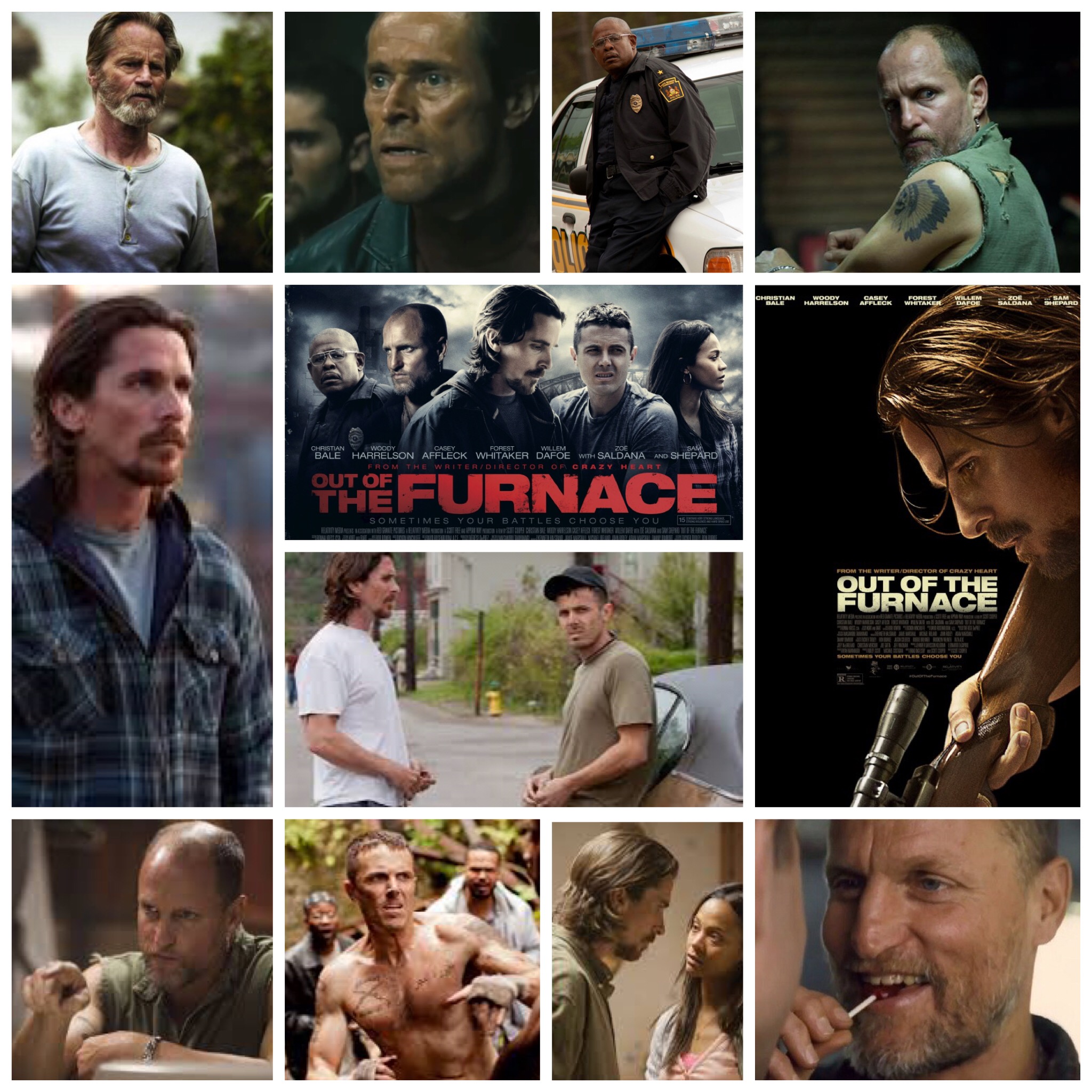
Scott Cooper’s Out Of The Furnace 


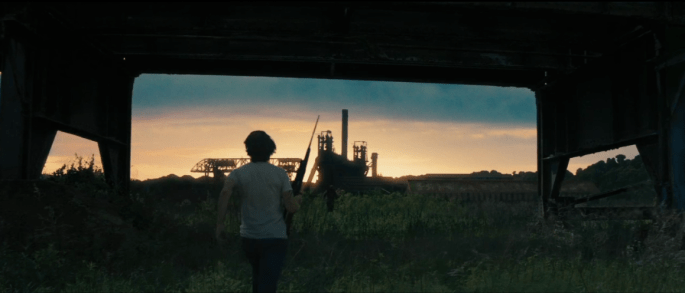
While not quite in the pantheon of powerhouse that the filmmakers intended it to be, Scott Cooper’s Out Of The Furnace is still a bleak, devastating picture. This is a film about endings, and not resolute, satisfactory ones either. Set in a borderline derelict mining town somewhere in the rust belt, industry has come to a grinding halt, giving way to the inevitable rise of rural crime, spreading like a cancer across land that once flourished and prospered. Every character in the film meets their bitter end somehow, and what’s fascinating is that earlier in life they all could have been more whole, and come from some other, brighter genre film, but the lives they’ve led set them on the same course as their county, and one by one we see them reach the last bend in the road, and the light in their life unceremoniously flicker out, leaving a cold shell. If I’m making this sound depressing, I’m doing my job well. This is a soul crushing film, with no light at either end of the tunnel and all glimmers of hope already extinguished before the opening titles even show up, so just make sure you have Finding Nemo or Wallace & Gromit queued up next in line if you give it a go. Opening with a prologue that leaves a bad taste in your mouth, you know right off the bat what you’re in for, as we’re introduced to Woody Harrelson’s Harlan Groat, an absolute monster who runs everything from underground fight clubs to an intricate web of meth trade in the region. Groat is at odds with steelworker Russell Baze (An implosive Christian Bale), a hard man with anger issues just looking for an excuse to get fired up. Russell’s brother Rodney (Casey Affleck in the film’s best work) is a broken Iraqi war vet who got on the wrong side of Groat’s gang, and has since disappeared. Since the law won’t venture into the near mythic backwood hills where Groat skulks, Baze goes vigilante, waging personal war and raging against a light that has long since gone dead. This is a big cast we’re looking at here, and some of the subplots either distract from the main show or just seem like overkill, like Zoe Zaldana as Russell’s ex who has since shacked up with the local Sheriff (Forest Whitaker), or an underused Sam Shepherd as his uncle Red. Willem Dafoe has a nice bit as a seedy but sympathetic local gangster though, it’s always nice to see him, as well as Tom Bower as the salt of the earth bartender. It’s all about Woody and the danger he brings, he’s terrifying in the most mundane of exchanges, and lethal when he gets worked up. The feeling of economic decay follows him like a noxious cloud, his brittle ruthlessness a mascot for the hard times that many a town in the US has fallen on in recent years. One need only look at the poster to see the obvious and intentional shades of Michael Cimino’s The Deer Hunter, and though the film wears its influences on its heavy flannel sleeve, it finds its own dark, despairing poetry, and leaves you gutted in the final, anticlimactic frame. 

-Nate Hill

“You got a problem with me?” – A review of Out Of The Furnace by Josh Hains

Scott Cooper’s sophomore film Out Of The Furnace follows Russell Baze (Christian Bale) through the empty, broken down streets of Braddock Pennsylvania like a lonesome ghost. He works in the local steel mill where his slowly dying father once worked, using what little money he makes to pay off his brother Rodney Jr.’s (Casey Affleck) gambling debts to sleazy local bookie John Petty (Willem Dafoe), all the while trying to maintain a relationship with his girlfriend Lena Taylor (Zoe Saldana). That all comes crashing down when Russell gets into trouble with the law and spends the next four years in prison, getting periodic visits from Rodney with updates on the state of their father’s health, Lena, and Rodney’s own exploits overseas in Iraq. Both men are broken and trying to keep it together for the sake of each other.

In due time Russell is released back into Braddock, the once thriving city on the verge of death with the mill soon to be closed. Things are different now for Russell, the times have changed, people have changed, and he has no other choice but to suck it up and trudge forward into the unforeseeable future. Rodney has picked up a deadly new habit, bare knuckle boxing, his way of violently paying off his debts to Petty before the stack gets too high. Russell tries talking him into a “normal” job to no avail; after multiple horrific tours of duty in Iraq, Rodney has been left shaken, twitchy, and is a mere shell of the man he once was. All that seems to be left is violence, anger, and undying love for Russell. Rodney begs John Petty to get him into bigger fights in backwoods New Jersey, dirtier, bloodier fights held under the watchful eye of local sociopathic hillbilly Harlan DeGroat (Woody Harrelson).

By this point in a standard issue revenge thriller, Rodney would have been long dead, but Cooper wisely makes the decision to give us time to settle into this world, and come to understand characters who feel like people, and not just cardboard cut outs. That the latter half of the movie devolves somewhat predictably into the same kind of movie it was previously avoiding replication of, is a disappointment. However, what does occur is given room to breathe. Cooper might be following the tropes of the genre, but he at least has the sense to let it unfold slowly and organically. Very little feels forced.

Things quickly turn ugly for Rodney and Petty, and when both go missing, the local law led by sheriff Wesley Barnes, exhausts all possible means in an attempt to find the pair, but can only go far because law enforcement lives in fear of DeGroat’s brutal reign of the area, and the fact that it’s outside of Braddock police’s jurisdiction doesn’t help matters either. So Russell and his uncle Red (Sam Shepard) cautiously take matters into their own hands the only way they know how.

Christian Bale delivers his most believable performance to date, fully embodying the heart and soul of Russell Baze, right down to the slightest nuances and subtleties of the man. He’s a truly masterful actor, strutting his stuff in such low-key fashion that because of the deep naturalism, rawness, and intense realism he imbues, within the first few minutes it stops feeling like a performance. It becomes, real, as Russell battles his inner demons and carries the weight of the world on his lean shoulders right up until the final frames fade to black.

Woody Harrelson knocks it out of the ball park as Jersey backwoods hillbilly sociopath Harlan DeGroat, topping his wildly over-the-top performance as Mickey in Oliver Stone’s Natural Born Killers. If you thought Mickey was a bad dude, wait until you watch DeGroat force a hot dog down the throat of a woman at a drive-in movie theatre in the films unnerving opening sequence. Harrelson has an uncanny ability of inhabiting even the most repulsive of villains with some semblance of humanity, and toward the end of the film does so with nothing more than an all-knowing expression upon his face and burning in his eyes as he delivers a couple heartfelt lines.

With this performance, Casey Affleck shed the boyish light his previous performances have always been garnished with, trading it in for a toned body and volatile outbursts of pent-up rage. He gives the more energetic performance of the two brothers, effortlessly capturing Rodney’s broken down mannerisms. Forest Whitaker, Willem Dafoe, Zoe Saldana, and Sam Shepard each provide the right amount of nuance and naturalism to their perfomances that blend evenly with their bleak surroundings and the trio of astounding lead performances.

In a scene near the midsection of the film, Russell and Lena have a conversation on a bridge about their future after Russell has been released from prison. Despite Russell’s plea to make things right between them, Lena cannot commit to him anymore because she’s carrying Barnes’ child. In a moment that ought to shatter even the hardest of hearts into a million pieces, Russell congratulates Lena, assuring her she’ll be a good mom amidst tears from both of them. This scene assuredly carries the finest moments of acting we’ve seen from Bale and Saldana to date. 

The cinematography by Masanobu Takayanagi (The Grey) is impeccable, capturing beautifully and quite often starkly, the dreary and dirty grit of Braddock, the crispness of the violence, the cold bitterness of the dialogue dripping from the tongue of the people inhabiting the film. Scott Cooper directs this film with ease, honestly and authentically capturing the bleak essence of the dying town, the harsh realities of the effects the economy is having on the people, and the brutality that is the violence that twists their worlds upside down in the blink of an eye.


Writing with Fire: An Interview with Matthew Greenberg by Kent Hill

Chatting with Matt felt like getting together with a buddy you’d been out of touch with for too long. He is an explosion of wit and joy; even though he works in a town that can at times be a realm of foreboding dread.

“I failed at everything else,” he said, when I asked him how he came to be an adventurer in the screen trade. Matt has felt the highs and the lows – he has climbed up the mountain that is the film industry, slipped, and started climbing again. Yet, even with broken fingernails, he has managed to pen a wild array of movies. They’ve a little of everything in them that a growing boy needs as part of his complete breakfast: from faceless killers to fire-belching dragons to spooky hotel rooms. They may in part be “significantly different” from the scripts he turned in, but if you listen to Matt, that same exuberance and enthusiasm he carries for his work manages to make the final cut.

He came to Hollywood with enough money to buy a plane ticket (that got him there) and a car. Since then he has made it – in place where momentum is everything and the decisions handed down from the hierarchy don’t always make sense. From that place where all the leaves are brown and skies are grey, Matt showered me with tales of his journey through the savage land known as Hollywood and how with a genteel parlance, you may perhaps survive.

Ladies and gentlemen, I give you, Matthew Greenberg…


PUBLIC ENEMIES – A REVIEW BY J.D. LAFRANCE

Public-Enemies-4-790022

Public Enemies (2009) marked Michael Mann’s fourth foray into American history with The Last of the Mohicans (1992), The Insider (1999), and Ali (2001) being his previous efforts. The director got his start making documentaries and always been interested in achieving absolute authenticity in the depiction of the professions that his protagonists practice, be it safecracking in Thief (1981) or serial killer profiling in Manhunter (1986). Born and raised in Chicago, it is easy to see what drew Mann to the story of John Dillinger, a famous bank robber during the 1930s. He and his crew were the best of the best at the time and so, he certainly fits the kind of protagonist Mann is drawn to.

Public Enemies begins in 1933 during the golden age of bank robbery and Mann wastes no time getting into it as he opens the film with an exciting escape from an Ohio prison orchestrated by Dillinger (Johnny Depp) and his crew. Soon after, we meet FBI agent Melvin Purvis (Christian Bale) in action as he takes down Pretty Boy Floyd (Channing Tatum) with a hunting rifle from an impressive distance. In no time at all, Mann has established the film’s protagonist and antagonist. They are smart, super efficient men of action that are single-minded in their respective goals.

Unable to get funding and criticized by his superiors, FBI Director J. Edgar Hoover (Billy Crudup) needs high-profile busts and enlists Purvis to find and stop the country’s Public Enemy No. 1 – John Dillinger. The more notorious he becomes the more this angers not just the FBI but also the Chicago mob because his actions put extra heat on them. There is a nice scene where he meets with a mob representative who basically tells him that he is a dying breed. The money he makes knocking over one bank, they make in one day through illegal gambling.

Mann demonstrates that he is a master at orchestrating action sequences. They are cleanly photographed and edited so that there is no confusion. You can always tell what is going on and who everyone is instead of the kamikaze, headache-inducing editing and slapdash camerawork in films by the likes of Michael Bay and McG. The shoot-out at Dillinger’s hide-out in Little Bohemia is the film’s show-stopping action sequence much like the bank heist in Heat (1995) and the nightclub shoot-out in Collateral (2004). It is powerfully executed and full of tension and excitement as well as an impressive display of firepower with the deafening blasts of tommy guns and shotguns.

Public Enemies reunited Mann with key collaborators, chief among them cinematographer Dante Spinotti who has shot his most memorable films (including Manhunter, The Last of the Mohicans, Heat, and The Insider). Mann has come under considerable criticism for making the move to digital cameras and even more so with Public Enemies because it is a period film and audiences are used to seeing them done on traditional film stock. However, it looks great with crisp, clear images, especially at night where there is an impressive depth of field. Certain scenes have a graininess to them inherent with digital cameras but, in this case, it gives a tangible, gritty texture that works. There are some truly beautiful shots in this film, like one in which a car carrying Dillinger and his crew hurtle down a road surrounded by a vast forest of trees that tower over them.

Mann is also reunited with composer Elliot Goldenthal who worked on Heat. Since The Last of the Mohicans (1992), Mann has relied on soundtracks comprised mostly of disparate tracks from various sources. Being a period piece, obviously Public Enemies really doesn’t lend itself to that kind of a soundtrack and Goldenthal expertly augments the drama that unfolds in various scenes, creating one of the best scores in a Mann film to date.

The attention to period detail is fantastic with classic trains, cars, and classic gangster iconography like tommy guns, fedoras and trenchcoats permeating the film. Mann really immerses us in the time period but not in a way that calls undo attention to itself. It’s just there in the background of every scene with vintage period architecture. Ever the perfectionist, Mann shot on location, often at the actual locations that Dillinger and his gang frequented. Whether you are consciously aware of this or not, the film just oozes authenticity.

Dillinger certainly enjoys the fruits of his labor but is always planning his next job. He follows his own personal code: he doesn’t kill unless absolutely necessary and doesn’t think about the future, living only in the present because he could easily end up in jail or dead. He is also very conscious of how he’s perceived by the public, enjoying the notoriety his exploits create. Johnny Depp portrays him as a very confident guy who is always in control. There is often this mischievous glint in his eye like he’s in on a private joke. Depp plays Dillinger with a lot of charm, like when he addresses the media while being booked in an Indiana jail. He knows how to work the crowd and the charismatic actor is excellent in this scene. However, Public Enemies is not afraid to point out that Dillinger is no hero. The man has no problem with killing someone if they got in his way but the film goes to great lengths to point out that he did so only when there was no other option. Dillinger was clearly a man who didn’t believe in wasting time, much like Frank, the safecracker in Thief. Depp inhabits the role with his customary dedication, adopting a specific voice, accent and effortless delivery of period lingo that sounds natural and genuine.

Christian Bale is quite good as the very determined Purvis. While Mann doesn’t create the balance of cop vs. robber as he did in Heat, Bale has a significant amount of screen-time in the film. Like other law enforcement figures in Mann’s films, Purvis uses state-of-the-art technology, for the time, to track Dillinger and his crew. As determined as Purvis is, Mann allows some humanity to seep in, like when he stops the brutal interrogation of Dillinger’s girlfriend Billie Frechette (Marion Cotillard) and personally helps her get cleaned up. It is this small moment that adds a welcome layer to his character.

There are all kinds of parallels between Public Enemies and Heat. In both films we are meant to sympathize with the bank robber. Also, the two leads only meet face-to-face in one scene. There is a climactic gun-battle where both sides take on significant casualties that alter the conclusion of the story. And, like McCauley in Heat, there is an inevitability to Dillinger’s life; that he will run out of time and luck; that Purvis and the FBI will close the net around him. That being said, Public Enemies is not a carbon copy of Heat. Personality-wise, Dillinger and McCauley are very different people with the former being a risk-taker and the latter being overly cautious. The same goes for the lawmen. Purvis is not the larger-than-life extrovert that Hanna is, but rather a no-nonsense man who gets the job done and that’s it. There’s even a loose cannon in the form of Baby Face Nelson (Stephen Graham) who is to Public Enemies what Waingro was to Heat. A psychopath that the bank robbers initially ally themselves with but end up cutting loose when he proves to be too unstable. Structurally, both films couldn’t be different as Mann continues to experiment with narrative structure in a fascinating way. This isn’t your typical, cookie-cutter A to B to C plotting, which may frustrate some (see Ali or Miami Vice) but if you the patience and can get into it, watching Public Enemies is a very rewarding experience.

31st Santa Barbara International Film Festival Centerpiece Film: Terrence Malick’s KNIGHT OF CUPS

image

“You don’t want love, you want a love experience.”

Despite the little we collectively know about Terrence Malick, it has become apparent since THE TREE OF LIFE that he has been telling us his own story through the guise of abstract filmmaking.  His new film, KNIGHT OF CUPS, was this year’s centerpiece film at the 31st Santa Barbara International Film Festival, and it is one of the best films I have ever experienced.

image

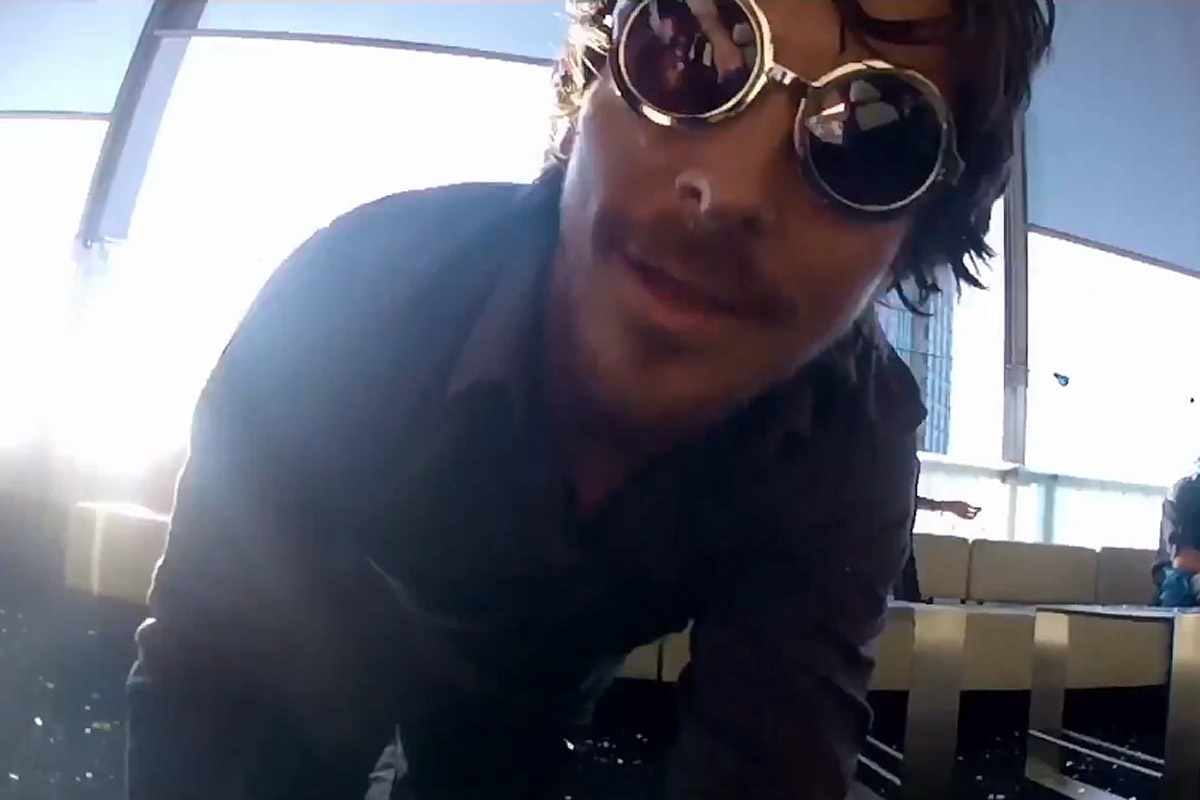
Set in modern day Los Angeles, the camera follows a screenwriter, Rick (played by Christian Bale as a placeholder for the filmmaker), who hasn’t so much lost himself, because he doesn’t know who he is.  He has been wandering through his adult life, questing through money, drugs, and women.

image

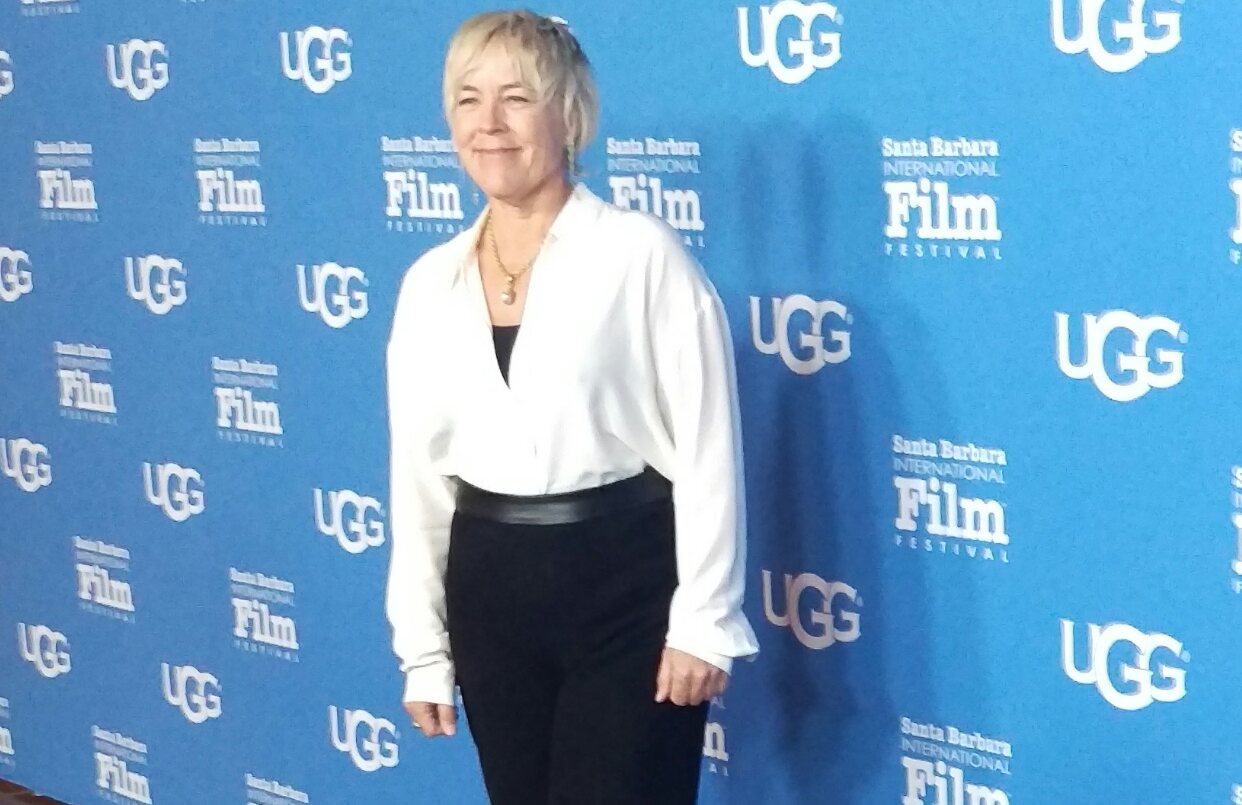
This cast is huge, it’s akin to THE THIN RED LINE.  Bale is the mainstay, but the abundance of recognizable actors in miniscule parts is awesome.  Malick’s producer, Sarah Green, was on the red carpet for the premiere and I asked her what it’s like casting a Malick film and what the actor’s responses are to Malick’s interest.  She told me that even though this film did not have an orthodox script, Malick has reached the point in his career where if there is interest shown in the actor, they immediately say yes.

image
KNIGHT OF CUPS producer Sarah Green on the red carpet for its US premiere at the SBIFF

This film marks Green’s four collaboration with Malick, with an addition two more films pending release.  I asked her if there was something about KNIGHT OF CUPS that sets it apart from her other films with Malick, and she said that this film was set modern day (like TO THE WONDER) but was set and shot in LA.  And that this film was shot on a whim, run and gun style. 

image

KNIGHT OF CUPS is a journey through Malick’s subconscious.  It is a remembering of faded memories.  Some are reconstructed, some a fantasy.  Rick is a placeholder for the camera, who rarely interacts with anyone or anything.  He watches, he broods, and most importantly he remembers.  When he does interact with others, maybe it is real, maybe it is what he thinks is real, or maybe it is what he thinks he should have done. The film chronicles life–his life, our life.  Success, fame, love, emotion, family, safety – that doesn’t even scratch the surface. 

image

A Malick film is like Hemingway’s iceberg theory but reversed.  We are shown everything, yet we know nothing.  We piece it together through an overwhelming abundance of emotion captured on screen, and what’s beneath the water is Malick’s intent.  His answer, his reasoning, his life.  KNIGHT OF CUPS is a painfully beautiful and personal journey of escaping the darkness and finding the light.

image

“You gave me peace.  You gave me what the world can’t give.  Mercy.  Love.  Joy.  All else is cloud.  Mist.  Be with me.  Always.”

CHRISTOPHER NOLAN’S THE DARK KNIGHT – A REVIEW BY NICK CLEMENT

1

At this point, there isn’t much left to be said about The Dark Knight. The film grossed almost a billion dollars worldwide and its critical acclaim vaulted its director, Christopher Nolan, into the upper stratosphere of big-budget filmmakers. It’s a masterwork of comic book moviemaking, talking iconic imagery and filtering them through the prism of a Michael Mann crime epic, and featuring a tour de force performance by Heath Ledger as the most sinful of all superhero antagonists, The Joker. While I will always prefer the epic nature of The Dark Knight Rises (flaws and all, it’s my favorite in the Nolan series), there’s something so lean and tough-guy-poetic about The Dark Knight; it really does feel like Heat featuring men in masks. Picking up right where he left off after his excellent franchise re-boot Batman Begins, Nolan essentially made his first effort look like a student film by comparison, and that’s not to knock Begins, because it’s a wonderful piece of entertainment, a movie that reimagined Batman for a modern, more visceral style of storytelling within this particular genre. And what’s particularly awesome, and where the film is better than The Dark Knight Rises, is that The Dark Knight is both epic and intimate; this is a massive crime saga, taking cues from the aforementioned Heat and Brian De Palma’s The Untouchables, but never forgetting to stay true to the intense character dynamics that have made this universe of costumed freaks so especially memorable. By placing Batman and all of his cronies and adversaries in a real world setting, no matter how stylized his Gotham City is, Nolan was able to fashion a trilogy of films that felt all the more tangible and immediate, something that not one, single Marvel effort has ever done, with the possible exception of Captain America: The Winter Soldier.

Batman, again played with gritty determination by Christian Bale, who brought stoic seriousness to his dual performance as Bruce Wayne/Batman, is caught between his own sense of vigilante justice, crossed with deeper psychological issues. In The Dark Knight, the Nolans and David S. Goyer, stacked the deck with his arch nemesis, the Joker, played with such menacing glee by Ledger that you have to just assume that the preparation and performance might have affected his psyche; his posthumous Oscar trophy was indeed fully warranted, and not some nonsense done for sentimentality or good-faced-publicity as some dunderheads have suggested in the past. The plot is multi-layered, convoluted yet not impenetrable, and steeped in crime movie mythology that speaks both to classic film noir and the graphic novel roots that Nolan favored. The Joker is out to bring down Batman, while also trying to put a stranglehold on Gotham’s City’s overall criminal element. From the steely, Mann-esque precision of the film’s opening bank robbery sequence; you get the sense that Ledger’s Joker isn’t a playful clown, but rather, a certifiable psychopath. The way he licks his scarred lips and the way his sinister cackle fills a room with eerie rage are just two of the ways that Ledger left an indelible mark on this classic comic book icon; I wonder if any other actor will be up to the challenge in future installments. Harvey Dent, an excellent Aaron Eckhart, is trying to clean the streets up from city hall, and Jim Gordon, played with low-key integrity by Gary Oldman, is working his way up the police chain of command. Various gangsters figure into the plot and there is a morally complex chain of events that figures into the film’s gripping climax. But the real show is the duel between Batman and the Joker, and it’s here, with two of the comic-world’s most beloved characters, that The Dark Knight really excels.

Nolan, reteaming with his phenomenal cinematographer Wally Pfister, bathed the film in shadows and blacks; this is a dark movie, both in theme and in appearance, but in the end, serving a stylistic and narrative purpose. The tragic nature of Harvey Dent is highlighted in a powerful character arc that exposes the many faces (literal and metaphorical) to the character; Eckhart’s performance was one of his absolute best. And then there’s the film’s major action scene, occurring at the half-way mark, which is a towering triumph of choreography, seamless CGI integration, and old-fashioned movie magic. By the end of this haunting and beautifully crafted piece of explosive entertainment, the viewer can’t help but breathe a sigh of relief. The Dark Knight was one of the first superhero films to never feel like a traditional superhero film, and the topical, real-world grounding that Nolan infused into his trilogy has been felt on other, future projects from a variety of other filmmakers. And yet, at the end of 2008, the old farts in the Academy felt like dissing one of the most successful films of all time, which was truly a shame, because the film stands as a genre centerpiece, and a reminder that art within this particular canvass is still attainable even when toys and lunchboxes are being considered; rarely does big-budget, summertime filmmaking become this successful at fusing all of the creative elements together.