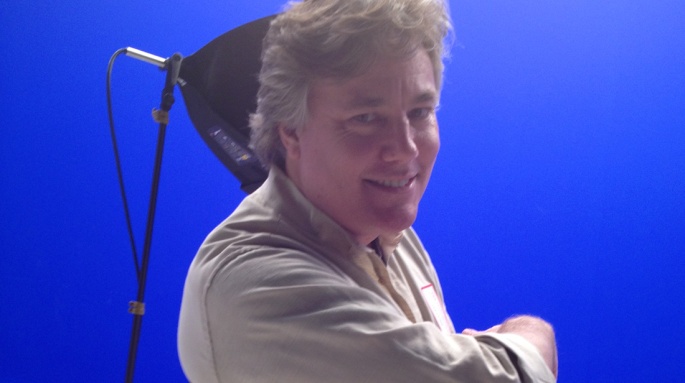
The Making of: A Conversation with Robert Meyer Burnett by Kent Hill

I love behind the scenes documentaries – always have. What began as 60 minute specials and from there graduating to EPKs (or Electronic Press Kits) have become full-blown features, at times several hours long. And the longer the better I say.

20479747_1996498947235998_6110516415750134827_n

Robert Burnett has been that guy. The guy behind the scenes. Armed with light-weight equipment and a small crew, he has captured the people who make the magic and the war it is to bring a dream to life on film.

He has been there to witness the making of the multi-Oscar winning Lord of the Rings trilogy. He has seen what it took to orchestrate Superman’s return. He has ventured back in time and brought us wonderful retrospective looks at films like Disney’s cult classic Tron.

But Robert is also a passionate filmmaker in his own right. Having made his own film Free Enterprise, directing episodes of the TV series Femme Fatales along with short films as well. He is a prolific producer having shepherded films like The Hills Run Red and Agent Cody Banks 2. And, just when you’re about to say, “Stop it Rob, you’re just too talented,” he is also an experienced editor; often times chopping his own work, whether it be for DVD special features content or the films he has worked on.

Beneath all of his success, Robert is a massive film lover, citing The Right Stuff, All That Jazz and The Godfather among the countless films he adores.

It was a real pleasure to chat with him about all he has seen behind the scenes, but more so to simply chat movies with a man who knows his stuff. Turns out he loved his time here in the great southern land (Australia), along with our beer and music. It is my hope Rob finds his way back so that I might take him up on my invitation to share a cold VB (Victoria Bitter) and talk movies…

…but until then, enjoy our chat.

20525784_1996498933902666_691227589830810364_n

The Golden Compass: A Review by Nate Hill 

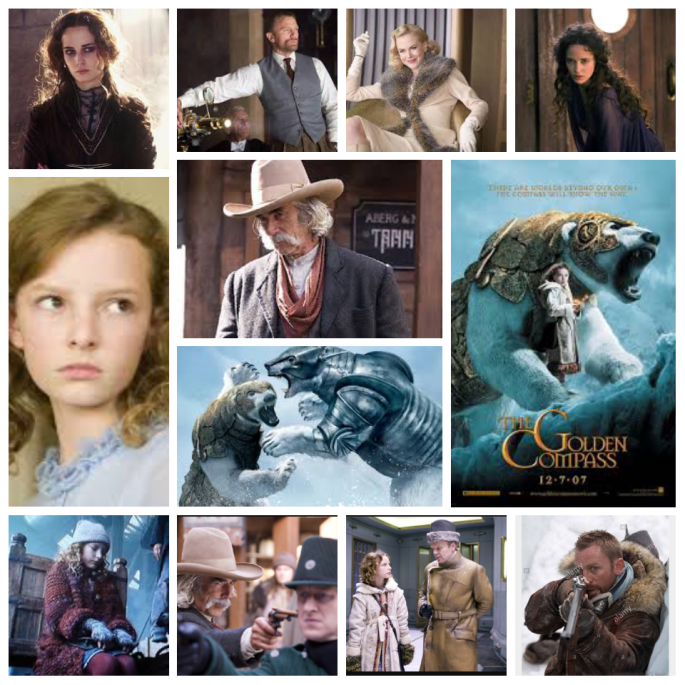
There’s a reason they never adapted another novel in Philip Pullman’s His Dark Materials series past the initial stab at The Golden Compass, and it’s the same infuriating reason why many adaptations of children’s and young adult novels fail: lack of appropriate atmosphere and true menace found in the source material. Everytime Hollywood comes along and decides to try their luck at a beloved series for youngsters or young adults, they feel this feverish need to shine it up with a candy colored, over lit vibe that leaves much of the darker elements by the wayside and as a result their final product feels neutered and bereft of any weight, stakes or attention to detail. Spiderwick. Skellig. Eragon. Hell, even Narnia only made it by the skin of its teeth, blasting out of the gate with a flawless entry, only to peter off into sequels afflicted by the very symptoms I outlined above, and not even make it to the end of the saga at that. Now don’t get me wrong, this doesn’t happen to every series they try to adapt, but to enough of them that it’s a problem, especially when a darkly creative, eerie and unique tale like this gets turned into a glossy, pandering misfire. It’s sad because some of the elements of a good film are in place, starting with casting. Dakota Blue Richards is on-the-nose perfect as Lyra, the adventurous heroine who gets swept away on a menacing voyage to arctic lands and beyond. She lives in a curious parallel universe where every human is forever accompanied by a ‘Daemon’, essentially a piece of their soul that takes animal form, and never the two shall separate. Lyra’s uncle Lord Asriel (Daniel Craig) is an explorer who has returned from the north lands with tales of a mysterious phenomenon called ‘dust’, a powerful substance purported to be able to unlock other worlds and dimensions. Lyra is curious at first and then nervous when she meets icy Mrs. Coulter (Nicole Kidman) a prim socialite with a devious agenda involving children that have gone missing in the city. She has a facility on the tundra where scary research and very bad experiments are conducted. Now in the books the descriptions and eventual confrontation with this would make your hair turn white. Pullman imparts it with weight and true blood freezing horror. The filmmakers *deliberatly* tone it down and castrate it, leaving anyone who was a fan of the series in total disgust. It just doesn’t have the same dark, otherworldly atmosphere it did on the pages, it feels too bright, chipper and lacking any real wonder. It does have some wicked visuals going for it in places, such as the two rival talking bears, voiced with baritone boom by Ian McKellen and Ian McShane, the landscape of the north as seen from the hot air balloon of grizzled sky-cowboy Lee Scoresby (Sam Elliott), and others. Eva Green also scores well as elemental witch Serafina Pekkala, but then she’s incapable of giving a bad performance anyhow. Scattered supporting cast includes Kathy Bates, Kristin Scott Thomas, Tom Courtney, Simon Mcburney, Derek Jacobi, as well, an impressive lineup all in all, but one that deserves a far better film for their talent. It’s just misguided and tone deaf. It may have been a series for adolescents, but the themes, implications and scenarios found in those books are harrowing, complex, very mature and not to be taken lightly, let alone given the full on Harry Potter theme park treatment. Shame, really, and a giant missed opportunity. Perhaps someday soon a network will get the rights and turn this tale into a film or tv show worthy of His Dark Materials.

The Hobbit: An Unexpected Journey – A Review by Nate Hill 

Some people give me funny looks when I say I enjoyed the Hobbit films. There’s this giant festering stigma around the entire trilogy that’s hard to wade through if you are one who geniunly did enjoy a lot of what Peter Jackson brought us with his second barrage of Middle Earth sagas. Now don’t get me wrong, there’s plenty of things he muffed up, the chief aspect being editing and length. We did not ask for, need or want an entire LOTR lenghth trilogy based on a book that could have fit into one volume of that series. Jackson has a tendancy to overreach, film too much and throw it all into his final cut. It started with the extended cuts of LOTR, which were somewhat unneeded, continued with King Kong, which could have been at least 45 minutes shorter, and has now climaxed with The Hobbit films. They’re so long and stretched out that at times we realize we’re not even watching stuff from Tolkien’s annexes or archives, but simply shit old Petey made up to pad the waistline of content that’s begging to be slimmed down. I’m still waiting for a fan edit that condenses everything down into what is necessary to tell the story, and pitch everything else into the purgatorial halls of DVD deleted scene land. And therein lies my argument: There’s gold to be found here, but a lot of folks are so turned off by all the unnecessary razzle dazzle that they have become blind to what actually worked. An Unexpected Journey kicks off the trilogy and definitely fares the best, feeling the most akin to the book. Martin Freeman is lovely as a young Bilbo, baffled to find thirteen rowdy dwarves dumped on his doorstep, the work of Gandalf The Grey (Ian McKellen, like he never left the role), who wishes to prod him in the direction of a most dangerous and thrilling adventure. Bilbo is a mild creature and deeply in love with the comforts of home, but is whisked along all the same, after a chaotic dinner party and plate throwing contest from this knobbly group of mountain dwelling pygmies. Orcs, Wargs, Goblins, colossal mountain giants and an appearance by the ever fascinating Gollum await them. There’s an interlude into Elrond’s heavenly glade where Gandalf, Saruman (Christopher Lee) and Galadriel (Cate Blanchett) have a little CSI: Rivendell episode with an ancient dagger that hints towards the return of Sauron. One thing Jackson added that is a highlight is additional wizard Radagast The Brown (Sylvester McCoy) an eccwntric hippie who rides a chariot led by massive rabbits in breakneck bouts of Need For Speed: Middle Earth with Orcs atop Wargs. A distinct feature about these films compared to LOTR is the ramping up of CGI; many Orcs are no longer stuntmen in gloriously goopy makeup, but giant computer rendered behemoths, taking some of the texture and authenticity away. Jackson also chose to shoot in many more frames per second than the human eye is used to, giving everything a strange, wax museum sheen that is pretty distracting. Close your bag of tricks and make us a goddamn straightforward flick Pete. Fuck sake. For all the issues, it’s terrific to be back in Middle Earth, however different it looks and feels. The production design is still an elaborate wonder of creative design and decoration, Howard Shore’s now timeless score makes a triumphant return and there’s a beautiful new song courtesy of the dwarves. Say what you want, bitch and moan til the Wargs come home, I love this first outing dearly and rank it nearly as high as LOTR. I can’t say the same for the next two, especially the exhausting Battle Of Five Armies which diminished my patience for Jackson and his tricks a whole lot. But, like I said, there’s always gold to be mined from the needless padding that’s been tossed in. One day someone will edit that perfect cut for us, and we’ll have that definitive Hobbit film. Until then, cherry pick the best parts and try to put the rest from your mind.