HBO’s Vendetta: A Review by Nate Hill

image

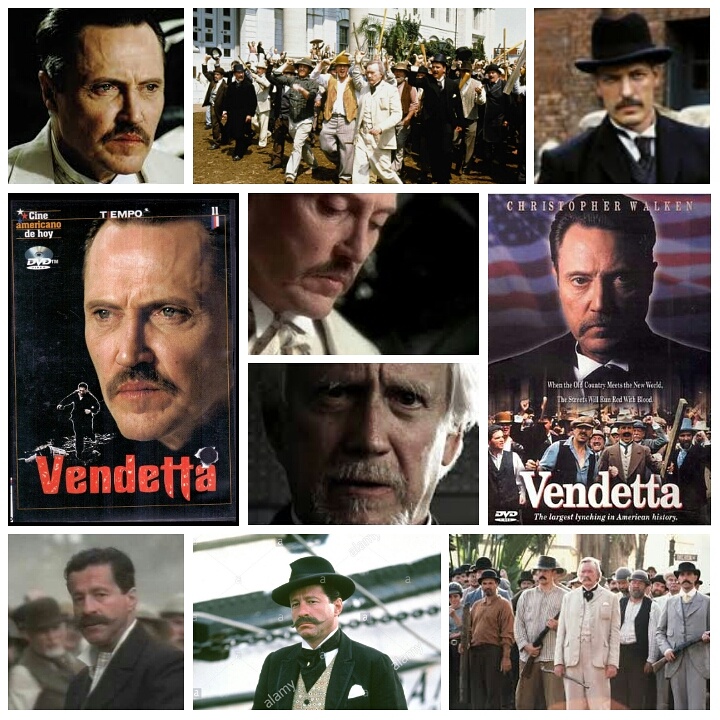
Vendetta is a tough film to watch without feeling sadness and outrage, but such is the stuff that HBO churns out, honest pieces of history that sting you with their refusal to honey coat or gloss over the nasty details (I’m looking at you, History Channel). This one takes place in 1890 New York City, a time of mass Irish and Italian immigration which spurred a ton of unrest among those already settled and raised in that area. Everyone is fighting tooth and nail for a piece of the pie and a chance to feed their families, and the ones with a bunch of pie just greedily want more. The influx of Italians is a cause for insidious worry for James Houston (Christopher Walken), an obscenely wealthy and deeply corrupt piece of shit. He’s joined by equally nasty William Parkinson (Luke Askew), and Mayor Joe Shakespeare (Kenneth Welsh), as the trio cook up an evil scheme to implicate a few young Italian men in the mysterious death of a sympathetic and kindly Irish police chief (Clancy Brown). This sets in motion a tragic outbreak of riots and and angry acts of violence against the Italians. Even their union representitive Joseph Macheca  (Joaquim De Almeida) cannot bring peace or stop what Walken and team have started. You may think why make a film of this, as it heads straight for the bleakest of resolutions, but I think it’s important to shine a light on even the darkest patches of history, in order to understand the levels of deception and human cruelty so that we may see it coming before it’s too late next time around. This was a terrible, terrible event and the film hits you square in the face with it’s blunt truth and unwavering honesty. Kudos to HBO fpr taking it on. Watch for the late Edward Herrmann and Bruce Davison as rival lawyers in the chaos.

Undertaking Betty: A Review by Nate Hill

image

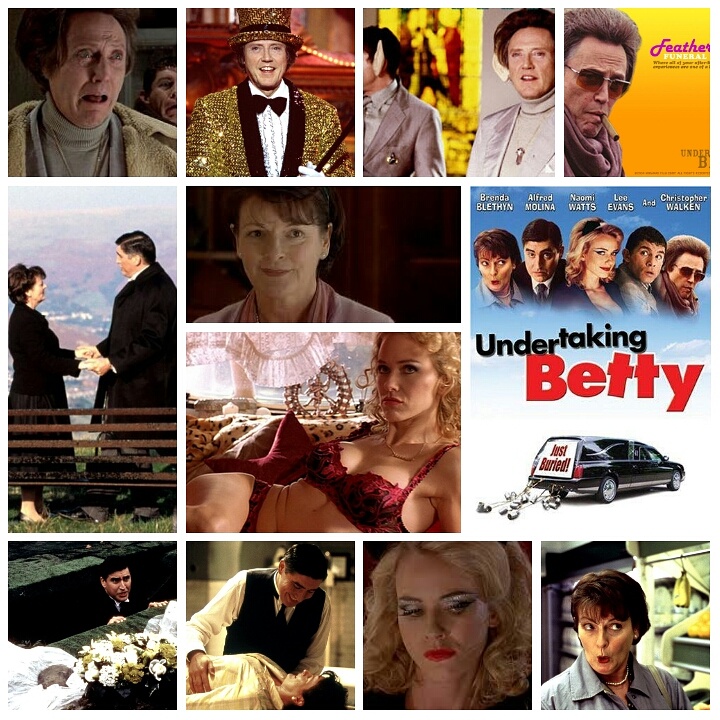
Undertaking Betty (or Plots With A View, as it’s called in the UK) is British black humour at its most brilliant, hilarious and surprisingly touching, in the tradition of stuff like Waking Ned Devine and Monty Python. It’s carefree and harmless but not without a raunchy sting that can’t help but be met with loving reception due to its charm and top drawer silliness. Brenda Blethyn plays a woman who has spent thirty years of her life in a small Welsh town, married to an absolute pig of a man (Robert Pugh). He’s a sleazeball who is shagging his slut of a secretary (Naomi Watts in full gumball sickening skank mode). Blethyn is secretly in love with the local undertaker and mortuary owner (Alfred Molina), the romance sparking up as the two try to find a way to get her away from Mr. Awful husband. Molina has the brilliant idea to fake her own death, letting her off the hook and allowing them to elope. She’s willing but reluctant, and so they proceed. Only one problem: Molina isn’t the only funeral outfit in town. Garish eccentric Frank Featherbed (Christopher Walken) and his peevy associate (Lee Evans) owns his own business and plans to steal Blethyn’s funeral for his own. Walken dials up the kook factor to the maximum and is pure genius, an entertainer at heart who believes that every funeral should have the showmanship and dazzle of a broadway show, leading to some amusingly awkward scenes. Just the fact that an american Chris Walken is working as a funeral home director way out in rural Wales is enough to bust a gut, let alone his off the wall performance. The resolution reaches comic heights that made me truly query why this film’s praises weren’t sung to high heaven upon release, but such is life, and death. The romance between Blethyn and Molina is sweet, endearing and balances out the larger than life sense of humour that the film keeps tossing around like confetti. Walken fans, dark comedy fans, film fans alike…please check this out. 

The Jungle Book: A Review by Nate Hill

image

Prepare your eyes for maximum bogglement, work out your abs so you don’t bust a gut laughing, and most importantly, dust off that childlike sense of wonder before going to see Rudyard Kipling’s The Jungle Book, boldly and lovingly retold by Jon Favreau in what is the most flat out exciting, adventurous film of the year thus far. The director pulls  off a balancing act between palpable tension, character interactions that come straight from the heart and land squarely in ours, and some of the most believable, jaw dropping CGI I have ever seen on screen. The animals look so impressive and lifelike that after seeing them I shelved away some of my inherent reservations about computer generated effects as a dominant force in a piece, and simply gave in. The atmosphere is lush, intoxicating and deeply detailed, with a naturalistic feel and tone. Young Neel Sethi is tasked with being the only fully human component, and is perfect. His interactions seem real and rehearsed, immersing the viewer further into the visuals. Mowgli is a young man cub, found on the edge of the jungle by the panther Bagheera (stately, compassionate Ben Kingsley) and given to a wolf pack to be raised by alpha Akela (Giancarlo Esposito) and Raksha (Lupita Nyong’o). Not all in the animal kingdom are receiving of this man cub, especially a terrifying Bengal tiger called Shere Khan, given the rumbling tones of Idris Elba, inspiring fear in animals and audience alike. He has a rocky relationship with man, and wants Mowgli dead. Bagheera takes him far into the jungle, where they are separated and Mowgli’s adventure truly begins. He wanders into the path of Kaa (a slithery Scarlett Johansson) a monstrous, seductive python, and is taken under the wing of Baloo, an adult Winnie the poo voiced by Bill Murray. Murray is one of the film’s great delights, and as soon as he shows up we forget about all the menace and threat which preceded his arrival, and are swept up into his affable, lounging lifestyle and brightly colored neck of the woods. Murray clearly ad libbed a lot of Baloo’s dialogue, and anything he didn’t he still gives that unmistakable, winking ‘Murray’ twinge that I so love. Mowgli’s adventure continues, as he stays one step ahead of Shere Khan and is visited by the king of the monkeys, a twenty foot tall, lumbering orangutan named Louie, voiced with demented, pithy glee by Christopher Walken. As soon as he showed up the laughs erupted from within me, and reached a manic peak as he belts out the ‘Oobie Doo’ song in priceless Walken fashion, his monkey mannerisms uncannily starting to resemble Walken’s own distinct visage. Many of the animals serve as differing parental figures to Mowgli, representing elemental factions of raising one’s young. Bagheera is cautious, doubting and skeptical. Baloo is the fun loving, lenient one. Even Shere Khan has a curdled paternal feel to him, like the brutal stepfather who is damaging to his offspring. Raksha is the unconditional mother, and that devotion comes out wonderfully in Nyong’o’s souful performance. The vocal performances are aided by the stunning effects; the CGI of facial features allow the actors work to truly extend into the realm of what’s visible, with real emotions displayed by the creatures, and not a single rendering that’s anything short of lifelike. The film evokes true wonder and primal excitement, escapism that takes itself seriously yet knows when and how to play, a dazzling technical marvel, a timeless story well told, all in one cinematic package that is not to be missed. Oh, and stick around for the credits, instead of Walken out of the theatre and missing a final musical treat.

Tim Burton’s Batman Returns: A Review By Nate Hill

Tim Burton’s Batman Returns is my second favourite Batman movie thus far. It’s pretty underrated, stylishly cheeky and full of ornate, wonderfully oppressive, melancholic set design and drips with a gothic sensability that only Burton included in his versions, and seems to be missing from the franchise these days. It’s dark, comical and just a little bit campy, always a winning combination. Michael Keaton steps back into the batsuit for a second time, and he’s even more somber and downbeat than in Burton’s original 1989 film. Keaton is so talented, and one only needs to look at his zany work in Beetlejuice and compare it to the heft and restraint he shows as the caped crusader to see this. Here he’s faced with a snowy, blackened and endlessly corrupt Gotham City, this time under siege from three wildly different villains. Danny Devito plays Oswald Cobblepot, a.k.a. The Penguin, in what is probably the most outlandish character in the otherwise grim film. He’s a bad tempered, knobbly little gremlin, encased in sallow makeup and sporting disgusting, pasty little flippers. It’s hard to tell it’s even Devito at all until that little smart ass mouth opens up to hurl calculated obscenities at anyone and everyone. He aims to be mayor, and only in freaky deaky Gotham would a plan like that ever be taken seriously, from a sewer dwelling, animalistic mobster with an army of clowns following him. Christopher Walken plays evil, ghoulish Max Schreck, an amoral monster of a businessman with nefarious plans of his own, and a haircut that would make Andy Warhol run for cover. Last and most memorable is Michelle Pfeiffer as Selina Kyle, Schreck’s awkward, meek secretary who eventually becomes Catwoman. And what a Catwoman she is. Forget Anne Hathaway, Julie Newmar take a number, and we won’t even mention Halle Berry. No one played the pussy quite like Pfeiffer. She’s got a shiny, skin tight outfit with the body to match, a sassy, sexy attitude, a whip smart mouth on her and just a hint of psychosis, making her my favourite film incarnation of the character. “Meow” she purrs sensually as an incendiary bomb detonates behind her. Damn. They all get wrapped up in various schemes and scams. Penguin wants ultimate power, which apparantly involves kidnapping a bunch of infants. Schreck wants ruthless progress to tear Old Gotham up in worship of the almighty dollar, and Catwoman is content to slash and burn everyone’s plans, until she gets a bit of a smolder in her eye for Batman, providing some electric sexual tension between the two of them that’s a highlight of the film. Neither of them are sure whether they want to kiss or kill, fight or fuck the other, and it’s devilishly entertaining watching them hash out their hormones in naughty little action sequences and slow, slinky intimate scenes, involving both Bruce and Selina as well as their feral alter egos. Their chemistry revolves at the center of the piece, with all manner of circus sideshow madness happening around them. Pat Hingle and Michael Gough diligently put in work as Commissioner Gordon and Alfred Pennyworth, with Doug Jones, Michael Murphy, Andrew Bryarniarski and Paul Reubens rounding out the roster. Burton outdid himself with style on this one, his trademark eye for loving detail laboriously employed here to the point where it surpasses the artistry of a comic book and starts to look like some mad dream of Vincent Price. He dipped his toe in the water of the Batman universe with his first outing. Here he plunges headlong into it and fully commits to a style and tone that’s distilled to a satisfactory point that he wasn’t quite at with Batman 1989. A treasure in the franchise, and a wicked fun film at that.

10TH ANNIVERSAY REVIEW OF TONY SCOTT’S MASTERPIECE DOMINO — BY NICK CLEMENT

1

Without question or hesitation, I can firmly state that Domino is my absolute favorite Tony Scott film, the one I keep coming back to the most, and at 10 years old, I feel it’s time that this insanely undervalued pièce de résistance from one of our ultimate modern auteurs got the critical attention and audience credit that it truly deserved. Ahead of its time yet also fabulously au courant when the film was unleashed upon cinemas in 2005, Domino is a smashing entertainment, the perfect synthesis of Scott’s gritty yet slick, highly aggressive style that he developed in the 80’s and 90’s with The Hunger, Top Gun, Days of Thunder, Beverly Hills Cop 2, Revenge, The Last Boy Scout, True Romance, Crimson Tide, and The Fan, which then led to a decidedly expressionistic (and at times impressionistic) aesthetic in the mid to late 2000’s, with such works as Man on Fire, Beat the Devil, Agent Orange, Déjà Vu, The Taking of Pelham 123, and his final film, the hard-charging and incredibly entertaining Unstoppable, pushing his trademark visual flourishes to the absolute extreme. Sandwiched in between were his two “silver-blue sheen” political thrillers Enemy of the State and Spy Game, with the former sort of predicting our post 9/11 world climate, and the latter commenting on it in real-time. But for me, Domino is the *Toniest* Tony Scott film that the iconic filmmaker ever crafted.

2

Easily one of the most misunderstood, sadly maligned films of the last decade, Domino is due to gain a much-deserved cult following. It bombed at the box office, and with the exception of a few sharp critics (Ebert, Dargis, Strauss), people really attacked Scott over this distinctly personal and hyperactive piece of purposefully heightened cinema. And make no mistake, like an effort by Picasso, Domino is a work of collage-inspired art, maybe the first piece of true cubist-cinema ever crafted, leading a super-charged group with the likes of Running Scared by Wayne Kramer, Joe Carnahan’s Smokin’ Aces and Stretch, Michael Davis’ Shoot ‘em Up, and Edgar Wright’s Scott Pilgrim vs.The World, all of which feel spiritually and stylistically connected to Scott’s over the top yet highly artistic sensibilities. Simply put, Domino is one of the most visually elaborate and sophisticated movies ever created, and all of these efforts feel birthed from the seismic contribution that Oliver Stone’s breakneck masterwork Natural Born Killers brought to the forefront in 1994, with its unrelenting sense of visual dynamism, outlandish humor, graphic violence, experimental tone and structure, and an emphasis on constant forward momentum. It’s also more important to note that Scott went on record as saying that Domino was his most favorite film that he ever directed; at the end of the day, he got the movie made the way he wanted to make it, and that says a lot in our current bean-counting movie climate.

3

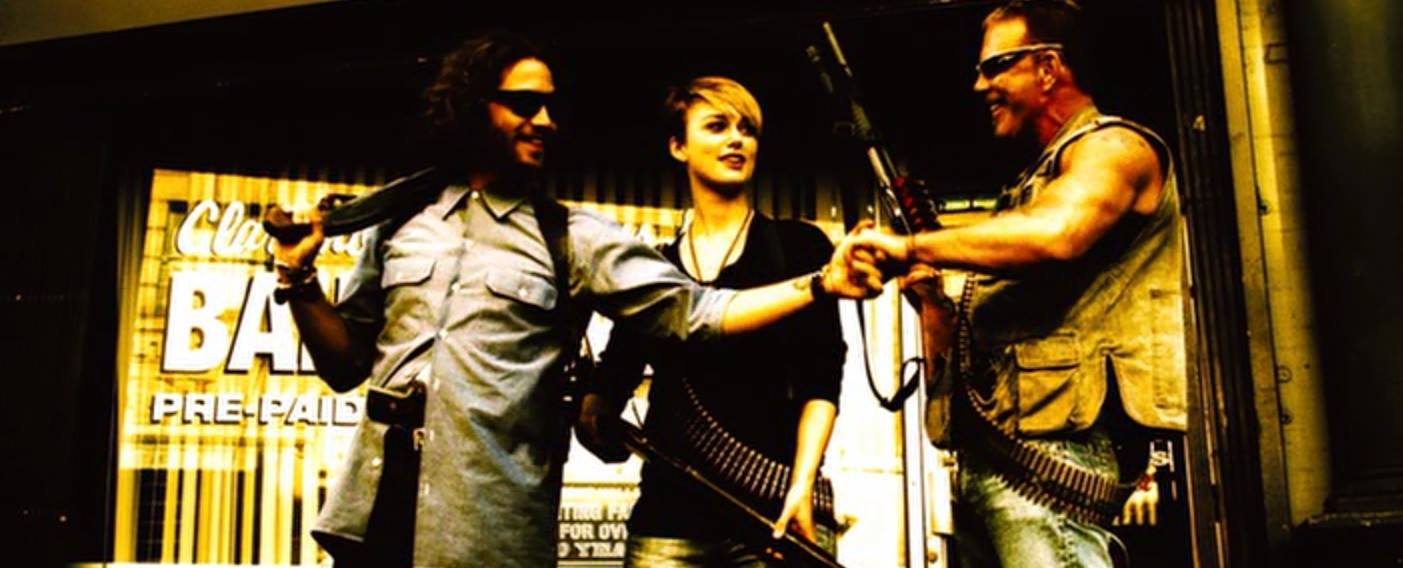
I know that this is Scott’s most divisive, most critically savaged film. Many people hate it. Some people, like me, consider it to be the apex of Scott’s razzle-dazzle career as a storyteller and stylist, with a wild cast of characters (Keira Knightley, Mickey Rourke, Edgar Ramirez, Mo’Nique, Christopher Walken, Dabney Coleman, Delroy Lindo and many others) who all throw themselves into the filmmaking process with gusto and unending enthusiasm for the lurid material. The film is a slightly insane, pseudo-biopic of infamous bounty hunter Domino Harvey (the fantastic Knightley) that exists primarily as a showcase for Scott’s obsession with style and form and, as per usual, a heartfelt narrative. What makes Domino work as a whole is that the story is as unhinged as the style, always complimenting each other, always doing this crazy cinematic dance. Also, many people forget that much of the film takes place through a cloud of mescaline, and most of the third act incorporates a hallucinogenic-trip aspect to the proceedings. And then there’s Domino herself – a wild, rebellious British model turned bounty hunter who wanted only to march to the beat of her own drum. The real Domino Harvey did in fact lead a crazy life, but it probably wasn’t as over the top as Richard Kelly’s crisscrossing and zigzagging script, which was based on a story co-created by The Last Seduction scribe Steve Barancik. The filmmakers make it clear upfront that they’ve taken liberties with the facts – there’s even a graphic that reads: “Based on a true story…sort of.” What I love most about Domino is how frenetic and in your face the filmmaking is, and how incredibly intricate the plotting becomes by the finale. Scott’s hyperventilating and exhilarating style would mean diddly-squat if it wasn’t in service to an exciting plot with characters you like and stakes that are high. Knightley shredded her good-girl image with her balls-out performance as the titular heroine; from the lap-dance scene to breaking Brian Austin Green’s nose to busting out the double machine guns during the finale, she grabbed the role and ran with it. Mickey Rourke’s recent career resurgence really began here, with a gruff and stern performance as Domino’s boss. And Edgar Ramirez, who would later blaze up the screen in the epic five hour terrorist biopic Carlos, busted out in a big way as Domino’s volatile partner, Choco, and the love story that develops between them is as soft and tender as the rest of the film is jagged and primal.
5

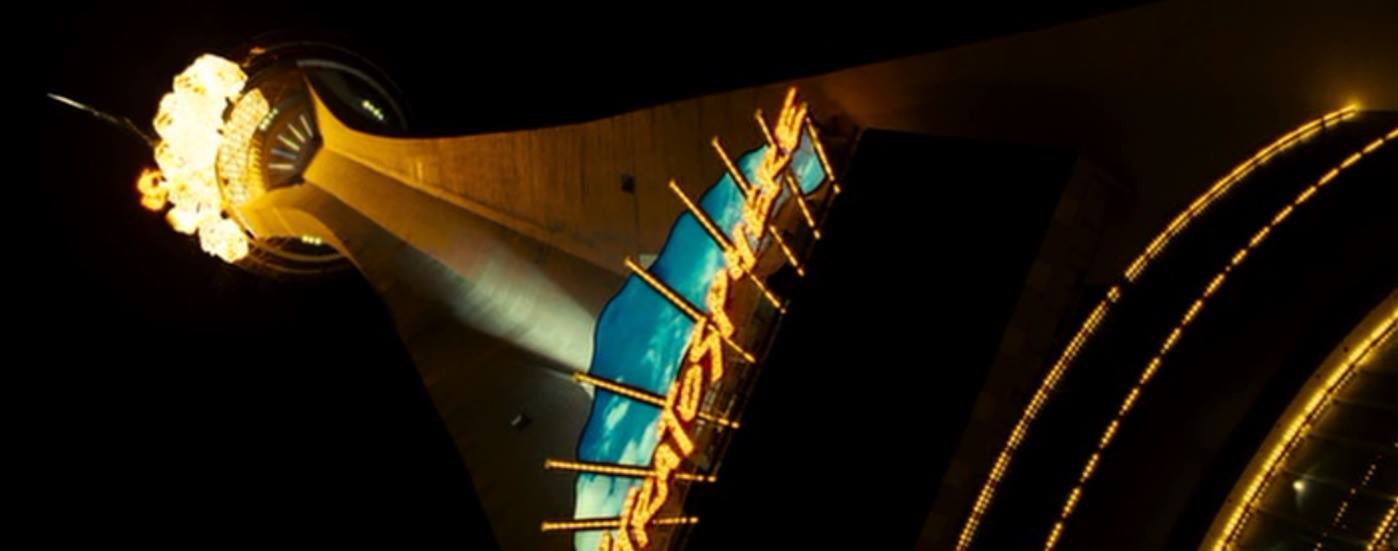
Many complained that Scott’s directorial tricks and kinetic editing patterns were a major problem in Domino. To those individuals I say: Go home and watch Driving Miss Daisy. First off, lest anyone forget, the film is framed through the P.O.V. of a main character who is tripping on mind-altering substances – that should be the first sign to the viewer that the film is going to be a bit off-kilter. Kelly’s labyrinthine yet still coherent screenplay is a marvel of ingenuity, character construction, and dense plotting with a couple of his customary satiric zingers thrown in for good measure. Daniel Mindel’s super-saturated, kaleidoscopic cinematography bleeds with intense color as the images jump off the screen, assaulting and overwhelming the viewer’s senses – it’s a hot-blooded cinegasm of technique, designed to get you off. Repeatedly. And when you take into consideration that Kelly’s off-the-wall but still rooted in reality screenplay frequently shoots off in various directions at any given point, always carrying the potential to spin wildly out of control, you have to applaud the zeal of all the people behind this crazy undertaking. Strip away all the pyrotechnics and the nonlinear structure and you’re left with a rather simple story of love, deceit, revenge, and emotional and physical catharsis. And let me tell you – if you don’t find it cinematically satisfying when Keira Knightley and Mickey Rourke and Edgar Ramirez are speeding down that elevator shaft in the Stratosphere hotel while the penthouse level is exploding from an I.E.D., well, I’m not sure what to tell you!

4

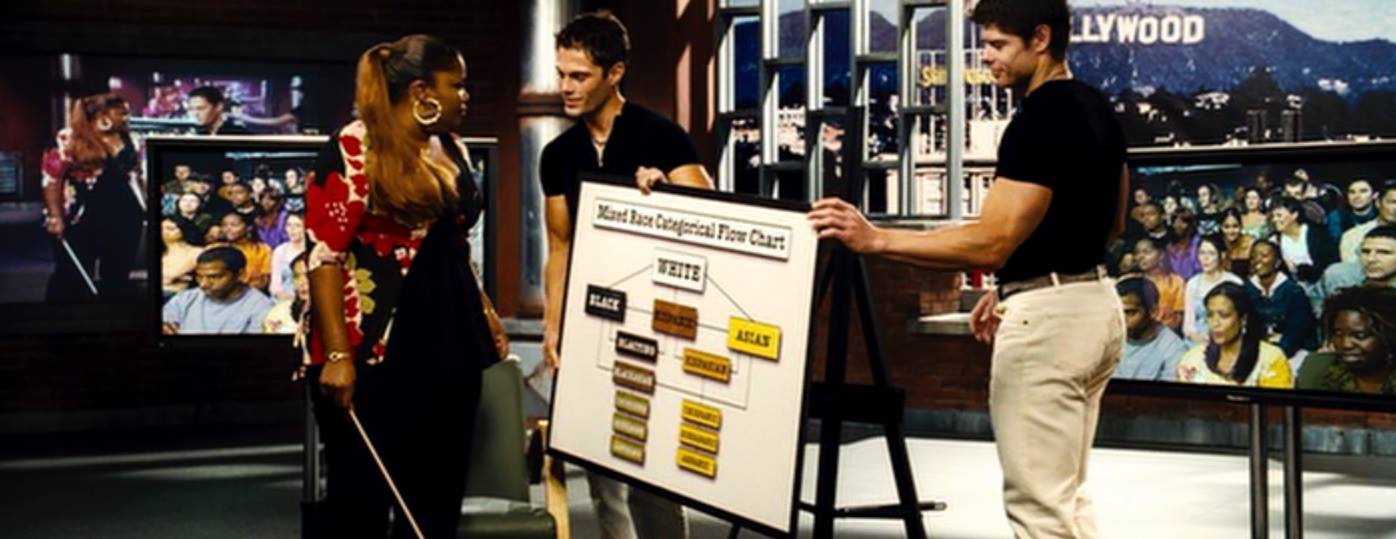
There are just so many glorious sights that this movie has to offer: The epic opening credit sequence which needs to be played at full volume blast, Christopher Walken stealing scenes as a lunatic reality TV producer with a serious “font issue,” Ian Ziering and Brian Austin Green destroying their 90210 celebrity personas in hilarious cameos, Tom Waits as a tripped-out roamer of the desert with some poetic and interesting notions regarding fate, Knightley giving a bra and panty lap dance to a gang member in order to get her crew out of trouble – this movie never stops chugging and churning, throwing stuff at the audience, egging them on for a visceral response. The Jerry Springer interlude with the unveiling of the “mixed-race flow chart” is still a pisser for the ages, and overall, the bizarre nature of the narrative can never really be pinned down, which is a huge part of the fun factor. This was Tony Scot unleashed, the moment where you felt Scott put ALL OF HIMSELF into making a movie. It’s that rare, expensive, personal project that only gets funded by private investors who then let the filmmaker do whatever it is that they want. Domino is Tony Scott’s undying love letter to cinema as a whole and stands as his immortal masterpiece. As Manohla Dargis of the New York Times said in her glowing review of the film: “It’s all the Tony Scott you could want in a Tony Scott movie.” Damn straight.
JOHN IRVIN’S THE DOGS OF WAR — A REVIEW BY NICK CLEMENT

2

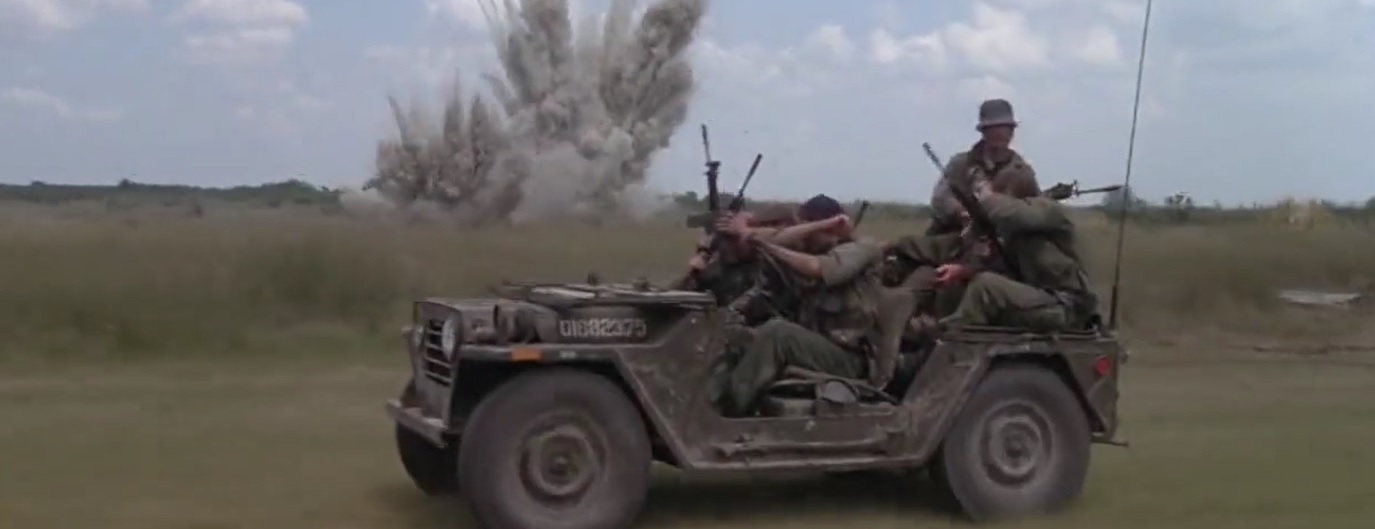
John Irvin’s take-no-shit war drama The Dogs of War is the sort of action picture rarely made these days — unsentimental, lean, and thoroughly engrossing (David Ayer’s underrated Fury feels cut from the same cloth, as do portions of Antoine Fuqua’s compromised Tears of the Sun). Gritty, violent, masculine, and shot with rugged panache by director of photography Jack Cardiff, this 1980 mercenary adventure has received the Blu-ray treatment from the fine folks at Twilight Time DVD Label and if you’re a fan of unpretentious, straight ahead war films, then check this one out. Christopher Walken and Tom Berenger deliver intense and extremely effective performances, with a surly and gruff supporting cast which included Colin Blakely, Hugh Millais, and Ed O’neil. Irvin would later direct the outstanding Vietnam film Hamburger Hill, 80’s classic Raw Deal, and the underrated Michael Caine thriller Shiner. According to the internet, Michael Cimino did a re-write on Gary DeVore and George Malko’s terse and disciplined script. The opening action sequence, which plunges the viewer into the middle a full scale Central American war-zone, is outstanding, especially for the days of zero CGI, with all sorts of for-real pyrotechnics and incredible stunt-work. The final act is essentially a battle, with some ridiculous fire-power on display. Geoffrey Burgon’s pulse-pounding score was more than up to the task. This is one of those excellent films that may have snuck through the cracks that’s totally worth re-discovering.

1