Jonathan Mostow’s Breakdown

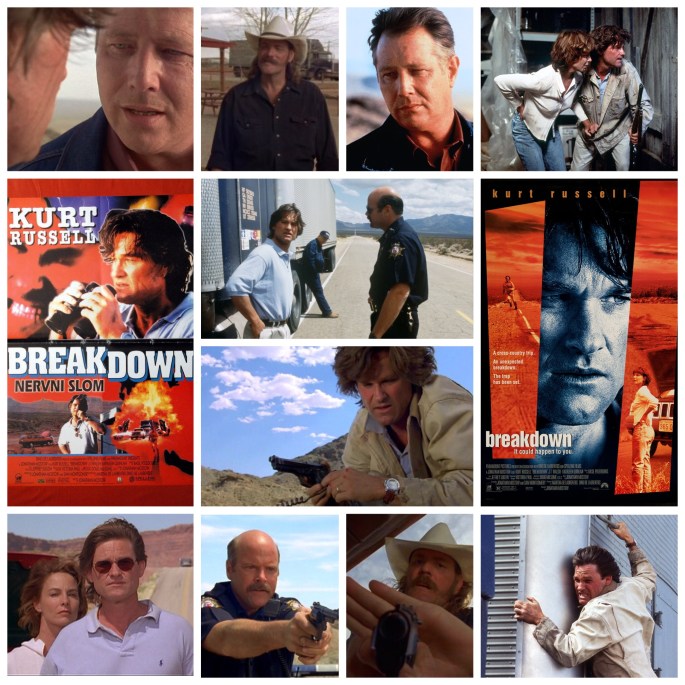
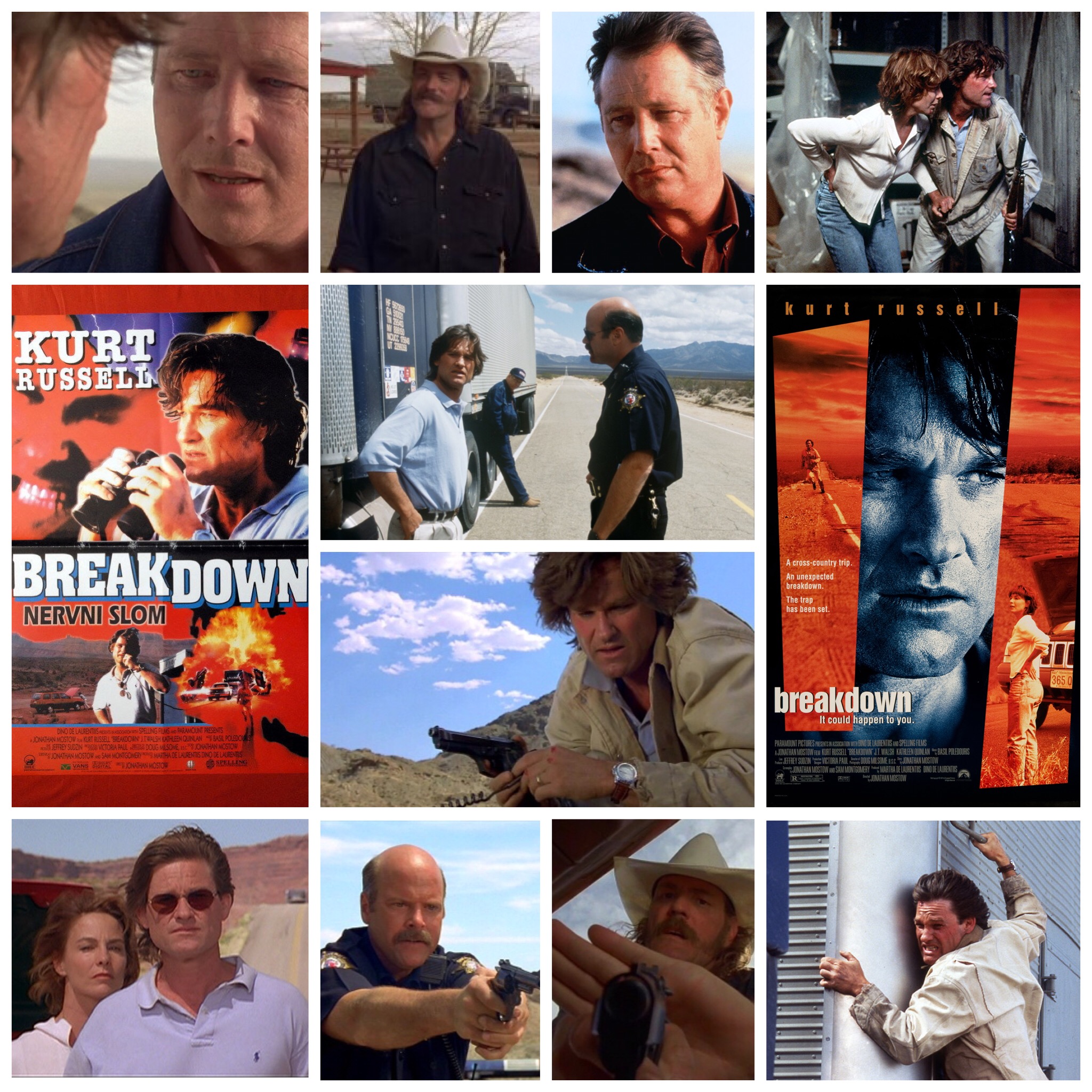
Jonathan Mostow’s Breakdown is one hellcat of a thriller, a nitrous injected highway nightmare scenario that doesn’t quit until the tanks empty, quite a few people are dead and Kurt Russell has burned off umpteen carbs running about the southwest searching for his missing wife (Kathleen Quinlan). In the tradition of great road pictures like Steven Spielberg’s Duel and Robert Harmon’s The Hitcher, this one know ms to keep the speedometer revved for maximum effect, the best method for these types of films. Russell and Quinlan are your average American couple, driving from A to B along some forgotten stretch of freeway out there. After a brief stop, she vanished, he panics and so begins his breathless crusade for the truth. The local cops are useless, no one seems to have witnessed her vanish, and he’s pretty much on his own, not to mention hunted by some nefarious truck drivers who probably know more than they should. J.T. Walsh, king of businesslike scumbag roles, gives what may be his nastiest here as Red Barr, a long-haul semi driver who knows exactly where Russell’s wife has gone, and ain’t telling, no sir no how. Similarly, big old M.C. Gainey, another Hollywood thug, is in high evil gear as just one more backroad asshole Russell has to deal with, and the two have a crackling showcase of a high speed standoff, one in the driver’s and one in the passenger seat, playing close quarters mortal kombat to see who comes out on top, and who comes out dead. The Fast and The Furious has nothing on these types of films, for it’s less about bombarding an audience with a stunt a second, and more about rhythmic pacing, then knowing when to open up and let the ripcord fly. Taut, precise, unrelenting little flick.

-Nate Hill
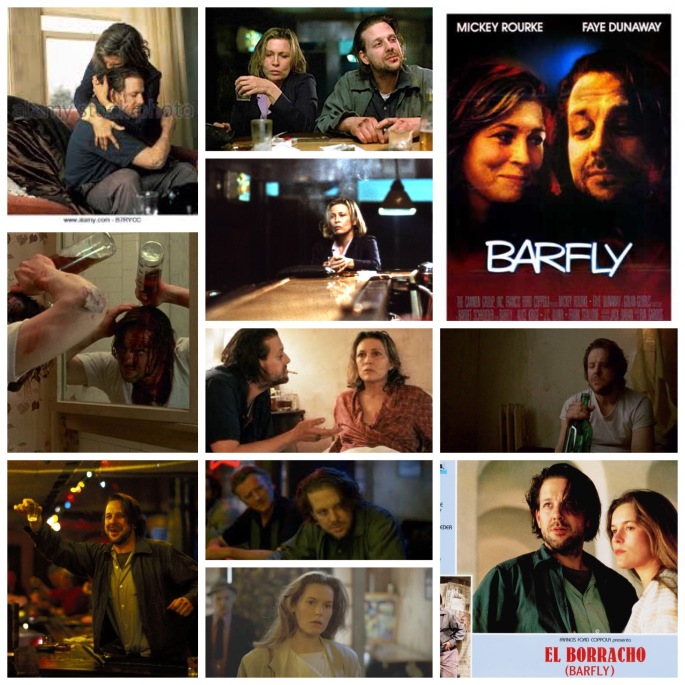
Charles Bukowski’s Barfly

Charles Bukowski’s Barfly requires a specific thing of it’s audience: emphatically try to observe a very particular brand of life, that of the binge drinking drifter in 1970’s LA basin area. If you can do this, it’s a brilliant piece of work to enjoy, and if you can’t, it’ll be an abrasively off-putting slog to sit through. I fell smartly into the former category as the subject matter came.. vaguely close to hitting home, and because it’s just a fantastic movie in itself. Mickey Rourke was at the top of game during the 80’s, and this is one glowing gem of a role for him, one that shows a vulnerable, less macho dipped side of the man no less. Playing a restless, shambling gutter-snipe named Henry Chinaski, he careens through the film consuming any booze he can get his hands on, barely maintaining already dysfunctional relationships and haunting his derelict apartment, as well as that of a fellow rummy he meets in the form of excellent Faye Dunaway, looking equal parts haggard and angelic until we’re not sure what we’re looking at. Chinaski is of course supposed to be Bukowski himself, as the film and it’s fiery script are autobiographical in nature, based on the willfully misanthropic writer’s hazy adventures in backwoods Hollywood during that era. Approached by a publisher (beautiful, articulate Alice Krige, who replaced Helen Hunt) with stars in her eyes for the man and his work, Chinaski gets a taste of life on the other side of the tracks, albeit briefly, an interlude he describes as ‘a cage with golden bars.’ The dives along those strips are his home right to the core, and he’s proud of it. The film is episodic, elliptical and open ended, a glimpse through the window of what it must be like for these people for a time, as the camera lovingly follows them about their ways for a while like a fly on the wall, then loses interest, buzzes off and leaves them in peace without rhyme, reason or resolution, unless of course your sensibilities jive with the meandering, barely sculpted story structure, which I loved. The film has little interest in aesthetics or pleasantries either, showing ugly, mottled alcoholics and layabouts who fill the frames around Rourke and Dunaway like brittle garden gnomes adorning the bar, a far cry from the fresh, powdered faces we’re used to in Hollywood. “Don’t you hate people?” Dunaway laments to him in one scene. “No, but I seem to feel better when they’re not around..” he croons back. It’s that kind of stinging poetry that gives this film, and Bukowski’s career, such lasting weight. Not to be missed.

-Nate Hill

B Movie Glory: Do Not Disturb aka Silent Witness

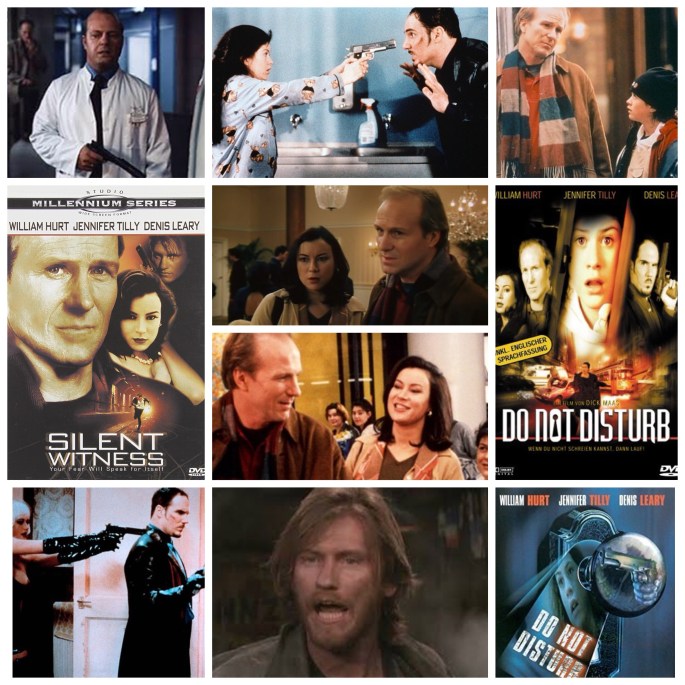
Do Not Disturb, a cheaply drawn Euro-trash oddity, ironically does exactly what it’s title forbids by indeed disturbing the audience with very questionable scenes that paint Amsterdam in a way that I’m sure would infuriate locals. Also called ‘Silent Witness’ on DVD, it’s a wonder why such a weird, awful script would attract high pedigree actors like William Hurt, Jennifer Tilly and Denis Leary. Hurt and Tilly play a wealthy American couple on a business trip to Amsterdam with their little daughter (Francesca Brown), who happens to be a mute, wearing a magic marker around her neck as sole means of communication. After getting separated from her parents at the hotel, she inadvertently witnesses a murder by two nasty hitmen (Corey Johnson and some other random) and flees off into the night pursued by them, and subjected to all kinds of whacked out freaks. Seriously, this poor girl in terms of both the character and the actress, is put through an unnecessary wringer of ultra violence and sleaze. There’s this thread of implied child abuse running through the narrative, as if such proclivities are inherent in Dutch people in that city, and it’s really troubling to see a girl her age have to be ogled by perverts at every turn, an ill advised and shameful addition from some no name scriptwriter who probably never worked again. Then there’s Denis Leary, who should have sued the marketing team for misrepresentation. On the US DVD cover, he leers off the poster with an evil gaze, holding a gun and giving every impression that he’s the film’s villain. In the actual film, he an innocuous American homeless man who helps the poor girl navigate the dangerous streets throughout, the only sane individual she meets, really. It’s an alright role for the guy, but that stupid box art really sells his presence askew. It’s just a bizarre, uneven disaster for the most part, and I still wonder to this day why any of these fine actors participated. William Hurt especially is such a choosy performer, usually handpicking excellent scripts and being careful with his career, but here he jumps right into the abysmal script with some pseudo Southern accent that is way, way beneath him. Should not be used as a tourism video for Amsterdam, but rather forgotten permanently from the DTV landscape.

-Nate Hill

B Movie Glory: Second Nature

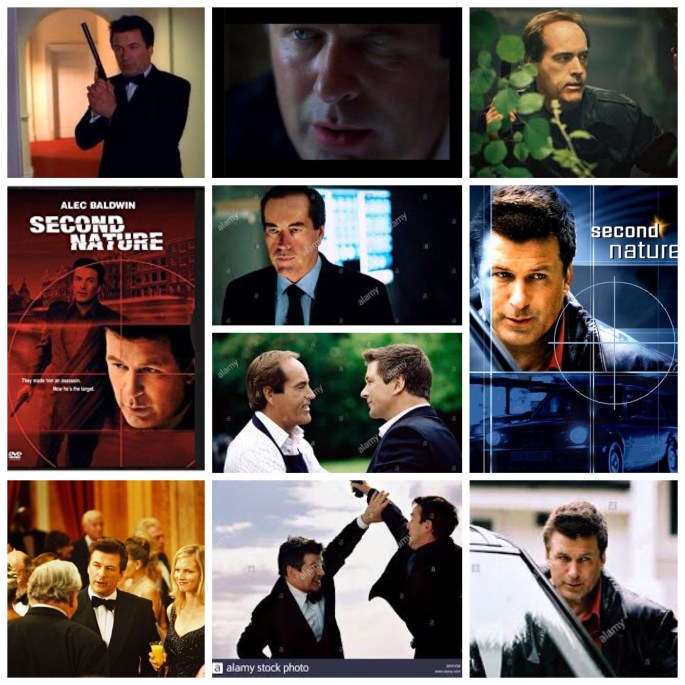
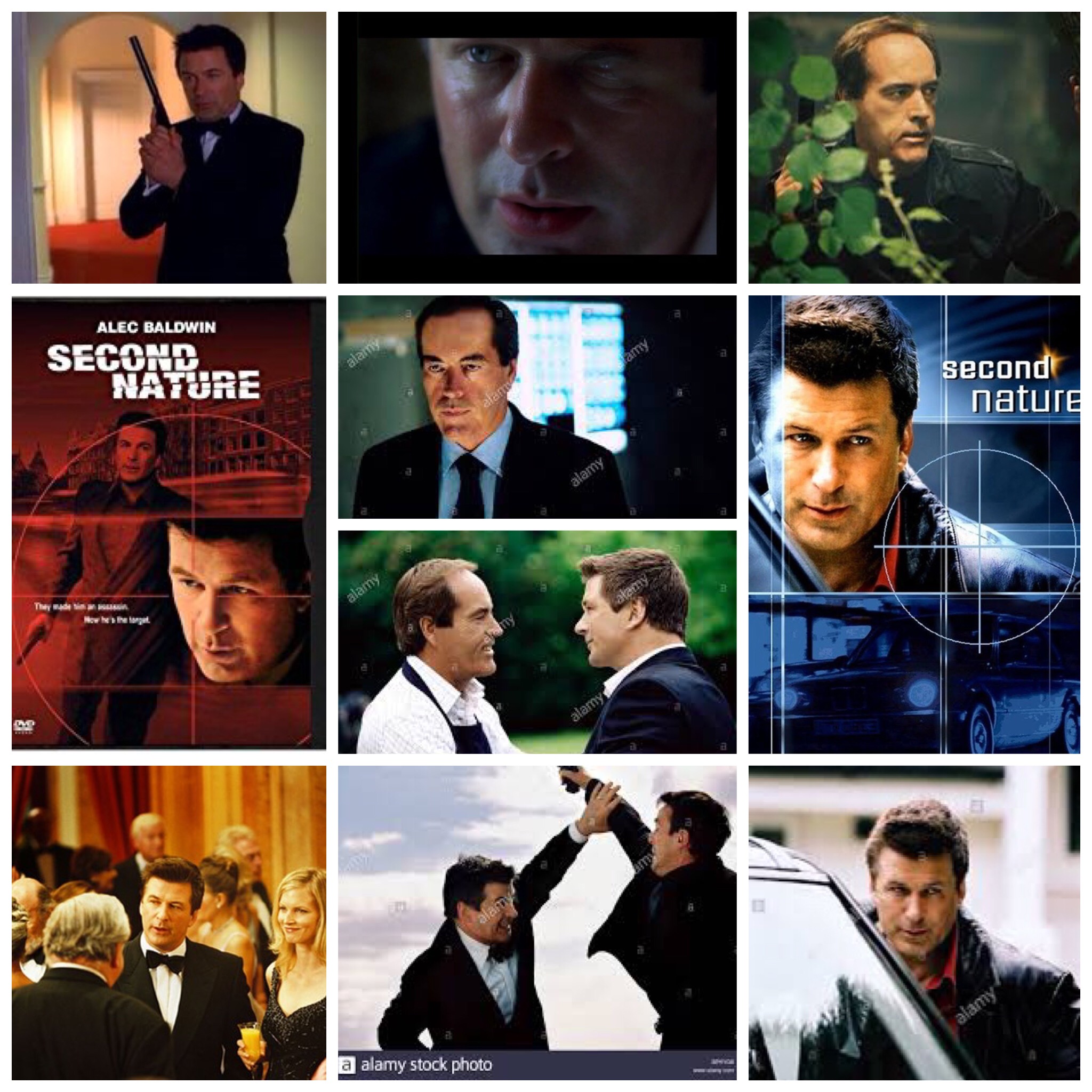
Second Nature is a low grade Bourne clone that benefits from two great actors in the lead roles. Slight, airy and inconsequential, it inhabits the clandestine corner reserved for middle-of-the-road espionage ventures neatly. Alec Baldwin plays a mysterious man who recovers from a plane crash that killed his family, left with heavy amnesia and confusion surrounding his past. When a shadowy agency bigwig (Powers Boothe) contacts him claiming he used to be an assassin for his outfit, he’s thrown back in the world of high profile contract killing, the world he came from, allegedly anyway. Nothing is as it seems though, and of course his boss turns out to be a bad dude, which gives Boothe a chance to ratchet up the intensity. The film is pretty much average throughout, until we find out Baldwin’s origins and arrive at a fairly thoughtful ending with some work put into storytelling, the first signs of a creative pulse in the film beyond garden variety plot twists. Baldwin is always great, whether on the protagonist’s or antagonist’s bench, and he sells the material well enough.

-Nate Hill

B Movie Glory: Mark L. Lester’s Night Of The Running Man


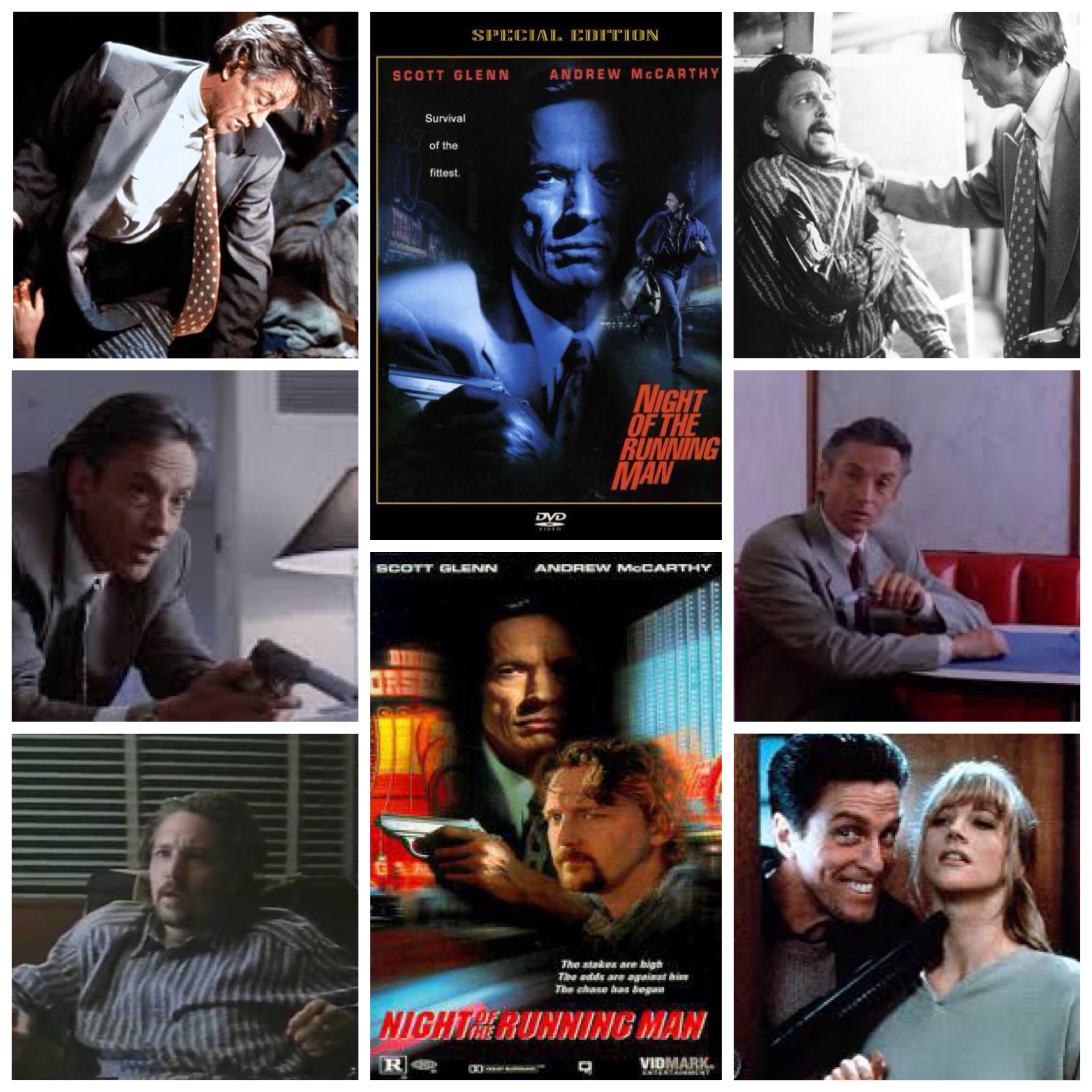
Mark L. Lester’s Night Of The Running Man, not to be confused with the Schwarzenegger classic of a similar moniker, is a mean spirited little urban thriller with Scott Glenn in one of his primo amped up psychopath roles. In the spirit of Scorsese’s After Hours, a hapless cab driver (Andrew Mcarthy) finds himself being hunted through the Las Vegas nightscape after one of his fates is murdered right in front of him, but not before leaving behind a suitcase full of millions. The hot man called in to pursue the funds is David Eckert (Glenn), a sociopathic monster with a heavy artillery, bent on retrieving the case and killing as many people along the way. One is reminded of the cult flick Judgment Night as the poor cabbie is forced to run all willy billy through the urban hustle, constantly evading Glenn’s lunatic presence. Further villainy is provided, albeit of the more hammy variety, by a scene stealing John Glover as an associate of Eckert’s who also casts his net to catch McCarthy, his scenes are so arch and bizarre that they almost swerve the thing into slapstick comedy territory. You can do way worse in budget B movie land, and this one clearly seeks to entertain with it’s broad characteristics and blatantly trashy tone. Plus, Glenn is, quite literally, killer good. 

-Nate Hill 

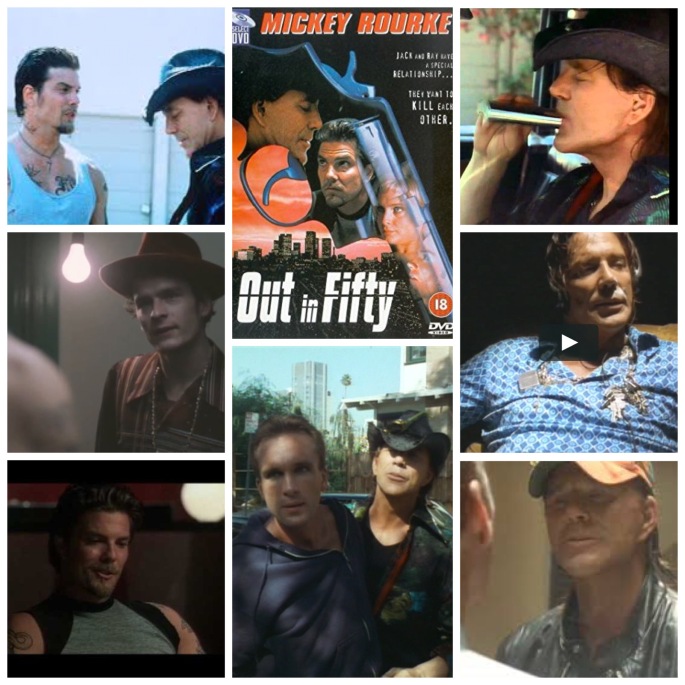
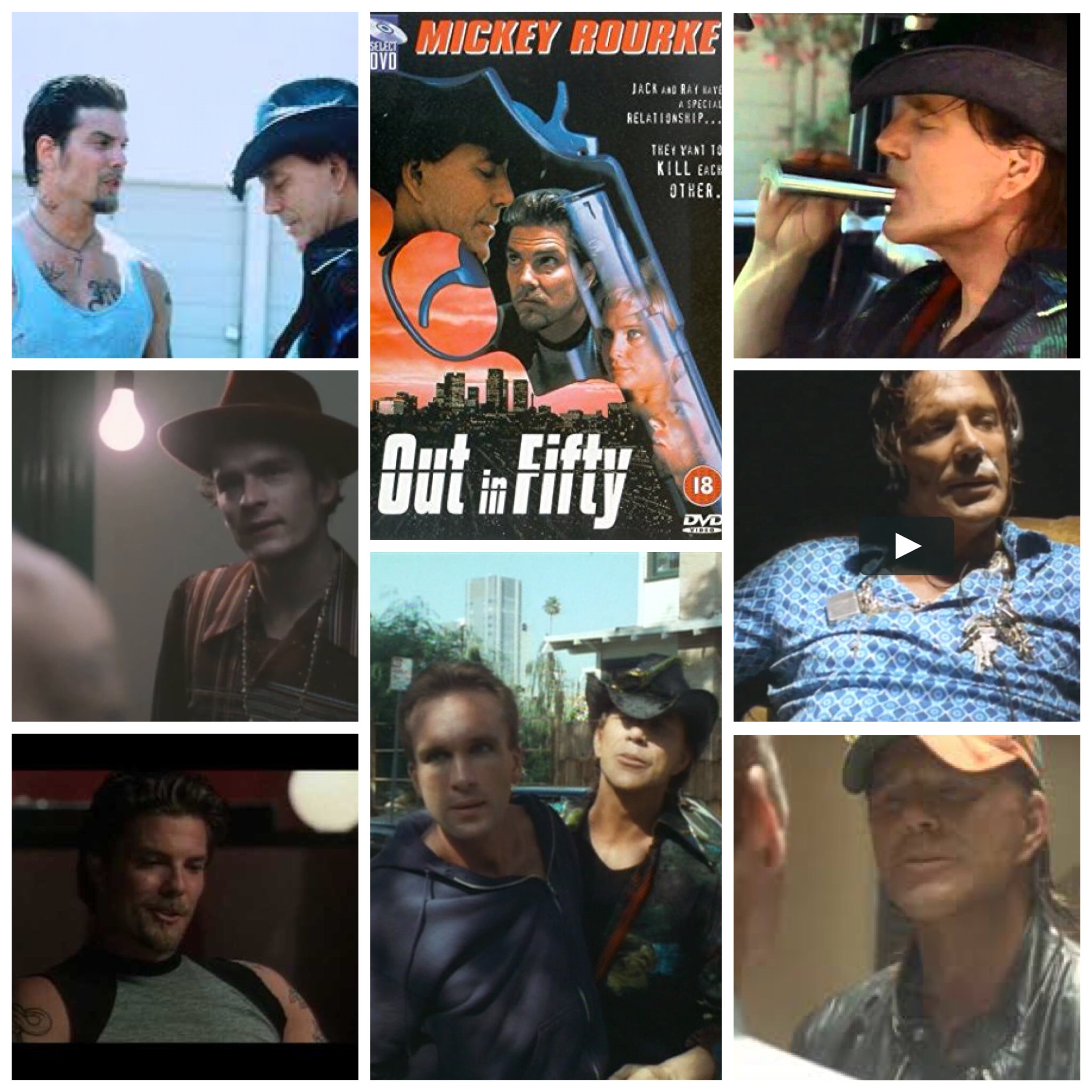
B Movie Glory: Scott Leet’s Out In Fifty 


I usually avoid B movies where the writer/director also stars in the lead role, as it’s almost always pitiable self indulgence a lá The Room. In the case of Scott Leet’s Out In Fifty though, there’s an exception to the rule. A violent, mean revenge story with no light at the end of the troubled tunnel, it’s a bizarre, sketchy little flick that benefits greatly from Mickey Rourke as one beast of a cop on the hunt for the convict (Leet) who accidentally killed his wife in the heat of a passionate affair. Remorseful and tormented, he just wants to quietly exist after he’s eventually paroled, but Rourke, still hard bitten over the incident, has other plans. That’s pretty much it, but the actors sell the dour tone nicely, especially Rourke, who is at his nastiest and most scarily volatile, with a seething, bleeding broken heart behind the coiled viper, hate filled exterior. Peter Greene is terrific as his former partner who does his best to reign the guy in, and there’s work from Christina Applegate, Johnny Whitworth, Ed Lauter and Balthazar Getty as a weirdo pimp/motel owner. Leet isn’t bad, especially in the writing department, and holds the thing together with reasonable triple threat talents, although he has scarcely been heard of since this one. Not bad, made better by Rourke and Greene’s presence, and worth it for any fan of the two heavyweights.  

-Nate Hill

Philip Kaufman’s Rising Sun


Philip Kaufman’s Rising Sun is a high profile murder mystery set atop lofty political echelons, but it’s less about the murder itself and more doggedly focused on the culture clash between American and Japanese business factions, as well as the two detectives caught up in the whole hectic, East-scraps-West mess. A lot to cover in one film, but this one keeps its head afloat and then some, with a whip smart script based on a novel by Jurassic Park architect Michael Crichton that was libelled as ‘Japan bashing’ (this was in the 90’s, imagine the snowflake storm it’d garner in our day). It apparently toned down some aspects, but either way, it’s not only a searing detective story, but one set against a backdrop of fascinating urban and metropolitan anthropology. Sean Connery bites into one hell of a role as John Connor (not a T-1000 in sight asking his whereabouts, they’re slacking), a veteran legend of a cop with deep ties to Japanese culture, having spent many years there, married to a Japanese woman as well. He’s partnered with Web Smith (Wesley Snipes), lively enough to poke fun at Connor’s guru-esque patronizing, but with enough of a head on his shoulders to adapt in waters that are anything but calm or familiar to him. Their case? On the eve of a giant mega deal between two corporations representing both soil, a mysterious prostitute is found murdered in a Japanese high rise. Laser disc footage may yield the killer’s visage, and may not. A super racist LAPD detective (Harvey Keitel, volatile and riled up) is anything but help. The suspects? A sleazy US senator (Ray Wise), a Japanese mystery man (Cary Hiroyuki-Tagawa) with one foot in business and the other, suggestively, in organized crime. The list goes on, and doubles back on itself multiple times. Not only is the investigation riveting, the buddy cop banter between Snipes and Connery, both funny and grounded, is just so engagingly well drawn, and tense inter-company espionage thrills throughout all the acts. The cast deepens, with fine work from Steve Buscemi, stern Daniel Von Bargen, Tamara Tunie, Stan Shaw, Mako, Kevin Anderson and gorgeous Tia Carerre as a quick witted tech expert who assists the dynamic duo in deciphering that pesky 90’s laser disc, and the incriminating secrets therein. Not your garden variety police procedural, buddy cop flick or social commentary, but rather unique variations on all three, amalgamated into a film that demands patience and focus, but rewards with a great story. 

-Nate Hill

Greg Harrison’s November 


Greg Harrison’s November is one of those frustratingly opaque, reality bending sketchy thrillers where a metaphysical shudder is sent through someone’s fabric of existence, in this case that of photography professor Courtney Cox. Driving home late one night, her husband (James LeGros) runs in to a Kwik-E-Mart to grab her a snack right at the same moment a burglar (Matthew Carey) brandishes a gun, and then open fires. After he’s killed, you feel like the film is in for a run of the mill grieving process as she visits a therapist (Nora Dunn). Events take a detour down Twilight Zone alley though when a spooky photograph shows up amongst one of her student’s portfolios, a snapshot of that very night at the store, apparently zoomed in on her husband. Who took it? Is the man actually dead? Will the film provide the concrete answers that some viewers so fervently salivate for in these types of films? Not really, as a heads up. As soon as things begin to get weird, they pretty much stay that way for the duration of the exceedingly short runtime (it clocks in under eighty minutes!). Cox’s character revisits that fateful night from many different angles and impressions, either reliving it, recreating it or simply stuck in some sort of alternate time loop chain. There’s a policeman played by Nick Offerman who offers little in the way of help, and she’s left more or less on her own through this fractured looking glass of garbled mystic confusion. The tone and aesthetic of it are quite something though, a jerky, stark Polaroid style mood-board that evokes ones like The Jacket and Memento, with an art house industrial touch to the deliberately closeup, disoriented visuals. It’s a bit maddening from the perspective of someone only looking for answers, and if that’s why you came, you’ll be left wringing your hands and losing sleep. If you enjoy the secrets left unravelled, and are a viewer who revels in unlocked mysteries left that way, recognizing the potent energies distilled from unexplained ambiguity, give it a go.

-Nate Hill

Joel Schumacher’s Blood Creek


A Joel Schumacher helmed horror flick starring Michael Fassbender as a deranged, occult obsessed Nazi zombie vampire, hunted by Lincoln Burrows from Prison Break. Sounds like a flick from an alternate dimension that doesn’t exist, right? Well it’s out there, tough to find as it was somehow buried around it’s 2009 release, and relegated to a relic before it was even a decade old. Shame, because it’s a ton of warped, bloody fun. Officially titled ‘Blood Creek’ on iTunes, it can also be found as ‘Town Creek’ or simply ‘Runes’ elsewhere, but like they say, a rose by any other name. Fassbender is all kinds of scary in a black and white prologue as a Nazi occult agent who shows up at a rural American farm to study ancient Nordic runes which may hold the key to resurrection of the dead. His chilling work initially is nothing compared to the balls-out, gory makeup covered incarnation he gets to prance around in later though. In present day, two brothers race into the foggy backwaters to stamp out this evil, and they’re played by an intense Dominic Purcell, as well as Superman himself, Henry Cavill. Not a whole lot of time is spent on character development for all involved, the film choosing instead to jump headlong into a notably gory free for all, banding together with the poor German family who has had to deal with this psycho for almost a generation on their farm. At a crisp ninety minutes, there ain’t much time for anything but action and gore, with a few scarcely scattered, breathless moments of exposition that were already made clear in that prologue, the one interlude of the film that isn’t soaked in adrenaline. Hats off to Fassbender under all that chatty, gooey makeup, his physicality is really menacing, and who else gets to play a Nazi vampire zombie who pounds a metal stake into his own forehead to make room for an emerging third eye? Truly a villain for the ages, had the film been allowed to gain any notoriety. And what other film can boast a sequence in which Purcell eagerly blasts zombified, rabid horses with a shotgun, chunks flying all over the barn? Such are the levels of disturbed imagination on parade. Poor Schumacher though, really. This would’ve been his first good film in awhile back then, and the studio goes in for the kill on every single marketing front, not even giving it decent room to breathe on DVD. At least it’s still floating about on iTunes, where any horror fan would be rewarded with a rental.

-Nate Hill

Gore Verbinski’s A Cure For Wellness 


Gore Verbinski’s A Cure For Wellness is a tricky one to pin down or feed readers a review that will point in either direction. Parts of it are sleek, beautiful, scary beyond words and terrifically staged. Others are bombastic, out of left field and completely unwarranted. During the head scratching climax I found myself wondering aloud, ‘how did we get from where the film started off to… *this*??!’. It’s senseless, meandering and probably a bit too long as well, but despite all that, I kind of loved the damn thing, eels and all. When you see the name ‘Gore Verbinski’ as director, you know that the film you’re about to see is going to have a few distinct qualities: lengthy, ambitious, stuffed with ideas both visual and auditory, offbeat and usually in no way similar to the last film he did. He’s the king of variety, I love his work a ton and think he’s one of the most under appreciated directors out there. This is his stab at a grand old horror picture, and while he admittedly doesn’t get everything right, there’s much wonder to behold and keep the viewer mesmerized. I don’t believe I’ve seen a more visually sumptuous horror flick since Guillermo Del Toro’s Crimson Peak. This largely takes place in the Swiss Alps, and shot after shot is just cold beauty and immersive vistas, a beautiful terrain surrounding the facility where a young businessman (Dane DeHaan, who I’ve never really been a fan of, but his weird spindly goblin aura suits the material here) ends up, trying to extricate a senior member of his company back to New York for a life and death merger. Life and death are also key components of this establishment, or more-so the latter, as he will find. The place is an eerily calm self help retreat run by icy, devilishly charming Director Volmer (Jason Isaacs eating up scenery with ferociously measured relish). There’s foul play afoot, which is glaringly obvious from the moment the young man steps through the front door. That’s the thing about this film, or much of it anyways, there’s no surprises or unpredictability to be had. We know the sinister path of these types of shockers quite well, and it all seems so familiar. Then when the third act rolls around, we wish we didn’t hope for something deviating from that path, because the narrative pretty much sets the path on fire, runs off the map into it’s own deranged subplot that will shock, if not awe. The film has some truly icky moments, one involving eels and a dubious looking plastic tube that’s a squirmer for sure, and the sickly atmosphere in the air all about this hellhole in the heavenly mountains. There’s fine acting to be seen, not just from terrific Isaacs but also ethereal looking Mia Goth as a creepy young waif who’s presence the plot hinges on later. The end ramps up for something that ditches the clinical body horror and heads right into old school, Hammer Films style horror a la Frankenstein or something kinkier, and while jarring, I’d be lying if I said I wasn’t entertained or giving it the aghast slow clap of sheepish approval simply because the film had the balls to *go* there, without a care spent on whether we wanted to see such absurdities or not. I admire such brazenness in film. A curiosity of a flick, seemingly cobbled together from ideas that don’t always quite mesh, but are still fun to bear witness to. A mess, but a hot one, and a damn good looking one too, if all over the place. 

-Nate Hill