It’s good to be the King: An interview with Larry Cohen by Kent Hill

There is a quote attributed to Robert Rodriguez (another independent maverick filmmaker) that states:

“If you are doing it because you love it you can succeed because you will work harder than anyone else around you, take on challenges no one else would dare take, and come up with methods no one else would discover, especially when their prime drive is fame and fortune. All that will follow later if you really love what you do. Because the work will speak for itself.”

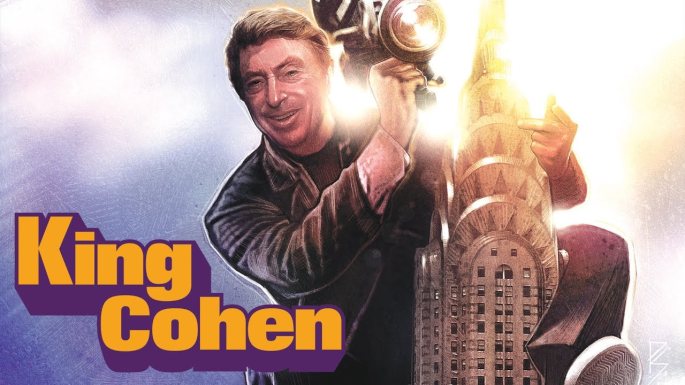
It is the always interesting, ever-changing, always inventive, ever professional life and work of Larry Cohen that really personifies the above quotation. King Cohen has been out there in one form or another in an impressive career spanning multiple decades. He has been the director of cult classics; he has been the writer of hot scripts that have incited Hollywood bidding wars. His work has been remade, imitated, venerated.

These are the hallmarks of a man and his movies whose personal voice rings out loud and clear, high above the commercial ocean of mainstream cinema that carries, beneath its shiny surface, schools of biodegradable blockbusters that are usually forgotten about only moments after having left the cinema.

This is not true of the films of Larry Cohen. For his work is the stuff (pardon the pun) that came before, the stuff the imitators latch on to, the stuff from which remakes and re-imaginations are conceived. This is the fate of the masters. The innovators come and bring forth art through trial and error. They are followed by the masters who take the lessons learned from the innovators and make them, shape them by sheer force of will. But, then there comes the imitators who stand on the shoulders of these giants and take home the glory.

Still, when there is an artist that is in equal parts innovator and master; this causes the imitators to stand baffled.
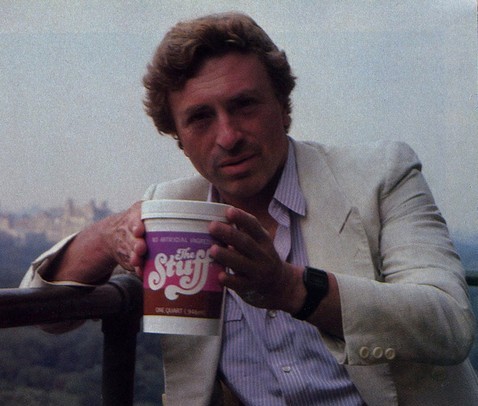
behind-the-scenes-the-stuff-larry-cohen-1985-2

Rather than accepting my humble oration, I urge you to seek out Steve Mitchell’s most excellent documentary KING COHEN. Watch it, marvel, rejoice, and remember that there are great filmmakers out there. They may not be coming soon to a theatre near you, but they did once, and their work still stands, silently, waiting to be discovered.

Until you get to see KING COHEN please, feel free to bask in my little chat with the king himself, Larry Cohen, a gentleman of many parts, many stories and of course . . . many movies.

Ladies and Gentlemen . . . Larry Cohen.
IMG_0691

Michael Mann’s Miami Vice


Michael Mann’s Miami Vice is a lot of things. Hypnotic, sedated mood piece. Thrumming, rhythmic action picture. Deeply romantic. More going on underneath it’s surface than what you see onscreen. Masterful crime piece. Showcase for digitally shot film. Restless, nocturnal urban dream. One thing it is decidedly not, however, is anything similar to the bright ‘n sunny, pastel suited 80’s cable TV show of the same name, also pioneered by Mann, at a more constricted and likely very different point in his career. A lot can be said for the show though, it’s instantly iconic and was one among a stable of crimeprimetime™ (The Equalizer and Crime Story did their part as well) to give many actors their break, actors who we take for granted as stars today. Mann’s film version is a different beast entirely, a likely reason for the uneasy audience reception. Let’s be clear: it’s one of the best films of the last few decades. Colin Farrell and Jamie Foxx make a deliberately moodier, more dangerous Ricardo and Tubbs, and their high stakes undercover work is set against an austerely fatalistic Miami that bares little resemblance to travel brochures, let alone the tv show many were used to. Their story starts one of two ways, depending on whether or not you view the extended director’s cut, which is the version I’d choose as it sets up tone before throwing you into a hectic nightclub sting operation they’ve got going, which is hastily interrupted by the exposure of a CI snitch (John Hawkes in a haunting cameo). This sets them on course to take down a powerful Cuban drug syndicate run by a scarily calm Luis Tosar and hotheaded maverick John Ortiz. Farrell gets involved with a girl from their fold, of course (Gong Li is a vision), a romance that has grown on me over the years, while Foxx is involved with beautiful fellow cop Naomie Harris, yielding heart wrenching moments in the final act. Darting in and out of the story as well are Tom Towles, Justin Theroux, Isaach De Bánkole, Eddie Marsan, Barry Shabaka Henley, Tony Curran and Ciaran Hinds, all vital cogs in a well oiled, momentous machine that doesn’t drop it’s pulse for a second. Composer John Murphy piles on the mood with his mournful score, highlighting evening boat-rides, shadowy shoot outs and outdoor nightclubs with a top tier soundscape, while cinematographer Dion Beebe works tirelessly to get shot after shot looking mint, not an easy task with a film this energetic and particularly lit. From start to finish it’s to the point as well, Mann has no interest in useless exposition, mapped out play by plays or cheesy moments. Everything careens along at a realistic pace and you’re on your own if you can’t keep up or make sense of the off the cuff cop jargon. There’s stillness too though, in a torn up Farrell watching his love disappear on the horizon, Foxx looking on from beside a hospital bed or simply either of them glowering out at the skyline from a rooftop pulpit before things Heat up. Like I said, do the extended version and you’ll get that terrific opener to set you up, instead of being thrown in the deep end right off the bat. Either way though, Miami Vice is one for the ages. 

-Nate Hill

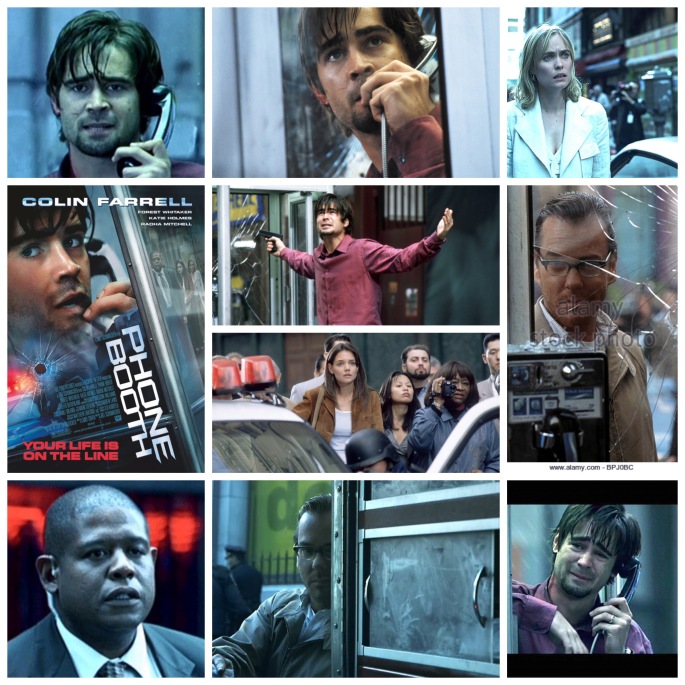
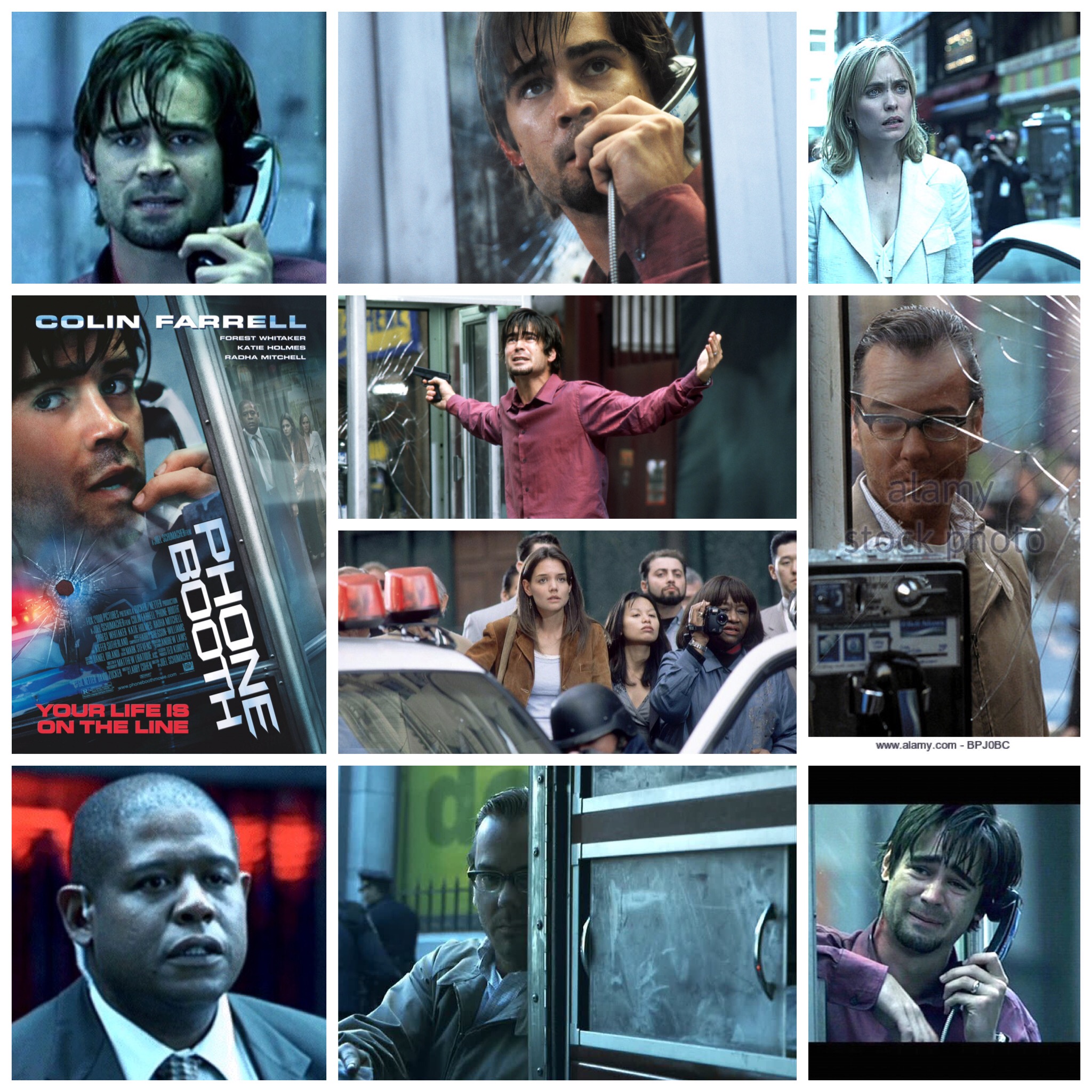
Joel Schumacher’s Phone Booth 


“Isn’t it funny? You hear a phone ring and it could be anybody. But a ringing phone has to be answered, doesn’t it? Doesn’t it?”

So snarls Kiefer Sutherland’s mysterious telephone terrorist to a petrified Colin Farrell in Joel Schumacher’s Phone Booth,

a taut, entertaining and oh so slightly heavy handed single location thriller that brings home the bacon, albeit messily spilling some grease along the way. Farrell is a hotshot businessman who steps into a phone booth (remember those?) one day, which serendipitously happens to also be the favourite haunt for sniper slinging whackjob Sutherland, who plays sadistic mind games, extorts the poor guy and digs up his darkest secrets, all while keeping him firmly in the crosshairs of his high powered rifle. The cops, led by a stoic Forest Whitaker, are perplexed at first and eventually drawn into this monster’s web too, as Farrell’s life begins to unravel at the whims of this unseen harasser, and the audience gets to see just how far either will go to resolve or escalate the situation. In this day and age there’d never be a scenario like this, the obvious reason being the extinction of phone-booths, but in the era of social media tech giants there’s just too much information and reaction time available for a situation this intimate to play out to the end. These days this nightmare would take the form of account hacking, an equally terrifying prospect, but a far less lucrative idea for a film. Now, we never really see Sutherland but for a few bleary frames, and he probably just recorded his dialogue from a cushy studio in jammies plastered with the 24 logo, but none of that takes away any of the lupine, icy calm malevolence from his vocal work here, and we believe in the ability of this man to freeze someone in their tracks, not only with a gun but with the power of verbal intonation as well. Farrell uses atypical caged animal intensity to ramp up the tension, and the other players, including Rhada Mitchell as his wife, Jared Leto and a very young looking Katie Holmes do fine by their roles. It’s a little glossy, a little too Hollywood if you know what I mean, but it’s a well oiled thriller nonetheless, with Sutherland’s shrouded, edgy persona being the highlight. 

-Nate Hill

Terry Gillian’s The Imaginarium Of Dr. Parnassus


Terry Gilliam films almost always feel a bit slapdash and chaotic, it’s just the guy’s calling card to have a modicum of organized mayhem filling the fringes of whatever project he delivers. With The Imaginarum Of Dr. Parnassus, that is probably the case more so than any other film he’s made, and despite letting the clutter run away with itself a bit too much, it’s still a dazzling piece. Of course, your movie will always have a disjointed undercurrent when your lead actor passes away halfway through production, but that’s just the way it goes, and Gilliam finds a fascinating solution to that issue here. Imaginarium is in many ways a companion piece, in spirit, to The Adventures Of Baron Munchausen, a film he made decades earlier, both containing a sort of baroque, Da Vinci-esque splendour and sense of fantastical wonder. Christopher Plummer hides behind a gigantic Dumbledore beard as Parnassus, a magician extraordinaire who travels the land with his daughter (Lily Cole, that bodacious Botticelli bimbo) and circus troupe, including Verne ‘Mini Me’ Troyer. Years earlier he made a pact with the devil (Tom Waits, an inspired choice) using his daughter as collateral, and now Old Nick has come to reap the debt, causing quite the situation. The story is a hot mess of phantasmagoria and kaleidoscope surrealism thanks to the Imaginarium itself, a multi layered dimension-in-a-box that accompanies them on their travels. Things get complicated when they rescue dying lad Tony (Heath Ledger) who somehow ties into the tale as well. Now, this was Ledger’s very last film, its future left uncertain after his passing, but help arrived in the form of Johnny Depp, Jude Law and Colin Farrell, swooping in to play doppelgänger versions of Tony as he bounced from one plane of the imaginarium to another with Cole in tow, always one step ahead of Waits, who is a rockin’ choice to play the devil, smarming and charming in equal doses. It’s kind of a huge melting pot of images and ideas hurled into creation, but it’s a lovable one, the fun you’ll have watching it reasonably eclipses lapses in logic, plotting and pacing. 

-Nate Hill

London Boulevard 


Pains me to say this, but London Boulevard is a whole lot of nothing. Like, a disgraceful amount of nothing when you step back and look at the talent involved. I read a review on IMDb saying that “every element of this film is so right, but how did it end up so wrong?”.. Sad to say, I couldn’t agree more. This is one unfocused, meandering, royal catastrophe. Where does the blame lay? Who can say, really.. I don’t want to lay it on the director, even though his only other feature, Mojave, was pretty dismal, but he’ll find his groove. The cast is capable and willing, none of them totally phoning it in. No, I feel like it’s the script, a botch job of a story consisting of scenes mired in a never-ending doldrum where nothing ever really goes anywhere and the characters get caught up in the purgatorial nonsense of it all. Colin Farrell is a tough guy who is hired to act as pseudo-bodyguard to a reclusive, neurotic film star (Keira Knightley), after which all sorts of freak occurrences and oddball Brit-bag characters get in the way. He’s got a wayward sister to protect (Anna Adriel), a volatile partner in petty crime (Ben Chaplin) a nosy DI on his trail (Eddie Marsan) and all these chess pieces converge upon the arrival of London’s most fearsome crime boss (Ray Winstone), who has a bag of bones to pick with Farrell for a number of different and equally muddled reasons. Winstone tries to pull him back into the game with vague homoerotic intimidation, Knightley wistfully wallows in depression with her druggie friend (David Thewlis, looking like he forgot to read the script) and hides from paparazzos, the story clumps along missing every beat and wasting a decent score as well as some stylish flourishes on events that no one seems to care about, least of all the audience. Perhaps that’s why Farrell scowls his way through the whole thing, and not in a smouldering, potent way either, more like a confused, begrudging participant in a pointless exercise. They really should have gotten their shit together a little more with a cast and budget like this, found a better script and given us something worth seeing. Instead we’re given the cinematic equivalent of a pocket of lint, promising on the outside before we look in, ripe with potential but filled with nothing remotely worthwhile once we look inside. Shame. 

-Nate Hill

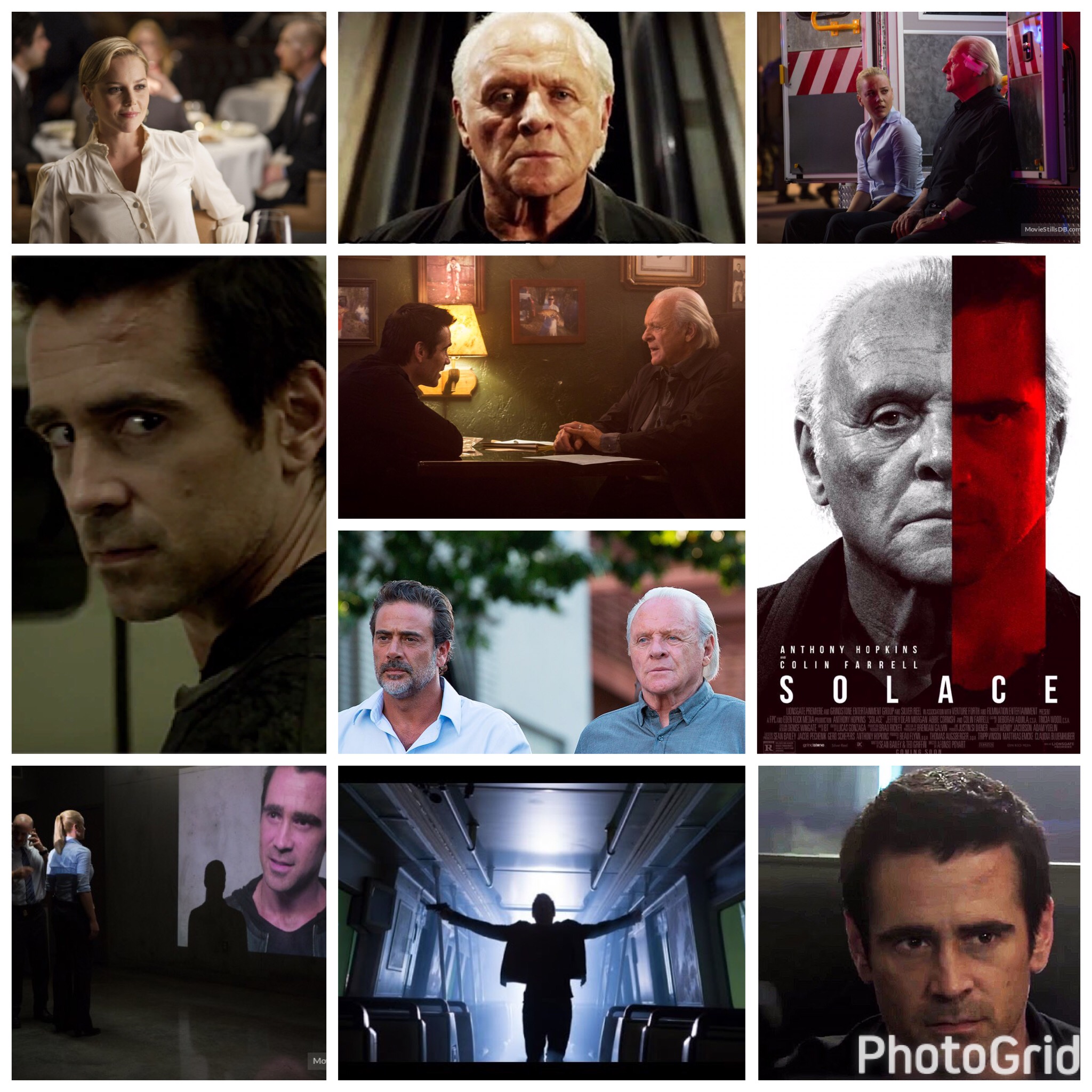
Solace


Serial killer films are a dime a dozen. Literally, you can’t browse ten titles in a thriller subcategory without running into at least, like, three. Within this ever popular area, there’s also the ‘psychic assisting law enforcement to catch a killer’ motif that pops up now and again, more so on television than film, but it’s there. Solace takes a crack at that, and speaking of that particular idea, the first thing I was reminded of was NBC’s Hannibal. This is one stylish flick, in the same way the series is abstract, using sharp, slow motion close ups paired with crisp audio to create a surreal image of something mundane, clues in a seemingly innocuous environment. Anthony Hopkins plays the clairvoyant here, a guy with demons in his past who sometimes consults on cases with his longtime FBI friend (a haggard looking Jeffrey Dean Morgan). There’s a new killer in town, town being Atlanta, one that causes Morgan to drag him out of consultation retirement and have a go at the case, along with his rookie partner (Abbie Cornish, turning in one damn fine performance). Not all is as it seems here, and when the murderer does finally show up it’s clear that he isn’t your garden variety serial slasher, and has an agenda that goes deep into some moral issues, the one place where the script strives for depth beyond the procedural template. He’s played by Colin Farrell of all people, which is a perfect example casting against type that works. Usually it’d be some sinister looking character actor or genre snake playing the role, but by giving it to a leading man of Farrell’s caliber, they’ve achieved some gravity, and he’s brilliant. Now, this isn’t what I’d call a great film, it has it’s inconsistencies, multiple snags in pacing and one convoluted plot for the first two acts. But it’s quite the fascinating effort, one with a dense, thought provoking story to tell, every performer pulling their weight impressively. And like I said, there’s style to go around.  

-Nate Hill

SEAN STONE: An Interview with Kent Hill

Many of us can only imagine what it must be like to grow up in a household where one or both of our parents are people of extraordinary ability. We can only muse further what it must be like if that said parent were internationally recognized in their chosen field of expertise.

On the other hand, when we are young, we don’t really question such things. They are the ‘norm’, the everyday, and our parents are simply Mum and Dad. They do what they do and we are none the wiser. Then of course we reach an age when that changes. We realize that there are differences, and our worlds shrink or growth according to the depth of that perception.

61TzhdXDn1L__SY300_QL70_

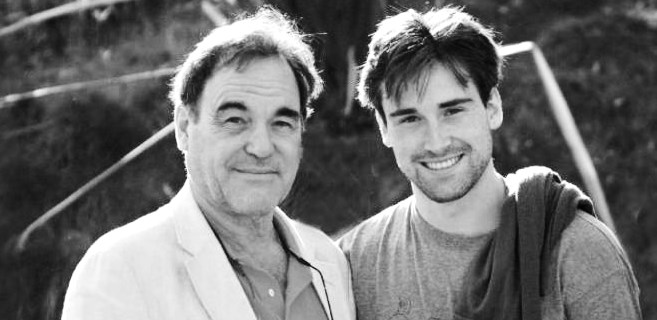
So imagine growing up and one day the realization hits that your Dad is the acclaimed filmmaker Oliver Stone; on top of that you have essentially grown up in the movies your father has been making. Now you were unaware to the extent of just how different things at home where compared to other people. But, it’s just how things were, and it’s just how things were for Sean Stone.

1002004006473548

Being on the set was normal because making movies is what Dad did for a living. These famous actors were simply people that were helping Dad out. It all seems fine that is till, as Sean told me, the world opens up and your understanding of that which you have been exposed to becomes evident.

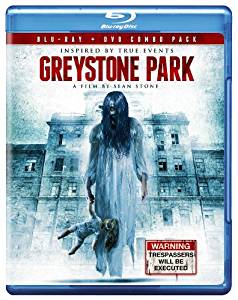
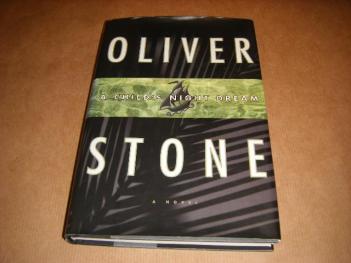
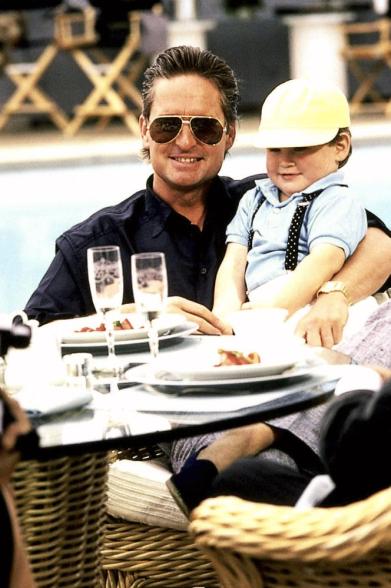
Being a lover of the work of Sean’s dad, I, like the rest of you, have seen him as a baby on the lap of Gordon Gekko, as a young Jim Morrison, as the brother of an eventual mass murderer and more. He is now, however, a storyteller in his own right. Beginning with the chronicling of the making of Alexander, Sean has emerged as a naturally talented filmmaker. He has continued exploring the documentary as well as genre filmmaking, and I eagerly anticipate his intended adaptation of his father’s book A Child’s Night Dream.

35445

It was a real treat to chat with him at the dawn of 2017 . . . ladies and gentlemen, I give you . . . Sean Stone.

MCDWAST FE007

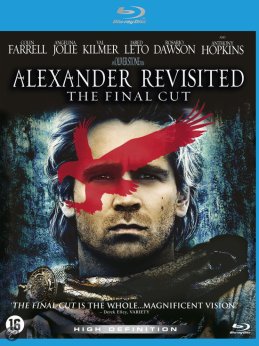
https://www.amazon.com/Alexander-Revisited-Blu-ray-Colin-Farrell/dp/B00CSKQ5TK/ref=sr_1_9?ie=UTF8&qid=1491450945&sr=8-9&keywords=alexander+blu+ray

https://www.amazon.com/Greystone-Park-Blu-ray-Combo-Pack/dp/B008NNY93K/ref=sr_1_2?s=movies-tv&ie=UTF8&qid=1491451403&sr=1-2&keywords=greystone+park

https://www.amazon.com/Childs-Night-Dream-Oliver-Stone/dp/0312167989/ref=sr_1_1?ie=UTF8&qid=1491451496&sr=8-1&keywords=a+childs+night+dream+oliver+stone

Veronica Guerin: A Review by Nate Hill 

I can remember seeing Joel Schumacher’s Veronica Guerin when I was first allowed to start checking out R rated, more intense fare. Being far more impressionable that the desensitized veteran you see before you today, I had a royal emotional gut punch coming that I wasn’t even prepared for. I didn’t know what it was about or what I would see, all I knew was I loved watching movies and I was going to devour each and every one I could get my hands on. Well, it tells the true and very tragic story of Veronica Guerin, an incredibly fearless Irish journalist who almost singlehandedly waged war on the drug trade back in 1996. It’s a suicidal mission that involves hassling very dangerous people, putting her and her family’s lives in jeopardy and overturning stones that lead to nothing but trouble. But she won’t back down for a second, and Blanchett finds the noble belligerence in her. Now anyone who knows the story also knows that later in life she was assassinated, by order of the very same drug lord she was trying to take down, John Gilligan (Gerard McSorley). I feel like it isn’t really a spoiler and should be spoken of in a review, as it’s a huge beat and the essential part of the film. Poke the hornet’s nest and you’re liable to get stung, it’s just a shame that no one on her side could have done more to protect her and prevent the outcome, but when you have one woman crusading against both evil and casually corrupt indifference then I suppose she’s on her own anyway. “” is a chilling monster, an absolute sociopathic maniac who will go to any lengths of cruelty and darkness to keep his empire, and McSorley will give you shudders with his portrayal. Ciaran Hinds is great as sleazy and slightly conflicted John Traynor, an underworld informant who fed Veronica information and played a big part in her story. Colin Farrell shows up in an odd and completely random cameo, and watch for Brenda Fricker too. The end of the film and the events surrounding her death are intoned with a haunting musical montage, and I dare you not to burst into to tears or be swept away and deeply affected by Schumacher’s tender direction, the cast’s work and the sheer tragedy of it all. There’s another film about Guerin called When The Sky Falls with Joan Allen, and it’s worth a look, but this is the real deal, going to great pains to show the personal nature of Veronica’s quest, how much it meant to her, the sickness of a nation infected with drug addiction and corruption, and the game changing power which one human being can have over it all, even if they must sacrifice their life for it. Powerful stuff.

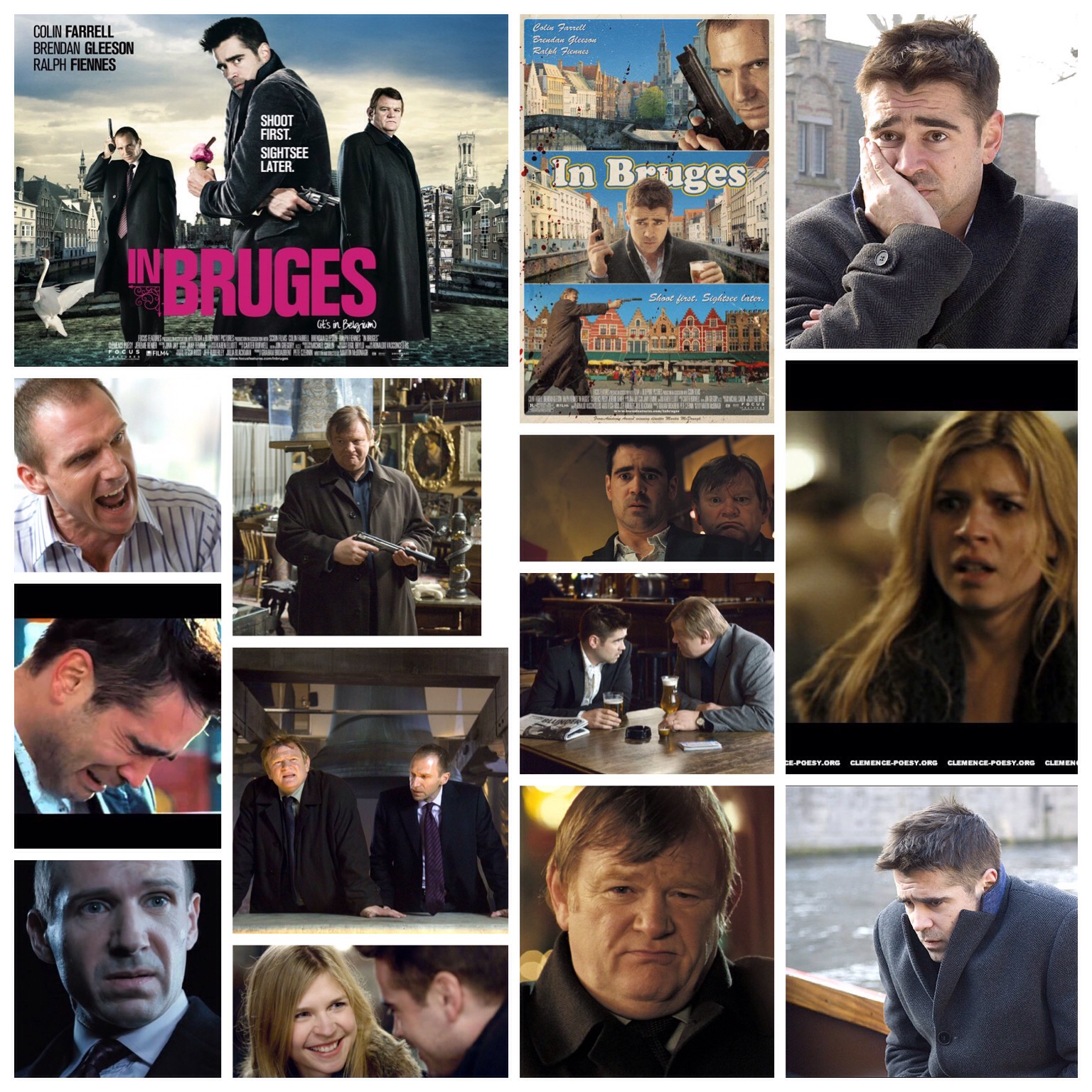
In Bruges: A Review By Nate Hill

  
I can’t really say in enough words how much I love In Bruges. In fact there aren’t words in my language which can express how deeply in tune to it I feel every time I put the DVD in for a watch, which is at least every four months or so. The dual forces of comedy and tragedy have combined here using Martin McDonough’s genius scriptwriting as an avatar to create something raucously funny and profoundly moving. The comedy is of the spiciest and very darkest nature (my favourite), and the tragedy tugs at both the heart strings and the tear ducts, scarecly giving you time to wipe away the tears of laughter from the scene that came before. The best in UK crime fare, some of the most balanced, peculiar writing and fully rounded characters who are as flawed as human beings get. Colin Farrell delves deep and gives the performance of his career as Ray, a would be hitman who has fucked up bad, and now heads for Bruges (it’s in Belgium) with his mentor Ken (Brendan Gleeson, pure brilliance and humble class). Ken loves eccentric little Bruges, with its historical architecture and quaint townsfolk. Ray is bored to tears and pouts like a toddler. They meander around the town getting into all sorts of mischief including a dwarf (who has fascinating ideas about the ultimate race war), museums, cocaine, the Belgium film industry and more. Ray sets his sights on the gorgeous Chloe (), and Ken does his paternal best to keep him out of trouble while wrestling with his own gnawing guilt. The film gets a shot of pissy adrenaline when their boss Harry comes looking for them, in the form of a knock it out of the park funny Ralph Fiennes. Fiennes rarely cuts loose and bounces off the walls like he does here, and his Harry is a delightful creature to watch in action. Angry, petty, volatile, clever and out for blood, just a joy to behold. As playful as the script is, there’s a purgatorial sadness to Ray’s situation, a fateful sense that he’s been dumped in Bruges not just to fool around, get drunk and utter witty barbs in that brogue (which he does do a lot) but to deeply ruminate on his choices and ponder where his actions will lead him moving forward from his terrible deed. Maturity permeates each exchange between him and Ken, a fledgling and an old timer shooting the breeze about heavy topics which neither of them pretend to understand, but both are neck deep in. I always cry at certain scenes, always laugh my ass off at others, and never cease to be affected right to my emotional center and the marrow of my funny bone each time I watch this. Look for a brief cameo from Ciaran Hinds in the opening few minutes. Every second of this piece is filled with lush, thought provoking dialogue, awesomely un-politically correct dialogue that doesn’t censor a single impulse from its characters, and a yearning to explore the decisions which cause people to be labeled ‘good’ or ‘bad’, something that’s inherently complex yet feels lightly treaded on here. Masterpiece. 

OLIVER STONE’S ALEXANDER — A REVIEW BY NICK CLEMENT

1

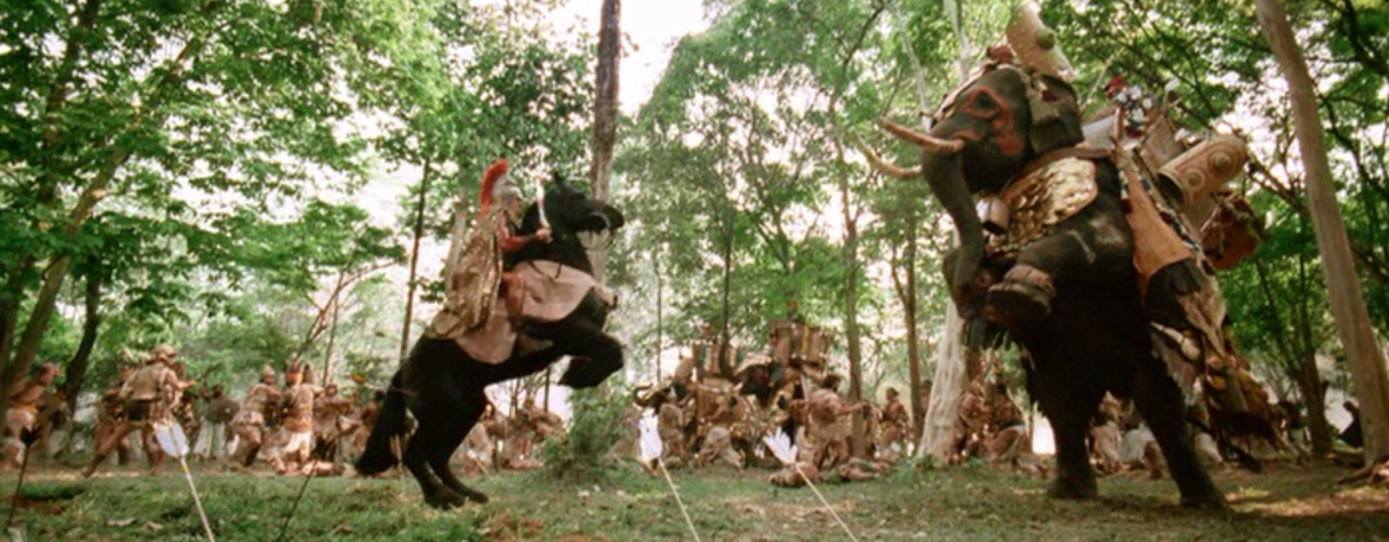
Bursting with over-sized ambition, ferocious amounts of energy, and fever-pitch emotion that’s never afraid to go over the top, Oliver Stone’s gargantuan period epic Alexander is one of the best modern evocations of ancient history that’s ever been crafted, and easily the most underrated film of Stone’s legendary career. I’ll never understand the unnecessary hate that was piled upon this remarkable achievement upon first release; I think it’s because Stone dared to challenge familiar genre ingredients that people were hesitant to the film’s many strengths, from the non-linear narrative to the positively overwhelming battle sequences that put every other depiction of cinematic “Sword and Sandal” combat to shame. In fact, I’ll go so far as to say that the “war-elephant” fight in the jungle, to say nothing of the massive Battle of Gaugamela set-piece, is the single greatest battle scene of its type ever captured on film – relentless, beyond bloody, and truly terrifying — it’s positively hellish to observe, with Stone totally flipping out, even going so far as to show what would happen if an elephant stepped on your face. Rodrigo Prieto’s muscular, hugely expansive, and utterly breathtaking widescreen cinematography is always a sensuous treat, the fired-up screenplay is filled with boisterous speechifying and juicy political intrigue, the immense and soaring musical score by Vangelis reaches for the stars, and the performances range from small to large from a ridiculously stacked cast.

Colin Farrell gave it everything and more and left nothing to spare in a performance that clearly grabbed him from the inside; just look at his eyes in some of the scenes in this film and tell me he’s not insanely aligned with his character. And then you have Angelina Jolie at the absolute pinnacle of her silver-screen hotness – a true serpent/vixen of a role for the ultimate cinematic cobra. Jared Leto, Christopher Plummer, Rosario Dawson, Anthony Hopkins, Val Kilmer and a plethora of “faces” all robustly spiced up the ensemble, while the extravagant and eye-filling production design by Jan Roelfs contributed to the verisimilitude of the entire film. Yes, it’s campy in spots, but likely intentionally so, as the various subtexts and themes are explored in an upfront fashion. But for the most part, this is a deadly serious tapestry of people, places, events, and moments, all patched together in that fabulously unhinged Stone fashion, where the storytelling and filmmaking demonstrates a live-wire spark. The dense script was highly interested in the various characters and their unique motivations, and there’s a sense of gusto to just about every facet of this film that never ceases to impress. This is bravura filmmaking, made by a master director who clearly possessed a true passion for the material, which makes the entire production feel all the more compelling. I saw this film twice theatrically, I own every permutation of the picture that’s been released on DVD/Blu-ray thus far, and I feel that Stone’s recent and most definitive cut is the absolute best that’s been offered. This is a project that Stone seemingly cannot let go of, a film that has driven one of our most challenging and distinctive filmmakers potentially insane.

2